My Mom Mocked My Job At Thanksgiving, So I Asked Questions And Uncovered My Brother’s Secret
Complete story · 10 chapters · about 42 minutes · ending included
Chapter 1 · Chapter 2 · Chapter 3 · Chapter 4 · Chapter 5 · Chapter 6 · Chapter 7 · Chapter 8 · Chapter 9 · Chapter 10
Chapter 1: The Card Under Sugar
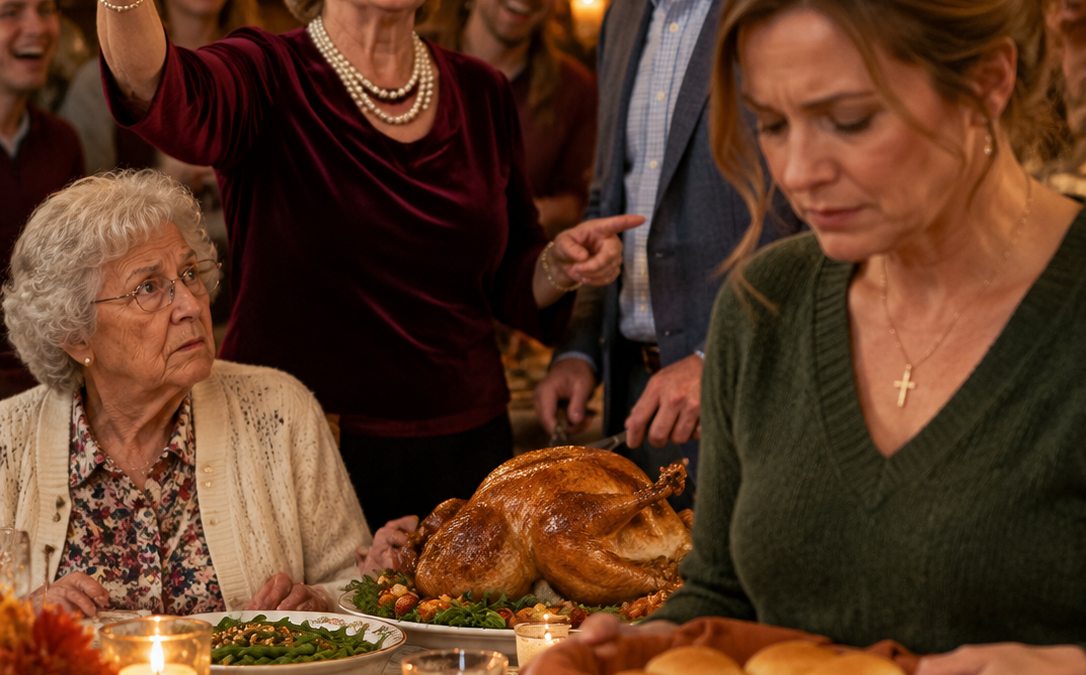
“Wade made it. Kendra just answers phones for the county.”
Mom held her glass above Grandma’s gravy boat.
My cousins laughed, and Wade lifted his chin like the toast belonged on a plaque.
I stood with the basket of rolls against my stomach.
That hurt.
Mom had made smaller versions of that speech for years.
At birthdays, Wade had a career and I had a job.
At family dinners, Wade had clients and I had a desk.
Now Mom had reduced me to a ringing telephone.
There were nineteen relatives around Grandma’s Thanksgiving table, and nobody corrected her.
I looked down at the cloth covering the rolls.
I had ironed it before leaving home.
That embarrassed me somehow, the care I had taken.
“Pass those down, Kendra,” Mom said.
I handed the basket across the table.
“Recorder’s office, Mom.”
“Wade, tell them about your new SUV,” Mom said before I finished.
“The seats alone cost more than my first car.”
My face felt hot.
Mom knew where I worked.
Mom had known for years.
The correction hadn’t confused her.
It had interrupted the story Mom preferred.
Wade smiled across the turkey.
“Plenty of room for Grandma,” he said.
“Whenever she needs me.”
Grandma Bernice set her fork beside her plate.
“I can still get into Kendra’s car.”
Wade laughed, and a cousin laughed with him.
I wanted to thank Grandma.
I also wanted to disappear into the kitchen until the conversation moved on.
Those feelings could live together.
I had gotten used to that.
It was Thanksgiving 2025, in the Nixa house where Grandma still kept spare napkins beside the stove.
I knew the drawer without looking.
Wade asked where the serving spoons were.
Mom pointed toward the kitchen and kept talking about his vehicle.
“The neighbors came outside when he pulled up,” Mom said.
I pressed my thumbnail against the seam of my pants beneath the table.
I was angry now.
I hated how much effort it took to sit there looking ordinary.
At work, I explained forms to people who were frightened of making mistakes.
I checked names, margins, acknowledgments, the details people skipped.
At this table, I couldn’t get three words heard.
Being useful hadn’t made me visible.
Grandma reached for the potatoes.
I moved the bowl closer before Grandma had to ask.
Wade leaned toward the head of the table.
“Actually, Grandma, we should talk about getting things settled.”
Grandma stopped with the serving spoon over her plate.
“What things?”
“The house,” Wade said.
“Probate is a nightmare. You should get the house in order.”
His voice stayed friendly.
That made my stomach tighten.
He had brought up what would happen after Grandma died while Grandma’s dinner was still warm.
I looked at Mom.
Mom nodded like Wade had offered to clean the gutters.
“My house is in order,” Grandma said.
Grandma served the potatoes and passed the bowl.
Wade kept his smile.
“Sure,” he said.
“Trust me, I handled it for plenty of people.”
Grandma took a bite.
I watched Wade wait for another question.
None came.
The conversation moved to a cousin’s broken furnace.
I ate a piece of turkey without tasting it.
Across from me, Mom touched Wade’s sleeve and offered him more stuffing.
I knew that gesture.
Mom had done it when Wade brought home good report cards.
Mom had done it when Wade got his real estate license.
I couldn’t remember what my own good news had looked like from across a table.
I cleared plates when people began pushing their chairs back.
Grandma stood to help.
“Sit down,” I said.
“I’ve got these.”
In the kitchen, I scraped cranberry sauce into the trash and stacked the forks.
The dishwasher door caught on a towel.
I freed it with my foot.
From the dining room, I heard Wade describing a house with a three-car garage.
Mom said his name with pride.
I stood at the sink until the water ran hot.
I wanted one dinner where clearing plates wasn’t the price of belonging.
Then Grandma called for the pie knife.
I dried my hands and found it.
After pie, people carried coffee into the living room.
Grandma stayed at the table with a thin slice left on her plate.
I wrapped the remaining pieces near the kitchen doorway.
Wade walked past me holding his phone upright.
A camera click came from the living room.
Then another.
I looked through the doorway.
Wade stepped backward toward the fireplace, checking the screen.
“What are you doing?” I said.
“Pictures.”
“I can see that.”
“For Grandma’s insurance,” he said.
He nudged a chair sideways until the camera no longer caught it.
I set the foil down.
Grandma hadn’t mentioned an insurance problem.
Wade hadn’t asked about a policy.
I knew pictures could document belongings.
I didn’t know why he needed the chair moved.
Wade photographed the dining room from opposite corners.
He headed toward the bedrooms.
I walked after him, stopping where I could see him open a bedroom door.
“Does Grandma know?”
Wade glanced at me.
“Mom knows.”
His reply slid past the question I wanted answered.
My hands tightened around the dish towel.
I felt foolish standing outside a bedroom in a house I had visited my whole life.
Wade made me feel like I needed permission to ask.
I stayed where I was.
He photographed the bedrooms, then the bathroom.
In the kitchen, Wade shifted a folded towel before taking another picture.
His camera kept taking in whole rooms, corners and all.
Mom appeared beside the refrigerator.
“He’s helping, Kendra.”
“I asked about pictures.”
“Well, let him finish.”
My throat tightened.
Mom hadn’t asked Grandma either.
Somehow, my question had become the problem.
I folded the towel I was holding and put it on the counter.
Wade slipped his phone into his pocket and returned to the dining room.
Grandma was gathering crumbs onto the edge of a plate.
Wade bent beside Grandma’s chair, keeping his voice low enough that I couldn’t make out his words.
Then his hand reached across the table.
Wade slipped his business card under Grandma’s sugar bowl.
You may also like
My Husband Humiliated My Son At His Academy Banquet, So I Checked The Mail He Handled
My Stepdaughter Locked Me Out Of My Own Cabin Bedroom, So I Read Her Group Text Out Loud
My Son-in-Law Sent Me To A Motel For Christmas, So I Came Back With A Pie And His Own Texts
His name faced up.
Grandma’s thumb stopped against the rim.
Picking up where the Facebook post left off
Chapter 2: The Blank Visitor Sheet
The sugar bowl sat crooked over Wade’s card.
“Leave it there,” Grandma said.
I took my hand away from the table.
Wade straightened his jacket and went to find Mom.
Grandma pushed the bowl back into place.
I carried the pie plates to the kitchen.
I didn’t ask about the card.
I was still hurt, still trying to finish the dishes without crying.
By the time Grandma went to the hospital, I had almost stopped thinking about it.
Almost.
The breathing machine made a soft pushing sound beside Grandma’s bed.
I stood outside the ICU room in Springfield with Grandma’s slippers in a grocery bag.
Nobody had asked me to bring them.
I had picked them up because I couldn’t stand leaving the house empty-handed.
Grandma couldn’t use slippers.
Grandma couldn’t speak.
A tube ran into Grandma’s mouth, held in place with tape.
I was scared enough that my fingers wouldn’t open the bag.
Mom sat beside the bed with her purse pressed between her knees.
“Wade knows,” Mom said.
I looked at the monitor.
“Did he call you?”
“I told him.”
Mom moved her purse so I could put the slippers beneath the chair.
We divided the hours without much discussion.
Mom would stay during the day.
I would take the nights.
I called work from the hallway, keeping my voice low.
Dena listened while a cart rattled past me.
“Tell us what you need,” Dena said.
That plain sentence nearly undid me.
I needed Grandma to open her eyes.
I needed the machine to be unnecessary.
I needed somebody to tell me that would happen.
Instead, I asked about leave.
During the night, I learned which chair leg caught on the floor.
I learned where the spare blankets were.
I watched a nurse moisten Grandma’s lips.
When the room settled, I sat beside the bed and talked about the house.
“The plants are watered,” I said.
Grandma’s hand lay warm beneath mine.
“The kitchen window’s locked.”
I wanted those small facts to reach Grandma.
Home was still there.
I would keep it ready.
Two days after Grandma’s admission, my phone lit up while I was changing clothes.
The family chat showed March 12.
Wade’s message was stamped 4:51 p.m.
Took care of Grandma’s house paperwork today. You’re welcome.
I stood with one shoe on.
House paperwork.
Grandma was connected to a breathing machine, and Wade was accepting thanks.
A heart appeared beneath his message.
Mom’s name appeared beside it.
Mom had been in the ICU room since morning.
I typed a question, then erased it.
I wanted to ask Mom face-to-face.
I wanted an answer without cousins adding cheerful little symbols underneath it.
At the end of Mom’s twelve-hour stretch, I arrived carrying a clean sweater and a sandwich.
Mom was putting her glasses into their case.
Grandma hadn’t moved from the bed.
“What paperwork did Wade do?” I said.
Mom snapped the case shut.
“What?”
“The house paperwork.”
“He took care of something.”
“What did Grandma need?”
Mom pulled her purse onto her shoulder.
“Go answer your phones.”
My stomach tightened.
The same insult.
Here, beside a bed where Grandma couldn’t defend either of us.
I had brought Mom supper.
Mom had brought the dining room into the ICU.
I put the sandwich on the windowsill.
“I work with records.”
“Don’t start,” Mom said.
Mom glanced toward the monitor, then back at me.
“I’ve been here all day.”
“I know,” I said.
I did know.
That was why the message bothered me.
Mom had watched nurses adjust the tube.
Mom had watched Grandma lie without speaking.
Somehow, Mom had also found a reason to thank Wade.
I let Mom leave.
Then I pulled the chair closer to Grandma.
For a while, I couldn’t think of anything ordinary to say.
Anger made me feel disloyal in that room.
I should have been thinking only about Grandma.
But I was thinking about a man taking credit for something nobody could name.
Being the one who stayed didn’t make me the one people thanked.
I tucked the blanket around Grandma’s feet.
“The house is fine,” I said.
I hoped that was true.
The tube came out two days later.
Grandma’s voice sounded scraped and thin.
“Water,” Grandma said.
I looked at the nurse before reaching for the cup.
There were instructions now.
Small sips.
Rest between them.
I followed what the nurse showed me.
Grandma closed tired fingers around my wrist while I held the straw.
I cried in the parking garage afterward.
I was relieved.
I was frightened by how close relief sat to losing someone.
Wade never visited.
I kept expecting his voice in the hallway.
I expected flowers with his card attached.
I expected Mom to tell me I had missed him.
None of that happened.
Six days after Wade’s message, I drove Grandma home.
The slippers finally had feet in them.
Grandma sat beside me with a folded blanket across her lap.
“Slow over the driveway,” Grandma said.
“I will,” I said.
That familiar instruction made me smile.
Inside the house, I set Grandma’s water within reach and checked the discharge instructions.
Grandma wanted the living room chair facing the window.
I moved it a little.
“Enough,” Grandma said.
I stopped.
My phone buzzed with a new message from Wade in the family chat.
I’ll grab Grandma’s mail every morning so nobody scams her.
Once Grandma was settled, I opened the folder where I kept the medical bills I paid.
I filed the discharge papers behind the hospital statements.
Then I reached for my phone.
What paperwork had Wade done while Grandma couldn’t speak?
I opened a photograph I had taken to remember the ICU room number.
A sheet taped below the number caught my eye.
I enlarged that corner.
It was the visitor sheet for the day Wade sent his message.
Roberta McBride.
You may also like
My Daughter-in-Law Trashed Sunday Lunch, So I Brought Proof That Silenced Her Celebration
My grandson skipped my 70th birthday for Vegas. Monday he stormed into my bingo night, furious his truck payment bounced, but the truck was in my name.
My Son-in-Law Called Me Forgetful On Mother’s Day, So I Took Notes And Exposed His Plan
Kendra McBride.
The remaining lines were blank.
Chapter 3: The Name Beneath Hers
The blank lines glowed on my phone.
“Kendra?” Grandma said from the living room.
“I’m here,” I said.
I closed the photograph and put the discharge papers in the folder.
Grandma needed another pillow.
I brought one from the bedroom and tucked it behind Grandma’s back.
The question about Wade stayed with me.
But Grandma was home, and I had medicine instructions to follow.
Nobody mentioned his paperwork.
The months passed without an answer.
Then a thick envelope landed in my mail intake stack in Ozark.
The desk clock showed 8:40 a.m.
It was November 9, and I was sorting documents at the Recorder of Deeds office.
I had a letter opener beside my keyboard and a cooling cup of coffee.
I opened the envelope.
A deed slid onto the desk, followed by the usual accompanying pages.
I squared the edges before looking at the first sheet.
QUITCLAIM DEED
I started where I always started.
The grantor’s name.
Bernice Easley
My eyes moved to the next name before the first one fully registered.
Wade McBride
Bernice Easley to Wade McBride.
I stopped breathing for a second.
Grandma to Wade.
I lowered the page against the desk.
I knew those names outside this room.
I knew the kitchen where Grandma kept the sugar bowl.
I knew the man who had photographed the bedrooms.
My hand was still resting on the paper.
I lifted it.
The acknowledgment sat farther down the page.
Personally appeared.
Then the date.
March 12.
My stomach tightened so hard I pushed my chair back.
Grandma had been in the ICU.
A machine had been breathing for Grandma.
I had held a straw to Grandma’s mouth only after the tube came out.
I looked at the signature.
It was supposed to be Grandma’s.
My hands started shaking.
I couldn’t examine it like an ordinary document anymore.
I couldn’t pretend those names meant nothing to me.
Near the address field, Wade had written the house address.
Grantee’s Mailing Address: 2214 Hawthorn Lane
Beside it was another instruction in Wade’s handwriting.
Return to: 2214 Hawthorn Lane
Grandma’s house.
Not an address where Wade merely wanted a copy sent.
The address written beneath his name as the person receiving the property.
And the place where he wanted the document returned.
I set the deed down flat.
I hadn’t stamped it.
I hadn’t entered it.
Nothing had been processed.
I pulled my hands into my lap until I could keep them steady.
Then I opened a new email to Dena.
The message went out at 8:47 a.m.
Family document. I’m recusing. I have not processed it.
I left the envelope beside the deed.
Dena came to my desk without calling across the room.
“Which names?” Dena said.
“Grandma and my brother.”
Dena looked at the page.
I watched Dena’s eyes stop where mine had stopped.
“I opened it at intake,” I said.
“I recognized it after I started reading.”
“That’s why you stopped,” Dena said.
“Yes.”
“Did you make any entries?”
“No.”
Dena gathered the document and its accompanying pages.
The envelope made a dry scraping sound against my desk.
I wanted to keep looking.
I wanted the date to become something else.
Dena tucked the pages back together.
“I’ll handle it from here,” Dena said.
I gripped the edge of my chair.
“My grandmother was in the hospital.”
Dena waited.
“That day,” I said.
“I understand.”
“What can I tell her?”
“Nothing about a pending document you saw here,” Dena said.
“Your recusal needs to stay clean.”
I looked at the envelope in Dena’s hand.
“He’ll say I interfered.”
“Then don’t give him anything to point to.”
Dena’s voice stayed level.
It helped more than sympathy would have.
I needed somebody to tell me exactly where to put my feet.
Dena took the envelope away.
My coffee had gone cold.
I carried it to the break room and poured it out.
Then I stood at the sink with the empty cup.
Wade’s voice came back to me.
Trust me, I handled it.
My fear wasn’t only about a piece of paper.
It was about Grandma sitting in the house without knowing what had arrived here.
I returned to my desk.
There were other envelopes.
I opened them, checked the documents, and kept my work moving.
When someone asked where to find a form, I showed him.
My voice sounded normal.
That surprised me.
At lunch, I sat with a sandwich I had already unwrapped.
I pulled up the family chat on my phone.
There were birthday pictures, weather complaints, and messages about who was bringing what.
I scrolled past them.
Then I reached the hospital messages.
Wade’s words sat above Mom’s heart reaction.
Took care of Grandma’s house paperwork today. You’re welcome.
I remembered standing with one shoe on.
I remembered asking Mom what he had done.
I remembered being sent back to my phones.
Anger made my fingers clumsy.
I took a screenshot.
This message hadn’t come from the county envelope.
Wade had sent it to me himself.
I saved the image and checked that it showed his name.
My sandwich lay untouched on its wrapper.
I opened Grandma’s contact.
One tap would put my voice in the kitchen at Hawthorn Lane.
I pictured Grandma reaching for the receiver.
I could ask an ordinary question.
Had Wade brought anything over?
Had Grandma signed something?
But I knew why I would be asking.
Changing the words wouldn’t change where the warning came from.
The deed hadn’t been recorded.
Grandma’s property record hadn’t changed.
At our office, we checked whether documents met recording requirements.
We didn’t decide whether a signature was real.
I knew that distinction at work.
Knowing it while Grandma’s name was on the page hurt.
I wanted to protect Grandma.
I also wanted the evidence left where Wade couldn’t accuse me of changing it.
Dena had the envelope.
My recusal was in writing.
I had to leave it that way.
You may also like
My Cousin Called Me A Thief At Thanksgiving, So I Checked The Log And Found What He Hid
My Son-in-Law’s Mother Locked Me Out On MEA Weekend, So I Photographed What She Left Behind
My Son-in-Law Banished Me At Christmas Dinner, So I Checked The Papers He Thought I’d Ignore
Grandma’s name stayed on my screen while I sat without eating.
Then I turned my phone face down.
Chapter 4: The Rooms On The Screen
The lunchroom stayed quiet around my overturned phone.
“Leave it alone,” I said.
I folded the sandwich wrapper and put it back in my bag.
Then I returned to my desk.
I finished the work in front of me without asking Dena about the envelope.
At home, I set my phone beside my plate.
Grandma’s number stayed untouched.
The next morning, Mom called while I was putting bread in the toaster.
“Thanksgiving’s at Grandma’s,” Mom said.
“Wade has big news.”
I kept my hand on the bread bag.
“What news?”
“He’ll tell us together.”
Mom sounded pleased.
I knew that bright voice.
It usually meant I was about to be assigned something.
“Bring rolls,” Mom said.
“And let’s not talk shop.”
My face grew hot, even though nobody could see me.
Mom had never wanted to hear about my work.
Now Mom was warning me against mentioning it.
“I haven’t said anything.”
“Well, keep it pleasant,” Mom said.
“Grandma doesn’t need a lot of questions.”
I looked at the toaster.
The bread rose with a hard little click.
I left it there.
Mom hadn’t asked how I was.
Mom hadn’t asked whether I wanted to bring something else.
Wade had news.
I had an errand and a warning.
“I’ll bring the rolls.”
“That’s settled, then,” Mom said.
The call ended.
I stood in the kitchen with the open bread bag in my hand.
I wanted to call back.
I wanted to ask why my questions made dinner unpleasant, while Wade’s instructions counted as help.
Instead, I closed the bag.
My laptop was at the far end of the table.
I slid a chair closer and sat.
I wasn’t going into the county system.
I wasn’t checking anything Dena had taken from my desk.
I opened a public listing site and typed Grandma’s address.
2214 Hawthorn Lane
A photograph of the house filled the screen.
I recognized the porch before I read the heading.
Coming Soon
Wade’s face appeared beside it.
His smile was the one Mom loved.
My stomach dropped.
I clicked the photograph.
Grandma’s living room appeared.
The chair by the fireplace had been moved out of the way.
I remembered Wade pushing it with his knee.
The next picture showed the dining room.
Then a bedroom.
Then the kitchen, with the folded towel missing from the counter.
These were the pictures.
The ones Wade had taken after pie.
The ones he had said were for Grandma’s insurance.
I put my hand over my mouth.
I felt sick.
I had stood in that kitchen and asked him.
Mom had told me to let him finish.
Now strangers could look into Grandma’s rooms because I had stepped aside.
I knew Wade had chosen to lie.
Still, I remembered standing there with a dish towel, letting him pass.
I wished I had stayed in the doorway.
I scrolled to the bathroom picture.
The edge of Grandma’s bath mat showed beside the tub.
That ordinary thing hurt me.
Grandma had picked it because the backing wouldn’t slip.
Wade had turned it into part of a sales display.
Being dismissed didn’t mean I had been wrong.
I saved the listing where I could find it.
Then I shut the laptop.
I needed the hospital folder.
It was in the cabinet beside my household bills, where I had filed it after bringing Grandma home.
I carried it to the table and opened the flap.
There were statements I had paid and envelopes I had kept.
Behind them were the discharge papers.
I found the admission date.
March 10.
Farther down, the record showed the breathing tube had remained in place through another date.
March 14.
I rested my finger between those entries.
The date on Wade’s deed belonged inside that stretch.
I remembered the tape against Grandma’s face.
The nurse showing me how to offer water afterward.
Mom’s purse between her knees.
There wasn’t a gap where Grandma had gone to Wade’s office.
There wasn’t a conversation where Grandma could have told a notary anything.
My fear sharpened into anger.
I wanted to put the papers in front of Mom and make Mom look.
But I could already hear the answer.
Let Wade explain.
He’s helping.
Go answer your phones.
I returned the discharge papers to the folder and took it with me.
At work, I placed it inside my bag beneath the desk.
The office sounded ordinary.
A printer pulled in paper.
Someone at the counter asked which window to use.
I answered and pointed.
My hands shook after the person walked away.
Dena stopped beside my desk when the counter cleared.
“Your memo is on file. You never touched it.”
I looked up.
“I opened the envelope.”
“You stopped before processing,” Dena said.
“That’s documented.”
Dena meant no recording entry.
No stamp.
No decision from me.
I needed to hear that said plainly.
“There’s a public listing,” I said.
“With his name on it.”
Dena glanced toward the counter.
“Keep anything you found outside this office separate from your work here.”
“I have.”
“Good,” Dena said.
Dena went back to work.
I sat straighter, though my stomach still hurt.
Someone had listened without telling me I was causing trouble.
I checked the folder in my bag with my foot.
The hospital papers were mine to keep.
The listing was public.
The envelope was with Dena.
I had to hold those boundaries even when I wanted to run straight to Grandma.
But who would the county’s answer reach?
I pictured an envelope leaving our office.
Wade might get it.
Wade might explain it away before anybody else could look.
I reached for my water cup.
My phone vibrated beside the keyboard.
Wade’s name appeared above a message.
Stay out of Grandma’s business. You’re a receptionist.
You may also like
My Daughter Mocked My Seventieth Birthday, So I Checked A File That Changed Her Party
My Son Called Me His Dependent At Thanksgiving, So I Stopped Paying And Found His Family’s Secret
My Stepmother Demanded My Guest Cottage, So I Locked The Gate And Let Her Story Unravel
My stomach tightened.
My brother had put the warning in writing.
Chapter 5: The Envelope At Her Door
The office stayed bright and ordinary around Wade’s message.
“Can I get a copy here?” a man at the counter said.
“What do you need?”
I set my phone aside and helped him.
Later, I saved Wade’s warning.
I didn’t answer it.
On November 12, Grandma called while I was taking off my coat at home.
“Wade’s in Branson,” Grandma said.
“So I got my own mail.”
My hand stopped inside my sleeve.
“There’s a county envelope here. Addressed to Wade at my house.”
I sat on the nearest chair.
“It came to my house about my house.”
“What was inside?”
“A paper saying I gave him this place.”
Grandma’s voice stayed low.
Mine nearly disappeared.
“I’m coming over now.”
I drove to Nixa with the hospital folder on the passenger seat.
I had wanted Grandma to know.
Now that Grandma knew, I was scared of what the knowledge would do.
I pictured those hands opening the envelope.
The same hands that had packed my school lunches when Mom worked early.
I hated Wade for making Grandma find it alone.
Grandma’s porch lamp was glowing as I pulled up.
Grandma opened the door before I knocked.
“Kitchen,” Grandma said.
The envelope lay beside an untouched cup of tea.
A county letter was stapled to the deed.
Grandma pulled out a chair for me, then sat across the table.
“Listen to this.”
Grandma put a finger beneath the names.
Bernice Easley.
Wade McBride.
“From me to him,” Grandma said.
“Yes.”
“I didn’t do that.”
“I believe you, Grandma.”
Grandma looked straight at me.
“I know what I sign.”
I felt my eyes sting.
“I know you do.”
Grandma turned the papers back to the county letter.
The wording was printed plainly.
Returned unrecorded: notary seal incomplete.
“That’s why it came back,” Grandma said.
“Yes.”
Grandma turned to the acknowledgment.
“March twelfth. I had a tube down my throat.”
I opened my folder.
The discharge papers slid against the table.
“I kept these.”
Grandma looked at the hospital heading, then at me.
“You kept the bills, too.”
“Yes.”
For a moment, neither of us spoke.
My hands were cold.
I had carried those statements home because somebody had to keep track.
Now the folder held proof Grandma couldn’t have been where Wade’s paper claimed.
Grandma moved the deed closer to the lamp.
“That’s supposed to be my signature.”
I watched Grandma examine it.
“No,” Grandma said.
One word.
No apology for doubting Wade.
No request to hear his explanation.
I felt steadier just hearing it.
“His address is wrong, too,” Grandma said.
Grandma pointed to Wade’s handwriting.
Grantee’s Mailing Address: 2214 Hawthorn Lane
“He doesn’t live here.”
“I know.”
Grandma tapped the envelope.
“He put my house down for his mail, and it came to my door.”
I looked from the address to the returned deed.
Wade had supplied the route.
He had sent his own paper back to Grandma.
Grandma folded the envelope flap inward.
“I’m calling my lawyer.”
Four days later, I sat beside Grandma across from the lawyer’s desk.
I had taken leave from work.
This wasn’t county business I was handling.
I was there because Grandma had asked me to come.
The lawyer copied the deed, the county letter, and the envelope.
I handed over the discharge papers.
Then I showed the family message Wade had sent from the hospital period.
The lawyer asked for a copy of that, too.
“Has anything been recorded?” Grandma said.
“This deed was returned,” the lawyer said.
“It didn’t transfer your house.”
Grandma’s shoulders eased a little.
Mine did, too.
But the lawyer kept the papers spread out.
“We still need to report this.”
Grandma nodded.
The lawyer filed a sheriff’s report and kept copies for the file.
The originals went back into Grandma’s envelope.
Then the lawyer looked directly at Grandma.
“Don’t sign a replacement page for him.”
“I wasn’t planning to.”
“Even if he calls it a correction,” the lawyer said.
“If he gets your signature on a new deed with a proper acknowledgment, he can submit that.”
My relief disappeared.
The returned envelope hadn’t ended anything.
It had only put the paper where Grandma could see it.
“He might bring something,” I said.
“That’s why I’m saying it now.”
Grandma put a hand over the envelope.
“He can bring it.”
On the way out, I wanted to ask Grandma to cancel dinner.
I wanted a locked door between Wade and that kitchen table.
But it was Grandma’s house.
Grandma had already had enough decisions made in her name.
“Do you want me there?” I said.
“Yes,” Grandma said.
That was enough.
On November 20, I was back at Hawthorn Lane.
Grandma had asked me to bring the hospital folder over again.
We were checking that the papers were together when the landline rang.
Grandma answered, listened, then pressed the speaker button.
Wade’s voice filled the kitchen.
“I called the county. They said they mailed it to your address.”
Grandma looked at the envelope.
I stayed still.
“It was addressed to me,” Wade said.
His tone tightened.
Even now, he was concerned about his mail.
I felt anger climb into my face.
Grandma had been named on a deed without agreeing to it.
Wade wanted to discuss who opened the envelope.
“Bring your news Thursday.”
Grandma ended the call.
I looked at the hospital folder.
What would Wade bring to Thanksgiving?
My phone buzzed before I could ask Grandma.
The family chat had a new message.
Big announcement at Grandma’s. Everyone there by three.
You may also like
On Thanksgiving, my daughter told 31 relatives I was too confused to handle money and had filed for guardianship. In June she’d had me co-sign her $38,000 car loan.
My Ex Stole My Ring For His Wedding, So I Went Home And Found What He Forgot
My Daughter-in-Law Excluded Me From Christmas Eve, So I Made A Delivery She Never Expected
I felt the old dread.
This time, Grandma held the paper.
Chapter 6: The Page Beside The Turkey
The kitchen felt smaller around Wade’s message.
“Let him come,” Grandma said.
I looked at the envelope beneath Grandma’s hand.
“Are you sure, Grandma?”
“Yes.”
Grandma didn’t raise her voice.
I put my phone away.
There was nothing more to settle that afternoon.
By Thanksgiving, I had checked the hospital folder so often that its flap had softened.
I brought it to Hawthorn Lane with the rolls.
Grandma met me in the kitchen.
“Put those on the counter,” Grandma said.
“The folder?”
“Beside my chair.”
I did what Grandma asked.
Then I washed my hands and helped carry dishes.
Nineteen relatives gathered around the same table where Mom had raised her glass the year before.
The sugar bowl stood beside the coffee cups.
I kept looking at Grandma’s place.
The county envelope was within reach.
Wade arrived smiling, with a thin folder tucked under his arm.
Mom took his coat.
“You look nice,” Mom said.
Wade straightened his cuffs.
“Big day.”
I gripped the serving spoon harder than I needed to.
Mom had welcomed the announcement before hearing it.
I wondered whether anything Wade said could surprise her anymore.
Grandma asked someone to pass the butter.
I brought the rolls to the table.
For a little while, there were ordinary sounds.
A chair scraping.
A cousin asking for dark meat.
The lid rattling against the potato dish.
I wanted those sounds to keep going.
Then Wade stood beside the turkey.
“Before we get started,” Wade said, “I’ve got some good news.”
Mom put her fork down.
Wade rested a hand on the back of Grandma’s chair.
“We’re getting Grandma into senior living.”
My stomach tightened.
Grandma sat beneath his hand without looking up at him.
He had announced a move as if Grandma had already packed.
I felt frightened for Grandma, then angry at myself for feeling frightened.
It was still Grandma’s table.
“Somewhere with help close by,” Wade said.
“And the house is already in my name.”
A cousin stopped reaching for the gravy.
I looked at Mom.
Mom’s smile stayed in place, though it had become smaller.
Grandma moved her chair forward.
Wade’s hand dropped away.
“You’ve been busy,” Grandma said.
“Trust me, I handled it.”
Wade opened his folder.
He took out a sheet and slid it across Grandma’s placemat.
“Just one corrected page.”
The paper stopped beside Grandma’s plate.
A pen followed it.
I remembered the lawyer’s warning.
My fingers went cold.
This was the page we had been told to expect.
He had brought it between the turkey and the rolls.
“A notary’s stopping by at six,” Wade said.
“We can finish it here.”
Grandma looked at the pen.
I watched Wade’s face.
He seemed relieved to have reached that part.
As if getting the paper onto the table had been the difficult thing.
Mom leaned toward Grandma.
“Wade’s trying to make things easier.”
That hurt in a familiar place.
Mom still hadn’t asked whether Grandma wanted to leave.
Easier for whom was apparently not a question worth asking.
I kept my voice low.
“Grandma hasn’t agreed yet.”
“Let your brother finish,” Mom said.
My mouth went dry.
I had been told to keep quiet before the announcement.
Now the announcement itself was another reason I shouldn’t speak.
Grandma lifted the pen.
Then Grandma laid it across Wade’s folder instead of the page.
“I have something here, too,” Grandma said.
I stepped into the kitchen for Grandma’s water.
My hands shook against the glass.
I stood at the sink long enough to steady them.
When I returned, Wade was still beside the turkey.
Grandma had taken the county envelope from beside her chair.
Mom watched the paper come out.
“What’s that?” Mom said.
“The county’s answer,” Grandma said.
Grandma unfolded the county’s return letter.
The deed stayed stapled behind it.
Wade’s smile stopped.
I set the water down where Grandma could reach it.
Grandma smoothed the letter against the table and read its words aloud.
“Returned unrecorded: notary seal incomplete.”
Wade stood completely still.
His hand rested beside the carving fork.
A moment earlier, he had been directing where Grandma would live.
Now he was staring at a county letter.
Grandma lowered it.
“This didn’t put my house in your name.”
“It’s a technical issue,” Wade said.
“That’s why I brought the correction.”
Grandma didn’t reach for his page.
Neither did Mom.
I felt a small, painful hope.
Maybe Mom would ask now.
Maybe seeing Wade’s name on that deed would be enough.
Wade glanced around the table.
“Grandma signed it at my office, March twelfth. I was right there.”
I pulled the hospital folder from beside Grandma’s chair.
The edge caught against my skirt.
I freed it carefully.
I didn’t want my shaking hands to become what anyone remembered.
I wanted them to remember the paper.
I laid the discharge records beside the returned deed.
The hospital heading faced Mom.
“Look at these dates.”
Mom lowered her eyes.
Wade looked at me instead.
Grandma moved the water glass away from the documents.
The admission record was there.
So was the period Grandma had spent with a breathing tube.
The date Wade had named fell inside it.
I pointed to the relevant lines without covering them.
“These are Grandma’s records.”
My voice sounded steadier now.
I had carried those pages home when Grandma was too tired to manage them.
I had kept them with bills and instructions.
I hadn’t known I would need them at dinner.
Grandma placed a finger beside mine.
“I was in the hospital,” Grandma said.
Wade glanced at the corrected page.
Then at Mom.
I watched Mom’s face, waiting to see which paper Mom would reach for.
The deed.
The discharge record.
Something that required an answer from Wade instead of silence from me.
Mom’s hand stayed beside her plate.
Wade drew his folder closer.
“She told me to sign for her. She couldn’t hold a pen.”
You may also like
My Daughter-in-Law Soaked My Dress With Wine At Her Fundraiser, So I Read What She Wanted Hidden
My Son-in-Law Trashed My Retirement Lunch, So I Went For Ice And Found His Secret
At my 68th birthday in the church hall, my son-in-law informed 40 guests I had skipped paying the caterer. My grandson’s phone video showed him canceling my $1,200 order.
My stomach clenched.
Now he was saying the signature was his.
Chapter 7: The Paper He Left Behind
The room went still around the hospital papers.
“I never touched her paperwork until she asked me,” Wade said.
Mom reached for her phone.
I watched Mom unlock the screen.
My face was hot.
Wade had changed his story without moving from beside the turkey.
First, Grandma had signed.
Then he had signed.
Now he wanted us to believe Grandma had asked.
Mom scrolled with a finger that kept stopping.
Nobody passed anything.
The gravy sat between plates, its surface beginning to dull.
“Where is it?” Mom said.
Wade leaned toward Mom.
“What?”
“That message you sent.”
“It was months ago.”
Mom kept scrolling.
I knew which message Mom wanted.
I had saved it.
But I left my phone beside my plate.
Mom needed to find this on her own.
The screen stopped moving.
Mom brought the phone closer to her glasses.
Then Mom read Wade’s message aloud.
“Took care of Grandma’s house paperwork today. You’re welcome.”
I remembered the heart beneath it.
Mom’s approval.
I remembered standing beside Grandma’s hospital bed, asking what paperwork Wade meant.
Mom looked up from the screen.
“I sat in that room from eight to eight, Wade. She never left that bed.”
My hands loosened against the folder.
Mom had said it.
Plainly.
In front of the family.
I wanted to feel relief without anything else attached.
But I also felt hurt.
Mom had known where Grandma was when I asked that night.
“Mom,” Wade said.
“Grandma couldn’t talk,” Mom said.
Wade glanced at the discharge papers.
Then his eyes moved to me.
“Kendra works there. She messed with my deed.”
My face burned.
He had found the old place to hit.
My work.
The job that meant nothing when he wanted a laugh, and everything when he needed somebody to blame.
I kept my hands where the family could see them.
“I recused at 8:47. Dena processed it.”
Mom looked at me.
“I opened it at mail intake,” I said.
“When I recognized it, I stopped.”
Wade shook his head.
“You expect us to believe that?”
“My memo is dated.”
I didn’t reach for anything from the office.
I had no county file with me.
Dena had handled the document after my recusal.
The paper on Grandma’s table had come through Grandma’s mail.
Grandma tapped the envelope.
“This came to my house,” Grandma said.
“I opened it.”
Wade looked toward the kitchen doorway.
I wondered whether he was calculating how quickly he could leave.
Then he put his smile back on.
“We’re getting away from the point.”
“What point?” Grandma said.
“Making things easier.”
Mom lowered the phone to the table.
The message stayed on the screen.
I reached toward the folded listing printout in my folder.
Wade saw the edge of it.
“I’m keeping this house in the family. Nobody’s selling it.”
My stomach tightened.
There was still another lie ready.
He said it while I held the answer between my fingers.
I unfolded the listing and laid it beside Mom’s plate.
Coming Soon
Below it was the address.
2214 Hawthorn Lane
The listing had been posted November 2 under Wade’s name.
His face appeared beside Grandma’s house.
Mom stared at the page.
Then I passed it along.
“That’s my bedroom,” Grandma said when the photographs reached her.
“Yes,” I said.
Wade held out a hand.
“Give me that.”
The cousin holding the printout kept looking at it.
I felt a small relief.
Someone had chosen to look instead of obey.
“You said those were insurance pictures,” I said.
Wade’s hand dropped.
“That’s not what this is about.”
Grandma studied the kitchen photograph.
“The towel’s gone.”
“I saw him move it.”
I remembered the camera clicking.
I remembered Mom telling me to let him finish.
Mom kept her eyes on the table.
Nobody defended the pictures.
Grandma pushed the printout away from the corrected page.
Then Grandma picked up the sheet Wade had brought.
Wade reached toward it.
“Careful. That’s the replacement.”
Grandma held it by its edges.
The paper tore with a dry sound.
Straight down the middle.
I flinched, then saw the returned deed still stapled to the county’s return letter.
Grandma had torn only the new page.
The one Wade wanted signed.
Grandma set the pieces beside his pen.
“Nobody signs my name, Wade. Not even you.”
Wade stood with his mouth partly open.
I had heard him fill rooms without stopping for breath.
Now he couldn’t seem to find a sentence.
Grandma reached for the potatoes.
“Pass those, please.”
A cousin lifted the bowl.
The small movement let the rest of us move, too.
Someone picked up a fork.
I drank water because my throat hurt.
Wade closed his folder.
“What about the notary?” Mom said.
“I’ll handle it,” Wade said.
Nobody thanked him.
He took the folder into the hallway.
I heard the coat closet open.
Mom stayed in her chair.
I watched Mom’s hands, waiting for the familiar motion toward his sleeve.
Mom folded her napkin instead.
Wade left before pie.
The front door shut harder than it needed to.
My shoulders rose at the sound.
Then I realized I was still waiting for somebody to blame me for it.
Grandma asked me to help clear a space for dessert.
In the kitchen, I set plates beside the sink.
My fingers had started shaking again.
I pressed them against the counter until they settled.
When I returned, Grandma had gathered the deed and return letter.
The listing lay beneath them.
Mom sat nearby with her phone dark.
I looked at the envelope.
The lawyer had copies.
A sheriff’s report was already filed.
Where would I take the original when it was needed?
Grandma held it out to me.
“You keep this. You know where it goes.”
You may also like
My husband left his son the $1.2M lake house and me his old feed store. At the funeral lunch, my stepson laughed, not knowing the lake road crosses my lot.
My late husband’s brother charged his wife’s 17 relatives $2,400 to spend Thanksgiving at the hunting cabin I inherited. I found the rental listing with my porch on it.
On Christmas Eve, my dad thanked my brother for paying his $31,400 knee surgery and gave him Grandpa’s watch in front of 22 relatives. His card was in my purse.
The original deed.
Grandma was trusting me with it.
Chapter 8: The Letter From His Office
The dining room was quiet around the cleared plates.
“I’ll keep it safe,” I said.
I slid Grandma’s envelope into my folder.
Mom watched without offering to take it.
At home, I put it in a drawer beneath the hospital papers.
I knew where the original was.
When the sheriff’s detective arranged to meet us, I brought it back to Hawthorn Lane.
On December 1, the detective sat at Grandma’s kitchen table.
Grandma had set out cups, but nobody wanted coffee.
I placed the envelope between us.
“Tell me how this reached you,” the detective said.
Grandma rested her hands beside it.
“It came in my mail.”
“Addressed to you?”
“To Wade.”
Grandma pointed to the house address.
“He used this place. He doesn’t live here.”
The detective looked at the envelope before removing the papers.
I watched the deed slide onto the table.
I had seen it at work.
Then beside Grandma’s tea.
Then next to the turkey.
Now someone was looking at it who wasn’t family.
My stomach still hurt, but I felt relieved.
Grandma wouldn’t have to keep proving it to relatives over dinner.
“Did you sign this deed?” the detective said.
“No.”
“Did you authorize Wade to sign your name?”
“No.”
Grandma’s answer came just as slowly as before.
No hesitation.
No explanation added to make the answer gentler.
The detective asked about the hospital.
I opened the bill folder and passed over the discharge papers.
“These are what I kept after bringing Grandma home.”
The detective checked the dates against the acknowledgment.
Then I explained opening the envelope at mail intake.
I described stopping, emailing Dena, and handing the document over.
“What happened after that?” the detective said.
“I didn’t handle it again until Grandma received it.”
I was afraid my voice would sound defensive.
Instead, it sounded tired.
I had spent so much effort making sure Wade couldn’t blame me.
Even with the evidence spread out, I still expected his accusation to enter the room.
The detective made a note.
“Your supervisor can confirm the recusal?”
“Yes.”
I gave Dena’s name.
Then I showed the family message Wade had sent during Grandma’s hospital stay.
The detective asked for a copy.
I sent the screenshot while Grandma watched.
“He told us he’d handled paperwork,” I said.
“I asked what he meant.”
Grandma turned toward me.
“What did he tell you?”
“I asked Mom. I didn’t get an answer.”
I stopped there.
Mom’s insult wasn’t what the detective needed.
The deed was.
The hospital record was.
Wade’s own words were.
The detective gathered the original document and its envelope.
Grandma’s hand moved toward the papers, then stopped.
“I have copies,” I said.
Grandma nodded.
Watching the original leave hurt more than I expected.
It was proof of what Wade had tried to do.
It was also Grandma’s name, written by somebody else.
After the detective left, Grandma carried the untouched cups to the sink.
I took the saucers.
“Do you want me to stay?”
“For lunch,” Grandma said.
I found bread in the cabinet.
We ate sandwiches without discussing Wade.
Grandma asked whether the office had been busy.
I answered the question.
Grandma listened until I finished.
Later that week, the detective called with an update.
The notary’s journal had no entry for March 12.
I sat down while the detective explained.
The notary had said Wade brought the page to her already signed.
I repeated that part.
“Already signed?”
“That’s what she told me.”
I looked toward the folder on my table.
Grandma hadn’t appeared at that office.
There was no journal entry showing the act described on the deed.
And the notary was pointing back to Wade.
My hands started shaking after the call ended.
I was angry.
He had used Grandma’s helplessness as an explanation at dinner.
Now another person had described him carrying in the signed page.
I called Grandma.
“The detective heard from the notary.”
Grandma listened without interrupting.
When I finished, Grandma said, “I told them I wasn’t there.”
“I know.”
“I want my name left alone.”
That was all Grandma had wanted.
Her house.
Her decisions.
Her own hand on anything that needed a signature.
Six days after the kitchen interview, Grandma’s lawyer called with more news.
The prosecutor had filed a forgery charge.
I wrote the words on the pad beside my phone because I wanted to remember exactly.
A charge.
Against Wade.
I didn’t feel happy.
I felt sad, then relieved, then guilty about the relief.
I had wanted him stopped.
I had also spent my life being told his success was something our family shared.
Now I wondered who would be expected to carry his failure.
The other consequences followed.
The lawyer confirmed that Wade’s brokerage had ended his contract.
The investor withdrew.
There had been a cash offer of $226,000 for Grandma’s house.
I stared at the amount I had written down.
That was what someone had been willing to pay.
Wade had stood beside the turkey and said the house would stay in the family.
I told Grandma.
“The buyer’s gone,” I said.
“Good,” Grandma said.
I had expected questions.
Grandma reached for the grocery list instead.
“Do we need milk?”
I checked the refrigerator.
“Yes.”
Grandma added it.
The ordinary errand steadied me.
There was still a kitchen to stock.
Grandma still expected to live in it.
When I returned from the store, Mom was sitting at the table.
A folded sheet lay beside Mom’s purse.
“Wade sent me this,” Mom said.
“He says the brokerage turned on him.”
Mom’s voice sounded flat.
I set the milk on the counter.
For a moment, I pictured Mom praising the new SUV.
The bright voice.
The raised glass.
What else hadn’t Mom known about Wade’s success?
Mom pushed the sheet toward me.
It was the brokerage letter.
I unfolded it and found the balance.
Amount owed: $38,400.
You may also like
At Mom’s 75th birthday dinner, my brother told 22 relatives I let scammers take her $40,000. Then Mom called the number that texted her, and his jacket started ringing.
At my 71st birthday lunch, my son-in-law told 18 relatives I’d signed a power of attorney online to sell my $640,000 lake house. That Tuesday I was in surgery.
At my granddaughter’s wedding, my daughter-in-law told 120 guests the $8,000 dress came from a Philadelphia boutique. I’d sewn every stitch of it myself.
Then the line beneath it.
You have not closed a sale in 11 months.
Chapter 9: The Key Grandma Kept
The brokerage letter lay open beside Mom’s purse.
“I’ve been paying his rent,” Mom said.
I looked up from the balance.
“Wade’s?”
Mom nodded.
“How much?”
“Eighteen hundred fifty dollars a month. Since April.”
I put the letter down.
My stomach tightened.
Mom had praised his SUV while paying to keep a roof over him.
Then Mom had told a table full of relatives that I only answered phones.
“He said it was temporary,” Mom said.
Mom rubbed a thumb along the purse clasp.
“He was waiting for a closing.”
I looked at the line about eleven months without a sale.
Mom followed my eyes.
“I know,” Mom said.
There wasn’t much room left for an explanation.
I had spent years wondering what Wade did that made Mom so proud.
Now I wondered how much Mom had needed that pride.
I was hurt.
Learning the truth hadn’t made the old comments smaller.
It made them harder to understand.
“You paid his rent.”
“Yes.”
“And called him successful.”
Mom’s hand stopped moving.
“Yes,” Mom said.
I wanted a longer answer.
I also knew a longer answer might only give Mom somewhere to hide.
Grandma came in from the living room.
I moved the milk into the refrigerator before it got warm.
That small task gave me something to do with my hands.
When I turned back, Mom was looking at the hospital folder.
“You paid those bills,” Mom said.
“Yes.”
Mom swallowed.
“I didn’t ask.”
“No.”
Grandma sat at the end of the table.
I waited for Mom to say Wade had been under pressure.
That he hadn’t meant for things to go this far.
That we should remember he was family.
Mom picked up the brokerage letter instead.
“I thought he was doing well.”
“You told people that.”
“I did.”
My throat hurt.
Mom hadn’t corrected me.
Mom hadn’t told me to lower my voice.
I sat down again because my knees felt weak.
I had wanted respect before I had proof.
I still wanted it.
But I wasn’t ready to make Mom feel better about withholding it.
Mom reached for the phone beside her purse.
“What are you doing?” I said.
“Something I should have done already.”
Mom opened the family chat.
The same group where Wade had announced the dinner.
The same relatives who had heard the toast.
Mom began typing.
I looked away.
I didn’t want to coach the apology.
I didn’t want words Mom could later say I had supplied.
Grandma folded the brokerage letter along its crease.
The phone made a small sound against the tabletop.
Mom turned the screen toward me.
The message had gone to all nineteen of us.
I was wrong about both of my children.
I stared at it.
Tears blurred the message on the screen.
It wasn’t a private explanation offered while I washed dishes.
It was where the family could see.
I brushed the wetness from my face.
“Thank you,” I said.
Mom nodded.
I didn’t hug Mom.
Mom didn’t reach across the table and ask me to.
We sat there while the message remained on the screen.
Later, at home, I checked the chat before plugging in my phone.
I found Mom’s words between the ordinary family messages.
I left them there.
I didn’t add a joke to make the group comfortable.
I didn’t say it was fine.
It hadn’t been fine.
The next afternoon, an aunt called while I was folding towels.
“I want to check the deed to my place,” my aunt said.
“Where do I start?”
I stopped with a towel across my knees.
“You can request a recorded copy from the recorder’s office.”
“What do I need to bring?”
I explained what information would help the staff find the record.
My aunt listened and wrote it down.
No interruption.
No joke about phones.
When the call ended, I stayed on the couch a little longer.
Another aunt called before I finished the laundry.
This aunt wanted to know what names to look for.
I explained that a recorded deed could show who transferred the property and who received it.
“And if something looks wrong?” my aunt said.
“Take it to a lawyer.”
“All right,” my aunt said.
“Thank you, Kendra.”
Two aunts.
Two conversations about work I had done for years.
I felt pleased, then sad that such ordinary respect could surprise me.
I finished folding the towels.
A few days later, I went to Hawthorn Lane with groceries.
Grandma had left a space on the counter for the bags.
Mom was there, putting clean cups into the cabinet.
“Christmas,” Mom said as I took off my coat.
The word made me pause.
Wade usually had an opinion about where we should gather.
What time.
Who should bring what.
I wondered where the family would spend it without him.
“Wade isn’t invited,” Grandma said.
Mom closed the cabinet.
“I understand.”
I waited.
There was no request to reconsider.
No reminder that Grandma might regret it.
I felt relieved enough that I had to look down.
Grandma took the eggs from the grocery bag.
“Put your coat away, honey.”
I hung it by the door.
When I came back, Grandma was standing beside the dining room table.
The table had no serving dishes on it.
No folders.
No pen waiting beside a plate.
I ran my hand along the back of the chair where I had sat at Thanksgiving.
“Would you host Christmas Eve here?” Grandma said.
I looked toward Mom.
Mom was listening.
Grandma waited for my answer.
“What would you like?”
“You decide,” Grandma said.
“It’s supper. We know how to eat.”
I laughed, and it caught in my throat.
I had carried food into that house for years.
This was different.
Grandma was asking me to choose where people sat, when we ate, how the evening would go.
“I’d like that,” I said.
Grandma opened the drawer beside the doorway.
Then Grandma pressed the spare key into my palm.
You may also like
At my 70th birthday, my son told 40 guests I’d outlived my usefulness. That morning a realtor had emailed me photos of my own house, listed for $289,000.
On Thanksgiving, my daughter threw wine in my face in front of 14 guests. The $38,000 piano she brags about is still in my name.
At my grandson’s 18th birthday dinner, my son told 22 relatives the $41,000 college fund I built would go to his stepson instead. He forgot whose name is on it.
The key to Hawthorn Lane.
For me.
Chapter 10: A Place Already Set
The spare key felt cold against my palm.
“I’ll be here early,” I said.
Grandma closed my fingers around it.
“Come hungry, too.”
I tucked the key into my coat pocket.
On Christmas Eve, I used it to open the front door with grocery bags against my hip.
The house smelled like roasting meat.
Grandma had already started the oven.
Mom arrived carrying a basket covered with a clean cloth.
“I brought the rolls,” Mom said.
I set down my bags.
Mom held the basket out, then moved it back.
“Where do you want them?”
That small question nearly caught me off guard.
“Kitchen counter, for now.”
Mom put them where I asked.
The dining room table was bare except for the sugar bowl.
I brought out the plates and set Grandma’s place first.
The chair at the head of the table.
A folded napkin.
A fork where Grandma could reach it without stretching.
When I lifted the sugar bowl to straighten the cloth beneath it, nothing slid out.
Wade’s business card was gone.
There was only the pale circle where the bowl had rested.
Grandma came to the doorway.
“Does that look right?” I said.
“It looks like supper,” Grandma said.
I smiled and went back for the glasses.
There were no papers to protect beneath anyone’s plate.
The originals were with the detective.
The prosecutor had filed the charge.
Wade’s brokerage contract had ended, and the investor had withdrawn.
None of that had required Grandma to give up the house.
It had never left Grandma’s name.
Wade wasn’t coming.
Mom knew it.
Grandma knew it.
I didn’t have to spend the evening watching the doorway.
As relatives arrived, coats filled the closet and voices carried down the hall.
An aunt touched my arm on the way to the kitchen.
“I got that copy,” my aunt said.
“The deed.”
“Good.”
“It helped knowing what to ask for.”
I nodded.
Then my aunt asked where to put a casserole.
I showed the space beside the stove.
That was enough talk about work.
I liked that I had been allowed to finish it.
Mom stood at the counter cutting butter into a dish.
“Do you need another serving spoon?” Mom said.
“Top drawer.”
Mom found it without calling Grandma over.
I watched for a moment before taking the potatoes off the stove.
We were doing familiar things.
But I wasn’t waiting to be corrected in front of the family.
My stomach wasn’t tight.
I could hear a joke from the living room without assuming I was part of it.
Mom carried the rolls to the table.
I followed with the potatoes.
When I turned back toward the kitchen, Mom touched my shoulder.
“Your plate’s waiting,” Mom said.
“I still need to—”
“I’ll get it.”
Mom pulled out my chair.
It was beside Grandma’s.
I stood there with my hands empty.
Mom held the chair steady while I lowered myself into it.
My throat hurt.
I had wanted that kind of care so long that accepting it felt awkward.
Grandma reached over and straightened the corner of my napkin.
Then Grandma put a hand over mine.
Neither Mom nor Grandma asked me to say anything.
I was grateful for that.
Being the dependable one hadn’t meant I needed less kindness.
Mom sat across from me.
“I meant what I wrote,” Mom said.
I looked at Mom’s face.
“I know.”
It didn’t erase the toast.
It didn’t erase the hospital hallway or the years of being talked over.
But Mom had said the truth where the family could see it.
Now Mom was listening.
I could let that be a beginning without pretending it repaired everything.
I passed the potatoes.
A cousin asked Grandma whether the meat needed more salt.
Grandma tasted a piece before answering.
“A little,” Grandma said.
The shaker traveled down the table.
People began eating.
I looked at the rolls Mom had brought, then at the place I had set for Grandma.
I had spent so much time afraid of losing this room.
Now I could sit in it.
I could love Mom and still expect better.
I could help without giving up my voice.
I could trust Grandma to make her own decisions.
The landline rang from the sideboard.
I started to rise.
“You get it, honey. You’re the best at answering.”
Grandma smiled at me.
The words held the same trust as the key pressed into my hand.
I picked up the water pitcher first.
Grandma’s glass was nearly empty.
I filled it, set it beside Grandma’s plate, and reached for the cordless receiver.
The rolls were still warm.
Mom was helping an aunt reach the butter.
I pressed the button and sat beside Grandma.
You may also like
At his brother’s food truck opening, my husband thanked our $60,000 home loan in front of 40 people. I never signed it because I was in surgery that day.
Eleven days after I gave birth, my husband’s sister moved into my nursery and told 9 relatives she’d raise the baby. My doorbell camera heard what she said at my door.
At their housewarming, my son-in-law told 35 guests they bought the house with zero help and I came for the free food. I hold their mortgage.
“Hawthorn Lane, Merry Christmas,” I said as Grandma passed me the gravy.
Grandma’s hand steadied the gravy boat against my open palm.
THE END
More stories
At her school board fundraiser, my daughter-in-law poured red wine on my cream dress before 300 guests. Her filing listed my house as hers.My son-in-law dumped my lunch in the trash at my retirement party and told 14 guests he pays my mortgage. My bank statement said otherwise.At my 68th birthday in the church hall, my son-in-law informed 40 guests I had skipped paying the caterer. My grandson’s phone video showed him canceling my $1,200 order.My husband left his son the $1.2M lake house and me his old feed store. At the funeral lunch, my stepson laughed, not knowing the lake road crosses my lot.At Mom’s 75th birthday dinner, my brother told 22 relatives I let scammers take her $40,000. Then Mom called the number that texted her. His jacket started ringing.At my 71st birthday lunch, my son-in-law told 18 relatives I’d signed a power of attorney online to sell my $640,000 lake house. That Tuesday I was in surgery.
You Might Also Enjoy




