My Daughter-in-Law Shoved Me at My Husband’s Memorial, Until My Old Friend Stepped Forward
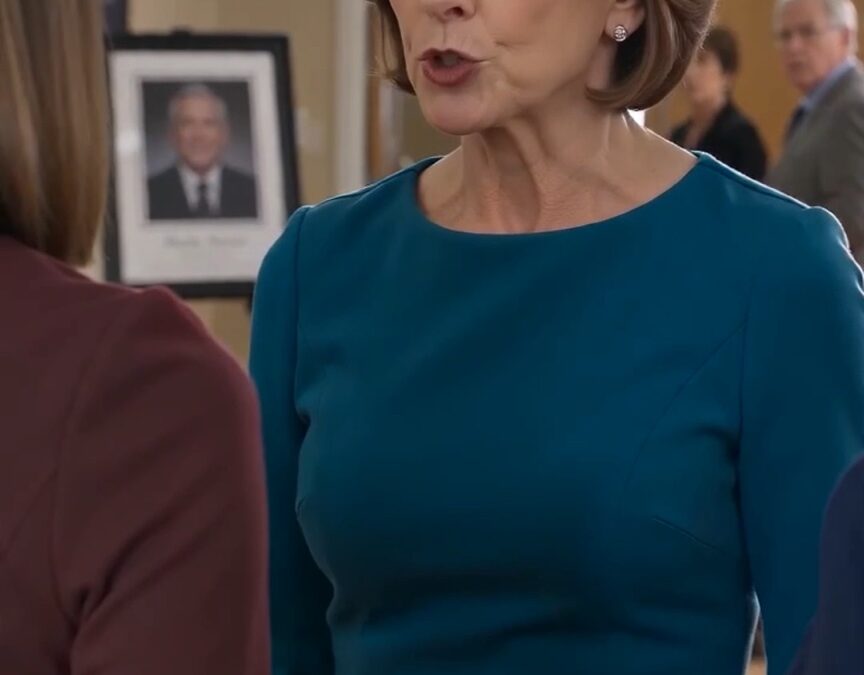
Joyce waited until Kendra looked directly at her.
“Linda sold her inherited lakeside lot for $84,000,” she said.
Kendra opened her mouth, but Joyce continued.
“I bought it on September 1, 2022.”
Eric looked at me.
“What lot?”
“The one she inherited,” Joyce said. “It was hers.”
I looked down at the chair beside my leg.
I’d hoped to get through that afternoon without explaining.
“She spent that money on Walter’s home aides,” Joyce continued.
“Not some of it. All of it.”
Kendra looked toward the people near the buffet.
Joyce didn’t raise her voice to follow her.
“It covered $3,000 a month for 28 months.”
I could see Eric working through the dates.
“September 2022 through December 2024,” Joyce said.
“That’s why he could stay home that long.”
Nobody had to take her word about the sale.
There had been a normal closing, with ordinary paperwork.
But she wasn’t waving a deed around the reception.
She had been the buyer.
She had sat across from me when I signed.
“I asked whether she was certain,” Joyce said.
“Linda said she needed dependable help for Walter.”
Kendra folded her arms.
“Walter had money.”
“He had expenses,” I said.
It was the first thing I’d said since the shove.
Joyce glanced at me before she went on.
“I’m not here to discuss their entire marriage.”
“Then why are you discussing their money?” Kendra asked.
“Because you just accused her of withholding care.”
The worker by the coffee urn stayed where she was.
She wasn’t pretending to arrange cups anymore.
Eric moved away from his wife.
“Mom, why didn’t you tell me?”
“You knew your father needed help.”
“I didn’t know you sold that.”
“No. You didn’t.”
He rubbed his forehead and looked toward Walter’s picture.
Joyce waited until I looked at her.
“May I read what he gave me?”
I knew she had visited him at hospice.
I hadn’t known he had given her anything.
“What is it?”
“A letter. He asked me to keep it.”
She indicated the buffet without leaving my side immediately.
“It’s over there. I brought it for you.”
Kendra shook her head.
“This is his memorial.”
“Yes,” Joyce said. “That’s why it belongs here.”
She walked to the buffet and returned with an envelope.
Nobody tried to take it from her.
I recognized Walter’s handwriting before she unfolded the page.
His letters had become uneven, especially near the margins.
He had always pressed hard when he wrote my name.
Joyce showed me the date: February 2, 2025.
“He asked me to read this if anyone blamed you.”
I swallowed and nodded.
It wasn’t a will.
It didn’t transfer property or give anybody legal authority.
It was my husband saying something he had wanted said.
Joyce read slowly.
“Linda sold the lake lot so I could stay home.”
I covered my mouth with the back of my hand.
“She wanted to keep it. I knew that.”
Eric sat down.
Joyce stopped until he looked up again.
“She used the money for help, then did the nights herself.”
The worker by the urn pulled a chair closer.
I shook my head when she offered it.
I needed to stay standing for that part.
Joyce continued reading.
“When home stopped being safe, she agreed to hospice.”
Kendra looked toward the exit.
“Don’t let anyone call that giving up on me.”
My husband had underlined that sentence.
Joyce didn’t need to tell anyone that.
I could see it from where I stood.
The final part was addressed to me.
“Linda, please eat supper sitting down. Let someone else wash up.”
That was when I took the chair.
I sat with both feet flat against the floor.
Joyce folded the letter along its existing creases.
She placed it on the table beside Walter’s photograph.
For a moment, I watched the edge of the paper.
Then Kendra spoke.
“She still didn’t do everything.”
“No,” I said. “I never claimed I did.”
“You let people think it.”
“Who?”
She didn’t give me a name.
“You brought food,” I said. “You visited him.”
“I did more than visit.”
“You helped sometimes. I thanked you.”
I wasn’t going to erase what she’d actually done.
She had brought meals when cooking felt impossible.
She had sat with Walter while I bought groceries.
Those things had mattered.
They didn’t make the rest of her story true.
Joyce pulled a chair beside mine but remained standing.
“I helped with the bedding,” she said.
“I saw Linda washing him and changing his clothes.”
Kendra looked down at the table.
“I was there when the overnight help wasn’t.”
Eric leaned forward with his elbows on his knees.
“I knew about the nights,” he said.
His wife turned sharply toward him.
“You weren’t always there either.”
“No,” he said. “I wasn’t.”
He looked at me rather than answering her again.
“I should have said that before she touched you.”
I folded the hem of my dress over my knee.
“Yes,” I said.
He nodded, then looked down.
I didn’t reach over to make him feel better.
There were people watching who knew us only slightly.
There were relatives who had heard Kendra’s version before.
I could tell by how carefully they avoided her eyes.
One woman came closer and asked whether I needed water.
I said I did.
She brought it without asking me to explain anything.
Kendra stayed beside the memorial table.
“I didn’t mean for you to stumble.”
“You pushed me,” I said.
“I was trying to get you away from—”
“You pushed me.”
She pressed her mouth shut.
Eric stood again.
“Tell them what you said wasn’t true.”
“Eric.”
“You said she wouldn’t pay for Dad’s care.”
“I didn’t know about the lot.”
“You didn’t ask,” I said.
She looked at me then.
For months, she had spoken as though she knew everything.
She had never asked how the aides were paid.
She hadn’t asked what happened after she went home.
She had asked whether the monthly transfer was coming.
Now the room was waiting for her to answer.
Kendra rubbed the side seam of her dress.
“I was wrong about the care money,” she said.
She said it toward Eric.
“Please look at the people you told,” Joyce said.
Kendra’s face tightened.
Then she turned toward the tables.
“Linda paid for the aides. I didn’t know that.”
Nobody clapped.
I would have hated that.
People simply looked at me instead of around me.
The woman with the water set a napkin nearby.
Eric asked whether I wanted to go outside.
“Not yet,” I said.
I wanted to finish speaking while everyone was present.
The reception worker came over quietly.
“We saw what happened,” she told me.
She asked whether I wanted medical attention.
I moved my ankle and checked the side of my hip.
Nothing hurt beyond the spot against the chair.
“No. Thank you.”
She asked whether I wanted police called.
“Not right now.”
She didn’t argue with me or promise an arrest.
She said the facility would document the incident.
I gave her my account before leaving that afternoon.
Joyce gave hers too.
The worker had seen the shove herself.
That mattered more than relatives calling it a misunderstanding.
Kendra heard the discussion and stepped closer.
“You’re making a report?”
“The center is,” I said. “I’m telling them what happened.”
“I already said I didn’t mean—”
“You haven’t apologized for pushing me.”
She looked toward Eric.
He didn’t answer for her.
“I’m sorry I pushed you,” she said finally.
I nodded once.
I had heard the words.
I wasn’t ready to tell her that settled anything.
Joyce asked whether I wanted her to sit.
“Yes,” I said. “Please stay.”
She sat close enough that I could turn toward her.
Eric remained standing across from us.
“There is something else,” I told him.
Kendra’s eyes moved back to my face.
“The household money stops after the payment already sent.”
Eric inhaled and held it briefly.
“Mom, can we talk about that privately?”
“We can discuss your budget privately.”
I set the water cup on the table.
“But I want the arrangement understood here.”
Kendra glanced toward the relatives.
“That money was supposed to help us.”
“It did help you.”
“We built our budget around it.”
“I know.”
She looked irritated by how little I was saying.
Then she said what she’d apparently been assuming.
“Wasn’t that something Walter set aside?”
“No.”
Eric looked as surprised as she did.
I had called it help when I began sending it.
They had let themselves supply the rest.
“It comes from my personal savings,” I said.
“There’s no fund with your names on it.”
Joyce rested her hands in her lap.
She didn’t speak for me.
“There isn’t a trust payment,” I continued.
“It isn’t part of your father’s pension.”
Kendra looked at Eric.
He shook his head slightly.
“I thought Dad had arranged something.”
“He knew I was helping,” I said.
“That isn’t the same thing.”
The payments had started in December 2023.
By May 2025, I’d sent 18 of them.
That was $21,600 they hadn’t needed to find themselves.
I hadn’t bought an interest in their home.
I wasn’t on their mortgage.
I hadn’t guaranteed their debt.
They hadn’t provided caregiving in exchange for those payments.
It had been help I chose to give.
There was no agreement requiring it to continue.
I told them that without listing their purchases.
I hadn’t come to the memorial planning an accounting.
I didn’t need to criticize their spending to stop mine.
Kendra lowered her voice.
“You can’t decide this because you’re upset.”
“I can decide what I give from my savings.”
“You’re punishing Eric too.”
Eric’s shoulders dropped.
“Don’t put it that way,” he told her.
“But that’s what she’s doing.”
“No,” I said. “I’m stopping a voluntary payment.”
I wasn’t asking for any of the money back.
I said that clearly.
The gifts already made were theirs.
Nothing in Walter’s estate was being redirected.
Nobody was losing property because of a speech.
Their house would remain their house.
Their mortgage would remain their responsibility.
Kendra asked how they were supposed to adjust.
“You’ll have to review your expenses,” I said.
She stared at me.
It was the same practical task waiting on my kitchen table.
Only I had been doing mine around sympathy cards.
Eric pulled out a chair and sat across from me.
“When does it stop?”
“The next transfer won’t go out on June 1, 2025.”
He nodded.
“I’ll put that in writing,” I said.
He looked at his wife before answering.
“All right.”
Kendra didn’t say all right.
She said we were discussing money at a memorial.
I looked at Walter’s letter beside his picture.
“I asked you not to start this here.”
She didn’t respond.
A relative began gathering empty plates at the far table.
People needed something ordinary to do.
The worker returned to the coffee urn.
I finished the water.
Joyce asked whether I wanted anything to eat.
I realized I hadn’t eaten the potatoes I’d made.
“Yes,” I said. “A little.”
She brought a plate and sat with me.
Eric remained at the table.
For a while, none of us talked.
Then he asked about the lake lot.
“Did Dad know before you sold it?”
“Yes.”
“Did he want you to?”
“He wanted me to keep it.”
I took a bite before continuing.
“He also needed help we could rely on.”
Eric stared at the plate Joyce had set before me.
“I would have helped.”
I put my fork down.
“You could have asked what we needed.”
He didn’t argue with that.
I wasn’t going to decide that afternoon what he might have done.
He had been given chances to visit and help.
Some he had taken.
Some he had missed.
I was tired of treating every conversation like his defense.
“Can I come by tomorrow?” he asked.
“Call first.”
“With Kendra?”
“No. Not now.”
He nodded again, more slowly.
Kendra was speaking quietly with her cousin near the door.
I didn’t invite her back to the table.
When the reception ended, Joyce helped collect the serving dishes.
I found the lid for my casserole.
There were potatoes stuck along the corners.
The chipped blue handle was facing the wall again.
I turned the dish so I could lift it comfortably.
Eric offered to carry it to the car.
I let him.
That didn’t mean we had settled everything.
It meant the dish was heavy and he had asked.
Joyce drove behind me to my house.
She waited while I opened the door.
Inside, I put Walter’s letter on the kitchen table.
I read it again without anyone watching my face.
Joyce filled the kettle.
“Did you know he wrote that for me?” I asked.
“He hoped you wouldn’t need it read aloud.”
I smoothed the folded edge against the tabletop.
“He should have told me.”
“He wanted to tell you plenty.”
I nodded.
There had been days when speaking exhausted him.
There had been days when I couldn’t bear another difficult conversation.
I wasn’t angry with him for using paper.
I was glad Joyce had kept it.
On May 11, 2025, I sent Eric and Kendra written confirmation.
I kept it brief and specific.
The monthly gift had ended.
The transfer scheduled for June 1, 2025, would not occur.
No repayment of past gifts was requested.
I saved a copy with my household records.
Then I canceled the recurring transfer through my bank.
I checked that it was actually canceled.
I didn’t close their accounts or touch their money.
I had no authority to do either.
I simply stopped sending my own.
Eric replied that he’d received the notice.
Kendra sent a longer message about bad timing.
I read it, then put the phone down.
I answered only the practical question about the next transfer.
There wouldn’t be one.
When June came, the payment did not leave my account.
I checked the balance while sitting at the kitchen table.
Then I put the statement away.
There were still expenses to manage after Walter’s death.
Keeping that money didn’t erase them.
It did mean I could plan without pretending the gifts were unavoidable.
The community center sent me its incident report.
I checked that it described a shove, not an argument alone.
It did.
I kept that with my written account.
I didn’t circulate it among relatives.
The people who needed to know had been there.
Eric came by without Kendra.
He asked before bringing up the reception.
I told him I could talk for a while.
He apologized for telling me not to make a scene.
“You weren’t the one making it,” he said.
“No.”
“I know that now.”
“You knew enough then.”
He sat with that before answering.
“Yes,” he said. “I did.”
That was a better conversation than another explanation for Kendra.
I let him stay for coffee.
I didn’t promise when I would invite her over again.
On July 1, 2025, Eric told me their mortgage was current.
They had paid it without my subsidy.
He didn’t give me a list of adjustments.
I didn’t ask for one.
I wasn’t supervising their household.
I was managing mine.
That evening, Joyce came for supper.
I had made potatoes because she liked the browned edges.
She put her bag down and offered to help.
“Would you set the table?” I asked.
She did, then sat while I brought dinner over.
Walter’s letter was put away safely.
His photograph stood where I could see it from the table.
Joyce asked whether I wanted her to wash up afterward.
“We can leave it until we’ve finished eating.”
She smiled and unfolded her napkin.
I sat down across from her.
Between us was my white ceramic casserole dish, its chipped blue handle turned toward me.
You Might Also Enjoy




