My Mother-in-Law Took My Glasses After Surgery, Until My Lawyer Exposed Her Plan
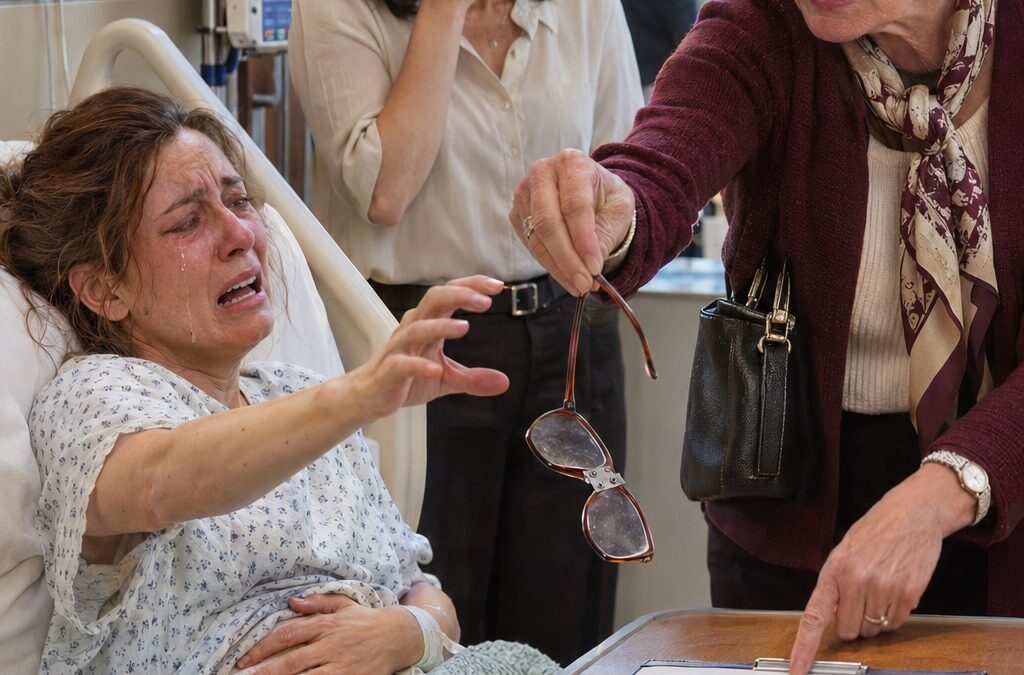
Part 3: The Voice Beside My Bed
“Adam signed here as the witness,” Denise said.
My husband stopped looking at the doorway.
“He received a copy when the loan was made.”
I looked at him over my glasses. He had spent that whole visit letting Beverly call it family help.
“You knew exactly what she owed me,” I said.
“Yes.”
Denise didn’t let him add anything yet. She asked me to open the saved voicemail.
Beverly folded her arms across her purse.
The message was from September 9, 2025. I had listened to it alone, then forwarded it.
Denise pressed play with my permission.
Beverly’s voice came through the phone speaker.
“I know the $84,000 was a loan, Rachel. But Adam says you’re still taking the strong medicine. We’ll bring the forgiveness paper while you’re still medicated. You’ll sign it, and we can stop all this.”
Nobody reached for the phone.
The message ended with the sound of Beverly hanging up.
Denise laid the phone beside the printed transcript.
“That is why we’re discussing this here,” she said.
Beverly turned toward Adam.
“You told me she wanted it settled.”
“I wanted the arguing settled,” he said.
I pulled the blanket away from my sore stomach. Its edge had gathered against the dressing.
“You wanted me to give up the money,” I said.
He rubbed his palms down his trousers.
“I thought we’d talk about it.”
“You watched her take my glasses.”
His hands stopped moving.
Beth asked whether I needed to change position. I said yes, and she helped adjust my pillows.
Everyone waited while she checked that I was comfortable. Denise moved her chair so I could see her.
The forgiveness paper remained on the far side of the tray.
Beverly pointed toward the phone.
“That was a frustrated message. You know how I talk.”
“I know what you said,” I answered.
“You’re making it sound ugly.”
“You waited until I was in the hospital.”
She looked at Corinne, who shook her head.
“I didn’t know about that message,” Corinne said.
Beverly told her not to get involved.
“You brought me here,” Corinne replied.
Denise opened the loan agreement beside the transcript.
She explained that the signed terms required full repayment. The due date was September 8, 2025.
It had passed without a principal payment.
The agreement did not forgive anything because I became ill. Adam’s signature as witness didn’t make him the lender.
He couldn’t release money that Beverly owed me.
“My client hasn’t authorized any forgiveness,” Denise said.
“Her husband has a say,” Beverly replied.
“He can speak with her,” Denise said. “He cannot sign away her claim.”
I asked to see the agreement myself.
With my glasses back, the writing was easy to read.
There was my signature from September 8, 2023.
Beverly’s signature sat beneath it. Adam’s was beside the word identifying the witness.
I remembered signing at my kitchen table. Beverly had brought estimates for the repairs.
She’d been frightened by water coming through the roof.
The foundation work couldn’t keep waiting, either.
I had inherited money in May 2023. I hadn’t used it for a bigger car or furniture.
When Beverly asked, I thought about her house.
I thought about her sitting under that leaking ceiling.
So I lent her the money from my separate account.
I had wanted the repairs done safely and properly. I had also wanted the money returned.
Both things had been true when I signed.
Denise had brought evidence of the transfer as well.
She didn’t spread it across my lunch tray.
“The signed agreement and transfer records establish the transaction,” she said. “The message also contradicts your claim that it was a gift.”
Beverly shook her head.
“After everything I’ve done for this family.”
I took my water cup again.
This time, I managed a drink.
“I’m not discussing every year of our marriage,” I said. “We’re discussing the money you promised to return.”
Adam pulled his chair closer.
“Can we do this when you’re home?”
“The due date passed while I was here.”
“We could work something out.”
“Then you should have stopped her taking my glasses.”
He looked at the repaired hinge.
For the first time, he seemed to notice it.
Beverly reached for the forgiveness document.
Denise let her take it.
There was no signature of mine on it. There would not be one after they left, either.
Beth asked again whether I wanted the visit ended.
“Yes,” I said. “Except for Denise.”
Beverly stood without moving toward the door.
“What about the help you’ve been sending?”
“That’s stopping,” I told her.
“You know I count on that.”
“I know.”
The regular payments had never been part of the loan. They were voluntary help for her living expenses.
I’d sent $600 monthly from September 2023 through August 2025.
That was $14,400 I had not asked her to repay.
I wasn’t adding it to the debt now.
But I wasn’t continuing it, either.
Adam opened his mouth, then looked toward Denise.
She waited for me to finish speaking.
“There isn’t another payment coming,” I said.
Beverly looked at him as though he’d announced it.
He didn’t promise to change my mind.
Corinne picked up her mother’s purse from the chair.
“Come on,” she said.
Beverly pulled it out of her hand.
At the doorway, she turned back toward the bed.
“You can’t just order money out of my account.”
“No,” Denise said. “We will use the proper process.”
“And that house belongs to me.”
“It does,” Denise answered.
Beverly gave me a small, satisfied nod.
“Then you can’t touch my house.”
Part 4: The Payment She Finally Made
“Rachel doesn’t own your house,” Denise said.
Beverly stayed in the doorway, waiting for more.
“The loan is unsecured. That doesn’t erase your obligation.”
She explained it without raising her voice.
There was no mortgage securing my loan. There was no right to take Beverly’s keys.
A collection case would require the ordinary court process.
Beverly would have the opportunity to respond.
I wasn’t being handed her house from a hospital bed.
I was refusing to forgive what she owed.
“You’ll receive a written demand,” Denise told her.
Beverly left without looking at me again.
Corinne followed, carrying the unsigned forgiveness paper.
Adam stayed beside the window until Beth spoke.
“Rachel asked for the visit to end.”
He looked at me.
I nodded toward the door.
After he left, Beth checked my pain and incision.
She asked whether I wanted restrictions on visitors.
I told her I wanted staff to check with me before allowing Beverly back.
Beth explained how that would be noted.
Then she returned my lunch tray within easy reach.
The soup had gone cold.
She offered to get something else, but I wasn’t hungry.
I asked for a clean napkin instead.
There was a thumbprint on one lens of my glasses.
I rubbed it away while Denise packed the documents.
“You don’t have to decide about your marriage today,” she said.
“I know.”
“And you don’t have to sign anything today.”
“I know that now, too.”
She left the agreement with the other evidence in her bag.
I kept my phone beside the call button.
During recovery, I handled the collection through Denise.
I didn’t argue with Beverly over messages.
The written demand asked for the overdue principal.
Beverly responded that repayment wasn’t possible.
She also repeated that families didn’t sue each other.
Denise forwarded the response and asked for my instructions.
I read it at my kitchen table.
My glasses rested halfway down my nose.
“Proceed,” I told her.
Denise filed a civil action for the unpaid loan.
Beverly received the papers and sought legal advice.
Nobody arrived to remove her from her house.
Nobody changed her locks or emptied her account.
There were written responses, calls between attorneys, and settlement discussions.
It wasn’t quick enough to feel satisfying every day.
It was still easier than another family meeting.
While that went on, Adam and I talked at home.
I put the hospital forgiveness paper between us.
Corinne had returned it after the visit.
“Did you help her write this?” I asked.
“No.”
“Did you know she was bringing it?”
“Yes.”
He answered without looking down that time.
He said Beverly had been frightened about repayment.
He said he’d hoped I would agree to forgive some of it.
“You never asked me at home,” I said.
“I thought you’d say no.”
“So you waited until saying no was harder.”
He sat with that for a while.
Then he said he had been wrong.
I asked about the medication mentioned in the voicemail.
He admitted telling her I was still taking pain medicine.
He said he hadn’t told her to use that.
“You still stood there,” I said.
“Yes.”
I wasn’t ready to share a bedroom with him.
By agreement, he moved out while I remained in our home.
We handled the household arrangements separately from Beverly’s debt.
He didn’t argue that leaving meant surrendering his interest.
I didn’t ask him to make promises in return for staying.
I wanted space to recover without hearing another explanation.
My work resumed gradually as my recovery allowed.
I started with hems I could manage sitting down.
The first customer garment I finished felt unusually heavy.
I set it aside and rested before pressing it.
There was no dramatic return to a full schedule.
I worked, rested, and answered Denise’s calls.
Beverly eventually chose to sell her house.
It was hers to sell, and she had equity.
She decided a smaller rental would be manageable.
That decision became part of a written settlement.
The closing agent would pay me directly from the proceeds.
I would receive the full $84,000 principal.
I did not receive interest or an attorney-fee award.
In exchange, the settled claim would be dismissed after payment.
Denise reviewed the agreement before I signed it.
This time, I sat at my own table.
My glasses were on my face.
There was no one standing over my shoulder.
The sale closed on November 14, 2025.
Denise confirmed that the settlement payment had been received.
I checked my account after her call.
The principal had come back in full.
I left the screen open while I finished my tea.
Then I closed it and called Denise to thank her.
Beverly moved into the smaller rental.
She sent me a message about setting it up.
She needed curtains shortened and asked when I could come.
At the bottom, she added a question about monthly help.
I read it without forwarding it to Adam.
“I won’t be sending more money,” I wrote.
“I also won’t be taking on your alterations.”
She replied that she hadn’t expected to be charged.
I didn’t send another explanation.
Corinne later called to ask about my recovery.
She apologized for standing still when Beverly took my glasses.
“I kept thinking Adam would say something,” she told me.
“I kept thinking that, too.”
She didn’t ask me to forgive her mother.
That made it possible to finish our conversation.
Adam collected the rest of his work clothes by arrangement.
He apologized again before leaving.
I accepted that he’d said it.
I didn’t invite him to move back.
By December 1, 2025, my sewing table was clear enough to use properly.
I spread a skirt beneath the machine’s work light.
The hem needed patient, ordinary attention.
I checked the fold, then lowered the presser foot.
My phone stayed on the kitchen counter.
Beside the fabric lay my reading glasses, the repaired hinge folded carefully inward.
You Might Also Enjoy




