My Father Ordered Me Out of My Own Supper, So I Finally Stopped Supporting Him
Chapter 1: The Chair He Blocked
My father blocked my kitchen chair at 67 and ordered me out of the supper I had cooked for him.
My stepmother watched while he told our guests I lived off them.
I was standing in my own home, with my savings already stretched.
Then I walked around him and sat down beside the blue folder he had ignored all evening.
Before I sat, he pointed toward my front doorway.
“Out. You live off us.”
His burgundy polo brushed against my plate.
He stood between me and the wooden head chair.
The worn patch on its left arm showed beneath him.
I had wiped that arm before setting the table.
Now I was staring at it instead of him.
“Dad, move.”
“Not until you stop embarrassing yourself.”
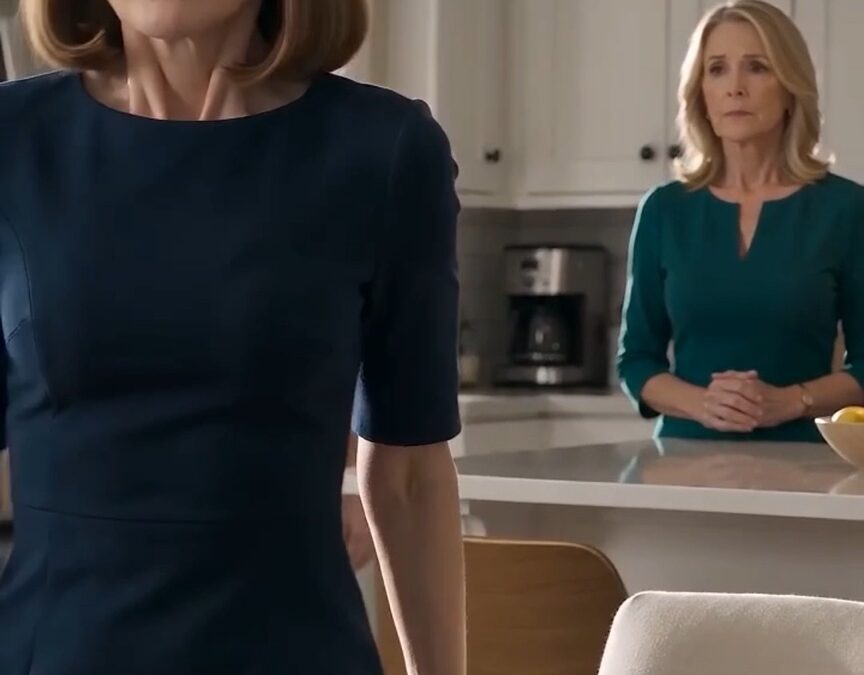
Celia stood beside the counter in her green dress.
At 63, she still checked every room before company arrived.
She had already straightened my bathroom towel that afternoon.
Now she folded her arms and looked toward the doorway.
“Go cool off somewhere, Nora.”
I was 39, and this was my kitchen.
My aunt Joan stood behind her partly pulled-out chair.
She was 65, two years younger than Dad.
The two neighbors we had invited remained near the living room.
One held a water glass against their chest.
The other kept looking at the food.
Nobody had started eating.
The roast rested on the platter I used for holidays.
I had mashed the potatoes with warm milk.
Dad liked his carrots soft, so I had cooked them longer.
It was August 23, 2025, his retirement supper.
He had retired from work as a maintenance mechanic.
I wanted one pleasant evening before discussing money.
The blue household folder was beside my plate.
I had meant to open it after dessert.
Celia changed that while showing the neighbors my kitchen.
“Martin always makes sure Nora has somewhere nice.”
She touched the cabinet door as she said it.
The cabinets had come with the house.
So had the scratched floor and the sticking window.
“I bought this house myself, Celia.”
Dad looked up from the table.
“Don’t start.”
“I’m just correcting that.”
“She forgets who keeps her comfortable,” he told everyone.
I set down the serving spoon.
“Please don’t say something that isn’t true.”
Celia told me to show some gratitude.
Then Dad stepped in front of my chair.
I hadn’t purchased the house yesterday.
My closing date was April 15, 2019.
Dad and Celia knew I had bought it alone.
They contributed nothing toward the purchase.
They had never lived here.
They owned and occupied their own separate house.
Still, they had begun treating my kitchen as available.
If a family meal needed hosting, Celia mentioned my table.
If food needed preparing, Dad told people I enjoyed cooking.
Sometimes I did.
That didn’t mean every gathering had been my idea.
I worked full-time as a payroll clerk.
I lived here unmarried, paid my mortgage, and maintained the place.
Dad knew that, too.
Joan moved her chair another inch.
“Martin, let her sit down.”
“Stay out of it.”
“You’re doing this in front of me.”
He looked at her, then back at me.
His short gray hair was damp near his forehead.
I noticed a spot of gravy on his charcoal trousers.
Earlier, I would have quietly brought him a wet cloth.
I didn’t move toward the sink.
Instead, I remembered his chair at their house after surgery.
His loose slipper had folded under his heel.
I had knelt beside him and straightened it.
“Wait until I get the walker steady.”
He gripped its handles while I held the frame.
Getting upright took him two attempts.
We crossed the living room slowly toward their kitchen.
He stopped twice, breathing through his mouth.
At the kitchen chair, he caught my sleeve.
“Don’t leave yet, Nora.”
“I’m not leaving.”
I stayed while he ate and took his medication.
Then I washed the saucepan soaking in their sink.
Joan had arrived while I was drying it.
She had watched me help him back to his chair.
Dad thanked me then.
That was how the help had started.
Recovery had taken longer than any of us expected.
The money conversation kept getting postponed after he improved.
Not tonight.
Not before the weekend.
Not while Celia was already worried.
Meanwhile, I kept checking my emergency savings.
That morning, before anyone arrived, I opened my household records.
I printed the recurring-transfer authorization and transfer history.
Then I covered the private account information with blank paper.
I clipped the covers securely over those details.
My original closing statement went behind the bank pages.
All of it fit inside the blue folder.
I put it beside my place before starting the potatoes.
I wasn’t planning a surprise during his retirement supper.
I was planning to finish a conversation afterward.
Now Dad was ordering me toward my own front door.
The oven fan kept running behind him.
I reached around him and put my water glass down.
Then I walked along the other side of the table.
Dad turned, following me with his eyes.
I pulled out the head chair from the opposite angle.
He could have moved to block me again.
He didn’t.
I sat, smoothing my solid navy dress beneath my knees.
My brown bob had slipped behind one ear.
I tucked it back and moved the potato bowl aside.
Then I opened the folder flat on the table.
Dad recognized the bank heading immediately.
His smile disappeared.
He looked toward Joan before looking back at me.
I kept one palm beside the clipped pages.
“Sit down if you want to hear this.”
Celia pulled a chair out, then hesitated.
Joan sat without waiting for anyone else.
The neighbors remained by the living room opening.
Dad no longer pointed toward the door.
He stared at the folder beside my plate.
“What did you bring to dinner, Nora?”
Chapter 2: The Pages Facing Him
“The records we needed to discuss afterward.”
Dad glanced toward the neighbors.
“This isn’t the time.”
“You told them I live off you.”
Celia lowered herself into her chair.
“Don’t make this worse.”
I moved the top page so Dad could read it.
“I send you $1,800 every month.”
Joan looked from me to her brother.
Dad kept his eyes on the paper.
“The first payment was September 1, 2022.”
I pointed to the date with my fingernail.
“The most recent was August 1, 2025.”
Celia pulled her napkin into her lap.
“That doesn’t belong in a dinner conversation.”
“Neither did what he said about me.”
I turned the transfer history toward the center.
“There are 36 payments here.”
Dad reached for his water but didn’t drink.
“Thirty-six payments of $1,800 total $64,800.”
One neighbor slowly lowered their glass onto the counter.
I heard the base touch the tile.
Nobody spoke until Dad leaned back.
“You offered.”
“Yes. I did.”
“Nobody forced you.”
“I haven’t said anybody did.”
“Then why are you acting like this?”
“Because you just told people you support me.”
He looked down at his fork.
I left the history facing him.
The pages showed the dates and amounts clearly.
They also showed which direction the money had traveled.
My account numbers stayed covered.
His account details stayed covered, too.
I had no reason to expose either.
Joan leaned closer.
“Can I look at that?”
“Yes. Please leave the covers clipped.”
She read the first page from her seat.
Then I slid the history within her reach.
I didn’t need her to take my word.
At work, I checked payroll figures before answering questions.
I wanted this checked the same way.
Joan traced the dates without touching the printed amounts.
“That’s every month?”
“Every month.”
“Even after he went back to work?”
“Yes.”
Dad shifted in his chair.
“Recovery didn’t end just because I could walk.”
“I know,” I said.
“I was there.”
Celia looked toward him, then at her plate.
I could have listed the things I did.
The meals carried over after work.
The laundry I folded while Dad rested.
The way I moved his slipper before helping him stand.
Joan had seen enough of that herself.
The bank pages showed something she hadn’t seen.
“They needed help covering their mortgage,” I explained.
“I sent it to their account.”
“Not to their lender?” Joan asked.
“No. To Dad and Celia.”
Dad rubbed a thumb along his water glass.
“You’re making it sound like something suspicious.”
“It wasn’t suspicious. It was voluntary help.”
I had not co-signed their mortgage.
I had not become a borrower on their home.
I had no lease with them.
There was no support contract or repayment agreement.
I had never signed anything promising permanent payments.
My bank authorization only instructed my bank to send money.
It didn’t give Dad ownership of my future wages.
Celia lifted her head.
“You make a decent living.”
“I have my own bills.”
“You’ve never had children to support.”
“That doesn’t make my savings yours.”
She pressed her lips together.
I hadn’t said it loudly.
Still, Dad looked toward the neighbors as if I had shouted.
“Family used to help family without keeping score.”
“I keep bank records, Dad.”
“You know what I mean.”
“I know what you told our guests.”
Joan set the pages down carefully.
“Martin, is any of this incorrect?”
He stared at the serving platter.
“Her figures are right.”
I waited.
He didn’t add anything else.
It was the first time anyone besides me acknowledged the amount.
I had watched those transfers leave one by one.
Most months, I looked away from the running total.
Seeing all 36 together made me pull my chair closer.
I put both feet flat on the floor.
“I need that money for my own emergency savings.”
Dad let out a breath through his nose.
“Everybody needs savings.”
“Yes.”
“You’re young. You have time.”
“I’m the one paying my mortgage here.”
Celia glanced toward the folder.
“You should have talked to us privately.”
“I tried arranging that before you retired.”
“We’ve been busy.”
“I know. That’s why I brought the records tonight.”
The neighbors were still standing.
I looked toward them.
“You don’t have to stay for this.”
One shook their head.
“We can wait.”
I nodded and turned back.
Dad had selected the audience when he called me dependent.
I wanted the correction made before that audience left.
Joan asked whether I wanted everyone to sit.
“Yes. If they’re comfortable.”
The neighbors took their places at the table.
Nobody reached for the food.
Celia straightened the salt shaker beside her plate.
“You could put those away now.”
“Not yet.”
Dad’s jaw tightened at that.
I usually kept explaining after he became annoyed.
Then he would interrupt one explanation with another complaint.
This time, I let the pages remain where they were.
Joan read the transfer description again.
She looked toward my hallway, then back at Dad.
Her hand stopped on the corner of the page.
Something in her expression made me watch her closely.
“Wait a minute,” she said.
Dad looked up immediately.
“Joan, don’t.”
She ignored him and turned toward me.
“Why did he tell me those payments were rent?”
Chapter 3: What He Told Them
I looked at Joan.
“What rent?”
Dad pushed his chair back a few inches.
“It was easier to explain that way.”
“To explain what?”
Joan kept her hand beside the page.
“He told me he owned this house.”
I looked toward the cabinet Celia had been showing off.
Then I looked at my mail basket near the doorway.
My mortgage statement was tucked behind an electric bill.
I had opened both before work that week.
“He said I was paying him rent?”
Joan nodded.
“He said you sent it every month.”
Dad made an impatient noise.
“It was a family conversation.”
“You used the word rent,” Joan said.
“You said the house would help with retirement.”
Celia folded her napkin lengthwise.
She didn’t look surprised.
I noticed that before I could answer.
“You knew he was saying this?”
She kept folding.
“Nora, not everything needs to become an argument.”
“Did you know?”
“I heard him say it.”
“And you knew it wasn’t true.”
“Of course I know whose house this is.”
Dad looked sharply at her.
She put the napkin down.
“I wasn’t going to correct him in company.”
I looked around at the people he had just insulted me before.
Apparently, correcting him in company was unacceptable.
Telling people I depended on him had been acceptable.
I pulled the closing statement from the folder.
The corner had been creased since closing day.
I smoothed it once before placing it beside the bank pages.
“This is my closing statement.”
The purchaser and borrower lines carried my name.
The closing date was April 15, 2019.
There was no second borrower beside me.
“This isn’t the deed,” I told Joan.
“It’s the statement from my purchase.”
I pointed to the borrower line.
“I alone hold title. I alone borrowed the mortgage.”
Dad had seen the house before I bought it.
Celia had visited after I moved in.
Neither had brought purchase funds to closing.
Neither had paid a down payment afterward.
They had never occupied a room here.
There had never been a rental arrangement between us.
Dad knew every one of those things.
“You’re treating us like strangers,” Celia said.
“I’m explaining what you let people believe.”
Joan leaned over the page.
“I’m sorry, Nora.”
“You didn’t invent it.”
“I believed him.”
“He’s your brother.”
Dad looked at her.
“And now you believe her instead.”
“I’m reading what’s in front of me.”
He pushed his plate away from the folder.
“I never said I went to closing.”
“You said you owned my house,” I said.
“You’re making too much of a phrase.”
“Rent isn’t a phrase for helping with your mortgage.”
One neighbor cleared their throat.
“We understood this was Nora’s place.”
I nodded toward them.
“It is.”
Dad’s cheeks reddened.
I didn’t ask the neighbor to say more.
They weren’t there to conduct an investigation.
They had only needed the correct information.
Celia reached for her glass.
“We didn’t think Joan would repeat a private conversation.”
I turned toward her.
“The problem isn’t that she repeated it.”
She took a small drink without answering.
Dad glanced toward the front doorway.
He didn’t seem interested in sending me through it now.
“I helped raise you,” he said.
“I know.”
“I worked all those years.”
“I know that, too.”
“And this is what I get.”
I straightened the two stacks of paper.
One stack showed what I had sent.
The other showed what I had purchased.
He wanted to talk about everything except those facts.
“I haven’t denied you worked,” I said.
“I’m saying you don’t own this house.”
He leaned back and crossed his arms.
“Everything has to be yours.”
“The mortgage certainly has been.”
Joan lowered her eyes briefly.
Celia stared at me over the rim of her glass.
I hadn’t intended that answer to be sharp.
It was simply the bill I paid every month.
That payment didn’t stop when theirs left my account.
The roof and furnace remained my responsibility, too.
My payroll checks had to cover more than their help.
Dad tapped the table with one finger.
“You knew I was retiring.”
“Yes.”
“You knew I’d have less coming in.”
“Yes.”
“Then why act surprised?”
“I’m surprised you planned around my money without asking.”
Celia set her glass down.
“We’ve had that amount in the budget for years.”
“I wasn’t included in that decision.”
“You kept sending it.”
“I kept asking when we could discuss stopping.”
Dad shook his head.
“You said we needed to talk.”
“That was what we needed to talk about.”
He looked toward Joan again.
She didn’t supply an excuse for him.
I could see him waiting for her to say something comforting.
Instead, she folded her hands beside her plate.
Dad turned back to me.
“I can’t just change everything overnight.”
“I didn’t ask you to retire overnight.”
“I’ve earned retirement.”
“I didn’t agree to replace your wages.”
He opened his mouth, then closed it.
Celia looked at the roast.
It had been sitting long enough to need reheating.
I had spent hours making it tender for him.
For a moment, I wanted to put the papers away.
I wanted one ordinary minute where someone passed the potatoes.
Then Dad leaned forward.
“Promise me you’re keeping the payment.”
Chapter 4: The Transfer I Stopped
“No.”
Dad looked as though he hadn’t heard correctly.
Celia’s hand stopped beside the serving spoon.
“I’m ending the voluntary transfers,” I said.
“You don’t make decisions like that over dinner.”
“I’m deciding what leaves my own account.”
He glanced toward the living room.
“Come talk to me privately.”
“No. We can finish here.”
His face changed.
“You don’t trust your father?”
“I want everyone to hear the same answer.”
He looked at Joan.
She stayed where she was.
Earlier, I would have welcomed a private conversation.
It would have spared the guests further awkwardness.
But Joan had believed a private explanation from him already.
I wasn’t giving him another answer he could rename.
Celia moved her chair closer to the table.
“You need to take a day before doing anything.”
“I brought the papers because this was already overdue.”
“You’re angry.”
“Yes. The payment still needs to stop.”
I put the closing statement back into the folder.
Then I stood.
Dad started to stand, too.
“I’m going to the household desk,” I told him.
“You can stay here.”
The desk sat in my living room.
From it, I could see the kitchen table.
I sat and opened my own banking access.
The screen faced away from everyone.
Nobody needed to see my password or balance.
I went to scheduled transfers.
The next payment showed September 1, 2025.
The amount was $1,800.
I checked the receiving account against the printed record.
Then I selected the recurring schedule.
My finger paused over the cancellation choice.
For nearly three years, I had left that schedule alone.
I knew exactly how to cancel it.
I had simply kept finding reasons not to.
At the table, Dad started talking to Joan.
“She’s doing this to teach me a lesson.”
I looked back.
“I’m doing it because I need my own income.”
Then I returned to the screen.
I selected cancellation and read the next page.
The future recurring transfers were canceled.
There were no pending payments left on that schedule.
I saved the confirmation in my household records.
Then I printed it.
The printer made its usual rattling sound.
Celia turned toward it.
“What are you printing now?”
“The cancellation confirmation.”
“Are you keeping a file about us?”
“I’m keeping my financial records.”
I retrieved the paper and returned to the table.
Dad watched me sit in the head chair again.
“Well?”
“The September 1 transfer is canceled.”
Celia dropped her napkin onto her plate.
“You actually stopped it?”
“Yes. And the later recurring payments.”
Dad shook his head slowly.
“You’re throwing a fit.”
“I’m ending an expense.”
“You offered to help.”
“I did help.”
He looked at the folder.
I opened it only far enough to insert the confirmation.
The history remained behind it.
I wasn’t deleting what I had already given.
The $64,800 stayed theirs.
I wasn’t asking the bank to reverse those transfers.
I wasn’t making a retroactive repayment demand.
There had been no loan agreement.
I had understood the money as voluntary support then.
I understood it the same way now.
“I’m not asking you to return the previous payments.”
Dad looked up.
“That doesn’t help with next month.”
“It tells you exactly what I am doing.”
Celia drew a breath.
“What about this month?”
“The August 1 payment already went through.”
“And September?”
“It won’t.”
Dad put both palms against the table.
I moved the folder farther from the gravy dish.
“You need to give us time.”
“You have the rest of August to review things.”
“That’s barely any time.”
“I asked to discuss it before you retired.”
Celia interrupted.
“We didn’t know you meant this.”
“I said I couldn’t keep doing everything.”
“We thought you meant hosting.”
“That needs to change, too.”
Her eyes narrowed.
I could see the next argument arriving.
I kept the conversation on the transfer.
“I’m not accessing your account,” I said.
“I’m not contacting your lender.”
“I’m not changing anything you own.”
Dad looked toward the neighbors.
They were listening without joining in.
The same people he had told I depended on him.
Now they were hearing him demand my continued support.
He lowered his voice.
“Nora, please come outside for one minute.”
“No.”
“You can’t keep saying no to everything.”
“I’m saying no to the payment.”
“And talking privately.”
“Tonight, yes.”
Joan reached for her water.
She didn’t look pleased about any of it.
But she didn’t ask me to make Dad comfortable.
That helped me stay seated.
Celia began twisting the edge of her napkin.
I recognized that movement.
She usually did it while deciding how to phrase a complaint.
This time, her voice came out quieter.
“What are we supposed to do about the mortgage?”
Chapter 5: The Doorway After Supper
“You’ll need to make your own arrangements.”
Celia stared at me.
“You say that like it’s easy.”
“I’m not saying it’s easy.”
Dad gave Joan a frustrated look.
“She knows we need that money.”
Joan put her glass down.
“I know it’s your mortgage.”
Celia looked toward the neighbors.
“We could lose our house over this.”
I kept my hands beside my plate.
“I’m not taking your house.”
“You know what she means,” Dad said.
“Yes. She means you need a different budget.”
Their mortgage remained their legal responsibility.
Their house still belonged to them, subject to that mortgage.
Nobody had served an eviction notice.
Nobody had started an instant court proceeding.
I had no authority over their home.
I couldn’t accelerate their loan or seize their accounts.
I could stop giving them my money.
That was the only change I had made.
“You can review expenses,” I said.
“You can contact your lender about available options.”
Dad pushed his chair back again.
“I’m retired.”
“You can also consider paid work.”
“I worked for decades.”
“I haven’t said otherwise.”
Celia rubbed the table beside her plate.
There was nothing there to wipe away.
I wanted to get up and clear the food.
It would have given me something ordinary to do.
But every time I served or fetched something, Dad kept talking.
I stayed seated until Joan spoke.
“Nora, would you like us to leave?”
“Yes.”
The answer came out before I could soften it.
I looked at the neighbors.
“I’m sorry your evening turned into this.”
One of them shook their head.
“You didn’t start speaking to yourself that way.”
I nodded because I couldn’t manage much more.
They stood and carried their glasses to the counter.
Nobody suggested we all hug.
Nobody told Dad he hadn’t meant it.
I appreciated their leaving without another performance.
I walked them through the living room to the door.
The driveway still held some warmth from the day.
Their car doors closed, and I waited until they backed out.
When I returned, Celia had opened my storage cabinet.
“What are you looking for?”
“Something for your father’s supper.”
She had a lid in one hand.
“I’ll put the leftovers away.”
“He still needs to eat.”
“He can eat here before leaving if he wants.”
Dad stood.
“We’re not staying to be insulted.”
I looked at the table he had ordered me away from.
I didn’t repeat his words back.
Celia returned the lid and closed the cabinet hard.
Then she smoothed her blonde, shoulder-length hair.
She looked ready for me to apologize.
Instead, I picked up the blue folder.
“There’s one more thing.”
Dad stopped beside the living room opening.
“What now?”
“I’m not hosting the next family gathering.”
Celia let out an impatient breath.
“Nobody said you had to.”
“You told people it would be here.”
She glanced at Dad.
Earlier, I had heard her discussing my kitchen’s availability.
She had done it while I washed serving utensils.
There had been no question for me to answer.
“You’ll need to arrange another place,” I said.
Dad shook his head.
“So we’re not welcome here anymore.”
“I’m withdrawing the standing offer to host.”
“You’re making everything difficult.”
“I’m not available to cook and clean for every gathering.”
Celia picked up her purse from the living room chair.
“You could have said something before.”
“I’m saying it now.”
I placed the folder on the household desk.
“For now, I need contact in writing.”
Dad looked at me sharply.
“You won’t speak to your own father?”
“Not by phone about money or tonight.”
Celia stood beside him.
“Do we need an appointment to see you?”
“Don’t come over without an invitation.”
Dad looked toward the front door.
I moved aside so the path remained clear.
I didn’t block him.
I didn’t order him out before an audience.
He left with Celia beside him.
From the doorway, I watched them walk to their car.
Dad didn’t turn around.
After they drove away, Joan stayed near the kitchen counter.
“Do you want help?”
“With dishes. Not with Dad.”
“All right.”
We covered the roast and refrigerated the potatoes.
Joan washed while I dried.
The water was hot enough to steam her glasses.
She pushed them up with her wrist.
Neither of us tried to explain away the evening.
After a while, she said she should have questioned him.
“I wish you had told me about the rent.”
“I thought you knew what he was calling it.”
“I didn’t.”
“I’ll tell you if he says it again.”
That was useful.
I didn’t need her to argue with him for me.
I needed to know what people were being told.
When we finished, I walked her to the door.
She asked whether I wanted company longer.
“Not tonight. Thank you.”
After she left, I locked the front door.
Then I returned to the kitchen and filled my plate.
I sat in the head chair to eat.
The carrots were softer than I liked.
I ate them anyway.
My phone sounded from the living room desk.
Dad had sent a message in writing.
I set down my fork and opened it.
“Tell Joan not to repeat any of this.”
Chapter 6: The Money Stayed Put
I read Dad’s message twice.
He hadn’t mentioned ordering me out.
He hadn’t corrected the claim about owning my house.
He wanted Joan to keep the facts private.
I put the phone down and finished eating.
Then I washed my plate and dried the counter.
Only afterward did I answer.
“I won’t ask Joan to hide what happened.”
He replied that family business should stay within the family.
I didn’t send anything back.
He had introduced our finances to the neighbors.
I had corrected the information he gave them.
There was nothing else I needed to add that night.
I put the phone away.
The folder remained on the household desk until morning.
Then I placed it in the drawer with my mortgage papers.
During the next week, I followed my ordinary routine.
I went to work, packed lunches, and paid my bills.
Dad wrote twice about discussing things when everyone was calmer.
Both messages included a request to keep the payments going.
I answered that I wasn’t continuing them.
I didn’t write a longer explanation each time.
On September 1, 2025, I checked before breakfast.
The $1,800 had not left my account.
I opened the scheduled-transfer page to confirm.
There was no future transfer to Dad and Celia queued.
I checked the activity list once more.
Then I saved the record beside the cancellation confirmation.
The money was still there.
I sat at the desk with my coffee cooling.
Usually, I started subtracting on the first of the month.
My mortgage, utilities, groceries, and their payment.
Then I worked out what could wait.
This time, I didn’t have to subtract their $1,800.
I left it in the account.
I didn’t buy anything to mark the occasion.
I wanted emergency savings more than something new.
The sticking kitchen window still needed attention.
My vacuum still made a noise it hadn’t always made.
Neither was an emergency that morning.
I packed my lunch and went to work.
Payroll gave me plenty to concentrate on.
There were hours to check and totals to reconcile.
I liked numbers that stayed where the records put them.
During my break, Dad’s message arrived.
“The payment hasn’t come through.”
I looked at the wording for a while.
It sounded as though there had been an error.
I answered with the date.
“I canceled it on August 23, 2025.”
He replied that he knew I was upset.
Then he asked me to reinstate it temporarily.
“Just while we work everything out.”
I put my lunch container on the table.
That was how the arrangement had begun.
There had been recovery to get through first.
Then another month to get organized.
Then a better time to discuss stopping.
I didn’t want to answer from memory alone.
When I got home, I opened the blue folder.
The authorization showed the schedule I had created.
It did not contain a promise to fund retirement.
There was no lease, support contract, or loan obligation behind it.
I hadn’t co-signed anything for their house.
There was no repayment agreement making this an installment debt.
I read the cancellation confirmation, too.
The effective cancellation date was August 23.
I had done exactly what I told them.
Then I sat at the desk to answer.
“I’m not reinstating the voluntary transfer.”
“You need to plan without my money.”
Dad replied that the mortgage still had to be paid.
“I understand,” I wrote.
“That mortgage remains your responsibility.”
I read my answer before sending it.
I nearly added a paragraph about loving him.
Then I stopped.
He wasn’t asking whether I loved him.
He was asking whether money would arrive.
I had answered that question.
I closed the folder and returned it to the drawer.
My phone stayed on the desk while I made supper.
Later, Joan called.
I almost let it ring because I expected an appeal.
Then I answered.
“How was your day?” she asked.
“I’m not discussing messages from Dad tonight.”
“That’s fine. I asked about your day.”
I leaned against the kitchen counter.
“Work was busy.”
“Did you get lunch?”
“Yes. I took it with me.”
“Good.”
She asked about my sticking window.
I told her I hadn’t dealt with it yet.
She didn’t turn the conversation toward Dad’s mortgage.
I found myself talking about ordinary things.
The roast leftovers had made several meals.
The kitchen floor needed sweeping again.
I had finally put away the extra serving plates.
Before hanging up, I asked her not to mediate.
“I won’t,” she said.
“He can write to you himself.”
“I don’t need you carrying updates every day.”
“I know.”
She offered practical company another evening.
No family meeting, no request attached.
I told her I would think about supper soon.
Afterward, I reheated food and took it to the table.
The head chair scraped against the floor when I sat.
I ate without checking the phone.
Dad’s next message came after I finished washing up.
I dried my hands before reading it.
“I suppose I’ll have to look for work.”
Chapter 7: His Own Mortgage Payment
I didn’t answer Dad’s message that night.
I left it on the screen until it dimmed.
He hadn’t apologized.
He hadn’t said the payments were gifts.
But he had mentioned something he could do himself.
I didn’t offer to find the work.
That was the part I kept nearly doing.
I knew how to organize records and fill out forms.
I could have helped him list his maintenance experience.
I could have searched while eating my lunch.
Instead, I left his employment arrangements to him.
He had worked with equipment and buildings for years.
He knew what he could repair.
He could tell someone that without me sitting beside him.
The next morning, I put on my work clothes.
I packed my lunch before checking messages.
There was no emergency waiting.
I went to work.
Celia wrote later that family gatherings would be awkward.
I read it beside the sticking kitchen window.
The weather had cooled enough that I noticed the draft.
Her message mentioned how hurt Dad felt.
It did not mention what he had called me.
It also asked whether my house was available again.
I answered only what needed answering.
“No. Please arrange family gatherings somewhere else.”
She said I was making people choose sides.
I didn’t know which people she meant.
I didn’t ask for a list.
My answer remained the same.
I wasn’t making the house available.
I wasn’t preparing a meal to prove I still cared.
Joan kept her promise.
She didn’t carry requests from Dad.
When we spoke, she asked about me.
If I said I didn’t want to discuss him, we didn’t.
That made it easier to answer her calls.
I stopped bracing before seeing what she wanted.
Dad’s written messages became less frequent.
Some repeated the same complaint about retirement.
Some asked whether I had reconsidered.
I answered the direct requests once.
I didn’t debate each new version.
There was no secret second arrangement.
The next payment was not waiting for an apology.
It wasn’t waiting until he found work, either.
I had ended the recurring gift.
I checked my own spending during that month.
I put household bills beside my pay records.
The amount available for emergencies was finally increasing.
I didn’t tell Dad my balance.
He had no reason to budget around it.
By October 4, 2025, Joan had a practical update.
She called while I was folding a kitchen towel.
“Your dad has started paid maintenance work again.”
I put the towel down.
“Has he?”
“Yes. He’s made his mortgage payment himself.”
I looked at the chair near the table.
I had worried about that payment more than I wanted to admit.
Even after saying no, I kept imagining another urgent message.
Now Joan was telling me it had been made.
“I’m glad,” I said.
“I thought you’d want to know.”
“Thank you.”
She didn’t add that I should reward the effort.
She didn’t ask me to cover whatever came next.
We stayed quiet for a moment.
“Did he ask you to tell me?”
“No. I’m not calling to negotiate.”
“All right.”
She had supplied information, nothing more.
That was what I had asked her to do.
Dad was working.
His own mortgage had been paid.
I didn’t know every detail of his schedule.
I didn’t ask Joan to find out.
I wasn’t becoming his employment manager.
I wasn’t going to calculate what gap I could fill.
He and Celia had their own accounts.
They could make their own decisions with the money coming in.
I picked up the towel and folded it.
“Would you like supper here tonight?” I asked.
“Only if it isn’t an all-day cooking project.”
“It won’t be.”
“You always say that.”
“This time, I mean one simple meal.”
She agreed to come.
After we hung up, I stood in the kitchen.
An invitation usually sent me straight into preparations.
I would check serving dishes and count chairs.
Then I would add something extra to the menu.
This time, I opened the refrigerator.
I had enough food for Joan and me.
I closed it without writing a long shopping list.
A message from Celia arrived while I checked the cupboard.
There was no request for money attached.
“I shouldn’t have let him say you rented the house.”
I carried the phone to the table.
It was the first specific acknowledgment she had made.
She hadn’t mentioned telling me to cool off elsewhere.
She hadn’t corrected her statement about Dad providing my home.
But she had named the rent lie.
I read it again before answering.
“No, you shouldn’t have.”
Then I put the phone down.
I didn’t ask her to turn it into a larger apology.
I didn’t tell her everything was fine.
For several minutes, she sent nothing else.
I went back to preparing supper.
Later, I looked once more at Dad’s last message.
He had said he needed work.
Now he had work and had paid his mortgage.
I closed the message without offering another payment.
Then my phone sounded again.
Celia wanted to know whether acknowledging the lie meant we could return to normal.
Chapter 8: Two Places At The Table
I sat down to answer Celia.
I didn’t want to type while opening cabinets.
I read her message once more.
By normal, she might mean phone calls and invitations.
She might mean the monthly transfer.
I wasn’t leaving that unclear.
“The payments are not restarting,” I wrote.
“My house is not available for family events.”
“For now, contact needs to stay in writing.”
I stopped there.
Then I added one sentence.
“I read what you acknowledged.”
That was all I could honestly offer.
I didn’t tell her the relationship was repaired.
I didn’t require another message before I could eat supper.
I sent the answer and put the phone on the desk.
The blue folder was in the drawer beneath it.
I opened the drawer to put away my latest records.
The cancellation confirmation remained clipped behind the authorization.
The transfer history was complete through August 1.
Thirty-six payments.
There was no blank space I needed to fill.
I checked the original closing statement behind them.
The same name appeared where it always had.
Mine.
I put the folder away and closed the drawer.
It didn’t need to be a centerpiece tonight.
Joan knew whose house she was visiting.
She knew why the transfers had stopped.
We weren’t having supper to examine evidence.
I looked around the living room.
Dad’s chair from the retirement supper had been pushed back in.
There were no extra glasses waiting on the counter.
I didn’t have to make six people comfortable.
I had invited one guest I wanted to see.
Still, I caught myself checking the bathroom towel.
I straightened it, then stopped with my hand on it.
The towel was clean.
It didn’t need to hang exactly as Celia liked.
I left it alone.
In the kitchen, I took out two plates.
Then I returned the larger serving platter to the cabinet.
The smaller dish was enough.
I didn’t need bread and extra vegetables just in case.
I didn’t need dessert waiting under a cover.
Joan had agreed to a simple supper.
I could believe what she told me.
I tied on an apron and began preparing the food.
The ordinary work was pleasant when I wasn’t rushing.
I washed a bowl as I finished using it.
I wiped the counter before anything dried there.
There was no one behind me directing the order.
I didn’t have to move around Celia opening cabinets.
Dad wasn’t calling from the living room for a drink.
The kitchen was quiet except for the cooking.
I checked the clock once.
There was enough time to sit before Joan arrived.
I filled a glass with water and took it to the table.
The head chair sat slightly crooked.
I had moved it while sweeping underneath.
I set the glass beside my place.
Then I sat for a few minutes.
At the retirement supper, I had stayed on my feet too long.
I had carried every dish while people found seats.
My plate had become another empty place to arrange.
Dad had stepped in front of it as if it belonged to him.
I looked at the worn patch on the left arm.
The surface was smooth from years of use.
I hadn’t covered it that night after all.
I wasn’t covering it now.
My phone remained in the living room.
I heard no message and didn’t go looking.
Celia had my answer.
Dad had it in writing several times.
I didn’t need them to approve dinner with Joan.
I stood when the food needed checking.
It was nearly ready.
I lowered the heat and set out serving spoons.
Two forks, two napkins, two water glasses.
That was enough.
I considered putting a third plate nearby for leftovers.
Then I laughed at myself and left the cabinet closed.
I could put food away after eating.
I didn’t need to organize the entire evening before it began.
The amount that used to leave my account was still there.
I had checked before doing my household bills.
My own mortgage was paid.
The voluntary subsidy for theirs hadn’t resumed.
I wasn’t moving the saved money back and forth.
I was leaving it available for my house and emergencies.
That changed how I looked at the sticking window.
It was no longer something I had to ignore automatically.
I could decide when to address it.
The vacuum could be considered the same way.
Neither decision required permission from Dad’s budget.
I put away the apron and washed my hands.
From the front window, I could see my driveway.
Joan’s car turned in while I was drying them.
I watched her park and gather her things.
She wasn’t bringing Dad.
She wasn’t arriving with a request from Celia.
She was coming to the supper I had invited her to.
I returned to the kitchen before answering the door.
The head chair still stood a little crooked.
I pulled it square with the table.
Then Joan knocked.
Chapter 9: Where I Sat First
Joan waited on the porch until I opened the door.
She didn’t try the handle.
She didn’t call for me to hurry.
I stepped aside and let her in.
“Something smells good.”
“It’s almost ready.”
She looked toward the kitchen.
“Do you need help?”
“Not yet. Come sit.”
We walked through the living room together.
She didn’t glance at the household desk.
The blue folder stayed in its drawer.
Nobody needed documents beside their plate tonight.
Joan washed her hands and asked where to sit.
I pointed to the place beside mine.
She pulled out her chair and settled in.
I checked the food once more.
Then I turned the heat off.
“Is there something I should carry?” she asked.
“In a minute.”
I went to my own chair.
I pulled it out and sat before serving dinner.
Joan asked about work.
I told her about an ordinary payroll correction.
A total had needed checking before the records were finalized.
She listened while I described the extra steps.
She didn’t use it to ask about Dad’s employment.
I didn’t bring up his mortgage.
We already knew the necessary part.
He had resumed paid maintenance work.
He had made his own payment.
There was nothing for us to manage that evening.
Joan told me about her week.
I drank some water and listened.
The serving spoons remained on the counter.
For once, supper could wait while I sat with someone.
Nobody told me the food would be better hot.
Nobody reminded me that guests needed serving first.
When I got up, Joan stood with me.
“Now I can carry something.”
I handed her the smaller serving bowl.
She took it without asking where the larger one was.
I carried the rest.
We put everything down between our plates.
Then we both sat.
I served myself while she filled her plate.
There was enough food.
I didn’t watch her portions or calculate another dish.
The meal was simple and warm.
The kitchen window had fogged slightly from cooking.
I wiped a drop of water from my glass.
Outside, a car passed along the street.
Inside, Joan asked whether I wanted the serving bowl.
“Yes, please.”
She passed it.
I took another helping without getting up.
That was the entire exchange.
No sigh, no joke about how much work I created.
I ate until I was satisfied.
For several minutes, I noticed all the things nobody said.
There was no claim that Dad had provided my kitchen.
No suggestion that I owed anyone the use of it.
No question about the next $1,800.
I didn’t have to correct anything before swallowing a bite.
Joan set her fork down.
“Was this the kind of supper you wanted?”
“Yes.”
“Good.”
She picked up her glass.
I didn’t give a speech about what had changed.
The empty chairs didn’t need explaining.
Dad and Celia had not been invited.
That wasn’t an eviction from a house they never occupied.
It wasn’t a demand that Joan stop seeing them.
She could have her relationship with her brother.
I could decide who came into my kitchen.
We were doing that without another family meeting.
I wasn’t asking for the $64,800 back.
The 36 transfers had been voluntary.
I wasn’t recasting them as loans because I was angry.
I also wasn’t sending more to make the old gifts look generous.
They were what they had been.
Help during a recovery that continued far too long.
My written answer about future transfers remained no.
Dad had not given me an apology I could accept.
Celia had acknowledged one specific lie.
Neither fact required me to make a new promise.
For now, messages remained in writing.
Visits required an invitation.
Family events needed another host.
Those were ordinary arrangements I could actually keep.
Joan asked if she could clear our plates.
“Yes. I’ll put the food away.”
She carried them to the sink.
I found containers without anyone opening my cabinet first.
We worked alongside each other.
She rinsed while I covered the leftovers.
I nearly told her to leave all the washing.
The words reached my mouth before I stopped them.
She had offered.
I could let her help.
When we finished, she hung the towel to dry.
The counters were clean enough.
There was no second round of serving to prepare.
We sat again for a little while.
My phone remained on the living room desk.
I didn’t check it between sentences.
If Dad had written, his message would still be there later.
My account didn’t need an urgent review either.
The canceled transfer had stayed canceled.
The money saved from subsidizing their mortgage remained mine.
My emergency savings were increasing instead of shrinking.
I had paid my own bills without sending theirs first.
That was the relief I noticed most often.
Not a purchase or a celebration.
Enough left when I finished the calculations.
Joan stood when she was ready to leave.
“I’m glad you asked me over.”
“I’m glad you came.”
She didn’t ask when Dad would be invited again.
She didn’t say enough time had passed.
She thanked me for supper and picked up her things.
I walked her to the front doorway.
The driveway light came on as she stepped outside.
I waited until she reached her car.
Then I waved and went back in.
After locking the door, I returned to the kitchen.
The food was put away.
The dishes were done.
There was no gathering assigned to me for next weekend.
I filled my water glass and carried it to the table.
Then I pulled out my chair and sat down.
My elbow rested on the worn left arm of my wooden head chair.
You Might Also Enjoy




