My Dad Sold My Wheelchair Van For My Sister’s Bills — Then A Cop Stepped In
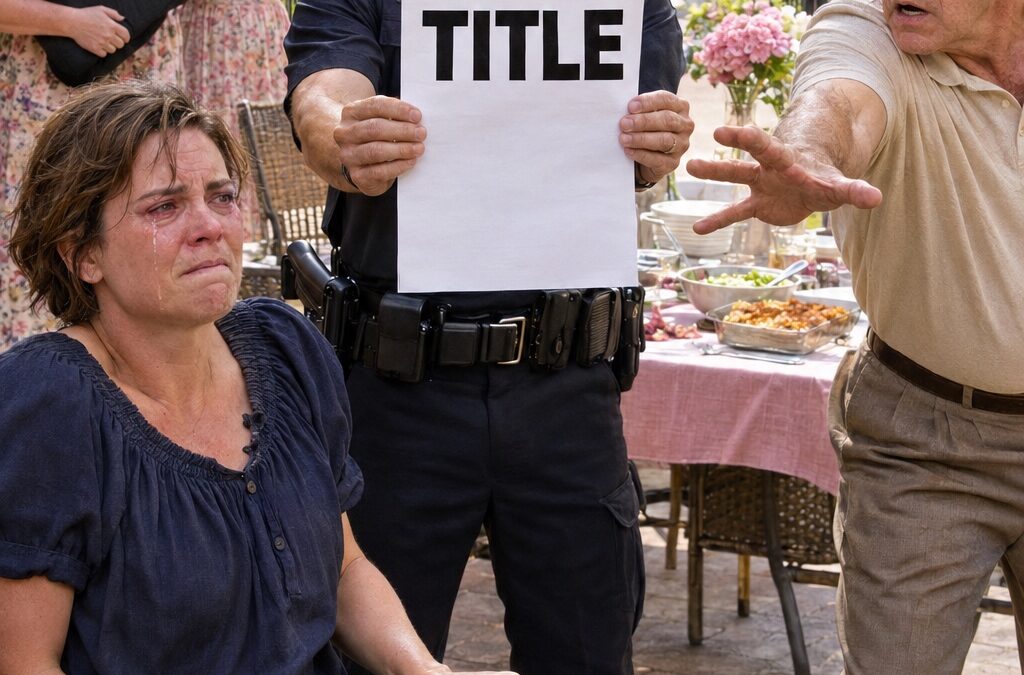
Part 3: What He Sent Jenna
“‘She’ll say no,’” Officer Carter read. “‘Get it gone before she can interfere.’”
Jenna stared at the gravel beside her shoe.
Dad reached toward her phone.
The officer drew it back and asked her permission to preserve the messages. She nodded and gave him the rest of the conversation.
I had never signed a transfer.
The original title had been inside my medical bag.
I had put it there while sorting rehabilitation paperwork. It was still behind the wound-care instructions when I reached inside.
Officer Carter had checked my identification against it privately.
He had also looked at the registration and vehicle identification number. The assignment section on the title was blank.
There was no lender listed.
There was no other owner.
Dad looked at the paper again.
“I helped her when she was younger,” he said.
“That doesn’t authorize this removal,” the officer answered.
He didn’t announce that he was settling every family dispute. He said he had an owner refusing permission, documents supporting her account, and a driver who had stopped.
The van wasn’t leaving on that truck.
Leon nodded and went to secure his equipment.
Dad followed him toward the driveway.
“You were hired to transport a vehicle.”
“And she told me it wasn’t authorized,” Leon answered.
He looked back toward the patio.
“She told all of you.”
The buyer put his phone in his pocket.
“I want my deposit back.”
Dad said he needed to speak with Jenna first.
The buyer didn’t move.
“You took my money. I’m talking to you.”
Jenna sat down in the chair beside my cushion. Mom told her to get up, but she stayed seated.
I kept both hands on my armrests.
The pressure beneath my leg had become a steady sting. I wanted to fix my position without everybody watching.
Officer Carter noticed me shifting.
“Do you need medical help?”
“I need someone to check my leg.”
Mom made a small impatient sound.
“She hasn’t fallen.”
“I didn’t say I fell,” I answered.
The officer requested medical assistance and returned to his notes.
He asked Leon what he had seen, separately from what he had heard. Leon described Mom taking hold of the cushion.
He described my body sliding and my hands catching.
Then he explained why he had stopped the winch.
“I wasn’t going to load her transportation after that.”
Dad pointed toward the van’s ramp.
“She can get rides while she gets better.”
Leon rested his gloves against his thigh.
“She arrived driving it. That seems worth noticing.”
I looked down at the seam on my trousers.
Nobody in my family had asked about driving that afternoon. They had asked whether my insurance covered enough therapy.
They had asked when I would walk again.
They hadn’t asked how I would get home without the van.
Officer Carter asked for the keys.
Dad said they had already changed hands.
The buyer opened his palm. He had taken them from Dad during the confusion.
He handed them directly to the officer.
“I didn’t know she was objecting when I came.”
The officer recorded his account and returned my keys.
I closed my fingers around the familiar plastic fob.
Scott stepped forward as if he might help.
I asked him to move the patio chair instead.
He moved it without speaking.
That gave me room to reposition my wheelchair. I angled away from the table and loosened the fabric pressing beneath my leg.
Mom still had the cushion.
“Please put that beside me,” I said.
She looked at Officer Carter before setting it down.
He asked whether I wanted to describe the contact.
I did.
I used the same plain words I had used when it happened. She pulled while I was sitting.
I told her to stop.
I caught myself on the armrests.
He wrote it down without changing “pulled” to “helped.”
Dad watched the pen move.
“You’re making a police report about your mother?”
“Yes,” I said.
The buyer asked whether the deposit was part of that report. Officer Carter took his information and told him to preserve his payment evidence.
He didn’t promise the buyer a particular court outcome.
He didn’t promise me an arrest.
He documented the suspected attempted theft and the physical assault. He explained that further decisions would follow review.
That was enough for me to keep speaking accurately.
I didn’t need to add anything.
Jenna leaned forward and offered to send her messages.
“Send the whole conversation,” I said.
“Not just the part that makes you look surprised.”
She looked at Dad, then back at her phone.
The messages arrived while the officer was still there.
I saved them without reading every line.
I also saved the information he gave me for the report. My medical bag had an outside pocket, and I put it there.
Leon photographed his dispatch information beside his truck.
He said he would keep it with his account.
The job had been ordered as a vehicle purchase pickup. It hadn’t been dispatched as a repossession or an impound.
That mattered when Dad tried calling it routine towing.
The buyer was still waiting near the gate.
Dad asked him to come back another day.
“No,” the buyer said. “We can arrange the refund now.”
I opened a blank message on my phone.
My fingers missed letters, so I slowed down.
I wrote that nobody had permission to sell, lend, move, or access my van. I sent it to my parents, Jenna, and Scott.
Then I checked that my keys were still in my lap.
Scott’s phone sounded inside his pocket.
He read the message but didn’t answer it.
Mom stepped around the empty chair.
“Fine,” she said. “But how am I getting to church?”
Part 4: The Ride Back Home
“You’ll need to arrange another ride,” I said.
Mom stared at me as though I had interrupted dinner.
“I’m your mother.”
“I know.”
She glanced at the officer, waiting for something from him.
He was speaking with Leon and didn’t turn around.
Scott began saying he could probably work something out.
Mom immediately started telling him what time she needed.
I pulled my medical bag onto my lap.
For a moment, I nearly gave him the usual instructions. Which entrance had the closest curb, where Mom preferred sitting.
I closed the bag instead.
The medical crew arrived while Dad arranged the refund.
They asked whether I had fallen or struck my head. I explained the cushion and where the pressure hurt.
I asked for privacy before they checked my leg.
Scott moved another chair so they could reach me.
Mom tried to stay beside us.
“I can answer their questions,” I told her.
The surgical area had not opened.
There was redness where I had pressed against the seat. They explained what changes should prompt immediate medical care.
I listened and repeated the instructions back.
I already had enough appointments without ignoring something new.
When they helped me settle, the cushion was finally beneath me.
I adjusted it myself before resting my weight.
Mom watched my hands.
“I wasn’t trying to injure you.”
“You kept pulling after I told you to stop.”
She started to answer, then looked toward the driveway.
Dad was still speaking sharply to the buyer.
Officer Carter returned my title inside its protective sleeve.
I slid it into the bag’s inner compartment.
He checked that I had the report information. He also asked whether I felt able to leave safely.
I wanted to leave, but I tested my transfer first.
Nobody hurried me.
Leon stood clear of the ramp and watched the space around it. The officer kept Dad away from the van while I got situated.
Dad called my name from beside the gate.
“This is going to cost me.”
I stopped adjusting the transfer seat.
“You accepted his deposit. Give it back.”
He rubbed his forehead and turned toward the buyer.
I didn’t stay to supervise their banking arrangements.
Before leaving, I asked Leon whether his truck blocked my exit. He moved it and came back along the driveway.
“Your ramp’s clear,” he said.
“Thank you for stopping.”
“You said no. I heard you.”
I put my wheelchair in its secured position.
My casserole dish remained on the patio table.
I left it there.
At home, I parked where I could open the ramp fully. I checked the doors before going inside.
Then I placed the title with my important household documents.
It didn’t belong loose among medical instructions anymore.
My keys went in the drawer beside my bed.
I wrote down what happened while the details were fresh. The table, the cushion, Scott holding the gate.
I included the parts that embarrassed me.
How I had first thought the buyer was a guest. How I had waited for Mom to give the cushion back.
How I had nearly explained her church routine afterward.
The next time I spoke with police, I used those notes.
I supplied the messages Jenna had sent and kept the originals. Leon gave his account directly rather than having me repeat it.
The buyer provided his payment evidence.
Later, he confirmed Russell had refunded the $2,400.
He sent that confirmation voluntarily, and I saved it.
I wasn’t left responsible for their transaction.
There was no completed sale for me to unwind. My van remained registered to me and in my possession.
The police report didn’t become an instant conviction.
I was never promised that it would.
What I had was a documented incident, preserved messages, and witnesses. I answered follow-up questions without guessing about anyone else’s intentions.
Dad’s own message already described his plan.
Jenna called after she forwarded the complete conversation.
“I thought he could talk you into it,” she said.
“His message said I would refuse.”
She didn’t answer that.
I asked whether she had deleted anything.
“No.”
“Keep it that way.”
She asked when she could come over.
I told her I wasn’t having visitors.
Scott sent a longer message about the gate.
He said he had been trying to avoid a scene. He said he hadn’t understood how far Dad would go.
I read it while waiting for rehabilitation.
My chair was parked beside the treatment room door.
I pictured him holding the gate after I asked him to close it.
“You understood that I said no,” I wrote.
He replied that he was sorry.
I told him to give an accurate account if police contacted him. I didn’t ask him to argue with Dad afterward.
His cooperation mattered more than another explanation to me.
Mom called when Sunday approached.
I let it go to voicemail.
She described the difficulty of finding a ride.
I sent back the same answer I had given outside.
“You’ll need to arrange another ride.”
Then I opened my rehabilitation schedule.
I confirmed my appointment and checked the address myself.
During recovery, I practiced transfers until they required less planning. I kept the van maintained and the ramp area clear.
Before returning to the office, I got medical clearance.
My first morning back, I arrived early enough to park comfortably.
I carried my lunch and medical bag inside.
Nobody took my keys from beside a water glass.
My parents still had my number.
They no longer had access to my vehicle or my appointments.
I kept family messages on my phone rather than answering unexpected visits. Sometimes I read them later, after dinner.
Sometimes there was nothing that required an answer.
The casserole dish came back through Scott.
He left it outside after asking first.
I washed it and put it in the cupboard.
That evening, I parked my chair beside the kitchen table. My appointment card lay next to the keys I had used myself.
I checked that the cushion lay flat beneath me.
Then I settled onto it and pulled my dinner close.
You Might Also Enjoy




