My Husband Shoved Me Into A Table Before His Coworkers — Then I Stopped Backing Down
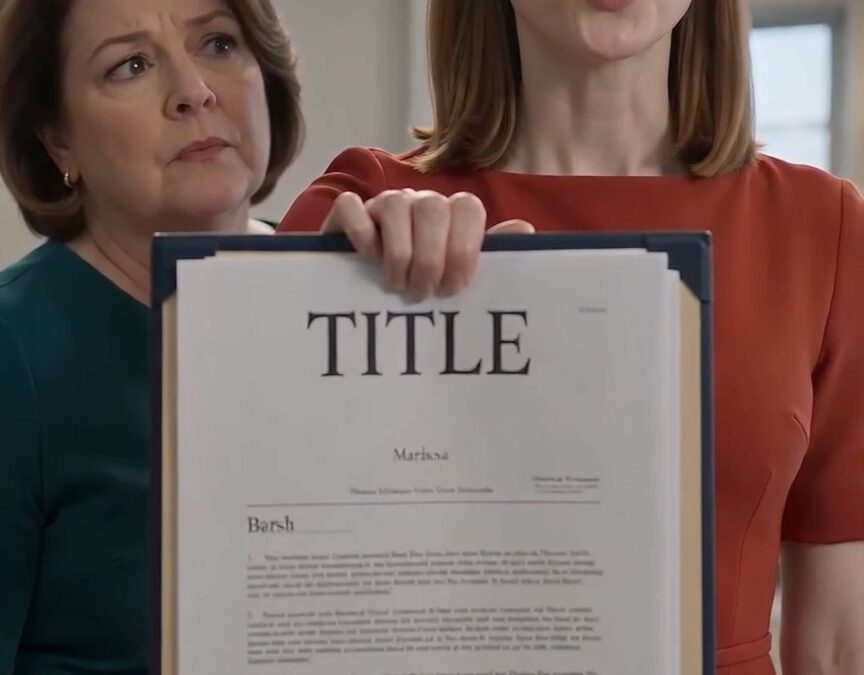
Chapter 1: The Keys Across the Table
My husband gave his girlfriend my car keys and had security walk me out. I was 34, with twenty coworkers watching. His father offered me a ride home. My husband announced that I had wrecked the car anyway. I had polished it every Saturday since bringing it home. I laid the vehicle title on the reception desk.
Before that paper came out, Colin thought I would leave.
He stood beside Lydia near the retirement photographs.
“There,” he told her. “You don’t need rides anymore.”
He dropped my keys into her open hand.
It was May 16, 2025, in Indianapolis, Indiana.
We were at the distribution office where Colin worked. His father’s retirement reception filled the adjoining reception room.
Dennis was 67 and retiring from the same employer.
I had helped arrange his photographs before people arrived. Now twenty coworkers stood around the food and display.
Lydia closed her fingers around my keys.
I recognized the split in the plastic casing.
I also recognized the little brass ring beneath it. I had bought that ring after the old one bent.
“Those are my keys,” I said.
Colin turned, still smiling.
“Don’t start, Beth.”
“Ask her to give them back.”
Lydia looked at him instead of me.
She was 31, his coworker, and apparently his girlfriend. Until that moment, I hadn’t known about the girlfriend part.
Colin moved between us.
“We already discussed this.”
“You haven’t discussed it with me.”
“I wasn’t talking about you.”
My bag slipped down my shoulder.
I caught it against my hip and looked at Lydia.
The blue polishing cloth showed beside my wallet. I had used it on the passenger door before leaving.
“What exactly did he tell you?” I asked.
“That I could have the car.”
Colin glanced toward the refreshments.
“She needs reliable transportation.”
“So do I.”
“You manage.”
I had managed because I thought we were sharing inconvenience.
Since February 3, 2025, I had let him borrow it for work. I charged him nothing. He was supposed to arrange other transportation.
Instead, he had started calling it his car.
I had corrected him more than once.
Now he had handed it away.
Dennis lowered the sandwich on his paper plate.
“Maybe take this outside,” he said.
“Tell him to return the keys.”
Colin turned toward his father.
“Dad doesn’t need this at his reception.”
“Then return them,” I said.
A coworker stopped reaching for the coffee urn.
Another set a plate down beside the napkins.
Nobody went back to the photographs.
“Lydia, give me my keys.”
Colin swept his whole arm across my path.
I stopped rather than push past him.
Then he shoved my shoulder with his open palm.
I stumbled into the table, knocking a frame flat.
Dennis watched without saying anything.
“Don’t make a scene,” Colin said.
“You just gave her my car keys.”
Colin was 38, a logistics supervisor, and used to giving instructions at that office.
He looked toward the security guard near the lobby.
“Could you help me here?”
The guard approached slowly.
“What’s going on?”
“She’s unstable,” Colin said. “She needs to leave.”
“I’m asking for my car keys.”
“She’s making a scene.”
The guard looked at Lydia’s hand.
Then he looked at Dennis.
“Would you come into the lobby?” he asked me.
“Is she keeping my keys?”
“We can talk out there.”
I picked up my bag from the chair.
Its strap caught beneath a photograph frame.
I stopped, freed it, and straightened the photograph.
It showed Dennis beside the loading dock.
I had cleaned the glass earlier that evening.
Then I followed the guard through the doorway.
He didn’t touch me.
He walked beside me while everyone watched.
Colin followed as far as the reception-room entrance.
“Go home, Beth.”
“How?”
“Get a ride.”
Through the glass, I could still see Lydia.
She hadn’t put the keys down.
The guard asked me to wait by the outer doors.
He said he would get the office manager.
Dennis came out carrying his coat.
“I can drive you home,” he said.
“Are you going to tell him to return them?”
“Let’s get you away from this first.”
“I’m already outside the party.”
He adjusted the coat over his arm.
“People are watching.”
“They watched him give away my car.”
Dennis looked toward the reception-room door.
I waited for him to go back through it.
He stayed beside me.
I had driven him home after medical appointments when Colin couldn’t leave work. I had sorted retirement photographs because he disliked choosing pictures of himself.
Now he was offering transportation around what his son had done.
“I’ll take you wherever you need,” he said.
“I need my keys.”
“Beth, I don’t want this getting worse.”
I set my bag on the lobby bench.
Beneath the blue cloth was the document I had brought from home.
I hadn’t intended to show it at a retirement party.
That morning, Colin had called the car effectively his again.
I had gone to our document box afterward.
The guard returned with Marsha, the office manager.
She was 52, with a visitor book tucked under her arm.
“I saw you being asked to leave,” she said. “Tell me what happened.”
“My husband gave Lydia my car keys.”
“We can’t decide a family dispute here.”
“I’m asking to show you ownership documents.”
She glanced toward the reception desk.
“Not back into the party,” she said. “You can use the desk.”
Dennis lifted his coat slightly.
“I can still drive you.”
I picked up my bag.
“Please stay,” I told him.
Then I followed Marsha toward the desk.
Chapter 2: The Paper on the Desk
Marsha moved the visitor book away from the counter.
The guard remained near the lobby entrance.
I stayed on the public-facing side of the desk.
I had permission to be there.
I wasn’t going back into the reception room.
Colin saw us and came through the glass doorway.
“Marsha, this is personal.”
“She’s showing me something.”
“She doesn’t need to involve the office.”
I opened my bag.
The cloth caught on the edge of the document sleeve.
I moved it aside carefully.
Colin rested his hand against the reception desk.
“You wrecked it anyway.”
I took out the full-size vehicle title.
Then I laid it flat, face-up, between us.
The word “TITLE” was clear across the paper.
Colin looked down.
His smile stopped.
He pulled his hand away from the desk.
Marsha leaned forward without touching the document.
“Do you have identification?”
I gave her my license and registration.
The title had been issued August 22, 2024.
Indiana listed me as the sole owner.
There was no lien.
There was no signed transfer.
My grandmother had died on July 9, 2024. Her estate transferred the car to me alone. Colin knew I had inherited it, but he had never needed the original title to drive it.
I kept that document in our home document box.
He hadn’t known I brought it.
“We’re married,” he told Marsha.
“I understand.”
“That’s our car.”
“It’s titled to me,” I said.
“You let me use it.”
“Borrow it.”
“That’s not what you said.”
Marsha compared my license with the registration.
I opened the message thread from February 3, 2025.
Colin had asked to use the car for work.
My reply gave permission to borrow it.
There was no promise of a gift.
I placed the phone beside the documents.
“I never signed a transfer,” I said.
Colin glanced behind him.
Lydia had moved to the reception-room doorway.
“Beth, don’t embarrass yourself.”
“You gave her my keys.”
“She told me I could have it,” he told Marsha.
“No,” I said.
“At home. We talked about it.”
“No.”
Marsha straightened.
“I can’t determine what you said at home.”
“That’s exactly my point,” Colin said.
“But I’m looking at a title with her name.”
He shifted his feet.
“I drive it every day.”
“That doesn’t answer whether she transferred it.”
Dennis stood at the end of the desk.
He looked from the title to Colin.
“Could Lydia bring the keys here?” he asked.
“Dad, stay out of it.”
Dennis stopped talking again.
I picked up my phone.
My thumb hovered over the message box before I typed.
I wanted the wording plain.
I identified the car and revoked Colin’s permission to borrow it. I stated that he had no permission to give it away or authorize anyone else to drive it.
I read the message before sending it.
Then I pressed send.
His phone sounded in his pocket.
“Your permission to borrow my car is revoked,” I said.
He stared at me.
“I’ve sent that in writing.”
“You can’t strand people.”
“I’m arranging for my car to be collected.”
Marsha looked up from the registration.
“Collected how?”
“By a licensed tow operator I authorize.”
Colin gave a short laugh.
“You’re having it towed from my job?”
“If the office permits access.”
That was why I needed Marsha.
I owned the car, but the lot belonged to his employer.
I wasn’t going to pretend ownership let me ignore the property manager.
Marsha asked whether the car was drivable.
“Yes,” I said. “There’s damage on the passenger side.”
“Damage she caused,” Colin added.
I looked at him.
He had told me that at home.
Now he was repeating it beside my title.
The scrape ran along the passenger-side panel.
I had found it the previous day.
He said I must have hit something and forgotten.
The repair estimate was $2,860.
I was a bookkeeping assistant.
That was not a bill I could casually absorb.
Neither was the car itself casual.
Its agreed current value was $34,000.
I had maintained it, cleaned it, and arranged its service.
Colin had put fuel in while borrowing it.
He had begun treating that as ownership.
Marsha asked the guard to watch the lot entrance.
“No one should move the vehicle while we review this.”
Colin folded his arms.
“You’re letting her make accusations.”
“I’m preventing a disputed pickup.”
“She’s the one who damaged it.”
My phone screen lit with the garage email.
I had downloaded its attachment that morning.
I hadn’t watched it before leaving work.
There had been paperwork, the reception, and Colin’s remarks at home.
Now I could see the file name beneath the estimate.
I picked up my bag.
“Where are you going?” Colin asked.
“To sit down.”
“We aren’t finished talking.”
I looked toward the lobby bench.
“I need to watch something first.”
Chapter 3: The Clip I Had Saved
I sat with my bag between my shoes.
The blue cloth had slipped halfway out again.
I tucked it inside before opening the garage email.
The message was dated May 16, 2025.
The service manager had attached the estimate and exterior-camera footage.
He said the footage had no sound.
I put in earbuds anyway.
I wanted a moment without hearing Colin across the lobby.
The car had received routine service on May 14, 2025.
Colin collected it because he was borrowing it for work.
The following day, I noticed the passenger-side scrape.
I had been carrying groceries toward the house.
I put them down and crouched beside the panel.
There was pale material caught in the damaged paint.
When I asked Colin, he didn’t come outside.
“You must have clipped something,” he said.
“I would have noticed.”
“Apparently not.”
I went back inside for my phone.
He asked whether I was going to obsess about it all evening.
I called the garage instead.
The service manager said an exterior camera covered the pickup lane.
I asked him to preserve anything showing the car.
I didn’t know then what it would show.
Now the saved file opened on my screen.
The garage doorway appeared beside a protective post.
My car moved into view.
Colin was driving.
I recognized his work shirt through the windshield.
He turned too closely around the post.
The passenger side scraped against it.
The car stopped.
Then Colin opened the driver’s door.
He walked around the front and crouched beside the damage.
He rubbed the panel.
He looked toward the garage building.
Then he returned to the driver’s seat and drove away.
I rested the phone on my knee.
Across the lobby, Colin was speaking to Dennis.
He made short movements with his hand.
Lydia stood apart from them now.
I played the relevant part again.
There was no question about the driver.
There was no question whether he had noticed.
He had examined the damage before bringing it home.
I remembered kneeling beside that same passenger seat earlier that spring.
He had spilled coffee into the seam.
I had pressed a towel into the stitching while he prepared for work.
He kept asking whether I was nearly done.
I gave him a clean travel mug before he left.
“Please keep the lid closed,” I said.
He had taken the mug without looking at the seat.
I had let him borrow the car without charging him.
I had moved appointments and arranged rides.
Now I watched him inspect damage he later assigned to me.
I saved the email and attachment separately.
Then I replied to the service manager.
I asked him to retain the original recording and collection records.
I kept the message factual.
I didn’t write about Lydia or the retirement reception.
Marsha approached the bench.
“Have you called the tow operator?”
“Not yet.”
She glanced at my phone.
“The garage sent footage of the damage,” I said.
“Have you watched it?”
“Yes.”
I took out the earbuds.
“It shows Colin causing it.”
Marsha looked toward the desk.
“Show him while I’m there.”
I stood and went back with her.
Colin stopped talking.
“What now?”
“The garage sent its camera footage.”
He looked immediately at my phone.
“What camera?”
“The exterior camera by the pickup lane.”
“That doesn’t have anything to do with this.”
“You said I damaged the car.”
Dennis put his coat over a chair.
Lydia came closer.
I held the phone where they could see it.
Marsha stood beside me.
The car turned.
The panel scraped the post.
Colin appeared beside the passenger door.
Nobody spoke until the clip ended.
Dennis looked at his son.
“Why did you tell her she did it?”
Colin looked at me instead.
“You went looking for something against me?”
“I asked what happened to my car.”
“You could have asked me.”
“I did.”
Lydia stepped away from his shoulder.
“You told me she wrecked it,” she said.
“It’s a scrape,” Colin replied.
“Then why was it mine?” I asked.
He rubbed the back of his neck.
“It can be repaired.”
“The estimate is $2,860.”
“That garage charges plenty.”
“It’s the garage where you collected it.”
He stopped looking at the screen.
Then he changed subjects.
“I’ve been paying for fuel.”
“You used the fuel.”
“I arranged my work around having it.”
“You borrowed it.”
Lydia looked down at the keys.
I asked her what Colin had promised.
“He said you didn’t want it anymore.”
“I never said that.”
She looked at him.
He didn’t deny her account.
He said, “Nothing needs to happen tonight.”
“I want my keys returned.”
“We need to discuss compensation first.”
“For what?”
“For everything I’ve put into keeping it going.”
I stared at him.
He hadn’t paid for the routine service.
He hadn’t repaired the damage.
He had bought fuel for his own driving.
Marsha moved the visitor book farther down the desk.
“We aren’t negotiating household finances here.”
Colin turned toward her.
“Before you admit a tow truck, understand something.”
He pointed toward the title without touching it.
“That’s marital property.”
Chapter 4: Permission to Enter the Lot
Marsha left the documents flat on the counter.
She asked me not to put them away yet.
Then she stepped behind the desk and made a call.
I could hear her describe a documented owner.
She mentioned revoked borrowing permission and disputed possession.
She asked about allowing an authorized operator into the lot.
She didn’t say she was dividing marital property.
Colin watched her through the gap beside the monitor.
He had finally found an argument that sounded complicated.
We were married.
There would be property questions if we divorced.
He wanted that uncertainty to prevent me from collecting the car.
Marsha finished the call and returned my license.
“We can authorize access for a documented pickup,” she said.
Colin opened his mouth.
She continued before he spoke.
“We are not deciding your marital-property rights.”
“You can’t separate those things.”
“I can separate lot access from a divorce proceeding.”
She compared the registration and title again.
Then she checked the plate information with me.
I supplied the licensed tow operator’s contact information.
She wrote it beside the visitor book.
I called and explained the situation plainly.
The car was mine.
I had the title, identification, and registration.
My permission for the borrower had been revoked.
The employer would permit access to its private lot.
I also explained that the keys hadn’t been returned yet.
The operator asked whether the vehicle was accessible.
“Yes.”
“Can it roll?”
“Yes.”
“Is anyone blocking it?”
I looked at Marsha.
“No one will block it,” she said.
I handed her the phone for the access details.
She confirmed where the operator should enter.
Colin stood close enough to hear the entire arrangement.
Nothing about the collection was hidden from him.
Lydia put the keys on the desk.
They landed beside the title.
“I’m not taking it,” she said.
Colin turned toward her.
“We can work this out.”
“You told me it was yours to give.”
“It’s complicated.”
“You didn’t say that before.”
I picked up the keys.
The split casing pressed against my thumb.
I closed my fingers around it and sat in the visitor chair.
Marsha asked whether I wanted water.
“Yes, please.”
Dennis brought a cup from the reception room.
He placed it within reach.
“I should have spoken earlier,” he said.
“Yes.”
He looked toward Colin.
I waited, but he didn’t say anything else.
The reception continued behind the glass.
People were talking again.
Someone carried empty plates toward the trash.
The retirement photographs were still standing where I had arranged them.
I drank the water slowly.
The guard remained near the outer doors.
Marsha told him the operator was authorized to enter.
“No interference with the pickup,” she said.
Colin heard that too.
“Where are you having it taken?” he asked me.
“To the garage.”
“You could drive it.”
“I’m choosing a documented collection.”
“That’s unnecessary.”
“I’m not arguing beside the car.”
He looked at the guard and stopped.
When the operator arrived, he checked my identification and documents.
Marsha confirmed permission for lot access.
Then we walked outside.
The office lights reflected across the windshield.
Colin had parked the car facing the building.
The passenger-side scrape showed clearly under the lot lights.
I photographed it before anything moved.
I also photographed the interior and the undamaged panels.
The operator waited while I finished.
He was patient without asking personal questions.
Inside the car were Colin’s work folder, sweatshirt, and travel mug.
I put them together in a bag the office supplied.
The mug had dried coffee around its lid.
I didn’t clean it.
Dennis carried the bag back inside.
The operator checked the car and prepared the equipment.
I signed the authorization paperwork.
I kept my copy with the other documents.
Colin stood near the outer door.
Lydia didn’t come out.
I had already arranged for a friend to collect me.
I wasn’t going back to our house that evening.
I wasn’t changing locks or ordering Colin out either.
I needed somewhere quiet while I got advice.
The operator secured the car.
Marsha remained until the access paperwork was complete.
I thanked her.
“I’ll confirm the authorized pickup in writing,” she said.
“That would help.”
Colin came closer as the operator finished.
He stopped short of the truck.
“You know a title doesn’t settle a divorce.”
“I know.”
He looked almost irritated by that answer.
“You’re acting like everything belongs to you.”
“I’m saying you couldn’t give this car away.”
He glanced toward the repaired-service paperwork in my hand.
“The damage could have been handled at home.”
“You told me I caused it.”
He looked toward the office.
The truck moved slowly toward the exit.
I watched the tires clear the driveway.
The car was no longer available for Lydia to take.
Colin stood beside me with his hands in his pockets.
Then he said, “I’ll ask for half of it.”
Chapter 5: What My Lawyer Asked
My friend collected me outside the office.
I put the document sleeve on my lap.
The blue cloth stayed tucked in my bag.
During the drive, I checked the tow receipt.
The destination was correct.
The registration was back in its sleeve.
The keys were in my coat pocket.
I checked them again when we arrived.
That night, Colin sent messages.
First he called the tow unnecessary.
Then he asked where I was staying.
Then he said I had embarrassed him at his father’s reception.
I answered the practical parts.
The car was at the garage.
His belongings had been returned through Dennis.
I would arrange a time to collect clothes and documents.
I didn’t give him my friend’s address.
He had already shoved me in front of witnesses.
I didn’t want him arriving to resume the argument.
Before bed, I placed the title in a clean sleeve.
I folded the blue cloth separately.
The document belonged somewhere dry and protected.
I wasn’t leaving it loose beside a glass of water.
I slept badly and woke to more messages.
One said he had only been helping Lydia.
Another said he thought I understood.
I saved them without answering.
On May 19, 2025, I consulted a lawyer.
I brought the title, registration, estate paperwork, and borrowing messages.
I also brought the estimate and garage email.
The lawyer asked me to explain everything in order.
I began with the reception.
I told her Colin had shoved me into the table.
She noted it and asked who had witnessed it.
Then she returned to the car’s history.
“When did you receive the car?”
I gave her the estate history.
“When did he begin borrowing it?”
“February 3, 2025.”
“Did you agree to transfer ownership?”
“No.”
“Did you ever sign a transfer?”
“No.”
She made notes.
Then she asked about our other property and accounts.
That took longer than describing the keys.
We had ordinary married finances that needed careful sorting.
Bills didn’t disappear because Colin had behaved badly.
Neither did questions about the house and household belongings.
My lawyer explained Indiana’s marital-property rules.
Property titled to one spouse could still be considered in divorce.
The inheritance mattered, but it wasn’t automatically outside every discussion.
I leaned forward.
“So he can still claim part of it?”
“He can make a claim.”
“Does the title mean anything?”
“Yes. It establishes current titled ownership. That isn’t identical to the final divorce division.”
I asked her to explain that again.
She did, without making me feel foolish.
The title had helped establish my right to possession.
It had not given Colin permission to transfer the car.
It also wasn’t a private divorce decree.
I wrote that distinction in my notes.
I didn’t want to repeat something inaccurate because it sounded reassuring.
“What should I do now?” I asked.
“Preserve everything. Communicate carefully. Don’t negotiate under pressure.”
I showed her the garage footage.
She watched the whole saved file.
When Colin crouched beside the damaged panel, she paused it.
“Do you still have the original email?”
“Yes.”
“Has the garage preserved its source recording?”
“They said they had. I asked again that evening.”
She nodded and made another note.
Her office sent a formal preservation request.
They requested the service records and repair documentation too.
She asked me to identify witnesses separately.
I listed Marsha, Dennis, Lydia, and the guard.
Then I described what each actually saw.
Twenty coworkers had witnessed the initial expulsion.
They hadn’t all watched the garage recording.
The group near the desk had seen that.
My lawyer wanted those details kept distinct.
So did I.
I contacted Marsha about the lot authorization.
She sent a short factual confirmation.
I had been allowed to use the public-facing reception desk.
She had checked my identification, title, and registration.
The employer had permitted my authorized operator to enter.
She didn’t offer an opinion about our marriage.
That made the message more useful, not less.
The garage confirmed the repair estimate.
I asked them to keep photographs and the final invoice.
My lawyer prepared a written demand for the documented damage.
She also addressed possession and future use of the car.
There were no threats about Colin’s job.
I didn’t want a workplace campaign.
I wanted the car, the repair bill resolved, and proper advice.
Colin retained separate counsel.
His first proposal came through his lawyer.
He would agree I kept the car.
But he wanted the repair charged as a household expense.
He also wanted temporary borrowing access.
I read that part again.
After the keys and the tow, he still wanted access.
My lawyer waited until I looked up.
“What do you want me to say?”
“No more borrowing.”
“And the repair?”
“He pays the garage.”
She asked whether I understood negotiations could take time.
“Yes.”
I reached into my bag for a tissue.
The blue cloth came out with it.
I folded the cloth on my knee while she made notes.
Then her office phone rang.
She listened, asked something, and turned toward me.
“He wants to offer a different trade.”
Chapter 6: The Terms He Wanted
The different trade still involved my car keys.
Colin would accept the repair bill if he could keep borrowing the car until the property agreement was finished.
I looked at my lawyer.
“No.”
She didn’t ask me to justify that immediately.
She wrote down my answer.
Then she asked whether any limited arrangement would be acceptable.
“No shared use,” I said. “No loan.”
She repeated that back to me.
I confirmed it.
The problem wasn’t scheduling anymore.
He had given someone else possession of my keys.
He had shoved me and asked security to remove me for objecting.
He had lied about damage he knew he caused.
There wasn’t a revised pickup schedule that fixed those facts.
My lawyer answered through his lawyer.
Any agreement needed clear terms about possession and ownership between us.
It also needed documented repair reimbursement.
There would be no continuing permission to use the vehicle.
I went back to work afterward.
There were invoices waiting in my inbox.
I checked figures, matched receipts, and corrected an entry.
For a while, the work occupied my whole attention.
Then my phone lit up beside the keyboard.
Colin wanted to know how he was supposed to get to work.
I forwarded the message to my lawyer.
I didn’t solve his commute.
Another message asked whether Lydia could use the car instead.
I read it standing beside the office copier.
Then I forwarded that too.
The response through counsel was plain.
Neither Colin nor Lydia had permission.
I had spent months rearranging my life around his borrowed access.
I wasn’t going to start arranging around hers.
His lawyer requested the supporting documents.
My lawyer sent them.
The title showed the sole-name ownership.
The estate papers explained how I received it.
The messages showed borrowing rather than a promised gift.
The garage materials addressed who caused the scrape.
The employer’s confirmation addressed the authorized collection.
There was no surprise recording of a private conversation.
There was only the garage’s silent exterior video.
There was no secret transfer Colin could claim to discover.
I hadn’t signed one.
While the lawyers worked, I arranged to collect necessities from home.
My friend came with me.
Colin agreed to the visit in advance.
I brought bags for clothes and a tote for documents.
I didn’t arrive with a moving truck.
The broader household division wasn’t settled.
I took toiletries, work clothes, and personal records.
My grandmother’s recipe box sat in the kitchen cupboard.
I checked with my lawyer before taking it.
Then I wrapped it in a towel.
Colin watched from the kitchen doorway.
“You’re making all this formal over a car.”
I set the tote on the table.
“You tried to give it away.”
“I was letting her use it.”
“She said you told her she could have it.”
He looked toward the window.
“You know what I meant.”
“No.”
He rubbed the back of a chair.
“I never thought you’d take it this far.”
“I needed the car back.”
“You got it back.”
“And I need the repair paid.”
He moved away from the doorway.
I finished packing without another argument.
I checked the rooms for the things on my list.
I didn’t open his drawers.
I didn’t take the furniture we hadn’t resolved.
My friend carried a bag while I took the tote.
Colin stood inside as we left.
At the garage, the service manager reviewed the repair plan.
He showed me the damaged area under better lighting.
The scrape had affected the finish and panel.
The estimate remained $2,860.
I asked about photographs and the final invoice.
He confirmed they would keep the records.
Then we talked about paint matching.
He pointed out where the finish would be blended.
He explained the alignment checks.
For that conversation, I was simply the owner authorizing repairs.
I didn’t have to describe the reception.
I didn’t have to defend why I wanted the panel fixed.
Before leaving, I looked through the passenger window.
The seat seam was clean.
I remembered pressing a towel into it while Colin checked the time.
I remembered handing him the clean travel mug.
I also remembered asking him to close the lid.
None of those ordinary tasks appeared on a title.
They still explained why his claim about “keeping it going” bothered me.
I had kept the maintenance records.
I had scheduled service.
I had checked the tires and washed the car.
He had borrowed the result.
My lawyer called as I returned to my friend’s home.
The property discussions had moved forward.
There was a draft that separated the car from the remaining household questions.
“Does it include borrowing?” I asked.
“No.”
“Does it make the repair my expense?”
“No.”
She asked me to come review it.
Then she added, “This version has his agreement in principle.”
Chapter 7: The Agreement He Signed
I read the draft at my lawyer’s desk.
She gave me time before explaining each part.
I checked the vehicle description against my registration.
The car was the same one Colin tried to give Lydia.
There was no substitute payment giving him later access.
There was no shared-use calendar tucked into another paragraph.
The agreement confirmed possession would remain with me.
It resolved ownership between us in my favor.
Colin would pay the garage $2,860 directly.
The negotiated property agreement would later go before the divorce court.
I asked what happened if he failed to pay.
My lawyer explained the enforcement provisions and process.
She didn’t promise an instant ruling.
She showed me what the written agreement actually required.
I asked whether I should pay and chase reimbursement.
“That isn’t what this draft says,” she answered.
I read the payment provision again.
Direct payment to the garage.
Written confirmation available to me.
The repair documentation would match the amount.
I put my pen down before signing.
“I want to be certain about access.”
She pointed to the relevant language.
Colin would have no further borrowing permission.
He couldn’t authorize Lydia or anyone else to drive it.
I nodded.
On June 12, 2025, we signed through separate counsel.
Colin didn’t come to my lawyer’s office.
I didn’t have to sit across a conference table from him.
Our lawyers handled the exchange.
I kept my signed copy with the title documents.
There was no apology attached.
There also wasn’t another demand for the keys.
The garage later confirmed payment.
I asked for that confirmation in writing.
When the message arrived, I checked the amount.
$2,860.
I compared it with the estimate and invoice.
Then I saved the confirmation in the same folder.
At work, I was accustomed to marking obligations paid.
This time, I sat back before closing the file.
Colin had paid the garage.
I hadn’t absorbed the damage to end an argument.
He hadn’t exchanged another vague promise for access.
The payment followed a negotiated written settlement.
The garage completed the repairs and checks.
When I collected the car, the service manager walked outside with me.
The paint matched in daylight.
I stepped back and looked along the passenger side.
The dent was gone.
The protective-post scrape was gone.
I ran my fingers lightly beside the repaired area.
Then I checked the door.
It opened and closed normally.
The service manager reviewed the final paperwork.
I asked the questions I had written down.
He answered them without rushing.
I filed the receipt before starting the engine.
Inside, the car smelled faintly of cleaning materials.
Colin’s work folder and sweatshirt were gone.
The travel mug had gone back with them.
I checked the cupholders anyway.
Then I adjusted the driver’s seat.
For months, I had moved it back after his drives.
I adjusted the mirrors too.
I left the passenger seat as it was.
Nobody was waiting for me to surrender the keys outside work.
Nobody had called to change pickup plans.
I drove to the place where I was staying.
Before going inside, I sat with the engine off.
My bag rested on the passenger seat.
The blue cloth was tucked into its side pocket.
I took it out and wiped a fingerprint from the door handle.
Then I put it away again.
The next task was finding my own apartment.
My temporary arrangement had been kind and practical.
It wasn’t a permanent household.
I worked through my budget with a notebook and pay records.
Rent needed to leave room for ordinary car expenses.
So did groceries, insurance, and utilities.
The repaired car still needed maintenance.
Winning an argument about possession didn’t make ownership free.
I wanted a place that worked with my actual income.
I also wanted clear parking rules.
I began gathering the documents an apartment manager would request.
Identification.
Proof of employment.
Income records.
I checked everything before putting it in a folder.
Colin sent a message asking whether the car looked all right.
I stared at it for a while.
Then I forwarded it to my lawyer’s office with a note confirming repairs were complete.
I didn’t send him photographs.
The documentation was available through counsel.
He didn’t need a casual conversation about my passenger door.
That evening, I put the repair file away.
My phone rang before I closed the document box.
Dennis’s name appeared on the screen.
I thought about the coat over his arm.
I thought about asking him to object.
I answered.
“Beth,” he said, “could I come see you?”
“What about?”
He paused.
“What I should have done at the reception.”
Chapter 8: What Dennis Came to Say
I agreed to meet Dennis where I was staying.
I didn’t agree to meet at Colin’s house.
I also didn’t want another conversation at the distribution office.
Dennis came without flowers or a gift.
I was glad.
I didn’t want to figure out where to put something while he explained himself.
We sat across the kitchen table.
He rested his hands beside an untouched cup.
“I should have stopped him,” he said.
“You could have told him to return the keys.”
“I know.”
I waited.
He rubbed his thumb along the cup handle.
“I thought getting you home would calm it down.”
“It would have left her with my car.”
“I wasn’t thinking about that part.”
“That was the part I kept asking about.”
He nodded.
For a while, neither of us spoke.
I had expected an explanation about his reception being ruined.
He didn’t offer it.
“I didn’t know about Lydia,” he said.
“I don’t know what you knew before that evening.”
“I didn’t know they were together.”
“You knew he handed her my keys.”
“Yes.”
“You heard me ask for them.”
“Yes.”
“You watched him shove me into that table.”
Dennis put the cup down.
“Yes.”
“And you offered me a ride.”
He looked down.
“I was trying to help.”
“You could have helped by objecting.”
He took his hands away from the cup.
“I understand that now.”
I didn’t tell him he had done his best.
I also didn’t list every favor I had done for him.
He knew I had driven him after appointments.
He knew I had spent time on his retirement display.
The problem wasn’t that he owed me a favor back.
He had watched his son take my property, shove me, and call me unstable.
He wanted me to leave quietly afterward.
“I was embarrassed,” Dennis said.
“So was I.”
He nodded slowly.
“I should not have let you stand there alone.”
“You stood beside me.”
He looked up.
“You just wouldn’t say anything to him.”
Dennis pressed his lips together.
Then he said, “I’m sorry, Beth.”
I let that sit without answering immediately.
He had finally named his own action.
He wasn’t asking me to blame the noise or the occasion.
“Thank you for saying it,” I said.
That was all I could offer then.
He asked whether Colin had paid for the repair.
“The garage confirmed payment.”
“Good.”
“It was handled through our lawyers.”
“I won’t ask you to discuss the agreement.”
“Please don’t.”
He nodded.
I told him I didn’t want messages carried between us.
If Colin needed something about the divorce, he had counsel.
If Dennis wanted to call, the conversation couldn’t become a request to lend the car again.
“I won’t ask that,” he said.
I believed he meant it.
I also knew I could end a conversation if he changed his mind.
When he left, he stopped near the car.
“The repair looks good.”
“They did careful work.”
He looked along the passenger panel.
Then he put on his coat.
He didn’t offer to drive me anywhere.
Afterward, I returned to apartment paperwork.
The apartment manager had asked for ordinary records.
I laid them out across the table.
My income information went beside my identification.
The application needed my current contact details.
I checked the entries before submitting it.
I didn’t write an explanation of the retirement reception.
There wasn’t a box requesting one.
When I viewed the apartment, I checked the practical things.
I opened the cupboard beneath the sink.
I looked at the window locks.
I asked how maintenance requests were handled.
Then I asked about parking.
The manager showed me where residents could park.
I read the signs instead of assuming.
The apartment wasn’t large.
It was enough for the belongings I planned to keep.
The route to work was manageable.
I could carry groceries without making several complicated arrangements.
I took notes and reviewed my budget again.
My lawyer knew I was planning to move.
We discussed how the lease and address would fit with the ongoing separation.
I wasn’t trying to hide assets or make the house disappear.
I was establishing somewhere to live.
Colin learned about the move through the proper communications.
He sent a message asking whether this was really necessary.
I didn’t discuss apartment choices with him.
The property negotiations had already addressed what needed division.
He didn’t need to approve where I put my coffee cups.
When the lease was ready, I read it carefully.
I asked the apartment manager to explain a maintenance provision.
Then I checked the parking language.
Everything I needed was there in writing.
I signed.
Afterward, I sat in the car outside the apartment.
I put the lease folder on the passenger seat.
The repaired panel caught the afternoon light.
I checked the move arrangements on my phone.
The address was mine to use.
The apartment would be ready July 1, 2025.
Chapter 9: A Different Address for Me
On July 1, 2025, I moved into my apartment.
I protected the car seats with clean towels.
Then I loaded the boxes carefully.
The recipe box rode where it wouldn’t slide.
My work clothes stayed on hangers beneath a sheet.
I checked the door clearance before closing it.
Nobody stood behind me telling me to hurry.
I could take the time without starting an argument.
My friend helped carry things inside.
We put the kitchen box down first.
I wanted to make coffee the following morning without searching.
The apartment manager checked the move-in paperwork with me.
We reviewed the condition notes.
I kept my copy with the lease.
Then I brought in the document box.
It went into a dry cupboard away from plumbing.
The title remained in its protective sleeve.
The settlement and garage records went beside it.
I didn’t leave the title on a table as decoration.
It had done the job I brought it to do.
Now it needed safe storage.
The blue cloth went with the car supplies.
I hung the keys on a hook inside the door.
Then I stepped back to see whether the hook was secure.
It held.
That small task took longer than it should have.
I kept touching the keys as I passed.
I had spent the reception watching Lydia hold them.
I wanted to know exactly where they were now.
By evening, I had put away enough to cook.
The rest could wait.
I ate from a bowl and looked at the unpacked boxes.
My friend had gone home.
There was no one asking where I put his mug.
The apartment was quiet, but not completely silent.
I could hear a neighboring door close.
A car moved through the parking area.
I washed the bowl and set it to dry.
The next morning, I measured too much coffee.
I noticed before adding the water.
I tipped some back and rinsed the scoop.
Then I drank it while reviewing my work schedule.
There was no need to arrange Colin’s pickup.
I left when I was ready.
At work, I updated my address.
I changed the information that needed changing.
I told the appropriate people I was separating.
I didn’t circulate the garage recording.
The coworkers at the reception had witnessed enough.
Marsha’s written confirmation already explained the authorized collection.
I didn’t need an office audience for every later development.
I sent her a thank-you note.
I thanked her for checking the documents and allowing the operator access.
She answered briefly.
She was glad the collection had been completed safely.
She also confirmed the employer wasn’t making claims about our property division.
That matched what she had said at the desk.
I saved the message with the others.
Colin’s transportation was no longer a question addressed to me.
Through the necessary legal correspondence, I understood he had made arrangements.
I didn’t ask whether Lydia drove him.
I didn’t ask whether she still worked beside him.
She had returned my keys.
There was nothing else I needed from her.
The remaining divorce work was less visible than the reception.
There were drafts to review.
There were descriptions to check.
My lawyer asked me to confirm that the property agreement reflected what I understood.
I read it slowly.
The car was awarded to me under our negotiated terms.
The repair payment was documented as completed.
There was no unresolved borrowing provision.
I compared the vehicle information with the registration again.
A typing mistake could create needless trouble.
I wanted it right.
Colin communicated through the arrangements our lawyers established.
When something needed an answer, I answered.
When he added comments about my attitude, I left those alone.
I didn’t need to correct every version he preferred.
I needed accurate documents.
Dennis called occasionally.
He asked about my work and the apartment.
He didn’t ask me to help Colin get places.
He didn’t carry messages.
Our conversations were shorter than before.
For now, shorter was easier.
The apartment gradually became less temporary.
I found a place for my grandmother’s recipe box.
I moved the coffee supplies into a cupboard I could reach easily.
I put clean towels near the bathroom instead of leaving them in a moving bag.
The keys stayed beside the door.
On Saturdays, I checked the car before washing it.
The passenger side still looked good.
I kept the repair invoice in the file, not in the glove compartment.
The registration stayed where it belonged.
The original title stayed home.
When my lawyer called about the final hearing, I was putting away groceries.
I set a carton down and found a pen.
We reviewed what would happen.
The court would consider the negotiated agreement.
I would answer the questions put to me.
There was nothing theatrical I needed to prepare.
“Are you ready?” she asked.
I looked toward the document cupboard.
“Yes.”
She gave me the hearing date.
October 17, 2025.
I wrote it down and read it back.
After we hung up, I put away the groceries.
Then another message arrived from Colin through the proper channel.
He had approved the final version for submission.
Chapter 10: Saturday With the Car
On October 17, 2025, the divorce decree approved our negotiated property agreement.
The car was awarded to me.
The repair obligation had already been paid.
Colin had no continuing permission to borrow it.
Lydia had no permission to use it either.
That result came through disclosure, negotiation, and court approval.
It wasn’t because I assumed an inheritance could never enter an Indiana property discussion.
My lawyer had explained the law.
We had worked through the actual process.
At the courthouse, I checked the paperwork once more.
Colin wore a plain shirt and kept his voice low.
I answered what I was asked.
So did he.
The reception wasn’t performed again for a courtroom audience.
The garage footage didn’t need another viewing there.
The agreement resolved the car between us.
The documents recorded the repair payment.
When the hearing ended, my lawyer explained the final-copy process.
I asked whether anything else needed signing.
She checked and told me what remained administrative.
I thanked her.
Colin waited near the corridor.
For a moment, I thought he would ask for access again.
Instead, he looked at my bag.
“You didn’t have to let everyone watch that video.”
“You accused me in front of them.”
“You could have shown me privately.”
“I watched it privately first.”
He looked away.
“You knew what it would do.”
“It showed who damaged the car.”
He rubbed his forehead.
“That reception was supposed to be about Dad.”
“I was there to celebrate him.”
Neither of us said anything after that.
My lawyer came out behind me.
Colin moved aside.
I left without asking how he was getting home.
Outside, the car sat where I had parked it.
I checked the passenger panel by habit.
The paint reflected the neighboring vehicle cleanly.
I put my bag on the seat and got in.
The mirrors were where I had left them.
I drove to my apartment.
Ordinary mail waited in the box.
I carried it upstairs with the courthouse folder.
Then I changed clothes and made something to eat.
When the final documents arrived, I filed them carefully.
The decree went beside the settlement.
The repair confirmation stayed with the invoice.
The title remained in its sleeve.
I didn’t frame any of it.
I didn’t leave it out for visitors.
I needed to be able to find those papers.
That was enough.
The car still required registration, insurance, and routine care.
I handled the notices when they arrived.
I scheduled maintenance around my work.
When the garage called, it called me.
The next time I returned there, I noticed the protective post immediately.
I parked well clear of the pickup turn.
Inside, the service manager greeted me as the owner.
We discussed the work I had requested.
He didn’t ask about my divorce.
He didn’t mention the recording.
I paid for the service and drove home.
Dennis kept his word about messages.
He called sometimes and asked how the apartment was working out.
I could answer without preparing for a request about Colin.
We weren’t back to how we had been.
We also weren’t having the same argument every time.
I could manage that.
I never found out whether Lydia stayed with Colin.
She didn’t contact me.
I didn’t contact her.
She had returned the keys at the desk.
There was no remaining practical reason for us to speak.
Colin and I finished the necessary administrative matters through the established arrangements.
I answered questions that required answers.
I didn’t resume discussing his commute.
I didn’t lend him the car.
The apartment became easier to move around.
I stopped reaching for cups that weren’t there.
I stopped checking my phone when his old pickup time passed.
I bought groceries for my own meals.
Sometimes I still made too much coffee.
Then I adjusted the measure the next morning.
On Saturdays, I usually washed the car early.
I liked finishing before the parking area grew busy.
I checked the tires and cleared leaves near the windshield.
I cleaned the cupholders without finding Colin’s dried coffee.
The passenger seat stayed empty unless I invited somebody along.
One Saturday, I opened the passenger door and inspected the stitching.
A little dust had collected beside the seam.
I brushed it away.
There was no spilled coffee to press out.
No clean mug waiting on the driveway.
Nobody was inside preparing for work while asking whether I was nearly done.
I went around to the repaired panel.
Water spots showed near the handle.
I opened the supply bag and took out the blue cloth.
It was the same cloth I had carried to the reception.
I had washed it since then.
Its edges had softened with use.
I wiped the panel and checked it from another angle.
A faint spot remained beside the handle.
I folded the cloth to a dry section and rubbed it away.
Then I sat in the driver’s seat with the door open.
The seat was where I had left it.
So were the mirrors.
I placed my keys in the cupholder while I put away the supplies.
Then I folded the blue polishing cloth.








