My Father Said I Couldn’t Come Home With A Broken Pelvis — Until Grandma’s Lawyer Stepped In
Chapter 1: The Bag Beside My Bed
My father set a storage bill beside my hospital Christmas pudding.
“You’re not going back there.”
I still had the pudding lid between my fingers.
Dad pushed a bag toward the doorway with his shoe.
The zipper caught against something purple.
It was Grandma’s bathrobe, packed beside my gray socks.
“What are you doing with her robe?”
“Bringing you clothes,” he said. “You’ll need them.”
“I asked for pajamas.”
“They’re probably in there,” Colleen said.
She stayed seated while I looked at the bag.
I couldn’t reach it without getting out of bed.
My walker stood beside the bathroom door.
The blanket was tucked beneath my injured hip.
I was 43, recovering from a fractured pelvis.
Christmas dinner had arrived on a plastic hospital tray.
Outside my Pittsburgh rehabilitation room, someone was laughing.
Inside, my father kept pointing at the bill.
“You’ll handle the storage payments from now on.”
“I didn’t rent storage.”
“We weren’t going to leave everything sitting there.”
“Everything?”
He glanced at Colleen before answering.
“Your furniture. Your clothes. The things you’ll need.”
I looked around at the relatives visiting me.
Dad, Colleen, Joel, and three others had come.
I had asked them because Christmas alone sounded awful.
Nobody looked surprised by the bag.
One aunt held a cookie container against her knees.
She pressed its lid down without opening it.
“Did everybody know about this?”
Colleen leaned toward her.
“Dana’s having trouble accepting the arrangements.”
“What arrangements?”
“The house,” Dad said.
“What about the house?”
“You surrendered it. We’re getting it ready.”
I put the pudding lid on my napkin.
Chocolate smeared across the edge of my thumb.
“I haven’t surrendered anything.”
“That isn’t what we understood,” Colleen said.
“You didn’t ask me.”
“You weren’t available.”
“I’m right here.”
Dad moved the bill closer to my spoon.
It was my own spoon, brought from home.
The disposable ones bent against the cold pudding.
Joel had brought this one after I complained.
Now he stood by the window, looking down.
“What happened to my bedroom?”
“We packed it,” Colleen said.
“My work clothes?”
“Packed.”
“My things on the dresser?”
“Dana, we couldn’t inventory every little object.”
I turned toward my husband.
“What are you doing?”
Joel’s thumb stopped moving on his phone.
“Looking at moving boxes.”
“For what?”
“If things are in storage, we’ll need boxes.”
“Would you ask whether their claim is true?”
He looked at Dad, then back at me.
“Let’s get through the practical part.”
“The practical part is where I live.”
“We can stay somewhere temporarily.”
“We already have somewhere.”
He lowered the phone without putting it away.
“I’m trying to help.”
“Then ask me whether I agreed.”
He rubbed his forehead.
“I thought you all had discussed it.”
“I’m telling you we didn’t.”
Dad nodded toward him.
“Your husband understands that arrangements have to be made.”
Joel did not correct him.
I wiped my thumb until the napkin tore.
The pudding stayed untouched.
I had left the house expecting to return.
My work shoes were beneath the entry bench.
Laundry waited beside the washer.
Grandma’s robe hung on my bedroom door.
Her funeral had been December 11, 2025.
I fractured my pelvis on December 16, 2025.
There had barely been time to put flowers away.
Dad had visited after the fracture.
He had heard me discuss going home.
He knew which bathroom I planned to use.
Now he acted as though none of that counted.
Colleen picked lint from her black pants.
“We found a smaller place you could consider.”
“I don’t need you finding places.”
“You have too much house.”
“That isn’t your decision.”
Dad shifted the storage bill toward my hand.
“The property can bring in $2,200 monthly.”
I looked up.
“So that’s what this is.”
“It has expenses,” he said.
“So does every home.”
“It’s trust property. It isn’t yours.”
“I know whose property it is.”
Colleen looked toward the relatives again.
“We’ve already spoken to someone interested.”
“In renting my home?”
“In renting the house,” she corrected.
I moved the pudding away from the bill.
My spoon stayed on the torn napkin.
“Did you sign a lease?”
“Not yet,” Dad said.
“Take a deposit?”
“No,” Colleen answered before he could.
Dad gave her a short look.
Nobody filled the space after that.
My aunt set the cookies on the windowsill.
“Maybe Dana needs to rest.”
“I needed my family to visit,” I said.
Dad spread his hands.
“That’s what we’re doing.”
“You brought my clothes in a bag.”
“We brought what you need.”
“You don’t know what I need.”
My blanket had caught beneath a table wheel.
I pulled at it, but the fabric stayed trapped.
Joel finally came over and freed it.
I thanked him because it stopped hurting.
Then he stepped back toward the window.
There was a knock at the open door.
Judith stood outside with a large document folder.
Grandma’s lawyer had agreed to visit for Christmas.
I had asked her to bring the complete trust.
Dad looked at the folder before greeting her.
“I didn’t know we had an appointment.”
“You don’t,” I said. “I do.”
Judith was 61, with damp spots on her coat.
She asked where she could put it.
My aunt cleared a hook beside the door.
Judith greeted everyone, then came to my bedside.
“Do you need anything before we talk?”
“No. Please come in.”
Dad reached for the storage bill.
“This has become more emotional than it needs to.”
Judith looked at the bag beside the doorway.
“Is that Dana’s?”
“Some of her clothes,” Colleen said.
Judith asked whether I wanted it moved closer.
I said yes.
My aunt put it beside my chair.
Dad started explaining the summary he had received.
He mentioned Grandma’s wishes and unnecessary property expenses.
Judith listened without opening her folder.
I recognized that expression from Grandma’s kitchen table.
She waited until someone finished talking.
Then she asked the question they had avoided.
“Martin, explain exactly how Dana surrendered the house.”
Chapter 2: The Pages On My Table
Dad flattened the storage bill between his palms.
“She said she couldn’t manage the place.”
“I said I couldn’t climb stairs yet.”
“That was part of the conversation.”
“No. That was a conversation about rehabilitation.”
Colleen stood and smoothed the seat of her pants.
“Everyone knew Dana needed something easier.”
Judith pulled the visitor chair beside my table.
“Did Dana sign a relinquishment?”
Dad frowned.
“We didn’t turn it into a business transaction.”
“Did she sign anything?”
“No, but she told us what she wanted.”
“I told you to bring pajamas,” I said.
Joel finally put his phone in his pocket.
I watched the whole movement.
He had found somewhere to put it now.
Judith opened the folder across her lap.
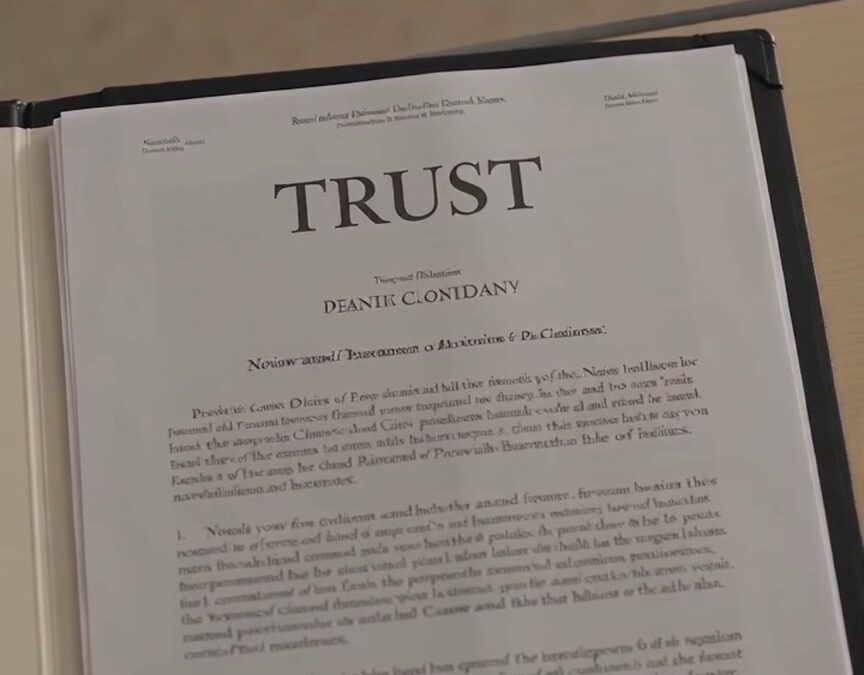
She lifted out the complete trust document.
Its cover had one plain word: TRUST.
She turned it face-up and held it flat.
The bottom corner rested beside my untouched spoon.
Dad recognized the full instrument.
His smile disappeared.
He stepped backward from the table.
“What exactly are we doing here?”
“Reviewing the document that governs the house.”
“I have the summary.”
“Yes,” Judith said. “An earlier administrative summary.”
She had brought a copy of that too.
She placed it beside the larger document.
Dad had received it on March 3, 2023.
He tapped the older paper.
“This identifies me as the beneficiary.”
“As a remainder beneficiary,” Judith said.
“That means the house comes to me.”
“Subject to the current trust terms.”
She turned to a marked section.
Dad stayed farther from the table this time.
Colleen leaned over his shoulder instead.
“This amendment was signed September 12, 2025.”
I looked at Grandma’s name above the signature.
Her writing had become slower, but I recognized it.
She still crossed the middle of her name firmly.
“Agnes granted Dana an enforceable lifetime occupancy right.”
Dad looked straight at Judith.
“For as long as Agnes lived?”
“For Dana’s lifetime.”
Colleen’s hand dropped from Dad’s shoulder.
I reached for the edge of my napkin.
“Grandma signed that?”
“She did,” Judith said.
“She never showed it to me.”
“She didn’t ask me to show it to you.”
I knew they had met privately about estate matters.
Grandma had asked me to leave them alone.
I had gone to fold laundry in the bedroom.
I hadn’t listened through a door.
I hadn’t asked what anyone would inherit.
Dad pointed at the page.
“She was dependent on Dana by then.”
Judith kept the paper flat.
“Agnes instructed me independently. Dana wasn’t present.”
“She depended on her for everything,” Colleen said.
“She needed help with daily care,” Judith replied.
“That does not make Dana the author of this.”
Grandma had been 84 when she died.
She needed help with swollen feet and buttons.
She still checked the grocery receipt against the bags.
Judith explained the provision without raising her voice.
My temporary medical absence did not end occupancy.
The amendment expressly protected that kind of absence.
The house could not be rented around my right.
Relinquishing that right required my writing.
“I haven’t written anything like that,” I said.
“I know,” Judith answered.
Dad looked at the relatives behind him.
“Why wasn’t I informed?”
“Agnes could amend her revocable trust without your approval.”
“I should have seen it.”
“You had not requested or received the complete current instrument.”
“She should have told me.”
Judith did not argue about Grandma’s manners.
She pointed to the dates.
Agnes transferred the house on June 1, 2021.
It had remained trust property ever since.
I moved in that same day to provide care.
Grandma controlled her revocable trust while she lived.
She signed the later amendment through independent counsel.
Judith had been that counsel and her longtime friend.
When Grandma died on December 8, 2025, things changed.
The trust became irrevocable.
Judith became its independent successor trustee.
Dad became neither trustee nor landlord.
“This doesn’t give Dana fee ownership,” Judith said.
“The house still belongs to the trust.”
Dad seized on that part.
“Exactly. It isn’t hers.”
“Her occupancy right is still binding.”
She let him look at the paragraph again.
“Your future interest does not override it.”
My aunt stepped closer to the foot of the bed.
“So Dana can return?”
“When she is medically ready,” Judith said.
“Her temporary rehabilitation does not surrender her home.”
I pulled the blanket higher over my knees.
For the first time that afternoon, I looked at the bag.
It was clothing again, not everything I had left.
There was still somewhere for it to go.
But the house had been emptied.
My key no longer opened its door.
The pages on my table had not changed that yet.
Judith looked toward the storage bill.
“We also need to address the removal.”
Dad picked it up before she could read it.
“People have already done work.”
“On whose instructions?”
“Mine. Because somebody had to make decisions.”
“Agnes designated me to administer the trust.”
“You weren’t there.”
“I was available.”
Colleen interrupted.
“We haven’t signed a lease.”
“Or accepted a deposit?” Judith asked.
“No.”
“Then do neither.”
Dad pressed his thumb along the bill’s folded edge.
“What about the money the trust is losing?”
“It is following Agnes’s instructions,” Judith said.
“She knew an occupied house might not produce rent.”
He glanced at me.
“You’ve made sure of that.”
“I didn’t know what the amendment said.”
He gave a small shake of his head.
I could see him deciding not to argue that point.
He had another account ready instead.
“None of this matters if she surrendered.”
“The document requires her writing,” Judith said.
Dad moved closer, though not as close as before.
“She gave me the keys herself.”
“When?” Judith asked.
“At the house. December 22, 2025.”
I stopped pulling at the napkin.
“I was hospitalized that entire day.”
Dad kept his eyes on Judith.
“She met me there and told me to clear it.”
Chapter 3: The Date He Had Chosen
Nobody spoke while I reached for my drawer.
My elbow caught the edge of the table.
Judith moved it before I stretched farther.
“Tell me what you need.”
“My folder.”
It held therapy schedules and work leave papers.
I was a school attendance secretary.
Keeping dates straight was part of my job.
Since the fracture, I had written everything down.
Pain medicine made afternoons run together.
The date Dad named was already on my list.
I had requested records confirming my continued hospitalization.
They were not an argument I had invented afterward.
I had asked for them before Christmas.
Colleen leaned toward the folder.
“Maybe he has the date wrong.”
“He just gave us a specific date.”
“People make mistakes under stress.”
Judith looked at Dad.
“Were you describing a physical meeting?”
“That’s what I remember.”
“At the house?”
“Yes.”
“With Dana handing you keys?”
He shifted the bill into his other hand.
“She might have left them for me.”
“You said I gave them to you,” I said.
Joel looked from Dad to the folder.
“You told us she went home?”
Dad did not answer him.
Judith explained what my hospital records could establish.
They documented my admission and continued inpatient care.
I had not gone home for a meeting.
I had not walked through my doorway that day.
I had been working on transferring out of bed.
Dad had chosen a day I remembered clearly.
My aunt pulled her chair away from Colleen.
I noticed because its legs scraped the floor.
Then Judith asked about the emergency key.
Dad had held one while Grandma was alive.
It was for emergencies, not taking over the house.
He used it on December 22, 2025.
I had seen him use it.
Two days later, I checked the doorbell camera.
A package had been expected at the house.
I wanted to know whether it was getting wet.
Instead, I found the motion events from the removal.
There was no sound on the footage.
I had disabled audio when I installed the camera.
I wanted to see deliveries, not record conversations outside.
The clips showed Dad coming to the door.
They showed the key in his hand.
Then they showed people carrying furniture down the steps.
Dad stood beside the open doorway and directed them.
He pointed toward the truck more than once.
One clip showed Grandma’s chair coming out.
Its cushion was pressed against the back.
Packing film held it there.
A wooden leg caught briefly against the porch railing.
I recognized the pale mark on that leg.
I had bumped it with the vacuum years earlier.
I closed the recording and opened it again.
Then I saved the original events with their time information.
I saved another copy separately.
I did not add words or edit them together.
I sent the files to Judith on December 24, 2025.
When she called back, I answered immediately.
“Did you authorize this?” she asked.
“No.”
“Did you sign anything about leaving?”
“No.”
“Who has access?”
“Dad has Grandma’s emergency spare.”
Judith told me to preserve messages and records.
She said not to argue through other relatives.
I asked her to bring the complete trust.
She agreed to discuss it during her Christmas visit.
I had not known about the occupancy amendment.
I only knew the house belonged to Grandma’s trust.
I wanted someone who actually held the documents.
Now Judith described the clips in my room.
“They show Martin supervising the removal.”
Dad lifted one shoulder.
“They don’t show every conversation.”
“No,” Judith said. “They have no recorded conversations.”
She did not claim the camera proved something it couldn’t.
“The hospital records address Dana’s location.”
“The trust addresses the required written relinquishment.”
“The moving company records will address the order.”
Dad looked at the storage bill.
Judith asked permission to photograph its account information.
I said yes.
“Who called the movers?” she asked him.
“I did.”
“Who provided access?”
“I did.”
“Did they receive anything signed by Dana?”
“I don’t know what they kept.”
I looked at Grandma’s purple robe again.
It brought back a morning beside her chair.
Her foot had been swollen over the slipper opening.
I knelt because bending from the waist hurt my back.
“Let me turn it a little,” I told her.
“Don’t pull my heel.”
“I’m not. Wiggle your toes.”
She did, watching me like I might miss one.
I guided the slipper around her foot with both thumbs.
Then she touched the washcloth lying on her lap.
“Don’t let that get cold, honey.”
I took it back to the sink.
I warmed it again and wrung it over my wrist.
She held out her hands when I returned.
Dad arrived after I had buttoned her sweater.
He looked at her, dressed and comfortable.
“You’ve got a pretty good arrangement here,” he said.
I had been late leaving for work.
I swallowed my answer and fetched my bag.
For years, that was how he saw my care.
He saw the finished breakfast, not the reheated washcloth.
The house entered the trust when I moved in.
I paid the household electricity, $186 each month.
I also worked, bought groceries, and helped every day.
None of that made me the owner.
It did make me the person Grandma called for.
Back in the room, my aunt touched the robe.
“She told me about those warm washcloths.”
I looked at her.
“I didn’t know that.”
“She said you always checked them.”
Dad pushed his chair away from the table.
“We’re getting distracted.”
Judith closed my hospital folder carefully.
“Then tell me what remains unclear.”
He pointed toward my walker.
“She can’t even walk properly. How is she going home?”
Chapter 4: The Questions Nobody Asked
The walker had been moved twice since they arrived.
Now Joel brought it within my reach.
He asked where I wanted it.
“Beside the bed. Not against the doorway.”
He put it there.
Dad watched as though this proved his point.
“She needs constant help.”
“My discharge team is assessing what I need.”
“And if they say no?”
“Then we make a safe plan,” I said.
Colleen folded her arms.
“That’s what we were trying to do.”
“You emptied the bedroom without asking about my care.”
“We were considering the whole situation.”
“You were considering rent.”
Dad looked toward the open door.
“Keep your voice down.”
I had not raised it.
I pressed the call button because my position hurt.
While we waited, Judith moved the papers away from my knees.
She said we could pause whenever I needed.
Nobody else had offered that.
After I was settled, she resumed the discussion.
“Medical planning does not give Martin authority over occupancy.”
“What if she can’t manage alone?” Colleen asked.
“Then appropriate support can be arranged.”
“What if that costs money?”
“We address actual costs under the trust’s terms.”
Judith did not promise unlimited funds or perfect recovery.
She refused to treat a possible future problem as surrender.
I appreciated the difference.
The house had rooms I could use without stairs.
My rehabilitation team already knew that.
They had asked about bathroom access and clear walkways.
They had not suggested removing every familiar object.
Dad pulled the earlier summary toward himself.
“The property has to be administered sensibly.”
“That is my responsibility,” Judith said.
“I’m entitled to know what happens.”
“You are entitled to appropriate trust information.”
“That includes income.”
“It does not guarantee the income you proposed.”
He rubbed his thumb over a corner.
Colleen said the rental would bring $2,200 monthly.
She repeated the amount carefully.
After expenses, they wanted Judith to distribute net income to Dad.
They had expected her to approve a house already cleared.
I asked Colleen what she had told the prospective renter.
“That it would likely be available.”
“Did you tell her I lived there?”
“We said the previous arrangement had ended.”
“My grandmother died. I didn’t stop living there.”
Colleen glanced at my aunt.
Nobody helped her answer.
Judith asked whether photographs had been arranged.
“Discussed,” Colleen said. “Not taken.”
“Cancel any arrangements. Correct the representation that it is available.”
Dad sat farther back.
“You make it sound like a crime.”
“I am describing unauthorized actions,” Judith said.
“If you dispute the trust terms, there is a proper process.”
She explained what would happen next.
There would be written preservation and restoration demands.
He would need to identify the movers and storage location.
The records should not be deleted or changed.
If he refused restoration, she could seek court relief.
She did not pretend a judge had already ruled.
She did not announce penalties she couldn’t impose.
She gave him a choice between compliance and a petition.
Dad asked whether she intended to sue her own client’s son.
“I intend to administer Agnes’s trust,” she answered.
My aunt lowered her eyes to the cookie container.
One of the other relatives gathered coats from the hooks.
The Christmas visit had become people waiting to leave.
I hated that part too.
I had imagined cookies and somebody telling me neighborhood news.
I had brushed my hair before they arrived.
I had asked for the table to be cleared.
Now I watched Judith photograph a storage invoice.
Colleen reached for the bag.
“We can take this if it’s upsetting her.”
“Leave it,” I said.
“So you do need the clothes.”
“Accepting my clothes is not approving their removal.”
Judith looked up and nodded.
My aunt moved the bag away from Colleen.
“I’ll help her with it.”
Dad asked for a copy of the amendment.
Judith said she would provide the current instrument appropriately.
It was the first reasonable request he had made.
The relatives began saying goodbye.
My aunt leaned close enough to speak quietly.
“I’m sorry I didn’t ask you.”
I nodded because I couldn’t answer without crying.
She squeezed my shoulder and stepped into the hallway.
Joel remained in Colleen’s empty chair.
Judith said she would give us a moment.
Dad and Colleen went out with the others.
My husband stared at the bill still on the table.
“I didn’t know about the amendment,” he said.
“You didn’t need to know.”
“How could I know who was right?”
“You could have listened when I said no.”
“I thought they had talked with you.”
“I told you they hadn’t.”
He looked toward the bag.
“I was trying to find somewhere for everything.”
“Before finding out whether it should leave.”
He covered his mouth with one hand.
I waited.
For once, I did not fill the pause for him.
“You’re right,” he said.
I looked at the pocket holding his phone.
“I asked you to question him.”
“I should have.”
“Yes.”
He offered to unpack the bag.
“Ask my aunt to help me instead.”
His hand stopped short of the zipper.
“All right.”
Judith came back with Dad behind her.
He had retrieved the storage bill again.
“If she insists on reversing everything, she can pay.”
“I didn’t hire anyone,” I said.
“The work still happened.”
“On your instructions,” Judith replied.
He set the invoice beside my pudding.
“Then we’ll find out who’s responsible for the charges.”
Chapter 5: The Customer On The Record
Judith sent the demands on December 26, 2025.
I read my copy after rehabilitation exercises.
My palms were marked from holding the walker.
I rested the pages on a pillow.
The letter named Judith as successor trustee.
It identified the signed lifetime occupancy amendment.
It disputed the alleged surrender and unauthorized removal.
It demanded restoration of the house and its contents.
It also demanded preservation of the relevant records.
Messages, orders, invoices, photographs, storage documents, and authorizations.
Anything Dad claimed showed my permission needed preserving too.
I stopped reading at the sentence about December 22, 2025.
Dad had not said he misunderstood a phone call.
He had placed me at a house I couldn’t reach.
I read that paragraph again before turning the page.
Judith called to make sure I understood the plan.
“I don’t want you handling contractors from bed.”
“Will they bring everything back?”
“That is what I am arranging.”
“Will Dad have to agree?”
“He can cooperate voluntarily or face a court petition.”
She did not promise an instant result.
She did say the documents were clear.
The absence provision was express.
There was no signed relinquishment.
There was no existing tenant whose possession complicated matters.
That last part mattered more than I first understood.
No lease had been signed.
No deposit had been collected.
Nobody had moved into the house.
Stopping a proposed rental was not evicting a tenant.
I asked whether I should call the police.
Judith said a report needed to be factual.
Police would not instantly decide the trust dispute.
They would not replace the trustee or issue civil restoration orders.
She was pursuing the direct remedy first.
I was relieved she did not ask me to exaggerate.
I had enough paperwork already.
Dad answered through Judith.
He called the removal an emergency family accommodation.
He said items needed moving before repairs could begin.
Judith asked him to identify the repairs.
There was no answer requiring an empty house.
Then he referred to Joel’s understanding of the plan.
I called my husband before dinner arrived.
“Did you authorize movers?”
“No.”
“Did you tell Dad I wanted out?”
“No.”
“What exactly did you say?”
Joel took long enough that I repeated his name.
“He said he was handling things at the house.”
“And?”
“I said to let me know if he needed help.”
“Did you ask what he meant?”
“No.”
I looked at the bag beside my chair.
“Tell Judith that. Exactly that.”
“I will.”
“Please don’t call Dad afterward.”
“Why?”
“I don’t want everyone discussing what they remember.”
He started to answer, then stopped.
“All right.”
He gave Judith his account.
It did not excuse the moving-box search.
It did remove another supposed authorization.
Colleen called while I was waiting for therapy.
I watched her name until the call ended.
Then I sent a message.
“House arrangements need to go through Judith.”
She wrote that family should be able to talk.
I saved that message with the others.
I didn’t spend the afternoon explaining it again.
My aunt called later.
“Do you need clean clothes?”
The question made me start crying.
I covered the phone until I could answer.
“Yes. There’s a sweater I want.”
“Tell me which one.”
I described its loose neckline and folded sleeves.
She wrote it down without asking why it mattered.
I needed something I had chosen myself.
On December 29, 2025, Judith received the company records.
She called while I sat in the rehabilitation lounge.
“Are you able to speak privately?”
I waited until I was back in my room.
Then she explained the dispatch order.
Martin was listed as the customer.
He supplied the contact information.
He arranged access and directed the work.
The company had no authorization from me.
There was no document bearing my signature.
Its workers had relied on what their customer represented.
The company did not claim expertise about Grandma’s trust.
It wanted clear instructions before another delivery.
“The storage account is his too,” Judith said.
I looked toward the invoice in my folder.
“So he brought me his bill.”
“Yes.”
“He wanted me to take it over.”
“You have not agreed to that.”
I wrote down the company’s confirmation.
My handwriting looked cramped beside the printed page.
Judith had proposed a straightforward restoration plan.
Dad would pay the contractors he hired.
The contents would return to the house.
She would secure the property as trustee.
There would be no release of my occupancy right.
“What if he asks me to sign something?”
“Send it to me before responding.”
He did ask what would happen if he refused.
Judith repeated the prospect of a court petition.
She had preserved the trust terms and evidence.
He could see the records contradicted his account.
By the next call, his position had changed.
“He has agreed to arrange payment,” Judith said.
“Without charging me?”
“Without your accepting the charges.”
I leaned back against my pillow.
The room still looked like a hospital room.
But the bag was no longer the whole plan.
The company needed someone at the house for delivery.
Judith would attend in her role as trustee.
Someone who knew my things needed to inspect them.
She asked whether Joel should do that.
I looked at his folded newspaper on the visitor chair.
“No. Please ask my aunt.”
Chapter 6: The Delivery At My Door
The contents returned on December 30, 2025.
My aunt met Judith at the house.
I had written a list the night before.
Not a legal document, just where things belonged.
The lamp beside Grandma’s chair.
My work clothes in the bedroom.
The basket near the washer, not the bathroom.
I included a request about the slippers.
“Please keep them together.”
My aunt read the list back over the phone.
She did not call any item silly.
Joel had offered to help with delivery.
I told him the arrangements were settled.
“I can still carry things,” he said.
“I know.”
He waited for me to add something.
I did not.
“I want someone who will call before deciding.”
He sat with that for a moment.
“I understand.”
The company brought the furniture and boxes back.
Judith checked the delivery against the available inventory.
My aunt checked what she recognized.
Anything uncertain was photographed and noted.
Dad was not there directing the rooms.
Colleen was not sorting things by sentimental value.
I listened to the house through my aunt’s phone.
A drawer closing.
Someone asking where a box belonged.
The familiar complaint of the front screen door.
Then she said, “The chair’s here.”
“By the window?”
“They’re putting it there now.”
“Not against the heater.”
“I remember.”
She sent a photograph.
The cushion was crooked.
The lamp stood farther away than before.
But the chair was back inside the room.
I enlarged the bottom of the picture.
“Is that a slipper under it?”
“Yes.”
“Where’s the other one?”
She looked while I waited.
“In a box marked bedroom.”
“Please put it with this one.”
“I will.”
I could hear her kneel.
That sound made me turn toward the window.
I waited until my throat stopped tightening.
Judith took care of the contractor paperwork.
Martin paid the moving and restoration charges himself.
I did not become the customer by receiving delivery.
The chosen contractors looked to him for payment.
No rental income arrived to cover those charges.
The prospective renter had been told it was unavailable.
No deposit needed returning.
There was no tenant waiting on the sidewalk.
The rental had remained a proposal.
Judith made sure it ended as one.
After delivery, she arranged the replacement locks.
Dad relinquished his emergency spare key.
She did not assume that meant no copies existed.
Replacing the lock made old copies useless.
It was practical work, not a family ceremony.
The door opened with the new key.
The old one no longer turned.
Judith retained control of access as trustee.
The people helping with my return received access appropriately.
Dad did not receive a replacement.
My aunt stayed to check the heat and lights.
She put my work shoes beneath the bench.
Then she sent me another photograph.
I stared at it longer than the chair picture.
The toes pointed toward the wall.
One lace had come loose.
They looked like shoes waiting for their owner.
Later, Judith called with her report.
Some boxes remained for me to inspect gradually.
Nothing required my aunt to make final decisions.
If we found damage, we would document it accurately.
I asked about Dad’s inheritance.
“He still has his remainder interest,” Judith said.
“This does not remove rights Agnes actually gave him.”
“He can’t use it to make me leave?”
“Not contrary to your protected occupancy.”
I appreciated her refusal to promise revenge.
I wanted the actual terms followed.
That included the terms that favored Dad later.
It did not include control he had claimed today.
We prepared a factual correction for the visiting relatives.
I wrote the first version too angrily.
Judith helped remove anything I couldn’t document.
The final message was short.
I had not surrendered occupancy.
I had not met Dad at the house as claimed.
I had not authorized the move.
The trustee had restored the contents and secured access.
Further property questions belonged with Judith.
I sent it only to those who heard the announcement.
My aunt apologized again.
A cousin said Dad had sounded certain.
I looked at that answer for a while.
I had sounded certain too.
I had been in the bed saying no.
Joel arrived with the sweater I had requested.
He put it where I could reach it.
“Your aunt showed me where it was.”
“Thank you.”
“Can I sit?”
I nodded toward the chair.
He did not bring up the rental first.
He told me he had corrected his own part.
“I said I was looking for boxes.”
“To whom?”
“The relatives who were there.”
“What else did you say?”
“That you asked me to question Dad.”
“And?”
“That I didn’t.”
I folded the sweater across my lap.
“That matters,” I told him.
“I know it doesn’t fix it.”
“No. It doesn’t.”
We discussed discharge arrangements after that.
He assumed he would stay with me at home.
He was halfway through describing the sleeping arrangement.
I stopped him before it became another finished plan.
“I’m asking my aunt to help initially.”
His face changed.
“What about me?”
“I need you to live elsewhere while we attend counseling.”
He looked toward the open door.
“Are you ending our marriage?”
“I’m telling you what I need before I return.”
He stayed quiet.
I waited for his answer.
Chapter 7: The Ride I Had Arranged
Joel did not agree immediately.
He asked whether we could discuss it again.
“We can talk,” I said.
“But the discharge plan isn’t a way around it.”
“I wasn’t trying to get around anything.”
“You assumed you were coming with me.”
“I’m your husband.”
“I know. That’s why this matters.”
He rubbed the seam of his jeans.
“I don’t know where this leaves us.”
“In counseling, if you’re willing.”
He nodded before looking at me again.
“I’m willing.”
I told him visits needed to be arranged.
He couldn’t let himself in because I needed laundry carried.
Helping me would not decide where he lived.
He listened without reaching for his phone.
Then he asked what practical help I wanted.
I gave him a small list.
He could wash the clothes at the hospital.
He could carry my bag to the car.
My aunt would drive me home.
She would help while I settled.
It was not a court order or property award.
It was an arrangement I asked for.
Joel agreed to follow it.
The rehabilitation team reviewed the home plan.
We discussed clear routes and bathroom access.
The sleeping arrangement would not require stairs.
Loose rugs were put away.
The walker could pass without furniture blocking it.
None of that required an empty house.
Judith handled authorized property arrangements as trustee.
My aunt checked the rooms against the discharge guidance.
She asked where I wanted the chair for resting.
I chose a spot near the entry.
That meant I could pause before moving farther inside.
It was a small decision.
I had missed making those.
On January 9, 2026, I was discharged.
The clothes I wore came from my own drawers.
My aunt had brought them in a folded stack.
Grandma’s robe traveled in my bag.
So did the spoon from Christmas.
I had washed it and kept it with my belongings.
Joel carried the bag to the car.
He asked where my aunt wanted it placed.
Then he stood aside while she helped me settle.
He did not open the passenger door for himself.
I noticed, and I was glad.
I did not have enough energy for another argument.
“Call when you’re settled?” he asked.
“I’ll send a message.”
“All right.”
My aunt pulled away slowly.
The city looked familiar through the car window.
I watched storefronts, traffic lights, and wet curbs.
I had missed ordinary errands while confined to bed.
Now I was too tired to imagine doing any.
When we reached my street, I stopped talking.
My aunt parked to make the walk manageable.
She came around but waited for my instruction.
“Let me get my foot set first.”
“Take your time.”
The first look through my doorway was strange.
Everything was there, but some things looked newly placed.
A picture hung just above its old mark.
The mail basket stood on a different table.
The floor smelled faintly of cleaning water.
Grandma’s familiar scent had faded.
I stood in the entry too long.
My aunt brought the resting chair closer.
“Want to sit?”
“Yes.”
She set my bag down without opening it.
From the chair, I could see my work shoes.
I could also see the front door.
The replacement key lay on my lap.
I closed my fingers around it.
“Tea?” my aunt asked.
“In a minute.”
She sat instead of starting chores around me.
We stayed there until I could move again.
In the bedroom, she asked about every item.
“Robe on the hook?”
“Yes, please.”
“Clothes in the dresser?”
“Leave the sweater out.”
“Papers?”
“On the table where I can reach them.”
Nobody had to guess what I wanted.
I could answer when someone asked.
That afternoon, Judith called to confirm the return.
She asked whether access was working properly.
She asked whether anything seemed missing.
“I can’t check everything today.”
“You don’t need to.”
“What if Dad thinks I’m dragging it out?”
“Report accurately. Take the time you need.”
I wrote that beside the inventory list.
Then I put the notebook away.
My aunt helped me into the front room.
Grandma’s chair stood by the window.
Her slippers were together underneath.
I touched the smooth place on the armrest.
I had expected to cry when I entered.
Instead, I started describing the crooked cushion.
My aunt straightened it.
Then I cried.
She handed me tissues and stayed nearby.
She did not say Grandma would want me happy.
She did not tell me to be grateful.
She waited until I asked for tea.
Dad sent a message before dinner.
“Are you settled?”
I let it sit while my aunt brought food.
Later, I answered that I was home.
I reminded him to contact Judith about property matters.
He wrote that I was treating him like a stranger.
I put the phone face-down.
There was enough to do without answering that.
That evening, Judith forwarded a request from him.
He wanted to collect something from the house.
I opened the message with my thumb on the screen.
Chapter 8: The Box In The Cupboard
Dad wanted a box of old photographs.
Grandma kept it in the hall cupboard.
I knew the worn corners and the loose lid.
There were school pictures and an old team photograph.
Some prints came from before I was born.
Judith asked whether I objected to returning his personal photographs.
She also said we should check the contents.
I had no objection to him receiving his pictures.
I objected to another reason for him to enter.
I typed my response slowly.
My aunt could help me sort the box.
We would send his photographs through Judith.
He could arrange collection without visiting the house.
He did not need a key.
He did not need to watch us sort.
Judith confirmed the arrangement.
Dad responded that coming by would be simpler.
I did not debate the meaning of simpler.
I asked Judith to proceed with the plan.
When my aunt next came, we opened the cupboard.
She carried the box to the kitchen table.
I sat with my leg positioned comfortably.
We spread a clean towel beneath the photographs.
Some had names on the back in Grandma’s handwriting.
Those helped us sort without guessing.
Anything clearly kept for Dad went in one stack.
Grandma’s own pictures stayed separate.
Anything uncertain received a note.
We did not treat the whole cupboard as his.
We did not withhold his pictures to punish him.
A photograph showed Dad holding me as a child.
His shirt sleeve was folded above his elbow.
I looked at it longer than the others.
Then I put it with his photographs.
My aunt watched without asking what I felt.
I was glad she didn’t.
I could not reduce it to one answer.
I remembered him helping with a broken bicycle chain.
I also remembered him standing beside my bed.
Both memories belonged to the same man.
I closed the box when we finished.
My aunt took it to Judith.
Judith later confirmed that Dad received it.
That resolved the request without reopening household access.
His next message called Christmas a difficult misunderstanding.
He said grief had confused everybody.
I read it at the kitchen table.
Then I opened the folder in my drawer.
The saved footage remained silent.
The hospital records still placed me in rehabilitation.
The company records still named him as customer.
My signature still appeared on no relinquishment.
I closed the folder and put it away.
I did not need to argue about the word misunderstanding.
I needed future decisions based on the actual record.
Judith kept the evidence in the trust administration file.
She continued providing Dad appropriate beneficiary information.
His remainder interest remained in place.
So did my present occupancy right.
Colleen stopped contacting me about smaller places.
The proposed rental stayed withdrawn.
No tenant appeared later with an unexpected lease.
There had been no lease to enforce.
There was no deposit to refund.
There was no rent waiting in an account.
Martin had wanted monthly income from the house.
Instead, he paid for work he ordered without authority.
I kept the payment confirmations with the other records.
I did not leave them spread across the table.
I needed the kitchen for ordinary things.
Recovery made ordinary things slow.
Laundry baskets were difficult to carry.
A trip to the bathroom required planning.
Sometimes the dishes waited while I rested.
My aunt asked what could wait.
I began answering without apologizing for the list.
Joel came only for agreed visits.
He knocked each time.
At first, I listened for the old key.
Then I remembered it wouldn’t work anyway.
He brought clean laundry and placed it where I asked.
He did not open drawers without checking.
One afternoon, he asked about the uneven picture.
“I can fix that before I leave.”
“Not today.”
“It’ll only take a minute.”
“I want to decide where it goes.”
He stopped looking at the frame.
“All right.”
Afterward, my aunt helped me move it.
It belonged over the pale mark on the wall.
Grandma stood in the yard in that photograph.
Her eyes were closed because she had blinked.
She had insisted I keep the picture anyway.
We hung it crookedly on the first try.
My aunt stepped back and laughed.
I adjusted it while she held the bottom.
It felt good to laugh without explaining why.
Joel arranged counseling after we discussed it again.
I asked what he thought needed changing.
He sat across from me with his hands folded.
“I treated your father’s confidence as proof.”
“Yes.”
“I thought you were upset because you were hurt.”
“I was upset because he took my things.”
“I know that now.”
“I told you then.”
He looked down at his hands.
“Yes. You did.”
I asked why he had looked for boxes.
He started with the practical problem.
Then he stopped himself.
“I wanted a task I could finish.”
“And asking Dad questions would have been harder?”
“Yes.”
I moved the tissue box toward my side.
“That left me doing it alone.”
He nodded.
We did not solve it in my front room.
We kept the counseling arrangement.
He continued living elsewhere.
Before our appointment, he asked whether I wanted him to drive.
I looked at the message for a while.
Then I typed that I did.
Chapter 9: The Drawer Beside The Sink
By February 6, 2026, more boxes were empty.
The house no longer looked recently delivered.
My work shoes remained beneath the entry bench.
Clothes filled drawers I had arranged myself.
The bag Dad brought was folded away.
I still used help where I needed it.
Recovery had not ended when the lock changed.
Some mornings, carrying a mug required more attention.
Some afternoons, I left laundry folded on a chair.
Nobody interpreted unfinished chores as notice to vacate.
The electricity bill went with the household papers.
I had paid $186 monthly while caring for Grandma.
Seeing another ordinary bill felt different from seeing storage charges.
This one belonged in my routine.
I checked the information and filed it.
Then I made breakfast.
Grandma’s calendar still hung on the kitchen wall.
I had not decided what to do with it.
Her medicines waited in a bag for proper disposal.
Those were tasks I could handle with appropriate help.
They were not evidence that someone should empty the house.
I made a list and put it beside the refrigerator.
Joel arrived at the agreed time for counseling.
He knocked and waited outside.
I had my coat ready.
He asked whether I wanted help with the bag.
“Yes. Please carry it to the car.”
He took only the bag.
At counseling, we talked about the phone again.
I had expected to be tired of that subject.
Instead, each attempt brought me back to his thumb scrolling.
He had not ordered the truck.
He had not changed the lock.
He had not invented the September amendment or hidden it.
But he had heard me say the claim was false.
Then he had shopped for supplies to carry it out.
“I was caught between them,” he started saying.
I looked at him.
He stopped before finishing the thought.
“No. That isn’t accurate.”
I waited.
“I chose the easier conversation.”
“The harder one still happened,” I said.
“Yes.”
“I just had it without you.”
He nodded and stayed with the subject.
He did not point out that he brought my spoon.
He did not list the useful things he had done.
Those things were real.
They were not answers to what I was asking.
I told him I needed questions before decisions.
Not just questions about where to put laundry.
Questions about whether I had agreed to something.
Questions directed to me, not around me.
He said he understood.
I told him understanding would need to show up repeatedly.
We still had separate places to sleep.
We still had another appointment.
I was not promising an ending I couldn’t know.
I was agreeing to continue the work.
Afterward, he asked whether I wanted time alone.
“I’d like the ride home.”
“All right.”
We stopped for groceries I had already listed.
At the house, he carried them inside with permission.
He set the bags on the kitchen counter.
“Where do you want the tea?”
I showed him the cupboard.
“Bread?”
“Leave it out. I’m having some later.”
He did not rearrange shelves to fit his idea.
When we finished, he asked about the next visit.
We agreed on it before he left.
I watched him close the front door.
Then I sat down and rested my leg.
Judith visited later to complete the household inventory review.
She brought the remaining notes, not the whole trust.
We sat at the kitchen table.
I confirmed the items I had finally checked.
Nothing required another visit from Dad.
Nothing remained in storage under my supposed authority.
His contractors had been paid by him.
The moving and restoration charges were not mine.
Judith made the appropriate notes.
She asked whether any access problems remained.
“No.”
“Any pressure about another rental?”
“No.”
Martin continued receiving trust information through her.
He had relinquished the spare key.
The replacement locks remained in place.
Colleen had no rental preparations left to complete.
No tenant had taken possession.
No rent had been collected.
The proposed $2,200 monthly rental had never begun.
Judith put the notes in her folder.
From the kitchen, she could see Grandma’s chair.
“Does that need repair?”
“No. Just the cushion straightened.”
“I can do that.”
“I’ll get it later.”
She accepted my answer and stayed seated.
That mattered more than she probably knew.
Before leaving, she mentioned Grandma’s private instructions.
“She wanted you to have somewhere familiar.”
I looked toward the hall cupboard.
I still wished Grandma had told me.
I also knew she had chosen independent counsel.
She had signed while she could make that decision.
She had included medical absences before anyone knew about mine.
Dad’s old summary could not change those dates.
Neither could his account of a meeting that never happened.
After Judith left, I put the inventory folder away.
The drawer closed without papers sticking out.
I washed a small bowl and dried it.
Then I warmed some pudding.
There was no Christmas tray this time.
No visitors gathered beside my bed.
I had bought dessert because I wanted it.
Joel had washed the dishes before leaving earlier.
The spoon drawer was slightly out of order.
I moved the serving pieces aside.
Underneath was the spoon from the rehabilitation room.
It had traveled home in my belongings.
On Christmas, it stayed beside a torn napkin.
I had spent that afternoon answering accusations instead of eating.
Now I rinsed the spoon and dried the handle.
The house was quiet, but not empty.
My shoes waited beneath the bench.
Grandma’s slippers stayed together under her chair.
The front door was locked.
I knew who could open it.
I carried the pudding to the kitchen table.
There was no bill beside the bowl.
Then I sat down and picked up my spoon.








