My Father Pushed Me Into The Aisle At My Daughter’s Graduation — Then I Refused His Demand
Chapter 1: The Seat I Saved
My father shoved me away from the seats at my daughter’s graduation while my stepmother sat down and tucked my program beneath her purse. My sister told me not to embarrass him by making a fuss. Neither realized I was about to refuse his demand for free lifetime housing and remind him that I owned their house.
I caught the back of the seat.
Not him.
He had already turned toward Darlene.
“Sit down, Darlene. We’re blocking people.”
His palm had hit the outside of my shoulder. I hadn’t fallen, but my shoe caught against the carpet as I stepped into the aisle.
I straightened my jacket.
“That’s mine, Dad.”
“Move. She sits here.”
He had said it as though I worked there and had mistakenly sat in a seat reserved for his wife.
“I’m her mother, Dad.”
Darlene lowered herself onto the cushion.
Her purse covered my program.
I watched her adjust the strap so it wouldn’t hang into the aisle. She took care with that.
My shoulder apparently needed no attention.
Around us, people were settling into upholstered seats beneath the wood-paneled walls. The auditorium was clean and bright, with a stage large enough that I had worried about finding Sadie among her classmates.
That was what I had been worrying about.
Before this.
I was 42, a payroll manager, and the mother of a graduating daughter. Yet I was standing beside my father waiting for him to acknowledge that pushing me wasn’t acceptable.
Glen was 68.
He knew better.
Tessa leaned toward me from the seat beside Darlene.
“Please don’t embarrass him.”
I looked at my sister.
She was 39, old enough not to confuse being embarrassed with being the person who caused it.
“He just shoved me.”
“I saw.”
She sounded impatient.
I took my fingers off the seat back.
“Then you saw whose seat that was.”
Tessa glanced toward the stage instead of answering.
Darlene smoothed her clothes over her knees. At 64, she had no trouble seeing the program beneath her purse.
She simply left it there.
The house they lived in belonged to me.
I had housed my father and stepmother rent-free for seven years.
Tessa knew that, too.
Not because she had contributed anything toward it. Because she’d been there through all the conversations about how fortunate Dad and Darlene were that I could help.
Helping had become something I was expected to continue.
Without discussion.
Earlier, when Tessa and I entered the auditorium, I had stopped at the aisle seat and put Sadie’s program on its cushion.
“I want this one,” I told her.
She slid into the next seat.
I stood beside the row, checking the stage and leaving room for people to pass. I liked being on the aisle because I could see without leaning around someone’s shoulder.
The program had Sadie’s name inside.
I had already found it.
I ran my finger beneath it, closed the pages carefully, and laid it down before Dad and Darlene arrived.
When Dad approached, I pointed.
“That’s mine. I saved it.”
He looked at the program.
Then at Darlene.
I thought he was checking whether there was room farther along the row.
Instead, he stepped close enough that I had to turn toward him.
Now he was telling me to find another seat.
“It’s a chair,” he said.
“Then why did you shove me?”
He looked beyond my shoulder.
An adult attendee nearby turned toward the stage. Someone farther along the row lowered their eyes to the program in their lap.
Nobody intervened.
Darlene supplied an answer.
“He was helping me get seated.”
“No. He pushed me out of the way.”
“Don’t use that tone.”
I looked at her purse.
“Could you at least move that off my program?”
She shifted it enough to expose the cover.
She didn’t hand the program back.
I kept looking at the folded corner beneath the bottom of her bag.
Seven years earlier, I had been just as careful with a different set of papers.
I bought their modest house outright for $128,000, using savings I had built while working payroll and raising Sadie. I already had a separate home, and Dad and Darlene needed somewhere less expensive to live, so I let them move in without rent while they sorted themselves out. There was no mortgage, no shared ownership, and no promise that I would give it to them. They paid their ordinary household expenses. I owned the place. We had an informal, open-ended family arrangement, and whenever I asked about their next step, Dad answered by pointing out that I wasn’t using the house myself.
I remembered standing in that house with the keys in my hand.
Dad had tested a window latch.
Darlene had opened a kitchen cabinet.
“You’re sure about this?” she’d asked.
“While you get settled,” I said.
Dad took the keys.
“We appreciate it.”
I believed him.
For a while, when I visited, Darlene offered coffee and Dad mentioned something small he had taken care of.
A sticking drawer.
Leaves near the steps.
Ordinary things people do where they live.
Eventually, he began saying “our house” in a way that excluded me from any decision about it.
I let that pass.
There wasn’t an immediate reason to make them leave, and I disliked arguing with him.
That was true.
It was also something he understood about me.
Now he stood beside the auditorium row, waiting for me to step away from my own seat.
“Sadie’s going to be out soon,” Tessa said.
“I know.”
“Then can we please stop?”
I looked toward the stage entrance.
Somewhere behind it, my daughter was waiting to graduate.
I wanted to sit down, open her program, and be nothing but pleased.
Dad glanced at my bag.
I knew what he was looking for.
A week before graduation, he had told me to bring an agreement he wanted signed. He hadn’t asked whether graduation was a convenient place to discuss it.
He expected my signature before the ceremony.
Darlene settled against the seat back.
Dad held his hand out, palm upward.
“Did you bring what I asked?”
I touched the top of my bag.
“I brought something.”
“Good,” he said. “Then get it out so we can get your signature before this starts.”
Chapter 2: What Was In My Bag
I didn’t open my bag yet.
Dad kept his hand out.
He had mistaken my answer for agreement, just as he’d mistaken my willingness to read his request for willingness to sign it.
“No,” I said.
His fingers curled toward his palm.
“What do you mean, no?”
“I mean I haven’t agreed to what you want.”
Tessa turned fully toward us.
Darlene watched from my seat.
I could feel the edge of the folded paper through the side of my bag. I had put it there myself the evening before.
Not his agreement.
My property record.
A week before graduation, I had been in my kitchen with Sadie’s graduation information spread beside the sink when Dad called.
“We need to put something in writing.”
I moved the school papers away from a damp spot.
“What kind of plan?”
“Something that makes us secure.”
I thought he meant a sensible arrangement about how long they would stay and what would happen afterward.
Then he explained.
Free occupancy for the rest of their lives.
Another 15 years guaranteed before I could reconsider anything.
I put down the dish towel.
“Repeat that.”
He did.
Darlene could be heard beside him, adding that they shouldn’t have to worry about being moved around.
“Security,” Dad said.
“For you.”
“For family, Paula.”
I looked at the school information again.
Sadie was 18.
She was finishing high school, and I was being asked to commit a house to my father and stepmother through whatever came next for both of us.
“I haven’t agreed to that.”
“Read it.”
“I will.”
“Bring it to graduation. We’ll get it signed before things start.”
“No, Dad. I said I’d read it.”
He moved on to where they would meet us, as though my correction had been a detail he could skip.
I stayed on the call long enough to repeat that I wasn’t promising a signature.
He ended it anyway.
The evening before graduation, I sat at my kitchen table and read their request again.
I worked with other people’s pay for a living. I knew the difference between something discussed, something requested, and something authorized.
This was a request.
It wasn’t an obligation.
I put it beside my keyboard and read the language about lifetime occupancy again. Then I looked at the part guaranteeing another 15 years.
I didn’t get a pen.
I opened the county’s public records website instead.
The house was still mine.
Of course it was.
I had never conveyed it, added anyone else to its ownership, or signed an agreement giving them a fixed term.
But I wanted something factual in my hand when Dad tried to tell me what I owed him.
The printer made its ordinary kitchen-table noise.
I lifted the page.
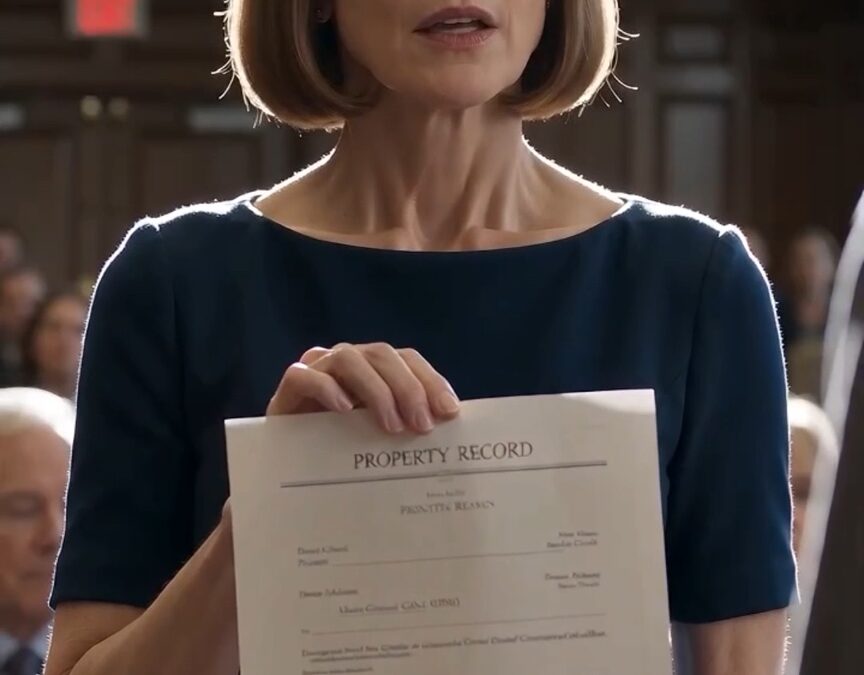
“PROPERTY RECORD.”
I checked that it was the right property, folded it, and put it in my bag.
I wasn’t going to surrender the page to him.
I wasn’t going to sign his agreement.
And I had decided that the free stay needed to end.
I hadn’t worked out the proper notice yet. That would take advice from someone who knew Ohio housing requirements.
I wasn’t going to invent a deadline in an auditorium aisle.
But I could refuse.
Now Tessa leaned close enough that I could speak without raising my voice.
“I’m not signing what they brought.”
“Not here, Paula.”
“And I’m ending the free stay.”
Her face changed.
Not when Dad pushed me.
Then.
“You’re going to make them move?”
“I’m going to do it properly.”
“Over a seat?”
“Over what he just did, and what they expect me to keep agreeing to.”
Tessa pressed her lips together.
“Making them move is worse than him shoving you.”
I looked at her.
She knew I owned the house.
She knew I had paid for it and let them stay without rent.
She also knew exactly what had happened in front of her.
I waited for her to qualify what she’d said.
She didn’t.
Behind her, Darlene shifted as though preparing to watch the ceremony.
Dad noticed my sister’s expression.
“You hear that? Your sister understands family.”
“Yes,” I said. “I heard her.”
“Then act like my daughter.”
He said it loudly enough for the adults beside us.
I answered where they could hear.
“I am your daughter. I’m also the person who has housed you.”
“Keep your voice down.”
I hadn’t raised it.
His eyes went to my bag again.
He was still thinking about the signature. That was what he wanted from this conversation, and he was trying to get us back to it.
“Then let’s stop this nonsense,” he said.
I squared myself toward him.
“Then listen to me.”
I opened my bag.
Tessa looked down.
Dad moved closer, expecting the agreement he had sent me.
Instead, I took out my folded page and opened it at my waist.
The heading faced him.
“PROPERTY RECORD.”
He had never seen my printed copy.
He looked from the heading to the information below it.
I kept hold of the edges.
“Dad, that house belongs to me.”
Darlene turned toward us instead of settling into the stolen seat.
I didn’t explain the county’s terminology.
I didn’t need to.
“I have let you live there without rent for seven years. I am not signing away control of it.”
Dad stopped reaching.
An attendee beside the row looked directly at the page, then at him. Tessa sat back without saying anything.
He knew I had bought the house.
What he hadn’t expected was for me to say, in front of witnesses, that I could stop providing it.
He glanced toward Darlene.
She was watching me now.
I folded the bottom edge inward without putting the document away.
“I won’t sign the lifetime arrangement,” I said.
Dad’s mouth opened, but he didn’t immediately answer.
My father stepped back and asked, “You’re making us leave?”
Chapter 3: The Date They Accepted
“I’m ending the free arrangement properly,” I said.
That was all I could honestly promise in that aisle.
Dad looked at the page again.
“When?”
“After I get advice about the required notice.”
“So you haven’t even worked it out.”
“I’ve decided. I haven’t handled the notice yet.”
He seemed ready to use that distinction against me, but people were settling, and the ceremony was about to start.
I folded my record.
Darlene remained in my seat.
Tessa didn’t move.
I put the paper back in my bag and walked farther back, where an available seat gave me a clear view of the stage.
I sat.
My program was still under Darlene’s purse.
I put my empty hands together in my lap.
Then the graduates began coming in.
I looked for Sadie.
When I found her, I sat forward so quickly my bag slid against my ankle.
There she was.
For the rest of the ceremony, I kept my eyes where they belonged.
I watched her stand with her class.
I watched her cross the stage.
When her name was called, I clapped until my palms felt hot.
Dad’s house could wait until morning.
My daughter wasn’t graduating again for my convenience.
Afterward, I went back to the row before joining Sadie.
Darlene was standing with her purse over her arm.
My program lay on the cushion.
I picked it up and smoothed the bent corner against my palm.
Dad watched.
“We need to talk.”
“Not before I see Sadie.”
“This concerns all of us.”
“She just graduated.”
I put the program in my bag, separate from the property record, and walked away.
Outside the seating area, Sadie found me looking for her.
“Mom.”
I hugged her carefully around her graduation clothes.
Then less carefully.
She laughed against my shoulder and asked if I’d seen her.
“All of it.”
I meant her walk.
Her smile.
The way she had looked out toward the seats afterward.
We took a photograph together with my arm around her. I asked to look at it before we put the phone away.
I was smiling.
So was she.
That mattered enough that I didn’t tell her about the aisle.
The following morning, I contacted an Ohio housing attorney.
I laid out the facts without calling Dad a guest or pretending that owning the house meant I could change the locks.
“They’ve lived there rent-free for seven years,” I explained.
“Any written housing agreement?”
“No.”
“Any promise of lifetime occupancy?”
“No.”
I described their request and my refusal.
The attorney asked about the property, the arrangement, and what I had paid or received. I answered carefully.
I wanted the right process.
Not the fastest-sounding answer.
The attorney checked the local requirements, how notice had to be given, and when it could take effect.
I was told not to interfere with their possession while they still lived there.
No lockout.
No utility cutoff.
No entering just because I owned it.
“I don’t want to do any of that,” I said. “I want an end date I can enforce lawfully.”
The notice was prepared and properly served.
I kept the service information with my copy.
When Dad called afterward, I let him finish before answering.
“You’ve made this formal.”
“Yes.”
“You could have talked to us.”
“I did. You wanted a lifetime guarantee.”
“We wanted to know where we stood.”
“Now you do.”
The conversations that followed were about departure, not ownership.
Dad wanted room to arrange a move.
I wanted vacant possession on a clear date.
I wasn’t interested in leaving the timing to another family understanding.
With advice, we negotiated a written agreement requiring them to leave and return possession 90 days after proper notice was served.
The agreement addressed the house being vacant.
Not merely having a rental application underway.
Not saying they intended to go.
Actually leaving and surrendering possession.
Before I signed, the wording went through review. Dad and Darlene signed, and I signed after the terms were settled.
I put my copy in a folder.
For the first time, their stay had an agreed end.
Then came the moving estimate.
Dad sent it as though forwarding a bill that had arrived at the wrong address.
The amount was $2,400.
I read the attachment, then his message.
He said it was what moving would cost and that I should take care of it because I was requiring the move.
I didn’t answer immediately.
I set my phone beside the folder and opened the agreement again.
There was no promise that I would finance their departure.
I had made none.
I wrote back.
“I will not pay the $2,400 moving estimate.”
He called.
I answered because I wanted no confusion about what I had said.
“You’re making us leave,” he told me.
“We agreed on the departure date.”
“After you served notice.”
“Yes.”
“And now you won’t even help get us out.”
“I have provided the house without rent for seven years.”
He breathed into the phone.
I could hear Darlene asking something nearby, but I couldn’t make out the words.
Dad covered the phone briefly.
Then he came back.
“This isn’t some optional vacation, Paula.”
“I know it’s a move.”
“You’re acting as if we can just pay whatever somebody puts in front of us.”
“You can choose how you move. I am not paying that estimate.”
I rested my finger on the signed agreement.
I didn’t suggest another company.
I didn’t offer part of the money.
Dad’s voice changed from offended to tired.
“We can’t afford to leave.”
Chapter 4: What They Could Afford
I stayed at the kitchen table.
The folder was open in front of me, and Dad was still waiting for me to answer the words he had just said.
“We can’t afford to leave.”
“What does that mean?” I asked.
“It means what I said.”
“Do you mean you can’t pay rent, or you don’t want to use your savings?”
He didn’t answer directly.
He told me rental housing was expensive. He said moving was expensive. He said I already owned a place they could live.
All true except the conclusion he wanted.
“I need to understand what you’re claiming,” I said.
“You don’t need to examine our finances.”
“I didn’t ask to examine anything. You said you can’t leave.”
Darlene asked him to put her on.
I heard the phone change hands.
“We have retirement income, Paula.”
I pulled a blank sheet beside the folder.
Not to calculate their budget.
To write down exactly what she said.
“But that money has to last,” she continued.
“Your regular income can cover an ordinary rental?”
“We shouldn’t have to use up what we’ve saved because you’re upset.”
“That wasn’t my question.”
She paused.
I could hear Dad speaking beside her.
Darlene answered more carefully.
“We can pay rent. It changes what we can put aside.”
I wrote that down.
Then I put down the pen.
They weren’t telling me they had no possible home.
They were telling me free housing protected their savings.
I had suspected it.
Hearing it plainly was different.
When we had negotiated the departure agreement, Dad had made security his main argument.
He had stood by that word from the original request.
Not ownership.
Not a claim that he had bought the house.
Security.
In one of those conversations, I had spread the proposed terms across my table and listened while he tried to make leaving sound like an uncertainty I had created for no reason.
“You know we need stability,” he said.
“I know you want to stay.”
“Those aren’t different things at our age.”
“They are when you’re asking me to guarantee another 15 years.”
Darlene had said a fixed departure date would at least let them plan.
I agreed.
That was why the written terms mattered.
But Dad had continued trying to substitute a promise that I would reconsider for a promise that they would leave.
I would not do that.
Now, with their actual income acknowledged, his argument had changed again.
They could rent.
They preferred not to spend retirement income on it.
Darlene said they had worked for what they had saved.
“I worked for the house,” I said.
“We know that.”
“Then don’t tell me your savings have to stay untouched while mine remain committed to housing you.”
“We’re not asking for your savings.”
“You’re asking for the use of something I bought with them.”
She went quiet.
I didn’t fill the pause.
I let her decide whether there was anything else she wanted to say.
Finally, she asked whether I really expected them to start paying a landlord after all this time.
“Yes.”
It was a small answer.
I had been making it much longer in my head.
After we ended the call, I washed a mug that was already mostly clean.
I rinsed it, dried it, and put it away.
Then I contacted Tessa.
She answered as though she had been expecting me.
“Dad called,” she said.
“I figured.”
“He’s worried.”
“Darlene says their retirement income can cover a rental.”
Tessa didn’t sound surprised.
“She shouldn’t have discussed that.”
I sat down again.
“You knew.”
“Of course I knew they had income.”
I looked at the notes beside my folder.
“And you let me listen to them say they couldn’t afford to leave.”
“Having income doesn’t mean they should have to spend everything.”
“An ordinary rental isn’t everything.”
“You don’t know their whole situation.”
“Neither do you, apparently. Unless you’re saying you reviewed it.”
She didn’t say that.
Instead, she told me they had gotten used to living in the house.
I could have answered that I had gotten used to paying for things without being thanked.
I didn’t.
I asked the question I needed answered.
“Did you believe they had no way to rent somewhere?”
“No.”
There it was.
She knew.
When she’d said making them move was worse than Dad shoving me, she hadn’t been picturing them with nowhere to go.
She had been defending their preference.
“Then stop describing this as if I’m putting them out without options,” I said.
“I’m trying to keep everyone calm.”
“You told me I was doing something worse than being shoved.”
“I didn’t mean he should have done that.”
“You saw him do it.”
“I said I saw.”
I folded the blank sheet over my notes.
Tessa wanted the conversation to stay on whether I was being kind enough. She didn’t want to discuss whether what she was asking was fair.
I wasn’t going to make her agree with me.
But I wouldn’t keep supplying a different version of events for her comfort.
“They have income,” I said. “They have notice. They have a signed agreement giving them time to move.”
“And you’re really going to hold them to it?”
“Yes.”
She let out a breath.
I could hear her moving something on her end of the call.
“Dad says there was an understanding before all this.”
“What understanding?”
“That you wouldn’t make a final decision until they had everything worked out.”
I looked at the signed folder.
That was not what I had agreed to.
“Tessa, tell him to put whatever he thinks I promised in writing.”
She hesitated.
Then she said, “He says you don’t need every family conversation written down.”
Chapter 5: Before I Signed Anything
I did need this one written down.
Not every family conversation.
This agreement.
I took my copy from the folder and read the departure language again. It said what had to happen and when.
There was no condition that they had to feel ready.
No promise to reconsider.
No blank space where another conversation could replace the date.
That hadn’t happened by accident.
Before any of us signed, I had gone back through Dad’s messages at my kitchen table.
The original request was still there.
I saved it separately.
I kept the language about free lifetime occupancy and the guaranteed additional 15 years.
Then I saved the message telling me to bring it to graduation.
Not my description of his request.
His actual request.
I put those beside my county property record and the notice materials.
I worked through the later messages, too.
Some were practical.
Some tried to turn a practical question into an emotional obligation.
“We need enough flexibility.”
“You know we can’t do this on command.”
“We’ll leave when the right place is ready.”
I read that last one again.
Then I sent it to the attorney along with the proposed wording of the departure agreement.
“I don’t want this to mean they leave only if they decide a place is right,” I explained.
The answer was to keep the obligation clear.
The agreement needed to cover vacancy and surrender, not simply an intention to move.
I had asked what those words meant in practice.
“People out, belongings out, possession returned,” I repeated back.
I wanted to understand what I was signing.
Not merely trust that a page looked official.
The attorney reviewed the terms and explained how the notice and agreement worked together.
I kept the reviewed copy.
I didn’t write extra promises in the margins.
I didn’t agree over the phone to anything different.
When Dad called during that process, he asked whether I really needed someone else reading a family agreement.
“Yes.”
“That adds complications.”
“It helps me understand it.”
“You understand plain English.”
“Then you can understand why I want the departure date clear.”
He changed his approach.
He wasn’t claiming ownership anymore.
He had seen the record in the auditorium, with people watching.
Instead, he said the terms needed to account for delays.
“What if we don’t find somewhere suitable?”
“You have time to look.”
“What if something falls through?”
“Then we discuss an actual problem if it happens. I’m not signing an open-ended stay.”
He said I was making ordinary uncertainty sound like dishonesty.
“I didn’t say that.”
“You’re treating us like strangers.”
“I’m putting the arrangement in writing. That’s what you originally asked for.”
He didn’t like hearing his request applied to something he didn’t want.
But he stayed on the call.
He wanted an agreement he could live with, and by then he understood I wouldn’t sign a lifetime guarantee.
I turned the pages while we spoke.
Darlene wanted to know how possession would be returned.
That was a useful question.
We worked through the practical language rather than leaving it for the last day.
They would move out by the agreed deadline and surrender the house.
I would not force entry while they occupied it.
We would not rely on someone’s memory of a conversation.
When the final version was ready, I read it without the phone in my hand.
I compared it with the reviewed version.
I checked the departure requirement.
Then I signed.
I put the completed agreement with the notice and the information showing service had been handled properly.
That was the preparation I returned to after Tessa’s call.
Dad hadn’t persuaded me to replace it.
He had simply started telling Tessa there had been another understanding.
I opened his messages again.
I didn’t find any promise from me to wait indefinitely.
I did find my reply about keeping the agreed date.
I saved that, too.
Then I wrote to Dad.
“Our signed agreement remains in place. I have not agreed to extend it or make departure depend on finding a place you prefer.”
I read it before sending.
It wasn’t warm.
It also wasn’t insulting.
I sent it.
His reply came back asking whether we could talk instead of sending messages.
“We can discuss practical arrangements,” I wrote. “Any change to the agreement would need to be considered in writing. I am not agreeing to a change.”
I left my phone on the table.
For a while I wanted to send another explanation.
I could explain how much of my savings had gone into the house.
I could explain what it felt like to see Darlene sitting on my daughter’s program.
I could ask whether he remembered saying he appreciated my help when I first gave him the keys.
None of those things would make the agreement clearer.
I closed the folder.
Later, I made sure I had the signed copy stored where I could find it without searching through old messages.
The property record stayed with it.
The page had done what I brought it to do in the auditorium.
It established the fact Dad had been treating as unimportant.
The agreement did something different.
It established what happened next.
I was putting the folder away when Tessa called again.
“I have a proposal,” she said.
Chapter 6: My Sister’s Proposal
I left the folder on the table.
“What proposal?”
“Let them stay until they feel ready.”
I pulled my chair out again.
“That isn’t a departure plan.”
“It’s a way to stop this from getting uglier.”
“Who decides when they’re ready?”
“They do, Paula. They’re the ones moving.”
I sat.
The wording sounded considerate until I imagined trying to use it.
Dad could say they weren’t ready.
Darlene could say the available rentals weren’t right.
Nothing would change unless they wanted it to.
“No.”
Tessa paused.
“You haven’t even considered it.”
“I considered the same arrangement for seven years.”
“That isn’t fair.”
“It was open-ended. What you’re proposing is open-ended.”
She told me she wasn’t asking for forever.
I asked what would make it end.
She didn’t give me a condition I could identify or a commitment they would have to keep.
Instead, she said I should know my own father.
I did.
That was why I wanted the date left alone.
I stood and took my mug to the sink while she talked.
The water wasn’t running.
I wanted to hear every word clearly.
“The whole thing at graduation was embarrassing,” she said.
I set the mug down.
“For whom?”
“For everyone standing there.”
“Dad pushed me.”
“And then you brought out paperwork.”
“He asked for paperwork. He expected me to sign it before the ceremony.”
“You didn’t have to announce everything.”
“I said I owned the house and wasn’t signing it away.”
Tessa said she had been trying to keep the peace.
I thought of her sitting beside Darlene, telling me not to embarrass him while my program stayed under a purse.
“You could have asked him to give me my seat back.”
“He wasn’t going to listen.”
“So you asked me to accept it.”
She didn’t answer.
I walked back to the table.
The signed agreement lay within reach.
I didn’t pick it up.
I knew what it said.
“My answer hasn’t changed,” I told her.
“This is why they feel they can’t talk to you.”
“They can talk to me. They can’t make my answer yes by continuing.”
Tessa took a breath.
Then she tried a smaller request.
Not replacing the agreement, she said.
Just telling them that, if they weren’t ready, I wouldn’t hold them to it.
“That replaces it,” I said.
“No, it reassures them.”
“It tells them the date doesn’t matter.”
She said I was choosing a document over people.
I didn’t argue about what kind of person that made me.
I asked a practical question.
“Can they stay with you if they need to?”
She went quiet.
I waited.
“My home isn’t set up for that.”
“Then don’t promise them mine.”
“I didn’t promise anything.”
“You’re asking me to.”
She began describing why it would be difficult for her to have them there.
I stopped her before she felt she had to prove it.
“You can say no.”
“That isn’t the same.”
“No. You’d be housing them in your own home. I’ve provided a separate house.”
She said that was exactly why my situation was easier.
I looked around my kitchen.
I had kept a separate home while letting Dad and Darlene use another property without rent.
That arrangement had made their lives easier.
It hadn’t made the house belong to them.
“I am not changing the signed deadline,” I said.
Tessa didn’t offer to pay their rent.
I didn’t ask her to.
I wasn’t trying to transfer responsibility from me to her.
I wanted her to stop speaking as though someone had to provide free housing indefinitely.
“They can afford a rental,” I reminded her.
“You’ve made your point about their income.”
“It isn’t a point. It’s how they can move.”
“I don’t want them spending their savings.”
“Then you can help them protect their savings with your money. I am not doing it with my house.”
She didn’t like that.
I could hear it in the way she said my name.
But she had no new proposal.
Only the original one, put less plainly.
I let the conversation end without agreeing to another discussion.
Afterward, I went back to ordinary work.
At my desk, I checked payroll information with the same attention I always used.
A missing detail didn’t become correct because someone was unhappy about being asked for it.
I checked what needed checking.
I finished what was mine to finish.
When I got home, I put the housing folder away instead of leaving it beside my plate.
I didn’t want dinner to become another silent review of Dad’s messages.
Tessa sent a short message later.
She wasn’t going to take them in.
She also wasn’t going to discuss that possibility with them as though it were an offer.
I replied that I understood.
I did understand.
She could decide what she was willing to provide.
So could I.
Dad didn’t call to discuss her proposal.
He sent an attachment instead.
I recognized the moving estimate before I opened it.
The same amount was there.
$2,400.
Beneath it, he had written, “You need to arrange payment so they can keep the move scheduled.”
Chapter 7: The Moving Estimate
I opened the estimate at my table.
It looked like an ordinary moving-company estimate.
Not a bill in my name.
Not something I had requested.
Not something I had authorized.
Dad had forwarded it as if those distinctions were inconvenient details.
I read through it anyway.
I wanted to know whether he was describing an actual obstacle or simply assigning me an expense.
Then I wrote back.
“I will not pay the $2,400 estimate. You and Darlene are responsible for arranging and paying for your move.”
I had said that already.
This time I kept the answer with the estimate.
Dad called soon afterward.
“You can’t just leave that sitting.”
“It isn’t mine to arrange.”
“They need to know they’re getting paid.”
“Then you need to make arrangements with them.”
He said I was the reason movers were necessary.
I rested my elbow on the table and moved the estimate away from my dinner plate.
“Moving out is part of the agreement.”
“You know what I’m saying.”
“Yes. You’re asking me to pay.”
“I’m asking you to take responsibility.”
“I am responsible for the house. You’re responsible for your move.”
He switched to the condition of the house.
Professional movers, he said, would keep things from being damaged. Surely I would prefer that.
I didn’t take the suggestion as a threat.
I treated it as another attempt to make the estimate my problem.
“You should move carefully.”
“Then help us do that.”
“I am not paying it.”
He asked whether I wanted them carrying furniture themselves.
I hadn’t told them how to move.
I said that.
He asked whether I would at least call the company.
“No.”
I didn’t want a conversation with movers to become evidence, in his mind, that I was handling payment.
He knew how to make a small task lead to a larger obligation.
This time, I kept them separate.
After the call, I put my response and his estimate in the folder.
I didn’t send suggestions about cheaper options.
That would have started another discussion about why my suggestions weren’t suitable and why this estimate remained my responsibility.
They could choose.
They could pay.
Darlene contacted me later.
“We have a rental.”
I sat down.
“Is it secured?”
“Yes.”
That changed the practical situation.
There was a place for them to go.
I asked whether the move-in arrangements worked with the departure deadline.
“They do.”
“Good.”
She sounded put out by how simple my answer was.
“You could sound happier for us.”
“I’m glad you found somewhere.”
“Your father is having a hard time with all this.”
“I know he doesn’t want to move.”
“He doesn’t like being treated as though he hasn’t contributed anything.”
I kept my voice ordinary.
“I haven’t said he contributed nothing to his own life. I said I bought and own this house.”
She moved on.
The rental had its own expenses.
The movers were expensive.
Starting somewhere else meant spending money they hadn’t planned to spend.
I listened.
None of that changed who owed the moving company.
“Does the rental work for you?” I asked.
“It will.”
“Then I hope you get settled comfortably.”
She asked about the estimate.
Of course she did.
I looked at the folder.
“I’ve answered.”
“We thought you might reconsider now that everything is coming together.”
“No.”
There was no need to explain my savings again.
No need to mention the graduation.
They had secured a rental using their own resources.
The remaining issue wasn’t whether they could find housing.
It was whether they could get me to finance the change.
Darlene said they would speak to the movers.
“Please keep the departure arrangements in writing,” I said.
She didn’t promise immediately.
Then she said she would send confirmation when things were settled.
When the call ended, I wrote down that they had secured a rental and that it worked with the agreed date.
I wasn’t making a case against them.
I was keeping track of an arrangement that had already been described differently to my sister.
That distinction mattered to me.
I could be hurt without turning every note into an accusation.
I could also keep records without apologizing for them.
Later, I took Sadie’s program out of the bag I had carried to graduation.
The folded property record was already filed away.
The program wasn’t.
I opened it to her name and pressed the bent corner flat against the table.
There was no stain.
Just a crease from where the purse had rested.
I closed it and set it somewhere safe until I could put it with our photograph.
Then I checked my messages.
Darlene had confirmed the rental in writing.
I saved it.
Dad had sent something else.
He wanted to know whether I would “be reasonable” if the movers’ timing made the agreed date inconvenient.
I didn’t answer until I had read it again.
He hadn’t said they couldn’t move.
He had said it might be inconvenient.
I opened the signed agreement beside his message.
The date was still clear.
Then another message arrived.
“We may need an extra week.”
Chapter 8: No Extra Week
I read Dad’s request with the agreement open.
He wasn’t describing a lost rental.
He wasn’t describing an emergency.
He wanted more time because the move would be easier for them.
I understood that moving was inconvenient.
I wasn’t agreeing to extend the stay.
“Our agreement requires vacant possession on the agreed deadline,” I wrote. “I am not extending it.”
He replied that an extra week wasn’t indefinite.
That was true.
It was still a change I hadn’t agreed to make.
I didn’t tell him that granting it would ruin everything or that he was certainly planning to stay forever.
I didn’t know that.
I knew only that we had negotiated a date and he wanted it changed for convenience.
“No extension is agreed,” I wrote.
Then I left the conversation there.
At home, I checked the folder before putting it away.
The notice.
The service information.
The signed agreement.
The rental confirmation.
The moving estimate and my refusal.
I wanted everything together in case an actual problem arose.
I wasn’t going to improvise a response based on how angry I felt that evening.
Dad called.
I let it go unanswered and sent a message asking him to put any practical issue in writing.
He said I was refusing to talk to him.
“I am keeping the departure arrangements clear,” I replied.
He tried Darlene’s approach next.
They had been careful with the house.
They had lived there for seven years.
Surely that earned a little flexibility.
I didn’t dispute that it was their home while they occupied it.
I also didn’t confuse that with a promise that it could remain theirs as long as they preferred.
I contacted the attorney about the request and my response.
I wanted to make sure I wasn’t accidentally changing the agreement through some casual exchange.
The advice remained practical.
Keep the agreement clear.
Don’t interfere with their possession before surrender.
Use the proper process if they don’t leave.
I made no plan to change locks while their belongings remained inside.
I didn’t drive over to count boxes.
I didn’t arrange to shut anything off.
The house was mine, but they still occupied it.
That fact had legal consequences.
I respected them.
When I wanted to know whether the move was arranged, I asked.
I didn’t let myself in to find out.
Darlene replied that they were packing.
I thanked her for the update and asked for confirmation that the movers were scheduled for the agreed departure.
She said Dad was handling it.
I sent the question to him.
He answered with irritation about how often I wanted things confirmed.
“I need the departure arrangements,” I wrote.
He sent the scheduled moving information.
It fit the deadline.
I saved it.
That could have been the end of the discussion, but Dad wanted me to say I was willing to be flexible anyway.
“Just in case,” he wrote.
I looked at the words.
They were small enough to sound harmless.
They also asked me to loosen the only part of the arrangement we had finally made clear.
“If an actual issue arises, put the details in writing,” I answered. “The agreed deadline remains in place.”
I did not promise a different answer to a situation that hadn’t happened.
The remaining days were ordinary in ways I hadn’t expected.
I went to work.
I made dinner.
I answered practical messages.
Dad and Darlene dealt with their rental and their belongings.
For years, I had taken the fact that something concerned them as a reason I needed to manage it.
This time I let them manage their move.
When Dad said a particular arrangement was frustrating, I didn’t offer to call anyone.
When Darlene described packing, I didn’t ask what I should buy.
I said I hoped it went smoothly.
Then I returned to what I was doing.
Tessa checked in once about whether there was still going to be a problem.
“They’ve secured a rental and scheduled movers,” I said.
“So they’re leaving.”
“That’s the agreement.”
She didn’t bring up letting them stay until they felt ready.
I didn’t bring up her refusal to house them.
There was nothing useful to add.
As the deadline approached, I reviewed the surrender arrangements with the attorney and checked what I should do after possession came back to me.
Not before.
After.
I would verify the house was vacant.
Then I could arrange an inspection and deal with the property as its owner.
If they didn’t leave, I would seek advice about the next lawful step.
I wasn’t going to threaten something I hadn’t discussed.
And I wasn’t going to announce that owning the house gave me permission to put their possessions outside.
It didn’t.
The final confirmation arrived from Darlene.
“The movers are confirmed. We’ll be out on the agreed day.”
I read it, saved it, and replied.
“Please confirm when the house is vacant and possession is surrendered.”
She said she would.
I put my phone down.
For the first time in that part of the process, I didn’t immediately pick it up again.
On the agreed day, it rang while I was waiting for their message.
Dad’s name appeared.
I answered.
“The movers are here,” he said.
Chapter 9: The House After They Left
“Thank you for letting me know,” I said.
Dad didn’t sound pleased.
He sounded occupied.
There were ordinary moving sounds behind him, and he stopped speaking to answer someone I couldn’t hear clearly.
I waited.
Then he came back.
“We’ll tell you when we’re finished.”
“Please do.”
I didn’t ask to speak to the movers.
I didn’t discuss payment.
That arrangement belonged to him and Darlene.
They had secured the rental.
They had kept the scheduled move.
They paid their own moving expenses.
I stayed away while they finished.
There was no reason to stand in the doorway watching their belongings leave.
I wasn’t supervising them.
I was waiting for possession to be returned.
The message came later.
They were out.
Darlene confirmed the house was vacant and that they were surrendering possession as agreed. Dad returned the keys as arranged.
I kept the confirmation.
Then I went to the house.
I stood outside before using the key.
For seven years, arriving there had meant visiting them, even though I owned it.
Now I was checking a vacant property.
I opened the door and called out.
Nobody answered.
I stepped inside and stayed near the entrance long enough to listen.
No television.
No conversation from the kitchen.
No Darlene asking whether I wanted coffee.
I walked through the rooms, checking that they were actually empty.
They were.
The places where furniture had stood looked different from the rest of the floor, but there was no destruction waiting for me.
No surprise stash of belongings.
No note announcing that they’d be back.
I checked the closets.
The cabinets.
The rooms where they had slept.
I wasn’t looking for a reason to punish them.
I needed to know what I was taking responsibility for.
The house was vacant.
They had met the agreed deadline.
I sent a simple acknowledgment that possession had been received.
I didn’t attach a speech.
Then I contacted the attorney to confirm what had happened.
No lawsuit had been needed.
There was no eviction case.
Notice had been properly served, the departure terms had been negotiated, and they had followed the signed agreement.
I closed that part of the folder.
Not the whole folder.
I still needed the records.
But I no longer needed to keep checking whether Dad was trying to replace the departure date.
It had passed.
They were gone.
After verifying vacancy, I arranged an inspection.
I wanted the house checked before deciding anything else about it.
That was ordinary ownership, not a celebration.
At the house, I made notes about what needed attention and what simply needed cleaning.
I opened and closed cupboards.
I checked that windows shut.
I looked beneath sinks.
The work was unglamorous.
It also made the house feel less like an argument I had to rehearse.
I could look at a room and think about its condition.
Not Dad’s next answer.
I wiped a counter with a cloth I had brought and rinsed the sink afterward.
Then I stopped myself from trying to finish everything in that visit.
I could return.
I didn’t need permission.
I didn’t need to arrange around Dad’s mood.
That took some getting used to.
I stood in the kitchen where Darlene had opened the cabinets when they first moved in.
I remembered her asking whether I was sure.
I had been sure about helping.
I hadn’t understood how difficult it would become to stop.
There was no need to turn that memory into a different decision.
I checked my notes and moved to the next room.
The inspection went ahead after possession had been returned.
I kept the information with the property records and used it to plan ordinary upkeep.
There was no sudden windfall.
No hidden money.
No spectacular damage that made every decision afterward obvious.
There was a modest house I owned and would now manage myself.
That was enough.
Dad sent a message about the rental after they had settled in.
It was brief.
They were there.
The move was done.
I answered that I hoped they settled comfortably.
I didn’t ask whether they wanted to come back if they disliked it.
I didn’t ask to see their moving bill.
They had paid it.
It wasn’t mine.
Tessa later confirmed they were living in the rental.
I told her I knew.
She didn’t apologize for the graduation aisle.
I didn’t pretend she had.
For now, we spoke about the practical fact that the move was complete.
I wasn’t ready to discuss everything else with her.
I didn’t have to do it that day.
Before leaving the vacant house, I made sure the windows were closed and the doors secured.
I took my cloth and notes with me.
Nothing belonging to Dad or Darlene needed to be carried back to them.
They had cleared the place.
Outside, I locked the door and checked it once.
Then I put the key in my bag, in the pocket I used for my own things.
At home, Sadie was nearby when I set the bag down.
She looked at the folder under my arm.
“Is it finished?” she asked.
Chapter 10: The Program Beside Our Photograph
“Yes,” I told her. “They’re moved.”
Sadie nodded.
I put the folder away before sitting down with her.
I didn’t want to have the agreement open between us while we talked about her graduation.
For a moment, neither of us said anything.
Then she asked whether the move was because of what had happened at the auditorium.
I took my time answering.
“It was part of why I stopped putting the decision off. But the house arrangement was already something I needed to change.”
She looked down at her hands.
I didn’t want her trying to work out whether her graduation had caused a family problem.
So I said that plainly.
“You didn’t cause any of it.”
“I know.”
“I want you to hear it anyway.”
She leaned back.
I told her I had already decided the evening before the ceremony that I wouldn’t sign the lifetime agreement.
I didn’t describe every message.
I didn’t list what Tessa had said after graduation or ask Sadie whether she thought her aunt was wrong.
That wasn’t her job.
“Did Grandpa really push you?” she asked.
“Yes. I caught the seat back. I didn’t fall or get hurt.”
“Why?”
“He wanted Darlene in the seat I’d saved.”
Sadie looked at me.
I let the answer stay as small and unpleasant as it was.
There wasn’t an explanation that made it sensible.
“He shouldn’t have done that,” she said.
“No.”
I didn’t ask her to say more.
I didn’t ask what she intended to do about him.
Her relationship with her grandfather didn’t have to become a test I administered from my kitchen table.
“I wanted to watch you graduate,” I said. “So I found another seat and watched.”
“Did you see me looking?”
“I saw you look toward the audience.”
“I couldn’t find you.”
“I was farther back.”
She frowned, and I understood that she was picturing me somewhere other than the place I’d expected to be.
“I saw you,” I said again. “Your name, your walk, all of it.”
She nodded.
That was the part I wanted her to know.
Not that everything had been fine.
It hadn’t.
But I hadn’t missed her.
We looked at our photograph together.
I enlarged it on the screen, then moved it back so we could see the whole picture.
Her graduation clothes.
My arm around her.
Both of us looking pleased.
“I like that one,” she said.
“So do I.”
I didn’t search our faces for evidence of the argument.
The photograph wasn’t false because something bad had happened earlier.
I had been happy standing beside her.
That was there, too.
In the days after the move, I dealt with the house as a property I owned rather than a subject I needed permission to mention.
I kept the inspection information.
I made arrangements for ordinary maintenance.
I went there when it was appropriate to check on it.
Dad’s expenses remained Dad’s expenses.
Darlene’s rental arrangements remained hers and his.
I didn’t resume paying for their housing.
I didn’t offer free use of the house while they decided whether they liked the rental.
They stayed where they had moved.
If Dad mentioned that something cost more than he preferred, I could listen without reaching for my account information.
That was a change in my daily behavior.
A quiet one.
I no longer opened every message as though it might contain a task I had already failed to do.
Sometimes it contained a question.
Sometimes a complaint.
Sometimes information.
I read it before deciding whether anything was mine to handle.
The signed agreement stayed filed with the notice and property record.
I didn’t keep it on the kitchen table.
At work, I could finish payroll without checking my phone between ordinary tasks.
At home, I could make dinner without rehearsing an answer to a conversation that hadn’t happened yet.
There were still things between me and Tessa that weren’t settled.
I wasn’t going to call them settled just because Dad had moved.
We spoke, but I didn’t ask her to approve what I had done.
She knew they had income.
She knew they had found a rental.
She knew they had left without a lawsuit.
Those facts no longer required an argument.
Dad and Darlene had wanted me to preserve their savings by continuing to house them free.
They hadn’t gotten the lifetime guarantee.
They hadn’t gotten another 15 years.
They hadn’t gotten the $2,400 moving payment.
They did have a home they could afford with their retirement income, and they had handled their own move into it.
I didn’t need anything worse to happen to them.
I wanted control of my house.
I had it.
One evening, I brought our graduation photograph home and set it where I could see it without opening my phone.
Sadie came over to look.
“That’s a good place,” she said.
I adjusted it so the light didn’t catch the front.
Then I went to get the program.
I had kept it flat, but the corner still showed where Darlene’s purse had pressed against it.
I smoothed it once.
I didn’t keep working at it.
Sadie watched me open the pages to her name.
“There,” I said.
She smiled.
I closed it carefully, turned it the right way up, and put it beside the graduation photograph we had taken together.
At home.
On my own table.
Sadie’s graduation program.
You Might Also Enjoy




