My Daughter-In-Law Accused Me Of Faking Papers Days After My Husband’s Funeral — Until Her Father Intervened
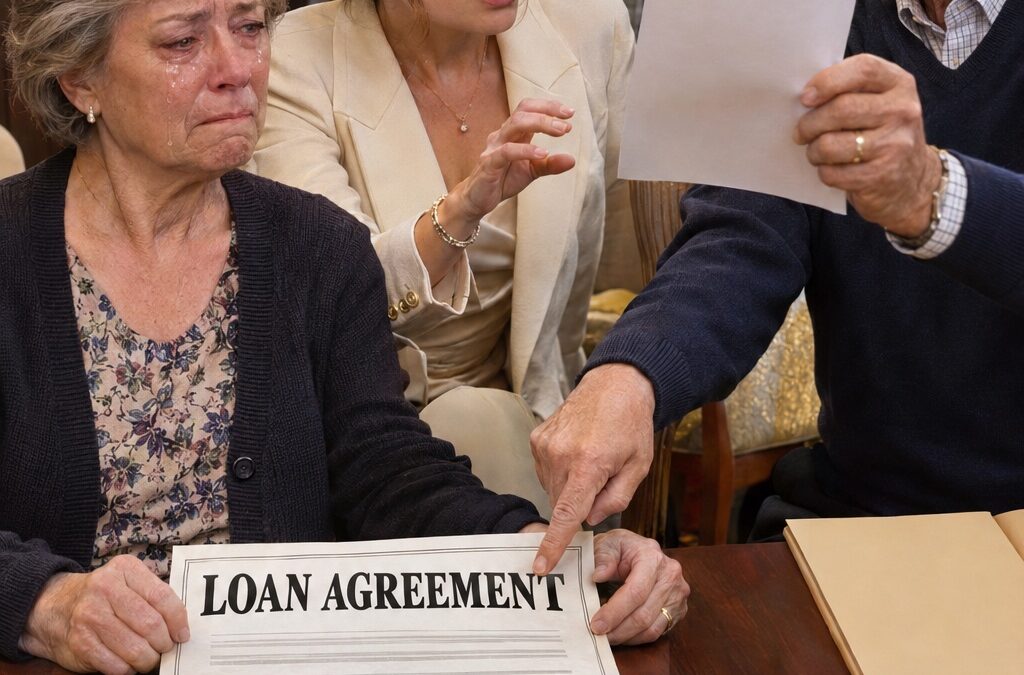
Part 3: What Her Father Had Kept
“I guaranteed the whole loan,” Martin said.
Tessa stared at the page beneath his hand.
“Separately,” he added. “You weren’t asked to sign this.”
He turned it so she could read it.
“If you didn’t pay Irene, I promised I would.”
Adam stopped moving his thumb across his phone.
Martin pointed to the agreement I held flat.
“Those are your signatures. I watched you sign.”
Then he looked at the screen in Adam’s hand.
“And that entry isn’t a repayment to Irene.”
Adam lowered the phone toward the table.
“It’s the money coming into your account,” Martin said. “The money she lent you.”
The spreadsheet called the transaction a repayment.
The account entry beneath it showed the receiving account.
It belonged to Adam, not to me.
Tessa’s mouth opened, but Martin kept his finger there.
“I drove her to get that cashier’s check.”
He looked at me before continuing.
“I watched her hand it to you, Adam.”
I remembered the bank counter and the check envelope.
It had been December 30, 2021.
Martin had offered to drive because Paul was busy.
I had carried the envelope against my coat buttons.
That was money from years of overnight shifts.
Martin knew exactly where it had come from.
He had paid my wages for caring for his wife.
“This wasn’t a gift from me,” he said.
Then he tapped the agreement.
“And her wages weren’t a family favor.”
Tessa sat back from the table.
“I didn’t know you had anything to do with it.”
“You knew whose money you borrowed.”
“That isn’t what I meant.”
Martin let her finish adjusting that sentence.
I took a sip of water while he waited.
Adam put his phone beside my plate.
The spreadsheet was still open above the account attachment.
“Who labeled it repayment?” I asked.
Tessa looked toward the breakfast room doors.
“I put our old records together.”
“That deposit went to Adam.”
“I can see what you’re saying.”
“No,” Martin said. “Look at the receiving account.”
She looked again, then locked the phone.
I asked Adam to unlock it.
He did.
For the first time that morning, he answered directly.
“Yes, Mom. That’s my account.”
Erin moved her chair closer to the table.
Nobody asked to finish breakfast now.
Tessa pointed at Martin’s copy of the agreement.
“Paul said the originals were shredded.”
There it was, spoken plainly in front of everyone.
Not confusion about whether a loan had existed.
Confidence that the proof was gone.
“Our copy got wet,” I said.
A leak had soaked papers stored at home.
Paul had helped me sort the damaged stack.
I scanned the pages we needed to keep.
He shredded the ruined sheets after they dried.
Tessa had heard him talking about that chore.
She had not asked what we had saved.
“You heard him say he shredded damaged originals.”
“He said the loan papers were gone.”
“The paper at our house was gone.”
I touched the edge of Martin’s document.
“This one wasn’t at our house.”
We had signed duplicate originals on January 1, 2022.
Martin kept his because he had guaranteed repayment.
I had asked him to bring it before breakfast.
I hadn’t asked him to accuse his daughter publicly.
I had wanted everyone working from the same agreement.
Tessa looked at me, then at her father.
“You let me come down here without telling me?”
Martin folded his empty hands.
“You didn’t ask whether I had a copy.”
“That’s not an answer.”
“You called her a criminal before asking me anything.”
A relative at the far end moved her plate aside.
Another stopped reaching toward the basket of toast.
I wanted to pull my handkerchief over my face.
Instead, I kept the pages from sliding apart.
Tessa took a slower breath.
“Fine. There was an agreement.”
Adam closed his eyes briefly.
“But Paul told us not to worry about it.”
The accusation had changed.
I could almost feel everyone considering that easier explanation.
Perhaps nobody had lied after all.
Perhaps grief had simply muddled an old family arrangement.
I moved my water glass away from the papers.
“Paul wasn’t the lender.”
“He was your husband.”
“And he knew whose savings these were.”
Tessa glanced at Erin, looking for an easier listener.
“He handled money for them all the time.”
Erin didn’t answer.
Paul and I had paid household expenses together.
He could discuss dinner plans and insurance renewals for us.
He couldn’t quietly give away my separate savings.
More importantly, I didn’t believe he had tried.
“What exactly did he say?” I asked.
Tessa looked at Adam.
“You have his message.”
Adam rubbed the side of his face.
“It was about Christmas.”
“Then show us.”
“Mom, you shouldn’t have to read his messages here.”
I picked up Paul’s handkerchief from my lap.
I folded its loose corner beneath my thumb.
“I’ve been reading them upstairs all week.”
That stopped Adam from arguing.
Martin pushed his guarantee back beside his own copy.
“I’m not asking Irene to collect twice,” he said.
He looked at his daughter.
“I’m telling you this debt wasn’t imaginary.”
Tessa gathered the handles of her bag.
“We’re not going to make a financial decision over toast.”
“We made it when you borrowed the money,” I said.
“It’s due today.”
That distinction mattered to me.
I had not come downstairs claiming a missed deadline.
The payment date had arrived.
I needed an answer about what they intended to do.
Adam hadn’t offered payment or requested more time.
Tessa had offered an accusation and a mislabeled deposit.
I asked Martin to leave the duplicate with me.
He agreed and kept his separate guarantee.
Tessa watched that exchange without touching her bag again.
Then she made another attempt.
“Paul understood what buying another house would mean.”
I looked at Adam instead of answering her.
“Open the message,” I said. “Let me read his actual words.”
Part 4: The Message On His Phone
Adam placed the phone between my plate and his.
Paul’s message asked them to leave the money discussion alone over Christmas.
He wanted a quiet holiday while he was ill.
It did not say the loan was forgiven.
It did not say I had agreed to anything.
I read it again before passing the phone back.
“He asked you not to argue,” I said.
Tessa pulled her bag onto her lap.
“He said we’d work it out later.”
“Later is what we’re doing now.”
Adam’s shoulders lowered.
“He didn’t say you canceled it,” he admitted.
Tessa looked at him sharply.
He kept looking at the phone.
I didn’t ask him to choose between us.
I asked him to stop changing what a message meant.
Martin moved his chair back enough to stand.
“Send Irene the complete conversation,” he told Adam.
“Not just the part you think helps.”
Adam sent it while we sat there.
I checked my phone for the attachment.
Then I put it away without opening anything else.
The breakfast room had become uncomfortably warm.
I wanted fresh air and somewhere without an audience.
But I wasn’t leaving my documents on that table.
I put the scan printout inside my folder.
Martin helped me place the signed duplicate behind it.
Tessa watched me align the edges.
“You’re treating us like strangers.”
“I’m keeping the agreement you called forged.”
She said nothing to that.
I thanked the relatives who moved their chairs.
Nobody needed to announce that breakfast was over.
Erin followed me toward the elevators.
“Mom, I didn’t know what was going on.”
“You knew I’d buried your father.”
She reached for my elbow, then let her hand fall.
“I laughed because it was awkward.”
“That was worse for me, not easier.”
The elevator arrived before she found another answer.
I went upstairs alone.
Paul’s garment bag hung beside the room window.
I moved it so I could use the desk.
Then I spread out the papers in separate piles.
The scan printout went beside the signed duplicate.
Adam’s spreadsheet stayed attached to its source record.
I saved his email rather than editing its contents.
I saved the message thread about Christmas, too.
I wrote down what Martin had said at breakfast.
Not what I hoped he had meant.
The bank trip, the check, the delivery, the signatures.
I called him and asked him to check my notes.
He corrected where he had stood during the signing.
I changed that sentence.
I wasn’t going to answer a forgery accusation carelessly.
The next morning, January 2, 2026, the debt was overdue.
I called an attorney who handled ordinary contract disputes.
I explained the loan before describing breakfast.
She asked for the agreement and payment history.
Then she asked whether any repayment had reached me.
“None,” I said.
She didn’t promise a quick result.
She didn’t suggest calling the police on my family.
She explained that collecting a disputed loan took steps.
A demand went out that day.
It identified the agreement and the unpaid principal.
It allowed payment through February 2, 2026.
Copies went to both borrowers.
The demand didn’t include my account of Erin laughing.
It didn’t describe Paul’s funeral clothes.
It asked for the money they had promised.
That plainness helped me send it.
Tessa called after receiving her copy.
“You know this affects our mortgage plans.”
“You told me that at breakfast.”
“We can’t have this hanging over an application.”
“Then give me a repayment proposal.”
She wanted me to sign something instead.
A statement that nothing was owed between us.
I asked her to send the request in writing.
She went quiet.
Then she said I was misunderstanding her again.
I repeated the request and ended the call.
She never sent the proposed statement.
I told my attorney about the conversation.
She advised me not to sign any lender paperwork casually.
I hadn’t intended to.
But hearing that instruction made the situation less cloudy.
This wasn’t a disagreement over who remembered Christmas correctly.
Tessa wanted the debt removed before another mortgage application.
My signature would have done that.
Not her father’s opinion or Adam’s spreadsheet.
Mine.
Erin came to my house while the demand remained open.
She carried groceries I hadn’t requested.
I let her put them on the counter.
Then she asked whether a lawsuit was really necessary.
“I’ve asked for a proposal,” I said.
“They’re under a lot of pressure.”
“So am I.”
She started straightening a bag that didn’t need straightening.
“I don’t want to take sides.”
“You laughed on one side already.”
She stopped moving the bag.
I didn’t tell her she could never visit again.
I asked her not to bring arguments from Tessa.
If Adam wanted time, he could ask me directly.
If he wanted to dispute the debt, he could explain why.
Erin took off her coat and stayed for coffee.
We spoke about Paul without mentioning the loan again.
That evening, Adam sent another copy of the spreadsheet.
No proposal came with it.
My attorney asked whether I wanted to extend the deadline.
I checked my account before answering.
There was no repayment to overlook.
There was no message asking for a workable schedule.
“Keep the date,” I told her.
February 2, 2026, passed without payment.
The complaint was filed February 9, 2026.
It named Adam and Tessa as the borrowers.
I wasn’t suing Martin simply because he was easier.
The guarantee remained additional protection, not another payday.
Adam and Tessa were served February 13, 2026.
Adam called afterward, sounding tired and angry.
“You could have warned me.”
“The demand told you what would happen.”
“I didn’t think you’d actually do it.”
I sat down before answering him.
“I asked you to answer me.”
He had no response I could use.
Their formal answer arrived through counsel later.
My attorney read the central defense aloud.
Despite what Adam had acknowledged at breakfast, they still claimed the loan had already been repaid.
Part 5: The Account That Received It
I asked my attorney whether breakfast had meant anything.
“It meant something,” she said. “We still prove the case.”
She asked me to stop calling the spreadsheet fake.
The document existed, and its source entry existed.
The problem was what Tessa claimed they showed.
I wrote that distinction on my working notes.
It helped me describe things without starting an argument.
We requested the records behind their repayment claim.
Their attorney asked for my records as well.
I provided the relevant statements through my attorney.
She limited what went out to what the case required.
I didn’t send my whole life in a cardboard box.
We matched the withdrawal to the cashier’s check.
We matched the check to Adam’s incoming deposit.
The date on his record was January 1, 2022.
That was a deposit entry, not a bank visit.
Martin’s bank trip with me had happened beforehand.
The timing didn’t require a branch open on a holiday.
Neither did it make the deposit money come from Adam.
The funds had come from my separate savings.
My attorney laid the records beside the signed agreement.
Then she asked me to identify any payment back.
There wasn’t one.
Their side did not produce an outgoing payment to me.
They produced the same incoming deposit with the same label.
After that, their explanation began to change.
Perhaps the money had been forgiven in conversation.
Perhaps Paul had spoken on my behalf.
Perhaps we had never intended the agreement to be enforced.
Each possibility required a different answer.
None required me to invent one.
I had never canceled the loan.
Paul’s complete message did not cancel it.
Both borrowers had signed a definite repayment date.
Martin’s separate promise explained why he kept an original.
My attorney prepared him to describe only what he knew.
He couldn’t testify about private conversations he never heard.
He could describe driving me to the bank.
He could describe watching the check change hands.
He could identify the signatures he had witnessed.
He could explain why his duplicate stayed in his files.
I called him before the trial to ask something else.
“Are you sure you want to do this?”
There was a pause before he answered.
“I’d rather she’d paid you.”
I looked at the phone against my palm.
“That isn’t what I asked.”
“I know. I’m coming.”
He didn’t sound pleased with being the helpful father.
He sounded like someone making an unwelcome appointment.
That made his decision easier for me to trust.
I spent the evening before trial checking my folder.
I put loose pages in the order requested.
I packed Paul’s handkerchief in my purse.
Then I took the folder out again.
I worried that I had misplaced the signed duplicate.
It was exactly where I had put it.
I closed the folder and left it by the door.
The bench trial was June 18, 2026.
The courthouse hallway smelled of floor cleaner and coffee.
Adam stood when I approached.
Tessa stayed seated beside him.
We exchanged a greeting without discussing the case.
Their attorney did the talking inside.
That was easier than another family breakfast.
There was a judge, a schedule, and questions requiring answers.
I identified the agreement and explained the savings.
When asked about my work, I described overnight caregiving.
I didn’t give a speech about sacrifice.
I explained that the wages were mine.
I explained that I expected the loan to be repaid.
Their attorney asked whether I loved my son.
“Yes.”
Whether I had helped him before.
“Yes.”
Whether I wanted him to have a comfortable home.
“Yes.”
Then came the question about whether this was really a gift.
“No,” I said. “That’s why we signed the agreement.”
I kept my answer there.
Martin testified after me.
He described his wife needing help through the night.
He explained that I was paid for that work.
Then he described the bank trip and the check.
He identified Adam as the person who received it.
He identified both borrowers’ signatures on the duplicate.
He explained his separate guarantee without presenting it as repayment.
His promise had protected me if the borrowers defaulted.
It had not erased their obligation to me.
Tessa watched him throughout that explanation.
She looked away when he described retaining the papers.
Their attorney asked whether he wanted to help me.
“I want the agreement followed,” he said.
Asked whether he was angry with his daughter, he paused.
“I’m unhappy about what happened at breakfast.”
That answer stayed with the facts, too.
He didn’t claim to be neutral about her behavior.
He didn’t change what he had witnessed.
Adam had to explain the receiving account.
He agreed that it was his.
He agreed the cashier’s check was my advance.
He couldn’t identify a corresponding repayment sent to me.
Tessa said she had assembled the spreadsheet from old records.
She described believing the matter had been settled.
The underlying account entry remained the same.
My attorney returned to it without raising her voice.
Incoming money to Adam was not outgoing money to Irene.
Paul’s request for holiday peace remained just that.
I watched the judge make notes.
Nobody at counsel table looked toward the breakfast witnesses.
Nobody needed Erin’s opinion about whether I seemed confused.
Afterward, I sat in my car before starting it.
I unfolded Paul’s handkerchief and pressed my eyes.
There had been no dramatic announcement for me to celebrate.
We still had to wait for the written decision.
Judgment was entered June 25, 2026.
The principal was $38,000, with applicable postjudgment interest.
My attorney called and explained what happened next.
A judgment established the debt.
It did not make money appear in my account.
We could discuss collection steps or a workable agreement.
She would not promise that either would feel pleasant.
I asked her to request a payment proposal.
Tessa’s mortgage plan could not continue as if nothing existed.
I didn’t contact a lender or distribute the judgment.
I didn’t need to invent another punishment.
Their own finances now included an enforceable judgment.
Adam called after speaking with their attorney.
“We’re not applying for the other mortgage.”
I let that sentence stand without thanking him.
Then he said they wanted to arrange payments.
A proposal arrived through the attorneys.
It included a schedule, an interest concession, and a place for my signature.
Part 6: The Payments Came To Me
I read the proposal at my kitchen table.
Then I read it again with my attorney.
I wasn’t going to reject payments just to prolong things.
I also wasn’t going to sign away the judgment.
The agreement had to explain what happened after a missed payment.
It had to preserve lawful collection rights if they defaulted.
It had to make clear where payments would go.
They would go to me.
Not to Martin for informal distribution.
Not through Erin as the family peacemaker.
Not into an account Paul once managed.
My attorney revised the language before I signed.
The payment agreement was completed July 9, 2026.
They would pay $1,000 each month.
The schedule began August 1, 2026.
It ended September 1, 2029.
There were 38 payments, totaling $38,000.
I would bear my own legal expenses.
I would waive judgment interest if they completed the agreement.
My attorney explained what that concession cost me.
I understood it before giving permission.
I wanted the principal returned on an enforceable schedule.
I did not want endless arguments over informal promises.
The judgment stayed in place while payments were made.
Once they finished, we would file a satisfaction.
Martin offered to cover anything they missed.
I thanked him without taking his money.
The guarantee wasn’t a reason to collect twice.
His daughter and my son had signed the loan.
They could make their own payments.
The first deposit arrived August 1, 2026.
I opened my banking screen and checked the sender.
Then I entered it on the payment record.
I did not send a congratulatory family message.
I confirmed receipt as the agreement required.
After that, I put the folder away.
For several days, I kept opening the drawer anyway.
I expected another accusation or a request to erase something.
Nothing arrived except the scheduled confirmation.
That was unfamiliar enough to feel strange.
Adam came over without Tessa later.
He asked whether we could sit outside.
I brought water and left the loan folder indoors.
He started with their housing plans.
They were staying where they were.
The other mortgage application had been abandoned.
Then he said he should have stopped breakfast sooner.
I watched him pick at the edge of his napkin.
“You knew the money went into your account.”
“Yes.”
“You let her call me confused.”
He looked down.
“Yes.”
I didn’t ask him whether he loved me.
I knew he did.
I asked why that had not changed his conduct.
He said he thought they could sort it privately afterward.
I told him I had tried privately beforehand.
He nodded without adding another explanation.
That made the conversation shorter than I expected.
We talked about Paul before he left.
Adam asked whether I still had a particular serving bowl.
I brought it out so he could see it.
He remembered his father carrying it at holidays.
For a while, we spoke without negotiating anything.
I didn’t confuse that afternoon with an apology from Tessa.
She sent payment confirmations when she handled the transfer.
Her messages became short and practical.
I answered in the same manner.
I never received a full retraction at a family gathering.
I did receive the money she said was imaginary.
Martin remained in touch without reporting on his daughter.
He asked whether I needed help moving a bookcase.
He brought a dish back after a family meal.
We didn’t spend every visit discussing the case.
Once, he started apologizing again while standing at my sink.
I dried the dish he had returned.
“You didn’t slap the paper,” I said.
He looked toward the kitchen doorway.
“I raised her.”
“And she’s grown.”
He nodded and handed me the lid.
That was all either of us said about it.
Erin’s apology took longer.
She first told me she regretted “how breakfast went.”
I asked which part she meant.
She looked at the floor beside my chair.
“Laughing when Tessa called you confused.”
I waited rather than helping her finish.
“And asking you to leave me out of it.”
“Thank you for saying that.”
She asked whether I was still angry.
“Sometimes.”
She stayed anyway.
We washed the lunch dishes together.
I didn’t give her a list of conditions for visiting.
But I stopped letting conversations slide past that laugh.
If she called it an awkward breakfast, I corrected her.
It had been an accusation of forgery after a funeral.
She stopped shortening it.
Over the payment schedule, ordinary things needed attention.
A repair estimate went onto my kitchen counter.
I compared it with what I actually had available.
I no longer counted on a promise without a date.
The monthly payments replenished the reserve gradually.
They did not make Paul’s absence easier.
I still reached for his side of the closet.
I still found scraps of paper in his handwriting.
But I could plan the household expenses myself.
I could answer a contractor without calling Adam first.
I could leave the loan folder shut between deposits.
The payments arrived according to the agreement.
Some confirmation messages came from Adam, some from Tessa.
I recorded each one without adding family commentary.
I kept the records where my attorney had suggested.
There was no reason to recreate uncertainty.
As the final payment approached, I checked the total.
Then I checked it against the agreement.
September 1, 2029, brought the last $1,000.
I waited until the payment was confirmed.
Then I notified my attorney that the principal was complete.
The interest waiver applied because they had finished.
We arranged the filing of the judgment satisfaction.
I sent Adam and Tessa copies through the proper channel.
My note said the obligation had been satisfied.
It did not demand an apology before acknowledging payment.
They had completed what they agreed to do.
I could put that in writing, too.
Adam called after receiving his copy.
“Is everything finished?”
“The loan is.”
He understood what I meant without asking me to elaborate.
We spoke about a future visit.
He checked whether Tessa would be welcome.
“Yes,” I said. “Without discussing my memory.”
He gave a small, uncomfortable laugh, then stopped himself.
“I’ll tell her.”
I didn’t rehearse what I would say if she came.
I closed the paid file and carried it to the drawer.
The original duplicate remained inside with the satisfaction.
Martin had told me to keep it.
This time I knew exactly where it was.
The following morning, I set out my breakfast plate.
There was no long hotel table to get through.
No one needed my paperwork beside the toast.
I opened the window a little before sitting down.
Paul’s handkerchief was in my apron pocket.
I took it out to wipe a small splash of water.
Then I smoothed the cotton square beside my plate.








