My Son Moved His Girlfriend Into My Bedroom While I Mourned — Then I Stopped Him
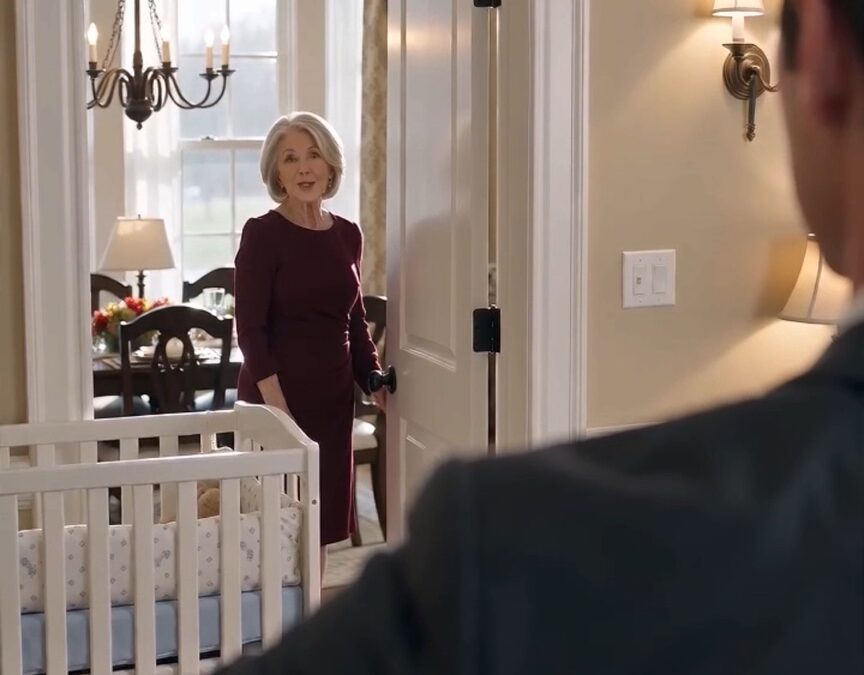
Chapter 1: The Coats On The Stairs
“My girlfriend gets your bedroom,” my son announced, bringing three children into my Thanksgiving dinner.
Russell pointed past me toward the staircase.
His suitcase caught against the front door.
He pulled harder, scraping the wheel over the threshold.
I was 67, nine days past my husband’s funeral.
I stood beside the nursery I’d prepared for my granddaughter.
My garage remote was still in my hand.
I had used it to admit my grocery delivery.
The empty grocery bags lay folded on the kitchen counter.
“What did you just say?” I asked.
“Brooke needs the attached bathroom.”
He said it as though we were discussing napkins.
“You can take the room beside the nursery.”
Brooke stood behind him in a cream coat.
Her three children crowded together near the open door.
They were 6, 8, and 11.
Each carried a bag.
Russell’s suitcase was not the only luggage.
I looked at the bags before looking at him.
“Who said anyone was staying?”
He pushed the front door closed with his heel.
“We’ll get settled while you finish dinner.”
I could smell the rolls warming in the oven.
Laurel appeared in the dining room doorway, holding serving spoons.
She was 38, old enough to recognize those bags.
Still, she looked toward the stove first.
“Is everything ready?” she asked.
“No,” I said.
Russell reached for another bag.
My son was 41, dressed in polished shoes and a fitted coat.
He had not dressed like someone moving furniture.
Apparently, he expected someone else to handle that part.
Brooke looked at me.
“I thought you knew.”
“I knew Russell was coming for dinner.”
Her eyes moved toward him.
He made a small motion with his hand.
He wanted her quiet while he explained me to myself.
“You shouldn’t be alone here,” he said.
“That isn’t what you said when you walked in.”
“Mom, please don’t start.”
I set the remote on the entry table.
Then I looked at the children.
“There’s cider and crackers in the dining room.”
The youngest tightened both hands around a bag strap.
“You haven’t done anything wrong,” I added.
Brooke nodded toward the table.
They moved carefully around the suitcase.
Laurel put down the serving spoons and reached for coats.
“Here. Let me take those.”
She gathered Brooke’s coat and the children’s jackets.
Then she turned toward the stairs.
“Laurel.”
She stopped near the bottom step.
“Put them on the bench.”
“Mom, can we just have Thanksgiving?”
“We can eat without anyone taking my room.”
She looked at Russell, then at the coats.
For a moment, she stayed exactly where she was.
I could see a child’s sleeve trailing from her arm.
“On the bench,” I repeated.
She lowered the coats.
That morning, I had knelt beside the crib.
One corner of the clean sheet kept slipping loose.
I lifted the mattress and fitted it properly.
Then I put a folded cloth on the nursing chair.
My granddaughter was five months old.
Celia needed somewhere comfortable to feed her.
That was the room I had prepared.
Not a household for Russell to install.
He glanced through the nursery doorway now.
“We can work out the other rooms later.”
“There are no other rooms to work out.”
“You have this whole house.”
“I live in this whole house.”
Brooke picked up the youngest child’s bag.
She held it against her leg.
“Russell, did you ask her?”
“We talked about family helping family.”
“No,” I said. “You talked. You didn’t ask this.”
He took a breath through his nose.
My husband’s reading glasses were visible on the sitting room table.
Russell looked past them.
“Dad wouldn’t want you rattling around here alone.”
My husband had been 72.
We buried him on November 18, 2025.
Thanksgiving was November 27, 2025.
I had not yet emptied his coat pockets.
“Your stepfather isn’t here to answer you,” I said.
“I know what he would want.”
“You need my permission.”
I bought this Richmond house alone in 1998. Russell was already grown and never lived here. He had visited often enough to stop thinking he needed to ask.
He had borrowed a garage remote during my husband’s final illness.
Sometimes he brought meals through that entrance.
Earlier that afternoon, I had cleared the opener’s remote memory.
Then I paired my own remote again.
Russell did not know that yet.
He pointed upstairs a second time.
“Let’s get Brooke situated, and then we’ll talk.”
I stepped between him and the stairs.
“I alone own this whole house.”
Then I nodded toward the study.
The door opened.
Judith appeared in the doorway wearing her Thanksgiving dress.
At 70, she had known me long enough to recognize that I needed her there.
She was also my attorney.
Russell recognized her immediately.
His pointing arm dropped against his coat.
He closed his mouth before giving another instruction.
Laurel looked from Judith to me.
Brooke set the child’s bag back on the floor.
I picked up my garage remote.
Judith stayed where she was, waiting.
Russell swallowed and adjusted his coat.
“Why is your lawyer here?”
Chapter 2: The People In The Study
“Because I invited her,” I said.
Judith stepped into the hall.
She had been invited for Thanksgiving before any of this happened.
There was no briefcase in her hand.
Her reading glasses hung from the neckline of her dress.
Russell looked past her shoulder.
“What have you been telling her?”
“I asked her to check some things.”
“On Thanksgiving?”
“Yes.”
Brooke moved nearer the dining room.
Her children were sitting with crackers and cider.
Laurel stood beside their chairs, still watching us.
I asked her to make them plates.
“Let them eat while the food’s warm.”
She nodded and went toward the kitchen.
Then Celia stood up inside the study.
Russell saw her before she reached the doorway.
His hand tightened around the suitcase handle.
Celia was 39, his estranged wife.
Their daughter slept against her shoulder.
“What are you doing here?” he asked.
“Denise invited me.”
“You said you had plans.”
“These are my plans.”
Brooke looked at the baby.
Then she looked at Russell.
“Is that your wife?”
“My estranged wife,” he said quickly.
Celia adjusted the little blanket without answering him.
I moved toward her.
“Does she need anything?”
“She’s all right for now.”
The baby’s sock had worked halfway off.
Celia eased it back over her heel.
Russell watched that ordinary action with visible impatience.
“Can we not do this in front of everybody?”
“You arrived in front of everybody,” I said.
Judith gestured toward the sitting room.
“We can keep the children out of the conversation.”
Brooke hesitated before following us.
She looked as though she wanted to ask several things.
Instead, she sat at the edge of a chair.
Russell stayed standing beside his luggage.
Celia took the chair near the nursery.
I sat across from my son.
There was room for him to sit.
He chose not to.
“What is this about?” he asked.
“The money,” I said.
His eyes moved immediately toward Celia.
“What money has she been talking about?”
“The $38,000 I lent you.”
“You know about that.”
“I know more about it now.”
On January 10, 2025, Russell signed a promissory note. I lent him $38,000 from my savings for repairs he said his marital home needed. The interest-free loan required full repayment on October 31, 2025.
That date had passed.
He had asked for patience, then another extension.
I had been caring for my husband.
Russell seemed to think that made the loan disappear.
Before dinner, Celia called me.
I was arranging the nursery chair beside the crib.
She asked whether I was alone.
I sat down on the chair before answering.
Then she explained what she had found.
There were unfinished repairs at her marital home.
She found the contractor’s number in their household records.
When she called about the work, he sounded confused.
His job had not been at her house.
He had been preparing an apartment for Brooke.
Celia asked whether he had mistaken Russell for somebody else.
The contractor forwarded saved voice messages Russell had sent him.
They were not secretly recorded conversations.
They were messages left for the contractor himself.
He had kept them with the job information.
Celia sent them to me.
I played them at my kitchen table.
Then I moved my grocery list aside and played them again.
My son’s voice identified the apartment.
He described work Brooke wanted completed.
He also identified the renovation money from his mother.
I called Judith before calling anyone else.
She was already coming to dinner.
I asked her to come early.
“Do you want me to discuss another extension?” she asked.
“No.”
“Are you certain?”
“I want the loan repaid.”
I asked her to check the deed too.
Grief had made me second-guess things I knew.
Judith checked the recorded title and reviewed the note.
Then Celia arrived privately with the baby.
She went through the nursery before entering the study.
I showed her the clean cloth and spare sheet.
She touched the crib rail.
“You put this together yourself?”
“It took longer than it should have.”
She smiled briefly.
Then she asked whether Judith could hear the messages.
That was how the two women came to be waiting.
Russell had not known Celia contacted the contractor.
He had not known she sent the files.
He had not known I refused another extension.
Now he looked at the phone beside her.
“You’re taking pieces of something complicated.”
Celia met his eyes.
“They’re your messages.”
“Then play the complete messages.”
Judith turned toward her.
“Do you have them in full?”
“Yes.”
Russell folded his arms.
“Good. Let everyone hear everything.”
Chapter 3: What The Contractor Saved
Celia checked that the baby was settled.
Then she placed her phone on the little table.
Brooke watched her thumb move across the screen.
Russell looked toward the dining room.
“Are the kids hearing this?”
Laurel came to the connecting doorway.
“They’re eating. I’m staying with them.”
She pulled the door mostly closed.
I could still hear a fork touch a plate.
Judith asked Celia to start at the beginning.
Celia turned up the volume.
Russell’s voice came through plainly.
He sounded busy, not worried.
He identified the apartment Brooke would be using.
He described the rooms that needed finishing.
He asked the contractor to complete the agreed work.
Then he referred to the renovation money from his mother.
He identified the $38,000 as the available money.
He wanted that money used on the apartment.
I looked at the phone rather than at him.
Hearing it again did not improve it.
Celia played the contractor’s replies too.
They concerned materials, access, and the work Russell requested.
There was no mention of repairing Celia’s home.
No mistaken address became clear.
No later message corrected the purpose.
When the last message ended, Celia left the phone alone.
Russell unfolded his arms.
“That doesn’t change the fact it was a loan.”
“No,” Judith said. “It doesn’t.”
He looked pleased for half a second.
Then she finished.
“And the loan is overdue.”
Brooke leaned forward.
“You said the apartment work came from your money.”
“I arranged it,” he said.
“That wasn’t what I asked.”
“I was going to pay her back.”
I rested my hands flat on my lap.
“When?”
“I told you I needed time.”
“You agreed to October 31, 2025.”
“A lot has happened.”
“Yes,” I said.
My husband’s glasses were still on the table.
I picked them up and put them on the shelf.
Russell followed the movement.
“I’m grieving too, Mom.”
“I haven’t said you aren’t.”
“Then why do this now?”
“You came here to take my bedroom.”
“I came here to help us get through things.”
Brooke shook her head.
“You told me we had somewhere to stay.”
“We would have, if this hadn’t turned into a hearing.”
I looked at her.
“Did he tell you I invited you?”
“He said it was handled.”
“It wasn’t.”
She pressed her lips together.
Then she reached for her coat.
Russell put a hand out, not touching her.
“Just wait.”
Judith spoke before he started another explanation.
“The house and the loan are separate matters.”
“I know that.”
“Your mother owns this house alone.”
“I thought Dad was on it.”
“He wasn’t.”
Russell glanced at me.
“You never put him on?”
“No.”
“You were married all those years.”
“We married on June 12, 2004.”
Judith kept her voice even.
“The deed was recorded April 17, 1998.”
She explained that I never transferred any interest.
My later marriage did not change the recorded ownership.
Russell had assumed otherwise.
He had not checked anything before assigning rooms.
“What about everything Dad paid for?” he asked.
“That does not give you permission to move in.”
Judith did not pretend every possible estate question was settled there.
She stayed with the facts she had checked.
The deed named me.
There was no lease.
Russell had never lived here.
I had not invited him to move in.
He rubbed his forehead.
“Nobody said I had a lease.”
“You’re behaving as though you have a right,” I said.
“I’m your son.”
“I know exactly who you are.”
I did not say it loudly.
I was looking at the boy I had fed and driven.
The same man had watched me write a check from retirement savings.
He knew I was a retired school secretary.
He knew there was no extra salary coming next month.
Judith looked toward me before speaking again.
“Denise worked, bought this home, and maintained it.”
Russell started to interrupt.
“She also lent you money without interest.”
“I’m not denying that.”
“Then don’t describe her refusal as neglecting the family.”
He looked away.
Celia bent to check the baby’s face.
Her daughter made a soft, restless sound.
I stood and offered my arms.
Celia handed her over.
The baby curled one hand against my dress.
I straightened the edge of her blanket.
Russell watched us.
For a moment, he stopped looking annoyed.
Then Brooke stood up.
“I need to check on the children.”
He turned toward her.
“Can you give us a minute?”
She went into the dining room without answering.
I returned the baby to Celia.
She needed feeding soon.
Russell lowered his voice.
“Mom, we can settle this between ourselves.”
“Judith represents me about the loan.”
“I mean something practical. Housing, repayment, all of it.”
“They aren’t one agreement.”
“They could be.”
Judith waited.
She did not answer for me.
Russell looked toward the study door.
“Can we talk privately about the terms?”
Chapter 4: No Upstairs Arrangement
“I’m staying here,” I told Russell.
He glanced toward Judith.
“I’d rather not negotiate in front of your lawyer.”
“Then don’t negotiate.”
He put both hands in his coat pockets.
For the first time, he looked unsure where to stand.
I was seated beside the table.
Judith sat nearby.
Celia rose with the baby.
“She needs to eat,” she said.
“The nursery’s ready.”
“I can wait.”
“No. Go ahead.”
I walked her as far as the nursery door.
The cloth was still folded over the chair.
There was a little table within her reach.
I had put water there before anyone arrived.
“Do you need anything else?”
“This is good,” she said.
I pulled the door mostly closed.
When I returned, Russell was looking toward the stairs.
“Could we stay through the holiday?”
“No.”
“Not move in. Just get through this part.”
“You brought enough luggage to stay.”
“We didn’t know what you’d have.”
“You didn’t ask what I would have.”
He took his hands from his pockets.
“I can contribute toward household expenses.”
“That doesn’t change my answer.”
“I thought the money was the issue.”
“The money is overdue. My bedroom isn’t available.”
Judith watched him carefully.
She did not interrupt the back-and-forth.
I needed him to hear my answer from me.
Brooke returned from the dining room.
“The children are finishing,” she said.
Russell looked at her as though she had interrupted.
“We’re discussing options.”
“There aren’t options here.”
She had put her coat back on.
He noticed.
“We don’t have to rush out.”
“I’m not sitting here while you bargain for a room.”
I moved a serving bowl away from the edge of the table.
I needed something ordinary to do with my hands.
“Laurel can pack food for the children,” I said.
Brooke nodded.
“Thank you.”
Russell stared at the bowl.
“You’re really doing this.”
“I’m not agreeing to your plan.”
“You could let everybody settle down first.”
“And tell you to leave after you unpack?”
“We’re family.”
“You were invited for dinner.”
He glanced at Judith.
“Did you tell her to refuse everything?”
“No,” she said.
“Your mother gave me her instructions.”
He disliked that answer every time he heard it.
He wanted this to be Judith’s decision.
Then he could accuse her of interfering.
I looked directly at him.
“I asked her not to extend the loan.”
His eyebrows lifted.
“When?”
“Before you arrived.”
“You didn’t even talk to me.”
“You asked for another extension. My answer is no.”
He turned away and walked toward his suitcase.
Then he stopped beside it.
“What happens if I can’t pay immediately?”
“Judith will discuss that with you after Thanksgiving.”
“So there is room to discuss things.”
“The debt. Not housing.”
Brooke picked up a bag.
I reached for another, then stopped.
“Would you like that by the door?”
“Yes, please.”
I set it beside her bag.
I did not put anything outside.
I did not open the suitcase.
Nobody was removing a resident’s possessions.
Russell had arrived as a dinner guest.
I had not agreed to turn him into anything else.
Laurel came out with food packed for the children.
She set it on the entry bench.
Then she looked at me.
“Should I bring their coats?”
“Yes. To the door.”
She gathered the jackets without looking upstairs.
Brooke helped the youngest into a sleeve.
The oldest held the food carefully.
One child glanced at Russell.
He was staring at his phone.
I moved closer to the children.
“Did you get enough to eat?”
They nodded.
“There are rolls in there too.”
The youngest thanked me for the cider.
I told the child it was no trouble.
That part had not been any trouble.
Brooke zipped a jacket and checked each bag.
Then she faced me.
“I’m sorry about your husband.”
“Thank you.”
“I didn’t know the funeral had just happened.”
Russell looked up from his phone.
“Brooke.”
She ignored him.
“I wouldn’t have come like this.”
“I understand,” I said.
I did not know everything she had known.
I was not going to investigate it at my front door.
Her children were beside her.
They needed to get through the exit without another argument.
Judith moved away from the hall.
She gave them a clear path.
Brooke led the children outside.
Russell remained beside the suitcase.
He looked past me into the house again.
“The garage wouldn’t open when we got here,” he said.
“I changed the remote access.”
“You could have told me.”
“I’m telling you now.”
He looked at the remote in my hand.
Then he looked toward the empty staircase.
“So you’d already decided to keep me out.”
Chapter 5: The Door After Dinner
“I decided your borrowed access was finished,” I said.
Russell stood with one hand on the suitcase.
“You gave me that remote.”
“To bring meals during your stepfather’s illness.”
“I helped you.”
“Yes. And I thanked you.”
He waited for me to add something.
I did not.
Giving thanks had not promised him housing.
It had not given him permanent access to my garage.
Brooke stood on the front walk with the children.
She shifted the food into one hand.
“Russell, please.”
He pulled the suitcase over the threshold.
The wheel caught again.
This time, he lifted it instead of dragging harder.
Judith came to stand beside me.
“I’ll contact you about the note,” she said.
“Please handle that communication through me.”
He looked at her, then at me.
“This didn’t have to become legal.”
“You signed a promissory note,” I said.
“It was always an agreement.”
He rolled the suitcase toward the walk.
Then he stopped and looked back.
“What about Dad’s part of everything?”
Judith answered without stepping outside.
“Any proper estate questions can be addressed separately.”
“He lived here.”
“Yes,” I said.
“He was my husband. He lived with me.”
Russell’s eyes moved toward the upstairs windows.
I could see him trying to connect those facts differently.
He had expected grief to make the house available.
The deed had not been part of his plan.
“We’ll see what he actually owned,” he said.
Then he followed Brooke to the car.
I stayed at the door until the children were inside.
Nobody returned for a forgotten bag.
Nobody asked for a room again.
When they drove away, I closed the door.
Laurel reached toward the lock.
I turned it myself.
Then I set the remote on the entry table.
My palm had left a damp mark on its plastic.
I wiped it with the edge of my sleeve.
For a few moments, we stood in the hall.
The food smelled different now.
The rolls had been out too long.
Celia opened the nursery door with the baby against her shoulder.
“Did they leave?”
“Yes.”
“Do you want me to go too?”
“No. I invited you.”
She looked down and adjusted the blanket.
Laurel went into the dining room.
“Should we still eat?” she asked.
“Yes.”
I took a clean plate from the cabinet.
Then I noticed the place I had set for my husband.
I had put it down without thinking.
There was his usual glass beside it.
I carried both back to the kitchen.
Nobody offered to do it for me.
I was glad.
We sat with food that had gone lukewarm.
Judith passed the potatoes.
Laurel offered Celia a roll.
For a while, the only conversation concerned the baby.
I managed a little turkey.
I drank water because my mouth felt dry.
Then my phone lit up on the sideboard.
Russell had sent a message.
He wanted to know what his stepfather had owned.
He said he expected a full explanation.
I handed the phone to Judith.
She read it and returned it.
“You don’t need to answer tonight.”
“Can he claim the house?”
“Not because he assumed his stepfather owned it.”
“What if he keeps saying it?”
“That still doesn’t change the deed.”
After dinner, Judith went through the title information with me.
We sat in the study where Celia had waited.
I recognized the property description.
I remembered buying the house alone.
I had been working at a school then.
I saved, compared expenses, and signed the papers myself.
The recorded deed named Denise alone.
There had been no later transfer.
My husband and I shared our daily lives and expenses.
That did not silently add him to title.
Judith separated the questions carefully.
There could be ordinary estate matters to complete.
Russell could make a proper inquiry about those.
My sole-owned home was not his housing arrangement.
And the loan did not depend on the house.
“It was unsecured,” she reminded me.
“So I can’t just take something of his.”
“No.”
“I wasn’t asking you to.”
“I know. I want you clear about the process.”
She explained the written demand.
There would be no same-day court ruling.
No immediate seizure.
No eviction case, because he had never moved in.
If he refused repayment, we could consider a collection suit.
First, she would demand the overdue amount.
I listened without touching the papers.
“Send it,” I said.
“Do you want to sleep before deciding?”
“I’ve already waited past the due date.”
She nodded.
Celia was gathering the baby’s things when we finished.
I walked her to the door.
She thanked me for the nursery.
“I’ll wash the cloth,” I said.
“It’s barely used.”
“I have laundry anyway.”
After everyone left, I put the cloth beside the washer.
Then I checked every downstairs door.
The house was quiet enough to hear the heat coming on.
My bedroom was waiting upstairs, exactly as I had left it.
On the entry table, my phone lit up again.
Russell wanted to know whether I would accept payments.
Chapter 6: The Demand In Writing
I forwarded Russell’s message to Judith.
Then I put my phone in the kitchen drawer.
I did not want it beside my bed.
That night, I slept on my usual side.
My husband’s pillow was still on the other one.
In the morning, I straightened both before going downstairs.
There were serving dishes soaking in the sink.
I started with the largest one.
On November 28, 2025, Judith issued the repayment demand.
It identified the signed note and overdue principal.
It required payment of the $38,000.
It did not accuse Russell of a crime.
It did not make threats about his marriage.
Judith sent me a copy.
I read it after drying my hands.
The words were ordinary and direct.
I had expected to feel guilty seeing them.
Instead, I checked the dates against my own records.
They were right.
The loan matured before my husband’s funeral.
Russell had known the due date since January.
His request for patience had not changed the note.
Laurel called while I was putting dishes away.
“Can I come over?”
“What for?”
“To help clean up. And apologize.”
“You can come.”
She rang the bell when she arrived.
I noticed that before I noticed anything else.
She waited outside until I opened the door.
“I’m not here to defend Russell,” she said.
“Good.”
She followed me into the kitchen.
There was a clean towel over a chair.
She picked it up, then paused.
“May I dry?”
“Yes.”
We worked without talking for a while.
She dried a bowl carefully around its handles.
Then she put it where I pointed.
Finally, she spoke.
“I’m sorry I took the coats toward the stairs.”
“Why did you?”
“I wanted everyone settled.”
“In rooms I hadn’t offered.”
“I know.”
I rinsed a serving spoon.
“You heard him claim my bedroom.”
“Yes.”
“And you heard me ask who invited them.”
“Yes.”
She kept the towel folded between her hands.
“Then why help?”
“I couldn’t stand the thought of another awful family day.”
I turned off the water.
“So you wanted me to accept it.”
“I wanted the argument to stop.”
“By doing what he wanted.”
“Yes.”
She did not blame the children.
She did not tell me her intentions should settle it.
I appreciated that, though I was still upset.
“I needed you to put the coats down,” I said.
“I should have done it the first time.”
“You asked whether we could just have Thanksgiving.”
“I’m sorry.”
I picked up the next dish.
She took it and dried it.
We finished the sink before discussing anything else.
Then she asked about holiday plans.
“I’m not planning another gathering yet.”
“All right.”
“No unexpected guests.”
“There won’t be.”
I looked at her.
“Even if you think I’d enjoy the company.”
“Even then.”
Before leaving, she asked where the packed food containers belonged.
I showed her.
She put them away without reorganizing the cabinet.
That was all the help I wanted that morning.
Later, Judith called about Russell’s proposal.
He wanted to make installments.
The amount he proposed would keep much of my savings with him.
There was no convincing explanation for the delay.
“Do I have to accept?” I asked.
“No.”
“Does refusing make me unreasonable?”
“Not by itself. He promised a lump-sum repayment.”
I sat at the kitchen table.
My copy of the note was in front of me.
Russell had signed without being rushed.
I had asked him to read it first.
He had smiled and told me he understood.
“Ask him what funds he has available,” I said.
Judith explained that she could request information.
She could not open his private accounts on her own.
I knew he held investments in an individual brokerage account.
He had talked about that account before the loan.
Sometimes he spoke about gains as though I should envy him.
I had not envied him.
I had been glad he was saving.
“I don’t know what’s there now,” I told her.
“Then we won’t pretend we do.”
His attorney became involved after the demand.
I was relieved to hear that.
I wanted the discussion handled by people using documents.
Not through Laurel.
Not over a plate of leftovers.
Not by Russell calling me when I was tired.
Judith asked whether I wanted to discuss a short settlement.
“If it means full repayment.”
“That would be the purpose.”
“And nothing about housing.”
“Nothing about housing.”
I put the serving spoon back in its drawer.
The kitchen was finally restored after Thanksgiving.
I made tea and took it into the sitting room.
Before I finished it, Judith called again.
“Russell has proposed a condition.”
“What condition?”
“He wants you to send Celia a statement.”
Chapter 7: The Statement He Wanted
I put my cup on its saucer.
“What does he want me to say?”
“That you misunderstood the purpose of the loan.”
I looked toward the nursery door.
Judith continued.
“He also wants you to say the messages were misleading.”
“He heard them played.”
“Yes.”
“He demanded we play all of them.”
“Yes.”
I stood and walked into the kitchen.
There was nothing there I needed.
I opened a cabinet, then closed it.
“Is he offering payment for that?”
“He has offered quicker payment if you agree.”
I leaned against the counter.
The nursery cloth was clean and folded beside the laundry.
I had not put it away yet.
“No,” I said.
“I’ll communicate that.”
“I won’t tell Celia something that isn’t true.”
“You don’t have to.”
“Does his attorney know what he’s asking?”
“The proposal came through his attorney.”
I let that answer remain where it was.
There was no need for me to argue with two men.
Judith had the messages.
She had my instructions.
“Keep the settlement about the debt,” I said.
“That’s what I recommend.”
“And don’t say I’m reconsidering.”
“I won’t.”
After we hung up, I put the cloth in the nursery.
I opened the drawer and smoothed it flat.
Then I moved the chair away from the heating vent.
It had been too close.
Celia had not complained during the holiday.
Still, I could make it better for the next visit.
Russell called later.
I answered after letting it ring.
“Mom, I’m trying to finish this.”
“Then work with Judith.”
“You could help instead of making it harder.”
“By sending Celia a false statement?”
“That isn’t what I meant.”
“What did you mean?”
He paused.
I could hear a door shut near him.
“The whole situation has gotten distorted.”
“I heard what you said to the contractor.”
“You don’t understand how she might use it.”
“Then ask your attorney for advice.”
“I’m asking my mother.”
“And I’m telling you no.”
He breathed into the phone.
I moved my cup into the sink.
“Fine. Forget the statement.”
“I will.”
“What do you actually want?”
“The money you agreed to repay.”
“That’s all?”
“And no more plans involving my house.”
“I said forget that.”
“I need you to understand it.”
“All right.”
I did not ask whether Brooke was with him.
I did not ask where they were staying.
Their arrangements were not mine to inspect.
I had enough to manage at home.
Before hanging up, he said he had investments he could sell.
“Then discuss that with your attorney.”
“There could be costs.”
“Get advice about those too.”
He sounded annoyed that I would not calculate his choices for him.
I had done enough of that when he was younger.
Now he could decide how to repay an overdue loan.
Judith later confirmed the negotiations were continuing.
Russell represented that his individually held brokerage assets were available.
His attorney would advise him about selling them.
I would not have control of the account.
I would not order a transfer from it.
He would voluntarily sell enough to make payment.
Judith did not treat an individual account title as a ruling on his marriage.
Whatever rights Celia might have were outside our agreement.
The settlement would concern my loan alone.
That was what I wanted.
I called Celia that evening.
I asked how the baby was sleeping.
She answered, then asked how I was doing.
“I’m tired of paperwork.”
“I’m sorry.”
“You didn’t make him ask for my money.”
She went quiet.
Then she asked whether I wanted distance from her.
“No.”
“I don’t want visits to make things harder.”
“I like seeing you and the baby.”
“We can wait.”
“We can also choose a day when we’re ready.”
I heard her set something down.
“Would you still like ordinary visits?”
“Yes. Call first. We’ll make a plan.”
She said she would.
Afterward, I sat in the nursery chair.
The room was warm without the vent blowing against it.
I checked that the crib sheet was tucked properly.
Then I turned off the lamp.
Laurel came to help with the garden later.
She had asked before bringing tools.
We cleared the dead stems my husband had left.
For a while, we worked without mentioning Russell.
Then she said he had called her.
I stopped pulling weeds.
“About what?”
“He says you’re making him sell investments.”
“He can choose how to repay me.”
“I told him he should talk to you.”
“About the debt, he needs to talk to Judith.”
She nodded.
“I’ll tell him.”
“No. You don’t need to carry that message.”
She looked relieved before she caught herself.
“I won’t.”
We filled the garden bag and carried it together.
Inside, my phone held a message from Judith.
The statement condition was gone.
Russell’s attorney was reviewing a settlement for full payment.
Chapter 8: The Signed Agreement
Judith sent the proposed settlement for me to review.
I printed it at my desk.
The printer hesitated before taking the paper.
I stood beside it longer than necessary.
There had been so many forms since the funeral.
Most required a signature and another explanation.
This one concerned something I could finish.
I brought the pages to the kitchen table.
My glasses were beside the sugar bowl.
I put them on and started reading.
The agreement acknowledged the matured $38,000 debt.
It set a firm deadline for full payment.
I would hold off filing a collection suit until then.
There was no new housing promise.
There was no statement about Celia.
There was no mention of Brooke’s children.
I read the pages again before calling Judith.
“What happens if he doesn’t pay?”
“Then we consider enforcement of the debt.”
“No automatic seizure?”
“No.”
“And I’m not signing away anything about my home?”
“No. The settlement concerns this loan.”
She answered each question without rushing me.
I had been a school secretary long enough to know paperwork mattered.
I had also seen people sign things they never read.
I was not going to do that because the borrower was my son.
On December 3, 2025, Russell signed the settlement.
Full payment was due December 19, 2025.
Judith sent me the completed copy.
I laid it beside the original note information.
The dates worked.
The amount was right.
His signature was there.
I put everything in a folder and closed the cover.
Then I made lunch.
It felt strange to eat while waiting for something so important.
But waiting would not wash a plate or fill a kettle.
I still had to buy groceries.
I still had a nursery to keep clean.
My husband’s things still occupied drawers upstairs.
I did not tackle all of them.
I washed his cardigan and folded it.
Then I put it back where I could find it.
Russell sent a short message confirming he had signed.
I answered that Judith had sent me the copy.
He asked whether that meant we could stop being formal.
I stared at the screen.
“The repayment will stay with Judith,” I wrote.
He replied that he meant everything else.
“I’m not ready for a visit.”
He did not answer immediately.
When he did, he said he understood.
I hoped that meant he would wait.
I did not give him another explanation to debate.
During the waiting period, he offered to bring groceries.
I was standing beside an empty milk carton when I read it.
For a moment, the offer was tempting.
Then I pictured him coming through the garage.
I would feel obliged to make coffee.
He would ask whether we were all right.
I did not want that conversation beside the refrigerator.
“I have groceries arranged,” I replied.
“I was only trying to help,” he wrote.
“I understand.”
That was all I sent.
Laurel came over to finish the garden work.
She called before leaving her place.
At the door, she asked where to put her coat.
“The hook is fine.”
She hung it there.
Later, she helped me carry a bag to the garage.
She waited while I opened the door.
She did not ask whether Russell’s old remote still worked.
We both knew it did not.
At the kitchen table, she asked about the settlement.
I told her the payment deadline.
“Will that fix things?” she asked.
“It will repay the loan.”
She rubbed a little soil from her wrist.
“I meant with him.”
“I don’t know yet.”
She nodded.
She did not suggest that I should know.
Judith sent updates only when she had something definite.
Russell’s attorney confirmed arrangements to sell sufficient investments.
That did not put money in my savings account yet.
I checked my account more often than usual.
Then I started leaving my banking information closed until evening.
I did not want to spend each morning refreshing a screen.
Celia called about visiting.
We talked about the baby’s changing sleep.
She asked whether I wanted her to wait until after payment.
“You don’t have to organize visits around that.”
“I didn’t want it to seem connected.”
“It isn’t connected.”
We agreed to choose a day soon.
I took a clean crib sheet from the dryer.
One corner was still damp.
I spread it over a chair instead of putting it away.
The house was bright that afternoon.
Sun reached the floor near the nursery door.
I moved a stack of mail off the entry table.
My remote was underneath it.
I placed it in its usual spot.
That evening, Judith confirmed the planned liquidation was proceeding.
I thanked her, then looked at the settlement again.
Russell had signed.
He had arranged the sale.
The payment still had to arrive.
Chapter 9: The Money Comes Back
On December 19, 2025, I was folding the crib sheet.
It had dried without needing another cycle.
I spread it across the kitchen table.
Judith called before I finished matching the corners.
“The payment has arrived,” she said.
I left one corner unfolded.
“The whole amount?”
“The full $38,000.”
“Are the funds confirmed?”
“Yes.”
I sat in the chair beside the table.
For a moment, I looked at the sheet.
Then I smoothed the loose corner with my palm.
“What do I need to sign?”
Judith explained the acknowledgment of payment.
The promissory note would be marked satisfied.
Russell had paid the principal required by our agreement.
I was not owed punitive interest.
I was not going to invent another charge.
He had fulfilled the written settlement.
I wanted the closing documents to reflect that.
“Does anything else get released?” I asked.
“Nothing unrelated to this debt.”
“Nothing about Celia?”
“No.”
“Or the house?”
“No.”
I thanked her.
Then I stayed seated after the call ended.
The table had a pale mark from a hot dish.
My husband had put it there.
I rubbed my thumb across it once.
The mark remained.
I did not need to fix that either.
When the repayment was available in my account, I moved it back into savings.
I checked the amount before closing the screen.
It was money I had saved while working.
I had lent it because my son said his home needed repairs.
It was back where I had intended to keep it.
I put the folded sheet in the nursery drawer.
Then I opened the blinds.
There was dust along the windowsill.
I wiped it with a damp cloth.
The chair sat comfortably away from the vent.
I tested it before putting the cloth over its arm.
Preparing for the baby felt ordinary again.
Celia called later.
“Would December 21, 2025, work?”
“Yes.”
“Just me and the baby?”
“Yes. I’d like that.”
“I can bring lunch.”
“I have soup in the freezer.”
“Then I’ll bring bread.”
I wrote the visit on my calendar.
There were too many blank spaces on it.
That one entry was enough for the day.
Laurel called to ask whether the repayment arrived.
I told her it had.
“Are you relieved?”
“Yes.”
“Do you need anything?”
“I’m getting ready for Celia and the baby.”
“Would it be better if I stayed away?”
“You’re welcome to come.”
“I’ll check with Celia.”
“That would be good.”
She did not ask whether Russell was included.
She did not suggest inviting him to keep things even.
I could have a visit without making it a family hearing.
Russell sent a message that evening.
“Judith says everything is settled.”
I read it twice before answering.
“The loan is paid. Thank you.”
He called instead of writing back.
I answered while standing in the nursery doorway.
“I did what you asked,” he said.
“You repaid what you owed.”
“Right. That’s what I mean.”
I waited.
He seemed to be choosing his next words.
“I know Thanksgiving went badly.”
“You told Brooke she could have my bedroom.”
“I shouldn’t have done that.”
It was the first time he said it plainly.
There was no explanation attached.
He did not blame Celia for showing up.
He did not accuse Judith of interfering.
I sat in the nursery chair.
“I appreciate you saying that.”
“I thought we could help each other.”
“You didn’t ask me.”
“I know.”
I looked at the crib rail.
There was a small place where I had tightened a fitting twice.
I remembered kneeling there with the instructions beside me.
I had been making somewhere for visits.
Russell had arrived treating it as available household space.
“Can we start over?” he asked.
“Not by pretending it didn’t happen.”
“I’m not.”
“I need some time.”
He was quiet.
Then he asked whether he could come by.
“Not yet.”
“Even after I paid?”
“The loan is settled. I’m still upset about the house.”
He let out a breath.
“I said I was sorry.”
“And I heard you.”
I was not going to argue him into understanding.
I could only give him a clear answer.
He asked whether I meant he could never visit again.
“No. I mean I’m not hosting you now.”
He said all right.
That was better than another demand.
Before we hung up, he asked one more thing.
“Will you invite me when you’re ready?”
Chapter 10: The Visit I Invited
“I’ll decide when I’m ready,” I told him.
I did not offer a date.
I did not promise a holiday dinner.
Russell had apologized, and I was glad he had.
I still remembered his hand pointing toward my room.
I needed ordinary days without another argument.
He said goodbye without pushing again.
Afterward, I took the soup from the freezer.
On December 21, 2025, I woke before my alarm.
There was no turkey to manage.
No long table to fill.
I cleared the kitchen counter and put out bowls.
My husband’s glasses remained on the sitting room shelf.
I had tried putting them in a drawer.
Then I took them out again.
They could stay where I wanted them.
Laurel arrived first.
She rang the bell and waited.
When I opened the door, she held up her empty hands.
“I came to help. What would you like done?”
“Wash your hands. Then we’ll get lunch ready.”
She hung her coat on the hook.
I went toward the kitchen.
Behind me, she paused beside the nursery.
“May I look?”
“Of course.”
She opened the door.
“The chair’s in a better spot,” she said.
“It was too close to the vent.”
She checked the space around it.
“This should be comfortable.”
It was a small conversation about furniture.
Nobody was assigning rooms.
Nobody was telling me what I needed.
In the kitchen, Laurel set out spoons.
Then she put both hands on the counter.
“I won’t do that again,” she said.
“The coats?”
“Yes.”
I looked at her.
“I should have asked you what was happening.”
“Yes.”
“And I shouldn’t have made you say no twice.”
“Thank you.”
She nodded and picked up the bread knife.
“Where do you want this?”
“On the board.”
She put it there.
We did not need to settle everything before lunch.
Celia called from outside.
The baby was sleeping.
“Would the garage entrance be easier?” she asked.
“Yes. I’ll open it.”
I picked up my remote from the entry table.
It was the same one I had held on Thanksgiving.
I pressed the button and went out to meet them.
Celia stood beside the car with a bag of bread.
The baby’s carrier was already out.
“May I take that?” I asked, pointing to the bread.
“That would help.”
She lifted the carrier.
We walked into the house together.
Laurel asked where Celia wanted the baby.
“Near me until she wakes.”
Laurel moved a chair to make room.
She did not move the carrier without asking.
I put the bread on the cutting board.
Then we sat at the kitchen table.
Celia told me the baby was trying to roll.
Laurel described something she had ruined while cooking.
I laughed before remembering how little I had lately.
Then I thought of my husband and put down my spoon.
Celia noticed.
She did not ask me to explain.
She passed the bread.
I took a piece and kept eating.
Later, the baby woke and needed changing.
I showed Celia the nursery drawer.
“Everything clean is in here.”
“Are you sure I can use these?”
“That’s why I put them there.”
She smiled and carried the baby inside.
Laurel cleared the bowls while I stayed nearby.
Celia settled into the chair to feed her daughter.
The folded cloth was within reach.
I adjusted the blind so the sun missed their faces.
“Better?” I asked.
“Yes. Thank you.”
There was nothing complicated about being useful that afternoon.
Afterward, Celia laid the baby in the crib.
We stood close while she settled.
Nobody discussed Russell over her.
There were matters he and Celia would handle separately.
I would not provide a false statement.
I would not turn visits into reports about either parent.
I could simply be her grandmother.
Russell had left with Brooke and the children.
They had not moved into my house.
He had voluntarily sold investments and repaid the full loan.
Judith had completed the paperwork without a collection suit.
The note was satisfied.
My bedroom remained mine.
His borrowed remote no longer opened my garage.
He had my phone number.
He knew to ask before coming.
When Celia was ready to leave, Laurel brought the coats to the entry bench.
Then she came back for the cups.
Celia checked the baby’s straps.
I wrapped the remaining bread for her.
At the door, she asked about another visit.
“Call me,” I said.
“We’ll find a day.”
After their car left, I walked through the house.
My bedroom door stood open upstairs.
My husband’s side of the dresser was unchanged.
I did not make myself sort it.
Downstairs, a clean cloth lay over the nursery chair.
There were crumbs on the kitchen table.
I wiped them into my palm and rinsed the cloth.
Then I went to the garage entrance.
Evening air came under the raised door.
I checked the driveway before stepping back inside.
My remote fit in the palm of my hand.
I pressed it and watched the door close.








