My Husband Shoved Me Down During Hip Surgery Recovery — Then His Girlfriend Recognized My Photograph
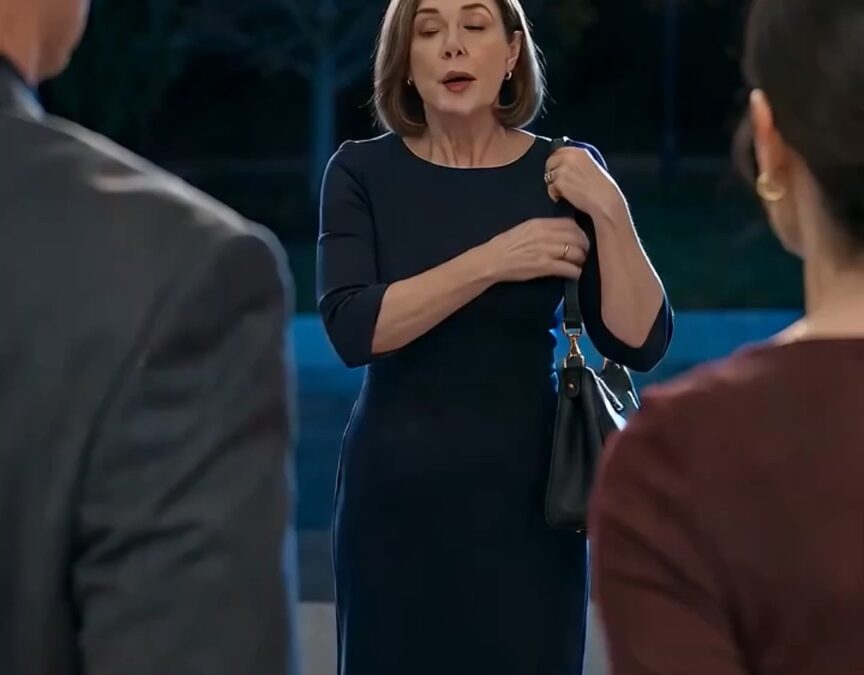
Chapter 1: The Chair Beside Mine
My husband pushed me onto our dining-room floor. “Pack and get out.” I was 43, six weeks into recovery from hip surgery. Our Memorial Day guests stayed seated. His girlfriend recognized the photograph beside my plate. I had visited her father every Thursday. I kept my phone raised while she picked up his photograph.
The candles were still burning beside the serving dishes.
My walking aid stood against the sideboard.
I could see it from the floor.
I could also see Grant sitting across from me.
He had watched his father come around the table.
Nothing had blocked his view.
My phone was still in my right hand.
Before the shove, I had been answering my sister. She wanted to know whether I needed help after dinner.
I had typed that I would call her later.
I never sent that message.
Memorial Day dinner had been my idea.
It was May 26, 2025, in Columbus, Ohio.
I wanted to sit downstairs with everyone again. My hip surgery had been on April 14. I was tired of meals balanced beside my recovery chair.
I had ordered food and arranged the table slowly.
Russell had complained about the serving bowls.
He said I was making everything take too long.
He was 49, and he had both hands free.
Still, he watched me carry the napkins.
Our spacious house belonged to both of us.
We had bought it together during our marriage. My sleeping downstairs after surgery had not changed that. Neither had his habit of calling every room his.
When Elena arrived, I recognized her immediately.
She was 38, and Walter was her father.
We knew each other through his memory-care facility.
She stopped inside our dining-room doorway.
“Dana?”
Russell looked between us.
“You know each other?”
“Through my father,” she said.
He nodded without asking anything else.
Then he pulled out the chair beside his own.
I had placed a relative there.
Russell slipped the place card beneath a serving bowl.
“She’s sitting here.”
Elena glanced at me before taking the seat.
I thought about earlier conversations with my husband.
There had been unexplained absences and private calls. When I asked whether there was someone else, he denied it. He said recovery had made me suspicious.
Now he rested his hand on Elena’s chair.
“We need to stop pretending,” he announced.
A relative lowered her fork.
Grant leaned back, directly across from my place.
“What are you talking about?” I asked.
“This arrangement. You downstairs. Me upstairs.”
“I’m downstairs because of my hip.”
“You know it’s more than that.”
Elena looked down at her plate.
Russell continued without waiting for her.
“She’s my partner now.”
I looked at her until she looked back.
“Were you going to tell me?”
Her mouth opened, but Russell answered.
“I’m telling you.”
I set my phone against my palm.
My bag was beside my chair.
Earlier, while finding my medication, I had dislodged Walter’s photograph. I put it beside my plate so it wouldn’t bend. Then my sister’s message arrived.
The photograph stayed there.
Russell began talking about what I needed to do.
I should find somewhere else to stay.
I should stop making the household revolve around surgery.
I should remember that bills still had to be paid.
“You still have commitments,” he said.
“What commitments?”
“The household. That care charity you insisted on.”
He knew I budgeted $3,200 monthly for elder care.
He liked mentioning our generosity around relatives.
At home, he called it my expensive project.
He wanted the project funded and household transfers continuing.
He just wanted me somewhere else.
“I’m not discussing this over dinner,” I said.
“Then get your things.”
I reached toward my bag, then stopped.
My walking aid was too far away.
“I need that brought over first.”
Russell came around the table instead.
I began turning carefully in my chair.
My physical therapist had told me not to rush.
“I’m getting up,” I said.
His hand closed against my upper arm.
Then he pushed me before I had my balance.
The chair caught behind my knee.
My operated hip struck the table leg.
I landed with my phone between my fingers.
Nobody stood.
Grant moved his foot away from fallen bread.
I looked straight at him.
“Tell them what you saw.”
He rubbed the rim of his plate.
“I saw you fall.”
“You saw him push me.”
“I’m not getting between you two.”
Russell pointed toward the hallway.
“Don’t turn this into a performance.”
Elena was staring at the photograph.
She lifted it beside my raised phone.
“Why do you have my father’s picture?”
“I helped him build that airplane.”
Her eyes moved over Walter’s hands in the photograph.
“You’re the Thursday visitor.”
“Yes.”
She looked from the picture to my face.
“I pay your father’s care,” I said.
Russell turned toward her, then back toward me.
“Pack and get out.”
Elena pushed her chair away from the table.
“She does,” she said.
Russell kept pointing.
“She’s the donor I told you about.”
Then Elena stepped away from him.
“Move back.”
“Elena, sit down.”
“No. Move back so she can stand.”
She brought my walking aid within reach.
I used the chair and its handles carefully.
Elena steadied me without pulling my arm.
Once I was upright, she returned the photograph.
I put it inside my bag.
Then I opened my banking app.
Elena looked at the facility payments and nodded.
Russell leaned forward.
His pointing hand dropped when he saw the screen.
He sat in the chair he had ordered me from.
For a moment, he studied the transactions.
Then he turned toward Elena.
“What, exactly, have you been receiving?”
Chapter 2: The Photograph She Recognized
By dinner, I had contributed $32,000 toward Walter’s care.
Ten gifts, each for $3,200.
They began in August 2024 and continued through May 2025.
Every payment went directly to his licensed memory-care facility.
None went through Russell.
None went into Elena’s account.
I held the phone where Russell could see that.
He moved his finger toward the screen.
I pulled it back before he touched it.
“Those are facility payments,” I said.
Elena stood beside the empty chair.
“Yes.”
Russell looked at her.
“You told me somebody was helping.”
“Dana was helping.”
“You didn’t say my wife.”
“No.”
Grant had stopped touching his plate.
A relative quietly set a napkin on the table.
I could feel the bruise forming beneath my clothing.
I wanted to leave, but I needed my walking aid steady.
Elena reached for my bag.
“I can carry that.”
“I’ll take it.”
The photograph was inside now.
I wanted to know exactly where it stayed.
Walter was 76 when I met him.
After my mother died, Thursday afternoons felt unusually empty. My inheritance arrived in July 2024. I deposited the $180,000 separately and kept the estate records.
I started visiting through the facility’s volunteer program.
Staff explained what visitors could and could not do.
I wasn’t there to give medication or direct care.
Sometimes I sat through an activity.
Sometimes Walter wanted company without much conversation.
He liked things he could hold and assemble.
The model airplane came in pieces.
He spread them over a towel at the table.
“This goes here,” he told me.
Then he studied the wing for a while.
I waited.
His fingers could still do more than people expected.
They just needed extra time.
On a Thursday before my surgery, the wing slipped.
He frowned and reached for it again.
I put my hands around the airplane’s body.
“Would this help?”
“Don’t do it for me.”
“I’m holding this part.”
He checked my hands.
Then he fitted the wing himself.
It sat crooked at first.
He pulled it loose before the glue set.
I kept the airplane steady.
Nobody hurried him to finish before another activity.
When he finally lifted it, he looked pleased.
“Get a picture,” he said.
I took one with my phone.
Later, I brought a print for his room.
I kept another print in my bag.
That was the picture Elena had recognized.
The facility introduced me to its voluntary assistance arrangement.
Walter’s care had a monthly shortfall.
I asked questions before offering help.
I signed no admission agreement.
I guaranteed no expenses.
I made no binding promise of future payments.
Elena remained the contracting family representative.
She knew I was the donor.
I had allowed the facility to identify me.
There was no secret arrangement on my side.
We spoke about Walter’s visits and care needs.
She thanked me.
She never mentioned knowing Russell.
At dinner, I looked at her across my phone.
“You knew who I was.”
She glanced toward the seated relatives.
“Yes.”
“You knew he was my husband.”
Russell interrupted.
“This isn’t something to discuss in front of everyone.”
“You chose the dinner,” I said.
He pushed my chair farther from the table.
“We should talk after you’ve calmed down.”
I shifted my weight against the walking aid.
“I’m leaving.”
That did not mean he had removed my ownership.
It meant I would not sleep near him that night.
I opened my sister’s message and called.
She answered before I could decide what to say.
“I need you to pick me up.”
“Are you hurt?”
“Russell pushed me. My hip hit the table.”
“I’m coming.”
I told her I could stand and would wait outside.
Then I ended the call.
Nobody offered me a coat.
Nobody asked whether I needed medical attention.
Grant looked at me once, then looked away.
I walked through the hallway with my bag against me.
Elena stayed nearby without taking my arm.
Russell followed us.
At the doorway, he lowered his voice.
“You’re making this worse.”
I looked at the hand he placed against the frame.
He moved it when Elena looked at it too.
“Manage alone,” I said. “Ask her about Dad’s care.”
He shook his head.
“You’ll come back when you’ve calmed down.”
“Okay.”
That was my final answer to him that night.
I did not explain what I agreed to.
I had agreed to stop talking.
The porch steps took more concentration than the hallway.
Elena stood below me while I used the rail.
Once I reached the bottom, I waited beside the walk.
Inside, Russell started talking to the guests.
I could not make out his words.
Elena kept looking toward the doorway.
“Did he know where my gifts went?” I asked.
“No.”
“You could have told either of us.”
“I know.”
My sister’s headlights turned toward the house.
Elena watched them, then faced me.
“There’s something else.”
I adjusted my grip on the walking aid.
“What?”
“He’s been sending money too.”
“To the facility?”
She shook her head.
My sister pulled up beside the curb.
Elena spoke before I could move toward the car.
“It’s in another account.”
Chapter 3: The Account I Hadn’t Seen
My sister moved the passenger seat back for me.
She was 46 and understood my recovery instructions.
She waited while I lowered myself into the car.
Then she put my walking aid where it wouldn’t slide.
Elena remained beside the curb.
I did not invite her to explain anything there.
“Send it in writing,” I told her.
My sister closed the door.
For a while, neither of us spoke.
Then she asked one practical question.
“Do you have your medication?”
“Yes.”
She nodded and drove.
At her house, she cleared space beside a firm chair.
I lowered myself slowly and left my shoes on.
Bending down seemed like too much work.
My phone buzzed inside my hand.
Elena had sent the explanation.
From August 2024 through May 2025, Russell transferred money monthly.
Each transfer was $1,800 from marital earnings.
The receiving account was Elena’s separate savings account.
The total was $18,000.
Russell described those transfers as support for Walter.
Elena saved the money instead.
My direct gifts covered the care shortfall.
His transfers accumulated in her savings.
I read that part twice.
Then I passed the phone to my sister.
She sat on the sofa without opening the message herself.
“Do you want me to read this?”
“Yes.”
She read it and handed it back.
“Did you know he was sending her money?”
“No.”
“Did he know you were paying?”
“He knew I helped with elder care. Not Walter.”
I asked Elena why she had hidden the connection.
Her reply came while my sister brought water.
She feared Russell would stop sending money.
She wanted savings available when my help ended.
Telling me about Russell would expose the affair.
Telling Russell about me might end his transfers.
So she let each of us believe something incomplete.
I typed carefully.
“Did you know I was his wife when you accepted my help?”
“Yes.”
I saved the complete exchange.
I did not delete the parts where she apologized.
I did not crop away my questions.
Then my hip began hurting more.
I set the phone on the chair arm.
My sister noticed how I had stopped moving.
“Is it getting worse?”
“It’s different from earlier.”
She called the postoperative advice line.
I answered questions about the fall and my symptoms.
I described the impact against the table leg.
I said I could bear weight, but it hurt.
We followed the advice we were given.
The next day, May 27, I had a medical assessment.
There was no displaced implant.
There was no fracture.
There was bruising, pain, and a need for follow-up.
I asked that the shove be documented accurately.
I did not say I had tripped over furniture.
The clinician recorded what I reported.
My sister waited while I reviewed the visit information.
Back at her house, she helped photograph the bruising.
Before moving my sleeve, she asked permission.
I nodded and looked down at the fabric.
Then I began crying.
She left the sleeve alone until I could answer.
“I’m sorry,” I said.
“You don’t need to apologize.”
She brought a clean towel and waited nearby.
Afterward, I made a police report.
The officer asked me to describe the dinner sequence.
I named the people who had been present.
I explained where Grant had been sitting.
I repeated his statement about seeing me fall.
I also explained that he would not identify the shove.
The officer asked whether I felt safe returning home.
“Not while Russell is there.”
Making the report did not remove Russell from our house.
The officer explained that I needed legal advice.
If he threatened me or approached dangerously, I should seek immediate help.
I kept the report information with my medical records.
At my sister’s table, I started a separate folder.
I saved photographs, original messages, and transaction records.
I wrote down the dinner while I remembered it.
I included the candles and Grant’s unobstructed view.
I included Elena’s words, not what I imagined she meant.
Walter’s photograph lay beside my notebook.
One corner had bent inside my bag.
I smoothed it with my palm.
Russell began calling before I finished.
I let the phone ring.
His first voicemail asked about my hip.
His next concerned the household account.
Then he mentioned my inheritance.
“You can’t shut me out of our arrangements.”
I had not changed anything yet.
He was already worried that I would.
When I inherited the money, I kept it separately titled.
Later, I gave Russell limited bank authorization.
He could make household transfers at my direction.
He had never examined the charitable transactions.
He saw the household transfers and left the rest alone.
That explained why Walter’s facility had surprised him.
It did not justify keeping his authorization active.
I called the bank and asked about revocation.
The representative began explaining the required steps.
Another call from Russell appeared on my screen.
I let it go to voicemail.
My sister stood nearby, holding my untouched lunch plate.
“Do you want to stop for a minute?”
“No.”
The bank representative waited while I took a breath.
Then Russell’s voicemail notification appeared.
I listened after the bank call ended.
“Dana, I need access to that account.”
Chapter 4: What I Could Cancel
I revoked Russell’s banking authority on May 27.
The bank verified my identity and reviewed his authorization.
I asked them to remove it completely.
Then I changed my login credentials.
We reviewed linked access and transfer permissions.
I requested written confirmation when everything was completed.
I did not empty a joint account.
I did not move Russell’s paycheck.
I secured the separately titled account holding my inheritance.
Any marital claims could be addressed through counsel.
Russell no longer needed transaction access while that happened.
The confirmation arrived while my sister made lunch.
I saved it with the bank records.
Then I called Walter’s facility.
I asked for the billing coordinator.
I also requested the social worker’s involvement.
I did not want a financial notice misunderstood as a care instruction.
“I need to end future voluntary contributions,” I said.
The billing coordinator opened the account information.
She confirmed how I was listed.
I was a donor, not a guarantor.
Elena was the contracting family representative.
There was no admission agreement bearing my signature.
There was no enforceable future pledge in the file.
I asked her to confirm that in writing.
“I will make the June payment,” I said.
“After that, I will not make further contributions.”
The social worker asked about discussing transition planning.
“Please work with Elena,” I said.
“Would you like to participate?”
“Possibly. But I won’t take over the agreement.”
I sent written notice that day.
It ended contributions prospectively after June 2025.
I did not request repayment of completed gifts.
I did not tell anyone to discharge Walter.
I did not set a moving date myself.
The facility acknowledged the notice and the arrangement.
I read the acknowledgment before putting it away.
My sister sat across from me.
“You’re sure about paying June?”
“Yes.”
“You don’t have to do it because he demanded it.”
“I’m not doing it for Russell.”
I wanted time for a clinically appropriate transition.
I could choose that without promising anything beyond it.
On May 28, I retained divorce counsel.
I brought more records than fit comfortably in my bag.
My lawyer cleared part of her desk.
She started with the house.
“Both names on the deed?”
“Yes.”
“Any signed agreement changing that?”
“No.”
“Any court order about occupancy?”
“No.”
Then she asked about the inheritance.
I explained the separate account and the limited authorization.
I showed her the revocation confirmation.
She asked whether I could document the original deposit.
“Yes. I have the estate distribution records.”
Next came the gifts and Elena’s account.
My lawyer read the messages without interrupting.
When she finished, she asked what I wanted immediately.
“Safe access to my things. My money protected. A divorce.”
We discussed those matters separately.
She did not promise an outcome before reviewing evidence.
She explained that leaving for safety was not a deed transfer.
She also explained why tracing mattered for inherited funds.
A separately titled account helped document the facts.
It did not mean we should ignore every transaction.
We would provide complete records.
I asked whether I could demand my gifts back.
“Were they loans?”
“No.”
“Were they conditional on repayment?”
“No.”
Then we would not rewrite them as loans now.
I closed the page where I had written repayment.
There were other financial issues worth pursuing honestly.
After the appointment, Grant called.
I let it go to voicemail.
He said he wanted to explain himself.
I waited until I was seated at my sister’s.
Then I replied by text.
“You can explain in writing.”
His first message described how shocked everyone had been.
He said Russell should not have introduced Elena that way.
He said the entire dinner had been uncomfortable.
I read the message without answering those points.
Then I typed one question.
“Did you see your father push me?”
He took a while to respond.
I put the phone down and drank some water.
When I picked it up, his answer was there.
“Yes. He pushed your arm before you were balanced.”
I looked at the words.
Then I asked why he had not said so.
“I didn’t want to embarrass him in front of everyone.”
My sister was folding towels across the room.
I read Grant’s answer aloud.
She put down the towel she was holding.
“You were on the floor.”
“I know.”
I saved his complete written statement.
Then I sent it to my lawyer.
Grant had sat where he could see everything.
He had now identified Russell as the person responsible.
His silence at dinner remained part of the record.
So did his later admission.
I asked Elena to preserve her financial records and messages.
My lawyer would make the formal requests as needed.
I did not ask her to reconstruct statements from memory.
That evening, Russell sent a picture.
My downstairs bedding was piled in our hallway.
He claimed I had abandoned the home.
He said he would decide how its rooms were used.
I forwarded everything to my lawyer.
She called before I answered him.
“You have not surrendered ownership by leaving after this.”
I wrote that down beside my retrieval list.
Medication, work materials, clothing, my mother’s albums.
While we discussed arrangements, another message arrived.
Russell had added a sentence beneath the photograph.
“You made your choice when you left.”
Chapter 5: The House We Both Owned
I did not answer Russell’s photograph.
My lawyer contacted him about access to the home.
She also addressed preserving belongings and financial information.
I had not agreed to surrender my ownership.
He could not treat my things as discarded property.
After that, Russell consulted his own lawyer.
His messages changed.
He began calling things proposals instead of decisions.
Some proposals were practical.
Others left me paying household costs without safe access.
I sent them to my lawyer without negotiating directly.
For my belongings, we arranged a scheduled retrieval.
My sister would accompany me.
Russell would stay out of the rooms where I packed.
I made a list before we went.
I needed medication, work equipment, and therapy supplies.
I also wanted clothes and my mother’s albums.
My sister brought empty bags.
I brought my walking aid and my phone.
Before leaving, I checked my bag’s inner pocket.
Walter’s photograph was still there.
At the house, the porch flowerpots had been watered.
I stopped beside one while my sister unlocked the door.
Russell had remembered those.
My bedding was still piled inside.
He stood near the kitchen when we entered.
“You could have asked me yourself.”
“I asked for arrangements.”
“You involved lawyers.”
“Yes.”
He looked at my sister.
“Can we have some privacy?”
“She’s staying.”
My sister said nothing.
She followed me to the downstairs room.
My medication remained inside the cabinet.
The therapy instructions were taped to the inner door.
I peeled the tape away slowly.
The paper curled against my fingers.
My sister packed clothes into a bag.
She asked which ones I used for therapy.
I showed her instead of letting Russell answer.
My work materials were on the small desk.
I checked that everything needed for payroll was there.
I had already missed enough concentration to this mess.
I did not want employees’ records mixed into it.
From the hallway, Russell started explaining dinner again.
“Grant’s making it sound worse than it was.”
I stopped folding a sweater.
“You’ve spoken with Grant?”
“He says you’re collecting statements.”
“I asked what he saw.”
“He was upset.”
“So was I.”
Russell glanced toward my sister.
“People remember things differently.”
I took my phone from my pocket.
There was no video of the shove.
I did not pretend there was.
I opened Grant’s complete message thread.
Then I held it where Russell could read.
“He saw you push me before I was balanced.”
Russell looked at the screen.
My sister stood beside the open bag.
He read the message, then looked toward the dining room.
“I’m not saying I handled everything perfectly.”
“You pushed me.”
“I was trying to get around the chair.”
“That isn’t what Grant described.”
He did not ask to read it again.
He moved away from the doorway.
I put my phone back in my pocket.
Grant’s statement had not produced an apology.
It had stopped Russell from claiming no one saw anything.
I returned to packing.
My sister found the cushion she had brought after surgery.
“Do you want this?”
“Yes.”
She folded a clean pillowcase around it.
Russell began talking about money from the kitchen.
“If we fight over every transfer, lawyers get everything.”
“My lawyer will handle disclosure.”
“You know Elena’s trying to protect herself.”
“She can provide records.”
“She’s confused about what happened.”
“She knew where the money went.”
I did not defend her.
I did not need Elena to be innocent.
I needed the records to be accurate.
Russell leaned against the kitchen counter.
For the first time, he seemed unsure what I knew.
At dinner, he discovered I had funded Walter’s shortfall.
He now knew Elena had hidden the connection.
He did not know which messages she had sent me.
I did not explain that for him.
“We’re here for my belongings,” I said.
My sister lifted the finished bag.
Russell stepped back from the hallway.
I checked the bedroom cabinet one final time.
Then I checked my list.
The albums were in a closet upstairs.
My sister retrieved them while I waited downstairs.
Russell offered to carry them.
“She has them,” I said.
On our way out, I passed the dining room.
The chair was back at my place.
The candles were gone.
The table looked ready for another ordinary meal.
I kept moving toward the door.
At my sister’s, we unpacked what I needed immediately.
The albums went on a shelf.
My therapy cushion went on the firm chair.
I set up my work equipment at the cleared table.
Then I opened my payroll files.
An ordinary entry needed correcting.
I checked it, corrected it, and documented the change.
The task took longer than it usually did.
Still, I finished it without checking Russell’s messages.
Later, Elena contacted me.
She had spoken with the facility social worker.
Walter needed care that did not depend on continued gifts.
She wanted help evaluating a less expensive placement.
“Would you attend a planning meeting?”
I stared at the screen.
My sister looked up from the kitchen sink.
“You don’t have to.”
“I know.”
I asked Elena what she expected from me.
“Information about his routines. Nothing financial.”
“I won’t sign an agreement.”
“I understand.”
“I won’t continue payments after June.”
“I understand that too.”
I agreed only if the social worker led.
Elena replied before I put the phone away.
“There’s something I need to say at that meeting first.”
Chapter 6: The Meeting About Walter
The social worker arranged chairs around a small table.
I chose the one nearest the door.
My walking aid fit beside it without blocking anyone.
Elena had a folder on her lap.
I had my phone and a short list.
Before discussing placements, I repeated my conditions.
“I am not assuming responsibility for his expenses.”
The social worker nodded.
“That is understood.”
Elena kept her eyes on the folder.
Then she looked at me.
“I knew Dana was Russell’s wife.”
The social worker waited.
“I knew before I let the gifts continue.”
I rested my phone on my knee.
“Yes,” I said.
“I also let Russell think his money covered the shortfall.”
The social worker asked a practical question.
“Can we plan using accurate information now?”
Elena nodded.
“Yes.”
Nobody asked me to reassure her.
Nobody suggested Walter’s care required my forgiveness.
We opened the placement information.
The social worker explained that price was not enough.
The receiving facility needed to meet Walter’s clinical needs.
His records would need review.
Medication information and assistance requirements had to be complete.
A room being available did not make it appropriate.
Elena wrote down questions for the receiving staff.
I listened without taking over her folder.
When the social worker asked about familiar routines, I answered.
“He likes knowing what we’re doing before we start.”
Elena nodded.
“He gets upset when I move things too fast.”
“He notices when people finish things for him.”
I described the model airplane.
I explained how I held the body while he fitted the wing.
The social worker wrote that down.
“What else helps?”
“Leaving the pieces where he can see them.”
Elena turned to a clean page.
She asked whether he preferred morning or afternoon visits.
I told her what I had observed, not a rule.
Staff knew his daily needs better than I did.
My role was still that of a visitor.
After the meeting, Elena stayed near the doorway.
“I’m sorry,” she said.
I adjusted the strap on my bag.
“I heard you.”
“I know that doesn’t fix anything.”
I did not answer.
She stepped aside so I could pass.
The care planning continued after that meeting.
Elena toured the less expensive licensed placement.
The receiving staff reviewed Walter’s information.
The social worker helped coordinate the proposed transition.
I was updated when it affected my visits.
I did not review Elena’s personal spending.
I did not tell her which savings to use first.
She had retained Russell’s transfers.
She could account for them through the proper process.
Walter’s future care remained her responsibility to arrange.
My final June contribution went directly to the facility.
It was $3,200, like the earlier gifts.
My complete contribution came to $35,200.
I saved the payment confirmation.
Then I canceled the recurring payment arrangement.
I checked that no future payment remained scheduled.
The billing coordinator acknowledged the final contribution.
The written notice remained effective after June.
I put those records together.
My sister watched me close the folder.
“Done?”
“The giving part is done.”
“Do you want lunch?”
“Yes.”
We ate without discussing whether Russell approved.
He sent his opinion later.
His message claimed I was punishing Walter.
I read it once.
Then I forwarded it to my lawyer.
There was a documented transition plan.
There was no order or contract requiring future gifts.
Russell could not create one through a text message.
At my next visit, Walter noticed my walking aid.
“You hurt your leg.”
“My hip.”
“Can you walk?”
“Better than I could before.”
He looked at the handles, then toward the shelf.
“Where’s the airplane?”
I asked a staff member before bringing it down.
Walter ran his thumb along the wing.
“Did you fix this?”
“You fitted it. I held the airplane.”
He nodded.
Then he asked about my hip again.
I answered again.
There was nothing useful about explaining the dinner.
He had not caused it.
He could not repair it.
We sat until he grew tired of the airplane.
I returned it to the shelf after asking.
Elena arrived near the end of the visit.
She paused in the doorway.
“Can I come in?”
Walter looked up.
“There you are.”
She kissed his forehead and took the other chair.
I collected my bag.
Outside the room, she followed me briefly.
“I ended things with Russell.”
I looked at her.
“I told him not to come to my place.”
“That’s between you and him.”
“I wanted you to know.”
“All right.”
She waited as if there might be more.
I had no congratulations or reassurance to offer.
Eventually, she stepped back toward Walter’s room.
The move was set for July 1, 2025.
The social worker confirmed that the transition was planned.
The receiving facility had reviewed the needed information.
Elena would accompany Walter.
His familiar belongings would go with him.
I asked about the airplane and his photograph.
“They’re packed separately,” Elena said.
“I don’t want them damaged.”
“Neither do I.”
Before the move, I visited his old room.
The shelves looked different with some things packed.
Walter pointed toward the empty place beside the window.
“Where’s my airplane?”
I looked toward Elena’s folder and the labeled bag nearby.
She came forward carefully.
“It’s coming with us, Dad.”
Chapter 7: The Room With His Airplane
Walter moved on July 1 as planned.
I did not ride with them.
Elena accompanied him and handled the arrangements.
The new staff had his records and care information.
The social worker confirmed the transfer had gone ahead.
Later, I arranged a visit through the receiving facility.
I asked about its visiting procedures first.
I did not assume the old routines transferred automatically.
My sister offered to drive.
“I can manage,” I told her.
She waited while I considered the distance and my hip.
Then I accepted the ride.
At the entrance, I signed in.
The building was different, and Walter noticed that.
He asked where his old room had gone.
Staff answered calmly without arguing with him.
Elena had put familiar things near his chair.
The room was smaller than the previous one.
It was clean and suitable for his needs.
The airplane stood safely on a shelf.
His copy of the photograph was beside it.
I stopped when I saw them together.
Elena noticed where I was looking.
“I brought both.”
“I see that.”
Walter turned toward me.
“You know this one?”
“The airplane?”
He nodded.
“I helped you hold it.”
He looked at my hands.
Then he patted the chair beside him.
I sat down.
Elena remained for a while, then stepped out.
There was no financial conversation in his room.
We looked at the photograph together.
Walter pointed to himself holding the model.
“Finished it.”
“You did.”
He asked whether I had brought another kit.
“Not today.”
“That’s all right.”
I was glad he said it.
I had worried about arriving without something to do.
We sat by the window instead.
When my sister returned to collect me, I was ready.
Walter had grown tired and wanted to rest.
I said goodbye without promising a particular project.
In the car, my sister asked how the room looked.
“His airplane is there.”
She nodded.
“Good.”
That evening, my lawyer called about financial disclosure.
Russell’s responses were incomplete.
The marital statements showed transfers needing supporting records.
His explanation alone did not establish their destination or use.
I opened the folder containing Elena’s saved messages.
The amounts and months matched her admission.
My lawyer wanted the receiving account records as well.
“We need documents we can verify,” she said.
I agreed to proceed with the formal requests.
The process moved more slowly than I expected.
Requests went out.
Some documents arrived.
Others required follow-up through the legal process.
Nobody settled the matter by looking at one screenshot.
I kept my own records organized while that happened.
I worked at my sister’s table when I needed space.
I attended therapy and followed the instructions.
My hip improved, though not at the pace I wanted.
Some mornings, legal messages arrived before breakfast.
I would open them and forget the food.
My sister began setting the phone aside.
“Eat first.”
“I should answer this.”
“Your lawyer didn’t ask you to answer hungry.”
Eventually, I began waiting until after breakfast.
It made the paperwork easier to follow.
Russell sent messages suggesting disclosure was unnecessary.
He said we both knew what had happened.
I disagreed.
We knew what Elena had admitted.
We still needed the statements.
I would not ask a judge or negotiate a settlement using only somebody’s confession by text.
The documents eventually established the transfers.
Russell sent $1,800 monthly from marital earnings.
The transfers ran from August 2024 through May 2025.
They totaled $18,000.
The money entered Elena’s separately held savings account.
Her records supported what she had already disclosed.
Her messages also showed why she concealed the connection.
Russell believed he was helping cover Walter’s care.
She let him keep believing that.
Meanwhile, my gifts went directly to the facility.
Those were different sources and different transactions.
My lawyer laid them out separately.
I checked each entry against my own records.
Russell’s lawyer described his transfers as family assistance.
My lawyer requested the supporting basis for that description.
Walter was Elena’s father.
I had not agreed to Russell’s concealed transfers.
My charity budget did not authorize payments to his girlfriend.
Those facts belonged in the financial accounting.
They did not erase every other issue in the divorce.
There was still the house.
There were still ordinary marital accounts and obligations.
There was my inheritance to trace.
I supplied the estate distribution information.
I supplied the separately titled account statements.
I included the household transfers Russell had made with authorization.
I did not remove entries that made the account less simple.
Some inherited money had already been spent.
The gifts were among those expenditures.
I could identify the remaining inherited funds without claiming the spent portion still existed.
My lawyer reviewed the records carefully.
Then she asked for another look at the home documents.
Russell could not simply award himself our house.
I could not safely treat it as my recovery space.
Keeping it required an arrangement neither of us wanted.
My lawyer called after discussing options with his lawyer.
“There may be agreement on selling,” she said.
Then she paused before adding the difficult part.
“He wants the property issues settled together.”
Chapter 8: The Papers On My Table
I asked my lawyer to explain the proposal slowly.
Not because I could not understand the numbers.
I worked in payroll.
I understood deductions, balances, and supporting records.
I needed to understand what each legal provision did.
The home sale was one issue.
The treatment of diverted marital earnings was another.
The inherited balance required its own language.
I did not want one broad sentence hiding several concessions.
My lawyer went through the proposal with me.
Some parts were reasonable.
Some needed revision.
Some were not worth the cost of litigating.
She told me where the evidence was strong.
She also told me where litigation carried uncertainty.
I wrote questions in the margins.
Then I slept before deciding what to authorize.
Russell disliked that pace.
He wanted an answer whenever he sent a proposal.
He also wanted personal conversations without lawyers.
I kept practical communication in the agreed channel.
When he sent complaints about Elena, I did not answer.
When he asked about household property, I answered the relevant part.
One message began with a serving dish.
It ended with several paragraphs about my attitude.
I replied only about the dish.
My sister read my draft before I sent it.
“That answers what he asked.”
“That’s all I’m sending.”
The house went on the market by agreement.
A real estate agent handled the listing.
The lawyers addressed the sale and proceeds.
I returned under agreed arrangements for remaining belongings.
My sister came when I wanted company.
We used lists and packed room by room.
I did not leave valuables for Russell to identify later.
I did not take items we had agreed he would keep.
The practical work was tiring enough without fresh arguments.
In the dining room, I opened a drawer.
A serving spoon had slipped beneath its insert.
I pulled it out and wiped away the dust.
My sister held the kitchen box open.
I put the spoon inside.
Then I checked the drawer again.
There was nothing else.
Grant contacted me during the process.
He asked if we could talk.
I told him I was not ready.
He said he understood.
I saved the exchange without trying to decide what it meant.
He had finally given an accurate written account.
That mattered.
It did not make the dinner less clear in my memory.
Russell continued trying to recast what happened.
Sometimes he called it an argument that got out of hand.
Sometimes he said we had both been upset.
The medical record, police report, and Grant’s statement stayed unchanged.
I did not need to argue about each new description.
My lawyer had the evidence.
The property negotiations eventually became specific enough to finish.
The home would be sold rather than kept by either spouse.
The settlement accounted for Russell’s diverted marital earnings.
It did not treat the transfers as an expense I simply accepted.
The remaining inherited funds were traced and addressed separately.
Russell’s old bank authorization did not become ownership.
The account records showed where the money originated.
The estate documents supported the original inherited deposit.
The gifts and other expenditures reduced what remained.
The remaining traceable inherited balance was identified.
I read the settlement with my lawyer.
I asked whether any part required continued gifts to Walter.
It did not.
I asked whether Russell retained any account authority.
He did not.
I asked how the home sale and final property division were handled.
She showed me the relevant provisions.
I read them again.
There was no reason to sign quickly just because Russell wanted that.
When I signed, I kept a complete copy.
The house sale and division were resolved by agreement.
I did not invent a reason to return afterward.
If something had been missed, it could be handled appropriately.
By then, I was ready to stop checking closets there.
I found a smaller home of my own.
I made that decision after the property matters were settled.
It had a bedroom I could reach without stairs.
The kitchen fit my table.
There were fewer cupboards to fill.
My sister helped unpack the things I used first.
We put medication where I could reach it comfortably.
My work materials went on a shelf near the table.
The chair easiest on my hip stayed beside the window.
It did not match the others.
I kept it anyway.
On February 12, 2026, the divorce became final.
The settlement was incorporated into the decree.
The decree recognized my traceable inherited balance as separate property.
The home sale and financial accounting were resolved.
I reviewed the final documents with my lawyer.
Then I filed my copies at home.
My sister brought food that evening.
We sat at my table without waiting for anyone else.
She asked whether I wanted to talk about court.
“Not while we eat.”
“All right.”
We discussed where to put a picture instead.
After she left, I washed the dishes.
Then I checked my phone.
Elena had sent a message about Walter.
He had been asking about the airplane.
She wanted to know whether I would visit Thursday.
I stood in my kitchen reading it.
There was no request for money.
There was no demand from Russell beneath it.
I opened my calendar before answering.
Thursday had room for a visit.
Chapter 9: Thursday On My Calendar
I chose the visit time around my work.
Then I told the facility when to expect me.
Elena received a short reply confirming I planned to come.
I did not explain my schedule beyond that.
Before leaving, I charged my phone.
I put Walter’s photograph in my bag.
The bent corner was still visible.
I had considered replacing that print.
Instead, I smoothed it and returned it to the pocket.
At the facility, I signed in.
Walter sat near the window in his room.
The airplane waited on its shelf.
He looked at me for a moment.
“Thursday?”
“Yes.”
He nodded and pointed toward the empty chair.
I sat down.
He asked about my hip.
I told him it was improving.
Then he asked where I had come from.
“Home.”
He accepted that and looked toward the airplane.
I asked staff before bringing it down.
Walter held it while I supported the body underneath.
His thumb moved along the wing.
He studied the place where he had fitted it.
“You fixed this?”
“You did. I held it steady.”
He looked at my hands, then nodded.
“That’ll do.”
I left it with him until he wanted help.
We did not discuss who paid for his room.
He knew nothing about the details of my divorce.
I had no reason to put them into his afternoon.
Sometimes he repeated a question.
I answered it again.
Sometimes he watched the window without speaking.
I sat beside him.
When he grew tired, we put the airplane away.
I told staff I was leaving.
Elena was not waiting outside to discuss money.
She had stopped turning every visit into a meeting.
We communicated when necessary about Walter.
We did not become friends.
I did not pretend her confession repaired what she concealed.
She had ended the affair and arranged his placement.
She was handling her responsibilities.
I could visit without managing her choices.
The gifts had not resumed.
My final contribution remained the June 2025 payment.
The notice and facility acknowledgment stayed in my records.
I no longer opened them every month.
At first, I had checked everything repeatedly.
I checked the bank before bed.
I checked it again over breakfast.
I reviewed linked access for anything unfamiliar.
Eventually, the confirmations became ordinary records in a folder.
Russell’s authorization was revoked.
The decree was final.
There was no task requiring me to inspect those facts daily.
I stopped doing it.
Grant contacted me again after the divorce.
His message did not describe how uncomfortable he had felt.
It began with what he had done.
“I knew he pushed you. I should have said it.”
I read it at my kitchen table.
Then I finished the meal in front of me.
When I answered, I kept it short.
“Yes, you should have.”
He asked whether we could meet.
I agreed to a conversation.
I did not promise that everything would be restored.
My sister knew where I was going.
Grant arrived before me.
He stood when I approached and waited while I sat.
Then he looked directly at me.
“I kept thinking staying out would end it faster.”
“For whom?”
He looked down at the table.
“For me.”
I left my hands beside my phone.
“That’s what you chose while I was hurt.”
“I know.”
I told him what I remembered.
His full plate.
The bread beneath his chair.
His unobstructed view of his father’s hand.
His refusal to identify the person who pushed me.
He listened without interrupting.
“I was protecting him,” he said.
“Yes.”
“I’m sorry.”
I did not say we were fine.
I did not tell him to stop feeling bad.
I thanked him for finally giving an accurate statement.
Then I explained that future contact would take time.
He nodded without asking for a holiday invitation.
When we left, he did not reach to hug me.
I appreciated being allowed to decide that later.
At home, my sister was helping with a picture.
We moved it, looked, and moved it back.
Nobody complained about how long I took.
Afterward, she asked where I wanted dinner.
“At the table.”
“Which chair?”
“The one nearest the kitchen.”
She carried the plates while I got the napkins.
My phone stayed in my pocket.
We ate while the food was warm.
I told her about Walter checking the airplane wing.
She asked whether he remembered building it.
“Sometimes. Sometimes he asks if I fixed it.”
“What do you tell him?”
“That he fitted it himself.”
She nodded and passed the serving bowl.
After she left, I washed the dishes.
I packed my work materials for the morning.
Then I checked the bag I used for visits.
Walter’s photograph went back into its inner pocket.
My mother’s albums stood on the nearby shelf.
There was room for both without rearranging anything.
I sat in the chair by the window.
The smaller house was quiet.
My hip ached enough that I changed position.
Then I reached for my phone.
There were no instructions from Russell waiting for me.
I checked my calendar and added another Thursday visit.
I also added plans with my sister.
Neither entry involved transferring money or asking permission.
I set the reminders where I wanted them.
Then I turned off the kitchen light.
My phone was still in my hand when I went to bed.








