My Parents Locked Me Outside During Christmas Dinner — Then I Reminded Them Whose House It Was
Chapter 1: Outside During Dinner
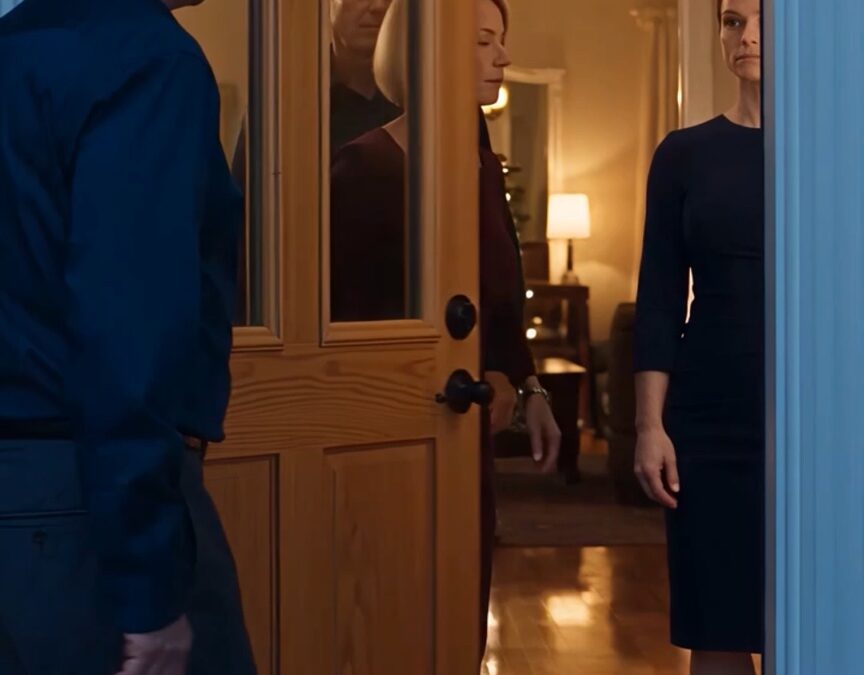
My parents locked me outside during Christmas dinner while my sister sat inside discussing which upstairs bedroom she wanted for herself.
Through the glass, I could see the tree I had decorated that morning.
My father was still beside the lock.
My mother stood behind him.
Neither looked surprised when I turned around and tried the handle.
It wouldn’t turn.
I looked past them toward the dining room. Brooke was sitting where I had left her, with her plate in front of her and her fork halfway to her mouth.
She finished the bite.
Then she looked toward the stairs.
“The bedroom facing the backyard,” she said.
My bedroom.
I knocked against the glass.
“Open the door.”
My father looked at my hand, then at my face. He didn’t reach for the lock.
I had come outside because my mother asked me to check the porch light.
“It keeps flickering,” she had said.
I hadn’t brought my coat.
The light was on above me. I looked up at it, waiting for it to flicker, before I understood that nobody inside was watching the light.
They were watching me.
“Go home. Your sister needs this house.”
My father said it through the door.
“Go home?”
He pointed toward the driveway.
“You have an apartment. Let your sister live here.”
The house belonged to me outright.
I had bought it and paid it off before my parents ever moved in. They hadn’t helped buy it. They didn’t own any part of it.
They knew that.
I had let them live there without rent for four years.
Now my father was standing in my foyer, telling me to leave.
Earlier, before the plates were passed, I had been pulling my chair closer to the table when my mother said the upstairs would work perfectly.
“For what?” I asked.
“For your sister.”
Brooke looked down at her plate.
My father answered before she did.
“She needs somewhere she can get ahead.”
I waited.
My mother adjusted the serving dish beside her. Brooke moved her napkin onto her lap. Nobody looked at me as though a question had been asked.
“Are you asking if Brooke can move in?”
“We’re telling you what we worked out,” my mother said.
She said it as though I had missed an ordinary dinner announcement.
I put my chair back.
“Which room?”
“The back one,” Brooke said.
“That’s my bedroom.”
“You have your apartment,” my father replied.
I did.
I rented a smaller place near work because the weekday drive had become tiresome. I was a payroll supervisor, and being close to work made those mornings easier.
That wasn’t the same as giving away my house.
My bed was upstairs.
So were my clothes, my books, and the things I used when I stayed there. I came back regularly. Nobody had to guess whether I still used that room.
My mother knew which drawer held my pajamas.
She had folded them herself when she decided to combine a load of laundry.
“Brooke needs room to spread out,” she said.
“Where would my things go?”
“We can figure that out.”
“We?”
She pressed her lips together.
I looked at Brooke.
“Did you think you should ask me?”
“Mom said you barely use it.”
“That wasn’t my question.”
Brooke lowered her eyes and took another bite.
My father told me not to make dinner unpleasant. I sat there with my hand resting beside my plate, trying to decide whether he honestly believed I had started this.
Then my mother mentioned the porch light.
I got up because checking it seemed easier than arguing across the food.
That was my mistake.
Now I stood outside, watching them return to the conversation they had interrupted long enough to get me out of the room.
My mother said something to Brooke.
I couldn’t hear every word through the glass, but I saw her point toward the ceiling.
Upstairs.
My father stayed by the door.
“Four years of free housing,” I said.
He gave a short, nasal laugh.
I hadn’t brought my keys outside with me. They were with my coat inside, where I had left them when I arrived.
But even if I had been holding them, I wouldn’t have wanted to force my way past my father.
I wanted him to open the door.
I wanted my mother to tell him this was ridiculous.
She didn’t.
The tree stood near the window behind them. Christmas morning, I had knelt on the rug to straighten its lower branches while my mother stood nearby telling me where it needed more lights.
I had moved them.
Then I had stood back, asked whether that looked better, and listened while she suggested another adjustment.
I could still see the spot she had pointed to.
I knocked again.
“Mom. Open the door.”
She glanced at my father.
Brooke continued eating.
That was the part I kept looking at. Not the food itself, but the ordinary way she used her fork while I stood on the other side of the door.
She knew whose house it was.
She had known before dinner.
I was 39, unmarried, healthy, and perfectly capable of deciding where I wanted to sleep. Apparently, my family had decided that having an apartment made those decisions theirs.
My father motioned toward the driveway again.
I didn’t move.
The cold was getting through my sleeves. I tucked my fingers against my palms, then lowered my hands because I wanted them to see I wasn’t leaving.
Inside, my mother said something to him.
He turned his head.
She came closer to the door, and for a moment I thought she might finally apologize.
Instead, she pointed at me through the glass.
Her mouth formed the words before I could hear them.
Stop making a scene.
I looked straight at her.
“Then open it.”
She reached for the lock.
My father shifted farther into the foyer, leaving her room to turn the handle. Brooke glanced over from the table but stayed in her chair.
The latch moved.
My mother opened the door just wide enough to continue the argument.
Chapter 2: Whose House This Was
“Stop making a scene,” my mother said.
“Then let me inside.”
“You’re upsetting your father.”
She stood near the foyer wall with her hand still on the door. My father remained inside, looking at me as though I had arrived uninvited.
I moved up to the open threshold.
I didn’t touch either of them.
Behind my father, the dining room chair I had been using was still pulled away from the table. My plate sat there untouched.
“You’ve lived here free for four years,” I said.
“Don’t start counting favors.”
“I’m telling you what the arrangement has been.”
“We’re your parents.”
“Yes.”
My mother started to say Brooke’s name.
“Mom, this house belongs to me, not you.”
She looked at my father.
For once, neither answered immediately.
When they moved in four years before Christmas, my father was relieved to have somewhere settled while they worked out what they wanted next. My mother had asked which cupboards she could use, and I told her to make the kitchen comfortable. We wrote down the arrangement so nobody had to rely on remembering a conversation: they could live there without rent, they would handle their utilities and groceries, I would keep paying the ownership expenses, and I would keep my room and access to my house. There was no fixed ending date. There was also no promise that the place would become theirs, no agreement that I would move out permanently, and no permission for them to move somebody else in.
I had put the written agreement away afterward.
They had lived there.
I had let the arrangement become familiar.
Later, when I rented near work, my mother asked whether I intended to take all my clothes.
“No. I’m keeping my room.”
She had watched me put clean clothes into the upstairs dresser.
My father had carried nothing out for me.
There had been no family meeting about transferring the house, because I wasn’t transferring it.
At first, when they called it their place, I understood what they meant.
Their groceries were in the refrigerator.
Their shoes were by the door.
They spent more nights there than I did.
But my mother eventually began asking why I needed a whole bedroom when I already had somewhere else to sleep.
“Because it’s my room,” I told her.
She called me touchy.
I thought that had settled it.
Standing at the threshold, I understood that she had simply stopped asking me and started planning with Brooke instead.
My sister’s apartment cost $1,700 a month.
She wanted to stop paying that rent.
My parents wanted to help her do it without changing anything about their own comfortable arrangement.
They could offer the upstairs because they weren’t paying for it.
And they expected me to accept the offer after they had already made it.
My father folded his arms.
“You’re hardly here.”
“I’m here regularly.”
“You know what I mean.”
“Yes. You want my room available for Brooke.”
“She could save her money.”
“That doesn’t give you permission.”
My mother moved her hand away from the door.
“We weren’t taking anything from you.”
I looked past her at my coat hanging inside.
“You just locked me out.”
“That was because you wouldn’t calm down.”
I had asked where my belongings would go. I hadn’t shouted, threatened anybody, or overturned a chair.
I wasn’t going to argue about my tone while standing outside my own dinner.
“Your free stay is ending,” I said.
My father’s mouth opened.
“Wait.”
Brooke finally pushed her chair back.
“You’re making them move?”
“I’m ending this arrangement.”
“That’s going too far.”
She said it from the dining room, close enough that I could see the napkin beside her plate.
I looked at her.
“You watched them lock me out.”
“I didn’t lock anything.”
“You kept eating.”
She glanced toward our mother.
That had always been an easy place for her to look when she didn’t want to answer me directly.
My mother stepped closer, though she left the opening clear.
“You can’t put us out on Christmas.”
“I’m not putting anyone out tonight.”
My father began talking before I finished.
He said I was making threats. He said I had invited them to live there. He said I couldn’t decide something this important because dinner hadn’t gone my way.
I waited.
Then I answered the part that mattered.
“I’ll follow the required process.”
My mother looked toward Brooke, who was now standing beside her chair.
“But I’m not agreeing to keep housing you,” I continued, “and Brooke isn’t moving into my room.”
“You’d really do that to us?” my mother asked.
I looked at the threshold beneath my shoes.
I had cleaned that wood before they moved in. I had put a mat there because my father complained about tracking water across the floor.
Now he was treating the doorway as something he controlled.
I stepped into the open doorway.
Nobody had to move for me.
“I’m not discussing which bedroom you’re giving away.”
My father looked toward my mother.
I stayed where I was.
“This house is mine. Your free stay is ending.”
He glanced past me toward the porch, then back at the stairs.
“You’d make us move out?”
“I’m ending the free stay through the proper process.”
There was no shouting in my answer.
I didn’t have to persuade him that I owned the house. He had known that before he turned the lock.
What he hadn’t believed was that I would act on it.
Brooke stood beside the table without reaching for her plate or speaking again. My mother let go of the door completely.
My father stepped back from the doorway, and neither of my parents told me to go home again.
Chapter 3: The Place Brooke Wouldn’t Offer
I went inside far enough to get my coat.
My father watched me take it from the hook.
“Sit down,” my mother said. “Your dinner’s getting cold.”
“I’m not staying for dinner.”
“We need to talk about this.”
“We have talked.”
I checked my coat pocket for my keys. They were where I had left them.
My father looked toward the dining room.
Nobody had cleared my place.
I could have sat down, picked up my fork, and helped them pretend that this had been a family disagreement that went too far.
I didn’t want that dinner.
I wanted to leave because I chose to leave.
Brooke was standing near her chair when I passed the dining room opening.
“Are you really going to contact someone about this?”
“Yes.”
“Over a bedroom?”
“Over being locked out of my house.”
She pressed the napkin flat beside her plate.
My mother came behind me.
“Your father shouldn’t have locked it. There. Can we stop this now?”
My father didn’t repeat her statement.
He looked at her as though she had offered more than he wanted to concede.
“The notice will explain what happens next,” I said.
“You’ve already decided?”
“Yes.”
I put my coat on.
Nobody tried to stop me this time.
At the door, my mother asked whether I would at least take my food.
I said no.
She looked more offended by that than she had by my standing outside without a coat.
I drove to my apartment.
The roads were quiet enough that I didn’t have to hurry or make quick decisions. I kept my attention on the pavement and the familiar turns.
I had somewhere safe to go.
That mattered.
But having another place to sleep didn’t make what they had done acceptable.
Inside my apartment, I hung my coat up instead of dropping it over a chair.
Then I washed my hands.
I stood at the sink longer than I needed to, looking at the clean dish in the drying rack.
My phone began ringing while I was taking something out of the refrigerator.
Brooke.
I let it ring until I had put the food down.
Then I answered.
“Mom’s crying.”
“Is Dad there?”
“Yes.”
“Then she isn’t alone.”
Brooke exhaled into the phone.
“I’m trying to get you to understand how serious this is.”
“I understand.”
“They don’t have another house waiting.”
I pulled out a chair and sat down.
“Do you still have your apartment?”
She didn’t answer immediately.
“Brooke.”
“Yes.”
“Have you given notice?”
“No.”
That was the first thing she had told me that evening without our mother speaking around it.
Her apartment was still hers.
She hadn’t given it up.
She hadn’t moved anything into my house.
The arrangement at dinner wasn’t rescuing her from losing somewhere to live. It was replacing rent she didn’t want to pay.
“Then you have somewhere to go,” I said.
“That’s not the point.”
“It’s part of the point.”
She said she had been trying to save money, not hurt me. She said our parents had made the upstairs sound available.
“You knew it was my room.”
“Mom said you could take your things to your apartment.”
“Did you believe Mom owned my room?”
“No.”
I looked down at the table.
“Then you knew you needed to ask me.”
She went quiet.
From her end, I heard our mother say her name.
Brooke answered away from the phone.
Then she came back.
“Mom wants to know if you’ll change your mind.”
“No.”
I heard my father more clearly than my mother.
“Ask her where she expects us to go.”
Brooke repeated it.
“I’m not choosing their next home.”
That answer brought my mother closer to Brooke’s phone.
“We can’t just find something because you’re angry.”
“You’ll have proper notice,” I said.
My father said something I couldn’t make out.
Then my mother asked Brooke a question.
I heard it plainly.
“Could we stay with you while we work this out?”
Brooke’s answer came too quickly.
“That wouldn’t work.”
I sat back.
Our mother didn’t seem to have expected it either.
“You have your apartment.”
“I know, Mom. But I need my own space.”
I looked around my smaller apartment, at the chair squeezed close to the table and the coat hanging beside the door.
My sister had just used the same reason I had been denied.
I needed my own space too.
Apparently, that only counted when the space belonged to her.
My father asked to speak to me.
Brooke passed the phone.
He didn’t mention locking the door.
He asked what would happen if they couldn’t find somewhere suitable before the notice ended.
“You can discuss housing options,” I said. “I’m still ending this arrangement.”
“Your sister can’t fit us into her life like that.”
“I heard her.”
“You could make this much simpler.”
“I’m not continuing the arrangement.”
He handed the phone away without saying goodbye.
Brooke came back sounding irritated.
“I wish you hadn’t asked about my apartment.”
“They asked to stay there. You said no.”
“That’s different.”
I didn’t ask her to explain the difference.
I ended the call and ate at my apartment table.
Later, I put my keys beside my bag so I would know where they were when I needed them.
I hadn’t decided how to serve notice or what wording it required. That would wait until I could get proper advice.
But I had heard enough to know something important.
Brooke wanted the free upstairs rooms.
She did not want our parents in her apartment.
They would ask her again, and she would refuse again. When they eventually left my house, they paid for an extended-stay motel beside the interstate.
They didn’t stay with Brooke.
Chapter 4: What I Actually Agreed To
On the first business day after Christmas, I set my house records on my apartment table.
Then I found the occupancy agreement.
I read it before I contacted the attorney.
Not quickly.
I followed the lines with my finger, checking what I had actually agreed to instead of what my family had grown accustomed to saying.
The rent was $0.
There was no fixed end date.
The agreement didn’t give my parents ownership, and it didn’t authorize them to bring in another resident without my permission.
It also didn’t say I could make them leave whenever I felt like it.
I put the pages beside the ownership records.
That was the part I wanted explained correctly.
At work, I spent my days checking records before money went anywhere. I wasn’t about to treat my house less carefully because my father was impatient.
When I spoke with a Michigan landlord-tenant attorney, I described the arrangement without starting with the worst part.
I owned the house outright.
My parents lived there without rent.
They paid their utilities and groceries.
I paid the expenses of ownership.
I kept a bedroom there, stayed regularly, and rented a smaller apartment near work.
Then I explained Christmas dinner.
“Did they allow you back inside?”
“My mother opened the door. I left after I got my coat and keys.”
“Are they still there?”
“Yes.”
“Have you changed locks or interrupted any services?”
“No.”
I said it plainly because I wanted the advice based on facts.
I wasn’t calling to find a way to punish them before dinner was cold.
I wanted their occupancy ended legally.
The attorney reviewed what I supplied.
I waited with my hands flat on the table.
There was something embarrassing about having to explain that my parents had locked me out, even though I hadn’t been the person turning the lock.
I could hear my father calling it a family matter.
I could also see him standing inside the glass.
The attorney explained that living there under our ongoing arrangement gave my parents occupancy rights even though they paid no rent.
I couldn’t erase those rights by declaring myself the owner.
“I understand.”
Ending the arrangement would require written notice. At least a full month was required for what we had, and counsel needed to check for any additional applicable requirements before arranging service.
I wrote that down.
Then I asked the question I had been putting off.
“Does renting my apartment change who owns the house?”
“No.”
“What about them paying utilities?”
“That does not transfer ownership.”
I lowered my pen.
Those were ordinary answers.
They still helped.
The attorney also explained that my parents couldn’t turn their permission to live there into authority to give Brooke possession of my room.
Their rights weren’t ownership rights.
Their access wasn’t permission to exclude me.
I looked at the agreement again.
Nothing on those pages resembled the dinner conversation.
My mother’s “we worked out” had never included the person who owned the upstairs.
“I want to terminate the arrangement,” I said.
“Even if they agree not to move your sister in?”
“Yes.”
I had already considered that.
If Brooke stayed at her apartment, my father would still have locked me out. My mother would still have sent me outside so he could do it.
A withdrawn offer wouldn’t change what they had decided they were allowed to do.
After the consultation, I put the papers back into a folder.
I didn’t carry them to the house for a dramatic argument.
I didn’t send my father a picture of my ownership records.
He knew whose name was on them.
What I needed now was a process he couldn’t turn into another argument at the table.
My mother called while I was putting the folder away.
“Have you calmed down?”
“I’ve consulted an attorney.”
She stopped.
Then she asked whether I had told the attorney they were my parents.
“Yes.”
“And that we don’t pay rent?”
“Yes.”
I waited.
She seemed to think that last fact should make notice unnecessary in their favor.
“Then you know this isn’t an ordinary rental situation.”
“That’s why I asked for advice.”
My father joined the call.
He wanted to know whether the attorney understood that they bought their own food and paid their utilities.
“I supplied the agreement.”
He went quiet at that.
It wasn’t new information. He knew we had written down the arrangement.
But he had been speaking as though the only evidence would be my version of Christmas against his.
“The arrangement says you can live there,” I told him. “It doesn’t say you own it or can move Brooke in.”
“So now you’re going to pick apart something we signed as a family?”
“I’m going to follow it and the law.”
He changed direction.
He asked whether I intended to come and go while they packed, whether I would expect them to cook for me, whether I understood how uncomfortable this would be.
“I’m not asking you to cook for me.”
“That isn’t what I meant.”
“Practical arrangements can be in writing.”
My mother came back.
“We could still sit down and settle this.”
“The decision is made. The notice will give you time.”
After we hung up, I checked the copies again and made sure counsel had the complete agreement, not just the page showing rent.
I wanted the whole arrangement considered.
Mine included.
When I sent my instruction to proceed, I didn’t add a description of how badly Christmas had hurt.
I asked for proper notice, proper service, and confirmation of the deadline.
The reply asked me to confirm the ending date I was willing to allow.
I looked at my calendar before I answered.
Chapter 5: Until the End of February
I chose the end of February.
It gave more than the required month.
Before anything was served, counsel checked the applicable requirements and made sure the notice matched our arrangement.
I didn’t write my own version on a kitchen scrap.
I didn’t ask Brooke to deliver a warning.
I waited for the proper notice and documented service.
That waiting bothered my mother.
She kept treating the lack of immediate action as evidence that I was reconsidering.
“Your father says we should all have dinner again.”
“I’m not reconsidering.”
“You haven’t actually done anything.”
“The notice is being handled.”
She made a small impatient sound.
I had heard it at the Christmas table when I asked which room they meant.
This time, I let her finish before I answered.
When service was completed, counsel confirmed it had been documented.
I put that confirmation with the rest of the records.
Then my father called.
“We received it.”
“Yes.”
“It says the end of February.”
“That’s the deadline.”
He paused, waiting for me to fill the space with an apology.
I didn’t.
“You’re giving your own parents a deadline.”
“I’m ending the occupancy with proper notice.”
He said it was unnecessary to make everything formal.
I looked at the folder on my table.
Formal was exactly what I needed.
At Christmas, an ordinary conversation had become my parents deciding I could be locked out until I accepted their plan.
I wasn’t leaving the ending open to different recollections.
My mother wanted a meeting at the house.
I agreed to discuss the practical arrangements there, provided it didn’t become another attempt to assign my bedroom.
Brooke was present when I arrived.
Her coat was over a dining chair.
She hadn’t moved in, and none of her belongings had been put upstairs.
I noticed that before I took my own coat off.
My father had the notice on the table.
My mother sat beside him.
Brooke stayed near the chair with her coat.
“You could have spoken to us before sending this,” my father said.
“I told you at Christmas.”
“You were angry.”
“I still meant it.”
He pushed the notice slightly toward me.
“We’ve maintained the place.”
“You’ve lived here. I’ve paid the ownership expenses.”
“We pay bills too.”
“Your utilities and groceries. That’s in our agreement.”
I had brought a copy because I didn’t want to argue from memory.
I laid it beside the notice.
Brooke leaned closer.
My father didn’t pick it up.
He had signed the original arrangement when they moved in. There was no secret document I had tricked him into signing afterward.
I pointed to the provisions we had already discussed with counsel.
“This is permission to live here. It isn’t ownership, and it doesn’t let you give Brooke my room.”
My mother looked at Brooke.
“She isn’t even here yet.”
“She isn’t moving in.”
That was the first time my sister spoke.
“What if it’s just temporary?”
“No.”
“You didn’t even ask how temporary.”
“I’m not agreeing to another resident.”
Brooke stood straighter.
My father tapped the notice.
“All right. Leave Brooke out of it. We can keep our arrangement.”
“The notice still stands.”
He had stopped defending their authority to give away the upstairs.
Now he wanted the original free stay restored without the upstairs offer attached.
I could understand why that was his next request.
It would preserve everything he wanted for himself.
It didn’t restore my ability to trust him with my home.
My mother folded her hands.
“If we apologize for the door, can we finish this?”
“You can apologize. It won’t cancel the notice.”
She looked away.
There was no apology then.
My father asked whether I expected them to have every item out by the deadline.
“Yes.”
“What about something we can’t move right away?”
“Send me the practical questions in writing. I’ll answer them.”
I wasn’t agreeing to storage without knowing what he meant.
I also wasn’t going to threaten to throw anything out.
The attorney had been clear: follow the process, don’t improvise.
Brooke pulled her coat off the chair and put it across her arm.
“Mom and Dad don’t deserve this much upheaval.”
I looked at the stairs.
“My room wasn’t available just because moving me was convenient.”
She didn’t answer.
After the meeting, I went upstairs.
I didn’t rearrange anything or remove my parents’ belongings. I checked my bedroom, closed the dresser drawer I had left slightly open, and looked at the bed.
The room was still mine.
That shouldn’t have felt like news.
Downstairs, my mother was waiting near the bottom step.
“Your sister could help us with expenses if she were here.”
“That isn’t the arrangement you offered her.”
“She could contribute in other ways.”
“No new resident, Mom.”
She put her hand on the banister.
“You’re making it harder for everyone to find a solution.”
“I’m not offering this house as the solution.”
I put my coat on and left without checking the porch light.
At my apartment, I wrote down what we had discussed and sent the practical points back to my parents.
The deadline remained the end of February.
No permission had been given for Brooke to move in.
Their existing access and services would remain undisturbed while the notice ran.
My father’s response came after I had put the folder away.
He wanted to propose what he called a compromise.
Chapter 6: Just Let Her Have Upstairs
My father called his compromise simple.
“Just let her have upstairs.”
I was at my apartment table with his message open when he called to explain it.
He sounded calmer than he had when the notice arrived.
That was deliberate.
He wasn’t claiming ownership anymore.
He was asking me to decide that using my own bedroom wasn’t worth the trouble.
“You keep the house,” he said. “Nobody’s disputing that.”
“I know.”
“And we keep looking after it. Your sister gets some relief from her rent.”
“Where do I stay when I come back?”
“You have your apartment.”
He had changed the wording, not the result.
“No.”
He took a breath.
“You don’t have to decide this second.”
“I’ve decided.”
My mother came on.
She wanted to know whether Brooke could use the other upstairs space and leave my bed alone.
“Not as a resident.”
“What if she keeps her apartment?”
“Then she can live in it.”
My mother said my answer was unnecessarily sharp.
I looked at the message my father had sent.
It mentioned everybody’s comfort except mine.
“I’m not discussing another upstairs arrangement.”
The call ended without agreement.
I opened a fresh message and wrote out the practical points again, carefully enough that I wouldn’t have to explain them later.
The notice remained in effect.
I would not interrupt utilities.
I would not change locks while they still occupied the house.
They should tell me their proposed departure arrangements so we could coordinate access and the final walk-through.
I read it before sending.
There were no accusations in it.
There was also no opening for Brooke’s bedroom.
At the house, my mother had begun collecting things from cupboards.
I visited by arrangement, not to supervise her packing, but to discuss what belonged to them and how they wanted to handle the departure.
She put a dish on the counter.
“That’s ours.”
“All right.”
She pointed to another.
“That was here before.”
“Then leave it.”
The ordinary sorting was easier than talking about Christmas.
For a while, we managed it.
She opened a lower cupboard and crouched to reach the back.
I moved a chair out of her way.
Neither of us mentioned that I had been standing outside this kitchen’s front door while she watched.
Then she looked up.
“Brooke would have helped me with this house.”
I stayed beside the counter.
“You could have asked her to visit.”
“You know what I mean.”
“Yes. You wanted her living upstairs.”
“It would have been good for her.”
“I didn’t agree.”
She set the dish down harder than she needed to.
My father came in from the hall.
He asked whether I was taking anything upstairs to my apartment.
“No.”
“Then it’s just sitting there.”
“It’s my bedroom.”
My mother closed the cupboard.
I recognized the beginning of another discussion about how often I used what I owned.
“I’m here to coordinate your move,” I said. “Not reconsider the notice.”
My father looked at the things on the counter.
Then he asked where they should leave the keys when they were done.
That was practical.
I answered it.
We agreed that surrender would be confirmed directly, not guessed from an empty driveway or a missing toothbrush.
They needed to remove their belongings and tell me they had given up possession.
I would inspect with their permission.
Only after that would I arrange the lock change.
My father listened closely.
He wanted to know whether I would come in before they finished.
“I’m not planning surprise visits.”
“And the utilities?”
“Nothing is being interrupted.”
He nodded.
I didn’t ask him to be grateful for me following the law.
I just wanted no confusion about what I would and wouldn’t do.
Back upstairs, I checked that the window was closed and my things were where I had left them.
I smoothed the blanket at the foot of the bed.
My mother stopped outside the room.
“You don’t even sleep here all the time.”
“No.”
She waited.
“But I’m allowed to.”
She looked toward the other room, then went downstairs.
I stayed for a moment after her footsteps stopped.
I could have started bringing my belongings to my apartment to keep them away from the argument.
Instead, I left the dresser drawers filled.
I had not agreed to vacate my bedroom.
Before leaving, I checked that my father had my written message about practical move-out questions.
He did.
He said he preferred talking.
“I’ll talk,” I said. “Then I’ll confirm the arrangements in writing.”
“You think I’m going to lie?”
“I don’t want misunderstandings.”
He looked annoyed, but he didn’t refuse.
At my apartment, I answered the questions they sent without adding anything about family loyalty.
Where to leave keys.
How to arrange the walk-through.
Whether their own belongings should all be removed.
I answered what was asked.
I didn’t call Brooke to persuade her to help.
Her decision about her apartment was hers, just as my decision about my house was mine.
She called me anyway.
Her voice was tight before I had finished saying hello.
“Dad thinks you and I can sort this out.”
“Sort what out?”
She sighed.
“He wants me to give up my apartment and take the upstairs after all.”
Chapter 7: Brooke Keeps Her Apartment
“I’m not giving you permission to move in,” I said.
“I know.”
Brooke sounded tired.
For the first time, she wasn’t arguing that my parents should be allowed to make the decision.
She was calling because they had brought the problem back to her.
“Dad says if I tell you what I can save, you might listen.”
“I know what your rent costs.”
“$1,700.”
“I know.”
She stopped.
I could hear something rustling near the phone, then her setting it down and picking it up again.
“I haven’t ended my lease,” she said.
“You told me.”
“I want you to know I haven’t packed anything either.”
“All right.”
That mattered practically.
There was no sister suddenly without a home because I had withdrawn a promise. I had never made the promise, and she had never surrendered her apartment.
She still had the place she had been paying for.
“What did you tell Mom and Dad?” I asked.
“That I can’t move into your house.”
“Did they ask to stay with you again?”
“Yes.”
“And?”
“I said no.”
I looked toward my kitchen counter.
I had a clean mug sitting there, ready for work. Small things in my apartment were beginning to feel temporary now, although I still had its notice requirements to follow before I could leave.
Brooke continued.
“My place isn’t set up for them.”
“I’m not asking you to take them.”
“They think you are.”
“I’m not.”
That seemed to surprise her.
She had expected me to use the opportunity to tell her how selfish she was.
I had already told her what I thought of Christmas.
Repeating it wouldn’t put my parents in her apartment, and putting them there wasn’t my job.
“I’m not arranging their next home,” I said.
“Then what are they supposed to do?”
“Make their arrangements.”
Brooke went quiet again.
She finally said our mother wanted all of us to discuss it.
I agreed to a conversation about their actual departure, not a new vote on my house.
At the house, the notice was no longer lying in the middle of the table.
My father had put it with other papers beside his chair.
My mother sat with her arms close to her body.
Brooke arrived with her coat still buttoned.
She sat across from me.
My father looked at her first.
“Tell your sister what you told us.”
Brooke frowned.
“About my apartment?”
“About why it won’t work.”
She looked at me.
“I’m keeping it. I’m not having Mom and Dad move in.”
My mother stared at the table.
I didn’t comment on how quickly Brooke could say no when the home was hers.
My father turned to me.
“So now you understand why your deadline creates a problem.”
“I understand Brooke’s answer.”
“We can’t make her take us.”
“No.”
He waited.
“I’m not extending your occupancy.”
He leaned back.
The claim that Brooke could use my upstairs because I had somewhere else was finished. Brooke had now said, in front of everyone, that she was keeping her own place and wouldn’t share it with them.
My father didn’t repeat the claim.
He moved to the practical question of where they could go without making a longer commitment immediately.
My mother said they had been looking at an extended-stay motel beside the interstate.
I kept my hands in my lap.
“Have you decided?”
“We’re deciding,” my father said.
“Then let me know your departure arrangements when you have them.”
My mother looked up.
“You’re not going to say anything?”
“About the motel?”
“Yes.”
“I’m not choosing it for you.”
Brooke watched me.
Nobody asked her again at that table whether they could stay in her apartment.
Afterward, she followed me toward the door.
“I didn’t know they’d actually lock you out.”
“You stayed at the table afterward.”
She looked down at her coat buttons.
“I should have said something.”
“Yes.”
She nodded, but didn’t ask me to tell her it was fine.
That was better than the explanations she had offered before.
It still didn’t change where I wanted the notice to lead.
My father contacted me after they had made their choice.
They would pay for the extended-stay motel themselves.
They would leave during the last weekend of February.
They weren’t contesting the notice.
I asked him to confirm the arrangements in writing.
He did.
I read the message carefully before answering.
There was no request to keep the upstairs for Brooke, no claim that the house was theirs, and no suggestion that their belongings would remain indefinitely.
I confirmed that I would meet them for the agreed walk-through after their things were removed.
My mother called separately.
“I hope you understand this isn’t what we wanted.”
“I understand.”
“We thought we would be here longer.”
“I know.”
She sounded as if she wanted me to say they could be.
I didn’t.
Instead, I asked whether she had practical questions about moving their belongings.
She said no.
At my apartment, I put their confirmation with the notice records.
Then I checked my own rental agreement.
I couldn’t simply move out and stop paying because I was ready to live somewhere else.
I had expected my parents to follow a proper ending.
I would do the same.
Before I put the papers away, my phone lit up with a message from my mother.
She wanted to know whether I would be there when they locked the door for the last time.
Chapter 8: The Last Weekend of February
I told my mother I would be there for the surrender.
Not before they were ready.
I didn’t want to stand in the hallway watching every bag leave, and I didn’t want them wondering whether I intended to take over while they were still packing.
We agreed on the arrangement in writing.
During the last weekend of February, my father told me their belongings were being removed and they expected to finish as planned.
I stayed at my apartment until they said I could come.
Then I drove to the house.
The porch light was on.
I noticed it before I noticed anything else.
My mother opened the door when I knocked.
There was no pause over the lock this time.
“Come in,” she said.
The dining room looked different without the things they usually left beside their chairs. The kitchen counter was mostly clear.
My father stood near the hall.
“We’re just checking we haven’t missed anything.”
“Take your time.”
He looked at me, perhaps expecting a reminder about the deadline.
They were leaving before it.
There was nothing to remind him of.
My mother went back through the kitchen cupboards, opening doors she had already emptied.
I waited by the dining table.
She held up something small from a drawer, looked at it, then put it with their belongings.
I didn’t rush her.
Leaving a house after four years required more than walking out with a coat.
They had clothes, ordinary household things, and the daily habits that had accumulated around them.
I had allowed those things.
Ending the arrangement didn’t mean pretending they had never lived there.
My father checked the hallway storage and told me which shelves were empty.
Then he stopped beside the stairs.
“Do you want to look through now?”
“If you’re ready.”
He said yes.
My mother agreed.
I walked through with their permission.
I didn’t open a door behind anyone’s back or treat a bag by the exit as abandoned property.
I checked that their belongings had been removed.
My bedroom was as I had left it.
The bed was made, my clothes were in the dresser, and the window faced the backyard Brooke had wanted.
I stood there while my father waited outside the room.
“Everything all right?” he asked.
“Yes.”
I didn’t say more.
Downstairs, my mother was wiping a patch of counter that was already clean.
She looked at the cloth in her hand.
“I don’t know if that’s yours or mine.”
“Take it if it’s yours.”
She folded it into their things.
There was no argument over a dishcloth.
We had already spent enough time arguing about things much larger than that.
When they finished their final check, my father put the house keys on the table.
My mother added hers.
I asked the question exactly as I had planned to ask it.
“Have you both removed your belongings and surrendered the house?”
My father nodded.
I waited for words.
“Yes,” he said. “We’re out.”
My mother said yes too.
They also confirmed it in writing.
I kept that confirmation with the records.
Only then did I regard their occupancy as finished.
There had been no court removal.
Nobody had carried their things to the curb.
The utilities had stayed on, and their keys had worked until they chose to surrender them.
My mother put her coat on near the same hook where mine had hung at Christmas.
She struggled with the sleeve.
I held the shoulder steady so she could get her arm through.
“Thank you,” she said.
“You’re welcome.”
My father stood at the open door.
He didn’t mention the upstairs.
He didn’t tell me I was hardly there.
He said they would let me know when they were settled at the motel.
“All right.”
My mother looked toward the window where the Christmas tree had stood.
Then she walked onto the porch.
I stayed inside while they finished leaving.
After their vehicle pulled away, I closed the door.
I didn’t turn the old lock immediately.
I stood with my hand on the handle, looking at the dining chair my sister had used.
Then I went back to the table and checked the surrender confirmation again.
It was done.
The lock change came afterward.
I arranged it only once they had removed their belongings and confirmed that they were giving up possession.
I didn’t use new locks to make them leave.
They had already left.
When the locks were changed, I tested my new key from the porch.
The latch moved easily.
I stepped inside.
I tested it again before putting the key in my coat pocket.
That small action took more attention than it should have.
My father sent a message saying they had arrived at the extended-stay motel beside the interstate.
I answered that I had received it.
I didn’t ask for the room details.
They were paying for it themselves, and they had chosen it themselves.
I wasn’t going to turn the move into another arrangement where I managed what happened next.
Before leaving for my apartment, I walked upstairs again.
The house wasn’t empty.
My bed was there.
My clothes were there.
The furniture I owned was still where I had chosen to put it before I started allowing everyone else to decide what was convenient.
I sat on the edge of the bed without taking my coat off.
Then I opened my phone and checked the requirements for ending my apartment tenancy.
I could come home now.
I still needed to finish leaving my other place properly.
Chapter 9: Moving Back Into My Room
I gave my apartment notice according to my agreement.
I didn’t ask the manager to ignore the required process because my house was available.
I confirmed what I needed to do, completed the notice, and arranged my move around the obligations I still had.
That meant living between places while I finished.
I knew how to do that.
The difference was that nobody at the house was deciding I no longer belonged there.
I began with ordinary things.
Clean sheets.
Work clothes.
The mug I reached for in the morning.
At my house, I carried them upstairs and put them where I wanted them.
I opened the dresser drawer my mother used to fold pajamas into and rearranged it without wondering whether somebody would ask why I needed the space.
Then I took my coat downstairs and hung it by the door.
I left my keys beside it.
That was enough for that visit.
At the apartment, I packed the smaller items I had accumulated near work.
There wasn’t much ceremony to it.
I cleaned shelves after I emptied them. I checked cupboards. I followed the instructions for returning the apartment and kept the records showing that I had completed my responsibilities.
I didn’t leave belongings behind for somebody else to sort out.
When I finished that tenancy, I moved home.
My weekday drive was less convenient again.
I accepted that.
I set my work bag by the door before bed and prepared what I needed so I wouldn’t be rushing around the house in the morning.
The upstairs bedroom became part of my daily routine instead of a room I had to explain keeping.
I slept there.
I put laundry away there.
I opened the curtains toward the backyard without picturing Brooke’s things against the walls.
At the dining table, I cleared the place my father had usually occupied and sat there with paperwork.
Then I moved to another chair because the light was better.
Nobody asked what I was doing.
The table didn’t have assigned family seats unless I wanted it to.
My mother called after I had settled in.
“Can we come by?”
I was rinsing a plate.
“When?”
She named a time, and I checked what I had planned.
“That won’t work. We can arrange something else.”
She paused.
“We just thought we’d stop in.”
“I need visits arranged.”
“We know the way, Claire.”
“I know.”
I put the plate in the rack.
“Please don’t come without checking.”
She didn’t like that answer, but she understood it.
She had no working key now.
That wasn’t something I said to threaten her.
It was simply how the house worked after surrender.
My father eventually joined a call and asked whether they could collect anything they might have forgotten.
“What are you missing?”
He couldn’t name an item.
I told him that if they remembered something specific, they could ask and we would arrange it.
I wasn’t reopening access so they could search the house whenever they wished.
He said all right.
Our contact became brief and civil.
They remained responsible for their own accommodations.
The extended-stay motel wasn’t somewhere I had sent a bill to pay, and it wasn’t the beginning of another promise that I would solve housing for them.
If they wanted to discuss ordinary things, we could.
If the conversation turned toward returning, my answer stayed the same.
“I’m not offering housing.”
I didn’t give a new explanation each time.
Brooke called too.
She still had her apartment.
She didn’t pretend anymore that my refusal had left her without somewhere to live.
When she wanted to visit, she asked.
I told her when I was available.
That change sounded small on the phone.
It wasn’t small when I opened the door and knew nobody had decided to enter before asking me.
During a visit, Brooke stood near the bottom of the stairs.
“I’m not going up,” she said.
“You don’t need to announce that.”
“I know. I just didn’t want you to think—”
“My bedroom isn’t part of this visit.”
She nodded.
We stayed downstairs.
She asked about work.
I answered.
For a while, we managed a conversation without our parents being the subject.
I didn’t force it into a reconciliation bigger than it was.
She had said she should have spoken up. I had heard her.
I also remembered her eating while I knocked.
Both things could remain true while we tried to speak civilly.
After she left, I washed the cups and put them away.
Then I ate dinner at the table instead of carrying it upstairs.
I had gotten used to making myself unobtrusive in that house, even before the lockout.
Now I left a book beside my plate and read while I ate.
I didn’t hurry because somebody might want the chair.
I didn’t move the book because my mother disliked things left on the table.
When I finished, I cleaned up because I wanted the kitchen ready for morning.
Not because I was a guest.
As the following Christmas approached, my mother asked whether I was putting up the tree.
“Yes.”
“In the usual place?”
I looked toward the living room window.
“I haven’t decided exactly where yet.”
She began explaining which angle looked best from outside.
“I’ll place it,” I said.
She stopped.
After we hung up, I went to get the tree.
Chapter 10: The Tree By The Window
The following Christmas, I brought the same tree into the living room.
I set it near the window, then moved it until there was room to walk comfortably between it and the chair.
I stood back.
That was where I wanted it.
I didn’t take a picture and ask my mother whether the angle was right.
I straightened the branches myself.
Some needed more attention than others. I worked around the tree, stepping carefully near the cord, then plugged in the lights.
A section looked thinner.
I moved the lights until I liked it.
Christmas morning, the house was quiet except for the small sounds I made moving things around.
I carried my coffee into the living room and set it where I could reach it.
Then I hung the decorations.
I didn’t hurry.
At Christmas dinner before, I had been able to see this same tree through the door while my father pointed me toward the driveway.
I remembered that while adjusting a lower branch.
I stopped with my fingers still on it.
Then I finished straightening it.
I wasn’t going to take the tree down because of what they had done near it.
My parents called while I was in the kitchen.
Their voices were polite.
My mother asked whether I had decorated.
“Yes.”
“Does it look nice?”
“I like it.”
She said she was glad.
My father wished me a merry Christmas.
I wished him one too.
He didn’t ask whether they could come back to live in the house. By then, he knew my answer hadn’t changed with the season.
They had left voluntarily before the deadline, chosen the motel, and paid for it themselves.
There had been no eviction judgment and no later agreement restoring their rent-free stay.
Their housing remained theirs to arrange.
I didn’t ask them to describe every inconvenience so I could prove that leaving had consequences.
The consequence was already plain.
The place they had lived in for $0 was no longer theirs to occupy.
My mother asked what I was making for dinner.
I told her.
She started to suggest another dish, then stopped herself.
“That sounds good,” she said instead.
We spoke a little longer.
There was no grand apology at the end of the call. No declaration that everyone understood everything now.
There was also no argument about my room.
That was the kind of contact we could manage.
I accepted it without turning it into a promise about next Christmas, or the house, or anything else.
Afterward, I put my phone on the counter and returned to the food.
Brooke called separately.
She asked whether it was a good time.
“Yes.”
That was a sentence I noticed now.
She wasn’t assuming that access to me or my home was automatic.
She wished me a merry Christmas and asked about the tree.
“It’s up.”
“By the window?”
“Yes.”
She paused.
“I’m glad you’re there.”
I rested my hand on the counter.
“Thank you.”
She didn’t ask whether our parents could be there too.
She didn’t tell me I had gone too far.
We talked about ordinary things until I needed to get back to cooking.
Before we ended the call, she said goodbye without handing the phone to somebody who wanted to change my answer.
I put it down.
Then I checked the food.
I was eating in my own home, and that was what I had planned.
Being unmarried didn’t mean I needed someone else to decide whether the table was being used properly.
Being healthy and able to work didn’t mean my room was spare space for whoever my parents selected.
I didn’t say any of that aloud.
I took a serving dish from the cupboard and set it on the counter.
The cupboard was arranged differently now.
The things I used were within reach. The things I rarely used were farther back.
My mother would have arranged it another way.
She no longer lived there.
I had made other small changes too.
My work bag had a place near the door.
My coat stayed on the hook I chose.
Upstairs, my clothes occupied the drawers without being consolidated to make room for someone who hadn’t asked me.
The bedroom facing the backyard was where I slept.
I had stopped explaining that.
When dinner was ready, I carried what I needed to the table.
I chose the chair with a clear view of the window.
Not because it had always been my chair.
Because I wanted to sit there.
I set out a glass and a napkin, then went back to the kitchen for my plate.
Through the dining room opening, I could see the front door.
It was closed.
My key was inside with me.
For a moment, I remembered retrieving my coat after my father finally stepped back, and refusing the cold plate my mother wanted me to take.
This dinner wasn’t something I had accepted to keep the peace.
I had shopped for it, cooked it, and decided where to eat it.
The phone stayed on the counter.
If someone called, I could answer afterward.
I checked that the stove was off.
Then I picked up my plate.
The lights near the bottom of the tree were slightly uneven again. I could fix them later, or leave them.
Nobody was standing beside it telling me which side needed more.
I walked into the dining room slowly enough not to spill anything.
My parents weren’t waiting to assign the upstairs.
Brooke wasn’t discussing my bedroom over her meal.
Their visits, if we arranged them, would be visits.
The house was my home again in the ordinary ways I had missed: clothes in a drawer, food in the kitchen, a place at the table that didn’t require an argument.
I carried my dinner plate to the seat I chose, beside the window and the Christmas tree.
You Might Also Enjoy




