My Mother-in-Law Ordered Me Out Alone, Until the Director Brought Proof of My Gift
Part 3: The Budget Beside My Plate
“No,” I said, leaning toward the page.
Marsha turned it so I could read comfortably.
Celia’s name appeared beside a proposed consultant payment.
The amount was $18,000.
I read the description beneath it, then read again.
She would supposedly coordinate outreach for the proposed expansion.
Vivian had submitted the budget with that line included.
Nobody had approved it.
There was no employment agreement or consultant contract.
There was only a proposal waiting for my review.
“Is this coming from the additional gift?” I asked.
“That is how Vivian proposed funding it.”
I rested my fingertips against the table’s rounded edge.
Outside, someone laughed in the private dining room.
The sound stopped when the connecting door clicked shut.
“Did you know who Celia was?” I asked.
“I knew the name on this proposal,” Marsha said.
She pulled her chair closer, leaving the page between us.
“I didn’t know about her relationship with your husband.”
I watched her face while she said it.
She left the paper where I could read everything.
Below Celia’s name were several paragraphs about outreach.
There were proposed collection arrangements and donor follow-up calls.
There was nothing showing that I had reviewed them.
“Has she done any work under this?” I asked.
“Not under an agreement with us.”
“And nobody has promised her a contract?”
“I haven’t. I can’t answer for Vivian’s conversations.”
Marsha tapped the word “proposed” with her capped pen.
“This still requires organizational review and approval.”
I asked whether any consultant money had been paid.
She said none had been approved, transferred, or spent.
The existing clothing program had not hired Celia.
There was no invoice waiting for my signature.
I put my handbag on the empty chair beside me.
Until then, I had kept it against my stomach.
“Can anyone withdraw money from my account?”
“No,” Marsha said. “We have no access to it.”
“I haven’t signed a pledge or authorized a transfer.”
“Our records don’t show an additional commitment.”
I checked the amount at the bottom once more.
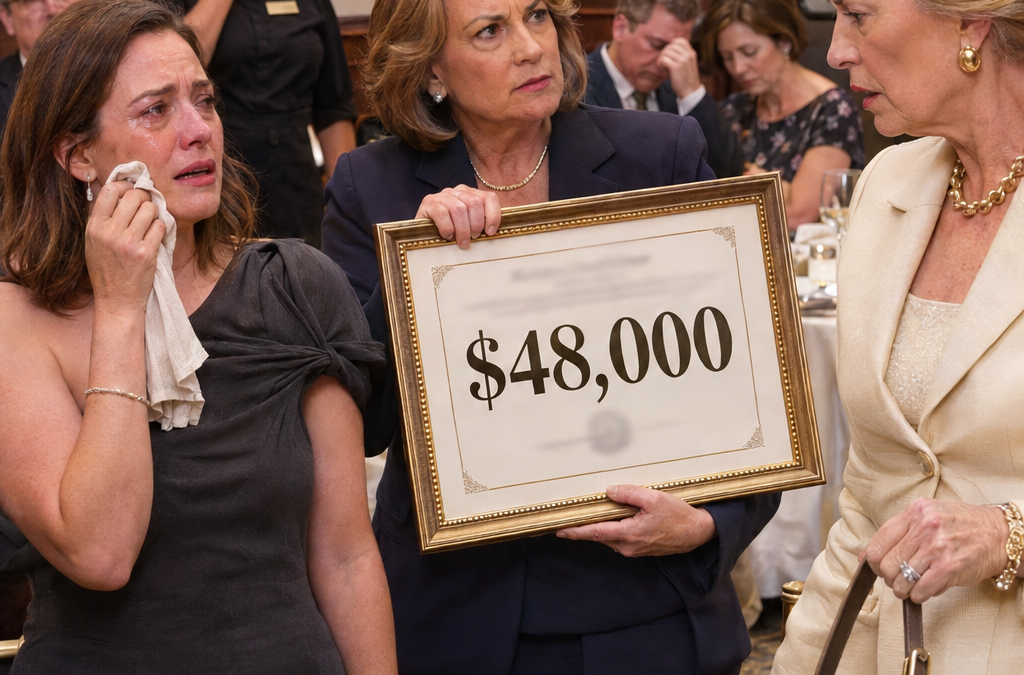
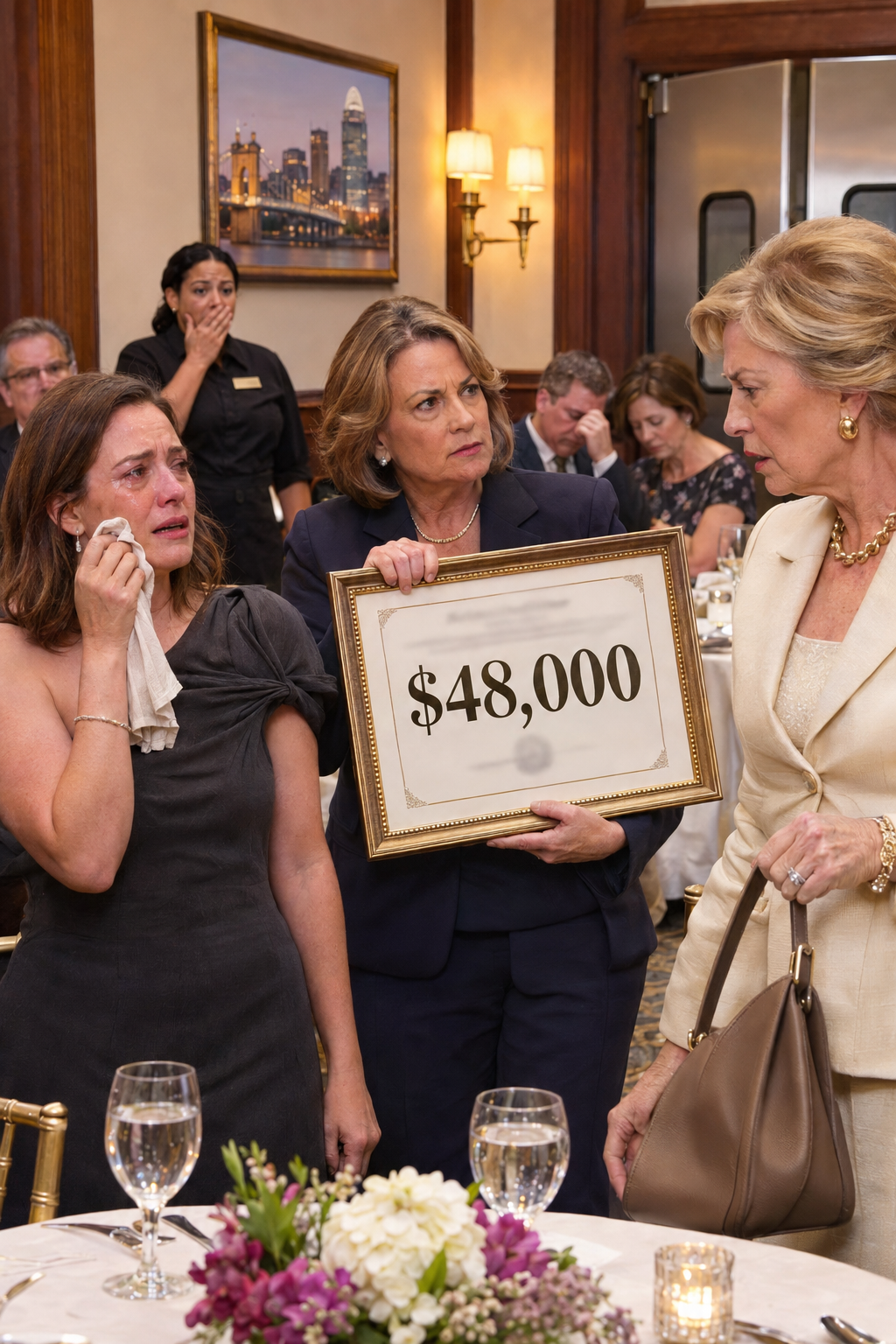
The proposed expansion depended on another $48,000 from me.
Not a payment I owed.
Not a promise I needed permission to withdraw.
“I’m declining the additional gift,” I said.
Marsha opened a fresh page in her notebook.
“Would you like me to record those exact words?”
“Yes. Declining, not postponing.”
She wrote, then read the sentence back to me.
I watched her add the date, September 13, 2025.
“Do you want time before we notify anyone?”
“No. Please don’t leave it listed as expected funding.”
She nodded and made another note.
There was no request that I reconsider for the children.
There was no suggestion that dinner obligated me.
I took a drink of water before asking more.
“What happens to the clothing program now?”
“The current program continues within its existing resources.”
“And the expansion?”
“We reassess it without your proposed contribution.”
I asked her to explain the difference in detail.
She described the present collection and distribution work.
Then she described the additional arrangements in Vivian’s proposal.
Those extra activities would not proceed under this budget.
Existing assistance did not depend on approving Celia’s payment.
My completed gift remained restricted to its accepted clothing purpose.
I wanted that distinction written in the follow-up too.
Marsha agreed.
I had spent eighteen months opening damaged coat linings.
I knew how much work preceded a usable donation.
Some needed only buttons and a good cleaning.
Others had torn pockets or sleeves caught inside out.
Rosa had held a child’s sleeve steady for me.
The caregiver had kept the child occupied beside us.
I had stitched the lining without removing the coat.
That work had nothing to do with this proposal.
“I don’t want existing repairs interrupted,” I said.
“Declining this expansion won’t require that,” Marsha answered.
I looked at the acknowledgment leaning against the wall.
Its glass reflected a strip of ceiling light.
“Were you planning to give me that tonight?”
“Yes. For the completed gift and your volunteer work.”
“Vivian said the recognition was meant to stay private.”
“She told me you preferred a quiet acknowledgment.”
“I prefer not making speeches. That’s different.”
Marsha looked toward the folder.
“I need to review the correspondence before saying more.”
I appreciated that she did not fill in the answer.
She asked whether I wanted the frame packed.
“Yes. But I’m not ready to leave yet.”
My dinner was still in the adjoining room.
So were people who had watched Vivian take my bag.
I could not manage either thing at that moment.
A soft knock came from the connecting door.
Rosa opened it just enough to see us.
“Would you like your plate brought in?”
I looked down at the untouched bread beside me.
“Yes, please.”
She asked whether the paperwork should stay undisturbed.
Marsha moved it to her side of the table.
Rosa brought my plate and fresh silverware.
She set them down without looking at the budget.
“Thank you for finding Marsha,” I said.
“You asked for your handbag back,” she answered.
“That should have happened before anything else.”
She checked my water and left us alone.
For several minutes, I ate while Marsha reviewed her notes.
She asked permission before sending a brief internal message.
It would flag the proposal as declined funding.
It would also prevent staff from treating it as approved.
“Does dinner create any obligation I’m missing?” I asked.
“No. The restaurant arrangement is separate from our review.”
“I paid that bill in full.”
“I understand. There’s no additional gift attached to it.”
The $4,200 dinner payment was already completed.
I was not trying to cancel it afterward.
I wanted no confusion about another $48,000.
Marsha said she would keep those items separate.
Then she asked how I wanted future communications handled.
“Directly to me. Not through Adam or Vivian.”
She wrote that down with my preferred contact information.
I asked that nobody arrange a family mediation.
“This meeting is about the program,” I said.
“Yes,” she answered. “That’s what I can address.”
She explained what she could do that evening.
She could preserve records and suspend proposal review.
She could report the confrontation to the board.
She could not announce disciplinary decisions on its behalf.
I had just picked up my fork again.
Another knock came, harder than Rosa’s.
“Claire,” Adam called. “Can I come in?”
I looked at Marsha, then toward the closed door.
“What do you need?”
“I need to explain what you’re looking at.”
“How would you know what we’re looking at?”
There was a pause before his answer.
“Because I helped write that budget.”
Part 4: The Messages On The Table
I set my fork across the plate.
“Let him in,” I told Marsha.
She opened the door and remained beside it.
Adam entered carrying the napkin from his dinner place.
He looked at the folder before looking at me.
“Which part did you write?” I asked.
“Some descriptions. The outreach section.”
“And the payment to Celia?”
“That was part of what we were putting together.”
He pulled out a chair.
“May I sit?”
I nodded toward the place opposite me.
He laid the napkin beside his elbow.
Marsha sat with the folder still in front of her.
“Were you authorized to represent Claire?” she asked.
“I’m her husband.”
“Did she authorize you to propose funding from her?”
Adam looked at me.
“We had discussed helping the program expand.”
“We discussed reviewing a proposal,” I said.
“That isn’t the same as approving one.”
“Nobody said you had already sent the money.”
“Your mother said I authorized the expansion tonight.”
He moved his napkin an inch across the table.
“She got ahead of herself.”
“She carried my handbag toward the service door.”
“I know. That shouldn’t have happened.”
“You stayed in your chair.”
He pressed his lips together and looked away.
I waited, but there was no answer after that.
Marsha asked whether she should open the organizational correspondence.
I said yes, if it concerned this proposal.
“I don’t want unrelated private messages passed around.”
“These came to our work account,” she said.
“I’ll keep the review limited to relevant communications.”
She opened her computer and located the email chain.
She read the dates and participants before the contents.
Adam had worked on the budget sent by Vivian.
His messages discussed wording, outreach, and the proposed consultant line.
One attachment contained the same $18,000 payment.
Another message addressed how my gift should be acknowledged.
Marsha turned the screen toward me.
I leaned forward far enough to read it myself.
Adam had said I wanted anonymous donor credit.
He had also described me as preferring no public involvement.
Vivian and Celia would handle the public-facing fundraising work.
I read those sentences twice.
They were not about avoiding a speech that evening.
“Where did I tell you this?” I asked.
“You’ve always hated attention.”
“Where did I tell you to make me anonymous?”
He rubbed a thumb over the folded napkin.
“I thought you would be more comfortable.”
“Then you could have asked.”
“I didn’t think it would become an issue.”
“You put Celia forward using an answer I never gave.”
Marsha turned the computer back toward herself.
She said she would preserve the chain with the proposal.
The board needed the actual messages, not anyone’s recollection.
I asked for copies of the relevant exchange.
She agreed to send them directly to me.
Adam leaned toward the folder.
“Celia could have done the work.”
“That isn’t the question,” I said.
“She knows how to make calls and organize people.”
“Then she could submit qualifications through an ordinary process.”
“She wasn’t asking for something for nothing.”
“I wasn’t given a chance to ask anything.”
He started describing her availability and possible duties.
I let him finish the first sentence.
Then I pushed my plate aside.
“Stop explaining your girlfriend’s proposed job to me.”
He looked at Marsha.
She did not take over the conversation for him.
“Tell me why you said I wanted anonymous credit.”
“I thought keeping the family side separate would help.”
I glanced toward the door.
“Your mother introduced Celia as the family representative.”
Adam unfolded his napkin completely.
He smoothed it with both hands.
Neither of us said anything for several seconds.
Outside, chairs scraped as guests began preparing to leave.
I could hear silverware being gathered onto a tray.
Then Vivian appeared in the doorway.
“There you are,” she said to Adam.
Marsha stood before Vivian could reach the folder.
“We’re reviewing organizational records.”
“I should be included. I submitted the proposal.”
“You can answer questions about it,” Marsha said.
Vivian looked at my dinner plate.
“Are you planning to sit in here all night?”
“I’m finishing the meeting I came to have.”
“You could have done that without this scene.”
I put my used napkin beside the plate.
“You told staff to take me through the service door.”
“You were upsetting people.”
“I asked you to return my handbag.”
Marsha moved the folder farther from the table’s edge.
“Claire was entitled to remain here,” she said.
“Restaurant staff were not authorized to remove her for you.”
Vivian looked past her toward the framed acknowledgment.
“Now everyone thinks I lied about the donation.”
“The donor record will identify the person who made it.”
“I raised the family’s involvement in this program.”
Marsha did not argue about how many introductions Vivian made.
She returned to the messages and proposal.
“Did Claire tell you to submit this consultant payment?”
Vivian said we had discussed expanding assistance.
Marsha asked the same question again.
Vivian did not give a direct answer.
I stood and reached for my handbag.
The strap had twisted around its fitting.
I straightened it before putting it over my shoulder.
“Please don’t use my name for future solicitations.”
Marsha wrote my request in her notebook.
“I also want the completed gift correctly credited.”
“It will be,” she said.
“And no proposals described as having my approval.”
“We’ll require direct authorization from you.”
Vivian watched the pen move across the paper.
“What are you going to tell the board?”
“The conduct I witnessed and the records we have.”
Marsha explained that Vivian could provide her account too.
The board would review her volunteer fundraising role.
It would also review the inaccurate statements about my intentions.
She would not decide that alone at a restaurant.
I called for a ride while Adam stood beside me.
“Let’s go home together,” he said.
“I’m leaving separately.”
Rosa came when Marsha asked for help with the frame.
They offered to carry it to the entrance.
I followed them through the main hall.
Nobody directed me toward the kitchen this time.
At the host stand, Vivian caught up with us.
She lowered her voice and touched my sleeve.
“Meet me privately before the board does anything.”
Part 5: The Meeting Without A Check
I moved my sleeve out of her fingers.
“No. Program business can go through Marsha.”
Vivian glanced toward Rosa, who remained beside the frame.
“We don’t need an audience for a family conversation.”
“This started in front of your dinner guests.”
“I’m trying to get it settled.”
“I’m not changing my account of what happened.”
My ride arrived before she answered.
Marsha helped place the wrapped frame beside me.
Rosa checked that I had my handbag.
I thanked them and closed the car door.
At home, I leaned the acknowledgment against the bedroom wall.
I checked the handbag fitting under the bedside lamp.
The leather had creased, but the stitching held.
My brass thimble was still in its inside pocket.
I set it beside the lamp and washed my face.
Adam arrived while I was putting away my earrings.
He stopped in the bedroom doorway.
“Mom knows she shouldn’t have touched your bag.”
“Did she tell you that?”
“I told her.”
I closed the little jewelry box.
He said the evening had become more upsetting than expected.
I asked what he had expected.
“A discussion. Maybe some questions about the plan.”
“Before or after Celia became the family representative?”
He loosened his collar and looked at the frame.
“I didn’t choose everything Mom said.”
“You chose what you wrote in those emails.”
He sat on the edge of the bed.
I remained beside the dresser.
“Are you ending your relationship with Celia?” I asked.
He looked down at his shoes.
“I don’t know what I’m doing yet.”
“Then don’t ask me to finance what you planned.”
He slept elsewhere in the house that night.
The next morning, I gathered my financial records.
I did not empty accounts or move shared money.
I put statements, inheritance documents, and receipts into folders.
Then I made an appointment for independent legal advice.
Marsha sent the promised emails directly to me.
I saved the files without sending them to relatives.
I also saved the restaurant’s paid receipt.
The $4,200 dinner had no unpaid balance.
Nobody needed to cancel a reservation or cover a shortage.
The proposed consulting work had never been contracted.
There was no consultant invoice waiting to become my problem.
I listed those facts on a separate sheet.
It helped me answer questions without adding guesses.
A few relatives called about the restaurant scene.
One described it as confusion over seating.
“No,” I said. “Vivian ordered staff to remove me.”
I did not send them the nonprofit’s budget.
They had not been asked to review organizational records.
I kept the conversation to what they had witnessed.
Vivian called twice about a private meeting.
I answered her first message in writing.
“I won’t discuss changing my statement or my gift decision.”
After that, I let Marsha handle program communication.
On September 18, 2025, the board reviewed the matter.
I supplied a written account and answered its questions.
I included Vivian’s exact instruction to the restaurant staff.
“Take her out through the service door.”
I described asking for the return of my handbag.
I described Adam remaining seated until the later budget discussion.
Rosa provided her own account of what she witnessed.
She also confirmed arranging the dinner with me.
She knew who had paid the restaurant.
She did not speculate about anyone’s marriage or intentions.
Marsha supplied the budget and relevant organizational emails.
Vivian had an opportunity to give her explanation.
I was not included in the board’s private deliberations.
Marsha sent the decisions afterward in writing.
Vivian was removed from her volunteer fundraising role.
She could no longer act as the organization’s fundraising representative.
The donor records would correctly identify my completed gift.
Future communication about my support would come directly to me.
No consultant appointment would be made under the pending proposal.
Celia would receive no contract or payment from it.
She was not being dismissed from an existing job.
There had never been an approved appointment to terminate.
The proposed expansion would not proceed on that budget.
The smaller clothing program would continue with available resources.
I read that paragraph before reading the rest again.
Then I printed the notice for my file.
I did not post it or send it around.
Vivian called after receiving the board’s decision.
“You could have told them we resolved this,” she said.
“We didn’t.”
“You’ve taken away something important to me.”
“I answered their questions.”
She said Adam was having a terrible week.
I told her he could speak to me himself.
Then I ended the call.
At my legal appointment, I put the folders in order.
The lawyer asked where the inherited money had originated.
She asked how it had been held since receiving it.
The remaining funds were in my separately titled account.
I had records tracing the inheritance into that account.
The charitable gift and dinner payment were documented withdrawals.
I also brought statements for shared accounts and property.
I did not assume that separate inheritance settled everything else.
The lawyer explained what needed review under Ohio law.
We discussed financial disclosures and the records still required.
We also discussed equipment I used for paid alterations.
Several customer garments remained in the house with my machines.
I needed access without turning collection into another confrontation.
We began arranging that through written communication.
The lawyer did not promise a result because I was upset.
She explained the process and asked practical questions.
Could I maintain my appointments elsewhere?
Did I have copies of current orders?
Which expenses belonged to my business?
I wrote the answers on the back of my list.
Then I began looking for somewhere to live and sew.
I found a modest apartment and a small workroom.
The workroom had sufficient outlets and a lockable door.
I measured the longest wall for my cutting table.
The rent fit the income from my current orders.
I did not count on new customers arriving immediately.
When I told Adam, he stood at the kitchen counter.
“We can’t keep two households going indefinitely,” he said.
“Our lawyers can address the finances.”
“You still have money.”
“I’m getting advice about what belongs to each of us.”
He asked whether I expected him to pay for everything.
I said lawful responsibilities could be handled in the agreement.
I would not settle them under pressure in the kitchen.
He turned his phone facedown and watched me close my folder.
“After you’ve had some time, will you come home?”
Part 6: The Work I Accepted
“No,” I said.
He looked at the folder beneath my arm.
“Not even so we can talk?”
“We can arrange what needs arranging without living together.”
He pulled out a kitchen chair but did not sit.
I waited while he looked toward the hallway.
“I know the dinner was wrong,” he said.
“It wasn’t only the dinner.”
“I said I should have stopped her.”
“You also helped prepare that budget without telling me.”
He started to explain Celia’s proposed work again.
I picked up my handbag from the counter.
“I’ve read the messages. I’m not discussing her qualifications.”
I had expected to say more when this conversation came.
Instead, I checked that I had my car keys.
Then I left for an appointment at the workroom.
We arranged a time to collect my belongings.
The list went through the channels our lawyers established.
I did not arrive intending to decide disputed property myself.
I brought help for lifting the heavy equipment.
Adam had cleared the hallway before we arrived.
My sewing machines were still on their work surfaces.
Customer garments hung in protective covers beside the closet.
I checked each one against my appointment book.
A pair of trousers needed the original hem preserved.
A jacket had chalk marks at both sleeve cuffs.
One coat pocket was turned out, ready for replacement.
I packed those orders before taking decorative things.
Their owners were waiting for finished work, not an explanation.
Adam stood nearby while I unplugged the larger machine.
“Are all the sewing things going?” he asked.
“The equipment on the agreed list is.”
He checked the paper and moved aside.
I packed scissors in their sleeves and secured the needles.
Thread went into boxes with the lids taped shut.
I checked the drawer under the cutting table twice.
My brass thimble stayed in my handbag during the move.
I did not want it loose in a carton.
We left disputed household items for the written agreement.
I made a note instead of arguing in the doorway.
There were enough other tasks waiting that afternoon.
At the workroom, we positioned the table along the wall.
I plugged in the machine and checked the light.
Then I tested the foot pedal on scrap fabric.
The stitch length needed adjusting after the move.
I fixed it before touching a customer’s garment.
My apartment had room for a small kitchen table.
I used it for meals, bills, and the occasional folded towel.
I kept customer orders at the workroom whenever possible.
That made locking up at night a real stopping point.
Some evenings, I still checked tomorrow’s appointments before bed.
But I did not sew until midnight to prove availability.
I had rent and expenses to cover.
I also had a calendar I needed to follow.
Marsha sent confirmation that the donor information was corrected.
My completed $48,000 gift remained attributed to me.
It had been received on March 9, 2024.
The program would continue honoring its clothing restriction.
There was no request to replace the declined expansion gift.
I read the update over lunch at my worktable.
Then I put it in the same file as the acknowledgment.
The frame stayed wrapped until the room was organized.
I eventually hung it near my desk.
It was not where customers would see it first.
My price list and appointment calendar were nearer the door.
When Marsha asked about future contact, I answered directly.
“Program updates are fine. Please leave family messages out.”
She confirmed that instruction without asking for details.
Rosa called about a coat of her own.
She wanted the sleeves shortened and the lining checked.
“Tell me what you charge,” she said.
“I’ll need to see the sleeves first.”
“And don’t put me ahead of paying customers.”
“You would be a paying customer.”
She laughed and accepted the appointment I offered.
When she arrived, she hung her handbag herself.
I gave her space beside the mirror.
She slipped on the coat while I checked its construction.
The sleeves needed opening at the lining, then reattaching.
I explained the work before giving her the price.
She agreed, and I wrote it on the order.
While I pinned, she asked whether I had settled in.
“The curtains still need hemming,” I told her.
“At your apartment?”
“Yes. They’re behind everyone else’s work.”
She smiled and held still for the second sleeve.
We did not spend the appointment discussing Vivian.
Rosa did not offer reports from the restaurant.
I asked her to reach forward to check movement.
She did, and I moved one pin slightly.
We chose a collection date that fit my schedule.
When she returned, the sleeves fell where she wanted.
She checked both cuffs, then paid the invoice.
“See you again,” she said, taking the coat.
It was an ordinary customer visit, and I liked that.
The divorce required months of records and decisions.
Adam and I exchanged information through our lawyers.
I answered questions about accounts instead of guessing.
The remaining inherited funds were traced through the documents.
They stayed mine under the final agreement.
Shared assets were addressed separately through the marital accounting.
I read the proposed terms before signing them.
When I did not understand something, I asked.
There were corrections and more papers to review.
I kept a folder at home and copies secured elsewhere.
On January 16, 2026, our divorce became final.
I put the final documents into a labeled file.
Then I went to the workroom for an afternoon fitting.
A customer brought a jacket for a family gathering.
She apologized because it had wrinkled in the car.
“That won’t affect the measuring,” I told her.
I pointed to a clear place for her handbag.
She set it down and stepped toward the mirror.
I checked one sleeve, then the other.
She asked whether I could finish before our agreed date.
I looked at the calendar beside my desk.
“I can have it ready on the date we discussed.”
She accepted that and watched me mark the cuff.
After she left, I completed the written work order.
Outside, traffic moved past the workroom window.
The acknowledgment hung above a low filing cabinet.
The calendar beside it held appointments and collection dates.
Vivian had not returned to the nonprofit’s fundraising role.
The program continued without the proposed expansion.
My completed gift remained credited to me.
There was nothing further I needed to sign for it.
I placed the jacket beneath the task lamp.
Its lining needed a short section closed by hand.
I selected matching thread and cut a manageable length.
Then I smoothed the sleeve across my worktable.
My brass thimble sat beside the sewing machine.
I put it on and began the paid repair.
You Might Also Enjoy




