My Daughter-In-Law Told Me My Land Sale Money Belonged To Her — Then I Got My Shop Shirt

Chapter 1: The Offer at Christmas
My daughter-in-law brought a buyer’s offer to Christmas Eve dinner and told me the money was hers, two weeks after my husband’s funeral. My son said she deserved credit for handling things while I grieved. I went upstairs for my shop shirt because neither of them realized I owned the shop and that land.
Dennis’s chair was beside mine.
I had left it there.
The potatoes were in the same dish I always used. There was ham on the platter, and the tree lights reflected in the dining-room window.
I had managed to get dinner onto the table.
That had seemed enough to ask of myself.
Celia waited until everyone had started eating. Then she moved an envelope beside her plate and put her hand over it.
“I found somebody interested in the lot.”
I was reaching for the salt.
My hand stopped over the table.
“What lot?”
“The one beside the shop, Ruth.”
As though there might have been confusion.
There wasn’t.
I owned a small-engine repair shop in Dayton, Ohio, and the neighboring vacant lot. The offer she had brought concerned the lot alone.
Neither property belonged to my son.
Neither belonged to his wife.
Celia looked around the table before continuing, giving everyone time to understand that she had something important to announce.
“The offer is $115,000.”
Martin leaned back in his chair beside her.
A relative stopped cutting the ham.
I put the salt down without using it.
“When did you talk to somebody about my property?”
“After the funeral.”
She said it gently, but her hand stayed on the envelope.
“You’ve had enough to deal with.”
I looked toward Martin.
He nodded.
Not at me.
At her.
I was 74, and I still went to work. My husband had died at 76, and some mornings I reached for his coffee cup before remembering.
Those things were both true.
Neither made me unable to answer a question about land I owned.
“What exactly have you told this person?”
“That we could discuss a family sale.”
“Without discussing it with me?”
“We’re discussing it now.”
She picked up her fork.
Apparently, that settled the order of things.
I had spent thirty-five years repairing small engines. I bought the shop twelve years before that dinner and the neighboring lot eight years before it, using what I earned. Dennis handled plenty at home and sometimes answered the shop telephone when my hands were dirty. People liked him. Somewhere along the way, my family began calling it his business and describing me as helping. I corrected that when I heard it. Martin apparently thought I was asking for credit, not explaining who owned the place.
I had changed out of my work clothes before our relatives arrived.
I wanted a family meal.
Not a meeting.
At the grocery store, I had almost bought Dennis’s favorite crackers. Then I had stood in the aisle holding the box until I remembered why nobody would be waiting for them.
That was what grieving looked like in my house.
It did not look like forgetting my business.
Celia began describing the vacation trailer she wanted.
“We could actually go places,” she said.
Martin smiled at that.
“And finish paying off the truck.”
She said it while looking at him, as though they were choosing how to spend money already in their account.
I pulled my napkin across my knees.
“You mean you intend to use the sale money.”
“Well, yes.”
“All of it?”
“We’ve talked about what makes sense.”
“I haven’t.”
She lowered her fork.
A relative glanced toward Dennis’s empty chair.
I wished they hadn’t.
For the whole afternoon, I had been trying not to watch that chair myself.
“We know this is difficult,” Celia said.
“What is difficult?”
“Making decisions right now.”
“I make decisions at the shop every working day.”
“That’s different.”
“How?”
She looked at Martin.
He wiped his mouth before speaking.
“Mom, she’s trying to help.”
“I haven’t asked for this help.”
“She found somebody willing to pay that much.”
“I heard the amount.”
He moved his glass away from his plate, buying himself a little room on the table.
“She deserves something for doing the work.”
That was the moment I understood he wasn’t merely surprised by her announcement.
He had already agreed with it.
“Something,” I repeated.
Celia’s mouth tightened.
“We’re family.”
I looked at the envelope beneath her hand. She had brought an offer to my dinner table without asking whether I wanted to sell.
Then she had brought plans for spending it.
“I haven’t said the lot is for sale.”
“You don’t do much with it.”
“I use it for the shop.”
“There’s plenty of room.”
“That isn’t the question.”
Martin leaned forward.
“She’s been handling things while you grieve.”
I pressed my knees together beneath the table.
The relatives had stopped eating without quite putting their forks down. Someone reached for a glass, then left it where it was.
“What things did I ask her to handle?”
He didn’t answer that.
Instead, he said my name the way he used to say it when he thought I was being stubborn about taking a coat.
“Mom.”
“No. Tell me.”
Celia straightened the envelope against the edge of her placemat.
“We weren’t trying to upset Christmas.”
“You brought this to Christmas.”
“We thought everyone being together would make it easier.”
For whom, I wondered.
But I didn’t ask.
I wanted a plain answer before she moved us into another explanation about my grief.
“Did I ever tell either of you to find a buyer?”
Martin rubbed the back of his neck.
“No, but—”
Celia interrupted.
“He knows you need less responsibility.”
I set my napkin beside my plate.
The potatoes had gone cold on it.
“I know what responsibility I have.”
“You shouldn’t have to keep worrying about everything Dennis handled.”
“Dennis didn’t handle this property.”
“He was always at the shop.”
“Sometimes.”
“He answered when we called.”
“Because I was working.”
Celia let out a breath through her nose. Not quite a laugh.
Martin looked down at his plate.
I waited for him to correct her, or even to ask me what I meant. He knew I repaired engines. He had seen the workbench and the equipment that came through my door.
Apparently, he had never bothered to find out anything beyond that.
I turned toward him.
“Look at me, Martin.”
He did, briefly.
“I did not ask you to sell my lot.”
Before he could answer, Celia leaned across her place setting.
“You only manage the place.”
Chapter 2: The Shirt Upstairs
“I manage my own shop,” I told her.
Celia glanced at Martin, but he kept looking at his plate.
“Dennis isn’t here anymore,” she said. “We need to think about the family.”
I pushed my chair back.
The legs caught against the rug, and I had to move it again before I could stand. That small difficulty made everyone watch me more closely.
I hated that.
I didn’t want help standing.
I wanted them to listen.
“I’ll be back.”
Nobody followed me upstairs.
My work shirt hung beside the clothes I had worn to the funeral. Navy cotton, washed and ready, with the badge pinned where I always wore it.
I took it off the hanger.
For a moment, I stood with the dinner blouse unbuttoned and the shop shirt against my chest.
Dennis had known exactly what I did.
He had never claimed to own the place.
He would answer the telephone when I was cleaning a carburetor or trying to finish a mower before its owner arrived. Then he would call through the doorway and ask whether I could talk.
That was helping me.
It wasn’t employing me.
I buttoned the work shirt.
The badge read “SHOP MANAGER.”
It described a job I did. It did not name the person who owned the building.
I owned it.
I smoothed the shirt over my waistband and went downstairs.
Celia was talking softly to Martin when I reached the dining-room doorway. He saw me before she did.
His eyes went to the shirt.
I stepped back beside my chair and sat long enough to move my dinner plate away from the table’s edge.
Celia turned toward me.
“We can finish talking after everyone eats.”
“You started this in front of everyone.”
“I was trying to make it simple.”
She leaned forward and pointed across my place setting.
“That land money belongs to us.”
I looked at her finger.
Then at her.
“You mean my money?”
“I found the buyer while you sat home grieving.”
I blinked.
There were engine parts on my workbench that I had cleaned after the funeral. There were customers whose calls I had returned because work was familiar when the house wasn’t.
But I wasn’t going to list my working hours to earn permission to own something.
“I worked for that money.”
“Stop making trouble.”
Martin shifted beside her.
I stood again.
This time the chair moved easily.
“Think about that.”
Celia laughed through her nose.
I walked into the adjoining foyer, where the light was brighter and everyone at the table could still see me. My shoes sounded against the wood.
Celia followed.
Martin came to the dining-room doorway.
The relatives stayed seated, their faces turned toward us.
“You don’t need to make this difficult,” Celia said.
“We know you worked there.”
“No. You’re not hearing me.”
I faced the dining room with my badge plainly visible.
“You manage it,” she said.
“I own the shop and the lot.”
Her smile went.
Martin looked at Celia.
Then he looked back at me.
“I bought both places with my engine-repair money.”
He opened his mouth, but I continued.
“Neither one was your father’s, Martin. Neither one was his to leave you.”
Celia took a small step backward.
“Dennis never owned any of it?”
“No.”
I held the edge of my cuff between my fingers and flattened it.
“I bought the shop twelve years ago. I bought the lot eight years ago. Both are in my name.”
“Dad never said—”
“Did you ask him?”
Martin stopped.
I wasn’t going to invent an argument with Dennis to make this easier for my son. There hadn’t been one.
Dennis knew whose earnings paid for those purchases.
He also knew who got called when an engine wouldn’t start.
Celia looked past me toward the stairs.
“Then why does your badge say manager?”
“Because I manage it.”
“But if you own it—”
“I can do both.”
A relative lowered a fork onto a plate.
That little sound carried through the doorway.
Celia glanced toward the table, seeing the same people she had expected to support her.
I kept my voice ordinary.
“I haven’t agreed to sell.”
“The offer is good.”
“I never agreed to sell.”
Martin put his hand against the doorframe.
He looked suddenly tired, but I wasn’t going to change what I said because his dinner had become uncomfortable.
Mine had become uncomfortable when his wife started spending my money.
“The lot isn’t part of Dad’s things?” he asked.
“No.”
“Not something that has to be divided?”
“It belongs to me.”
He nodded once, slowly.
I could see him trying to fit that answer around everything he had assumed.
Celia recovered before he did.
“Well, finding someone still took effort.”
“We’ll discuss what you did after we finish discussing what I did not authorize.”
“I didn’t sign anything for you.”
“I’m glad to hear that.”
She looked at Martin again.
This time he didn’t answer for her.
I had not brought purchase records downstairs. They were kept with my business files, not beside the Christmas dishes.
What I had brought was myself, dressed as the woman who opened that shop and worked in it.
Apparently, that was harder for them to dismiss.
I pointed toward the envelope still sitting beside Celia’s plate.
“That is somebody’s proposal. It isn’t my decision.”
No one moved to pick it up.
I stood in the foyer light while Martin finally let his eyes rest on the words pinned to my shirt.
Then my son looked at my badge instead of his wife.
He swallowed and asked, “Then what are you going to do about our things out there?”
Chapter 3: The Space Behind the Fence
“Your things are still yours,” I told him.
Martin took his hand off the doorframe.
“I know that. I mean where they’re parked.”
Inside the fence on my vacant lot sat their utility trailer and riding mowers.
They had been there for three years.
Free.
I had given them permission because I had space, and because my son had asked. Nobody had moved into a building or paid rent or been promised a permanent place.
They parked their belongings.
I let them.
Until that evening, I hadn’t expected those simple facts to need explaining at Christmas.
Celia folded her arms.
“We can move them around if the buyer needs to see the lot.”
“There is no sale.”
“I heard you.”
“Then stop arranging one.”
Martin stepped into the foyer, leaving room for the relatives to see past him.
“Mom, I wasn’t asking about the buyer.”
“Then what are you asking?”
“Whether this changes the storage.”
“Yes.”
He looked toward Celia.
I could tell that possibility hadn’t occurred to either of them.
They had discussed selling land where they kept their own things without asking what I wanted to do with any of it.
“I’m ending the free arrangement,” I said.
Celia’s arms came down.
“Because we brought you an offer?”
“Because you are treating my permission as something you control.”
“We never said we controlled the lot.”
“You just told me its money belonged to you.”
She pressed her lips together.
I could hear someone move a serving spoon in the dining room. Nobody resumed the meal.
I didn’t want our relatives trapped at the table while we went around the same argument.
So I moved toward the dining-room doorway and put my hand on my chair.
“The food is getting cold. Everyone can finish.”
Martin stayed standing.
“How soon are you talking about?”
“I’ll get local legal guidance before I put anything in writing. You’ll have sixty days to remove the trailer and mowers.”
“Sixty days?”
“Yes.”
I had no intention of locking their belongings inside or sending them away in the middle of dinner to drag equipment through the snow.
I wanted an orderly end.
They would have time to arrange somewhere else.
They would also have a deadline.
Celia picked up the envelope at last.
Not to show it to anyone.
She slid it into her bag.
That told me she understood the offer wasn’t going to settle anything that night.
Martin sat down, though he didn’t pick up his fork.
I brought the potatoes back toward the center of the table.
“Would anyone like these warmed?”
A relative said they were fine.
It was a kind answer, and not true.
I set the dish down anyway.
Celia watched me from across the table.
“You’re making this into a punishment.”
“I’m deciding how my property gets used.”
“After we tried to help.”
“I didn’t ask you to sell it.”
Martin looked at the empty chair beside me, then quickly looked away.
I moved Dennis’s unused place setting farther from the serving dishes.
I couldn’t keep staring at it while explaining the fence.
The lot had always been useful to the shop. It gave me outdoor room when equipment needed to wait, space to move things safely, and somewhere I didn’t have to squeeze around somebody else’s trailer.
I had allowed their storage because there was room.
That didn’t mean there would always be room for it.
Celia pushed a potato across her plate.
“We’ll have to pay somewhere else.”
“I understand.”
“That’s money we weren’t expecting to spend.”
“You’ve had free use for three years.”
“We’re not denying that.”
“Then include it when you describe what I’m doing.”
Martin looked up.
“Can we at least talk about it when everyone isn’t here?”
“We can talk about collecting your things privately.”
“And the rest?”
“The lot isn’t for sale.”
He rubbed his palms against his trousers.
I could see he wanted me to make a concession he could carry home to Celia. Something that would let him say the evening hadn’t ended with her being completely wrong.
I wasn’t going to manufacture one.
After the meal, I carried plates to the kitchen.
A relative offered to help, and I accepted without discussing the property. Water ran into the sink. I scraped food into the trash and laid the serving utensils beside the faucet.
Ordinary motions.
I needed those.
Martin appeared in the kitchen doorway.
“Can we leave the trailer where it is until we find something?”
“You can leave it during the notice period.”
“And get in when we need to?”
“We’ll arrange reasonable collection times. I won’t hold your things.”
He nodded.
Celia stood behind him, her coat folded over her arm.
“You make it sound like we’ve done something to you.”
I rinsed the potato dish.
“You tried to decide what happened to my land.”
“I brought an opportunity.”
“You brought plans for my money.”
She looked at Martin, waiting.
He studied the floor instead.
I dried my hands before turning fully toward them.
“I’ll check how to handle the notice properly. Until then, don’t move anything that belongs to the shop, and don’t bring anything else onto the lot.”
Martin said he understood.
Celia didn’t.
She stood beside him with her coat pulled against her middle, as though I had just changed a deal we had all agreed to.
We hadn’t made a deal.
I had said yes to a favor.
Now I was saying when it would end.
Celia lifted her chin and said, “You told us we could keep them there.”
Chapter 4: The Conversation She Remembered
“I did,” I said.
Celia looked relieved before I finished.
“I didn’t say forever.”
Martin remained in the kitchen doorway. Celia stepped beside him, keeping the coat against her chest.
“You didn’t give us an expiration.”
“No.”
“So how were we supposed to know?”
“By me telling you when the permission ends.”
She turned to Martin.
He looked at the damp dish towel in my hands.
I hung it over the oven handle so I wouldn’t keep twisting it.
The relatives were gathering their things in the adjoining rooms. Nobody needed another public argument over a favor I had done for my son.
I lowered my voice.
“We can discuss the arrangement as it was. Not as you wish it had been.”
Celia drew her shoulders back.
“We put our things there because you said it was fine.”
“It was fine.”
“And now it isn’t.”
“Correct.”
Martin finally spoke.
“Mom, we didn’t think you’d need that space.”
“You didn’t ask.”
“You hadn’t mentioned needing it.”
“I don’t have to prove an emergency before I stop lending something.”
He looked at me then.
Really looked.
I could see him hearing the word lending and trying to reconcile it with the way he had talked about the lot at dinner.
I had not noticed how far those assumptions had gone.
When he first asked about storing the trailer, he had stood near the shop gate, pointing toward an open stretch inside the fence.
“Would it be all right there?”
That was the question.
Not whether I would give him land.
Not whether he could sell it.
I had said he could use the space while it worked for me.
The mowers followed with permission.
There had been no rent, no purchase, and no promise that my business would arrange itself around their belongings indefinitely.
I reminded him of that conversation.
He nodded reluctantly.
“That’s how it started.”
“That’s how it stayed.”
Celia set her coat over her arm.
“We’ve taken care of what we keep there.”
“I haven’t said otherwise.”
“We haven’t made trouble.”
“I haven’t accused you of damaging anything.”
“Then why does it have to end?”
“Because I’m choosing to end it.”
She stared at me.
Apparently, she had expected a complaint she could fix, or an accusation she could deny.
There wasn’t one.
The free storage was mine to offer and mine to stop offering.
I walked back into the dining room to collect the glasses. Martin followed, taking a few from the table without asking.
I let him.
He carried them to the kitchen while Celia remained by the doorway.
The small act reminded me of him helping clean up before he married. He used to ask where I wanted things, not tell me what I ought to do with them.
I put the glasses beside the sink.
“Did you ever pay me rent for that fenced space?”
“No,” Martin said.
“Did I tell you that you owned any of it?”
“No.”
Celia started to speak.
I kept looking at him.
“Did I tell you it would be yours after your father died?”
“No, Mom.”
The answer was clear enough that she stopped.
I wasn’t asking to embarrass him.
I needed him to stop using silence as a way to support whichever explanation his wife offered next.
“Then please don’t let this become a different story after you leave.”
He put both hands on the edge of the counter.
“I’m not saying you promised us the land.”
“You supported a claim to its money.”
“I know.”
He said it quietly.
Celia looked toward the dining room, where the envelope had been.
“We understood the family would benefit.”
“The family has benefited from my work.”
Neither answered.
I didn’t list meals, gifts, or favors. I wasn’t opening every drawer of our history to justify keeping property I had bought.
The storage was enough.
Three years without rent was a fact all of us knew.
When our relatives were ready to leave, I went to the front door. I accepted hugs and returned serving dishes that had come with food.
Nobody offered an opinion about the lot.
I was grateful.
I did not want a family vote.
After the door closed again, Martin and Celia remained in the foyer with their coats on.
Celia glanced at my badge.
“Do you have something showing all this?”
“Yes.”
“Then why didn’t you just say so?”
“I’ve been telling you who owns it.”
“You know what I mean.”
“I know you thought managing meant I didn’t own anything.”
Martin adjusted his collar.
“Mom, we should have asked.”
“Yes.”
He seemed to expect more after that, but I didn’t soften it.
There were papers in my files confirming the purchases. There were old messages about their storage. Nothing depended on my remembering the dinner differently from them.
I would get what I needed.
I would handle the notice correctly.
But tonight, I wasn’t fetching files to earn the right to answer a proposal I hadn’t requested.
Celia moved her bag higher on her shoulder.
“We still need to respond.”
“I’ve responded.”
“To us.”
“Yes.”
“He won’t want to be left wondering.”
“The interested buyer?”
She nodded.
“Then I’ll speak to him.”
Martin looked relieved.
Celia didn’t.
Her fingers tightened around the bag strap.
“I can tell him what you said.”
“I’ll tell him myself.”
For the first time that evening, she hesitated before answering.
Then she said, “The buyer is expecting an answer.”

Chapter 5: The Call I Made Myself
“Then give me his contact information,” I said.
Celia glanced at Martin before opening her bag.
She did not hand me the offer as proof of anything. She gave me the information I needed to reach the interested buyer.
I wrote it down.
Martin waited beside the front door while I checked that I had it right.
“Don’t call him upset,” Celia said.
“I’ll call him as the owner.”
She put her bag over her shoulder.
There wasn’t much left to say that night.
After they left, I returned to the dining room. Dennis’s chair was still beside mine, and my napkin lay where I had set it down before going upstairs.
I collected it.
I put the remaining food away.
Then I sat at the kitchen table with the buyer’s contact information beneath my hand.
I didn’t call from the middle of a family argument.
I wanted to ask plain questions and hear the answers without Celia explaining them for him.
When I reached him, I gave my name and identified the vacant lot beside my repair shop.
“Yes,” he said. “Celia told me about the family.”
“What did she tell you about the property?”
“That she could arrange a family sale.”
I moved the paper closer.
Not because there was anything else written there.
I wanted something steady in front of me.
“Did she tell you that she owned it?”
“No. She said she could get the family together on it.”
“Did she tell you I had agreed to sell?”
“She said she thought it would be workable.”
That sounded more like Celia.
She hadn’t forged my name or claimed to be me. She had offered confidence where she had no permission, expecting the pressure of a buyer and a family dinner to finish the job.
“What did you understand needed to happen?” I asked.
“That the owner would agree and we’d go from there.”
“Who did you understand the owner to be?”
“I hadn’t confirmed that yet.”
I laid my free hand flat on the table.
There it was.
A person interested in buying land.
A price he was willing to offer.
Nothing more.
“Both properties are mine,” I said. “The shop and the neighboring lot. The offer you discussed is for the lot alone, correct?”
“Correct.”
“And you haven’t received an acceptance from me.”
“No.”
“Or permission from me for Celia to sell it.”
“No.”
His voice had become more careful.
I appreciated that.
He wasn’t trying to insist that a daughter-in-law’s confidence counted as an owner’s agreement.
“Celia approached me after the funeral,” he said.
“I understand.”
“She thought the family might want to sell.”
“She didn’t ask me.”
There was a pause.
“I’m sorry for the misunderstanding.”
“I’m calling to clear it up.”
He asked whether I wanted time to consider the offer.
Before answering, I asked him to walk me through what had actually happened.
Not every word.
Just the arrangement he believed existed.
He described interest in the vacant lot, a conversation with Celia, and the amount he was prepared to offer. She had said she could arrange a family sale.
He had not heard from me.
He had not received anything signed by me.
He had not purchased anything.
I wrote down those points after he said them.
My handwriting looked ordinary.
That pleased me more than it should have.
At dinner, Celia had made the transaction sound far enough along that refusing it would create a problem.
The buyer didn’t describe it that way.
He described an offer awaiting the owner’s decision.
“Have you spent anything based on an agreement from me?” I asked.
“There hasn’t been an agreement from you.”
“Thank you.”
“I’m interested, but I understand that.”
I looked toward the kitchen doorway.
Dennis used to lean there while I talked on the telephone, waiting to ask whether I wanted tea.
I had to stop myself from expecting to see him.
The buyer was still on the line.
I turned back to the paper.
“I’ll need you to understand that neither Martin nor Celia speaks for me about my real estate.”
“All right.”
“I run the business. I decide about the property.”
“Yes.”
I didn’t need to tell him how long I had repaired engines or what my badge said.
He had asked who owned the land.
I had answered.
That should have been enough at dinner, too.
After the call, before settling the final question, I checked my notes against what he had told me. I wanted no dramatic version of his words when I spoke to Martin.
Celia had overstated her ability to arrange matters.
The buyer had not claimed an accepted sale.
Those were different things.
I would keep them different.
Martin called while I was still at the kitchen table, after I had arranged to finish speaking with the buyer.
“Did you get hold of him?”
“Yes.”
“What did he say?”
“He understood Celia could arrange a family sale.”
Martin exhaled.
“I think she thought she could.”
“She never asked the owner.”
“I know.”
“He confirmed there’s no acceptance from me.”
“I didn’t think there was.”
“You let dinner proceed as though the money was waiting to be divided.”
He didn’t answer.
I let him sit with that instead of explaining it again.
Then I told him I would finish the conversation myself.
“Should Celia call him?” he asked.
“No.”
“Okay.”
I returned to my notes before speaking with the buyer again. I hadn’t called to negotiate or to see whether he might improve the amount.
I called because my name needed to be attached to my answer.
When we resumed the conversation, he skipped the family explanation and asked me directly, “Are you willing to sell?”
Chapter 6: The Answer Was Mine
“No,” I said.
The buyer waited, apparently expecting a condition.
I gave him none.
“I’m keeping the lot for my shop.”
“All right.”
“The offer isn’t accepted.”
“I understand.”
I sat back in the kitchen chair.
There was no argument about my age.
No suggestion that grief had made me confused.
He had asked whether I was willing to sell, and when I said no, he treated it as an answer.
That was all I had wanted.
“If your plans ever change—” he began.
“They haven’t changed. If you have any further proposals about either property, they need to come directly to me.”
“Not through Celia.”
“Correct.”
“And Martin?”
“Not through him, either.”
He agreed.
I asked him to confirm in a message that he understood there was no accepted sale and that neither of them was authorized to speak for me.
He said he would.
When the message arrived, I read it at the table and saved it with my notes. I didn’t forward it to the family or make an announcement.
I kept it.
The next time someone described the lot as already sold, I would have something more useful than an argument.
I took my empty cup to the sink.
Then I went to the shop.
The gate opened as it always had. Their utility trailer and riding mowers sat inside the fence, occupying space I had allowed them to use.
I stood just inside the lot and looked at the route between the shop and the open yard.
I could see where equipment could wait without crowding the doorway.
I could also see how much of my own arrangement I had worked around without thinking about it.
I wasn’t planning a development.
I wasn’t replacing their belongings with some secret project.
I wanted the lot to remain useful outdoor room for the business I still operated.
That was reason enough.
Inside, I hung my coat and turned on the lights over the work area.
There was work waiting.
I checked the equipment already in the shop before touching anything else. Familiar motions settled my attention better than standing in the kitchen replaying Celia’s voice.
I could work.
I could grieve.
I could refuse to sell.
None of those required the others to stop.
Martin called while I was at the workbench.
I wiped my fingers before answering.
“Did you decide anything with the buyer?”
“I told him no.”
“Completely?”
“Yes.”
“He’s not waiting for another conversation?”
“He understands I’m not selling.”
Martin was quiet.
I could hear Celia nearby, though I couldn’t make out her words.
Then he said, “She wants to know whether the amount bothered you.”
“The ownership bothered me.”
“I mean whether you thought it wasn’t enough.”
“I didn’t invite an offer.”
He repeated that away from the telephone.
Celia’s voice became clearer.
“We weren’t trying to cheat her.”
I closed the drawer I had opened.
“Put me where you can both hear me.”
Martin did.
I kept the telephone on the bench so I could stand without holding it against my ear.
“I spoke to the buyer myself. He understands there is no accepted sale.”
Celia answered quickly.
“I never said you had signed.”
“You said the money belonged to you.”
“I was talking about what we hoped to do.”
“You announced it at dinner.”
“Because I thought you’d see the benefit.”
“I see the benefit to you.”
Martin interrupted before she could answer.
“Mom, we understand you’re not selling.”
“Then there’s nothing more to arrange with him.”
Celia made a small sound of frustration.
It wasn’t the same argument now.
She had stopped speaking as though the sale price was hers by right.
Now she wanted the work of finding a buyer to count as something I owed her.
I could hear her choosing the next approach.
I didn’t help her make it.
“There’s something else,” I said.
Martin waited.
“I have the buyer’s confirmation that there’s no agreement from me and that you don’t speak for me.”
“You asked for that in writing?” Celia said.
“Yes.”
“Why?”
“Because I want the facts clear.”
“We’re your family.”
“Yes.”
I left the answer there.
Being family was why they had been eating at my table. It was why their trailer had been on my lot without charge.
It did not turn an unwanted transaction into a favor.
I looked at the shop doorway, where the light from outside made a pale rectangle on the floor.
I had bought this place with work.
Not with an inheritance from Dennis.
Not with a promise to pass its value to Martin whenever Celia found a use for it.
“Do you need us to talk to the buyer?” Martin asked.
“No. That conversation is finished.”
“Okay.”
Celia wasn’t finished.
“We spent time on this.”
I picked up the rag I had set beside the telephone and folded it.
“I didn’t ask you to.”
“That doesn’t mean it wasn’t work.”
“I didn’t say you made no effort.”
“Then you understand.”
“I understand you did something without asking me.”
She paused.
I could hear Martin say her name softly.
Celia ignored him and asked, “What about the work I did finding him?”
Chapter 7: The Fee Nobody Offered
“I never offered you a fee,” I said.
Celia answered before Martin could.
“People get paid for bringing buyers.”
“When somebody hires them.”
“We’re not strangers.”
“No. You’re my daughter-in-law.”
“And I tried to do something useful.”
“You tried to sell land I wasn’t offering.”
The telephone sat on the workbench between my rag and the parts I had been checking. I moved it farther from the edge.
I didn’t want to knock it down while she talked.
Martin said, “Maybe we should leave this for now.”
Celia didn’t take the suggestion.
“I’m not asking for the whole amount anymore.”
I stopped moving the rag.
“Anymore?”
“You know what I mean.”
“Yes. I do.”
She had switched from claiming the proceeds to seeking compensation.
That was a smaller demand.
It was still a demand for money I hadn’t agreed to pay.
I asked Martin a question before the conversation could become another discussion of intentions.
“Did I ask either of you to find a buyer?”
“No.”
“Did I offer payment?”
“No.”
“Did I tell you the lot was for sale?”
“No, Mom.”
Celia said his name.
He didn’t change his answer.
For the first time, he had contradicted her without waiting for me to produce another fact.
I noticed.
I wasn’t ready to praise him for answering questions truthfully, but I noticed.
“Then there’s no fee to settle,” I said.
Celia went quiet.
I heard movement near their telephone, then Martin asking whether I was still there.
“I’m here.”
“She thinks you’re dismissing the time she put in.”
“I’m refusing a bill for work I didn’t order.”
He let out a slow breath.
“All right.”
I picked up the telephone and moved away from the workbench. I wanted to finish this before starting anything that required both hands.
“Finding an interested person does not give either of you authority over my property.”
“I understand that now,” Martin said.
“Then say it when I’m not on the telephone, too.”
He didn’t answer immediately.
“I will.”
Celia came back into the conversation.
“You could acknowledge we were thinking about your future.”
“I heard your plans for a vacation trailer and your truck.”
“That was part of it.”
“It was the part you explained at my table.”
She didn’t deny that.
I wasn’t going to accuse her of an elaborate crime. She had not sold my land or forged my name.
What she had done was bad enough without adding anything.
She had found an interested buyer and assumed family pressure would make me agree.
When ownership defeated that plan, she had asked for a reward.
The answer remained no.
After we ended the call, I went back to work.
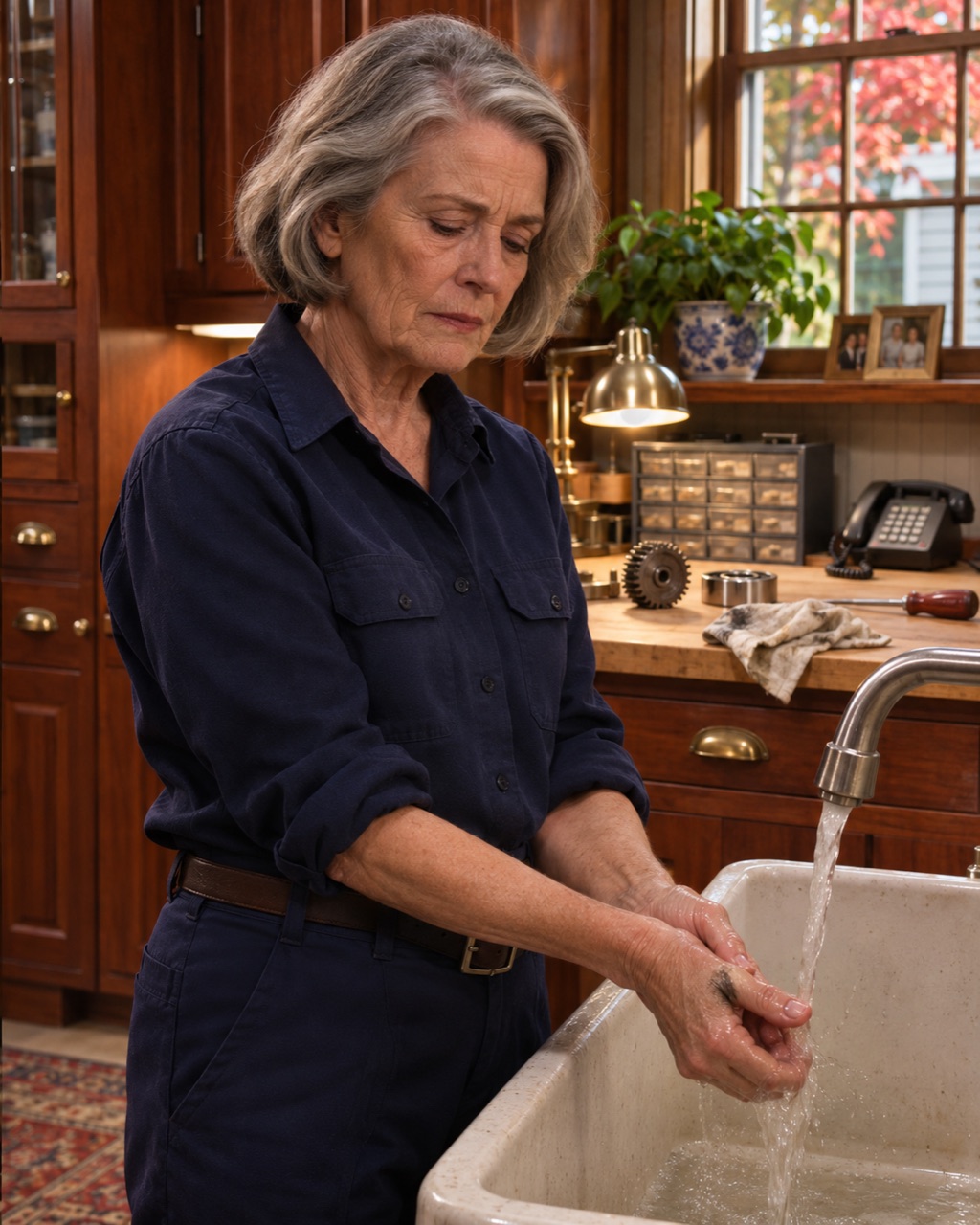
A familiar repair took longer than it usually would because I kept stopping to check something I had already checked. Finally, I set the tool down and went to wash my hands.
I wasn’t as unaffected as I sounded.
At the sink, I found a dark smear along the side of my thumb and rubbed until it was gone.
Martin had watched his wife talk about spending my money.
That fact kept returning when I tried to concentrate.
I called him later, when I was no longer standing over an unfinished repair.
Not to reconsider.
To make sure he understood the practical next step.
“I’m going to handle the storage in writing after I get advice.”
“I know.”
“You’ll have time to arrange another place.”
“How formal does this need to be?”
“Clear enough that nobody misunderstands it.”
He was quiet.
I could picture him hearing that as criticism.
It was.
“I’m not trying to make collecting things difficult,” I said.
“Then why do we need notice?”
“Because I want a clear beginning and end.”
“Can’t we just work something out?”
“That’s what the notice will do.”
He sounded tired when he answered.
“Okay.”
I leaned against the kitchen counter at home, holding the telephone while looking at the chair Dennis used for breakfast.
I hadn’t moved that one, either.
I could bear some things staying where they were.
Their belongings on my lot no longer belonged in that category.
“Your father didn’t give you that space,” I said.
“I know.”
“I did.”
“I know that now.”
There was something in his voice I hadn’t heard at dinner.
Not an apology.
Not yet.
But he was no longer waiting for me to become more agreeable.
Celia spoke in the background.
Martin said he was talking.
I stayed silent.
He returned to the telephone.
“She wants to know whether there’s any way to avoid paying somewhere else.”
“There may be somewhere you can store them by permission. That’s for you to arrange.”
“We don’t have another place set up.”
“You’ve been told there will be sixty days.”
“Starting when?”
“When the written notice says, after I’ve checked it.”
He asked whether they should start looking immediately.
“Yes.”
I didn’t add that looking for storage was a more useful task than looking for a buyer for somebody else’s property.
I thought it.
I didn’t say it.
There had been enough humiliation at Christmas, and I wasn’t interested in manufacturing more.
I wanted my space back.
I wanted my son to understand why.
He asked about the trailer’s position and whether it would be in the way before removal. I told him it could stay where it was during the notice period.
Nothing needed to be dragged around for appearances.
Then Martin asked whether they could at least keep using the lot.
Chapter 8: The Folder on My Table
“No,” I said. “I’m ending the free storage.”
Martin began to ask something else, but I stopped him gently.
“I’ll put the collection arrangements in writing. You won’t have to guess.”
After we hung up, I opened the drawer where I kept my business records.
I brought the purchase files to the kitchen table.
The shop first.
Then the lot.
I knew what I would find, but knowing and having everything organized in front of me were different comforts.
The shop purchase went back twelve years.
The lot purchase went back eight.
Both were mine.
I ran my finger along the edge of each folder before placing them side by side.
My earnings had paid for them.
There was no inheritance from Dennis to sort out in those files.
No share belonging to Martin.
No authority belonging to Celia.
I did not send photographs to the family.
The public claim had already been answered in front of the people who heard it.
These records were for handling the next step correctly.
I gathered the old messages about the trailer and mowers.
They were ordinary messages.
A request to use room inside the fence.
My permission.
Later questions about getting in to collect or move something.
Nothing about rent.
Nothing about ownership.
Nothing promising that the arrangement would continue permanently.
I saved the exchanges and set them with the purchase history.
Then I made notes for local legal guidance.
I wanted advice about ending free storage, not a threatening letter full of words I didn’t use.
There was no residence on the lot.
No paid tenancy.
Their belongings needed to remain theirs, accessible for reasonable collection.
I wanted sixty days, clearly stated.
I wanted to know how to deliver the notice and preserve a record without creating a new dispute.
When I spoke with local counsel, I explained the whole arrangement.
Not just Christmas.
I told how long the trailer and mowers had been there and that I had given permission without charging.
I explained that I had not promised a permanent right.
I also said I would not seize anything, sell anything, or lock them out while their belongings remained.
The advice was practical.
Keep the notice clear.
Identify the arrangement being ended.
Give the full period.
Provide reasonable access.
Keep a record of delivery and communications.
If something went wrong, get advice again rather than handling it by force.
That suited me.
I wasn’t looking for a dramatic confrontation at a gate.
I had already had a confrontation at my dining table.
At home, I cleared the kitchen table again and prepared the notice with that guidance.
I read every line aloud.
It said the free permission to store their utility trailer and riding mowers was ending.
It gave sixty days to remove them.
It explained how to arrange collection during reasonable times.
It asked them not to add more belongings.
It did not demand rent for the past.
It did not threaten to keep their equipment.
It did not mention the vacation trailer Celia wanted or the truck she hoped to pay off.
Those were not part of ending storage.
I read it once more before sending it in the advised way and keeping a copy.
Then I put the delivery record with the other papers.
The folder was getting thicker.
I wished the Christmas dishes had been the only thing I needed to put away after that dinner.
Martin called after they received the notice.
“We got it.”
“All right.”
“You really sent it.”
“I said I would.”
“I know.”
I could hear paper moving.
He was reading while we talked.
“The access part means we can come during those times?”
“Arrange it with me so the shop can operate safely.”
“And you’re not charging us for the sixty days?”
“No.”
He paused.
“That’s what I thought it said.”
“It says exactly what I mean.”
Celia came onto the call.
“This makes us sound like people you don’t know.”
“It makes the arrangement clear.”
“You could have just trusted us to move.”
“I’m giving you the time and access to move.”
“Sixty days may not be enough.”
“What part can’t be done in that time?”
She didn’t name a specific obstacle.
She said they were busy, that finding somewhere took time, that moving equipment wasn’t something people could do immediately.
“I haven’t asked for immediately,” I said.
Martin said they had started looking.
“Good.”
I kept my copy of the notice open in front of me.
The temptation was there to explain that I wasn’t being cruel, to persuade Celia to approve of the process, to make her say she understood.
I closed the folder instead.
She did not have to approve.
I needed to do what I had said I would do, in a reasonable way.
“If you have a collection time in mind, send it,” I told them.
Martin agreed.
Celia said she would write back.
Later, my telephone lit up with her reply.
She said they would not be ready by then.
Chapter 9: The Times I Offered
I opened Celia’s message again before answering.
She had named no pickup day and no specific problem with the access arrangements.
Just that they would not be ready.
I set the telephone beside my breakfast plate and finished eating before I wrote back.
The deadline remained.
I offered workable collection times and asked them to propose another reasonable time if those would not work.
I did not tell them to come while I was closed and then refuse to unlock anything.
I did not move the trailer.
I did not touch the mowers.
Their belongings stayed exactly where they had left them.
At the shop, I put my copy of the notice in a drawer where I could reach it without leaving the office area.
Then I went outside.
The ground near the gate was clear enough for access. I checked the path between their things and the opening, making sure shop equipment wouldn’t prevent removal.
That was my responsibility.
Finding their new space was theirs.
Martin called while I was checking the gate.
“Did you see Celia’s message?”
“Yes. I answered.”
“She’s worried we’ll choose somewhere and have to move again.”
“Then choose carefully.”
“We’re trying.”
“I’m giving you time to try.”
He asked whether I could leave the end open until they had somewhere settled.
“No.”
“Even if we’re still looking?”
“The deadline stays.”
I looked through the fence at the trailer.
It had been easy to say yes three years earlier.
A son asked for room.
His mother had room.
I hadn’t expected the end of that favor to require a file.
But it did now, and pretending otherwise would not make the arrangement simpler.
“I’m not preventing collection,” I told him.
“I know.”
“Tell me what day you can come.”
“We don’t have one yet.”
“Then keep looking.”
He didn’t argue.
Celia sent another message later, asking whether moving the equipment to a different corner would make me reconsider.
I answered that the permission was ending for the lot, not merely for the space they occupied.
I would not make them shift heavy things and then repeat the same discussion after they had done it.
That would help nobody.
At home, I left the telephone on the counter while I put laundry away.
My navy shop shirt had a stain near the cuff that hadn’t quite come out.
I rubbed it with soap and worked the fabric between my fingers.
For years, I had cleaned those shirts while Dennis handled other things around the house. We had shared a life without needing to pretend we did the same work.
I wondered how Martin had missed that.
Then I stopped rubbing before I damaged the cuff.
I couldn’t scrub an answer out of a shirt.
I rinsed it and hung it to dry.
When Martin next called, he asked about coming to look over what needed moving.
“That’s reasonable,” I said.
He gave a time.
I checked what I had waiting at the shop and agreed.
When he arrived, I opened the gate and let him walk through.
He checked the trailer and looked over the mowers. I stayed nearby without following him from object to object.
“You haven’t moved anything,” he said.
“I said I wouldn’t.”
“I wasn’t accusing you.”
“I know.”
He crouched beside a mower, then stood again.
For a while, we spoke only about removal.
What needed to leave.
How to get it through the gate.
When to let me know.
That conversation was almost easy.
Then he looked toward the shop.
“Will you use all this space?”
“I’ll use the lot as I need it.”
“For customers’ equipment?”
“Among other shop needs.”
He nodded.
I waited for a suggestion that his things could remain in whatever corner I wasn’t using that day.
It didn’t come.
Instead, he said, “It’s bigger without everything parked here.”
“Yes.”
He stood looking across the lot for a moment.
I couldn’t tell whether he was seeing my property or calculating storage elsewhere.
Perhaps both.
Before he left, I repeated that collection times could be arranged and that an indefinite extension was not being offered.
He said he understood.
I made a note of the conversation afterward, then put it away.
Not every moment needed to become an argument.
Celia’s next message said the available alternatives would cost them money.
I read it and answered only the practical point.
They needed to arrange storage elsewhere by the deadline.
The price of that arrangement was not part of the free permission I was ending.
I did not offer to search.
I did not suggest they sell the trailer or mowers.
Their belongings were theirs to manage.
That evening, Martin called again.
His voice sounded different.
No Celia in the background.
No paper moving while he tried to find a loophole in the notice.
“Are you home?” he asked.
“Yes.”
“Are you in the middle of something?”
“Putting dishes away.”
He paused long enough that I set the plate down.
Then he asked to speak to me without Celia.
Chapter 10: The Question He Never Asked
“Yes,” I said. “We can talk.”
Martin came to the house without an envelope or a storage proposal.
I let him in.
He stood near the place in the foyer where I had faced the dining room on Christmas Eve.
His eyes moved toward the table.
Dennis’s chair was still there.
I took Martin into the kitchen instead.
“Coffee?” I asked.
“Yes, please.”
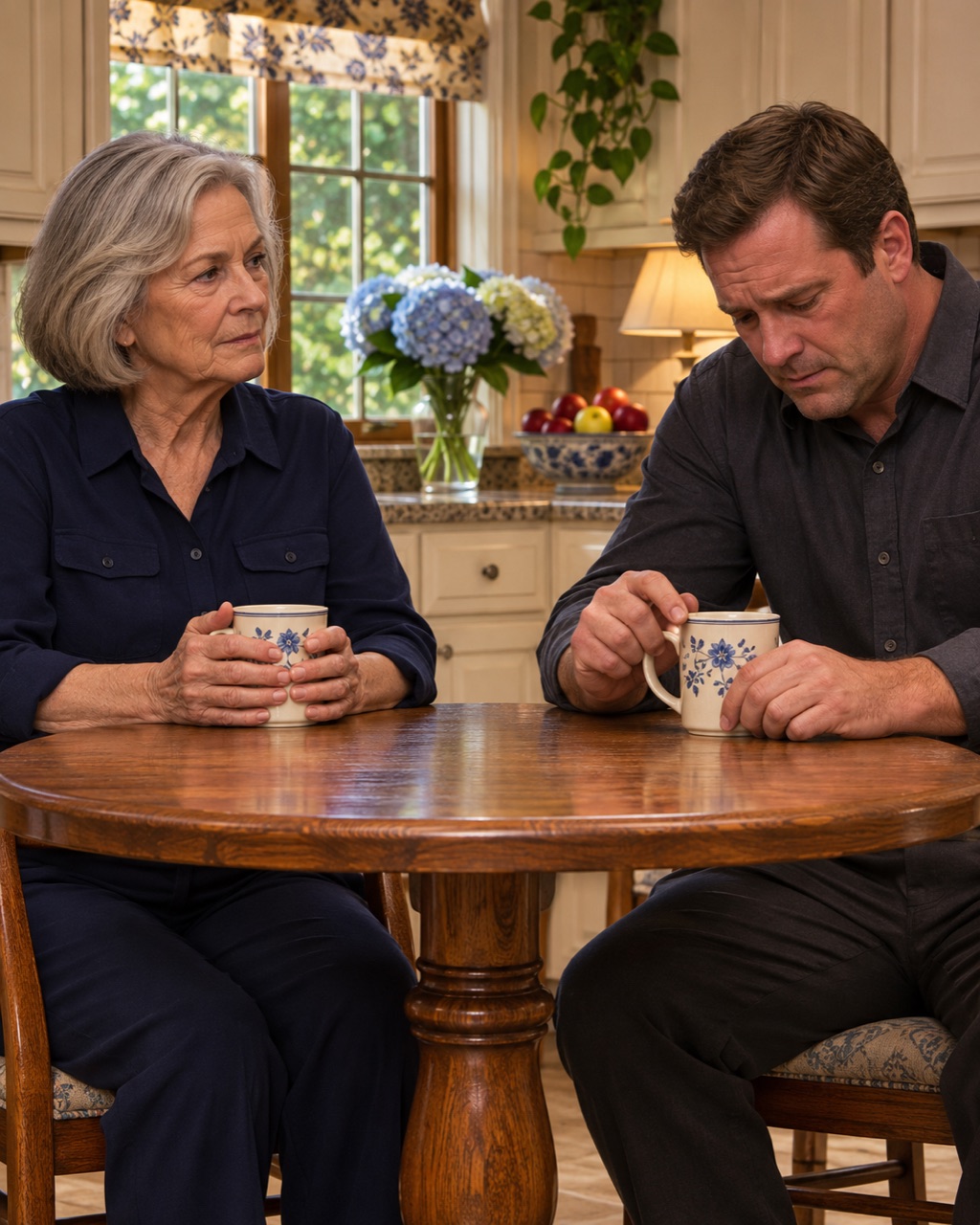
I put a cup in front of him and sat down with my own.
He turned his cup by the handle without lifting it.
“I thought Dad bought the shop.”
I waited.
“And the lot.”
“I know.”
“I thought you worked there because it was his business.”
“Why?”
He looked at me.
The question seemed to bother him more than a longer accusation would have.
“Dad was always the one talking about things.”
“What things?”
“Repairs. People he knew. Calls he’d taken.”
“He was telling you about my work.”
“I see that now.”
I held my cup with both hands.
For years, Martin had known where I spent my days.
Apparently, he had pictured his father’s ownership without ever asking either of us whether it existed.
“You saw me working,” I said.
“Yes.”
“You saw your father answering the telephone.”
“Yes.”
“And you decided the telephone meant he owned the place.”
Martin rubbed his forehead.
“When you say it like that—”
“That’s what happened.”
He lowered his hand.
“Yes.”
I didn’t hurry to rescue him from agreeing.
He needed to say what he had done.
Not that Christmas had become awkward.
Not that everyone had been grieving.
Not that Celia meant well.
“I’m sorry I treated your work like it was Dad’s business,” he said.
I looked down into my coffee.
He continued.
“And I’m sorry I treated your property like something he left for me.”
That was the apology I had needed.
Specific enough that I knew he understood what he was apologizing for.
He swallowed.
“I let Celia talk about spending it. Then I said she deserved money for finding the buyer.”
“Yes.”
“It wasn’t mine to offer.”
“No.”
He looked toward the hallway.
“I should have stopped it.”
“You should have asked me what I wanted before there was anything to stop.”
“I should have.”
I took a sip.
The coffee had cooled.
I drank it anyway.
Martin told me he had thought Celia was doing something useful when she found an interested buyer. He had assumed my main concern would be handling the details after losing Dennis.
“You didn’t ask whether I wanted fewer details,” I said.
“No.”
“You decided what I needed.”
“Yes.”
He didn’t say but.
That mattered.
He had reached for that word at the Christmas table every time I asked a direct question.
Now he sat with his hands around his cup and answered.
“I knew you were working,” he said. “I didn’t think about what that meant.”
“You called it keeping busy.”
He looked embarrassed.
“I did.”
“I was running my shop.”
“I know.”
“Grief didn’t turn it into a hobby.”
“No.”
The kitchen was quiet enough to hear the refrigerator start.
I got up to warm the coffee.
Martin began to stand, and I told him to stay seated.
I wasn’t serving him because the apology had erased everything.
I was warming coffee because we were talking, and I wanted some myself.
That distinction would have been hard to explain.
I didn’t try.
When I sat down again, he looked at my work shirt hanging from a chair near the laundry.
“Did you put it on so we’d understand?”
“Yes.”
“I thought you were making a point about working.”
“I was making a point about who you were talking to.”
He nodded.
“The badge doesn’t say owner,” he said.
“No.”
“That’s what Celia kept coming back to.”
“A badge isn’t a list of everything I am.”
“I understand.”
I had managed the business and done the repairs. I had earned the money and made the purchases.
None of that disappeared because a small piece pinned to my shirt named the job I did each day.
Martin drank his coffee at last.
“I told Celia we don’t have a claim to the sale money.”
“There isn’t any sale money.”
“I told her that, too.”
“And the fee?”
“That you never offered one.”
I nodded.
He looked relieved that I hadn’t asked him to repeat the whole conversation.
I didn’t need to supervise his marriage.
I needed him to stop carrying his wife’s demands to me as though they were obligations.
“Can we get back to visiting?” he asked.
I set my cup down.
“We can get back to talking without trying to settle money.”
“That’s what I want.”
“Then keep doing that.”
He accepted the answer.
It wasn’t an invitation to pretend dinner had never happened.
It was room to behave differently.
Before he left, he carried our cups to the sink. He rinsed them and asked where I wanted them.
I pointed to the rack.
He put them there.
I stood beside the kitchen table while he reached for his coat.
There was still a practical matter that an apology did not answer.
“Have you found somewhere else for your things?” I asked.
Chapter 11: The Place They Paid For
“Yes,” Martin said.
He stopped reaching for his coat and turned back toward me.
“We’ve arranged paid space.”
“For everything?”
“The trailer and the mowers.”
I nodded.
“Good.”
He gave me the collection arrangements they were considering. The removal would happen during the final week of the notice period.
I checked what he proposed against the shop’s work.
We settled on reasonable times.
No argument.
No suggestion that finding another place entitled them to keep using mine until they liked the expense better.
After he left, I wrote the arrangement down and sent it back so we all had the same understanding.
Martin confirmed it.
Celia did not add anything.
At the shop, I made sure the collection route stayed clear.
I moved my own equipment where it would not interfere, leaving their belongings untouched.
I did not start reclaiming the space before they had finished.
That would have created the very difficulty I had promised to avoid.
When Martin arrived during the final week, Celia came with him.
I opened the gate.
He greeted me.
She nodded without smiling.
I returned the nod and pointed out the clear route.
“Everything’s accessible.”
Martin looked around.
“Yes. Thanks.”
Celia walked toward the utility trailer.
The new arrangement elsewhere had not improved her mood.
I could see that without asking about it.
I stayed near the shop doorway while they checked what needed to leave. I had work inside, but I wasn’t going to disappear when they might need the gate held or a question answered.
Martin approached me before they began.
“We’ll handle it.”
“I know.”
“You don’t need to help load.”
“I wasn’t planning to.”
He smiled briefly.
It was the first ordinary expression I had seen from him in a while.
Then he went back to the trailer.
I returned to the workbench with the door open.
From inside, I could hear them moving around their equipment. Their voices carried, but I didn’t try to follow the conversation.
They were responsible for getting their belongings out.
I was responsible for permitting reasonable access.
For once, those jobs were separate and clear.
Celia came to the doorway after a while.
“Are you using the whole yard immediately?”
“I’ll use it as the shop needs it.”
“So it may sit open.”
“It may.”
She glanced at the space behind her.
“We’re paying for somewhere else.”
“Martin told me.”
“It isn’t what we hoped.”
“I understand.”
I didn’t offer a comparison with the vacation trailer she had hoped to buy.
That would only have reopened a conversation already finished.
She stood there a moment longer, perhaps waiting for me to ask the cost.
I didn’t.
She went back outside.
Martin worked without asking me to reconsider. When he needed to shift something to reach a mower, he checked that it belonged to them.
It did.
He moved it.
Small, ordinary questions.
After Christmas, I appreciated those more than I expected.
They removed the riding mowers and the utility trailer themselves during that final week.
Each time they collected something, I recorded what had left and kept access reasonable for what remained.
There was no surprise lock change.
No equipment pushed outside the fence.
No demand for payment before I would open the gate.
I wanted the arrangement ended cleanly, not converted into another fight.
During the last collection, Martin walked the area where their things had stood.
He looked down near the fence and checked behind the place the trailer had occupied.
“Anything else of ours?” he asked Celia.
She looked over the lot.
“No.”
I asked them to check once more.
Not to be difficult.
I wanted them to decide, while they were there, whether they had everything.
Martin did.
Then he came over to me.
“That’s all of it.”
“All right.”
The lot looked different without their belongings.
Not prettier in some grand way.
Just open.
I could see across it without looking around a utility trailer. I could picture moving shop equipment through without planning around their parked mowers.
I hadn’t realized how used to squeezing around them I had become.
Martin looked toward the shop.
“You’ll have room.”
“Yes.”
He nodded.
Celia remained near the gate.
She had been practical throughout the collection, and I was glad for that. She hadn’t tried to leave something behind to preserve the arrangement.
But her expression changed when Martin said they were ready to go.
She looked from him to me.
“We’ve done what you asked.”
“You’ve removed your belongings.”
“Before the deadline.”
“Yes.”
Martin shifted his weight.
I could tell he knew where she was going before she said it.
Celia put her hands into her coat pockets.
“The new place is another expense now.”
“I understand.”
“We hadn’t planned on it.”
I said nothing.
I had already explained that free storage ending meant they would need another arrangement.
She knew that.
She was not asking for information.
Martin said her name softly.
Celia kept looking at me.
“Since we got everything out when you wanted, will you help cover the new cost?” she asked.
Chapter 12: The Gate Afterward
“No,” I said.
Celia looked toward Martin.
He did not pick up the request.
I stood just inside the gate with the empty space behind me.
“I’m not paying for your storage.”
“We kept our end,” she said.
“You collected your belongings during the time provided.”
“That should count for something.”
“It means the arrangement is finished properly.”
Martin moved closer to the gate.
“We need to go.”
Celia pulled her hands out of her pockets.
“I was only asking.”
“And I’ve answered.”
I did not make a list of the years they had paid nothing.
She knew.
I did not tell her what to sell or which expenses to cut.
Those decisions belonged to her and Martin.
The same way my lot belonged to me.
Martin thanked me for making collection possible.
“You let me know when you needed access,” I said. “That worked.”
He nodded.
Celia went ahead of him.
I watched until they had cleared the entrance, then closed the gate.
I did not change the lock immediately.
First, I walked the lot.
I checked the place where the trailer had stood and the spaces the mowers had occupied. I looked near the fence and along the route they had used.
Their belongings were gone.
I checked inside the shop, too, to make sure nothing of theirs had been set aside during collection.
Nothing had.
I sent Martin a brief confirmation that the collection was complete and asked him to tell me promptly if he believed anything had been overlooked.
He replied that everything was out.
I saved the message.
Only then did I change the gate lock.
The old lock lay in my palm while I fitted the new one.
It was an ordinary piece of hardware.
I put it away instead of throwing it across the yard or making some ceremony of it.
I needed a working gate, not a performance.
Inside the shop, I placed the last collection notes with the notice and the delivery record.
The purchase history went back where it belonged.
The buyer’s confirmation stayed with the other correspondence.
No sale had happened.
Celia had received no proceeds and no fee.
There was nothing else for the buyer to wait on, and no equipment of theirs remained on my lot.
I closed the drawer.
Then I went outside again.
The yard was open.
I moved shop equipment into a position that made sense for the work I had waiting. Nothing elaborate.
Just a better route.
More room near the doorway.
Space to set something down without first calling my son about his trailer.
I worked until I was tired enough to notice my shoulders.
Then I stopped.
Being able to decide when I was done mattered, too.
At home, I washed my work shirt.
I unpinned the badge before putting the shirt in the laundry, as I always did, and set it on the dresser.
“SHOP MANAGER.”
I ran a thumb across the face of it.
Celia had treated those words as proof of what I couldn’t own.
Martin had finally looked at them while hearing what I actually did.
The badge itself had not changed.
I set it down.
In the kitchen, I made supper without setting an extra place by mistake.
That did not mean I was finished grieving.
Dennis’s chair was still at the dining table.
I sat in my usual place and ate while looking out toward the porch.
The house had been kept well before the funeral, and I kept it that way afterward. Not because everything was fine.
Because dishes still needed washing, and I disliked leaving crumbs on the counter overnight.
After supper, I wiped the table.
My telephone stayed quiet.
I had grown used to checking whether a message would bring another demand about the lot.
That evening, I left it on the counter and finished the kitchen first.
When I finally picked it up, there was nothing urgent.
I put it back down.
The next time Martin called, I answered from my chair in the living room.
He asked how the shop was doing.
“Busy enough.”
“Using the yard?”
“Yes.”
“Good.”
We spoke about an ordinary repair I was working through. He listened without describing it as something his father would have handled.
I noticed that, too.
Then he asked how I was sleeping.
“Some nights better than others.”
“I’m sorry, Mom.”
“I know.”
It was a different conversation from the ones after Christmas.
No offer envelope.
No storage problem waiting behind the first pleasant question.
I was cautious anyway.
He had apologized, and I believed he meant it. I also needed time seeing that apology in the way he behaved.
We did not immediately resume the old Sunday visits.
There were calls first.
Short conversations that stayed conversations.
If I mentioned work, he asked about my work.
If I mentioned Dennis, he let me talk about Dennis without sliding into property or what the family ought to do next.
That helped.
I didn’t tell him each time.
I kept answering the telephone.
One evening, after asking about the shop and listening to the answer, Martin cleared his throat.
“Could I come by Sunday, just to visit, without discussing money?” he asked.
Chapter 13: The Clean Shirt
“Yes,” I told him. “Just to visit.”
Martin said he would like that.
We agreed on the visit, and I put the telephone down without wondering whether I had just agreed to another negotiation.
On Sunday, he came alone.
He stood on the porch with his hands at his sides until I opened the door.
“Hi, Mom.”
“Come in.”
He took off his coat and asked where I wanted it.
I pointed.
He hung it there.
In the kitchen, I poured coffee while he sat at the table. He didn’t choose the chair Dennis had used, and I was grateful not to have to explain why I wasn’t ready for that.
We talked about ordinary things first.
The house.
The shop.
A repair that had needed more patience than I expected.
Martin asked a question about the work, then listened to the answer instead of reaching for a story about his father.
After a while, he said, “I’ve been thinking about how long you’ve done this.”
“Thirty-five years.”
“I know.”
I looked at him.
He added, “I mean, I’m finally thinking about what those years involved.”
I stirred my coffee.
There was nothing I needed him to praise.
But I wanted him to stop overlooking it.
He asked how I had managed the shop while handling things at home with Dennis.
“We divided things.”
“Dad did more around the house than I realized.”
“He did plenty.”
I wasn’t going to reduce my husband to make room for myself.
Dennis had handled household matters. He had helped at the shop when he could. He had been good company and, sometimes, an irritating man who left things where I didn’t want them.
He had also known the shop was mine.
Martin smiled when I mentioned something familiar Dennis used to do.
Then he looked toward the hallway.
“I miss him.”
“So do I.”
We sat with that without discussing who should get what.
That was the visit I had wanted at Christmas.
Not cheerful all the way through.
Just ours.
Later, Martin carried the cups to the sink.
He asked about stopping by another Sunday.
“That would be fine.”
“No money talk.”
“No money talk.”
He nodded.
I did not ask him to report every conversation with Celia.
I knew the practical outcome.
They had arranged and were paying for storage elsewhere.
Their belongings had left my lot before the deadline.
Celia had not received $115,000, because my land had not been sold. She had not received a commission, because I had never hired her or promised one.
The buyer understood my answer.
There was no transaction waiting to be revived.
My shop remained mine.
So did the lot.
Martin did not try to soften those facts during his visit.
He did not ask me to help cover the new storage cost or suggest I might reconsider later.
When he left, he hugged me at the door.
“I’m sorry I made you explain yourself like that.”
I held his coat sleeve briefly.
“Keep asking instead of assuming.”
“I will.”
Then I let go.
After the door closed, I returned to the kitchen.
There were cups to wash and a small damp ring on the table. I wiped it up.
The visit had not repaired every part of Christmas.
It had given us an ordinary Sunday without anyone trying to spend my money.
That was enough for that day.
At the shop afterward, I opened the gate with the new key.
The yard was still plain ground inside a fence.
No vacation trailer.
No replacement development.
No sign announcing some grand new plan.
I had kept it because it was useful to my business, and that was how I used it.
Equipment could wait outdoors where appropriate.
I had room to move around.
When I needed the space, I didn’t have to call anybody and ask them to shift their belongings first.
I liked that more each time I worked there.
Inside, I hung my coat and checked the work waiting for me.
There was a small engine on the bench that needed attention. I set my hands on either side of it and looked it over before reaching for a tool.
I knew what to do next.
That still felt good.
My age had not made the work imaginary.
My husband’s death had not turned the business into family money.
And managing what I owned had never meant somebody else owned it.
I did not spend my days repeating those facts.
I worked.
I answered the telephone when I could stop safely.
When I couldn’t, it rang until I could get to it.
Some callers still asked about Dennis before remembering. I gave them a moment.
I needed moments myself.
At home, his chair remained where I wanted it.
At the shop, equipment stood where I needed it.
Those were decisions I made without consulting Celia or waiting for Martin to understand every reason.
Sunday visits resumed slowly.
Martin came to see me, not to present a proposal.
He asked about the shop and used my name when he talked about who ran it.
If he didn’t know something, he asked.
That was the change I could see.
Celia did not return with another buyer.
She had her own expenses to manage, including the place where they now kept their trailer and mowers.
I did not pay those expenses.
I also did not call to ask whether she was satisfied with the arrangement.
The storage was over.
The sale had never happened.
I went back to taking care of what was mine.
Before opening the shop, I checked the clean shirt I had laid out at home. The cuff was still faintly marked despite my washing.
Work clothes did that.
I put it on and buttoned it, then picked up the badge from the dresser.
I checked the pin, fastened it in its usual place, and smoothed the navy fabric beneath “SHOP MANAGER” on my clean shop shirt.
You Might Also Enjoy




