My parents stood in my kitchen and told me to take my brother’s tuition out of my daughter’s college savings.

Chapter 1: The Money They Had Chosen
My parents stood in my kitchen and told me to take my brother’s tuition out of my daughter’s college savings.
My mother didn’t ask what I could afford.
“Your brother needs her college money.”
My father stood near the kitchen entrance while she waited beside the island.
Neither had sat down.
They had come over saying they wanted to discuss Adam’s return to school. I had let them in because I thought that meant talking about his plans.
Then Dad supplied the amount.
“Thirty-two thousand dollars.”
I looked from him to my mother.
“For what?”
“His tuition,” she said. “That’s what we’re talking about.”
Lucy was at a friend’s home. I was glad of that before I had even decided what to say.
She was 14. She knew her uncle wanted to go back to school, but she had no idea her grandparents were standing where she usually ate a snack, discussing how to spend her college savings.
“That’s my daughter’s savings,” I said.
Mom moved a little closer.
“She isn’t going yet.”
I left my hands down at my sides.
I had been getting the kitchen ready for a meeting with Simone, the managing partner of the financial firm I used. She was coming to review Lucy’s college savings with me.
Not with my parents.
With me.
“I don’t have tuition money for Adam.”
Mom looked toward Dad.
That look was familiar. She wasn’t confused about my answer. She wanted him to take over explaining why my answer wasn’t acceptable.
“You have money sitting there,” he said.
“For Lucy.”
“You could help him get started.”
I was 39, and I worked as a dental hygienist. There wasn’t another account somewhere holding money I hadn’t decided what to do with.
I had saved from every paycheck for eleven years.
Every payday.
Some days I made the contribution before I let myself think about what else needed replacing around the house. That was how I had kept doing it.
My parents had contributed nothing.
They knew the money came from my work. They had heard me talk about putting it aside when Lucy was little, and they had watched me keep doing it.
Now they were talking about it as though it had become available simply because Adam needed something.
“Has Adam worked out what he can afford?” I asked.
“He needs to know he has support,” Mom said.
“That isn’t what I asked.”
Dad shifted beside the entrance.
“We’re trying to make this possible for him.”
I glanced at the space beyond him. Simone would be coming through there soon, expecting the appointment we had arranged.
I hadn’t invited an audience.
A week earlier, Mom had asked when I was next seeing Simone. I told her Simone was coming to my house for our review.
That had seemed like an ordinary question.
Now Mom was standing in my kitchen before the appointment, with Dad positioned near the entrance, telling me what should happen to my savings.
“You came because you knew she was coming,” I said.
“We came to talk about your brother.”
“Then talk about his plans.”
“This is part of his plan.”
“No. This is my money.”
Mom pressed her lips together.
I had opened the college account when Lucy was three and I was 28. It was a parent-owned account for her education.
I owned it.
I supplied the money.
I decided whether any money came out.
Dad knew that, although he liked to act as though financial decisions in the family required his final opinion. Giving him information had never meant giving him control.
I wasn’t thinking yet about changing anything else.
I was trying to get through the demand in front of me.
“Your father and I have discussed this,” Mom said.
“With each other.”
“We’re discussing it with you now.”
“No. You’re telling me.”
For a moment, she looked irritated that I had separated those things.
Adam was 30. He had left college without finishing, and now he wanted another attempt. I hoped he finished this time. I had said that whenever his plans came up. But Mom talked about encouragement, Dad talked about keeping him focused, and somehow any question I asked about costs became proof that I wasn’t being supportive. They had gradually made his return to school sound like a family assignment, and I hadn’t realized they had assigned me the bill.
“You don’t want him to go?” Mom asked.
“I want him to figure out how to pay.”
“He’s trying to improve his life.”
“I know.”
“Then why are you making this difficult?”
I pressed my lips together before answering.
I could feel my face getting hot. I didn’t want to snap and give them a different argument to discuss for the rest of the afternoon.
“I won’t give Lucy less to pay for Adam’s second attempt.”
Dad looked toward Mom.
She gave a small shake of her head, as if I had misunderstood a simple request.
“You could replace it before she needs it.”
“With what?”
“Your earnings.”
“I already save from my earnings.”
“You have time.”
She hadn’t asked about my hours, the things Lucy might need, or whether I could replace $32,000. She had decided that because the account existed, using it was easier than using their own money.
“Are you saying you can’t help him yourselves?” I asked.
Dad didn’t answer that question.
“This is a family responsibility.”
“Lucy is family.”
He glanced toward the entrance, then back at me.
For a moment, I thought he might consider that.
Instead, he said, “You’re making this harder than it needs to be.”
Mom moved her hand against the edge of the island, then let it fall. Nobody was holding anything. There wasn’t a bill spread between us or a plan we were reviewing together.
There was only their demand.
“Adam will remember whether you helped him,” she said.
I looked at the empty place where Lucy usually stood talking to me after school.
That remark hurt.
Not because I thought Mom was right. Because she was willing to use my relationship with my brother to get an answer I had already refused.
“I can wish him well without paying his tuition.”
Dad straightened near the entrance.
He had heard me, but he was still waiting for me to become easier to persuade.
I turned toward him.
“Simone is coming for Lucy’s review. This isn’t part of it.”
He answered as though the appointment settled the matter.
“Tell Simone we need the money for Adam.”
Chapter 2: My Answer in My Kitchen
“We don’t need money for Adam,” I told Dad.
“You and Mom want me to give it to him.”
Mom let out a short breath.
“You don’t have to make it sound like that.”
“That is what you’re asking.”
Dad stayed near the entrance. Mom remained beside the island, close enough that I felt I had to turn my whole body to look past her.
I wasn’t moving yet.
I wanted them to hear the answer before Simone arrived.
“No tuition withdrawal.”
Dad’s expression changed.
Not much.
Enough to show he understood I wasn’t simply asking for more details.
“We can discuss the options with her,” he said.
“My review isn’t a family meeting.”
“Then why have you kept us involved?”
There it was.
I had let both parents receive information through the firm. When Lucy was little, Mom liked hearing that her savings were growing, and Dad liked following the account.
I had thought it was harmless.
They could receive information. They couldn’t make transactions, use my passwords, or authorize money to leave.
I had never given them those things.
“You’ve been allowed to follow the savings,” I said. “That doesn’t make the savings yours.”
“Nobody said they were ours,” Mom replied.
“You’re deciding what they should pay for.”
“We’re asking you to help your brother.”
“And I’ve answered.”
Dad rubbed his mouth, then lowered his hand.
I remembered how pleased he had sounded when I first told him I was saving for Lucy. He had asked sensible questions then. I had mistaken his interest for an understanding that this was something I was doing for my child.
Apparently, he thought being informed meant he should be consulted before I said no.
That wasn’t how the account worked.
It wasn’t how my kitchen worked, either.
“Simone helped me establish this,” I said. “She knows who owns it.”
“We know who owns it,” Dad answered.
“Then stop speaking as though you can direct it.”
Before he could answer, Simone arrived.
I went to let her in.
She was 52, and she offered occasional home meetings. That was useful for me, and we had arranged this one before my parents decided to come over.
She stepped inside expecting a review.
Instead, she found Mom beside my island and Dad near the kitchen entrance.
“Hello,” she said, looking at me.
Dad spoke immediately.
“We need to discuss Adam’s tuition first.”
Simone stopped just inside the entrance.
She didn’t agree.
She looked at me.
Mom turned toward her with a small, relieved smile, as though someone had arrived who could finally make the afternoon productive.
“Your brother needs her college money,” she said to me again.
“That’s my daughter’s savings.”
Mom stepped closer.
“She’s got years left. Your brother needs it now.”
I blinked, then straightened.
“I saved for my daughter.”
Mom laughed through her nose.
It was a little sound. I knew it meant she thought I was being stubborn about something obvious.
Simone stayed where she was.
Dad looked ready to explain.
I moved first.
I walked past Mom to the open end of my kitchen island. Their heads turned with me, but nobody spoke while I crossed the floor.
I stopped where I could address Simone directly.
Mom’s confident expression began to disappear.
“We haven’t agreed to anything,” I said.
Dad answered before Simone could.
“She’s upset. We need the choices explained.”
“I understand the choices.”
I kept my eyes on Simone.
“I opened it, funded it, and control every withdrawal.”
Mom looked toward Dad.
I turned away from her.
“Don’t tell them anything else.”
Simone gave me her full attention.
I wasn’t asking her to decide whether my brother deserved another attempt at school. I wasn’t asking her to referee which family member mattered more.
I was telling her what I wanted done with an account I owned.
“The savings belong to me,” I said. “And I’m saying no.”
Mom’s lips pressed together.
Dad started to speak.
I didn’t wait.
“Nothing comes out for Adam’s tuition.”
Simone nodded.
“Your parents can receive information. They can’t authorize a withdrawal. I take those instructions from you.”
Dad looked at her rather than at me.
I could see him checking whether she meant it exactly that way.
She did.
“There isn’t a joint decision required?” he asked.
“No,” Simone said.
Mom shifted her weight.
“But this is money for education.”
“Erin hasn’t authorized a withdrawal.”
That was all Simone needed to say.
She wasn’t impressed by Dad’s position beside the entrance or Mom’s certainty that Adam’s need should come first. She didn’t ask me to soften my refusal.
I had already given her the instruction.
My parents had heard it from me.
Now they had heard the person responsible for handling my requests confirm what their permission did and didn’t allow.
Then my parents heard her say she answered only to me.
For a moment, Dad didn’t move.
Mom stared at Simone, waiting for something more helpful.
I stood at the open end of the island. From there, I could see the place I had been standing before, close to Mom, with Dad behind her near the entrance.
I hadn’t needed either of them to move.
I had moved myself.
“She’s making this emotional,” Dad said.
Simone didn’t take that invitation.
“She has given me a clear instruction.”
Mom’s eyes returned to me.
“So you’re doing this in front of company?”
“This is my appointment.”
The words came out plainly.
I didn’t apologize for the location, the timing, or the fact that the person they expected to help persuade me had confirmed my authority instead.
Dad folded his arms.
Mom looked back at Simone.
Her smile was gone, but she wasn’t finished.
“Then explain how we can make her reconsider.”
Chapter 3: Who Would Take Over
“I’m not here to make Erin reconsider,” Simone said.
Mom stared at her.
“You advise her.”
“On her account.”
“And you don’t think she should hear what this could do for her brother?”
Simone looked toward me.
I didn’t need another explanation of Adam’s plans. I had heard about his return to school at family conversations, over the phone, and now in my kitchen.
“I’ve heard it,” I said.
Dad lowered his arms.
“Then give it some thought.”
“I have.”
“You haven’t had time.”
“I don’t need more time to refuse.”
Mom looked down the length of the island, toward the place where I usually sat with Lucy. She seemed to be searching for another way to make the same demand sound smaller.
“We’re not asking you to empty anything.”
“You’re asking for $32,000.”
“For tuition.”
“I know what you’re asking for.”
I didn’t know the account balance off the top of my head, and I wasn’t going to open it for them to examine. The amount they wanted didn’t become reasonable because there was other money left.
My refusal wasn’t an invitation to calculate what I could bear to lose.
Simone remained near the entrance.
She had come into an appointment that my parents had tried to take over. She wasn’t interrupting, but she wasn’t helping them extend it either.
I turned toward Mom.
“You and Dad need to leave.”
Her face tightened.
“Now?”
“Yes.”
“We came to talk.”
“And we have.”
Dad looked at Simone.
“This is a family matter.”
“Then you shouldn’t have brought it into my financial review,” I said.
He turned back to me.
I could see he hadn’t expected me to ask them to go while Simone was standing there.
Neither had I, before that afternoon.
But I wasn’t going to spend the appointment defending a refusal I had already made.
“I need to finish my meeting.”
Mom stepped away from the island.
For a moment, I thought she might say something about Lucy. Instead, she straightened her shoulders and headed toward the entrance.
Dad stayed where he was until she approached him.
“We’ll discuss this when you’re calmer,” he said.
“No tuition withdrawal,” I answered.
He didn’t respond.
I walked them to the door.
Nobody hugged.
Mom looked back into the kitchen before stepping outside, and Dad followed her without another word.
I closed the door.
Then I checked that it had latched, something I usually did without thinking. That afternoon I left my hand against it for a moment before returning to Simone.
She had moved toward the island but hadn’t sat down.
“Would you like to continue?” she asked.
“Yes.”
My voice sounded ordinary now that I wasn’t trying to get a word past my parents.
I sat, then stood again to pull the nearby seat into a better position for our review. I needed something small to do with my hands.
Simone waited.
“I want their information permission removed.”
“Both parents?”
“Both.”
She nodded.
“We can go through the required instructions privately.”
“They won’t get future updates?”
“Once the firm completes the change, they won’t be authorized to receive information from us.”
I asked her to explain what I needed to do.
Not because I doubted her.
Because I wanted to understand exactly when the change would take effect and what confirmation I should expect.
Simone was careful.
She didn’t say that my spoken request had already changed the records. She explained the secure process and told me the firm would confirm completion.
I appreciated that.
The afternoon had contained enough people acting as though saying something made it true.
“They’ve never had transaction authority,” I said.
“That’s correct.”
“Nothing has changed about that?”
“No.”
I rubbed the heel of my hand against my knee under the island.
I hadn’t thought they could actually take the money themselves. But hearing them try to instruct Simone had made me want every part of the arrangement stated clearly.
Information was one thing.
Ownership was another.
I had allowed the first and retained the second.
“I’m sorry you walked into that,” I said.
“You don’t need to apologize for giving me instructions.”
I looked toward the entrance.
The kitchen seemed larger without my parents standing in it, though nothing had moved except the people.
“There is something else.”
Simone waited.
“When I opened the account, I named Dad as the person who would take over if I died.”
She nodded.
“That doesn’t give him authority now.”
“I understand.”
At the time, naming him had seemed practical. Lucy was little. I wanted someone identified, and Dad was someone I believed would carry out what I intended.
I hadn’t named him because he owned any of the savings.
I had named him because I trusted him to use them for Lucy.
I could no longer leave that decision untouched after watching him ask me to use the money for Adam.
“I want to replace him.”
Simone didn’t react as though I had said something shocking.
She asked whether I wanted her to explain the plan’s process.
“Yes. But I already know I want him removed from that role.”
“We’ll need the replacement’s information and the required instructions.”
“I’ll speak to her before anything is submitted.”
“That would be appropriate.”
I looked down at my hands.
The part that hurt wasn’t the procedure. It was admitting that my father had made himself someone I couldn’t comfortably leave in charge of this money if I wasn’t there.
He had never asked what Lucy might need.
He had asked how quickly the money could go to Adam.
I lifted my head.
“I want to make sure Lucy’s education is still the reason that account exists, even if I’m not here.”
Simone’s answer was quiet and practical.
“We can address that through the plan’s procedures.”
I asked again about timing.
She separated the requests for me. The firm would handle the information permissions. The plan would confirm the change to the person designated to take over.
I wasn’t going to confuse a request with a completed change.
I wanted each confirmation.
Simone waited until I finished asking questions, then returned to the part I still needed to decide aloud.
“Who do you want to take his place?”
Chapter 4: The Call I Made Myself
“Nora,” I said.
“But I need to ask her.”
Simone nodded and gave me room to make the call privately.
I stepped away from the island with my phone. Before dialing, I read my cousin’s name on the screen and considered how to explain the request without turning it into a demand of my own.
Nora was 43.
She was my cousin, not someone who had offered to manage my family. I couldn’t call her angry about my parents and assume she would accept a responsibility she hadn’t heard described.
When she answered, I asked whether she could talk privately.
“Yes,” she said. “What’s going on?”
“I need to ask you something about Lucy’s college savings.”
I told her the basic facts.
I owned the account. I had funded it. There was a place in the arrangement for someone to take over if I died.
Dad was named there.
I wanted to change that.
“Does this mean doing anything now?” she asked.
“No. I would still own and control it.”
“And you’re asking me to take over only if you die?”
“Yes.”
I paused.
“That is what I need you to think about. Not helping me win an argument.”
“What argument?”
I explained what had happened in the kitchen.
I kept it plain.
My parents had asked for $32,000 for Adam’s tuition. I had refused. They had tried to direct Simone, and she had told them they had no authority to authorize a withdrawal.
Nora didn’t interrupt.
When I finished, she asked, “Lucy wasn’t there?”
“No. She was at a friend’s.”
“Good.”
I pressed my fingers against my forehead.
I hadn’t realized how much I wanted someone to say that without adding a reason Lucy ought to give something up.
“I don’t want her responsible for this,” I said.
“She isn’t.”
“I know.”
Saying it was easier than hearing my mother use Adam’s feelings against me.
Nora let me take a breath.
Then she asked what accepting would require.
I told her Simone had explained the plan’s process. I would need the required information, and I wanted Nora to understand the role before I submitted anything.
It wasn’t permission to use the account now.
It wasn’t an ownership share.
It was a future responsibility if I died.
“And the money is for Lucy’s schooling,” Nora said.
“Yes.”
“Then yes. I agree.”
I didn’t rush on.
“Are you sure?”
“Yes, Erin.”
I looked toward the kitchen.
Simone was giving me privacy, and I could still see the open end of the island where I had stood to refuse my parents.
“Thank you.”
Nora asked whether I needed anything else at that moment.
“Just the information the plan requires. I’ll make sure I enter it correctly.”
We went through what was needed without discussing ways to punish my parents or make them understand.
That mattered to me.
I wasn’t asking Nora to replace them in my life. I was asking her to accept a specific responsibility concerning Lucy’s savings.
She agreed to that.
Nothing more had to be added.
When the call ended, I returned to Simone.
“She agreed.”
“All right.”
I sat down at the island again.
This time I stayed seated.
Simone guided me through the secure steps for removing my parents’ information permissions. I read the instructions instead of clicking through them quickly.
I checked that the request included both Beverly and Keith.
Both.
My father wasn’t more entitled to updates because he liked talking about money. My mother wasn’t less involved because she had let him supply the amount.
They had arrived together.
They had made the demand together.
I wanted the same change for each of them.
Simone explained where the firm’s confirmation would come from.
“Until you receive confirmation, treat it as submitted,” she said.
“I will.”
We addressed the separate process for changing the person designated to take over the account if I died.
I entered Nora’s information carefully.
Then I checked it again.
The role being changed was limited. I remained the owner. Nothing about submitting the request gave Nora authority to take money while I was alive.
I wanted that distinction clear in my own mind, not just in the plan’s records.
My parents had blurred enough things that afternoon.
“I don’t want to tell anyone this is complete until it is,” I said.
“That’s right.”
Simone explained that the plan would send its own confirmation after processing.
I made sure I knew where to look.
Then I completed the required secure instructions.
There was no announcement.
No family message.
No call to Dad to tell him what I was doing while I did it.
I had spoken to the person I wanted to name, obtained her agreement, and submitted what was required.
That was the decision.
Afterward, Simone and I returned to the review we had originally arranged.
It felt strange to talk about Lucy’s education after spending so much of the appointment defending it, but I wanted to do that part too.
The account wasn’t only a subject for an argument.
It was something I had been building for my child.
I asked the questions I had intended to ask before my parents arrived. Simone answered without bringing Adam into any of them.
When we finished, I walked her to the door.
She reminded me to wait for the separate confirmations.
“I’ll check,” I said.
After she left, I returned to the kitchen.
The island was where it had always been. Lucy’s usual place was empty, and I ran my palm over the spot where I had rested my arm during the review.
I wasn’t going to tell Lucy every word that had been said.
I needed to think about what she actually needed to know.
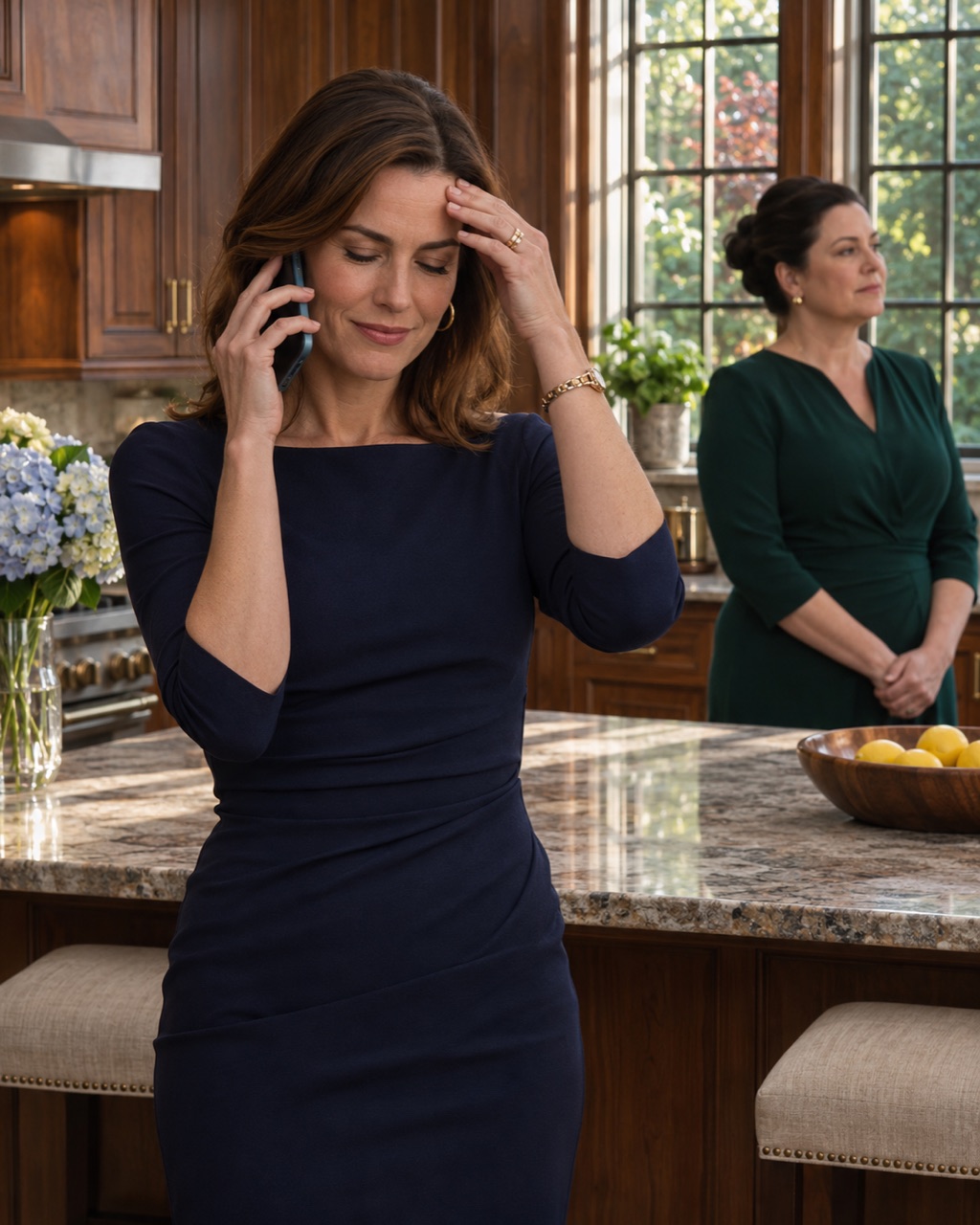
My phone rang before I finished deciding.
Mom’s name appeared.
I answered from the kitchen.
“Your father wants to know why you sent us away.”
Chapter 5: What They Could No Longer Hear
“Because you wouldn’t accept my answer,” I told Mom.
“And I had an appointment to finish.”
She didn’t ask how the review had gone.
“You embarrassed your father.”
“He tried to direct my adviser.”
“He was explaining the situation.”
“I had already explained my decision.”
Mom went quiet for a moment.
I could hear her breathing close to the phone. Usually that was when I started filling the space, softening what I had said until she had something she could treat as an opening.
I didn’t do it.
“I don’t understand why we had to leave,” she said.
“Because the rest of the meeting was private.”
“We’ve always heard about that account.”
“You’ve received information because I allowed it.”
“So now it’s a secret?”
“No. It’s private.”
I looked at the island while I said that.
There was a difference between hiding money and declining to have my parents supervise the money I had saved.
I didn’t need to explain my household spending to them, either, but somehow the college account had become a family subject because I had been happy to share Lucy’s progress.
I had mistaken sharing for something that would remain mine to stop.
It was mine to stop.
“I won’t discuss the review tonight,” I said.
Mom tried to return to Adam.
I stopped her.
“No tuition withdrawal.”
She ended the call without agreeing with me.
I set my phone down, then picked it up again to make sure I hadn’t missed anything from the firm.
There was no completion notice yet.
I left it alone.
Submitting the request had been my part. I wasn’t going to make myself frantic checking it all evening.
The following morning, I opened the firm’s secure message.
Both information permissions had been removed.
I read it carefully.
Not pending.
Completed.
I checked that the confirmation concerned both parents, not only Dad. The request and the confirmation matched.
I had wanted a practical change, and now I had one.
The firm would no longer provide either parent with information about the account.
That didn’t require their agreement.
I sat with the message open for a moment, then closed it.
I didn’t forward it to Mom.
I didn’t send Dad a picture or hold anything up to make a point. The firm had confirmed the change to me, the account owner.
That was what mattered.
I also checked for the separate plan confirmation concerning Nora.
It hadn’t arrived.
I kept those things separate.
My parents’ information permissions were removed. The requested change from Keith to Nora was still awaiting confirmation.
I wasn’t going to say more than the records supported.
When I spoke to Mom, I told her the part that affected future reviews.
“They’ll be private from now on.”
She answered quickly.
“We weren’t interfering.”
“You came to get money for Adam.”
“We came to help you understand.”
“I understood.”
“You didn’t even want to hear Simone’s advice.”
“I did hear her. After you left.”
Mom took a breath.
“What did she say?”
I looked at the kitchen entrance.
That question had once seemed normal. Now it was exactly what I had decided to stop answering.
“I’m not discussing my review.”
“You used to tell us.”
“Yes.”
“So what changed?”
“You tried to use the information to direct my savings.”
She objected to the word “direct.”
I didn’t argue over it.
She had been there when Dad told Simone what they needed. She had asked Simone how to make me reconsider.
I didn’t need her to agree with my description before I could act on what had happened.
“The firm has removed your permission to receive information,” I said.
Mom was silent.
Then she asked, “Your father’s too?”
“Yes.”
“You did that?”
“Yes.”
I kept my hand flat on the island.
That answer was short enough that she couldn’t turn it into a complaint about how I had said it.
“Why would you do something like that?”
“Because you treated my updates as permission to make plans with my money.”
“We’re your parents.”
“I know.”
“Then let us stay informed.”
“No.”
She tried another approach.
“Your father worries about you.”
“He can ask how I am.”
“And Lucy?”
“He can ask how she is.”
“This is part of how she is.”
“No. This is a financial account I own.”
I didn’t like how stiff that sounded between a mother and daughter.
I said it anyway.
Mom had brought us to the point where ordinary family interest needed to be separated from formal access.
I wasn’t going to leave the formal access in place just to keep the conversation warm.
“You’re shutting us out over a disagreement,” she said.
“I’m keeping future financial reviews private.”
She asked whether I would restore the permission after I had calmed down.
“No.”
I had been calm when I submitted the request. I was calm now.
Being upset about what they had done didn’t mean I was unable to make a decision.
Mom spoke more softly.
“Adam needs to know where he stands.”
“He needs to make his own school plans.”
“You could speak to him.”
“If he calls, I’ll speak to him.”
I wasn’t volunteering to call and soften a demand I had refused.
I hadn’t promised him anything.
As far as I knew, my parents had been trying to obtain money before discussing it with him.
Mom’s next words made me lift my hand from the island.
“Adam already knows you’re paying.”
Chapter 6: A Promise I Never Made
“I am not paying,” I told Mom.
“What did you tell him?”
She answered with a complaint instead.
“He was excited about going back.”
“What did you tell Adam?”
“That we were helping him sort things out.”
“That isn’t what you just said.”
Mom paused.
I waited.
I had spent enough of the afternoon before answering questions that weren’t really questions. Now I wanted a direct answer from her.
“You need to talk to him,” she said.
“Did you tell him I agreed?”
“We thought you’d want to help.”
“That isn’t agreement.”
She said my name the way she did when she wanted me to stop examining something.
I didn’t.
“I have not agreed to pay Adam’s tuition.”
“He’ll be disappointed.”
“Then don’t tell him I agreed.”
The call ended without her giving me a clear account of what she and Dad had said.
I didn’t know yet how definite the promise had been.
I knew enough not to call Adam angry and start with an accusation. He hadn’t been in the kitchen. He hadn’t heard my refusal.
I didn’t know what he thought had happened.
The following evening, he called.
I was in the kitchen when his name appeared.
I answered.
“Hey,” he said.
“Hi.”
He sounded cautious, but not like someone calling to ask for a major favor. More like someone calling about a plan already underway.
“Mom said things got awkward yesterday.”
“They did.”
“I didn’t mean for it to turn into a whole thing.”
“What did they tell you?”
He paused.
“About yesterday?”
“About the money.”
He said they had told him I was helping with tuition.
I leaned against the island, then stood upright again.
“Helping how?”
“Paying it.”
“Did they tell you I agreed?”
“Yes.”
The word was immediate.
No uncertainty.
“Who told you that?”
“Mom and Dad.”
I looked toward the entrance where Dad had stood.
They had come into my house after telling Adam the result they expected to get.
That explained their confidence.
It didn’t excuse it.
“I never agreed,” I said.
Adam didn’t answer right away.
Then he said, “They said you did.”
“Not to me.”
“They said you’d worked it out.”
“We hadn’t discussed it.”
He sounded confused now.
I kept my voice even because his confusion wasn’t proof he had helped create the lie.
“When did you hear me promise you tuition money?” I asked.
“I didn’t hear it from you.”
“That’s important.”
“I thought they’d talked to you.”
“They hadn’t.”
I told him what had happened without making him sit through every remark.
They arrived before my meeting. They requested $32,000 from Lucy’s college savings. I refused. Simone confirmed that I alone could authorize a withdrawal.
“No money is coming out for your tuition.”
Adam let out a breath.
“I’ve been planning around this.”
“I understand that’s a problem.”
“So what am I supposed to do?”
“Make a plan that doesn’t include my savings.”
That sounded harsh once it was out.
I picked at a rough place beside my thumbnail, then stopped.
I wasn’t going to fill the discomfort by offering money from somewhere else.
I didn’t have a separate family subsidy to substitute for the one he thought had been promised.
“I want you to finish school,” I said.
“It doesn’t sound like it.”
“Wanting you to finish isn’t the same as agreeing to pay.”
He said Mom had described the money as education savings, as though the purpose made the person using it interchangeable.
I corrected that.
“I opened it for Lucy.”
“She’s not in college.”
“She will have school expenses.”
“I have them now.”
“I know.”
I wasn’t going to argue that his tuition wasn’t real. The amount could be real and the demand could still be wrong.
He asked whether I had considered taking only what he needed.
“That is what they asked me to consider.”
“And you said no?”
“Yes.”
He went quiet.
I could hear how much he had counted on the answer being different.
I felt bad for the part that came from being misled.
I didn’t take responsibility for the promise.
“Adam, you never asked me.”
“I thought I didn’t have to.”
“Because they told you I agreed.”
“Yes.”
“They shouldn’t have done that.”
He didn’t defend it.
That was something.
But he still wanted me to make the false promise work.
“Could you think about it now that we’re talking?”
“I have thought about it.”
“You thought about Mom and Dad asking.”
“I thought about the money leaving Lucy’s savings.”
He said he wasn’t trying to take anything from Lucy.
“I believe you didn’t make that promise,” I said. “But the money would still come from the same place.”
I had been saving for eleven years. That wasn’t a phrase I used to make Adam feel guilty. It was the reason I couldn’t treat the withdrawal as an easy adjustment.
Every payday had been a decision.
Now I was making another one.
“No tuition money,” I said.
Adam drew out my name.
I waited rather than answering the tone.
He returned to the part of the story my parents had given him, the part that made my refusal sound like a last-minute obstacle.
“They told me you only needed Simone to release it.”
Chapter 7: No Loan Either
“Simone doesn’t decide whether to release my money,” I said.
“I do.”
Adam was quiet.
Then he asked, “So they had that wrong too?”
“Yes.”
I moved away from the island and stood near the kitchen entrance. I didn’t know why I had changed places until I looked back and saw where Mom had been standing during the demand.
I didn’t want to spend another call in the same posture.
“She’s my adviser,” I said. “She takes my instructions.”
“Mom made it sound like paperwork.”
“It wasn’t.”
He let out a breath.
I could hear him changing his plan while we talked.
The gift he thought had been arranged wasn’t coming. Now he was looking for another way to ask without giving up on the same money.
“What if it wasn’t you paying for me?”
I waited.
“What if I borrowed it?”
“No.”
“You didn’t hear the rest.”
“I won’t lend from Lucy’s savings.”
“I would pay it back.”
“I understand what a loan is.”
He sounded offended by that.
I hadn’t meant it as an insult. I meant that renaming the withdrawal didn’t change the first thing that had to happen.
Money intended for Lucy would leave the account.
Then I would have to rely on someone else returning it.
“I could put it in writing,” he said.
“I’m not considering terms.”
“So you don’t trust me.”
“This isn’t a test of whether I trust you.”
“It feels like one.”
“I won’t use her college savings for your tuition.”
I said the whole sentence again because he was trying to move the discussion from the money to our relationship.
I didn’t want a fight about whether he was a good person.
I wanted him to hear that the account wasn’t available.
He said a loan would be temporary.
I looked at the island and thought about how often Mom had used the word “replace.”
As though the only question was whether money could theoretically come back.
There were still school years ahead for Lucy. There were still paychecks I expected to save from. Neither fact required me to put the existing savings at risk for someone else.
“No,” I said.
Adam didn’t answer immediately.
I let the pause stay.
Then he asked, “Could you help with some other part?”
“I am not offering a loan or tuition money.”
“Anything?”
“I can wish you well without funding this.”
He made a frustrated sound.
I put my free hand on the side of the doorway.
I wanted him to understand me without hearing contempt. I didn’t think his second attempt was a joke. I didn’t want him to fail.
But I also wasn’t going to reassure him by making an offer I couldn’t afford and didn’t want to make.
“You need to work out school costs without treating my money as available,” I said.
“I already did, and they said—”
“They weren’t speaking for me.”
He stopped.
That was the part we kept returning to.
My parents had placed my agreement inside his plans, and now removing it felt to him like I was taking something back.
I hadn’t given it.
I hadn’t even been asked before they told him yes.
“Have you told them that?” he asked.
“Yes.”
“What did they say?”
“They wanted me to reconsider.”
“And?”
“I didn’t.”
He said he would have to rethink things.
“I understand.”
“You keep saying that.”
“Because I do understand that this changes what you thought you could do.”
“But you won’t help.”
“I won’t provide the money.”
I didn’t argue over whether that made me helpful in some larger sense.
Not every accusation needed a defense.
Adam had the answer he needed to make a real plan now, even if he didn’t like it.
I hadn’t promised him anything, and I wasn’t going to start.
He asked whether Lucy knew about the request.
“Not from me yet.”
“Are you going to tell her?”
“I’ll tell her what she needs to know.”
“I don’t want her thinking I’m taking her money.”
“Then don’t keep asking for it.”
The words came out sharper than the rest.
I closed my eyes for a moment.
Then I opened them and kept my voice ordinary.
“Nothing has been taken. Nothing is being lent.”
Adam said he needed to go.
I didn’t try to make the ending warmer by offering to think about it.
“All right.”
When the call ended, I stood where I was.
I could hear the refrigerator running.
I looked at the phone, half expecting Mom’s name to appear immediately. It didn’t.
I set it down and went back to the island.
There was no form to complete after that conversation. No new instruction for Simone. My refusal didn’t need to become an application or a negotiation.
It just needed to remain a refusal.
I thought about calling Adam back to clarify that I hoped he finished.
I had already said it.
Calling again would give us another chance to repeat the same argument, and I didn’t want him mistaking my discomfort for uncertainty.
I left the phone alone.
When it rang again, I was still in the kitchen.
Dad.
I answered, expecting him to ask why Adam had called upset.
Instead, he went straight to a new version of the same demand.
“We’ll pay you back ourselves.”

Chapter 8: Their New Offer
“I’m not lending the money,” I said.
Dad answered as though I hadn’t understood the improvement.
“Your mother and I would be responsible.”
“I heard you.”
“Then it isn’t a question of Adam paying you back.”
“It isn’t a loan I’m willing to make.”
He paused.
I could picture him deciding which part of that answer to address. Dad usually did better when there was something practical he could negotiate.
This time I wasn’t offering him terms.
“We can make an arrangement,” he said.
“No.”
“You haven’t asked what we’re offering.”
“I don’t need repayment terms.”
“You’re refusing to discuss it.”
“Yes.”
That surprised him enough that he stopped for a moment.
I stood at the island with my phone against my ear. The kitchen was quiet, and I was tired of saying the same thing in slightly different words.
I wasn’t going to become less clear just because he preferred a discussion.
“The money stays where it is,” I said.
“We’re trying to solve the problem.”
“Not with Lucy’s savings.”
“It would be a family loan.”
“It would still come out of her college account.”
Dad shifted to the practical side.
He said they could take responsibility for making sure the money returned. He said I wouldn’t have to deal with Adam over it. He said they understood I wanted Lucy provided for.
I listened without agreeing to any of it.
Then I said, “No withdrawal.”
“You make it sound like we’re asking for something reckless.”
“I’m saying I don’t want to make the loan.”
He wanted me to prove the proposed arrangement was bad enough to refuse.
I didn’t have to do that.
It could be something he believed would work, and I could still decline to use my savings for it.
“You and Mom can decide what you want to provide Adam,” I said.
“We’re discussing how to provide it.”
“Using my money first.”
“Temporarily.”
“I am not doing that.”
Dad didn’t repeat the gift argument.
He knew that had failed in front of Simone.
He stayed with repayment, responsibility, and the idea that I could have both things if I trusted his plan.
That was harder to answer without sounding like I was accusing him of something.
I answered anyway.
“I won’t make the account available.”
His voice changed.
“You’ve become very formal about this.”
“I’ve had to be clear.”
“We’re your family.”
“So is Lucy.”
He didn’t take up that point.
Instead, he asked whether Simone had suggested that I refuse any loan.
“No.”
“Then why are you treating it like it can’t be considered?”
“Because I have considered it.”
I wasn’t going to let him turn Simone into the person standing between him and the money. She had confirmed my authority, not invented my refusal.
I had said no before she entered the kitchen.
“I make this decision,” I said.
Dad was silent long enough that I moved the phone slightly away from my ear to check the call was still connected.
It was.
Then he said, “You used to trust my judgment.”
I rested my elbow on the island.
There was the new argument.
Not repayment now.
Trust.
“I let you receive information,” I said. “You tried to use it to direct a withdrawal.”
“I didn’t try to take anything.”
“You told Simone we needed money for Adam.”
“I was discussing the family situation.”
“She takes instructions from me.”
“I heard her.”
“Then you heard the answer.”
Dad sounded irritated.
He wasn’t used to having his involvement described so narrowly. He liked being the person who understood financial matters and helped the rest of us decide.
I had allowed that habit into conversations that didn’t require it.
I was stopping now.
He asked whether removing the information permission had been Simone’s idea.
“No. Mine.”
“Your mother is very upset.”
“I know.”
“You didn’t have to do that.”
“I decided I did.”
He said I was making permanent decisions over a disagreement.
I didn’t tell him there was another request still being processed.
Not yet.
He hadn’t asked about the role he held if I died. I wasn’t bringing it up simply to hurt him.
I had made the change for Lucy.
If it became necessary to explain, I would explain.
But I wasn’t going to use a pending request as a threat.
Dad returned to his judgment.
He said he had always taken an interest in Lucy’s future. He reminded me that I had relied on him when I first set up the account.
I corrected that carefully.
“Simone helped me establish it.”
“I know who helped with the account.”
“Then you know I opened it.”
“I was talking about what you asked me to do.”
I stopped moving my fingers against the island.
He meant the future role.
The one that existed only if I died.
Dad seemed to believe that being named for that responsibility should make me accept his judgment about the money now.
I hadn’t misunderstood his concern.
He had misunderstood his authority.
“You trusted me to take over, but now you won’t even listen.”
Chapter 9: The Change Was Mine to Make
“That role gives you no authority while I’m alive,” I said.
Dad answered immediately.
“I didn’t say it did.”
“Then it doesn’t affect this decision.”
“It ought to mean you value my judgment.”
“I valued your willingness to look after Lucy’s education if I couldn’t.”
“And that hasn’t changed.”
“It has for me.”
I moved my hand off the island and let it hang at my side.
I didn’t want to soften what I needed to say by turning it into a vague concern.
Dad had raised the role.
I would answer him about it.
“You asked me to use her savings for Adam.”
“As a loan.”
“You first asked me to pay his tuition.”
“We’ve offered to take responsibility.”
“I still don’t agree.”
Dad sighed.
“You’re missing the point.”
“No. I’m explaining mine.”
I told him I had requested a replacement for the person designated to take over the account if I died.
He didn’t speak.
I stayed quiet too.
I wasn’t going to rush into reassurance that would contradict the request I had submitted.
Finally, he asked, “You’ve removed me?”
“I’ve requested the change.”
“So you’ve done it.”
“The plan hasn’t confirmed completion yet.”
I made that distinction deliberately.
The information permissions had been removed. I had confirmation from the firm.
The change to the future role was a separate matter. I had submitted the required instructions after Nora agreed, and I was waiting for the plan.
I wasn’t claiming more.
Dad asked who I had named.
“Nora.”
“Your cousin?”
“Yes.”
“You discussed this with her?”
“Yes. She agreed before I submitted the request.”
He made a short sound through his nose.
“So everybody gets a say except me.”
“It was my decision to make.”
“Nora gets a say.”
“She had to agree to accept the responsibility.”
“And I don’t get to object?”
“You can object. You can’t decide.”
The sentence sat between us.
I didn’t enjoy saying it.
Dad was 68. I was used to hearing him speak with the certainty of someone who expected his children to eventually come around.
I wasn’t coming around.
He said he had never done anything to Lucy.
“I haven’t said you did.”
“Then why would you take this away?”
“Because I need to be comfortable with the person who would control her savings if I died.”
“I would do what was right.”
“You believe using it for Adam would be right.”
“As a family loan.”
“I don’t.”
He wanted to separate what he was asking now from what he might decide later.
I understood the distinction.
I also understood that I wouldn’t be there to insist on it if the future role became his.
I didn’t need to prove that he would misuse the account.
I needed to choose someone I could trust to understand what I intended.
“I opened it for Lucy’s education,” I said.
“I know that.”
“Then you know why this matters.”
Dad returned to the idea that I was punishing him for disagreeing with me.
I didn’t argue about punishment.
I told him what the role actually was.
He had no ownership now. He had no permission to make withdrawals. Being named to take over if I died had never allowed him to overrule me while I was alive.
“I understand that,” he said.
“Then stop using it as a reason I should agree.”
He didn’t answer.
I could hear something shift near his phone, but I didn’t ask where he was or whether Mom was listening.
I wasn’t putting this on speaker for witnesses.
The important public moment had already happened in my kitchen. Dad had tried to speak as though the withdrawal was a family decision, and Simone had confirmed it wasn’t.
This call was about explaining a choice I had made afterward.
It didn’t require another audience.
“Does Simone approve of this?” he asked.
“Simone explained the process.”
“That’s not what I asked.”
“I don’t need her approval to choose the person.”
Dad said I had always been able to talk to him.
I looked at the place beside the island where Mom had stood.
“I did talk to you.”
“You said no.”
“That is talking.”
He sounded angry now, but he kept his words measured.
He said I could have asked him to promise not to use the account for Adam.
I hadn’t thought of that because it wouldn’t have answered the problem.
The problem wasn’t a missing promise.
It was that he and Mom had treated my existing decision as something to work around.
“I chose Nora,” I said.
“You barely gave this time.”
“I spoke to her. I understood the role. I submitted the request.”
“And you didn’t think I deserved to know?”
“I’m telling you now.”
He asked whether he could speak to the plan.
“You no longer have permission to receive information through the firm.”
“I’m not asking for information.”
“The plan takes instructions from me.”
He stopped.
I could hear that he knew I wasn’t going to give him a route around the decision.
Then his voice softened.
“Erin.”
I waited.
“You can still stop this.”
“I don’t want to.”
He tried to make the pending status into an opportunity, as though the absence of confirmation meant I hadn’t finished choosing.
I had finished choosing.
The processing was what remained.
“Then put me back before that goes through.”
Chapter 10: The Confirmation I Waited For
“No,” I told Dad.
“I requested the change because I want it completed.”
He said I was making a mistake.
I didn’t ask him to agree with me.
“I’ve explained the decision.”
“And I’m asking you to think again.”
“I have thought.”
The conversation had reached the point where another explanation would only give him another sentence to argue with.
I wasn’t going to keep offering new ones.
“Nora agreed to take the responsibility,” I said. “The plan is processing the request.”
“You keep talking like there’s nothing you can do.”
“There is something I can do. I can leave my instructions in place.”
Dad was quiet.
Then he said he needed to speak with my mother.
“All right.”
I ended the call without offering to delay anything.
Afterward, I checked the secure account messages.
There wasn’t a completion notice yet.
I closed the account.
I didn’t want my father’s insistence turning the wait into an emergency. The request was submitted. The plan had its process.
I could wait for the confirmation without second-guessing the decision each time my phone rang.
Later that week, the plan’s message arrived.
I opened it in private.
Nora was now designated to take over the account if I died.
I read the confirmation, then checked the account information to make sure it matched.
It did.
Keith was no longer named for that role.
Nora was.
I didn’t feel like celebrating.
I sat still for a moment, then went through the other things I wanted to verify.
No tuition withdrawal had occurred.
The money had not left for Adam.
The firm’s confirmation that my parents’ information permissions were removed was still there, separate from the plan’s confirmation about Nora.
I had asked for different changes through the required procedures.
Now I had confirmation of each.
I wanted that clear because my parents had spent so much effort treating wishes, plans, and actual authority as interchangeable.
They weren’t.
A promise to Adam wasn’t my authorization.
Dad’s future role wasn’t present control.
A request wasn’t a completed change until the plan confirmed it.
Now it was completed.
I contacted Nora to let her know.
“The plan confirmed it,” I said.
“All right.”
“Thank you for agreeing.”
“You already thanked me.”
“I know.”
She didn’t ask for a balance or suggest I send her account information.
She understood that she hadn’t become the owner.
That quiet lack of assumption made me feel better about choosing her than any long reassurance could have.
I told her I would keep the information I needed in order.
Then we ended the conversation.
There wasn’t a family announcement.
I didn’t ask Nora to tell anyone or defend me.
Her role concerned Lucy’s savings if I died. It wasn’t to join the argument while I was alive.
I returned to the kitchen and sat at the island.
I thought about how simple the original decision had been.
Put something aside from every paycheck.
Keep doing it.
I hadn’t expected that the difficult part would someday be persuading people I loved that savings could exist without being available to them.
I picked up my phone to tell Dad the change was complete.
He needed the correct information from me.
I wasn’t going to let him continue believing there was still a pending request he could persuade me to cancel.
When he answered, I kept it direct.
“The plan confirmed Nora’s designation.”
He didn’t answer immediately.
“The change is complete,” I added.
“So that’s it.”
“Yes.”
“And you checked?”
“Yes.”
He asked whether Nora now had access.
“She doesn’t own the account while I’m alive.”
“That’s not what I meant.”
“It is the distinction that matters.”
I explained it without discussing the account’s value or the review itself.
I remained the owner.
Nora was designated to take over only if I died.
The account remained for Lucy’s education, and no money had been withdrawn for Adam.
Dad didn’t dispute the authority this time.
He had heard Simone confirm it in person, and now the changes had been processed through the proper channels.
He shifted to what it meant for the family.
“Your mother feels you don’t want us involved.”
“I don’t want you involved in my financial reviews.”
“She’ll hear that as more than money.”
“I can’t decide how she hears it.”
He said things couldn’t simply go back to normal after I had done this.
I didn’t promise that they would.
The old normal had included Mom asking about the account and Dad expecting his opinion to carry special weight.
That wasn’t continuing.
They could still ask about Lucy.
They could still speak to me.
They just weren’t getting information from the firm or a role in my financial decisions.
Mom came onto the call.
I didn’t know whether Dad had handed her the phone or she had been waiting beside him. I didn’t ask.
“Your father says you’ve finished it.”
“The plan confirmed the change.”
“And we’re supposed to be fine with that?”
“You don’t have to be fine with it.”
She took a breath.
I waited.
I could hear her choosing what to say next, and I knew she wasn’t about to apologize.
“Then don’t expect us to act like nothing happened.”

Chapter 11: What I Told My Daughter
“I don’t expect that,” I told Mom.
“Something did happen.”
She said I knew what she meant.
I did.
She meant I had made changes she couldn’t reverse by waiting for me to feel guilty.
I wasn’t going to argue about whether she should be upset.
“I won’t discuss the account with you,” I said.
“Lucy is our granddaughter.”
“Yes.”
“Does she know what you’re doing?”
I looked toward Lucy’s usual place at the island.
“She knows I’m saving for her education.”
“Does she know about Adam?”
“I’ll speak to her myself.”
Mom began to say that Lucy might feel differently.
I stopped her.
“Lucy won’t be asked to decide this.”
“She can have an opinion.”
“She won’t be responsible for funding an adult’s tuition.”
That ended the useful part of the call.
I didn’t tell Mom exactly when I planned to talk with Lucy. I didn’t need her approval for that conversation either.
I needed to keep it small enough for my daughter to understand without making it feel like a family emergency.
When Lucy was home and we had a quiet moment, I sat with her at the island.
She looked at me before sitting all the way down.
“Am I in trouble?”
“No.”
“Okay.”
Her shoulders lowered.
That alone made me careful about my next words. She was 14. A serious conversation with her mother could mean all kinds of things in her head.
I didn’t want her inventing a worse problem while I tried to give a complete explanation.
“Your college savings are still for your education,” I said.
She frowned.
“I know.”
“I wanted to make sure you heard it from me.”
“What happened?”
“Grandma and Grandpa asked me to use some of the money for Adam’s tuition.”
Lucy looked toward the entrance, then back at me.
“Did you?”
“No.”
The answer came before she finished settling her hands on the island.
“Nothing came out for him.”
She looked down.
“All right.”
I waited.
She ran a fingertip along the edge beside her seat.
“Is he mad?”
“He was disappointed.”
“Because of me?”
“No.”
I said that firmly enough that she looked up.
“This wasn’t your decision. It was mine.”
“But it’s for my school.”
“Yes. That’s why I saved it.”
She asked whether Adam couldn’t go back.
“I don’t know what plan he’ll make.”
I wasn’t going to tell her he had no options, and I wasn’t going to list ways he might pay as though she needed to check that he would be all right.
“He’s an adult,” I said. “His school costs are for him to work out.”
Lucy nodded, but she still looked worried.
I recognized that look.
She was trying to figure out what answer would keep people from being upset with each other.
I had done enough of that myself.
“You don’t need to call anyone about this,” I said.
“I wasn’t going to.”
“Good.”
Then she asked, “Are Grandma and Grandpa mad at you?”
“They don’t like my decision.”
She was quiet.
I didn’t tell her all the things they had said.
She didn’t need to know that Mom had warned me Adam would remember whether I helped, or that Dad had tried to turn his future role into a reason I should obey his judgment now.
Those details would only give her more to carry.
“The money is still there for school,” I said. “You don’t have to defend that.”
She asked whether I was sure.
“Yes.”
That was enough for a moment.
We stayed at the island without talking. I let her think instead of filling the space with a lecture about family or money.
Then she asked whether she had to know what she wanted to study yet.
“No.”
“Because I don’t.”
“You have time to explore.”
Her face changed a little at that.
The conversation had finally moved from whether she was allowed to keep help for school to what school might look like.
That was where I wanted us.
I didn’t ask her to be grateful for my refusal.
I didn’t need her to tell me I had chosen correctly.
She was my daughter, not another witness to call when my parents questioned me.
Later, Mom brought up Lucy again.
“Have you told her?”
“Yes.”
“What did you say?”
“That her savings remain for her education.”
“And about Adam?”
“I told her I refused the request.”
Mom said that was only my side.
I stayed beside the island with the phone against my ear.
This was what I had expected when she first suggested Lucy might feel differently.
She wanted a new audience.
Or a new person to persuade.
“She isn’t deciding,” I said.
“She’s old enough to understand helping family.”
“She understands that I made the decision.”
“You could let her speak for herself.”
“Not about whether adults should use her college money.”
Mom objected that it was technically my account.
“It is,” I said. “And I said no.”
She didn’t have an answer to that which helped her.
If the money was mine, I could refuse.
If the purpose was Lucy’s education, I could protect it.
Either way, my daughter didn’t become the person responsible for making the family comfortable.
Mom tried once more, sounding less demanding now.
“Will you at least let Lucy hear our side?”
Chapter 12: The Terms of a Visit
“No,” I said.
“Lucy won’t be asked to negotiate this.”
Mom sounded offended.
“We aren’t negotiating with a child.”
“Then don’t ask her to reconsider my decision.”
“We want her to understand.”
“She understands the money is for her education.”
“You’ve made us sound selfish.”
“I haven’t asked her to judge you.”
That was true.
I had given Lucy enough information to understand that nothing had been taken and that she wasn’t responsible for anyone’s disappointment.
I hadn’t repeated the insults or asked her to take my side.
Mom wanted to explain herself.
I understood that.
But her explanation still had the same goal: making Lucy see why the money should be available to Adam.
I wasn’t allowing that conversation.
“She doesn’t need to hear a tuition request,” I said.
“It wouldn’t be a request.”
“Then there is nothing to discuss with her.”
Mom went quiet.
I sat down at the island.
Until then, most of these calls had happened with me standing, ready to move, as though I might find the right words somewhere else in the kitchen.
I stayed seated now.
“I want to be clear about visits,” I said.
She answered carefully.
“What about them?”
“They can resume when you and Dad agree not to raise Adam’s tuition.”
“So we’re banned?”
“I gave you the condition.”
“You’re making rules for our relationship with our granddaughter.”
“I’m deciding what gets discussed in my home.”
Mom said Dad wouldn’t like being spoken to that way.
“He can speak to me himself.”
She returned to the word “family.”
I didn’t argue with it.
They were family.
That didn’t make every subject appropriate for every person, and it didn’t give them permission to keep pressing a demand I had refused.
“Visits won’t include the account, Adam’s tuition, or asking Lucy what she thinks we should do,” I said.
“You’re covering everything.”
“I’m being clear.”
I didn’t tell her she couldn’t be disappointed.
I didn’t require her to say she understood my reasons.
I wasn’t asking for an apology as the price of coming over, because I couldn’t make one sincere by requiring the words.
I was asking for conduct I could recognize.
No tuition demand.
No attempt to move it through Lucy.
No discussion of my financial reviews.
Mom said she would speak to Dad.
“All right.”
This time, I didn’t call after her to make sure she knew I still wanted them in our lives.
The condition already left room for that.
I wasn’t refusing all contact.
I was refusing another visit that turned my kitchen into a place where my daughter might hear her education described as an available family expense.
When Dad spoke to me, he took a different approach.
“Your mother says we can’t come over unless we agree with you.”
“You don’t have to agree.”
“That’s what it amounts to.”
“You have to leave the tuition subject alone.”
“What if Adam’s plans come up?”
“You can talk about his plans without asking me to fund them.”
He paused.
That was a distinction he understood.
I wasn’t banning my brother’s name.
I wasn’t pretending school didn’t exist.
I was stopping the demand.
“And if Lucy asks?” he said.
“You won’t use a question from Lucy to reopen this.”
“You’ve got an answer for everything.”
“I’ve thought about what I need.”
Dad said it would be difficult to visit while feeling watched.
I looked at the island.
“I don’t want to watch you. I want a visit without this subject.”
He didn’t promise immediately.
I wasn’t surprised.
He had spent the past conversations trying to find a version of the request I would accept. Agreeing to stop meant accepting that no version would work.
I let him take time.
I didn’t weaken the condition just because the agreement wasn’t immediate.
There were no new secure instructions to submit, no further account changes to make. The money remained where it was, and Nora’s designation was confirmed.
This part was about whether my parents could come into my house without trying to undo those decisions.
Eventually, Mom said they would leave the tuition alone.
“Dad too?” I asked.
“Yes.”
“I need to hear that from him.”
She didn’t like that.
I didn’t let her agreement stand in for his.
They had already made a promise on my behalf. I wasn’t going to repeat that habit in reverse by treating one person’s answer as everybody’s answer.
Dad agreed.
“We won’t bring up the tuition.”
“Or ask Lucy to decide?”
“No.”
“Or ask her to talk me into it?”
“We said we won’t bring it up.”
“All right.”
There was no apology.
Mom didn’t suddenly say she could see how unfair the demand had been. Dad didn’t praise me for protecting Lucy’s education.
They agreed to the condition.
I accepted the agreement for what it was.
Afterward, I told Lucy her grandparents would be visiting again, and that she didn’t need to discuss the money.
“What if they do?” she asked.
“I’ll handle it.”
She nodded.
I didn’t give her a speech to memorize or tell her to report every remark. I wasn’t going to turn ordinary time with her grandparents into an assignment.
Before the next visit, Dad called.
I answered in the kitchen.
He went straight to the point.
“Are you still going to make this a rule?”
Chapter 13: The Same Kitchen Island
“Yes,” I told Dad.
“The rule stays.”
He was quiet for a moment.
Then he said, “All right.”
I didn’t add another explanation.
We had already discussed what the rule meant. They could visit without agreeing that I had made the right decision, but they couldn’t use the visit to continue the demand.
Three weeks had passed since they stood in my kitchen asking for $32,000.
No money had left the college savings for Adam.
My parents no longer received information from the firm.
Nora was the person designated to take over if I died, and I remained the person who owned the account and decided what happened while I was alive.
I had checked those things through the proper confirmations.
I didn’t need to keep checking them to prove the afternoon had really happened.
When my parents arrived for the visit, I let them in.
Mom looked toward the kitchen.
Dad stayed near the entrance while we greeted each other, and for a moment the arrangement was familiar enough that I noticed exactly where everyone stood.
Then I moved farther inside.
This time, there was no financial appointment.
No demand waiting to be presented before someone else arrived.
Lucy came to greet them.
I watched her face, then made myself stop examining every small movement. She hadn’t done anything wrong, and she didn’t need me looking at her as though she might have to signal for help.
Mom asked how she was.
Lucy answered.
Dad asked about school.
She told him.
The conversation wasn’t especially warm, but it stayed ordinary.
That was enough.
I didn’t need them to perform a reconciliation we hadn’t had.
Mom didn’t ask about the balance. Dad didn’t mention Simone. Neither asked Lucy whether she thought Adam should have the money.
When Adam’s name came up, it wasn’t followed by a request.
I didn’t supply one.
I didn’t ask for an update on whether his tuition was settled. He knew my answer, and he would have to decide his next steps without an assumed gift or loan from me.
My parents didn’t have permission to solve that problem through my account.
They also didn’t have permission to turn Lucy into the person who might soften me.
During the visit, Mom glanced at me across the kitchen.
I couldn’t tell what she wanted me to say.
For once, I didn’t try to work it out.
If she had a question, she could ask it.
If it was about the account, I would decline.
She turned back to Lucy instead.
I went on with what I was doing.
That was different too.
Before, I might have tried to keep everyone comfortable by bringing up a pleasant subject quickly, or by giving Mom some harmless piece of account news to show that I wasn’t angry anymore.
I didn’t offer financial information as reassurance.
Their permission had been removed.
I wasn’t going to recreate it myself through casual updates just because refusing felt awkward.
They could hear about Lucy from Lucy.
They could hear about me from me.
The account stayed out of it.
When the visit ended, there wasn’t a speech at the door.
Mom said goodbye.
Dad said they would talk to us.
Lucy went back inside, and I closed the door after them.
I stood there briefly, listening to the house settle into its usual sounds.
Then I returned to the kitchen.
Lucy was at the island.
“Was that okay?” she asked.
“Yes.”
She studied my face.
“They didn’t say anything.”
“I know.”
I sat down beside her.
She looked relieved, and I was glad she had noticed the absence of the subject rather than another argument about it.
I hadn’t wanted her first experience of knowing about college savings to be an obligation to protect everybody’s feelings.
She was allowed to think about school.
That was the point of the savings.
Not to guarantee a particular school, a particular course of study, or a future she had already chosen.
To give her help when she reached that part of her life.
She asked whether we could talk about colleges sometime without having to decide anything.
“We can talk now,” I said.
“I don’t know where I want to go.”
“You don’t have to know yet.”
She leaned her arms on the island.
Then she began talking about the things she wondered about.
Whether she would want to stay close to home.
Whether she would like living somewhere else.
How people decided what they wanted to study when they hadn’t tried most of it yet.
I listened.
I didn’t reach for my phone to include my parents.
I didn’t say we should ask Grandpa what he thought.
There might be people Lucy wanted to hear from later. She could choose interests, ask questions, change her mind, and learn more before making decisions.
But this conversation didn’t need an audience.
When she asked what the savings would cover, I answered carefully.
“We’ll look at the costs when we have actual options.”
“So we don’t know all of it yet?”
“No.”
“But it’s still there?”
“Yes. It’s still there for your education.”
She nodded and went back to talking about what she might like.
I let her take her time.
For eleven years, I had made room for those future choices every payday. I hadn’t needed to know exactly what they would be.
I still didn’t.
I only needed to keep making the decisions that were mine to make.
Lucy shifted closer and asked me another question about going away to school.
I turned toward her.
My parents weren’t part of the conversation, no tuition money had been withdrawn, and my daughter could talk about her own future without being asked to give something up for her uncle.
I sat beside Lucy and listened at the same kitchen island.
You Might Also Enjoy




