My Parents Planned To Lock Me Out Days After My Husband’s Funeral — Then I Called Someone
Chapter 1: The Door Was Already Open
My parents announced new locks while I held the cylinder their locksmith had refused to install. They arrived dressed for New Year’s Eve, with my sister and overnight bags. I was 43, sixteen days past my husband’s funeral. Ten guests watched beside his wheelchair. I gave a small smile and called toward the den.
“Martin, would you come out, please?”
Then I waited, with the cylinder across my palm.
My mother still had her finger pointed upstairs.
My father had just set down Kristin’s overnight bag.
Neither of them looked toward the den right away.
They were watching me, expecting another argument.
“We’re moving Kristin in. This place is ours.”
That was what Mom had announced upon entering.
She was 68, wearing a cream suit.
Dad, 70, had followed her through my front door.
Kristin came behind him, carrying the rest.
My sister was 38, and she still rented an apartment.
That evening, she apparently expected a room in my house.
“Which room should I use?” she had asked.
“You aren’t moving in,” I told her.
She looked at Mom instead of answering.
The front door remained open behind them.
Cold air reached my ankles beneath my dinner dress.
“Close the door, please,” I told Dad.
He pushed it shut with his heel.
“Let’s settle this before everything gets cold.”
My roast beef was resting on the kitchen counter.
The potatoes were already in their serving dish.
I had invited ten people for New Year’s Eve dinner.
My parents and Kristin were not among them.
Scott, my brother, stood near the kitchen counter.
His phone was still in his hand.
He was 46 and knew exactly what I’d refused.
Before the door opened, he had approached me.
“Dad’s outside,” he said.
“Tell him tonight isn’t a good time.”
“They’re already here, Renee.”
“I didn’t invite them.”
“Can’t they come inside for a minute?”
“No. Please don’t give them your code.”
He pressed his phone against his chest.
Then he uncovered it and gave Dad the code.
I heard him from beside the serving dishes.
I had made that temporary code for Scott.
He was helping carry groceries and prepare dinner.
I had not given him permission to distribute it.
Now Dad stood in my entryway, straightening a bag.
“The locksmith will handle the locks,” he said.
Mom noticed the cylinder resting in my hand.
Her expression softened into a satisfied smile.
“You see? We’re getting things organized.”
It was an uninstalled finish sample belonging to Martin.
No lock had been removed from my door.
Nothing had been approved for my parents.
But Mom took it as evidence I’d cooperated.
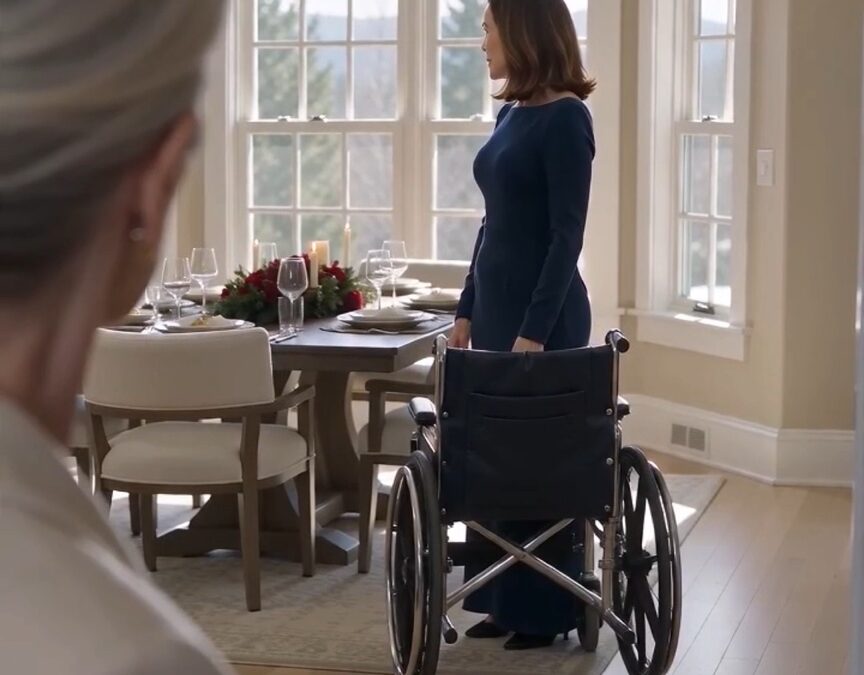
I rested my free hand on Owen’s wheelchair.
It stood beside the dining-room window.
During his declining health, he liked sitting there.
He could see the porch without turning his head.
I had washed his hair over a basin nearby.
A folded towel supported his neck against my arm.
He asked me to leave his wheelchair beside the dining-room window.
He liked seeing the porch light come on.
Even when he was tired, he watched for visitors.
He would tell me before the doorbell rang.
Owen had been 45 when he died.
For eleven months, I cared for him while working.
I administered payroll during the day.
Afterward, I helped him wash, eat, and settle comfortably.
I also kept hosting the family holidays.
Sometimes I prepared vegetables beside his chair.
Sometimes dinner waited while I helped him upstairs.
Nobody had suggested the house was beyond my abilities then.
Owen died on December 9, 2025.
His funeral was December 15.
Now, on December 31, my parents brought replacement plans.
Mom glanced toward his wheelchair.
“You shouldn’t be alone with all of this.”
“I’m not alone tonight,” I said.
The guests stood close enough to hear everything.
Someone had been about to pour water.
Another guest still held a folded napkin.
Dad looked toward them before speaking again.
“Don’t embarrass your sister.”
“Then don’t move her into a house I haven’t offered.”
Kristin shifted a bag against her leg.
“I already started packing.”
“That doesn’t mean I agreed.”
Mom stepped farther into the dining room.
“We’re trying to help you.”
“Then listen to what I’m saying.”
Scott looked down at his phone.
I kept waiting for him to correct this.
He could have said I’d refused admission.
He could have acknowledged sharing the code anyway.
Instead, he stayed beside the counter.
Dad nodded toward the cylinder.
“You don’t understand the arrangements.”
“I understand my own front door.”
Mom raised her pointing hand again.
“We can’t keep having this discussion.”
We had already had it privately.
I refused when she called it company.
I refused when Dad called it practical.
They had promised Kristin she could stop paying rent.
They had made that promise without asking me.
Then they acted as though my refusal was unfinished.
I looked directly at both of them.
“Only I authorize these locks.”
Mom’s finger remained aimed toward my stairs.
I gave the small smile I could manage.
Then I called toward the den.
Martin appeared in the doorway.
He was 57 and had serviced my door before.
He carried no drill or replacement hardware.
My mother’s pointing hand dropped.
She looked toward Douglas.
Dad looked from Martin to the cylinder.
“What exactly have you told my daughter?”
Chapter 2: What He Kept
Martin looked at me before answering my father.
“Would you like everyone to hear?”
“Yes.”
Dad moved away from Kristin’s luggage.
“This is family business.”
“You brought it into my dinner,” I said.
Mom reached for the back of a dining chair.
“We don’t need a presentation.”
I recognized the tone she used with service people.
She expected him to apologize and leave.
Martin stayed where he was.
He had already refused their instructions that afternoon.
I knew because he had called while I peeled potatoes.
His number was saved from an earlier door repair.
I answered with the peeler still in my hand.
“Did you ask your father to arrange new locks?”
I set the peeler on the cutting board.
“No. What did he ask you to do?”
Martin first confirmed he was speaking with me.
Then he asked whether I still owned the house.
“Yes. Individually.”
“Has anyone else been given possession?”
“No.”
He paused before continuing.
“Your father left instructions I can’t follow.”
Dad had left a voicemail on Martin’s business line.
Martin preserved it instead of deleting it.
He had called Dad back and declined the work.
The problem was authorization, not availability.
Dad treated that refusal as a scheduling inconvenience.
He said everybody would be there before dinner.
Martin repeated that the owner must authorize the work.
Dad said he would explain things in person.
That was how a refusal became an expected appointment.
My father decided he hadn’t received a final answer.
“What did his message say?” I asked.
Martin told me.
I sat down at the kitchen table.
The potatoes remained wet on the cutting board.
Dad hadn’t merely asked about helping Kristin move.
He wanted new keys given to Kristin and my parents.
He wanted me excluded until they decided otherwise.
“Please keep that message,” I said.
“I have.”
“Don’t delete any part of it.”
“I won’t.”
I asked whether he could come to the house.
I wanted to make my refusal unmistakable.
I also wanted somebody outside my family present.
Martin agreed to stop by before dinner.
Before he arrived, I took out my house documents.
My recorded deed copy was in the purchase folder.
I placed it on the desk in my den.
My identification went beside it.
Martin checked the name, property address, and recording information.
He compared those with my identification and service record.
“This is your property,” he said.
“Yes.”
“And you haven’t authorized anybody else to arrange this.”
“No.”
He asked whether my parents had ever lived there.
They hadn’t.
They had visited for meals and holidays.
They had never paid rent or received possession.
There was no tenancy agreement with them.
There was none with Kristin either.
“I already declined their job,” Martin said.
“I want you to know that clearly.”
“I do. They’ll probably still come.”
He looked toward my prepared dining table.
“Would you rather I leave before your guests arrive?”
I considered that.
Then I asked him to wait in the den.
I wanted to handle my family myself first.
But I didn’t want him gone if Dad claimed otherwise.
Martin agreed, and I offered him dinner afterward.
He had brought finish samples for my own consideration.
I had asked about choosing different hardware later.
He voluntarily handed me the cylinder I liked.
I held it against the door’s existing finish.
Then guests began arriving, and Scott’s phone rang.
The sample was still in my hand when my parents entered.
Now Mom was watching Martin from beside the chair.
“Renee knows what we meant,” she said.
“I’d like everyone else to hear,” I answered.
Dad adjusted the cuff of his suit.
“Not in front of company.”
“You announced it in front of company.”
Martin took out his phone.
He selected the preserved voicemail.
He didn’t hold the screen toward Dad for effect.
He simply asked whether I still wanted it played.
“Yes,” I said.
Dad’s voice came through the speaker.
“This is Douglas, calling about my daughter’s house.”
He gave my Littleton address.
Then he explained whom the keys were for.
“Give the new keys to Kristin and to us.”
Kristin stopped adjusting the strap on her bag.
Dad’s recorded voice continued.
“Renee isn’t to have one until we’ve settled things.”
Scott looked up.
“If she goes out, she can call us.”
Martin let the message finish.
Then he lowered the phone.
I looked at Dad.
“You wanted me asking permission to come home.”
“You’re making it sound different than it was.”
“That was your voice.”
“We needed an arrangement that would actually work.”
“For whom?”
Mom answered before he could.
“For you, Renee. You haven’t been yourself.”
She moved her hand toward Owen’s wheelchair.
“We thought you needed somebody taking care of things.”
Chapter 3: The House They Assumed
I moved between Mom and Owen’s chair.
She stopped reaching toward it.
“I know my husband died,” I said.
“Then you know you’re under strain.”
“Yes.”
“People under strain need practical help.”
“I didn’t ask you to take my keys.”
Dad folded his arms.
“Nobody said you couldn’t come home.”
“Your message said I could call you.”
“To make sure somebody was here.”
“I live here.”
Mom looked toward the guests.
“She’s hearing everything in the worst possible way.”
I looked at the table instead.
I had chosen those plates before marrying Owen.
I had carried them into this house myself.
My parents had eaten from them often enough.
Yet they apparently thought they could decide who stayed.
I bought the house for $725,000.
The deed was signed and recorded June 8, 2018.
My name alone appeared as the owner.
Owen and I married on June 6, 2020.
I never signed a later deed transferring any ownership.
He knew that.
We discussed household bills and repairs without confusion.
My parents never checked the deed.
They heard Owen discuss the roof and furnace.
They saw him repair cabinets and hang curtains.
They apparently assigned him ownership along with those jobs.
After his funeral, Dad asked about Owen’s house papers.
“There aren’t ownership papers in his name,” I told him.
“We’ll sort everything out when you’ve rested,” he answered.
I had been too tired to pursue the assumption.
There were dishes in the sink after the funeral.
There were calls I still needed to return.
I thought he was being clumsy about concern.
Now I knew he had not accepted my answer.
“You assumed this house belonged to Owen,” I said.
Dad’s mouth tightened.
“I assumed you shared responsibilities.”
“We did. We didn’t share title.”
Mom looked toward the den.
“Are we bringing documents into dinner now?”
“You brought a locksmith into it.”
Martin spoke without raising his voice.
“Renee showed me her recorded deed and identification.”
Dad looked at him.
“I didn’t ask you to investigate our family.”
“You asked me to change access to this property.”
Martin kept his phone at his side.
“I needed the owner’s authorization.”
“And you’ve decided that’s her.”
“It is her.”
I appreciated how little he added.
He didn’t speculate about inheritance or our family.
He had checked the document relevant to his work.
He had heard my refusal.
That was enough for him not to proceed.
Mom glanced at my palm again.
“But she’s already holding the replacement.”
“It’s an uninstalled finish sample,” Martin said.
“It belongs to me.”
I opened my hand fully.
The metal rested against my skin.
It had never been part of my existing door.
Mom looked at it, then toward the entryway.
She had mistaken it for completed cooperation.
Dad tried another approach.
“The entry code worked. We weren’t breaking in.”
“Scott gave it after I expressly refused admission.”
Scott rubbed the side of his face.
“I thought getting everybody inside would calm things down.”
I looked at him.
He didn’t repeat it.
Kristin spoke from beside the bags.
“I didn’t call Martin.”
“No,” I said. “You came ready to move in.”
“Mom said you needed company.”
“I told Mom I wasn’t offering a room.”
Mom pulled the dining chair farther out.
“You don’t have to make everything sound so harsh.”
“I’m answering the same question again.”
Dad glanced toward the front door.
“Then set the locks aside.”
He said it like the locks were a distraction.
Nobody had apologized for the actual request.
Nobody had explained why I should lose access.
They simply wanted to discuss something easier to defend.
“Kristin can stay while we work things out,” he said.
Mom nodded quickly.
“Exactly. Nothing has to be permanent.”
I could picture the following morning.
Kristin’s toothbrush beside the upstairs sink.
Her bags open on a bed.
Mom asking whether I’d made enough breakfast.
Then my refusal would be described as a reversal.
They would say I had agreed the night before.
I looked at Kristin.
“Have I ever told you that you could live here?”
She pressed her lips together.
“Not in those words.”
“In any words?”
“No.”
Martin shifted away from the den doorway.
Dad watched him, clearly hoping he would leave.
Martin stayed.
“I saw Renee caring for Owen during my earlier visit,” he said.
I remembered him waiting while I adjusted Owen’s footrests.
He had stood by the door until we finished.
“She was managing this house then,” he continued.
“She’s managing it now.”
Mom turned toward the table.
Nobody suggested I should go rest.
Nobody offered to make my decision for me.
Dad exhaled and lowered his arms.
“Fine. Renee owns it. Nobody disputes that now.”
He looked toward my sister.
“Then, as the owner, let Kristin stay.”
Chapter 4: The Bags By The Door
Kristin pulled a bag closer with her heel.
It scraped lightly against my entryway floor.
A travel pillow was tucked beneath its strap.
They hadn’t brought those bags for a brief conversation.
They expected her belongings upstairs before dinner.
I looked at my sister.
“Have you surrendered your apartment?”
“No. Not yet.”
“Do you still have access to it?”
“Yes.”
“Have you finished your obligations there?”
“I’m trying to work that out.”
“So you still have a place to live.”
Mom answered for her.
“She’s paying money she shouldn’t need to spend.”
“Rent?”
“You know what I mean.”
I did.
They had promised Kristin she could stop paying rent.
My spare rooms were supposed to make that possible.
They had decided my house was the solution.
My consent was the detail they expected to obtain later.
Dad spread his hands.
“There’s no emergency. We can discuss this calmly.”
“There wasn’t an emergency when you brought the bags.”
“We thought seeing her here might help.”
“Help me agree?”
“Help you think about it properly.”
I turned toward the dining table.
A guest set down her water glass carefully.
Everybody was waiting for me, not Dad.
I moved away from Owen’s chair.
Dad pointed at the cylinder still in my palm.
“Install that, then. Give Renee her keys.”
Martin looked at him.
“I’m not taking instructions from you.”
“I just said she gets her keys.”
“That doesn’t authorize the work.”
Martin turned toward me.
“Renee, what do you want done with that cylinder?”
I held it out to him.
“Put it away. No work tonight.”
He took it and opened his service bag.
Dad stepped toward the bag.
“I’m offering to pay.”
Martin put the cylinder inside and closed the bag.
“Payment doesn’t replace the owner’s permission.”
Mom pulled her hand away from the dining chair.
Dad looked at the closed bag, then at me.
The cylinder was no longer waiting beside my door.
Martin had put it away because I told him to.
“I’d like that finish for my appointment,” I told Martin.
“We can arrange that.”
“Not tonight.”
“Of course.”
Mom drew in a breath.
“So you are changing the locks.”
“If I choose to.”
“After everything you said about us doing it?”
“I authorize work on my house. You don’t.”
She looked toward Scott.
“Tell her we were trying to help.”
He pushed away from the counter.
“I shouldn’t have given Dad the code.”
Mom turned back before he finished.
“He was letting his parents inside.”
“After I told him not to.”
Scott put his phone into his pocket.
“I thought you’d feel differently once they were here.”
“Why?”
He looked toward the luggage.
“I thought we could talk face-to-face.”
“We had already talked.”
“I know.”
Dad stepped closer without touching either of us.
“Let’s stop making everybody explain themselves.”
“Then take the bags outside.”
Mom stared at me.
“You’re sending us away on New Year’s Eve?”
“You came without an invitation.”
“We’re your parents.”
“And I’m telling you to leave my home.”
She turned toward the guests.
“I hope everybody understands what’s happening.”
Someone placed a napkin beside her plate.
“We heard Renee,” she said.
That was all she offered.
No insult, no speech, no attempt to decide anything.
Mom’s face tightened.
Dad looked toward Martin’s phone.
The message was preserved.
The guests had heard it.
Martin had declined the work before arriving.
There was no remaining claim that somebody misunderstood him.
Dad reached for the bag beside his leg.
“Come on, Kristin.”
She didn’t move immediately.
“I didn’t know about the key part,” she said.
I waited.
“The part where you wouldn’t get one.”
“I heard you.”
“I thought you knew we were coming.”
“You heard me say you couldn’t move in.”
She adjusted the strap against her shoulder.
“I thought Mom had talked to you again.”
“Mom can’t agree for me.”
Kristin looked toward her.
Mom had already reached the front door.
Dad carried a bag outside.
Cold air came in when Mom opened the door.
Kristin picked up the rest.
“Can I talk to you later?” she asked.
“You can contact me yourself.”
“Okay.”
“Don’t send somebody else to ask about a room.”
She nodded without looking at me.
Mom paused with her hand on the door.
“We should have discussed this privately.”
“You could have accepted my private answer.”
She looked past me toward the table.
Nobody came forward to persuade me.
“You’ll call if you need something,” she said.
It sounded almost ordinary.
I could not answer it as an ordinary offer.
“I’ll decide whom to call.”
Then she went outside.
Dad looked back from the walk.
He didn’t return to the doorway.
I closed the door myself.
Nobody had been evicted from a residence.
My parents had never lived there.
Kristin had not received possession or permission to stay.
Her bags had never reached a bedroom.
They arrived uninvited and left after I withdrew permission.
I turned the lock and faced my guests.
Scott remained between the kitchen and dining room.
His place setting was already waiting.
He looked at it, then at me.
“Do you want me to leave too?”
Chapter 5: The Dinner We Still Ate
I looked at Scott’s empty chair.
I had placed him near the kitchen to help.
Earlier, he carried groceries and lifted the roasting pan.
I had thanked him for both.
Those things did not cancel what happened afterward.
“I want to eat without another argument,” I said.
“I’m not going to argue.”
“I don’t know that yet.”
His face changed.
He was accustomed to being the reasonable one.
He rarely raised his voice with me.
He usually explained why accommodating our parents was easier.
That evening, easier meant ignoring my explicit refusal.
“I thought they were coming to dinner,” he said.
“You knew I said they couldn’t come inside.”
“Yes.”
“I need you to stop at that part.”
He took his phone from his pocket.
There were messages waiting.
“I can tell Dad—”
“Not from my kitchen.”
He put the phone away.
“I’m sorry, Renee.”
“I heard you.”
I didn’t want to comfort him for feeling bad.
I didn’t want another explanation beside the potatoes.
He picked up his coat.
Before leaving, he glanced at Owen’s wheelchair.
“I miss him too.”
“I know.”
Owen had liked Scott.
They had repaired small things around the house together.
They had laughed over instructions I refused to read.
I missed those afternoons too.
But I would not use Owen to settle this argument.
Scott opened the door.
I let him leave and locked it behind him.
When I turned around, a guest was covering the potatoes.
Someone else moved a chair clear of the entryway.
Nobody touched Owen’s wheelchair.
“Would you rather we go?” someone asked.
I looked at the roast resting on the counter.
I had wanted this dinner.
I still wanted to eat with the people I invited.
“No. I’d like to serve.”
“Tell us what you need.”
“Water glasses. And uncover the potatoes again, please.”
They moved after I answered.
Such an ordinary thing nearly made me cry.
I carried the meat platter toward the table.
Then I remembered the door code.
I put the platter down again.
“I need to disable the code Scott shared.”
Martin nodded from near the den.
I opened the door’s control settings.
Scott’s temporary code was listed there.
I disabled it and checked the remaining shared access.
Then I removed the other family codes.
I did not wait for the dishes to be cleared.
I did not ask whether anyone would be offended.
The existing mechanical lock remained unchanged that evening.
My parents still had an old emergency key.
That was why I wanted authorized rekeying.
I returned to the kitchen.
Martin picked up his service bag.
“I should let you have your dinner.”
“Would you like to eat first?”
“Only if you’re asking because you want to.”
“I am.”
I set a place for him.
Not Scott’s place.
I brought another chair to the table.
Martin washed his hands at the kitchen sink.
The running water sounded so ordinary.
I picked up the carving knife and paused.
Owen usually carved the roast.
Even when he couldn’t stand comfortably, he offered instructions.
I adjusted my grip the way he preferred.
A guest steadied the platter without taking the knife.
“That’s enough for me,” she said as I served.
We started with potatoes, vegetables, and passing the water.
Nobody asked me to explain my childhood.
Nobody praised me for putting my family out.
They let me eat.
Halfway through dinner, I noticed I was sitting comfortably.
I wasn’t holding my fork above my plate anymore.
The front door remained shut.
Nobody else was coming through it.
Martin confirmed he could return January 2.
“I want the cylinder I was holding,” I said.
“I’ll bring it.”
“And the work will be authorized by me.”
“Yes.”
After dinner, he sent me the voicemail copy.
I saved the attachment and its accompanying information.
He kept the original message.
I wrote down the evening while I remembered the words.
The code Scott shared after my refusal.
The bags by the door.
My mother’s announcement.
Dad’s instructions on the message.
I didn’t write a family history.
I wrote what happened in my house.
By dessert, my phone was buzzing against the counter.
I left it facedown.
The guests helped wash dishes before leaving.
They asked where each serving dish belonged.
Nobody rearranged a cupboard for my convenience.
I answered, and they put things where I said.
After the last goodbye, I sat beside Owen’s chair.
My shoes were under the table.
The roast pan was soaking in the sink.
I had eaten dinner in my own dining room.
Then the phone buzzed again.
This time, I picked it up.
Mom wanted written assurance that Kristin could stay.
She said we needed to settle it before I reconsidered everything.
Chapter 6: The Appointment I Authorized
I read Mom’s message without answering.
There was no deadline requiring my permission.
Kristin still had an apartment.
My parents had a home.
No one needed my spare room that night.
I put the phone on the counter.
Then I checked the front door before going upstairs.
In the morning, I read the message again.
Mom had revised the entire visit.
They came because they were worried.
The bags were “just in case.”
The locks were “a precaution.”
Dad’s message was “poor wording.”
I opened the saved voicemail and listened.
Then I stopped before replaying it.
I didn’t need to keep hearing the instructions.
I already knew what they were.
I answered that Kristin had no permission to move in.
I also said visits needed my agreement beforehand.
Mom replied with a question about my health.
Had I spoken to anybody about how I was coping?
I sat down with the phone in my lap.
I was grieving.
I slept unevenly and sometimes forgot my cooling coffee.
I missed Owen while folding towels.
I missed him when the furnace started at night.
Those things were true.
None gave my parents authority over my house.
I told her I would arrange my own support.
Then I put the phone away.
On January 2, 2026, Martin knocked at my door.
He didn’t try a code from his earlier service visit.
He waited until I opened it.
His bag looked ordinary in the daylight.
There were no guests watching him enter.
There were no overnight bags beside my stairs.
“Still want the finish you selected?” he asked.
“Yes.”
He brought out the cylinder.
I recognized the smooth side that rested against my fingers.
I had returned it during the confrontation.
Now I was choosing it for installation.
Martin explained the work before beginning.
He showed me which parts would remain.
He explained how the existing emergency keys would become useless.
I asked him to repeat that part.
“The old keys won’t operate this cylinder,” he said.
“Even if someone kept a copy?”
“Correct.”
I looked toward the kitchen.
My phone was charging beside the coffee pot.
For the first time that morning, I stopped expecting it.
Martin set his tools on a protective cloth.
He didn’t ask what my father preferred.
He didn’t need permission from anyone else.
The appointment was in my name.
The authorization was mine.
While he worked, I finished washing the roast pan.
I had left it soaking after the holiday dinner.
There was a stubborn patch near the handle.
I scrubbed it, rinsed it, and dried it carefully.
Then I put it back in its cupboard.
I could hear Martin checking the latch.
He opened and closed the door.
He asked me to try it myself.
I dried my hands before touching the hardware.
The lock turned smoothly.
He checked the electronic access settings with me too.
All shared family codes stayed disabled.
I chose the access I wanted to retain for myself.
There would be no standing guest access for now.
“If somebody visits, I’ll let them in,” I said.
“That works.”
It was such a simple answer.
No discussion about whether I was being difficult.
No suggestion that relatives deserved an exception.
Martin had me test the door from outside.
I locked it, checked it, and came back in.
Then I tried the mechanical operation again.
He waited until I was satisfied.
The total was $185.
I paid it when the work was complete.
The invoice listed me as the customer.
I checked the description before filing it.
It documented authorized rekeying and the code reset.
There was nothing on it about my parents.
They had ordered nothing that Martin performed.
I put the invoice with my house documents.
The deed copy went back into its folder.
I left the voicemail saved separately as well.
Before leaving, Martin asked whether anything needed explaining.
“No. I understand it.”
He picked up his bag.
“Call if the door gives you trouble.”
“I will.”
I opened the door for him and watched him leave.
Then I closed it and turned the key.
The house was still quiet.
Owen’s wheelchair remained beside the dining-room window.
His absence had not changed because the lock did.
But I no longer expected somebody to enter unasked.
I could leave my phone in the kitchen.
I could take a shower without listening for the door.
I was carrying the invoice toward the den when Mom called.
I let it ring.
Her message began before I sat down.
“Your father says you actually went through with it.”
Chapter 7: What I Put In Writing
I listened to the rest of Mom’s message.
She asked why I was making things permanent.
She said nobody planned to hurt me.
She said Dad was upset that Martin misunderstood him.
I saved the message without responding immediately.
Then I called for legal advice.
I wanted to know what should be stated clearly.
I did not ask how to punish my parents.
I did not want an argument dressed up as paperwork.
The attorney asked practical questions.
Had anybody moved into the house?
No.
Had I offered Kristin possession of a room?
No.
Did she keep belongings there?
Her bags left with her.
Had my parents ever lived at the property?
No.
Was there any rental or tenancy agreement?
No.
Had anybody paid rent or received an ownership interest?
No.
I explained the deed and when I married Owen.
I explained the voicemail and Martin’s refusal.
I described how Scott supplied the code after I refused admission.
I also described everyone leaving voluntarily.
The attorney did not suggest an eviction proceeding.
There was no resident to evict.
She did not promise an instant court order.
She advised a clear written access notice.
Keep it factual.
Keep a copy.
Preserve the original communications and the voicemail.
Avoid claiming facts I couldn’t establish.
I sat at the den desk afterward.
The dinner table was visible through the doorway.
I had wanted my family to take my spoken answer seriously.
Now I was writing down the same answer.
I sent the notice to my parents and Scott.
It stated that they had no permission to enter uninvited.
No entry code was to be shared.
No old key gave continuing permission to enter.
Kristin had no authorization to occupy the property.
Any visit required my agreement in advance.
I kept proof of delivery with the saved records.
I did not attach a description of every past holiday.
I did not list every meal I had cooked.
Those things explained my frustration.
They were not necessary to establish who controlled access.
I read the notice again after sending it.
There were no threats.
There was no demand for money.
There was no invitation to negotiate a bedroom.
It said what I needed it to say.
Mom called when she received it.
I let that call go unanswered too.
Her message asked why lawyers were involved.
I hadn’t sent someone to her door.
I hadn’t asked anybody to frighten her.
I had obtained advice about stating my wishes accurately.
That still upset her.
Dad sent a shorter written response.
He said future arrangements could be discussed when things settled.
I answered that there were no housing arrangements to discuss.
If they wanted to visit, they could ask.
A visit would not create permission to stay.
I read that line before sending it.
It sounded formal.
It was also exactly what needed saying.
Mom replied that I had never required appointments before.
That was true.
Before Owen’s illness, I often hosted without much notice.
During his illness, I still made room for family meals.
I worked around treatments, rest, and the help he needed.
I didn’t regret every gathering.
Owen liked having people in the dining room.
He would ask whether Scott was coming.
He liked hearing Kristin talk while I served dessert.
But welcoming people then did not authorize them now.
I told Mom that advance agreement was required going forward.
She answered that grief was making me suspicious.
I put the phone facedown.
Then I stood and filled the kettle.
I could hear Owen asking whether there was enough water.
He always worried I would forget the kettle.
I checked it, even though I already knew.
When I returned to the phone, I typed carefully.
Grief did not explain Dad’s voicemail.
Grief did not explain their overnight bags.
Grief did not explain sharing a code after my refusal.
I stopped there.
I did not ask her to admit anything that afternoon.
I had stated the facts.
She could be upset without receiving a key.
Later, Kristin contacted me herself.
She said she hadn’t known Dad wanted me excluded.
I believed she might not have known that instruction.
I also remembered her asking which room to use.
I told her both things.
I accepted that she hadn’t ordered the locks.
I had still never offered her a room.
She said Mom told her I would come around.
I answered that Mom could not agree for me.
The conversation ended without another housing request.
That evening, I put the records away.
Not somewhere hidden.
Just where I kept important household documents.
I wanted them available if needed.
I did not want them spread across my dining table.
There was enough on that table already.
A folded blanket from Owen’s wheelchair.
A serving spoon I had missed while clearing.
My phone lit up as I put the spoon away.
Scott said he had an emergency key to return.
He asked whether he could bring it over.
Chapter 8: What Came Back To Me
I did not tell Scott to come whenever.
I offered January 9, 2026, and waited.
He agreed without adding our parents to the visit.
That was a start.
When he arrived, I looked through the window.
He was alone.
I opened the door.
“Kitchen?” I asked.
“Wherever you’re comfortable.”
I chose the kitchen table.
He waited while I moved a folded towel.
Then he placed an emergency key between us.
“Mom gave me this before,” he said.
“I should have told you.”
I looked at the key.
I knew my parents had emergency access before the dinner.
I hadn’t known they passed a key along.
“It doesn’t work now,” I said.
“I figured.”
“Did you give anybody a copy?”
“No.”
“Did they give one to anyone else?”
“I don’t know.”
“Please ask them directly.”
“I will.”
I picked up the key.
Its teeth looked familiar, but it opened nothing here now.
I put it in the drawer with discarded hardware.
Then I sat down again.
Scott watched my hands.
“I’ve been trying to figure out what to say.”
“Say what you did.”
He looked down at the table.
“You told me not to give Dad the code.”
“Yes.”
“I gave it to him anyway.”
“Yes.”
“I thought you’d let it go once everyone was inside.”
I folded the towel against my lap.
There it was.
Not confusion.
Not poor reception on the phone.
He expected me to abandon my answer under pressure.
“Why was that acceptable?” I asked.
He took time before answering.
“I wanted the evening to be easier.”
“For you?”
“Yes.”
I set the towel beside my elbow.
He looked toward the dining room.
“I didn’t know what Dad told Martin.”
“I believe that.”
“I wouldn’t have helped him lock you out.”
“You helped him enter after I refused.”
He nodded.
He didn’t correct my wording.
He didn’t remind me about carrying groceries.
He didn’t tell me Mom had been crying outside.
“I’m sorry I did that,” he said.
“I’m sorry I made you deal with it in front of everyone.”
I looked at him for a while.
“Thank you for saying what happened.”
“I should have said it that night.”
“Yes.”
He asked whether I had heard where Kristin was staying.
I hadn’t asked.
“She’s with Mom and Dad.”
“Does she still have the apartment?”
“She’s resolving that. Packing didn’t end her obligations.”
I thought of the bags beside my stairs.
My parents had treated moving them as the whole arrangement.
But rent and lease obligations didn’t disappear at my door.
Kristin had to deal with those herself.
My parents had to house the person they promised housing.
My spare room wasn’t part of that discussion.
“Mom says the house is too quiet for you,” Scott said.
“It is quiet.”
“She says that worries her.”
“She can ask how I am.”
He nodded.
“She doesn’t need to decide who lives here.”
“I told her that.”
I didn’t congratulate him.
He needed to say it before supplying the code.
But I was glad he had said it now.
I made coffee while he stayed seated.
He didn’t open cupboards or start putting things away.
He asked where I wanted the mugs.
“Leave them on the table.”
“Okay.”
We drank without discussing a replacement code.
Eventually, I raised it myself.
“You don’t get standing access again.”
“I understand.”
“If you visit, you knock.”
“I will.”
“If I say it isn’t a good time?”
“I leave.”
I waited.
He didn’t add an exception for family.
He didn’t ask whether that rule would expire.
After coffee, he looked toward Owen’s wheelchair.
“Do you want help moving it?”
“No.”
“Okay.”
That was the entire conversation about the chair.
I had been preparing explanations before he even asked.
When he accepted the answer, I picked up my mug.
We talked briefly about work.
Payroll was easier to discuss than most things.
I told him about ordinary corrections waiting for me.
He listened without comparing them to something worse.
When he stood to leave, I walked him out.
He waited while I opened the door.
“I’ll ask before coming again,” he said.
“Please do.”
After he left, I washed the mugs.
The dining room was visible from the sink.
I had eaten at the counter since New Year’s Eve.
The table was clean and ready.
Owen’s chair remained beside the window.
I carried my plate toward the table.
Then I stopped beside the wheelchair.
I had to decide whether to move it.
Chapter 9: A Place At My Table
I left Owen’s wheelchair where it was.
Then I moved my own dining chair.
I could sit facing the window without crowding it.
My plate was warm against my hands.
I put it down and pulled out my chair.
For a while, I ate without turning on anything.
There was no phone beside my plate.
Nobody arrived while I cleared the table.
I washed the dish and dried the counter.
Then I sat in the dining room again.
I had spent months using that room for Owen.
I knew how the light changed across the floor.
I knew which angle bothered his eyes.
I could still see the folded towel behind his neck.
I didn’t have to decide everything about the room.
I could simply use it that evening.
Over the following days, I stopped carrying my phone everywhere.
I still checked messages.
I stopped treating each one like an instruction.
Mom continued describing the inconvenience at her house.
Kristin’s things needed somewhere to go.
Their routines were different.
Another adult required more discussion than she expected.
I read one message while standing in my spare room.
The bed was made.
The closet held linens and things I wasn’t sorting yet.
There was room for someone.
There had always been room.
That fact did not supply permission.
I answered that I hoped they found an arrangement that worked.
I didn’t explain the available square footage again.
Dad stopped referring directly to future housing arrangements.
He never apologized as clearly as Scott.
He said his message sounded worse than he intended.
I replied that the instructions were clear.
Then I stopped debating what he meant.
Martin kept the original voicemail.
I had my saved copy.
The dinner guests had heard the playback.
I did not need Dad’s preferred description of it.
Kristin still had to resolve her apartment obligations.
I did not offer money for those obligations.
I did not offer my address for her belongings.
She did not receive a key.
When she contacted me, we spoke without Mom arranging it.
The conversations were awkward.
She was embarrassed about arriving with bags.
I remained upset about her asking which room to use.
We didn’t pretend either thing had disappeared.
She said she had thought I eventually agreed.
I reminded her that she heard my refusal herself.
After that, she stopped describing me as changing my mind.
There had been no agreement to change.
My parents wanted a visit sooner than I did.
Mom offered to bring food.
Dad wanted to clear the air.
I said I wasn’t ready to schedule them.
They could ask again.
They could not arrive first and make the decision awkward.
Mom said visits had never been so formal.
I said they had never tried replacing my locks before.
She did not answer that message.
I returned to work.
Payroll needed processing whether I slept well or not.
I liked questions that had records attached.
A missing entry could be checked.
A mistake could be corrected.
At home, I still reached for Owen’s favorite bowl.
I still paused before saying “my husband” aloud.
Sometimes I stood in his doorway holding folded laundry.
The lock didn’t change any of that.
It kept unwanted visitors from adding to it.
Scott asked before visiting again.
He knocked when he arrived.
I noticed him waiting for an invitation to enter.
I didn’t praise him for doing what I requested.
I asked whether he wanted coffee.
Sometimes I accepted his help.
Sometimes I said no.
He began accepting both without another attempt.
I still did not give him a code.
He did not ask.
The wheelchair stayed beside the dining-room window.
I wiped the armrests when I dusted.
I folded the blanket that rested across its seat.
I moved other things as I needed to.
The dining room didn’t have to remain untouched.
It also didn’t need to be emptied for somebody else.
I began setting the table for my meals.
Not the full holiday arrangement.
Just a plate, a glass, and a folded napkin.
I ate sitting down instead of leaning against the counter.
On an evening when the house felt particularly quiet, I considered company.
I opened my messages.
There were people who had stayed after my parents left.
They had asked what I needed.
They had passed potatoes and washed serving dishes.
Nobody tried to take over my decisions.
I wanted to see them without another confrontation attached.
I started an invitation.
Then I set the phone down and looked toward the table.
Before sending it, I needed to decide what dinner I wanted.
Chapter 10: The Door I Closed
I decided to make roast beef again.
I nearly changed my mind while taking out the pan.
The smell would bring back New Year’s Eve.
I knew that before I started.
Then I remembered the part after my parents left.
Water glasses being filled.
A guest holding the platter while I carved.
Someone asking where the serving spoon belonged.
There had been a dinner after the confrontation.
I could make another.
I sent the invitation myself.
I gave an arrival time and waited for replies.
Nobody received a code with the message.
Nobody asked for one.
I bought what I needed and brought it home.
The grocery bags stayed on the counter while I rested.
I didn’t rush because somebody might arrive early.
The front door remained locked.
I could hear the refrigerator and the furnace.
I could take as long as I needed.
When I began preparing dinner, I used the dining table.
I set out the napkins where I wanted them.
I moved the water glasses away from Owen’s chair.
Then I stood beside the wheelchair.
It was a little closer than I wanted.
I had left it in almost the exact place he requested.
That mattered when he could sit there.
Now I needed room for the people I invited.
I released the brakes.
I moved it nearer the window.
Not upstairs.
Not out of the room.
Just far enough to make space for my chair.
Then I set the brakes again.
I smoothed the blanket across the seat.
No one had told me to do it.
No one needed a photograph proving I had progressed.
I went back to peeling potatoes.
During Owen’s illness, I often paused cooking to help him.
I could remember washing my hands over and over.
Before lifting the basin.
After emptying it.
Before returning to vegetables waiting on the board.
His hair always took longer to dry than he expected.
He would apologize for interrupting dinner.
I would tell him the potatoes weren’t going anywhere.
I remembered that while cutting them into the pan.
I stopped once and wiped my face with a towel.
Then I kept preparing the meal.
My phone remained on the counter.
There were messages from family.
Nothing required me to abandon the afternoon.
My parents were still responsible for housing Kristin.
They could decide how their home worked.
She could resolve her apartment responsibilities with them helping.
My house was not part of their arrangement.
I had said that plainly enough.
I checked the roast and set out the serving dishes.
When the knock came, I was ready.
I walked to the front door myself.
I looked through the window before opening it.
Then I admitted the people I had invited.
Coats went where I said.
Nobody carried overnight bags toward my stairs.
Nobody examined the lock.
They came inside for dinner.
Someone asked whether I wanted help.
“Yes. Please fill the water glasses.”
Someone else asked where to put a dish.
“On the counter. I’ll bring it over.”
It was ordinary conversation.
I didn’t need to explain why I noticed.
At the table, I sat where I could see the window.
Owen’s chair was nearby without blocking anyone.
A guest glanced toward it and then back to me.
She asked whether I wanted the potatoes passed.
“Yes, please.”
We ate while the porch light shone outside.
The house remained bright.
I had wanted a large, bright home when I bought it.
I liked having room for a table and people.
That hadn’t changed because my parents tried to assign bedrooms.
I could still welcome guests.
I simply welcomed them myself.
There was no discussion of deeds over dinner.
No one asked to replay the voicemail.
No one suggested I reconsider Kristin’s move.
We talked about work and food and ordinary plans.
When I laughed, I didn’t feel the need to apologize.
Later, I felt sad again while carrying plates.
Both happened during the same meal.
Nobody tried to turn either into an assessment.
Afterward, guests asked before helping with the dishes.
I told them where things belonged.
They put the roasting pan where I could reach it.
The napkins went beside the sink.
The table was wiped without anybody moving Owen’s chair.
When it was time to leave, I walked everyone out.
There were goodbyes at the door.
There were no keys to collect.
No new arrangements to refuse.
I closed the door after the last guest.
Then I returned to the dining room.
My chair stood slightly away from the table.
I pushed it in and checked the window.
Owen’s wheelchair remained where I had placed it.
I folded the blanket neatly across the seat.
In the kitchen, I washed my glass.
I dried the counter and turned off the light.
The records stayed in the den.
The old emergency key stayed in the drawer.
All shared entry codes remained disabled.
Nothing needed another argument that night.
At the front door, I switched off the porch light.
Then I closed it and turned my key.
The cylinder moved smoothly beneath my hand.
It was the one I chose, not the one my parents ordered.








