Chapter 1: His Turn for Help

Chapter 1: His Turn for Help
My son stood at my kitchen counter and demanded I reimburse his wife for the training bills she had supposedly carried for him.
She nodded while he explained that it was finally my turn to help.
He wanted $4,800.
Not a loan.
Joel leaned over the end of my counter. His charcoal shirt pulled across his shoulders as he gestured toward Kendra, standing just behind him.
“For school,” he said. “She needs that money back.”
I looked at her.
Her straight blond hair rested against her ivory dress. She pressed her lips together and gave another small nod, as though we were settling something everybody already understood.
We weren’t.
My phone rested beside me, near the folded kitchen towel.
They had arrived for an ordinary afternoon visit. I had asked about his classes, offered something to drink, and moved a dish out of the way so we could talk.
Now my son was explaining my supposed obligation.
“Pay her back. It’s your turn now.”
“She paid the school?”
Kendra stepped forward.
“I’ve covered his schooling. You could help for once.”
I kept my palms against the counter.
I was 62, healthy, working, and perfectly capable of remembering where my money went. My job was checking payroll. I spent my workdays finding hours entered incorrectly and amounts that didn’t match.
This amount matched something.
It matched exactly what I had already paid.
“I know what school costs,” I said.
Joel gave an impatient nod.
“Then you know what she’s been carrying.”
I looked from him to her. He seemed irritated that I needed an explanation. Kendra watched me more carefully.
That was the difference I noticed first.
My son looked certain.
His wife looked prepared.
“Just pay us,” she said.
I straightened the edge of the towel.
“Tell me that again.”
Joel gave a short nasal laugh and tilted his head. Apparently, asking a question was making this harder than it needed to be.
He was 34.
Kendra was 32.
I had not expected either of them to need reminding that money wasn’t owed merely because someone stood in my kitchen and demanded it.
“What did she pay?” I asked.
“The training, Mom. All of it.”
He spread his arms.
I could see the doorway behind him and the strip of oak floor in the adjoining foyer. My house in Dayton, Ohio, wasn’t large, but I kept it clean and paid its expenses myself.
They knew that.
They knew I still worked, too.
“You know she has expenses,” Joel said.
“So do I.”
He nodded again, quickly, as though mine were a side issue we had already finished discussing.
I moved my hand away from the towel.
The cool counter felt good under my fingers.
When Joel had first talked about industrial-maintenance training, he had sounded interested and worried at the same time. He would keep working, he said, and attend part-time. I offered tuition help directly to him. He gave the school permission to discuss his bills with me, and I paid through its payer portal whenever a term came around. I assumed he and Kendra discussed that arrangement at home. There had never been any reason for me to imagine otherwise.
That was how it began.
No ceremony.
No speech about what a good mother I was.
I had enough saved to help without borrowing or missing my own bills. I wanted him to finish something useful, and paying the school directly made sense to me.
The school received the money.
Joel could concentrate on attending.
That was supposed to be the arrangement.
Now he was describing his wife’s sacrifice while she stood close enough to see my phone beside my hand.
“School has been hard on our household,” Kendra said.
“I believe that.”
Joel looked relieved for a moment.
I hadn’t agreed to anything.
Working while studying was hard. Being married to someone whose evenings were filled with assignments could be hard, too.
Neither meant she had paid tuition.
“Are you talking about tuition?” I asked.
“What else would I be talking about?”
His answer came fast.
I had been leaving room for a misunderstanding. Books, perhaps, or some other expense connected with attending. I wasn’t going to invent a bill for them, but I wanted him to identify what he meant.
He had.
Tuition.
The charges I knew.
For two years, I had paid the school directly.
Every term.
Four consecutive terms at $1,200 each. I remembered approving each payment, checking the receipt, and putting my phone down afterward with the same small relief.
That part was covered.
Joel rarely mentioned it. He talked about assignments and arranging study time around work. Sometimes he thanked Kendra for being patient.
I had assumed he meant patience.
I had accepted the missing thanks because he seemed busy and proud of returning to school. I didn’t want every conversation about his classes to become a reminder that I had helped.
Perhaps I should have asked more.
But I had not hidden anything.
The week before this visit, information about an optional advanced term had reached me through the school. I hadn’t elected to pay for it.
I had expected a conversation.
Instead, I was being told to reimburse money his household hadn’t spent.
“Husbands are supposed to look out for their wives,” Joel said.
“Yes.”
“Then you understand.”
“I understand that part.”
He pushed away from the counter.
“I don’t know why this has to become an argument.”
He stepped toward the kitchen doorway, looking out into the foyer as though he needed a moment away from my unreasonable questions.
Kendra moved closer.
I watched her fingers brush the edge of the counter. She glanced toward him, then lowered her voice.
“Can we keep saying I paid?”
I looked directly at her.
There it was.
She knew.
“For him,” she added. “He feels embarrassed depending on his mother.”
My face felt hot. I tucked a loose end of my brown bob behind my ear, although it wasn’t in my way.
She wasn’t asking me to overlook a mistaken word.
She wanted me to accept an accusation, hand over more money, and leave my son believing that his wife had carried an expense I had paid.
Kendra glanced toward the doorway again and whispered, “Please just keep letting him believe I paid.”
Chapter 2: The Name Beside the Bills
“You know who paid,” I told her.
Kendra’s eyes went toward Joel.
“Please don’t make this about that.”
Her voice stayed low.
I didn’t lower mine further to meet it. Joel was still near the doorway, looking out toward the foyer, and I wasn’t going to make a private agreement while he stood within reach.
“It is about tuition,” I said.
She pressed her lips together.
I picked up my phone.
That small movement changed her expression. Until then, she had been asking me to cooperate as though I merely needed the reason explained.
Now she watched the screen.
Joel turned back.
“What?”
I didn’t tell him about the whisper.
Not yet.
I wanted him looking at something he could read himself. I wasn’t going to begin with competing accounts of what someone had said while he wasn’t listening.
He came back toward the counter.
“Pay her back. It’s your turn now.”
I walked past him into the foyer.
My shoes sounded on the oak. I stopped in the middle and turned, already holding the phone.
Joel followed a few steps inside.
Kendra stopped at the foyer side of the kitchen doorway.
I opened the school’s history and raised the screen to chest height, facing him.
“Read it.”
He leaned forward.
The large heading read “PAYMENT HISTORY.”
Below it were the tuition charges.
My name appeared with the payment details.
“Four terms,” I said. “I paid the school directly. All four.”
He stopped looking at me.
Kendra stayed near the doorway, her shoulders no longer squared the way they had been at the counter.
I kept the phone raised.
Then my son read my name beside the bills he wanted repaid.
He moved closer, without touching the phone.
I watched his eyes travel down the screen. He wasn’t pretending to read. He was checking the entries, going back to my name, then down again.
“I’ve paid the school directly for two years.”
His lips pressed shut.
Kendra turned toward him.
“Those tuition bills were paid,” I said.
Joel took half a step backward.
“You paid all of it?”
“Yes.”
I let him look again.
The sleeve of my emerald dress had caught slightly against my wrist. I tugged it free with my other hand, then steadied the phone.
I didn’t want the screen to go dark while he was reading.
“That’s your name,” he said.
“It is.”
“On all of them?”
“Yes.”
His face had changed completely. At the counter, he had been irritated by my questions. Now he was asking the same kind himself.
He looked toward Kendra.
She didn’t answer.
I turned the screen a little so the charges remained visible. The school page wasn’t a note I had written or an amount I was asking him to trust.
It showed what had been paid.
It showed who paid it.
Joel looked back at me.
“I thought—”
He stopped.
I waited.
He rubbed the side of his jaw and looked toward the kitchen. His mouth opened again, but this time he addressed his wife.
“You said you handled it.”
Kendra folded her hands in front of her.
“I did handle things.”
“Did you pay tuition?”
She glanced at my phone.
“Your mother wanted to help.”
“That isn’t what I asked.”
I lowered the phone enough to rest my elbow against my side. My arm had begun to ache, but I kept the screen facing outward.
I didn’t answer for her.
For once, the question wasn’t being put to me.
Kendra looked at him, then at me.
“We can talk about this at home.”
“We’re talking about it here,” he said.
Her expression tightened.
A moment earlier, she had wanted my cooperation to protect him from embarrassment. Now she wanted privacy before answering a question the school page had made unavoidable.
I understood why.
Still, I wasn’t going to help her avoid it.
“Joel,” I said, “the tuition isn’t waiting to be reimbursed.”
He turned toward me.
“I didn’t know.”
“I can see that.”
That answer seemed to surprise him.
I had no reason to pretend his surprise wasn’t real. He had come in certain that Kendra paid. His confidence had lasted until he saw my name.
Knowing he had been misled didn’t make the demand acceptable.
It did change what I needed to ask him.
“Did you ever look at the school bills?”
“Kendra said she’d taken care of it.”
“That isn’t the same thing.”
“No.”
He looked down.
Kendra adjusted the side of her dress. I could hear the soft scrape of fabric against the doorframe.
Nobody moved back into the kitchen.
I didn’t invite them to sit.
My phone was warm against my palm, and I wanted to put it down, but I wasn’t finished making sure he understood what he had seen.
“This is the school’s page,” I said. “Not my personal list.”
“I know.”
“Each tuition payment came from me.”
“I see it.”
He wasn’t arguing about the entries anymore.
That mattered.
I didn’t need to keep showing the same proof after he accepted it, so I brought the phone toward myself and checked that the page remained open.
Kendra took a small step into the foyer.
“Teresa, he didn’t mean to accuse you.”
I looked at her.
“He told me I hadn’t helped.”
“He thought—”
“I heard what he thought.”
She stopped.
Joel pulled at the hem of his charcoal shirt, then let his hand fall.
“I came here because we needed to sort this out.”
“You came here with a demand.”
He didn’t deny it.
I could still see him leaning across my counter, speaking slowly because he thought I hadn’t understood an amount I had already paid.
I pressed the phone against my palm.
There were things I could have said about gratitude, or manners, or the way they had spoken to me.
Those could wait.
The money needed a clear answer.
Joel looked between my face and the screen, then asked, “Then tell me what you’re going to do.”
Chapter 3: No Second Check
“I’m not giving you $4,800,” I said.
Joel looked at Kendra before he answered.
“We still need to talk.”
“We can talk. I’m not paying the tuition again.”
I kept my voice ordinary.
That wasn’t difficult because I felt calm. It was difficult because I wanted him to understand the answer without being able to turn the conversation into an argument about how I said it.
Kendra moved away from the doorway.
“Maybe we should all take a little time.”
“Yes,” I said.
She looked relieved.
“I mean time to understand what happened,” I added. “Not time to decide whether those charges were paid.”
Joel stared at the floor.
“No money is changing hands today.”
He nodded once.
I didn’t mistake that for agreement with everything. It only meant he had heard me.
They remained in the foyer while Joel asked if I could send him the information later.
“I’ll save it,” I said.
He didn’t reach for my phone.
Kendra opened her mouth, then closed it. I waited for her to say plainly that she hadn’t paid, but she didn’t.
Joel moved toward the front door.
“We’ll talk tomorrow?”
“All right.”
I let them leave without offering another explanation.
The kitchen looked exactly as it had before they arrived. The towel was folded near the counter’s edge. The dish I had moved aside was still waiting.
I put it away.
Then I stood looking at the empty place where my phone had rested.
I had expected an ordinary visit. I had dressed, straightened the house, and made sure the kitchen was ready for company.
Instead, I had been asked to buy the same tuition again.
I didn’t send an angry message.
I took my phone to the kitchen table.
The school page was still open. I checked the heading, the charges, and my name. Then I saved the tuition history where I could find it without logging back in.
I checked the saved copy.
The words were readable.
The amounts were complete.
Working in payroll had taught me to keep the information that explained a payment, not merely a cropped piece showing the amount.
I saved the whole history.
Then I opened the information about the optional advanced term.
It had arrived the week before.
Another $1,200.
Until that afternoon, I had been considering it. I hadn’t promised it to Joel, authorized it through the school, or told anybody I would pay.
I read the information again anyway.
I wanted to separate what I had already agreed to do from what they might assume would happen next.
The current term was paid.
The advanced term wasn’t mine to fund unless I chose to fund it.
I set the phone down and pulled my chair closer to the table.
For a little while, I sat without doing anything.
I was angry with Kendra. I was hurt by Joel. Neither feeling needed to become an instruction to the school.
I needed a plain request.
When I called that evening, I kept the saved history open in front of me and explained that I was the person who had made the tuition payments.
Joel had already given permission for the school to discuss those bills with me.
I wasn’t asking about grades.
I wasn’t asking anyone to interfere with his classes.
“I won’t be funding another term,” I said.
I explained that I wanted the current payment left alone and that anything after the current term needed to be arranged by Joel.
The school checked the account.
I waited with my fingertips against the table.
I didn’t explain the visit.
There was no reason to tell someone handling tuition that my daughter-in-law had taken credit for my payments or that my son had demanded reimbursement.
The school needed to know what I would pay.
That was all.
The arrangement had never required me to fund every term he might take. I elected to pay the terms I chose.
I had chosen the current one.
I was not choosing the next.
I asked that the account reflect that distinction clearly. I didn’t want anyone assuming that a past payment meant permission to charge me again.
The school confirmed that future tuition would be Joel’s responsibility unless he arranged something else himself.
I repeated my request.
“Nothing after the current paid term.”
That was recorded.
I ended the call and left my phone on the table.
There was no refund coming to me. I hadn’t asked for one. The money I had already paid would keep doing what I intended it to do.
Joel could finish.
I simply wasn’t paying more.
I ate without much appetite, washed my dish, and wiped the counter where he had stood.
Then I picked up my phone again.
I sent Joel a short message explaining that I would not reimburse the tuition because I had paid it directly. I also told him I had notified the school that I would not fund another term.
I read the message before sending it.
No accusation.
No long account of his wife’s whisper.
No threat about what would happen if he didn’t apologize.
Just what had been paid and what I would not pay next.
He replied while I was putting the towel back.
“Already?”
I dried my hands.
“Yes.”
Another message appeared.
“Before we even talked tomorrow?”
“We can still talk tomorrow.”
I put the phone down, then picked it up when it sounded again.
I could understand the question before I finished reading it. He had heard that I stopped future funding and imagined it reaching backward into the classes he was attending.
I wasn’t going to leave that unclear.
Joel’s message read, “Did you also stop paying for the term I’m finishing?”
Chapter 4: What Is Already Covered
“No,” I wrote. “Your current term is fully paid.”
Joel called before I could put the phone down.
I answered at the kitchen table.
“So I can still finish?”
“Yes.”
“You didn’t pull anything back?”
“No.”
I heard him breathe out.
For the first time since the visit, his questions concerned an actual school expense instead of money he thought his wife deserved.
I wanted those questions answered clearly.
“The school has the payment,” I said. “I’m not asking for it back.”
“What did you tell them?”
“That I’m not funding anything after this term.”
He was quiet.
I moved the saved history onto the screen and looked at the current charge.
It was paid.
That hadn’t changed because I was angry.
I had asked the school to confirm the difference, and it had. No enrollment was being canceled. No tuition already paid was being reclaimed.
I repeated that to him.
“You finish what’s already covered.”
“The term ends in six weeks.”
“I know.”
There was enough uncertainty in his voice that I stayed on the call instead of ending with a short answer.
I didn’t want him saying later that he thought I had told him to stop attending.
He asked whether he needed to contact the school.
“If you want to check your account, check it,” I said. “It’s your training.”
“But they’re still allowed to talk to you.”
“About the bills, with the permission you gave.”
“Right.”
He sounded as though he was remembering an arrangement he had stopped thinking about.
That permission had been practical. I couldn’t discuss a bill without being allowed to discuss it.
It had never made me responsible for every future class.
I explained that, too.
“I paid each term when I decided to help. There wasn’t an agreement that I’d keep paying indefinitely.”
“I know you didn’t sign up for everything.”
I let that stand.
He had accepted something important without being pushed.
Then he asked why I had contacted the school so quickly.
“Because you needed to know what wasn’t available.”
“We hadn’t figured anything out.”
“I had figured out what I’m paying.”
I heard movement on his end, then a lower sound I couldn’t make out. I didn’t ask whether Kendra was nearby.
My decision didn’t depend on who else could hear it.
“I wasn’t trying to take away your current classes,” I said.
“It felt like that when I read it.”
“That’s why I’m explaining.”
I looked around my kitchen as we talked.
The same counter. The same doorway.
Earlier, he had stood there telling me it was my turn. Now he was worried that my refusal meant losing something already purchased.
I understood the worry.
I didn’t agree that I should solve it by paying more.
“I told the school to leave the paid term alone,” I said. “They confirmed it was covered.”
“So there’s nothing due for that.”
“Nothing I left unpaid.”
He paused.
I wasn’t going to claim knowledge of every possible expense in his account. I knew what I had paid: tuition for the current term.
That distinction mattered to me.
I dealt with amounts all day. When people were upset, they sometimes wanted a broad reassurance that covered more than anyone had checked.
I gave him the facts I had.
“Your tuition for the term you’re attending is paid.”
“Okay.”
He said it more quietly.
I moved the phone away from my ear long enough to check the written confirmation from the school. The wording matched what I had requested.
Future tuition was his responsibility.
The current term remained paid.
I told him I could include that confirmation with the saved payment history.
“I’m not trying to make you prove every little thing,” he said.
“You asked. I’m answering.”
“I know.”
I rested my elbow on the table.
I would have preferred a conversation about how his training was going. I wanted to know whether he liked the work, whether the studying had become easier, whether he was glad he enrolled.
Instead, we were sorting out whether my refusal to pay twice had somehow undone payments already made.
Still, it was better to be exact.
He asked whether the school had removed him from anything.
“No.”
“Not even the next term?”
“I didn’t ask them to remove you from anything.”
“So what happens with that?”
“You arrange it.”
He didn’t answer immediately.
I could hear that he disliked the distinction. He wanted something more reassuring than being told the choice and expense belonged to him.
I wasn’t going to supply it.
The optional advanced term was not required to finish the current training. He could decide whether to take it.
If he did, he could ask the school how to pay.
I said as much.
“You don’t have to decide it with me on the phone.”
“I’ve been planning on it.”
“Then you’ll need to plan for the tuition.”
He cleared his throat.
“It’s still school.”
“Yes.”
“And it’s still for the same kind of work.”
“Yes.”
Neither point changed who would pay.
I stayed quiet long enough for him to say what he actually wanted.
He began by talking about how much effort he had already put into the training. I listened without disputing it.
He had worked.
He had studied.
I had never claimed otherwise.
Then he said he didn’t want this afternoon to ruin everything.
“The current term isn’t ruined,” I said. “It’s paid.”
“I mean what comes after.”
“That hasn’t been paid by me.”
He paused again.
I could hear him choosing a different request now that reimbursement was no longer a reasonable description.
“Then will you at least keep funding the advanced term instead?”

Chapter 5: The Original Offer
“I haven’t agreed to fund the advanced term,” I said.
Joel answered quickly.
“But you offered to help me through school.”
“I offered tuition help. I paid the terms I chose to cover.”
“That wasn’t how I thought about it.”
“I need you to remember what we actually discussed.”
I pulled the chair out farther and sat back down.
We were still on the phone. The kitchen was put away, and I had intended to be finished with money for the evening.
But he had brought us back to the original offer.
I wanted to get that right.
“Do you remember telling me you wanted industrial-maintenance training?”
“Yes.”
“You said you’d stay employed.”
“I did.”
“And take the classes part-time.”
“Yes, Mom.”
His impatience returned briefly.
I didn’t answer it with my own.
I remembered the conversation because he had been interested enough to explain what appealed to him. He hadn’t simply announced an expense and waited.
He had talked about the training.
I had listened.
Then I told him I could help with tuition while he kept working. I did not offer to replace his wages or pay his household expenses.
That distinction had been there from the beginning.
“You told me I could talk to the school about the bills,” I said.
“I remember.”
“And I told you I’d pay them directly.”
He went quiet.
I could picture the way he had nodded when we discussed it. There hadn’t been a complicated arrangement.
He would attend.
I would decide which tuition charges I could cover and pay the school.
I hadn’t asked Kendra to collect money from me. I hadn’t told her to handle my contribution privately.
“I never withdrew that offer before the first bill,” I said.
“I didn’t say you did.”
“Then what did you think happened?”
“Kendra said she’d taken it over.”
He said it plainly.
I kept my fingers on the edge of the table.
“You believed her.”
“Yes.”
“Did she say I knew?”
“I thought you two had talked.”
There was the assumption on his side.
Mine had been that a married couple talked about tuition paid for the husband’s training.
His had been that his wife and mother had arranged a change without his involvement.
Neither assumption made Kendra’s claim true.
“I didn’t know there was anything different to discuss,” I said.
He made a small sound of agreement.
I remembered checking the first payment and feeling pleased that I could help him do something he wanted. Later payments had become routine.
I would open the payer portal.
Check the charge.
Approve it.
Then return to whatever else needed doing.
I hadn’t sent Joel a picture of every receipt. I hadn’t wanted our ordinary conversations to become reports about my generosity.
That now seemed less helpful than I had intended.
But not sending a receipt to my son wasn’t the same as telling him his wife paid.
“I thought you knew,” I said.
“I didn’t.”
“I believe you.”
He didn’t speak for a moment.
When he did, his voice was lower.
“You probably thought I was ungrateful.”
I looked at the folded towel near the sink.
Sometimes I had.
Not often enough to bring it up.
There had been moments when he thanked Kendra for helping him get through a difficult stretch, and I had waited for some mention of tuition.
Then he would move on to an assignment.
I would let him.
“I thought you were busy,” I said. “And proud of going back.”
“I was.”
“I know.”
That part was real.
I didn’t want to turn every memory of his schooling into evidence against him now that I knew something had been wrong.
He had not thanked me for tuition because he believed someone else was paying it.
That explanation didn’t excuse how he had spoken to me at the counter.
It did answer a question I hadn’t known I needed to ask.
“I wasn’t keeping a record of how often you said thank you,” I told him.
“I know.”
“I was keeping the school paid.”
He exhaled.
I didn’t add anything.
There wasn’t a reason to list every other way I had ever helped him. We were discussing these tuition charges, not putting his childhood on an account.
Joel asked whether I had ever mentioned a payment to Kendra.
“I wasn’t reporting them to her. I assumed she knew.”
“She knew you offered.”
“Yes.”
“And she knew you were paying.”
“She made that clear today.”
He was quiet again.
I could have told him exactly what she whispered. Instead, I decided he needed to hear the answer about her original claim from her.
We had a conversation planned for the following afternoon.
I wasn’t going to make myself the only person explaining her choices while she stayed out of it.
“We need to ask Kendra when this started,” I said.
“I can ask her.”
“I want to hear the answer.”
“All right.”
I ended the call without agreeing to the advanced tuition.
Before putting the phone away, I opened our messages and looked at the question he had asked about his current term.
That part was settled.
The next conversation needed to begin somewhere else.
Not with another demand.
Not with whether a different name could make the same amount payable.
With the point where a tuition offer he had heard directly from me became a story in which I had done nothing.
I sent Kendra a message asking her to be ready to discuss the original arrangement when we spoke the next afternoon.
She answered that she hadn’t wanted things to turn out this way.
I read that sentence, then placed my cup in the sink before replying.
“When did you first tell Joel you had taken over?”
Chapter 6: Before the First Bill
“Before the first bill came due,” Kendra said.
She stood across my kitchen counter the following afternoon, with Joel beside her.
I had asked the question again because her message hadn’t answered it.
Now it had an answer.
I set my phone on the counter, screen down for the moment.
“Before I made the first payment?”
“Yes.”
Joel turned toward her.
“You told me later it was handled.”
“I told you I’d taken care of it.”
“Before there was anything due?”
She looked down.
I waited.
We had not begun with drinks or talk about work. I hadn’t pretended this was another ordinary visit, and neither had they.
Kendra clasped her hands.
“I knew Teresa had offered.”
“You knew I was going to pay the school,” I said.
“Yes.”
Her answer was barely above her usual speaking voice, but it was clear.
I didn’t need it louder.
Joel leaned his hip against the counter, then stood straight again.
“Why?”
She looked at him.
“You were worried about depending on your mother.”
“I was worried about going back to school.”
“You said you didn’t want to keep taking help.”
He rubbed his forehead.
I could believe he had said something like that. He had been an adult with a job when he enrolled. Accepting tuition help might have made him uncomfortable.
But discomfort didn’t explain why she claimed to pay.
It explained what she had used to justify it.
“You could have told him I was helping,” I said.
“I thought it would be easier if he thought we had it covered.”
“We didn’t,” Joel said.
Kendra nodded.
I watched her turn the edge of her sleeve between her fingers.
She didn’t accuse the school of making a mistake. She didn’t dispute the history.
The proof had settled that.
Now she was trying to explain how a false claim had remained in their household without being corrected.
“Then the next term came,” she said. “And he’d already thanked me.”
I stayed quiet.
“I didn’t know how to go back and say it.”
“You say you were wrong,” Joel said.
She looked at him sharply, then looked away.
I wasn’t going to let the discussion become entirely about what she had done to him.
“You also let him come here and demand money from me.”
“I know.”
“You supported it.”
“Yes.”
My hands were resting flat on the counter.
I moved them apart because my fingers had begun pressing against each other.
Her original lie had happened before the first tuition bill. Yesterday she had chosen it again, with an exact amount and a demand attached.
Those were separate decisions.
I needed her to acknowledge both.
“You asked me to keep pretending,” I said.
Joel looked at me.
“When?”
“Yesterday. While you were by the kitchen doorway.”
He turned toward her.
Kendra closed her eyes briefly.
“I didn’t want you embarrassed.”
“So you wanted her to pay me back?”
I corrected him.
“To pay her.”
He looked at me, then nodded.
“Yes.”
Kendra drew her hands back from the counter.
“I wasn’t thinking about it like that.”
“How were you thinking about it?” I asked.
She didn’t answer immediately.
I didn’t fill the gap.
In payroll, people sometimes kept talking because a silence made them uncomfortable. They would explain around the missing fact until it became harder to hear.
I wanted the missing fact.
Kendra finally said she had thought there might be a way for the conversation to end without Joel finding out.
“And with money leaving my savings,” I said.
She nodded.
There was no louder confession after that. No sudden change in her face.
Just a nod.
Joel looked sick with embarrassment now, but I didn’t offer to protect him from hearing it.
He needed to understand what she had requested.
She needed to say it in front of him.
“I shouldn’t have asked you to pretend,” she said.
“No.”
“And I shouldn’t have said you could help for once.”
“No.”
I gave her room to continue.
She swallowed.
“You had already helped.”
“Yes.”
That was the first clear acknowledgment she had made.
I picked up my phone and moved it farther from the edge. I didn’t open the payment history again.
They had both accepted it.
Showing it repeatedly would not answer what came next.
Joel asked Kendra whether she had meant to tell him eventually.
“I kept thinking I would.”
“When?”
“I don’t know.”
He looked away.
I understood his anger. I also remembered his certainty at my counter, the way he had slowed his explanation as though the problem was my understanding.
I was not going to spend the afternoon comforting him for discovering that accusation was wrong.
“You believed the tuition had been paid by Kendra,” I said.
“Yes.”
“But the school wasn’t asking her for that money now.”
“No.”
“And you asked me for the whole amount.”
He shifted his weight.
Kendra looked toward him.
Something passed between them that wasn’t surprise. It was more like deciding who would answer.
I noticed it.
Yesterday, I had left room for a misunderstanding. Today, I wanted the purpose of the demand identified as clearly as the payments.
“Was there a bill you were trying to cover?” I asked.
Joel rubbed his palms against his trousers.
“There are things we need to work out.”
“What things?”
“School. Work. Everything together.”
I didn’t answer that broad list.
He was still employed. He was finishing a paid term. The optional advanced term had a separate price.
None explained a demand for $4,800 in reimbursement.
I waited until he looked at me.
“Why did this reimbursement supposedly need to happen now?”
Chapter 7: What the Money Was For
“I wanted to cut back my hours,” Joel said.
Kendra looked down at the counter.
I left my phone where it was.
“At work?”
“Yes. During the advanced term.”
He spoke more slowly now, not because he thought I was failing to understand, but because he was choosing words he hadn’t brought with him yesterday.
“We wanted something to cover the difference.”
“From the money you asked me for.”
“Yes.”
“A cushion.”
He nodded.
There it was.
The amount had not been tied to an unpaid school bill. It was supposed to replace wages while he worked less.
I looked at Kendra.
“Did you know that was the plan?”
“Yes.”
She didn’t try to separate herself from it.
Joel moved his hands off his trousers.
“We thought if the tuition came back into the household, it would give us room.”
“The tuition didn’t leave your household.”
“I know that now.”
“You knew you wanted the money for reduced hours before you came.”
“Yes.”
I was careful about that distinction.
He hadn’t known I paid.
He had known the requested money wasn’t going toward a bill his wife currently needed reimbursed so she could recover from paying it.
They wanted available cash.
He believed Kendra had earned the right to receive it because she had carried the tuition. She knew that premise was false.
Neither had told me about the plan to reduce his work hours.
“You could have asked for help with that,” I said.
He looked up.
“I didn’t think you’d see it the same way.”
“You didn’t give me a chance to see what it was.”
He nodded without answering.
Kendra uncrossed her hands.
“We thought the amount made sense.”
“Because it matched tuition I already paid.”
She looked at my phone.
“Yes.”
I didn’t pick it up.
There was no need.
The saved history explained where the amount came from. Joel was now explaining where they wanted the duplicate money to go.
Those were the facts I hadn’t had yesterday.
I pulled a chair out from the kitchen table and sat.
My knees weren’t weak. I was tired of standing across the counter as though there were still an amount to be negotiated.
They stayed where they were.
Joel asked if he could sit, too.
“Yes.”
He took a chair. Kendra remained standing for a moment before joining him.
The conversation became quieter without becoming easier.
“How much were you planning to cut back?” I asked.
“I hadn’t arranged it.”
“Then your hours haven’t changed.”
“No.”
“Your employer is still expecting the same work.”
“Yes.”
I didn’t ask for his schedule.
I didn’t need to manage it.
What mattered was that he wasn’t bringing me a problem that had already happened without his choice. He wanted to change his hours during optional further study.
That was something he could weigh against the cost.
“I thought being able to study more would help,” he said.
“It might.”
“And it would take pressure off at home.”
“It might.”
He looked frustrated.
I wasn’t denying that having more money and fewer work hours could make life easier.
I was declining the idea that those benefits made the money mine to supply.
“I’ve been doing both for two years,” he said.
“I know.”
“You know it hasn’t been easy.”
“Yes.”
He looked at his hands.
I could acknowledge his effort without approving the demand. I had helped pay for the training partly because I knew working while attending would take effort.
That contribution hadn’t disappeared.
“You didn’t have tuition coming out of your pay,” I said.
“No.”
“That was the part I covered.”
He nodded.
Kendra shifted in her chair.
“We should have talked about it honestly.”
“Yes.”
She didn’t ask me to reassure her.
I was glad of that much.
Joel leaned forward, his elbows near the edge of the table.
“I really did think she’d paid.”
“I believe you.”
“But you still think I was trying to get money out of you.”
“You were asking for money.”
He looked away.
“I mean unfairly.”
“You told me I owed it.”
He nodded again, slowly.
I didn’t call him names. I didn’t need to decide what kind of person he was in order to describe what he had done.
He came to my house.
He demanded $4,800.
He used his wife’s supposed tuition payments as the reason.
Now that reason had been disproved, and the intended use was finally being discussed.
Kendra put her hands in her lap.
“We weren’t planning anything extravagant.”
“I didn’t say you were.”
“It was just to make the next term easier.”
“I heard you.”
There was a pause.
I looked at the small mark on the table where I had once set something down without a pad underneath. I rubbed my thumb over it.
I had paid for this table, this house, the food in the kitchen, and my own ordinary expenses out of wages and savings.
I didn’t have to prove hardship before deciding not to provide more.
Joel seemed to understand that I wasn’t going to argue about whether reduced hours would be pleasant or useful.
He tried a different approach.
“If it isn’t reimbursement, I get that.”
I looked up.
He continued before I answered.
“I didn’t know, and now I do. I’m not calling it that.”
“All right.”
He glanced at Kendra.
She looked at him, then back at me.
The amount had not changed.
The purpose hadn’t changed either.
Only the label was being set aside.
Joel folded his hands on the table and asked, “Will you give it as help instead of reimbursement?”
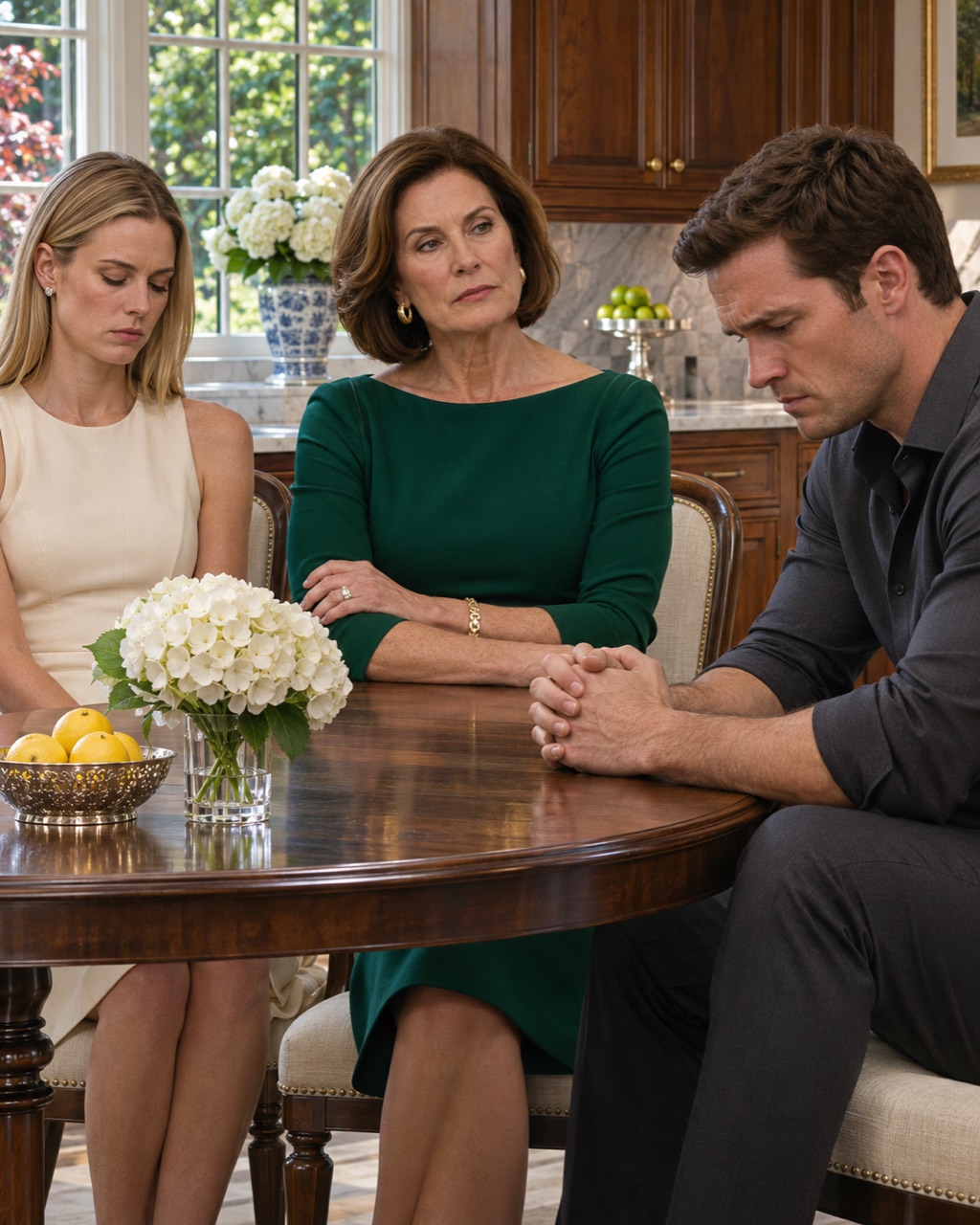
Chapter 8: A Different Name for the Same Request
“No,” I said.
Joel’s hands stayed folded on the table.
“I mean actual help. I’m not saying you owe it now.”
“I understand what you’re asking.”
Kendra leaned back.
I let the answer remain short before explaining anything else.
They had heard a refusal yesterday. Then the tuition history changed what they could reasonably claim.
Now they had heard another refusal with the real purpose attached.
I didn’t want either answer softened into a maybe.
“I’m not giving you $4,800 to replace wages,” I said.
Joel looked at Kendra.
“And I’m not paying for the optional advanced term.”
He brought his eyes back to me.
“Both?”
“Yes.”
I could see him sorting that out.
He had been trying to save the larger request by calling it help. If that failed, perhaps he expected the smaller tuition charge to remain available.
It didn’t.
The current term was already paid.
The future term was his choice.
I explained that difference again, but not as an invitation to bargain.
“You can finish what you’re doing now. Nothing about that payment has changed.”
“I know.”
“After that, you arrange the money.”
He rubbed the heel of his hand over his forehead.
Kendra stayed quiet.
I reached for my phone and checked the school confirmation, not because I doubted it, but because I wanted the wording in front of me.
It said what I remembered.
Future tuition was Joel’s responsibility.
I put the phone down again.
“I told the school last evening.”
Joel looked toward it.
“So even if I ask differently—”
“The answer is no.”
He sat back.
I didn’t fill the pause with an apology for saying it.
I was sorry the conversation had become necessary. I was sorry his wife had misled him. I was sorry he had come into my kitchen believing I had neglected him.
Those were real things to be sorry about.
They didn’t require another payment.
Kendra finally spoke.
“Is this because of what happened yesterday?”
“Yesterday made me look carefully at what I was willing to keep doing.”
“So it is.”
“I had not agreed to the advanced term before yesterday.”
She nodded reluctantly.
That mattered.
I was not taking back a promise to punish them. I was deciding whether to make another contribution after learning how my earlier help had been represented.
I hadn’t chosen to pay.
Now I had chosen not to.
Joel looked at the table.
“I thought you wanted me to keep going.”
“I wanted you to complete your training.”
“This is more training.”
“Yes.”
He waited.
I didn’t argue with a description that was true.
Optional advanced study was still training. It still cost money. He could still decide it was worthwhile.
None of that meant I had offered to fund it.
“You don’t have to convince me it’s school,” I said. “I know it is.”
“Then what am I supposed to do?”
“Decide whether you can pay for it.”
He looked unhappy with that answer.
I understood.
It was less comfortable than being told to enroll and let me handle the bill.
But he was an employed adult. He had been making plans involving his work hours, his marriage, and further study.
He could include the tuition cost in those plans.
Kendra picked at a loose thread near her cuff, then stopped when she noticed me watching.
“I wish we’d just asked,” she said.
“So do I.”
“If we’d asked before all this?”
“I can’t answer a conversation we didn’t have.”
She looked down.
I wasn’t going to invent a kinder alternate outcome that could become another argument about what I should give them now.
Perhaps I would have considered paying the advanced tuition.
Perhaps I would have said no.
What I knew was the answer I had now.
Joel asked if I could cover the advanced term and leave the household cushion to them.
“No.”
He accepted the word without asking the same question again.
That was a change.
He was still disappointed, but he wasn’t pretending the answer had been unclear.
I moved my chair back slightly.
“The current tuition is paid. No reimbursement. No future tuition from me.”
Kendra looked toward the counter.
“And you aren’t asking for the money back.”
“No.”
I said that without hesitation.
The help I had already given was help, not a debt that appeared when they upset me.
I wouldn’t convert it into something else any more than I would accept their attempt to convert it into an unpaid obligation.
Joel nodded.
“I understand.”
I hoped he did.
I didn’t ask him to repeat it as though he were a child.
We sat for a moment with the kitchen clock sounding behind us. I noticed a small water spot near his hand and wiped it with the corner of the towel.
It gave me something ordinary to do.
Kendra watched me fold the towel again.
Then she looked toward Joel.
He didn’t speak.
I could see a different concern settling over her now that the money question was answered. The payment history had shown her claim was false, and our conversation had explained how long it had been false.
There was no way to make that into an accounting mistake.
She straightened in her chair.
“I don’t want this becoming something everybody hears about.”
“I haven’t said anything about that.”
“I know, but people talk.”
I waited for her to say exactly what she wanted instead of answering something she hadn’t yet asked.
Kendra looked directly at me and said, “You should at least keep our explanation private.”
Chapter 9: What Teresa Will Say
“I’m not planning to tell people your business,” I said.
Kendra released a breath, then stopped when I continued.
“But I won’t say you paid his tuition.”
Joel looked at her.
“I didn’t ask you to say that again,” she said.
“Yesterday you did.”
She lowered her eyes.
I wasn’t trying to keep yesterday alive after every answer. This request concerned the same false claim.
It needed the same distinction.
“I won’t make calls about it,” I said. “I won’t send the history around.”
“Thank you.”
“If someone asks who paid, I’ll tell the truth.”
Her mouth tightened.
Joel sat forward.
“That’s fair.”
Kendra looked at him.
He didn’t look away.
It wasn’t a grand defense of me. It was an ordinary acknowledgment, and I preferred it that way.
There had been enough speeches about what I ought to do.
“I don’t know who would ask,” I said. “I’m not arranging for anybody to ask.”
“I just don’t want to be humiliated.”
“I understand that.”
She studied my face.
I didn’t add that she should have thought about it sooner. I could have, but it would not have clarified anything.
Her embarrassment didn’t require public punishment.
It also didn’t require me to lie.
Joel stood and carried his chair back into place.
Kendra stayed seated for a moment, then did the same.
We weren’t suddenly comfortable together. They didn’t linger near the counter, and I didn’t invent a reason for them to stay.
At the doorway, Joel asked whether I would send him the saved history.
“Yes.”
“To both of us?”
“Yes.”
Kendra nodded without looking at my phone.
That was different from the afternoon before.
Then she had watched it because she knew what it could show.
Now she knew there would be a copy she could not explain away as my memory or my version of a conversation.
I walked them through the foyer.
Joel paused near the front door.
“I really didn’t know.”
“I believe you.”
He nodded.
I didn’t say it was all right.
It wasn’t all right that he had spoken to me that way, even if he believed the premise. He could have asked what I knew before delivering a demand.
But I had already told him the part I believed.
There was no need to withhold it.
After they left, I returned to the table and opened the saved history.
I checked the file before attaching it.
The heading was there.
So was my name beside the payments.
I added the school confirmation about the current paid term and future tuition. I wanted them to have the same information I was using.
Then I wrote a plain message to both of them.
“I paid four terms at $1,200 each, totaling $4,800. The current term is fully paid. I will not reimburse those payments or pay tuition after the current term.”
I read it aloud softly.
It sounded like me.
I added that Joel needed to arrange any future payment with the school himself.
Then I sent it.
I didn’t attach a paragraph about how disappointed I was. I didn’t ask them to sign anything or reply with a promise.
The message was a record of my decision.
Not another argument.
Kendra replied that she had received it.
Joel replied a little later.
He asked whether the school had everything it needed from me.
“For my decision, yes,” I wrote.
He didn’t ask me to call again.
I put my phone beside the sink while I washed the cup I had used during our conversation.
There was something uncomfortable about returning to ordinary chores after a discussion like that. My son and his wife were probably still talking in the car or at home.
I could imagine several versions.
I didn’t contact them to find out which one was happening.
Instead, I dried the cup and put it away.
That evening, I checked my own household bills.
It wasn’t an emergency exercise. I hadn’t suddenly become unable to afford groceries because I had helped with tuition.
I simply wanted to look at what belonged to me.
My expenses.
My savings.
The amount I had chosen to contribute.
The amount I was not going to contribute.
I closed the records when I was done.
For work, I spent enough time checking whether figures matched. At home, I wanted the checking to finish somewhere.
My phone sounded while I was clearing the table.
Joel had opened the attachments.
“I can see every payment,” he wrote.
I sat down.
“Yes.”
He typed for a while.
The next message said he hadn’t realized how regular it had been.
“Each term,” I answered.
“I know.”
I could have replied with a reminder that this was what I had tried to tell him in the foyer.
I didn’t.
He was reading the information himself now. That was better than my repeating it.
He asked whether he should forward anything to the school.
“They have their records,” I said. “You have your copy.”
A pause followed.
I watched the screen, then put it down because I didn’t want to spend the evening waiting for every response.
When I picked it up again, he had sent a longer message about wanting to finish what he started.
I answered that finishing the current term remained available to him.
He wrote that he meant continuing after it.
I could hear the next request forming even though it arrived as a question about my intentions instead of money.
Joel asked, “Do you expect me to stop training?”
Chapter 10: His Choices
“No,” I wrote. “I’m not telling you to quit.”
Joel called.
I picked up, still seated at the table.
“Then I don’t understand what you’re expecting.”
“I expect you to decide what you can do.”
“With the advanced term.”
“Yes.”
“And pay for it.”
“If you choose to take it.”
He was quiet.
I could tell he wanted me to identify a path that involved neither his paying nor his giving up anything he wanted.
I didn’t have that path.
I wasn’t hiding one to make a point.
The choices were his because the training was his.
“You can ask the school what the advanced term costs and when payment is due,” I said.
“You got that information.”
“I did.”
“So you could tell me.”
“I can tell you what I received. You still need to check your own enrollment.”
He sighed.
I waited.
This wasn’t about making him perform a task for my satisfaction. School information could change, and I was no longer arranging tuition.
He needed the details directly.
The week before the confrontation, I had read the notice as a possible payer.
Now he needed to read it as the person deciding whether to attend.
“I don’t want to mess up the deadline,” he said.
“Then contact them.”
He didn’t answer immediately.
I let the ordinary answer remain ordinary.
Not every obstacle required me to become involved.
He said he would check.
I ended the call without offering to stay on while he opened the portal. He knew how to reach his school.
He attended it.
I put the phone on the table and went back to what I had been doing.
Later, a message arrived.
He had checked the advanced term himself.
“It’s $1,200.”
“Yes.”
“And I found the payment deadline.”
“Good.”
He didn’t send it to me as an instruction to pay.
I noticed that.
He had learned the price and the deadline from the school rather than relying on information passed through me or Kendra.
It was a small practical change.
It mattered more than another argument about whether I supported education.
He asked whether I thought he should take the advanced term.
“I can’t decide that for you.”
“I’m asking what you think.”
“Do you want the training enough to fit it around work and pay for it?”
He took time answering.
“Yes.”
“Then those are the things you need to plan.”
He wrote that he had been planning to do it differently.
“I understand.”
That was true.
He had planned to reduce his hours using money he expected me to give Kendra. He had also assumed my direct tuition payments might continue once the reimbursement demand failed.
Both assumptions were gone.
He needed a plan using money he actually had or earned.
I didn’t suggest debt.
I didn’t tell him to cancel.
I didn’t ask for access to his household finances.
Those would have turned the conversation back toward me managing choices I had said were his.
Instead, I asked whether he had enough information from the school to make the decision.
He said he did.
For a while, that was the last message.
I put the phone away and got ready for work the next day. There were ordinary things to lay out, and I had no wish to arrive tired because I had spent the night negotiating a tuition charge I wasn’t paying.
At my desk, I checked other people’s work hours.
I corrected entries.
I made sure the figures matched what had been submitted.
The work was familiar, and I was grateful for that.
I didn’t tell anyone at work about the confrontation.
Not because I had agreed to hide Kendra’s lie.
Because I had no reason to bring my son’s tuition into a work conversation.
My promise had been straightforward: no public campaign, no false story.
I could keep both parts.
When I checked my personal phone afterward, Joel had written again.
He said the advanced term was optional but useful to him.
I answered that I understood.
He said he didn’t want to wait.
I didn’t tell him that wanting something made waiting unnecessary.
I also didn’t tell him he ought to wait merely because I was upset.
“You know the cost now,” I wrote. “You know the deadline.”
“I do.”
“Then decide what works.”
He called that evening.
His voice sounded less argumentative and more tired.
“I talked it through with Kendra.”
“All right.”
“We can’t plan around money you aren’t giving us.”
“No.”
“I know.”
He paused.
I didn’t praise him for accepting that fact. I wasn’t trying to make him feel like a child who had finally completed an assignment.
I was glad he had accepted it.
That didn’t require a ceremony.
He talked briefly about fitting study time around his existing schedule. I listened, but I didn’t reorganize it for him.
When he mentioned a difficult evening, I said it sounded busy.
When he mentioned being determined to continue, I said I heard him.
I could be interested without offering cash.
That was new enough that I had to stop myself from volunteering solutions.
He reached the conclusion before I did.
“If I do this, I can’t cut back like we thought.”
I held the phone against my ear.
“No.”
He let out a long breath and said, “I’m going to have to keep my current work hours.”

Chapter 11: His First Tuition Bill
“Then that’s what you’ll need to plan around,” I said.
Joel didn’t argue.
During the following weeks, he kept those hours.
I knew because he talked about them as part of his days, not because I asked to see his schedule. He mentioned coming home from work and getting his classwork done afterward.
I listened.
Sometimes I asked how the current training was going.
I didn’t ask whether he had found money yet.
The optional advanced term had a price and a deadline. He had learned both himself.
I was not going to turn my refusal into daily supervision.
One evening, his name appeared on my phone while I was putting away dishes.
“I got the tuition bill.”
“For the advanced term?”
“Yes.”
I set a plate in the cupboard.
“All right.”
It was an ordinary bill to the person enrolling, but it was the first tuition bill he was handling without assuming either Kendra or I had paid.
He read part of it aloud.
I waited.
He stopped before getting to the payment instructions.
“I can handle it.”
“Okay.”
He seemed to expect a question.
I didn’t supply one.
If he wanted to tell me how he planned to pay, he could. If he didn’t, I did not need access to his account to enforce my own decision.
My part was not paying.
His part was arranging his training.
He said he and Kendra had looked at what they could spend while he kept working.
“That sounds like the right conversation to have,” I said.
He agreed quietly.
He didn’t ask me to contribute the difference.
There wasn’t a difference he had presented for me to solve.
I finished putting the dishes away after we hung up.
My phone stayed on the counter.
The next time we spoke, he talked about an assignment before mentioning money. I noticed that, too.
For a moment, it sounded like our old conversations.
Then he said he had checked the payment instructions again.
“I don’t want to wait until the deadline.”
“That’s your decision.”
“I know. I’m just telling you.”
“All right.”
I could hear the correction in that.
He wasn’t necessarily trying to lead every mention of tuition toward a request. I didn’t want to turn suspicious listening into our new routine.
He had a bill.
He was allowed to talk about it.
I could listen without reaching for my savings.
So I asked whether the school had answered his questions.
“Yes.”
“Then you have what you need.”
He said he did.
Kendra sent a short message during those weeks, saying she knew the payment history was accurate and wasn’t disputing it.
I answered that I had received her message.
I didn’t reopen the conversation about privacy.
Nothing had been sent around.
Nobody had been recruited to take sides.
The people who needed the facts already had them.
Joel stayed employed and continued attending his current classes. The advanced tuition remained his responsibility.
Then his phone call came while I was seated at my kitchen table.
“I paid it.”
I moved my cup away from the edge.
“The advanced term?”
“Yes.”
“With your own money?”
“Yes.”
I had asked that plainly because I wanted to know what he was telling me. He answered just as plainly.
I didn’t ask for the account number.
I didn’t demand a screenshot.
I had not needed proof of every decision he made in order to stop funding him.
“The school has it?”
“They confirmed it.”
“Good.”
He was quiet for a moment.
Then he said the school no longer needed any payment from me.
I felt my shoulders ease.
Not because I had been secretly planning to step in.
Because he had completed the practical task that had been sitting underneath all our conversations.
He knew the price.
He knew the deadline.
He paid.
The optional term could begin without my money.
“I told them I’d handle it,” he said.
“All right.”
“I didn’t put it back on you.”
“I hear you.”
He talked about keeping his work hours. He wasn’t pleased about every long day ahead, but he wasn’t asking me to remove them.
I could respect that.
I didn’t say hardship was good for him.
Working and studying was tiring. It had been tiring when I was paying tuition, and it would be tiring now.
The difference was that he was making his plans around what was actually available.
Kendra wasn’t being credited for money she hadn’t spent.
I wasn’t being asked to replace it.
After the call, I opened the school confirmation I had saved.
The current term remained paid by me.
The future payment belonged to him.
I didn’t need to do anything with either fact, so I closed the file.
There had been a time when seeing school information would have made me check whether another payment needed approving.
This time, I put the phone aside and finished my drink.
Joel called again later in the weeks before the current term ended.
He told me about finishing assignments and checking what remained to be completed. He sounded focused on the work itself.
I asked a question about a class.
He answered it.
We managed a conversation that wasn’t about whether I would fund the next thing.
Near the end, he went quiet.
I thought he might ask about the tuition again.
Instead, he said he wasn’t sure what I wanted to hear now.
“What do you mean?”
“About school.”
I rested my hand beside the phone.
I hadn’t stopped caring about his classes because I stopped paying for them.
Apparently, that still needed saying.
Joel asked, “Will you still want to hear when I finish the current term?”
Chapter 12: Finishing What Was Paid For
“Yes,” I said. “I want to hear.”
Joel didn’t answer right away.
Then he said, “Okay.”
I let that be enough.
There wasn’t a need to add money to the conversation as reassurance. My interest in my son and my willingness to pay his tuition were not the same thing.
He was beginning to separate them.
I was making sure I did, too.
As the end of the current term approached, he mentioned the remaining work without presenting it as something I needed to organize.
I asked how he felt about finishing.
“Ready.”
Then he laughed a little.
“And tired.”
“I believe that.”
He had kept working.
He had continued his classes.
He had paid for the optional advanced term without reducing the work hours he had once expected my money to replace.
None of that erased the afternoon in my kitchen.
It did mean something had changed afterward.
Six weeks after the confrontation, his call came while I was at home.
“I finished.”
I sat down.
“The current term?”
“Yes. It’s done.”
I smiled before answering.
“I’m glad you told me.”
He began explaining the last pieces he had completed. I listened without glancing toward the school portal.
There was nothing for me to approve.
No amount needed checking.
He was telling me about work he had done.
I asked whether he was pleased with it.
“Yes.”
“Then I’m pleased for you.”
He let out a breath.
I could hear how much he had wanted that response, and I was glad I could give it honestly.
I had wanted him to finish from the day he first talked about enrolling.
That hadn’t changed.
I didn’t offer to mark the occasion with money.
I didn’t ask whether completing the term had left him short.
He didn’t hint at either.
We talked about what he had learned and what he expected from the advanced term. I knew enough to follow, though not enough to pretend I understood his training better than he did.
When he used a term I didn’t recognize, I asked.
He explained.
It was an ordinary conversation between a mother and her adult son, and I let it stay ordinary.
Before we hung up, he said he knew the current term had been paid before everything happened.
“Yes.”
“You didn’t take it away.”
“No.”
“I know you could have made things difficult.”
“I didn’t want to.”
He went quiet.
I didn’t claim powers I hadn’t used or threats I hadn’t made. There had never been a need to interfere with classes already funded.
My decision concerned future payments.
That was all.
After the call, I left the phone on the table and finished the chore he had interrupted.
I thought about sending another message saying I was proud of him.
Then I did.
Not a long one.
Just that I was glad he had finished and knew he had worked hard.
He replied with thanks.
No request followed.
I read that exchange again later, then closed it.
The school did not contact me for advanced tuition.
Joel had paid it.
I wasn’t watching his account or checking whether he stayed employed. Our conversations told me he was continuing with both work and school.
That was enough.
When his optional advanced term began, he mentioned his classes in a message.
I asked whether he had what he needed.
He answered that he did.
I stopped there.
I could have asked about supplies, schedules, or whether there was some overlooked charge. I could have made myself useful by searching for an expense.
I didn’t.
That wasn’t what he had asked of me.
He was telling me he had started.
So I told him I hoped the term went well.
Later, I saw the saved payment history while looking for something else on my phone.
I didn’t delete it.
I also didn’t open it.
It was there if I needed the record. I no longer needed to keep looking at it to reassure myself that I remembered correctly.
I had paid.
They knew.
The school knew what I would not pay next.
Those questions were settled.
What remained was how we would speak to each other now that ordinary contact didn’t include an assumed tuition payment.
There were brief messages.
A call about his classes.
A conversation in which neither Kendra’s claim nor my savings came up.
I didn’t force closeness before it returned.
I also didn’t refuse ordinary conversation to make them earn every response.
Joel was still my son.
Kendra was still his wife.
I could answer a question about my day without pretending the demand had been acceptable.
One evening, after the advanced term had started, Joel called again.
“Are you home?”
“Yes.”
“Could we visit?”
I looked toward the kitchen counter.
I remembered exactly where he had stood.
I didn’t want another visit that began as company and turned into a claim against my savings.
“What do you want to discuss?”
He answered more carefully than he had before.
“Not another bill.”
I waited.
“Kendra would come too.”
“All right.”
There was a pause long enough that I knew he had something else to say before we settled it.
I moved my phone from one hand to the other.
“I don’t want us doing that afternoon over again,” I told him.
“Neither do I.”
He didn’t ask me to promise that everything was fine.
He didn’t ask whether I had changed my mind about tuition.
Instead, he said there was something he should have said already.
I stayed quiet.
Joel asked, “Can we come over so I can correct something?”
Chapter 13: The Next Visit
“Yes,” I said. “You can come over.”
When I opened the door for their next visit, Joel waited until I stepped aside instead of talking past me into the house.
Kendra stood beside him.
They came into the foyer.
For a moment, none of us moved toward the kitchen.
Joel looked at the place where he had leaned toward my phone.
Then he looked at me.
“I need to say this before we sit down.”
“All right.”
He kept his hands at his sides.
“You paid for my training. Four terms. $4,800.”
I nodded.
“I didn’t know when I came here, but I should have asked instead of telling you what you owed.”
“Yes.”
“And once you showed me, I kept looking for another way to ask.”
I let him finish.
His words were plain. He wasn’t trying to turn the apology into an explanation of how hard school had been or how much easier reduced work hours would have made things.
He had already explained those things.
Now he was talking about what he did.
“I’m sorry I demanded money from you.”
“Thank you for saying that.”
He looked relieved, but he didn’t smile as though we had completed something easy.
Kendra stepped forward a little.
“I told him I’d taken over before the first bill,” she said. “You hadn’t asked me to do that.”
“No.”
“You didn’t know I was saying it.”
“No.”
“And when he wanted the money, I let him think you’d never helped.”
I watched her.
She didn’t glance toward Joel before continuing.
“I asked you to keep lying because I didn’t want to admit what I’d done.”
“You asked me to let you keep the credit.”
“Yes.”
“And pay again.”
“Yes.”
She said it without lowering her voice.
There were still only the people who had been there the first time. I didn’t need an audience added to make the acknowledgment count.
Joel had heard it.
So had I.
“I’m sorry,” she said.
“Thank you.”
She waited, then added, “I’m not asking you to protect that story.”
“I won’t repeat it as true.”
“I understand.”
I didn’t promise that none of it would ever be mentioned again.
I also didn’t use the apology as an opening to recite every sentence from the confrontation.
They had named what happened.
I had answered.
We could decide what the rest of this visit would be.
“Come into the kitchen,” I said.
Joel moved out of my way instead of walking ahead.
I noticed, but I didn’t comment.
The counter was clear except for my phone. I had set it there while getting ready for them, just as I had before.
This time, nobody leaned across it.
I asked whether they wanted something to drink.
They answered.
I got the cups down and let them help carry them to the table. There was a brief awkwardness about who should sit where, then we sat.
Joel looked toward my phone.
“I’ve paid for the advanced term,” he said.
“I know.”
“And I’m keeping my hours.”
“All right.”
“I wanted to make sure you knew I wasn’t here to ask again.”
“I appreciate that.”
Kendra wrapped her hands around her cup.
There was no question about whether I might cover a later charge. No careful suggestion that I could reward the apology by resuming payments.
I didn’t offer.
The school expenses were Joel’s now.
That decision didn’t need to be renewed every time we spoke.
After a moment, I asked how the advanced classes were going.
He looked up.
“Busy.”
“Different from the last term?”
“In some ways.”
He began explaining.
At first, he spoke cautiously, as though mentioning something difficult might sound like the start of another request. I asked a question about the class itself.
He answered it.
Then he gave more detail.
Kendra mentioned how they were arranging their evenings around his studying and work. She didn’t describe herself as carrying his tuition.
She talked about their schedule.
I could listen to that.
When Joel said he was tired after work, I didn’t reach for a solution.
“That sounds like a long day,” I said.
“It is.”
He took a drink.
Then he went back to describing something he had learned.
I wanted to hear it.
That was the part of his training I had enjoyed before the tuition became confused with who deserved credit and who supposedly owed more.
He could tell me about a difficult assignment without producing a bill.
I could be interested without producing a payment.
We didn’t announce those rules.
We practiced them in the conversation.
Later, Joel thanked me again.
This time he didn’t repeat the total.
“I couldn’t have started as easily without the help you gave me.”
“I was glad to help you start.”
He nodded.
I hadn’t offered to keep paying.
He didn’t hear it as an invitation.
Kendra asked about my work. I told her about a routine payroll problem without naming anybody or making it sound more interesting than it was.
Joel laughed at something ordinary I said.
I found myself laughing, too.
It wasn’t the same as deciding the first visit no longer mattered. I still remembered his tone, and I still had the payment history saved.
But I wasn’t holding the phone ready to prove myself.
I got up to bring something back to the counter and saw it lying there, screen up.
No new message needed answering.
No school page needed opening.
I picked it up and returned to the table.
Joel paused in the middle of explaining one of his classes, probably expecting me to check something.
“Go on,” I said.
He did.
I set it beside my cup and listened to him talk about his classes, not his bills, with my phone facedown.
You Might Also Enjoy




