My Husband Announced At Our Wedding That My Savings Would Buy His House — Then I Pushed Back
Chapter 1: His Hand Over Mine
At our wedding reception, my husband put his hand over my phone and said, ‘Transfer it tonight; the house will stay in my name.’
I looked down at his fingers.
Then at him.
“And I won’t own any of it?”
Curtis stepped closer to me. Behind him, guests sat around our table with folded napkins beside their plates, close enough to hear without trying.
“You’re my wife now. Stop questioning my decisions.”
I still had my phone in my hand.
We were standing beside our chairs in an upscale reception hall in Richmond, Virginia. Everything around us looked carefully arranged, from the polished silverware to the clean ivory tablecloths.
His hand was the only thing out of place.
I had brown hair pinned into a bun. The neckline of my ivory dress felt suddenly too tight. Curtis stood in his charcoal dress shirt, looking at me as though he had asked for something ordinary.
He hadn’t.
A woman seated beside us turned toward him, then looked down at her plate.
Nobody interrupted.
I was 38, newly married, and trying to understand why my husband had chosen our reception to tell me our proposed home wouldn’t belong to me.
Curtis was 40.
He knew what he had said.
“You’ll live there with me,” he added.
“That isn’t what I asked.”
He glanced toward the guests.
I watched him notice that they were listening. His mouth closed, but he didn’t take back the part about the house staying in his name.
My down-payment money was still in my account.
That was the fact I kept returning to while he stood there.
Not his account.
Mine.
Before the wedding, I had arranged a payment to him through my bank’s service for sending money to another verified person. It wasn’t due to go out until Monday, after our Saturday reception.
He couldn’t move it himself.
He didn’t have my password, signing power, or access to my account. I had never needed to explain why I kept those things private.
We had separate savings.
Until that evening, I thought that arrangement had worked.
“Don’t make this awkward,” he said.
I looked at the woman beside us. She was moving her fork against the edge of her plate without taking anything.
“You brought it up here.”
“Because we’re married now.”
He said it quietly, as if quieter words changed what they meant.
They didn’t.
I pulled my elbow closer to my side, keeping hold of my phone underneath his hand. His palm wasn’t gripping it. He was simply covering the screen, expecting me to wait.
I had waited through plenty of conversations about houses.
I had listened while he compared what we could afford and explained why his higher income might make borrowing in his name simpler. I had asked questions when I didn’t understand something.
This wasn’t one of those conversations.
He wasn’t explaining a mortgage.
He was announcing ownership.
“Are you saying that hasn’t changed?” I asked. “You expect my contribution, but the house belongs only to you?”
“We don’t need to do this in front of everybody.”
“Then why tell me now?”
He looked past me toward the other tables.
A guest across from us leaned back slightly. Another kept looking between our faces.
They weren’t stepping in.
I didn’t want them to.
I wanted Curtis to answer the question I had asked.
Instead, he lowered his voice again.
“We can discuss the rest at home.”
“The money stays where it is while we discuss it.”
His expression changed at that.
Not much.
Enough.
Until then, he seemed to think we were arguing about how I felt. Now he understood I was talking about whether the money would move.
He leaned toward my ear.
“It’s already arranged.”
“It’s scheduled.”
“Beth.”
“It hasn’t gone.”
I could feel the small edge of my phone case against my palm. I pressed my thumb into it and waited for him to say that he had misspoken.
There was room for that.
He could have said we needed to ask the loan officer another question. He could have said he meant the loan, not the house.
He said neither.
Instead, he told me we shouldn’t argue at our wedding.
For a moment, I looked around the room.
Guests in solid-colored formal clothes sat beneath soft lights. Somebody at another table was lifting a glass. Our chairs were still pulled out from where we’d stood.
Nothing around us had stopped.
Only the people nearby knew what was happening.
I had spent eighteen months saving for a home with this man. I had pictured taking my shoes off inside a front door we both owned.
Now he was telling me I could live in his house.
With my money in it.
I swallowed and looked back at him.
“Being your wife doesn’t mean you get to decide what happens to my savings.”
“You agreed to contribute.”
“To our home.”
“And that’s what this is.”
“Not if I don’t own it.”
He moved his head impatiently, like I was insisting on a distinction too small to matter.
It mattered to me.
I worked as a medical office receptionist. My savings came from paychecks I had earned, deposits I had checked, and spending decisions I had made while we planned our wedding.
There wasn’t spare money behind that contribution.
There was the contribution.
Curtis knew how long it had taken.
He had watched me put it aside while we talked about kitchens, commutes, and whether we wanted a place that needed work.
He had never said I was saving to buy something for him.
I wasn’t going to let him act as though he had.
“Please move your hand,” I said.
He lifted it with a short, impatient motion.
I brought the phone closer to my body.
The screen had gone dark. My reflection looked faint and unfamiliar against the glass, with my hair pinned neatly and my mouth pressed shut.
Curtis watched my face.
He wasn’t looking at the phone yet.
“We can straighten this out later,” he said.
I woke the screen.
The bank service was there, waiting where I had left it.
He saw me look down.
“What are you doing?”
I hadn’t touched the cancellation control.
Not yet.
I could still put the phone away, finish dinner, and have this conversation without our guests listening.
But the payment would remain scheduled.
Curtis stood close enough to see my thumb move toward the pending contribution.
“Then send it,” he said.
Chapter 2: The Pending Contribution
“I’m stopping my money now,” I told him.
I opened the pending payment.
Curtis looked at the screen, then back at me.
“Here?”
I didn’t answer immediately.
The amount was exactly what I had saved: $41,000.
Seeing it beside his name made the arrangement look different from how it had looked before the wedding. Back then, it had been a practical step toward something we were doing together.
Now he had told me what he intended to own.
I held the phone lower than my waist while I checked the payment details. I wasn’t going to touch the wrong thing because he wanted an answer quickly.
The money hadn’t left.
The transfer was still cancelable.
The morning before the wedding, I had checked that myself. I had opened the service, reviewed the scheduled contribution, and made sure I understood what would happen on Monday.
I hadn’t expected to use that information at our reception.
I had simply wanted to understand my own account.
Curtis knew I had scheduled it. He had thanked me when I told him, then gone back to talking about the houses we wanted to see.
Apparently, he had taken my agreement to contribute as permission to change what I was contributing toward.
It wasn’t.
“Don’t do something because you’re upset,” he said.
“I’m doing it because you said the house would be yours.”
“You’re making that sound different from what I mean.”
“Then tell me what you mean.”
He glanced at the seated guests again.
“We should talk somewhere else.”
“The payment stops while we talk.”
That was the part he wouldn’t agree to.
He kept asking me to move the discussion without accepting that the money could stay with me during it.
I understood that now.
We had saved separately for eighteen months. His savings stayed with him, and mine stayed with me. We had agreed that he would eventually gather our contributions before we bought a home, but we hadn’t chosen a house, signed a purchase contract, or paid earnest money. Because his income was higher, Curtis had done more of the borrowing discussions. I had asked about ownership instead of assuming that borrowing and owning meant the same thing. He had answered me in writing the spring before the wedding. That answer was why I had been willing to arrange the contribution at all.
I hadn’t forgotten it.
Neither had my phone.
“You promised me something different,” I said.
“This isn’t the time.”
“It was the time when you asked.”
A guest across the table put her napkin beside her plate.
I noticed because I couldn’t bear to keep looking at Curtis while he decided how to answer me.
He wasn’t confused.
He was annoyed.
That hurt more than if he had stumbled over his words.
I wanted the man I had married to notice that I was standing there in my wedding dress asking whether I would own the home I was helping buy.
Instead, he was watching the money.
I looked down and selected the cancellation.
The service asked me to confirm.
I read it.
Then I confirmed.
For a moment, the screen changed while it processed my request. Curtis stopped talking, and I kept my eyes on the display until the words appeared.
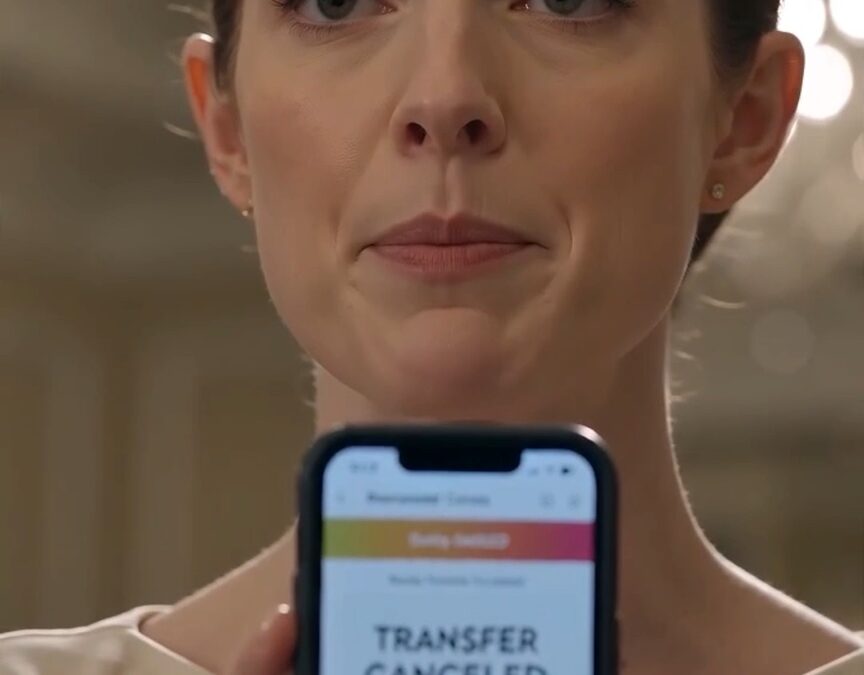
TRANSFER CANCELED.
I checked them again.
Then I raised the phone to chest height and turned it toward him.
“My down-payment money is still in my account.”
His eyes moved across the screen.
The certain little smile he had been wearing disappeared.
“You stopped it here?”
“Yes.”
The woman beside us looked from my phone to his face.
He read the confirmation again, as though it might describe something less final if he took another look.
It didn’t.
“You stopped it?” he asked.
“Yes.”
I held the screen steady.
“That’s my $41,000. I’m not sending it.”
The nearest guests heard me.
Nobody applauded.
Nobody offered advice or reached across the table.
They stayed in their chairs, looking down or looking at us, while Curtis tried to decide what to say next.
I was grateful they left the phone in my hand.
I didn’t need anybody else to make the decision.
I had already made it.
Curtis shifted his weight and lowered his voice.
“You could have waited.”
“The money was mine before we came here.”
“I know whose account it’s in.”
“Then you know why I could stop it.”
His eyes flicked toward the screen.
I hadn’t lowered it.
There was still a place in me waiting for an apology. I could feel it in how carefully I watched his face, looking for him to recognize what he had asked.
Instead, he said we had embarrassed ourselves.
I didn’t answer that.
I was done arguing about the location of the conversation.
He had chosen it.
The cancellation was complete, and there was something else on my phone that he needed to explain.
“I kept your message from the spring.”
His eyes moved from the screen to my face.
“What message?”
“The one about the house.”
“We’ve talked about a lot of houses.”
“This wasn’t about a particular house.”
He looked toward the woman seated nearest us.
She looked down.
I turned the phone back toward myself.
Curtis watched my thumb now.
I left the cancellation screen and opened our conversation.
The familiar messages appeared.
I found the exchange I wanted.
His name sat at the top.
I put my thumb over it.
“I asked you directly.”
“Beth, put that away.”
“I want you to hear what you told me.”
His jaw tightened.
I brought the older message into view.
The guests were still seated.
Nobody had left our table.
Curtis looked at the phone.
I looked at the words.
Then I brought up his message, with everyone still watching.
Chapter 3: The Message From Spring
“This is what you wrote,” I said.
I read it aloud before Curtis could ask me to put the phone away again.
“Both our names will be on the house, even if I’m the only one borrowing the mortgage money.”
He looked at the screen.
I held it where he could read it himself.
The woman beside us stopped moving her fork.
Curtis didn’t speak.
I kept my thumb clear of the message now. His name was visible above it, along with the exchange that had led to his answer.
I had asked whether I would own the house if the mortgage was only in his name.
He had said yes.
Not maybe.
Not after I proved something.
Not if the lender felt generous.
Both our names.
I read that part again.
“Both our names will be on the house.”
“We were talking generally,” Curtis said.
“I asked about our down payment.”
“Before we’d worked everything out.”
“You answered the question.”
He glanced around the table.
The same people who had heard him tell me the house would stay in his name had now heard what he had promised before I married him.
That was why he couldn’t dismiss it as a conversation I had misunderstood.
It was right there.
I moved the phone slightly so the light didn’t reflect across the words.
He read them again.
“You don’t need to perform this,” he said.
“I’m reading your message.”
“To everybody.”
“You asked for my savings in front of everybody.”
A guest across from us pulled her hands into her lap.
Nobody interrupted.
I wasn’t asking them to judge our whole marriage. I needed Curtis to stop telling me that I had agreed to something I had never agreed to.
The message made that possible.
I lowered the phone enough to look directly at him.
“When did you decide I wouldn’t own it?”
“We haven’t bought anything.”
“I know.”
“Then nothing has happened.”
“You asked me to send the money.”
He rubbed his thumb along the side of his hand.
I watched that small movement because looking at his wedding ring was making my throat tighten.
We had been married that day.
Already, he was describing his promise as an unfinished discussion.
I looked down at my own ring, then back at the message.
The spring before the wedding, I had read his answer at home. I remembered being relieved enough to set my phone down and go back to what I was doing.
I hadn’t demanded a complicated explanation.
I had wanted a plain answer.
He had given me one.
Now the plainness of it bothered him.
“There’s more to buying a house than whose name goes on it,” he said.
“That’s why I asked.”
“You don’t understand all the borrowing requirements.”
“Then explain what changed.”
He didn’t answer.
Instead, he asked me to sit down.
Our chairs were behind us. I touched the back of mine but stayed standing.
I wasn’t refusing to sit for an effect. I didn’t want the conversation to turn into him leaning across dinner and whispering that I had caused a scene.
The words had already been spoken.
Sitting wouldn’t take them back.
“What did you expect me to think when you sent this?” I asked.
“That we were getting a home.”
“That we would both own.”
He looked at the message again.
I let him.
He hadn’t seen me keep it ready. He hadn’t known I would bring it up at the table. Until then, he had been able to make his demand sound like the next step in a plan we both accepted.
Now the earlier plan was visible.
A guest shifted her chair away from the table a little.
The sound made Curtis look up sharply.
I didn’t.
I had his attention without raising my voice.
“You can see why I’m not transferring it,” I said.
“You’ve already canceled it.”
“Yes.”
“So what else do you want right now?”
“An answer.”
“I said we’d talk at home.”
“You can tell me whether this message was true.”
He pressed his lips together.
I could hear conversation elsewhere in the hall, dishes moving, somebody laughing too far away to know what was happening beside our table.
Our reception hadn’t stopped.
That almost made it worse.
I had imagined remembering this room because I had married him here. Instead, I was noticing how the lights caught the edge of my phone while I asked him to explain a written promise.
Curtis reached for his glass.
He didn’t drink.
He set it back down and looked at me.
“I meant it when I wrote it.”
That was new.
Until then, he had tried to make the message sound vague.
I held still.
“Then when did it change?”
“There are things that come up once you actually talk about financing.”
“We had already talked about financing.”
“Not everything.”
“Did you tell me?”
He looked away.
There was my answer to that part.
He hadn’t.
I hadn’t missed a conversation. I hadn’t agreed while distracted by wedding plans. There wasn’t an exchange I needed to search for where I had accepted sole ownership.
He had simply reached a different decision and expected my contribution to continue.
The guests nearest us had heard enough to know the promise wasn’t something I had invented afterward.
Curtis knew they had heard.
He straightened the front of his shirt.
“We shouldn’t be doing lending discussions here.”
“I asked what changed.”
He looked at the phone rather than my face.
I turned it toward him again.
The message was still open.
His earlier words were still there.
For a moment, I thought he might finally say that he wanted the house to be his.
Instead, he found an explanation that put the decision somewhere else.
“The lender changed that.”
Chapter 4: Borrowing Isn’t Owning
“What exactly did the lender change?” I asked.
Curtis looked toward the space beyond our table.
“Come outside with me.”
“Answer that first.”
He gave a short breath through his nose.
I could see that he wanted the message out of sight. The phone was still in my hand, and the guests could still hear us.
“The financing works better in my name,” he said.
“We already discussed borrowing in your name.”
“Then you know.”
“No. Borrowing isn’t the same question as owning.”
He started to answer, then stopped when the woman beside us looked up.
I wasn’t claiming to know everything about mortgages.
I knew what I had asked him.
I knew what he had answered.
And I knew he had just replaced his own decision with something he said the lender required.
That needed checking.
“When did they tell you I couldn’t own part of the house?” I asked.
“It came up in the discussions.”
“Before or after your message?”
“We’ve had several conversations.”
“Did you tell them I would contribute my savings?”
His eyes narrowed slightly.
“They know we’re buying a home.”
“That isn’t what I asked.”
He picked up his glass again and took a drink this time.
I lowered the phone to my waist.
The cancellation had already happened. I didn’t need to keep holding the screen up to prove it.
But I wasn’t putting the phone away while he changed the explanation.
“We can sort out the details once the funds are together,” he said.
“No.”
“You’re refusing to even discuss it.”
“I’m discussing it now.”
“Not reasonably.”
I looked at the tablecloth until I could speak without my voice catching.
A small crease ran beneath my fingertips where I had taken hold of its edge.
I let go.
“I’m not sending my savings before I understand why the promise changed.”
He leaned toward me.
“That’s why I’m asking you to come outside.”
“We can move. The money still stays.”
He didn’t agree.
He wanted the conversation moved and the payment restored as though those were parts of the same request.
They weren’t.
I wasn’t required to fund the discussion.
Curtis looked around the room again. He seemed to be measuring how much of the exchange other people had noticed.
The guests nearest us were quiet.
Farther away, the reception carried on.
I wasn’t going to make an announcement to the room. I wasn’t going to ask for opinions from tables that hadn’t heard him.
I only needed him to stop asking me to act before his explanation could be checked.
“Have the loan officer explain it to me,” I said.
“It’s our wedding.”
“You brought up the transfer.”
“They’re not sitting around waiting for us to call.”
“Then after the reception.”
He looked back at me.
That was a reasonable next step, and he knew it.
No money had to leave that evening.
There was no closing waiting for Monday, no seller expecting funds, no contract that would collapse because I asked a question.
We had been looking at homes.
That was all.
Curtis had wanted our contributions together before a later purchase. I had agreed because I believed we were buying something we would both own.
The account arrangement hadn’t made the purchase urgent.
His demand had.
“I’ll explain it to you myself,” he said.
“You just said the lender changed it.”
“Yes.”
“Then they can tell me what they require.”
He rubbed the back of his neck.
I watched him avoid looking toward the people who had heard his first demand.
Before I opened the message, he could say I didn’t understand what we’d agreed.
After I read it, he needed a reason that agreement no longer applied.
Now I was asking to hear from the person he blamed.
“I don’t want you calling and making accusations,” he said.
“I want to ask about ownership.”
“You’ll make it sound like I’m hiding something.”
“You can be there.”
That stopped him.
I wasn’t asking to have a private conversation behind his back about his loan application. I was asking him to authorize a direct explanation of the issue he had raised.
He could hear the question.
He could hear the answer.
I had nothing to conceal in mine.
Curtis turned his glass by the stem.
“I’ll see what can be arranged.”
“Until then, the transfer stays canceled.”
“That’s unnecessary.”
“It’s already done.”
He looked at me with an expression I hadn’t seen when we were choosing reception details.
It wasn’t embarrassment anymore.
He was calculating what he could still get me to agree to.
I felt tired enough to sit.
So I did.
I kept the phone in my lap while he remained standing beside his chair.
The woman next to us lifted her glass and took a small drink. She didn’t say anything to me.
I was glad she didn’t try to comfort me right then.
If somebody had put a hand on my arm, I might have started crying, and I wanted to finish asking this before that happened.
Curtis sat down.
He leaned toward me, keeping his voice low.
“We don’t have to decide the whole marriage at this table.”
“I haven’t said we do.”
“Then stop treating this like something final.”
“I stopped a payment.”
“You stopped trusting me.”
I looked at him.
He had promised one arrangement, demanded another, and now wanted my refusal to be the problem.
“I asked to verify what you said.”
For a while, he said nothing.
I locked my phone.
The screen went dark in my lap.
We still had a reception around us, but neither of us reached for the food in front of us.
Curtis finally moved his chair a little closer.
“If I arrange the call, will you hear the explanation before making any more decisions?”

Chapter 5: Nothing Had Gone Out
“I’ll hear it,” I told him.
“The money stays with me.”
Curtis looked down at his place setting.
He didn’t agree out loud, but he stopped asking me to send it that evening.
That mattered.
The cancellation had settled what could happen before Monday. It hadn’t settled what he believed he was entitled to ask from me.
For the rest of the reception, I kept my phone close.
I didn’t pass it around.
The guests who had heard us didn’t become a committee. They remained wedding guests, awkward and quiet whenever our conversation thinned near them.
I didn’t ask anybody to take my side.
They had heard his demand.
They had heard my refusal.
That was enough.
When I looked at my screen again, I checked the cancellation rather than our messages.
TRANSFER CANCELED.
I saved the confirmation.
Then I saved the exchange from the spring with the surrounding conversation included, not just the sentence I had read aloud.
I wanted the question and the answer together.
I wasn’t thinking about making a public post.
I was thinking about how quickly Curtis had called a clear promise a general discussion.
I needed my own copy.
After the reception, in our existing rented home, I sat at the kitchen table with the phone beside a glass of water.
The rooms were familiar.
That made his wedding clothes, draped over a chair, harder to look at.
Curtis stood near the counter.
“Are you going to keep going over it all night?”
“I’m saving the confirmation.”
“You saw that it canceled.”
“I want the record.”
He opened a cabinet, then closed it without taking anything.
I saved copies somewhere I could reach without depending on the phone alone. I checked that the message showed his name and the conversation around it.
Then I put the phone down.
Only briefly.
My bank balance still showed the savings.
I knew that didn’t replace making sure the scheduled payment was no longer active. A balance could be visible while something waited to process.
I opened the payment service again.
There was no active contribution waiting for Monday.
The canceled item was in the history.
I read the details slowly.
Curtis watched from the counter.
“I wasn’t going to take your money,” he said.
“You asked me to send it.”
“For our home.”
“In your name.”
He looked away.
We were alone now.
The answer hadn’t become easier for him to give.
I went to a separate room when I was ready to sleep. I didn’t lock him out of anything, move his belongings, or pretend I could erase the marriage because the reception had gone wrong.
I simply couldn’t lie beside him and act as though we had settled this.
He asked whether that was necessary.
“Yes,” I said.
I took my phone with me.
The next chance I had to speak with my bank, I used the contact information inside my own account.
I wasn’t relying on anything Curtis told me about the transfer.
I explained that I had canceled a future-dated payment to another person and wanted to confirm that no funds had been sent.
The bank representative had me complete the usual identity checks.
I answered from the records in front of me.
Curtis wasn’t part of the call.
He had no authority over that account.
I asked about the status of the canceled payment, whether anything had been released, and whether another action was needed to keep it from processing.
The answer was plain.
Nothing had gone out.
The contribution was canceled.
It would not run on Monday.
I wrote down what I was told and kept the confirmation with the other records.
Then I checked the savings again.
Still there.
I sat with the phone resting against my palm and let myself breathe normally for a moment.
At the reception, I had acted while people watched.
At the kitchen table, there was nobody to watch me stare at the same amount until I believed the practical part was finished.
Curtis came in while I was closing the bank screen.
“Everything all right?”
“The money didn’t leave.”
“I told you it was canceled.”
“I checked with my bank.”
He pulled out a chair but didn’t sit.
I could see he didn’t like being excluded from a conversation about money he had expected to receive.
But it hadn’t become his money because he expected it.
He asked whether I had talked to anybody else.
“About what?”
“Us.”
“I’m checking the financial facts.”
“That isn’t an answer.”
“It is what I’m doing.”
I wasn’t ready to tell him what I would decide about the marriage. I didn’t know yet.
I did know I wouldn’t make that decision while wondering whether my savings were on their way to his account.
That uncertainty was gone.
I opened the saved message again.
The words hadn’t changed overnight.
Both our names.
Even if he alone borrowed.
I could still remember the feeling of relief when he first wrote it. Now I was saving it beside a canceled payment from our wedding reception.
Curtis finally sat down.
“I’ve been thinking about the call,” he said.
I locked the phone and waited.
His voice was more measured than it had been at the table.
He wasn’t asking me to restart the transfer immediately.
He was offering the next thing I had requested.
“We can speak to the loan officer together, and I’ll give permission for them to explain our earlier discussion.”
Chapter 6: The Call We Shared
“Put it on speaker,” I said.
Curtis set his phone on the kitchen table.
Mine stayed beside my notes.
Before the loan officer discussed Curtis’s borrowing conversations, Curtis gave permission for the explanation. I heard him do it.
I didn’t have to pretend I was entitled to his private financial information.
I was asking about the ownership condition he said had changed our agreement.
The officer confirmed what we wanted to discuss.
Then I asked my question.
“If Curtis is the only borrower, does that mean I can’t also own the house?”
Curtis sat with his arms folded.
I kept my eyes on the phone between us.
The officer explained that borrowing and ownership weren’t identical. For the kind of purchase they had discussed, Beth could share ownership without being a borrower.
I could.
There would be documents and requirements involved in an actual transaction. Nobody was promising that every loan program or every house worked the same way.
But the explanation Curtis had given me at the reception wasn’t correct.
Sole ownership wasn’t required in the discussion they had already had.
I picked up my pen.
“Had that been explained before the wedding?”
Curtis uncrossed his arms.
The officer answered yes.
Curtis had already been told that shared ownership was possible even if he alone borrowed.
I wrote down the answer.
Not because I couldn’t remember it.
Because I wanted a record that wasn’t just the two of us arguing later about what we had heard.
The officer paused.
Curtis didn’t speak.
I looked at him.
He was looking at his phone.
At the reception, the lender had been an explanation I couldn’t check in the room. At our kitchen table, with his permission, that explanation had been checked.
It hadn’t held up.
“So having the house only in Curtis’s name was his preference?” I asked.
The officer carefully described the earlier discussion without offering an opinion about our marriage.
Curtis had expressed a preference for sole ownership.
That preference wasn’t a requirement imposed on him.
I set my pen down.
There it was.
He had wanted it.
Then he had told me somebody else required it.
Curtis leaned toward the phone.
“I was trying to keep the process simple.”
The officer stayed with the financing issue.
Shared ownership had been an available arrangement in their discussion. We hadn’t reached an actual purchase, so no closing paperwork had been prepared for a house under contract.
Nothing had become impossible while I was busy planning a wedding.
Nothing had been secretly changed by a seller or a closing deadline.
There wasn’t a house involved yet.
There was Curtis’s choice about a future one.
I asked whether there was any reason my contribution needed to be gathered in his personal account immediately.
The officer didn’t direct us to combine savings.
How we held our contributions before a purchase wasn’t a substitute for deciding how the purchase would be structured.
I looked at Curtis again.
He rubbed a finger against the tabletop.
That was the same hand he had put over my phone.
I hadn’t thought of it until I saw the movement.
My own phone was lying beside me, untouched.
The money was still in my account.
I could ask the questions without also trying to recover funds.
That made it possible to listen carefully.
I thanked the officer for explaining the earlier conversation.
Curtis thanked them too.
He ended the call.
For a moment, we sat without speaking.
The kitchen wasn’t very large. I could hear the refrigerator and the small sound of his phone case against the table when he moved it.
I looked over my notes.
Shared ownership possible.
Already explained.
Sole ownership his preference.
I didn’t need more words to understand those answers.
Curtis pushed his chair back slightly.
“You asked, and now you’ve heard it.”
“Yes.”
“So we can figure out what makes sense.”
“We could have done that before you asked for the money.”
“I didn’t think it would become this.”
“What did you think would happen?”
He pressed his fingertips together.
“That we’d talk through the details.”
“At the reception?”
“Afterward.”
“After I sent it.”
He didn’t answer.
I left the silence alone.
I had been filling gaps for him since he put his hand over my phone. Maybe he meant the loan. Maybe he had worded it badly. Maybe a requirement had changed.
Each time I offered a possibility, he let me consider it until it no longer helped him.
Now there was less to interpret.
The call had removed the explanation he had chosen.
Curtis reached for his phone, then set it back down.
“You’re treating me like I planned to hurt you.”
“I’m asking why you told me something that wasn’t true.”
“I didn’t see it that way.”
“The loan officer had already explained it.”
“I heard the call.”
“So did I.”
He stood up and went to the counter.
I stayed seated.
I wasn’t going to follow him around the kitchen asking the same question while he found things to do with his hands.
I opened the message from the spring and set my phone beside the notes.
He looked back.
Both records were there.
What he promised.
What he knew.
“I was thinking about the responsibility I’d be taking on,” he said.
“Then tell me that.”
He looked down at the counter.
I waited.
We had finally reached the point where he would have to explain his own preference without putting it in the lender’s mouth.
“Why did you call your preference a requirement?”
Chapter 7: The Offer Afterward
“Because I’d be responsible for the loan,” Curtis said.
“That isn’t why you said the lender required it.”
He turned from the counter.
“I earn more, Beth.”
“I know.”
“I’d be carrying more of it.”
“And I’d be contributing my savings.”
He pulled the chair out again and sat across from me.
Now that the lender explanation was gone, he was talking about what he believed his income entitled him to decide.
At least it was his explanation.
I could answer that.
“You wanted final say,” I said.
“I wanted a practical arrangement.”
“Final say about the house.”
He looked at the notes beside my phone.
“Yes. On something that big, I thought that made sense.”
I picked up the pen and put its cap back on.
There was nothing else to write.
He earned more, so he wanted the home in his name. He also wanted my $41,000 in the purchase.
He had understood that those were separate choices.
He had simply preferred both.
“Why promise shared ownership?” I asked.
“I wasn’t trying to deceive you.”
“You knew what I was saving for.”
“We were building a life together.”
“I was saving for a home I would own with you.”
He looked tired.
So did I.
Neither of us had been sleeping normally, and I still had reception things waiting in the rented home that I couldn’t bring myself to put away.
But tired didn’t explain the message.
It didn’t explain the demand.
It didn’t explain blaming the lender after I read his words aloud.
Curtis leaned forward.
“Maybe we approached this wrong.”
“We?”
“The money discussion.”
“I asked you directly.”
“I know what you asked.”
“Then don’t make it sound like neither of us was clear.”
He sat back.
For a while, we looked at the kitchen table.
I had eaten ordinary dinners there with him while we talked about ordinary things. Appointment schedules at my office. His work. Which houses were worth seeing.
Now I was learning how differently he had understood those conversations.
He wanted the benefit of my saving without the ownership I had asked for.
I wasn’t prepared to call that a misunderstanding.
“What if we don’t make it permanent right away?” he asked.
I looked up.
“What does that mean?”
“You contribute as planned. We buy when we find something. Then we revisit ownership once we’re settled.”
I stared at him.
He said it carefully.
Not like a demand this time.
Like a compromise.
But the first thing that would happen was still my money moving to him.
The later thing was still something I would have to trust him to reconsider.
“Why later?” I asked.
“It would give us time.”
“We haven’t even chosen a house.”
“Exactly. We can work through it.”
“Then we can work through it before money moves.”
His mouth tightened.
That was the point where each version of his plan stopped working.
He wanted me committed first.
I wanted the terms agreed first.
“Adding your name later wouldn’t be impossible,” he said.
“Neither was including it from the beginning.”
“I know that now.”
“You knew before the wedding.”
He glanced at the notes again.
I didn’t move them.
The officer’s explanation was still fresh enough that he couldn’t reasonably describe it as new information.
He corrected himself.
“I know that’s what you want.”
“It was what you promised.”
Curtis stood and filled a glass of water.
He offered to get me one.
I shook my head.
The small politeness nearly made me cry.
I didn’t want a glass of water. I wanted to be back in the conversation from the spring, believing his answer because he had given it so plainly.
I pressed my thumbnail against the pen cap.
He returned to the table.
“I don’t want to throw away a marriage over how we structure a purchase.”
“I haven’t bought anything.”
“You know what I mean.”
“Yes.”
I did.
He wanted the marriage to become a reason I should accept what I would never have agreed to before it.
At the reception, he had said being his wife meant I should stop questioning his decisions.
At the kitchen table, he said he didn’t want to lose the marriage.
Both statements came with the same requested action.
Send the money.
“I need you to show some faith in me,” he said.
“I did.”
He looked at me.
“I scheduled the contribution because I believed your message.”
“That doesn’t mean I never get to change my mind.”
“No. It means I get to change mine too.”
He put his glass down.
Not hard.
Carefully.
I could see him deciding whether to argue about that.
Instead, he tried a gentler version.
“We can write down that we’ll reconsider it.”
“Reconsider isn’t ownership.”
“We don’t need to make every decision right now.”
“Then my contribution doesn’t need to happen right now.”
He rubbed his forehead.
The proposal hadn’t changed as much as his tone had.
He was still asking me to trade something definite for something he could decide later.
I gathered the notes into a small stack.
My phone lay beside them.
The cancellation was no longer the most difficult decision in front of me. It had been clear once he told me the house would be his.
The marriage wasn’t as simple to put down.
Curtis watched me straighten the papers.
“Will you give us a chance and contribute first if I promise we’ll reconsider putting your name on the house later?”

Chapter 8: Advice I Asked For
“No,” I said.
“I won’t contribute first.”
Curtis looked at the stack of notes in my hand.
“So that’s it?”
“That’s my answer about the money.”
He wanted me to give him an answer about the whole marriage at the same time, while his latest offer was still sitting between us.
I wasn’t doing that.
I took the notes to the room where I had been sleeping separately and put them with the saved bank confirmation.
Then I made an appointment for individual legal advice.
I didn’t call and ask somebody to erase the wedding.
I didn’t assume that a short marriage meant an automatic annulment.
I wanted to know what separation meant, what I needed to document, and how to keep from making another decision based on something I hadn’t checked.
When Curtis asked where I was going, I told him.
“To get advice for myself.”
“We could talk to somebody together.”
“I’m getting my own advice first.”
He didn’t like that answer.
But he didn’t try to stop me.
I took my phone and the records I had gathered.
At the appointment, I explained the sequence in plain language.
We had saved separately before marrying.
I had scheduled a contribution.
At the reception, he announced sole ownership.
I canceled before the payment ran.
Then I described the message and the call with the loan officer.
The lawyer asked questions rather than promising an immediate result.
Where had the savings come from?
Had any of the contribution been sent?
Had we signed a purchase contract?
Were there joint accounts involved in these savings?
I answered carefully.
The $41,000 came from my earnings before the marriage. It was still in my sole account, and nothing had gone out.
There was no purchase contract.
I showed the cancellation and the bank confirmation.
Then the message.
I wasn’t told that a name on an account automatically settled every property question in a divorce.
That was important.
I had controlled the transfer because the account was mine. Keeping the savings in a later settlement would also require showing where they came from and how they had been kept.
I needed records.
Not assumptions.
The lawyer explained the separation and legal process that would apply to us in Virginia. We discussed living arrangements, communication, and the difference between deciding to separate and having a final divorce.
I listened.
I asked for clarification when I needed it.
At work, I spent my day handling appointments and making sure people had the information they needed before they arrived.
I was used to asking practical questions.
I had let Curtis’s confidence make me hesitate to ask enough of them about our home.
I didn’t hesitate in that office.
Could we remain temporarily in the same rented home while making separate plans?
What conduct and documentation mattered?
What should I preserve?
What should go through counsel?
I left with things to do.
That helped more than somebody simply telling me I had been right.
Back at the rental, I opened my banking records at the kitchen table.
I gathered statements covering the saving period and the balance before the marriage. I kept the source of the money clear instead of mixing everything together while I decided what came next.
Curtis walked in while I was checking a download.
“Are you preparing to leave me?”
“I’m finding out what separation requires.”
His face changed.
He had heard me refuse the transfer several times.
This was the first time I had said plainly that I was considering living apart as more than an argument.
“You don’t have to decide that now.”
“I do have to decide how I’m going to live.”
“We live here.”
“For now.”
I didn’t tell him to get out.
The rental was our existing home, and neither of us had the right to settle the problem by changing locks or putting the other’s things outside.
I kept sleeping separately.
I stopped acting as though we were continuing married life while merely disagreeing about a bank transfer.
I made my intention clear.
Curtis called it drastic.
I called it separation.
The word was unpleasant to say in that kitchen.
I said it anyway.
Later, while I was putting office clothes on hangers in the room I was using, he stood in the doorway.
“Can we have dinner?”
“I can talk.”
“Not another discussion with papers on the table.”
“I haven’t brought papers.”
He looked toward my phone on the dresser.
It seemed to bother him even when I wasn’t holding it.
We sat in the kitchen again.
He asked about my day at the office.
I answered.
For a little while, the conversation sounded familiar enough that I felt the pull of it.
Then he asked whether I had really told a lawyer we were separating.
“Yes.”
“I don’t think we should make decisions while we’re still upset.”
“I checked the facts before I made this one.”
“We haven’t even tried being married.”
I folded my hands beneath the table.
We had tried making a major financial decision as newly married people.
That was exactly what had shown me the problem.
He didn’t need me to explain it again.
He knew why I wasn’t willing to proceed.
Still, he spoke as though the house search could put us back where we had been before the reception.
“Stay here with me, and let’s start looking at houses again.”
Chapter 9: The Search We Ended
“I’m not buying a house with you,” I said.
Curtis looked at me across the kitchen table.
“Not now?”
“I’m not funding a purchase with you.”
He leaned back.
I could see why he wanted to leave the answer open. A delayed search still gave him something to restart. A paused contribution was still money he might receive later.
I wasn’t describing a pause.
The proposed purchase was over.
“We haven’t even found the right place,” he said.
“I know.”
“So you’re deciding before there’s anything real.”
“The money is real.”
He looked toward my phone.
I didn’t reach for it.
We had already seen what was on it.
There was no need to display the cancellation every time he wanted to describe the problem differently.
Curtis asked whether I understood what we would be giving up.
I understood what I was declining.
A home purchase that began with him promising shared ownership, then demanding sole ownership after our wedding.
There wasn’t a neighborhood attractive enough to make me overlook that.
I didn’t list the houses we had liked.
I didn’t compare rooms or prices.
Those details would only turn the conversation back into a search.
“I won’t transfer the contribution,” I said.
“And you won’t look?”
“No.”
He stood up.
For a moment, I thought he was going to leave the room.
Instead, he brought over the information we had kept for our search.
I recognized the pages before he set them down.
Homes we had considered.
Notes about things we wanted.
He put them between us as though seeing the work we had already done would change my answer.
I looked at them.
Then I pushed them gently back toward him.
“We aren’t under contract.”
“We spent time on this.”
“Yes.”
“That should matter.”
“It does. It doesn’t obligate me to buy.”
There was no accepted offer.
No purchase contract.
No earnest money.
We didn’t have a seller waiting for us to perform or a closing that had to be canceled. The proposed contribution had been advance preparation for a later purchase.
Stopping it had not stranded anybody’s transaction.
I confirmed those facts with the records we had.
Not because I expected a hidden contract.
Because I wanted our next practical steps based on what actually existed.
Curtis watched me check.
“I wouldn’t have signed something without telling you.”
I looked up.
“I am confirming what we need to unwind.”
He said nothing.
The search information went into a folder.
I didn’t tear it up.
I didn’t throw it at him.
I stopped keeping it beside the things I needed for the next week.
That was enough.
When the loan officer needed to know whether we were continuing, the answer was no. We weren’t proceeding with the proposed purchase.
Curtis heard that answer too.
There was no new plan in which he bought with my money while we sorted out ownership afterward.
He could make his own future housing decisions.
My savings weren’t part of them.
After that conversation, the rental seemed smaller.
We had been able to postpone looking closely at it while we argued about a house we didn’t own.
Now there was only the home we actually lived in.
Our clothes were there.
Our food was in the kitchen.
Both of us had the right to come through the door.
We needed a lawful way to stop sharing the place.
I took out the rental agreement.
Curtis frowned when he saw it.
“What are you looking for?”
“How we end this properly.”
“You’ve decided everything.”
“I’ve decided to move apart. We still have to arrange it.”
He sat beside the table rather than across from me.
We read the agreement.
I didn’t pretend that moving out erased an obligation under it. I also didn’t assume the landlord had to release one of us just because our marriage had failed.
We needed an agreement.
That meant asking.
Curtis pointed to a part of the rental terms.
“So we just tell them?”
“We ask what they’ll agree to.”
He looked at me.
I think he had expected me either to demand the home for myself or leave him responsible for it.
I wasn’t doing either.
I wanted a clean departure that neither of us had to repair later.
We gathered the information we needed to contact the landlord.
Our conversation was stiff but practical.
Which belongings were his?
Which were mine?
What needed to remain until we both moved?
Where would each of us go?
I didn’t have answers to every question yet.
That didn’t mean I was staying married.
It meant leaving required work.
At the office, I kept answering phones and checking people in.
I didn’t explain my wedding reception to everyone who asked how married life was going.
Sometimes I said I had personal things to arrange.
Then I went back to the appointment screen.
During breaks, I looked at rentals I could manage on my own income.
Not purchases.
Rentals.
I wasn’t going to rush into another major commitment because I disliked the temporary awkwardness of the one I was leaving.
At home, Curtis saw the rental information on my phone.
“So you’re serious.”
“Yes.”
He set his keys on the counter.
There was no anger in the movement.
Just the sound of metal against the surface.
He looked around the kitchen, then at the rental agreement still on the table.
“The landlord needs to agree before either of us can just walk away, so what exactly are you proposing?”
Chapter 10: The Rental Agreement
“We ask to end the rental together,” I said.
“Neither of us gets left responsible alone.”
Curtis pulled out a chair.
For once, he didn’t argue about what I meant.
We contacted the landlord and explained that we were separating and wanted to arrange an agreed end to the rental.
We didn’t ask the landlord to choose between us.
We asked about terms.
The answer wasn’t simply that we could leave whenever we wanted. There were practical obligations to settle, a departure to arrange, and the condition of the property to address.
We discussed them.
Then we got the arrangement in writing.
Both of us knew what we had agreed to do.
Neither of us changed the locks.
Neither of us moved the other’s belongings without permission.
While we were still under the same roof, we used separate rooms and kept our daily lives separate. I continued following the advice I had received about making the separation clear.
It wasn’t comfortable.
It was manageable.
Curtis stayed in the kitchen longer when I came in sometimes.
Other times, he left before I could open the refrigerator.
I stopped trying to guess which version of the evening I would get.
I made my meal.
I cleaned what I used.
I took my phone back to my room.
There were evenings when I wanted to ask how we had reached this point so quickly.
But I knew the sequence.
Asking him again wouldn’t change it.
Instead, I worked through the things I could complete.
I found a separate place to rent.
I checked what I could afford without using the savings intended for the down payment.
I kept the application and rental records with my other practical paperwork.
When I had a place arranged, I told Curtis.
He looked at the information, then away.
“You didn’t ask what I thought.”
“No.”
He nodded slowly.
There was no shared home search anymore.
That had become visible in a different way.
I was choosing where I would sleep, put my work clothes, and come home after answering phones all day.
He was making his own arrangements.
We sorted belongings without turning every object into a new discussion about the marriage.
Some things were obvious.
My clothes.
His clothes.
The papers from my job.
The belongings each of us had brought into the rental.
When something wasn’t obvious, we discussed it or kept a note for counsel instead of making a scene in the hallway.
I didn’t need to win every household item.
I needed to leave without creating another preventable problem.
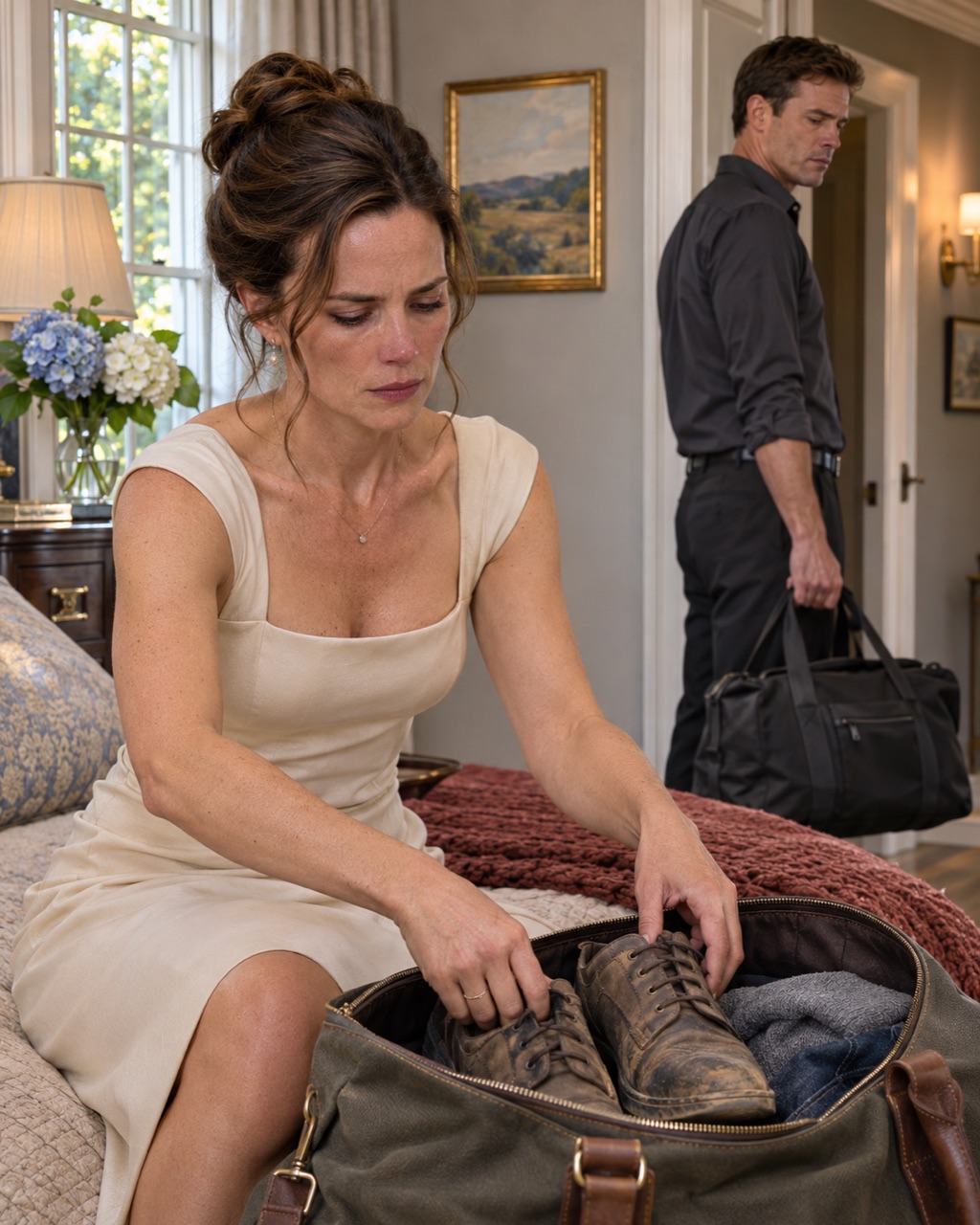
Packing my work shoes affected me more than I expected.
They were ordinary shoes, worn at the edges.
I put them in a bag and sat on the side of the bed until I was ready to stand again.
Those shoes had been by the door while I saved for a home with Curtis.
Now they were going to a rental he wouldn’t live in.
I closed the bag.
Then I packed the next thing.
Before our departure, I photographed the condition of the rental for my own records and made sure the agreed tasks were done.
Curtis handled his parts.
We followed the arrangement with the landlord.
There was no dramatic eviction.
No surprise release.
We ended the shared rental by agreement and left separately.
When I carried my phone into my new place, I set it on a bare counter and heard how quiet the room was.
I had wanted quiet at the reception.
Now I had it.
For a moment, I didn’t know what to do with it.
Then the phone lit up with an ordinary notification, and I went back to unpacking.
The legal work continued after the move.
My lawyer needed the records showing the savings before the marriage and the source of the deposits.
I gathered them carefully.
The pay deposits from my receptionist job.
The savings statements.
The balance before the wedding.
The canceled contribution.
The confirmation that it never left.
I kept the records organized instead of sending disconnected pictures without explanation.
When something was missing, I obtained it.
When I didn’t understand a request, I asked.
The savings were premarital money, but I wasn’t relying on that phrase alone.
Counsel needed to be able to follow them.
So I made them easy to follow.
At my new kitchen counter, I compared the statements with the files I was sending.
My phone lay beside the paperwork.
The saved cancellation still appeared in my banking activity.
I didn’t delete it.
Not then.
It belonged with the record of what had happened.
Curtis and I communicated about remaining practical issues.
There were fewer reasons to speak directly now.
The rental was ended.
The proposed purchase was abandoned.
Our belongings were mostly where they belonged.
What remained was the legal process and what each of us would agree to in the settlement.
I didn’t pretend that moving into my own place made the divorce final.
It didn’t.
There was a required separation to complete and paperwork to handle.
I kept going to work.
I paid my rent.
I answered requests from counsel.
Some evenings were dull enough that I welcomed them.
Then Curtis’s name appeared on my phone while I was putting away office clothes.
I read his message without answering immediately.
He wasn’t asking about a box or a rental detail.
He wanted a conversation before we let lawyers settle everything.
“I want to talk once more before settlement discussions begin.”
Chapter 11: The Conversation He Wanted
“We can talk,” I replied.
“I’m not restarting the house plan.”
Curtis accepted that condition in writing.
I still asked what he wanted to discuss before agreeing to more.
He said us.
Not the rental.
Not the statements.
Us.
I put the phone down and finished hanging up my clothes before I answered.
That was new.
At the reception, I had felt I had to respond while he stood over the screen.
In my own place, I could finish what I was doing.
We arranged the conversation.
I kept it separate from any discussion that needed to go through counsel.
When his voice came through the phone, it sounded familiar enough that I sat down.
“I miss you,” he said.
I looked at the small stack of mail beside my elbow.
“I heard you.”
“I don’t want this to be how we end.”
“How do you think we should end it?”
“I don’t want to end it.”
He was asking for reconciliation.
I had expected that, but hearing him say it still made me press my lips together.
I hadn’t married him expecting to plan a divorce.
There were things I missed too.
I missed believing we were making the same plans.
I didn’t tell him that as an invitation.
I let him explain what he wanted.
He said we had allowed a financial disagreement to become the whole marriage.
I stopped him there.
“It wasn’t just a disagreement about money.”
“I know you were hurt.”
“You promised shared ownership. Then you demanded my savings for a house you would own.”
“I’ve said I handled it badly.”
“You said the lender required it.”
He paused.
“We’ve been over that.”
“Yes.”
I wasn’t going to go over it forever.
But I wasn’t accepting a reconciliation built on making the sequence sound smaller.
Curtis said he had been thinking about the responsibility of borrowing.
I let him finish.
Then I asked the part he still avoided.
“Did you know what you were asking when you said it at the reception?”
“I didn’t expect you to react that way.”
“That isn’t my question.”
“I didn’t plan a scene.”
“I didn’t ask whether you planned a scene.”
He was quiet.
I could hear movement on his end of the call.
Then he said I was making him sound calculated.
I hadn’t used that word.
I had asked whether the demand had been deliberate.
He wanted us to reconcile without saying plainly that he had chosen the terms and expected me to comply because we were married.
He would admit poor timing.
Poor wording.
Too much pressure.
He wouldn’t admit the choice itself.
I looked toward the folder holding my records.
The loan officer’s explanation hadn’t left much uncertainty about what he knew.
I didn’t need to force a confession before I was allowed to proceed.
“I’m not returning to our financial plans,” I said.
“We wouldn’t have to buy immediately.”
“We aren’t buying together.”
“What if we start over?”
“I’m continuing the separation.”
He exhaled.
For a moment, neither of us spoke.
There had been a time when silence with him meant we were comfortable.
Now I was waiting to see whether he had heard my answer.
“Is there anything I can say?” he asked.
“I’ve made my decision.”
He didn’t like it.
I could hear that without him raising his voice.
He said I was leaving no room for repair.
I looked at my rent reminder on the counter.
I had already arranged a separate daily life.
I wasn’t going to dismantle it because he finally disliked the consequences of the demand.
“I won’t discuss moving back or sending money,” I said.
“If there’s something practical to resolve, we can handle it through counsel.”
He asked whether that meant I wouldn’t speak to him at all.
“No. It means the settlement needs to stay clear.”
I didn’t want each question about property turned into another request for a chance.
I wanted the practical issues handled as practical issues.
After the call, I wrote down what we had discussed while it was fresh.
Then I informed my lawyer that I wasn’t reconciling and wanted to continue.
I didn’t send Curtis a long explanation afterward.
I had given him one directly.
The next communications concerned the settlement.
Counsel reviewed the records and the terms being proposed.
I read everything.
Some language was unfamiliar.
I asked what it meant rather than guessing.
When a draft described the savings, I checked it against the statements I had provided.
The amount was still $41,000.
The money had come from my earnings before the marriage.
It had never become the down payment on a jointly purchased house because there had been no purchase.
It had never reached Curtis.
Those facts mattered, but they still needed to be reflected properly in the agreement we signed.
I understood that now.
I wasn’t going to substitute my own certainty for careful legal work.
There were ordinary expenses and other practical matters to resolve in ending a marriage.
Counsel handled those discussions without turning the abandoned purchase into an obligation I had to fulfill.
Curtis didn’t receive a late contribution because he had expected one.
The proposed house didn’t appear as property to divide.
It didn’t exist.
What existed was the savings account and the records showing its source.
I sat at my counter with a draft open and my phone nearby.
The old canceled payment remained saved in the bank service.
I hadn’t touched it since sending the documentation.
Then counsel called about the language that would decide how those savings were treated.
“The next draft addresses the savings you brought into the marriage, and I need you to review that section carefully.”
Chapter 12: The Words We Signed
I opened the draft while counsel stayed on the phone.
“Show me the section,” I said.
We went through it slowly.
The settlement identified the premarital savings that had been traced through my records and provided that they remained mine.
Not because I had won an argument at a reception.
Not merely because my name was on the bank account.
The source of the money had been documented, and the terms were part of the negotiated agreement resolving our property matters.
I read the language again.
Then I asked what would happen next.
There were still steps.
Review wasn’t signature.
Signature wasn’t the final divorce.
The required separation and legal process had to be completed properly.
I didn’t rush past any of it.
By then, I had become used to taking a document home, reading it without a phone call going on beside it, and writing down what I needed explained.
That was how I handled this one.
I sat at my counter after work with the draft spread in front of me.
My work shoes were near the door.
My lunch container was drying beside the sink.
The scene was so ordinary that I had to stop and remember how much depended on those pages.
I wasn’t deciding whether I liked the wording.
I was making sure I understood what I was agreeing to.
I checked the savings provision.
I checked the other practical terms with counsel.
When I had a question, I asked.
When the answers were clear, I moved forward.
Curtis had counsel for his side of the negotiation.
The settlement wasn’t something I imposed through a text or announced as finished because I wanted it.
It was negotiated.
We each had the opportunity to review it.
We signed only after that process.
I didn’t see him sign the decisive message from the spring, because he hadn’t signed anything then. He had simply sent it, expecting me to trust him.
This was different.
The agreement said what it did.
The records supported the savings provision.
I knew what I was signing.
During the separation, I kept living in my own rental and going to my receptionist job.
There were mornings when I thought about how strange it was to have been married at a beautiful reception and then spend the marriage waiting through the process of ending it.
I didn’t let that thought make decisions for me.
I packed my lunch.
I checked my work schedule.
I paid what I owed.
The savings stayed where the records could follow them.
I didn’t spend them to prove I could.
I didn’t move them around impulsively because I was angry.
They were still money I had worked to save.
I treated them that way.
Curtis’s messages became practical.
There was no restarted house search.
No request for a payment date.
The purchase we had proposed never proceeded.
The shared rental had already ended by agreement.
We weren’t maintaining some hidden joint plan while telling lawyers we had separated.
Our lives were separate.
The remaining work was to finish the legal process.
When counsel needed confirmation of a fact, I supplied it.
When papers needed review or signature, I handled them.
I kept copies.
I knew the difference between being tired of the process and being finished with it.
That difference mattered.
The final notice came while I was at my own place.
I opened it on my phone.
Then I read the attached document.
The divorce was final.
I didn’t call Curtis.
There was nothing about the savings left to bargain over between us.
The negotiated settlement left the traced premarital money mine.
He never received the $41,000.
He never bought the proposed house with it.
There wasn’t a future conversation in which he could tell me to send it now and ask about ownership later.
I sat down.
For a while, I held the phone without touching the screen.
I thought I might cry.
Instead, I noticed that I was hungry.
I hadn’t eaten since work.
That small fact brought me back to the room.
I put the phone on the counter, made something to eat, and returned when I was ready to read the document again.
I saved the final papers with the rest of the legal records.
The message from the spring was already there.
So was the cancellation confirmation.
So were the statements tracing the money.
I wasn’t going to destroy records because I didn’t want to look at them.
But I didn’t need every reminder in the same place I used for ordinary banking.
After I ate, I opened my account.
The savings balance was there.
I checked the activity.
The canceled contribution still appeared among the items I had saved for easy access.
Curtis’s name was beside it.
I hadn’t arranged another payment to him.
I hadn’t needed to.
The old item had stayed saved through the separation, the negotiations, and the legal process because it was useful to have it close.
Now the legal record was complete.
I opened the cancellation.
TRANSFER CANCELED.
The words looked exactly as they had at the reception.
Back then, I had held them toward Curtis while guests watched his confidence disappear.
Now I was alone in a rented home that he had never lived in.
I didn’t have to show the screen to anybody.
I checked that the confirmation was preserved with my legal records.
It was.
I returned to the banking activity and saw the option for removing the item from my saved view.
That wouldn’t erase the bank’s transaction history.
It would only stop keeping the canceled contribution among the things I had chosen to keep handy.
I rested my thumb beside the option.
There was no deadline.
No hand over the screen.
No person waiting for me to make the choice that suited him.
I could leave it there.
I could remove it.
The divorce was final either way.
The phone asked whether I wanted to remove the canceled contribution from my saved activity.
Chapter 13: The Phone On My Counter
I set the phone beside my plate without choosing.
Then I finished my dinner.
The canceled contribution could wait until I had cleared the kitchen.
That was something I had learned to do in my own place without thinking much about it. A screen lighting up didn’t mean I had to stop whatever was in my hands.
I rinsed the plate.
I wiped the counter.
I put my lunch container where I would see it before work.
My separate rental wasn’t the house I had pictured while I saved.
It had less space.
There were things I would have chosen differently if I had been buying a place to stay for a long time.
But my work clothes hung where I put them.
My keys were by the door.
When I came home tired from the medical office, I didn’t have to prepare for another version of the same financial conversation.
I could take off my shoes.
Some evenings, that was enough.
After the divorce became final, I didn’t resume a house search with Curtis.
There was no delayed purchase waiting for us.
No arrangement in which he would borrow and I would contribute once enough time had passed.
Our proposed purchase had ended.
Our shared rental had ended.
Our marriage had ended through the required process and the negotiated settlement.
Curtis had to make his housing plans without my savings.
I made mine without promises from him.
I didn’t know every detail of his daily life, and I didn’t ask.
We had resolved what needed resolving.
I wasn’t keeping contact open so he could explain again why he thought earning more should have given him final say.
I had heard him.
I had declined.
On payday, I still checked my deposit.
That habit came from working for what I saved, not from anything Curtis had done.
I looked at the amount.
I checked the bills due.
I decided what stayed available for rent and ordinary expenses and what I could leave in savings.
I didn’t move money because another person was impatient.
I didn’t need to announce that to anybody.
The $41,000 I had saved before the marriage remained mine under the settlement.
It was intact.
I could still be proud of having saved it.
For a while after the reception, I had felt foolish whenever I thought about the contribution.
I remembered telling Curtis I had scheduled it. I remembered being pleased that we were getting ready.
Now, sitting in my own kitchen, I could look at those facts without turning them into a reason to punish myself.
He had made a written promise.
I had relied on it.
When he announced different terms, I stopped the payment before it ran.
Those were the things that happened.
I didn’t need to invent a version in which I had known all along.
I hadn’t.
At work, I went back to being the woman at the reception desk who knew where the forms were and which calls needed to be returned.
People still asked ordinary questions.
I answered them.
The printer still needed paper.
The appointment schedule still changed.
When I went home, I didn’t spend the whole evening reading old messages.
There were legal records stored safely if I needed them.
That didn’t mean they had to be open beside dinner.
I began leaving the phone on the counter while I did other things.
I put groceries away without checking it between bags.
I got ready for work without opening my bank account to make sure the same canceled payment was still canceled.
The bank had confirmed it.
The statements showed it.
The divorce was final.
There was nothing left for that contribution to do.
I picked up the phone after the kitchen was clean.
The banking service opened where I had left it.
The canceled item was still selected.
Before removing it from my saved view, I checked the stored legal files.
I wasn’t being dramatic.
I was making sure I didn’t confuse clearing a convenient shortcut with throwing away something important.
The cancellation confirmation was preserved.
The spring message was preserved.
The final documents were preserved.
Everything I needed remained available.
I returned to the bank service.
Curtis’s name appeared beside the amount I had once intended to send him.
I remembered his hand over the screen.
I remembered the woman looking down at her plate.
I remembered holding the phone at chest height and telling him the money was mine.
I didn’t replay the whole reception.
I didn’t need to hear his demand again to know why I had stopped it.
I selected the option to remove the canceled contribution from my saved banking activity.
The service asked me to confirm.
I confirmed.
The saved item disappeared.
The bank’s history remained.
My records remained.
My savings remained.
I looked at the ordinary account screen without his name waiting among the things I had marked to keep close.
Then I closed it.
There was a rent payment to plan for, a workday ahead, and food in the refrigerator that I wanted to take for lunch.
I checked the alarm on my phone.
It was set.
I laid my work shoes beside the door and put my keys where I could find them in the morning.
Before going to bed, I returned to the kitchen for a glass of water.
The counter was clear except for the things I actually used there.
I placed the glass by the sink.
Then I set down my phone.
You Might Also Enjoy




