Chapter 1: The Christmas Dinner Announcement
Chapter 1: The Christmas Dinner Announcement
My parents announced at Christmas Eve dinner that my brother would inherit my oceanfront house and that I needed to stop calling it mine.
I had paid them $2.1 million for it so they could retire without a mortgage.
They didn’t know I had already checked their claim and was about to refuse.
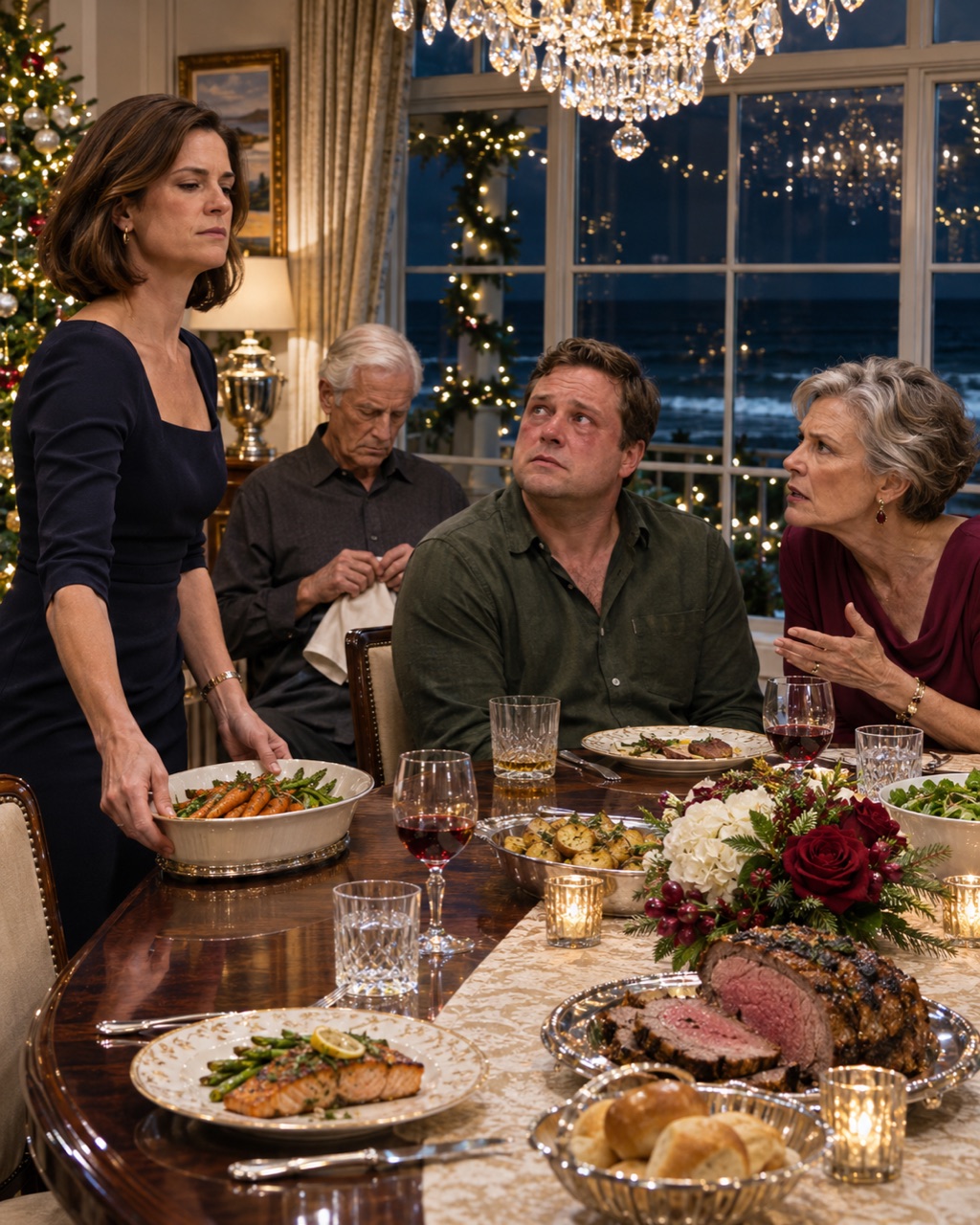
My mother leaned toward me across the table.
“Stop calling it yours. It’s your brother’s inheritance.”
I still had my fork in my hand.
There was food on it.
I put it down beside my plate.
The Christmas tree stood beside the dining-room windows, with its lights reflected in the dark glass. Beyond the windows was the ocean, although we couldn’t see much of it after dark.
My father looked toward Owen.
Owen looked down.
Not confused.
Not surprised.
I noticed that before I noticed anything else.
I had been saying something ordinary about having everyone at my house for Christmas Eve. I hadn’t made a speech about owning it.
I hadn’t asked them to thank me.
We were eating dinner.
That was all.
“You sold it to me,” I said.
My mother’s mouth tightened.
“We know what happened, Nora.”
Apparently, knowing what happened wasn’t going to stop her.
Beverly was 69. Russell was 71. They had both understood the sale when we completed it.
Nobody had tricked them.
Nobody had hurried them.
They had wanted the purchase money and the chance to retire without their mortgage.
I was 42 now, sitting at a table in the house I had bought, waiting for my mother to explain why she had just assigned it to somebody else.
Owen moved his glass closer to his plate.
He was 39.
Old enough to answer.
He didn’t.
My father folded his napkin beside him with the care he used when he wanted a conversation to seem reasonable.
“The house was always supposed to go to Owen.”
“The house you owned could have gone to him.”
Dad looked directly at me then.
I had said the part he wanted to skip.
I hadn’t yet heard what they had done with the money left after paying their mortgage. Before that dinner ended, I would learn that retirement living expenses and extended travel had used it up.
They couldn’t repay me.
They weren’t planning to try.
But at that moment, my father was still talking as though an old family wish could decide what happened to a home he no longer owned.
Mom reached for her glass.
“You don’t need to make that distinction sound ugly.”
“It’s an actual distinction.”
“We’re talking about family.”
“So am I.”
She set the glass down without drinking.
The food between us was still warm. I could smell the potatoes, and I remember thinking I should move the serving dish before someone knocked it with an elbow.
It was such an ordinary thought.
I held on to it briefly.
My parents had just announced that my home belonged in my brother’s future, and I was worried about a dish.
Dad glanced at the windows.
He used to stand there after family dinners, looking out toward the water. I had never minded.
I hadn’t needed him to forget that he once lived here.
I had only expected him to remember that I lived here now.
“Your mother and I made plans,” he said.
“Before you sold it.”
He pressed his lips together.
Mom looked at Owen.
He kept his eyes on the table.
I wanted one of them to correct the others.
I would have accepted an awkward explanation. I would have listened if they had said they meant the furniture, their memories, anything other than the house itself.
Nobody corrected anything.
Instead, Mom said, “You know how long your brother has pictured being here.”
I looked at him.
He didn’t look back.
I had pictured being here too.
That was why I bought it.
I had arranged my work around living here, carried my things into these rooms, and learned which window needed checking when rain blew in from the ocean.
Those weren’t improvements I expected anybody to reimburse.
They were ordinary things a person did at home.
My home.
I pushed my chair back a little, enough to give myself room.
Mom watched the movement.
“There’s no reason to get upset.”
“I’m asking what you mean.”
“You know what I mean.”
“No. I know what you said.”
Dad made a small impatient motion toward her, as though the trouble was how she had introduced the subject.
That bothered me almost as much as her announcement.
He didn’t say she was wrong.
He seemed to think she had handled me badly.
I took a drink of water.
Then I put the glass down carefully.
“Are you saying you think you still own this house?”
Dad didn’t answer that question.
He said, “We always intended to keep it in the family.”
“It is in the family.”
Mom gave a short sigh.
“You know that isn’t what he means.”
I did know.
She meant Owen.
She meant that my purchase counted when they needed money, but not when they decided who should have the place afterward.
I looked past her toward the Christmas tree.
I had put it beside those windows because I liked seeing the lights reflected at night. Mom had mentioned earlier that she used to place hers a little farther from the glass.
I had listened.
I hadn’t treated that as a threat.
For five years, I had made room for their memories without thinking I was agreeing to surrender anything.
Now I was wondering which of those visits they had spent discussing this without me.
Dad pulled his chair closer to the table.
“Nora, we’re trying to settle something while we’re together.”
“What needs settling?”
“What happens to the house.”
“I live here.”
“We understand that.”
“Do you?”
Mom turned toward him.
“Tell her about the instructions.”
I looked from her to my father.
I knew they had once expected Owen to receive their interest in the house. That expectation had existed before they decided to sell it.
Their signatures had come afterward.
So had my payment.
So had their move.
Dad rested his hand beside his plate.
He wasn’t startled by any of that.
He simply didn’t want it to be the end of the discussion.
“Our wishes didn’t change because you helped us retire.”
Helped.
I looked down at my fork again.
I had bought their house at an independently established price. Calling it help made my part sound smaller and their remaining claim sound larger.
“I bought it, Dad.”
He nodded once, impatiently.
“We never changed who we wanted to have it.”
Chapter 2: The Chair Beside My Plate
“I didn’t lend you the money.”
My mother answered before my father could.
“We know that.”
I looked at her.
“Then stop describing it as though I did.”
She drew her napkin across her lap.
“I said we know.”
Knowing wasn’t the problem.
Accepting the result was.
I had spent years building my work as an independent software consultant. When my parents decided they wanted to retire, I had enough accumulated earnings, together with the proceeds from selling my previous home, to buy theirs. We had an independent valuation, agreed on the price, and completed a professionally handled sale. Both parents signed knowingly. The full agreed purchase money was paid. The house went into my name alone, and they moved to a rented retirement apartment elsewhere in New Jersey after clearing their mortgage. There was no agreement that I would return the house, share it, or hold it for Owen.
I paid them for the house so they could clear their mortgage and retire.
That was the arrangement.
Not a loan.
Not temporary.
Dad knew every part of it.
He had been there.
Mom had been there too.
“The plans existed before the sale,” she said.
“The sale changed what you owned.”
She glanced toward Owen again.
He rubbed his thumb along the side of his glass.
I knew that movement. He did it when he wanted somebody else to handle an uncomfortable conversation.
Usually, I let him.
Not that night.
“What do you think?” I asked.
He lifted his eyes.
“You knew I always expected to inherit it.”
There it was.
Not a question about whether our parents had misunderstood something.
His expectation.
“You knew I bought it.”
He looked at Dad.
I waited.
Dad looked back at me.
Neither answered.
I could hear the small sound of my mother adjusting her plate against the tablecloth.
“Did the money I paid count?” I asked Owen.
“Nora, that’s not what we’re saying.”
“What are you saying?”
“That this was supposed to stay with us.”
“It did. I bought it.”
He rubbed his mouth.
Mom took over again.
For five years, I had welcomed them here. I had cooked dinners, made room for visits, and listened while they remembered what the house had looked like when they owned it.
Most of those visits had been fine.
I wasn’t going to pretend otherwise.
During the last year, though, Mom had started saying “our house” more often. Dad had begun talking about keeping it in the family in a way that made me wonder whether he meant something beyond nostalgia.
Nobody had demanded ownership.
Not until this dinner.
Still, the remarks had bothered me enough that I had privately asked my lawyer to check whether they retained any rights.
I wanted an independent answer.
Not reassurance from somebody who had heard only my version.
Before Christmas Eve, the lawyer confirmed that my parents owned no part of the property and had retained no right to live here.
They didn’t know I had asked.
They hadn’t seen that confirmation.
They certainly hadn’t signed it.
It wasn’t some agreement I had slipped past them.
It was a check on the sale they already knew they had completed.
At the table, Mom said, “Your brother pictured living here for years.”
“I pictured retiring here.”
“You could live somewhere else.”
I looked at Owen.
He could have objected.
He didn’t.
“You can afford to be generous,” he said.
I pressed my napkin flat across my knee.
He knew I worked.
He knew the purchase hadn’t happened because money had simply appeared in my account.
I had sold the home I already owned to make this home possible.
“I already paid for it.”
“Nobody said you didn’t.”
“Then why are we discussing giving it to you?”
He looked away again.
Dad leaned forward.
“We’re discussing what’s right for the family.”
They meant my agreement.
That was becoming clear.
Anything else would be called an argument, a misunderstanding, or me making Christmas unpleasant.
Mom stopped smoothing her napkin.
“Give it back to us.”
I stood beside my chair.
She lifted her chin toward me.
“Give it back. Your brother should have it.”
“I’m not doing that.”
Dad’s hand stopped moving beside his plate.
Owen finally looked straight at me.
“I already checked,” I said. “You don’t own any part of it.”
Mom blinked.
“With whom?”
“My lawyer.”
“You brought somebody into this?”
“I asked what rights you retained.”
Dad sat back.
“And?”
“None.”
I kept my hand on the chair.
“I bought this house, Mom. It belongs to me.”
Her head drew back.
The confident look she had worn since correcting me disappeared.
She hadn’t forgotten selling the house.
She had expected me to accept what she wanted anyway.
“You’d refuse your family?”
“I’m refusing to give you my home.”
“That’s a terrible way to put it.”
“It’s what you asked.”
She glanced at Dad.
He wasn’t looking at Owen now.
He was watching me.
For a moment, nobody reached for anything on the table.
I could feel the edge of the chair beneath my palm.
I didn’t sit down.
“Then could you return what I paid?”
Mom’s eyes moved back to my father.
I waited for an answer.
I wasn’t offering a resale. I wanted them to say plainly what their request involved.
They had described a house that should go back.
They hadn’t mentioned my money.
“We need you to give it back without us repaying you,” Mom said.
“Without repaying me.”
She nodded.
Owen stayed seated, looking at Dad.
My father leaned toward the table, drawing his napkin away from his plate as though he needed a clear place to begin.
Then my father started explaining why they couldn’t pay me back.
Chapter 3: The Money After The Mortgage
“The mortgage was paid off first,” Dad said.
I stayed beside my chair.
“I know.”
“That took care of what we owed on the house.”
“And the rest?”
He looked at Mom.
She didn’t answer for him this time.
Dad rubbed a fingertip across a crease in his napkin.
“We used it.”
I waited.
He seemed to want that to be enough.
“Used it for what?”
“Our retirement. Living expenses. The trips.”
Mom lifted her head.
“We didn’t hide that we were traveling.”
“I didn’t say you did.”
“We sent you pictures.”
“I remember.”
That was the strange part.
Nothing he was naming was a secret I needed to uncover. I knew they traveled. I knew they had retired. I knew they paid rent where they lived.
It had been their money after the sale.
I hadn’t asked for an accounting.
I wasn’t asking for one now.
I was asking whether they understood that spending their purchase money didn’t give them my house back.
Dad pulled his napkin into his lap.
“It was over five years, Nora. Not all at once.”
“All of the remaining money?”
“What was left after the mortgage went toward our retirement and travel.”
“And you can’t return what I paid.”
“No.”
He said it quietly.
Mom reached toward his hand.
They still had retirement income. They still had their apartment. Nobody at that table was facing being put out of a home.
The thing they couldn’t do was reverse the sale while restoring what I had paid.
That mattered.
I sat down, but I left my plate untouched.
“So you want the house and the money.”
Mom’s fingers stopped beside Dad’s.
“That makes us sound greedy.”
“I’m describing the request.”
“No. You’re making it sound like we planned something dishonest.”
“I haven’t said that.”
She looked toward Owen.
He watched me.
I could see how quickly this could become a conversation about whether I approved of their retirement spending.
I didn’t want that.
They had been free to spend their own money.
I was free to keep my own house.
“I’m not asking you to justify the trips,” I said.
Dad glanced up.
“Then why ask where it went?”
“Because you’re asking me to undo the sale.”
“We hoped you’d understand our position.”
“I understand it now.”
Mom pushed her plate slightly away.
“We wanted to enjoy retirement.”
“You did.”
“After working for so long.”
“I didn’t say you shouldn’t.”
Owen leaned forward.
“She isn’t criticizing that,” he told her.
I looked at him.
For a moment, I thought he might finally say what needed saying.
Then he added, “She just wants everything counted separately.”
“Because these are separate things,” I said.
He sat back.
Dad looked toward the dark windows again.
The tree lights reflected above his shoulder.
I remembered standing near those windows when I first moved in, with work still waiting on my laptop and boxes open in the adjoining room.
I had been tired.
Happy, too.
Not because I thought I had outmaneuvered anyone.
Because I had bought a place where I wanted to live.
Mom said my name.
I looked back at her.
“We thought you’d be pleased that we were able to enjoy ourselves.”
“I was.”
“Then why does it sound like you resent it?”
“Because you’re asking for my home.”
She opened her mouth, then closed it.
I let the distinction stay there.
I wasn’t going to soften it by apologizing for noticing.
Dad said, “The money isn’t available.”
“I heard you.”
“So asking us to pay you back isn’t practical.”
“Neither is asking me to give you the house.”
“It’s possible for you.”
“That doesn’t make it an agreement.”
Mom looked down at her hands.
I reached for my water and drank.
My mouth had gone dry from repeating things that should not have needed explaining.
There was no misunderstanding left about the money.
There was no forgotten fund.
There was no repayment plan waiting for me to ask the right question.
They wanted me to surrender a paid-for home for nothing.
I said it that plainly.
“You’re asking me to give up the house without receiving anything back.”
“We’re your parents,” Mom said.
“I know who you are.”
“That ought to matter.”
“It mattered when I invited you here.”
Dad shifted.
Owen looked at the serving dishes.
I wondered whether he was hungry or merely looking for somewhere else to put his eyes.
Nobody suggested clearing the table.
Nobody spoke about dessert.
The meal had stopped being dinner without anybody formally ending it.
Mom picked up her fork, then laid it down.
“You’ve had the benefit of living here.”
“I paid to live here.”
“That isn’t what I meant.”
“What did you mean?”
She didn’t answer immediately.
Dad said, “You’ve enjoyed the place.”
“Yes.”
“And you’re doing well.”
“I worked to buy it.”
“We know you worked.”
“Then don’t turn that into a reason I should give it away.”
He looked at me for a long moment.
I could tell he was deciding what argument remained.
The old plans hadn’t worked.
The money wasn’t coming back.
He couldn’t reasonably describe the sale as a loan because he had already agreed it wasn’t.
Mom’s shoulders lowered.
Her voice softened.
I recognized that change.
She wasn’t correcting me now.
She was asking me to make the facts less inconvenient for her.
“Nora, nobody can make you.”
“No.”
“We understand that.”
I looked from her to Dad.
I wanted to believe they had reached the end of it.
Owen moved his chair closer.
Mom watched me over the table.
“You could still give it back.”
Chapter 4: Owen Looks Up At Last
“Did you think the sale was temporary?”
I asked Owen, not my mother.
He looked at Dad before answering.
“No.”
The word was clear.
I left it alone for a moment.
Mom adjusted her napkin again.
Dad stared at the middle of the table.
“So you knew I bought it permanently.”
“Yes, Nora.”
“And that they moved out because it was mine.”
“I know how a sale works.”
“Then tell me why you supported this.”
He rubbed his palm against his trouser leg.
I had been watching him avoid that question all evening.
Now I wasn’t giving it back to my parents.
“I wanted the house,” he said.
I felt my jaw tighten.
“That part was clear.”
“I mean before you bought it.”
“I understand.”
“I always thought it would come to me.”
“Then they sold it.”
He looked at me, annoyed now.
“You keep saying that.”
“Because you keep leaving it out.”
Mom leaned toward him.
“He’s trying to explain.”
“So am I.”
Owen pushed his glass away.
He had spoken about an expectation at dinner as if he were simply reacting to our parents’ announcement.
But he hadn’t looked surprised.
I remembered that lowered face from the beginning of the meal.
“Did you know they were going to ask me?”
He paused.
Dad moved his napkin.
Mom looked directly at me.
That was enough to make me ask again.
“Owen.”
“Yes.”
“Before dinner?”
“Yes.”
I sat still.
The tree lights reflected in the window behind him. He had chosen that seat when he came in, and I had asked whether he wanted more room for his chair.
I had been concerned about his comfort.
He had arrived knowing what they planned to ask.
“What did you tell them?”
“That they should talk to you.”
“About giving the house back.”
He nodded.
Mom said, “We make our own decisions.”
“I’m asking him what he said.”
Owen’s face reddened.
“I encouraged them to ask.”
There it was.
Not an inheritance he mistakenly believed still existed.
A gift he wanted me persuaded to make.
He knew the difference.
He had known before arriving.
I pulled my napkin from my lap and laid it beside my plate.
“Why didn’t you ask me yourself?”
He looked toward the kitchen doorway.
“I thought they should talk to you first.”
“Why?”
“Because it was their house.”
“It was.”
“Because they’re our parents.”
“And?”
He breathed out through his nose.
“Because you might listen to them.”
I understood then why Dad had looked toward him after Mom’s announcement.
They weren’t checking whether he understood.
They were bringing him into a conversation they had already begun elsewhere.
I stood to move a serving dish away from the edge.
I needed to do something with my hands that wasn’t gripping my napkin.
Nobody mistook it for an offer of more food.
When I sat back down, Owen was watching me.
“We weren’t trying to take it,” he said.
“What were you trying to do?”
“Ask you to help.”
“By giving you the house eventually.”
“Giving it back to them.”
“So they could leave it to you.”
He didn’t deny that.
Dad said, “That was always our intention.”
“Your intention isn’t my agreement.”
Mom looked at the table.
I could have stayed on that point with her.
Instead, I kept looking at my brother.
He was the one who had presented himself as disappointed rather than involved.
“You let me think you were hearing this with me.”
“I didn’t say that.”
“You didn’t need to.”
He looked away.
I remembered him asking about the house on earlier visits, whether I still liked living here, whether consulting kept me busy.
Those questions hadn’t seemed unusual.
I didn’t start turning every past conversation into evidence against him.
I only needed to deal with what he had admitted now.
“You knew I had made no promise.”
“Yes.”
“You knew they hadn’t kept ownership.”
“I assumed.”
“No. You just told me you knew the sale was permanent.”
He swallowed.
“Yes.”
“Then this wasn’t clearing up confusion.”
“I didn’t say it was.”
Mom interrupted.
“Nora, you’re making him sound calculating.”
“He encouraged you to ask for my home.”
“He wanted something that mattered to him.”
“It matters to me too.”
Dad finally looked at Owen.
Owen didn’t look back.
He was staring at his hands.
I could see that being asked to describe his part bothered him more than the request itself had.
He had hoped not to be the person making it.
My parents would ask.
He would explain his disappointment.
I would be generous.
That seemed to have been the arrangement.
It hadn’t included anybody asking where I would live or how I felt about losing what I had paid for.
“You thought I’d say yes,” I said.
“I thought you might.”
“To all of it.”
He nodded reluctantly.
Mom touched the edge of the table.
“You’ve always been practical.”
“I am being practical.”
“You don’t usually make things personal.”
“This is where I live.”
Dad said, “We didn’t expect an argument.”
“No. You expected an agreement.”
Owen closed his eyes briefly.
I let the room stay quiet.
He had been willing to benefit from my parents’ confidence. I wanted him to say what that confidence had been for.
I asked him directly.
“Why bring it up with everyone sitting here?”
He looked at my mother, then back at me.
“I thought you’d agree if we asked together.”
Chapter 5: Plates Left On The Table
“No,” I said.
Owen looked down again.
I didn’t let the word become the start of another negotiation.
“No to giving it back. No to arranging for you to inherit it. No to treating the sale as unfinished.”
Mom’s mouth opened.
I held up my hand, just enough to stop her.
“I’ve heard what you want.”
“We haven’t finished explaining.”
“You have.”
Dad pushed his chair back slightly.
“There’s no need to be abrupt.”
“I’m ending the discussion.”
He glanced at the dishes.
“So that’s dinner?”
“Yes.”
I stood and picked up my plate.
There was still food on it.
I carried it to the kitchen and set it beside the sink.
For a moment, I stayed there with my palms on the counter.
I hadn’t planned to end Christmas Eve dinner this way.
I had expected ordinary complaints, maybe an overlong story about travel, maybe Mom telling me I had placed the tree too close to the windows.
I had prepared for family.
Not a demand for my house.
When I returned, nobody had resumed eating.
Owen had moved his napkin onto the table.
Dad was watching the doorway.
Mom looked angry now.
“You’re making us leave over a conversation.”
“I’m ending a conversation you won’t accept my answer to.”
“We could still have a pleasant evening.”
“Not while you keep asking.”
She glanced at Dad.
He rubbed his forehead.
“Nobody needs to decide everything tonight.”
“I’ve decided what happens to my house.”
“You could take time.”
“I already checked the question you raised.”
Mom’s eyes narrowed at that.
The lawyer still bothered her.
Not because the lawyer had forced anything.
Because I had gone outside the family conversation and asked whether their claim was real.
She had expected to be the person explaining my obligations.
I had arrived with an answer of my own.
Owen stood.
“I’ll get my things.”
I stepped aside so he could pass.
He didn’t touch my shoulder or make one of the small jokes he usually used when he wanted tension to disappear.
I was glad.
I wasn’t ready to help him make the evening feel normal.
Dad stood more slowly.
Their apartment remained theirs to return to. Owen had his own home to go to. Ending dinner wasn’t putting anybody out of housing.
It was ending a visit.
That distinction mattered to me while Mom looked at me as if I had done something much worse.
I went back to the kitchen for the remaining plates.
Dad followed to the doorway.
“Leave those,” he said.
“I want them cleared.”
“You don’t need to do it now.”
“I do.”
He watched while I put the plates down.
I didn’t ask him to help.
He didn’t offer again.
“Nora, your mother had a picture of how this would go.”
“I noticed.”
“She thought you’d understand.”
“I understood the request.”
“That isn’t the same thing.”
“No.”
He looked toward the dining room.
I could hear Mom speaking quietly to Owen, but not clearly enough to make out the words.
Dad lowered his voice.
“We didn’t expect you to be prepared.”
“I wasn’t prepared for this dinner.”
“But you’d talked to someone.”
“Because of what you’d been saying.”
He nodded.
I couldn’t tell whether he regretted the remarks or only that I had acted on them.
I didn’t ask.
There had been enough questions that night.
At the entry, Owen pulled on his coat.
Mom stood beside him, looking toward the dining room.
She could see the tree from there.
I wondered whether she was thinking about the dinners she had hosted here.
I knew I was.
Those memories hadn’t vanished because of what happened.
They also hadn’t become a reason to give her the house.
“You know we love you,” she said.
“I’m not discussing that tonight.”
“So now we can’t even say that.”
“You can say it. It doesn’t change my answer.”
Owen reached for the door.
Dad told him to wait.
Mom turned fully toward me.
“Before you do anything else, think about what you’re starting.”
“I haven’t started a transfer.”
“You know what I mean.”
“I’m going to keep living here.”
She pressed her lips together.
Dad said, “We should go.”
I opened the door.
Cold air came into the entry.
Owen stepped outside first.
He turned back as if he might say something, then looked toward the walkway instead.
Dad waited for Mom.
She stayed in front of me.
“I don’t want strangers deciding how our family handles things.”
“My lawyer isn’t deciding who gets invited to dinner.”
“Don’t be clever.”
“I’m not.”
“You should talk to us before involving that person again.”
“I’ve talked to you.”
“You’ve said no.”
“Yes.”
Her coat collar had folded under on one side. I noticed it and almost reached to straighten it.
I left my hand where it was.
Dad touched her elbow.
She pulled it away gently, still looking at me.
I had never seen her leave this house as a guest who had been told the evening was over.
I didn’t enjoy it.
I also didn’t call her back when she finally stepped through the doorway.
Dad followed.
Before I could close the door, Mom turned toward me again.
“Don’t bring a lawyer into family business.”
Chapter 6: The Message I Saved
I opened my laptop at the kitchen counter.
Then I wrote to my lawyer.
I didn’t start with how angry I was.
I described what had happened.
My parents had announced that Owen would inherit the house. They had asked me to give it back without repayment. They had acknowledged that they couldn’t return the purchase money.
Owen had admitted knowing the sale was permanent.
He had encouraged the request.
I read those sentences before sending them.
They looked blunt on the screen.
They were accurate.
I included that I had refused and that nobody had signed anything or agreed to a transfer.
Then I asked for help answering any further demands.
The confirmation I had obtained before dinner was still the basis of my confidence. Nothing said at the table had changed the ownership.
I wasn’t asking the lawyer to create a new reason the house belonged to me.
I wanted the answer made clear in writing.
After I sent the message, I returned to the dining room.
The chairs were uneven around the table.
I straightened them.
I carried the glasses into the kitchen and put the serving dishes away.
The work was ordinary enough to help.
I could handle a plate.
I could wipe a counter.
I couldn’t make my parents hear a refusal they had spent the evening trying to turn into a misunderstanding.
My phone lit up before I had finished.
Mom had written.
She said dinner had become hurtful and that I should not let a family disagreement turn into something formal.
I saved the message.
I didn’t answer immediately.
Another arrived from Dad.
He wanted me to remember their intentions and the history of the house.
I saved that too.
I hadn’t recorded dinner.
I didn’t need to pretend I had.
What I had was the completed sale, my own account of the conversation, and now their written requests.
I kept those things separate.
Facts from the purchase.
Facts from dinner.
Messages received afterward.
I didn’t add guesses about what they might have said to Owen when I wasn’t there.
He had admitted his role.
That was enough.
When my lawyer responded, the first question was practical.
Had I agreed to anything after stating my refusal?
No.
Had I made any earlier promise that wasn’t part of the sale?
No.
Had my parents retained a right to occupy the property?
The independent check had already established they hadn’t.
I answered anyway.
I wanted nothing left vague.
In a later conversation, I sat at my work table with the purchase records open beside my laptop.
My lawyer went over what the completed sale meant.
My parents’ old wishes about who should receive their property didn’t give them an interest in property they no longer owned.
Their spending didn’t reverse the sale.
My willingness to host visits didn’t create ownership.
I wrote those points down in plain language.
Not because I needed a speech.
Because I wanted to answer the actual demand without getting pulled into every accusation attached to it.
“I don’t want to threaten them,” I said.
“You can state your position without threatening them.”
“And I’m not asking to recover their retirement spending.”
“That isn’t what you’re asserting.”
I was relieved to hear that put so simply.
I had paid an agreed price.
They had received it.
I wanted to keep the home I bought.
Nothing more complicated was required.
I asked whether saying I would not sell it back should be included.
“Yes, if that is your decision.”
“It is.”
I hadn’t offered a resale when I asked about repayment at dinner.
I had been testing whether their supposed reversal included restoring anything to me.
Their answer had made the request plain.
I didn’t want later messages treating my question as an invitation to negotiate.
After the conversation, I gathered the records into the place where I kept them.
I didn’t spread them around the house.
I still had work to do and dishes to put away.
This wasn’t going to become every surface I looked at.
At my laptop, I drafted an answer.
I removed the sentence about how much the dinner had hurt.
It was true.
It wasn’t the question they had raised.
I removed a paragraph explaining how hard I had worked to earn the purchase money.
Also true.
Also unnecessary to establish ownership.
They didn’t get the house even if they thought my work had been easy.
That was an important distinction for me.
I didn’t need to prove I had suffered enough to deserve what I bought.
I needed to tell them the sale stood.
Mom sent another message while I was revising.
She said Dad was disappointed that I had treated his explanation about their money as an argument against them.
I copied it into the saved exchange.
Then I answered only that I wasn’t challenging their right to spend their proceeds.
I was refusing their request for my home.
She didn’t respond to that point.
Instead, she asked whether I had spoken to my lawyer again.
I didn’t hide it.
“Yes.”
Her next message said that involving professional help would make reconciliation harder.
I set the phone face down.
When I picked it up again, I didn’t argue about reconciliation.
I added her message to the others.
Then I returned to the draft my lawyer was helping me prepare.
Before I could finish reviewing it, Beverly wrote that she wanted me to say when I would give the house back.
Chapter 7: The Reply Without An Offer
“I will not be giving the house back.”
I typed that sentence first.
Then I added another.
“I will not sell it back either.”
I read them aloud at my work table.
They sounded like me.
Not warm.
Not cruel.
Clear.
Mom had asked when, as if my agreement were merely delayed.
I needed to answer whether.
My lawyer helped me keep the rest equally direct.
The house was mine.
My parents had sold it to me.
They had retained no ownership.
Their old estate wishes could not give Owen something they no longer owned.
There was no proposed gift, resale, or other transfer for us to discuss.
I paused over the word “proposed.”
It made the demand sound more orderly than dinner had been.
Still, the answer was accurate.
I wasn’t going to turn an ugly conversation into an uglier letter just to make it feel proportionate.
I read the reply against the records.
The purchase price matched.
The ownership matched.
The absence of any retained rights matched the independent confirmation I had requested before dinner.
My parents weren’t being asked to sign a new statement that would somehow take something away from them.
They were receiving confirmation of what had already happened.
I sent it to both of them.
Owen received the same answer.
He had helped make the demand.
He could receive the refusal directly.
Then I closed the laptop.
I took my mug into the kitchen and washed it.
That small task kept me from reopening the message every time I thought of another sentence I could have included.
I had left out several.
I hadn’t accused them of fraud.
I hadn’t demanded their travel money.
I hadn’t suggested they were confused or incapable of understanding a sale.
They had understood.
That was why the answer needed to be firm.
Mom replied first.
She said she disliked the tone.
I stood at the counter and read it again.
There was no dispute about a factual statement.
She didn’t say the purchase had never happened.
She didn’t identify a promise I had made.
She said I was being cold.
I wanted to answer that they had discussed giving away my home while eating food I had prepared.
I didn’t.
“I’ve answered the request you made,” I wrote.
Then I left the phone on the counter.
A while later, Dad wrote separately.
He said their estate instructions had been made with care and that he didn’t like seeing their intentions dismissed.
I sat down to answer him.
“I’m not disputing what you intended before the sale.”
I stopped there long enough to make sure I meant it.
I did.
They could have intended all sorts of things when the house belonged to them.
They had then chosen to sell it.
“I’m explaining that those instructions do not control my house.”
I sent that too.
He didn’t answer immediately.
I returned to the dining room and wiped a mark from the table.
The tree was still lit beside the windows.
I had considered moving the chairs farther apart, doing something that would make the room feel less like the scene of dinner.
Instead, I put them where I liked them.
I didn’t want to arrange my home around avoiding a memory.
My phone sounded from the kitchen.
Owen had replied.
He said receiving the same message as our parents felt unnecessary.
“You supported the request,” I wrote. “You needed the answer.”
He said he had heard my answer at dinner.
“Then you know it hasn’t changed.”
He didn’t continue that exchange.
I saved it with the others.
It wasn’t proof of ownership.
The completed sale was that.
It was simply a record that he had received a clear refusal.
When I next spoke with my lawyer, I asked whether I needed to keep answering every variation.
“No,” came the answer. “You can repeat your position without reopening a negotiation.”
That helped.
I wasn’t obliged to invent a fresh explanation every time Mom found a new way to describe the same request.
I asked for the written confirmation to be sent plainly, without language suggesting a lawsuit was beginning.
There wasn’t one.
I wasn’t threatening one.
The point was to remove the idea that ownership remained a family vote.
Afterward, I checked my work messages.
I had an ordinary consulting task waiting.
I read through it, made notes, and caught myself reaching for my phone halfway through.
I put the phone farther from the keyboard.
My parents could receive an answer without receiving every minute of my attention.
That was new.
Usually, if Mom disliked something I said, I stayed available until she felt better about it.
This time, feeling better seemed to require my house.
I wasn’t going to keep the conversation open until she found a version of the demand I could tolerate.
Dad’s next message arrived while I was taking a break.
He had read the written confirmation.
His question was more specific than before.
He wanted to know whether the problem was that their old instructions still named Owen.
I read it at the kitchen table.
He wasn’t denying the sale now.
He was looking for a change he could make on his side that might produce a different answer from me.
I started to type that it wasn’t a problem with their wording.
Before I sent anything, another message appeared.
Russell asked whether changing their estate instructions would change my answer.

Chapter 8: What The Instructions Could Change
“No,” I wrote.
Then I called Dad.
I didn’t want a short written answer to become another discussion about tone.
He answered with, “I’m trying to find a way through this.”
“I understand.”
“Then explain why that wouldn’t help.”
“Because changing your instructions doesn’t make the house yours.”
He was quiet.
I could hear him moving the phone.
“I know it doesn’t literally change ownership.”
“Then it doesn’t change my answer.”
“We could make our intentions clearer.”
“Your intentions aren’t unclear.”
That stopped him for a moment.
He had expected me to say I didn’t understand what they wanted.
I understood perfectly.
They wanted the house returned so it could eventually go to Owen.
The problem wasn’t the clarity of their wishes.
It was that fulfilling them required me to give away my home.
Dad said my name slowly.
“Nora, I’m trying not to argue with you.”
“Then don’t ask me to agree to the same thing in different words.”
He breathed out.
“All right.”
I waited.
He didn’t repeat the estate argument.
That was something.
I sat at the kitchen table with the phone against my ear and watched a reflection from the tree lights move on the window glass.
Dad asked whether I would read anything revised if they sent it.
“I’m not asking to approve your estate plans.”
“But you’d look at it.”
“Not as a proposal about my house.”
He said he understood.
I wanted to believe that meant the subject was ending.
Then he said, “There are family expectations beyond ownership.”
I closed my eyes briefly.
There was the next argument.
Not a retained interest.
Not a document they could change.
An obligation he wanted me to feel.
“What expectation do you want me to meet?”
“You know your brother.”
“Yes.”
“You know how long he thought about living there.”
“He told me.”
“And you know what your mother pictured.”
“She told me too.”
“I’m asking you to consider that.”
“I have.”
He paused.
“Consider it differently.”
I looked down at my hand resting on the table.
I had pressed my thumbnail into the side of my finger.
I stopped.
“I’m not giving up my house.”
“I heard the written answer.”
“That’s also my answer on the phone.”
He didn’t raise his voice.
Neither did I.
That almost made the conversation harder.
There was no outburst to point to, no easy moment when I could say he had stopped listening.
He was listening.
He simply kept hoping a different kind of request would reach the answer he wanted.
Dad said, “We aren’t strangers who happened to sell you a property.”
“No.”
“We’re your parents.”
“Yes.”
“That relationship should mean something.”
“It does.”
“Then you understand why this is painful.”
“I understand why you’re disappointed.”
He objected to that word.
“Disappointed sounds small.”
“I don’t know what word you want.”
“We feel we lost something.”
“You sold something.”
He went quiet again.
I knew how hard that sounded.
I also knew what happened when I avoided saying it.
The conversation became a story about something taken from them instead of something they had willingly exchanged for money.
“I didn’t take the house from you,” I said.
“I’m not accusing you of taking it.”
“Then don’t describe the sale as a loss I have to repair.”
He cleared his throat.
I waited while he did.
I wasn’t going to fill every pause with a softer explanation.
After we ended the call, I went to my work table.
There was a note I had left myself about a consulting problem.
I read it without understanding it.
Then I got up, made tea, and came back.
I could be hurt and still return to work.
I didn’t need to finish every family conversation in my head before doing anything else.
Dad sent a follow-up message.
He said he accepted that changing their instructions would not affect the house.
I saved it.
That was a concrete change.
He had stopped using the old wishes as though they gave him authority over the property.
His next sentence asked me to think about Owen’s feelings.
I didn’t answer immediately.
I had been thinking about Owen’s feelings since dinner.
What I hadn’t heard was Owen acknowledging mine without turning them into a reason I should be more generous.
I called Dad back later, while I was putting my mug away.
“I’m willing to speak directly to Owen.”
“He’s upset.”
“He can tell me that.”
“He thinks you’re shutting him out.”
“I sent him the same answer I sent you.”
“That’s part of what upset him.”
“Keeping him uninformed wouldn’t have helped.”
Dad conceded that.
He sounded tired.
So was I.
I leaned against the counter and listened while he said he didn’t want this to divide the family.
“I don’t either.”
“Then something has to change.”
“My answer won’t.”
He didn’t argue with the ownership again.
He didn’t suggest another set of estate instructions.
He moved to the person he had hoped would receive the house, and the explanation he no longer wanted to give him.
“What am I supposed to tell your brother?”
Chapter 9: The Call To My Brother
“Tell him I’ll speak to him myself.”
I ended the call with Dad and contacted Owen.
He answered almost immediately.
“So this is the official follow-up?”
“No. It’s me.”
He gave a short breath that might have been a laugh.
I didn’t join it.
“Dad says you’re upset.”
“Wouldn’t you be?”
“I was.”
He went quiet.
I sat at my work table, away from the dining room.
I didn’t want to stare at the place where he had admitted encouraging our parents while I asked him to account for it.
“I want to be clear about what you told me,” I said.
“I told you the truth.”
“After I asked.”
“Yes.”
“You knew the sale was permanent.”
“Yes.”
“And you encouraged them to ask for a gift back.”
He hesitated at the word “gift.”
“That sounds different.”
“It’s what returning it without repayment would be.”
“All right.”
“So why are you treating my refusal as something I’ve done to you?”
He didn’t answer right away.
I could hear a door close on his end.
Then he said, “Because the whole thing feels unfair.”
“What does?”
“You got the house.”
“I bought the house.”
“You know what I mean.”
“I want you to say it.”
He sounded irritated.
“You were able to buy something I thought would eventually be mine.”
I looked at the purchase records stored beside my other home documents.
They weren’t open.
I didn’t need them for this conversation.
He wasn’t disputing that the sale happened.
He was saying he disliked the result.
“That doesn’t make the purchase unfair.”
“It changed everything for me.”
“It changed things for me too.”
“You got what you wanted.”
“I paid for what I wanted.”
He said nothing.
I heard myself repeat that sentence in my head.
It wasn’t a clever answer.
It was the fact everybody kept stepping around.
Owen said he hadn’t meant to make me feel cornered at dinner.
“Then why ask together?”
“I told you why.”
“Because you thought I’d agree.”
“Yes.”
“Not because you thought I owed it legally.”
“No.”
“Because you hoped I’d feel I had to.”
He objected.
“I hoped you’d want to.”
“That isn’t how it was presented.”
He didn’t defend Mom’s announcement.
He didn’t say telling me to stop calling the house mine had been a reasonable way to ask.
Instead, he said, “I can’t control how Mom says things.”
“You could control encouraging the request.”
“I know.”
That admission was quieter.
I let it stay.
I wasn’t trying to make him say every sentence in the most damaging way possible.
I wanted him to stop pretending he was merely caught between our parents and me.
He had participated.
He had hoped to benefit.
Now he needed to hear the refusal without somebody translating it for him.
“I’m not asking you to stop being disappointed,” I said.
“Good, because I can’t.”
“I’m asking you to stop making it my responsibility to fix.”
“You make it sound simple.”
“The answer is simple. The feelings aren’t.”
He was quiet long enough that I stood and went to the kitchen.
I took the phone with me.
I needed water.
He said, “You always had a plan.”
I filled a glass.
“For buying the house?”
“For everything.”
“Not for this Christmas Eve.”
He didn’t answer.
I leaned against the counter.
I could remember telling him about the purchase before it happened. He had known I was selling my previous home.
He had known I intended to live here.
I didn’t bring up the whole memory.
I asked one question.
“Did you ever hear me promise to keep it for you?”
“No.”
“Then your expectation wasn’t something I agreed to.”
“I understand that.”
“I need you to act like you understand it.”
He said that sounded harsh.
I took a drink before answering.
“What would acting like I owe you the house sound like?”
He didn’t have an answer.
I didn’t push.
We had reached the point where more words would only give him more phrases to dislike.
After we ended the call, he sent a message saying he hadn’t wanted things to become formal.
I saved it.
Then I replied that the request had concerned my home, not an informal favor I had misunderstood.
He said he wanted us to be able to have normal family visits again.
“So do I,” I wrote.
He answered quickly.
“Then why are you keeping this going?”
I stared at the screen.
I had refused.
I had put the refusal in writing.
I had spoken directly to him.
The thing keeping it going was the hope that refusing repeatedly might become exhausting enough for me to stop.
I didn’t accuse him of that.
I wrote, “The ownership discussion is over.”
He called again.
I answered because I wanted the next sentence said aloud.
“I’m not changing my answer, Owen.”
He spoke before I could say anything else.
“So you’re choosing the house over us?”
Chapter 10: The Visit He Suggested
“No,” I said.
“I’m choosing not to give you my house.”
Owen made an impatient sound.
“That’s the same thing.”
“It isn’t.”
“If keeping it makes all of this happen—”
“All of this started with asking me to surrender it.”
He stopped.
I kept my voice ordinary.
I wasn’t going to debate whether I loved my family enough.
That question had no useful answer if the required proof was a house.
“You can be disappointed,” I said. “You cannot claim my property.”
“I’m not filing anything.”
“I didn’t say you were.”
“Then why talk like that?”
“Because you’re still treating my refusal as something to overcome.”
He denied that.
Then he suggested we could all come over and talk without the pressure of Christmas dinner.
I looked toward the dining room.
There was the pressure again, only with a different introduction.
“No.”
“We could just visit.”
“If the purpose is another ownership conversation, no.”
“You don’t know that’s what it would become.”
“You just suggested coming over to talk about this.”
He sighed.
I set my glass in the sink.
A family visit had always meant something uncomplicated to me, even when the people attending weren’t.
They would come in.
We would eat.
Mom might remember a room differently.
Dad might look out the windows.
They would leave for their own home afterward.
I had never agreed that visiting gave them a continuing interest in the house.
I hadn’t agreed that hospitality meant I must keep hearing proposals to give it away.
I told Owen that.
He said I was making visits sound transactional.
“No. I’m keeping the ownership demand out of them.”
“What if Mom brings it up?”
“Then the visit ends.”
He was quiet.
I could tell he hadn’t expected a practical answer.
He had wanted reassurance that the family could return to the same room and somehow finish what they had begun.
“I’m not arranging another discussion here,” I said.
“All right.”
“I mean that.”
“I heard you.”
After we ended the call, I sent a message to both parents and Owen.
I kept it short.
There would be no visits arranged around reopening ownership of the house.
Any future visit would require my invitation.
I wasn’t barring them from having feelings.
I was refusing another dinner organized around changing my answer.
I read the message before sending it.
There was nothing about keys.
There had never been a standing right to live here or arrive whenever they pleased.
I wasn’t inventing a new legal dispute.
I was making clear how visits would work after this one.
Mom responded with a question about whether I was punishing them.
I was sitting at the kitchen table when I read it.
I looked at the chair opposite me.
That chair had held her while she explained that I could live somewhere else.
I didn’t tell her that.
I wrote, “I’m deciding what conversations I will host in my home.”
She said nobody could control what family members talked about.
“I can decide whether to continue a visit.”
Dad entered the exchange then.
He asked whether I was saying they couldn’t mention the past.
“No.”
“Because this was our home.”
“I know.”
“We have memories there.”
“You can have them.”
Mom wrote that it sounded as if every word would be examined.
I took a moment before answering.
I didn’t want ordinary nostalgia turned into an excuse for another demand, but I also didn’t want to pretend that saying they once owned the place was offensive.
“There is a difference between remembering living here and asking me to return it.”
Dad agreed with that sentence.
I saved the exchange.
Not as a trap.
As a record of a distinction we had finally stated plainly.
Mom didn’t agree or disagree.
She asked whether she could still say how she had arranged the dining room.
“Yes.”
“And Russell can talk about the view?”
“Yes.”
“Then what exactly can’t we say?”
I read the question with my elbows on the table.
I could have listed every sentence from dinner.
Instead, I answered the actual issue.
“You can’t come here to demand the house, promise it to Owen, or tell me it isn’t mine.”
There was a pause.
I got up and rinsed my mug.
When I returned, Owen had written that he didn’t think a visit should require terms.
I replied that a visit required agreement from the person living there.
He didn’t continue.
Dad said they would think about what I had written.
That was fine.
I didn’t ask when they would decide.
For the first time since dinner, I put the phone away without expecting to check it again immediately.
I went to my work table.
I answered an ordinary message.
Then I ate something without reading family texts between bites.
When I finally looked again, Mom had sent a private message rather than replying to everyone.
Beverly asked whether they were still welcome at all.
Chapter 11: The Invitation She Wanted
“You can be welcome without being invited right now.”
I typed it, read it, and decided to call instead.
Mom answered with, “I only asked a simple question.”
“I know.”
“Then why not give me a simple answer?”
“Because I’m not ready to arrange a visit.”
She was quiet.
I could hear Dad speaking somewhere near her, but I couldn’t make out his words.
“Are we your parents or visitors now?”
“You’re my parents when you visit.”
She didn’t like that.
I could tell by the way she said my name.
Still, it was true.
Being my parents didn’t mean the house remained theirs.
Being welcome at some future time didn’t mean they could schedule their own return.
“I need any visit to be at my invitation,” I said.
“And we’re supposed to wait.”
“Yes.”
“For how long?”
“I’m not setting that now.”
She said she didn’t know how to act around me anymore.
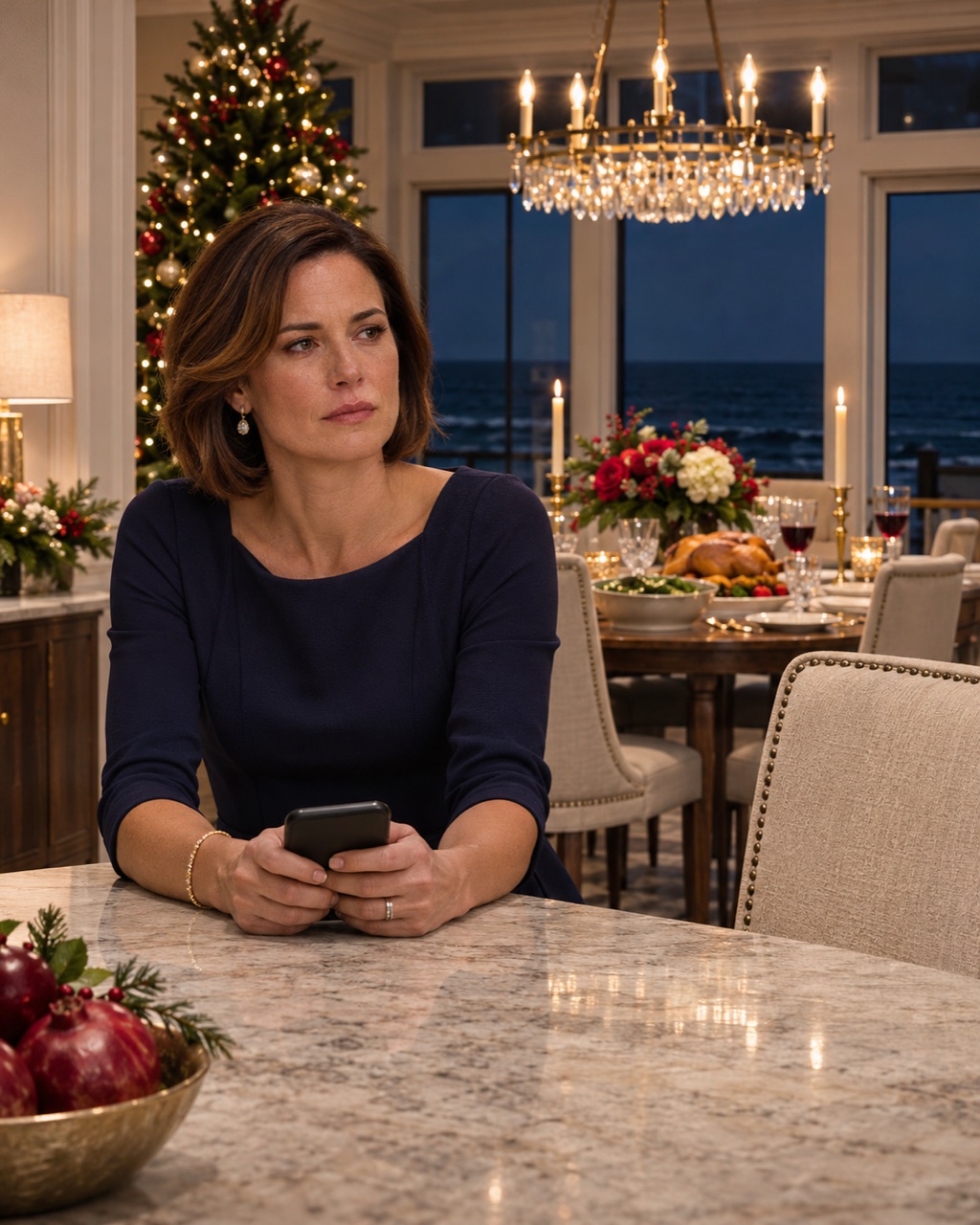
I sat down beside the dining-room table.
The tree lights were on.
I had stopped turning them off whenever I left the room because I liked seeing them when I came back.
“You can act like you’re visiting my home.”
“We always did.”
“No, Mom.”
She didn’t answer.
“At dinner, you told me to stop calling it mine.”
“That was an unhappy conversation.”
“It was also a clear statement.”
“I was upset.”
“You said it before I refused.”
She went quiet again.
I hadn’t raised my voice.
I had simply put the order back where it belonged.
Her disappointment had followed my refusal.
The announcement had come first.
Mom asked whether I expected an apology every time she walked through the door.
“No.”
“Then what do you expect?”
“That you accept the house is mine and don’t restart the demand.”
“You keep saying demand.”
“You told me to give it back.”
She breathed out slowly.
I watched a light on the tree blink off, then realized it was only partly hidden by a branch.
I reached over and moved the branch without getting up.
Mom said, “What if we still wish things were different?”
“You can wish that.”
“And I can’t mention it.”
“I’m not hosting another discussion about transferring my home.”
She called that a restriction.
I didn’t argue over the word.
“Yes.”
That surprised her.
I usually tried to find phrasing she could accept before we ended a conversation.
This time, the answer didn’t need a more comfortable label.
I was restricting what I would sit through in my own dining room.
She said she would need to talk to Dad.
“Of course.”
“And Owen.”
“He’s received the same answer.”
“We’re still a family.”
“I haven’t said otherwise.”
She sounded close to tears then.
I felt my own face get hot.
I rubbed at a spot on the tabletop that wasn’t dirty.
I didn’t want her upset.
I also couldn’t make her feel better by pretending another visit was already promised.
“Mom, you don’t have to decide this while we’re on the phone.”
She asked whether I was ending the call.
“I’m giving you time to think.”
It wasn’t the same thing.
I waited while she considered that.
Then she said she would speak to Dad.
Afterward, I stayed at the table longer than I needed to.
I hadn’t enjoyed making my mother ask whether she was welcome.
But she hadn’t simply asked for dinner.
She was asking whether she could return without accepting the answer I had already given.
Those weren’t separate questions anymore.
I got up and put away the last clean serving dish from Christmas Eve.
It had been on the counter because I hadn’t wanted to open the cupboard and finish the job.
Now I did.
I checked my work.
I took a break.
I let the phone sit.
When Mom wrote again, she said she could avoid discussing transfers.
I read the sentence carefully.
It was narrower than accepting that the house belonged to me.
I didn’t want a visit where everyone avoided a word while still treating me as a temporary obstacle.
“I also need you to acknowledge that it is my house,” I replied.
She said she knew my name was on it.
“That isn’t just a name on something.”
I stopped typing.
I didn’t need to lecture.
I replaced the unfinished paragraph with a simpler answer.
“You sold it to me. I own it. That needs to be accepted before another visit.”
She didn’t reply immediately.
Dad sent a message instead.
He said Mom had shown him our exchange.
I asked whether he understood what I was requesting.
He said he thought so.
I told him I wasn’t asking either of them to be pleased with my refusal.
I was asking them to stop treating ownership as undecided.
He replied that he wanted to talk rather than keep writing fragments.
I agreed that we could speak.
I didn’t invite him to the house.
He didn’t ask me to.
Instead, Russell asked to speak to me with Beverly present.
Chapter 12: What They Said Together
“Your mother is here,” Dad said when I answered.
“I’m here, Nora,” Mom added.
I sat at my work table.
I wanted to listen without carrying dishes or wiping something that was already clean.
Dad began with the written confirmation.
“We read what your lawyer sent.”
“All right.”
“We understand that we don’t own part of the house.”
I held the phone closer.
“And that we can’t leave it to Owen,” he added.
Mom said, “We sold it to you.”
I didn’t answer immediately.
I had heard the facts discussed all week.
This was different.
They weren’t using them as the introduction to another request.
At least, not yet.
“Yes,” I said.
Dad cleared his throat.
“The old instructions don’t change that.”
“No.”
“We shouldn’t have spoken as though they did.”
I looked down at the edge of my work table.
There was a faint mark where I usually rested my mug.
I traced it with my finger while Mom spoke.
“You paid what we agreed.”
“Yes.”
“And you didn’t promise to give it back.”
“No.”
She paused.
“We know that.”
This time, the words didn’t arrive as a way to hurry past the sale.
She stayed with them.
I needed that.
I didn’t need her to repeat every document.
I needed her to stop turning what she knew into something I could be pressured to ignore.
Dad said they still wished they could have kept the original plan for Owen.
“I understand.”
“But that isn’t something you agreed to,” he said.
“Correct.”
Mom told him she wanted to speak.
He stopped.
“Nora, I thought if you could afford to buy it, you could manage without it.”
I pressed my lips together.
That was a hard sentence to hear.
“I bought it because I wanted to live here.”
“I understand that better now.”
I wanted to ask why wanting my own home had required so much explanation.
I didn’t.
She had finally said she understood.
I wasn’t going to make the acknowledgment impossible by demanding that she arrive at it without having caused any hurt.
“I’m staying here,” I said.
“We know,” Dad replied.
“And I’m not funding a reversal.”
“We aren’t asking you to.”
Mom didn’t object.
I waited to make sure.
Then I said, “Thank you for saying that plainly.”
Dad asked whether I needed anything else put in writing.
“I’d like the acknowledgment in the exchange we’ve already been using.”
He agreed.
There was no new promise to convey property.
No new transaction.
No lawsuit.
Just an acknowledgment that their completed sale meant what it had meant all along.
After the call, I received their message.
They stated that the house belonged to me and that they could not leave it to Owen.
I saved it with the written confirmation they had received.
Then I closed the folder.
I didn’t print the message or put it anywhere I would see it every day.
I wanted it kept.
I didn’t want it displayed.
Owen contacted me later.
He had heard from them.
“I understand they’ve acknowledged it,” he wrote.
“Yes.”
“I’m not asking you for the house anymore.”
I read that sentence more than once.
I didn’t need a dramatic apology from him to know what it meant.
He was withdrawing the demand he had encouraged.
I asked him to be clear in the family exchange.
He said he didn’t see why that was necessary.
“Because the request was made with everyone present.”
He didn’t argue long.
He wrote that he knew the sale had been permanent and that he was withdrawing his request for me to return the house.
He didn’t claim to be happy.
I hadn’t asked him to.
I answered, “I’ve read it. Thank you for making that clear.”
Then I put the phone down.
There was no celebration.
I didn’t call my parents back to tell them everything was fixed.
It wasn’t.
The house was no longer being treated as something they could arrange to hand over, but the memory of dinner hadn’t disappeared.
I still remembered Owen looking down.
I still remembered Mom telling me I could live somewhere else.
I didn’t need those feelings resolved before accepting their acknowledgment.
Both things could be true.
They had stopped demanding my home.
I wasn’t ready to host them again.
I made something simple to eat and sat at the kitchen counter.
For the first time since Christmas Eve, I didn’t place the phone beside my plate.
I left it at my work table.
When I finished, I washed up before checking it.
Mom had written.
She said she hoped our conversation meant we could begin having ordinary visits again.
I didn’t answer immediately.
I went into the dining room and looked at the table.
There was room for all of us.
That had never been the problem.
The problem was whether I wanted them there yet.
Before I finished thinking about that, another message arrived.
Beverly asked me to invite them back before Christmas week ended.
Chapter 13: The Tree Beside The Windows
“Not this week, Mom.”
I sent the answer while standing in the kitchen.
Then I added, “I’ll contact you when I’m ready to arrange a visit.”
She read it quickly.
I could see that.
I set the phone down before watching for a reply.
There were clean dishes to put away.
A work message needed answering.
I wanted something to eat.
None of those things required a family decision.
I opened the cupboard and put a plate where it belonged.
Then I went to my work table.
I had a consulting task I could finish without giving it the whole day. I opened the file, read my notes, and started.
My phone sounded.
I left it where it was until I reached a sensible stopping place.
That was different from how I usually handled Mom’s messages.
Usually, I looked at once.
Usually, I wanted to know whether she was upset before I did anything else.
This time, she already knew the answer.
I wasn’t inviting them back during Christmas week.
When I checked, she had written that she was disappointed.
There was no renewed request for the house.
No mention of Owen inheriting it.
No argument that I owed them another visit because they had finally acknowledged the sale.
I answered, “I understand.”
I didn’t add an invitation.
Dad sent a brief message saying they would wait to hear from me.
I thanked him.
Owen didn’t contact me that afternoon.
I was relieved not to have another conversation to finish.
Their lives had not been taken from them by my refusal.
My parents still had their rented retirement apartment elsewhere in New Jersey.
They still had retirement income.
Owen still had his own home.
What they no longer had was an open demand that I return mine.
They had used the proceeds of a sale they knowingly completed.
I wasn’t seeking to take those years of retirement and travel back from them.
I also wasn’t paying for those years again by surrendering the house afterward.
That part was settled.
I returned to work and finished what I had opened.
Then I closed the laptop rather than moving directly into another review of the family messages.
The records were saved.
The written confirmation had been received.
My parents had acknowledged ownership.
Owen had withdrawn his demand.
There was nothing else I needed to prepare that afternoon.
I went into the kitchen and made dinner for myself.
I chose something I liked.
I didn’t consider whether Mom would think it was too plain or whether Owen would ask what else there was.
I carried my plate to the dining table.
The chair opposite mine was empty.
I noticed that.
I didn’t move it.
I ate with the tree lights on beside the windows.
The ocean beyond the glass was dark again, as it had been on Christmas Eve.
Inside, the reflections were different.
There wasn’t a table full of people waiting for my agreement.
There was my plate, my glass, and the room I had chosen to live in.
I didn’t make myself feel grateful for the quiet.
I was still sad.
I had wanted that dinner to be a good one.
I had wanted my parents to come back as people who remembered living here and were glad I loved the place too.
Maybe that could happen later.
I wasn’t going to arrange it before I wanted it just to make the week look repaired.
After eating, I cleared my own plate.
The table took hardly any time.
I wiped it, rinsed the glass, and left the kitchen ready for the morning.
I didn’t set anything out for guests.
I didn’t plan a menu.
I didn’t inspect the entry for things Mom might criticize.
My next visit with them, if I chose one, would be arranged later.
It would not begin with a discussion of ownership.
It would not be something they could schedule among themselves and tell me about afterward.
They had received that answer in writing.
They had accepted it.
I checked my phone again before putting it aside for the evening.
There were no further demands.
I didn’t send a message to keep the peace.
There was nothing new to say.
For years, I had thought welcoming my parents back meant making their former home feel familiar.
I could still understand why they loved the windows, why Dad liked the view, why Mom remembered where she had placed the Christmas tree.
I didn’t need to argue with any of that.
But I wasn’t going to leave my own place in the house unspoken again.
When I next invited them, they would be visiting Nora.
Not returning to a property they could still assign.
I turned off the kitchen light.
The dining room stayed lit by the tree and the small light I used in the evening.
I brought a chair nearer the windows.
Not to look for my parents outside.
Not to rehearse what I would say if the phone rang.
Just because I wanted to sit there.
I put my phone beyond reach on the dining table.
Then I sat down.
The house was quiet enough that I could hear an occasional sound from outside.
I drew my feet beneath the chair and looked at the lights.
I didn’t have to decide whether I would forgive everybody completely.
I didn’t have to decide the next holiday.
I had already decided the thing they came to dinner expecting to decide for me.
I would keep the home I bought.
My parents would keep their own home, their retirement income, and the consequences of spending money that had belonged to them.
Owen would have to make plans that didn’t depend on receiving mine.
There was no transfer waiting.
No sale being negotiated.
No visit scheduled around another attempt.
Later in Christmas week, I sat in my own home beside the same lit Christmas tree.
You Might Also Enjoy




