Chapter 1: The Spare Mantel Hook
Chapter 1: The Spare Mantel Hook
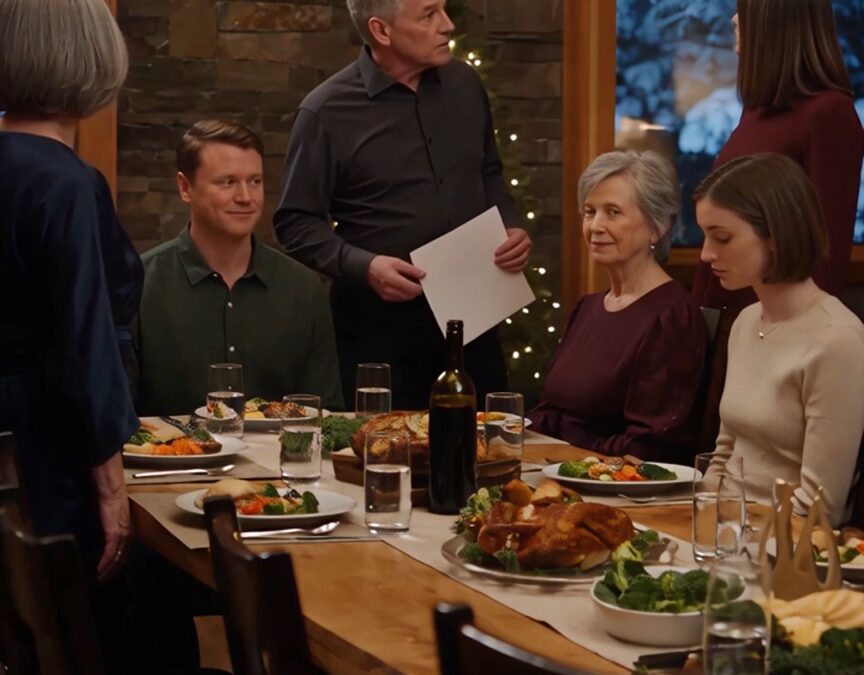
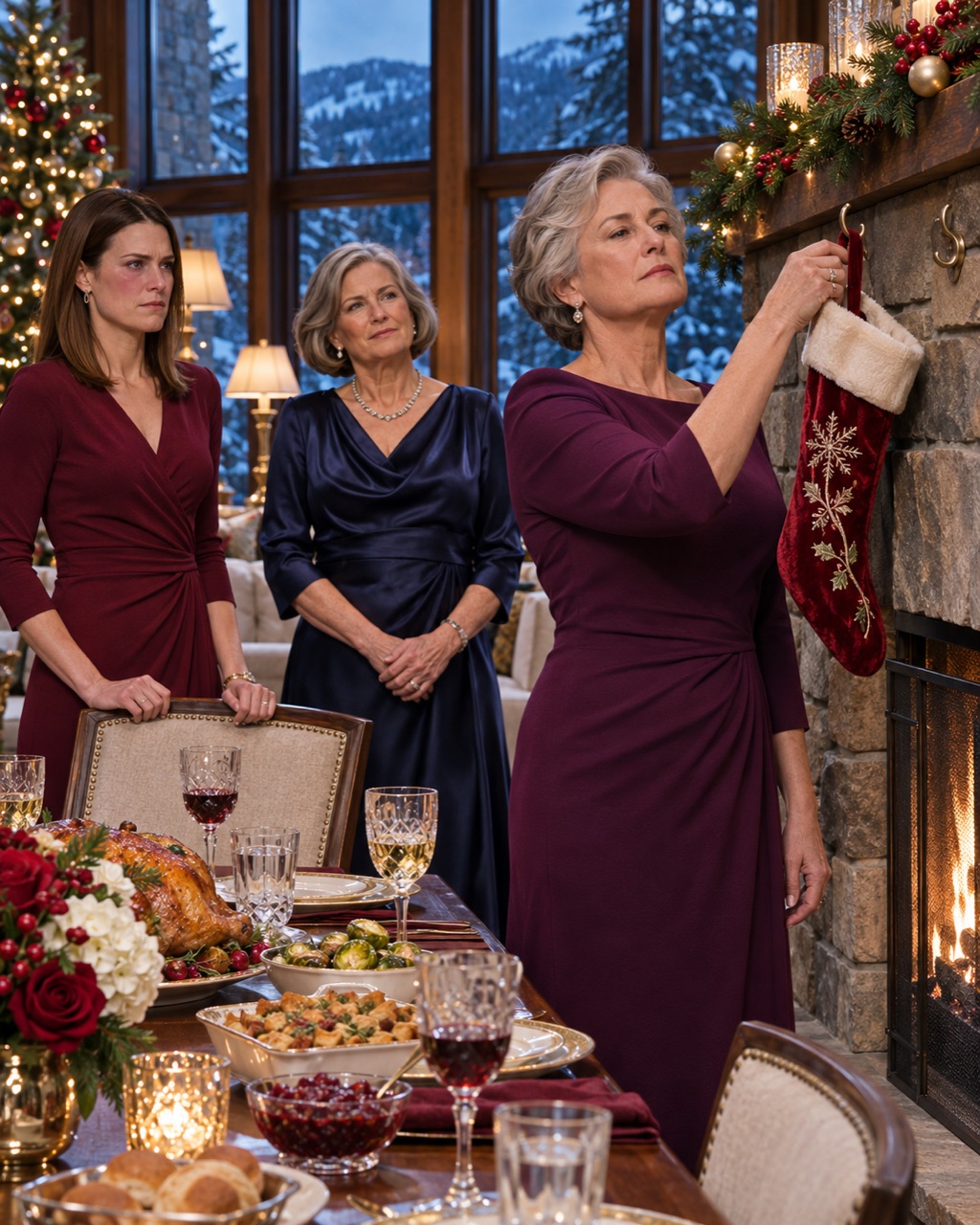
My daughter-in-law pulled my stocking from the fireplace in my luxury mountain house and hung her mother’s there while my son laughed.
She put my red stocking on the spare hook.
Then she stood back.
“My mother gets Christmas here now.”
Chelsea said it while facing me, close enough that nobody at the dinner table could mistake who she meant. Behind her, the tree lights were on. The food was already out.
Wesley laughed into his glass.
I looked toward him before answering her.
“You mean Christmas here without me?”
“You can visit, but my mother stays here.”
Judith sat with her napkin in her lap. She looked at Chelsea, then at the stockings, as though she had missed the beginning of a conversation.
Holly looked down.
I waited for my daughter to raise her head.
She didn’t.
“And where will I be?” I asked.
“You can come for the afternoon,” Wesley said.
He was still smiling.
I had been standing beside the fireplace because Chelsea had asked whether her mother’s stocking could go there. I had said yes. There was an empty hook, and Judith was an invited guest.
I hadn’t understood that Chelsea meant replacing mine.
Now Judith’s stocking hung in my usual place. Mine hung off to the side, near the edge of the mantel.
“It makes more sense,” Chelsea said.
“What does?”
“Having the arrangements settled before everybody gets attached to doing things the old way.”
The old way was dinner in my house.
With me.
I felt humiliated.
Not because the stockings were expensive or because I cared which hook held mine. It was the way Wesley kept smiling while Chelsea explained where I would no longer belong.
He could have stopped her.
He reached for his drink instead.
Chelsea turned slightly toward the table, bringing everyone into the conversation without asking whether they wanted to join it.
“My mother will have the bedroom nearest the stairs.”
“That’s my bedroom.”
“For Christmas,” she said, as though that corrected me.
The bedroom nearest the stairs was where I slept. My clothes were there. So were my reading glasses, my slippers, and the quilt I used when the room got cold.
“Your mother doesn’t like those stairs either,” I said.
“She’ll have help.”
Judith’s face changed.
Chelsea didn’t notice.
She was describing where people would sleep, when they would arrive, and how easy the holiday would be once everyone knew the arrangement. None of it sounded like something she was proposing.
She sounded finished.
Beyond the windows, snow covered the porch. I could see the porch chair Wesley had carried outside earlier, after deciding it crowded the room.
I looked back at my own chair at the table.
My plate was still there.
“Barbara, did you know about this?” Judith asked.
“No.”
Chelsea answered before Judith could say anything else.
“We were going to explain after dinner.”
“You’re explaining now,” I said.
“Because you asked.”
Holly shifted in her chair. I wanted her to say that I hadn’t asked to be removed from Christmas.
She watched Wesley.
He gave the little shrug he used when he wanted everyone to stop making a fuss.
“Mom, you’re making it sound worse than it is.”
“Then explain it.”
“You come up, we eat, we spend the afternoon together. That still counts as Christmas.”
“And afterward?”
He glanced at Chelsea.
That was enough.
I could picture the room after I left. My son on the couch, Chelsea taking food into the kitchen, Judith going upstairs to the room I used.
All of them staying.
Me leaving.
Chelsea turned toward the mantel again and adjusted her mother’s stocking.
Wesley laughed.
“Come on, Mom. It’s just a stocking.”
“Stop laughing.”
His smile thinned.
For a moment, I thought he might apologize. He looked at my face long enough to know I wasn’t teasing him.
Instead, his eyes went toward the adjoining study.
Arthur was in there.
The study door was open, but the room sat off to the side, beyond the angle of the table. From where I stood, I could see part of the doorway and the edge of the desk.
Wesley had brought something for him.
That had been the other plan for dinner.
Chelsea crossed her arms.
“We’ve planned around this.”
“Without asking me.”
“We’ve talked about the house for months.”
“Talking about the house isn’t the same as telling me to leave Christmas.”
“Nobody said you couldn’t come.”
I looked at Judith.
She hadn’t spoken since asking whether I knew. Her plate was untouched now, and she was watching her daughter with an expression I couldn’t quite read.
Holly finally looked up.
Still, she said nothing.
I had spent the day making room for everyone. Food in the refrigerator. Clean bedding upstairs. Their coats in the hall rather than piled on the chairs.
I hadn’t counted any of that as a favor.
Until Chelsea acted as though I was the extra person.
Wesley pushed his chair back a little.
“Can we sit down?”
“I’m standing in my own living room.”
“I know that.”
“Then why are you laughing?”
He exhaled through his nose and looked toward the food. He wanted the conversation to end before anybody had to say plainly what Chelsea had done.
I knew that look.
For months, he had used it whenever I asked a question about their plans that didn’t have a quick answer.
Could we talk later?
Could I stop worrying?
Couldn’t I see they had it handled?
Chelsea gave me the same patient smile she had used when telling me Judith would have help on the stairs.
“There’s no reason for this to become unpleasant.”
“It already is.”
I walked the short distance back to the mantel.
Chelsea didn’t move away, but she stopped touching the stockings. I took my red one from the spare hook.
It felt ridiculous to be holding it during dinner.
I held it anyway.
Wesley looked toward the study again. Whatever embarrassment he felt, it hadn’t displaced what he wanted to ask.
“We’re still getting the forty-percent discount we talked about, right?”
Judith turned toward him.
Holly’s eyes moved from his face to mine.
Chelsea spoke before I answered.
“You aren’t doing us some enormous favor.”
I looked down at the stocking, then back at my son.
“I had given you Christmas lodging without charging you for eight years.”
“Those were family visits,” Chelsea said.
“Yes,” I told her.
Wesley leaned forward, no longer pretending the conversation was only about decorations.
“You’re still honoring the family price.”
Chapter 2: The Open Study Door
“You’re asking about the price now?” I said.
Wesley looked toward the study again.
“I’m asking whether we’re changing everything because Chelsea moved a stocking.”
“She told me I wouldn’t stay here.”
“She explained what Christmas might look like.”
“No,” I said. “She announced it.”
Chelsea kept her arms crossed. Her mother was sitting close enough to hear every word, but Chelsea spoke as though Judith had already agreed with her.
“We can work out the details.”
“My place at Christmas isn’t a detail.”
Nobody reached for the serving dishes.
The food had been something to do with our hands before. Now even Wesley had stopped pretending he was ready to eat.
I held the red stocking against my side.
Months earlier, at this same house, we had talked about the possibility of Wesley and Chelsea buying it. I was a retired bookkeeper. I understood what a favorable price could do for a family’s finances.
I had wanted to help.
That part was true.
I had discussed a forty-percent discount because he was my son, because they wanted a house they could not otherwise buy on those terms, and because I thought we were discussing a home.
Not my removal.
At the time, Wesley had asked questions about upkeep. Chelsea had asked about bedrooms. We hadn’t finished discussing what selling would mean for me.
They had started planning anyway.
By the time Christmas came, Chelsea was talking about future holiday stays as though the house already belonged to them. I could arrive later. I could bring less food. I didn’t need to ask who wanted to stay longer.
There would be time to settle everything.
That was what they kept saying.
Now I could see how they had used that time.
“I never agreed to this Christmas arrangement,” I said.
Wesley rubbed his forehead.
“We’re not trying to hurt you.”
“Then listen to me.”
“I am listening.”
He wasn’t looking at me.
He was looking toward the room where Arthur waited with the offer Wesley had brought.
Arthur Ramsey was my lawyer and my longtime neighbor. We shared a surname, not a family connection. He had been invited to Christmas dinner before Wesley mentioned bringing anything for him to review.
He wasn’t an emergency call.
He was a guest.
At seventy, Arthur had spent enough holidays at my table to know where the serving spoons were kept. He had stepped into the adjoining study briefly while we were gathering for the meal.
Wesley expected him to review the proposed sale afterward.
I had agreed to that much.
Reviewing something wasn’t answering it.
Chelsea uncrossed her arms.
“Why don’t we just have dinner and let Arthur explain things afterward?”
“Explain what?” I asked.
“The next steps.”
She said it carefully.
Not the bedroom now. Not the stocking. She was moving us back toward a transaction, where she expected a family price to sound like a family duty.
Wesley nodded.
“That’s what I’ve been saying.”
I looked at Holly.
She had heard all of it.
Her expression had changed, but she still hadn’t spoken. I could not make her defend me, and I wasn’t going to spend dinner waiting for her to begin.
I turned toward the study.
I could keep my house instead of selling it to them.
“Arthur, would you come in here?”
Wesley pushed his chair farther back.
“Mom, we can talk without him.”
“We already have.”
Arthur appeared in the doorway with the printed offer held low at his side. He looked first at me, then toward the table.
I stepped nearer.
“Arthur, please join us here.”
He came into the room.
Chelsea watched the sheet he carried before looking at his face. She had expected a review after dinner, with everyone seated and the purchase treated as the reason for gathering.
Instead, Arthur stopped beside me.
He raised the offer to chest height, facing Chelsea.
The heading was plain.
“SALE OFFER.”
Wesley stood.
I hadn’t asked Arthur to make a speech. I had called him because my son kept invoking a sale as though it had already settled where I belonged.
Arthur looked at Wesley.
“Barbara can keep her house instead of selling.”
Chelsea’s confident smile disappeared.
“What about our family price?”
There was the question again, but it sounded different coming from her. She wasn’t asking where I would go now.
She was asking whether what she wanted was still available.
Arthur didn’t move the offer toward her.
“The price was discussed,” he said.
“We’ve made plans based on it.”
“I understand you made plans.”
Wesley stood behind his chair, his hand resting on its back.
“We’re not strangers buying from her.”
“No,” Arthur said. “You’re her family.”
Chelsea seemed to take that as support.
“Exactly.”
Arthur looked directly at Wesley.
“That discount was your mother helping you, Wesley. It wasn’t something you earned.”
He stopped smiling altogether.
Judith drew back slightly from the table. Holly’s gaze stayed on her brother, and for the first time that evening, nobody was waiting for me to laugh along.
I felt less alone.
I still had my stocking in my hand.
Chelsea glanced at it, then at the offer. I could almost see her deciding which part of the conversation to address next.
She chose the purchase.
“We didn’t make her discuss selling.”
“I know,” Arthur said.
“She brought up helping us.”
“I know that too.”
Wesley looked at me.
“Mom, we weren’t trying to take advantage.”
I didn’t answer him yet.
Arthur stood close enough that I didn’t have to raise my voice. He had given me a place to answer without Wesley turning it back into an argument about whether a stocking mattered.
I thought about the bedroom upstairs.
My things were still there.
So was my home.
I had an answer about the house, and an answer about Christmas. They were not the same answer.
My answer would include an invitation Chelsea had not planned for.
Arthur turned slightly toward me.
“Do you still want to sell?”
Chapter 3: The Invitation I Meant
“No,” I said.
Arthur nodded.
“I don’t want to sell the house.”
Wesley’s chair scraped behind him. He hadn’t sat back down, but now he seemed to need something to do other than stand there.
“Mom.”
“I’m keeping it.”
Chelsea looked at Arthur rather than me.
“Because of what just happened?”
“Because I don’t want to sell,” I said.
I didn’t need to persuade her that the stocking was important enough. I didn’t need a reason she approved.
That was something I understood while she waited for an explanation she could argue with.
Arthur lowered the offer a little.
“There is no signed purchase binding Barbara to sell.”
Wesley glanced at the sheet.
“We brought that so you could handle it.”
“You brought an offer for review,” Arthur said.
Chelsea’s eyes narrowed.
“So this is the review?”
“This is Barbara’s answer.”
I returned to my chair with the stocking. I didn’t hang it yet. I wanted to sit at the table where I had expected to eat dinner with my family.
Arthur remained standing beside the empty place he had left.
Judith looked at me.
“Barbara, I’m sorry.”
“Let me finish.”
She nodded.
Wesley sat slowly. Chelsea stayed near the fireplace, with her mother’s stocking behind her.
“I would like to have another Christmas dinner here,” I said. “Next Christmas. With my family, as invited guests.”
Wesley looked up.
“You’re still inviting us?”
“To dinner.”
Chelsea’s mouth tightened.
“That’s supposed to make this better?”
“It’s what I’m offering.”
I had not decided that every future Christmas had to be punishment. I also had not decided that loving my son meant letting him reserve my house.
Those were different things.
I was ashamed that I had let them sound the same for so long.
“You can come to dinner if we can treat each other properly,” I said. “I’m not promising overnight stays.”
Holly looked toward the stairs.
I knew what she was thinking. Their bags were upstairs from this visit. The beds were made because I had invited them to stay for this Christmas.
I wasn’t pretending that invitation hadn’t happened.
“Tonight is still tonight,” I said. “I’m talking about what nobody gets to assume for the future.”
Chelsea came back toward the table.
“We can’t do a family Christmas with everybody watching the time.”
“We’re doing a family dinner now.”
“That isn’t the same.”
“No,” I said. “It isn’t.”
Arthur took his seat, keeping the offer with him. He didn’t turn the meal into a consultation or begin explaining every possible term of a sale I had just refused.
He waited.
Wesley leaned toward me.
“You’re saying we can eat here, but we can’t stay?”
“I’m saying there are no promised beds next Christmas. Not unless the way you treat me changes.”
“So we’re being tested.”
“No. I’m deciding what I’m willing to host.”
Judith looked down the table at her daughter.
Chelsea ignored her.
She had moved beyond arguing whether I could refuse. Arthur’s answer had made that difficult. Now she was arguing that my refusal would damage Christmas.
She knew which part would hurt.
“What will you tell everyone?” she asked.
“Everyone is here.”
Holly looked away at that.
There were no other relatives sitting somewhere else, no guests who had missed the exchange. The people Chelsea might have described it to were the people who had just heard her.
Wesley’s voice softened.
“We could still make the purchase work.”
“I’m not offering a different price.”
“What are you offering, then?”
“Dinner next Christmas.”
He stared at me.
I let him.
For years, when I said I wanted everyone here, I had meant a table with enough chairs and food they liked. Wesley and Chelsea had begun hearing access to the whole house whenever they chose.
I could correct that without canceling dinner.
Chelsea pulled out her chair but didn’t sit.
“You know what it takes to get everybody organized.”
“I do.”
I had done it for eight years.
I knew the laundry afterward, the food nobody ate, the last-minute changes, the question of who preferred which room. None of those things had bothered me as much as hearing my son laugh.
“You can’t expect people not to plan,” she said.
“I expect them to ask.”
Wesley turned toward Arthur.
“And you’re saying there’s nothing we can do?”
Arthur answered without making it sound like a contest.
“I’m saying Barbara has not agreed to sell you her house.”
Chelsea finally sat.
The room changed then.
Not because anyone was comfortable. We weren’t. But the possibility of a sale no longer sat above every other thing being said.
It was over unless I chose otherwise.
I did not choose otherwise.
I asked Judith whether she wanted the dish nearest me. She said not yet. Holly reached for the serving spoon, then waited when Chelsea spoke again.
“This wasn’t just about Wesley and me.”
I looked at her.
“Then tell me what you mean.”
She glanced toward her mother, choosing her words more carefully now. Judith’s bedroom had been the reason she gave for moving the stocking.
Chelsea was trying to make that reason matter again.
“My mother has been counting on Christmas with us.”
“Your mother is invited.”
“As an afternoon guest.”
“As a dinner guest,” I said.
Chelsea’s chair moved against the floor.
She wasn’t smiling anymore, but she wasn’t finished trying to make me responsible for the arrangement she had announced.
“You promised my mother a place here.”
Chapter 4: Judith’s Empty Plate
“No, Chelsea,” Judith said.
Her daughter turned toward her.
“Don’t do that.”
Judith’s voice was quiet, but she didn’t take the words back. She moved her plate farther from the edge of the table and looked at me.
“Barbara didn’t promise me your room.”
Chelsea glanced at Wesley.
“Mom, we talked about this.”
“You told me there would be room.”
“There would have been.”
“You didn’t tell me why.”
Nobody spoke over her.
Judith had been uncomfortable since Chelsea moved the stockings, but discomfort could mean many things. Until then, I hadn’t known whether she disliked how her daughter had announced the plan or disliked the plan itself.
Now she was making that clear.
“I thought Barbara would be here,” she said.
Chelsea let out a breath.
“She could be here.”
“For the afternoon,” Judith said. “That’s what you said.”
Wesley looked at his plate.
Judith was sixty-six. She didn’t need her daughter to explain what it meant when everyone else stayed overnight and the woman who owned the house was told to visit.
“I didn’t ask you to do that,” she said.
“To do what?”
“To make me the reason she leaves.”
Chelsea’s eyes moved toward the fireplace.
For the first time, her mother’s stocking looked like something she wished nobody would notice.
“It wasn’t like that.”
“It was exactly what you said.”
I stayed quiet.
Judith wasn’t defending me because I had asked her to. I had not known what she knew, and I didn’t want to supply words she might not mean.
She looked at me again.
“I knew they were talking about buying the house. I knew Chelsea wanted us all here for Christmas. I didn’t know she had decided you wouldn’t stay.”
“I hadn’t been told either.”
“I understand that now.”
Chelsea drew herself straighter.
“If we owned the house, we would decide who used the rooms.”
“Yes,” Arthur said. “But Barbara owns it.”
Chelsea didn’t challenge that.
She was too smart to argue about whose house we were sitting in. Instead, she turned back to what she had expected to happen.
“We were making plans for after the sale.”
Judith shook her head.
“Then you should have said they were plans, not told me the bedroom was mine.”
Holly looked toward her.
“You thought it was already settled?”
“I thought they had discussed it with Barbara.”
“We had discussed the house,” Wesley said.
“Not what Chelsea just told us,” I answered.
He nodded once, reluctantly.
Judith pushed back her chair.
“I don’t want a permanent Christmas bedroom.”
Chelsea’s face reddened.
“Nobody said permanent.”
“You told me it would be my room when the family came.”
“That’s what I meant.”
“Then I don’t want it on those terms.”
I felt relieved.
Not pleased that Chelsea was embarrassed. I was relieved that Judith had said plainly she hadn’t asked for my place.
It would have been easy to resent her for accepting something she didn’t know had been taken from me.
I didn’t have to do that now.
Chelsea stood too, but Judith was already walking toward the fireplace.
“Mom, leave it alone.”
Judith stopped beside the mantel.
“I’m not making a scene.”
She took her own stocking from the hook.
The empty hook where mine had hung was visible again.
She didn’t reach for my red stocking or decide where it should go. She carried hers back to the table and put it beside her chair.
“I’m a guest here,” she said.
“So am I, apparently,” Chelsea replied.
“Yes,” I said.
Wesley looked up sharply.
I kept my voice ordinary.
“You came because I invited you.”
Chelsea sat down before answering.
“We’re your family.”
“That hasn’t changed.”
“You’re making it sound like we need permission to be welcome.”
“You need an invitation to stay in my house.”
Judith’s stocking lay in her lap now. She didn’t hold it up as proof or keep talking about it. She reached for her water and took a drink.
That small return to dinner helped.
Holly asked whether anyone wanted the serving dish near her. Arthur accepted it. Wesley shook his head.
Nobody was ready to eat much.
After a while, Judith spoke to me directly.
“I won’t accept a room that depends on you being pushed out.”
“Thank you.”
Chelsea stared at the table.
I had not expected her to apologize simply because her mother contradicted her. She had lost the claim that she was carrying out Judith’s wishes.
She needed another argument.
She turned to Wesley.
“We didn’t make up the sale conversation.”
“No,” he said.
I waited.
I was willing to hear him describe what we had actually said. I wasn’t willing to let Chelsea’s announcement become something I had agreed to months ago.
Wesley looked at Arthur, then at me.
“You offered to help us buy this place.”
“I discussed selling it to you at a discount.”
“Because you wanted us to have it.”
“I wanted to consider helping you.”
“That’s not how it sounded.”
Arthur stayed quiet.
This was a conversation my son and I had to have accurately. I could not ask him to admit I had never encouraged the idea.
I had.
I had spoken warmly about it. I had imagined keeping the house in the family. I had allowed myself to picture visits here after a sale, before we had settled how any of that would work.
But imagining something wasn’t completing it.
“You can tell me what you remember,” I said.
Wesley leaned forward.
“You can’t act like none of it counted.”
“I haven’t.”
Chelsea looked at him, giving him room to speak now.
He had found the argument that hurt more than the stocking because it contained something true: I had wanted to help them.
Then he pushed it further.
“Your earlier words still count as a promise.”
Chapter 5: The Offer On The Table
“Tell me the words,” I said.
Wesley looked surprised.
“What?”
“Tell me what I said.”
He glanced at Chelsea before answering.
“You said you could sell us the house for forty percent less. You said it would help us.”
“Yes.”
“And you wanted it to stay in the family.”
“I said I liked that idea.”
Chelsea leaned toward him.
“That’s what we based everything on.”
Arthur waited until she finished.
“Barbara discussed a favorable price,” he said. “That is not the same as accepting a purchase.”
Wesley pointed toward the sheet beside Arthur’s plate.
“Then what do you call that?”
“The offer you brought today.”
Arthur turned it so Wesley could see it without holding it up again.
He didn’t reveal some secret condition. There wasn’t one.
It was their printed proposal.
They had brought it for him to review after dinner, knowing it was unsigned. Now they wanted the earlier conversation to do what the unsigned offer could not.
“You asked me to look at this,” Arthur said. “Barbara had not accepted it before you arrived.”
“We were going to handle it tonight.”
“If she wanted to proceed.”
Chelsea looked at me.
“You let us think you did.”
“I was considering it.”
“For months.”
“Yes.”
I didn’t pretend that I had been certain all along. That would have been easier to say and untrue.
At sixty-eight, I was considering how I wanted to live. The house was expensive to keep and large enough for family stays. Selling to Wesley and Chelsea might have made sense.
It might also have made my life harder.
We had not finished talking.
During the earlier conversation, I had sat in the living room with them while Wesley asked whether I would really consider that large a discount.
I remembered my answer.
“For you, I would consider it.”
I had meant it.
Chelsea had begun asking which furniture I expected to keep. I told her we weren’t there yet. Wesley said there was no hurry.
Then the hurry appeared in other conversations.
Bedroom plans.
Holiday plans.
Decisions about food and arrival times.
I kept thinking we would sit down and talk properly before any sale happened. They began treating the talk as something already completed.
I explained that now.
Wesley listened, but his expression stayed tight.
“You could have told us you weren’t sure.”
“I did tell you we needed to discuss it.”
“We thought you meant the details.”
“Where I live isn’t a detail.”
Arthur didn’t interrupt.
He knew I hadn’t promised to move into assisted living. I hadn’t agreed to buy somewhere else or give them the proceeds from a sale.
There was no settled plan for my leaving this house.
Wesley knew that too.
He had simply been willing to talk about Christmas as though my leaving was the easy part.
“I never gave you possession,” I said. “I invited you for Christmas.”
Chelsea shook her head.
“We haven’t claimed we already own it.”
“You planned who would use my bedroom.”
“After buying it.”
“Before asking whether I still wanted to sell.”
That stopped her for a moment.
Then she changed direction.
“If you’d decided earlier, we could have looked somewhere else.”
“You can look somewhere else now.”
The words hurt to say.
I had wanted my son to have something good. Saying no didn’t remove that feeling. It meant I wasn’t going to use my house to keep him pleased with me.
I was furious that the choice had been made to sound so selfish.
I looked toward the kitchen until I could trust myself to continue.
When I faced him again, I kept to what was true.
“No money changed hands.”
“We know.”
“No purchase was signed.”
“We know that too.”
“Then don’t tell me it was completed.”
Arthur brought the offer back beside his plate.
“I can explain the difference between a discussion and an accepted sale,” he said. “But I cannot turn her consideration into consent.”
Chelsea looked toward the stairs.
I wondered whether she was thinking about their bags, the bedroom, or the future Christmas she had been arranging so confidently.
She didn’t say.
Holly spoke at last, but only to ask whether I wanted something from the kitchen.
“Not yet,” I told her.
It wasn’t the help I had wanted earlier.
Still, I let the question stand without turning on her. There would be time for what she hadn’t said.
Wesley waited until Arthur reached for his drink.
Then he lowered his voice.
“Mom, can we step away from the table?”
“Why?”
“Because everybody’s listening.”
“Everybody heard Chelsea.”
“I know.”
His tone had changed.
He wasn’t asking Arthur to settle anything now. He wanted to talk as my son, without Chelsea answering for him and without anyone watching what I agreed to.
For a moment, I wanted that too.
I wanted him in the kitchen, speaking gently, telling me he hadn’t understood how bad it sounded.
I also knew what would happen if I gave him an answer in private that differed from the one everyone had heard.
There would be another version.
Chelsea would hear that I was reconsidering. Judith would hear the sale was still possible. Holly would be told we had worked it out.
I didn’t want a disagreement about what I meant.
Wesley stood beside his chair.
“Just let me explain.”
“Explain here.”
He looked at Chelsea.
She looked away.
He moved closer to me, speaking so quietly that I had to listen hard.
“Will you reconsider if we talk privately without Chelsea?”
Chapter 6: What He Expected From Me
“No,” I said.
Wesley stopped beside my chair.
“Not even a conversation?”
“We can talk. I’m not reconsidering the sale in a separate conversation.”
He glanced toward the kitchen.
“I’m trying to fix this.”
“Then fix what happened here.”
Chelsea lifted her head.
“I don’t need to be excluded.”
“Neither did I,” I said.
Arthur remained seated. He wasn’t going to follow Wesley into another room and help negotiate around my answer.
That mattered.
I asked Wesley to sit down again.
He did, reluctantly.
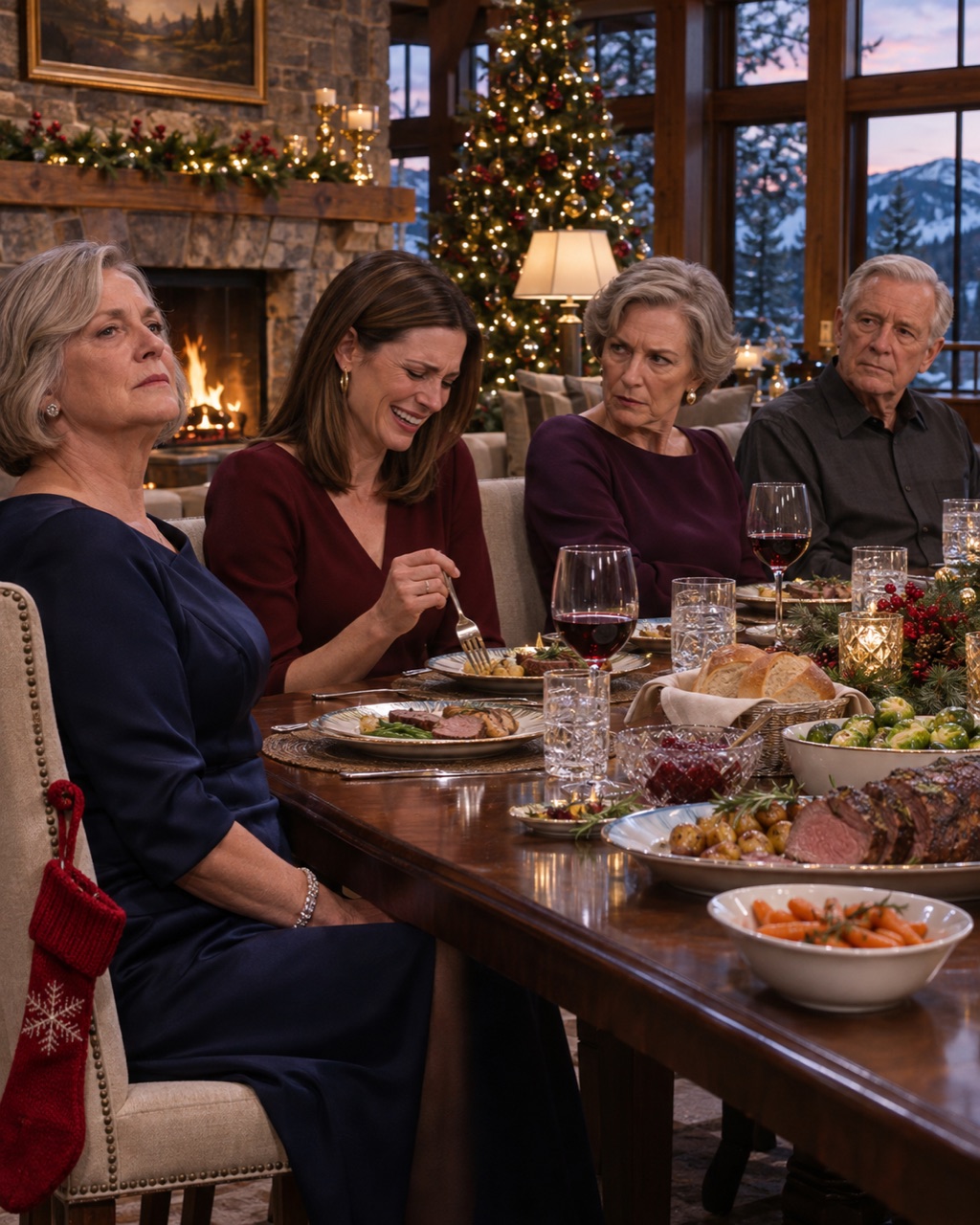
The table had become uncomfortable enough that everyone seemed to hear the ordinary sounds: the heat coming on, a glass touching the table, the settling fire.
I wanted dinner back.
But not badly enough to pretend.
“I’m not telling different relatives different things,” I said. “I’m keeping the house. You’re invited to another Christmas dinner. Future overnight stays aren’t promised.”
Wesley nodded as though he had heard it already.
He had.
Hearing it wasn’t the problem.
Chelsea leaned back.
“We’ve stayed here for years without all these rules.”
“Because I invited you.”
“You wanted us here.”
“Yes.”
That answer seemed to bother her more than an argument would have.
I did want them here.
I had liked hearing people upstairs in the morning. I had liked knowing which breakfast Wesley would make if he got to the kitchen before I did.
I had liked Christmas in a full house.
None of that meant Chelsea could tell me I was finished having it.
I looked at Wesley.
“For eight years, I made Christmas stays available without charging you.”
“I know, Mom.”
“I’m not asking you to pay me back.”
“I didn’t say you were.”
“Chelsea called them family visits as though that meant they required nothing from me.”
Chelsea opened her mouth.
I continued before she could answer.
“They were family visits. I bought food, made room, kept the house available, and changed my plans so you could come.”
“We helped,” Wesley said.
“Sometimes.”
He looked down.
I wasn’t going to turn the meal into a list of towels washed or groceries bought. I had done those things willingly.
What I needed him to admit was simpler.
The help had been mine to offer.
It hadn’t become theirs to demand.
Judith looked at him.
“She isn’t sending you a bill.”
“I know that.”
“Then let her finish.”
Chelsea gave her mother a sharp look, but Judith didn’t return it.
I could feel tears coming, and I hated the timing. I took a drink and waited before speaking again.
I was hurt.
There wasn’t a better word for it.
“I heard you laugh while your wife told me I wouldn’t stay here for Christmas.”
Wesley rubbed his face.
“It came out wrong.”
“The laugh?”
“The whole thing.”
“Why did you laugh?”
He looked at Chelsea.
I waited.
“It wasn’t supposed to be serious.”
“She was serious.”
“I mean the stocking.”
“You heard the words.”
He couldn’t say he hadn’t.
He had answered my question about where I would be. He had told me an afternoon counted as Christmas. He had laughed again after Chelsea adjusted Judith’s stocking.
He had been part of the announcement.
Arthur said nothing.
Holly watched Wesley now instead of her plate.
There was nowhere for him to redirect the question without making that obvious.
“I thought you’d see it differently once we talked,” he said.
“How differently?”
“As us having our own family Christmas.”
“With your wife’s mother staying in my room.”
“After we bought the house.”
“And me coming for the afternoon.”
He closed his eyes briefly.
“Yes.”
Chelsea leaned forward.
“We’re allowed to want traditions of our own.”
“You are,” I said. “You aren’t entitled to buy mine at a discount.”
She looked toward Arthur, perhaps expecting him to soften that.
He didn’t.
I turned back to my son.
“You can make your own Christmas plans. You can buy another house. You can invite whoever you like.”
He looked older then.
Not because I was being harsh, but because I had stopped helping him avoid the choice he had made.
He could not have my favorable price, my approval, and my cheerful agreement to being excluded simply by calling it practical.
“What did you think I would do?” I asked.
“We were going to discuss it.”
“After dinner.”
“Yes.”
“After Chelsea moved the stockings.”
He didn’t answer.
I waited again.
The food needed attention. People needed to eat. I could have used either fact to rescue him from the question.
I had done that kind of thing before.
Not now.
Chelsea moved her chair, drawing his attention toward her, but he kept looking at me.
“I didn’t think it would go like this,” he said.
“What did you think would happen?”
He looked at the red stocking beside my chair.
Then he answered more honestly than he had all evening.
“I thought you’d complain, but you’d go along with it.”
Chapter 7: The Food Going Cold
“I’m not going along with it,” I said.
Wesley nodded without looking up.
I stood and asked Holly to help me with the food.
She rose immediately.
In the kitchen, she waited beside the counter while I checked what could be served as it was and what needed warming. We didn’t whisper about Wesley.
There was no private decision to make.
“Do you want me to bring this back?” she asked.
“Yes.”
She carried the dish into the dining room.
I followed.
Chelsea was speaking quietly to Wesley, but she stopped when I came through the doorway. Judith had moved her stocking out of the way of her plate.
Arthur asked whether I needed anything.
“Just dinner.”
That was what we were going to do.
Not because the argument was small. Because I had given my answer, and another round of bargaining wasn’t going to improve it.
I sat down.
My red stocking stayed beside my chair.
Wesley watched me notice it, but he didn’t call it just a stocking again.
“Please pass that,” Judith said to Holly.
The ordinary request helped everyone begin moving.
Food went around the table. Someone asked for water. Arthur thanked me for the meal. Nobody announced that we should forget what had happened.
I appreciated that.
Chelsea ate a little before looking at me.
“So what are we supposed to do now?”
“Have dinner.”
“I mean after tonight.”
“Make your own plans.”
“For Christmas.”
“I’ve invited you to dinner next Christmas.”
She put down her fork.
“We heard you.”
“Then you know.”
Wesley looked between us.
“I don’t think we should keep doing this.”
“Neither do I,” I said.
For a while, he let it stop.
Judith asked Holly about the food she had brought. Holly answered without the bright, forced voice she sometimes used when she wanted a difficult meal to sound normal.
Arthur joined in when there was something ordinary to say.
I listened.
The room still looked like Christmas. The tree, the candles, the snow beyond the glass. The place where my stocking had hung remained empty.
I would put it back when I wanted.
I didn’t need to do it while Chelsea watched.
As dinner went on, Wesley offered to bring something from the kitchen. I told him where it was, even though he knew.
He came back without asking about the sale.
That was a start.
It wasn’t an apology.
I was exhausted.
I had expected to be tired from cooking, not from having to establish that I could remain in my own house.
When Holly asked whether I wanted to stop serving and sit, I said yes.
She and Wesley handled what was needed.
Chelsea watched them.
Then she turned to Arthur.
“Would this have gone differently if we’d talked after dinner like we planned?”
Arthur finished what he was eating before answering.
“Barbara would still have been free to say no.”
“I’m not asking that.”
“What are you asking?”
“Whether turning this into a public discussion helped anyone.”
I answered her.
“You announced my Christmas arrangements in front of everyone.”
“I was talking to family.”
“So was I.”
She looked at the table.
She wasn’t repeating that the sale was binding. That argument had failed. Now she was suggesting that bringing Arthur into the room had made the disagreement worse.
He had made my choice clear.
That was what she disliked.
Wesley said her name softly.
She ignored him.
“I just don’t understand why this needed to become so formal.”
“The offer was already here,” I said.
“You called your lawyer.”
“I called Arthur from the study.”
“He was reviewing something for us.”
“He was invited to dinner.”
Arthur remained quiet while I said it.
He didn’t need to justify sitting at my table to Chelsea. He had been welcomed into the house before her plan for my bedroom was announced.
Judith looked at her daughter.
“He didn’t move the stocking.”
Chelsea gave a short, unhappy laugh.
“Apparently nothing else happened tonight.”
“A great deal happened,” I said. “We don’t have to keep arguing about it while we eat.”
That ended it for a while.
By the time the plates were mostly cleared, the room had become quieter in a more ordinary way. People were full. The fire had burned lower.
Holly asked about putting away what remained.
I told her what I wanted saved.
Wesley carried dishes into the kitchen. Chelsea stayed at the table, looking toward the study where Arthur would eventually retrieve his things.
I knew she was still considering what could be done.
“Tonight doesn’t change your current invitation,” I said when Wesley returned. “You were invited for this Christmas. I’m not withdrawing that.”
Chelsea looked up.
“But next Christmas is different,” I continued. “Dinner is an invitation. Staying overnight is something you have to ask about, and I haven’t agreed.”
“We understand,” Wesley said.
I hoped he did.
Chelsea looked at Arthur.
She seemed to have decided that if she could remove the person who had confirmed my freedom to refuse, she might still get the conversation back onto terms she preferred.
Her voice was controlled now.
“Arthur should leave so the family can decide.”
Chapter 8: The Study Door Closed
“Arthur is my guest,” I said.
Chelsea looked at Wesley.
He didn’t support her.
“He’ll leave when he’s ready,” I added. “There isn’t another family vote about my house.”
Arthur stayed seated.
He didn’t make a point of lingering, and I didn’t ask him to remain as protection. The meal ended when it ended.
Judith helped Holly put food away.
Wesley carried dishes.
Chelsea stayed out of their path, quiet now, watching the evening continue without the private negotiation she had wanted.
Later, when the others were occupied, I asked Arthur to join me in the study.
I left the door mostly closed.
This wasn’t another version of my decision. It was a practical conversation about carrying out the decision everyone had heard.
Arthur took the chair near the desk.
“Tell me what you want me to do.”
“Don’t pursue their offer.”
“All right.”
“And don’t work up something else for them to bring back to me.”
He nodded.
“You don’t want a replacement proposal.”
“No.”
I had considered the sale for months. That did not mean I owed them months of further consideration after saying no.
Arthur asked whether I wanted time before he communicated anything.
“No. I want the refusal clear.”
“It already was clear tonight.”
“I know. I want it clear if they contact you.”
“They may.”
“They will.”
He didn’t disagree.
I could hear dishes in the kitchen beyond the door. Wesley’s voice, then Holly answering him. Familiar sounds in a house that had almost become a place where I needed an invitation.
I looked at the desk instead.
The offer was there.
Arthur had brought it in with him after dinner. Nothing about the printed pages had changed, but I no longer felt I was expected to finish something they had started.
“Are there penalties?” I asked.
“No sale contract was signed. No money changed hands. I’m not going to invent restrictions or penalties.”
“Good.”
I didn’t want Chelsea punished by something Arthur made up.
I wanted the purchase stopped.
Those were different things too.
“I’ll communicate that you declined,” he said. “I won’t negotiate a new sale for you when you’ve told me not to.”
“Thank you.”
He waited.
I knew him well enough to recognize that he wasn’t expecting more legal instructions. He was giving me room to say the part I had kept out of the dining room.
“I thought helping them would make things easier,” I said.
“For whom?”
I looked toward the door.
“I suppose I should have asked that earlier.”
He didn’t turn it into advice.
Instead, he asked whether I wanted the offer left with me or kept with the material he had brought for review.
“Keep it for now.”
“All right.”
When we returned to the living room, Chelsea looked from him to me.
I didn’t explain the private conversation.
The public answer hadn’t changed.
Arthur thanked me for dinner before he left. Wesley thanked him too, stiffly. Chelsea said good night without raising the sale again.
After the house quieted, I went upstairs.
My bedroom looked as it had that morning. Nothing had been packed. Nothing had been assigned to anybody else.
I stood in the doorway longer than I needed to.
I was frightened by how close I had come to agreeing merely because refusing would disappoint my son.
That was the plain truth.
I hadn’t signed anything.
But I had been making room in my mind for what they wanted while they made less and less room for me.
Before I went to bed, I checked that the hall was clear.
That was habit.
In the morning, I made breakfast without reopening dinner’s argument. Wesley asked whether he could help. I gave him something useful to do.
Chelsea spoke mostly to Judith.
Holly left the kitchen cleaner than she found it.
When the Christmas visit ended, I said goodbye at the door. Nobody was thrown out, and nobody received a promise for next year.
Wesley hesitated before leaving.
“We’ll talk.”
“Yes,” I said.
“About all of it.”
“We can talk about what happened.”
He nodded, although I wasn’t sure he had heard the distinction.
After they left, the house needed the usual work. Bedding, food, cups discovered in rooms where nobody remembered taking them.
I did some of it.
Then I stopped.
There was no reason it all had to be finished at once.
I sat near the fireplace with a cup of coffee and let the room be mine without getting it ready for anybody.
Later, Arthur checked that I still wanted the same instruction followed.
“Yes,” I told him. “No sale.”
He said he would let me know if they contacted him.
I expected Chelsea to make the next attempt. She had been the one most determined to keep the discount separate from how she treated me.
Instead, Wesley tried the approach he had wanted at dinner.
Quietly.
Away from the witnesses.
Arthur called after hearing from him.
“Wesley has contacted me asking to proceed at the previously discussed price.”
Chapter 9: The Answer He Received
“Tell him no,” I said.
Arthur answered without hesitation.
“That is what your instruction requires.”
I was standing in the kitchen when he called. The refrigerator still held food from Christmas, and a serving dish waited to be put away.
For a moment, I looked at it instead of answering.
Wesley had helped clear that dish.
He had heard me refuse.
Still, he had gone to Arthur.
“What exactly is he asking?” I said.
“To proceed at the price you discussed. He is asking whether I can prepare the sale.”
“Without asking me again.”
“Yes.”
I wasn’t surprised.
I was disappointed.
There had been a small part of me that hoped the quiet end to the visit meant he had accepted what I said.
Instead, he had treated it as an upset evening that could be worked around once everyone went home.
“He heard my answer,” I told Arthur.
“I’ll remind him that you declined.”
“Don’t ask him for a better offer.”
“I won’t.”
“Not a smaller discount. Not another version.”
“I understand.”
We finished the call.
I went back to the kitchen and put away the serving dish. There was nothing else to do immediately.
That was uncomfortable.
For years, family problems had given me tasks. Cook something. Make room. Call somebody. Work out a way everyone could come.
This time, doing more would undo what I had already decided.
So I let the answer remain no.
Later, Arthur told me how he had responded.
He had said Barbara had declined the offer and that he would not prepare a sale on her behalf. He had not suggested waiting for me to calm down.
He had not given Wesley a route back through him.
“Did he understand?” I asked.
“He received the answer.”
That was not the same thing.
We both knew it.
By evening, Wesley called.
I answered because I was willing to speak to my son. I wasn’t going to make him go through Arthur for ordinary family contact.
“Mom, Arthur won’t do anything.”
“He’s following my instructions.”
“I know, but we were trying to see what could still work.”
“I’m not selling.”
He was quiet.
Then his argument changed.
“Without that price, we can’t buy something like your house.”
“I understand.”
“We’ve been planning around it.”
“I know.”
“We’ll have to look for something different.”
“Yes.”
The word sounded harsher than I intended, but I didn’t replace it with an offer.
They would need to look for another home on terms available to them. That was the financial consequence of not buying mine at a forty-percent discount.
I could feel sorry about the difficulty without volunteering to remove it.
Wesley breathed out.
“Chelsea thinks you’re doing this to make a point.”
“I’m doing it because I’m keeping my house.”
“She says we should have waited to discuss Christmas.”
“She shouldn’t have told me I was being replaced.”
He didn’t argue with that.
Not then.
“Could you explain it to her?”
“She heard me.”
“I mean without everyone there.”
“I’m not giving her a different answer privately.”
He went quiet again.
I could hear him moving somewhere at his end of the call, but I didn’t ask where he was or what Chelsea was doing.
He was an adult.
He could repeat my answer accurately.
“Are you all right?” he asked finally.
The question caught me off guard.
“Yes.”
“You sound tired.”
“I am.”
“I didn’t want Christmas to end like that.”
“Neither did I.”
We said goodbye without settling anything further.
Afterward, I sat in the living room instead of returning to work. The house was quiet enough to hear the heat turn on.
I had wanted him to ask whether I was all right during dinner.
I was glad he had asked now.
It did not erase the call to Arthur.
The following days were ordinary in ways that helped. I did what needed doing around the house. I spoke to Arthur as a neighbor without turning every conversation into an update.
There was no sale moving forward.
No money waiting.
No promised handover.
My life didn’t require a dramatic announcement to continue.
Holly called to ask how I was. I told her I was staying home and getting things back in order. She said she wanted to talk when I was ready.
“I’m ready when you are,” I said.
Before we arranged that conversation, Chelsea sent a message.
She had moved past the purchase.
There was no apology in it and no question about how I was feeling. She wrote about next Christmas as though the house decision and the holiday lodging could be separated.
She knew dinner had been offered.
She wanted more.
Her message said they needed to organize their plans, that the usual Christmas stay should remain available even if the sale wasn’t going ahead.
I read it again.
She wasn’t asking whether I wanted to host.
She was telling me to hold the house open.
At the end, she made the demand plain: reserve the next Christmas stay anyway.
Chapter 10: Dinner Is Not A Reservation
“There is no reserved stay,” I wrote back.
I left the sentence as it was.
Then I added that my invitation to Christmas dinner remained, but I was not offering overnight lodging or promising a room.
I read the message before sending it.
There was no insult to remove.
No threat.
No list of old grievances Chelsea could answer instead of the actual question.
I sent it.
Her reply came later.
“We need to be able to make plans.”
“You can make plans without assuming you’ll sleep here,” I answered.
I didn’t add anything else.
That afternoon, Holly called.
“I should have said something at dinner.”
“Yes,” I said.
She went quiet.
I was in the living room, looking at the fireplace. My red stocking was no longer beside my dining chair, but I hadn’t forgotten how it looked there while everyone tried to keep eating.
Holly asked whether she could come by.
I said yes.
When she arrived, she didn’t bring a reason for me to stop being upset. She sat across from me and began with what she had done.
“I looked at my plate.”
“I saw.”
“I thought if I didn’t join in, it would stop sooner.”
“It didn’t.”
“No.”
She looked toward the mantel.
“Chelsea took over the whole room.”
“And you let her.”
Holly nodded.
That mattered more than a quick defense of herself would have.
She was thirty-eight. I did not need to teach her that saying nothing could help the person already doing the talking.
She knew.
She had simply hoped not to be part of it.
“I kept thinking Wesley would correct her,” she said.
“So did I.”
“Then when he didn’t, I didn’t know what to say.”
“You could have said I belonged in my own Christmas.”
Her eyes filled.
“I know.”
I didn’t reach across to comfort her immediately.
I loved my daughter.
I also wanted her to sit with the fact that I had looked at her and waited.
“I’m sorry,” she said. “Not just that you were hurt. I’m sorry I helped her by staying quiet.”
“Thank you.”
The conversation became easier after that because she wasn’t asking me to tell her it hadn’t mattered.
It had.
Holly asked about the message from Chelsea. I told her what had been demanded and what I had answered.
“Are you still inviting them to dinner?”
“If they can accept that I’m inviting them, not giving them the house for the holiday.”
“That seems clear.”
“It is clear.”
We went into the kitchen because I wanted coffee. Holly asked where something belonged rather than moving it to a place she preferred.
I noticed.
I didn’t make a speech about it.
She asked whether she could help finish the work left from Christmas. I gave her something to do, and we talked about ordinary things while doing it.
That was what I wanted from family.
Not perfect agreement.
Ordinary respect.
Before she left, Holly stopped near the hall.
“If Chelsea says something like that again, I won’t wait for Wesley.”
“Good.”
She hugged me.
I hugged her back.
Afterward, I checked my phone.
Chelsea had answered the message about no lodging with another complaint about uncertainty. I did not respond immediately.
Dinner was an invitation she could accept or decline.
A room was not being held.
Nothing in her complaint changed that.
I felt anxious anyway.
I had spent years trying to make the holiday easy for everybody. Leaving her dissatisfied felt unfinished, like forgetting something in the kitchen before guests arrived.
I let it feel unfinished.
That evening, Wesley called.
“I heard you talked to Holly.”
“Yes.”
“She said she should have spoken up.”
“She told me that.”
He hesitated.
“I should have too.”
“You laughed.”
“I know.”
I waited.
He didn’t ask about the sale.
He didn’t ask whether Chelsea’s message had annoyed me or suggest that she had worded it badly. He seemed to be choosing not to let her conduct become a distraction from his own.
“I’ve been thinking about what I said.”
“Which part?”
“That I thought you’d complain and go along.”
I remembered exactly how he had looked when he admitted it.
I remembered how familiar the expectation had felt.
“I don’t want you to think that’s all you are to me,” he said.
“Then don’t treat me that way.”
“I want to talk about it.”
“We’re talking.”
“I mean in person.”
The old request was close enough that I didn’t answer immediately.
He seemed to understand why.
“Not to reconsider the house,” he added.
I sat down.
“Then what?”
“To apologize properly.”
I wanted to believe him.
I also wanted him to know that coming alone did not make me easier to persuade.
“If you visit, it will be a daytime visit,” I said. “We’re not discussing a sale.”
“I understand.”
He paused, then asked the question without including Chelsea, the price, or a bedroom.
“May I come visit you alone and apologize?”
Chapter 11: The Daytime Visit
“You can come for a short visit,” I said.
Wesley thanked me.
When he arrived, he waited at the door instead of calling out and walking farther into the house. I let him in.
He looked toward the living room.
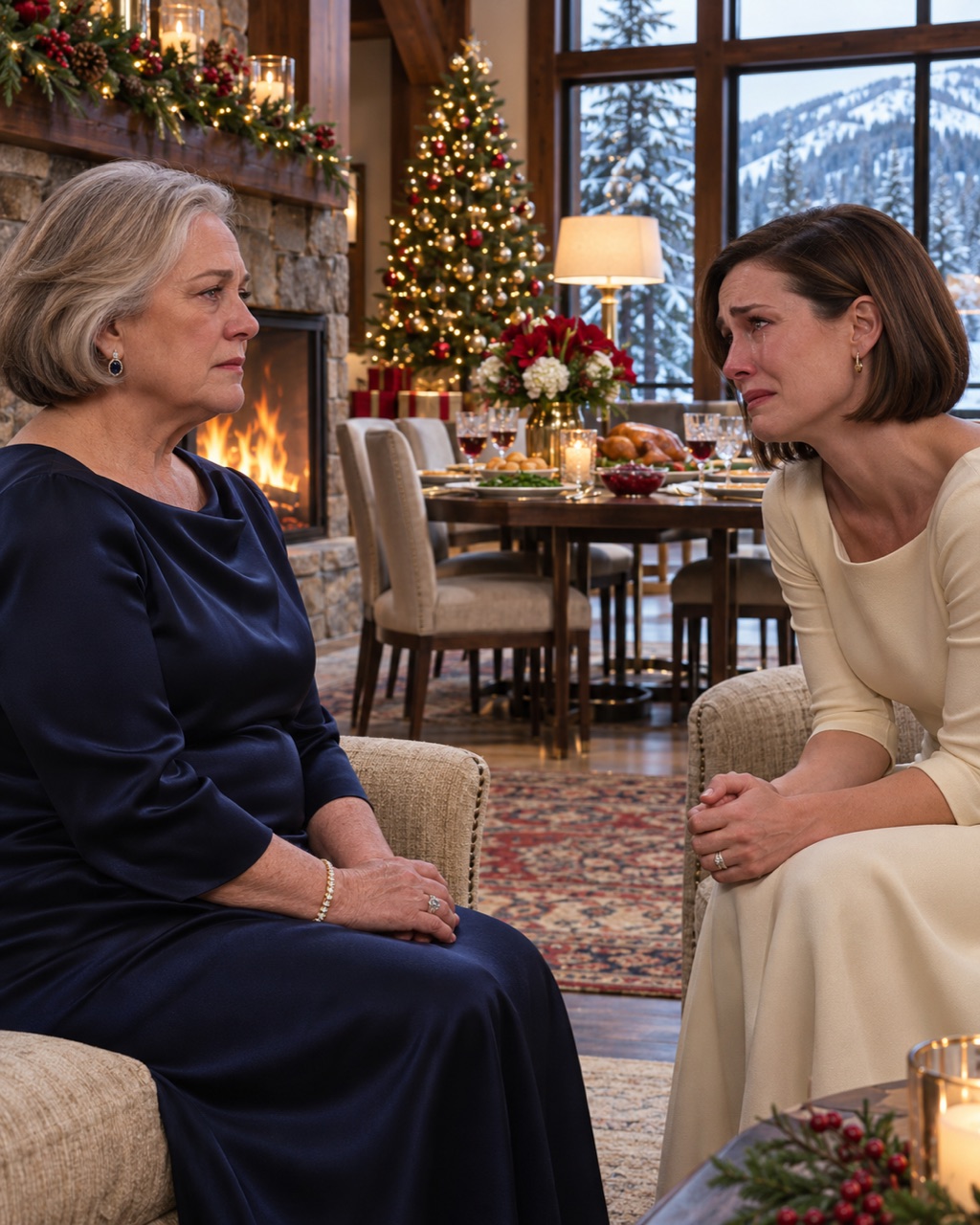
“Can we sit there?”
“Yes.”
He took the chair across from mine.
For a moment, neither of us spoke. He looked tired, but I didn’t ask what trouble the refusal had caused between him and Chelsea.
That wasn’t why he was here.
“I’m sorry I laughed,” he said.
I waited.
“You asked me to stop, and I still tried to make you feel like you were overreacting.”
“Yes.”
“And I asked about the discount right after Chelsea told you not to stay.”
His face reddened.
He kept going.
“I wanted the good price more than I wanted to admit what we were doing.”
That was the first apology that reached the actual event.
Not Christmas going badly.
Not hurt feelings appearing out of nowhere.
His choices.
I felt sad.
There was relief in hearing him name them, but I also wished I hadn’t needed to hear my son explain why he had been willing to treat me that way.
“Thank you for saying it plainly,” I said.
“I treated your help like it was something you owed us.”
“Yes.”
“You didn’t.”
“No.”
He looked toward the windows.
Snow still lay where the porch stayed shaded. From his chair, he could see the same part of the house he had looked at for years during holiday visits.
“I got used to coming here,” he said.
“I know.”
“I stopped thinking about you arranging it.”
“That happened.”
He nodded.
I didn’t fill the space for him.
After a while, he asked whether I believed he was sorry.
“I believe you’re trying to apologize.”
“That sounds careful.”
“It is.”
He accepted that.
He didn’t ask for an immediate return to the old arrangement. He didn’t suggest that a sincere apology should bring the sale back.
I appreciated the restraint.
We went into the kitchen for coffee.
He asked where I wanted him to sit rather than taking the place where he usually spread out his things. It was a small change, but it made the visit feel different.
I didn’t have to prepare a holiday.
He was simply visiting me.
“Are you managing the house all right?” he asked.
“Yes.”
“If you need help with anything—”
“I can ask.”
“All right.”
I knew he meant to be useful. I also knew how quickly concern could become an argument that I should sell or move.
He stopped before that happened.
We talked about ordinary things for a while. The house, the road, what needed doing before the weather changed. Nothing that required a decision about ownership.
Then he returned to Christmas.
“I should have told Chelsea no.”
“You should have told me you disagreed with her.”
“I did disagree.”
“You didn’t act like it.”
He looked down.
“You’re right.”
I didn’t ask him to make Chelsea the only person at fault. He had been present. He had laughed. He had joined in.
His apology would have meant less if he tried to give all of it back to her.
“She thought she was making things settled,” he said.
“She was trying to settle them without me.”
“Yes.”
“And your mother-in-law hadn’t asked for it.”
“I know.”
“Judith had to tell us that in front of everyone.”
He looked embarrassed again.
“She was upset afterward.”
“I’m not surprised.”
We didn’t discuss Judith as though she needed my permission to be upset. Her daughter had used her wishes to justify something she hadn’t requested.
She had corrected that herself.
As the visit went on, I could feel the old temptation to make Wesley comfortable. I wanted to tell him the worst part was over.
I didn’t know that yet.
So I asked whether he wanted more coffee.
He said no.
When it was time for him to leave, he stood without trying to extend the conversation until I gave him something more.
At the door, he turned back.
“Can I visit again?”
“Yes. Ask me.”
“I will.”
“And don’t come expecting we’ll reopen the purchase.”
“I won’t.”
I believed that more than I had when he arrived.
Not completely.
Enough to allow another visit.
The visits that followed were gradual and ordinary. He called before coming. He stayed for the time we agreed on. He helped when I asked and left when it was time.
He didn’t bring a new offer.
That made it possible to enjoy seeing him.
Nearer the next Christmas, he asked about dinner. I told him I still wanted to host it, if the invitation could be understood.
He nodded.
Then he asked the question he had clearly been considering.
“May Chelsea come to next Christmas’s dinner?”
Chapter 12: Before I Set A Place
“She needs to ask me,” I said.
Wesley didn’t argue.
“I’ll tell her.”
“Tell her dinner, Wesley.”
“I understand.”
I wanted Chelsea to hear the invitation from me and answer it herself. Not through my son, and not as part of a plan she had already made.
Later, my phone lit up with her name.
“Wesley said I should ask you about Christmas.”
“Yes.”
“Are you inviting me?”
“I’m willing to invite you to dinner.”
She paused.
“And that’s all?”
“That is what I’m offering.”
I could hear her breathing before she answered.
“We’ll have to make arrangements.”
“Yes.”
No one had promised her that accepting dinner would remove every inconvenience.
I waited.
“I understand the house is yours,” she said.
“I know you understand that. I need you to act like it.”
Her voice tightened.
“I’m trying to have this conversation.”
“So am I.”
She didn’t hang up.
That mattered.
At Christmas dinner before, she had been able to announce things with Wesley smiling and the rest of us waiting. On the phone, there was no room to turn and gather support.
She had to answer me.
“I won’t make plans for staying without asking,” she said.
“And I decide whether anyone stays.”
“Yes.”
“Not Wesley. Not an assumption because you’ve stayed before.”
“I understand.”
I asked whether she could accept dinner without treating it as a promise of a bedroom.
“Yes, Barbara.”
I invited her.
Not because the conversation erased the year before. It established what she was agreeing to now.
She was thirty-nine when she switched the stockings. She was old enough to understand an invitation and the limits of one.
I did not need to make it more complicated.
After the call, I told Wesley that Chelsea had accepted dinner. I did not give him a report on every sentence she had said.
This was between her and me.
He thanked me.
“Please don’t thank me as though I’ve agreed to forget,” I said.
“I’m thanking you for inviting us.”
“All right.”
Judith contacted me separately.
“I’m making my own holiday arrangements,” she said. “I would still like to come to dinner, if you want me.”
“I do.”
“I’m not asking about the bedroom.”
“I know.”
She gave a small laugh, more tired than amused.
“I don’t want anybody planning that for me again.”
We agreed that she would come as a guest and leave afterward. She did not need Chelsea to arrange her place in my house.
I was glad.
There had been a chance for the earlier Christmas to make Judith and me uncomfortable with each other for good. Instead, she had told the truth when it mattered.
I could sit across from her without wondering whether she wanted me gone.
As the next Christmas approached, Holly asked what she could bring.
I told her.
She didn’t insist on taking over the dinner to prove she was helping. She asked about what I wanted and followed through.
Arthur accepted his invitation as usual.
The people at the table would be the same.
The arrangement would not.
I chose what to cook and how long I wanted the evening to be. I did not prepare bedrooms on the chance somebody would claim them.
There was no confusion to reward.
Wesley called before coming by to help with what I had asked him to do. When we finished, he left rather than treating preparation as the beginning of a stay.
I noticed that too.
It was easier to trust ordinary conduct than promises made during an argument.
On Christmas, I brought out my red stocking.
I stood near the fireplace with it, looking at the familiar hook.
For a moment, I remembered holding it beside my chair while the food went cold.
Then I hung it in its usual place.
Nobody had to witness that.
I wanted it there.
The house looked ready for dinner. The table was set, the tree was lit, and the food was underway. Outside, snow covered the porch again.
I was nervous.
I said so when Arthur arrived.
“I don’t want to spend the whole evening waiting for something.”
“Then don’t give the whole evening to waiting,” he said.
He went to put his coat away.
I checked the food.
There was work to do, but it was work I had chosen. That made the kitchen feel different from the year before.
Holly arrived and asked where I wanted what she had brought.
Judith came in with a greeting for me, not a conversation about rooms. Her own arrangements were already settled.
Wesley and Chelsea came together.
He greeted me first.
Chelsea waited until I had finished hugging him before saying hello.
“Thank you for inviting me.”
“You’re welcome.”
She took off her coat and looked around the room. I could see her notice the table, then the tree.
Her eyes stopped at the fireplace.
My red stocking hung where she had taken it down.
She walked toward it.
At the following Christmas dinner, Chelsea approached the fireplace where my red stocking hung.
Chapter 13: The Hook Above The Fireplace
Chelsea stopped beside the mantel.
She looked at my stocking without touching it.
Then she turned toward me.
“Where would you like me to sit?”
“Beside Wesley.”
She looked toward the table.
“All right.”
That was it.
No comment about which hook belonged to whom. No joke about the previous Christmas. No announcement that her mother needed a different arrangement.
She went to the place I indicated.
I stayed by the fireplace long enough to see that the red stocking hung securely. Then I went into the kitchen because the food was ready.
Wesley followed.
“What can I carry?”
I told him.
He did it.
Holly brought the dish she had prepared, and Judith waited until I asked her to take something to the table. Arthur moved his chair so she could pass.
The dinner began with people doing ordinary things.
I hadn’t realized how much I wanted that.
Chelsea was seated beside Wesley when I came in. My place at the head of the table was empty.
I sat there.
Nobody needed an explanation.
For a while, we ate and talked about the food. Judith asked Holly how she had made what she brought. Arthur asked Wesley to pass something.
Chelsea said it was good.
I thanked her.
I wasn’t waiting for an elaborate apology in front of everyone. She had agreed to ask before making plans. Now she was doing what she had agreed to do.
That did not give her the discounted purchase back.
Nothing did.
The house remained mine.
There had been no sale during the year, no replacement offer through Arthur, and no money changing hands after a private conversation with Wesley.
They had lost the chance to buy this house at the favorable price I had considered.
They also no longer had a standing Christmas reservation.
Those consequences were real even though we could pass food without arguing.
At the table, Wesley asked me a question and waited for my answer instead of answering for me. When Chelsea began to discuss something about next Christmas, she stopped.
She looked at me.
“We can ask closer to then?”
“Yes,” I said.
She nodded and returned to her meal.
It was a small exchange.
I let it stay small.
There was no reason to make her perform respect for the entire room if she was willing to practice it in an ordinary sentence.
Holly caught my eye briefly.
She didn’t look away.
Later, when Judith mentioned her separate arrangements for the evening, Chelsea listened without trying to change them. Judith had decided where she would go after dinner.
She wasn’t waiting for her daughter to assign her a room.
I felt happy.
Not the kind of happiness that made the previous Christmas seem useful or necessary. I would rather it had never happened.
But I was glad to be eating dinner in my house with people who understood that I had invited them.
Arthur asked whether I wanted help bringing out what remained.
“I do.”
He and Holly went with me.
In the kitchen, Holly asked quietly whether I was all right.
“Yes.”
“You seem more comfortable.”
“I am.”
She smiled, then picked up what I had asked her to carry.
We returned to the table.
Wesley had moved the used dishes out of the way without stacking them in front of somebody else. Chelsea was talking to her mother.
Nobody was discussing my bedroom.
That mattered.
After the meal, I began to rise, but Wesley stood first.
“Stay there, Mom. I’ll clear.”
“I’ll tell you where things go.”
“Please do.”
He took dishes into the kitchen. Holly joined him, and I could hear them checking with each other rather than leaving everything for later.
Chelsea asked whether I wanted the remaining food put away.
“Yes.”
She waited for me to tell her what to use.
I wasn’t interested in testing her with little household tasks. I gave her the answer and let her help.
Judith sat with me for a while.
“Thank you for having me.”
“I’m glad you came.”
“And thank you for letting me make my own arrangements.”
“You never needed me to stop you.”
She nodded toward the kitchen.
“I needed to say them myself.”
We left it there.
Arthur said good night when he was ready. I walked him to the door and thanked him for coming.
Not for stopping a sale this time.
For dinner.
When I returned, Wesley was checking the kitchen. He asked whether there was anything else I wanted done before they left.
“No. Thank you.”
Chelsea had her coat.
She did not ask where their bags should go. There were no bags upstairs and no prepared bedroom waiting for someone to notice.
“Thank you for dinner, Barbara,” she said.
“You’re welcome.”
“May I call before we come again?”
“Please do.”
Wesley hugged me.
“I’ll call.”
“I know.”
I did know now.
He had been calling. He had been asking. Respectful visits had become something he did, not merely something he promised after upsetting me.
Judith left according to her own plans. Holly stayed long enough to check that I didn’t need anything, then accepted my answer when I said I was ready for a quiet house.
I watched the last coat go through the door.
Then I closed it.
The table needed a little attention. The kitchen was mostly done. Upstairs, my bedroom was exactly where I had left it.
I made myself something warm to drink and carried it into the living room.
There was no late conversation to manage, no question about where I would sleep, and no offer waiting in the study.
I sat in my chair at home, facing the fireplace, with my red Christmas stocking hanging above it.
You Might Also Enjoy




