MY SISTER TOLD MY PROPERTY MANAGER TO PAY HER INSTEAD — THEN HER HONEYMOON PLAN FELL APART
Chapter 1: The Honeymoon Announcement
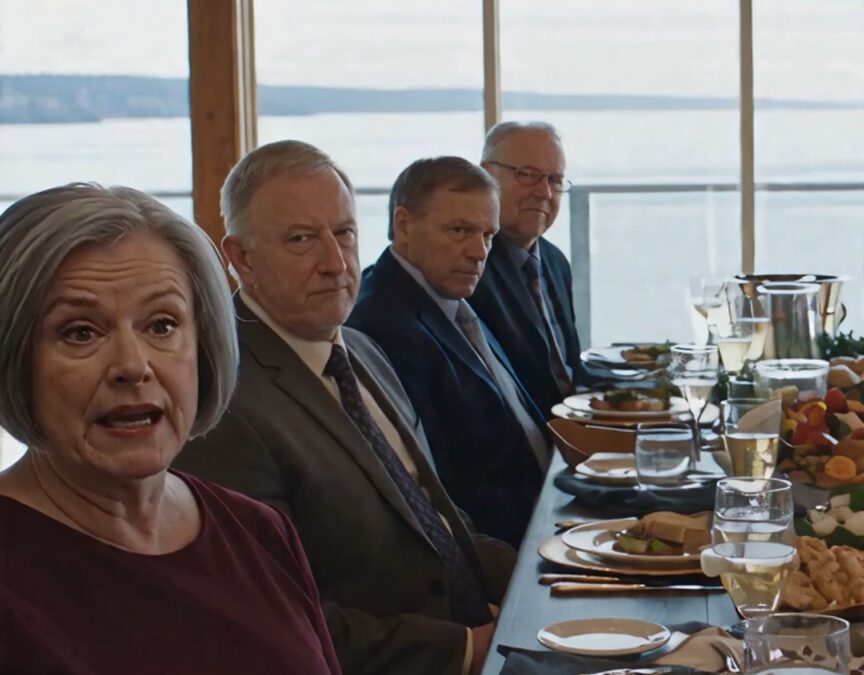
“Our honeymoon is covered,” my sister announced at her wedding reception, explaining that my cabin’s summer guests would pay for it. She told the property manager to send the money to her because I had Navy pay. Then the property manager stood up to tell her who would get the money.
But before Nancy got out of her chair, people smiled at me.
That was the part I kept remembering afterward.
They thought I had offered.
Amanda stood beside Caleb, close enough that his sleeve brushed her wedding dress. Behind them, the windows looked out over the Tacoma waterfront. The tables had pale flowers, heavy silverware, and chairs that nobody could move quietly.
He nodded while she talked.
“We can leave without worrying about the cost afterward,” she said.
Caleb turned toward me.
“We’re grateful.”
I was still seated then.
I looked at my sister, waiting for the little glance that would tell me she had misspoken or confused something we had discussed.
Nothing.
She was watching Nancy at the adjoining end of our table.
The last time I had been at the cabin, I had eaten breakfast on the porch bench with my jacket zipped up and my coffee going cold. I remembered that ordinary morning so clearly while Amanda spoke. The bench needed cleaning around the legs. There had been damp leaves underneath it.
Nothing about that place had looked like a honeymoon fund.
Now my sister was describing its summer guests as though they had booked their stays to send her somewhere else.
I was 37, a Navy officer, and old enough to recognize the beginning of a family conversation I had never agreed to have.
Usually it happened in a kitchen.
This time there were wedding guests.
A woman across from me smiled and lifted her eyebrows, expecting me to explain the generous surprise.
I couldn’t return the smile.
Amanda was 31. Our mother still talked about her as though she had just left home and needed somebody to make the difficult decisions easier.
“You have steady money coming in,” Amanda liked to say.
Mom’s version was softer.
“Your sister is still getting started.”
Neither of them asked much about my work before discussing what my paycheck could cover. My Navy duties sometimes kept me away, but being away had somehow become evidence that I needed less.
Less help.
Less consideration.
Less say over money I earned.
I had let smaller conversations end without correcting that assumption. Sometimes I paid for something because I wanted to. Sometimes I declined and listened to Mom explain why Amanda was disappointed.
I had never offered this.
Nancy sat near me because she was a longtime family friend, not because anyone had hired her to work through dinner. She was 59 and had known Rhonda Sheffield long enough to call my mother by her first name without adding an explanation.
Caleb Abbott shared Nancy’s last name.
They were not related.
That coincidence had been mentioned earlier in the celebration, when people were making the ordinary introductions families make at weddings. Now Amanda was using Nancy’s presence for something nobody had mentioned while we were finding our seats.
“The summer should bring in approximately $14,000,” Amanda said.
A guest who had been leaning back came forward.
That figure changed the conversation.
It was no longer a vague announcement about family generosity. It was an expected summer’s worth of money, spoken aloud beside a wedding cake.
I turned toward Nancy.
She wasn’t smiling.
Over the past two years, Amanda had occasionally checked the cabin between guests when Nancy needed somebody nearby. She knew where the extra linens were kept, which doors needed checking after people left, and what Nancy meant when she asked whether the place looked ready. She knew when the busy season started and which stretches of summer usually filled first. Nancy handled the guests and the ordinary business of their stays, while Amanda accepted individual requests when she was available. Because Nancy had been Mom’s friend long before she managed vacation properties, all those conversations could sound casual, especially when Amanda repeated them at family gatherings. In our family, she often brought an idea to Mom before bringing it to me. By the time I heard it, their language had changed from asking whether something might happen to explaining how it would happen. I had learned to listen for that change.
This time, she had skipped my kitchen entirely.
She had included Caleb.
She had included Nancy.
She had included people who had come to eat dinner and congratulate them.
“Just send it to me instead,” Amanda told Nancy.
I pushed my chair back and stood beside my place.
Amanda moved closer, only a step away now. She raised her palm toward me while looking past me at Nancy.
“Nancy, send her summer money to me instead.”
“That’s not your money.”
Her smile stayed in place.
“Your cabin money should cover our honeymoon.”
I was embarrassed.
Not because I had refused anything yet, but because people were watching me discover what my own family expected me to buy.
“When were you planning to discuss this with me?”
Amanda gave a small laugh and looked toward Mom.
That look answered more than the laugh did.
She wanted help keeping the announcement intact.
Rhonda sat close enough to hear every word. At 62, my mother knew how to make a correction sound like unnecessary fuss. She looked at Amanda first, then at me, as though I had interrupted something pleasant.
I waited.
At the neighboring table, a conversation trailed off. The woman across from me stopped smiling and watched my face instead.
Caleb’s expression hadn’t changed much.
He still seemed to think there was a simple explanation, something I had forgotten or something Amanda would remind me of.
I wanted him to ask me directly.
He didn’t.
Amanda turned toward Nancy again, apparently deciding that instructions were easier than questions. Nancy remained seated, listening, her attention moving between my sister and me.
I had not spoken privately to her about any wedding gift.
I had not asked her to make any special arrangements for the couple.
Amanda knew that.
She also knew exactly where Nancy was sitting before she started speaking.
The food in front of me had gone untouched. Around us, people were trying to decide whether to resume their conversations or wait for the happy explanation they had assumed was coming.
My sister looked past me again.
“Send the summer money to me.”
Chapter 2: The Person Nancy Pays
“She’s been checking that place for you,” Mom said. “I think it’s a reasonable reward.”
Amanda’s shoulders relaxed.
There it was.
Mom had supplied the explanation, and now I was supposed to accept it without making everyone uncomfortable.
Caleb looked from her to me.
He seemed relieved. From his position beside Amanda, it probably sounded like my mother had cleared up a small disagreement about how a family gift should be described.
She hadn’t.
The woman across from me looked down at her plate.
Another guest turned toward Nancy.
“We don’t want to come home worrying about money,” Amanda said.
I believed her.
Nobody wants to return from a honeymoon with a bill they can’t comfortably pay. That did not explain why I had learned about their solution while standing beside my dinner chair.
“She’s already been paid,” I told Mom.
Mom’s mouth tightened.
“Helping family isn’t always about counting.”
I had heard that before, usually after somebody else had decided what counted as my obligation.
This time, I answered.
“You just called it compensation.”
“I said a reward.”
“For checking the cabin.”
“For being there when you can’t.”
I looked at Amanda.
She knew what those visits involved. She knew what I paid. She knew that accepting a request did not leave an unpaid favor waiting to be collected later.
For two years, I had paid her $2,400.
Every completed check had been paid.
There had been 24 separately requested visits, at $100 each. Some requests had fit her schedule. Some hadn’t, and Nancy had handled those without turning it into a family emergency.
Amanda had never been required to keep her time open.
I hadn’t promised that she would always be asked.
Standing there, though, I could hear how Mom had made the arrangement sound like something entirely different.
As if Amanda had been quietly maintaining a place for an absent sister and was finally requesting recognition.
That wasn’t what happened.
“Amanda knows she was paid,” I said.
My sister glanced at Caleb.
Then she looked toward Nancy again.
“You have Navy pay. We need a start.”
She said it to me.
She watched Nancy while she said it.
That was when I understood she was still trying to get an agreement from the person who handled the summer stays, even if I refused to supply one.
Nancy had not nodded.
She had not said she would see what she could do.
She was waiting for the family conversation to stop being presented as instructions for her.
“Announcing this here doesn’t make it a gift,” I said.
Amanda’s smile tightened.
“Can we not turn this into something?”
“It already is something.”
“We’re talking about our honeymoon.”
“You’re talking about my money.”
Mom leaned forward.
“Elise.”
Just my name.
It was the warning she used when she thought I should consider the setting before continuing.
I had considered it.
I was at my sister’s wedding reception, surrounded by people who had initially believed I had offered a generous present. If I stayed quiet, that would become the explanation everybody took home.
I would be the person who changed her mind afterward.
I felt angry then.
I kept looking at Amanda because I didn’t want my answer aimed at the guests. This was between us, even if she had chosen an audience.
“Let Nancy answer first.”
Amanda laughed through her nose and tilted her head.
Nancy stood.
Her chair made the scraping sound all those heavy chairs made against the floor, and the people nearest us stopped trying to pretend they weren’t listening.
She came directly beside me.
Not between us.
Beside me.
“Amanda, the cabin and its income belong to Elise.”
My sister stopped looking around the room.
Her smile disappeared.
“You don’t own that cabin,” Nancy continued.
The cabin and its rental income were mine.
I had bought the place six years earlier, alone. There was no shared family ownership to untangle and no arrangement that gave my sister a portion of the guest income.
“Nobody has authorized me to send Amanda that money,” Nancy said. “It goes to Elise.”
She spoke the way she did when explaining ordinary business.
No raised voice.
No performance.
Caleb turned toward his bride.
“So she didn’t offer?”
Amanda looked at Mom instead of answering.
That was the first clear change in his face. Not anger yet. Confusion that had finally found the right question.
“It’s a gift for their wedding,” Mom said.
Nancy stayed where she was.
The woman across from me looked from Mom to Amanda, then back at me. She no longer looked as though she expected me to describe a surprise.
“No,” I said. “You don’t get to announce a gift from me.”
Amanda pressed her lips together.
I turned slightly away from her, toward my place.
“That wasn’t a wedding gift.”
Nobody applauded.
Nobody should have.
It was an ugly conversation at a celebration, and I would have preferred that my sister had asked me anything privately instead.
Nancy waited until I sat before returning to her chair.
The guests near us began speaking quietly again. Someone farther down the room laughed at something unrelated, and the sound made the little space around our table feel even stranger.
Caleb said something low to Amanda.
I couldn’t hear it.
She answered without looking at me.
Mom waited until their attention shifted, then moved her chair closer to mine.
“You could have handled that differently.”
“I wasn’t asked.”
“She’s your sister.”
“I know who she is.”
Mom looked toward Nancy, perhaps hoping for a softer version of what had just happened.
Nancy did not supply one.
Instead, she said, “There wasn’t any instruction from Elise.”
“I understand that,” Mom replied.
But she was looking at me when she said it.
I took a drink of water. I needed a moment without answering anyone. My dinner was still there, and I could not have said what it tasted like even after I tried a bite.
Mom waited until I put my glass down.
“Then what exactly are you going to do?”
Chapter 3: The Next Morning’s Call
“They’ll have to pay for their own trip,” I told Mom. “I’m not funding it.”
She looked toward Amanda before answering.
“Not even some of it?”
“That wasn’t the question she asked.”
“She didn’t ask it very well.”
“She didn’t ask.”
Mom drew back as if the distinction was unkind.
Across the table, Amanda was speaking quietly to Caleb. He had stopped nodding. His attention stayed on her face, and she seemed determined not to look in our direction.
I wasn’t going to follow them across the room.
The correction had been made where the claim was made. That was enough for the evening.
Nancy asked whether I wanted to step outside for a moment.
I did.
We walked away from the tables to a quieter place near the reception entrance. Music and conversation continued behind us. People were still celebrating, and I was glad they could.
Nancy looked upset.
“I gave her the estimate when she asked last week,” she said. “I didn’t know she was planning that.”
“We can talk tomorrow.”
“I never told her it was hers.”
“I heard you.”
She nodded.
I didn’t need her to defend herself in a hallway. She had stood beside me when staying seated would have been easier.
“Thank you for saying it plainly.”
“I wasn’t going to let her tell you I had agreed.”
We stood there until I could go back inside without feeling that every person would see how angry I was.
Then we returned separately to our places.
Amanda didn’t approach me again that night.
Neither did Caleb.
Mom said goodbye with a stiff little hug and told me we would talk when everyone was less tired.
I went home without agreeing to that.
The next morning, my phone lay beside my breakfast while I thought about the cabin.
Not the honeymoon.
The actual work.
As long as Amanda was being asked to check the place, there would be another opportunity to treat a paid task as an unpaid sacrifice. Another conversation where accepting a request somehow created a claim to something larger.
I didn’t want that arrangement anymore.
I had bought the cabin six years ago because I wanted a place I could use when my schedule allowed it. I had not bought an ongoing family negotiation.
Nancy had been managing the guest stays for two years.
She already knew the local services that handled the practical work around vacation properties.
I called her.
“I want future checks handled locally.”
“All right.”
“Not through Amanda.”
“I understand.”
She asked what I wanted the service to cover, and we discussed the same ordinary concerns Amanda had checked: whether guests had left things in good order, whether something needed attention before the next arrival, whether Nancy needed a photograph or a call.
Nothing dramatic.
That helped.
This was not a punishment devised around a wedding argument. It was a different way to get a real job done.
“Can you arrange it?” I asked.
“Yes. I can put it through the local service I use.”
“Please do.”
Nancy explained how requests would reach the service and how concerns would come back to her. I wanted the cabin handled through the person already managing it, rather than through overlapping family conversations.
By the end of the call, she had what she needed to hire the service for future checks.
Then I called Amanda.
She answered without greeting me.
“Mom’s upset.”
“I’m calling about the cabin.”
A pause.
“What about it?”
“I won’t be asking you to do any more checks. Nancy is arranging a local service.”
“You’re taking that away?”
“I’m changing how the checks are handled.”
“Because of last night.”
“Yes.”
I wasn’t going to pretend otherwise.
Her announcement had made it clear that our arrangement no longer worked. Saying that calmly did not require inventing another reason.
“I’ve always helped when you needed me.”
“And you were paid for every visit.”
“So now I don’t get asked anymore.”
“That’s right.”
I hated how final it sounded.
I said it anyway.
Amanda was quiet long enough that I could hear ordinary room noise behind her. I pictured the morning she had expected after her wedding, then looked at my untouched breakfast and reminded myself that she had chosen the conversation that led here.
“You could have talked to me first.”
“I’m talking to you now, before there are any future requests.”
“You know what I mean.”
“Yes. You wanted me to agree before changing it.”
She didn’t answer.
I told her there was nothing she needed to return or finish. Every check she had completed was paid. There wasn’t a remaining task I expected her to perform, and I wouldn’t be calling her later to fill in.
She asked whether Nancy had suggested replacing her.
“No. I did.”
That mattered.
Nancy had corrected an instruction she was not authorized to follow. I would not let my decision become something my sister blamed on the woman who had answered honestly.
“You’re making this about work,” Amanda said.
“The work is one thing I’m changing.”
“And the money?”
“The summer proceeds are not paying for your honeymoon.”
There was no audience now.
No flowers, no reception tables, no mother ready to improve the wording.
I felt sad.
My sister was married, and our first conversation afterward was about making sure she understood she could not spend my income.
“I’m not asking you to pay anything back,” I added. “What you earned stays yours.”
“That doesn’t help with what we planned.”
“I didn’t make those plans.”
She let out a breath, sharp enough to hear through the phone.
Until then, I had thought we were discussing something she wanted to arrange. Her wording suggested there was already more to it.
“What did you plan, Amanda?”
She didn’t explain.
Instead, her voice changed from arguing to insisting that I hear somebody else.
“Caleb needs to tell you what we already paid.”
Chapter 4: The Deposit
“Elise, we put the honeymoon deposit on our card,” Caleb said. “We thought the summer money would cover the balance.”
Amanda had passed him the phone.
I stayed seated.
For a moment, I could hear him moving somewhere quieter. When he spoke again, the room noise behind him had faded.
“Our own card,” he added.
“I understand.”
“We weren’t trying to charge anything to you.”
“I didn’t say you were.”
That distinction mattered.
They had not accessed my money. Nancy had not sent anything away. What existed was an expectation, a bill they had chosen, and an announcement designed to make my refusal harder.
Caleb sounded embarrassed.
I did not want to make that worse just to prove I could.
“When did you think I agreed?” I asked.
He hesitated.
“Amanda said the cabin would take care of it.”
“That isn’t something I told her.”
“I know what Nancy said last night.”
“Then you know there was no instruction from me.”
“Yes.”
He said it quietly.
The conversation was different without Mom answering for him or Amanda smiling beside him. He sounded like somebody trying to understand which part of his plan was still usable.
I could have given him travel advice.
I could have asked about cancellation terms.
Instead, I waited for him to tell me what he was asking.
“We can cover the deposit,” he said. “It’s the remaining cost that becomes difficult.”
“I’m sorry you planned around money I didn’t offer.”
“Could you help with that part?”
There it was.
A request at last.
Not a public description of my generosity. Not an instruction aimed at Nancy. Just someone asking whether I would cover a bill.
“No.”
He went quiet.
I looked toward my kitchen window and let the silence stay. I had spent enough conversations filling every quiet place with explanations that gave somebody another point to argue.
Eventually he said, “Is that because of how she said it?”
“It’s because I didn’t agree to pay for the trip.”
“If she had asked privately—”
“I’m not going to decide a different conversation we didn’t have.”
He accepted that without arguing.
I appreciated it.
Later that morning, I left the house for ordinary errands. I needed food for the week, and I needed to stop sitting beside the phone as though the next call might require an immediate answer.
In the store, I found myself studying things I normally bought without thinking.
I was distracted.
The practical part of my life still needed doing. The wedding had not changed my work schedule, the groceries I needed, or the fact that I would have to wash my clothes when I got home.
My sister’s plans had become an interruption to all of that.
I didn’t want to give them the whole day.
When I got back, Caleb had sent a message asking whether we could finish talking later.
I agreed.
I put the groceries away first.
That afternoon, he called without Amanda opening the conversation.
“I don’t want you to think we expected you to hand us cash last night.”
“You expected Nancy to send you the summer proceeds.”
“Yes.”
“That was my money being discussed.”
“I know.”
He did not try to rename it.
That made it easier to speak to him plainly.
“The estimate wasn’t money sitting there waiting for somebody to claim. It was what Nancy expected after summer stays, fees, and operating expenses.”
“I understand that now.”
“It wasn’t guaranteed.”
He sighed.
“We should have asked you.”
“Yes.”
I could hear how badly he wanted that sentence to lead somewhere else. An acknowledgment, then a compromise, then a way to keep their plans.
But admitting they should have asked did not create an obligation for me.
“Can you talk to Amanda about the checking work?” he asked.
“I already did.”
“She thinks you’re going to ask her again once things calm down.”
“I won’t.”
“I’ll tell her.”
“Please don’t tell her that as a threat. It’s just how the cabin will be handled.”
He said he understood.
I hoped he did.
I wasn’t trying to make their honeymoon unpleasant. I was refusing to pay for it and choosing a workable service for the cabin. Those decisions affected them, but they were not decisions about where they should travel or how long they should stay.
I told him that.
He listened without interrupting.
By evening, Amanda had sent a short message asking whether I had spoken with him.
I answered that I had.
She asked whether he had explained.
I said yes.
There was no reply for a while.
I made dinner, ate it at the table, and resisted the urge to call Nancy just to have someone tell me I wasn’t being unreasonable. She had already done enough at the reception.
I wanted my answer to remain mine.
Caleb called again while I was cleaning up.
This time he sounded less careful.
Not angry.
Troubled.
“There’s something I need to clear up,” he said.
“All right.”
“Last night, when I thanked you, I wasn’t trying to put you on the spot.”
“I wondered about that.”
“I really thought you knew.”
I leaned against the counter.
That was worse in a different way.
Amanda had not merely hoped I would give in. She had let her new husband stand beside her and express gratitude for an offer I had never made.
“What exactly did she tell you?”
He paused.
Then he answered without dressing it up.
“Amanda told me you had already said yes.”

Chapter 5: The Estimate Amanda Heard
“I never said yes,” I told Caleb. “Not to Amanda, and not through anyone else.”
He didn’t interrupt.
“I believe you.”
That helped more than a longer apology would have.
He said he needed to speak with his wife. I agreed, and we ended the call without another request for money.
The next morning, I called Nancy.
She answered from home.
“I need to understand what Amanda asked you last week,” I said.
“The summer estimate?”
“Yes.”
Nancy took a breath.
“She wanted to know how the season was looking. I told her the expected owner’s proceeds were approximately $14,000 after management fees and operating expenses.”
“Did she mention a honeymoon?”
“Not when she asked me for the estimate.”
“Did she ask you whether she could have it?”
“No.”
Nancy sounded offended by the possibility, though not at me.
“She asked a question I could answer. I answered it. That was all.”
I knew Nancy well enough to picture her expression.
She could be warm and chatty at family gatherings, but she did not confuse a casual conversation with permission to send someone money.
“Did she say I had offered it?”
“Not to me.”
That settled something important.
There had been no chain of messages in which somebody misunderstood a specific offer. Amanda had learned an approximate figure and supplied the permission herself.
Nancy hadn’t seen some decisive instruction I had forgotten.
There wasn’t one.
“I wish I’d asked why she wanted to know,” Nancy said.
“You didn’t need to guess.”
“I know. Still.”
“She knew you were telling her an estimate.”
“Yes.”
I thanked her for explaining it.
Then I asked her to keep the new service arrangement moving. I did not want the business side of the cabin suspended while my family decided whether to accept my answer.
“It’s being handled,” she said.
That afternoon, Amanda called.
She did not begin with the deposit.
“Caleb says you think I lied to him.”
“What did you tell him?”
“That the summer money could cover the trip.”
“Did you tell him I had agreed?”
“I said you would help.”
“That isn’t the same thing.”
“You always say we should be practical.”
“I never said that meant spending my summer proceeds.”
She went quiet.
I let her.
I was at home, with clean laundry waiting and my work things ready for the next day. The ordinariness of the room made her argument sound even stranger. Nothing here had changed because she had decided what my cabin would earn.
“Nancy gave me the figure,” she said.
“I know.”
“So it wasn’t something I made up.”
“The estimate was real. Your permission to use it wasn’t.”
She tried another approach.
“You weren’t counting on it for a trip.”
“You don’t know what I was counting on.”
“Were you?”
“I’m not going to list my expenses so you can decide whether yours should come first.”
That stopped the conversation for a moment.
I had never said that so directly before.
Usually I explained.
I described an upcoming expense, something the cabin needed, something I wanted to save for. Then the discussion became a comparison, and I found myself defending an ordinary choice as though it required approval.
Not this time.
Amanda sounded tired.
“So because I said it wrong at the reception, you’re saying no to everything.”
“I’m saying no to paying for your honeymoon.”
“And the checks.”
“I’m using a local service.”
She made a frustrated noise.
I was ashamed of how much I wanted her to say she understood. Even then, after the announcement and the correction, I still wanted an easy sisterly ending to the call.
But wanting one didn’t make her ready to offer it.
We stopped talking before either of us raised our voice.
Later, Nancy called to confirm practical details about the service. I answered those, then told her what Caleb had believed.
“Oh, Elise.”
“She didn’t tell you that, though.”
“No. I would have checked with you immediately.”
“I know.”
Nancy reminded me that her estimate depended on actual stays and ordinary expenses. It was not a promise that a precise amount would arrive all at once.
I told her I understood.
The important thing was not whether the season eventually landed near the estimate. The important thing was that an estimate about my property had become a supposed family commitment without my involvement.
Nancy had corrected that publicly.
Now I had to keep it corrected privately.
That evening, Amanda sent a message asking whether I could call after dinner.
I did.
Her voice was quieter than it had been earlier.
“I thought you’d be happy to help us start out.”
“You could have asked whether I wanted to help.”
“I knew you would worry about the amount.”
“Yes. It’s a lot of money.”
“You make more than I do.”
“That doesn’t answer why you told Caleb I agreed.”
She didn’t dispute it this time.
She said she had thought the family would work it out.
I asked what that meant.
She explained that Mom had believed I would come around once I understood how important the trip was to them. There had been conversations about my steady pay, about the cabin doing well, about how much Amanda had helped.
None of those conversations had included me.
I listened until she stopped.
Then I said, “You were making a plan around an answer you didn’t have.”
“I thought I knew you.”
“You know I don’t like being asked in front of people.”
She didn’t answer.
For the first time, I thought she might actually be hearing the part I had been trying to explain since the reception.
Then she brought Mom back into it.
“Mom said you would help if we asked together.”
Chapter 6: Before the Next Call
“Then Mom should have asked me,” I said. “She couldn’t answer for me.”
Amanda exhaled.
“She was trying to help.”
“She offered my money.”
“She thought you would want to.”
“That still required asking me.”
We ended the conversation there.
I didn’t need another account of what Mom had intended. Her intentions would not tell me whether any cabin work was unfinished or whether Amanda could later claim she was still owed something.
The next evening, I checked.
I sat at my kitchen table with the history of the requests and payments in front of me. It wasn’t exciting work. Most of it was ordinary messages: whether Amanda was available, what Nancy needed checked, whether the visit was complete.
I went through them in order.
A request.
An acceptance.
A completed visit.
A payment.
Some messages included a quick question about the cabin. Others ended with nothing more than a thank-you.
There was no promise of future work.
There was no arrangement requiring her to remain available.
I had remembered correctly, but I wanted more than memory before Mom called again.
The total was $2,400.
The completed visits numbered 24.
Each had been paid at $100.
I checked the completed requests against the payments rather than simply trusting the total. If something had been missed, I would have paid it, regardless of what Amanda had said at the reception.
Nothing was missing.
I felt relieved.
Not triumphant.
I had no interest in discovering a technical reason to hold back money she had earned. I wanted to know that when I told my family the work was settled, it was true.
I put everything away before bed.
The next day, I spoke to Nancy after work.
“All the completed checks are paid,” I told her.
“That matches what I have.”
“I don’t want Amanda getting requests from you if the service is busy.”
“She won’t.”
“If there’s a problem, call me. We’ll decide what to do.”
Nancy agreed.
We talked through how she would contact the local service and how she would let me know if a visit showed something that needed attention. There was no reason for Amanda to remain in the middle of those conversations.
That was what I wanted.
Not a dramatic announcement.
Just a clear way for the work to happen.
Nancy asked whether I wanted family members to be able to pass along concerns if they noticed something.
“Of course. If Mom sees a problem, she can tell you. That’s different from authorizing work or changing where money goes.”
“Exactly.”
“I want that understood.”
“It is.”
I asked the question I should never have needed to ask.
“If somebody calls and says I agreed to send them the proceeds?”
“I check with you.”
“And if they say Mom knows?”
“I check with you.”
Nancy did not sound annoyed.
She sounded like a property manager confirming who made decisions, which was all I needed her to do.
“No family instruction changes that,” she said.
“Thank you.”
She also confirmed that the proceeds would come to me as earned, after the normal management fees and operating expenses.
Not as a wedding payment.
Not as a family favor.
The season would proceed like a season.
That evening, I took my phone into the other room while I made dinner. I had started checking it whenever it lit up, and I disliked how quickly that had become a habit.
Amanda had not called.
Caleb had not called.
For a while, I could hear only the ordinary sounds of cooking.
Then the phone rang.
It was Mom.
I let it ring while I turned off the burner.
By the time I answered, she had apparently decided how she wanted to begin.
“I talked to your sister.”
“I thought you might.”
“She’s very upset.”
“I know.”
“Do you?”
“Yes.”
I carried my plate to the table.
Mom asked whether I was eating, and I said I was. For a moment, she sounded like herself, asking whether I had worked late and whether I was getting enough rest.
I answered those questions.
I wanted us to have normal things to say.
Then she returned to Amanda.
“She thinks you don’t appreciate what she did for the cabin.”
“I paid her for what she did.”
“I’m not talking about the money.”
“The argument at the reception was about money.”
“It was about family helping family.”
I stayed quiet.
Mom waited.
When I didn’t supply the familiar explanation about my schedule and how grateful I had been for the help, she tried a different tone.
“Nancy shouldn’t be involved in this disagreement.”
“Nancy manages the cabin.”
“She’s also my friend.”
“I know. That’s why I didn’t ask her to take sides in a family argument. She corrected instructions she couldn’t follow.”
Mom said nothing for a moment.
I could hear television sound faintly behind her.
“She didn’t need to stand up.”
“She did need to tell the truth.”
“I’m not saying she didn’t.”
“But you wanted it said differently.”
“I wanted your sister to have a happy wedding.”
“So did I.”
That answer came out more sadly than I expected.
Mom heard it.
For a moment, neither of us spoke.
Then she returned to the thing Amanda had called her about, the decision I had expected her to challenge.
“You can’t take away her work over one sentence.”
Chapter 7: Every Visit Was Paid
“It wasn’t ongoing work,” I told Mom. “They were separate requests, and she was paid for each one.”
“She counted on being asked.”
“I didn’t promise that.”
“She made herself available.”
“When she wanted to accept a visit.”
Mom’s voice sharpened.
“You make it sound as if she did nothing.”
“No. I’m saying she did work and received the agreed pay.”
That was the distinction she kept avoiding.
If I accepted the claim that Amanda had done nothing, I would sound cruel and ungrateful. If I accepted that she had worked unpaid, Mom’s argument about compensation would begin to sound reasonable.
Neither was true.
Amanda had done useful work.
I had paid her.
I explained the arrangement without discussing the honeymoon at all.
Nancy needed a check. Amanda was asked whether she could do it. If she accepted, she went. Once the visit was complete, she received $100.
There were 24 completed visits.
The $2,400 had all been paid.
Mom listened, then said, “I know how it worked.”
“Then why did you call the summer money a reward?”
“Because she’s your sister.”
“That isn’t payment for a visit.”
“No, it’s generosity.”
“Which I didn’t offer.”
Mom sighed.
I could picture her turning away from the phone, irritated that I would not let the words be interchangeable.
At the reception, she had called the proceeds reasonable compensation.
Now that the compensation had been accounted for, she wanted the same money described as generosity.
I did not have to argue with both descriptions at once.
“The completed work is settled,” I said.
“She feels punished.”
“I understand she doesn’t like the change.”
“That’s not what I said.”
“I heard you.”
There was nothing useful to add.
I finished the call before my dinner went completely cold.
The following evening, Mom asked if she could come by.
I said yes.
I did not want every conversation with her to happen through a phone. I also did not want her arriving under the impression that I had called a family meeting.
When she came in, she asked about work first.
We sat in my living room.
For a little while, she told me ordinary details about the reception winding down after I had left. I listened without asking who had said what about the announcement.
I didn’t want reports.
Then she asked whether I had really checked all the visits.
“Yes.”
“Was anything missing?”
“No.”
She looked disappointed by the answer, then seemed to realize how that looked.
“I just wanted to be sure.”
“So did I.”
I showed her the simple totals without turning the evening into a performance.
She did not dispute them.
She remembered Amanda accepting those requests. She remembered my paying her. At family meals, Amanda had sometimes mentioned the checks as useful extra money.
Mom had heard that too.
“So she wasn’t doing it for nothing,” I said.
“I never said she was.”
“At the reception, you made it sound as though there was something unpaid.”
“I said she deserved a reward.”
“For paid work.”
Mom looked away.
That was the first time she ran out of a replacement explanation.
I was furious for a moment.
Not loudly.
I had to look toward the kitchen and wait before continuing because I wanted to say something about all the times my work had been reduced to available cash.
Instead, I stayed with the facts we were discussing.
“If I asked someone else for those checks and paid them, would you think I owed them the summer income too?”
“That’s different.”
“Because Amanda’s family.”
“Yes.”
“Then this wasn’t about unpaid work.”
Mom didn’t answer.
She could not use the compensation argument without ignoring the compensation Amanda had already received.
I let that be enough.
After a while, she asked whether the local service would do the same tasks.
“Yes.”
“Will Nancy still manage everything?”
“Yes.”
“So it will cost you money anyway.”
“The cabin still needs checks.”
That was where she paused.
I could see another proposal forming.
The following morning, she called again.
I was getting ready to leave and told her I couldn’t have a long conversation. She said she only needed a moment.
“I thought about what you said.”
“All right.”
“I understand that she was paid for the visits.”
“Thank you.”
“And I understand you didn’t promise her the summer proceeds.”
I stopped moving.
Those were the first clear acknowledgments I had heard from her.
I didn’t rush to reward them with an offer.
Mom continued.
“I’m not saying you should give them the whole amount.”
“That isn’t under discussion.”
“I know.”
But she had not called merely to agree.
She asked whether the service arrangement could be changed later. I said that I intended to keep it.
She asked whether Amanda had done anything wrong during the visits themselves.
“No.”
“Then she knows the place.”
“Yes.”
“And you need somebody.”
“I have somebody.”
Mom paused again.
I could hear that she had built what she considered a fair compromise. It kept my claim to the proceeds intact while finding another way for my money to reach Amanda’s trip.
I waited for her to say it plainly.
She did.
“Couldn’t you give her the checks back until the honeymoon is paid?”

Chapter 8: The Temporary Arrangement
“No,” I said. “I’m not creating cabin work to pay for their trip.”
“You already need the work done.”
“And I’ve arranged for a service to do it.”
“Only temporarily, Elise.”
“The service isn’t temporary.”
Mom sounded surprised that I had answered the practical point instead of discussing how long Amanda might need help.
“She wouldn’t expect it forever.”
“I haven’t offered it at all.”
“I’m trying to find a solution.”
“Their travel bill needs a solution. My cabin checks already have one.”
I had to leave for work.
I said goodbye without promising to think about it.
At work, I was busy enough that I didn’t check my phone whenever I had a spare moment. There were things that required my attention, and I was grateful to have them.
By the time I got home, Amanda had sent a message.
Mom had told her about the suggestion.
Of course she had.
Amanda wanted to know whether I would consider letting her do checks until they were past the honeymoon expense.
I called rather than typing a long answer.
“No,” I said after we greeted each other.
“She said you were worried it would keep going.”
“I said I wasn’t doing it.”
“I could stop afterward.”
“That isn’t the issue.”
“What is?”
“I’m using a local service. I’m not assigning you visits based on how much your trip costs.”
She started to say that the visits would still be real.
I agreed.
That was important.
I was not accusing her of proposing fake work. The cabin needed attention, and a person checking it would be doing something useful.
But I was allowed to choose a reliable arrangement that did not involve family arguments about what each visit meant.
Amanda had turned the old arrangement into part of her claim to the summer proceeds. I did not want to return to it under another description.
“I know how to do it,” she said.
“Yes.”
“I didn’t miss anything.”
“I haven’t said you did.”
“Then why won’t you?”
“Because I don’t want to manage cabin work through you anymore.”
That was the plain answer.
She did not like it.
I felt guilty afterward, though I knew I had not withheld anything she had earned. The feeling came from hearing my younger sister ask for something familiar and answering without offering another way for her to get it.
I made tea and let it sit.
Then I called Nancy to confirm that no changes were needed.
“She’s not coming back on a temporary basis,” I said.
“All right.”
“I don’t want you getting different instructions from Mom.”
“I’ll refer anything like that to you.”
Nancy did not ask for details.
I appreciated that too.
She had a business to run and guests to prepare for. She did not need to hear every new version of the same family request.
We reviewed what the local service would handle before the next arrivals.
The conversation was practical.
It ended quickly.
That evening, Mom called.
“I wasn’t asking you to invent work.”
“I know.”
“Then why did you say it that way to Amanda?”
“I told her I wouldn’t assign visits around a honeymoon bill.”
“She would earn the money.”
“She already earned the money from her completed visits. She keeps all of that.”
Mom went quiet.
“I’m not recovering anything from her,” I continued. “I’m not deducting anything. I’m not claiming she owes me because of the wedding.”
“I didn’t think you were.”
“Then please don’t describe this as taking her earnings.”
She said Amanda felt that way.
I said I understood.
Understanding did not mean I could make the description accurate.
We talked a little longer, but there was no new proposal. Mom kept returning to the fact that the work would cost me money no matter who did it.
I kept returning to the fact that I had chosen who would do it.
Eventually she said, “You’re being very firm.”
“Yes.”
I didn’t add an apology.
The next day passed without a call about the cabin.
I went to work, came home, and made dinner. The phone stayed where I left it. That small stretch of ordinary time felt better than I expected.
Then Amanda sent a message asking whether I was free to talk later.
I said I was.
She replied that she didn’t want another group discussion.
There had not been a group call, but I understood what she meant. Every private conversation so far had included Mom’s ideas, Mom’s suggested wording, or something Mom expected me to do.
I wanted that to stop too.
When she called, her voice sounded less prepared.
“I don’t want to argue about the checks again.”
“All right.”
“And I don’t want you to think I’m asking you to forget everything.”
“What do you want to talk about?”
She hesitated.
I waited without filling the space for her.
“I think I need to say it without Mom explaining what I mean.”
“That would help.”
She gave a small, unhappy laugh.
Not the laugh from the reception.
There was no audience to reassure, and no manager nearby whom she could instruct.
It was just my sister on the phone.
For the first time since the wedding, she asked for a conversation instead of a result.
“Can we talk privately, without Mom?”
Chapter 9: Without Anyone Answering For Her
“Yes,” I said. “You and me.”
Amanda asked whether we could sit somewhere instead of doing it by phone.
We arranged to meet away from Mom’s house and away from the cabin. I didn’t want either place making the conversation harder than it already was.
When I arrived, she was waiting.
There was no wedding dress.
No Caleb beside her.
She looked like my younger sister in ordinary clothes, tired and uncertain about how to start.
“I know you didn’t offer it,” she said.
I sat down.
“Then why did you announce it?”
She looked at the table between us.
“Because I thought you’d say yes if everyone already thought you had.”
I didn’t answer immediately.
I had understood that at the reception. Hearing her admit it still hurt.
She continued before I could respond.
“I thought you wouldn’t want to correct me there.”
“You were right that I didn’t want to.”
“I know.”
“But you did it anyway.”
“Yes.”
That was the first conversation in which she did not describe the announcement as poor wording.
I needed that.
Not because an admission made the money available. Because I could not have an honest relationship with her if we kept pretending she had accidentally addressed Nancy in front of the room.
“You knew I would be embarrassed,” I said.
“I thought you’d be annoyed with me later.”
“And that would be worth it.”
She looked up.
“I wasn’t thinking about it like that.”
“That was what you decided.”
She began to cry.
Quietly.
I stayed where I was.
I didn’t want her crying, but I also didn’t want to spend the conversation reassuring her until the reason we were there disappeared.
After a while, she said, “Yes. I suppose I did.”
I nodded.
That answer was difficult to hear and easier to respect.
We spoke about Caleb next.
She admitted she had talked as though my help was settled because she wanted the trip to feel possible. Once they charged the deposit, it became harder to tell him that she had not actually asked me.
“So you let him thank me.”
“Yes.”
“That wasn’t fair to him either.”
“I know.”
She did not blame Nancy.
She did not say Mom had made her do it.
Those were changes.
I noticed them without turning them into praise.
Later, we stepped outside before leaving. It was easier to talk when we were no longer sitting opposite each other.
Amanda asked whether I thought we would always be awkward now.
“I don’t know,” I said.
She looked disappointed.
“I’m not saying that to punish you. I just don’t know yet.”
“Okay.”
I told her I did not want every conversation between us to be about money or about proving who had done more for the family.
She said she didn’t either.
We had both said things like that before.
This time there were practical decisions behind my words: the proceeds would come to me, the local service would do the checks, and I would not reverse those choices to make an uncomfortable conversation end.
Amanda asked whether the checking arrangement was really finished.
“Yes.”
She nodded.
There was no new argument.
That evening, she called again.
“I thought about what you said.”
“All right.”
“I shouldn’t have put you in that position.”
“Thank you.”
“I’m not asking you to call it a gift.”
I waited.
Her voice became careful.
“If we paid it back, would that make it different?”
“Are you asking for a loan?”
“Yes.”
At least now it had a name.
She explained that a loan would let them keep more of the trip they had planned. She said she understood that I would need to know when they could repay it.
I listened without requesting details.
There was no point in making her prepare a repayment plan if I already knew I would not lend the money.
But I wanted to answer the actual request rather than simply referring back to the wedding.
“You’re asking me to finance the honeymoon,” I said.
“And pay you back.”
“Yes.”
She said it would be different because I would not be giving anything up permanently.
I did not agree.
Lending money would still mean deciding when my income became available for my own use. It would still put our relationship into another arrangement that needed monitoring, reminders, and conversations about what family should understand.
I had just ended one.
I wasn’t eager to start another.
Still, I let her finish.
She sounded hopeful in a way that made me sad. A private, explicit request was better than the reception announcement, and I wanted to acknowledge that without pretending it required a yes.
“Thank you for asking me directly,” I said.
“I should have done that first.”
“Yes.”
She waited.
I looked at the quiet kitchen around me, at the dinner I had made for myself, at the phone I had spent too much time watching.
The summer money had never been spare simply because someone else could imagine spending it.
Amanda took a breath.
“Would you lend us the summer money for the honeymoon?”
Chapter 10: The Answer To A Loan
“No,” I said. “I’m not lending money for the trip either.”
Amanda was silent.
I let her have a moment before I continued.
“I appreciate that you asked me privately.”
“But the answer is still no.”
“Yes.”
“Do you not think we’d repay you?”
“I’m not making a judgment about that.”
“It feels like you are.”
“I’m deciding whether I want to lend the money.”
She asked why.
I answered without listing my savings, my bills, or plans for the cabin.
“Because I don’t want a honeymoon loan between us.”
“We could write down the terms.”
“I’m not looking for different terms.”
She stopped.
There was a small sound on the other end, perhaps her taking a breath or moving away from wherever she had been sitting.
I waited.
“I don’t know what we’re supposed to do now,” she said.
“You and Caleb need to decide what you can afford.”
“So you think we should cancel it.”
“I didn’t say that.”
“What else?”
“That’s your decision. You can look at your options together.”
I was careful there.
I did not want refusing to pay to turn into directing their marriage. They were adults. Their trip could be shorter, postponed, changed, or kept if they found a way they were comfortable paying for.
I did not need to choose.
I only needed to be clear that my proceeds were not part of the plan.
Later that evening, Caleb called.
“Amanda told me your answer.”
“All right.”
“I’m not calling to ask again.”
I relaxed a little.
He heard it, perhaps, because he added, “Really.”
“Thank you.”
He said they needed to look at the trip differently.
I agreed.
He did not ask me how much I thought they should spend or which parts they should give up. I was grateful for that. I did not want a cheaper version of the same unpaid planning job.
“We made the deposit decision,” he said. “We need to handle what comes after it.”
“Yes.”
“I wish I’d checked with you.”
“So do I.”
He apologized for thanking me publicly.
“I thought I was acknowledging something kind.”
“I understand.”
That was true.
His confidence had upset me at the reception, but he had not continued insisting I had agreed after learning otherwise. He was now dealing with the person who had told him I had.
He said he did not want family dinners to become arguments about the honeymoon.
“Neither do I.”
“We’ll work it out.”
“I hope you do.”
The call ended without a request.
I sat for a while afterward.
I was relieved.
Not because their problem had disappeared. It hadn’t. But someone involved had finally said it was theirs to handle.
The following day, Amanda sent a message saying they were looking at changes.
I replied that I hoped they found something they could enjoy.
I did not ask for details.
She did not offer them.
That distance was useful. I could care whether my sister had a good trip without becoming responsible for making the preferred version happen.
After work, I called Nancy about the upcoming guest stays.
She told me the local service had what it needed and knew how to report concerns to her. She would contact me if something required a decision.
“Good,” I said.
We discussed the cabin, not Amanda.
For a while, it felt like an ordinary property-management call.
Then Nancy mentioned that Amanda had asked whether she could speak to her.
“About the estimate?” I asked.
“I think so.”
“You can tell her exactly what you told me.”
“I will.”
“I don’t need you to argue with her.”
“I don’t plan to.”
Nancy was not a messenger hired to keep my family satisfied. She was the person who had supplied an estimate and then been publicly instructed to send the proceeds somewhere she had no authority to send them.
She was entitled to explain that in her own words.
That evening, Amanda called me before contacting Nancy.
“I want to ask her something directly.”
“All right.”
“Not to go around you.”
“What do you want to ask?”
She said she needed to understand whether she had misread the conversation the week before the wedding.
I did not want to tell her what she had heard when Nancy was available to repeat what she had actually said.
“Ask her,” I said.
“I know you think it’s obvious.”
“I think Nancy can answer for herself.”
Amanda paused.
“I kept thinking that if she gave me the number, she must have known what I meant.”
“Did you tell her what you meant?”
“No.”
“Then let her explain what she was answering.”
The next afternoon, Nancy called with Amanda on the line, after asking whether I was willing to listen.
I agreed.
I did not want a private correction repeated inaccurately through the family. Amanda had requested the conversation, and Nancy was willing to have me there.
There was no audience beyond us.
No need for a performance.
Amanda’s voice sounded careful.
“When you told me the estimate,” she asked Nancy, “did that ever mean the money was available to me?”

Chapter 11: The Estimate Was Not An Offer
“No,” Nancy said. “It meant I expected the cabin to earn that amount after fees and operating expenses.”
Amanda did not interrupt.
“I wasn’t offering you anything.”
“Did you think Elise had said I could use it?”
“No. If you had told me that, I would have checked with her.”
There it was again.
The same answer, without wedding guests or a raised voice.
Amanda asked whether Nancy remembered the question she had asked.
“I remember you asking how the summer was looking,” Nancy said. “I told you what I expected. You didn’t ask me to arrange a honeymoon payment.”
“I thought you understood why I wanted to know.”
“I didn’t know why.”
Amanda let out a long breath.
“I should have said.”
“Yes,” Nancy replied. “And then I would have told you to speak to Elise.”
Nancy did not soften the answer into something ambiguous.
She also did not lecture her.
I listened while they finished.
Amanda thanked Nancy for explaining. The words sounded awkward, but she said them.
When we ended the call, I did not feel the need to contact either of them separately and repeat what had been established.
It was clear.
An estimate was an estimate.
There had been no promise, no entitlement, and no authorization.
The next evening, Caleb called with Amanda nearby.
They had decided on a shorter honeymoon.
He did not describe it as something I had forced them to do.
“We can manage this version ourselves,” he said.
“I’m glad you found something workable.”
Amanda added that they had gone through their plans together.
I said I hoped they enjoyed it.
That was all.
I didn’t ask what they had removed.
I didn’t ask whether the deposit could be applied differently or how the remaining bill compared with what they had expected.
They had handled those decisions.
They did not need to report them to me for approval.
Afterward, I realized I had been waiting for an angry final request hidden inside the conversation.
There hadn’t been one.
I felt relieved again, and a little embarrassed that relief had become such a large part of hearing from my sister.
The family atmosphere did not improve all at once.
Mom was still careful with me.
Amanda’s messages were short.
I answered normally, without trying to make every exchange warm enough to prove that we were fine.
We weren’t entirely fine.
We were talking, and that was enough for the moment.
A few days later, Nancy called about the cabin.
The local service was ready for the summer stays. She had reviewed the usual tasks with them and would handle any questions.
I asked whether she needed anything from me.
“Nothing at the moment.”
It was an ordinary answer.
I liked hearing it.
For two years, a request for a cabin check had often meant Amanda entering the conversation somewhere. Now the work had its own route, and my sister did not need to be contacted.
Nancy did not mention the honeymoon.
Neither did I.
That evening, I looked at my schedule and thought about when I might get out to the cabin myself. Not to inspect it. Not to explain anything to Amanda.
Just to use it.
I pictured the porch bench again, with a cup of coffee beside me and no reason to turn the morning into a family discussion.
I did not arrange a trip immediately.
There was work to do first, and the summer guest stays were beginning soon. But the possibility felt ordinary again, which was what I had wanted when I bought the place.
Mom called while I was considering that.
She asked about my week.
I told her.
She told me that Amanda and Caleb had shortened their honeymoon plans.
“I know,” I said. “They told me.”
“Oh.”
Mom sounded surprised that they had spoken to me without asking her to help.
“I’m glad they worked something out,” I added.
“So am I.”
We stayed away from the reception for a while.
She asked whether I had been to the cabin recently. I said no. She asked whether Nancy was still handling the guest stays, and I said yes.
Then came a pause I recognized.
I waited.
“I don’t want this to mean we can’t all sit in the same room,” she said.
“I don’t want that either.”
“Your sister is trying.”
“I know.”
That was as far as I was willing to go without knowing what Mom was about to ask.
She said she missed having an ordinary family meal.
I missed that too, though I could remember plenty of meals that had started ordinarily and become conversations about what Amanda needed.
I did not want another one of those.
Mom continued carefully.
“Nobody wants to argue.”
“I’m glad.”
“I mean it, Elise.”
“I’m listening.”
There was a small hesitation before she made the invitation, as though she was no longer certain that being my mother meant the answer would be automatic.
“Will you still come to family dinner?”
Chapter 12: The Dinner Invitation
“Yes,” I said, “if my money isn’t going to be negotiated there.”
Mom was quiet.
“I’m not trying to negotiate.”
“Then that should be easy.”
She took a breath.
“All right.”
“I mean it, Mom. No discussion about restoring the checks, no loan proposal, no version of what I could afford if I wanted to.”
“I heard you.”
I wanted to believe her.
I agreed to dinner.
When I arrived, the meal was nearly ready. Amanda and Caleb were there, and for a moment we all spoke too carefully about ordinary things.
Work.
Food.
The shortened trip.
Nobody asked me to pay for anything.
That should not have felt remarkable, but it did.
Caleb asked about my week and listened to the answer. Amanda passed along something about their plans without presenting it as a loss I should repair.
I stayed.
The conversation loosened as we ate.
Not completely.
Enough.
Afterward, Mom asked whether I could remain for a little while.
Amanda and Caleb were still there. I looked at my mother and waited, prepared to leave if the dinner condition had merely delayed another request.
She seemed to understand that.
“I’m not asking you for anything,” she said.
“All right.”
She looked toward Amanda before returning her attention to me.
“I helped announce something that wasn’t ours to announce.”
I did not answer immediately.
Mom continued.
“I thought calling it a wedding gift would make it easier.”
“For whom?”
She looked down.
“For Amanda.”
“And harder for me to refuse.”
“Yes.”
That word mattered.
It did not undo the reception, but it meant I did not have to keep explaining what had happened.
“I knew you paid her for the checks,” Mom added. “I shouldn’t have made it sound as though you hadn’t.”
Amanda stayed quiet.
Caleb did too.
This was not another public performance. There were no guests to persuade, and Mom was not trying to settle my answer before I gave it.
“Thank you for saying that,” I told her.
She nodded.
I felt sad more than satisfied.
I wished she had thought about it before I had to stand beside my wedding dinner and correct her.
But she had said it now.
I let the conversation move on.
When I left, nobody followed me to the door with a private proposal.
That was something new.
Summer guest stays began after that.
Nancy kept me informed the way she normally did. The local service completed the checks, reported anything that needed attention, and dealt with the practical questions through her.
Amanda was not asked to fill in.
I did not receive messages asking whether she could stop by on her way somewhere. Nancy did not call Mom to find out whether Amanda was available.
The arrangement worked.
That was the best answer to the idea that I would inevitably need my sister again once everyone calmed down.
The work had never required a family argument.
It required someone nearby who could do what was requested.
One evening, Nancy called while I was making dinner.
“The service has finished,” she said. “Everything’s ready for the next guests.”
“Anything I need to decide?”
“No.”
We spoke briefly about the stays ahead.
Then we hung up.
I ate while the food was still hot.
It was such a small difference that I almost missed it.
Later, I checked the summer proceeds that had come in from completed stays. They had come to me as earned, just as Nancy said they would.
Nothing had gone to Amanda.
Nothing had been redirected to Caleb.
The approximate figure discussed at the reception had never become their money merely because they expected it.
I did not send anyone a message pointing that out.
There was no reason.
The following weekend, I looked at my schedule again and chose time I could spend at the cabin between guest stays.
Nancy handled the arrangements with the local service.
I packed for myself.
No list for Amanda.
No request for her to check something before I arrived.
No promise to pay for a visit afterward.
It felt strange to prepare without the familiar exchange, but not unpleasant.
By then, Amanda and I had begun sending each other ordinary messages again. Nothing long or especially sentimental. Things sisters might mention without needing a family discussion attached.
I answered when I could.
Sometimes she did too.
I was not trying to restore everything at once.
The evening before I went to the cabin, she called.
“I want to say something properly,” she said.
I sat down.
“All right.”
She apologized for the announcement.
Not for the scene afterward.
Not because I had taken it badly.
For telling people I was paying when I had not agreed.
“I put you in a position where I thought you’d give in,” she said. “That was wrong.”
“Yes,” I replied. “It was.”
“I’m sorry.”
“Thank you.”
She paused, and I wondered whether another request was coming.
It was, but not the one I expected.
“Could I visit the cabin sometime as your sister, not as the person doing a paid check?”
Chapter 13: Coffee On The Porch Bench
“Yes,” I told Amanda. “We can plan a visit later.”
She let out a breath.
“I’d like that.”
“So would I.”
I made the distinction before either of us could leave it unspoken.
“The checking arrangement isn’t coming back.”
“I understand.”
“And a visit means visiting. I’m not going to give you a list or ask you to handle something for Nancy.”
“Okay.”
I believed she understood that part.
We discussed a later visit that would fit around my schedule and the guests. Not the weekend I was about to spend there.
I wanted that weekend alone.
Amanda accepted it without asking why.
That helped.
She told me again that she was sorry, and I said I had heard her. I did not promise that we would never feel awkward about the reception.
I also did not need her to apologize forever.
We had a way to proceed.
She would visit when we arranged it, as my sister. The service would do the work. The summer proceeds would remain mine.
Those things could all be true at once.
By the time I drove out to the cabin, Nancy had already confirmed that the local service had finished what was needed.
I did not call Amanda from the road.
I did not ask whether she had checked the place.
I arrived, carried in what I had brought, and opened the windows for a little while.
The cabin smelled familiar.
Not perfect.
Familiar.
There was always something I could notice if I went looking for work: a corner that needed attention, something outside that would eventually need replacing, a small household task I had put off during a busy stretch.
But the things needed for my stay were ready.
I unpacked food, put my clothes away, and went out to the porch.
The bench was where it had always been.
I sat down before deciding what to make for dinner.
For a while, I listened to the ordinary sounds around the place and let the drive leave my shoulders. I had wanted a quiet weekend, and I did not need to turn the first evening into a review of everything that had happened.
My phone stayed inside.
Later, while dinner cooked, I checked the messages I had received.
Nancy had sent the routine information about the coming guest stays. There was nothing urgent. The service would handle the next checks through her.
Amanda had sent something ordinary.
I answered that.
No money was discussed.
The couple had chosen the shorter honeymoon and arranged it without my proceeds. Their deposit remained a decision they had made on their own card, and the remaining travel plans were theirs to manage.
Amanda received none of the summer rental income.
She also received no further requests for paid cabin checks.
The work she had completed stayed fully paid. I did not demand any of the $2,400 back, and I did not treat her apology as an opportunity to reopen it.
There was nothing to settle there.
As the summer continued, the owner’s proceeds came only to me after fees and operating expenses, as the stays were completed. The estimate had never been guaranteed profit, but the income that was earned remained under my control.
Nancy did what she had said she would do.
So did the local service.
That practical consistency made more difference than another family conversation could have.
The next morning, I made coffee without checking my phone first.
I took it outside.
The porch bench was cool, so I brought out a jacket and stayed anyway. There was no appointment waiting and no reason to hurry through breakfast.
I had thought I might cry when I finally got there alone.
I didn’t.
I felt relieved.
My sister had tried to use an audience to obtain an answer. My mother had helped. A friend had stood up and said what they could not honestly dispute.
Then I had needed to keep saying it after everybody sat down.
That had been the tiring part.
At the cabin, nobody was asking me to explain why I should be allowed to decide what happened to my own income.
I drank my coffee.
Later, I walked around the place because I wanted to, not because I was checking somebody’s work. I noticed a few ordinary things to mention to Nancy eventually, but nothing needed to interrupt the weekend.
I made lunch.
I read for a while.
When Amanda called, I answered because I wanted to talk to my sister, not because I thought she might be standing at the cabin waiting for instructions.
She asked whether I had arrived all right.
“Yes.”
“Is everything okay there?”
“Yes. The service handled it.”
“Good.”
She asked about the later visit.
We kept the arrangement we had discussed.
I told her we could have breakfast on the porch if she wanted, and she said she did. Then she asked about my week, and I answered with something other than a payment or a task.
It was a short conversation.
A good one.
Afterward, I left the phone indoors again.
I would go back to work after the weekend. Guests would arrive for their stays. Nancy would manage them, the local service would make the checks, and I would decide how to use whatever the cabin earned.
Amanda would not be waiting for a request that doubled as help with a honeymoon bill.
I would not be calculating what I owed her for a visit we had never arranged.
For that weekend, there was only dinner to think about and whether I wanted another cup of coffee first.
I chose the coffee.
I carried it outside without sending my sister a work request, and sat down on the cabin’s porch bench.
You Might Also Enjoy




