Chapter 1: The Compliments Across the Table

Chapter 1: The Compliments Across the Table
During Christmas dinner, my son told our family that my quilt designs were his wife’s work and that I just traced things to stay busy. His wife accepted their compliments beside the tree while I sat there feeling humiliated. Then I stood and told everyone who drew those patterns—and who would not be getting them free.
But before I stood, I gave them a chance.
Lucas was beside my chair, wearing a charcoal shirt. Molly stood across the dining room in her burgundy dress, near the Christmas tree.
“Mom just traces things; we keep her busy out of kindness.”
He indicated me with an open hand.
I looked at the relatives around the table. Someone had been about to take a bite and stopped.
“Tell them whose work it is.”
Lucas gave a little laugh, as if I had interrupted a story before he reached the funny part.
“Tell them what you mean by tracing,” I said.
“You help Molly tidy things up, Mom.”
Molly tilted her head.
“He means we work together.”
That sounded reasonable. It also avoided answering me.
The dining room opened into a warmly lit foyer. From my chair, I could see the place where their guests had come through, smiling and ready for Christmas dinner.
I had arrived that way myself.
I had worn my navy dress because Molly liked people to dress nicely for holidays. Their house near Knoxville was well kept, and she had clearly worked hard getting it ready.
I had told her so.
Now a relative across the table smiled toward her.
“You must be proud, seeing your ideas printed on fabric.”
“Thank you,” Molly said.
I waited.
She did not add anything.
The relative turned back toward me with an encouraging expression, the sort I recognized from people trying not to make an older woman feel left out.
I was 67.
I knew what I was seeing.
“Molly,” I said, “are you going to explain?”
“I do the real work; you just help me.”
She said it without raising her voice. That made it worse somehow. She expected the description to pass as an ordinary fact.
Lucas remained beside me.
Nobody corrected her.
There were dishes between us, food still being passed, glasses people could look into instead of looking at me. I wanted to get up, but I stayed seated.
I wanted her answer first.
After I stopped doing alterations, Lucas began describing almost everything I did as a hobby, even when it brought in money. Then Molly decided to start a fabric business, and helping her became the explanation for why I was still working. I had spent twelve years learning that trade and building relationships with people who bought designs. At family dinners, though, Lucas made it sound like Molly had found a nice activity for his mother.
That was the version sitting around the table.
I could hear it in the questions.
A relative asked whether Molly had always been interested in drawing. Another said it must be nice for us to have something to do together.
Molly accepted that, too.
“I taught her this business,” I said.
“Don’t embarrass us.”
Her chin lifted as she said it.
The relative who had asked about drawing looked down. Lucas glanced toward the kitchen, although there was nothing there that needed his attention.
I felt embarrassed.
Not because I had raised my voice. I hadn’t.
I was embarrassed because I had come to dinner expecting my son to be glad I was there, and he was explaining me like a household chore his wife had kindly taken on.
“Tell them the truth,” I said.
Molly gave a dismissive wave toward my chair.
Then she stopped smiling.
Earlier that evening, a relative had asked me whether I was still doing design work. I had started to answer, and Lucas had answered for me.
“She’s helping Molly get established.”
At the time, I had let it go.
There had been coats to move and food to bring out. I had not wanted to turn a holiday visit into a discussion of who did what.
Now I understood that the earlier answer had prepared everyone for this one.
“I asked your mother,” the relative had said gently.
“Oh, she’ll work forever if we let her,” Lucas had replied.
He made it sound affectionate.
I had smiled because I didn’t know what else to do without making the arrival uncomfortable. Standing beside him now, he seemed to expect that same smile.
He didn’t get it.
“Molly’s been working hard on her business,” he told me.
“Nobody said she hasn’t.”
“Then why make this difficult?”
A relative shifted back from the table. Another looked toward Molly, waiting for her to settle it.
She could have.
She could have said that running a new business and drawing the collection were different jobs. She could have thanked me for teaching her without claiming what I made.
Instead, she said, “There’s more to this than drawing.”
“I know.”
Lucas exhaled through his nose.
He was 39. Molly was 37. They were not children confused about sharing credit on a school project.
They knew who sat down and made the artwork.
They had watched me work.
Molly had brought questions to my table, asked why a shape looked wrong when repeated, and watched me redraw it until the edges met properly. She knew how much could change between an attractive sketch and something ready for fabric.
I had answered those questions gladly.
That was why hearing her dismiss the work hurt.
A relative asked, “So is this a collection you’re doing together?”
Lucas answered before either of us could.
“Yes. It’s Molly’s business. Mom’s helping with the design side.”
“That’s not what you said,” I told him.
“Everybody understands what I mean.”
I looked around.
They didn’t.
They understood that Molly was the designer and I was useful for tracing lines. They understood that my son and his wife were being kind to me.
I could not blame them for believing what they had been told.
Lucas had told them privately before dinner, although I didn’t know that yet. I only knew how quickly they accepted him, and how surprised they looked when I objected.
Molly glanced toward the table.
“Can we finish dinner?”
“We can,” I said. “After you answer me.”
Lucas leaned closer.
“Mom, please.”
His voice was quieter now. He wanted the correction to become a private matter after making the claim in front of everyone.
I kept looking at Molly.
She was still beside the tree, with the relatives waiting and the praise she had accepted still uncorrected.
“Molly, will you tell them whether those drawings were yours or mine?”
Chapter 2: The Work Behind Their Launch
“You know what I meant,” Molly said.
“No, I want them to know.”
Lucas stepped away from my chair, giving himself room to speak to the whole table again.
“You’re getting hung up on the wrong part.”
I had heard that before.
Whenever the discussion came close to what I would give up, he wanted to talk about how exciting the business could be.
Six months before Christmas, Molly had come to my house with questions about selling fabric. I had made room at my worktable and asked what she wanted to learn.
“Everything you wish somebody had told you,” she said.
So I started there.
We talked about what buyers asked for, how artwork had to function beyond the first pretty drawing, and why agreeing to a use was different from handing over everything you made.
She listened carefully then.
I gave her six months of unpaid help.
There was no cash gift. There was time, instruction, and introductions to people willing to answer a beginner’s questions.
I wanted her to succeed.
When she asked whether a buyer would understand an idea from an unfinished sketch, I showed her how I presented work. When she didn’t understand a question, I helped her find an honest answer rather than make a promise she couldn’t keep.
I had never told her to call that work hers.
At dinner, Lucas said, “You enjoy helping.”
“I did.”
“So why are you acting like we took advantage of you?”
“Because helping isn’t the same as this.”
He knew which discussion I meant.
The fall before Christmas, he had sat with Molly at my worktable and described what would make their launch easier.
“We need a collection nobody else can offer,” he said.
I asked what kind of arrangement he had in mind.
Five years.
No charge.
Their business would have exclusive use, and I would be unable to offer the same work elsewhere during that time.
I had not agreed.
I told them we needed to discuss terms. I asked what work they meant, what uses they wanted, and what they expected me to stop doing.
Lucas treated the questions like details we could settle after I said yes.
I never said yes.
At Christmas dinner, he was still speaking as though I had.
“You don’t need another job,” he told me.
A relative looked down at her plate.
Another stopped smiling.
“He’s trying to include you,” Molly said.
I looked at her.
“Include me in what?”
“Our business.”
“Doing what?”
“The things you’re good at.”
“And being paid how?”
Lucas glanced at the relatives.
“We don’t have to discuss that over dinner.”
“You discussed my work over dinner.”
He pressed his lips together.
The fees from my design work had brought in $18,000 over the past year. That was not a promise about what I would earn next. Some work paid, and some discussions led nowhere.
But the money I had earned was real.
It helped with groceries, electricity, and the ordinary expenses that continued after I stopped taking alterations.
Lucas knew that.
I had not asked him to support me. I was asking him not to volunteer work that helped support me.
“Explain the five years,” I said.
He looked toward Molly before answering.
“We need something nobody else can sell.”
“And you want me to stop earning from it.”
“Only so we can get started.”
Five years was not a small favor.
It would affect decisions I had not even been offered yet. It would mean turning away paid uses because my son wanted to tell people his wife had a collection ready.
A relative asked whether I had already agreed to that.
“We discussed it,” Lucas said.
“We discussed terms,” I answered. “I didn’t accept them.”
Molly moved away from the tree.
“This is making it sound ugly.”
“It costs me something.”
“We’re family.”
“I know who you are.”
I was hurt. I could hear myself working to keep each answer short because a longer one might come out wrong.
Lucas started explaining how much easier their launch would be if we did not make everything about money.
Nobody asked how I would replace the income.
I stood.
My chair scraped the floor.
“I drew those designs, and I own the artwork.”
Molly’s smile disappeared.
“Correcting him publicly is unnecessarily cruel.”
“You accepted the compliments publicly.”
A relative looked straight at her.
Lucas got up.
“Molly already spoke to the manufacturer.”
That was new.
I turned toward him.
“About my work?”
“About the collection. They’re interested.”
He said it as though interest from outside the family settled everything we had not agreed to inside it.
Molly was watching him now.
I had introduced her to people so she could learn. I had not appointed her to negotiate for me.
I walked into the adjoining foyer.
Lucas followed behind me. Molly came as far as the dining-room side of the doorway, while the relatives remained seated.
I turned to face them all.
“Lucas, I drew those designs, and they’re mine.”
His head drew back.
“You aren’t getting them free.”
“You’re saying this at Christmas?”
“You chose Christmas to say they weren’t my work.”
He looked past me, then back toward the table.
I did not want a private argument in their foyer while everyone inside continued believing the version he had given them.
“I haven’t agreed to your proposal,” I said. “Speaking to somebody doesn’t change that.”
Molly said they had been trying to arrange a good start.
I told her not to offer my collection.
She looked toward Lucas instead of answering me.
He had lost the confident expression he wore beside my chair. But he was still waiting for me to soften what I had said, to make the evening easier by giving him some part of what he wanted.
I didn’t.
“Those designs aren’t yours to give away, Lucas.”
Chapter 3: The Message About Retirement
The next morning, a message from the manufacturer’s representative appeared while I was at my worktable.
It asked me to confirm my retirement.
I read the opening again.
Then I read the rest.
Molly had contacted the representative after Christmas dinner. She had said I had retired from design work and asked her to handle all my future design business.
Not just questions about her business.
Mine.
The representative wanted confirmation directly from me before proceeding on that understanding.
I sat back.
The house was quiet, and an unfinished drawing lay where I had left it before going to dinner. There was nothing retired about the table in front of me.
I was furious.
For a while, I looked at the drawing instead of the message. I could manage an argument about giving family a discount. I could even understand somebody being disappointed when an arrangement did not happen.
This was different.
I had told Molly not to offer my work.
She had answered by telling an outside business that she spoke for me.
I went to the kitchen because I needed to stop staring at the screen. My breakfast sat there while I tried to decide how to answer without letting the anger take over.
There was an easy reply.
That isn’t true.
But I needed to be precise about what was not true. I had retired from alterations, and I knew how readily Lucas used that word to make the rest of my work sound optional.
I was still drawing.
I was still considering paid uses.
I had not asked Molly to handle either.
Back at the table, I read the representative’s wording carefully. It was a request for verification, not a notice that something had already changed.
That mattered.
Nobody had told me my work was being printed. Nobody had said an existing arrangement had ended.
The representative was checking before acting.
I wanted to answer right away.
Instead, I looked back through the business exchanges that were already mine. They showed ongoing conversations directed to me, questions I had answered, and work I was still considering.
I did not need to invent a defense.
I needed to state what I had actually done.
My phone lit up with Molly’s name.
I let it stop, then listened to her message.
She wanted to talk about dinner. She said we had all been upset and needed to avoid making the business situation worse.
There was no mention of retirement.
I called her back.
“Did you tell the manufacturer I’d retired?”
She paused.
“I told them I’d be handling things.”
“Did you say I asked you to?”
“I was trying to explain the transition.”
“There isn’t a transition.”
“Colleen, you said you didn’t want the arrangement we proposed.”
“That doesn’t mean I’ve stopped working.”
She said she had thought it would be better to keep the discussion organized instead of having everyone saying different things.
“I’m not everyone,” I told her. “It’s my work.”
Her voice changed.
“You made it clear you didn’t want to help.”
“I refused a free exclusive arrangement. I didn’t retire.”
I could hear something moving at her end, then a quieter room.
She asked whether the representative had contacted me.
“Yes.”
“What did you tell them?”
“I haven’t answered yet.”
She sounded relieved.
That told me more than her explanation had.
“Can we talk before you do?”
“We’re talking.”
“I mean properly. With Lucas.”
There it was again. My answer was apparently supposed to wait until they could discuss it with me together.
I said I would answer the question I had been asked.
Molly said the representative did not need to hear about a family argument.
“I agree,” I said. “They need accurate information about who can speak for me.”
She did not answer that.
I ended the call without telling her what wording I would use.
At my table, I opened a reply.
I wrote that I was still working. Then I stopped because that alone would leave the other part unanswered.
Molly had not merely described my schedule incorrectly. She had claimed permission to handle future business.
Those were separate things.
I wanted both corrected.
For twelve years, I had worked to become someone buyers could rely on. I answered questions honestly, met the obligations I accepted, and said no when I could not do what was requested.
That morning, I worried about looking disorganized.
I was ashamed of that worry.
Someone had made a false claim about me, and I was sitting there wondering whether correcting it would make me look difficult.
I left the reply unfinished and got up.
In the kitchen, I finally ate something. Then I went back to the unfinished drawing and studied the part that still needed work.
It was a useful reminder.
The question in the message was not whether I was allowed to keep doing this. It was whether I had stopped and appointed someone else.
The answer was no.
I returned Molly’s call only in the sense that I sent her a short message.
“I will answer for myself. Do not make any further claims about my work.”
She replied that she had been trying to preserve the opportunity.
I did not argue about her intention.
The representative had given me a chance to prevent action based on the wrong information. I could use it, or I could let a family discussion delay the truth until it became harder to correct.
My phone rang again.
This time, it was the manufacturer’s representative returning my request to speak.
I answered.
“Before we discuss anything else,” the representative said, “should I treat Molly as authorized to handle your future design business?”
Chapter 4: The Answer I Gave Myself
“No,” I said.
“I haven’t retired, and Molly doesn’t represent me.”
The representative went quiet long enough to take that in.
“Thank you for clarifying.”
I was at my worktable again, with the message open in front of me. I wanted no uncertainty between what I said by phone and what I would put in writing.
“I retired from alterations,” I explained. “I’m continuing my quilt artwork.”
“And you haven’t asked Molly to manage future requests?”
“I haven’t.”
The representative asked whether requests concerning my artwork should come directly to me.
“Yes.”
It was a plain answer. Giving it was easier than listening to Molly explain why I should wait.
I did not describe Christmas dinner.
I did not repeat what my son had said about tracing or what Molly had said beside the tree. None of that was needed to answer the business question.
I said I had been teaching Molly about the trade and introducing her to people.
“That didn’t include permission to negotiate for me.”
The representative confirmed the distinction.
Then I asked whether anything had already been done on the basis of her message.
“No action has been taken on that understanding.”
I closed my eyes briefly.
I had not realized how worried I was until I heard that.
There had been no reason for the representative to accept an unexpected claim without checking, but people make assumptions. Family relationships can sound like authority if nobody asks the obvious question.
This person had asked.
I thanked them for it.
When the call ended, I answered the message in writing.
I kept the answer simple.
I was not retired from design work. I had not appointed Molly to handle my future business. Requests to use my artwork needed to come to me for my own consideration.
I read it before sending.
There was no insult in it.
There was also nothing Molly could reasonably read as approval.
Afterward, I saved the exchange where I could find it again.
Not because I wanted to threaten anybody with it. I wanted to know exactly what had been said if the explanation changed later.
I had spent too much of dinner listening to “what we meant.”
Now there would be less room for that.
I moved from the worktable to the kitchen and called Lucas.
He answered cautiously.
“Molly says you’ve been talking to the manufacturer.”
“They contacted me.”
“She was trying to keep things from falling apart.”
“She told them I’d retired.”
He did not deny it.
“From sewing,” he said. “You are retired.”
“From alterations.”
“Most people don’t know the difference.”
“Molly does.”
He let that pass.
I explained that I had corrected the claim and asked for future requests to come directly to me.
Lucas said, “You could have talked to us first.”
“I talked to you at dinner.”
“That wasn’t a business meeting.”
“Then you shouldn’t have offered my work there.”
His voice tightened.
He said they had been trying to make a new business happen, and now an outside person had been brought into a private disagreement.
I reminded him who had contacted that outside person.
He changed his wording.
“Molly wasn’t trying to hurt you.”
“I haven’t said what she was trying to do. I’ve said what she told them.”
That was as far as I wanted to go.
I had called so he would hear the correction from me, not discover it later and claim I had hidden something.
He asked whether I had told the representative they were dishonest.
“No.”
“What did you say?”
“That I hadn’t retired and she didn’t represent me.”
He could not find much to argue with in that sentence. Instead, he said the timing was terrible.
I ended the call before timing became another reason I should have stayed silent.
Back at my worktable, the original message still bothered me.
“All future design business” covered more than the proposed collection. It suggested Molly could receive requests, decide what to pass along, and speak as though my answer had already been given.
I had taught her because she wanted to start something of her own.
I had never offered to give her control of mine.
The representative’s written response arrived while I was working.
It confirmed that future requests concerning my artwork would come directly to me. It also acknowledged that no authorization from Molly would substitute for my permission.
I read that slowly.
Then I went back to the drawing.
For the first time since dinner, I could concentrate long enough to notice what was wrong with it. A detail that looked fine by itself was awkward when repeated.
That was a work problem.
I liked having a work problem.
Still, Lucas’s insistence about the launch stayed with me. He had spoken as though the manufacturer was waiting to make their plans happen and my refusal had interrupted something settled.
I had heard no such thing from the representative.
Molly’s original conversation had happened before Christmas. I had not been present. I did not know what she had offered or what the representative had said in response.
I wasn’t going to guess.
I wrote another question, asking what stage the discussion had actually reached.
I made clear that I was not authorizing anything by asking.
The reply came while I was still seated there.
The representative offered to explain the preliminary conversation directly, so I called.
“What, exactly, had you promised Molly?”

Chapter 5: The Conversation They Called Settled
“We hadn’t promised a production run,” the representative said.
“And we hadn’t promised exclusive rights.”
I wrote the phrases down because I wanted to remember them accurately, not enlarge them into something more useful to my side.
“What was the conversation about?”
“Molly’s proposed business and the possibility of a collection using your work.”
The representative had understood it as preliminary.
Any use of my artwork depended on direct permission from me. Questions about what could be produced, on what terms, and by whom had not been settled.
I listened without interrupting.
At dinner, Lucas had used “Molly already spoke to the manufacturer” as though it settled my obligation.
It did not even settle the manufacturer’s.
“I want to be clear,” I said. “Nothing was ready to go ahead?”
“Not without discussing the artwork with you and obtaining your permission.”
“And nobody promised Molly she could offer it exclusively?”
“No.”
That answer changed the situation.
I had been defending myself against the idea that my refusal might have undone an agreement between other people. There was no completed launch arrangement for me to undo.
There had been a discussion.
Molly and Lucas had made plans around an answer they had not received.
I felt relieved.
Then I felt angry again, because they had let me believe I was endangering something much further along.
I asked the representative to confirm the explanation in writing.
“Certainly.”
I did not ask for a statement calling anybody wrong. I wanted a plain description of where things stood.
When the call ended, I returned to the kitchen.
My breakfast dishes were still there. I had spent much of the morning responding to work I had supposedly retired from, and to a business I supposedly had no right to correct.
I cleaned up and left the phone where I could hear it.
I did not call Lucas with the new information.
Not yet.
He had already shown that a sentence he disliked became a sentence about my tone, my timing, or how much stress they were under.
I wanted to read the representative’s written explanation before having another conversation.
Back at the worktable, I looked through the material Molly had seen while I was teaching her.
She had seen finished designs and unfinished ones. She had asked about possible uses and how to speak to people who might be interested.
Exposure was not permission.
I had never worked for her business. She had not commissioned those drawings from me. Teaching beside my own work had not changed who made it.
I checked that thought against the practical facts.
My original artwork remained mine.
Manufacturers paid for specified uses, not ownership of the underlying work. The permissions I had already given were nonexclusive, and nothing in this family disagreement replaced them.
I did not need to withdraw anything from anyone.
I needed to avoid giving away something new.
The representative’s message arrived.
It described the discussion as preliminary. It said no production run or exclusive rights had been committed to Molly. Any proposed use of my artwork required my direct permission.
There it was.
No dramatic language.
No family opinion.
I saved it with the earlier exchange.
Then I read it again, looking for a qualification I might have missed. I was determined not to do what Lucas had done and turn a conversation into a promise because that version suited me.
There was no promise.
I went back to drawing.
For a stretch, I forgot about the phone. I compared the revised detail with the rest of the design and found something that worked better.
That was the sort of decision I was supposed to be making.
Not whether my daughter-in-law could announce my retirement.
When I stopped, I saw a message from Lucas.
He said Molly was upset. He said I did not understand what my reaction had done to their launch.
I read it without answering.
He had not yet asked what the representative had actually said.
Instead, he wrote that this had been a settled plan within the family, and that backing out now made Molly look unprepared.
I thought about calling immediately and reading the message aloud.
Then I decided against it.
The representative’s correspondence concerned my business. I was not going to circulate it around the family while I was still being asked to defend my right to answer a question about myself.
I could state the facts.
If Lucas wanted to listen, he could.
I sent a short reply.
“I didn’t agree to the free exclusive use. Nothing could go ahead without my permission.”
His answer came quickly.
“You knew what we were trying to do.”
I did know.
Knowing what somebody hoped to do did not mean I had agreed to pay for it with my work.
I left the exchange there and went outside for a little while. I needed to be away from the table without carrying the argument from room to room.
By the time I came back in, I had a question for Lucas that I had not asked at dinner.
When had “we need to discuss terms” become “you promised”?
I remembered the fall conversation clearly. I had asked what I would be allowed to do, what they wanted, and how I would be paid.
He had not answered all of it.
Now he was acting as though the unanswered questions were my fault for asking too late.
My phone rang while I was putting dinner together.
Lucas’s name was on the screen.
I answered and heard none of the uncertainty he had shown in the foyer.
“You need to explain why you’re ruining a launch we already had settled.”
Chapter 6: What He Said Was Understood
“What do you believe I agreed to?” I asked.
“You know what we discussed.”
I turned off what I was cooking and moved away from the stove.
“I know what you asked for.”
Lucas said he and Molly had planned around using the collection. They had discussed their business, talked about where it could go, and worked out what they would need from me.
“What you needed isn’t what I agreed to.”
“You said we’d discuss terms.”
“Yes.”
“That meant you were willing.”
“To discuss terms.”
He exhaled loudly.
I could picture him standing in the same dining room where he had explained me to the relatives. I stayed in my kitchen and kept looking at the meal I had interrupted.
He wanted the conversation to become about whether I had encouraged them.
I had.
I had encouraged Molly to learn, ask questions, and build a business she could actually operate.
That was not the same as accepting five years of free exclusive use.
“You never said you wouldn’t help,” Lucas said.
“I helped for six months.”
“I’m talking about the launch.”
“So am I.”
He changed his approach.
The business was new. Money was tight for a new business. Paying for artwork immediately would make everything harder.
I did not dispute any of that.
“It would be easier if you didn’t have to pay me,” I said. “That doesn’t make it an agreement.”
“We thought you’d want us to get started.”
“I did.”
“Then why refuse the thing that makes it possible?”
“Because I didn’t offer that thing.”
He went quiet.
I was not enjoying this. I missed the ordinary version of calling my son, the one where we could talk about dinner or a repair or whether I needed anything brought over.
Now every friendly feeling seemed to be offered back to me as a reason to work for nothing.
I felt terribly sad.
Lucas said I was making it sound as though they had tried to take everything.
“I haven’t said that.”
“You keep saying exclusive like it’s some kind of trap.”
“It’s what you requested.”
Five years mattered.
No charge mattered.
Not being able to offer the same work elsewhere mattered.
I told him I would not argue about a softer description of the same terms.
Then he said, “You could still let Molly use it and keep doing other things.”
“That isn’t the exclusive arrangement you asked for.”
“We could work something out.”
“No.”
It was the clearest answer I had given him.
He paused again.
I explained that I was not reopening the proposed giveaway. I had other work to consider, and I was going to make those decisions myself.
He asked whether that meant I would never do any business with them.
“I mean I’m refusing this proposal.”
I would not let the conversation become a prediction about every possible future. He wanted an answer he could take apart, and I was giving him only the answer that was due.
He asked about the manufacturer.
I said the conversation had been preliminary and any use needed my permission.
He said preliminary discussions could still create expectations.
“Yes,” I said. “That’s why you shouldn’t offer work you haven’t been given.”
He could not insist there had been a manufacturer commitment without evidence he did not have, so he returned to family expectations.
Molly had trusted me.
I had made introductions.
I had let her learn using my work.
All true.
None of it was a free license.
We ended the call without agreement.
I went back to the stove, but I had lost my appetite. I ate because the food was there, then returned to the worktable.
The representative’s message was still saved.
I did not send it to Lucas.
He had heard the facts from me. If he chose not to accept them, repeating the correspondence privately would not correct what the relatives had been told.
That would need its own answer.
For now, Molly’s false retirement claim was the part that still required a correction from the person who made it.
The next morning had already contained enough explanations on her behalf. I would not supply another.
I wrote to Molly.
“The manufacturer has my answer. You also need to correct what you told them.”
She replied that the matter had already been clarified.
I said my denial did not make her original statement accurate.
She asked what more I wanted.
I told her plainly.
She needed to say that I had not retired from design work and had not appointed her to handle my future business.
No description of a transition.
No claim that I had changed my mind.
No suggestion that she had been authorized until I became upset.
I left the exchange and worked.
When I stopped, there was another message.
Molly said she wanted to talk later that week, when everyone was calmer. I agreed to hear her, but I did not agree to postpone my own work or consider the free arrangement again.
Lucas sent a separate message.
He said an apology from Molly might be easier if I stopped treating this as intentional.
I read that more than once.
He was already asking for a concession before she had corrected the false claim.
I answered with the same fact I had given him by phone.
“She knew I hadn’t authorized her.”
He did not reply immediately.
When he did, he asked whether I could at least tell the manufacturer that the retirement claim had been a misunderstanding.
Chapter 7: The Correction She Wanted Me to Make
“I won’t describe it that way,” I told Molly.
She had called later that week, as arranged, and opened with the same request Lucas had made.
“I misunderstood what you wanted.”
“I told you at dinner not to offer my designs.”
“I thought you wanted out of the business side.”
“That isn’t retirement.”
We were speaking by phone. I was in my kitchen, away from the worktable on purpose.
I did not want another conversation about her launch to consume the place where I made my living.
Molly said the representative now had an unfair impression of her.
“What impression do you think they have?”
“That I was pretending to be in charge.”
“You said I asked you to handle my future business.”
“I was trying to keep the conversation going.”
I let that answer stand.
She had moved past denying what she had said. Now she wanted me to help describe why it had been reasonable.
I would not do that.
“I need you to correct it directly,” I said.
“You already did.”
“I corrected what they should do. You need to correct what you told them.”
Her voice became sharper.
“What exactly do you want me to say?”
I gave her the same plain facts I had written.
I was continuing my design work.
I had not appointed her to act for me.
Any use of my collection required my own permission.
She said that would make it sound as though she had nothing to do with the work.
“You were learning the business,” I said. “You were starting your own business.”
“And you were helping.”
“Yes.”
“That should count for something.”
“It does. It doesn’t make the artwork yours.”
She did not answer immediately.
I could hear how much she wanted the help to have created a larger claim. I had taught her freely, and that made it difficult for her to accept that some things had not been included.
I had also made that easier by letting Lucas speak for me before.
I could admit that without accepting her story.
“I should have corrected the family sooner,” I said. “That doesn’t change who made the designs.”
Molly asked whether there was any way to save the proposed collection.
I said she could develop other artwork.
“You know how long that could take.”
“I know work takes time.”
She asked if I would let the business launch with mine while she worked on something else.
“No.”
It was no longer the same request for five years, but it still depended on getting the work after I had refused the proposed arrangement.
I was not going to keep following smaller versions of it.
She said I was punishing her.
“I am continuing my work.”
The conversation ended soon afterward.
I stayed in the kitchen until I could stop replaying it. Then I went back to drawing.
I felt disappointed in her.
That was the plainest word for it. I had liked teaching someone who seemed eager to learn, and I had believed she understood that I was still learning and working, too.
Now she seemed to regard my continued work as an inconvenience.
An answer from the representative arrived while I was at the table. It concerned an ordinary business question, not Molly.
I answered it.
That small exchange helped.
A question had come to me. I could consider it and respond without checking whether the answer might upset my son.
Later, Molly sent a possible correction for me to read.
It said there had been confusion about my role and that I would prefer to handle matters directly for now.
I read it carefully.
“Prefer” suggested there had been a different arrangement I had changed.
“For now” suggested she might already have authority waiting to resume.
“Confusion” left unanswered who had said what.
I did not rewrite it for her.
I replied that it needed to state the facts accurately: I had not retired, and I had not appointed her.
She wrote, “You’re making this harder than it needs to be.”
I left that unanswered.
By then, the work I wanted to do had been interrupted enough. I finished what was in front of me and did not check the phone until I was done.
Lucas had sent a message asking why Molly’s attempt was not good enough.
I told him the attempted correction did not correct the claim.
He said nobody wanted to damage my business.
“I want the false claim withdrawn,” I answered.
He suggested that I could make that easier by offering Molly some designs for the launch, so she would not have to approach the manufacturer with nothing.
There was the condition.
An accurate account of what had happened was being treated as something I should purchase with my artwork.
I said no.
I did not explain the income again. I did not describe the time it took or remind him of my age.
He already knew.
That evening, I left the worktable ready for my own return rather than for another lesson. Molly’s questions had once determined what I prepared there.
Now I prepared the work I wanted to finish.
Before I went to bed, I checked for a correction from her.
There wasn’t one.
Instead, a message from Lucas said the relatives were upset and believed I had backed out after encouraging them.
I asked whether he had told them I never agreed to the free exclusive terms.
His reply avoided that question.
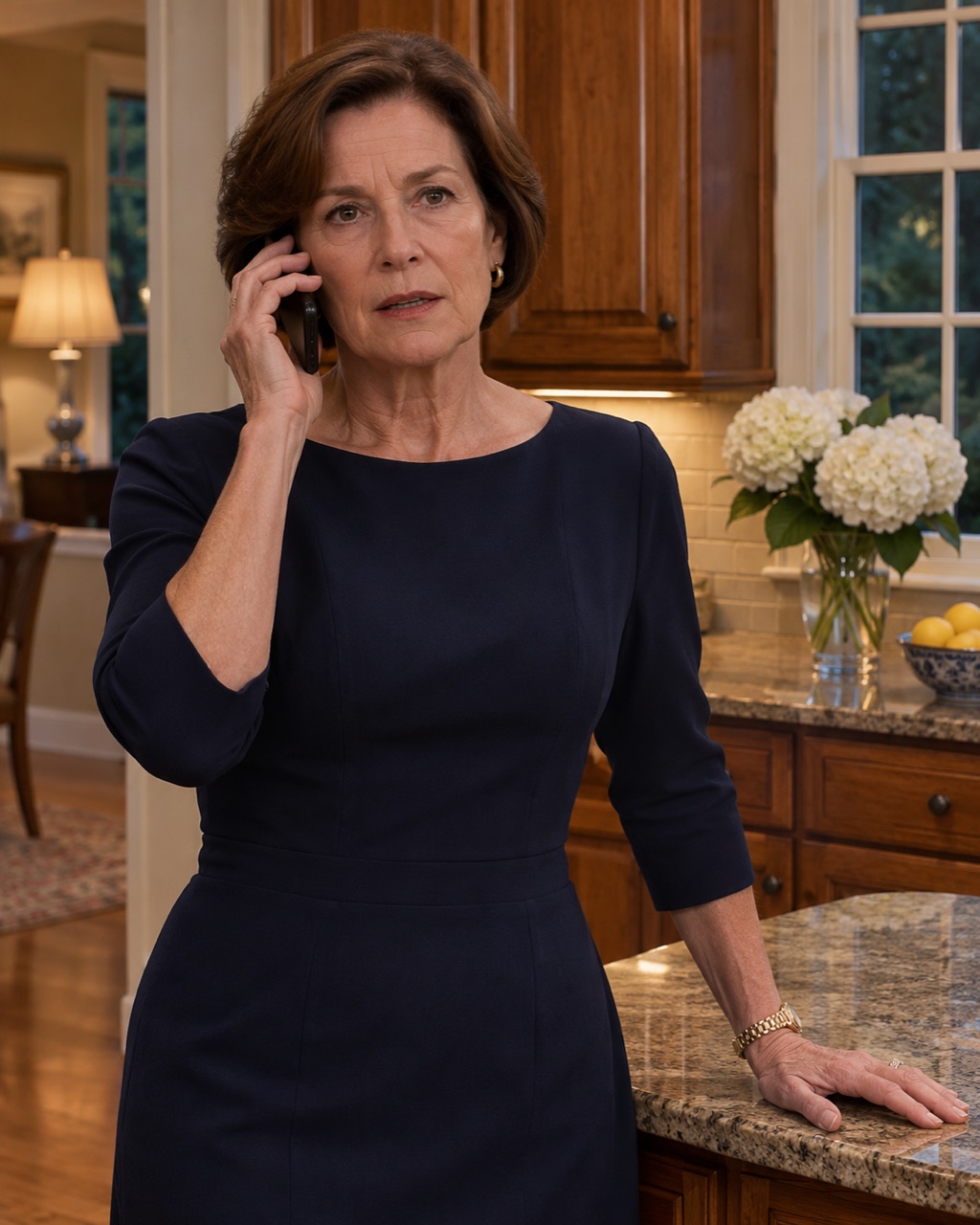
Then a relative called and said, “Lucas told us you promised Molly the collection and withdrew it after dinner.”
Chapter 8: The Story Reaching My Phone
“I didn’t promise it,” I said.
“What did you agree to?”
The relative sounded uncomfortable, but the question was fair.
I was at home, with the phone beside my unfinished work. I moved to the kitchen so I could answer without looking at another drawing I was not getting to finish.
“I agreed to teach her,” I said. “I did that without charging.”
“And the collection?”
“They asked for exclusive use for five years, for no charge. I said we needed to discuss terms.”
The relative went quiet.
“That isn’t how it was described to us.”
“I know.”
I did not ask what else Lucas had said immediately. I wanted to answer the question that had brought the call.
I explained that I had not accepted the proposed arrangement and had not given Molly authority to negotiate for me.
The relative asked whether that was why I had spoken up at Christmas.
“I spoke up because he said the designs were hers.”
“We thought they were.”
“Yes.”
That answer hurt to give.
I knew the relatives had heard the tracing comment, but I had hoped some part of them had doubted it. Instead, the story had fit what Lucas had already told them.
The relative said he had described Molly as the designer before dinner.
There was the missing part.
The acceptance around the table had not begun when he stood beside my chair. They had arrived already believing him.
I did not accuse the relative of participating.
“You believed what my son told you,” I said.
“I wish we’d asked you.”
“So do I.”
We ended the call more easily than we had begun it.
I returned to the table and tried to work.
My phone interrupted again before I had made much progress.
Another relative wanted to know whether there was some way to let Molly have the collection temporarily.
I gave the same answer.
I had not agreed to the free exclusive proposal, and I was continuing to make my own business decisions.
This relative asked whether the manufacturer had expected the collection.
“I’ve spoken directly with the representative.”
“What did they say?”
“That nothing could proceed with my artwork without my permission.”
“Can you send us what they wrote?”
“No.”
The refusal came more easily than I expected.
It was private business correspondence. I was willing to answer questions, but I was not going to distribute an exchange with a manufacturer around the family.
I explained the relevant fact.
There had been no production commitment to Molly.
The relative accepted that for the moment, though I could hear uncertainty.
I understood it.
They had heard incompatible accounts from people they loved. They were trying to make the conflict small enough to resolve with a favor.
I was not offering that favor.
After the calls, I sent Lucas a message.
“Relatives are contacting me about a promise I didn’t make.”
He replied that people were concerned.
“Tell them accurately what you requested.”
He said he had.
“Did you say five years, exclusive use, no charge?”
He did not answer directly.
Instead, he wrote that there were other ways to value family contributions besides money.
I had no interest in arguing with that sentence.
I asked whether he would correct the authorship claim to the relatives who heard it.
He said everyone understood by now that I had drawn the designs.
That was not the same as correcting what he had said.
I told him so.
He called.
I answered because I wanted to hear whether he was willing to say it plainly.
He was angry.
“You keep turning every conversation into a list of things we did wrong.”
“People are asking me about a promise.”
“They’re trying to help.”
“Then give them the actual terms.”
He said he had been trying to present their plans positively, not give the family a business briefing.
“You called me a tracer.”
“It was a bad description.”
“It was false.”
He acknowledged that I drew, then moved quickly to what he now called the real issue: I had encouraged a launch they could not afford without my help.
That was a smarter argument than denying authorship to me.
It was also still not a promise.
“I encouraged her to learn,” I said.
“And now she has nothing to launch with.”
“She needs other artwork.”
He said it as though I had failed to understand that this would cause a delay.
I understood.
I simply was not required to prevent it.
The call ended without his agreeing to correct the story in front of the family.
I went out for a short walk and came home without checking the phone along the way. The calls had left me ashamed of how much I wanted the relatives to understand.
I had not expected to need their approval.
But I did want them to stop looking at me as though I had taken something away from Molly.
At home, I answered only the messages that asked an actual question.
I did not start a family argument.
I did not send the manufacturer’s correspondence.
I repeated the terms and my refusal as accurately as I could.
When Lucas contacted me again, he said the business details had become too complicated for everybody.
“The authorship isn’t complicated,” I replied.
He suggested correcting that privately with anyone still confused.
I said he had made the claim in front of the group.
He wanted to know why the setting mattered so much.
“Because they all heard you.”
His next reply came after I had returned to work.
“If I correct the authorship in front of them, will you stop saying Molly never had a collection ready to launch?”
Chapter 9: The Collection She Could Not Offer
“I won’t agree to say something inaccurate,” I told Lucas.
“Then what will satisfy you?”
He had called after my reply, and I could hear that he wanted a settlement.
Not a free license this time.
He wanted a version he could repeat without having to acknowledge how much they had assumed.
“Correct who made the work,” I said. “Stop telling people I promised it.”
“And Molly’s business?”
“That’s hers to build.”
He said I was separating things that had always been connected.
“They were connected by help,” I answered. “Not ownership.”
He did not agree to a public correction.
I did not agree to his condition.
By the following week, I had stopped waiting beside my phone for either of them to decide what I was allowed to call the situation.
I worked.
Then the manufacturer’s representative contacted me with something that did need my attention.
Molly had sent an accurate correction.
The message said I had not retired from design work and had not appointed her to handle my future business.
I read the representative’s confirmation carefully.
There was no “for now.”
No suggestion that I had changed my mind after granting permission.
The false claim had finally been withdrawn.
I felt relieved.
I thanked the representative and asked whether anything else was needed from me to make the situation clear.
The answer was no.
The representative also repeated that Molly could not offer my collection without permission directly from me. Her proposed business could seek other artwork, but it could not proceed on the assumption that mine was available.
That was the practical result.
Nothing needed to be taken back because nothing had transferred.
No production had begun.
No existing paid arrangement of mine had been canceled.
I had refused a proposed use and corrected an unauthorized claim before it became a basis for action.
I went to the kitchen and called Molly.
I wanted to acknowledge that she had finally corrected it.
“The representative let me know,” I said.
“I sent what you asked for.”
“You sent the accurate information. Thank you.”
She sounded tired.
“I hope you’re happy with how this turned out.”
“I wanted the claim corrected.”
“You got that.”
“Yes.”
I did not add anything about how long it had taken.
She asked whether the representative had said what would happen with her business now.
I told her that was a discussion for her to have directly, using artwork she was entitled to offer.
“You really won’t reconsider any part of it?”
“No.”
She said she understood and ended the call.
I did not know whether she accepted my decision. I knew she had heard it again without a qualification to build plans around.
At the worktable, I looked at the designs she had hoped to use.
They were familiar enough that I sometimes forgot how much decision-making had gone into them. Seeing them through this dispute had been unpleasant.
I wanted to see them as work again.
I selected material appropriate for my own discussion with the manufacturer, without offering anything Molly had promised.
That distinction mattered to me.
I was not taking over her launch.
I was continuing a business I had built before hers existed.
Lucas called while I was considering the work.
“Molly corrected it.”
“I know.”
“So can we put this behind us?”
“The retirement claim is corrected.”
He heard the limitation.
“What else?”
“The family story.”
He said the relatives had been told enough by now.
“Not by you.”
He said he had spoken to them.
“Did you tell them the designs were mine and I didn’t promise a free exclusive?”
He said he had explained that we had different expectations.
That was not an answer.
I told him I would not keep discussing what had been “understood” when he knew exactly what I had refused.
His next concern was more practical.
If Molly could not launch with my collection, she would need to find other artwork, and the business would not be ready as planned.
“Yes,” I said.
“You say that like it doesn’t matter.”
“It matters. It doesn’t change my answer.”
He asked whether I would at least speak to the representative for Molly and explain how much work she had put in.
“No.”
That would put me back in the middle of a business I had just made clear I did not authorize or represent.
Molly could speak for herself.
So could I.
I ended the call and returned to the work in front of me. I did not feel triumphant.
I felt tired.
But I could also see the drawing clearly enough to make decisions about it, and that was an improvement over staring at messages all morning.
The representative’s next communication concerned paid use.
It came directly to me.
That was what I had asked for, and now I needed to decide whether the proposed discussion suited my work.
I began making notes about the uses I would consider.
Before I finished, Lucas sent another message.
He wanted me to delay speaking about my own work until Molly had found an alternative, so it would not look as though I had taken her opportunity.
Chapter 10: The Questions About Paid Work
“I won’t postpone my work,” I replied.
Then I called the manufacturer’s representative about the paid discussion.
I had spent enough time answering requests that would leave me earning nothing. This conversation required a different sort of attention.
“What uses are you considering?” I asked.
The representative described the proposed discussion, and I compared it with the work available.
I did not agree merely because payment had been mentioned.
I asked what artwork was of interest, how it would be used, and what limitations were being considered. I wanted the same care I had tried to teach Molly.
The conversation was direct.
Nobody treated a question as a promise.
Nobody asked me to prove that I cared before discussing terms.
I felt glad to be working.
Before we went further, I checked the point that had worried me during the family argument.
“My existing permissions remain as they are?”
“Yes.”
The proposed discussion did not cancel the paid arrangements already in place. Those permissions were nonexclusive, and any new agreement would need to respect them.
“And I’m retaining my original artwork,” I said.
“Yes. We’re discussing specified uses.”
That was the business I knew.
I had spent twelve years developing it, not by agreeing to everything, but by understanding what I could offer and what I needed to keep.
The representative asked for material I could prepare.
I said I would review the available work and respond.
After the call, I went through the designs at my table. I was looking for suitability, not for something that would make Lucas feel better about the dispute.
That took concentration.
A drawing could please me and still be wrong for a particular use. Another could need revision before I wanted anyone else considering it.
I made those decisions myself.
In the kitchen, my phone showed a missed call from Lucas.
I ate before returning it.
He asked whether I had received his message.
“Yes. I answered.”
“You couldn’t wait until Molly had something else?”
“No.”
He said the timing would make it look as though I had gone around her.
“I was already working with people in this trade.”
“She’s just starting.”
“I know.”
“You had a head start.”
“Twelve years of work.”
He stopped for a moment.
I knew he had not meant the phrase cruelly. He meant that I had something established and Molly did not.
But having established something was not a reason to stop.
He asked what I was negotiating.
“My paid work.”
“Is it the same collection?”
“I’m not discussing private negotiations with you.”
That was new between us.
I had once answered his business questions as freely as I answered questions about the weather. Now I knew he might turn an incomplete answer into an arrangement I had never accepted.
He said I was treating him like a stranger.
“I’m keeping business separate.”
He asked whether I intended to keep it separate forever.
“I am keeping it separate now.”
I did not want another argument about an imagined future.
At the table, the material I needed was waiting. I told Lucas I had work to do and ended the call.
Preparing for the paid discussion took longer than answering the representative’s first question.
I checked the work against what had been requested. I considered what I was comfortable offering nonexclusively and what I wanted to keep available for other uses.
The $18,000 from the past year did not guarantee another year like it.
That was why I needed the freedom to consider opportunities.
It was not enough for Lucas to say I could draw something else after giving Molly what she wanted. New work required time, and buyers made their own decisions.
I could not promise myself replacement income any more than Molly could promise a manufacturer my permission.
I sent the material I was ready to discuss.
Then I stopped for the evening.
My eyes were tired, but it was the ordinary tiredness of having looked closely at work. I had missed that.
Molly sent a message asking whether I had heard from the representative about her corrected claim.
I said I had.
She asked whether there was anything else she needed to do for me.
“No.”
I meant it.
I was not going to keep demanding apologies after the necessary correction. She had a business to figure out, and I had work to do.
She did not ask to resume lessons.
That request came from Lucas instead.
He said Molly needed help identifying what kind of alternative artwork would work for her proposed business.
I told him she would need to make those decisions herself or arrange appropriate help.
He said I could save her from expensive mistakes.
I had already done a great deal of that without charging.
I did not answer immediately.
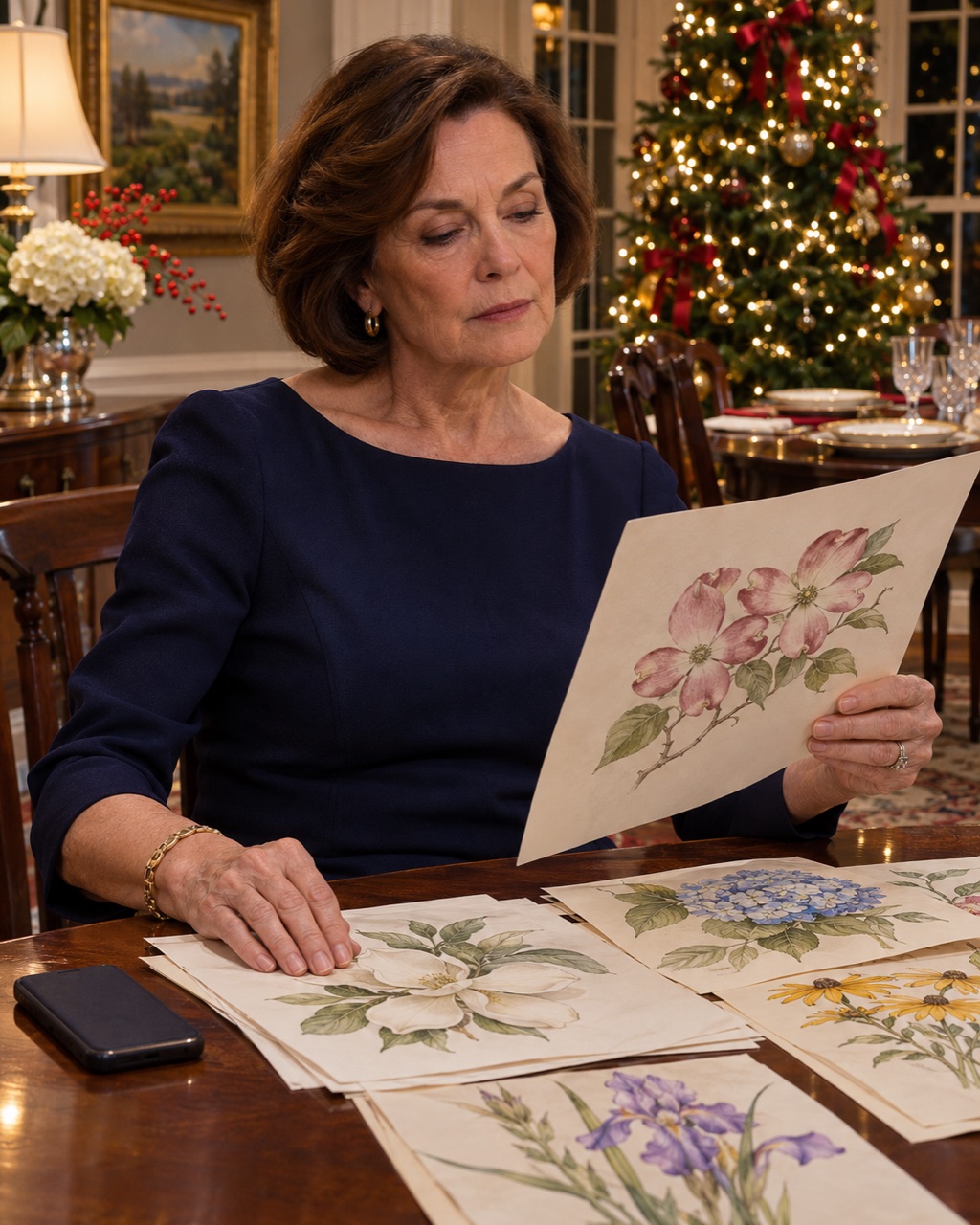
At my worktable, the representative’s questions were waiting. They required revisions and a considered response, not a quick yes.
I could spend the time on work for which I was negotiating payment, or I could return to coaching Molly through the business after being told I merely traced.
My phone rang again.
“Will you put your own discussion on hold long enough to help her find a replacement collection?”
Chapter 11: The Help He Asked for Next
“No,” I told Lucas.
“I have paid work to finish.”
It was three weeks later, and he had asked again.
Not for the free license this time.
He had accepted that I would not provide it, at least enough to change the request. Now he wanted me to help Molly create a different start.
“She doesn’t need your collection,” he said. “She needs you to show her what to look for.”
“That is business help.”
“You taught her before.”
“Yes.”
I was at my worktable, where the material for my own paid use was spread in front of me. The discussion with the manufacturer had become work I needed to complete, and I intended to complete it.
Lucas said Molly was having to seek other artwork.
Her proposed collection would be delayed.
I listened without interrupting.
Those were real consequences. They were also the consequences of planning around work she had not been authorized to offer.
I did not say she deserved them.
I said I would not fix them.
“You could review what she finds,” Lucas suggested.
“No.”
“Just tell her if she’s making a mistake.”
“No.”
He sounded genuinely puzzled by the second refusal.
He had adjusted the request. He was no longer asking for five years or exclusivity or free use of my artwork.
He expected the smaller request to be acceptable.
But reviewing artwork for a new business was still time and expertise. It would also put me back into responsibility for decisions Molly needed to make.
I told him that.
“She can’t afford to get it wrong,” he said.
“Neither can I.”
He asked what I meant.
“I need to spend my working time on my work.”
I could hear the hurt in his answer.
“We aren’t asking you to draw it.”
“I understand what you’re asking.”
That was important.
I did not want him later describing another misunderstanding. I knew he wanted teaching, not rights. I was still allowed to refuse.
We ended the call.
I stayed seated until I could return to the work without replaying his words.
I felt guilty.
There was no point pretending otherwise. Helping had been easy when Molly was eager and Lucas sounded proud of us both.
Refusing help was harder than refusing the free collection.
But I could not go back to teaching as though Christmas dinner and the retirement claim had been an unfortunate interruption between lessons.
I finished the work due to the manufacturer.
The ordinary exchange afterward was brief. The representative confirmed what had been received and the next business step.
There was no mention of Molly.
I appreciated that.
My work could exist without becoming a judgment on hers.
In the kitchen, I made a meal and listened to the phone ring without getting up. When I checked it afterward, Molly had called.
I returned it.
She said Lucas had told her I was busy.
“I am.”
“He thinks you won’t help because of dinner.”
“I am not taking on more business help.”
She asked whether I would at least tell her if a proposed direction was sensible.
“That would be helping with the business.”
“I know. I’m asking.”
“I understand.”
For a moment, neither of us spoke.
Then she said she was looking elsewhere for artwork.
“That sounds like what you need to do.”
“It isn’t as easy as using a collection that’s already developed.”
“No.”
She could hear that I knew exactly how much easier mine would have made things.
I was not going to pretend otherwise to soften the refusal.
She said the launch would have to change.
I told her I understood.
There was no reconciliation in that conversation, but there was less evasion. She was describing her situation without claiming I had promised to prevent it.
I wished her well.
I meant that, too.
Afterward, I returned to the table and considered how easily the lessons could resume. A question about someone else’s artwork. A visit to discuss it. A request that I show her what I meant.
Then my own work would wait.
I had done that willingly for six months.
I did not owe an indefinite continuation.
Lucas called again after talking with Molly.
He said he was not asking me to forget what had happened. He was asking whether I could separate teaching from the disagreement about rights.
I told him I had separated them.
“That doesn’t mean I have to keep doing either.”
He said I was shutting them out.
“I’m not available for business help.”
“Then what are we supposed to ask you about?”
That hurt more than I expected.
I looked toward the kitchen, where a meal had gone cold during enough business calls to make the question absurd.
“I’m still your mother,” I said.
He went quiet.
I did not fill the silence with an offer.
Eventually, he asked whether I would reconsider after finishing the paid work. I said I was not making a later commitment.
He wanted a different answer, but I had none to give.
Before we hung up, he made a final attempt to define the help as something small enough to be harmless.
“Will you at least keep teaching her without charging, if we promise not to ask for the designs again?”
Chapter 12: The Correction They Heard Together
“No,” I said.
“The unpaid business help is finished.”
Lucas did not answer immediately.
I could hear how final it sounded to him. I had refused a proposed license before; now I was refusing the familiar arrangement that made them feel I was still participating.
“I won’t give more lessons or review the business,” I said.
“What if she pays you?”
“I’m not offering that service.”
I needed to make that clear, too.
I was not trying to set a price high enough to punish them. I wanted my working time back, and I wanted a relationship with my son that did not depend on what I could do for his wife’s business.
He said he understood.
I did not know whether he did.
Months later, my work had continued.
I was still drawing, considering paid uses, and earning from designs under my own name. Some discussions led to work. Others did not.
I had not become rich because I said no.
I had remained free to make my own decisions.
Molly was proceeding without my designs. She had sought other artwork, and the collection she had originally imagined using mine was no longer her launch collection.
I heard about it without being asked to inspect it.
That was an improvement.
Lucas and I had ordinary conversations again. At first, they were careful. We talked about meals, visits, and whether I had been keeping busy.
When he used that phrase, he corrected himself.
“Working,” he said.
“Yes.”
I let the correction count.
But the family story still had not been properly put right in front of the people who had heard him at Christmas.
The relatives remained kind to me. Some had heard my explanation directly. Others had heard pieces through family conversations.
That was not enough for me to say Lucas had corrected it.
I told him so when he asked why the subject still bothered me.
He agreed to address it with the relatives present.
We were together at his and Molly’s house when he finally began.
“I described Mom’s role badly at Christmas.”
I was sitting where I could see everyone.
“Tell them what the role actually was,” I said.
He looked toward me.
“She drew the designs.”
“And owned the artwork,” I said.
“Yes.”
A relative asked whether Molly had been working from my drawings.
Molly answered that she had been learning the business and planning her own.
That was accurate.
Lucas said he should not have made it sound as though she had created my designs.
Then he added that they had genuinely believed a launch arrangement was understood.
There was the remaining claim.
I had expected it.
“I never accepted the free exclusive,” I said.
“I know you don’t see the discussion that way.”
“No. I didn’t accept it.”
The relatives were watching both of us now.
Lucas said the manufacturer discussion had made them believe the launch was close enough to depend on.
I had brought the representative’s correspondence because I did not want another gathering to end with competing recollections.
Until then, Lucas had not seen it.
I asked whether he wanted the manufacturer’s actual explanation read.
He said yes.
I read the relevant passage aloud: no production run had been promised, no exclusive rights had been committed, and any use of my artwork required my direct permission.
Then I let him read it.
He was quiet.
A relative asked, “So there wasn’t a settled launch using Colleen’s work?”
“No,” I said.
Molly said softly, “Not without her permission.”
That was the first time she had said it so plainly in front of them.
Lucas looked back at the exchange.
He could no longer make the argument about a manufacturer commitment. Instead, he said he had hoped family help would be different from negotiating with someone outside the family.
“It was different,” I said. “I taught without charging.”
Nobody contradicted that.
I was nervous, even then. It felt awful to need an outside business explanation in a room full of people who knew me.
But I was not going to leave them with a compromise version that still made me responsible for a promise I had never made.
Lucas looked around the room.
“I shouldn’t have called the work Molly’s,” he said. “It was Mom’s. And she didn’t agree to give us the exclusive use.”
The relative nearest him nodded.
Another said they wished they had understood that at Christmas.
Molly did not call the correction cruel this time.
I did not ask for more.
When Lucas offered to send a message to anyone who had heard a different account from him, I said that would be appropriate.
He did.
The correction was not an announcement about how generous I was or how emotional everybody had been. It identified me as the designer and acknowledged that I had not accepted their requested arrangement.
That was what I wanted.
Afterward, Lucas asked whether we could have Christmas together again without discussing business.
“I’d like that,” I said.
I also told him the unpaid help remained finished.
He nodded.
We managed visits after that without testing the answer. Molly did not bring artwork for me to review. Lucas asked about my work and waited for me to answer.
By the next Christmas, I was willing to walk into their home without preparing a defense.
The tree was visible from the foyer again.
Lucas came toward me as a relative recognized the work being mentioned across the room.
He turned toward everyone and said, “Before we sit down, I want to introduce Mom’s work properly.”
Chapter 13: The Work Beside the Tree
“Mom designed the quilt artwork you recognize,” Lucas said.
“She draws it, and manufacturers pay her for agreed uses.”
I stood just inside the dining room in my navy dress.
Nobody had prompted him.
Molly was nearby, and she did not add that we worked together or explain that she did the real work. She let his description stand.
Lucas looked at me.
“She’s still doing it.”
“Yes,” I said. “I am.”
It was not a speech.
That helped.
I had not wanted another Christmas dinner built around correcting the last one. I wanted to come inside, greet people, and have my son describe me without making me smaller.
He had done that.
A relative asked whether I was working on something new.
I began to answer.
Lucas did not answer for me.
I noticed, of course.
I also noticed how strange it felt not to prepare for an interruption. I could think about the work itself instead of deciding which false impression to correct first.
“I’m developing new artwork and considering uses for work I’ve already finished,” I said.
The relative asked whether that meant I was giving the designs to manufacturers.
“No. They pay for particular uses. The original artwork remains mine.”
Lucas listened.
It was the explanation I had tried to give in the fall before the earlier Christmas. This time, nobody treated the distinction as an inconvenient technicality.
Another relative asked how I knew when a design was finished.
That was a question I enjoyed.
I explained that something could look good on its own and still need work when repeated. I talked about checking what happened where the edges met and deciding whether a detail helped the whole design or merely attracted attention.
They listened because they were interested.
Not because Lucas had told them to encourage me.
I felt happy.
It was a quiet sort of happiness, but I did not need to dress it up as something larger. I was talking about work I liked, in a room where people finally understood that it was mine.
Molly asked whether everyone was ready to sit down.
We moved toward the table.
There was no discussion of exclusive use, no request that I rescue a collection, and no suggestion that the holiday was an appropriate time to reopen the business arrangement.
The food needed passing.
Someone had a story unrelated to fabric.
I enjoyed it.
For much of the meal, I was simply part of the family again.
That mattered more than a longer apology would have.
Lucas had already corrected the relatives. Molly had already withdrawn the false retirement claim. Their original plan to launch with my collection had not happened, and they had needed to make other choices.
Those consequences remained.
They did not have to be discussed over every dinner.
A relative asked Molly how her business was going.
She answered for herself.
She described the work she was doing without referring to my collection as something she had lost. She did not ask me to explain her decisions or confirm them.
I let her have her own answer.
That was part of keeping business separate, too.
I did not need to supervise her account as long as she did not claim my work or my permission.
When the conversation came back to me, Lucas asked whether I was pleased with what I had been making.
“I am.”
“Good.”
There was nothing after it.
No request.
No reminder of how useful the work might be to somebody else.
I could accept the question as a question.
After dinner, we returned to the rooms where we had stood during the earlier Christmas. I passed through the foyer without stopping to face the table.
I remembered doing that.
I remembered Lucas following me, Molly stopping on the dining-room side of the doorway, and the relatives watching while I finally said what I should have been able to assume they knew.
But nobody was following me to argue now.
Lucas came over while I was speaking with a relative.
He waited until there was room in the conversation.
“Can I ask something about the designs?”
“Yes.”
“Do you prefer people call it quilt art or fabric design?”
I considered it.
“Quilt artwork describes what I make. Fabric is one way it can be used.”
“All right.”
He was asking how to describe it accurately.
I did not take that for granted.
He did not ask me to look at Molly’s plans afterward. He did not suggest that enough time had passed for lessons to resume.
Business help stayed off limits.
We could still share dinner.
We could still ask each other ordinary questions and expect answers. We could have a holiday without my work being offered as the price of keeping everyone comfortable.
Molly joined us long enough to ask whether I needed anything before leaving.
I thanked her for dinner.
She said she was glad I had come.
“I am, too.”
It was true.
I had been uncertain on the way there. I had wondered whether the accurate introduction would sound rehearsed or whether someone would make a joke about being careful around me.
Nobody did.
Lucas had made his correction, and he was living with it.
I had kept my artwork and continued earning from it. More importantly for that evening, I no longer had to prove what I did before I could talk about doing it.
A relative returned to the question about my current work.
This time, I gave a fuller answer.
I described what I was trying to improve and what I hoped to finish. I did not promise what it would earn, because I could not know that.
I talked about the decisions I was making.
Lucas stayed nearby, listening.
When the relative asked whether I still enjoyed sitting down to draw, I said yes without looking at my son first.
Then I told her about the artwork I was making now, beside the Christmas tree.
You Might Also Enjoy




