Chapter 1: The Envelope Against My Cup
Chapter 1: The Envelope Against My Cup
My daughter-in-law pushed a rent envelope against my coffee cup and called me a freeloader in front of our family.
“You’re a freeloader. Start paying rent.”
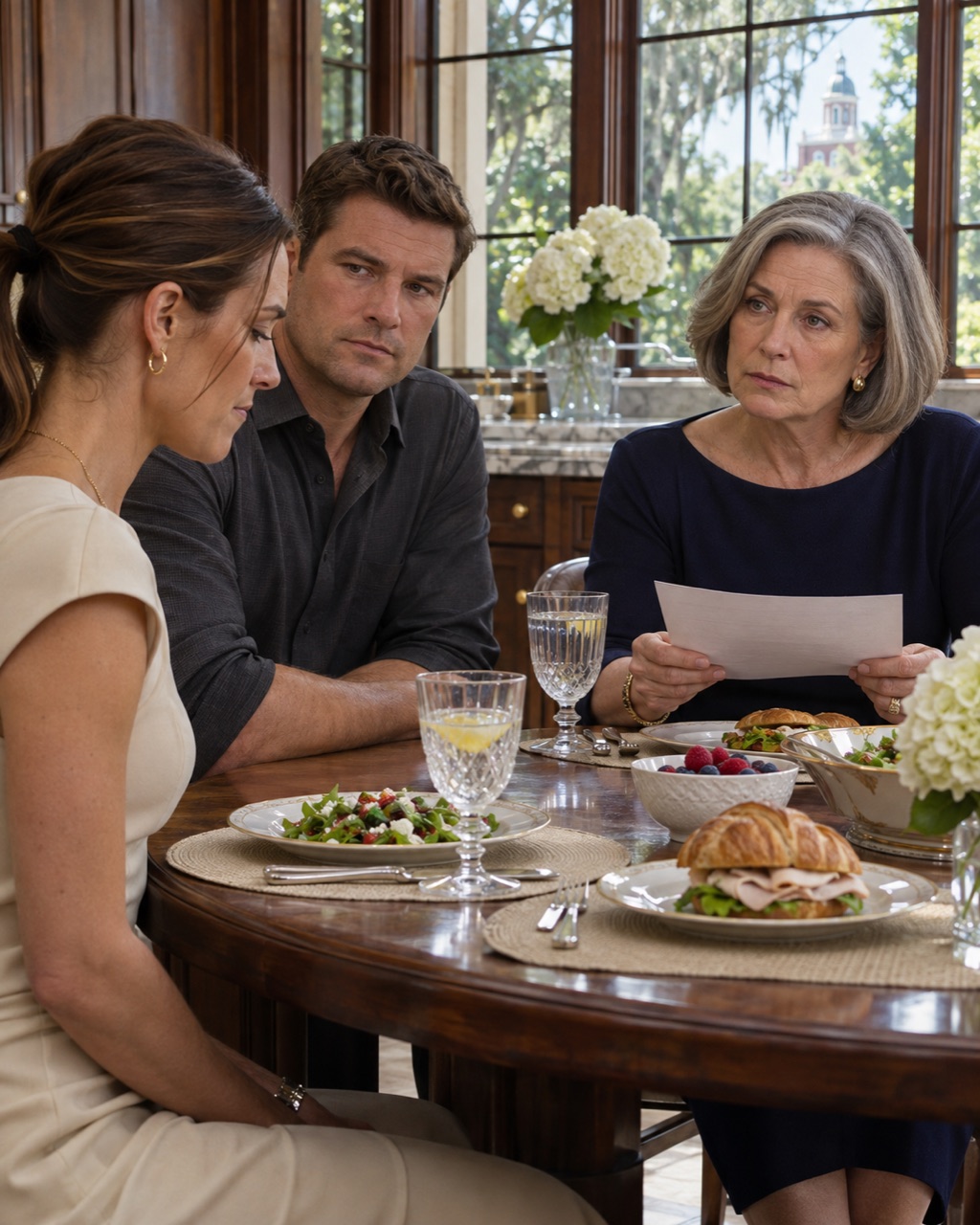
Lindsay leaned across my kitchen table with her hand planted beside the lunch dishes.
She was close enough that I drew my head back.
The envelope stopped against my blue cup.
Across the front, she had written $850.
“Starting next month,” she said.
Bonnie looked at my son.
Micah looked at his plate.
The other relatives found somewhere else to look. Someone studied the serving dish. Someone leaned back without taking another bite.
Nobody asked the question that seemed fairly obvious to me.
So I did.
“Why would I pay you rent?”
Lindsay gave me a patient little smile.
“You ought to want to contribute.”
Her hand stayed on the table. Mine stayed beneath it, resting over the pages I had brought to lunch.
They were in my lap.
She hadn’t noticed.
“You eat here every day,” she added.
I looked past her toward the stove. Lunch was still warm. We had been passing food and talking about ordinary things before she reached for that envelope.
I had expected her to mention groceries.
Not this.
“Explain what you mean by contribute.”
She glanced at Micah.
He gave her a small nod.
That was what made me stop waiting for him to speak up.
My name is Pamela. I’m 64, retired from managing a school cafeteria, and quite capable of choosing my own groceries and answering questions about my own life.
Lindsay was 36.
Somewhere along the way, she had begun answering those questions for me.
At first it was harmless enough.
Someone would ask whether I wanted something from the store, and she would say she already knew what I needed.
Then she started telling people what I could manage.
Now she was telling me what I owed.
“Tell everyone why you think I owe you,” I said.
Her smile changed.
“We shouldn’t have to support you forever.”
Bonnie stopped looking at Micah.
She looked straight at Lindsay.
“Support her how?”
Lindsay didn’t answer my sister. She stayed turned toward me, as though Bonnie had interrupted an arrangement already settled between the people who mattered.
“The food. The shopping. Keeping everything going.”
Micah took a drink.
I watched him do it.
He knew what she was leaving out.
I wanted him to say that before I had to.
Instead, he put his glass down and said, “Mom, paying her something would be easier than embarrassing her.”
That hurt.
Not because he had misunderstood.
Because he hadn’t.
He knew enough to correct her, and he was asking me to protect her from being corrected instead.
“We can discuss the details later,” he added.
There were lunch dishes between us. A spoon lay across the edge of a serving bowl, and nobody reached for it.
“Which details?” I asked.
“How much. What feels fair.”
“The amount is already written down.”
“I mean we can work it out.”
“After I agree in front of everybody?”
He looked toward Lindsay.
I waited.
He didn’t answer.
Bonnie turned in her chair.
“Embarrassing her?”
Micah wouldn’t meet her eyes.
He had always disliked a disagreement at a family meal. I knew that about my son. When he was younger, he would offer to clear dishes before people had finished eating if voices got sharp.
But this wasn’t him trying to settle everybody down.
He had chosen who should give in.
And it was me.
Lindsay sat back a little.
“We’re trying to be reasonable.”
“You called me a freeloader.”
“I said you should contribute.”
“You said both.”
A relative at the far end of the table looked toward the envelope.
Lindsay noticed.
“You don’t need to make this ugly, Pamela.”
I had spent a good part of my working life explaining things to people who were hungry, hurried, or annoyed. I knew how quickly a conversation could become about somebody’s tone instead of what had happened.
I wasn’t going to shout over her.
But I wasn’t going to help her change the subject either.
“I’m asking you to explain the amount you put beside my lunch.”
“It covers more than groceries.”
“What else?”
“Being part of a household.”
I looked around my kitchen.
The dish towel by the oven was mine. The chairs were the same ones that had been there before the couple arrived. My coffee cup was in its usual place.
Lindsay was speaking as though I had recently been allowed to join them.
Micah leaned forward.
“Can we just eat?”
“We were eating,” Bonnie said.
Her voice wasn’t loud.
That seemed to bother him more.
He pushed his plate away, then brought it back toward himself without eating anything.
I felt ashamed of how many smaller versions of this conversation I had let pass.
A comment about how much food I needed.
A remark about Lindsay doing everything.
An answer given before I could speak.
I had usually changed the subject. I didn’t want visiting relatives made uncomfortable, and I certainly didn’t want every ordinary lunch turning into an argument.
Now the relatives were uncomfortable anyway.
Only Lindsay had been allowed to explain why.
The envelope stayed against my cup.
I didn’t open it.
There was no reason to.
The demand was written on the outside, and I had already heard when she expected it to begin.
“Did you bring that here expecting me to put money inside?”
“It’s for rent,” Lindsay said.
“I heard you.”
“Then why keep asking?”
“Because you haven’t explained why it belongs to you.”
Her mouth tightened.
Beside her, Micah rubbed his forehead.
Nobody had asked whether I could afford it. Nobody had asked whether I wanted a different arrangement.
Apparently those questions came after agreeing that I owed her.
I could have taken the envelope away from the table.
I could have told everyone we would talk another time.
That would have let Lindsay leave lunch believing I had accepted her claim and was only negotiating the price.
I knew how easily that version would travel.
Bonnie was watching me now.
She knew there was something I hadn’t said yet.
Lindsay glanced down at the envelope, then back at me.
“Can you just agree to pay something so we can finish lunch?”
Chapter 2: The Conversation He Recognized
“No,” I said.
Micah looked up as though the word had been louder than it was.
I hadn’t raised my voice.
“I haven’t agreed to rent, and I haven’t agreed with the reason you’re asking.”
Lindsay started to answer.
I stopped her.
“You’ve had your chance to explain.”
The pages were still in my lap. I could feel the edge against my skirt, and for a moment I thought about leaving them there.
Then Bonnie said, “Pamela, tell them what you told me.”
Last week, my sister had stood in this kitchen with her purse still over her shoulder.
“She says feeding everybody has gotten expensive.”
Bonnie was 67. She wasn’t someone who usually repeated a complaint just to see what trouble it might cause.
She had sounded worried.
That made it worse.
“Who says?” I had asked.
“Lindsay. She said she’s been trying not to bring it up.”
I remember looking toward the groceries on the counter.
There was nothing unusual about them.
Bread. Vegetables. Things we all ate.
But Bonnie was looking at them as though they represented a burden I had placed on my son and his wife.
“Did she say I wasn’t helping?”
“She said you probably don’t realize how much she covers.”
I was embarrassed.
Not about needing help.
About discovering my sister thought I was receiving help that I had actually been giving.
I told Bonnie there was more to the arrangement.
I didn’t ask her to go argue with Lindsay.
I wanted to check what I had before saying anything else.
After she left, I sat at the table with my phone.
The conversation wasn’t hidden.
Nobody had to send it to me secretly.
Lindsay had written directly to me in a family conversation that included Micah, and his replies were there too.
I read back through it.
Then I read it again.
Eighteen months earlier, when they came to stay, the explanation had been simple: they both worked, they wanted to save money, and they needed time to decide where they would live next. I had room. Nobody promised rent. Nobody asked me to rearrange my life because I was unable to manage it. Lindsay liked grocery shopping, so we let her take over those trips, and I began handing over the monthly grocery money rather than making separate runs for the same shared food. It had seemed practical. There were ordinary conversations about what was running low and what we planned to cook, and I thought that was all we were arranging.
Then the descriptions changed.
Lindsay began saying she had picked something up “for Pamela.”
She would tell relatives how much work it was keeping everyone fed.
Sometimes I corrected the shopping details.
Usually I let the larger impression pass.
I could see that clearly when I read the conversation.
The words on my phone were nothing like the words Bonnie had heard.
I printed it myself at home.
At the top, it said “MESSAGES.”
I checked that the conversation was readable, including Micah’s reply. Then I kept it where I could get to it before lunch.
I didn’t tell Lindsay.
Not because I knew she would demand rent.
I didn’t.
I thought I might finally need to correct the grocery story in front of someone who had heard it.
Now I was sitting at that lunch with her envelope against my coffee cup.
“Go ahead,” Bonnie said.
Lindsay turned toward her.
“This isn’t helping.”
“It isn’t supposed to help your version,” Bonnie replied.
I didn’t want my sister fighting for space at my own table.
I could speak.
“I let you live here without rent,” I said.
Micah’s eyes moved to me.
“And I’ve given you grocery money for eighteen months.”
Lindsay made a small impatient sound.
“It was $600 a month,” I continued.
The relative beside Bonnie turned toward Lindsay.
“That came from Pamela?”
“Yes,” I said.
Lindsay answered at the same time.
“This is private family business.”
“You brought the envelope.”
“I didn’t bring it so everybody could pick us apart.”
“You brought it so everybody could hear me agree.”
Micah pushed his chair back.
He didn’t leave it.
I stood.
“Let’s tell this properly.”
The pages stayed down near my lap as I got up. Lindsay remained seated, looking up at me with the same careful expression she had used when explaining what I supposedly needed.
“I own the house.”
Bonnie looked directly at her.
So did the relative beside her.
“Ownership isn’t what I’m talking about,” Lindsay said.
A whisper came from the far end of the table.
“Then let’s discuss the groceries.”
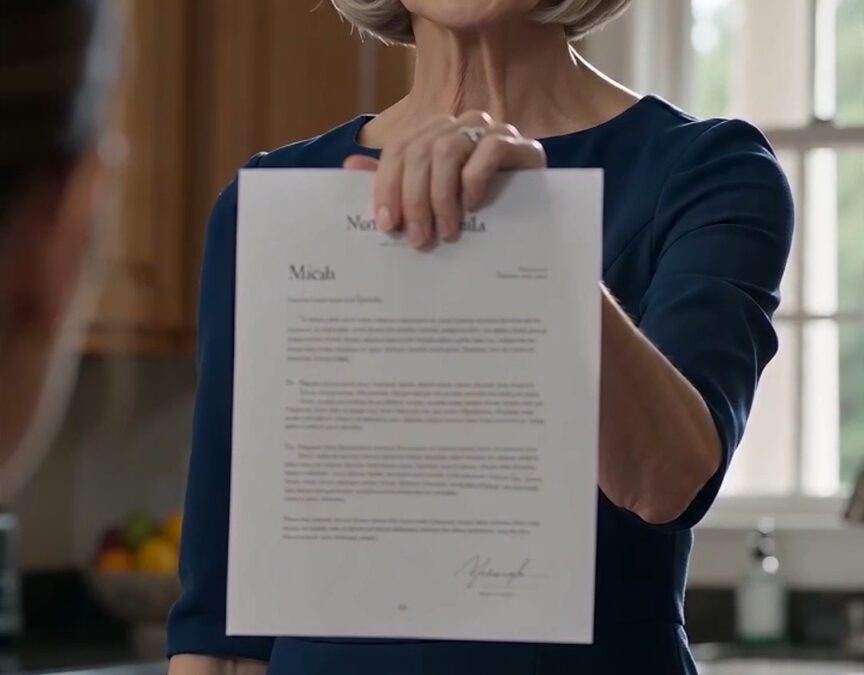
I lifted the printed conversation to chest height, facing Lindsay.
“Lindsay, I own this house. Me.”
She pulled back in her chair.
Her expression changed when she saw what I was holding.
“Why print those messages?”
“Because you sent them to me.”
The relatives turned toward the page.
The heading was plain.
So were the names beside the replies.
Micah stopped watching Lindsay.
He was looking at what I held.
“Mom, don’t read that.”
He recognized it before I read a word aloud.
I understood what that meant, and what it didn’t.
It meant he remembered this grocery conversation.
It did not tell me when he first heard about the rent demand. I didn’t know that yet, and I wasn’t going to pretend the page proved something it didn’t.
For now, it proved enough.
He hadn’t needed me to explain where the food money came from.
He had known while his wife called me a freeloader.
Seeing Micah recognize the conversation, I knew he remembered whose money bought groceries.
“Then tell me why you want this conversation left unread.”
Chapter 3: The Words Under MESSAGES
“Because it’s between us,” Micah said.
Lindsay nodded quickly.
“Exactly.”
I kept the page raised.
“The grocery arrangement was between us. Your description of it hasn’t been.”
Nobody reached for the serving dishes.
I looked at Lindsay before I began.
“This is what you sent me.”
Then I read her words.
“Could you send the $600 for our household allowance before I do the grocery shopping? I’ll get what we all need.”
I let that sentence finish.
No explanation over it.
No extra accusation.
The words had already done what I needed.
Lindsay looked at Micah.
He wasn’t looking back.
I read the next relevant part.
“This is what Micah wrote: ‘Mom’s $600 is for the shared groceries. Lindsay is doing the shopping, so send it to her.’”
Bonnie exhaled.
“So Pamela was paying.”
“Yes,” I said.
Lindsay leaned forward again, but she didn’t come as close this time.
“I never said she didn’t send anything.”
“You said you were supporting me.”
“I buy the groceries.”
“With the money I give you.”
“I do the work.”
“And I never said you didn’t.”
That made her pause.
She had expected me to dismiss the shopping itself, and I wasn’t going to do that. Getting food into a house takes time. Choosing it, carrying it home, making sure something isn’t forgotten—that is work.
It still didn’t make the money hers before I gave it.
And it didn’t turn me into a dependent.
I lowered the page enough to read comfortably.
“These messages call it our household allowance. They say what it was for. They don’t say you were paying to support me.”
Lindsay stared at the lunch dishes.
Micah spoke carefully.
“Nobody’s saying you didn’t contribute.”
“Your wife just called me a freeloader.”
He closed his mouth.
I felt furious then.
Plainly furious.
I had let myself keep waiting for him to remember the obvious thing and say it without being asked.
Instead, I was standing in front of my family, reading his own words back to him.
Bonnie looked toward the relatives.
“You all heard that?”
They had.
There was no need to pass the page around yet. I held it where anyone near enough could see the heading and the conversation.
Lindsay’s objection changed.
“Those were practical messages. We were talking about shopping.”
“Yes.”
“They weren’t meant to be some public accounting.”
“Neither was my lunch, until you demanded rent.”
She leaned back.
For a moment, all I heard was the refrigerator.
Then she said, “Fine. You help with groceries.”
It was smaller than the truth.
A grudging word where a clear acknowledgment belonged.
I didn’t argue about the word help.
I stated the arrangement again.
“I’ve given you $600 monthly for the shared food. You and Micah have lived here without rent.”
Micah looked toward the kitchen doorway.
He seemed to be measuring how much easier this conversation would feel without anyone else in the room.
I understood that.
I would have preferred it too.
But Lindsay hadn’t asked for privacy before she accused me.
She had asked for agreement.
I put the page down beside my place, where the relatives could still see it.
Then I said what I had decided.
“The monthly grocery money stops now.”
Lindsay looked up immediately.
“What?”
“There won’t be another $600 next month.”
Micah leaned forward.
“Mom.”
“The money I’ve already given you is given. I’m not asking for it back.”
I wanted that clear before anyone could turn it into something else.
I wasn’t announcing a debt.
I wasn’t claiming the food already in the kitchen.
I wasn’t threatening to take away anything they owned.
I was ending a gift I had chosen to make.
“Starting now,” I said, “you buy your own food.”
Lindsay’s face changed again.
The rent envelope was still beside my cup.
Now she looked at it as though it had become a problem she hadn’t intended to create.
“You can’t just stop in the middle of this conversation.”
“I can stop making voluntary gifts.”
“We plan around that money.”
“You need to plan without it.”
Micah rubbed the back of his neck.
“Could we slow down?”
“I am being clear.”
“That isn’t the same thing.”
“No. It isn’t.”
Bonnie didn’t speak for me.
I appreciated that.
She stayed in her chair, listening, while I explained exactly what was ending and what wasn’t.
Nobody would need to guess later.
“The food already bought is not being taken back,” I said. “I’m not asking you to repay grocery money. But there will not be more next month.”
Lindsay looked toward the relatives.
“You’re hearing this out of context.”
A relative asked, “What context changes who paid?”
She had no quick answer to that.
Instead, she turned back to me.
“We could have worked out a contribution without all this.”
“You asked for $850.”
“Because we do things here.”
“And we can discuss the things each person does.”
“Then why make a decision right now?”
“Because you’re asking me to agree right now.”
Micah lowered his eyes.
The printout lay between the serving dish and my place.
A moment earlier, Lindsay had wanted everyone to see an envelope that made me look like a woman refusing to contribute.
Now everyone could see why I wasn’t accepting it.
I sat down.
My lunch had gone cold.
I wasn’t hungry anymore, but I stayed at the table. I didn’t want anyone to mistake a trip to the sink for an end to what I had said.
Lindsay looked around at the people who had heard her demand.
Then she looked at me.
“You can’t change this in front of everybody.”
Chapter 4: The Amount On The Envelope
“You asked me to,” I said.
Lindsay looked down at the envelope.
“I asked you to be fair.”
“You asked me for $850 a month.”
“Toward living expenses.”
“You called it rent.”
She took a breath.
I could see her choosing a different approach.
“The label isn’t the important part.”
“It is when you’re asking me to pay for living in my own house.”
Micah looked toward Bonnie, perhaps hoping she would tell us to stop.
She didn’t.
A relative moved a lunch plate away from the printed conversation so it wouldn’t get food on it.
That ordinary action settled something for me.
The page wasn’t a private threat anymore.
It was sitting in the middle of a discussion Lindsay had chosen to begin, and nobody was pretending they hadn’t heard it.
“I am not paying you rent,” I said.
Lindsay’s lips pressed together.
“And I am not paying the same amount under another name.”
“I didn’t say the same amount.”
“The envelope did.”
I left it where it was.
I wanted the demand visible while she tried to make it sound vague.
Micah finally spoke.
“Maybe rent was the wrong way to put it.”
“Then what was the right way?”
“Sharing the cost of everything.”
“I’ve been doing that.”
“I know.”
“Say what you know.”
He glanced at the page.
“You’ve paid toward the groceries.”
“Not toward a bill you presented me. I gave you money to buy shared food.”
He nodded.
It was an uncomfortable nod.
But it was an answer.
Lindsay tried the practical argument next.
“Food costs money. The house costs money. You can’t just say you own it and pretend nothing else exists.”
“I haven’t.”
“Then we need a household amount.”
“We need an honest conversation.”
“That is what I’m trying to have.”
“No. You started with an insult and a rent envelope.”
She turned toward the relatives again.
“I thought family could help us talk about it.”
Bonnie answered before I could.
“You didn’t ask us to talk. You asked us to watch.”
Lindsay looked offended.
I didn’t let the conversation become an argument between them.
“This isn’t a family vote,” I said.
Everyone turned toward me.
“I don’t need anyone here to approve my decision.”
That included Bonnie.
It included the relatives who now looked sympathetic.
I was grateful they had listened. I didn’t need their permission to stop giving away money.
I had been retired long enough to know what I wanted my ordinary days to look like. I liked shopping when I wanted to shop. I liked having coffee in my kitchen without a running explanation of what somebody else thought I needed.
I hadn’t invited my son and his wife here to become the subject of household decisions made around me.
Lindsay watched me.
“So we don’t get a say?”
“You get a say about your own money and your own work.”
“And nothing about living here?”
“We can discuss how living here works. You cannot charge me for the right to do it.”
Micah shifted in his chair.
That distinction seemed to reach him.
Or perhaps he was finally hearing how the demand sounded when it wasn’t softened into helping.
I couldn’t tell yet.
A relative asked whether we should put the food away.
“Not yet,” I said.
We weren’t keeping anyone trapped at the table. They could leave whenever they wanted.
But I wasn’t going to announce a break that let Lindsay say the matter had been dropped.
I looked back at her.
“The $600 was voluntary. It wasn’t wages. It wasn’t money you earned from me by being married to Micah.”
“I never said it was wages.”
“And it wasn’t a reason I owed you another payment.”
She looked toward my son.
He didn’t defend that part.
Instead, he said, “We’ve all gotten used to how things work.”
“Yes.”
“So changing it affects us.”
“I understand.”
That surprised him.
I meant it.
Of course it would affect them. Money they didn’t have to spend on food could stay available for other purposes.
Ending my help would require a change.
That didn’t mean the change was unfair.
“I know you plan your spending,” I said. “I’m telling you what you can no longer include.”
Lindsay folded her arms.
“You’re punishing us for bringing up an issue.”
“No.”
“Then why now?”
“Because I won’t keep funding a story in which you support me.”
Her eyes went toward the page.
There it was again.
She wasn’t disputing the words anymore.
She was objecting to what would happen because they had been heard.
Micah looked tired.
I was tired too.
But I had been tired before that lunch, and I had still managed not to call anyone a freeloader.
“Mom, this could be handled better,” he said.
“It could have been.”
“I mean now.”
“So do I.”
I didn’t smile.
Neither did he.
The relatives stayed quiet. I could feel how badly everyone wanted a normal meal back, but wanting it didn’t make it possible.
Lindsay had expected the discomfort to make me agreeable.
That was the part I understood now.
If I refused quickly, I would seem difficult.
If I explained, I would seem embarrassing.
Either way, she expected me to dislike the attention enough to give her something.
I wasn’t agreeing to that choice.
“The rent answer is no,” I said. “The grocery gifts have ended. We can discuss ordinary household responsibilities without changing either answer.”
Micah glanced at Lindsay, then leaned toward me.
“Can you postpone the decision until we can speak alone?”

Chapter 5: What He Heard Before Lunch
“Which decision?” I asked.
Micah hesitated.
“The money.”
“No.”
“Just until we’ve talked.”
“We are talking.”
He looked toward the relatives again.
It had become his answer to everything: less audience, less discomfort, less chance that anyone would remember exactly what he had said.
I had another question.
“When did you first hear about the rent?”
Lindsay turned toward him before he answered.
I noticed.
So did Bonnie.
Micah looked down.
“Mom, that’s not really the point.”
“It is to me.”
“She wanted us to discuss contributing.”
“When?”
His face reddened.
“The night before lunch.”
I sat very still.
There was no message on the page proving that.
No clue I had secretly known.
He had just told me.
Until that moment, I had known only that he remembered the grocery arrangement and had sided with Lindsay at the table.
Now I knew he had arrived expecting the demand.
“The night before,” I repeated.
“Yes.”
“She told you she was going to ask me for $850?”
“Yes.”
“And call it rent?”
He paused.
“She said she wanted you paying something monthly.”
Lindsay interrupted.
“I told him what I planned to ask.”
I looked at her.
“I heard him.”
She stopped.
The room felt different to me now.
I had thought my son failed me in a bad moment.
Instead, he had sat down knowing a conversation was coming that I hadn’t been told to expect.
He had watched me pass food.
He had watched Lindsay push the envelope against my cup.
Then he had asked me to make it easier on her.
I was hurt.
There wasn’t a more complicated word needed.
Micah tried to explain.
“I thought we could talk it through.”
“Before lunch?”
“No. At lunch.”
“In front of everybody.”
“I thought it might keep things calm.”
Bonnie stared at him.
I didn’t turn toward her.
I wanted his answer directed to me, not changed into a defense against my sister.
“Calm for whom?”
He didn’t answer immediately.
“Mom, you don’t usually want a scene.”
“That isn’t an answer.”
“I thought you’d say what you thought, and we’d work it out.”
“You asked me to pay rather than embarrass her.”
“I shouldn’t have put it that way.”
“But that was the plan you were helping with.”
“I didn’t plan what she called you.”
“I didn’t say you did.”
I wanted to be fair about the facts even then.
I knew what had happened.
I didn’t know every sentence they had said to each other the previous night, and I wasn’t going to invent them.
“You knew about the demand,” I said. “You didn’t tell me. Then you supported it when she made it.”
He nodded.
Barely.
But he nodded.
Lindsay spoke more carefully now.
“We’re married. Of course I talked to him first.”
“You were free to talk to your husband.”
“Then why make it sound wrong?”
“Because he let me walk into it without knowing.”
Micah looked toward the envelope.
It had become something he didn’t want to see.
I remembered how he had sat there before the meal began, talking about ordinary things while I moved between the stove and the table.
He hadn’t looked worried.
Not enough that I noticed.
I had mistaken that ease for an ordinary visit.
Now I wondered whether he had been waiting for me to make the whole thing easy for him.
“You could have asked to talk privately before lunch,” I said.
“I know.”
“You could have told Lindsay not to bring an envelope.”
“I know.”
“You could have told me what she intended.”
His eyes lifted.
“I didn’t want you upset beforehand.”
I looked at him for a moment.
Then I said, “So you waited until I had an audience.”
He didn’t argue.
That was worse than a clumsy excuse.
He knew how it sounded.
One of the relatives got up to carry a dish to the counter. The chair made a small scrape, and everyone briefly looked that way.
I was grateful for the interruption.
Not because I wanted out.
Because I needed to breathe without immediately hearing another explanation.
When the relative sat again, I asked Micah to look at me.
He did.
“I don’t need protection from knowing what’s happening in my own kitchen.”
“I understand.”
“I don’t think you did this morning.”
He swallowed.
“No.”
Lindsay shifted beside him.
She was losing his quick agreement, and she could see it.
“This isn’t just about you and your mother,” she said.
“No,” I replied. “You made sure of that.”
She looked toward Bonnie.
My sister didn’t rescue her.
Micah leaned forward with his elbows near his plate.
“I thought if you helped a little more, we’d stop having tension over groceries.”
“Was the tension because I didn’t give you money?”
“No.”
“Was it because you didn’t know what the money was for?”
“No.”
“Then what did you expect another payment to solve?”
He didn’t offer an amount.
He didn’t say they needed food that day.
He said, “I thought it would make things easier at home.”
I understood which home he meant.
Mine.
And which things were supposed to become easier.
His conversations with his wife.
I wasn’t going to pay her to spare him those.
Lindsay started to speak, but I kept my attention on my son.
“You had time to think about this before I ever saw that envelope.”
He nodded again.
The admission had come.
The explanation hadn’t.
“Why did you let your wife surprise me publicly?”
Chapter 6: What Bonnie Had Heard
“Because I thought you’d agree to something,” Micah said.
Lindsay looked sharply at him.
He kept looking at me.
“I thought you’d be upset, but we’d end up with an arrangement.”
I felt sick hearing how ordinary that sounded to him.
An arrangement.
Something neat enough to describe without mentioning who would have to be insulted into accepting it.
“You expected me to pay to end the discomfort.”
He looked down.
“Yes.”
That was the first answer he had given without trying to make it nicer.
I didn’t thank him for it.
I just let it remain said.
Bonnie leaned forward.
“Pamela needs to know what I’ve been hearing too.”
Lindsay turned toward her.
“You already told her.”
“I told her last week. I’m telling everyone here now.”
I glanced at my sister.
She waited for me.
“All right,” I said.
Bonnie didn’t make a speech.
She described the conversations the way she had described them to me.
“She told me feeding everybody had gotten expensive. She said she was trying to manage it without making Pamela feel bad.”
Lindsay shook her head.
“I said shopping was expensive.”
“You said you were covering it.”
“I do cover the shopping.”
“With Pamela’s money,” Bonnie said.
Lindsay opened her mouth, then stopped.
That wording had worked for months because buying and paying had been allowed to sound like the same thing.
Not now.
Bonnie looked toward the other relatives.
“I believed she meant Pamela needed help with food. That’s why I asked my sister about it.”
A relative nodded.
I didn’t ask how many conversations there had been or demand that everyone repeat every sentence.
The pattern was already clear.
And I wasn’t going to turn lunch into a competition over who remembered the worst remark.
Lindsay tried to narrow it.
“I never said Pamela couldn’t do anything for herself.”
“You answered questions people asked me,” I said.
“Because I know the routine.”
“You told them what I needed.”
“Because I do the shopping.”
“And you left out who provided the money.”
She looked at the printout.
There was no way around that part now.
Micah sat back.
I could see him listening differently.
Before, he had treated this as an argument about whether his wife felt appreciated.
Bonnie was explaining what the family had actually come to believe.
Those weren’t the same problem.
My sister turned toward me.
“I should have asked sooner.”
“You asked when you became concerned.”
“I still wish I’d understood.”
“So do I.”
I wasn’t angry with Bonnie.
She had heard a story from someone living in my house and believed there was no reason to doubt it.
That was how these things worked.
Nobody expected to need proof of who bought the sandwich ingredients at a family lunch.
I was embarrassed that it had reached this point.
But embarrassment wasn’t a reason to leave it wrong.
I looked at Lindsay.
“The people who heard that you were supporting me need to hear the correction.”
She stiffened.
“You want me to apologize to everybody?”
“I want you to correct what you told them.”
“That’s the same thing.”
“No. An apology can leave the facts out.”
Micah glanced toward me.
He seemed to understand why that mattered.
Lindsay wasn’t giving up.
“I can say there was a misunderstanding.”
“Whose?”
“About how things work here.”
“What was misunderstood?”
She didn’t answer.
The relative nearest Bonnie looked at the page again.
I didn’t need anyone to take it home.
I needed the people who had heard the claim to hear the truth while Lindsay was there to stop pretending it was a misunderstanding caused by someone else.
Bonnie said, “You can tell us plainly.”
Lindsay looked at her.
“I don’t need instructions.”
“Then you don’t need mine,” Bonnie replied.
I almost smiled.
Not because anything was funny.
Because my sister had managed to leave the responsibility exactly where it belonged.
Micah finally spoke.
“Lindsay, Mom’s asking for the source of the grocery money to be clear.”
She stared at him.
“You’re taking her side now?”
“I’m saying what she’s asking.”
I didn’t let that become a new argument between them.
“This isn’t about choosing somebody to like,” I said. “It’s about what happened.”
Lindsay looked down at her plate.
For a while, she said nothing.
I let her have that time.
I wasn’t going to fill it with another explanation that made the correction easier to avoid.
A relative asked whether more coffee was wanted.
Nobody did.
The lunch had become a collection of things left unfinished.
Still, we were closer to an honest ending than we had been when the envelope arrived.
I said, “You don’t have to praise me. You don’t have to explain your marriage. Just correct the claim.”
Lindsay looked toward the relatives.
Her voice became softer.
I could hear the version she was preparing before she finished it.
She wanted something that sounded gracious without costing her the impression she had created.
I had heard enough polite wording over the years to recognize when the important part was missing.
She glanced at Micah.
He waited.
So did I.
“I’m sorry if anyone got the wrong impression about how much I do around here.”
Chapter 7: The Sentence She Left Out
“That doesn’t correct it,” I said.
Lindsay turned back toward me.
“I apologized.”
“You said people got an impression.”
“I’m trying to settle this.”
“Then say where the money came from.”
Her face tightened.
I could tell she disliked the simplicity of the request.
It didn’t give her much room to talk around it.
Micah looked at the printed conversation.
I picked it up again.
Not high this time.
Just enough to read the line she wanted everyone to move past.
“Could you send the $600 for our household allowance before I do the grocery shopping?”
I lowered it.
“Those are your words.”
“I know what I wrote.”
“Then the correction isn’t difficult to understand.”
Lindsay looked toward Bonnie.
“Do you really think I haven’t done anything?”
My sister answered calmly.
“Nobody said that.”
“I’ve shopped. I’ve planned meals.”
“And Pamela paid for the shared food,” Bonnie said.
Lindsay turned away.
I understood the move.
If this became a debate about whether she was useful, she could be the person whose work nobody appreciated.
That wasn’t what I was asking.
“I am not asking you to deny shopping,” I said.
“It sounds like you are.”
“Then listen carefully. You did the shopping. I supplied the $600.”
Micah nodded.
“The shopping can be true without the support claim being true.”
She stared at him.
He had finally said something useful without my dragging every word out of him.
I didn’t congratulate him.
I wanted him to keep doing it because it was accurate, not because it earned relief from me.
A relative asked, “Was Pamela’s money meant for everybody’s food?”
“Yes,” I said.
Lindsay answered after me.
“Yes.”
That mattered.
It was the first time she had agreed to the purpose plainly in front of the table.
But it wasn’t the full correction.
I left a little space before speaking.
“And when you told people you were feeding me, did you tell them I was supplying that money?”
She looked down.
“No.”
There was the answer.
Quiet.
Clear enough.
I didn’t rush to soften it for her.
Bonnie sat back.
Micah watched his wife with an expression I hadn’t seen from him earlier.
Not anger.
Attention.
He was no longer trying to guess which words would end the discomfort fastest.
He was listening for what she was actually admitting.
Lindsay looked up again.
“So now I’m supposed to say I’m a terrible person?”
“No.”
“Because that’s what this feels like.”
“I want a correction, not a performance.”
She went quiet.
I could feel how badly she wanted me to offer wording she could reject as insulting.
I didn’t give her a confession to memorize.
I gave her the facts.
“I paid the grocery money. You bought the food with it. You let people believe the money was yours.”
“That last part—”
“Did you correct Bonnie?”
“No.”
“Did you correct anyone who thanked you for supporting me?”
She didn’t answer immediately.
Then she said, “No.”
I felt exhausted.
There wasn’t any satisfaction in making her say it.
I would much rather have finished lunch without needing a printed conversation.
But I knew how this would sound later if we stopped at her vague apology.
People would remember tension.
They would remember that she had said sorry.
And the original story might remain untouched.
I wasn’t asking them to remember my expression.
I wanted them to remember the source of the money.
A relative said, “It’s clear to us now.”
I appreciated that.
Still, I looked at Lindsay.
“It needs to come from you.”
“Why, if everybody knows?”
“Because you’re the one who told them otherwise.”
Micah rested back in his chair.
He didn’t ask me to let it go.
That was new.
Lindsay noticed that too.
“You’re making me do this in front of family.”
“You made the claim in front of family.”
“I didn’t plan some speech.”
“Neither did I.”
She glanced at the envelope.
For the first time, she seemed willing to leave it untouched indefinitely.
I could almost see her calculating which correction would do the least damage.
She didn’t need to say she had never contributed anything.
She didn’t need to call herself names.
She only had to stop making my contribution sound like hers.
I said that.
“You can acknowledge your shopping and my money in the same sentence.”
Bonnie nodded.
“That would be enough.”
I looked at her.
“And it won’t change the decision about next month.”
Lindsay’s eyes came back to me.
“So even if I say it—”
“The gifts still end.”
There was no bargain.
I wasn’t selling her a chance to keep the allowance by apologizing well enough.
The correction addressed what she had told people.
The cutoff addressed what I would do with my money.
She needed to understand those were separate.
Micah spoke quietly.
“She’s been clear.”
Lindsay looked around the table.
Nobody was laughing.
Nobody had a phone out.
There was no audience cheering for her embarrassment.
Just family waiting for a plain acknowledgment that should never have required this much effort.
I set the conversation beside my plate again.
Then I waited.
Lindsay turned toward Bonnie and the relatives, and I waited to hear whether she would finally name whose money she had spent.
Chapter 8: The Correction At The Table
“Pamela gave me the grocery money,” Lindsay said.
Bonnie kept looking at her.
I did too.
“The $600 each month. I used it to buy food for the household.”
She paused.
Nobody interrupted.
“When I talked about buying things for her, I didn’t make that clear.”
“Did you leave people believing you were paying?” I asked.
Her jaw tightened.
“Yes.”
That was the correction.
Not everything I felt.
Not everything she had done.
But the truth about the claim, said before the people who had heard it.
I nodded.
“Thank you for saying it plainly.”
Lindsay looked at Micah.
He didn’t reach for a way to undo it.
A relative said, “We understand.”
Then the kitchen was quiet for a while.
I didn’t ask anyone to applaud.
I didn’t ask Bonnie whether I had handled it well.
And I didn’t say that because Lindsay had finally corrected herself, the monthly money could keep coming.
I wanted that understood before another assumption took its place.
“The correction doesn’t restart the grocery gifts,” I said.
Lindsay looked back at me.
“I heard you.”
“All right.”
Micah pushed his plate a little farther away.
“Can we put the food away now?”
“Yes.”
That simple permission changed the room.
People stood.
Lunch dishes moved toward the counter. Someone asked where a container belonged, and I answered without Lindsay speaking ahead of me.
It was such an ordinary thing.
A question about my kitchen.
An answer from me.
I hadn’t realized how much I had begun waiting for someone else to jump in.
Bonnie carried a serving dish toward the refrigerator.
I told her where there was room.
She didn’t ask whether I was all right while everyone could hear.
I was grateful.
I didn’t want my family looking at me as though I had become fragile during lunch.
I was upset.
I could still direct somebody to an empty shelf.
Lindsay stayed seated until the space in front of her had been cleared.
Then she got up and carried her plate to the sink.
Micah followed.
Nobody announced that things were fine.
They weren’t.
But the claim had been corrected, and lunch was ending without my agreeing to pay rent.
That was enough for that moment.
I went to the counter to check what needed covering.
Bonnie stood near me.
“She said it,” she said quietly.
“Yes.”
“You don’t need to explain it again to me.”
“I know.”
I had worried, before I printed the conversation, that showing it might make me seem petty.
Now I knew the alternative would have been letting my own sister continue worrying about what I cost my son.
I didn’t regret printing it.
I regretted needing it.
Across the kitchen, Micah said something low to Lindsay.
I couldn’t hear the words.
I didn’t try.
They were allowed a private conversation.
What they weren’t allowed was a private agreement that became my public obligation.
When they came back toward the table, Micah looked uncertain.
“Mom, can we talk?”
“We’re talking.”
“I mean about what happens now.”
I looked toward the remaining dishes.
“Let me finish this.”
He waited.
That was another small change.
Earlier, he had wanted me to stop explaining because his wife was uncomfortable.
Now he could wait while I finished an ordinary task.
The relatives gathered their things slowly.
Nobody repeated Lindsay’s correction back to her.
Nobody offered an opinion about whether I should keep paying.
I think they understood that I hadn’t asked them to decide.
Bonnie came back for her purse.
“I’ll speak to you later.”
“All right.”
She looked toward Micah before she left the kitchen.
He saw it.
I didn’t ask what she meant him to understand.
That was between them.
Once the room had begun to clear, Lindsay stood beside the chair she had occupied during the demand.
She didn’t pick up the envelope.
I hadn’t moved it either.
It was still against my coffee cup.
I finally took it away from the cup and placed it in front of her.
“I won’t be using this.”
She looked down.
Then she took it.
No speech.
No new amount.
The rent demand had stopped being something she could pretend I was merely considering.
Micah watched the exchange.
“I don’t want this to get worse,” he said.
“Then don’t ask me to accept something untrue.”
“I know.”
Lindsay stayed quiet.
I could see she was still angry.
I wasn’t requiring her to look pleased.
I was requiring her to live with an answer she hadn’t expected.
Micah looked toward the hallway, then back at me.
“The money ending changes things.”
“Yes.”
“And we need to understand what you mean.”
“I’ve told you what I mean.”
“I mean the rest.”
I frowned.
He seemed to be struggling to ask something without making it sound like another accusation.
For once, I let him find his own words.
Lindsay looked at him too.
Her expression wasn’t smug now.
It was wary.
He had known about the demand before lunch, but he hadn’t known where it would leave them afterward.
Neither had I.
I had not planned to throw them out.
I had planned to stop being called a dependent while financing shared food.
Those were different things.
Micah pulled out the chair, but he didn’t sit yet.
He looked directly at me.
“Does ending the money mean we have to leave?”
Chapter 9: The Room They Still Had
“No,” I said.
Micah let out a breath.
Lindsay looked at me carefully, as though there might be another condition behind the word.
“Nobody is being thrown out,” I said. “You can remain here temporarily without rent.”
Micah sat down.
I stayed standing a moment longer, then took my own chair.
The kitchen looked different with most of lunch cleared away.
Without the serving dishes between us, there was less to look at instead of each other.
“I want to be clear,” I continued. “Ending grocery money isn’t an eviction.”
Lindsay asked, “So we’re still living here the same way?”
“No.”
Her shoulders tightened.
I explained before she could decide what I meant.
“You still have the room. You still aren’t paying rent. But you will buy your food, and we will discuss shared work without anyone claiming I’m being supported.”
Micah nodded.
“That makes sense.”
Lindsay didn’t agree yet.
“What about things everybody uses?”
“We can talk about those when we shop.”
“That sounds complicated.”
“It doesn’t have to be.”
I had spent years planning food purchases for a cafeteria.
I wasn’t frightened by the idea of adults deciding which groceries they were buying.
What had become complicated was being expected to finance a shared arrangement while being described as its burden.
I wasn’t going to confuse the practical work with the disrespect anymore.
Micah asked whether I wanted completely separate meals.
“Not necessarily. If we choose to cook together, we can agree ahead of time about who is buying what.”
“And if we don’t?”
“Then you buy yours and I buy mine.”
Lindsay looked toward the refrigerator.
“What about what’s already here?”
“It stays here. I’ve already said I’m not taking gifts back.”
“So we can use it?”
“We can finish the shared food already bought. Going forward, we plan differently.”
She seemed to be checking for a trap.
There wasn’t one.
I wasn’t going to count slices of bread or stand beside the refrigerator while they made lunch.
I wanted an arrangement that didn’t require me to send them money.
That was all.
Micah leaned back.
“We can do our own shopping.”
“Yes.”
Lindsay turned toward him.
“You’re saying that like there aren’t other things to think about.”
“Then think about them together,” I said.
They both looked at me.
“You’re married. You both work. You can decide what you buy.”
I had no desire to manage their budget.
I wasn’t asking to see their pay or telling them what to save.
I was removing my own monthly contribution from the calculation.
That was a smaller decision than they were making it sound.
It was only large because they had become used to it.
Micah asked about chores.
I was glad he did.
Not because chores could be traded for a payment from me.
Because living together required work even when nobody was paying rent.
“We each clean up after ourselves,” I said. “If we share a meal, we agree who’s cooking and who’s cleaning. And nobody takes over a decision that belongs to someone else.”
Lindsay looked at me.
“Meaning me.”
“Meaning all of us.”
“You’re the one making the decisions.”
“About my money and my home, yes.”
There was no reason to pretend otherwise.
I owned the place before they moved in.
They had come to save money.
Neither of those facts had changed because they had lived there long enough to get comfortable.
I told them that without raising my voice.
Micah listened.
Lindsay watched him listening.
I wondered how many conversations they had had in which my willingness to help had been treated as a permanent feature of their budget.
I didn’t ask.
I had already heard enough about the night before.
Now I needed to make sure tomorrow didn’t become a new misunderstanding.
“Don’t tell relatives I’m charging you back,” I said.
“We wouldn’t,” Micah replied.
“Don’t tell them you’ve been asked to leave.”
“No.”
“And don’t say I’m paying you less. I’m not paying you anything. I’ve been giving grocery money.”
He nodded again.
Lindsay said, “You don’t have to go through every possible thing.”
“I need the actual arrangement clear.”
Her eyes moved away.
I could see the resentment.
I felt sad then.
I had hoped sharing the house would make life easier for people I loved. I hadn’t expected to sit in my kitchen clarifying that my own help wasn’t somebody else’s income.
Still, sadness wasn’t a reason to make the answer different.
Micah asked whether they should tell me before shopping.
“Only if we’re planning a shared meal or you need to know what I’m already buying.”
“Otherwise we handle ours.”
“Yes.”
That sounded ordinary.
Reasonable.
Something adults could do without another family confrontation.
Lindsay looked toward the hallway.
Then she came back to the part that mattered most to her.
The future money.
Not the room.
Not the chores.
Not even whether we would eat together.
The amount she had expected to keep available for something else.
She looked at Micah, then at me.
“We can’t keep saving at the same pace without your help.”
Chapter 10: The List That Afternoon
“I understand,” I said.
Lindsay looked as though she had expected the sentence to continue into an offer.
It didn’t.
That afternoon, after the relatives had gone, Micah found me at the kitchen counter.
“Can we go over the shopping?”
“Yes.”
Lindsay came in behind him.
She wasn’t holding the envelope anymore.
I hadn’t asked where she put it.
I took an ordinary sheet from the place where I kept grocery lists and wrote what I planned to buy.
Not a household contract.
Not something for anyone to sign.
A list.
Micah stood across from me.
Lindsay stayed near the doorway until he pulled out a chair.
Then they both sat.
I read what I needed for my own meals.
Coffee. Bread. Eggs. Fruit.
Things that belonged in a grocery conversation instead of an argument about whether I deserved to live in my house.
Micah asked whether I wanted him to pick them up.
“I can shop for myself.”
“I know. I meant if we’re going.”
“Then ask before you leave.”
He nodded.
I wasn’t refusing every kindness.
I wasn’t going to turn an offer to carry groceries into another accusation.
But I wanted the difference clear between doing an errand and financially supporting somebody.
Lindsay looked at the list.
“So where do our things go?”
“On your list.”
“And shared things?”
“We agree before buying them.”
She let out an impatient breath.
“It used to be simpler.”
“For you,” I said.
Micah looked down.
I didn’t add anything.
The answer had been plain enough.
I wrote a separate space for food we might choose to buy for a shared meal.
Then I stopped.
There was no reason to plan meals they hadn’t agreed to cook or food they hadn’t decided to buy.
The list was supposed to help us shop.
Not give me a new unpaid job managing their kitchen routine.
“You can make your own plans,” I said.
Micah took that seriously.
He asked Lindsay what they wanted to eat.
She answered with a question about what was already in the refrigerator.
He got up to look.
For the first time that afternoon, I wasn’t the person expected to solve it.
I sat back and let them talk.
It was uncomfortable at first.
Lindsay kept glancing toward me, perhaps waiting for me to say we could go back to the old way.
I didn’t.
Micah returned and named what remained from the shared shopping.
They discussed using that and buying what they needed afterward.
No crisis occurred.
Nobody was unable to decide what to have for dinner.
That shouldn’t have surprised me, but I had spent so long hearing how much Lindsay managed that I needed to see how little required my money to organize.
I was still hurt.
I could listen to them plan a meal and feel it.
Ordinary conversation didn’t erase what Micah had admitted.
He seemed to understand that I wasn’t ready for everything to sound normal just because he had begun behaving reasonably.
“About earlier,” he said.
I looked at him.
“I shouldn’t have asked you to pay her.”
“No.”
“I know.”
Lindsay stared toward the counter.
He didn’t add an excuse about keeping peace.
I was glad.
I had heard enough of that.
I looked at the list again.
“The shopping changes now. Next month isn’t a trial period.”
Micah nodded.
Lindsay said, “We need time to adjust.”
“You have time to plan before the next gift would have been made.”
“But not the money.”
“Correct.”
She crossed her arms.
I didn’t ask her to uncross them or speak more pleasantly.
I wasn’t her mother.
I was the person whose contribution had ended.
Micah asked whether they could keep their food in the same refrigerator.
“Yes.”
There was almost relief in his face.
I hadn’t drawn shelves with tape.
I hadn’t bought locks.
I wasn’t making them request permission to use a pan.
They were still living in a shared home.
The money arrangement had changed.
I pointed to the list.
“If I’m buying something for myself, it’s mine. If you’re buying something for yourselves, it’s yours. If we agree to share, we say so.”
Lindsay asked, “And if someone uses something by mistake?”
“Then they replace it.”
It was so straightforward that she had nothing to argue with.
Micah looked at his wife.
“We can do that.”
She didn’t say yes.
But she didn’t say no.
Later, when I returned to the kitchen, their shopping list was beside mine.
I read only enough to see that they had started.
That was their business.
I made coffee and sat for a while without calling Bonnie to discuss every word.
I didn’t want the whole afternoon to become a retelling.
Eventually Micah came back alone.
He stood by the chair instead of sitting.
I knew from his expression that he hadn’t come to ask where we kept the grocery bags.
“Mom, could you give us one more month of grocery money?”

Chapter 11: The Bag He Brought Home
“No,” I said.
Micah looked toward the list.
The next morning, it was still there when he came into the kitchen.
He had apparently hoped sleep might make the answer easier to change.
“I wasn’t asking you to keep doing it forever,” he said.
“I understood the request.”
“Just time to get organized.”
“You started organizing yesterday.”
He looked embarrassed.
This time I didn’t rush to remove that feeling for him.
He could survive an uncomfortable conversation about buying his own food.
I was making breakfast.
He watched for a moment, then asked whether I needed anything from the store.
“I have what I need.”
“All right.”
He picked up their list.
Not mine.
That was the first practical sign that he had accepted the answer instead of merely stopped asking.
Lindsay came in while he was getting ready to leave.
They spoke about what they needed.
Neither asked me for money.
I stayed at the counter until my breakfast was ready, then took it to my usual seat.
The blue cup was there.
Nothing was pressed against it.
I noticed.
I wished I didn’t have to notice.
Still, I drank my coffee while they sorted out their shopping without involving me.
When Micah left, Lindsay went back down the hall.
We hadn’t suddenly become comfortable alone together.
I didn’t call after her.
There would be time for ordinary politeness to return if she chose it.
I wasn’t going to manufacture closeness to prove I wasn’t angry.
By the time Micah came home, I had finished breakfast.
He carried grocery bags into the kitchen and put their food away.
He asked where there was room.
I answered.
He didn’t announce the prices to me.
He didn’t point out what he had bought as though I should praise him.
He just did the errand.
I felt relieved.
Not happy exactly.
Relieved that an adult task was being treated like an adult task.
Lindsay joined him and checked what he had brought.
They talked quietly.
I left them to it.
There was nothing for me to supervise.
Later that morning, Micah found me back at the kitchen table.
“Can I sit?”
“Yes.”
He took the chair across from me.
For a moment he looked like he wanted to begin with the grocery trip.
Instead, he said, “I’m sorry I asked you to protect Lindsay from embarrassment.”
I looked at him.
He kept going.
“I made what happened your responsibility.”
“Yes.”
“And I knew you were paying for the groceries.”
“I know you knew.”
“I should have said it.”
“You should have.”
He nodded.
There wasn’t a dramatic explanation.
No sudden story about pressures I hadn’t understood.
He didn’t blame his wife for the words he had chosen.
That mattered.
I listened.
“I thought if you paid something, I wouldn’t have to argue with her,” he said.
“You would have let me pay so you didn’t have to disagree with your wife.”
“Yes.”
It was hard to hear.
I appreciated that he said it anyway.
I had spent lunch asking questions while he searched for softer answers.
Now he was naming his own choice.
“I was ashamed after you asked when I’d heard about it,” he said.
“You had time before then.”
“I know.”
“I needed you to tell the truth before I stood up.”
He looked down at the table.
“I understand.”
I didn’t know yet whether he fully did.
But I could see that he was trying to stay in the conversation rather than escape it.
That was more than he had done at lunch.
I told him I wasn’t going to keep bringing it up in front of relatives.
He looked relieved.
Then I added, “But I won’t pretend it was a misunderstanding.”
“I won’t ask you to.”
“And I’m not discussing another month of grocery money.”
“I know.”
The answer was no longer followed by a request.
I took that for what it was.
A beginning.
Not a complete repair.
Micah asked whether I wanted him to speak to Bonnie.
“You can speak to your aunt if you want. She heard you yesterday.”
“I owe her an apology too.”
“That is your decision.”
I didn’t want to arrange his apologies for him.
He was 38.
He could decide how to address the people who had watched him ask his mother to pay rather than contradict his wife.
He stayed a while longer.
We talked about the practical routine without returning to rent.
He said he and Lindsay would handle their meals unless we agreed to share.
He would clean after cooking.
They would ask rather than answer for me.
I didn’t need every promise repeated.
I needed to see what happened when keeping one became uncomfortable.
Micah started to get up.
I stopped him with a question.
“Will you correct Lindsay if she tells people she’s supporting me again?”
Chapter 12: The Words He Did Not Ignore
“Yes,” Micah said.
I looked at him until he added, “When it happens, not afterward.”
The following week, he had the chance.
We were in the kitchen with Bonnie and the relatives who had been at lunch.
It was an ordinary family conversation.
Nobody had come for another confrontation.
I had not brought the printed messages to the table, and there was no envelope near my cup.
Bonnie asked how the new shopping arrangement was working.
I began to answer.
Lindsay spoke first.
“It’s temporary. We’re just letting everything settle.”
Micah turned toward her.
“No,” he said.
She looked surprised.
“The grocery help has ended,” he continued. “Mom isn’t sending the money again.”
He didn’t raise his voice.
He didn’t look toward me for approval.
That was what made the moment different.
He corrected the claim where it was made.
Lindsay’s face colored.
“I meant we’re still figuring out meals.”
“Then say meals,” he replied. “The money isn’t temporary.”
Bonnie looked down at her cup.
The relatives stayed quiet.
Nobody helped him by making a joke or moving on before he had finished.
I sat where I was.
I wanted badly to say something that would make the conversation less awkward for him.
I didn’t.
That was the same impulse that had kept me quiet when Lindsay first started describing the shopping.
This time, I let the person responsible finish.
Lindsay looked at me.
I didn’t argue with her expression.
After a moment, she said, “We’re buying our own food.”
“Yes,” Micah said.
“And deciding what we need ourselves.”
“Yes.”
She looked toward Bonnie.
“Pamela isn’t giving us grocery money anymore.”
That was enough.
I nodded.
“That’s right.”
No lecture followed.
No reminder of the envelope.
We moved on because there was finally nothing inaccurate left to correct.
I felt relieved.
I had wondered whether Micah’s apology would last only while he was alone with me.
Now I had seen him risk an uncomfortable conversation with his wife to keep his word.
That didn’t undo lunch.
It did change what I could expect from him.
Later, Bonnie came to the counter while I was making coffee.
“He said it himself,” she said quietly.
“Yes.”
“You didn’t have to ask.”
“No.”
She smiled a little.
I knew what she was noticing.
So did I.
We didn’t need to turn it into a speech.
I asked whether she wanted coffee.
She said she did.
That was the sort of conversation I wanted in my kitchen.
Not constant reviews of who had behaved badly.
Not people checking whether I had forgiven enough.
Coffee.
A chair.
Something ordinary to talk about.
Across the room, Lindsay asked Micah what they needed from the store.
He answered without looking at me.
I kept talking to Bonnie.
Their food had become their responsibility in a way it hadn’t been before.
They were still saving money by staying without rent.
I wasn’t denying that help.
I was no longer supplying grocery cash on top of it.
And Lindsay could no longer preserve the old impression without her husband correcting it.
That was a consequence she hadn’t expected when she wrote $850 on the envelope.
She had wanted more money and the credit for supporting me.
Now she had neither.
I didn’t say that to her.
There was no practical reason to.
By the time the relatives were getting ready to leave, Lindsay had discussed their shopping without describing it as something she was doing for me.
I noticed that too.
Changed wording didn’t solve everything.
But changed wording in front of the same people mattered.
After the kitchen cleared, Micah stayed to clean what he had used.
I didn’t offer to take over.
He could finish.
Lindsay put their food away and asked me whether something belonged on my shelf or in the shared space.
I answered.
She accepted the answer.
No impatient correction.
No explanation of what I really needed.
It was a small exchange.
It was also the first time in a while that she had asked a question about the household without acting as though asking made her less in charge.
That evening, I put my own grocery list where I could find it.
The old printed conversation stayed put away.
I didn’t need it beside me for every meal.
I wanted daily life to be based on what we were actually doing, not on the possibility that I might need to prove the past again.
Micah came through the kitchen and saw the list.
“We’re going shopping tomorrow,” he said. “Do you need a ride?”
“A ride would be fine.”
He nodded.
No money changed hands.
He hadn’t offered because I couldn’t manage.
I hadn’t accepted because I owed him.
We could still do ordinary things for each other.
That was important to me.
I didn’t want a home where every kindness became evidence in the next disagreement.
But next month was still ahead.
It was easy to accept an ended gift while the date it normally arrived was still in the future.
I waited to see whether next month would bring another request for the $600.
Chapter 13: Coffee Without The Envelope
“Do you need anything while we’re out?” Micah asked.
Next month had come, and he was standing by the kitchen doorway with Lindsay.
I looked at my grocery list.
“No, thank you. I’ve already shopped.”
“All right.”
They left without asking about money.
I stayed at the table for a moment after the door closed.
There had been no careful lead-in.
No request to discuss their savings.
No suggestion that enough time had passed for my answer to change.
The monthly gift did not happen.
Neither did a rent payment.
I didn’t owe Lindsay rent for my house, and I hadn’t allowed the demand to become something we quietly compromised over later.
The couple still lived with me temporarily.
Their room was still theirs to use.
No locks had been changed.
No belongings had been put outside.
They bought their food.
I bought mine.
When we wanted to share a meal, we talked about it before shopping.
It wasn’t a perfect arrangement.
Some evenings we ate at different times.
Sometimes Lindsay was short with me.
I didn’t mistake that for a new emergency requiring money.
She could dislike the change and still follow it.
That morning, I made breakfast while the kitchen was empty.
There was something pleasant about not waiting to hear what someone else thought I should have.
I chose what I wanted.
I ate it.
Then I went about my day.
By the time they came home, I wasn’t sitting there watching for their grocery bags.
I heard them in the kitchen and came in because Micah called to ask where a pan belonged.
I told him.
He put it away.
Lindsay carried their food toward the refrigerator.
She didn’t mention how expensive feeding everybody had become.
She wasn’t feeding everybody.
She was putting away what they had bought for themselves.
I asked whether they planned to cook that evening.
“Yes,” Micah said. “We’ll clean afterward.”
“Good.”
That was the whole conversation.
No one asked me to approve their menu.
No one handed me a bill.
I went back to what I had been doing.
Later, Bonnie called.
She asked how things were going.
“They bought groceries,” I said.
“And the money?”
“I didn’t send it.”
“Did they ask?”
“No.”
Bonnie was quiet for a moment.
Then she asked what I was making for dinner.
I was glad she did.
I wanted my sister to know what had happened.
I didn’t want every conversation between us to be about it forever.
We talked about ordinary things.
When we finished, I hadn’t needed to reassure her that I could afford to feed myself or explain who owned my home.
She knew.
So did the relatives who had been at lunch.
Lindsay had corrected the story in front of them, and Micah had refused to let her call the ended allowance temporary.
There was nothing left for me to circulate.
I wasn’t sending copies of the conversation around.
I wasn’t asking people to choose between us.
The proof had been shown where it was needed.
After that, I wanted people to see what we actually did.
That evening, Micah cleaned after he and Lindsay cooked.
I heard the water running and the cupboard opening.
I didn’t get up to finish for him.
He was capable.
So was she.
They had both been capable when they moved in eighteen months earlier.
My willingness to help had not meant otherwise.
After the kitchen was clear, Micah stopped near my chair.
“Everything all right?”
“Yes.”
He nodded.
I could tell he wanted more than that.
Maybe reassurance.
Maybe the old easy answer that meant he wouldn’t have to think about lunch again.
I wasn’t ready to provide it on demand.
But I wasn’t refusing ordinary conversation either.
I asked how his day had gone.
He sat down and told me.
Lindsay joined us after a while.
She didn’t apologize again.
I didn’t ask her to.
I paid attention to whether she answered for me, whether she described their shopping as my support, whether another demand appeared disguised as a compromise.
It didn’t.
She spoke about what they had bought.
Micah spoke about what he planned to cook.
I spoke for myself.
That was how the evening passed.
The next morning, I reached for my coffee before anyone else came into the kitchen.
I was no longer checking the table for another proposal.
The printed messages were put away.
Their groceries were in the refrigerator.
My money was still mine to decide about.
I felt comfortable in my kitchen again.
Not because everybody had agreed to like what happened.
Because the ordinary routine had finally caught up with what I had said.
Lindsay could stay without rent, but she couldn’t collect rent from me.
Micah could love his wife without asking me to finance her embarrassment.
And I could help my family in ways I chose without accepting their version of me as the cost.
I didn’t say any of that out loud.
There was nobody in the room who needed another explanation.
I sat in my usual chair.
When Micah came through, he asked whether I wanted more coffee.
“Not yet,” I said.
He went on with his morning.
I stayed where I was, drinking from my blue coffee cup, with no envelope beside it.
You Might Also Enjoy



