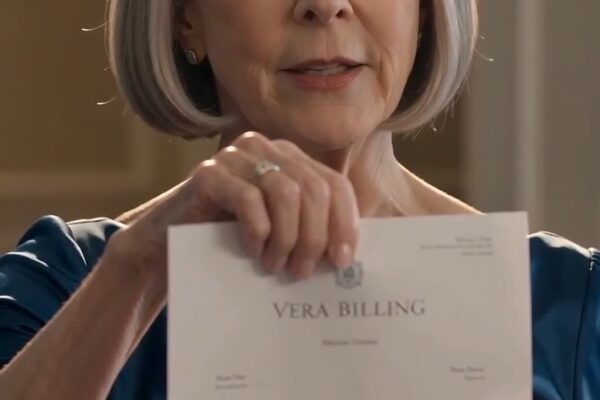
My Daughter-In-Law Shoved Me Before Christmas Dessert — But She Had Forgotten Who Her Landlord Was

Chapter 1: Before Dessert
My daughter-in-law shoved me away from the Christmas dinner table and told my son to take his mother home before dessert.
I caught the back of my chair.
It scraped across the floor under my hand.
“Take your mother home. She’s not staying here.”
Dana was still standing close enough that I could see a bit of gravy on the cuff of her sleeve.
“Not staying?”
Evan turned toward the hall.
“I’ll get your coat, Mom.”
He had watched her do it.
My son hadn’t been carrying dishes into the kitchen. He hadn’t come running after hearing the chair scrape. He had been looking right at us.
I waited for him to turn around.
He reached for my coat instead.
“Your wife just pushed me.”
“Let’s not make this worse.”
I kept my hand around the wooden chair back. My plate was still on the table, with my folded napkin beside it.
We hadn’t even had dessert.
There was no injury to examine. I hadn’t fallen. But I moved my arms a little, checking them, because somebody had just put her hands on me in a way nobody in my family ever had.
Dana watched me do it.
“This is my house. You need my permission.”
I looked past her at the Christmas tree beside the dining room window.
Its lights reflected behind Evan’s empty chair.
I had been invited.
That mattered to me, even standing there trying to decide whether to reach for my purse.
Evan had called me himself.
“Come over for Christmas, Mom.”
He hadn’t said to stop by briefly. He hadn’t asked me to deliver something and leave. When I arrived, my place was already set.
Dana had pointed to it.
“Right there, Ruth.”
I’d put my purse beside the large envelope I brought, hung up my coat, and sat where she told me.
Now my son was holding that coat as though I had asked for it.
“Put it down,” I said.
“Mom.”
“I didn’t ask you to get it.”
He lowered his arm without hanging it back up.
I was 68. Evan was 42, and Dana was 40. We were grown people standing around a Christmas dinner table, and somehow I was being treated as the person who needed to be managed.
I lived in my own home.
The house we were standing in was a rental house in Columbus, Ohio. I owned it outright, but Evan and Dana lived there.
I knew the difference.
I called before visiting. When something needed attention, we arranged a time. I didn’t come through their door because I happened to have a key.
Christmas dinner wasn’t an inspection.
I hadn’t checked a window latch or looked under a sink. I’d admired the tree and asked whether they needed help carrying anything.
Dana said they had it handled.
So I sat down.
For a while, the meal had looked ordinary enough. Evan passed a serving dish. Dana asked him about something they had discussed earlier. I waited for a pause before asking what they were planning.
“Oh, just household stuff,” Evan said.
Then he answered her question.
I cut a piece of food and listened.
When Dana mentioned an errand, I said I had been over that way recently. She continued speaking before I finished.
I stopped.
Evan didn’t seem to notice.
Later, he asked Dana whether she wanted him to bring something in from the kitchen. I said I could get it, since I was already pushing my chair back.
“Mom, sit,” he said.
Not sharply.
That almost made it harder to object.
I sat.
They talked across me again. I wasn’t expecting them to entertain me through every bite, but I had been invited to have dinner with my son.
I wanted to finish a sentence.
When Evan finally looked directly at me, he asked whether I was ready to go.
I looked at my plate.
“I’m not ready yet.”
Dana put down her fork.
“Evan has things to do.”
“So do I,” I said. “I can tell him when I’m ready.”
He rubbed the side of his face.
“Mom, please.”
I set my fork beside my plate.
“Please what?”
He looked at Dana instead of answering.
“You asked me here,” I said.
“I know.”
“Then talk to me, Evan.”
Dana pushed back her chair.
I stood too. I thought we might stop talking across the table and actually discuss what was happening.
Instead, she came around it.
Now I was standing beside that same chair, watching Evan fold my coat over his arm.
“What would make it better?” I asked him.
He didn’t answer.
Dana did.
“Leaving when you’re asked.”
I looked at my son.
“Is that what you’re asking?”
“Let’s just go.”
He shifted toward the hall.
I didn’t follow.
There was an empty place at the table now because I was no longer sitting in it. My water glass was still nearly full.
I picked it up and took a drink.
Nobody spoke while I put it down.
Dana folded her arms.
“This is my home. You need my permission to be here.”
“You invited me.”
“And now I’m asking you to leave.”
“You pushed me.”
She glanced at Evan, waiting for him to move.
He looked down the hall.
That was when I understood he wanted the evening finished without having to say anything to his wife about what she had done.
I could have walked out.
I was going to leave.
But I wasn’t going to let him button my coat around me and act as though I had simply grown tired.
“I’m not asking you to choose who owns the dining room furniture,” I said. “I’m asking you to acknowledge what happened.”
Dana made a small impatient movement with her hand.
I stepped farther from her.
Evan noticed that.
His eyes followed me, then went back to the coat.
I wanted him to hang it up. Not because I intended to stay for dessert anymore, but because he had reached for it before asking whether I was all right.
He kept holding it.
“Why are you telling me to leave instead of telling her to take her hands off me?”
Chapter 2: The Envelope Beside My Purse
“Because this needs to stop,” Evan said.
He meant the conversation.
I looked at his hand gripping my coat collar and thought about all the ordinary conversations we had avoided having.
The envelope was still beside my purse.
Dana had asked me to bring it.
Before Christmas, she had called while I was clearing my kitchen table. I moved a folded newspaper aside and reached for a pencil.
“We need the housing information,” she said.
“What information do you want written down?”
“What we’ve been talking about. The costs.”
She said they wanted to look at everything together.
That sounded reasonable.
I was a retired payroll clerk. If somebody wanted amounts written clearly instead of recalled over the telephone, I understood that.
“Bring it at Christmas,” she said.
“All right.”
“And keep everything together.”
I had a large envelope in the drawer where I kept household records. I pulled it out while she was still talking.
She sounded satisfied once I said I would bring something.
Not grateful.
Relieved that a task had been assigned and accepted.
For eight years, I had kept their rent at $650 a month. When Evan and Dana first moved in, they said the lower payment would let them save for a place of their own, and I was glad I could help without having them under my roof. I never raised the rent. After a while, our conversations stopped being about whether I could keep helping and became about whether I had remembered to keep everything the same.
I had liked helping them.
That was the truth.
When we first discussed the arrangement, Evan sat at my kitchen table with the rental agreement laid flat in front of him.
Dana checked the amount.
“That’s really what you want?”
“That’s the rent,” I said.
They were going to have their own household. I would have mine. We put the arrangement in writing because being related didn’t make it sensible to leave everything to memory.
I kept their deposit separate in my records.
I recorded the rent when it came.
If a payment arrived, I marked it received rather than assuming I would remember later.
That was how I had worked all my life.
At first, Evan would mention their savings when he called.
I didn’t ask to see an account.
It was their money.
Eventually, those conversations faded. The lower rent stayed.
“Nothing’s changing, right?” Dana would ask.
Sometimes she asked while we were discussing something entirely different. I would be telling her about an appointment, and she would bring up the house.
“We appreciate it, Mom,” Evan would add.
I wanted that to be enough.
I wasn’t trying to buy a place at their table. I didn’t expect to approve their curtains or choose their furniture.
But I had begun hearing a particular phrase from my son.
“Mom won’t mind.”
He said it when a visit was shortened.
He said it when Dana wanted to finish a conversation without me.
Once, while I was still holding a cup of coffee, he started putting things away and said, “Mom doesn’t need to stay.”
I set the cup down.
I hadn’t said that.
At my own table before Christmas, I gathered the housing information Dana had requested. I read it over, checked it against my records, and put it inside the large envelope.
I sealed the flap.
Across the front, I wrote “HOUSING.”
I didn’t decorate it or put it in a gift bag.
It wasn’t a Christmas present.
When I got ready to leave for dinner, I put it beside my purse so I wouldn’t forget it.
Then I carried it into their house.
Dana saw it when I arrived.
“I brought what you asked for,” I said.
“Just leave it there.”
She indicated the spot near my purse.
Nobody mentioned it again during dinner.
Now she was standing between me and the table, telling me permission to visit belonged to her.
I understood that tenants had a right to their home.
I also understood that she was trying to make the shove part of an ordinary request for a guest to leave.
It wasn’t.
“I’m leaving,” I told Evan. “You don’t need to keep holding my coat like that.”
He looked down at it.
Dana let out a breath.
“Good.”
I bent to pick up the envelope beside my purse.
I didn’t open it.
Its edge had slipped partly under the purse strap, and I freed it carefully rather than pulling everything onto the floor.
“Let’s talk about this house,” I said.
Evan turned back toward me.
“Mom.”
I straightened fully.
The envelope was still sealed. I held it against my chest, with “HOUSING” facing them.
Dana looked at the writing.
“We’re not doing this now.”
“We’re talking about this house.”
She pressed her lips together.
“I know this is your home while you rent it,” I said. “That doesn’t mean you can put your hands on me.”
Evan’s coat-holding arm dropped farther.
I held the envelope toward Dana.
“Dana, the house you rent is mine.”
She moved back a step.
It wasn’t much.
Just enough to put space between her sleeve and the edge of the envelope.
She turned to Evan instead of looking at me.
“Evan, tell her she’s wrong.”
He couldn’t.
He had sat at my kitchen table. He had paid rent to me for eight years. He knew exactly whose house it was.
“I own the house,” I said. “I’m still not claiming I can walk in whenever I want.”
Dana looked at the envelope again.
Whatever she had expected me to bring, she no longer seemed eager to take it from me.
Evan finally put my coat over the back of a chair.
Then he looked at the sealed flap.
“Mom, what are you going to do?”
Chapter 3: What I Was Actually Carrying
“I’m going to show Dana what she asked me to bring,” I said.
I slipped my finger under the envelope flap.
The paper tore unevenly at the corner. I flattened it with my thumb and took out the pages while Evan stayed beside the chair holding my coat.
Dana watched.
I placed the summary on the cleared edge of the table, away from the dishes.
“This is the housing information.”
She leaned forward without picking it up.
The summary showed the rent they had been paying and the deposit I held. It referred to the agreement already in place.
There was no promised renewal.
There was no notice telling them to leave.
I had brought what she requested before Christmas, when I still expected to eat dinner with them and go home normally.
Dana reached for the pages.
“This doesn’t say we’re keeping the same arrangement.”
“No.”
“That’s what I wanted to know.”
“You asked for a written summary.”
She turned a page.
Evan moved closer to read over her shoulder.
I let them.
The house belonged to me, but ownership wasn’t the part they needed explained now. They knew that already.
The part Dana had assumed was that asking for a summary would bring another year at the same rent with it.
“Where’s the renewal?” she asked.
“There isn’t a signed renewal.”
Evan looked up.
“I thought we’d talk about that.”
“We haven’t.”
Dana laid the paper down.
“So what is this supposed to mean?”
“It means what it says.”
I tapped the line showing the current rent.
“I’ve charged you $650 a month. This is a record of the arrangement, not a new promise.”
She looked toward Evan.
This time, he read the page again.
The proof was on their own dinner table, exactly where I had put it. Nobody had to take my description of it.
“You brought this here to upset us,” Dana said.
“You asked me to bring it.”
Evan said quietly, “You did ask her.”
Dana pulled her hand away from the page.
I put on my coat myself.
I wasn’t staying to argue about whether a document she requested had been an insult.
They could keep the summary.
I slid the empty envelope into my purse so the torn flap wouldn’t catch on anything.
“I’m going home,” I said.
Evan moved toward me.
“I can take you.”
“Not tonight.”
He stopped.
I left without touching the dessert plates.
At my own house, I hung up my coat and put my purse on the kitchen chair. The envelope came out with it.
I laid it flat.
Then I washed my hands.
After Christmas, I opened the file containing their rental agreement. I sat at the kitchen table with my reading glasses and read the whole thing, not just the part about the rent.
Their current term ended at the end of March.
It required at least sixty days’ written notice if I wasn’t renewing.
No renewal had been signed.
I marked the relevant places with loose slips of paper. I didn’t write angry comments in the margins.
Then I sought local legal guidance.
I explained that the tenants were my son and his wife. I described the fixed term and the notice requirement.
I also described Christmas.
I needed to know what I could lawfully do, not what sounded satisfying when I was upset.
The guidance was plain.
I could decline to renew, provided I followed the agreement and the law. They remained entitled to possession through the existing term.
I couldn’t turn a family dispute into a lockout.
I hadn’t intended to.
Still, I wrote that down with the rest.
I checked how the notice needed to identify both tenants, how delivery should be handled, and what records I should preserve.
Then I prepared it.
I read Evan’s name before Dana’s and had to stop for a moment.
My son was going to receive this as a tenant.
I set the pages down, made tea, and came back.
Nothing in the agreement changed while I was in the kitchen.
In the first week of January, I arranged legally sufficient delivery of the written nonrenewal notice to both of them.
It was well over sixty days before the end of March.
The notice didn’t demand that they disappear immediately. It said the existing rental term would end without renewal.
Until then, they could stay and continue paying $650.
I kept a copy.
I kept proof of delivery with it.
Dana called after they received it.
“This says March.”
“The end of March.”
“You’re actually doing this?”
“Yes.”
Her breathing changed over the phone. I could hear paper moving.
“We can’t find another house for what we pay you.”
“I understand.”
“No, you don’t.”
I looked at the copy beside me.
I understood the amount. I had been recording it for eight years.
Dana began describing a smaller rental they were considering. It cost $1,450 a month and required a $1,450 security deposit.
The deposit was due from them.
She said it as though that were an error somebody should correct.
“We already gave you a deposit.”
“You gave me a deposit for this house.”
“And you still have it.”
“Yes.”
I didn’t promise it early. I didn’t promise to transfer it to another landlord before their tenancy ended.
Dana went quiet.
Then she changed what she was asking for.
“If you won’t renew, you can at least pay our deposit.”
Chapter 4: Their Next Deposit
“No,” I said.
Dana didn’t answer immediately.
I moved the phone away from the edge of my paperwork so I wouldn’t keep brushing the screen with my wrist.
“No to what?” she asked.
“I’m not paying the security deposit for your next rental.”
“You’re the reason we need it.”
“The current agreement is ending. I’m following its terms.”
She began explaining the smaller place again.
I listened.
It wasn’t a house they wanted to leave mine for. There would be less room, and their monthly rent would be $1,450.
The security deposit was also $1,450.
I didn’t interrupt her description.
When she finished, I repeated my answer.
“You’ll need to pay it yourselves.”
“We can’t just take money out of nowhere.”
“I didn’t say you could.”
“Then what are we supposed to do?”
I looked at the deposit record in my file.
They had given me $650 when they moved in. I had not spent it on a Christmas dinner or put it toward their next year’s rent.
It belonged in the accounting for this tenancy.
“Your existing deposit will be handled after you leave,” I said.
“So you’re keeping that too?”
“I’m holding it until the tenancy is finished and the condition of the house can be checked.”
She made a short sound.
I waited.
“I’ll provide the required accounting,” I said. “Any amount due back to you will be returned within the required time.”
“Just give it to us now.”
“No.”
It was money I was responsible for handling properly.
Being angry didn’t change that.
Neither did being their mother.
Dana asked whether I expected them to pay rent through March while saving for the other place.
“Yes. The existing agreement continues.”
“Of course it does.”
I let that pass.
I wasn’t going to argue about the rent I had deliberately kept low for eight years as if I had surprised them with a new charge.
Before we ended the call, I asked them to communicate any arrangements concerning the tenancy in writing too.
Dana didn’t like that.
“We’re family.”
“We can still write down what we agree to.”
Afterward, I wrote a short account of the call for my records. I noted her request and my answer without describing her tone.
That took longer than I expected.
I kept wanting to add how she had spoken to me.
Instead, I recorded what mattered to the house.
No new agreement.
No extension.
No deposit advance.
I put the call note behind the notice and the delivery record.
Then I closed the file.
At lunch, I carried my plate to the table instead of eating beside the paperwork. I caught myself reaching to move the folder where I could see it.
I left it closed.
The next time Dana contacted me, she wanted to know whether I could send the deposit directly to the new place when they found one.
That was a different version of the same request.
I replied that I wasn’t financing their next rental.
The existing deposit would be accounted for after the move.
I read the message before sending it.
It sounded abrupt to me.
It was also clear.
I sent it.
Later, I took out the original agreement and checked that the notice, my copy, and the proof of delivery were together. My years doing payroll had taught me not to scatter records just because I expected to remember where things were.
I put the housing summary in the file too.
The copy I had made before Christmas was still exactly what I had prepared. No future rent had been promised on it.
I held it beside Dana’s message.
She had expected the discount to continue. She had not obtained an agreement that it would.
Those were different things.
Evan called while I was putting the file away.
He asked whether I had eaten.
“Yes.”
“What did you have?”
“Evan.”
He stopped.
I didn’t want him working his way toward the subject by asking questions he wasn’t listening to the answers to.
“Dana told me about the deposit,” he said.
“I thought she would.”
“It’s a lot at once.”
“I know.”
“The rent is higher too.”
“Yes.”
He sounded tired.
I pictured him sitting in the house, looking at rental information while the same dining room table stood nearby.
I pressed my fingers against my own table edge.
“We didn’t plan for this,” he said.
“You have until the end of March.”
“That doesn’t make moving easy.”
“I haven’t said it would.”
He began listing ordinary moving difficulties. Sorting things. Packing. Making arrangements around work. Finding somewhere that would accept their application.
I listened to all of it.
I knew moving involved more than signing a paper.
When he paused, I asked whether there was something about the notice he didn’t understand.
“No. I understand it.”
“Then what are you asking?”
He let out a breath.
“To be reasonable.”
I pulled my chair closer to the table.
“What would that mean to you?”
“Not making everything permanent because Christmas went badly.”
“The rental term is ending.”
“You could renew it.”
“I could. I’m not going to.”
He didn’t argue that I lacked the right.
He knew better.
Instead, he talked about how long they had lived there, how familiar the place was, and how neither of them had expected to be looking for somewhere else.
I watched the light on my phone dim.
I touched the screen before it went dark.
“Mom, this is our home.”
“I know.”
“Doesn’t that matter?”
“It matters enough that I’m handling this properly.”
He was quiet.
Then his voice became more careful, as if he had found the question that would make me put the file away for good.
“Would you really make us leave over one argument?”
Chapter 5: What He Watched
“Tell me what happened in that argument,” I said.
Evan exhaled into the phone.
“Mom, you know what happened.”
“I do. I want to know what you think happened.”
He said we had all become upset.
I waited.
He said dinner had gone wrong.
I waited again.
There was a faint rubbing sound, as though he had covered part of the phone with his hand.
Finally, he said, “Dana shouldn’t have pushed you.”
“No, she shouldn’t.”
“I’ve told her that.”
“You didn’t tell her while I was standing there.”
“I was trying to get everybody separated.”
“You reached for my coat.”
He didn’t answer.
I sat back in my chair. It was easier to talk without having to look at him, and I disliked that too.
I had always preferred seeing my son’s face.
“You asked me to leave,” I said.
“I offered to take you home.”
“After she told you to.”
“That isn’t how I meant it.”
“It’s what you did.”
He started to say my name, then called me Mom instead.
I could hear him searching for a version that would be less direct.
I didn’t help him find it.
“You watched her put her hands on me,” I said. “I caught the chair. Then you went for my coat.”
“Yes.”
It was the first answer he gave without explaining something else.
I put my palm flat on the table.
“Thank you for saying that.”
“I didn’t want it to get worse.”
“I asked why you weren’t telling her to take her hands off me.”
“I remember.”
“And you wanted me to stop talking.”
He didn’t deny it.
The call went quiet long enough that I looked at the screen to make sure he was still there.
He was.
I didn’t need him to describe himself as a terrible son. I needed him to stop treating what I had experienced as an unfortunate misunderstanding.
“I was embarrassed,” he said.
“So was I.”
“I know.”
“Do you?”
He answered more slowly.
“I should have asked whether you were all right.”
“Yes.”
“And told her not to touch you.”
“Yes.”
I looked toward the empty chair across from me.
The last time we had shared a table, he had been trying to get me out of the house.
I wasn’t ready to invite him over just because he could now name what he should have done.
He asked whether I wanted him to come by and apologize.
“You can apologize without coming over.”
“I’m sorry.”
I closed my eyes briefly.
Then he added, “Can we stop the moving part now?”
I opened them.
There it was.
Not hidden, exactly. He had probably thought admitting what happened was the way to solve everything.
“No,” I said.
“Then what was the point of making me go through it?”
“I asked you to tell the truth about Christmas.”
“I just did.”
“And I’m glad.”
“But it doesn’t change anything?”
“It changes this conversation. It doesn’t renew the lease.”
He made a frustrated sound.
I let him make it.
I didn’t take back the relief I had felt when he finally admitted what he watched. I also didn’t confuse that relief with a reason to sign another agreement.
He tried again later in a message.
He said he was sorry for how he handled the evening. He said moving would be expensive. He said maybe we could put the whole matter behind us.
I read it at my kitchen counter.
Then I carried the phone to the table and sat before answering.
I accepted that he was sorry.
I wrote that plainly.
I also wrote that the nonrenewal remained in effect.
Before sending, I removed a sentence about how he had made me feel. We could discuss that as mother and son. It didn’t belong in a message confirming their housing arrangements.
My answer needed to be understandable if read without the family argument attached.
The current rent stayed $650 through the end of March.
They remained entitled to live there through the term.
I would arrange any necessary access properly.
There would be no renewal.
He called after reading it.
“So you’re still our landlord.”
“I was your landlord before Christmas.”
“I didn’t mean that.”
“I know.”
He asked whether I planned to start inspecting the house.
“No surprise visits,” I said. “No changes to what we’ve agreed.”
“Dana thinks you’ll find something.”
“I’m not looking for a reason to punish you.”
He didn’t say whether he believed me.
I opened the file while we talked and checked the line about access, not because I intended to use it against them, but because I wanted my answer to match what I had signed.
“We’ll arrange the move-out inspection together,” I said.
“Not now?”
“Not unless there’s a reason we agree on.”
He sounded relieved.
I hated how much relief he seemed to expect from promises not to do things I had never threatened.
Still, I gave him clear answers.
No early demand for keys.
No increased rent during the existing term.
No taking their deposit to cover how I felt about Christmas.
That was not kindness I was granting after being persuaded.
It was how the tenancy had to be handled.
Evan went quiet again.
Then he tried a different approach.
He didn’t ask me to forget what happened. He didn’t say I had misunderstood the shove.
He asked whether a different person could make the request.
I moved the agreement away from my elbow and waited.
“What if Dana apologizes to you herself?”
Chapter 6: A Different Request
“Then I’ll listen to what she says,” I told him.
Dana called later.
She didn’t begin with the rent.
“Evan said you wanted me to call.”
“I said I would listen if you wanted to apologize.”
“All right.”
I could hear her taking a breath.
“I shouldn’t have pushed you.”
I stayed quiet.
“I was wrong to put my hands on you.”
“Yes.”
“I know it was your house.”
“That isn’t why pushing me was wrong.”
“I know.”
She didn’t argue that she could do it because she lived there. She didn’t tell me I had imagined the force or lost my balance on my own.
For that much, I was grateful.
I shifted the phone to my other ear.
“You caught the chair,” she said.
“I did.”
“I saw that.”
I looked down at my hands.
She had seen me steady myself. Evan had seen it too. I hadn’t needed to explain the chair scrape to either of them.
“Thank you for acknowledging it,” I said.
“I am sorry.”
“I hear you.”
We sat with that for a moment.
Then Dana asked whether I could give them more time.
Not another year.
Not a renewed agreement at the same rent.
An extension.
“We’re looking,” she said. “We just need room to make it work.”
“What are you asking me to change?”
“The move-out timing.”
She began explaining when they hoped to arrange the next place and how much easier it would be if they could remain after March.
I reached for paper.
“Let me write down what you’re asking.”
She repeated it.
I didn’t agree while I wrote.
That was important.
In the past, letting her finish a request had sometimes become, in her memory, accepting it.
I read it back.
“That’s what you want?”
“Yes.”
“I’ll check my plans. I’m not saying yes.”
“I understand.”
After the call, I laid her request beside the notice.
An extension sounded smaller than a renewal.
It would still mean entering another arrangement with them after I had decided not to continue.
I checked the timing against what I intended to do with the house. I wanted an ordinary rental arrangement, handled professionally, without every housing decision passing through a family conversation.
I had not promised the house to anybody else.
I wasn’t going to invent a waiting tenant to make my answer easier.
The reason could be mine.
I read the local guidance again and checked what I would need to do if I agreed to a change.
I wasn’t interested in an uncertain arrangement made during a strained phone call.
Then I put the papers aside.
I made myself finish washing the dishes before returning Dana’s call. Not to make her wait. I needed to stop reading the same request as if different wording might appear.
When I called back, she answered quickly.
“Did you check?”
“Yes.”
“And?”
“I won’t extend the term.”
She didn’t respond.
“The end of March remains the move-out date.”
“We apologized.”
“I heard your apology.”
“So it doesn’t count?”
“It counts as an apology.”
She went quiet again.
I held the phone away long enough to rub my ear.
I didn’t want to turn every sentence into a fight. I also wasn’t going to say that accepting an apology required signing something.
“I’m not asking you for another year,” she said.
“I understand what you’re asking.”
“It’s temporary.”
“I’m still declining.”
Dana tried a more practical question.
Would I cooperate with scheduling the inspection so it didn’t interfere with loading and cleaning?
“Yes.”
Could they tell me when the place was empty rather than having me come while they were carrying things out?
“Yes. We’ll arrange it together.”
Would I expect it to look untouched after eight years?
“No. I’ll document the condition normally.”
Her voice changed a little.
Not warm.
Less sharp.
I wrote down that we would schedule by agreement, with the inspection after their belongings were removed.
I told her I would confirm arrangements in writing once we had a time.
She asked about keys.
“We’ll arrange that too,” I said. “You don’t need to surrender possession before you’re ready, as long as you’re out by the end of the term.”
I could hear her moving something on her end.
“Fine.”
Before we ended, I repeated the answer so there would be no confusion between cooperation and an extension.
“We can coordinate the move. The end date isn’t changing.”
“I heard you.”
Afterward, I sent a short confirmation.
I included the inspection cooperation.
I included the refusal of the extension.
I didn’t include her apology as though it were a rental condition she had failed to satisfy.
That belonged elsewhere.
The large envelope lay in the drawer beside my unused stationery. I took it out while putting the file away.
The torn corner had curled.
I pressed it flat under my palm.
Dana had asked me to bring housing information to Christmas because she wanted certainty about the cost of staying. Now she was having to make plans around the cost of leaving.
I hadn’t supplied that cost.
Another rental did.
Her next call came while I was putting away groceries. I left the bag open on the counter and answered.
She didn’t challenge the notice.
She didn’t ask me to pretend the agreement ran longer.
Her question was about the money they would have to find themselves.
“Then how are we supposed to afford the new place?”
Chapter 7: The Smaller Rental
“I can’t make that decision for you,” I said.
Dana said she wasn’t asking for advice.
“I know.”
I put the carton I was holding into the refrigerator and closed the door.
She described the smaller rental again, this time without suggesting the deposit was my obligation.
The monthly rent was $1,450.
The security deposit was $1,450.
They would have to decide whether to take it and how to pay for it.
I listened until she finished.
“If you choose it, those payments are yours,” I said.
She ended the call soon afterward.
I stood beside the groceries for a moment before putting the rest away.
I had an urge to call Evan.
Not to offer money, I told myself. Just to see whether he was all right.
I knew how easily that could become a conversation about what I could cover.
So I let them make their arrangements.
When Evan called, he said they had secured the smaller rental.
“It’s done.”
“Your application was accepted?”
“Yes.”
I sat down.
“We paid the deposit,” he said.
“The $1,450?”
“Yes.”
He sounded as though he wanted me to understand the amount was real now, not just something Dana had reported.
“I understand.”
“And the rent is $1,450.”
“I know.”
“We’re paying it.”
I didn’t congratulate him as though making his own housing payment were an unusual accomplishment. I also didn’t dismiss how different it was from what they had been paying me.
“I’m glad you have somewhere to go,” I said.
He breathed out.
“It’s smaller.”
“I remember.”
“We’ll have to decide what we’re taking.”
“That makes sense.”
He began talking about the move in practical terms. Their things would have to be packed. The house would need cleaning once the furniture was gone.
I reached for my paper.
“Do you know when you’ll be ready for the inspection?”
He gave me their proposed timing within the end-of-March deadline.
I checked my own availability.
We settled on a mutually agreed time after their belongings would be removed.
I read the arrangement back to him.
“Yes,” he said. “That works.”
“I’ll send it in writing.”
“Okay.”
I did.
The message said I would come for the agreed inspection with their permission. It didn’t make their packing schedule mine to supervise.
Evan confirmed it.
Dana confirmed it too.
I saved both replies.
Then I took out the original deposit record.
The amount was $650.
I checked it against the agreement and the receipt in my file. I had kept those pages through every ordinary month when nothing about the arrangement seemed likely to end.
I didn’t want to discover at move-out that I had relied on a memory.
The house had been their home for eight years.
There would be signs of living in it.
I prepared a simple condition checklist and left room for notes. I planned to take photographs, document anything relevant, and give them the ordinary accounting required.
No charges for Christmas.
No vague deduction called inconvenience.
I wrote the deposit amount at the top of my working sheet and checked it again.
Then I put the pen down.
My payroll work had involved people becoming upset over money they expected to receive. Clear records didn’t prevent every argument.
They did prevent me from answering with whatever I happened to feel.
Evan called while packing.
I could hear movement behind him, but nobody else spoke.
“We’re getting there,” he said.
“Do we need to change the inspection time?”
“No. I wanted to check something.”
“All right.”
He asked whether the house needed to be empty.
“For the move-out inspection we’ve arranged, yes. You’ll be finished moving.”
“What about cleaning things?”
“Do your ordinary move-out cleaning. I’ll look at the condition.”
“Dana wants to know how you’re deciding.”
“According to the agreement and the law.”
He paused.
“I told her you weren’t going to be unfair.”
“I won’t be.”
I wasn’t sure whether he meant he trusted me or wanted me to reward him for saying it.
I answered the question itself.
When we ended the call, I put the inspection sheet in the front of the file. I checked that my phone had enough storage for photographs.
I set my reading glasses beside it.
Those were the things I could prepare.
I couldn’t make walking through that house pleasant.
The next message came from Dana.
She wanted to confirm whether the rent already paid covered their remaining time through the end of March.
I checked the account before answering.
I confirmed what had been received and what the agreement required.
I didn’t add anything about the next place.
Their new payments weren’t entries in my rent book.
Later, Evan said they had made the payments required to begin the new rental themselves.
He didn’t ask me to reimburse them.
I thanked him for confirming their moving arrangements, not for paying his own bills.
Then he asked about the old deposit.
I had expected the question.
I opened the record so I could answer with it in front of me.
Before I spoke, he added that Dana was worried I would treat the end of the family discount as a reason to keep every dollar I still held.
I looked at the line showing $650.
“Are you going to keep our old deposit, too?”
Chapter 8: The Inspection
“Not because you’re moving,” I said.
Evan stayed quiet while I explained the process again.
The deposit would be accounted for after the move and inspection. Ordinary wear wasn’t a punishment. The money wasn’t mine to keep simply because the tenancy had ended.
“I’ll do the accounting,” I said. “You’ll get what you’re owed.”
“All right.”
“Please make sure I have your forwarding address.”
He provided it.
I read it back and put it with the deposit record.
By the end of March, they had finished moving voluntarily. There was no demand shouted through a door and no argument over whether I could enter.
Evan confirmed the house was empty.
We kept the inspection time we had agreed on.
I parked outside with the folder on the passenger seat.
For a moment, I looked at the front door before reaching for it.
I had gone through that door at Christmas carrying an envelope because Dana asked for housing information.
Now I was carrying a condition checklist.
Evan opened the door.
“Come in.”
“Ready?”
“Yes.”
Dana stood inside, near the place where their furniture had been.
She nodded.
I stepped in with their permission.
The rooms looked larger without their belongings.
There were vacuum marks in the carpet and a damp patch near the kitchen sink where somebody had recently wiped the floor.
I kept my purse on my shoulder.
“Where would you like to start?” Evan asked.
“We can go through it together.”
I set the folder on the kitchen counter and took out the sheet.
Dana watched me uncap my pen.
I explained what I was doing before taking photographs.
“I’m documenting the move-out condition.”
She nodded again.
We started in the kitchen.
I opened cupboards to confirm they were empty. I looked at the appliances, the counters, and the sink.
Nothing dramatic happened.
A house occupied for eight years looked like a house occupied for eight years.
There were ordinary marks where furniture had stood. The walls weren’t freshly painted. Places that had been protected from light looked different from the surrounding surfaces.
I wrote down what I saw.
I didn’t write down that Dana had been rude on the phone.
Evan stood nearby with his hands in his pockets.
When I bent to look inside a lower cabinet, he moved as though he might help.
“I have it,” I said.
He stepped back.
In the dining room, the tree was gone.
So was the table.
I looked at the spot where my chair had scraped, then lowered my eyes to the checklist.
That was not a charge.
I didn’t turn a memory into one.
Dana asked whether something was wrong.
“No. I’m finishing this room.”
I took the ordinary photographs and moved on.
We went through the remaining rooms together. I checked that their belongings were removed and noted the condition.
There were no punitive deductions to invent.
No dramatic damage hidden behind a door.
No unpaid-rent claim appeared because I wanted the ending to cost them more.
Their consequence was already substantial enough: the discounted tenancy was over, and they were paying for another place themselves.
I wasn’t responsible for making it worse.
Back in the kitchen, I reviewed the sheet while they waited.
“I’ll complete the deposit accounting and send it to the forwarding address,” I said.
Dana looked at Evan.
He asked whether I had everything I needed.
“Yes.”
We dealt with the keys as part of surrendering possession.
I didn’t take them from a kitchen hook while they were still deciding whether to leave.
They gave them to me after the move was finished, and we confirmed they were turning the house back over.
I wrote that down.
Evan looked toward the hall.
“I think that’s it.”
“Do you want to check for anything you’ve missed?”
He and Dana looked through the empty rooms again.
I stayed in the kitchen.
I didn’t follow them as though they might steal a fixture. I checked my photographs while they made sure they hadn’t left something behind.
When they returned, Dana had her purse on her shoulder.
She asked whether the accounting would explain the deposit.
“Yes.”
“Not just a check?”
“The accounting will be included.”
She seemed satisfied with that answer.
Evan set his remaining keys down.
I picked them up and placed them in a separate pocket of my purse.
That small action was harder than inspecting the walls.
For eight years, there had always been a reason those keys belonged in a tenant’s hand.
Now their tenancy was ending in the ordinary way the notice had described.
They weren’t being escorted out.
They had another rental and had moved their belongings there.
Still, neither of them went directly to the door.
Dana looked across the empty kitchen.
“The new place really is smaller,” she said.
“I understand.”
Evan rubbed the back of his neck.
He wasn’t looking at the inspection sheet anymore.
Dana spoke about how much they were paying now, and how moving everything again would be difficult, but perhaps not impossible.
I closed my folder.
The deposit question had been answered.
The condition had been documented.
I thought we were finished.
Then she looked at me as though there might still be a different agreement available before we left the room.
“If we can pay more now, would you let us stay?”
Chapter 9: The Rent I No Longer Collected
“No,” I said.
Dana looked down at the empty counter.
“This isn’t about negotiating a new amount,” I added.
Evan nodded before she answered.
They had already moved. They had secured the smaller rental, paid its $1,450 deposit, and taken on its $1,450 monthly rent.
I wasn’t going to reverse the decision in an empty kitchen because the cost of the change had become real.
“I’ll finish the accounting,” I said.
Dana picked up her purse strap.
We left without another argument.
I took possession lawfully after their voluntary departure and surrender. There was no family member left inside waiting to see whether I would change the locks around them.
The house was empty.
At my own table, I laid out the inspection notes, photographs, rent record, and deposit record.
I checked each against the other.
The $650 deposit was due back.
I prepared the return and the required accounting without inventing a deduction for wear that belonged to ordinary living.
I read the forwarding address carefully.
Then I sent the deposit and accounting within the applicable Ohio deadline.
I kept a copy of what I sent.
That was the end of the deposit.
Not a favor.
Not a bargaining chip.
When Evan confirmed it had arrived, I replied that I was glad he had received it.
I didn’t tell him how many times I had checked the arithmetic.
Afterward, I began the work of having the house rented as an ordinary property rather than a family arrangement.
I contacted a property manager.
The conversations were practical.
I explained that the prior tenancy had ended and the house had been returned. I wanted the property managed professionally and rented at a regular rate.
I didn’t need to describe Christmas to make that decision understandable.
I gave the manager the information needed about the house.
I asked how notices, repairs, payments, and access would be handled. I read what I was given before agreeing.
I had spent years being both mother and landlord in the same phone call.
I wanted those calls separated.
The property manager would handle the ordinary rental business. I would still own the house.
That distinction suited me.
When the house was placed under management and rented at a regular rate, there was no new family discussion about whether I had remembered to keep everything the same.
There were records.
There was a responsible person handling the routine matters.
At home, my file moved from the kitchen table to its drawer.
I noticed the cleared space.
For a while, I had been eating around notices and notes. I could set a plate down without moving proof of delivery out of the way.
I put a bowl of fruit where the folder had been.
Then I moved it because I preferred that spot empty.
It was a small, ordinary choice.
I liked making it without a phone ringing.
Evan still called.
At first, our conversations were careful.
He would tell me something about the smaller rental, then stop as if waiting to see whether I would offer a solution.
I didn’t.
When he mentioned their rent payment, I listened without opening my records.
It was $1,450 now.
He was paying it to somebody else.
When he said money was tighter, I didn’t ask him to send me the bill.
I could hear him adjusting to that.
He wasn’t cheerful about the cost. I didn’t expect him to be.
But gradually, he stopped presenting every housing expense as a problem that needed an answer from me.
He told me they had paid what was due.
He mentioned making room for their things.
He said they were getting used to the smaller place.
I asked whether he was settling in.
“Yes,” he said. “It’s different.”
“I imagine it is.”
That was all.
We could have a conversation without my taking responsibility for the difference.
Dana didn’t call to discuss another rental arrangement.
I didn’t call her demanding a warmer apology.
What she had said remained what she had said. I was not ready to return to dinner at her table, and I didn’t pretend otherwise.
Evan asked once whether we were all going to get together soon.
“Not yet,” I said.
He accepted that answer without telling me I would understand.
I noticed.
One afternoon, I opened the drawer containing the large envelope.
The summary had been filed with the old tenancy records. The envelope itself was empty, its torn flap folded inside.
“HOUSING” was still written across the front.
I ran my thumb over the crease and put it beside my purse while I cleared the drawer.
Then my phone lit up.
Evan’s name was on the screen.
I answered with the envelope still in my hand.
He asked whether I was home.
“Yes.”
He didn’t begin by describing rent, the deposit, or how much the move had cost.
He sounded nervous anyway.
I waited.
He said he had been thinking about Christmas and about our calls afterward.
I sat down rather than standing beside the drawer.
He didn’t ask me to renew anything.
He didn’t ask whether I could spare money.
Instead, he asked to come to my house alone.
“Can I come over without asking you for anything?”
Chapter 10: At My Own Table
“Yes,” I said.
Evan asked when would be convenient, and we arranged the visit.
He came to my home alone.
I opened the door and found him standing on the porch with his hands empty.
“Hi, Mom.”
“Come in.”
He waited for me to step aside.
I hung up his coat and asked whether he wanted coffee. He said yes, then followed me into the kitchen instead of settling somewhere and waiting to be served.
“I can get the cups.”
“Cupboard beside the sink.”
He knew where they were.
Still, he had asked.
I put coffee on and cleared a folded towel from the table.
The large envelope was beside my purse on a nearby chair. I moved both out of the way so he could sit.
He looked at the writing but didn’t ask about it.
We spoke about ordinary things while the coffee finished.
Not very naturally at first.
He asked how I had been sleeping. I told him better now that I wasn’t leaving paperwork on the table overnight.
He nodded.
I didn’t soften it with a joke.
He carried the cups over.
I sat across from him, where I could see his face.
For a little while, he held his cup without drinking.
Then he set it down.
“I need to say this properly.”
“All right.”
He looked directly at me.
“I watched Dana shove you.”
I kept my hands around my own cup.
“You didn’t do anything that made that okay,” he said. “And when you looked at me, I went to get your coat.”
“Yes.”
“I told you to leave.”
I waited.
“I should have told her to take her hands off you. I should have asked if you were hurt.”
“You should have.”
“I know.”
He didn’t say we had all been upset.
He didn’t tell me that everybody wanted the evening to end.
He named what he had done.
“I was trying to get you out because I thought that would be easier,” he said.
“For whom?”
He looked down.
“For me.”
I rubbed a spot of moisture from the side of my cup with my thumb.
That answer hurt more than another excuse would have.
It was also the first one that explained his behavior without asking me to approve it.
“I knew you’d go,” he said.
I set my cup down.
“I did go.”
“I know.”
“You made that decision very easy for yourself.”
He nodded.
I let him sit with it.
The refrigerator started humming behind us. Evan picked up his cup, then put it back without drinking.
“I’m sorry, Mom.”
This time, nothing followed.
No question about the house.
No suggestion that an apology should change the amount of rent he paid elsewhere.
I waited long enough to be sure I wasn’t rushing to make him comfortable.
Then I said, “I accept your apology.”
His shoulders lowered.
“Thank you.”
“That doesn’t mean I’m ready for dinner with Dana.”
“I understand.”
“And the rental arrangement isn’t coming back.”
“I know.”
He didn’t sound pleased.
He sounded as though he had heard me.
That was enough for the moment.
I got up to bring a plate to the table. He stood too.
“Sit,” I said, then caught myself.
I looked at him.
“Unless you want to help.”
“I can help.”
I let him.
We carried things from the counter together. I didn’t need assistance, but I didn’t need to refuse it either.
When we sat again, he asked about the property manager.
“It’s being handled,” I said.
“The house is rented?”
“At a regular rate. The manager handles the ordinary business.”
“Good.”
He didn’t ask how much.
I was glad.
The house wasn’t something I wanted to discuss over every cup of coffee with my son. I could answer a question without reopening the old arrangement.
He said the smaller rental was working for them.
There were things they were still arranging. Their expenses were different now, and they were making decisions around those expenses.
I listened.
He didn’t ask me to cover anything.
I didn’t offer.
When he mentioned Dana, he didn’t speak for her about how soon I should visit. He simply told me she knew he had come alone.
I nodded.
I wasn’t going to give him a message to carry home.
If Dana and I were going to have another conversation about us, we would have it ourselves.
For now, my son was at my table.
He asked me a question and let me finish answering.
I noticed that too.
I told him about something ordinary I had been doing at home, and he didn’t turn toward a clock or start gathering my cup before I was done.
The conversation wandered.
It was awkward in places.
I didn’t expect a visit to make Christmas disappear.
At one point, Evan looked toward the chair beside the table.
“You kept the envelope.”
“Yes.”
“What’s in it now?”
“Nothing.”
He nodded.
The summary was filed away with the completed rental records. The notice, the delivery proof, the inspection notes, and the deposit accounting were where they belonged.
There was nothing left for me to hand him.
He reached for the coffee pot.
“More?”
“Please.”
He poured while I moved the empty plate aside.
We didn’t discuss a discount.
We didn’t make plans for a family dinner before I was ready.
I took the large envelope from the chair, smoothed its bent flap, and placed the empty envelope marked “HOUSING” beside my purse.
Then I sat down with my son.
You Might Also Enjoy


My Daughter-In-Law Pushed Me From The Microphone In My Own House — Until I Held Something Up




My Daughter-in-Law Listed My House Without Asking — Then I Called Security At Christmas Dinner