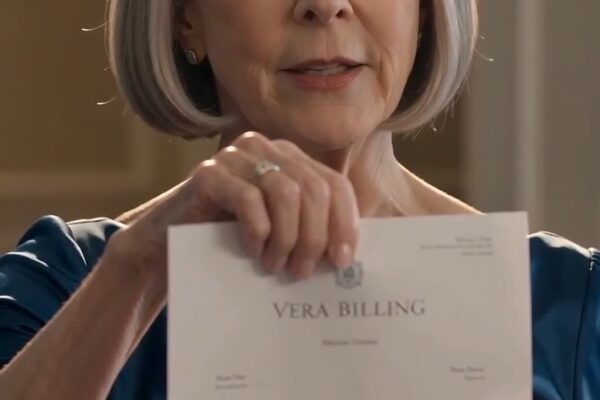
My Mother-in-Law Offered My House For Her Daughter’s Loan After I Refused — Then Her Husband Spoke

Chapter 1: Beside My Dining Table
My mother-in-law announced at my sister-in-law’s engagement party that my $1.8 million beachfront house would guarantee the loan for her new business.
“Your house will back Brooke’s business loan.”
Vivian threw her arm toward the room as she said it.
I was beside the windows, holding a folded napkin. Behind her, a guest sat with a plate balanced on her lap. Another stood near my dining table.
“My house will?”
I lifted my chin because Vivian was already looking past me, smiling at the people who had heard her announcement.
Brooke turned toward me.
“We can finally get moving,” she said.
She sounded relieved.
Not surprised.
Vivian stepped closer.
“You’re not paying anything, so stop complaining.”
I straightened.
“I told you no already.”
The napkin had a damp place where my fingers were holding it. I set it on the windowsill before I started twisting it.
Vivian glanced toward the adjoining room. Russell had gone in there when they arrived, carrying something under his arm.
Then she looked back at our guests.
“We’re talking about helping her get started.”
“With my house.”
“Don’t make it sound like that, Holly.”
There wasn’t another way to describe it.
Brooke wanted an event-rental business. Tables, chairs, equipment, deliveries. I had listened to her plans and asked practical questions because running a business was something I understood.
Offering my house was not part of those conversations.
Not on my side.
“I already said no,” I repeated.
Vivian lowered her voice, but not enough to make the conversation private.
“You said you were uncomfortable.”
“I refused.”
Brooke reached for a glass on the table, then left it there.
“Can we explain before everybody gets upset?”
“You just announced it.”
I looked toward Eric.
He was standing close enough to hear everything, his hand resting on the back of a dining chair.
“Tell your mother what I said.”
He glanced at Brooke first.
That bothered me.
“Eric.”
“She knows you had concerns.”
“No. What did I say?”
He rubbed the back of his neck.
“You said you didn’t want to do it.”
“Then tell her.”
Vivian answered before he could.
“Nobody is asking you to write a check.”
That was the argument she had used before. As though a debt could only hurt me if I handed someone cash at the dining table.
I alone owned the house.
If I agreed to make it security for Brooke’s borrowing, and the debt wasn’t paid, my home could be used to repay it.
I wasn’t going to do that.
The house could not secure her loan without my agreement. I knew that much, and I had made certain the lender knew my answer.
What I didn’t know was why Vivian still sounded so confident.
Brooke moved beside her mother.
“I’m not asking you to fund the business yourself.”
“You’re asking me to risk where I live.”
“She’s not going to fail,” Vivian said.
“You can’t promise that.”
“Neither can you.”
“That’s why I said no.”
Eric shifted the chair slightly. Its legs scraped against the floor, and he stopped moving it.
Across the room, someone put a fork down.
I wished I had cleared the plates sooner. It was a ridiculous thing to think about, but I could see a streak of sauce on the serving spoon and wanted something ordinary to do.
Instead, I stayed where I was.
Brooke looked toward the windows behind me.
“Can we not do this at my engagement party?”
“I didn’t bring it up.”
“You’re making it unpleasant,” Vivian said.
“For whom?”
“For Brooke.”
I almost apologized.
The beginning of it was in my mouth before I looked at the table I had set, the food I had arranged, and my husband waiting for me to make this easier.
I closed my mouth.
Hosting the party had been my offer. We had agreed to it before the loan request. Brooke wanted the beach behind the windows and room for everyone to sit together.
I had wanted her to enjoy that.
Even after refusing the loan, I had kept the party here because I thought those were separate decisions.
Apparently, Vivian did not.
Nathan stood beside Brooke, looking from her to me. He hadn’t joined the argument. His expression had changed, though.
He wasn’t watching an awkward family disagreement anymore.
He was trying to work something out.
“Did Holly agree to this?” he asked.
Brooke adjusted the edge of a serving tray.
“We’ve been discussing it.”
“That isn’t what he asked,” I said.
She didn’t answer.
Vivian stepped closer again.
“You have this whole house, Holly. We’re asking you to help her get established.”
“I helped with this party.”
“That’s different.”
“Yes. It is.”
I could see Russell near the doorway of the adjoining room now. He hadn’t come forward, and I couldn’t see what he was holding.
Vivian’s back was partly toward him.
She was focused on me.
Eric said my name quietly.
“Holly.”
“Please don’t ask me again.”
“I’m trying to explain.”
“Then explain why your mother thinks this is settled.”
He looked at Brooke.
Again.
I moved away from the windows enough to put my empty glass on the table. Eric shifted as if to make room beside him, but I stayed on the other side of the chair.
Brooke spoke quickly.
“It’s the value they care about.”
I looked at her.
“What value?”
“The house. What it’s worth.”
The room had become uncomfortably warm. I pushed my sleeves up, even though they were already above my wrists.
Eric took his hand off the chair.
I turned toward him.
“How did she get the value?”
He looked down at the table, then at me.
I knew that look. It was the one he wore when he thought explaining something gently might make the thing itself smaller.
“It’s not like you’d actually be spending anything,” he said.
I moved away from him.
Just a step.
Enough that he noticed.
The purchase price of my house was not a family resource. Neither was an estimate of what it might be worth now.
I had never asked him to discuss either with a lender.
Brooke stopped touching the tray.
I kept looking at my husband.
“What exactly did you give your sister?”
Chapter 2: The Number He Supplied
“I gave her the estimate,” Eric said.
He said it toward me, but Brooke looked away before he finished.
“You did what?”
“She needed something to put in the application.”
I rested my fingertips against the back of the chair. I didn’t sit down.
“For a house you don’t own.”
“I was helping my sister.”
“You could have helped her understand my answer.”
The estimate was $1.8 million.
It was also what I had paid for the house seven years ago. It wasn’t a lender’s appraisal, and Eric had no authority to offer the property behind it.
He knew where the money had come from.
He had watched me explain that before.
I had bought the house outright before we married, using savings and the proceeds from selling my commercial cleaning business. I had spent years dealing with supply orders, staffing problems, keys that didn’t work, and customers who expected an empty office to clean itself overnight. When I sold, I wanted a home I could afford without depending on someone else’s paycheck. The beachfront house in Folly Beach was the purchase I chose. My name went on it alone. Eric and I married four years ago, and I never added him as an owner. By then his family had already begun visiting. For six summers, I had opened the house to them without charging them, and I liked seeing beach bags by the door and people lingering over breakfast. What changed was how often I heard about plans after someone else had made them.
“Your mother knows how I bought this place,” I said.
“Nobody said she didn’t.”
“Then why are we discussing it like an unused account?”
Eric pressed his lips together.
Vivian moved a plate away from the edge of the table.
“Because nobody is asking you to sell it.”
“That isn’t the only way to lose a house.”
Brooke made a small, impatient motion.
“We went over this already.”
“Yes,” I said. “We did.”
Two months before the party, she had brought her business plans into this same room.
I had been interested.
At 39, I was an operations manager, and I still noticed the same things I had noticed running my own business. Where would equipment be stored? Who would handle damaged rentals? How would deliveries work when events overlapped?
Brooke, 32, had answers to some of that.
Not all.
That didn’t make her foolish. It made her someone planning a business.
Nathan, 34, listened while she talked about customers and equipment. Eric, 41, liked the idea of her working for herself.
So did I.
None of that meant I had offered security for a loan.
Three weeks before the party, Brooke asked me directly.
We were sitting at the table, and Eric was beside me.
“Would you let us use it to help qualify?”
“Use it how?”
“Just as security.”
“No.”
She looked toward Eric.
“Holly likes to understand everything first,” he said.
“I understand this.”
Vivian leaned back in her chair.
“You wouldn’t be handing over money.”
“I would be putting my home at risk.”
“Only if everything went wrong.”
That was enough for me.
I didn’t need to believe Brooke would fail. I only needed to know I wasn’t willing to make my home part of the consequences if she did.
Brooke said she would explain it better later.
“My answer won’t change,” I told her.
She sent the lender’s contact information anyway.
The message said someone there could explain why I shouldn’t worry.
I read it at my desk after work, with my lunch container still in my bag. I remember taking the container to the kitchen before answering because I wanted to be sure I wasn’t responding out of irritation.
Then I returned to my desk.
Three days before the party, I contacted the lender myself.
I identified the house and the proposal. I said I owned the property and would not participate.
Not that I needed more time.
Not that I wanted different terms.
I would not pledge my house for Brooke’s debt.
The person handling the matter explained that my direct participation would be required before my property could be considered as security.
I repeated my refusal and kept the correspondence.
I did not ask Brooke to pass it along.
At the dining table now, I looked from her to Vivian.
“I told the lender myself.”
Brooke’s head came up.
“You contacted them?”
“You gave me the contact information.”
“So they could explain.”
“And I gave them my answer.”
Vivian glanced toward the adjoining room again.
For the first time, she seemed less certain about what she was going to say next.
Eric looked at me.
“You didn’t tell me you called.”
“My answer wasn’t changing.”
He rubbed his thumb along the chair back.
I didn’t owe him a warning before confirming a refusal he had already heard.
Nathan turned toward Brooke.
“Was this supposed to be settled before tonight?”
“We were getting it organized.”
“Did Holly agree?”
Brooke didn’t answer him.
I took my glass off the table again, then put it back without drinking. I wanted to stop moving things.
“I agreed to host this party,” I said. “I did not agree to back a business loan.”
Russell came out of the adjoining room.
“Let her finish.”
“I have finished.”
He stepped beside me, holding a large sealed envelope at chest height toward Vivian.
Across the front were the words “LOAN RESPONSE.”
Russell, 67, had been quiet since arriving. Now he stood close enough that nobody could mistake where he had chosen to stand.
“Her house cannot back this loan unless she agrees.”
Vivian stepped back.
The pleased expression she had worn beside the dining table was gone.
“What did the lender say?”
Russell lowered the envelope slightly.
“We need to correct this.”
She stared at the unopened flap.
“Then why did you bring the lender’s answer?”
Chapter 3: The Envelope Facing Vivian
“Because the application is closed,” Russell said.
Vivian looked at the envelope again, as though the sealed flap contradicted him.
“You haven’t even opened it.”
“They called me.”
Brooke came closer to the table.
“When?”
“The afternoon before the party.”
He held the envelope by its edges.
“This arrived this morning. I brought it because I intended to speak to you privately.”
“Then we should speak privately now,” Vivian said.
Russell looked around the dining room.
“You announced it here.”
Nobody moved toward the kitchen or tried to turn the conversation back to the engagement. The guests nearest the table stayed where they were.
I kept my hands at my sides.
“What exactly did they tell you?” I asked.
“That this proposed secured loan wasn’t going forward. Your refusal meant your house wasn’t available.”
“Did you tell them I might change my mind?”
“No.”
He paused.
“Not on that call.”
I noticed Eric look up.
Russell set the envelope on a clear part of the table. He slid a finger under the flap, worked it loose, and took out the response.
The envelope had been sealed until then.
He hadn’t known the result by reading through it. He had known because the lender had called him as a proposed co-applicant.
Vivian reached toward the paper.
“Let him read it,” I said.
She stopped.
Russell unfolded the pages and read silently before speaking.
“It confirms what they told me. The application is closed. There is no loan secured by Holly’s house.”
Brooke pulled out a chair but didn’t sit.
“Closed as in we need to update something?”
“Closed,” he said.
I looked at the paper rather than reaching for it.
“Did anyone sign anything for me?”
“No.”
“Did anyone receive money?”
“Not from this application.”
“And there’s no claim against the house?”
“Nothing was put against it through this proposal.”
I nodded once.
I still intended to check that for myself.
But hearing it aloud mattered.
Eric let out a breath and started to say my name.
I turned toward him.
“Don’t tell me that means there was no risk.”
He closed his mouth.
Vivian folded her arms.
“Then this has gotten completely out of hand over something that never happened.”
“No,” I said. “You announced it was happening.”
“I understood we were working through the details.”
“My answer wasn’t a detail.”
Brooke sat down.
The chair she chose was the one Eric had been holding earlier. Nathan remained standing beside her.
Russell put the response flat on the table.
“I need to explain why they expected Holly to participate.”
Vivian looked directly at him.
“This is not the place.”
He didn’t answer her.
I moved closer to the table, leaving enough room between us that I could see both his hands and the letter.
“What did they expect?” I asked.
Russell looked at me.
“We told them you had agreed.”
Brooke stared down at the tablecloth.
I waited.
“Who is we?”
“Vivian. Brooke. Me.”
Eric’s hand dropped from the chair beside him.
I looked at Russell’s face because I wanted to be certain I had heard him correctly.
“When?”
“Before we asked you.”
That took me a moment.
Not after my refusal, when they might have told themselves I would reconsider.
Before they had even asked.
“You told a lender I had agreed to risk my home before you spoke to me?”
“Yes.”
Vivian cut in.
“We knew you would want to help.”
“That isn’t an agreement.”
“We weren’t trying to sign anything for you.”
“I asked Russell.”
She stopped talking, but her arms stayed folded.
Russell rubbed the edge of the opened envelope.
“We said getting your signature would be a formality.”
Nathan looked at Brooke.
“You told them that?”
She lifted her head.
“We expected to talk it through.”
“You told them she had already said yes.”
“We thought she would.”
I pulled out the chair across from her and sat down.
My knees had begun to ache from standing in the same place, and I wanted the table between us while I asked the next questions.
“Did the lender accept that as permission?”
“No,” Russell said. “They required your direct participation. They treated what we told them as unverified.”
That explained the careful language when I contacted them.
They had not treated a family assurance as my consent. Nobody had forged my signature. Nobody had obtained the loan.
But my refusal had been presented to the family as an obstacle to overcome, not an answer to respect.
Vivian uncrossed her arms.
“Russell was going to be on the application too. It wasn’t all on you.”
“As a borrower?” I asked him.
“A proposed co-applicant.”
“And which property were you offering?”
He looked down at the letter.
Brooke shifted in her chair.
Vivian answered instead.
“This was about making the application workable.”
I kept looking at Russell.
The envelope lay open beside his wrist. The words on the front faced the people who had heard Vivian announce my supposed contribution.
“Did you tell them I owned this house alone?”
“Yes,” he said.
“So you knew Eric couldn’t agree for me.”
“Yes.”
“Did you know how much I had paid?”
“Yes.”
“And you expected me to sign because everyone else had already planned around it?”
He swallowed.
“That was what we expected.”
I looked at Vivian.
She wasn’t denying it now. She was watching Russell as though his mistake had been telling us in this room.
There was a question I should have asked when Brooke first approached me.
I had been too busy explaining my own answer.
“Why didn’t you offer your own house?”
Chapter 4: Their Retirement Home
“We didn’t want our retirement home exposed to the business,” Russell said.
Vivian turned sharply toward him.
I stayed seated.
“Exposed how?”
“If Brooke couldn’t pay,” he said. “We didn’t want the house involved.”
For a moment, all I heard was someone setting a glass down behind Vivian.
She moved closer to Russell.
“That is not a fair way to put it.”
“Is it untrue?” I asked.
“Our situation is different.”
“How?”
“We’re retired.”
Vivian was 64.
She said it as though that settled which home should be protected and which one should be offered.
I looked at Russell.
“You talked about keeping your place out of it?”
“Yes.”
“Before asking me?”
“Yes.”
Brooke ran a fingertip along the seam of the tablecloth.
Nathan pulled out the chair beside her, but he didn’t sit either.
“Brooke,” he said, “did you know that?”
She nodded.
I looked down at my own hands. A small piece of paper from the envelope flap had caught near Russell’s sleeve.
He brushed it away.
That tiny motion made the conversation feel even uglier. They had discussed a risk carefully enough to keep it away from themselves, then come to my dining table and described the same risk as nothing.
Vivian drew her shoulders back.
“You’re working. Eric is working. You have options we don’t.”
“Those options don’t include offering my house without asking.”
“Nobody offered it without expecting your signature.”
“You offered my agreement before asking.”
She pressed her lips together.
Then she changed her approach.
“You have to understand why this seemed sensible. You own the place outright. We weren’t asking you to come up with a payment.”
“That doesn’t make the house available.”
“It means the situation isn’t the same.”
“It’s my home.”
I said it quietly.
She looked away first, toward Brooke.
Nathan finally sat beside his fiancée.
“What did you think was already approved?” he asked.
Brooke pushed her chair back a little.
“I knew there were steps left.”
“That isn’t what I asked.”
“I thought the financing was going to work.”
“With Holly’s house?”
“With support from the family.”
I let her finish.
Nathan looked at the opened response on the table.
“Your father just said it’s closed.”
“We could still talk to them.”
“About financing you don’t have.”
Brooke looked at me then.
I could see her working toward another request.
Before she made it, I stood and took my glass to the kitchen doorway. I needed water, not an excuse to leave them alone with what Russell had said.
Eric followed.
“Holly.”
I filled the glass at the sink.
“Did you know they were keeping their own house out?”
“I knew your house was what they were discussing.”
“That isn’t the same answer.”
He leaned against the counter, then straightened when I looked at him.
“I didn’t ask why.”
I took a drink.
He watched me set the glass down.
“I should have.”
“Yes.”
Through the doorway, I could see Vivian bending toward Brooke. She was speaking low enough that I couldn’t hear the words.
Russell hadn’t moved from the table.
The response remained in front of him.
I picked up a clean cloth and wiped a splash beside the sink. Then I stopped. I wasn’t going to spend the rest of this conversation cleaning up around them.
When I returned, Vivian stood straight.
“We don’t need to make their engagement about business.”
“You made the announcement,” I said.
“I was celebrating what we thought was family support.”
“You knew I had refused.”
“You refused the way it was explained.”
“I refused the use of my house.”
Brooke raised her hand slightly.
“Please. I’m trying to think.”
Nathan turned toward her.
“Then we need to start with what’s actually available.”
She looked at the guests and then back at the table.
It was clearly not the conversation she had expected to have during her engagement party.
I understood the embarrassment.
I was embarrassed too.
But I hadn’t told a lender she had agreed to something she hadn’t even been asked about.
Russell slid the letter back toward himself.
“I should have corrected this before you announced anything,” he told Vivian.
“You could have called me.”
“I should have.”
He didn’t try to explain that part away.
She turned to me.
“There. He should have told us. We wouldn’t have had this misunderstanding in front of everyone.”
“Knowing the result wouldn’t change my answer.”
“It would have changed the announcement.”
“You shouldn’t have made it with or without that letter.”
Vivian looked toward Eric.
He stayed near the kitchen doorway.
For once, he didn’t fill the space she had left for him.
Brooke stood up.
“I can postpone ordering things,” she said to Nathan. “That doesn’t mean I have to give up.”
“I didn’t say give up.”
“Then don’t talk like everything is gone.”
“I’m saying we need financing that exists.”
I could hear the difference between their conversation and ours now. Nathan was asking what was real. Vivian was still trying to preserve what she had announced.
Brooke came around the chair toward me.
She stopped far enough away that I didn’t have to move.
“If we explained it properly, maybe there’s a way to make you comfortable.”
“There isn’t.”
“You haven’t heard every option.”
“I don’t need to.”
She looked down at my glass, then back up.
“Holly, will you call the lender and reverse your refusal?”
Chapter 5: My Phone Beside the Sink
“No,” I said.
Brooke held my gaze for a moment, waiting for the rest of the answer.
There wasn’t more.
Vivian stepped in.
“She’s asking you to have a conversation.”
“I already had one.”
“After talking only to them.”
“About my house.”
Nathan stood beside Brooke now.
“Let it go,” he told her.
She turned toward him.
“I’m asking.”
“And she answered.”
I left my glass on the table and went into the kitchen.
This time I took my phone.
I wasn’t calling the lender to change my mind. I was contacting my own attorney to make certain every part of what I had been told was checked independently.
I opened the messages containing Brooke’s lender contact.
Then I found my refusal correspondence.
I saved it where I could find it without searching through family messages. I kept the surrounding exchange too, including why Brooke had sent me the contact information.
I didn’t edit anything down to the parts that made me look good.
The full conversation was clear enough.
At the kitchen counter, I wrote to my attorney that a family member had proposed using my solely owned house to secure business borrowing.
I had refused.
I had contacted the lender directly.
At the engagement party, the proposed co-applicant had opened a response confirming closure, but I wanted my own confirmation.
I asked for a public property-record check.
I also asked for written confirmation directly from the lender that I had no obligation and that no loan secured by my house existed.
Before sending it, I reread the message.
I removed a sentence about Vivian’s tone.
That wasn’t what my attorney needed to establish.
Then I sent it.
Eric appeared in the doorway.
“What are you doing?”
“Checking the house records.”
“Dad said there’s nothing against it.”
“I heard him.”
“You don’t believe him?”
“I’m verifying it myself.”
He looked at the phone in my hand.
I set it face down.
There was no reason to hide it, but I didn’t want him reading over my shoulder while I explained my own property to someone else again.
“This isn’t an accusation of forgery,” I said. “I’m asking for confirmation.”
“I know.”
“Do you?”
He didn’t answer immediately.
In the dining room, voices had started again. Quiet ones. The party hadn’t stopped being a party for everyone, although nobody sounded comfortable.
I went back in.
Russell had put the response into the opened envelope. He held it against his side now, not out toward Vivian.
Brooke was standing beside Nathan.
Vivian looked at my phone.
“What now?”
“I’m having my attorney check the records and get confirmation from the lender.”
Her mouth tightened.
“There’s no need to make this legal.”
“The request was about securing a loan with my home.”
“The loan is closed.”
“Then the confirmation should be straightforward.”
Russell nodded.
“That’s reasonable.”
Vivian turned toward him, but he didn’t change what he had said.
I put my phone in my pocket.
There was another thing I needed to say before everybody left believing this was only about the business application.
“My house won’t be available for further wedding events.”
Brooke stared at me.
“What?”
“This party can finish. I’m not asking people to leave. But you’ll need somewhere else for anything after tonight.”
Nathan looked down.
Brooke’s face reddened.
“We were counting on it.”
“I know.”
“You said we could.”
“And I’m withdrawing that permission.”
Vivian took a breath.
“Holly, this is her wedding.”
“It isn’t being canceled.”
“You’re taking away the place she planned around.”
“I’m taking my home out of the plans.”
Brooke put a hand on the table.
“Because I asked for help?”
“Because I refused, and you treated that as something your mother could announce over.”
She looked toward Eric.
I didn’t.
I wanted to hear what she had to say to me without giving my husband another chance to translate it into a softer problem.
“You’re punishing us,” she said.
“I’m deciding how my house will be used.”
Nathan touched the back of her chair.
“We’ll find somewhere else.”
She pulled her hand off the table.
“You don’t even know what that involves.”
“Then we’ll find out.”
Vivian looked toward the guests.
“This can be discussed later.”
“The answer won’t change later,” I said.
I wasn’t going to have that conversation again over breakfast, or while someone was leaving, or in a message full of wedding ideas.
I had said yes to hosting because I wanted to help.
After hearing what had been represented to the lender, I no longer wanted my house involved in their planning.
That was the whole explanation.
Russell spoke quietly.
“We need to accept that.”
Vivian picked up a plate that wasn’t hers, then put it down again.
I recognized the motion. I had been doing the same thing with my glass.
Eric asked if we could step into the kitchen.
I went because I wanted to speak without Brooke watching every change in his face.
He stopped beside the counter.
“Are you canceling everything because of what I told her?”
Chapter 6: What Eric Knew
“I’m canceling the use of my home,” I said.
Eric looked toward the dining room.
“Not their wedding.”
“I understand that.”
“Then don’t call it everything.”
He pulled out a kitchen chair and sat down.
I stayed beside the counter.
There were serving dishes waiting to be rinsed. A clean towel hung crookedly from the oven handle, and I straightened it while he watched.
I wanted him to answer without my mother-in-law speaking over him.
“Did you know I had refused when you said I wouldn’t actually be spending anything?”
“Yes.”
He didn’t soften it.
“You heard me tell Brooke no.”
“Yes.”
“And you still said that in front of everyone.”
He looked at the tabletop.
“I thought if we could get past how it sounded, you might hear it differently.”
“It sounded like my house securing her debt.”
“I know.”
“You made it sound like I didn’t understand.”
“I did.”
I sat down across from him.
That admission mattered, but it didn’t make the earlier moment smaller.
Eric had been beside me when I refused. At the party, when I asked him to correct his mother, he had called my answer concerns.
He hadn’t forgotten.
He had changed the wording.
“Why did you look at Brooke before answering me?”
He rubbed a spot on the table with his thumb.
“I knew she was excited about tonight.”
“So did I.”
“I didn’t want to embarrass her.”
I looked through the doorway at my dining table.
“You let your mother announce my home as security.”
“I should have stopped her.”
“Yes.”
He sat back.
“I gave Brooke the estimate when the idea first came up. Before she asked you.”
“Did you tell her to ask me?”
“I said she would need to talk to you.”
“Did you tell her you couldn’t offer it?”
“Not clearly.”
He paused.
“I should have said I had nothing to offer her that belonged to you.”
I let him finish.
There was no point helping him form a better admission. I wanted to know whether he could get there without me supplying the words.
“When you said no,” he continued, “I thought there might still be a conversation.”
“Why?”
“Because they kept talking like there was.”
I moved my chair back.
“Listen to what you just said.”
He looked up.
“My answer was in the room too.”
“I know.”
“You heard all of us. You chose theirs.”
He nodded.
The kitchen door stood open. I could hear Brooke speaking to Nathan, but not the words.
Eric glanced that way and then brought his attention back to me.
“I’m not asking you to reconsider.”
“Good.”
“I could ask the lender whether there’s an unsecured alternative. Something that doesn’t involve your house.”
“You can ask about that for Brooke.”
He leaned forward slightly.
“But not as a way to keep me in it,” I added.
“No.”
“Not my savings either.”
“No.”
I folded the towel lying beside me and put it away from the edge of the table.
His offer was practical. It was also easier than telling his mother he had been wrong.
I wanted both.
“Helping her find another option is separate from correcting what you said.”
“I understand.”
“Do you understand why the wedding plans are out?”
He hesitated.
“I don’t think you trust them here now.”
“I don’t want another family gathering used to make me responsible for something I refused.”
He nodded again.
I didn’t want a husband who nodded through a private conversation and then stood silent when his mother objected.
I had seen enough of that at the dining table.
We went back into the room together.
Brooke looked at us immediately.
“Are you changing your mind?”
“No,” I said.
Eric stood beside me.
“She isn’t canceling your wedding. The house just isn’t available for the remaining events.”
Vivian drew herself up.
“This family is going to remember how this was handled.”
Eric opened his mouth.
I waited.
He looked at me briefly, then back at his mother.
“We need to talk about what I did too.”
Vivian glanced toward the guests.
“Not now.”
He stopped.
I could see the familiar decision being made: leave the correction until later, when no one else would hear it.
I touched the back of the chair, not his arm.
He looked at me.
“We’ll talk after the party,” he said to his mother.
I didn’t argue there.
The engagement party was allowed to finish. People ate what they wanted, gathered their belongings, and spoke carefully around the subject Vivian had introduced.
I carried dishes into the kitchen.
Eric followed with more.
When we were finally alone, he set the last stack beside the sink and asked what I needed him to do.
“Not dishes,” I said.
He took his hands off the plates.
“I’ll talk to them.”
“About what?”
“About the estimate. About making it sound like your refusal wasn’t final.”
“And the house?”
“It isn’t available.”
I dried my hands even though they weren’t wet.
I wanted to hear the answer before he was standing in front of his mother again.
“Will you tell them my house is off limits, without blaming me?”
Chapter 7: The Check I Requested
“Yes,” Eric said.
He took his phone out of his pocket, then paused.
“I’ll tell them what I did. Not that you’re making me.”
“Say it that way.”
He nodded.
I left the plates where they were.
I wanted the conversation finished before the kitchen was cleaned and everything looked normal again.
Eric told his family that he had supplied the estimate without having anything of his own to offer in the proposal.
He said I had refused.
He had known that.
He also said the house was unavailable for family borrowing, and that he should never have minimized what securing the debt could mean.
I was there when he said it.
Vivian tried to interrupt.
“Eric, we all understood—”
“No,” he said. “I’m explaining my part.”
I looked down at the table while he continued.
I needed him to do that without checking whether I approved of every sentence.
Brooke asked whether he was still going to inquire about other financing.
“I can ask about an option that doesn’t involve Holly,” he said. “That doesn’t change anything about her house.”
Vivian said there was no need to repeat that.
“There is,” he answered.
I didn’t say thank you.
Not then.
He was correcting something he had helped create.
Afterward, he put his phone down and sat beside it.
“That should have happened at the party.”
“Yes.”
“I know saying it now isn’t the same.”
“No. It isn’t.”
But he had said it.
I allowed that to be true too.
When my attorney responded, I read the message at my own desk.
Not at the dining table.
I had already sent the refusal correspondence and identified the lender, the property, and the proposed application Russell had described.
The record check confirmed the house remained solely mine.
There was no recorded lien from this proposal.
The lender’s written confirmation established that I had no obligation to it and that no loan secured by my house existed.
The proposed secured application was closed.
I read those statements slowly.
Then I read them again with my hand resting on the desk instead of holding the phone.
My attorney distinguished the public-record check from the lender’s confirmation. One told me what was recorded against the property. The other confirmed the lender’s own position.
I wanted both.
I hadn’t needed a dramatic discovery.
I had needed a clear answer I could keep.
Eric knocked on the open doorway.
“Did you hear?”
“Yes.”
He waited.
I turned the screen slightly so he could read what I chose to show him.
“Nothing was recorded against the house. I have no obligation.”
He leaned close enough to read, then stepped back.
“That’s good.”
“It is.”
He didn’t add that I had worried for nothing.
I noticed.
I saved the confirmation with the refusal messages and the record-check result. Then I printed copies for my own files.
The printer caught the edge of a page.
I opened the tray, straightened the paper, and tried again.
It was such an ordinary problem that I nearly laughed.
Eric stood in the doorway until I looked up.
“Do you want me to tell them?”
“I can tell them what was confirmed.”
“Okay.”
“I don’t need another discussion about whether I should have checked.”
“You won’t get one from me.”
I carried the pages back to the desk.
There was no recorded claim to remove, no loan to undo, and no forged signature to investigate.
The lender had required the owner’s participation.
I had refused.
That process had worked.
The family conversation had failed long before anyone mailed an envelope.
When Vivian contacted me, I answered with Eric nearby.
She began by saying she was glad the matter had been cleared up.
“So am I,” I said.
“Then perhaps everybody can stop discussing it as though Brooke did something criminal.”
“I haven’t said that.”
“She’s very upset.”
“I know.”
“She was trying to start a business.”
“And I’ve confirmed my house isn’t involved.”
Vivian went quiet briefly.
Then she spoke more carefully.
“Eric told us the house is off limits.”
“It is.”
“He made that very clear.”
“Good.”
She asked whether my attorney had found anything wrong.
I told her the actual result: sole ownership, no recorded lien from the proposal, and no obligation to the lender.
I didn’t turn the confirmation into an accusation it didn’t support.
She couldn’t turn it into permission either.
“So there was never any damage to the property,” she said.
“No claim was recorded.”
“Then we can move forward.”
“Brooke can look for financing that doesn’t involve me.”
Eric shifted in his chair, but he didn’t interrupt.
Vivian began talking about how difficult it would be for Brooke to explain the postponed business plans.
I listened without offering a solution.
That was new for me.
Usually, by then, I would have been trying to find words that made everyone feel less uncomfortable.
This time I let her finish.
“She doesn’t want people thinking the business itself was the problem,” Vivian said.
“I don’t know what her other financing options will be.”
“She just needs time.”
“She can say financing isn’t in place.”
Vivian paused again.
Then her voice became almost pleasant.
“Will you let Brooke describe the financing as merely delayed?”
Chapter 8: The Plans on Brooke’s Table
“I won’t support that explanation,” I said.
Vivian answered quickly.
“It would be delayed.”
“The proposed secured application is closed.”
“She’ll find another way.”
“Then she can explain that she’s seeking another way.”
Eric sat still beside me.
I kept my eyes on the pages on my desk, although I knew what they said now.
Vivian asked whether I wanted Brooke to tell every prospective supplier about a family argument.
“No.”
“Then what do you expect her to say?”
“That financing isn’t in place and the launch is postponed.”
“That makes her sound unprepared.”
“It tells them where things stand.”
Vivian let out an impatient breath.
I didn’t fill the pause.
She had moved from trying to obtain my agreement to trying to control the explanation for not having it.
I wasn’t going to help imply that the lender was still working on the closed application.
“You don’t have to discuss me,” I said. “But don’t say I’m backing it, and don’t say this application is still moving.”
Eric nodded without speaking.
Vivian ended the conversation without agreeing.
I set my phone down.
“That was the next thing,” I said.
Eric looked at me.
“What?”
“Making my refusal disappear from the explanation.”
He folded his hands.
“I’ll correct it if they say you’re involved.”
“You shouldn’t have to correct it after.”
“I’ll tell them now.”
Brooke wanted to discuss the remaining wedding arrangements, and I agreed to talk somewhere other than my house.
When we sat down, she had her business notes with her too.
Nathan came with her.
She put the notes beside her bag.
“I’m not asking again.”
“Okay.”
“I need to know what you’re going to tell people.”
“The truth if someone asks.”
“About the lender?”
“About my house. I’m not involved in the business.”
Nathan looked at Brooke.
“That’s clear.”
She flattened a bent corner of the top page.
“I know.”
For a while, we dealt only with the wedding events that could no longer take place at my home.
I confirmed that the permission was withdrawn.
Brooke asked whether a smaller gathering would be different.
“No.”
“Even without business talk?”
“No.”
She looked down at her notes.
Nathan put his hand beside hers, not over it.
“We need to plan without the house,” he said.
She nodded, reluctantly.
There was no new argument about the engagement party. That event had happened. I wasn’t asking for payment afterward or pretending I could take it back.
The remaining plans needed another place.
That was all.
Then Brooke moved the business notes in front of her.
“I have to contact the suppliers.”
“Yes,” Nathan said.
“I don’t want them thinking I was ordering things I couldn’t pay for.”
“Then don’t leave them expecting a launch that isn’t financed.”
She glanced at me.
I didn’t offer to make the calls.
I also didn’t tell her she deserved the embarrassment.
I had run a business. I knew how much a clear conversation mattered when another person was planning around what you said.
Brooke picked up her phone.
She worked through the contacts she had already been discussing the launch with. Where she sent messages, she read them over before sending. Where she spoke directly, she used the same plain explanation.
Financing was not in place.
The launch was postponed.
She would return with a workable plan before making commitments she couldn’t support.
It was hard for her.
I could see that without changing my answer.
After one conversation, she set her phone down and rubbed the side of her face.
“They wanted a clearer schedule.”
“Then we need one we can actually meet,” Nathan said.
“I can’t give them that yet.”
“Then tell them that.”
She looked irritated, but she picked up the phone again.
I watched her do what she had wanted me to avoid by agreeing to the loan.
She had to disappoint people who had expected something.
It wasn’t pleasant.
It was manageable.
When she finished, Nathan pulled the notes toward the middle of the table.
“We need a revised budget.”
Brooke reached for a pen.
“I have one.”
“One that doesn’t include Holly’s property.”
“It wasn’t in the operating budget.”
“It was part of how you expected to finance it.”
She looked at him, then crossed something out.
I didn’t try to read over her shoulder.
Those were their plans to rebuild.
“Smaller equipment list,” she said.
“Something you can support without offering someone else’s home,” Nathan answered.
She made another note.
For the first time since the party, I saw her working with the actual problem instead of trying to change my answer.
When we finished, she gathered the pages herself.
She didn’t thank me.
I didn’t expect her to.
Eric asked about the conversation when I got home.
“She told the suppliers the financing isn’t in place.”
“That’s good.”
“It’s necessary.”
He nodded.
My phone lit up while I was putting my bag away.
Russell’s name appeared.
His message was short enough to read without opening it, but I opened it anyway.
He wasn’t asking about the business.
“May I come back to apologize without Vivian speaking for me?”
Chapter 9: The Open Flap
“You can come,” I told Russell.
He arrived with the large envelope in his hand, its flap already open.
I let him into the house.
Eric was there, but he stayed out of the first part of the conversation. Russell had asked to speak for himself, and I wanted to hear him do it.
We sat at the dining table.
He laid the envelope between us.
“This belongs with what you’re keeping.”
“It was mailed to you.”
“I know. I’d like you to have the response.”
I drew it closer, but didn’t open it immediately.
The paper edges were visible inside.
Russell kept his hands in his lap.
“I told the lender you had agreed when you hadn’t.”
“Yes.”
“I told myself we would get your agreement afterward.”
I waited.
“That doesn’t make what I said true.”
“No.”
He nodded.
“I also helped keep our own house out of the proposal. I knew why we wanted it protected.”
I looked at him.
“And you expected me to accept the risk you didn’t want.”
“Yes.”
He didn’t glance toward the doorway or mention what Vivian had wanted.
That mattered.
At the party, his correction had stopped the announcement. It hadn’t erased his part in creating the situation.
He seemed to understand that now.
“I should have told you what we’d represented,” he said. “Before the party. Before you had to stand there and hear Vivian announce it.”
“You knew the application was closed.”
“Yes.”
“And she didn’t.”
“I intended to tell her privately.”
“You waited.”
“I did.”
I ran my finger along the open envelope flap.
He had been carrying the answer while I stood beside the windows asking my husband to repeat my refusal.
I had not forgotten that delay.
“I’m glad you spoke up,” I said. “I’m still angry you were part of it.”
“I understand.”
He didn’t ask how long I would be angry.
He didn’t say we had all made mistakes.
He didn’t bring a smaller request.
I opened the envelope and looked at the response he had read aloud at the party.
The application was closed.
That fact had not changed.
What had changed was that the people involved had finally begun describing their own actions without replacing them with my supposed concerns.
“My attorney checked,” I told him. “Nothing was recorded against the house. The lender confirmed I have no obligation.”
“I’m glad you checked.”
He said it without defending himself.
I put the response back inside.
“There won’t be any more wedding events here.”
“I know.”
“And my house won’t be discussed as an option for family borrowing.”
“It won’t be discussed by me.”
I looked up.
That was an answer he could actually give.
He couldn’t promise what Vivian would say.
He could answer for himself.
Russell stood when the conversation was finished.
At the door, he turned back.
“I’m sorry, Holly.”
“Thank you for coming to say it.”
He left without asking me to call Brooke or reassure Vivian.
I carried the envelope to my desk.
For the moment, I set it beside the written confirmation from the lender.
Eric came in after I had sat down.
“How was it?”
“He apologized for what he did.”
“Without explaining Mom?”
“Yes.”
Eric nodded.
He stood beside the doorway, then asked if I wanted him to leave me alone.
“Not yet.”
He pulled a chair over.
I looked at the envelope while he settled into it.
“I don’t want to spend every family visit wondering what you’ve agreed to.”
“I don’t want that either.”
“But you helped make that happen.”
“I did.”
He rubbed his palms against his jeans.
Then he stopped and put his hands on his knees.
“I want us to start counseling.”
I looked at him.
He continued before I answered.
“Not so somebody can explain why you should forgive everybody. I need to work on what I did when you said no and they kept asking.”
I leaned back.
“I would go.”
He nodded, looking down briefly.
“And we need a different way to handle family requests,” he said.
“We do.”
“If they ask me about something you own, the answer can’t be that I’ll work on you.”
“No.”
“If it involves both of us, we discuss it privately before anybody gets an answer.”
“And if I’ve already answered?”
“I don’t turn it into maybe.”
I let that sit.
Those were good words.
I wanted to hear him use them when Vivian was disappointed, not only in my office with the door open.
“We’re keeping our finances separate,” I said.
“Yes.”
“The house stays out of borrowing.”
“Yes.”
I moved the envelope so it no longer hung over the edge of the desk.
Eric watched the movement, then looked back at me.
“I know it won’t be fixed because we’ve had this conversation.”
“Good.”
He gave a small nod.
I was willing to begin counseling with him. I wasn’t willing to pretend we had already done the work.
Before he got up, I asked the question I needed answered plainly.
“What will you say the next time your mother asks?”
Chapter 10: The Envelope at My Desk
“I won’t offer anything you own,” Eric said.
He looked at me instead of at the envelope.
“And I won’t tell her I can persuade you.”
“What if she says it’s for Brooke?”
“The answer is the same.”
“What if she calls it helping?”
“I can help with something I’m actually able to offer. Not your house. Not your money.”
I nodded.
That was where we started.
Not with a promise that his family would never ask for anything again.
Not with an apology that required me to stop mentioning what had happened.
We started with him admitting that his mother’s disappointment did not give him authority over my property.
Counseling began.
We went together.
In the waiting room, Eric sat beside me without reaching for my hand as though we needed to look reconciled before we went inside.
I was glad of that.
When it was our turn, he carried his own discomfort into the room.
He described giving Brooke the estimate. He described hearing my refusal, then minimizing it at the party because he still thought I could be persuaded.
He didn’t say his mother had made him do it.
I told him what I had noticed most clearly.
I had asked him to tell her what I said.
He had looked at Brooke first.
Eric looked down at his hands when I said that.
“I was deciding whose disappointment I wanted to avoid.”
“Yes.”
“And I let it be yours.”
I adjusted my sleeve and let him finish.
Counseling didn’t make our conversations easy right away.
Sometimes we came home tired and made dinner without discussing the appointment. Sometimes we sat at the kitchen table afterward and clarified something we had said badly.
We kept going.
Our finances remained separate.
The house stayed solely mine.
We did not add it to a family plan, mention it as possible security, or treat my ownership as an inconvenience to work around.
When family requests came to Eric, he no longer brought them to me as arrangements waiting for approval.
If the answer involved something I owned, he said he couldn’t offer it.
If something involved both of us, he waited until we had talked privately.
I paid attention to the difference.
I didn’t need him to announce it every time.
I needed the behavior to continue.
No more wedding events took place at the house.
Brooke and Nathan made their remaining arrangements elsewhere.
I wasn’t asked to reconsider a smaller gathering, a shorter visit, or an exception that would supposedly make everything easier.
Vivian disliked that.
She said the family had once felt comfortable planning things there.
Eric answered her.
“They need permission before planning around someone else’s home.”
I was in the kitchen when he said it.
He didn’t glance toward me afterward to see whether I had heard.
He kept the conversation where it belonged, between himself and the person who had asked.
Vivian had lost the thing she wanted: my house was not available to protect her property while Brooke borrowed.
There was no replacement offer from me.
She could be unhappy about that without another discussion taking place beside my dining table.
Russell stayed responsible for his own part.
When the subject came up, he didn’t describe himself as the person who had saved the party.
He had been involved in the assurances.
Then he had corrected them.
Both remained true.
Brooke pursued a smaller business plan.
Nathan kept working with her on a budget that excluded my property.
The launch stayed postponed while she sought financing she could actually obtain without my backing.
She no longer spoke as though my signature was a formality.
When she mentioned the business to me, she described what she was changing, not what she needed me to risk.
I could listen to that.
I could wish her well without becoming security for the outcome.
At my desk, I put the documents in order.
The refusal correspondence came first.
Then the lender’s direct written confirmation that I had no obligation and no loan secured by my home existed.
I placed the property-record check with it.
Nothing from the proposed loan had been recorded against the house.
Last came the response Russell had opened at the party.
I read it again before putting it away.
The paper no longer had to answer a room full of people.
It only had to remain somewhere I could find it.
Eric stopped outside the doorway.
“Do you want dinner out here or at the table?”
“At the table.”
He nodded and went back to the kitchen.
I stayed seated another moment, listening to a drawer open and close.
There was no conversation in the next room about what my house might qualify someone else to borrow.
No discussion of which family occasion could be held here without asking me.
Just Eric setting out dinner.
I slid the papers into the large envelope.
The flap wouldn’t seal again neatly, and I didn’t try to make it.
I wrote a plain description on the back so I would know what it contained.
Then I opened my desk drawer.
There was room beside the house records.
I placed it there, flat, with the lender’s confirmation and the record-check result inside.
After dinner, I opened the windows facing the beach.
Eric carried the plates into the kitchen.
I stayed by the windows for a while, then sat down in the room I had bought because I wanted to live there.
At my own desk, in my own drawer, was the large envelope.
You Might Also Enjoy


My Daughter-In-Law Pushed Me From The Microphone In My Own House — Until I Held Something Up




My Daughter-in-Law Listed My House Without Asking — Then I Called Security At Christmas Dinner