My Daughter Ordered Me Out After Her Father’s Memorial, but His Attorney Was Waiting
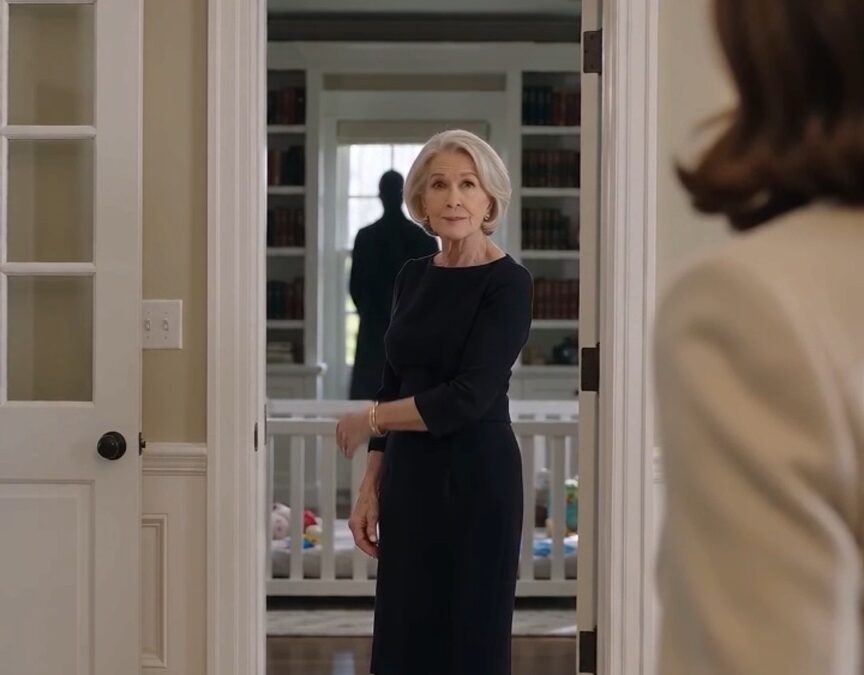
Chapter 1: The Door During Lunch
My daughter said, “Dad’s gone, so you need to leave,” while I held his urn.
I was 71, and his memorial lunch had barely started.
Fourteen guests watched her husband bring bags inside.
I had paid their mortgage through his illness.
I stood beside the nursery he painted, then turned toward the library door.
But first, I looked at the luggage.
Grant had one bag in each hand.
Celia pointed toward the stairs beside my front room.
“Take those up. We’ll work out the rooms afterward.”
“What rooms?” I asked.
She looked at me as though I’d misheard her.
“The bedrooms, Mom.”
Her children stood behind Grant in their memorial clothes.
They were looking toward the food on the table.
I had put rolls where they could reach them.
That morning, I’d wondered whether they might come.
Celia had declined when I invited her to lunch.
She said she couldn’t manage an afternoon with relatives.
I’d told her she could change her mind.
I hadn’t offered her my house.
“Why have you brought bags?” I asked.
“We need to stop putting this off.”
“Putting what off?”
“Moving in.”
Grant lowered the luggage beside the bottom stair.
He was 45, old enough to recognize an invitation.
He had not received one.
Celia was 43, and she knew that, too.
Bethany came over from the dining table.
My sister was 68 and had spent the morning helping.
She had filled glasses while I checked the oven.
She had answered the door when I needed a minute.
Now she stood between the serving dishes and my daughter.
“Celia, this wasn’t arranged.”
“This is family business.”
Bethany glanced at the urn against my blouse.
“So is the lunch.”
Peter had died on February 26, 2025, at 74.
Now it was March 8, and our house was full.
The bright afternoon made every window look freshly washed.
I had cleaned them because I couldn’t sleep.
I had made food because people needed to eat.
I had carried Peter’s plain cremation urn downstairs because I wanted him near me.
None of those preparations included luggage.
“You can stay with Bethany while we organize,” Celia said.
I shifted the urn higher against my body.
“You’re telling me to leave my home?”
“You don’t need this much house anymore.”
Behind me stood the room we called the nursery.
It had been a guest room before the grandchildren came.
Peter painted it for their visits.
There was no baby sleeping there now.
Some toys were already too young for the children.
We hadn’t hurried to change the name.
During his illness, Peter noticed a scuffed patch beneath the window.
“I could fix that in ten minutes,” he told me.
I knew it would take him longer.
I brought in a chair and spread an old sheet.
“Just that patch,” I said.
“Just that patch.”
He held the brush close to the bristles.
I steadied the little container beside his knee.
When he finished, paint had dried between his fingers.
I warmed a towel under the bathroom tap.
“Give me your hand.”
“I can wash.”
“I know. Give me your hand anyway.”
He let me work the paint from his knuckles.
His shirt cuff hung open against his wrist.
He tried fastening it with his other hand.
“Leave that,” I said. “I’ve got it.”
I buttoned the cuff after cleaning his fingers.
Peter looked past me toward the wall.
“Better.”
“Yes,” I told him. “It’s better.”
Now our daughter stood beside that room, assigning bedrooms.
“You could have asked me privately,” I said.
“You would have put it off.”
“No. I would have answered.”
Howard set his plate on the chair beside the window.
Peter’s brother was 72, with Peter’s familiar way of frowning.
“She has children, Lorraine,” he said.
I looked directly at him.
“She deserves the house.”
Bethany stared at him.
“And Lorraine deserves somewhere to live.”
“She could stay with you.”
“You haven’t asked me, either.”
I had a bedroom upstairs.
My clothing was in its closet.
My sewing things were put away in this house.
I had retired from alterations work, not from needing a home.
I wasn’t visiting here until someone found another place.
Celia touched Grant’s sleeve.
“Take the bags upstairs.”
He bent toward the handles.
“Leave them where they are,” I said.
He stopped.
Celia pointed again, this time past me.
“Mom, don’t embarrass everyone.”
Several guests were holding plates without eating.
A fork rested against the edge of someone’s dish.
I looked at the urn, then back at her.
“Your father’s death didn’t transfer this.”
“You’re confused about what he left.”
“No.”
“There’s a will.”
“I know.”
She turned toward Howard, expecting him to continue.
He rubbed his mouth with a napkin instead.
I had invited Martin to answer estate questions that afternoon.
He was 58 and had handled Peter’s planning documents.
Relatives had asked questions I didn’t want to answer incorrectly.
The library offered a desk and some privacy.
He had brought his title review and waited there separately.
He wasn’t one of the fourteen lunch guests.
I had expected him to explain ordinary estate matters.
I hadn’t expected him to hear my daughter ordering me out.
“Please,” I said. “This home belongs to me.”
Celia gave a short laugh.
“You can’t just announce that.”
I indicated the library doorway.
Martin was standing there with one hand against the frame.
Celia followed my gesture.
She recognized him and lowered her pointing hand.
She stopped directing Grant toward the stairs.
“Why is he here?” she asked.
“I invited him.”
Martin stayed where he was.
He didn’t reach for the urn or touch my arm.
He spoke directly to my daughter.
“Celia, would you like me to repeat our conversation?”
Chapter 2: What She Already Knew
Celia looked at Bethany before she answered.
My sister put down the napkins she was holding.
“We talked about several things,” Celia told Martin.
“We discussed this house specifically.”
“It was an upsetting week.”
“Yes,” he said. “It was.”
He gave her a moment before continuing.
“The ownership explanation was still clear.”
The call had happened four days earlier.
On March 4, Bethany came over to help with messages.
I was tired of repeating funeral and lunch arrangements.
She sat beside me at the dining table.
Martin called while we were sorting what needed answering.
With my permission, we used the speakerphone.
Celia joined because she had questions about Peter’s will.
I remembered a dried spot on the tabletop.
I kept rubbing it with my thumb.
Bethany finally slid a damp cloth toward me.
Martin began with the house.
He said the deed expressly created joint tenancy with right of survivorship.
I asked him to explain that in ordinary language.
“Peter’s interest passes directly to you when he dies.”
“So the house stays mine?”
“Yes. You become the sole owner.”
Celia interrupted then.
“What about Dad’s will?”
“The house passes outside his estate.”
“But the will names me.”
“It names you if Lorraine does not survive him.”
I looked up from the table when he said that.
I knew what Peter had signed.
Still, hearing my daughter skip over my name bothered me.
Martin explained the dates carefully.
Peter and I signed the survivorship deed on June 12, 2006.
It was recorded that same day.
Peter signed his will on July 19, 2013.
The later will did not cancel the deed’s survivorship arrangement.
The will left his estate to me if I survived him.
Celia was the alternate beneficiary if I did not.
She had seen that old will.
She knew her name appeared in it.
She had treated that as more than it was.
“Does Mom have to sell?” she asked during the call.
“No,” Martin said.
“Even if the house is too big?”
“That decision belongs to Lorraine.”
Bethany had heard the entire explanation.
She hadn’t come in halfway through.
She hadn’t relied on something I repeated afterward.
She sat beside the telephone until the call ended.
Now she looked at Celia across the front room.
“He told you on Tuesday.”
Celia pressed her lips together.
“I’m not discussing private telephone calls here.”
“You’ve made a public demand,” Bethany answered.
Martin looked toward me.
“May I explain the ownership to everyone present?”
“Yes.”
I wanted it explained where Celia had ordered me out.
I didn’t want fourteen people leaving with her version.
Martin moved just far enough into the room to be heard.
“Lorraine owns this house.”
Celia folded her arms.
“My father owned it, too.”
“Until his death, yes.”
“And he had a will.”
“Yes. The will doesn’t transfer this house.”
He explained the deed without lifting a page over his head.
His title review remained on the library desk.
There was no newly discovered document.
There had been no last-minute change after Peter became ill.
We had arranged the ownership nearly nineteen years earlier.
When Peter died on February 26, I became sole owner automatically.
I did not need Celia’s signature.
I did not need a probate distribution to own the house.
The will could govern property belonging to Peter’s estate.
It could not give away a house passing outside it.
Martin separated those points so nobody had to guess.
Howard picked up his plate, then put it down again.
“So Celia doesn’t get anything?” he asked.
“We’re discussing this house,” Martin replied.
I was grateful he kept it there.
I didn’t want Peter’s memorial turned into a public inventory.
Celia looked toward the library.
“Did you arrange this?”
“I invited Martin to answer estate questions.”
“You could have told me.”
“You told me you weren’t coming.”
Her coat sleeve had twisted at the wrist.
She pulled it straight while she watched me.
Martin explained why he had been waiting.
Relatives had asked me about belongings and estate administration.
I wanted an attorney available rather than guessing over lunch.
He had agreed to come with his title review.
The library gave him somewhere quiet to wait.
He had not known Celia would arrive.
Neither had I.
“You knew he’d take your side,” she said.
“He explained the deed.”
“That’s what I mean.”
“No,” I said. “It isn’t.”
Grant looked at the bags beside his shoes.
He moved one handle away from the stair rail.
Celia noticed and touched his arm.
“Wait.”
Then she turned back to me.
“All right. If it’s yours, you can choose to help.”
“I have helped.”
“I’m talking about now.”
Her voice had become less certain, but quicker.
“We could make a family arrangement.”
“I haven’t offered one.”
“You haven’t heard it.”
“You started by telling me to leave.”
She looked at the guests.
“I meant while we sorted things.”
“You told Grant to take your luggage upstairs.”
“We need somewhere to start.”
I stared at the bag nearest the stair.
Their plan had started before they reached my porch.
They hadn’t brought an overnight bag by mistake.
They had packed because they expected bedrooms.
Celia took a step closer.
“We could sell our house.”
“That’s your decision.”
“It would take pressure off everybody.”
“Everybody?”
“We wouldn’t have that mortgage.”
I had paid it for eighteen months.
She knew exactly whose pressure she meant.
“This place could be worth $740,000,” she added.
“Have you had it appraised?” Martin asked.
“No. I’m saying what I think.”
“That’s an estimate, then.”
Celia looked irritated by the distinction.
I was looking at her coat, still buttoned.
She had arrived ready to direct a move, not eat lunch.
“I’m not giving you my home,” I said.
“I’m not asking you to sign it over today.”
“What are you asking?”
She glanced toward Bethany.
“Let us stay here while you stay somewhere else.”
Chapter 3: The Bags By The Stairs
“No,” I said.
Celia looked at the urn rather than my face.
“You won’t even discuss it?”
“I’m discussing it. My answer is no.”
Grant pushed a hand through his hair.
“We’ve brought what we need for now.”
“You can take it home again.”
He looked toward Martin.
“We’re already inside. Does that make a difference?”
“To ownership?” Martin asked.
“To staying.”
“Lorraine hasn’t agreed that you may live here.”
Grant glanced down at the luggage.
“I understand, but we’ve started bringing our things.”
“Carrying bags through a door doesn’t create ownership.”
Martin kept his voice level.
“It also doesn’t create permission to move in.”
Neither Celia nor Grant had lived here as an adult resident.
They owned another home with a mortgage.
They had never paid me rent.
I had never given them a move-in date.
There was no lease, no tenancy arrangement, and no permission.
A family lunch was not an agreement to house them.
Martin explained that plainly.
He didn’t threaten an eviction or promise an instant court order.
There was no existing occupancy to undo.
The sensible next step was taking their belongings home.
Grant looked at Celia.
She was still watching me.
“You know how hard things have been.”
“I know what I’ve been paying.”
Her chin lifted.
“Are you going to announce that, too?”
I looked toward the dining table.
The food I had made was getting cold.
“I paid your mortgage while your father was ill.”
“We needed help.”
“Yes.”
“So why hold it over us now?”
“I’m answering what you said.”
The payments began in September 2023.
Each month, I sent $1,800 directly to their mortgage servicer.
I continued through February 2025.
Eighteen payments came to $32,400.
I hadn’t asked them to sign repayment papers.
Those payments were voluntary gifts.
I had made no promise to keep sending them indefinitely.
During those eighteen months, I was caring for Peter.
Some days, I called about the mortgage while his lunch cooled.
Some evenings, I checked the payment after helping him upstairs.
I didn’t announce those things to relatives.
I didn’t want a round of applause.
I wanted my daughter to stop telling me I hadn’t helped.
Martin looked toward me.
“Those gifts did not transfer any rights in your home.”
Then he addressed Celia and Grant.
“They also did not obligate Lorraine to house you.”
Howard rubbed his thumb along the rim of his plate.
He no longer looked eager to offer advice.
Bethany came closer to the stairs.
“You asked Martin whether Lorraine had to sell,” she told Celia.
“Please stop.”
“He told you no.”
“You’re making this ugly.”
“You knew the answer before you came.”
Celia turned toward her.
“You weren’t part of that conversation.”
“I was sitting beside the telephone.”
“Mom was upset.”
“Yes. I was helping her.”
My sister didn’t raise her voice.
She didn’t need to explain how long she’d known me.
She had heard the call herself.
Celia could question her manners, but not her presence.
I looked toward the children.
They were standing too still near the table.
“Bethany, will you help them get lunch?”
She immediately turned toward them.
“There are rolls over here.”
Celia opened her mouth, then closed it.
The children went with my sister.
I was glad to see them look at food again.
Grant bent for a bag.
“Celia. We should go.”
She stayed where she was.
“I’m not trying to steal anything.”
“Then stop telling me to leave.”
“I’m trying to keep the family together.”
“Your family can visit without moving in.”
“You’re making it sound terrible.”
“I’m telling you what I’m willing to do.”
Grant lifted both bags this time.
He carried them toward the front door.
Nobody touched him.
Nobody blocked him or called the police.
I stepped back so he could pass easily.
He took the luggage to their vehicle voluntarily.
Celia followed him onto the porch.
I thought she might leave without another word.
Instead, she turned back.
“We’ll talk later.”
“We can arrange a visit later.”
“Mom.”
“Not a move.”
She glanced toward Howard.
He looked down.
There was nothing else for him to offer her.
When Grant returned, he called the children from the dining room.
Bethany had wrapped rolls for them.
I didn’t object.
They hugged me carefully around the urn.
I leaned down to kiss their hair.
“You haven’t done anything wrong,” I told them.
Celia stood beside the doorway and heard.
The children went out with Grant.
She remained a moment longer.
“Are you happy now?”
“No.”
She looked past me toward the guests.
“I hope everybody enjoyed this.”
Bethany set down the plate she was holding.
“We came to remember your father.”
Celia left without answering.
I watched Grant close their vehicle.
The bags were back where they’d arrived.
They had no bedroom here.
They had acquired no title and no occupancy.
I closed the front door after they drove away.
The latch didn’t catch at first.
I pulled it shut properly and checked it.
Behind me, someone quietly asked about coffee.
That small request let people start moving again.
I carried the urn toward the library.
Martin asked whether I wanted to sit.
“In a minute.”
Howard began, “Lorraine, I only meant—”
“Not now.”
He stopped.
Bethany brought a glass of water.
I sat with Peter’s urn against my lap.
My phone lit up beside the serving dishes.
Celia had sent a message.
Her mortgage payment was coming, and she wanted to know what I intended to do.
Chapter 4: The Transfer I Stopped
I turned the phone facedown beside my plate.
For the rest of lunch, people talked about Peter.
They remembered things I hadn’t thought of that week.
I let them finish without looking at Celia’s message.
Martin returned to the library when someone had an estate question.
He answered privately when privacy was appropriate.
Nobody needed another announcement in the front room.
When the last guests left, Bethany packed the food.
I washed serving spoons at the kitchen sink.
She dried them and opened the correct drawer.
Neither of us mentioned Celia until the counters were clear.
Then Bethany asked whether I wanted company overnight.
“Yes.”
“I can take you to my place.”
“I want to stay here.”
She nodded immediately.
“Then I’ll stay here.”
I had to sit down after that.
Not because I couldn’t manage the house.
Because my sister had asked instead of deciding.
She brought her things into the guest room.
The nursery door remained open.
We drank tea at the dining table.
I picked up the phone at last.
Celia’s message had the payment date in it.
The next scheduled transfer was March 12, 2025.
Until that afternoon, she had expected it to arrive.
I had helped make the payments predictable.
That didn’t make them permanent.
On March 11, I went to Martin’s office.
I brought information about the transfers and household expenses.
I also brought the estate questions I kept forgetting.
He let me take them one at a time.
“The house isn’t waiting for probate?” I asked.
“No. You own it by survivorship.”
“And I don’t need her approval to stay?”
“No.”
I knew the answers already.
I wanted to hear them without fourteen people watching.
Then I explained the mortgage payments again.
Martin asked whether I had signed a continuing agreement.
“No.”
“Made a promise to pay through a certain date?”
“No.”
“Borrowed jointly with them?”
“No. It’s their house and their mortgage.”
He nodded.
“Then future gifts remain your choice.”
I opened the folder I had brought.
The amount looked different written eighteen times.
Thirty-two thousand four hundred dollars.
That had been money I chose to give.
I wasn’t pretending otherwise.
I wasn’t asking Martin to turn it into a loan.
“I don’t want them to pay the old gifts back.”
“Then don’t demand repayment.”
“I want to stop.”
“You may.”
He didn’t tell me to teach Celia a lesson.
He didn’t suggest a threatening letter.
He asked whether I wanted help making the notice clear.
I said yes.
Before that, I needed to stop the next transfer.
I checked the arrangement carefully.
Then I canceled future voluntary mortgage transfers before March 12.
I saved the confirmation with my financial information.
I didn’t touch Celia’s account.
I didn’t interfere with her loan or contact her lender about her conduct.
I stopped gifts from my own funds.
That was all I needed to do.
I sent her clear notice that morning.
There would be no further mortgage transfers.
She and Grant needed to arrange their own payments.
The message didn’t accuse her of anything.
It didn’t mention the value she’d assigned my house.
It didn’t demand an apology before money would resume.
The payments were ending.
I wasn’t offering a bargain.
She called while I was putting on my coat.
Martin indicated that I could stay seated.
I answered.
“You can’t leave us hanging.”
“You need to arrange your payment.”
“We’ve planned around your help.”
“I didn’t promise to keep paying.”
“You know we can’t fix everything overnight.”
“I’m telling you before the next scheduled transfer.”
“That’s not enough.”
I looked down at my sleeve.
A thread had worked loose near the cuff.
I tucked it beneath the fabric with my thumbnail.
“I’m not sending another payment.”
“Dad wouldn’t have done this.”
I stopped touching the thread.
“Your father isn’t here to discuss it.”
“That’s convenient for you.”
Martin looked up, checking whether I wanted him to intervene.
I shook my head.
“I’m not discussing him that way.”
“You’re punishing us for coming to lunch.”
“I’m ending voluntary gifts.”
“Because you’re angry.”
“I am angry. The payments are still ending.”
For once, I didn’t try to make my feelings sound smaller.
I could be angry and still make a practical decision.
Celia was quiet for a few seconds.
Then she changed subjects.
“What about what Dad left me?”
“The estate will be handled under his will.”
“So you’re saying I get nothing.”
“I’m saying Martin handles the legal questions.”
“What about his things?”
“We can discuss keepsakes.”
“I shouldn’t need permission to remember my father.”
“You need permission to come into my home.”
I heard her breathing through the phone.
Then she asked whether I’d changed the locks.
“No.”
“Then stop treating me like a stranger.”
“I’m telling you how visits will work.”
She ended the call.
I remained in the chair with my coat on.
Martin waited until I looked up.
“Do I have to decide about every object now?”
“No.”
I took a tissue from the box beside me.
That answer let me breathe more easily than any speech.
At home, I put the transfer confirmation away.
Then I went to open the nursery curtains.
The uneven hem brushed the windowsill.
I had one hand on the fabric when my phone sounded.
Celia wanted access to Peter’s rooms.
Chapter 5: The Rooms Left Closed
Celia wanted to come over and look through Peter’s belongings.
She described it as something daughters naturally did.
I read the message twice in the nursery doorway.
Then I looked toward the stairs.
I could still picture the bags beside them.
“We’ll arrange a time after I sort things,” I wrote.
Her answer came quickly.
“They’re Dad’s things, too.”
I set the phone facedown on the dresser.
Peter’s sweaters were folded in the bedroom.
His comb was still beside the bathroom sink.
There were things I wanted Celia to have.
I wasn’t ready to let her open every drawer.
I called Martin before offering anything uncertain.
He reminded me that not every object belonged to Peter alone.
Some things were mine.
Some had belonged to us together.
Anything belonging to his estate needed appropriate handling.
I didn’t have to empty rooms because Celia demanded access.
Bethany came over to help me make an inventory.
We used the dining table, where there was room to work.
We wrote down the belongings in the spaces Celia had mentioned.
We didn’t assign prices to every ordinary object.
We didn’t invent an inheritance for her.
We identified things and left uncertain items alone.
I set aside only keepsakes I was comfortable offering.
Where Martin’s guidance was needed, we waited for it.
The work took longer than I expected.
I opened a drawer and found Peter’s shirts.
For years, I had fixed other people’s cuffs and hems.
I could measure fabric without thinking.
That morning, I couldn’t unfold one shirt immediately.
Bethany sat down and waited.
She didn’t tell me it was only clothing.
When I was ready, we continued.
We stopped for lunch with two drawers still untouched.
I closed the bedroom door.
Nothing required finishing that afternoon.
Howard called while Bethany was clearing our plates.
“May I come over?”
I considered saying no.
Then I told him he could come for a short visit.
He arrived holding his hat.
“I’d like to talk about Saturday.”
I let him into the front room.
The chair he liked remained beside the window.
He looked at it, then sat elsewhere.
“I didn’t mean for you to be put out.”
“You said Celia deserved the house.”
“Because of the children.”
“I remember.”
He rubbed the edge of his hat.
“I was thinking they could use the room.”
“Where were you thinking I would sleep?”
He looked toward Bethany.
She stayed seated.
“I assumed something had been arranged,” he said.
“Martin explained that nothing had.”
“I heard him.”
“Then why did you say it?”
He turned the hat over in his lap.
For a while, he didn’t answer.
I didn’t supply an easier explanation.
Finally, he looked at me.
“I thought you might need persuading.”
I folded the cloth I had been holding.
“You thought the lunch was a good place?”
“No. Not now.”
“I was holding Peter’s urn.”
“I know.”
“You should have asked whether I needed something.”
His eyes went toward the nursery.
I told him about Peter touching up the painted wall.
I kept it to that afternoon.
The chair, the old sheet, the small container of paint.
Peter trying to finish a patch beneath the curtain.
Then the warm towel around his fingers.
His open cuff waiting for me to button it.
Howard listened without interrupting.
“He told me he was fixing that room,” he said.
“He was.”
“I thought he might be doing too much.”
“He wanted that patch finished.”
Howard pressed his mouth together.
I didn’t ask him to compare who had done more.
I wanted him to understand where he had been standing.
He came to Peter’s memorial and helped order Peter’s wife out.
After a while, he looked up.
“I shouldn’t have said it.”
“No.”
“I’m sorry, Lorraine.”
“Thank you.”
He nodded, but I wasn’t finished.
“You need to tell Celia you were wrong.”
“I will.”
“Without telling her I’m being stubborn.”
“I won’t.”
Bethany got up to make tea.
Howard asked whether he could do anything useful.
I looked through the front window.
“The porch needs sweeping.”
He found the broom and swept it.
I didn’t stand over him.
When he finished, we drank tea without discussing property.
He left at the time I had asked.
Later, Bethany and I returned to the inventory.
We kept the offered items together.
Nothing was given away by assumption.
Nothing uncertain went into a bag.
I wanted Celia to receive agreed keepsakes, not another argument.
After checking the arrangements with Martin, I offered an appointment.
April 9, 2025.
Bethany would be present because I wanted company.
The visit would be in the front room.
It would not include entering bedrooms or discussing occupancy.
I put those details in writing.
Celia replied that she didn’t need an audience.
I looked at Bethany across the table.
She said, “You don’t have to defend having me here.”
I wrote back that Bethany would remain.
Celia could accept the appointment or choose another agreed day.
For several minutes, there was no reply.
Then the phone sounded against the table.
“I’m coming alone.”
Chapter 6: The Appointment She Kept
On April 9, Celia knocked.
She didn’t open the door herself.
That was the first thing I noticed.
The second was that she had no luggage.
“Come in,” I said.
She stepped inside and looked toward the stairs.
“The things are in here.”
I led her into the front room.
Bethany was sitting near the window.
She greeted Celia without getting up to block anything.
I had asked her to remain within hearing.
I didn’t need her to speak for me.
I wanted another person present if our agreement was disputed.
The keepsakes were together on the table.
I hadn’t spread Peter’s entire life across the furniture.
We reviewed only the items already discussed.
Celia took off her coat before sitting.
For a few minutes, she handled things without speaking.
I let her look.
When she asked a question, I answered it.
When ownership or estate handling mattered, we followed Martin’s guidance.
Nothing uncertain was offered merely to finish the visit.
Then Celia looked toward the library.
“Did you know he would come out like that?”
“Martin?”
“Yes.”
“I knew he was there to answer questions.”
“That isn’t what I mean.”
“I didn’t know you were bringing bags.”
She set down what she was holding.
Bethany folded an empty cloth on her lap.
Celia pulled out a chair.
“Can I sit?”
“Yes.”
She sat facing the table.
I took the chair opposite her.
“I thought you might listen once we were here.”
“You told me to leave.”
“I know what I said.”
“What did you intend to happen?”
She rubbed the edge of her sleeve.
For the first time, she explained without calling it confusion.
They intended to occupy my house while preparing theirs for sale.
They wouldn’t have to live among the work involved.
The children would have more room here.
Grant could use the library.
She thought I could stay with Bethany temporarily.
I looked toward my library doorway.
“You’d decided Grant would work in there?”
“It made sense.”
“Did you ask whether I used it?”
“You don’t spend much time there.”
“That wasn’t my question.”
She looked down.
“No.”
I had sorted bills at that desk with Peter.
I had sat there while he looked for misplaced envelopes.
I didn’t have to give Celia a list of uses.
It was a room in my home.
“You weren’t asking for a visit,” I said.
“No.”
“You intended to stay.”
“Yes.”
“And sell your own house while you lived here.”
“That was the plan.”
“Had you asked whether Bethany wanted me living with her?”
Celia glanced at my sister.
“No.”
Bethany kept her hands folded.
“No one had asked me anything,” she said.
Celia looked back at the table.
“I thought it would be temporary.”
“How temporary?”
“I hadn’t worked that out.”
I sat back in my chair.
She had worked out the library.
She had worked out bringing bags.
She had not worked out when I could come home.
“Why did you think I would agree?”
“Because you help us.”
Her answer came immediately.
Then she seemed to hear it herself.
I placed both hands flat on the table.
“I did help you.”
“I know.”
“That wasn’t permission to take over.”
“I’m not asking now.”
“I need that understood.”
“I understand what you’re saying.”
I didn’t ask her to produce a better apology on command.
We returned to the keepsakes.
She accepted the things we had agreed she could receive.
She didn’t enter the bedrooms.
She didn’t ask to look upstairs while Bethany made tea.
When something made her cry, I passed the tissues.
I missed Peter, too.
I could sit with her grief without changing the arrangements.
After a while, she looked toward the nursery.
“Dad liked making that room.”
“Yes.”
“He told the kids about painting it.”
“He got paint all over his fingers.”
She gave a small, familiar smile.
“He usually did.”
I told her about cleaning his hands that afternoon.
I described the warm towel and the loose cuff.
She listened without checking her phone.
“Was he having a bad day?”
“He was having a tired day.”
“Were you frightened?”
“Yes.”
She twisted the tissue between her fingers.
“I didn’t know how much you were doing.”
“You didn’t ask very often.”
She nodded.
She didn’t tell me she had been busy.
She didn’t mention her own mortgage.
For that part of the conversation, I was grateful.
When she was ready to leave, we checked the agreed items.
Bethany helped make sure nothing had been overlooked.
Celia carried only those keepsakes to her vehicle.
She acquired no room, no key, and no interest in the house.
I stayed near the doorway while she packed them safely.
Then she came back to say goodbye.
“I won’t bring Grant without asking.”
“Thank you.”
“Or the children.”
I paused before answering.
“The children may visit when we arrange it.”
Her shoulders lowered.
She looked past me toward the nursery door.
“They miss coming here.”
“I miss seeing them.”
She pressed her lips together and glanced outside.
Then she looked directly at me.
“Could they come back sometime?”
Chapter 7: An Invitation With Conditions
I didn’t choose a date while Celia stood there.
“I’ll call you,” I said.
She nodded and went to her vehicle.
I watched until she drove away.
Bethany came beside me at the door.
“You don’t have to decide today.”
“I know.”
Inside, the table was nearly clear.
Celia had taken keepsakes, not possession.
She had knocked and sat where I invited her.
She had left when the appointment was finished.
I wished those things hadn’t become something to notice.
Bethany carried our cups into the kitchen.
I put the remaining belongings where I wanted them.
Then I went into the nursery.
The toy basket needed sorting.
Some things were too young for the grandchildren now.
I removed one and folded the bedding.
Halfway across the room, I stopped.
Preparing for children didn’t require agreeing to their parents’ plan.
I could invite them for lunch.
I could say no to an overnight stay.
I sat on the edge of the bed and called Celia.
She answered cautiously.
“Is something missing?”
“No. I’m calling about the children.”
“All right.”
“I’d like them to visit.”
“They’d like that.”
“I’m inviting you for an afternoon.”
“I understand.”
“Not an overnight.”
“Yes.”
I looked at the clear space beside the door.
“Grant may come if you all understand the same arrangements.”
“We do.”
“No luggage.”
She was quiet.
I waited rather than making the sentence sound like a joke.
“All right,” she said.
There was no special legal meaning to a suitcase.
I knew that.
I simply didn’t want another one beside my stairs.
“I don’t want a repeat of the memorial lunch.”
“There won’t be.”
“Before we arrange it, I need one more thing clear.”
“What?”
“I’m not restarting the mortgage payments.”
“I know.”
“You need to plan without them.”
“We are.”
I waited for her to continue.
She said she and Grant had reviewed their spending.
They were responsible for their own mortgage.
They were making arrangements without another payment from me.
I didn’t ask to examine every household expense.
I wasn’t taking charge of their budget.
They had to decide how to manage their house.
Selling it, keeping it, and paying for it were their decisions.
My address wasn’t part of the calculation.
“And this house?” I asked.
“What about it?”
“I need you to tell me you understand.”
She took a breath I could hear.
“Martin told me before the lunch.”
I closed my eyes.
Bethany had already confirmed it.
Martin had asked to repeat their conversation publicly.
Still, I needed my daughter to say it herself.
“Yes,” I answered.
“I knew what he said.”
“And?”
“I wanted you to agree anyway.”
“You could have asked.”
“You would have said no.”
I looked down at my hand on the bedspread.
“That was an answer you had to allow.”
She didn’t respond immediately.
I smoothed the fabric beneath my fingers.
Then she said, “I shouldn’t have told you to leave.”
“No.”
“I shouldn’t have brought the bags.”
“No.”
“I’m sorry.”
I didn’t tell her everything was fine.
It wasn’t fine in March.
It hadn’t become fine because she wanted a visit.
But she was saying what had happened without blaming my confusion.
“Thank you for saying that.”
We chose May 10, 2025.
She asked what time to arrive.
I told her when lunch would be ready.
She asked what she could bring.
I suggested something simple the children would enjoy.
She didn’t assign a room or announce how long she’d stay.
That made it easier to finish the call.
Afterward, I called Bethany.
“Do you want me there?” she asked.
“I’d like that.”
“As a witness?”
“As my sister.”
“I can manage that.”
I laughed for the first time that afternoon.
Howard called later that week.
He asked how I was managing before asking anything else.
Then he told me he had spoken to Celia.
“I said I was wrong about the house.”
“Thank you.”
“I shouldn’t have helped put you on the spot.”
“No.”
He accepted the answer without correcting it.
Then he asked about the porch.
I told him it needed sweeping again.
He came at an agreed time and found the broom.
We had coffee after he finished.
We talked about Peter without discussing who deserved what.
When he left, he asked before taking leftover food.
I gave him enough for supper.
The house remained busy in smaller ways.
Bethany came for tea.
Howard swept the porch.
I sat in the library when I wanted quiet.
Nobody needed to move me elsewhere to use a room.
As May approached, I cleaned the nursery window.
I left Peter’s curtain hanging unevenly.
I folded the bedding but put out no overnight things.
There would be lunch and an afternoon together.
That was the invitation.
On May 10, Bethany arrived before the others.
We set out plates and counted chairs.
Peter’s urn stood on its shelf beside the nursery.
I touched it once while passing.
Then someone knocked at the front door.
Through the glass, I could see Celia and her family.
I checked the clear space beside the stairs.
Then I opened my door.
Chapter 8: The Visit We Arranged
Celia stood on the porch holding food for lunch.
Grant stood beside the children.
There were no bags behind them.
“Come in,” I said.
The children hugged me before stepping inside.
I kissed their hair and looked at their faces.
They had been too careful around us in March.
That afternoon, one started talking before the hug was finished.
I was glad to hear it.
Grant held up the food container.
“Where would you like this?”
“In the dining room, please.”
He carried it where I asked.
He didn’t turn toward the stairs.
I noticed, then let myself look elsewhere.
Bethany came out from the kitchen.
She greeted everybody as though we were beginning lunch.
We were.
The children looked toward the nursery.
“May we go in?”
“Yes. Leave the door open.”
They went to the toy basket.
Celia watched them from the hall.
Then she turned back to me.
“What needs doing?”
I handed her the serving spoons.
“Those can go beside the dishes.”
She put them there.
She didn’t move the dishes to another table.
Grant asked before opening the back door.
I told him he could open it for a little air.
It was May in Lancaster.
The house was bright, and lunch didn’t need organizing around winter coats.
Bethany filled glasses while I checked the food.
I had chosen things that didn’t keep me standing all afternoon.
At 71, I could plan lunch around what suited me.
Nobody complained that I hadn’t made more.
When we sat down, the children wanted to tell us things.
Bethany listened with her fork resting beside her plate.
Celia reminded them to let someone else speak.
I told her they were doing fine.
For a while, we ate without mentioning March.
I didn’t feel obliged to bring it up.
I also didn’t pretend it hadn’t happened.
The clear space beside the stairs was visible from my chair.
One child mentioned the nursery curtain.
“Grandpa hung it wrong.”
Celia glanced at me.
I smiled before she could worry about the answer.
“He was very pleased with that curtain.”
“It isn’t straight.”
“No,” I said. “It isn’t.”
Grant looked toward the doorway.
“He wanted to finish it himself.”
“Yes.”
We sat quietly for a moment.
Then the children started describing the toys they’d found.
Nobody used Peter’s name to request anything.
Nobody followed a memory with a question about property.
I finished my lunch while it was still warm.
Afterward, Grant gathered plates.
“Kitchen?”
“Yes, please.”
He carried them to the sink.
Bethany brought the glasses.
Celia stayed at the table to help the children finish.
The work happened without someone deciding I couldn’t manage.
When I began rinsing dishes, Celia came beside me.
She picked up a clean towel.
“May I dry?”
“Yes.”
We worked for a little while without talking.
Then she looked toward the dining room.
“We’ve made our arrangements.”
“For what?”
“The mortgage.”
I set a rinsed plate beside her.
“We’re handling it.”
“I’m glad.”
She dried the plate slowly.
“We know it’s ours.”
“Yes.”
I didn’t ask how much was in their account.
I didn’t offer to cover a shortfall.
The canceled transfers stayed canceled.
She didn’t ask whether an apology would change that.
Instead, she opened a cupboard and paused.
“Does this go here?”
“Yes.”
She slid the plate into place.
I noticed that small question.
In March, she had pointed her husband toward my bedrooms.
Now she was checking where I wanted a plate.
When the dishes were done, I dried my hands.
“I’m going to sit.”
Celia nodded.
“I’ll bring your glass.”
I took the chair I wanted in the front room.
The children carried in a toy with something missing.
They asked me to help look.
I leaned enough to check beneath the chair.
Then I rubbed my knee and sat back.
“Grant, would you move that a little?”
He did.
We found the missing piece under one leg.
The children thanked him and went back to the nursery.
I stayed where I was.
Nobody told me I ought to move to a smaller house.
Nobody said a sore knee meant giving up my home.
I could ask someone to shift a chair.
That didn’t require surrendering every other decision.
Bethany sat nearby with her tea.
We talked about ordinary things while the children played.
Celia checked the time.
“Do you want us to start getting ready?”
“In a little while.”
“All right.”
She took my answer without discussing it with Grant first.
When the afternoon grew quieter, she gathered the food container.
The children checked the nursery for anything they had brought.
They put my toys back in the basket.
I heard Celia remind them that things from my house stayed here.
She didn’t ask them to leave anything for another visit.
At the front door, Grant thanked me for lunch.
The children asked when they could come again.
“We’ll arrange it with your mother,” I said.
Celia nodded.
“We’ll call first.”
Then she stepped closer while Grant took the children outside.
“Mom,” she said, “can I say something before we go?”
Chapter 9: Back On Its Shelf
I stayed beside the open door.
Outside, Grant was helping the children into their vehicle.
Celia looked at the place where the luggage had stood.
“I’m sorry about the memorial lunch.”
“I heard you.”
“I know. I wanted to say it here.”
She looked down at her empty hands.
“I shouldn’t have made you answer me in front of everybody.”
“No.”
“Especially that day.”
I let her finish.
She didn’t say she had been upset about Peter.
I knew she had been.
So had I.
She didn’t say Howard had encouraged her.
He had spoken, but she had arrived with the bags.
She didn’t blame the old will.
She had already acknowledged the telephone explanation.
“I thought if I got here with everyone, you’d go along.”
“I know.”
“I’m not doing that again.”
I looked toward the stairs.
The space beside them was clear.
“I’m glad you came as guests today.”
She nodded.
Then she hugged me carefully.
I put my arms around her.
For that moment, there was no urn between us.
There was no bag handle beneath her hand.
When she stepped back, she asked about another visit.
“Can I call next week?”
“Yes.”
“To see when you’re free.”
“That’s fine.”
She went down the steps to her family.
I stayed on the porch until everyone was settled.
Celia waved through the window.
I waved back.
They drove away with the things they had brought.
No belongings remained as a reason to return unannounced.
No bedroom had been assigned to them.
No payment arrangement had been restarted.
I closed the door and checked the latch.
This time, it caught properly.
Bethany was gathering the last cups from the front room.
“You can leave those.”
“I’m nearly done.”
I let her carry them to the kitchen.
There was still help I wanted.
I didn’t have to refuse a clean cup or company.
I simply wanted to be asked.
I sat while Bethany rinsed the cups.
From my chair, I could see the nursery doorway.
The bedspread was wrinkled where the children had sat.
A corner of the curtain rested against the sill.
Nothing needed fixing immediately.
Bethany came back with her bag.
“How are you feeling?”
“Tired.”
“Do you want me to stay?”
“Not tonight.”
“All right.”
She didn’t ask whether I was sure three times.
She kissed my cheek and went to the door.
I thanked her for coming.
She said she’d call the next day.
After she left, I walked through the house.
I checked the back door.
I put a serving spoon in the proper drawer.
Grant had dried it and left it where I could see it.
I turned off the kitchen light.
The bright rooms grew softer as the afternoon passed.
I hadn’t paid attention to the house that way in March.
Then, every task seemed to require another decision.
Now I could move a plate without preparing an explanation.
I went into the library.
The desk was clear except for the things I kept there.
Martin’s title review wasn’t waiting for another confrontation.
The ownership had been settled by the deed years before.
I had put my important information where I could find it.
There was no need to keep it on display.
I straightened the chair and left the room.
Upstairs, my bedroom was just as I had left it.
My clothing remained in the closet.
Peter’s belongings were being handled at a pace I could manage.
I didn’t open a drawer simply to prove I could.
I closed the bedroom door and went downstairs again.
The nursery needed only a few minutes.
I returned one toy to the basket.
I folded the edge of the bedspread beneath itself.
The children had asked permission to enter.
They had played, tidied up, and gone home.
That was what Peter prepared the room for.
Not an uninvited move.
Not a place I would be allowed to visit.
I smoothed the bedspread with my palm.
The crooked curtain was within reach.
I lifted one corner, considering it.
As a seamstress, I could have corrected it quickly.
I had spent years making uneven things line up.
That evening, I left it where Peter had hung it.
I could change it another day if I wanted.
I went to the shelf beside the nursery.
A little dust had gathered beneath the plain cremation urn.
I brought a cloth from the kitchen.
Then I lifted the urn against my blouse.
For a moment, I stood where Celia had ordered me out.
There were no guests holding uneaten plates.
No one was pointing toward the stairs.
The front door was closed.
My own bedroom waited upstairs.
I wiped the shelf carefully with my free hand.
Then I folded the cloth and set it aside.
I held Peter’s urn a little longer.
I thought of the warm towel around his fingers.
His shirt cuff waiting while he looked at the painted wall.
I could still see the small patch he had finished.
The window above it was clean.
The grandchildren had enjoyed the room that afternoon.
I was staying to put it straight afterward.
When I was ready, I returned Peter’s urn to its shelf beside the nursery.








