My Father Ordered Me To Pack While My Stomach Still Hurt — Then I Packed His Coat Instead
Chapter 1: The Carton Against My Stitches
“Start packing her things,” my father said, pushing a moving carton into my arms.
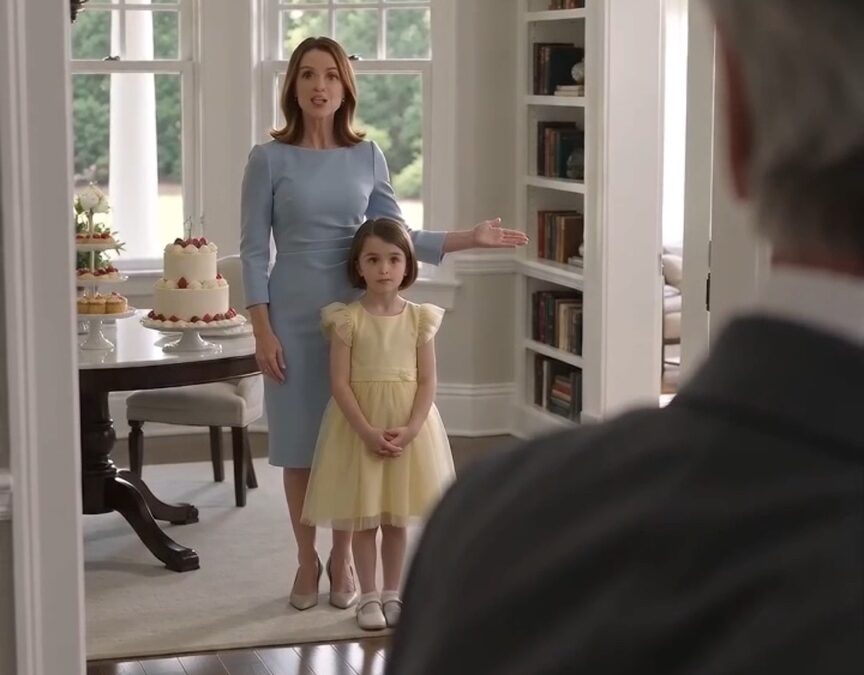
Thirteen relatives stood around my daughter’s adoption cake.
My stepmother arrived behind him with two children and bedding.
I was twelve days past gallbladder surgery.
My daughter caught my sleeve.
I put their coats into the carton and looked toward the study.
The carton’s corner had pressed against my healing abdomen.
I moved it away before reaching for the coats.
“Dad, you hurt me.”
“Then put it down.”
I set it on a dining chair.
Evie kept hold of my sleeve.
“Does he mean my things?”
“No, honey. Your things are staying upstairs.”
My father pointed toward the staircase.
“We’ll take the larger bedroom. The children can use hers.”
Denise lowered the bedding beside the entry bench.
“She can sleep with you while you recover.”
“No,” I said.
I moved Evie to my other side.
Her little fingers stayed hooked around the fabric.
It was September 20, 2025.
My daughter’s adoption had been finalized September 18.
She was seven, and she had picked our napkins.
She had arranged them beside matching plates that morning.
Now nobody was reaching for either one.
My aunt Paula stood with the cake knife.
She lowered it onto the serving tray.
My father looked around my bright dining room.
He was sixty-seven, dressed for an important occasion.
Denise, sixty-one, wore expensive shoes and a fitted dress.
Neither had asked how I felt after surgery.
Neither had congratulated Evie.
“Take the bedding outside,” I told Denise.
“We’ll move it upstairs once this is settled.”
“It’s already settled.”
My father turned toward the relatives.
“Nina doesn’t understand how this works.”
“I understand my own house.”
“It was your grandmother’s house.”
Evie’s grip tightened.
I covered her hand with mine.
Grandma Mabel had died January 16, 2025.
She was eighty-six.
Her chair was visible through the study doorway.
I had moved it beside the window there.
Evie liked reading in it after school.
Seeing it brought back an ordinary afternoon.
I had washed Grandma’s hair over a basin.
Towels covered the chair and my knees.
Paula had sat nearby while I braided it.
“Looser,” Grandma kept telling me.
I loosened the braid.
“Now the other side matches badly.”
Paula laughed, and Grandma handed me her ribbon.
That was what living here had looked like.
Not a discussion about square footage around an adoption cake.
“This place is too much for you,” Dad said.
“It’s our home.”
“You’re thirty-nine. You can manage somewhere smaller.”
“I’m managing here.”
“You’ve just had surgery.”
“That doesn’t give you my bedroom.”
Denise looked up the staircase again.
“The children only need somewhere while they’re visiting.”
“They have somewhere. They’re visiting you.”
They were her grandchildren.
They weren’t homeless or being turned out of anywhere.
Russell and Denise still had their rental home.
The children stared at the bedding.
I didn’t want them blamed for bringing it.
“You’re welcome to have cake,” I told them.
Denise pressed her lips together.
“We don’t need to discuss this with them.”
“You brought them into it.”
Paula came beside me.
For a moment, I expected her to face Dad.
Instead, she lowered her voice toward my ear.
“Give him one bedroom for now.”
I looked at her.
“He’s grieving, Nina.”
“So am I.”
“You know how he gets.”
“Yes. That’s why I’m saying no.”
She glanced at Evie.
“We shouldn’t argue in front of her.”
“Then ask him to stop.”
Paula touched the edge of the tablecloth.
Dad was watching us, waiting for her help.
Denise reached toward her coat in the carton.
“I’ll just take our things upstairs.”
“No. They’re staying right there.”
I folded Dad’s coat sleeve back inside.
The carton was unmarked and completely ordinary.
It had arrived empty.
I wasn’t filling it with my daughter’s clothes.
Dad pointed upstairs again.
“You’re letting a child decide where family lives?”
“I’m deciding who lives in my house.”
“She thinks staying here made it hers,” he announced.
I looked at the relatives around the table.
Some still held unused plates.
Paula hadn’t touched the cake knife again.
“Grandma gave this house to me,” I said.
Dad opened his mouth.
I indicated the study.
The previous evening, he had called about rooms.
He hadn’t asked whether he could stay.
He had said we would settle the arrangements during the party.
I had told him no.
Then I had called someone already invited.
I wanted Dad to hear the explanation privately.
I had asked our guest to come early.
Dad arrived late instead, carrying the carton.
Now the study chair scraped softly behind us.
A man stepped into the doorway.
Dad recognized him before he said anything.
His pointing hand lowered.
His mouth closed.
Denise looked from Dad to the waiting man.
It was Calvin, Grandma’s estate lawyer.
He was fifty-eight and had known our family for years.
He had attended ordinary dinners in this house.
Evie knew him because he asked about her books.
He hadn’t come carrying an eviction notice.
He hadn’t come to interrupt her party.
I had asked him to explain something Dad refused to hear.
Calvin looked at me first.
I nodded.
Then he turned toward my father.
“Russell, will you listen this time?”
Chapter 2: What Was Already Recorded
Dad looked toward the front door.
Then he looked at the cake.
“This is supposed to be a family gathering.”
“It is,” Calvin said. “Nina invited me.”
“To discuss Mother’s estate?”
“To celebrate Evie. We also arranged a private conversation.”
Dad adjusted the front of his jacket.
“Well, apparently it won’t be private now.”
“You told my daughter to pack publicly,” I said.
Calvin didn’t reach into his folder yet.
“Would you like me to explain here, Nina?”
I looked down at Evie.
She was watching Dad’s hand.
I bent carefully, keeping my stomach straight.
“You can sit beside your cake,” I told her.
“Are we going somewhere?”
“No.”
“Not after?”
“No, honey.”
She released my sleeve and took the nearest chair.
I stayed close enough for her to touch me.
“Yes,” I told Calvin. “Explain it here.”
He retrieved the recorded deed copy from the study.
He placed it on the clear table corner.
Dad stayed where he was.
“Your mother signed this January 10, 2020,” Calvin began.
Denise folded her arms.
“It was recorded January 13, 2020, in Franklin County.”
Dad glanced at the paper without touching it.
“Mother had a will.”
“She did.”
“I’m her son.”
“Yes.”
“She left instructions for her property.”
“She did. This house didn’t pass under that will.”
Dad stepped toward the table.
“That’s the part that makes no sense.”
“Mabel conveyed the remainder interest to Nina.”
Calvin indicated the relevant portion.
“She reserved a life estate for herself.”
Denise leaned forward.
“So she didn’t actually give it away.”
“She conveyed a real property interest then.”
“But she stayed here.”
“Her retained life estate allowed that.”
Dad frowned at the page.
Calvin waited until he looked up.
“Mabel kept her right to possess the property during her lifetime.”
“And Nina?”
“Nina held the remainder interest.”
I watched Dad follow Calvin’s finger across the document.
He had never examined it before.
Grandma had made sure I understood it when she signed.
She wanted the house to remain her home while she lived.
I had respected that.
Her furniture stayed where she wanted it.
Her visitors came when she invited them.
I didn’t change her kitchen without asking.
“When Mabel died January 16, 2025, her life estate ended.”
Calvin rested his hand beside the copy.
“Nina became the sole present owner.”
Denise looked at Dad.
He kept reading.
“So where does the estate get its share?”
“The house wasn’t a probate asset.”
“It was Mother’s house.”
“She had already conveyed the remainder.”
Dad rubbed his forehead.
“You should have told me this.”
“I tried on January 24, 2025.”
“You started explaining why things weren’t included.”
“Yes. That was the explanation.”
I remembered that conversation.
Dad had objected before Calvin reached the deed.
He said he didn’t need instruction about his mother.
Then he had refused to examine the paperwork.
Calvin had continued administering the estate afterward.
Dad received his cash inheritance under Grandma’s will.
It was $28,000, paid August 15, 2025.
He knew the amount because he had accepted it.
He wanted the house, valued at $462,000, instead.
“I didn’t agree to this,” Dad said.
“Your agreement wasn’t required for Mabel to convey her property.”
Denise looked toward me.
“You could have explained it yourself.”
“I tried telling you the house wasn’t available.”
“You didn’t say all these dates.”
“Dad wouldn’t discuss the deed.”
The recording wasn’t hidden.
It was part of the county’s public records.
I hadn’t kept a secret transfer in a drawer.
Dad had decided the will must give him rights.
He had stopped listening when Calvin tried correcting him.
Now he looked closely at the recording information.
Denise pointed toward the date.
“That’s before she died.”
“Yes,” Calvin said.
“Well before she died.”
“Yes.”
Dad’s expression changed.
He stopped insisting the will controlled everything.
Instead, he looked at me.
“Mother depended on you.”
“I lived with her.”
“She needed help.”
“I helped her.”
“And she gave you a house.”
Evie looked up from the cake flowers.
I kept my hand against her chair.
Denise took a slow breath.
“She wasn’t in good health.”
“Her final illness was in January 2025,” Calvin said.
“She had problems before then.”
“Needing physical help doesn’t establish incapacity.”
Dad tapped the document.
“Who prepared this?”
“I did.”
That stopped his tapping.
“You?”
“Yes. I prepared the original deed.”
“You were handling the estate.”
“I also handled this earlier work for Mabel.”
Dad looked from the copy to Calvin.
He had refused the January explanation too early to learn that.
Denise moved closer to his shoulder.
“Who contacted you about it?”
“Mabel instructed me.”
“Not Nina?”
“No.”
Dad stared at the signature area.
Calvin continued without raising his voice.
“I spoke privately with Mabel before she signed.”
I saw Paula look toward Grandma’s chair.
She had heard Grandma explain her plans herself.
Dad hadn’t asked Paula about those conversations.
He hadn’t asked me about Grandma’s instructions either.
He had arrived expecting us to make room.
Now he straightened away from the table.
“So everybody knew except me.”
“You refused my explanation,” Calvin said.
Dad looked directly at me.
“You lived here. You were always around her.”
“Yes.”
“You must have had something to do with this.”
“Grandma made her own decision.”
He shook his head.
“My mother wouldn’t arrange this unless you talked her into it.”
Chapter 3: The Visit My Aunt Remembered
Paula took her hand off the tablecloth.
“Russell, that isn’t what happened.”
Dad held up his hand.
“You don’t know what happened privately.”
“I know what Mother told me.”
“You mean what Nina told you.”
“No. I mean Mother.”
Paula pulled out a chair but didn’t sit.
She looked at me, then toward the study.
“The afternoon with her hair,” she said.
I knew the visit she meant.
I had lived with Grandma since 2020.
I worked as a medical scheduler.
My wages came from my job, not from caregiving.
At home, I helped Grandma without being paid.
Some days that meant preparing food or doing laundry.
Other days involved a basin, towels, and her hairbrush.
That afternoon, she wanted her hair washed before an appointment.
She disliked leaning over the bathroom sink.
I brought the basin to her chair instead.
Paula arrived while I was arranging the towels.
Grandma instructed her to move a cushion.
Then she told me the water would get cold.
“I haven’t started pouring yet,” I said.
“Then stop talking and start.”
Paula laughed and sat on the couch.
Grandma held a folded towel beneath her neck.
I poured slowly and checked around her ears.
She wanted all the soap rinsed away.
“Especially here,” she said, pointing.
“I know, Grandma.”
“You missed it last time.”
Paula offered to hold the clean towel.
Grandma accepted, then told her not to drip.
There was nothing helpless about her giving instructions.
Her knees hurt, and she tired more easily.
She still knew exactly how she wanted things done.
Afterward, I separated her damp hair into sections.
Paula peeled an orange over a small plate.
Grandma asked her about an errand.
Then she reminded me to mail an envelope.
I was beginning the braid when she mentioned Calvin.
“I’ve settled the house arrangement,” she told Paula.
Paula thought she meant a repair.
“No. What happens after I’m gone.”
I stopped with the strands between my fingers.
Grandma looked back at me.
“Keep going. We’ve already discussed this.”
Then she explained that she had kept her lifetime rights.
She could remain in her house.
Nina would own it outright after her death.
She said both parts, clearly and more than once.
She wanted Paula to understand that she wasn’t moving out.
She also wanted me to stop looking uncomfortable.
“That was one conversation,” Dad said now.
“It wasn’t the only one,” Paula answered.
“She repeated herself.”
“Because she wanted us to understand.”
Paula finally sat.
“She discussed it while sorting her sewing supplies too.”
Dad looked away.
“She explained it when I offered to move furniture.”
“That doesn’t prove what Nina said beforehand.”
Calvin answered that part.
“I discussed Mabel’s instructions with her privately.”
Dad turned back toward him.
“You asked if somebody suggested it?”
“I assessed whether these were her instructions.”
“And you thought they were.”
“Yes.”
Calvin didn’t pretend he could settle every accusation with a memory.
He kept his explanation tied to what he knew.
He had prepared the deed.
He had spoken directly and privately with Grandma.
She had signed it in 2020.
Her final illness came five years later.
Paula had independently heard her describe the arrangement.
None of that matched Dad’s suggestion of a hurried deathbed transfer.
“Why didn’t you tell me?” Dad asked Paula.
“I thought Mother had.”
“She didn’t.”
“Did you listen when she tried?”
Dad looked down at the table.
I remembered hearing Grandma on the telephone.
“Russell, let me finish,” she would say.
Sometimes she repeated that.
I hadn’t heard every conversation.
I wasn’t going to claim I had.
But I knew what it sounded like when Dad interrupted.
Paula folded her hands.
“I should have asked whether you understood.”
“You certainly should have.”
“No,” I said.
They both looked at me.
“She wasn’t responsible for making you examine a deed.”
Paula nodded slowly.
Dad frowned.
“So now we’re blaming me.”
“We’re explaining why you didn’t know,” Calvin said.
I looked at Evie.
She was tracing the edge of her plate.
She had stopped following the legal words.
I could tell she was still listening for instructions.
I moved her water closer.
She took a drink with both hands.
Dad watched me.
“You needed somewhere to live when you came here.”
“Yes.”
“Mother took you in.”
“Yes.”
“And somehow she ended up giving you everything.”
“Not everything,” Calvin said.
Dad ignored him.
I didn’t deny needing a home in 2020.
Grandma and I had helped each other.
I had handled meals, appointments, washing, and the hair basin.
She had given me somewhere to live.
Later, Evie joined our household.
Those facts didn’t turn the deed into wages.
“I didn’t earn the house by braiding her hair.”
Dad looked at me.
“She chose to give me the remainder interest.”
Denise shook her head.
“It’s still a lot more than Russell received.”
“Yes,” I said.
There was no reason to pretend the values matched.
Grandma had made unequal gifts.
Calvin wasn’t claiming otherwise.
Paula wasn’t claiming otherwise.
Dad pushed the copy slightly away.
“Then we should discuss what’s fair.”
“The house isn’t available,” I said.
“Everything is available for discussion.”
“Not Evie’s bedroom.”
He glanced around at the relatives.
Then he lowered his voice.
“Come into the study, Nina. We’ll discuss what you owe this family privately.”
Chapter 4: No Room To Give Away
I looked toward the study doorway.
Calvin’s folder lay on Grandma’s old desk.
Dad waited for me to follow him.
Instead, I stayed beside Evie.
“We can speak here.”
“Not everything belongs in front of children.”
“Then don’t tell one to pack her belongings.”
Denise shifted the bedding with her shoe.
“Nobody said she had to leave the house.”
“You said she could lose her room.”
“Temporarily.”
“You didn’t say that until I objected.”
Evie pushed her chair back a little.
I moved aside so she had room.
She stood against me without saying anything.
I rested a hand on her shoulder.
Dad glanced at us impatiently.
“We’re trying to make a sensible arrangement.”
“You already have somewhere to live.”
“Our rental is smaller.”
“That doesn’t make my house available.”
Denise picked a loose thread from the bedding.
“We thought the children could stay upstairs while visiting.”
“They can visit you where you live.”
“It would be easier here.”
“For whom?”
She looked toward the children.
I regretted the question as soon as they looked back.
They hadn’t chosen this argument.
I turned toward them.
“You didn’t do anything wrong.”
One moved closer to the entry bench.
“You were invited to a party,” I added.
Denise’s face tightened.
“We can speak for our own grandchildren.”
“Then tell them they aren’t being blamed.”
She adjusted the folded blanket without answering.
Paula stood again.
“Perhaps everyone else could go into the kitchen.”
“No,” I said.
She stopped beside her chair.
“I don’t want Evie waiting somewhere while we negotiate her room.”
Dad threw a hand toward the staircase.
“It’s one bedroom.”
“It’s hers.”
“She’s seven.”
“Yes.”
“She can adjust.”
I looked at the cake she hadn’t eaten.
Her name was still untouched in frosting.
“She just finalized her adoption,” I said.
“She needs to know where she lives.”
“She lives wherever you live.”
“And we live here.”
Paula moved the cake knife farther from the table edge.
I turned toward her.
“You heard Grandma explain the house.”
“Yes.”
“You knew Dad hadn’t listened.”
“Yes.”
“Why did you ask me to surrender a room?”
She looked at my father.
Then she looked back at me.
“I wanted him to stop.”
“That would have given him permission to stay.”
“I wasn’t thinking that far.”
Dad made a short, dismissive sound.
“We’re not trying to establish some legal trap.”
“I didn’t say you were.”
“Then stop acting like we’re strangers.”
“You arrived with bedding after I said no.”
Denise crossed her arms.
“You could help while Russell is grieving.”
“So could you,” I said.
“I am helping him.”
“Then help him leave Evie’s room alone.”
She stared at me.
Dad stepped closer to the table.
“I’m not asking for ownership right this minute.”
Calvin looked up at that.
I did too.
“What are you asking for?” I said.
“A place while we work things out.”
“Work what out?”
“Our next steps.”
“From my bedroom?”
“The house has room.”
“That isn’t permission.”
Dad turned toward Calvin.
“She could let us stay without signing anything over.”
“She can choose to invite guests,” Calvin said.
“There.”
“She has also said she isn’t inviting you to reside here.”
Dad’s shoulders stiffened.
“You’re encouraging her.”
“I’m answering the question you asked.”
There was no lease to terminate.
Dad and Denise had never lived in this house.
Their furniture, clothes, mail, and ordinary lives remained elsewhere.
They were guests carrying bedding I hadn’t agreed to accept.
No police officer needed to decide ownership in my doorway.
No court had to issue an instant order.
I needed to tell them to leave.
Then they needed to do it voluntarily.
“Take the bedding with you,” I said.
Dad stared at me.
“You’re sending away your father.”
“I’m asking you to leave my daughter’s celebration.”
“You invited us.”
“To celebrate her adoption.”
He looked toward the cake.
For the first time, he seemed to notice the flowers.
“I came to discuss the house.”
“I know.”
That answer left him quiet for a moment.
Denise bent to collect the bedding.
I reached for Evie’s unused plate.
“Would you like some cake now?”
She shook her head.
“After.”
I put it down again.
Dad watched me do it.
“You could have warned me about Calvin.”
“I arranged a private discussion.”
“You arranged him sitting in there.”
“Yes. After you threatened to claim rooms.”
“You should have said he was coming.”
“He was already invited.”
Dad looked toward Calvin, who said nothing.
I remembered the call I had made September 19.
Calvin hadn’t suggested a public confrontation.
He had agreed to explain the documents privately.
Dad had bypassed that conversation with a carton.
Denise gathered the blankets against her chest.
The children moved beside her.
Dad looked at the coats in the carton.
I put my hands underneath, then stopped.
My abdomen pulled where the cardboard had pressed.
Calvin noticed and slid the dining chair closer to Dad.
He left the carton on it.
Dad looked at my hands.
“I didn’t mean to hurt you.”
“You pushed it against my incisions.”
“I meant for you to take it.”
“I did take it.”
He looked down at the open flaps.
Evie pressed against my side.
Dad cleared his throat.
“Give me the carton.”
Chapter 5: Their Coats On The Porch
I moved away from the chair.
Dad lifted the carton himself.
His coat sleeve slipped over one flap.
He pushed it back inside with his fingers.
Denise stood near the door holding the bedding.
She told the children to stay beside her.
Nobody stopped them.
Nobody tried to make a final speech.
I remained beside Evie until they stepped outside.
Then I followed to the threshold.
Dad set the carton on the covered porch.
He removed his coat and handed Denise hers.
She put the bedding on the bench.
Her sleeve caught beneath one folded blanket.
Dad lifted it so she could pull free.
The children waited near the steps.
“This didn’t need to happen today,” Dad said.
“No,” I answered. “It didn’t.”
He looked into the carton.
It was empty again.
He moved it beside the porch bench.
Denise asked him to carry the bedding.
He took it from her without looking at me.
Then they went down the steps.
I didn’t remain there watching their car.
I closed the door and turned around.
Everyone inside was watching me.
I wanted a chair and a glass of water.
I didn’t want to explain anything else.
Paula picked up the cake knife.
“Evie, which flower would you like?”
Evie looked at me first.
“You can choose any piece,” I told her.
She pointed to a flower near the corner.
Paula cut carefully around it.
The knife scraped against the cake board.
I pulled out my chair and sat down.
My waistband irritated the spot the carton had caught.
I adjusted it beneath the table.
Calvin brought water from the kitchen.
He placed it beside my plate.
“Thank you,” I said.
He nodded and moved away.
Evie climbed into the chair beside me.
She inspected the flower before eating any cake.
“Are they mad at me?”
“No.”
“Because I said I wanted my room?”
“No, honey. They’re mad because I refused their plan.”
She broke a piece from the frosting flower.
“Can they come back with more blankets?”
“They can’t move in by bringing blankets.”
She looked toward the closed door.
“Even if they put them upstairs?”
“I won’t let them do that.”
She ate another small piece.
I stayed still while she leaned against my arm.
Around us, people began moving again.
Plates were passed along the table.
Someone shifted chairs away from the entry.
Paula cut extra pieces and wrapped them.
She told me she had sent cake out with Denise’s grandchildren.
I was glad she had thought of them.
They hadn’t caused the afternoon.
They deserved the cake they had come to eat.
The party didn’t suddenly become cheerful again.
Some relatives spoke more quietly than before.
Some left earlier than they had planned.
Others stayed and helped clear dishes.
Nobody tried to restart the housing discussion.
Evie eventually went upstairs to show her room.
I heard her explaining where her books belonged.
I kept eating until my plate was empty.
I hadn’t realized how little lunch I’d had.
Calvin put the deed copy back in the study.
When I followed him, he looked at my dress.
“Did that carton catch an incision?”
“It pressed against them.”
“Anything open?”
“No.”
“If anything changes, contact your medical office.”
“I will.”
He set the copy on the desk.
“Would you like this for your file?”
“Yes.”
I opened the drawer where I kept household documents.
There was a place for it already.
I slid it inside.
That simple action took longer than it should have.
I straightened the folder, then straightened it again.
Calvin waited without telling me how to feel.
“I don’t want more property calls from him,” I said.
“Direct them to me.”
“Can I do that?”
“Yes. You don’t have to debate the deed yourself.”
I closed the drawer.
He left after saying goodbye to Evie.
He asked whether she had enjoyed her cake.
She said the frosting flower was too sweet.
Then she admitted she had eaten all of it.
By the time the house emptied, Paula remained in the kitchen.
She washed the serving dishes.
I covered leftover food and put it away.
She started to lift something from the counter.
“I can do that,” she said.
“Then please do.”
She moved it without making another suggestion.
After a while, she spoke.
“I should have said something to Russell sooner.”
“Yes.”
“I was trying to stop the argument.”
“I know.”
She rinsed a plate and set it in the rack.
“That wasn’t fair to you.”
“No.”
She didn’t ask me to make her feel better.
I was grateful for that much.
When she left, I checked the front lock.
The empty carton was still beside the porch bench.
I left it there while I helped Evie get ready for bed.
She wanted her bedroom door open.
I opened it.
She wanted the hallway light left on.
I turned it on.
Then she asked me to stay in her chair.
I sat beside the dresser until she fell asleep.
Later, I retrieved the carton from the porch.
I carried it to the study and set it down.
My phone was lying on the desk.
Dad had sent a message.
He was getting his own lawyer to review the deed.
Chapter 6: The Review He Requested
I sat in Grandma’s chair to read it again.
Dad hadn’t asked whether Evie enjoyed her cake.
He hadn’t asked whether my stomach still hurt.
He wanted me to know the discussion wasn’t finished.
I began typing the recording dates.
Then I deleted them.
He had heard them from the man who prepared the deed.
He had examined the copy himself.
I sent one short reply.
“Have your lawyer contact Calvin about the property.”
Then I put the phone down.
I checked Evie’s door before going to bed.
It was still open.
Her dresser drawers were closed.
Her books sat where she had arranged them.
Nothing needed packing.
The next morning, she asked about Denise’s bedding.
“It’s gone,” I told her.
“All of it?”
“All of it.”
She went upstairs and looked anyway.
I let her check.
When she returned, she carried a book.
She climbed into Grandma’s chair while I made breakfast.
That was how the legal review began at home.
There were no officers at the door.
No papers ordering us to leave.
No emergency hearing over Evie’s bedroom.
Dad hired a lawyer to examine the arrangement.
Calvin handled the property correspondence.
He asked me questions when he needed factual answers.
Had Russell or Denise ever lived here?
No.
Had I promised either of them a bedroom?
No.
Had I agreed to sell them the house?
No.
Was I aware of a later transfer by Grandma?
No.
I opened my household file before answering document questions.
I didn’t want anger filling in details.
I checked what I had.
Then I sent Calvin what he requested.
He provided the recorded deed information and appropriate estate records.
He didn’t write a letter about Dad ruining the party.
He didn’t accuse Denise of wanting my bedroom.
He addressed ownership and the threatened challenge.
That helped me leave my phone alone.
I didn’t have to answer every message immediately.
I didn’t have to prepare another speech.
I could put a folder away and make dinner.
Paula also spoke with Calvin.
She told him what she had personally heard.
She hadn’t attended the private meeting about the deed.
She hadn’t watched the county recording.
She didn’t pretend she had.
She described Grandma explaining her retained lifetime rights.
She described Grandma saying I would own the house afterward.
She described more than one conversation.
When Paula told me about it, she was careful.
“I only answered what I knew.”
“That’s what you should do.”
“I didn’t want to add anything.”
“Please don’t.”
She nodded.
Dad called after that.
I was helping Evie gather her school things.
I let the phone ring.
Afterward, I called him from the study.
“Why is Paula involved?” he asked.
“You questioned whether Grandma chose the arrangement.”
“She’s taking your side.”
“She’s telling Calvin what she heard.”
“Mother said things to keep people happy.”
“Then why did she explain keeping her life estate?”
He didn’t answer that.
Instead, he asked whether I knew the house’s value.
“I knew it was valuable.”
“Did Mother know?”
“She knew she was giving me a house.”
“That isn’t what I asked.”
“She understood the property she owned.”
I wasn’t going to invent an appraisal conversation.
Grandma knew the house, its expenses, and its rooms.
She understood the difference between it and a cash gift.
I hadn’t heard her recite every dollar figure.
I didn’t need to claim that I had.
Dad moved something near his phone.
Then he said Denise felt humiliated.
“Evie thought she had to leave her room,” I answered.
“You keep saying that.”
“She heard you tell me to pack.”
“I didn’t say she had to leave forever.”
“She’s seven. You handed me a moving box.”
He was quiet.
I could hear Evie opening a cupboard downstairs.
I waited instead of explaining her reaction again.
Eventually, Dad said the lawyer would finish reviewing everything.
“All right,” I told him.
Calvin contacted me after the review was complete.
Dad’s independent lawyer had identified no basis to challenge the deed.
There was no identified evidence supporting the capacity accusation.
The transfer predated Grandma’s final illness by five years.
Calvin had prepared it and spoken privately with her.
The recorded conveyance had not become invalid because Dad disliked it.
The house also hadn’t become a probate asset afterward.
Calvin was careful about what that result meant.
He couldn’t promise Dad would never make another demand.
He couldn’t stop someone from consulting another lawyer.
But the review Dad requested had found no identified basis for his threatened challenge.
Dad did not file a lawsuit.
I put Calvin’s communication in the household file.
Then I helped Evie find the book she needed.
It had slipped behind the chair cushion.
She blamed the chair.
I asked her to check there next time.
Later, Dad called again.
His voice sounded more deliberate.
“I understand I can’t just take the house.”
I sat at the desk.
“All right.”
“But that doesn’t mean nothing can be worked out.”
“I’m not offering rooms.”
“I’m talking about buying it.”
“The house isn’t for sale.”
“You haven’t heard a proposal.”
I looked at the empty carton beside the shelf.
“What proposal?”
“Denise wants to inspect the bedrooms first.”
Chapter 7: A Bedroom Was Not Available
“No,” I said.
Dad paused as though I hadn’t heard correctly.
“We wouldn’t touch anything.”
“The house isn’t for sale.”
“We’d just need to look properly.”
“You were here.”
“Not as buyers.”
“You aren’t buyers now.”
He made a frustrated sound.
“How can we make an offer without looking?”
“I’m not asking for an offer.”
“You could at least hear one.”
I rested my forearm on the desk.
The drawer containing the deed was beside my knee.
I didn’t open it.
We were no longer discussing who owned the house.
He knew the answer to that.
Now he wanted me to choose to give it up.
“I’m staying here with Evie.”
“You don’t need all that space.”
“We use our home.”
“Mother didn’t need all of it either.”
“She decided what to do with it.”
Dad stopped speaking for a moment.
Then he tried a different approach.
“Families sometimes sell to each other below market value.”
“Yes.”
“So that’s worth considering.”
“Not to me.”
“You’d still receive money.”
“And we’d need another home.”
“You could buy smaller.”
“I’m not selling this one.”
He mentioned the $462,000 valuation again.
He spoke as though it were money sitting unused.
I looked through the study doorway.
Evie’s shoes were beside the stairs.
A school paper waited on the dining table.
There was laundry upstairs I hadn’t folded yet.
This was where our things belonged.
It wasn’t an investment I had forgotten to cash.
“You don’t know what we’d offer,” Dad said.
“It doesn’t matter.”
“That’s unreasonable.”
“I’m declining to sell my home.”
“To your father.”
“To anyone.”
He didn’t like that answer either.
But it left less room for another argument.
Eventually, he asked what he was supposed to do.
“Remain in your rental while you decide.”
“Denise wants somewhere bigger.”
“Then you can look for somewhere bigger.”
“You make it sound simple.”
“I didn’t say it was simple.”
I heard him take a breath.
“I shouldn’t need a lawyer to speak to my daughter.”
“You don’t. Property demands go through Calvin.”
“What else am I supposed to discuss?”
“Evie’s adoption.”
He said nothing.
“Her school,” I added. “How she’s doing.”
“I know how to talk to a child.”
“Then talk about things besides where she’ll sleep.”
He asked whether she liked school.
I answered the question.
I told him she had been packing her bag herself.
I didn’t tell him every anxious thing she had said.
Those belonged to Evie.
He could begin with ordinary conversation.
He didn’t need her private worries as instructions.
When we finished, I went into the dining room.
Evie was sorting the unused party napkins.
She had made a neat stack beside the plates.
“These are still good,” she told me.
“Yes, they are.”
“We shouldn’t throw them away.”
“We won’t.”
She looked toward the entry.
“Did they leave anything?”
“Just the empty carton.”
“Where is it?”
“In the study.”
She looked past me toward that room.
“Not upstairs?”
“No.”
She pressed the napkin stack flat with both palms.
“Okay.”
I didn’t suggest packing the decorations yet.
She could decide when she was finished seeing them.
For now, I moved the plates away from the table edge.
She arranged the napkins again after I did.
Later, Paula called about returning a serving dish.
I said she could bring it over.
When she arrived, she waited on the porch.
Usually, she opened the door while calling my name.
This time, she stood holding the clean dish.
I invited her inside.
She set it on the kitchen counter.
The lid was fitted neatly in place.
She had wrapped a towel around it for the trip.
“Thank you,” I said.
“You’re welcome.”
She folded the towel and held it.
Then she asked whether we could sit down.
I pulled out a chair.
Evie was upstairs, rearranging books in her room.
Paula listened to the movement overhead.
“She seems more settled.”
“She’s checking that everything stays where she puts it.”
Paula looked at the serving dish.
“I’m sorry I helped make that necessary.”
I sat opposite her.
She started to say something else, then stopped.
I waited.
“I owe you more than what I said afterward.”
“You do.”
She put the folded towel beside her chair.
“I knew Mother wanted you to own this house.”
“Yes.”
“I knew Russell hadn’t listened.”
“Yes.”
“And I still asked you to surrender a bedroom.”
I looked at her.
She didn’t glance away this time.
“I need to tell you why I did that.”
Chapter 8: What I Would Agree To
“I was afraid he’d turn on me,” Paula said.
I looked toward the kitchen doorway.
Upstairs, a dresser drawer closed.
“What do you mean?”
“If I contradicted him, he’d blame me.”
“That would have been uncomfortable.”
“Yes.”
“So you asked me to give him Evie’s room.”
Paula lowered her eyes.
“Yes.”
She didn’t claim I had misunderstood.
She didn’t say everyone had been upset.
She sat with her hands around the folded towel.
“I wanted the argument over,” she said.
“And I was supposed to live with the result.”
“Yes.”
I moved the serving dish farther from the counter edge.
Its lid made a small clink.
Paula watched me, waiting.
“I can’t have you doing that around Evie again.”
“I know.”
“No. I need you to understand.”
She looked up.
“If Dad demands something from us, don’t help him ask.”
“I won’t.”
“Not because he’s grieving. Not because he’s embarrassed.”
“I won’t.”
I sat back down.
She looked toward the stairs again.
“Mother would have corrected him.”
“She’s not here.”
“No.”
That was all either of us said for a moment.
Then Paula asked if she could help with the leftover decorations.
“I’ll ask Evie,” I said.
I called upstairs.
Evie appeared at the landing with a book.
Paula asked her directly.
Evie said they could sort the plates.
“But don’t throw away the flowers.”
“We won’t,” Paula told her.
They spread the unused things across the dining table.
I stayed in the kitchen rinsing the serving dish.
It didn’t need rinsing.
I wanted to put it away myself.
I could hear Paula asking before moving things.
Evie explained which decorations belonged together.
Paula followed her instructions.
That helped more than another apology would have.
Dad called later about an overnight visit.
He presented it carefully this time.
He said he understood they weren’t moving in.
He said they would remain in their rental.
Then he asked whether staying occasionally might help him feel closer to Grandma.
“Not now,” I said.
“Do you mean never?”
“I mean not now.”
“We wouldn’t bring the children.”
“That isn’t the issue.”
“Then what is?”
“I’m not offering overnight visits.”
He asked when that might change.
“I don’t have a date.”
He said I was shutting him out.
I looked toward the dining room.
The plates were stacked neatly on the table.
Evie had put one folded napkin on top.
“You can ask about a visit,” I said.
“No bedding. No assumptions about staying.”
“I know that now.”
“No discussion of moving Evie’s things.”
“I said I know.”
“I need you to agree.”
He took a breath.
“All right.”
“And don’t bring up buying the house with her.”
“So we can’t discuss anything.”
“We can discuss plenty of things.”
“On your terms.”
“In my home, yes.”
He didn’t answer immediately.
I waited without adding another condition.
I had already named the important ones.
Dad finally said he should not have told Evie to pack.
I kept my voice low.
“She might need to hear that herself.”
“Put her on.”
“Not unexpectedly.”
“I’m trying to apologize.”
“I’ll ask whether she wants to speak with you.”
He disliked waiting for her answer.
I could hear it in his breathing.
But he said all right.
When I asked Evie, she shook her head.
“Not on the phone.”
“Okay.”
“Will he be mad?”
“He can be disappointed. You don’t have to take the call.”
I sent Dad that she wasn’t ready.
I didn’t send her exact words.
He replied that he understood.
I put the phone away before he could change the subject.
Afterward, Evie followed me into the hallway.
I was carrying folded towels upstairs.
“Were you talking about me?”
“A little. About visits.”
“Are they bringing blankets?”
“No.”
She walked beside me to the linen cupboard.
I put the towels on the shelf.
She leaned against the doorframe.
“Do I have to change my room?”
“No.”
“Even when your stomach gets better?”
I put the last towel down.
“No, honey. Not when I’m better.”
She looked at the cupboard, then toward her room.
“Grandpa said I could sleep with you.”
“You can come in if you need me.”
“But I don’t have to put my things there?”
“No.”
She pushed the edge of a folded towel straight.
I waited while she thought.
My recovery had given Denise a reason to suggest moving her.
Evie had apparently been waiting for that reason to end.
I hadn’t realized she needed the answer repeated that way.
“I’m getting better,” I told her.
“That doesn’t change your room.”
She nodded, but stayed beside the cupboard.
I closed it gently.
She looked through her open bedroom door.
Her books were still lined up beside the bed.
“Can I leave it exactly how it is?”
Chapter 9: Decorations For Another Day
“Yes,” I told her.
“You can leave it exactly how it is.”
Evie went inside and moved a book.
Then she moved it back.
I stayed in the doorway while she opened her dresser.
She checked the bottom drawer and closed it.
“I might change things later.”
“That’s fine too.”
“Just not because they’re coming.”
“Not because they’re coming.”
She sat on the bed and picked up her book.
I waited until she began talking about school.
Then I went downstairs to finish putting things away.
She didn’t need to understand the deed.
She needed to know her clothes would remain in her dresser.
My recovery continued without another party to prepare for.
I stopped carrying full laundry baskets.
I made smaller trips or left things upstairs.
When I returned to my scheduling work, the tasks were familiar.
People needed appointments, directions, and the correct department.
I checked calendars and returned calls.
Then I came home to dinner and school papers.
Evie resumed leaving shoes beside the back door.
Sometimes I asked her to move them.
Sometimes I stepped around them with groceries.
Her room stayed hers.
Denise’s bedding never came back.
Dad and Denise remained at their rental home.
No property interest was conveyed to either of them.
There was no purchase agreement.
There was no bedroom waiting for them upstairs.
The estate administration remained separate from my household.
Dad kept the $28,000 he had received.
He did not receive an interest in the house.
Calvin handled the remaining property questions in writing.
Those became less frequent after the independent review.
Eventually, they stopped.
I kept the relevant correspondence with the recorded deed copy.
Then I closed the drawer.
I didn’t need to carry the paperwork around.
I knew where it was if I needed it.
Dad still sounded stiff during some conversations.
Denise didn’t suddenly become warm toward me.
I didn’t plan another gathering to prove everything was fine.
When Dad asked about visiting, I checked with Evie.
If she didn’t want company, I said we weren’t available.
I didn’t provide every reason she gave me.
She deserved some conversations that stayed between us.
A brief visit happened only after Dad accepted the conditions.
No bags.
No bedding.
No discussion of the bedrooms or buying the house.
He stood near the entry longer than usual.
Evie remained beside me.
He asked about the book she was holding.
She showed him its cover.
Then he cleared his throat.
“I shouldn’t have said to pack your things.”
She looked at him.
“You aren’t moving out,” he added.
“I know,” she said.
She looked up at me after saying it.
I nodded.
Dad asked whether she wanted a hug.
She shook her head.
I didn’t tell her to give him one.
Instead, she opened her book and showed him a picture.
He looked at it.
That was enough for that visit.
After he left, Evie went upstairs.
I heard a dresser drawer open and close.
Then she came down to the kitchen.
I was drying dishes.
“Everything’s still there,” she said.
“Yes.”
She asked what we were having for dinner.
I told her, and she went to wash her hands.
Paula came over sometimes too.
She asked before bringing anyone else.
She stopped passing along Dad’s complaints as requests for me.
When he complained to her, she didn’t call asking for concessions.
She told me that herself.
I thanked her.
We didn’t pretend her first response at the party hadn’t happened.
But I could watch her help Evie without waiting for another suggestion about giving up space.
Grandma’s chair remained beside the study window.
I washed the cushion cover and put it back.
Evie used the desk for drawings.
I used the drawer for household paperwork.
Sometimes she sat in the chair while I sorted mail.
Sometimes I sat there while she read aloud.
The carton stayed near the study shelf until Evie was ready.
One afternoon, she brought down the unused party decorations.
She wanted the top of her dresser clear.
The napkins were still neatly stacked.
Paper flowers and ribbon rested above the unused plates.
“Can these go somewhere else?” she asked.
“Yes.”
“Not the trash.”
“Not the trash.”
I brought the moving carton into the dining room.
She watched me set it on the table.
“This one?”
“If you want. We can use something else.”
She looked inside.
There was no writing on it.
No coats remained.
She placed the napkins on the bottom.
Then she arranged the paper flowers above them.
I helped gather the loose ribbon.
We worked at the table where her cake had stood.
“Could we use these again?” she asked.
“We could.”
“For something here?”
“Yes. Here.”
She folded a length of ribbon between the flowers.
I held the carton steady while she checked each corner.
Then she closed the flaps herself.
I carried it to the study shelf.
Evie followed and told me which side faced upward.
I set it down exactly as she asked.
The last thing she did was straighten the carton.








