My Husband Gave His Girlfriend My Chair While I Grieved — Until My Lawyer Arrived
Chapter 1: The Chair Beside Him
“Without me, she’d be a charity case,” my husband told the guests at my mother’s memorial.
Her funeral had been sixteen days earlier.
His girlfriend sat in my assigned chair.
I had cared for his father through two knee replacements.
His sister slid over a house contract.
My lawyer asked whether everything had been disclosed.
Scott laughed as though he had made a harmless joke.
Nobody near the table laughed with him.
I pressed my mother’s white cotton handkerchief against my palm.
It had been inside my purse when I arrived.
Now I couldn’t seem to put it away.
The ballroom windows overlooked the resort grounds in Sarasota.
It was March 28, 2026.
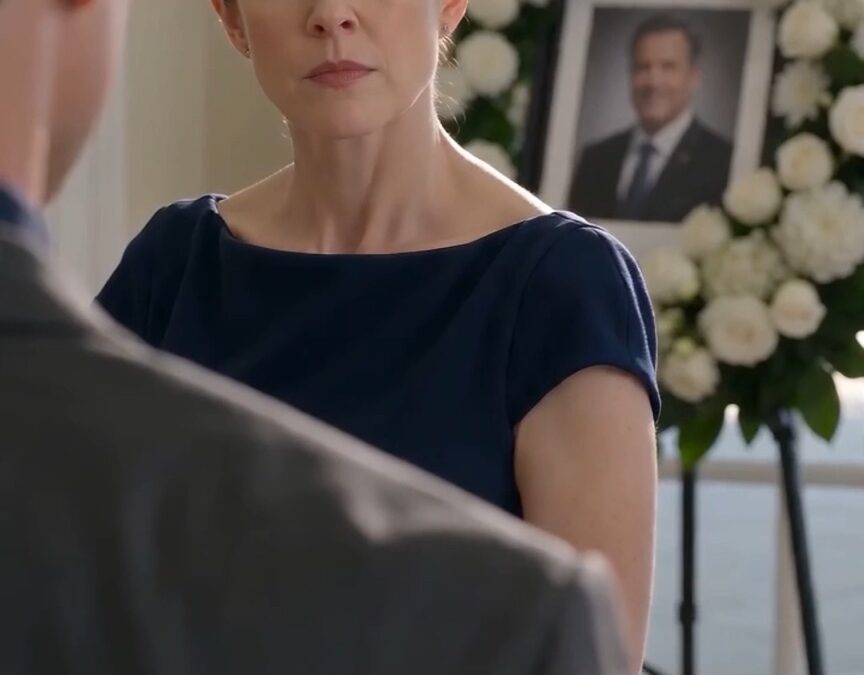
Mom’s photograph stood beside the flowers near our table.
The later reception let out-of-town relatives attend.
They had come to remember my mother.
Instead, Scott had turned our table into a closing appointment.
I looked down at the contract Jill had brought.
Then I looked at my place card.
It lay facedown beside Kelsey’s plate.
I had seen her turn it over.
She knew whose chair she occupied.
Scott had introduced her simply as Kelsey.
He hadn’t explained why his girlfriend was beside him.
He also hadn’t explained where his wife should sit.
At 45, I hadn’t expected to stand at my mother’s memorial holding my purse while another woman used my place setting.
Kelsey was 38.
Scott had told me about their relationship before Mom died.
Privately, he said our marriage was finished.
Publicly, he still used “my wife” whenever it helped him.
That afternoon, he apparently needed a dependent wife.
One who would be grateful for his proposed house sale.
“Beth,” Jill said, tapping the contract, “let’s finish this.”
His sister was 46, two years younger than Scott.
She had already uncapped a pen.
Wade stood beside her, watching me.
He was 50 and Jill’s close friend.
He was also the proposed buyer of our home.
“Wade made time to be here,” she added.
“So did I,” Anita said.
My lawyer stood beside the empty neighboring chair.
At 54, she had no trouble waiting without smiling.
Scott had requested she attend himself.
He expected her presence to remove my remaining objections.
Instead, she had brought the title records and appraisal.
She also knew about something received that morning.
Scott didn’t know that part.
“Everything relevant is in the proposal,” he said.
Anita looked at Wade before answering.
“That is what I’m asking you to confirm.”
Jill pushed the pen closer to me.
“Please sign now. Wade is my close friend.”
I looked at her hand resting beside the paper.
“That doesn’t make this my agreement.”
“You’ve had time to review it.”
“Yes.”
“Then what else do you need?”
“I need you to stop asking while I’m standing here.”
Scott adjusted his jacket.
“This is exactly what I was talking about.”
He glanced toward the guests who had heard his insult.
I unfolded the handkerchief once.
Then I folded it back along Mom’s old crease.
My funeral dress was still hanging separately at home.
I hadn’t taken it to the cleaner yet.
I was back at work scheduling medical appointments.
Between calls, I had been handling Mom’s remaining paperwork.
At home, Scott kept asking about the house.
He called his proposal simple.
He called my questions delays.
The purchase price was $550,000.
Our independent appraisal, delivered March 24, 2026, was $646,000.
The difference was $96,000.
I had checked that subtraction several times.
Scott’s father moved in his chair across the table.
I looked toward him automatically.
After his first knee replacement, I had watched every movement.
I braced his walking frame while he positioned his feet.
I slid his breakfast within reach after he sat.
Some mornings, standing took several attempts.
“Wait until I’ve got it steady,” I would tell him.
Then we would try again.
I provided six weeks of morning care after each operation.
I used paid leave and reduced my work hours.
Scott said his schedule couldn’t change.
Now he was calling me a charity case.
His father looked directly at him.
“That wasn’t a decent thing to say.”
Scott gave a short, irritated shrug.
“We’re discussing finances.”
“Then discuss them,” his father said.
Anita moved her folder onto the table.
“Beth and Scott acquired this home together January 14, 2011.”
Scott looked impatient.
“Nobody disputes that.”
“It is their jointly titled Florida homestead.”
“I know.”
“Both owners must agree to this voluntary sale.”
Jill lowered the pen.
Anita continued without raising her voice.
“Beth has not signed or accepted this proposal.”
Scott looked at me.
“We were going to handle that today.”
“Neither spouse can sign for the other,” Anita said.
“There is no power of attorney granting that authority.”
I put my hand on the contract.
The paper lay flat between Jill and me.
“You need my signature too,” I said.
Then I pushed the unsigned contract back.
“I’m not accepting this proposal.”
Scott’s smile disappeared.
He stared at the paper instead of answering.
Kelsey moved her glass away from the edge.
Wade glanced toward the ballroom doors.
Jill picked up the pen.
“You could at least negotiate.”
“I haven’t agreed to sell to your friend.”
Scott leaned forward.
“Then let’s talk about what you want.”
Anita kept her hand on her closed folder.
“Before any further discussion, there’s something else.”
He looked from her to me.
I left my phone inside my purse.
Anita turned toward Wade.
“We need to address what reached Beth this morning.”
Chapter 2: The Message Before Breakfast
That morning, I had put the kettle on early.
Scott was upstairs getting ready for the resort.
I had already chosen my dress.
Mom’s handkerchief lay beside my purse on the counter.
It was plain white cotton with a narrow hem.
I had found it in her handbag after the funeral.
Her grocery list was still in there too.
I put the list away.
I kept carrying the handkerchief.
My phone lit up while the kettle heated.
The number wasn’t saved in my contacts.
The sender identified herself as Wade’s assistant.
She explained where she had obtained my number.
It appeared in the proposed transaction’s scheduling information.
His office had been preparing for both owners to sign.
I read the explanation before opening the attachment.
She said I needed information before agreeing to anything.
Then she said she was forwarding Wade’s voice message.
I lowered the kettle’s heat.
Upstairs, Scott shut a drawer.
I carried my phone into the laundry room.
The door wouldn’t close without making a noise.
I left it open a few inches.
Wade’s recorded voice began with ordinary instructions.
He mentioned the purchase packet.
He mentioned having documents ready for the resort.
Then he referred to Scott’s separate consulting agreement.
He instructed his assistant to keep it outside my packet.
I stopped the message.
A folded towel sat on the washing machine.
I moved it aside and put down my phone.
Then I listened again from the beginning.
The recording referred to a payment after closing.
It was intended only for Scott.
The amount was $36,000.
I checked the sender’s written explanation.
She said she was uncomfortable preparing an undisclosed payment.
She wanted me to obtain advice before signing.
She didn’t tell me Scott had committed a crime.
She didn’t ask me to make accusations.
She sent information that affected a decision expected that afternoon.
I sat on the closed laundry basket.
Scott had discussed possible repair deductions with me.
He had discussed the convenience of avoiding public showings.
He had discussed how quickly Wade could move.
He had never mentioned receiving $36,000 himself.
I called Anita.
She asked whether I had signed anything overnight.
“No.”
“Have you accepted anything by message or email?”
“No.”
“Send me everything you received.”
I forwarded the voice message and surrounding text.
She asked me to keep the original attachment.
“Don’t edit it or rename over the original.”
“I won’t.”
“Save a separate copy too.”
I followed her instructions while she stayed on the phone.
Then I asked whether I should confront Scott.
“Not alone this morning,” she said.
“We need to understand it first.”
She already had the documents needed for my basic rights.
Before the memorial, she had reviewed our title.
She had reviewed the independent appraisal.
She had reviewed Wade’s unsigned proposed contract.
None gave Scott authority to convey my ownership for me.
The recording didn’t create that protection.
I already had it.
The recording explained why he might want this particular deal.
Scott had requested Anita’s attendance on March 26, 2026.
He copied me on the request.
He called it an opportunity to finish matters efficiently.
Anita had made clear she represented me, not both spouses.
He said he understood.
Then he told me there would be no reason to delay.
I asked Anita whether she still wanted to attend.
“That depends on what you want,” she said.
“You do not have to refuse in that room.”
“I know.”
“You can decline through me before the reception.”
I listened to Scott moving around upstairs.
For days, he had described the sale to relatives.
He made it sound like something arranged for my benefit.
I wanted to answer for myself.
“I want you there,” I said.
“Then we’ll meet there.”
I ended the call and finished making tea.
It had steeped too long.
I drank half anyway.
Scott came downstairs looking for his car keys.
He saw me holding my phone.
“Everything ready?”
“Everything I need.”
He nodded without asking what that meant.
He didn’t know the assistant had contacted me.
I had received her message privately.
I hadn’t told Jill or Wade either.
Before leaving, I saved another copy for Anita.
Then I put the handkerchief in my purse.
In the ballroom, Anita waited for Wade’s answer.
Scott spoke first.
“There’s nothing else affecting the sale.”
I took out my phone.
He watched me open the saved attachment.
“What are you doing?”
“Playing something Wade sent his assistant.”
Wade looked down at the table.
Jill turned toward him.
Anita asked whether he disputed sending the message.
He didn’t answer immediately.
I pressed play.
We listened to the purchase instructions first.
Then his voice mentioned the separate consulting arrangement.
The people nearest the table stopped talking.
I let the message finish once.
I didn’t replay it.
Scott reached toward the contract, then withdrew his hand.
Jill looked at Wade.
“What consulting agreement?”
Scott answered before he could.
“It’s work I was going to do.”
Anita looked at him.
“Was Beth told about the proposed payment?”
“It isn’t her work.”
“That wasn’t my question.”
Kelsey pushed back from my chair.
She remained standing behind it.
Scott gripped the chair beside him.
“The work is separate,” he said.
Chapter 3: The Price He Wanted
Anita opened her folder to the appraisal summary.
She held it where Scott and Wade could see.
“The appraisal came in at $646,000.”
Scott sighed.
“We’ve been through this.”
“The proposed purchase price is $550,000.”
“An appraisal isn’t a guaranteed sale price,” Wade said.
Anita nodded.
“That’s correct.”
I was glad she said it.
I didn’t want an argument built on something untrue.
A buyer could offer less than an appraisal.
I could decide that price wasn’t acceptable.
Neither fact required anyone to pretend otherwise.
“The difference is $96,000,” I said.
Scott pulled a chair back without sitting.
“You’re ignoring the convenience.”
“No, I heard all about that.”
“No listing preparation. No strangers walking through.”
“And a separate payment to you.”
He looked toward his parents.
His mother was standing near the flowers now.
His father remained seated at the table.
Scott lowered his voice.
“I was going to explain once it was settled.”
“You asked me to sign today.”
“We could have discussed it afterward.”
Anita closed the folder halfway.
“Beth needed that information before making her decision.”
Jill stared at Wade.
“How much were you paying him?”
Wade glanced at Scott before answering.
“The proposed consulting agreement was $36,000.”
Jill put the uncapped pen on the table.
Scott finally sat down.
“I know the property. I know the area.”
“What would you be doing?” I asked.
“Helping coordinate contractors. Making introductions.”
“After you sold our house below the appraisal.”
He looked at Anita.
“You’re making it sound criminal.”
“No,” she said. “We are asking about disclosure.”
She explained the distinction carefully.
A separate services agreement wasn’t automatically unlawful.
But I was being pressed to approve shared financial terms.
Scott had a proposed personal benefit he hadn’t disclosed.
That mattered to whether I wanted this transaction.
No consulting agreement had been executed.
No $36,000 payment had been made.
I wasn’t claiming he had already taken money.
I was refusing to cooperate with the proposed arrangement.
“Was any of that payment included in our sale proceeds?”
I already knew the answer.
I wanted it said in the room.
Wade looked at me.
“No. It would have been paid to Scott separately.”
“And only Scott?”
“Yes.”
Scott rubbed his forehead.
“It wasn’t supposed to be part of the price.”
“That is exactly what concerns me.”
Jill moved her chair aside.
She no longer stood shoulder to shoulder with Wade.
“I didn’t know about this,” she said.
“I believe you,” I answered.
She seemed surprised I wasn’t accusing her.
I didn’t need to.
She had done enough in front of me already.
She had asked me to sign because he was her friend.
She had treated that as more important than my answer.
Scott changed the subject.
“What do you think happens if we don’t sell?”
“We sell another way.”
“You make it sound easy.”
“I didn’t say easy.”
“The mortgage still comes due.”
“I know.”
“Insurance. Maintenance. All of it.”
“I live there. I know what the bills are.”
He looked toward the guests again.
I understood what he was doing.
He wanted someone to agree that I was impractical.
I didn’t fill the pause with another explanation.
Anita brought the conversation back to the proposal.
“Beth has declined this transaction.”
Jill picked up the pen again, then set it down.
“Couldn’t Wade revise it?”
“I don’t want this deal,” I said.
“Not even at another price?”
“Not today. Not with this arrangement.”
Wade reached for the unsigned contract.
“I think we should withdraw the proposal.”
Scott turned sharply.
“Wade.”
“The circumstances have changed.”
Anita asked for written confirmation.
He said his office would send it.
There was no accepted contract binding me to his purchase.
His withdrawal ended the proposal.
It didn’t cancel an agreement I had signed.
I watched him gather the loose pages.
The space in front of me became empty.
Jill followed him several steps away.
She spoke quietly enough that I couldn’t hear.
I didn’t move closer.
Scott looked at my phone on the table.
“Let me see that.”
“No.”
“I want the entire message.”
“Anita has the entire message.”
“I need to know who sent it.”
“You heard how I received it.”
He leaned closer.
“You went behind my back with my own business.”
I put my phone into my purse.
“You invited my lawyer to a signing.”
His father spoke from across the table.
“Scott, stop.”
“This is between Beth and me.”
“You announced it to the room.”
Scott’s mother looked toward the resort coordinator.
The coordinator was waiting beside Mom’s photograph.
I felt embarrassed for her standing there.
I also knew I hadn’t arranged any of this.
I turned toward Scott’s mother.
“I need a few minutes outside.”
She touched my forearm.
“Take your time.”
“I’ll come back to say goodbye.”
She nodded and stepped aside.
She didn’t ask me to sign anything.
She didn’t ask me to move Kelsey myself.
Anita gathered her folder.
I checked that the handkerchief was in my hand.
Then we walked toward the ballroom doors.
Scott followed us into the hallway.
He kept his voice low this time.
“Give me your phone before you leave.”
Chapter 4: The Drive Back Home
“No,” I said.
Scott looked at Anita instead of me.
“I’m not taking it. I’m asking.”
“She has answered,” Anita said.
He stood near the hallway opening.
There was room to pass him.
I moved beside Anita and kept walking.
Scott followed for a few steps.
“You made your mother’s memorial about us.”
I stopped beside a low table.
There was a folded resort brochure on top.
I stared at its edge before answering.
“You invited my lawyer for a house signing.”
“You agreed she should come.”
“I did. I didn’t agree to sign.”
He glanced toward the ballroom.
Then his tone changed.
“Let’s take a day and calm down.”
“I need some time outside.”
“We can revisit the price tomorrow.”
“I declined that proposal.”
Anita didn’t add anything.
She waited while Scott looked at me.
Then he went back through the ballroom doors.
We sat in the hallway for several minutes.
Anita asked whether I could drive safely.
I looked at the handkerchief in my lap.
The narrow hem had twisted between my fingers.
“I think so.”
“We can wait longer.”
We did.
She asked practical questions while we sat.
Scott still had keys to the house.
Some of his belongings remained there.
He had been spending his nights elsewhere.
He had not threatened me physically.
I wasn’t afraid he would attack me at home.
I was afraid of another long argument.
Those were different things.
Anita said she would follow me back.
I accepted without arguing about inconveniencing her.
Before leaving, I went back inside.
I thanked the relatives who had traveled.
I stood beside Mom’s photograph while they shared memories.
Scott stayed away from our table.
When the reception ended, I collected the photograph.
The drive took longer than I remembered.
I stopped at a light and checked my mirror.
Her car was still behind mine.
At home, I put my purse on the counter.
Then I filled two glasses of water.
Anita sat at the kitchen table.
She didn’t begin by asking whether I was proud.
She asked where we kept the mortgage statements.
I brought the folder from the desk.
We checked the current payments and upcoming bills.
She told me not to empty shared accounts.
She told me not to cancel ordinary utilities.
I should preserve records without creating unnecessary disputes.
“What about the locks?” I asked.
“Not without addressing access properly.”
I nodded.
Scott still owned the home too.
Refusing his proposed sale didn’t erase that.
We made a list of documents I needed.
Mortgage statements.
Insurance information.
The appraisal and proposed contract.
I already had some electronically.
I copied the others.
Then I saved the assistant’s message again.
I kept the original recording and surrounding text.
Anita asked me to write an account of the ballroom.
“Only what you saw and heard,” she said.
“Not what you think they intended.”
I started with Scott’s exact sentence.
Then I wrote who stood nearby.
I included Jill’s request and Wade’s answers.
I wrote that I refused before the message played.
That sequence mattered to me.
I hadn’t needed a secret payment to justify saying no.
Anita read my notes and asked two clarifying questions.
Then she explained what could happen next.
The house would still need a plan.
So would our marriage.
I had known that before the memorial.
I just hadn’t wanted to do everything while grieving Mom.
When Anita left, I carried my shoes upstairs.
Scott’s closet had empty spaces between the hangers.
His good suitcase was gone.
I put my dress on a hanger.
Then I sat on the bed in my slip.
My phone rang.
It was his father.
“Did you get home?” he asked.
“Yes.”
“I wanted to check.”
For a moment, we both said nothing.
Then he asked whether I had eaten.
I looked toward the bedroom door.
“Not yet.”
“You should.”
“I will.”
He cleared his throat.
“I remember those mornings, Beth.”
I pressed the phone closer.
He described the walking frame beside his chair.
The breakfast I moved before he stood.
The way we practiced until he could sit carefully.
“You’d tell me not to rush.”
“You wanted to get it over with.”
“I still do.”
I almost asked about his exercises.
He laughed before I could.
“Yes, I’m doing them.”
I smiled down at my knees.
Then he became serious.
“What Scott said wasn’t right.”
“No.”
“I’m sorry it happened in front of everybody.”
He didn’t ask me to return.
He didn’t ask me to make his son feel better.
After we hung up, I cried into a bath towel.
I left Mom’s handkerchief on the dresser.
It was too small for that.
Later, I ate toast at the kitchen counter.
Scott’s messages began while I washed the plate.
He said the afternoon had gotten out of hand.
He said lawyers made private matters worse.
Then he suggested talking to Wade again.
I forwarded the messages to Anita.
I hadn’t answered when another one arrived.
“We could still do the original deal privately.”
Chapter 5: The Filing On Monday
I replied the following morning.
“I am not accepting that proposal.”
Scott said I was throwing away a ready buyer.
I put the phone beside the sink.
There was no new question to answer.
By Monday, I was back at the scheduling desk.
Patients needed appointments whether I had slept or not.
I checked names twice before confirming times.
I wrote reminders instead of trusting my memory.
Mom’s funeral had been March 12, 2026.
Some days, that felt much longer ago.
Other days, I still expected her to call.
On my lunch break, I opened my house notes.
Scott’s messages filled the space above them.
I closed the messages and called Anita.
We had discussed divorce before the resort.
I had postponed filing while Mom was sick.
Then I postponed it during funeral arrangements.
Scott kept saying the house should come first.
I was finished waiting for his preferred order.
“I want to move forward,” I told her.
She scheduled time to review the necessary information.
I brought financial statements and the documents I had gathered.
Anything missing went on a separate list.
We didn’t treat the voice message as the entire divorce.
It explained one disputed proposal.
The rest still required disclosure and ordinary decisions.
I filed for divorce on April 6, 2026.
Scott obtained his own lawyer.
The messages changed after that.
There were fewer speeches about trust.
There were more specific questions about records.
I preferred the specific questions.
They could be answered.
We began discussing temporary arrangements for the house.
Scott wanted a fast sale.
I wanted time to find somewhere affordable.
Anita explained that neither preference settled everything.
We could agree to market the house.
One spouse could potentially buy out the other.
If we couldn’t resolve it, the court could address property.
My refusal wasn’t a permanent right to stop everything.
It was my right not to accept that voluntary transaction.
I needed a workable plan after it.
I looked at rentals during lunch breaks.
I wrote down the distance from work.
I added application fees and ordinary monthly expenses.
I didn’t include a hopeful raise in my calculations.
Some places looked better in photographs than in person.
Others had no opening when I needed one.
I kept looking.
In the meantime, Scott was living elsewhere.
He still needed access to collect belongings.
The mortgage and other housing expenses still existed.
We negotiated a written temporary agreement.
I would remain in the home.
Scott would live elsewhere.
We would preserve the ordinary shared housing payments.
Neither of us could unilaterally list the property.
Access for his belongings would be arranged.
I read every provision at Anita’s office.
Then I asked her about the wording I didn’t understand.
She explained it without looking at the clock.
At home, I placed the agreement in my records folder.
It covered things I hadn’t wanted to think about.
Who would arrange maintenance.
How we would communicate about access.
What needed mutual approval.
It wasn’t pleasant.
It was useful.
Scott came for several boxes that weekend.
I had put them near the front room.
He checked them while I stood in the kitchen.
“You’re making an inventory?” he asked.
“Yes.”
“You never cared about this stuff before.”
“I care about agreeing what leaves.”
He looked toward the counter.
The old proposal wasn’t there.
Anita had kept the scanned copy in her file.
He took the boxes without mentioning Wade.
After he left, I cleaned the refrigerator.
There were things inside from before Mom’s funeral.
I threw away spoiled food and wiped the shelves.
I didn’t throw out Scott’s things for satisfaction.
Anything he wanted went into a separate bag.
The next week, his father called about an appointment.
I automatically reached for my calendar.
Then I looked at my work schedule.
“I can’t drive you that morning,” I said.
“That’s all right. I’ll ask Jill.”
He accepted it before I had finished preparing an explanation.
I remembered the mornings after his surgeries.
The kitchen chair pulled close to his recliner.
The breakfast dish balanced on a tray.
My work clothes folded in a bag because I dressed afterward.
I had wanted to help him.
I didn’t regret helping him.
But I had used leave I couldn’t use again.
I had worked fewer hours.
I couldn’t keep arranging everyone’s care around my job.
That memory affected what I agreed to now.
I didn’t volunteer to manage the entire house sale.
I agreed to my share of practical tasks.
Scott could arrange his share too.
Anita sent the first proposed listing instructions.
I read them at the kitchen table.
Most of the draft looked ordinary.
Then I reached language giving Scott price authority.
I read that paragraph twice.
Our temporary agreement required shared decisions.
This wording didn’t reflect that.
I highlighted the paragraph and emailed Anita.
Before I went to bed, she replied.
“Don’t sign this version. We’ll correct it.”
Chapter 6: The House In Photographs
Anita reviewed the entire draft the next morning.
She didn’t announce that Scott had tried another scheme.
She said drafts sometimes contained language from other transactions.
The important part was correcting it before execution.
I appreciated not having to guess at motives.
The wording was wrong.
It needed to change.
That was enough.
The revised listing instructions reflected our mutual authority.
We both had to approve the decisions requiring owner consent.
I read the corrected document from beginning to end.
Then I signed it.
No one stood beside me holding an uncapped pen.
No one mentioned a friend waiting in a ballroom.
I had time to ask questions.
Scott and I selected a real estate professional by agreement.
The first walkthrough was uncomfortable.
I kept seeing chores I had put off.
A bathroom fan rattled.
Part of the fence needed attention.
The real estate professional took notes without scolding either of us.
We discussed what work made sense before listing.
We weren’t going to remodel every room.
We also weren’t going to conceal obvious problems.
Scott arranged access for the bathroom repair.
I cleared the counter and moved my towels.
When I came home, the fan worked quietly.
I turned it off and on twice.
Then I put the towels back.
That small repair had happened through the agreed process.
No argument had been necessary.
I wished more of the marriage had worked that way.
I didn’t send Scott that thought.
I simply marked the task complete.
Photographs were scheduled for a weekday afternoon.
I took laundry baskets out of the bedrooms.
I cleared papers from the kitchen.
I put Mom’s handkerchief into my purse.
I didn’t want it misplaced among the things being moved.
The photographer asked me to remove a dish towel.
I folded it and put it in a drawer.
Then I walked from room to room checking surfaces.
Without the usual clutter, the house looked unfamiliar.
I could see why people might want it.
I could also see how much there was to maintain.
Scott and I had acquired it January 14, 2011.
We had occupied it as our home for years.
I knew which window stuck after heavy rain.
I knew where the afternoon sun hit the floor.
Those details didn’t decide its market value.
They just made preparing to leave slower.
The listing went live after both of us approved it.
Showings began.
I received notice and made plans to be elsewhere.
Sometimes I sat in my car with work paperwork.
Sometimes I walked the grocery aisles without buying much.
I hated returning to straightened pillows I hadn’t arranged.
I hated wondering whether someone had opened my closet.
Then I reminded myself they were considering a house.
They weren’t there to evaluate my marriage.
The feedback came through the real estate professional.
Someone liked the natural light.
Someone wanted a larger kitchen.
Someone thought the yard needed too much work.
I didn’t argue with any of those comments.
People were allowed to want different things.
An offer came in below what we wanted.
Scott asked whether speed made it worth considering.
We reviewed the actual terms.
This time, I didn’t assume his question meant pressure.
I asked what accepting would change.
The real estate professional explained the timing and conditions.
Anita reviewed the parts I wanted clarified.
We declined the offer together.
Scott didn’t accuse me of being ungrateful.
He communicated through the agreed channel.
That wasn’t reconciliation.
It was cooperation on a shared asset.
I wanted to keep the distinction clear.
At work, I started leaving my house folder at home.
I checked sale messages during breaks instead of between calls.
I made fewer small mistakes.
When a patient needed to reschedule several times, I stayed patient.
That was work I knew how to do.
I liked having something familiar require my attention.
At night, I sorted belongings a drawer at a time.
Some things were easy.
Old instruction manuals.
Dried pens.
Clothes neither of us wanted.
Other things took longer because they required agreement.
I added them to the personal-property list.
I didn’t put them in a donation box to avoid asking.
Scott reviewed the same list.
We marked what was his and what was mine.
Anything unresolved stayed where it was.
Jill sent one message about how much effort selling took.
She suggested Wade would have spared us all of it.
I read it while sitting beside a box of books.
I answered only the part that mattered.
“We chose to market the house.”
She didn’t reply.
A later offer arrived at $640,000.
I opened the summary on my computer.
Then I called Anita before answering anyone.
The price wasn’t the appraisal.
It was also well above Wade’s proposed purchase price.
The terms were fully disclosed.
There was no separate consulting arrangement.
Scott had received the same materials.
We each took time to review them.
Then we agreed to accept.
I had barely saved the signed acceptance when the inspection appointment appeared on the calendar.
There would be another set of decisions before closing.
Chapter 7: The Numbers At Closing
The inspection report arrived while I was at work.
I left it unopened until lunch.
I didn’t want to scan it between appointment calls.
By then, I had learned what rushed reading cost me.
The buyers had questions about the property’s condition.
Their requests came through the real estate professionals.
Nothing about receiving them meant the sale was failing.
I still felt irritated.
I wanted to pack my kitchen and be finished.
Anita let me say that before answering.
“Being tired doesn’t make a normal request improper.”
“I know.”
“Read what they’re asking. Then decide.”
I did.
We discussed the inspection items and proposed terms.
Scott reviewed the same information.
Neither of us could agree for the other.
We reached a resolution through the usual channels.
There was no family table.
There was no girlfriend watching from my chair.
There were documents we could read privately.
I found that easier even when I disliked the task.
The closing date stayed September 18, 2026.
As it approached, I packed more of the house.
I left out one pan, two plates, and a mug.
Everything else went into labeled boxes.
I photographed the packed household items for our inventory.
Then I saved those pictures with the list.
I didn’t photograph rooms to make Scott sentimental.
I wanted a record of what was where.
My apartment application had been approved.
I checked the lease carefully before signing.
Renting gave me time without another property decision.
I could afford it within the budget I had made.
I arranged the move around work.
I didn’t want to use every remaining hour of leave.
There had already been enough time away.
The night before closing, I cleaned the kitchen counter.
It took longer than it should have.
I kept stopping to check empty drawers.
There were crumbs beneath the cutlery tray.
A rubber band had fallen behind a shelf.
I threw away the band and wiped the shelf.
Then I stood in the doorway.
I had made breakfast there before caring for Scott’s father.
I had arranged Mom’s funeral calls there.
I had listened to Scott explain the $550,000 proposal there.
Now the surfaces were clear for someone else.
I didn’t leave a note.
I didn’t damage anything.
The buyers were entitled to the home they purchased.
On closing day, I reviewed the final accounting.
The sale price was $640,000.
The mortgage payoff was $240,000.
The agreed combined closing costs and selling expenses were $40,000.
That left $360,000 in net proceeds.
Under our agreement, we divided that amount equally.
My share was $180,000.
Scott’s share was $180,000.
I wrote the subtraction on a separate sheet.
Then I checked it against the closing statement.
Anita reviewed the documents with me.
There was no undisclosed payment to Scott.
There was no separate deal with the buyers.
The money went where the documents said it would.
I signed the required conveyance because I agreed.
Scott signed because he agreed too.
That was what had been missing in March.
Not a better pen.
Not a more pleasant audience.
My consent.
Afterward, I put my copies in a folder.
I carried it outside instead of leaving it behind.
I had expected to feel excited.
Mostly, I was hungry and tired.
I ate lunch before going back to the apartment.
Then I checked the instructions about receipt of funds.
I followed the closing professional’s timing.
When my agreed share arrived, I confirmed it.
I didn’t send Scott a message about it.
There was nothing to debate.
The figures matched the agreement.
I went to work the next morning.
A patient needed an appointment moved.
Another wanted to know whether a cancellation had opened.
I pulled up the calendar and answered them.
During lunch, I updated my personal budget.
The proceeds weren’t permission to stop paying attention.
They were money I needed to manage.
I kept the apartment move simple.
I didn’t replace every household object.
I used the dishes I had taken.
I put the sofa where it fit.
The little table stood temporarily beside the window.
It had been assigned to me in our personal-property agreement.
Mom used to set her cup there when she visited.
I hadn’t decided what would go on it now.
Scott collected his remaining boxes at the arranged time.
We checked them against the list.
He took his family photograph from the hall.
I was relieved he wanted it.
It belonged with his parents and their history.
We didn’t argue over the kitchen things already allocated.
If he asked about something, I checked the list.
If I was unsure, I said so.
That made the visit awkward but manageable.
He left without staying for a conversation.
I locked the door after him.
Then I carried another box to my car.
Later, Anita forwarded a message from his lawyer.
Scott wanted to revisit one personal-property item.
It was the little table by my apartment window.
Chapter 8: The Things Already Agreed
I read the message twice.
The table wasn’t expensive.
It wouldn’t have changed either person’s finances.
That almost made me offer it to him.
I could hear myself preparing the old answer.
Fine, take it.
Then we wouldn’t have another conversation.
I put the phone down instead.
The table had been specifically assigned to me.
Scott had reviewed that list.
I had reviewed it.
We had signed the agreement.
I didn’t want to reopen completed decisions because he asked again.
I told Anita I wanted the existing agreement followed.
She sent my answer through the lawyers.
There was no threat.
There was no visit to the apartment.
Scott’s lawyer confirmed the original allocation.
The table stayed where I had put it.
For several days, it held unopened mail.
That was all I needed from it.
I wasn’t going to make a ceremony out of winning a table.
I needed somewhere to set the mail.
The rest of the personal property took similar patience.
I checked boxes before putting them away.
When I found something assigned to Scott, I reported it.
I didn’t keep it because he wouldn’t notice.
When something was mine, I didn’t apologize for retaining it.
We resolved the remaining items through the list.
No police officer had to decide whose lamp was whose.
No belongings appeared on a lawn.
Nobody changed the locks to prevent an agreed pickup.
I was grateful for how ordinary it stayed.
Jill called during the final settlement work.
I didn’t answer because I was unpacking dishes.
She left a message asking me to call.
I returned it after dinner.
She started by saying everyone had been upset.
“I know,” I said.
“It was an awful day.”
“Yes.”
“I wish we’d handled things differently.”
I put a clean towel inside the drawer.
“What would you have done differently?”
She paused.
I let her.
Finally, she answered the specific question.
“I shouldn’t have asked you to sign for Wade.”
“Because he was your friend.”
“Yes.”
I closed the drawer.
“That wasn’t a reason for me to sell.”
“I understand that now.”
She said she hadn’t known about the consulting payment.
I told her I believed her.
Her surprise in the ballroom had looked genuine.
She sounded relieved.
Then I added what remained true.
“You still knew I hadn’t agreed.”
“I thought you were mostly worried about timing.”
“You could have asked.”
“I should have.”
That was as far as she went.
She didn’t apologize for every comment.
She didn’t offer an explanation that fixed the chair.
I didn’t turn her limited admission into something larger.
We ended the call politely.
I went back to unpacking.
Scott’s mother sent a handwritten note.
She apologized for what had happened at Mom’s memorial.
She also said she hadn’t arranged Kelsey’s seat.
I had never thought she had.
I answered that part directly.
“I know you didn’t arrange it.”
She had enclosed a photograph of Mom from a family visit.
They were standing together beside a kitchen counter.
I was glad she had sent it.
I put the photograph with the note.
I didn’t display it.
His father continued calling occasionally.
We talked about his walking and my work.
He didn’t make requests on Scott’s behalf.
If he had, I would have ended those conversations.
Instead, he told me about ordinary things.
A stiff knee after sitting too long.
A walk that went better than expected.
A meal his wife had made.
Sometimes I stayed on the phone a little longer.
Sometimes I had only a few minutes.
He accepted either.
That helped us keep something without pretending nothing had changed.
I still had boxes from Mom’s place.
They waited against my bedroom wall.
I could handle the practical ones first.
Kitchen utensils.
Pillowcases.
Her sewing kit with loose buttons inside.
Then I opened the box containing her handbag.
The grocery list remained in the side pocket.
I sat on the floor to read it.
Bread.
Peaches.
A reminder about something she wanted to mend.
I knew the slant of every letter.
I folded the list along its old crease.
Then I put it back inside.
I didn’t call Scott to tell him I missed her.
There had been a time I would have.
Instead, I washed my face and heated dinner.
Mom’s handkerchief was in my purse.
I took it out and checked the hem.
One small area needed a few stitches.
I put it beside her sewing kit for later.
The next afternoon, Anita sent the final settlement draft.
We had already resolved the house proceeds and possessions.
I expected a quick review.
Then I reached the final pages and realized this was the document that would finish the marriage.
Chapter 9: The Last File Drawer
I closed the draft without signing immediately.
Then I opened it again after dinner.
I read each paragraph with a pencil beside me.
Anita had told me to mark anything unclear.
There were several things I wanted explained.
I didn’t feel embarrassed about the questions.
I made a separate list for our appointment.
At her office, we went through them one at a time.
The sale proceeds had already been distributed.
Our personal-property agreement had been carried out.
The remaining language addressed the final financial settlement.
She explained what obligations continued and what ended.
I asked her to repeat one part.
She did.
Scott wanted the process finished too.
He had received $180,000 from the sale.
He hadn’t received the proposed $36,000 consulting payment.
There had been no executed consulting agreement.
Wade’s purchase hadn’t happened.
I didn’t need to describe Scott as ruined.
He wasn’t.
He had his agreed share of the house equity.
I had mine.
He simply hadn’t gotten the private deal he expected.
I also wasn’t doing the family work anymore.
Jill arranged what she could.
His parents made other arrangements when necessary.
Scott had to answer his own messages.
I didn’t send reminders about birthdays or appointments.
I removed those recurring notes from my calendar.
Some had been there for years.
Deleting them took several minutes.
I checked each one before removing it.
I kept his parents’ numbers.
I didn’t need to erase people to stop managing them.
The final paperwork moved forward.
On November 6, 2026, the divorce was finalized.
Anita sent the documents and explained what to retain.
I saved electronic copies in my records.
Then I printed the pages she recommended keeping.
I bought no special folder for them.
The one from the house records still had room.
For months, that folder had lived on the kitchen table.
At the apartment, I put it in a drawer.
I could retrieve it when necessary.
I didn’t need to eat beside it.
Scott sent a short message later that day.
He confirmed he had received the final paperwork.
I replied that I had too.
He didn’t say anything about Mom’s memorial.
He didn’t apologize for the charity-case remark.
I wasn’t waiting beside the phone for it.
I washed the plate from dinner.
Then I dried it and put it away.
The apartment still looked unfinished.
A framed picture leaned against the wall.
Several books were stacked on the floor.
The little table held envelopes I had already opened.
I cleared the envelopes and measured the table.
There was space for a lamp and something smaller.
I wrote down the dimensions before going shopping.
I didn’t buy everything that weekend.
I wanted to live there before filling it.
My work schedule had settled into its usual pattern.
I was no longer checking legal emails after every call.
I took lunch away from my desk when possible.
I used the time for ordinary errands.
One day, I walked past a display of flowers.
I stopped and looked at the prices.
Then I kept going because I needed groceries.
On the way back, I stopped again.
There was no dinner party planned.
No birthday.
No visitor expecting a vase.
I bought a modest bunch anyway.
At home, I left them wrapped while I put food away.
Then I found the vase in a kitchen box.
It needed washing.
I washed it at the sink and set it on a towel.
Mom used to keep cut stems out of the drain.
I put a sheet of paper down to catch mine.
That small habit made me miss her suddenly.
I sat before finishing.
Her handkerchief was folded beside the sewing kit.
I had repaired the loose section of hem.
The stitches weren’t as neat as hers would have been.
They held.
I rubbed the cotton between my fingers.
Then I set it down and finished trimming the stems.
There were still lonely evenings.
I sometimes turned toward an empty room before remembering.
I sometimes made too much food.
I put leftovers away and ate them later.
None of that made the March proposal acceptable.
It just meant I was adjusting to living alone.
I reviewed my budget after the first full month.
The rent matched what I had planned.
Some ordinary expenses were higher.
Others were lower.
I made adjustments without asking anyone’s permission.
I also arranged a meeting with a financial professional.
I wanted advice before making long-term decisions about the proceeds.
I wasn’t going to buy another home in a hurry.
Renting gave me time to decide what suited me.
I had enough documents proving I could make decisions.
I wanted some practice making smaller ones.
That evening, I moved the lamp onto the table.
Then I picked up the vase and stood beside the window.
Chapter 10: Flowers Beside The Window
The vase fit beside the lamp without crowding it.
I turned it until the shorter stems faced the room.
One flower leaned against the curtain.
I moved the vase an inch.
Then I stood back and looked.
The table finally held something besides mail.
I left the flowers there while I made dinner.
I cooked enough for one meal and leftovers.
I ate sitting down.
The television stayed off because I wanted it off.
Afterward, I washed the pan before it dried.
There was nothing remarkable about the evening.
I liked knowing exactly what needed doing.
A plate.
A pan.
Tomorrow’s lunch.
For a while, every ordinary task had followed an argument.
Now the task ended when it was finished.
I still had difficult days.
An appointment call could remind me of Mom’s voice.
A woman in a similar coat could stop me briefly.
I let those moments take the time they took.
Then I returned to what I was doing.
I sorted her photographs on a day off.
Some faces were familiar.
Others needed names I didn’t know.
I wrote questions on a separate sheet for relatives.
Then I put the photographs back in order.
I didn’t leave them spread across the apartment for days.
I wanted to remember Mom without losing my whole table.
Her handbag stayed in my bedroom closet.
The grocery list remained inside.
I no longer opened it every week.
I knew where it was.
That had become enough most days.
At work, I kept a day off I had planned.
My supervisor asked whether I could cover part of it.
“I’m not available,” I said.
She said she would look for another solution.
That was the entire conversation.
I checked my calendar afterward.
The day remained clear.
I spent part of it doing laundry.
Part of it walking outside.
I didn’t need to make the time impressive.
I had simply wanted it.
Anita called to confirm I had retained the final documents.
I told her where they were stored.
She reminded me which records mattered for the future.
I wrote that down.
Then we ended the call without another appointment.
At the resort, she had explained why I could refuse.
Afterward, she had helped me complete a sale I accepted.
I had needed both kinds of work.
The public confrontation lasted only part of an afternoon.
The ordinary paperwork took months.
I kept her number.
I didn’t need it beside my plate anymore.
Wade’s assistant had received my private thank-you.
I hadn’t asked her for updates about his office.
I didn’t know whether Wade remained angry with her.
I hoped she was all right.
The message she sent stayed preserved in the legal file.
I didn’t play it for visitors.
I didn’t listen when I felt lonely.
It had given me information before a financial decision.
I had used it for that purpose.
Scott and I had little reason for contact.
A piece of mail needed forwarding once.
I forwarded it.
A final administrative question came through the lawyers.
I answered it.
I didn’t ask Jill about Kelsey.
I didn’t ask whether Scott still lived with her.
There were enough things actually requiring my attention.
His relationship wasn’t one of them.
His father sent a message after a longer walk.
He sounded pleased with himself.
I told him I was glad.
I didn’t ask whether he had followed every exercise instruction.
He knew what he had been told to do.
I could enjoy hearing good news without taking over.
His mother called one evening about something ordinary.
We talked briefly about flowers.
She mentioned those from Mom’s memorial.
Some had lasted longer than she expected.
I told her I had bought flowers for my apartment.
She asked what kind of vase I used.
I described it.
She didn’t turn the conversation toward Scott.
I appreciated that and stayed on a little longer.
When we hung up, I put my phone on the counter.
Then I checked the flowers.
Several petals had fallen onto the table.
I picked them up and threw them away.
The vase needed fresh water.
I carried it to the sink and lifted out the stems.
I rinsed the glass and trimmed the ends again.
Mom would have saved the smallest usable flower.
I did too.
It fit lower than the others.
I brought the vase back to the window.
The apartment was quiet except for traffic outside.
I opened the window slightly.
The curtain moved against the sill.
Then I noticed water beneath the vase.
I had filled it too close to the top.
I went to the drawer for a cloth.
Mom’s handkerchief lay folded beside a clean dish towel.
I took out the handkerchief.
For a moment, I held it without unfolding it.
The old crease was still faintly visible.
I had carried it into the ballroom in March.
I had pressed it against my palm while Scott spoke.
Now it was clean, with my uneven stitches at the edge.
I unfolded it and wiped the water from the table.
Then I set the vase back beside the lamp.
I adjusted one stem that leaned toward the curtain.
The flowers stayed where I wanted them.
I spread the damp handkerchief across my palm.
Then I smoothed my mother’s white cotton hem.








