My Husband Shoved My Face Into Cake While His Family Watched — Then Our Lender Stepped In
Chapter 1: Cake On My Plate
My husband pushed my face into a slice of wedding cake.
The blue glass plate moved underneath it.
Its scalloped edge caught a wrinkle in the tablecloth.
I had carried those plates into the beach pavilion myself.
Audrey borrowed them because she liked their color.
“They’ll look so pretty beside the white cake,” she said.
Now I was bent over one, trying to breathe.
Grant’s palm pressed against the back of my head.
He let go when I pushed against the table.
I straightened with frosting against my nose and eyelids.
His office manager stood beside the open tent flap.
Sloane laughed before I had even wiped my mouth.
I was 35, standing among my husband’s relatives.
Nobody could mistake what had happened for an accident.
He hadn’t bumped my elbow.
He hadn’t offered me a bite and missed.
He had pushed my head down after I questioned him.
“Stop touching me,” I said.
Grant looked around before he looked at me.
Then he brushed crumbs from his trousers.
“You’re embarrassing me over nothing.”
That was what he had said before pushing me.
Apparently he thought it still explained the situation.
Sloane’s laughter stopped and started again.
She covered her mouth, but her shoulders kept moving.
I watched her instead of looking at the guests.
For months, Grant had called her indispensable.
She managed schedules at his commercial landscaping company.
She knew which customers paid late.
She knew when he wanted lunch brought to job sites.
She also knew where he kept his sunglasses.
That afternoon, she had reached up and straightened his collar.
I had been standing close enough to see it.
Grant hadn’t stepped away.
When I asked why she was sitting with family, he warned me.
“Don’t start something at Audrey’s wedding.”
I asked whether he was sleeping with her.
He glanced toward his sister before answering.
Then he put his hand against my head.
The cake had been soft vanilla with thick frosting.
Some of it was still stuck inside my nostril.
I could smell sugar every time I inhaled.
Audrey came across the sand-colored floor toward us.
Her dress brushed the legs of an empty chair.
I thought she was coming because she had seen.
Instead, she reached across the dessert table.
She took a napkin and handed it to Grant.
“You’ve got frosting on your sleeve.”
He looked down and wiped his cuff.
I stood beside him, breathing through my mouth.
Only afterward did she extend another napkin toward me.
“Here, Claire.”
I stared at it long enough that she shifted.
“Did you see what he did?”
“Please don’t make this worse.”
My fingers left icing on the fresh napkin I took myself.
I wiped around my nose carefully.
Then I folded it and checked for blood.
There wasn’t any, which seemed suddenly important.
I wanted something simple I could establish.
The plate was mine.
The cake had been on it.
His hand had pushed me down.
There were witnesses.
Those things had happened whether Audrey disliked the scene or not.
Grant reached toward my elbow.
I stepped sideways before he could touch it.
“Don’t.”
“I’m trying to get you cleaned up.”
“You can stay where you are.”
Sloane looked away toward the beach.
Guests who had been facing us found other things to study.
A woman adjusted an empty chair.
Someone carried a drink back toward the tent.
The music kept playing, which made everything feel oddly unfinished.
Paul left a conversation near the pavilion entrance.
I knew him as the company’s lending officer.
He was also a longtime friend of Grant’s family.
That was why he was at the wedding.
He hadn’t come to supervise our marriage.
He had seen enough to walk over anyway.
“I saw that,” he told Grant.
Grant gave him an annoyed little smile.
“Then you saw a joke.”
“I saw her tell you to stop.”
“This is a family matter.”
“You did it in front of everybody.”
Paul didn’t say it loudly.
That made people nearby listen more carefully.
Then he turned toward me.
“Do you want somewhere quieter?”
“I want him away from me.”
Grant stepped back, looking irritated rather than embarrassed.
Audrey stood beside him with his used napkin.
I kept mine pressed beneath my nose.
Paul asked a server to clear an unused table.
It stood near the open edge of the pavilion.
The lake was visible beyond the tent ropes.
Grant lowered his voice.
“We have an appointment tomorrow. Remember?”
“I remember,” Paul said.
“The packet is in my car.”
Grant’s expression changed before he could hide it.
He knew which packet Paul meant.
We had arranged a morning appointment at the hotel.
It concerned another year of the company’s credit line.
Grant had described it as routine.
He had said we would handle it before driving home.
I had expected a table, coffee, and time to read.
Now my dress had frosting down the front.
Paul asked whether I wanted him to retrieve it.
I nodded.
Grant moved closer as Paul crossed toward the parking area.
“You’re not seriously doing business like this.”
“I’m not doing anything with you beside me.”
“Claire, everybody is looking.”
I looked toward Audrey.
She turned her wedding ring around her finger.
Nobody asked Grant why he had used his hand.
Nobody asked Sloane why she had laughed.
They seemed to be waiting for me to become easier.
I moved to the empty table.
My blue plate remained beside the cake.
A server approached it, then hesitated.
“Please leave that,” I said.
She nodded and backed away.
I didn’t want someone clearing it before I decided.
Paul returned with the packet against his side.
Grant tried to guide him toward the pavilion entrance.
“Not out here.”
Paul stopped beside the table instead.
“This concerns Claire, too.”
“She knows what we’re doing.”
I looked at my husband.
“You haven’t asked me what I’m doing.”
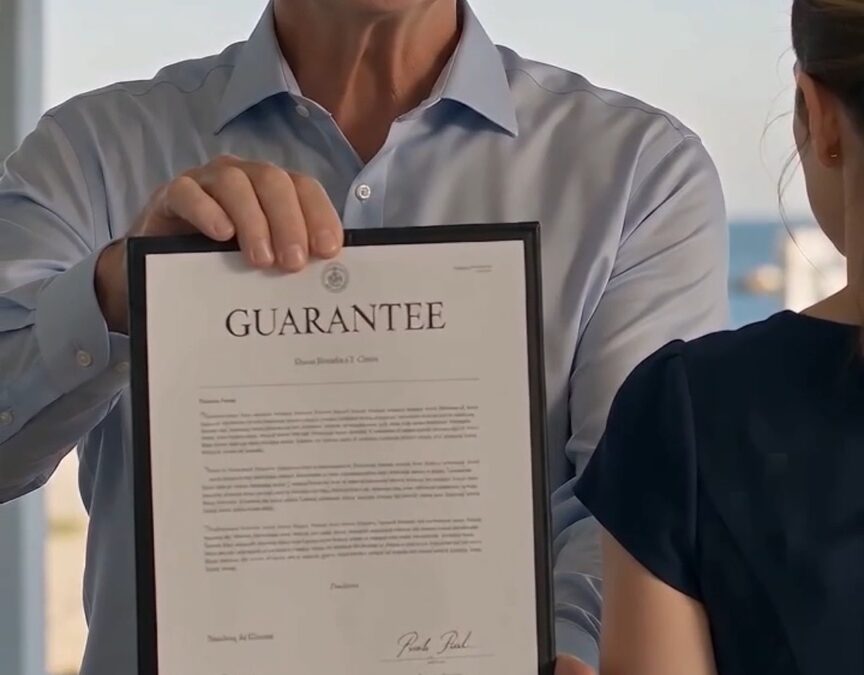
Paul placed the unsigned guarantee flat on the table.
Grant recognized the renewal packet immediately.
His reaching arm dropped against his trousers.
“Why did you bring that outside?”
Chapter 2: The Appointment Came Early
Paul kept his palm beside the papers, not over them.
“Because you keep calling this routine,” he said.
“It is routine,” Grant answered.
“Not without reviewing the proposed terms.”
Grant looked toward the guests nearest the empty table.
He was calculating who could hear.
I recognized that look from customer disputes.
He could become very reasonable when other people were listening.
“Then tell her,” he said.
“Tell her the company needs its operating line.”
Paul glanced at me, then back at Grant.
“Are you asking me to discuss the renewal here?”
“Yes. Clear this up.”
Paul lowered his voice anyway.
He didn’t announce company figures across the reception.
He pulled a chair out so I could sit.
Grant stayed standing on the opposite side.
Sloane came closer until Audrey caught her eye.
Then she stopped near the dessert table.
Paul pointed to the proposed guarantee.
The title was printed across its upper portion.
The signature space below it was empty.
“This is a new offer,” he said.
“Not a completed extension.”
Grant nodded impatiently.
“Fine. We sign it tomorrow.”
Paul looked at me.
“Only if Claire chooses to.”
Grant’s jaw tightened.
I could see he had expected a softer explanation.
Paul turned the packet so I could read it.
The revised offer had been approved July 18, 2025.
Grant had not received that version before the wedding.
Paul had brought it for our scheduled appointment.
It required a fresh guarantee from me.
It also required my signature on a mortgage modification.
My old signature did not automatically supply either one.
The existing credit facility matured July 31, 2025.
Without the signed renewal documents, there would be no renewed line.
Grant had expected another year of access.
He had apparently expected my agreement to come with it.
I read the relevant section again.
Then I asked the question I needed answered.
“If I don’t sign, you can’t renew using my cabin?”
“Not under this proposed offer,” Paul said.
Grant leaned across the table.
“Nobody said you were refusing.”
“I’m asking a question.”
“And he answered it.”
Paul slid the packet closer to me.
He did not slide a pen beside it.
That small absence helped me breathe.
I wasn’t being asked to perform cooperation for the guests.
I could read without somebody tapping a signature line.
Grant tried another approach.
“Claire helped us last year,” he said.
“She understands how this works.”
Paul looked directly at him.
“She also understands what she owns.”
Grant made a short sound through his nose.
“The cabin just sits there most of the week.”
I put my folded napkin beside the packet.
“It doesn’t belong to your company.”
“I didn’t say it did.”
“You talk as if it does.”
Audrey moved closer then.
“Can this please wait until tomorrow?”
Paul turned enough to include her.
“Your brother brought the company into this conversation.”
Grant looked at him sharply.
Paul continued before he could interrupt.
“Claire’s property has supported that facility.”
“That wasn’t a small favor.”
People at the nearest table had stopped talking.
I could hear a chair scraping behind me.
Paul didn’t list my finances or discuss private balances.
He simply named the contribution Grant kept minimizing.
I had not imagined how much I needed that said.
Not that I was generous.
Not that I was a good wife.
Just that the cabin was mine.
And allowing it to secure debt had been substantial.
Grant looked toward Audrey, expecting her to repair the conversation.
She stared at the empty signature space.
I picked up the edge of the packet.
Then I laid it back down.
“I’m not signing anything here.”
Grant exhaled slowly.
“Obviously. That’s why we have an appointment.”
“I’m not promising to sign tomorrow either.”
His expression became careful.
That was the first time he treated my answer as something practical.
He pulled out the chair opposite mine.
“Let’s separate what happened from business.”
“What happened was you pushed my face into cake.”
“I shouldn’t have done that.”
He said it quickly, like a sentence required to proceed.
Then he leaned forward again.
“But the company has employees and customers.”
I kept my napkin beneath my fingers.
“Those things don’t require my signature tonight.”
Paul nodded.
“No document needs to be signed at this reception.”
Sloane left the edge of the dessert table.
Grant watched her disappear toward the pavilion entrance.
I watched him watching her.
Then I asked him again.
“Are you sleeping with her?”
He turned back too slowly.
“Not here.”
That was not an answer, but it told me enough.
I pushed my chair back.
Paul gathered the loose pages into order.
“I can leave your copy with you.”
“Please do.”
Grant reached for the packet.
Paul put a separate copy in front of him.
It was the first time my husband saw the actual revised offer.
He turned directly to the conditions.
His lips pressed together as he read.
He had not known the precise renewal requirement.
He had known only that another year was being discussed.
For a moment, he looked genuinely surprised.
Then he started thinking.
“What if we lower the limit?”
Paul didn’t answer casually.
“Any alternative would need review.”
“What if we pay part of it down?”
“That would also need review.”
I stood with my copy against my chest.
Frosting had dried stiffly near my neckline.
“I want to leave.”
Paul asked whether I had transportation.
I said I could arrange my own ride.
Grant started to stand.
“I’ll take you.”
“No.”
Audrey opened her mouth, then closed it.
I collected my bag from my chair.
I did not collect the blue plate.
At the pavilion entrance, Paul caught up with me.
He stopped far enough away that I didn’t feel crowded.
“There’s something important before tomorrow,” he said.
I looked back toward the packet.
“Refusing the renewal doesn’t release the existing mortgage.”
Chapter 3: What Still Held The Cabin
I stayed beneath the pavilion awning while Paul explained.
The existing debt did not vanish because I said no.
Neither did the security I had already provided.
The company still owed what it had borrowed.
My existing guarantee remained relevant to that obligation.
The cabin mortgage would remain until the secured debt was satisfied.
I looked down at the packet beneath my arm.
“So he could still leave me with it.”
“There is still exposure,” Paul said.
“That’s why I want you to get independent advice.”
I appreciated that he did not call me safe.
A false answer would have been easier that evening.
I could have gone home imagining one refusal fixed everything.
Instead, I had a deadline and a real problem.
The facility matured July 31, 2025.
Grant’s company would need to repay or find approved financing elsewhere.
I could refuse the proposed new commitment.
I could not erase the old one by refusing.
Paul offered to keep the morning appointment.
I asked whether we could meet without Grant.
He said we could discuss my obligations separately.
He also said he could not become my lawyer.
That mattered.
He was the lender’s officer, not my personal representative.
He had stopped a public lie about my contribution.
He still had a job protecting the lender’s interests.
I arranged a ride and left the reception.
Grant called before I reached the hotel.
I let the call end.
Then a message appeared.
He wanted me to remember that equipment needed fuel.
Crews needed their schedules.
Customers needed their jobs finished.
He did not ask whether my neck hurt.
I washed frosting out of my hair in the hotel bathroom.
The water ran cloudy against the white sink.
I put the blue-stained napkin from my bag into the trash.
Then I changed clothes and opened the renewal packet.
I did not understand every paragraph.
I understood enough to put a blank sheet beside it.
I wrote down the questions I needed answered.
What did my old guarantee actually cover?
What would happen at maturity?
What proof would release the cabin?
Could Grant sign anything affecting my property without me?
I placed the questions inside my copy.
Then I moved my bag away from the adjoining chair.
There would be no suggestion that I was waiting for him.
Grant arrived at the hotel later.
He knocked before calling my name through the door.
“Claire, I’m not here to argue.”
I kept the latch engaged.
“What do you want?”
“To discuss how we finish the month.”
“We can discuss that with Paul.”
“Not everything belongs in front of a lender.”
“What happened in front of your family did.”
He stood outside long enough that I could hear his breathing.
Then his shoes moved away across the hallway.
I sat on the bed without turning on the television.
My neck felt stiff when I looked toward the window.
I took photographs of the frosting on my dress.
I also photographed the scraped patch beside my nose.
They were not dramatic pictures.
They were still worth keeping.
The cabin had come to me June 12, 2015.
My mother left it with the dishes inside.
Grant and I married May 14, 2016.
I had never added his name to the deed.
When the company needed its original facility, he asked carefully.
Back then, he brought home a folder and made dinner.
He said the cabin would help secure favorable borrowing.
He said it would be temporary.
I had independent documents to review.
I had the chance to refuse then.
I signed August 1, 2024, believing his plans.
I also believed the marriage I was living in.
The memory that kept returning wasn’t the signing.
It was the screen door.
I had stood with my shoulder against its sagging frame.
The wood smelled damp where old screws had loosened.
“Hold this side, please,” I told Grant.
His phone rang as he approached.
“It’s a customer. Keep going.”
I caught the frame with my hip.
Then I wedged folded cardboard beneath the door.
I drove the replacement screws myself.
He finished his call after I had put the tools away.
That weekend was not unusual.
The cabin repairs used my inherited funds.
The materials had cost $4,800.
The more difficult part had been giving it weekends.
I worked at the dental office during the week.
I spent Saturdays measuring, sanding, and hauling damaged boards outside.
Grant called it my little project.
Then he offered it to the lender as serious collateral.
At the morning appointment on July 20, 2025, Paul brought the originals.
He showed me the existing maturity date.
He showed me the separate proposed documents.
He explained the distinction without pretending it was simple.
I asked every question from my sheet.
He answered the lending questions and marked the legal ones.
Those needed my own attorney.
Grant arrived before we had finished.
He stopped when he saw the chair beside me was empty.
“I thought this was our appointment.”
“I asked to understand my position first,” I said.
Paul offered to schedule the company discussion separately.
Grant sat at another table until we finished.
That restraint was deliberate.
He wanted Paul to see him being reasonable.
When we finally spoke together, Grant had a proposal.
He would stop using the cabin after another renewal period.
He would reduce borrowing.
He would find a different arrangement when business improved.
“You know I can’t replace this overnight,” he said.
“I know you need a plan.”
“I have a plan.”
“One that still needs my signature.”
He pressed his thumb against the edge of his copy.
Then he asked me to come somewhere without Paul.
“Just meet me alone before you decide.”
Chapter 4: The Copy I Kept
I did not agree to meet Grant alone.
I told him I would speak after getting advice.
He looked at Paul as if that should be corrected.
Paul closed his folder instead.
“Claire is entitled to independent counsel.”
Grant nodded, his expression polite again.
“Of course she is.”
He offered to drive me home after the appointment.
I made my own arrangements.
At home, I packed clothing and work things.
I also collected my identification and cabin records.
I did not empty shared accounts.
I did not take company files from his office.
I made copies of documents that involved my own property.
That distinction mattered once anger started producing suggestions.
A relative told me to hide the company checkbook.
Another suggested I change every password Grant knew.
I changed my personal passwords.
I left company access alone because I had none to revoke.
I saved his messages in their original form.
Then I sent copies to a personal account he couldn’t access.
My photographs went into the same folder.
The actions were ordinary and slow.
I had to find a charger.
I had to call work about my schedule.
I had to explain why I wanted someone else collecting me.
Nothing looked like a sudden victory.
On July 21, 2025, I met Denise.
She was 48 and spoke without making promises.
She asked me to tell the wedding events in order.
When I started explaining why Grant had been upset, she stopped me.
“Tell me what he did.”
“He pushed my head into the cake.”
“Did you ask him to stop touching you?”
“Yes.”
“Did anyone hear?”
“Yes. Paul did.”
She wrote that down.
Then she asked about the cabin.
I gave her the inherited deed records.
I gave her the existing guarantee and mortgage.
I gave her the proposed renewal packet.
She placed the old and new documents side by side.
The separation made the issue easier to see.
My old obligation was not the same as a new promise.
The old debt still needed to be handled.
The new offer still needed my voluntary agreement.
Denise checked the scope of the original documents.
She also checked how the proposed extension was drafted.
There was no need to invent a mysterious loophole.
The lender itself required new executed documents.
Grant could not supply my signature.
Marriage did not let him mortgage my separate property alone.
Nor could he use an unsigned proposal as completed consent.
Denise explained that keeping the cabin separate required records.
I had them.
The inheritance predated our marriage.
Title remained solely mine.
The repair materials came from inherited funds.
We were not going to pretend a divorce judge would skip review.
We were going to preserve the records for that review.
She asked what I wanted to do about renewal.
“I don’t want another year of this.”
“Then we will say that clearly.”
She prepared a written refusal of the proposed renewal.
It did not claim the existing guarantee had vanished.
It did not demand an impossible instant release.
It stated that I would not execute the proposed guarantee.
I would not execute the proposed mortgage modification either.
I reviewed it before she sent it.
My copy stayed in the folder with the others.
The lender acknowledged receiving the notice.
Paul confirmed that the proposed renewal would not proceed as offered.
Then he provided the projected payoff for July 31, 2025.
It was $68,400, including the amount due through maturity.
I read that figure repeatedly.
The line limit had always been $95,000.
The actual payoff was lower, but it was still substantial.
I could not afford to treat it like a theoretical number.
Grant received the same business reality from the lender.
His response came through Denise after I asked him to stop calling.
He wanted to know whether a smaller guarantee would satisfy me.
He offered to remove me from future paperwork.
He suggested the cabin mortgage could stay temporarily.
Denise asked whether I wanted to consider any of those proposals.
“No.”
She did not decorate that answer.
She sent it.
Grant then tried the family route.
Audrey called while I was eating at the kitchen counter.
“I know he handled things badly.”
“He pushed my face into a plate.”
“I know. But now people could lose work.”
I put my fork down.
“Has he told you what he’s doing to repay?”
“He says you won’t discuss solutions.”
“I’m discussing them through my attorney.”
“That feels so formal.”
“It is formal.”
She went quiet after that.
I didn’t fill the quiet for her.
Later, Grant sent an apology through the permitted channel.
He said he had humiliated me.
He said he should never have put his hand on me.
Then he asked whether an apology changed the renewal decision.
It did not.
I could accept that he had named what happened.
I did not have to lend against my cabin again.
Denise kept the issues separate when she answered.
Meanwhile, Paul asked the company for a repayment plan.
The lender did not seize equipment in the wedding parking lot.
It did not order Grant out of his business.
It required the existing obligation to be addressed by maturity.
That was enough pressure.
Grant knew his accounts, his customers, and his machines.
He knew which pieces were already underused.
His next proposal was more practical than the others.
It included equipment he could sell and receivables he could collect.
Denise called after reviewing his message.
“He’s proposing repayment without your renewal.”
I pulled a chair out at the counter.
“What does he have to sell?”
Chapter 5: What He Could Sell
Grant’s company owned more equipment than it used every week.
That had once sounded like growth.
Now it supplied a way to repay the lender.
The proposal involved lender-approved sales.
Equipment securing the facility could not simply disappear.
The lender needed to approve releases tied to actual proceeds.
Paul explained that process to the company.
Denise explained my part to me.
I did not have authority to order a business auction.
I did have the authority to decline new personal exposure.
Grant had to decide how his company would meet maturity.
His proposed sale would net $41,000.
Customer collections would provide the remaining $27,400.
Together, those amounts matched the projected $68,400 payoff.
I checked the arithmetic myself.
Then I wrote the total beside the lender’s statement.
I did not cross out the cabin mortgage yet.
Plans were not payments.
Grant asked for a meeting with Denise present.
Paul joined the portion concerning the debt.
I agreed because I wanted facts rather than messages.
Grant arrived with his own business records.
He had sorted them into the order Paul requested.
He was prepared, controlled, and angry.
I could tell by the way he aligned the edges.
“The sales change what work I can take,” he said.
Paul nodded.
“That is a business consequence.”
“I’ll need to turn down larger jobs.”
I kept my copy of the payoff statement in front of me.
“I understand.”
Grant looked up sharply.
“You understand, but you’re still doing this.”
“I’m not renewing my guarantee.”
He shifted toward Denise.
“This is because she’s upset about the wedding.”
Denise answered without raising her voice.
“She does not need an acceptable emotional reason to decline.”
Grant looked back at his papers.
That argument had stopped working.
He moved to another one.
The projected equipment proceeds were not final.
A buyer might negotiate.
A customer might pay late.
He wanted me available as a backup.
“No,” I said.
“You wouldn’t even need to sign unless something slips.”
“No.”
Paul explained that the lender was not treating hypothetical consent as security.
The company needed an actual approved plan.
Grant asked whether another guarantor would work.
Paul said any alternative would require underwriting.
It could not be assumed or promised across the table.
That was another useful distinction.
I was not the only possible source of financing in existence.
I was the source Grant expected to be easiest.
When the business discussion ended, he asked to speak personally.
Denise stayed.
Grant looked at her and then at me.
“I’m not going to hurt you.”
“I’m still keeping her here.”
He rubbed his forehead.
For the first time, he looked tired.
Not ashamed enough to stop negotiating.
Just tired of finding that each door had conditions.
He said Sloane would not attend future family events.
I asked him a question he had avoided since the wedding.
“Was she your girlfriend before that day?”
He looked at the folder rather than answering immediately.
“Yes.”
The word was small and plain.
I looked at the chipped corner of the conference table.
I had been expecting it.
Hearing it still made me press my shoes together.
Grant started explaining how the relationship had developed.
I stopped him before he described our marriage to me.
“I’m not discussing what I supposedly drove you to do.”
“I didn’t say that.”
“You were getting there.”
Denise asked whether there was any practical issue left to address.
Grant said he wanted a chance to repair the marriage.
I said I wanted communication through counsel.
That decision did not dissolve the marriage that afternoon.
There were filings, disclosures, and an eventual agreement ahead.
It did stop him using debt meetings as private access.
Afterward, I sat in my parked car before driving.
I opened the window because I felt too warm.
Then I called work to confirm my next shift.
I needed something already scheduled to remain ordinary.
At the dental office, patients still needed appointments moved.
A printer still jammed in the same tray.
Nobody there asked me to rescue Grant’s company.
I did not explain every detail.
I said I was separating and needed calls screened.
That was enough.
Audrey called again later.
She had heard about the proposed equipment sales.
“This is really happening,” she said.
“Yes.”
“He’s saying the company won’t be the same.”
“It won’t have my cabin behind another year of borrowing.”
She asked whether I would at least speak to Sloane.
I put my lunch container into the refrigerator.
“About what?”
“Grant says she wants to apologize.”
“She laughed while I was wiping cake from my nose.”
“I know.”
“You were there too.”
Audrey inhaled sharply.
“I was trying to keep my wedding from falling apart.”
I closed the refrigerator door.
“You gave him a napkin first.”
She did not answer immediately.
I waited without softening it.
Then she said she remembered.
That was all I could manage with her that day.
The proposed equipment sale moved toward approval.
Paul kept business details with the company.
Denise received confirmation relevant to my secured exposure.
The lender would release the specified equipment liens only as authorized.
Proceeds would go directly toward the obligation.
Grant could not collect the money and postpone repayment.
That arrangement made the plan more than another promise.
It still depended on the transaction actually closing.
I checked my messages after work.
Denise had forwarded a short update.
The buyer had accepted the equipment arrangement.
The lender still had to approve the release.
Until then, nothing could be counted as paid.
Chapter 6: Waiting For The Transfer
The waiting was harder than the confrontation.
At the wedding, I had something immediate to answer.
During the payoff process, there were working hours and returned calls.
There were documents I could not make arrive faster.
I checked for updates before leaving for work.
Then I made myself stop checking between patients.
Denise told me which notices required a response.
Everything else went into the folder.
Grant continued running his company.
I did not imagine him sitting helplessly beside idle machines.
He contacted buyers and followed up with customers.
He rearranged work around the equipment he expected to keep.
Those were things he knew how to do.
For years, he had treated those skills as proof he should decide.
Now they were how he met an obligation without my renewed consent.
The lender approved the equipment release arrangement.
The sale produced $41,000 in net proceeds.
The money went toward the facility under that arrangement.
I received confirmation through Denise.
I read it at my kitchen counter.
Then I placed it behind the payoff statement.
There was still $27,400 to come from customer collections.
Grant sent an update requesting no response from me.
The customers had confirmed their payments.
I appreciated the information without thanking him for doing it.
Repaying his company’s debt was not a favor to me.
It was how the existing obligation was supposed to end.
He called from an unfamiliar number anyway.
I recognized his voice and almost disconnected.
“Please let me finish,” he said.
“I’m not discussing the marriage.”
“It’s about the money.”
“Then send it through Denise.”
“Claire, I’m doing everything you asked.”
“I asked you not to touch me.”
He stopped talking.
I stood beside the sink with the phone against my ear.
The dish towel beneath my other hand was twisted tight.
Then I set it flat.
“Send the update through Denise.”
I ended the call.
Later, I wrote down when it happened.
I did not need to argue with him about whether it counted.
I needed a record of what he continued doing.
The separation also had practical work attached.
There were household items to identify.
There was mail to redirect.
There were appointments I had scheduled as his wife.
I canceled the ones that required my participation.
I stopped keeping track of his work clothes.
I took his preferred groceries off my shopping list.
That change was smaller than a mortgage discharge.
It was noticeable every evening.
I no longer came home planning around his arrival.
Some nights I ate too early.
Other nights I forgot until I was hungry.
I began keeping something simple in the freezer.
The cabin was still not where I could fully relax.
I visited to check it, but the mortgage remained.
I looked at the screen door and postponed further repairs.
Not because fixing it would be pointless.
Because I wanted the debt finished before starting anything else.
I swept the porch instead.
Then I checked the windows and drove back.
At the office, I asked for an extended lunch on July 31, 2025.
I did not explain why I might need my phone.
My supervisor approved it.
I brought food I could eat without heating.
The lender had supplied a projected payoff through that date.
The company’s customer collections provided the remaining $27,400.
Combined with the equipment proceeds, it covered $68,400.
I watched my inbox rather than trying to call Paul directly.
Denise had asked that confirmations come through a clear channel.
That way, I would not confuse a verbal update with completion.
The first message said the final funds had been received.
I read the wording carefully.
Received was not yet the same as final accounting.
I waited.
A patient needed a different appointment time.
I moved it and repeated the details back.
Then I checked again.
The next confirmation said the facility had been paid in full.
The company would not receive the proposed renewed line.
No new guarantee from me had been executed.
I put my lunch back into its bag.
I had barely touched it.
For the first time since the wedding, I called Denise smiling.
She was pleased, but careful.
“We still need to confirm the mortgage discharge.”
“I know.”
“I don’t want you relying only on a payoff email.”
“I know.”
We both laughed a little at my repetition.
It was not because any of it had become funny.
I was relieved to have the next step be paperwork.
The lender initiated its discharge process.
The original mortgage did not disappear from public records instantly.
I did not tell relatives the cabin was cleared yet.
I told them the debt had been paid.
That was accurate and enough.
Grant’s company remained open.
He had lost the larger equipment and the revolving credit access.
He began scheduling smaller jobs around what remained.
He stopped describing the sales as hypothetical.
They had happened.
Audrey sent a message saying she was glad the cabin was safe.
I answered with the distinction I now understood.
“The debt is paid. I’m waiting on the recorded release.”
She sent back that she understood.
I hoped she meant more than the financial detail.
Grant did not attend the cabin with me.
He had agreed through counsel to stay away.
If he needed property from there, arrangements would be made.
I checked that agreement before visiting again.
Then I drove out and opened the windows.
The screen door still dragged in its frame.
Inside, the cupboard had an empty space among the blue dishes.
Audrey still had my plate.
I stood looking at that space longer than necessary.
Then Denise called.
The next update concerned the county record.
Chapter 7: The Plate Comes Back
The recorded mortgage discharge was confirmed August 15, 2025.
Denise sent me the recorded document.
I saved it with the original mortgage and payoff confirmation.
Then I printed a copy.
The printer took too long to wake up.
I stood beside it until the page came through.
There was no ceremony.
I checked the property description against my records.
Denise had already done the legal review.
I still wanted to recognize my own cabin on the page.
The mortgage securing that facility had been discharged.
The old exposure was no longer hanging over a new decision.
I called Paul to thank him for the clear explanations.
I also thanked him for what he had said at the wedding.
He did not take credit for my refusal.
“You made that decision,” he said.
“You made sure I knew there was a decision.”
He paused before answering.
“You should have been able to read it at breakfast.”
That was true.
The papers were supposed to have arrived in a quiet appointment.
Instead, Grant had forced everything into public view.
Paul had refused to let the public version become Grant’s version.
I told him the cabin release was recorded.
He said he was glad it was finished.
We did not discuss gossip from the wedding.
There was no need.
Audrey contacted me about the dishes afterward.
She had them packed and wanted to return them.
I asked her to bring them to a neutral place.
I wasn’t ready to host her anywhere.
She arrived carrying the same sturdy box I had used.
The dish towels were folded over the top.
For a moment, she talked only about the plates.
She had checked each one for chips.
She had washed them herself.
The blue plate from the cake table was wrapped separately.
“I thought you might want to check that one.”
I unwrapped it.
There was no crack along the scalloped edge.
The glass looked exactly as it had before the reception.
I ran my thumb along its rim.
Audrey watched without reaching toward it.
Then she said what she had avoided on the phone.
“I handed him the napkin because he was angry.”
I looked up.
“I thought if I got him settled, it would stop.”
“He had already stopped pushing me.”
“I know.”
“You were trying to stop him being embarrassed.”
Her eyes filled, but she nodded.
“Yes.”
That answer hurt more than a quick excuse would have.
It was also the first honest one she had given me.
She apologized for telling me not to make things worse.
She apologized for seeing frosting on his sleeve before seeing me.
I set the plate back into the towel.
“I’m not ready to act normal with you.”
“I understand.”
“I don’t know what normal will look like.”
She wiped her cheek with the heel of her hand.
“I won’t ask you to come to family dinners.”
“Please don’t carry messages from Grant either.”
“I won’t.”
She did not ask me to forgive Sloane.
She did not mention the equipment sale.
We finished transferring the box and left separately.
That was all the visit needed to be.
The divorce took longer than the credit line.
There were disclosures to exchange and assets to identify.
Denise did not let the wedding become a substitute for paperwork.
We documented what I had inherited before the marriage.
We documented the cabin title and repair funds.
We documented the business obligation and its payoff.
Grant had his own representation.
He retained the company under our eventual agreement.
I retained my separate cabin.
Other marital property was resolved in that agreement too.
I did not leave with every item I had ever liked.
Neither did he.
There was no magical award for being publicly humiliated.
The practical result came from records, negotiations, and enforceable terms.
Grant tried to bargain for a private reconciliation conversation.
Denise kept that separate from property negotiations.
I declined.
He later asked whether I would withdraw the photographs.
They were not posted anywhere.
They were preserved in my records.
There was nothing public for me to take down.
I told Denise I would keep them.
Grant did not repeat the request after her answer.
The final judgment was entered February 6, 2026.
I read the name section before I read the rest.
Then I checked the property provisions again.
The marriage had ended.
The cabin remained mine.
The company remained his responsibility.
I did not call Audrey that evening.
I made supper and washed the pan afterward.
Then I took the folder off the table.
I had been leaving it within reach for months.
Now I put it into the cabinet with my other records.
The following morning, Grant’s company appeared on a work invoice.
It had come in mail that needed forwarding.
I put it in the correct outgoing envelope.
I did not open it.
That ordinary action told me more than his messages had.
His business still had paperwork.
It just no longer belonged on my kitchen counter.
I packed for the cabin after work.
Warm clothes went into a bag.
Food went into a cooler.
I wrapped the blue plate in a clean towel.
I almost left it with the other dishes at home.
Then I placed it carefully on top of the bag.
The screen door needed proper work.
I had been putting that off for long enough.
When I reached the cabin, the porch light showed frost.
I carried everything inside before turning on the heat.
Then I unwrapped the plate and set it beside the sink.
Chapter 8: Breakfast At The Cabin
The cabin was cold enough that I kept my shoes on.
I turned the heat up and checked the kitchen tap.
Then I put the food away.
There was no call asking when I would be home.
There was no business conversation playing through a speaker.
I could hear the refrigerator start and stop.
I checked the folder once more before bed.
The recorded discharge was there.
The divorce judgment was there.
The inherited property records were behind them.
I did not need to reread every page.
I wanted to put them away knowing where they belonged.
Then I placed the folder inside the cabinet and closed it.
The blue plate remained beside the sink.
I washed it even though Audrey had already done that.
I used warm water and a soft cloth.
There was nothing left from the cake.
No icing underneath the edge.
No mark where it had scraped the table.
I dried it and put it on the counter.
The next morning, I made coffee before starting the door.
The old cardboard wedge was still tucked near the frame.
I pulled it out and set it aside.
It had flattened and darkened along one edge.
I remembered pressing it there while Grant took his call.
I had been so determined not to need him.
That had made the repair harder than it needed to be.
This time I took the door down properly.
I set it on supports instead of balancing its weight.
I checked the loose holes before choosing replacement screws.
Then I worked until the frame sat square.
I did not rush because someone else was waiting to leave.
I did not stop because a phone rang in another room.
When I needed another tool, I went to get it.
When my shoulder tired, I sat down.
The work took the morning at its own pace.
I checked the latch before lifting the door back into position.
Then I swung it open and let it close.
It caught neatly.
I opened it again to make sure.
The second time worked too.
I carried the old cardboard to the trash.
Grant had once offered to come fix that door.
It had been in a message after the divorce negotiations began.
He said he knew I still needed help with things.
I had answered that necessary arrangements could go through counsel.
I did not need to prove I could do every repair.
I could hire someone when I wanted help.
I could ask a person who actually intended to hold the frame.
That morning, I happened to be able to finish it myself.
I put the tools away before making breakfast.
There was sawdust on one sleeve.
I brushed it off outside instead of across the kitchen floor.
Then I came in through the repaired screen door.
It closed behind me without dragging.
At home, my routines had changed in small ways.
I still worked at the dental office.
I still packed lunch and occasionally forgot it.
I still had laundry waiting when I would rather leave.
Divorce had not made those chores interesting.
It had removed the extra work I once did around Grant.
His changing schedule no longer rearranged my evenings.
His unpaid invoices no longer arrived as my emergency.
When he needed a document from our old records, he asked properly.
If it was his, I provided a copy through the agreed channel.
I did not add a personal conversation to the exchange.
His company continued with fewer large jobs.
The equipment he sold had not returned.
Neither had the renewed credit line secured by my cabin.
He worked with the machinery and financing he could obtain himself.
That was not something I monitored every week.
The updates came only when relevant to finishing our arrangements.
Once those arrangements were complete, I stopped receiving them.
I knew Sloane remained part of the mess he had made.
I did not ask whether they were happy.
I had asked him the question that mattered to my marriage.
He had answered it with Denise present.
I did not need to keep interviewing him afterward.
Audrey respected the limits she had agreed to.
She stopped passing messages.
She did not send family invitations with Grant’s attendance omitted.
When she wanted to know whether I might see her, she asked.
Sometimes I said no.
Sometimes we spoke briefly about ordinary things.
The returned dishes were not permission to erase the reception.
She seemed to understand that.
I did not require another speech from her every time.
I required different conduct.
So far, she had managed that.
Paul was not transformed into my closest friend.
He remained a lender who had witnessed something wrong.
He had intervened and explained the documents honestly.
He had also made sure I understood the remaining risk.
I was grateful for both parts.
If he had only displayed the guarantee and promised freedom, I would have believed something false.
Instead, I had stayed involved through payoff and recording.
The cabin was clear because the debt was paid.
My future signature remained unused because I refused to give it.
Those were separate facts.
Both were settled now.
I cracked eggs into a bowl and put bread beside the stove.
The cabin windows began to clear as the kitchen warmed.
I had no guests coming.
I had no reason to arrange the table for anyone else.
I set out a fork, a mug, and the blue plate.
Then I sat down before the food got cold.
Through the window, I could see the repaired screen door.
Its latch sat straight against the frame.
I ate slowly enough to finish my coffee with breakfast.
When I was done, there was toast crust left along the scalloped edge.
I carried everything to the sink.
The fork went into the dishwater first.
Then the mug.
I washed the blue glass plate, dried it, and put it back in my cupboard.








