My Mother-In-Law Kicked Me Out Before 80 Guests While Pregnant — Then I Took Back Control
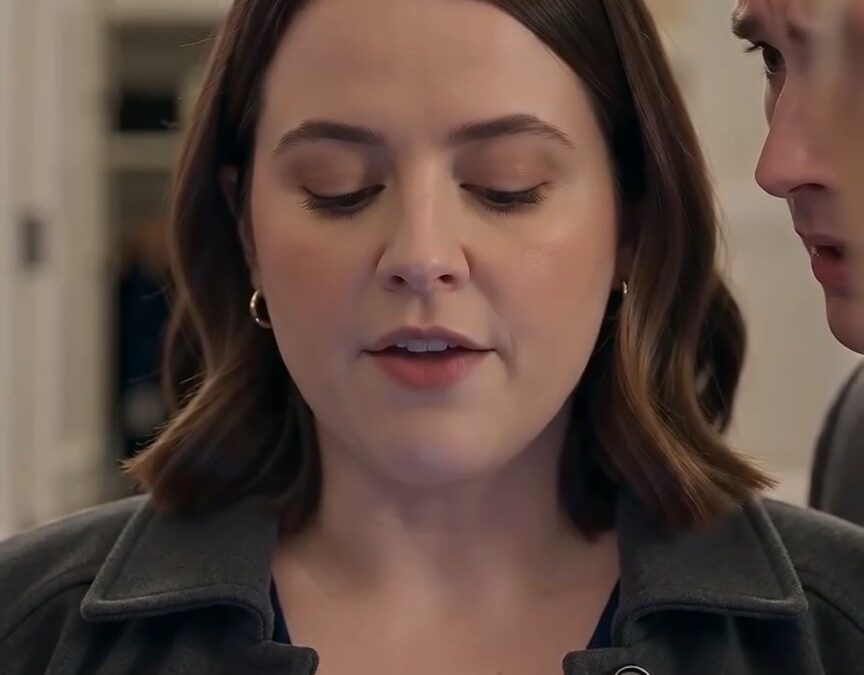
Chapter 1: The Coat Across My Plate
My mother-in-law dropped my coat across my plate and said, “You need to leave; this seat is for family.” I was 35 weeks pregnant, and 80 guests watched my husband help me into it while my phone stayed in my hand. “I paid for this entire celebration; every contract names me,” I said. Then I called the manager.
Until that moment, I had been checking the cake.
My phone showed a message about its presentation.
Dinner had been served in the hotel ballroom.
There were coffee cups beside the half-cleared place settings.
Above us, chandeliers lit the tables and dance floor.
We were in Columbus, Ohio, celebrating Celia’s American citizenship.
She was 63 and had been born in Canada.
Her citizenship ceremony had happened one week earlier.
I was 32, married to her younger son, Grant.
He was 34.
I had spent three months arranging that evening.
The coat landed partly across my dinner plate.
Its cuff dragged through sauce beside my potatoes.
For a second, I thought she had dropped it.
Then she pointed toward the ballroom doors.
“Celia, I’m sitting here,” I said.
“Yes. That’s what we need to fix.”
I looked at Grant.
He was standing beside my chair.
Behind his mother stood Audrey, holding a cream envelope.
Audrey was 35, married to Grant’s older brother, Paul.
Paul was 37.
Celia had always preferred Audrey’s company.
I knew that without needing anyone to announce it.
Usually, I found something useful to do.
That evening, I had done almost everything useful already.
Audrey had approached me before dinner with the envelope.
FAMILY was written across the front.
“Celia sent this during the week,” she’d said.
“Is it something for the program?”
“She told me to keep it sealed until tonight.”
I had glanced toward the head table.
Celia was greeting guests and holding both their hands.
Audrey lowered her voice.
“She also left me a voice message.”
“What about?”
“I think we should talk before the tribute.”
Then someone needed help finding a chair.
I had turned to answer.
Audrey stepped aside, and dinner started shortly afterward.
Now she stood behind Celia, still holding that envelope.
“Why would Mara leave?” she asked.
Celia kept looking at me.
“We have a place for you here, Audrey.”
“There are other chairs.”
“This is the head table.”
I moved my water glass away from the coat.
I needed room before I could stand.
Getting up required pushing back, turning, and finding support.
Celia watched me work that out.
“Grant,” I said.
He picked up my coat.
“Here. Let me help you.”
“Help me do what?”
“You’re tired. We can talk at home.”
“I didn’t say I was tired.”
“Please, Mara. Just leave quietly.”
He held the sleeve open.
My phone was still in my right hand.
I moved it so I could get my arm through.
He treated that movement as agreement.
Then he eased the coat over my other shoulder.
I stared at his hands as he found the buttons.
He had to work around my stomach.
“Look at me,” I said.
“Not here.”
“Your mother is doing this here.”
He missed a buttonhole and tried again.
I felt sick.
He wasn’t stopping her.
He was helping her get me out.
Across the room, a guest lowered a bread roll.
A server stood still beside a tray.
There were 80 people dressed for this celebration.
I had wanted every one of them comfortable.
Three months earlier, I had walked that ballroom with Isabel.
She was 46 and managed the hotel banquets.
We had checked the space between the tables.
“Several guests use canes,” I had told her.
“We can widen this aisle.”
“And Celia stops to hug everybody.”
Isabel had moved a chair while I measured the passage.
I remembered that chair while Grant finished my buttons.
Then I remembered Celia’s kitchen table.
I had practiced citizenship questions with her there.
Her soup bowl kept sliding toward the flashcards.
I moved it away and wiped a damp corner.
“Ask me that one again,” she had said.
I did.
She answered correctly, then asked for another.
“I forget everything when someone watches me.”
“Then watch the card for now.”
“That feels like cheating.”
“It’s practice, Celia.”
She had laughed and tried again.
I had liked helping her feel less nervous.
At the head table, I couldn’t find that woman.
“I am family,” I told her.
“Don’t make a scene.”
Audrey stepped closer.
“I’m not taking her chair.”
“We’ll discuss it after she leaves,” Celia said.
Grant finished the last button and stepped aside.
That was when I made my payment declaration.
I didn’t shout it.
I didn’t explain my savings to every table.
I said I had paid and the contracts named me.
Then I walked toward coat check.
Celia followed through the ballroom doors.
“You cannot interfere with my celebration.”
I stopped beside the desk.
“I’m calling Isabel.”
Grant came up beside me.
“Let Mom finish the thank-you first.”
I found Isabel’s number on my phone.
She answered before Celia could start again.
“Isabel, it’s Mara. I’m beside coat check.”
“Is everything all right?”
“No. I need you here.”
Audrey joined us, carrying the sealed envelope.
Celia looked at it.
“That’s private.”
“You asked me to bring it,” Audrey said.
Isabel came through the service entrance.
Celia immediately told her I was overtired.
I waited until Isabel looked at me.
“I want to end the celebration.”
“The private banquet?” she asked.
“Yes.”
“As the paying host, you have chosen to end your celebration.”
Celia looked toward Grant.
He didn’t dispute who had paid.
The total was $12,640.
I had saved it over 18 months of additional bookkeeping.
Every payment came from my separate business savings.
Celia knew I had handled the arrangements.
She assumed Grant had supplied the money.
She had never discussed payment with Isabel.
Audrey held the envelope beside my stained coat cuff.
“Before she calls this a misunderstanding,” she said, “can we open what she sent me?”
Chapter 2: What She Sent Ahead
I kept my phone in my right hand.
With my left, I reached for the envelope.
Celia moved forward, then stopped.
“That was supposed to be a keepsake.”
Audrey looked down at the sealed flap.
“Then why couldn’t I open it at home?”
“I wanted it to be special.”
“You wanted me to bring it here.”
“Yes, and now everyone is making this unpleasant.”
Isabel stayed beside the coat-check desk.
She didn’t reach for the paper.
She didn’t ask us to settle the family argument.
She was waiting for confirmation about the banquet.
I handed my clutch to Grant without looking at him.
Then I opened the envelope carefully.
Inside was a printed invitation on heavy cream paper.
The first paragraph celebrated Celia’s citizenship.
The next promised Audrey a hostess tribute after dinner.
It said she would sit beside Celia.
It named the head-table seat I had been using.
It also said I would be leaving early.
I read that part twice.
There was no question addressed to me.
There was no mention of asking whether I agreed.
“Did you tell Audrey I accepted this?” I asked.
Celia glanced at Grant.
“We discussed what would make the evening easier.”
“No,” Audrey said. “You told me Mara agreed.”
“I thought everyone understood.”
“I didn’t,” I said.
I turned the invitation toward Grant.
“Did you understand?”
He looked at the page but didn’t take it.
“I knew Mom wanted Audrey beside her.”
“When did you know?”
“Before tonight.”
The hotel lobby felt too warm.
I wanted to unbutton the coat.
Instead, I held the invitation flat against my palm.
“You knew she planned to replace me?”
“I knew about the seat.”
“Why didn’t you tell me?”
“I thought we could leave after dinner.”
“We?”
He looked toward the ballroom doors.
“I thought you wouldn’t want a late night.”
I had arranged the music with him sitting nearby.
He had watched me checking the cake order.
There had been plenty of chances to ask me.
“You decided that without talking to me.”
“Yes.”
Celia interrupted before he could say more.
“It was reasonable. She’s almost ready to deliver.”
“You didn’t ask me either,” I said.
Audrey took out her phone.
“There’s more than the invitation.”
Celia turned sharply.
“Don’t play that in the lobby.”
“You told me something different from what happened.”
“People leave messages quickly. They don’t weigh every word.”
Audrey found the recording.
She looked at me before pressing play.
I nodded.
Celia’s voice came through the little speaker clearly.
“Grant is covering the celebration. Mara only put it on her card, so don’t let her make you uncomfortable about the expense. You and Paul are hosting, and I want everyone to thank you properly. Mara has agreed to leave early. I’ve saved her seat for you.”
Audrey stopped it.
I could hear dishes through the ballroom doors.
Someone inside laughed, unaware of what was happening.
I looked at my husband.
“Did you tell her you supplied the money?”
“No.”
“Did you give me money for this?”
“No.”
“Did you know she told Audrey that?”
“No, Mara. I didn’t know that.”
Celia folded her arms.
“You’re married. I didn’t think it mattered.”
“It mattered when you told Audrey.”
“I didn’t want her uncomfortable about receiving credit.”
Audrey stared at her.
“Credit for what?”
“For bringing everyone together.”
“I answered your invitation.”
Paul came out of the ballroom then.
He stopped beside his wife.
“What’s going on?”
Audrey handed him the printed invitation.
He read it while she explained the message.
He looked up at his mother.
“We didn’t host this.”
“You’re part of this family,” Celia said.
“That isn’t the same thing.”
Celia turned back toward me.
Her voice became slower and more controlled.
“Those guests came here to celebrate something important.”
“I know.”
“Some traveled.”
“I know that, too.”
“They brought presents and cards.”
“I arranged tables for those.”
“Then you understand how unfair this is to them.”
I looked at the sauce on my cuff.
She followed my eyes, then looked away.
“You’re punishing everyone over a chair,” she said.
“No. You ordered me out.”
“You could have said you wanted to stay.”
“I was sitting at my own event.”
Grant lowered his head.
Celia tried again.
“You’re upset with me. Fine. Let everyone else finish.”
For a moment, I considered it.
I could leave and let the tribute happen.
Audrey could refuse it, or Celia could improvise.
The guests could dance.
The cake could come out under the chandeliers.
Then tomorrow I would be told nothing terrible happened.
I had simply gone home because I was tired.
I looked at Isabel.
“Dinner has been served,” I said.
“Yes.”
“And the remaining program hasn’t started?”
“That’s correct.”
“I understand there won’t be a refund.”
She nodded.
“I’m not asking for one.”
I wasn’t trying to recover the $12,640.
The food had been prepared.
The room and staff had been reserved.
I had chosen to spend that money.
I could also choose not to host another minute.
“Please end the private banquet,” I said.
Celia stepped toward Isabel.
“I’m the guest of honor.”
“And Mara booked the celebration,” Isabel replied.
She didn’t pull out fine print.
She didn’t argue about family relationships.
She looked at me once more.
I nodded.
Then she went toward the service entrance.
Paul turned to his mother.
“Let her work.”
Celia opened her mouth, then closed it.
Audrey put her phone away.
“I’ll send you the message,” she told me.
“Please do.”
Inside the ballroom, the music lowered.
Grant reached toward my elbow but stopped himself.
“Mara,” he said, “will you wait for me?”
Chapter 3: The Guests In The Lobby
“I need to sit first,” I told Grant.
He looked around as if searching for something useful.
Isabel was already bringing a chair.
She placed it beside the ballroom entrance.
“Take your time,” she said.
I lowered myself slowly.
The coat pulled across my stomach when I sat.
I unfastened the bottom two buttons.
Grant stood beside me without speaking.
I could see into the ballroom from there.
Staff moved between the tables with ordinary care.
Nobody switched on harsh lights.
Nobody ordered guests out of the hotel.
Isabel walked near the head table and spoke clearly.
She said the private celebration was ending early.
She thanked everyone for attending.
Coats could be collected at the desk.
Guests could take their time gathering their things.
She did not announce our argument.
She did not tell them I was angry.
Celia hurried back through the doors.
“There’s been a problem with the schedule,” she said.
Several people turned toward the hotel staff.
I stood before Grant could offer his hand.
“There isn’t a problem with the hotel.”
My voice sounded louder from the doorway.
“I ended the celebration after being asked to leave.”
Celia looked at me.
“She’s upset about where people were sitting.”
Audrey stepped into the room beside Paul.
“That isn’t what happened.”
She held her envelope against her dress.
“I didn’t arrange this celebration. Mara did.”
A guest near the front looked confused.
“We thought you and Paul were hosting.”
“We weren’t,” Audrey said.
Paul nodded.
“We didn’t pay for it or plan it.”
Celia’s fingers tightened around the back of a chair.
She looked as if she wanted Audrey to stop.
Audrey stayed where she was.
“There won’t be a hostess tribute to me,” she added.
I hadn’t asked her to say that.
She looked toward me when she finished.
I nodded, and she stepped back beside her husband.
People began collecting purses and gift bags.
Some approached Celia.
Others came toward me.
“Are you feeling all right?”
“Do you need some water?”
“Should you sit down?”
I answered what I could.
“Yes, I’m going to sit.”
“Water would be good.”
“No, the baby isn’t the reason we’re leaving.”
The last answer was harder than the others.
I did not want an ordinary pregnancy concern replacing what happened.
Isabel returned with water and a practical question.
“The kitchen can pack the cake for you.”
I looked through the doorway.
The cake had never been brought into the room.
I had approved its details several weeks earlier.
I had imagined Celia standing beside it for pictures.
“Can you offer slices to guests who want them?”
“Yes.”
“Please do that.”
“And the rest?”
“Don’t send it home with me.”
She nodded without asking me to explain.
Staff boxed portions in the kitchen.
Guests could take them as they left.
There was no cake presentation.
There was no tribute.
The dancing never began.
Celia came into the lobby holding a gift bag.
She had twisted its handles around her fingers.
“People keep asking what happened.”
“Tell them.”
“You’re making my citizenship into something ugly.”
“Your citizenship isn’t being taken away.”
“That isn’t what I meant.”
“I know.”
“I worked hard for it.”
“I know you did, Celia.”
I had never questioned her work.
I had practiced questions until my throat felt dry.
I had watched her improve.
I had celebrated with her after the ceremony.
She seemed to expect me to deny that now.
When I didn’t, she looked toward Grant.
“Are you going to let this stand?”
He looked at my coat.
Then he looked at her.
“You asked her to leave.”
“She could have spoken to me privately.”
“You said it in front of everyone.”
Celia turned away.
Paul came over with Audrey.
“We’ll help Mom get the gifts home,” he said.
“Thank you.”
His mother faced him.
“So you’re taking Mara’s side, too?”
“I’m taking you home.”
“That isn’t what I asked.”
“I know.”
He didn’t threaten her.
He didn’t list everything she had done.
He waited while she decided what to carry.
Audrey forwarded the voice message to me.
My phone vibrated in my hand.
I checked that it had arrived.
Then I slipped the invitation into my clutch.
Celia noticed.
“Why are you keeping that?”
“Because you keep calling this a misunderstanding.”
“It was meant for Audrey.”
Audrey answered before I could.
“I want Mara to have it.”
Celia looked at her, then at Paul.
Neither changed their answer.
The lobby gradually emptied of party guests.
Some hugged Celia.
Some offered me a quiet goodbye.
Others left without choosing a conversation.
I was grateful for that option.
Not everyone needed to stand beside us and decide.
Grant crouched beside my chair.
“I’m sorry.”
“For what?”
“For not stopping Mom.”
“You helped her.”
His face tightened.
“Yes. I did.”
“Did you know about bringing my coat?”
“No.”
“But you knew she wanted my chair.”
“Yes.”
“And you expected me to accept it.”
He looked down.
“Yes.”
I put my empty water glass on the nearby table.
I was too tired to keep extracting answers.
I opened my phone and arranged a ride.
Grant saw what I was doing.
“I can drive you.”
“I know.”
“Are you going somewhere else?”
“No. I’m going home.”
We owned that home together.
I had no plan to leave it that evening.
Grant stood and looked toward the entrance.
Then he looked back at me.
“Am I coming home, too?”
Chapter 4: The Drive Back Home
“It’s your home, too,” I told him.
He nodded but didn’t look relieved.
“I need to get there separately,” I added.
“Can I wait with you?”
“You can wait nearby.”
He stepped away without asking how far.
I sat with my phone and my coat.
The lobby kept moving around us.
A suitcase rolled toward the elevators.
Someone asked the front desk for directions.
The hotel had other guests with ordinary evenings.
I concentrated on those sounds for a minute.
Then I opened Audrey’s forwarded voice message.
I saved it where I could find it.
I sent a copy to myself as well.
I wasn’t preparing to sue anyone.
I didn’t want tomorrow’s explanation replacing tonight’s words.
Celia had already called it a scheduling problem.
Then she had called it a seating disagreement.
I photographed the invitation beside the FAMILY envelope.
The whole page fit clearly in the picture.
Then I put both papers back in my clutch.
Grant watched from several feet away.
He didn’t ask me to delete anything.
I called my mother while waiting for the car.
“Are you still at the party?” she asked.
“I’m leaving.”
“Is the baby all right?”
“Yes. This isn’t about the baby.”
I heard water running at her end.
Then it stopped.
“What happened?”
I told her about the coat.
I told her what Celia said.
Then I described Grant fastening the buttons.
My mother didn’t interrupt.
When I finished, she asked what I needed.
“I need you to stay on the phone.”
“I can do that.”
“I don’t need you to call anybody.”
“I won’t.”
The car arrived.
Grant opened the hotel door for me.
I thanked him automatically.
Then I wished I hadn’t.
Opening a door was easy.
So was holding a coat sleeve.
He watched me settle into the back seat.
“I’ll see you at home,” he said.
I nodded.
During the ride, my mother asked practical questions.
Did I have water at home?
Had I eaten enough dinner?
Did I want her to come over?
I said not yet.
I wanted her nearby without another person in the kitchen.
She understood.
Grant was home before I arrived.
The entry light was on.
I sat on the bench to remove my shoes.
My feet had swollen during dinner.
Grant knelt as if he might help.
“I can do it,” I said.
He stopped.
I worked each shoe off slowly.
Then I unbuttoned the coat.
The sauce had dried on the cuff.
“I can take that to be cleaned,” he said.
“I’m not worried about cleaning it.”
“I know.”
“Do you?”
He sat at the other end of the bench.
For a while, neither of us spoke.
Then I asked the question I couldn’t leave alone.
“Why did you expect me to accept it?”
“Mom gets carried away.”
“That explains her. It doesn’t explain you.”
He rubbed his hands against his trousers.
“I didn’t want to spoil her night.”
“So you helped her spoil mine.”
“Yes.”
He said it quietly, without arguing.
That mattered, but it didn’t make me feel better.
“You watched me plan this,” I said.
“I know.”
“You heard me talking about staying for the music.”
“I know.”
“You could have asked me before tonight.”
“Yes.”
“Instead, you helped me into my coat.”
His eyes filled, but I kept talking.
“I was waiting for you to tell her no.”
“I should have.”
“I shouldn’t have needed to explain it first.”
He nodded.
I wanted water and something plain to eat.
I went into the kitchen.
Party notes were still spread across the counter.
A table diagram sat beneath a pen.
Grant picked up the diagram, then put it down.
“Can I make you toast?”
“Yes.”
I sat at the kitchen table.
The toaster clicked.
He filled a glass and brought it over.
Neither of us treated toast as a solution.
When he sat down, I told him about the guest room.
“I need you to sleep there.”
“All right.”
“I’m not deciding everything tonight.”
“I understand.”
“I want counseling.”
“I’ll go.”
“I need more than you showing up.”
He started to answer, then stopped.
“What do you need tonight?”
“Sleep. And no more explaining your mother.”
He nodded.
We talked briefly about the morning.
I had work I could move.
He would handle anything his mother needed.
He would not send her questions to me.
Before bed, I placed the invitation in a drawer.
I put the coat over the back of a chair.
I couldn’t bear hanging it beside my other things yet.
Grant carried bedding into the guest room.
He didn’t ask whether I might change my mind.
I went to our bedroom and sat down carefully.
My phone lit up in my hand.
There was a message from Celia.
She wanted us to arrange another celebration.
“This time,” she wrote, “we can keep it simple.”
Chapter 5: The Requests That Kept Coming
I read the message twice.
There was no apology above it.
There was no question about whether I got home.
Celia wrote as if we had encountered a booking problem.
Something had gone wrong at the hotel.
Now I could arrange another room and try again.
I put my phone face down.
The next morning, I showed Grant.
He read the message at the kitchen counter.
“Do you want me to answer?”
“You can answer her. I’ll answer for myself.”
I sat at the table before typing.
I would not arrange another celebration.
I would not pay for another celebration.
I needed space from requests and party discussions.
Then I sent it without adding a friendly ending.
Grant wrote his own message.
He said we would not host a replacement event.
He said her treatment of me had been wrong.
I watched for a sentence about how excited she had been.
It didn’t come.
Celia replied to him instead of me.
He looked at the screen and exhaled.
“What did she say?”
“She says we’re making her feel ashamed.”
“What did you tell her?”
“That we aren’t discussing another party.”
He set his phone down.
For once, her discomfort stayed in her conversation with him.
It didn’t become an assignment for me.
One week after the celebration, we began counseling.
I had expected to defend ending the banquet.
Instead, I talked about Grant’s hands on my coat.
He sat beside me and listened.
When I finished, he said he thought he was helping.
“Helping me do what?” I asked.
“Leave without an argument.”
“I wasn’t the person who wanted me gone.”
He looked down.
“No.”
We went through what he had known beforehand.
Celia wanted Audrey beside her.
Grant knew that meant giving her my place.
He expected me to leave after dinner.
He hadn’t asked whether I wanted to.
He hadn’t told me there was anything to discuss.
He had not known about the payment lie.
That distinction mattered.
It didn’t remove what he did know.
At home, we talked about the $12,640.
Grant knew I had paid for the celebration.
He knew I was doing additional bookkeeping work.
He hadn’t asked how much savings it required.
When I told him, he pulled out a chair.
“That was all from your business account?”
“My separate business savings.”
He sat down.
Over 18 months, I had accepted additional work.
I checked figures after our regular dinner.
I finished reconciliations when Grant went to bed.
I had moved the extra earnings into savings gradually.
I was self-employed, so no one assigned those hours.
I had chosen them.
Three months before the party, I booked the ballroom.
Then I paid the remaining event expenses as required.
Every contract named me.
Every payment came from those savings.
“Why didn’t you tell Mom?” Grant asked.
“That she shouldn’t order me out?”
“No. About the money.”
“She knew I handled the arrangements.”
He rubbed his forehead.
“She assumed it came from me.”
“Yes. And she never asked.”
“I can put money back.”
“We can discuss our finances. That’s separate.”
“I should do something.”
“You should understand what happened.”
I didn’t want reimbursement offered as forgiveness.
I had chosen to give Celia a celebration.
That gift did not become a loan afterward.
I wasn’t sending her a bill.
I also wasn’t giving her another one.
Grant listened while I said that.
Then he asked what needed to change practically.
“You handle your family’s arrangements,” I said.
“What arrangements?”
“Calls. Gifts. Rides. Anything you agree to do.”
He started to say I remembered those things better.
Then he stopped.
“I heard that,” I said.
“I know.”
For years, requests had reached me through him.
Celia asked him something.
He told her to check with Mara.
Then I received a call with the answer half-promised.
I was preparing to have a baby.
I could not keep managing every adult’s calendar.
Grant put family details into his own phone.
He handled returning something Celia had loaned us.
He answered questions about gifts from the party.
When she asked whether I could organize another gathering, he said no.
He did not ask me privately afterward.
Audrey checked on me that week.
She didn’t ask me to reassure her repeatedly.
She said she was glad I had the recording.
Then she offered groceries.
I accepted.
Paul brought the bags to the porch.
He didn’t come inside to explain his mother.
That was a relief I hadn’t expected.
Celia tried another argument with Grant.
She said we were holding her age against her.
He told me afterward.
“What did you say?”
“That being older didn’t make it all right.”
“Did you mention that I’m pregnant?”
“Yes.”
“Would it have been all right if I wasn’t?”
“No.”
He was learning to answer what I actually asked.
I was learning to stop supplying easier questions.
Several days later, Celia called him while we were eating.
He let it go until we finished.
Then he listened in the kitchen.
When he returned, his expression had changed.
“She says there’s no reason for people to know who paid.”
Chapter 6: The Weeks Before Her Arrival
“What did you tell her?” I asked.
“That she already told people.”
Grant sat back down at the table.
“She says money should be private.”
“It was private until she made up a version.”
“I told her that.”
I picked up my fork again.
My dinner had gone cold while we talked.
I was tired of the same facts needing new explanations.
“I’m not calling her about this,” I said.
“I didn’t ask you to.”
“I know. I’m telling you.”
“All right.”
He carried our plates to the kitchen afterward.
I stayed seated and watched him rinse them.
There had been a time when I would have followed.
I would have helped clean while explaining my feelings.
Then I would have softened the explanation.
That evening, I let him finish the dishes.
The weeks after the party were uncomfortable.
My feet swelled by late afternoon.
I needed several tries to get out of bed.
Comfortable positions lasted about eleven minutes.
Grant learned where I kept the extra pillows.
He started asking before helping.
Sometimes I said yes.
Sometimes I wanted to do something myself.
He managed both answers without looking injured.
That helped more than the long apology he drafted.
He showed it to me once.
It started with how much his mother valued citizenship.
I handed it back.
“You’re explaining her again.”
He read the opening paragraph.
Then he put the paper away.
We continued counseling.
We talked about actual events from the week.
Not whether Grant was generally a good husband.
Not whether Celia had good intentions.
What did he agree to?
Who did he ask?
What work did his answer create for me?
Those questions were easier to use at home.
When Celia wanted information from the party paperwork, Grant found it.
When she wanted me to call the hotel, he declined.
The celebration was paid for and finished.
There was nothing I needed to arrange.
I also stopped sending updates merely to calm her down.
If I wanted to share something, I did.
If I was exhausted, I waited.
No emergency followed a delayed reply.
That was useful to discover.
One afternoon, I cleared the party notes from the counter.
I kept the receipts with my records.
I put the table diagram away.
Grant asked whether I wanted him to do it.
“No. I’m nearly finished.”
He nodded and went back to folding laundry.
The counter looked bare afterward.
I made myself a sandwich on the cleared space.
That small ordinary use of it felt good.
Audrey called while I was eating.
She asked how I felt.
“Large,” I said.
She laughed, then asked whether I needed anything.
“Not today.”
“All right.”
She didn’t use the opening to discuss Celia.
I appreciated that.
Before ending the call, she mentioned Paul.
“He’s told her we won’t be called the hosts.”
“Thank you.”
“He said she needs to correct that.”
“Has she agreed?”
“Not yet.”
I set the phone down after we finished.
Grant was sorting baby clothes nearby.
“She still hasn’t corrected it,” I said.
“I know.”
“What do you want to happen?”
He took a moment before answering.
“I want her to say what actually happened.”
“Even if she’s embarrassed?”
“Yes.”
He kept folding.
I watched him pair two tiny socks.
Then I went back to my sandwich.
There were still evenings when I was furious.
Sometimes the anger arrived while nothing was happening.
Grant would reach for my sleeve.
I would remember his fingers at the ballroom.
Once I pulled away before thinking.
He stopped immediately.
“Do you want me not to do that?”
“Yes. For now.”
“All right.”
He did not ask whether I still loved him.
He did not make me comfort him for noticing.
That made it possible to stay beside him.
We owned our home together.
We were preparing to raise a child together.
I wanted our marriage to work.
Wanting that did not mean pretending it already did.
Four weeks after the celebration, I woke during the night.
At first, I thought I needed another pillow.
I shifted onto my side.
The discomfort returned and stayed longer.
I reached for my phone to check the time.
Then I waited.
When it happened again, I called Grant.
He came from the guest room immediately.
We had not set a deadline for him to move back.
He stood beside the bed.
“What’s happening?”
“I think we need to call.”
He brought the hospital number and sat with me.
I was 39 weeks pregnant.
We followed the instructions we were given.
Grant carried the bag we had packed.
He checked that I had my phone.
At the door, he paused.
“Do you want me to tell anyone yet?”
“Not yet.”
“All right.”
He helped me into the car.
As we pulled away, another pain began.
I gripped my phone and told him to keep driving.
Chapter 7: Coming Home With Our Daughter
At the hospital, people asked me questions directly.
Grant let me answer.
When I needed help explaining something, I asked.
He listened closely enough to do it.
There were hours I remember only in pieces.
A damp cloth against my forehead.
The edge of a cup against my lip.
Grant moving a cord away from my hand.
He looked nervous.
I could see it even when he smiled.
But he did not ask me to reassure him.
He stayed where I could reach him.
When our daughter arrived, he cried.
I was exhausted, sore, and relieved.
For a while, I wanted only to look at her.
Grant sat beside us without filling the quiet.
He touched her little hand with one finger.
Then he looked at me.
“Do you want some water?”
“Yes.”
He brought it and helped me reach the cup.
Later, he asked about calling family.
I said he could tell them she had arrived.
I did not want visitors yet.
He repeated that back.
“No visitors until we invite them.”
“Yes.”
He called my mother first.
Then he called Celia.
I heard only his side of that conversation.
“She’s here. They’re both doing well.”
A pause.
“No, we aren’t having visitors yet.”
Another pause.
“It isn’t about fairness.”
He stepped away from the bed but stayed nearby.
I didn’t want him disappearing into the hallway.
I wanted to know what he promised.
When the call ended, he came back.
“She’s disappointed,” he said.
“What did you tell her?”
“That we’ll let her know when we’re ready.”
He sat down again.
He didn’t ask me to reconsider.
The first days at home were tiring.
Laundry collected faster than we could fold it.
Dishes appeared even when neither of us remembered eating.
I needed food before I had energy to choose it.
Our daughter needed care at inconvenient hours.
Grant did not describe those things as helping me.
He lived there.
She was his daughter.
He took his share of the work.
Sometimes he still asked questions I wished he could answer.
Where were the clean towels?
Had we bought more trash bags?
Could his mother stop by with food?
I answered the first questions when I had energy.
For the last, I asked what stopping by meant.
“She says she made something.”
“Does that mean leaving it or coming inside?”
“I’ll ask.”
He did.
Celia expected a visit.
We weren’t ready.
Grant arranged for the food without agreeing to company.
When he told me, I asked exactly what he said.
“That we aren’t having visitors yet.”
Not that Mara was being difficult.
Not that Mara needed to calm down.
We.
I wanted to trust that word again.
I didn’t announce it.
I let him keep using it correctly.
My mother came when I invited her.
She folded laundry without rearranging our drawers.
She asked before picking up the baby.
She made me something to eat.
She didn’t stay until I looked desperate.
After she left, Grant put the towels away.
He didn’t ask where they belonged.
Audrey sent a message offering something practical.
I said we were managing that day.
She replied that she was glad.
Then she left us alone.
That restraint felt like care.
Celia’s messages were longer.
She missed her son.
She missed her granddaughter.
She had waited a long time for this.
She didn’t understand why everyone else knew the rules.
I read them when I could manage it.
I didn’t answer every sentence.
Sometimes Grant responded.
Sometimes neither of us responded immediately.
We still sent ordinary updates when we wanted to.
A picture didn’t have to be payment for patience.
A visit wasn’t something she earned by calling repeatedly.
We continued counseling around the baby’s needs.
Some conversations were shorter than planned.
Sometimes we had to stop and settle her.
Still, we kept going.
Grant talked about the pressure he felt when Celia was disappointed.
I listened without volunteering to remove it.
He talked about trying to keep everyone happy.
I asked him who “everyone” had included that night.
He looked at me.
“Not you.”
“No.”
He nodded.
We didn’t need to spend the whole appointment arguing.
That plain answer gave us somewhere useful to start.
At home, his behavior kept changing in small ways.
He checked with me before agreeing to company.
He answered his mother’s calls himself.
He took the baby when I needed sleep.
He did not bring her back after ten minutes because she fussed.
I began letting myself rest while he cared for her.
At first, I stayed awake listening.
Then one afternoon, I slept through an entire feeding gap.
When I woke, Grant was sitting with our daughter.
There was clean laundry beside him.
He looked tired.
So did I.
But he didn’t look like he was waiting for praise.
Three weeks after the birth, I settled near the window.
Our daughter had finally fallen asleep against me.
My phone rested in my hand.
The house was quiet.
Then the doorbell rang.
Grant looked through the front window.
His shoulders dropped.
“Who is it?” I asked.
He turned toward me.
“My mother.”
Chapter 8: The Visit We Declined
“Did you invite her?” I asked.
“No.”
“Did you say she could stop by?”
“No.”
Grant’s phone began vibrating on the counter.
He checked the screen.
“She says she’s already outside.”
“I heard the bell.”
He put his phone down.
“Stay comfortable. I’ll handle it.”
I wanted to believe that sentence.
I also wanted to hear what it meant.
He opened the door and stepped onto the porch.
He pulled it mostly closed behind him.
Not enough to hide the conversation.
Enough to keep the cool air off us.
“Mom, this isn’t a good time.”
“I won’t stay long.”
“We didn’t arrange a visit.”
“I brought something for the baby.”
“You can give it to me.”
There was a pause.
Then Celia’s voice rose a little.
“I came to see my granddaughter.”
“We’ll invite you when we’re ready.”
“Is Mara making you say this?”
“No.”
He answered quickly.
Our daughter opened one hand against my shirt.
I watched her fingers settle again.
Celia lowered her voice.
I could still hear.
“You’re letting a party keep me away.”
“This is about arriving without asking.”
“She’s had her mother here.”
“Because we invited her.”
“That’s hardly fair.”
“Visits aren’t turns.”
I had never heard him say that so plainly.
He wasn’t shouting.
He sounded tired and certain.
Celia changed her approach.
“I can’t fix anything if she won’t see me.”
“You can start by correcting what you told people.”
“I apologized for the confusion.”
“There wasn’t confusion.”
The porch went quiet.
I adjusted our daughter against my shoulder.
Grant waited a moment, then continued.
“You told people Audrey hosted. You told her I paid.”
“I don’t want to discuss money on the porch.”
“Then arrange a time to correct it.”
“I’m trying to see the baby.”
“And today isn’t a visit.”
He didn’t keep explaining.
He said he would call later.
Then he came inside carrying the gift.
He locked the door and stood still for a moment.
“Did she leave?” I asked.
“Yes.”
“Are you all right?”
“Yes.”
He put the gift on a shelf.
Then he washed his hands.
“Do you need a break?”
I did.
He took our daughter carefully.
I went to the bathroom and stayed a little longer than necessary.
When I returned, he was walking through the living room.
He didn’t look pleased with himself.
He hadn’t won anything.
He had told his mother no.
Now he was taking care of our baby.
Later, Celia contacted Audrey.
Audrey asked permission to share the message with me.
I said yes.
Celia wanted help understanding what apology would be accepted.
Audrey had told her to ask me directly.
She would not negotiate my feelings for her.
The next message came to my phone.
“What do you want me to correct?”
I sat at the kitchen table before answering.
Grant was washing a bottle.
I read the question aloud.
“What do you think?” he asked.
“I think she wants instructions.”
“Do you want to give them?”
“Yes. Once.”
I wrote the facts in plain sentences.
I had arranged the celebration.
I had paid for it from my own earnings.
Audrey and Paul had not hosted it.
I had not agreed to give Audrey my chair.
I had not agreed to leave early.
I didn’t ask Celia for a long confession.
I didn’t ask her to discuss my pregnancy.
I didn’t ask her to praise my character.
I wanted her changed version corrected.
I added that the correction needed to reach the guests.
Not just Grant.
Not just Audrey.
The same people who received the original claim.
Then I wrote what future contact required.
Visits had to be invited.
She could ask me for something directly.
She could not assign work through Grant.
She could not assume I would pay.
If I said no, there would be no repeated requests.
I reread everything before sending it.
There was nothing clever in the message.
There was nothing I couldn’t say out loud.
Grant dried his hands and came over.
“Do you want me included?”
“Yes.”
He read it once.
Then I sent it with him included.
Celia didn’t answer immediately.
I put the phone down.
Our daughter needed feeding.
I needed lunch.
I had no intention of watching the screen all afternoon.
Audrey called later.
Paul was helping Celia find the original invitation contact list.
They could help her reach people.
They would not write an excuse for her.
“Does she understand that?” I asked.
“She understands.”
“Does she agree?”
“She’s angry.”
“That wasn’t what I asked.”
Audrey let out a tired breath.
“I know. Paul is asking the same thing.”
I thanked her for telling me.
Then I ate while my food was warm.
Grant sat nearby holding our daughter.
He asked whether Celia had replied.
“Not yet.”
He nodded and changed the subject.
For several days, we waited without sending reminders.
Celia knew what she needed to do.
Audrey and Paul stayed available to help with contacts.
Grant did not offer me as the person to organize it.
Finally, my phone lit up beside a clean pile of laundry.
Celia’s message was short.
“I will send the correction.”
Chapter 9: An Afternoon We Chose
Six weeks after our daughter’s birth, Celia sent it.
She used the original invitation contact list.
Audrey and Paul helped reach people who needed calls.
Grant received a copy.
So did I.
Celia said I had arranged and paid for the celebration.
She said Audrey and Paul had not hosted it.
She said I had not agreed to leave early.
Then she said asking me to leave was wrong.
There was no mention of confusion.
There was no explanation about being excited.
There was nothing about pregnancy making me sensitive.
I read it at the kitchen table.
Grant stood nearby with our daughter.
“Is it what you asked for?”
“Yes.”
“Do you want to answer?”
“Not right now.”
“All right.”
He went back to preparing lunch.
I put my phone beside my plate.
The correction did not return my money.
No refund had been requested or received.
It did not give me the evening I planned.
But the people she had misled now had the facts.
Some guests thanked her for clarifying.
Some contacted me privately.
Others said nothing.
I didn’t need them all to respond.
I also didn’t send the recording around.
I had kept it because I needed an accurate record.
I didn’t need a larger audience after the correction.
Audrey told me Celia was embarrassed.
“I imagine she is,” I said.
“She knows people talked.”
“They saw it.”
“I know.”
Then Audrey asked about the baby.
We talked about laundry and sleep.
It was our first ordinary conversation in a while.
I was glad to have it.
Paul stopped calling the evening a misunderstanding.
Grant stopped, too.
Celia no longer had me managing her occasions.
She no longer had Grant sending requests through me.
Audrey would not accept credit she hadn’t earned.
Paul would not help arrange a replacement party.
Celia still had her citizenship.
Her friends could still celebrate with her.
Her sons could still spend time with her.
None of that required another payment from me.
I returned to bookkeeping gradually.
Grant and I agreed on actual work hours.
He cared for our daughter while I worked.
He did not call it babysitting.
If his mother called during that time, he handled it.
Sometimes he still made mistakes.
Once, he started answering a visit request before checking.
Then he stopped and said he would ask me.
I noticed both parts.
We continued counseling.
There was no appointment when everything became repaired.
There were repeated ordinary choices.
He answered his mother directly.
He did household work without waiting for instructions.
He asked before making plans that involved me.
When I said something hurt, he listened.
He stopped telling me what she probably meant.
Eventually, I invited Celia for an afternoon visit.
I chose a time when I wasn’t working.
I chose a time when Grant would be home.
I sent the invitation myself.
She asked whether she should bring anything.
“Nothing,” I wrote. “Just come when we arranged.”
She did.
Grant opened the door.
I was sitting with our daughter in the living room.
Celia looked at the baby first.
Then she looked at me.
“Thank you for having me.”
“You’re welcome.”
She stayed near a chair until I offered it.
Then she sat down.
There was no envelope in her hand.
No list for me to check.
No event she wanted me to organize.
For a while, we talked about our daughter.
Celia asked before holding her.
I said yes.
Grant helped her settle comfortably in the chair.
For a moment, his hands reminded me of the coat.
Then I watched what he was doing now.
He checked that the baby’s head was supported.
He asked whether I wanted water.
He stayed in the room with us.
Celia looked down at our daughter.
Then she spoke to me.
“I shouldn’t have told you to leave.”
“No,” I said. “You shouldn’t have.”
“I wanted Audrey beside me.”
“You could have added a chair.”
She nodded.
There had been room for another chair.
“I wanted people to think she had done it,” she said.
“Why?”
Celia rubbed the edge of the baby’s sleeve.
“I liked how it sounded.”
I waited.
She didn’t add an excuse.
“I’m sorry, Mara.”
“Thank you for saying it.”
That was what I could honestly offer.
I didn’t tell her it was fine.
I didn’t promise our old arrangement would return.
Grant brought water.
Celia held our daughter until she became restless.
Then she handed her back when I asked.
She did not make me ask twice.
When the visit ended, she stood without suggesting dinner.
Grant walked her to the door.
I heard them saying goodbye.
His voice was affectionate.
There was no agreement that I would arrange anything later.
After he returned, he sat beside me.
“How are you feeling?”
“Tired.”
“Do you want me to take her?”
“In a minute.”
He nodded and waited.
Our daughter’s fingers rested against my thumb.
My phone lit up on the table.
My mother had asked about an ordinary family visit.
I picked it up and checked our plans.
Then I chose a time that worked for us.
I typed the invitation and sent it from the phone in my hand.








