My Parents Ordered Me Out After Grandma’s Funeral—Then I Read Her Trust Aloud
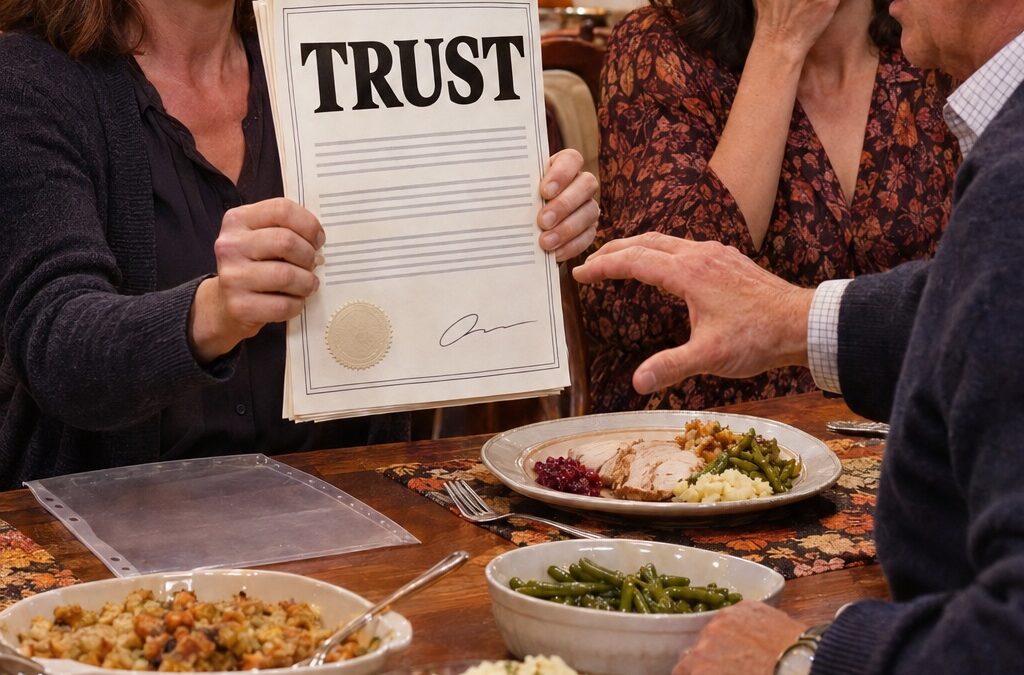
Part 3: What She Asked For
“Your grandmother said you had given up your apartment because she needed you,” Owen said.
“She knew you couldn’t simply get it back afterward.”
I pressed my thumb against the edge of the sleeve.
“She wanted you to rebuild your work hours and savings,” he continued. “She specifically said you shouldn’t have to ask your father for a room.”
Dad looked away from the phone.
Owen paused before adding anything else.
“She wasn’t describing wages. She was making arrangements for your housing.”
Nadine picked up her folded napkin again.
Nobody reached for the food.
I had known the provision before that dinner.
I had read it at my kitchen table afterward, alone.
But Grandma had never told me about that private conversation.
She had asked whether my old apartment building rented quickly.
I told her my apartment had already been rented.
Then she asked whether work could restore my old schedule.
I said I would have to ask when things settled.
At the time, I thought she was making conversation.
Now I looked down at the pages she had signed.
“Read the housing section,” Owen said.
I found the heading with my finger.
The document gave me rent-free occupancy for five years.
The period ended October 12, 2030.
I had to use the house as my primary residence.
I had to keep it in ordinary, livable condition.
I could not treat it like an empty rental property.
I read those conditions aloud, without skipping any.
Then I read the restriction on selling during that period.
A sale required my written consent.
Dad leaned forward again.
“Five years?”
“That’s what she signed.”
Beth put her glass down too hard.
“Five years in that house is too much compensation.”
I looked straight at her.
“Owen just explained that it wasn’t compensation.”
“I heard him. I’m saying it’s a lot.”
My sister’s chair was close enough to touch mine.
I moved mine away from the table a little.
Owen spoke before I had to answer again.
“Frances considered the length herself. She asked questions about it.”
“Did Erin suggest it?” Dad asked.
“No. Erin wasn’t present for those instructions.”
That answer changed where everyone was looking.
Until then, several relatives had kept their eyes on me.
Now they looked toward Dad and the phone.
Dad rubbed his thumb across the table’s edge.
“My mother had medication. She had medical problems.”
“Yes,” Owen said. “And I assessed her understanding directly.”
He described asking Grandma what property the trust held.
She knew the house and the money set aside.
He asked who would receive the remaining property afterward.
She identified Dad and explained the delayed possession.
He asked why she wanted me to remain there.
She answered without anyone supplying words for her.
Owen did not claim she had been perfectly healthy.
He did not need to make that claim.
“She understood the change and its practical effect,” he said.
Dad stopped rubbing the table.
I remembered Grandma correcting a delivery driver from her chair.
He had brought the wrong supplies to the side door.
She could barely stand without help that afternoon.
She still noticed the mistake before I did.
Nadine shifted her attention back to the papers.
“Who’s supposed to be in charge of all this?”
“I am,” I said.
Dad looked up.
I explained that I had accepted the successor trusteeship.
That had happened October 20, 2025.
Grandma had named me to handle the trust after her.
Being trustee did not mean everything belonged to me.
Owen made that distinction before Dad could challenge it.
I had duties to administer the trust as written.
I had to keep records and respect Dad’s remaining interest.
I could not simply spend trust money however I liked.
“And what do I get?” Dad asked.
“The remainder, under the trust,” Owen said.
Dad stared at the phone.
He had known he was a beneficiary.
He had treated that as immediate ownership of the house.
But the trust owned the house.
His right to receive it came after my occupancy ended.
The amendment changed when he could expect possession.
It did not quietly put the property in my personal name.
I wanted that clear in front of everybody.
“You’re still the remainder beneficiary,” I told him.
“I’m not asking you to believe otherwise.”
“Then you understand why this is a problem.”
“I understand why you wanted me out by Sunday.”
He glanced toward Nadine before answering.
That glance lasted longer than his earlier ones.
Owen explained that the deed from 2022 funded the trust.
The amendment did not require a new recorded deed.
It was a private trust amendment, not a public notice.
Dad could have known about the original arrangement for years.
That did not mean he had seen Grandma’s later instructions.
“Why wasn’t I told?” he asked.
“Your mother kept her estate planning private,” Owen said.
“She was entitled to do that while living.”
“I’m her son.”
“Yes,” Owen said. “And you will receive the required information.”
He told Dad when the formal packet would go out.
November 3, 2025.
It would include the notice and complete relevant documents.
Dad could take them to an attorney of his choosing.
There was no demand that he accept my interpretation alone.
I pulled the sleeve flat beside my phone.
Beth watched me smooth its bent corner.
She had stopped eating entirely.
One relative asked whether the food should be put away.
Nadine said no without looking at her.
Dad picked up his fork, then set it down again.
“This makes the sale much harder,” he said.
“There isn’t a sale,” I answered.
“There could have been.”
“I haven’t consented to one.”
He pushed his chair back enough to clear the table.
For a moment, I thought he was leaving the room.
Instead, he stayed seated with his hands on his knees.
“There’s an agent expecting to see it Sunday.”
Part 4: The Sunday Appointment
“Did you arrange that?” I asked.
Dad nodded once.
“It was only going to be a walkthrough.”
“Without asking me?”
“I expected you to cooperate with the estate.”
I moved my phone closer so Owen could hear clearly.
“Please tell him what you told the agent.”
Dad looked irritated at the request.
“I said the property would be available soon.”
“Available to visit, or available to buy?”
“Available to sell once we had everything settled.”
Nadine interrupted before I could answer.
“We weren’t signing anything behind your back.”
I believed that much.
A planned walkthrough was not a completed sale.
Dad had not produced a listing agreement or purchase contract.
He had simply expected the house empty on his schedule.
That expectation explained why Sunday had become so important.
I looked at him instead of Nadine.
“Cancel the visit.”
“We could still get a valuation.”
“Not by bringing someone through my home without permission.”
Owen explained the distinction in the same plain terms.
Dad’s remainder interest did not authorize him to grant access.
A prospective agent could not take directions from him alone.
I was administering the trust and living in the property.
A valuation might eventually serve a legitimate administrative purpose.
This proposed visit had not been arranged that way.
Dad nodded as though considering a business inconvenience.
“Fine. We can schedule it properly.”
“I’m not scheduling a sale appointment.”
Dad took out his phone and texted the agent.
He said the Sunday walkthrough was canceled.
When the agent acknowledged it, Dad turned the screen toward me.
“There. Nobody’s coming Sunday.”
“Thank you,” I said.
He put his phone beside his plate.
“You might change your mind when you understand the expenses.”
That was a different argument.
He had stopped claiming I had no housing right.
Now he wanted that right to look unaffordable.
Nadine took over before he could finish.
“There’s insurance. There are taxes. A roof doesn’t fix itself.”
“I know what a house costs.”
“You’ve never had to manage this house alone.”
I almost mentioned the repair appointments I had already handled.
Instead, I turned to the expense provisions.
The trust held a reserve of $38,000.
That reserve was for property taxes, insurance, and major repairs.
My utilities and routine household expenses were my responsibility.
I read that distinction aloud.
Nadine looked toward Dad.
“So she gets the money, too?”
“No,” Owen said. “The trust retains that money.”
I would pay proper trust expenses from the trust account.
I would keep records showing what each payment covered.
I could not use the reserve for groceries or personal purchases.
Any remaining reserve would pass under the trust’s remainder terms.
Dad asked what happened if the reserve ran low.
Owen said actual problems would require actual administration.
We were not going to invent a future dispute at dinner.
The documents addressed the present occupancy and expenses.
Dad’s lawyer could review the complete provisions with him.
I appreciated that Owen did not promise an effortless arrangement.
There would be taxes, insurance renewals, and repair decisions.
I had responsibilities along with the right to stay.
I was willing to accept those responsibilities.
“I’ll send accountings,” I said.
Dad looked at me more carefully then.
“Regular ones,” I added. “With supporting records.”
“I would expect that.”
“You should.”
That answer seemed to annoy him more than arguing would.
He could not accuse me of hiding the administration.
He could not honestly say I had denied his remainder interest.
Nadine picked at the edge of her napkin.
Dinner had become something nobody wanted to resume.
Owen asked whether there were further immediate questions.
Dad said his own attorney would review everything.
Owen said that was sensible.
Before ending the call, I asked about entry.
He advised putting access arrangements and requests in writing.
He also said to preserve the documents and maintain insurance.
I wrote those points on the back of an unused envelope.
The trust stayed out of reach of the serving dishes.
After the call, I placed it back inside its sleeve.
Dad watched me fasten my bag.
“You’re leaving before we’ve finished?”
“The house discussion is finished for tonight.”
“We invited you for dinner.”
I looked at my untouched plate.
“You told me to leave my home before I ate.”
Nobody offered another explanation for that.
I carried my bag into the hallway.
Beth followed me as far as the coat hooks.
“I didn’t know there was an amendment.”
“You knew there had been a funeral.”
She reached for my sleeve, then lowered her hand.
I put my coat on without helping her answer.
At home, I left the kitchen light on.
Grandma’s chair still stood beside the table.
I sat in my own chair and opened my bag.
First, I checked that every page was there.
Then I scanned the complete packet to secure storage.
I saved Owen’s contact information with the estate records.
I made separate folders for house expenses and personal expenses.
Nothing dramatic happened while I did those things.
The refrigerator ran, and my coat slid off the chair.
I picked it up before starting the next task.
I sent Dad a written message about Sunday.
I recorded that he had canceled the unauthorized agent appointment.
Any future access request needed to come to me.
I copied Owen so the instruction had a clear record.
Then I checked the insurance documents Owen had identified.
I added the next payment obligations to my calendar.
I did not use the trust account for my groceries.
I paid my utility bill from my own checking account.
Those were small tasks, but they mattered immediately.
They made my administration match what I had promised.
Dad answered without apologizing.
He said he would postpone discussions pending legal advice.
He also confirmed the Sunday visit remained canceled.
I saved that message with the other correspondence.
November 3, 2025, Owen sent the formal beneficiary packet.
Dad received the amendment he had first seen at dinner.
He also received the provisions governing my duties.
There was nothing selective about the information he received.
He could read the limits on my authority himself.
Afterward, Dad wrote that his lawyer had reviewed it.
He wanted to meet without Owen or the relatives.
“Come alone,” his message said. “We should settle this privately.”
Part 5: His Lawyer’s Answer
I read Dad’s message while my work headset charged.
For years, “privately” had usually meant no one could disagree.
This time, I answered before putting the phone down.
“I’ll discuss the trust with both attorneys included.”
Dad called instead of writing back.
“I’m not paying lawyers to watch us talk.”
“Then send your proposal in writing.”
“You’re making a family matter expensive.”
“I’m keeping a trust matter documented.”
He breathed into the phone before responding.
Eventually, he agreed to a telephone discussion with counsel.
Nadine would listen from his end.
I would sit at my kitchen table with Owen available.
No one needed to dress up another dinner as a meeting.
Before the call, I placed the sleeve beside my notebook.
I opened to the provisions we had already discussed.
I wrote down what I needed confirmed.
The move-out demand had to be withdrawn.
The agent visit had to remain canceled.
Future entry needed to be arranged with me.
I also wanted Dad to understand the accounting schedule.
I did not prepare insults or questions about his character.
There was enough to settle without adding those.
His lawyer began by identifying the limits of the discussion.
He represented Dad, not me or the trust.
He had reviewed the documents Dad received.
Then he addressed possession directly.
Calvin could not evict me under the arrangement as written.
He was not my landlord.
He was not the current owner of the house.
His remainder interest did not give him present possession.
Nor did it entitle him to immediate sale proceeds.
I wrote those points down although Owen had explained them.
Hearing them from Dad’s lawyer mattered differently.
Dad could not dismiss that advice as my attorney helping me.
“So there’s nothing I can do?” Dad asked.
His lawyer did not tell him that.
He could receive information and appropriate accountings.
He could raise genuine concerns about administration.
He could enforce his lawful rights as a beneficiary.
But disliking the occupancy period was not an administrative violation.
There was no promised quick eviction hidden in the papers.
Dad asked whether we could reach another agreement.
“Yes,” his lawyer said. “If Erin voluntarily agrees.”
That was the opening Dad had prepared for.
He proposed that I surrender occupancy early.
We could list the house and avoid years of administration.
I could receive an agreed payment from the sale.
His lawyer made clear it would require proper documentation.
It was an offer, not something Dad could order.
I listened until Dad finished describing the general proposal.
He did not provide an amount.
He wanted me to accept the idea before discussing terms.
I looked toward Grandma’s empty chair.
I had taken work calls from that table while she rested.
I knew how uncertain my schedule still was.
Moving immediately would mean finding housing while increasing my hours.
Selling would turn every conversation into another deadline.
“No,” I said.
Dad waited as though I had stopped mid-sentence.
“I’m not surrendering my occupancy.”
“You haven’t even heard what we might offer.”
“I’m not asking for an offer.”
Nadine spoke from farther away on his end.
“You’re choosing to make this difficult for everyone.”
“I’m choosing to remain in my home.”
Owen did not need to improve that answer.
He simply asked that the present arrangement be acknowledged.
Dad’s lawyer confirmed the Sunday demand had no effect.
Dad said he was withdrawing it.
He also confirmed that the agent visit had been canceled at dinner.
Any future access would be requested and agreed in advance.
We discussed how routine trust information would be provided.
Dad would not need to chase me for basic records.
I would not need to defend household groceries as trust expenses.
The categories were different, and I would keep them different.
After the call, Owen summarized the agreed points in writing.
Dad’s lawyer acknowledged the summary.
I printed it and filed it behind the trust.
Then I moved my work headset back beside the computer.
For the first time since dinner, I answered a scheduling call.
I did not have a move-out date waiting afterward.
Beth came over later that week.
She brought food in a dish I recognized from her kitchen.
I let her in, but I did not take the dish.
She carried it to the counter herself.
“I shouldn’t have said you’d stayed long enough.”
“No.”
She stood beside the sink.
“And I shouldn’t have called it compensation.”
“You said the house was too much compensation.”
“I know what I said.”
I waited while she looked around the kitchen.
The feeding supplies were no longer beside my work area.
The clear space seemed to hold her attention.
“I thought you were getting room and board,” she said.
“I was getting interrupted sleep and reduced work.”
“I know you worked hard.”
“You saw me working. That isn’t quite the same.”
I opened the drawer where I kept Grandma’s care instructions.
I did not hand Beth a stack of records.
I took out the small notebook Grandma had used.
Her handwriting stopped before the blank pages did.
“She used to apologize when the pump woke me.”
Beth touched the counter with both palms.
“I remember.”
“Then I don’t understand why you joined in.”
She did not blame Dad or claim she had been confused.
She said she had thought about her own possible inheritance.
She had treated the delay as something I had taken.
It was not a comfortable admission to hear.
It was more useful than another vague apology.
“I’m sorry,” she said. “You shouldn’t have had to defend that.”
I accepted the apology without promising everything was settled.
We put the food away together.
Before she left, she asked if she could visit again.
I told her to call first.
After her car pulled away, Dad’s name appeared on my phone.
“I’d like to come get something from my mother’s room.”
Part 6: The House Afterward
“What do you want to collect?” I asked.
“Some photographs. Her sewing basket, if nobody else wants it.”
I set my phone on the table and sat down.
Until then, most of his requests had concerned the sale.
This one concerned things Grandma had actually touched.
“I need to check how her personal belongings are distributed.”
“You’re going to make me ask permission for photographs?”
“I’m going to follow the documents for those, too.”
He did not like that answer.
But he did not hang up.
We agreed that he would send a list.
I would check it before arranging a visit.
The house right did not make every object inside mine.
Being angry did not change that.
I reviewed the personal-property directions with Owen.
Some belongings could be distributed as the trust allowed.
Others needed to remain listed until administration was complete.
I photographed what Dad requested and recorded the agreed items.
That protected him as well as me.
Nobody could later claim he had taken things secretly.
Nobody could claim I had quietly disposed of them.
When Dad arrived, Nadine stayed in the car.
I had put the approved items on the dining table.
The sewing basket sat beside a small stack of photographs.
Dad lifted its lid.
Grandma had kept thread, buttons, and folded mending inside.
He touched the top spool without taking it out.
“I thought she threw this away.”
“She used it.”
He closed the lid and looked toward the hallway.
“Can I see her room?”
I stepped aside.
The bed was made, and the medical equipment was gone.
I had not turned the room into an office.
I was still deciding what belonged where.
Dad stood in the doorway without entering at first.
Then he walked to the dresser.
“She liked it here,” he said.
“It was her house.”
“I know that.”
I did not answer the part he had not said.
He stayed in the room while I returned to the kitchen.
I could hear drawers remaining closed.
When he came back, he carried nothing extra.
We checked the items against the agreed list.
He acknowledged receiving them.
It was ordinary administration, not another argument.
At the door, he paused with the sewing basket.
“Nadine thought you’d have somewhere else lined up.”
“You asked me to leave. You didn’t ask whether I did.”
He looked down at the basket handle.
“No,” he said. “I didn’t.”
It was not an apology for everything at dinner.
I did not treat it as one.
But I let that answer stand without improving it for him.
He carried the basket to the car.
Nadine watched through the window and did not get out.
Neither of them had a key giving them unrestricted access.
Neither had permission to bring an agent through the house.
Those arrangements stayed in writing afterward.
Dad continued receiving the information he was entitled to receive.
He did not receive immediate possession or sale proceeds.
The remainder interest was still his.
My occupancy was still mine to exercise under the trust.
I did not need him to like that distinction.
I needed our conduct to match it.
Over the following weeks, I learned the administrative routine.
Insurance notices went into the house-expense folder.
Trust payments had descriptions and supporting records.
My personal purchases stayed out of that account.
When something needed repair, I documented the problem first.
I asked questions before approving work I did not understand.
I sent Dad the promised accounting information.
He sometimes replied with a question.
I answered the question instead of reopening Halloween dinner.
There was enough practical work without doing that again.
At my job, I asked about increasing my hours.
My supervisor could not restore my former schedule instantly.
We worked out a gradual increase as openings became available.
I stopped treating every extra shift as a housing emergency.
I could accept work and still plan the rest of my week.
Grandma’s care notebook stayed in a drawer, not beside my keyboard.
I no longer checked a feeding-pump display between calls.
Sometimes I still woke expecting to hear it.
On those mornings, I got water and checked the kitchen clock.
Then I went back to bed.
I began using the room at the back for my work.
Moving the desk took longer than choosing where it belonged.
I kept stopping over things Grandma had left in drawers.
A measuring tape went into the sewing supplies.
Loose photographs went into an album.
Her reading glasses stayed on the dresser for a while.
Nobody was waiting outside with boxes.
Nobody was telling me the room needed to photograph well.
Beth called before visiting again.
This time, she asked whether I wanted company or help.
I said company, and asked her to bring something for dinner.
She arrived carrying the dish without mentioning the house’s value.
We ate at the kitchen table.
She sat in her usual place, not Grandma’s.
We talked about work and a recipe Grandma never wrote down.
Beth remembered an ingredient I had forgotten.
I found the mixing bowl Grandma used and set it out.
We did not agree on every family matter that evening.
When Dad’s name came up, Beth did not excuse the deadline.
She said she had spoken to him about her own words.
I told her that was between them.
What mattered to me was what she did in my kitchen.
She helped clear the plates without acting like a guest.
Before she left, she asked about coming again.
I checked my work schedule instead of an uncertain moving plan.
Afterward, I wiped the table and opened the desk drawer.
The trust papers had acquired a slightly bent corner.
I straightened it against the desktop and checked the attachments.
The accounting summary belonged behind the signed provisions.
The correspondence belonged in its separate folder.
I slid Grandma’s trust into its plain protective sleeve.








