My Sister-In-Law Ripped My Check At A Memorial Reception While I Held My Baby — Until I Spoke
Part 3: The Page She Remembered
“Yes,” I said. “You borrowed before your company existed.”
Kelsey stared at the certified state record.
It showed her limited liability company was formed June 2, 2023. Our loan agreement was dated March 10, 2023. Back then, she operated the studio as a sole proprietor.
She had borrowed the money personally.
Moving the studio into a company hadn’t released her.
I turned the folder slightly so she could read.
“This is why closing it doesn’t settle our loan.”
“Everything went into the company,” she said. “Including the debts.”
“I never agreed to replace you as the borrower.”
The loan had matured on March 10, 2025. I had allowed more time while Joel was sick. I hadn’t signed a release or forgiven the principal.
Our agreement required my written approval for either.
Adam’s name wasn’t on the loan as a lender. He had no authority to change it for me.
Kelsey touched the edge of the folder.
“Where did you get that page?”
“Vera obtained it from the state.”
After Kelsey’s repayment message, I had consulted an attorney. I wanted to know what to return when payment cleared.
Vera checked who had borrowed and when.
On May 22, 2025, she obtained the certified formation record.
The organizer Kelsey hired had signed and filed the company document. Kelsey had received confirmation that her company existed, not the filed document itself.
She had never seen or signed this record.
She also hadn’t known I had consulted Vera.
Now she could compare the dates herself.
Kelsey looked at Adam instead of arguing with the page.
“You told me she agreed.”
Adam picked up his water, then set it down.
“I thought she would understand.”
“That wasn’t what you told me,” Kelsey said.
For the first time, she sounded angry with him.
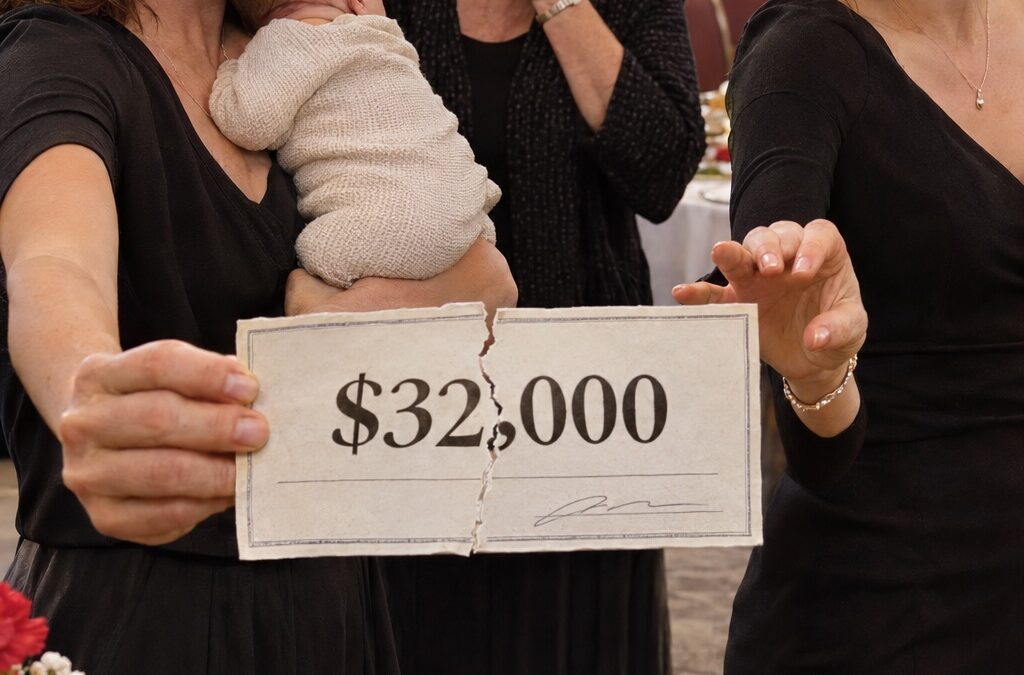
I looked at the torn check beneath my wrist. One scrap had caught a wet circle from someone’s glass.
“Tell her what you told her,” I said.
Adam glanced toward Denise.
“Can we please not do this with an audience?”
“You announced it with an audience,” she answered.
He pulled his chair closer to the table.
“I told her you were okay with forgiving it.”
My daughter made a small, impatient sound against me.
I adjusted her blanket and waited.
“I hadn’t asked you yet,” Adam added.
Kelsey let out a breath through her nose.
That explained why she had come with a check but felt entitled to destroy it. She had written it before his promise. Then she decided his promise mattered more than asking me.
It did not excuse what she had done.
She could have spoken to me privately.
Instead, she had tried to make disagreement look cruel.
I picked up my phone again.
“There’s more on your message.”
Kelsey watched the screen while I restarted the voicemail.
Her recorded voice filled the space between us.
“I’ll bring your repayment check to the reception. Bring the original agreement so we can finish everything once it clears.”
Then came the sentence I had remembered most.
“I know you need it for your leave.”
I stopped the recording.
Kelsey looked at my daughter, then down at the check.
She had known exactly why the money mattered.
“It was before Adam talked to me,” she said.
“Yes,” I answered. “And I never agreed afterward.”
Denise moved a clean napkin beneath the damp check scrap.
She didn’t give a speech about everything I’d done.
She simply kept the paper from getting wetter.
Kelsey pulled out the chair opposite mine.
“Then give me time to close properly,” she said.
That was a different request from saying we were even.
I was willing to hear it.
“What are you proposing?”
“I don’t know yet. I need to finish everything.”
“You can send me a proposal.”
She looked toward the open agreement.
“Can I take that with me?”
“No. You can have a copy.”
Her own signed copy should have been in her business records. Whether she had kept it wasn’t something I could fix.
I put the original back inside the folder.
Adam leaned toward me.
“We can talk about this at home.”
“We will,” I said.
Then I gathered the check pieces into the folder’s pocket.
My daughter needed feeding. Joel’s photograph was still standing beside the flowers. Guests had come to remember him, not watch us negotiate.
“I’m not discussing payment further in this room.”
Kelsey stood before I did.
“So now I’m supposed to wait for a letter?”
“You’re supposed to repay the loan.”
Denise helped me lift the diaper bag onto my shoulder.
I took my daughter to the quiet room off the hall. After feeding her, I sat there longer than I needed.
There was a small trash can beside the chair.
I picked a torn napkin off my shoe and dropped it in.
I kept checking that the folder was still in my bag.
At home, Adam reached for it on the kitchen counter.
“I just want to see what you showed her.”
I moved it beside me.
“You can look while I’m here.”
He opened the agreement and read the first page.
“You really kept everything.”
“Yes.”
I put my daughter in her bassinet within sight of us. Then I found tape in the kitchen drawer.
Adam watched me match the torn edges.
“I was trying to make things easier for her.”
“You used my money to do that.”
“She just lost her brother.”
“You lost him too,” I said. “That didn’t give you permission.”
He sat down but didn’t answer.
I taped the check on the back, leaving the front readable.
I knew a repaired check wasn’t the same as cleared payment. I wasn’t going to deposit something Kelsey had publicly repudiated.
I wanted the pieces preserved.
Then I saved a copy of the voicemail outside my phone.
I photographed the check and the original signatures.
The next morning, I contacted Vera again.
I told her what had happened at the reception.
She asked me to bring the entire folder back.
Not just the page I thought mattered.
At her office, she listened without interrupting.
She reviewed the loan, the certified record, and the requirement for written changes. She asked whether Adam ever handled this loan for me.
“No.”
“Did you tell Kelsey he could negotiate?”
“No.”
“Did you ever agree to substitute her company?”
“No.”
Vera laid the documents back in order.
“Then our claim is against Kelsey, the original borrower.”
She did not promise an immediate recovery.
The documents supported a claim, not money already collected. Kelsey would still have an opportunity to respond.
On June 2, 2025, Vera sent a written demand.
It identified the unpaid principal and requested payment.
I paid my own legal costs rather than adding them to the family argument. I asked for the principal I had lent.
Kelsey called after receiving the letter.
“I’m shutting the business down,” she said.
“I understand.”
“There won’t be a studio account for you to collect from.”
“The letter explains my claim.”
She went quiet.
Then she tried a different distinction.
“Those are business papers, Nora. You can’t get my personal savings.”
Part 4: What Finally Cleared
I wrote her words on the back of Vera’s envelope.
Then I called my attorney instead of answering Kelsey.
Vera explained that the original loan supported a claim against Kelsey personally. It did not authorize me to log into an account or take money myself.
There was a process, and we would follow it.
On July 1, 2025, she filed the civil suit.
Kelsey was named as the original borrower.
A process server later delivered the papers.
Nobody arrived at the studio to seize flowers. Nobody froze an account because I made a phone call.
Kelsey retained her own attorney and answered the complaint.
Her first response disputed whether the family conversations had changed the agreement. Vera provided the loan, the certified formation record, and the saved voicemail.
Adam’s claimed permission did not come from me.
There was no signed release to produce.
At home, he asked whether I expected him to testify.
“If you’re asked, tell the truth,” I said.
He sat at the kitchen table with his phone facedown.
“I already told her I was wrong.”
“What did you tell her?”
“That you never agreed.”
I asked him to send the same correction in writing.
He did it while I fed our daughter.
I didn’t dictate an apology for him.
I read what he had written before he sent it.
It said he had no permission to forgive the loan.
It also said he should not have claimed otherwise publicly.
Kelsey did not suddenly become agreeable after receiving it.
Through her attorney, she asked for more time and raised questions about collection costs. Those were practical points, not another claim that tearing the check had ended anything.
Vera brought every proposal to me.
She explained the difference between accepting promises and securing payment.
I could settle without pretending the debt had disappeared.
During the financial disclosures, Kelsey identified a nonretirement investment account.
It was not a retirement account with special protections.
It also was not an account I had previously known about.
I did not learn its balance from a dramatic phone screen. Her attorney supplied the information during the case.
There were assets available to support a settlement.
Kelsey had wanted to close the studio without using them.
I understood why she preferred that.
I also knew whose maternity-leave savings she wanted to keep instead.
Vera called with a proposal that addressed payment directly.
Kelsey would agree to the full $32,000.
The settlement would be entered as a consent judgment.
Until payment cleared, her investment account would secure the obligation.
“She has to agree to the pledge,” Vera explained.
“And the account custodian?”
“They must accept the control arrangement.”
It wasn’t a paper we could sign and hide in a drawer.
The financial institution holding the account had to participate. The arrangement would restrict transfers that could undermine the pledged security.
Kelsey could choose settlement or continue defending the case.
She chose settlement with her attorney’s advice.
On September 18, 2025, the court approved it and entered the consent judgment.
The account-control agreement was accepted by the custodian.
Kelsey would liquidate investments and pay the principal.
Each of us would bear our own legal costs.
I was not charging interest.
Vera sent me the completed documents.
I read them at the kitchen table after my daughter fell asleep.
This time, Adam stayed across the table.
“Is it finished?” he asked.
“The agreement is signed. Payment hasn’t cleared.”
He nodded and left the papers where they were.
That was a small change, but I noticed.
He had stopped reaching for things before asking.
Our marriage did not return to normal because his sister signed a settlement.
I still remembered him looking at his plate.
At our first counseling appointment, he described trying to help his grieving family.
I put my diaper bag on the floor.
“Tell her what you promised,” I said.
He looked at the counselor and said it plainly.
He had offered to forgive money that wasn’t his.
He had told Kelsey I had already agreed.
Then he had expected me to support the story publicly.
Hearing him say it without softening it mattered.
It did not erase the reception.
We kept going to counseling.
I kept my inherited money in an account under my control.
Adam received no authority to negotiate loans or gifts from it. If a relative wanted help from me, that relative had to ask me.
He could spend his own discretionary money differently.
He could not volunteer mine.
Kelsey’s studio closed while the settlement was being completed.
The closing did not release her original personal debt.
I did not contact her former employees or tell customers about the lawsuit. I wanted repayment, not a public campaign.
Denise called to check on the baby.
She asked whether I had been sleeping.
I told her the settlement had been approved.
“Good,” she said. “Now let the lawyer handle the waiting.”
So I did.
When Kelsey sent an irritated message about selling investments, I forwarded it to Vera.
I did not answer during my daughter’s feeding.
I did not explain the loan dates again.
On October 10, 2025, Vera confirmed the $32,000 payment had cleared.
The funds came from Kelsey’s investment liquidation.
Not from the torn check.
I opened my account and checked the deposit myself.
Then I transferred the money back into my separate savings.
I sat on the bed with my daughter beside me.
She had caught the edge of my sleeve in her fist.
I left the account open long enough to read the balance again.
Adam knocked on the bedroom door.
“Vera called?” he asked.
“It cleared.”
He waited in the doorway.
“I’m sorry I made you fight for it.”
I nodded, but I didn’t tell him it was fine.
He came in when I asked him to hold the baby.
On October 14, 2025, the satisfaction was filed.
The collateral restriction was released after payment.
Kelsey’s account was hers to manage again, minus the money she had owed me.
Vera sent the final confirmation for my records.
I printed it and put it behind the settlement.
The folder no longer traveled in the diaper bag.
It went into the cabinet where I kept completed financial records.
Before closing it, I checked the pocket at the front.
The repayment check was still there, carefully fitted together.
I pressed down a loose corner of tape.
Then I laid the torn check flat beneath the satisfaction notice.








