My Son-In-Law Pushed Me Out Of My Granddaughter’s Graduation Photo At 72 — Then I Fought Back
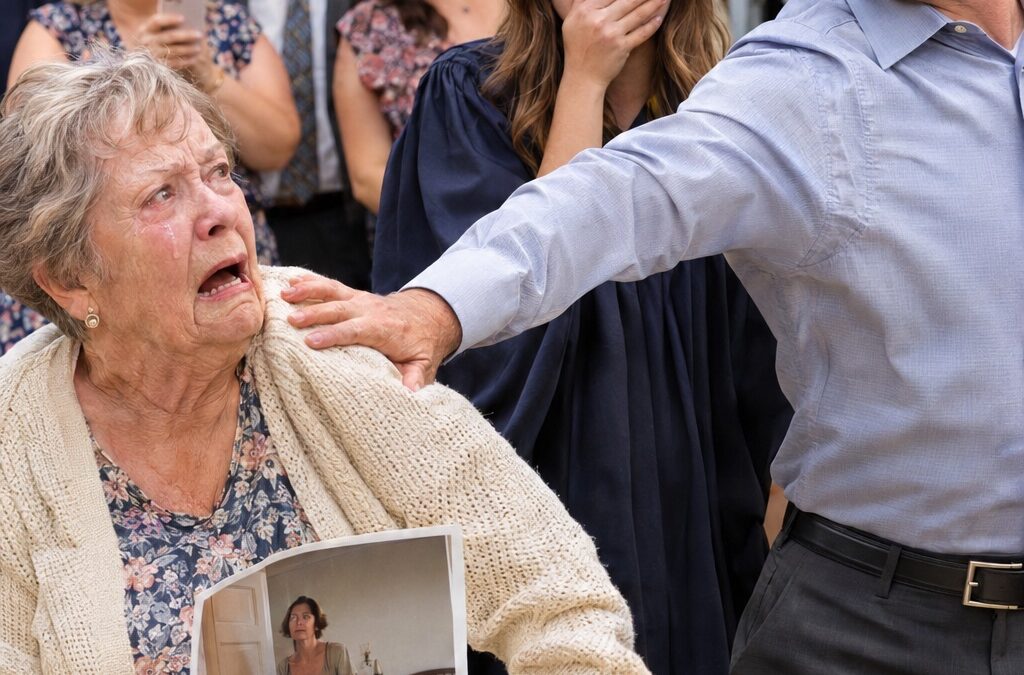
Part 3: The Line He Had Skipped
“Ruth reserved a life estate,” Monica said.
Glen looked down at the deed.
“She transferred the remainder to Natalie, not unrestricted possession. Ruth kept the right to occupy this house during her lifetime.”
He moved his hand away from the page.
“That was before Natalie died.”
“Yes,” Monica said. “And it survived Natalie’s death.”
I sat in the chair Tessa pulled out.
Monica turned the deed so Glen could read it.
I had signed it June 18, 2018. It was recorded June 20, 2018, in the county’s land records.
Natalie had received what lawyers called the remainder.
After my death, that interest would become possessory. Until then, my reserved life estate remained.
Natalie’s will could pass only what she owned.
Her probated will had left that remainder to Glen.
It had not given him my lifetime right.
Glen leaned forward and read the passage again.
“The estate paperwork said I inherited the house.”
“You inherited her interest in it,” Monica said.
He rubbed frosting from his thumb with a napkin.
I remembered signing beside Natalie at the lawyer’s office.
We had wanted the house’s future settled. I had not agreed to give up living there.
After Natalie died, I hadn’t checked the recorded language.
Neither had Glen.
He had relied on the estate summary instead.
“I handled everything after my wife died,” he said.
Monica waited until he looked at her.
“And Ruth continued living here, as she was entitled to.”
Paige pulled out a chair but didn’t sit.
Nobody had touched the cake since Monica arrived.
A guest near the doorway started gathering used plates.
Glen looked toward her, then lowered his voice.
“This doesn’t need an audience.”
“You discussed Ruth leaving in front of these guests.”
Monica spoke without raising her voice.
“Ruth also raised Tessa here around your night shifts. She wasn’t a visitor you could replace at graduation.”
Tessa pressed her lips together and looked at me.
I kept my hand on the photograph.
I hadn’t expected Monica to mention the years.
I had told her about the house and bedroom.
She had asked who actually cared for Tessa.
Now Glen was looking at the same kitchen table.
He had eaten breakfast there after his shifts.
Tessa had practiced her reading there beside my elbow.
“I’m not disputing she helped,” he said.
“I wasn’t helping someone else babysit,” I said.
Tessa sat beside me.
Glen looked back at the deed.
“All right. Then we need to discuss arrangements.”
It was the first time he had stopped announcing them.
He pointed toward the photograph beneath my hand.
“She let Paige bring those things upstairs.”
“No,” I said. “I was buying graduation cards.”
Paige folded her arms against her stomach.
“You told me Ruth had agreed.”
“I said she would be more comfortable elsewhere.”
“That isn’t what you told me.”
Monica asked Tessa to open the original photograph.
Tessa placed her phone flat on the table.
She showed when she had taken it and sent it.
Then she explained why she had photographed Paige.
“She asked where Grandma wanted the boxes,” Tessa said.
“What did you tell her?” Monica asked.
“That Grandma hadn’t said anything to me.”
Glen interrupted before she could continue.
“She’s upset because graduation became an argument.”
Tessa pulled the phone back toward herself.
“You told me not to ask Grandma about moving.”
She looked at me then, not at him.
“I thought you already knew.”
I smoothed the bent corner with my thumbnail.
“Why did you send me the picture?”
“Because it looked wrong when she opened your closet.”
Paige took a breath through her nose.
“I opened it because he said it was cleared.”
Nothing about that made me like seeing her boxes.
But it explained why she had carried them upstairs.
Glen had told different things to each of us.
He had told Tessa not to worry me.
He had told Paige that I had agreed.
He had told me to find somewhere smaller.
Monica asked Paige about the locksmith appointment.
Paige unlocked her phone and found Glen’s message.
It gave June 2, 2025, for changing the locks.
He had written that my move would be settled.
With Paige’s permission, Monica saved a copy.
Glen straightened the stack of unused plates.
“I own something here,” he said.
“Yes,” Monica answered. “The remainder has value.”
“Then she can buy me out.”
I looked at Monica before answering him.
That was different from being told to leave.
It was also more money than I could promise.
“We can discuss an appraisal,” she said.
“Not under a threat to change the locks.”
Glen pulled the cake knife from the frosting.
He laid it across an empty plate.
“I’m not living indefinitely in my mother-in-law’s house.”
“Then don’t,” I said.
He looked at me for a long moment.
I hadn’t asked him to stay.
I had let him stay after Natalie died.
There was a difference, and we finally said it.
Monica did not tell him his inheritance had vanished.
She explained that ownership interests could be valued separately.
She also told him to obtain his own lawyer.
Then she asked for confirmation about the locksmith.
Glen would not cancel the appointment in front of us.
“I’ll take advice before I agree to anything.”
“That is sensible,” she said. “Do not change the locks.”
After the guests left, I collected my medicine.
I checked the bedroom closet and photographed its contents.
I left Paige’s boxes untouched beside the dresser.
Monica helped me save Tessa’s original photograph that evening.
The original file went into her secure case records.
So did Paige’s message about the locksmith appointment.
I wrote down the graduation shove while I remembered it.
I included Tessa’s words and the families nearby.
Then I put the printed photograph in a folder.
Monica sent Glen written notice of my rights.
It also demanded that he abandon any attempted lockout.
She prepared the court papers in case he proceeded.
I slept with my phone beside my medicine.
Tessa knocked on my bedroom door before bed.
“Can I sit here?”
I moved my reading glasses from the chair.
She sat without trying to explain the graduation picture.
For a while, we listened to Glen downstairs.
He was talking about getting his own legal advice.
On June 2, 2025, a van stopped outside.
A locksmith came up the walk carrying his tools.
Part 4: The Bedroom Door Stayed Mine
I opened the door before Glen reached it.
The locksmith asked whether I was the homeowner.
“I live here,” I said. “The locks are disputed.”
I showed him my identification and the deed copy.
Glen came into the hall behind me.
“I booked the appointment.”
The locksmith looked from him to me.
“I’m not changing locks during an ownership dispute.”
He closed his tool case and left.
Glen shut the front door harder than necessary.
I took my phone from my pocket.
Monica answered while I was still in the hallway.
She filed the case June 2, 2025.
My signed statement described the threatened loss of access.
The photograph and locksmith message supported what I said.
The court granted a temporary restraining order June 3, 2025.
Glen was formally served with the order.
It prohibited interference with my possession, including changing locks.
It did not transfer his remainder to me.
It did not declare that he had inherited nothing.
Monica made sure I understood that distinction.
“Protecting your home isn’t the same as buying his interest.”
I put the order with my house records.
Then I went upstairs and moved my bedside chair back.
Paige watched from the hall while I did it.
“Those boxes need to leave my bedroom,” I said.
She carried them downstairs without arguing.
Glen had hired his own lawyer by the hearing.
On June 12, 2025, the court heard our evidence.
Monica submitted the recorded deed and the saved messages.
Tessa explained the photograph and what Glen had told her.
I answered questions about living in the house continuously.
I had not moved out or surrendered possession.
Glen’s lawyer did not pretend the reservation was absent.
Instead, he disputed the need for ongoing court restrictions.
He said the locksmith had not changed anything.
Monica pointed to the appointment and refusal to cancel.
The judge issued a preliminary injunction against interference.
I could keep occupying my home while the case proceeded.
Glen could pursue lawful claims through his lawyer.
He could not settle them with new locks.
Outside the courtroom, he stopped beside the elevator.
“You could have talked to me privately.”
“I did,” I said. “You told me to move.”
His lawyer touched his elbow, and they walked away.
I sat on a bench to straighten my shoe.
Monica sat beside me until I was ready.
I had expected relief to feel less tiring.
At home, I washed the cup left beside my sink.
Then I sat at the kitchen table without clearing space.
The injunction did not make shared living pleasant.
Glen stopped discussing the house directly with me.
His proposals went through the lawyers instead.
That helped more than another argument would have.
The first proposal treated the whole property as his.
It used the house’s expected full market value.
Monica explained why that was not the right purchase.
“I’m not buying my own interest back,” I said.
She wrote that into our response in legal language.
We agreed to independent valuation of both interests.
The whole house appraised at $238,000.
The separately appraised remainder was worth $138,000.
The appraiser explained the difference in writing.
Glen’s interest carried no present right to displace me.
Its value reflected waiting until my life estate ended.
It was not worthless, and it was not everything.
Glen’s lawyer reviewed the appraisal and proposed payment terms.
I reviewed my savings and retirement income with Monica.
I could manage a purchase, but not entirely in cash.
I refused to empty the account I used for emergencies.
I also refused to promise payments I couldn’t sustain.
We worked from my actual income and ordinary expenses.
There were drafts, corrections, and separate legal advice.
No one signed at my kitchen table under pressure.
The eventual agreement called for $38,000 from my savings.
The remaining $100,000 became an interest-bearing installment note.
A purchase-money mortgage secured that note for Glen.
The payment schedule fit my existing retirement income.
My tax adviser reviewed the financing before I committed.
Glen would receive money now and payments afterward.
I would acquire his remainder and hold full title.
The recorded mortgage would remain until the debt was paid.
That was an obligation, not a hidden punishment.
Monica read every payment term aloud with me.
I asked her to explain the default provisions again.
Then I took the draft home before signing anything.
Tessa found me reading it at the kitchen table.
“Are you paying Dad because of me?”
“No,” I said. “I’m buying an interest he owns.”
She pulled out the chair beside mine.
“Because I didn’t say anything?”
I set the papers face down.
“What you said at graduation hurt me.”
She picked at a rough place on the table.
“I wanted the picture finished. Everybody was watching.”
“I know.”
“I should have asked if you were okay.”
“Yes,” I said.
She looked toward the stairs, then back at me.
“I’m sorry I let him move you.”
I didn’t tell her it hadn’t mattered.
I let her sit beside me until dinner.
After that, she stopped carrying messages between us.
When Glen wanted an answer, he called his lawyer.
When Tessa visited me, she asked about my day.
The closing happened September 12, 2025.
Glen signed the deed conveying his remainder to me.
I signed the note and purchase-money mortgage.
The closing agent handled the funds and recording.
Monica checked the recorded documents afterward.
The settlement also required Glen and Paige to leave.
Their departure was agreed in writing, not improvised.
I did not put their belongings on the porch.
They packed their rooms and arranged their own move.
Paige carried her last boxes past my bedroom.
This time, she did not stop at my door.
Glen checked the empty room before leaving.
He asked where to send payment questions.
“To Monica until the servicing arrangements are complete,” I said.
He nodded and went downstairs.
After they left, I walked through the house.
I opened the bedroom closet without moving anyone’s boxes.
I put my slippers back beside my bed.
I returned my sewing basket to the sitting room.
The house still needed cleaning and ordinary repairs.
I still had installments to make every month.
But nobody was arranging my departure behind my back.
Tessa came over and helped move the bedside chair.
She asked before shifting it across the rug.
“Here?”
“A little closer to the window.”
She moved it and waited for me to sit.
Later, I opened my desk to file the closing records.
The bent photograph lay inside its folder.
I took it out and looked at my bedroom doorway.
Then I placed the photograph flat in the drawer.








