My Son Ordered Me Out Of My Home At 71 — Then My Lawyer Showed Him Something
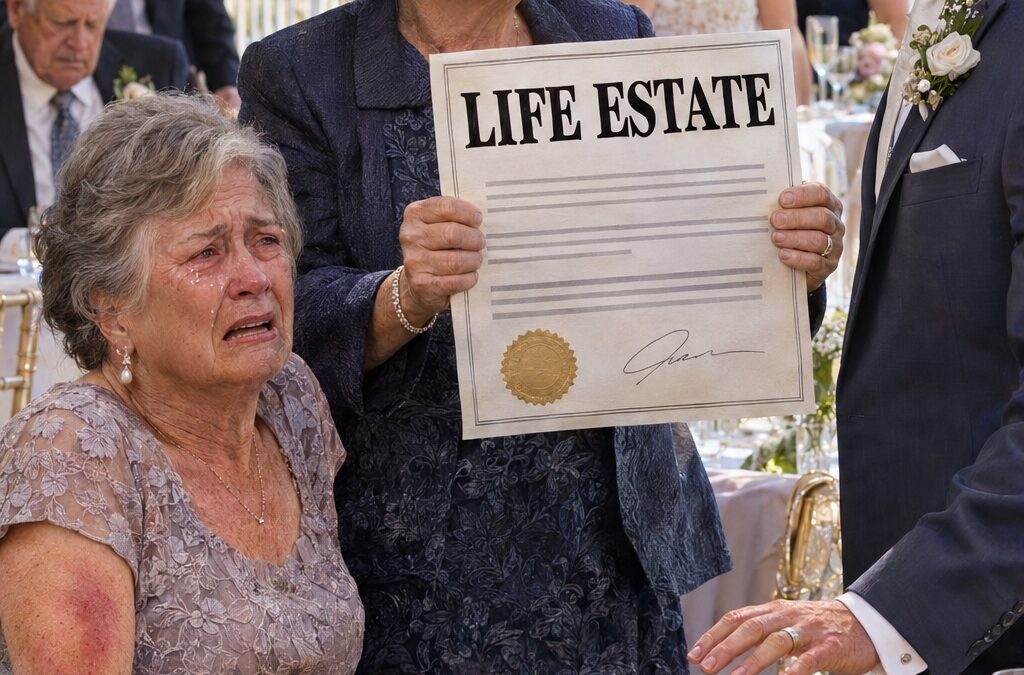
Part 3: The Paragraph He Skipped
“Your mother reserved a life estate,” Judith said.
She read the reservation from the certified recorded deed. It gave me the right to occupy my home throughout my lifetime.
Nobody needed a speech after that. Simone pulled Brent’s chair away from the table and sat down.
Brent remained standing.
“That’s the original arrangement,” he said.
“Yes,” Judith answered. “Show me what changed it.”
He pointed toward me without touching me again.
“She said we could work something out.”
“That isn’t a signed release of her interest.”
I kept my hand beside the phone. My thumb rested against its case, away from the screen.
Judith explained the deed without making it sound grand.
I had signed it on July 15, 2022. It had been recorded in Brunswick County on July 18, 2022.
The house went to Brent subject to my reserved life estate. His interest did not give him the right to remove me.
He had received the remainder interest. My reserved interest continued while I was alive.
He could not make mine disappear by announcing a move.
Simone leaned forward, keeping her hands in her lap.
“Can you show me where that says it?”
Judith looked at me before moving the paper.
I nodded.
She turned the certified copy toward Simone.
The words “LIFE ESTATE” were right there.
Simone read the paragraph twice.
Brent reached across her shoulder.
Judith put her palm beside the document.
“You can look. You cannot take Evelyn’s copy.”
“I know what it says.”
“Then let her read.”
I bent down and straightened my sandal strap.
There was sand caught beneath my heel.
My upper arm hurt when I reached down.
Judith pulled my chair closer so I could sit.
The covered terrace faced the ocean, but nobody near us was looking at the water.
Food sat untouched on the nearby tables.
There were seventy guests at that reception.
I recognized faces I couldn’t manage to look at.
Simone lifted her eyes from the deed.
“Can he make her leave Monday?”
“No,” Judith said. “Not under this arrangement.”
She turned toward me.
“Have you signed any later release?”
“No.”
“Have you agreed to leave August 11?”
“No.”
Brent pulled his napkin from beneath his fork.
“You’re turning a conversation into a court case.”
“You pulled me out of my chair,” I said.
He looked past me toward the terrace doors.
Paul leaned forward, squinting at the recorded stamp.
“I didn’t realize there was something like that.”
“You told me to pack without asking,” I said.
He rubbed his finger along the tablecloth seam.
Judith was 67, four years younger than me.
We had known each other long before this transfer.
That afternoon, she was also my property lawyer.
Before the reception, I had given her permission to explain the terms if Brent forced the issue.
He hadn’t known that.
He hadn’t known about the certified copy, either.
He had expected me to bring a wedding card.
I had brought that, too.
It was still inside my bag, unsigned across the envelope because I had forgotten my pen.
Brent started talking about repairs.
He mentioned the yard, the porch, and the gutters.
Then he mentioned my age.
“She’s 71. This place is too much.”
Judith waited until he stopped.
“Those concerns don’t change the deed.”
“I’m her son.”
“And she gave you a valuable interest.”
“I’m trying to make sensible decisions.”
“About an interest she still owns.”
He pulled his chair out and sat sideways.
One knee kept moving beneath the table.
Judith pointed to the county recording information.
“This is a certified copy of the recorded deed.”
“I never said it wasn’t real.”
“No. You said she had surrendered her right.”
He looked at me.
“We discussed it.”
“We discussed whether I might someday want something smaller.”
“That’s what I’m saying.”
“No,” I said. “It isn’t.”
My water glass stood near the edge.
I moved it inward before I knocked it over.
Judith explained how Brent had learned the original terms.
She had told him orally on July 15, 2022.
He had not attended my signing or seen the deed.
He had signed no acknowledgment or other transfer document.
“He knew she could stay?” Simone asked.
“I explained that expressly,” Judith said. “The deed reserves the interest.”
Brent rubbed his forehead.
“I understood it then. Things changed afterward.”
“What document changed it?” Judith asked.
“We didn’t put every family conversation on paper.”
“That does not make her interest yours.”
He turned to me again.
“Tell her you said we could work something out.”
“I said we could discuss possibilities.”
“People make plans based on discussions.”
“What plans?” Simone asked.
“Can we not do this here?”
She glanced toward the guests, then back at him.
“You were doing it here when you told her Monday.”
He shifted his chair closer to hers.
She stayed where she was.
I had avoided direct conversations with Simone about the house.
Brent always answered first.
He told her I disliked financial details.
He told me she worried too much about housing.
I had accepted both explanations without checking.
Now she was asking me herself.
“Did you know he expected the house empty?”
“Not until he started saying Monday.”
“Where were you supposed to go?”
I shook my head.
“He hadn’t given me an address.”
Brent spread his hands.
“We would have found somewhere.”
“With what money?” I asked.
“We haven’t worked that out.”
“But you worked out my moving date.”
Paul pushed his plate away.
“Maybe everyone needs a few minutes.”
“I need an answer,” Simone said.
Brent stood again.
He smoothed the front of his jacket.
“Mom can stay difficult if she wants.”
Judith kept her finger beside the reservation paragraph.
“She can stay in her home.”
He stared at the paper.
Then he changed his voice.
“Mom, I’m asking you to help us.”
My bread roll was still beside the butter dish.
Earlier, I had moved the butter closer to him.
I looked at that dish while he waited.
“What exactly are you asking me to sign?”
“Something so we can move forward.”
“Something giving up my place to live?”
“We would take care of you.”
“Where?”
He looked toward Paul.
Paul lowered his eyes.
Judith slid the deed back toward my place.
“There is no signed release,” she said. “Her interest remains.”
Brent’s eyes moved to my phone.
He had barely looked at it before.
Now he watched my hand beside it.
Simone noticed.
“What did you tell me?” she asked him.
Part 4: The Message Still Saved
“I told you what we expected,” Brent said.
Simone shook her head.
“You told me it was already signed.”
I turned my phone toward myself.
The voicemail was still saved beneath his number.
It had arrived on August 6, 2025.
I had been wiping flour from the kitchen counter.
By the time I washed my hands, he had stopped calling.
I listened beside the sink.
Then I pulled out a chair and listened again.
After that, I called Judith.
She had helped me obtain the certified deed before the wedding.
She had also told me not to delete the message.
Now she looked at my phone.
“Do you want to play what he left?”
“Yes.”
“This was a voicemail he sent directly to you?”
“Yes.”
Brent stepped toward my chair.
“We don’t need a performance.”
I moved the phone nearer Judith.
“It’s your message.”
Simone stood behind her chair.
“Let her play it.”
I opened the voicemail and raised the volume.
My thumb missed the button the first time.
I tried again.
His recorded voice sounded cheerful compared with his voice beside us.
“Mom, I told Simone you already signed away the part you kept. Don’t get caught up in that at the wedding. We need the house empty Monday so we can move ahead with buyers. We’ll figure out your place afterward.”
The message ended.
I left the screen facing upward.
Nobody could say I had stopped it early.
Brent put one hand on his chair.
“That was shorthand.”
“For what?” Simone asked.
“For what we were working toward.”
“You said already.”
“I expected Mom to cooperate.”
“You told me she had signed.”
He pulled his chair out farther.
It scraped against the terrace floor.
I pressed my knees together beneath my skirt.
The spot where he had grabbed me felt hot.
Judith asked me to lock my phone.
“We’ll keep the original message,” she said.
Brent looked toward her.
“You’re making it sound like evidence.”
“It is evidence of what you told her.”
“Nothing has been sold.”
“Nobody has said it has.”
Simone asked whether there were actual buyers.
Brent said he meant potential buyers.
There was no completed sale.
There was no signed listing.
He had been planning what he could do with an empty house.
The property was debt-free and worth $315,000.
He had repeated that value to me often enough.
He said empty houses showed better.
He said buyers wanted clean possession.
He did not mention what happened to me afterward.
Judith laid the deed flat again.
“You can seek to sell your actual interest.”
Brent nodded quickly.
“Exactly.”
“But that interest is burdened by hers.”
He stopped nodding.
“You cannot promise the whole property vacant and free of her life estate without her agreement.”
Simone looked from the deed to my phone.
“So the plan depended on her signing something she hasn’t signed.”
“Yes,” Judith said.
Brent answered at the same time.
“It depended on us acting like a family.”
Paul shifted beside me.
“Could we lower our voices?”
Judith looked at him.
“Evelyn has been speaking quietly.”
He glanced at my arm.
My sleeve had ridden up again.
He reached toward my water glass, then stopped.
Brent started listing things he had done for me.
He had changed a porch bulb.
He had carried boxes.
He had taken something heavy out to the curb.
I remembered each occasion.
I had thanked him each time.
Then he said I ought to appreciate his help.
Judith turned toward me.
“May I explain what I know?”
“Yes.”
She faced Brent.
“In 2022, Evelyn paid $38,600 toward your overdue debts.”
His mouth tightened.
“She offered.”
“She did. I witnessed what that cost her financially.”
I rubbed the corner of my napkin.
I had not wanted my savings discussed at his wedding.
I had not wanted my housing threatened there, either.
Judith continued.
“She exhausted her available savings helping you. Then she conveyed the remainder in her debt-free house.”
Simone sat down slowly.
“Is that amount right?” she asked Brent.
“Yes, but that’s separate.”
“It explains why she cannot simply replace her housing,” Judith said.
Brent looked away.
I remembered his broken ankle that same year.
He had stayed elsewhere but brought laundry because standing hurt.
I washed his work clothes and sorted his socks.
One afternoon, he sat on my bed with his swollen foot raised.
I eased a clean sock over his toes.
He complained that missing work would put him further behind.
“I know,” I had told him. “Hold still.”
At the reception, Judith asked if he remembered that recovery.
He said of course he did.
“She helped you dress and kept your clothes clean,” Judith said. “She wasn’t charging you rent or care expenses.”
“I never asked her to make a speech about it.”
“She hasn’t,” Judith answered. “You asked why she wasn’t grateful.”
I set my napkin beside my plate.
Simone kept looking at Brent.
He pushed his chair under the table.
“Fine. I’ll market my remainder.”
“You can get advice about that,” Judith said.
“So I do have rights.”
“Yes. So does your mother.”
He pointed toward the deed.
“Then I’ll need access.”
“No,” I said.
He blinked at me.
“For pictures. For people to see the property.”
“I am not agreeing to showings.”
“You can’t refuse everything.”
Judith answered before he stepped closer.
“Her occupancy is not an open invitation.”
I took the certified copy when she offered it.
The folds did not line up neatly anymore.
I smoothed the paper against my skirt.
Brent watched my hands.
“Will you at least sign a release later?”
“No.”
“You haven’t heard the offer.”
“I’m not discussing another document at this table.”
Simone stood between his chair and mine.
“Stop asking her right now.”
He stared at her.
She looked exhausted, though dinner was barely over.
Judith helped me put the deed in my bag.
Paul offered to drive me home.
“I’m going with Judith.”
He nodded and stepped back.
We started toward the terrace doors.
Brent followed without touching me.
“Don’t turn Monday into another scene,” he said.
I stopped.
“What are you planning Monday?”
“To come over and get this moving.”
“I am not giving you permission.”
He put his hands in his pockets.
“I’ll be there anyway.”
Part 5: Before He Came Over
Judith drove me home from the reception.
Before we left, she asked about my arm.
I lifted it carefully and bent my elbow.
It hurt where his fingers had pressed.
“Do you need medical attention?”
“I want to get home first.”
“If the pain worsens, you should get it checked.”
I nodded.
She asked whether I wanted anyone else called.
“No. Not tonight.”
We sat in her parked car a minute.
I checked inside my bag.
The deed was there.
So was my phone.
My wedding card was bent against the lining.
I pushed it beneath the envelope holding the deed.
Judith waited until I fastened the bag.
Then she started the car.
Sand scraped beneath my sandal when I moved my foot.
I rubbed some away with my thumb.
My dress had a wrinkle across the lap.
I kept smoothing it until Judith gently said my name.
“What do you want done about the house?”
“I want him to stop deciding when I leave.”
“We can address that.”
“I don’t want him bringing anyone inside.”
“We’ll make your position clear.”
At home, the porch light was still on.
I had left it burning before the wedding.
The kitchen towel hung over the oven handle.
A bowl I had washed stood upside down by the sink.
I touched its rim as I walked past.
Judith followed me into the kitchen.
I put my bag on the table.
She asked for an envelope large enough for the deed.
I found one beside my spare buttons.
We put the certified copy inside.
Then we discussed Brent’s threat to come Monday.
He did not live in my house.
His remainder did not give him present possession.
I told Judith I had not authorized showings.
I had not authorized movers.
I had not agreed to store his belongings.
She wrote each point down.
“Has he claimed any other permission?”
“He says everything is understood.”
“Then we need to be specific.”
With my approval, she sent him written notice that night.
It said I had not surrendered my interest.
I had not agreed to vacate.
He was not authorized to enter, arrange showings, remove belongings, or interfere with my occupancy.
Judith read it aloud before sending it.
I asked whether it would keep him away.
“It tells him clearly that you do not consent.”
“Is it an order?”
“No. A court would have to issue an order.”
She explained that difference without rushing me.
A lawyer’s notice was not an injunction.
If we filed a case, Brent would receive notice.
He would have an opportunity to respond.
A judge would decide disputed claims.
Nothing would happen merely because Judith was my friend.
I asked her to keep representing me.
“I want this handled properly.”
“That’s how we’ll handle it.”
Before leaving, she helped preserve the voicemail.
The original stayed on my phone.
A complete copy went into her file.
She noted the date and where it came from.
We did not trim the beginning or ending.
Then I plugged my phone into its charger.
I left it on the counter instead of carrying it.
Judith waited while I checked the back door.
At the front door, she asked again about my arm.
“It’s sore. I’ll keep checking it.”
After she left, I took off the wedding dress.
I hung it over the bedroom chair.
Then I sat on the bed without removing my earrings.
The room had not been packed.
My shoes were in their usual place.
The quilt was folded at the foot of the bed.
I slept badly, but I slept there.
On Sunday, I gathered my personal papers.
I put my identification, insurance information, and property documents together.
I checked the locks.
I did not pack clothes.
An empty carton stood inside my closet.
Brent had left it during an earlier visit.
He had said it might come in handy.
I flattened it and set it with the recycling.
Monday was August 11, 2025.
I made oatmeal and ate before checking messages.
Brent had sent one asking whether I was ready.
I forwarded it to Judith.
Then I answered as we had discussed.
“I am not moving. You do not have permission to enter.”
He arrived before lunch.
I saw his car through the front window.
He was alone.
There was no moving truck.
There were no buyers following him.
He came up the steps and knocked.
“Mom. Open up.”
I stood beside the closed door.
“You received the notice.”
“I came to talk.”
“You can contact Judith.”
“This is my house, too.”
“You are not coming inside.”
He tried the handle.
The lock held.
I placed my palm against the wall.
“Open the door.”
“No.”
He knocked again, harder this time.
I did not answer.
After a while, his phone rang.
He walked back toward the car to answer.
I stayed away from the window until he drove off.
Then I called Judith.
She asked what he had said and done.
I told her he had tried the handle.
I did not say he had broken anything.
He hadn’t.
She wrote down the visit.
“Do you want to proceed?”
“Yes.”
On August 12, 2025, she filed the complaint.
We requested a declaration confirming my life estate.
We also requested an injunction against interference.
We did not ask to cancel Brent’s remainder.
He was served on August 15, 2025.
Judith explained that service did not decide the case.
It formally notified him and started his response obligations.
He hired his own lawyer.
I remained responsible for mine.
That expense worried me.
Judith explained the work before doing it.
I checked what I could pay and postponed other spending.
Brent’s response came through the lawyers.
Judith called before sending me the papers.
“He’s changed his explanation.”
I sat at the kitchen table.
“What is he saying now?”
“He says you informally abandoned the arrangement.”
Part 6: What He Called Permission
I read Brent’s response with my glasses halfway down.
Then I pushed them up and started again.
My slippers were under the table.
A saucepan was drying beside the sink.
The refrigerator had my grocery list attached to it.
I looked around before calling Judith back.
“How can he say I abandoned anything?”
“He’s claiming your conversations and conduct showed agreement.”
“But I’m still here.”
“Yes. That matters.”
She came over so we could review the response.
I moved my sewing basket off the second chair.
Judith set her folder beside the sugar bowl.
She asked me to describe every conversation about moving.
Not what Brent must have meant.
Not what I wished I had answered.
What I actually remembered.
I got a yellow pad from the drawer.
He had asked whether I wanted less yard someday.
I had said perhaps, if I found somewhere suitable.
He had mentioned apartments.
I had said I could look at possibilities.
There was no address I had accepted.
There was no moving date I had chosen.
I had not signed anything.
Judith wrote while I spoke.
“Did you give him keys for showings?”
“No.”
“Did you move your belongings elsewhere?”
“No.”
“Did you stop maintaining the house?”
“No.”
“Did you tell him he could take possession?”
“No.”
She put her pen down.
“We’ll answer his actual claim with those facts.”
I asked whether merely considering a move had hurt me.
“Discussing a possible future arrangement is not the same as completing one.”
“He’ll say I promised.”
“Then we present the evidence and your testimony.”
She did not promise the judge would like me.
She did not tell me the case was automatic.
She explained what we could establish.
The recorded deed contained the reservation.
Brent had known the arrangement from Judith’s oral explanation.
I had continued residing in the house.
There was no signed release.
I had repeatedly refused permission to take possession.
We checked the dates against the documents.
When I couldn’t remember an exact conversation, I said so.
Judith told me not to improve my memory for the file.
“If you remember the subject but not the words, say that.”
I crossed out a sentence on my yellow pad.
It sounded better than what I truly remembered.
Then I wrote it plainly.
Brent sent messages saying I was making things difficult.
I stopped answering those at night.
I forwarded property-related messages to Judith.
Then I put my phone beside the charger.
Paul called before coming over.
I almost told him not to bother.
Instead, I agreed to coffee.
He arrived without Brent.
He stood in the kitchen doorway and looked around.
“I never thought it would get this far.”
I put a mug on the table.
“How far did you think I could move?”
“That’s not what I meant.”
“What did you mean?”
He took off his jacket.
“I thought everybody could compromise.”
“By me leaving?”
“By finding somewhere easier for you.”
“You didn’t ask what I wanted.”
He pulled out a chair.
I poured coffee before sitting across from him.
Paul was 74.
He had known me longer than anyone in this dispute.
He knew I had worked in school cafeterias.
He knew my retirement money was limited.
He knew my husband was gone.
Still, at the reception, he had told me newlyweds needed privacy.
Now he tried that explanation again.
“They need room to establish themselves.”
“Whose room?”
He looked toward the living room.
“I mean a place of their own.”
“Whose home is this, Paul?”
“Yours.”
“Then why did you tell me to leave it?”
He turned his mug by its handle.
“Brent made it sound settled.”
“You saw him pull me out of the chair.”
“I saw it.”
“And you told me to pack.”
He pressed his thumb against the mug.
“I should have helped you.”
“Yes.”
He started talking about keeping peace in the family.
I reached for his cup, then stopped.
It wasn’t empty.
I had been clearing his things without thinking.
“What would you have asked Brent to give up?”
Paul didn’t answer.
I waited.
Finally, he said he hadn’t thought it through.
I believed him.
I also wanted him to remember saying that.
He offered to work in the yard.
“Ask me again after the case,” I said.
Before leaving, he rinsed his own mug.
I stood by the table while he did it.
A few days later, Simone contacted Judith.
She wanted to ask me questions without causing trouble.
Judith asked whether I wanted that conversation.
I agreed, as long as we stayed with facts.
Simone came alone.
She was 39, and I had never seen her look so unsure at my door.
I invited her into the kitchen.
She looked at my grocery list.
Then at my husband’s reading glasses near the living room.
“I thought you had chosen somewhere else.”
“I haven’t.”
She sat with her bag at her feet.
“Did you promise him money from a sale?”
“No.”
“Did you ask him to arrange a rental?”
“No.”
“Did you know he told me it was finished?”
“Not until I heard that voicemail.”
She rubbed a crease in her skirt.
“I should have asked you myself.”
“Yes.”
I didn’t add that she had meant well.
I didn’t know everything she had meant.
She asked what arrangement I wanted.
“The one I signed.”
She nodded.
“We’re not making plans based on a vacant sale anymore.”
I thanked her for telling me.
I did not ask about their marriage.
She did not ask me to comfort Brent.
When she left, I washed our cups.
The next proposal came through the lawyers.
Judith called and asked whether she could bring it over.
“He wants a release now.”
“A real one?”
“Yes. Something for you to sign.”
That afternoon, she put the proposed release on my kitchen table.
Part 7: The Offer On My Table
The release had a space for my signature.
It had a place for a notary, too.
The promises about my next home were less definite.
I noticed that before Judith explained anything.
Brent proposed helping me find a suitable rental.
He would assist with moving after the house could sell.
There was no confirmed address.
There was no lease ready for me.
There were words about working things out.
I moved the sugar bowl so we had room.
“What exactly would I give up?”
“Your life estate.”
“And what would I have instead?”
Judith pointed to the proposed promises.
“We would need firmer terms before considering whether they protect you.”
“Would I still be able to live here?”
“Not under the right you hold now.”
I read the signature page again.
My name looked strange beneath all that print.
Brent wanted the whole property available for a vacant sale.
The part of the proceeds attributable to his interest would be his.
My continued occupancy made that plan harder.
I understood why he wanted a release.
That did not tell me where I would sleep afterward.
“Could I be left waiting for him to find something?”
“As proposed, I would not recommend relying on this.”
“What if he means to help?”
“Then terms could be made definite. But you are not required to trade your housing.”
I rested my hand on the table.
My arm no longer showed the reception marks.
I could still remember where his fingers had been.
Judith asked me not to decide from anger alone.
We went through the pages slowly.
She explained the difference between keeping my existing interest and demanding something new.
Refusing to release my life estate would not cancel his remainder.
He would still own what the deed gave him.
I would still own what it reserved for me.
“Will refusing make me look unreasonable?”
“You are allowed to want your current home.”
“What if the judge thinks I should help my son?”
“The court decides property rights and the claims presented.”
She let me read in quiet.
From the kitchen, I could see my chair by the window.
The arm had a worn patch I had meant to mend.
My sewing basket was beneath the small table.
I thought about packing those things while waiting for Brent to choose an address.
Then I turned the release facedown.
“I’m not signing.”
“Do you want another day?”
“No.”
Judith wrote down my decision.
She did not tear up the proposal.
She kept it with the correspondence.
We discussed a settlement that would preserve my occupancy.
Brent could acknowledge the life estate and stop interfering.
He would retain the remainder.
I would not demand the property back.
There would be no request for him to repay my gifts in this case.
There would be no public apology requirement.
I wanted my right to stay recognized.
His side declined that resolution.
He continued pursuing the claim that our conversations had authorized his plans.
Judith told me we should prepare for the hearing.
I expected her to help me write a statement.
Instead, she asked questions.
I sat across from her with my hands folded.
“When did you execute the deed?”
“July 15, 2022.”
“When was it recorded?”
“July 18.”
“Where?”
“Brunswick County.”
“What did you reserve?”
“My right to live here for my lifetime.”
“Did you later release it?”
“No.”
“Did you move out?”
“No.”
She asked about the reception.
I started explaining how stressed Brent had been.
Judith stopped writing.
“Was that the question?”
“No.”
“Answer what you are asked. You don’t need to explain everything at once.”
I tried again.
He told me I was leaving Monday.
He grabbed my upper arm.
He pulled me from my reception chair.
My sandal came off.
Judith had witnessed it.
I did not need to describe how everyone must have felt.
I could describe what I saw.
She also explained that the ugly reception did not create my property right.
The recorded deed did that.
The confrontation and later visit showed why protection was needed.
I found that distinction useful.
I had worried people would think this was about embarrassment.
I was embarrassed.
I also needed to keep living in my only home.
Those were separate facts.
We checked the voicemail again.
The original was still on my phone.
The preserved copy played completely.
We did not remove pauses or improve the sound.
Judith prepared the necessary records and exhibits.
I gathered what she requested.
If I did not know an answer, I waited for her to verify it.
The hearing was set for November 21, 2025.
As it approached, I checked my spending again.
There would not be a court award automatically covering my legal bills.
Judith had told me that plainly.
I would pay my lawyer.
Brent would pay his.
I put off replacing my chair and worked with what I had.
Paul called to ask whether I wanted him there.
“I want you to stop discussing my home with Brent.”
He was quiet.
Then he said he would.
Simone sent a short message.
She hoped the matter would be settled accurately.
Later that afternoon, I answered.
“That is what I want, too.”
Brent did not contact me directly.
I kept expecting another demand.
Judith reminded me that the lawyers were communicating.
I didn’t have to start a conversation because he had stopped.
The night before court, I laid out my clothes.
I checked the route and put gas money aside.
Then I prepared lunch for afterward.
I wanted something ready when I got home.
On November 21, I folded the certified deed.
Judith had the court copies she needed.
I brought mine because I wanted it with me.
At the courthouse, Brent was already waiting with his lawyer.
He stood when he saw us.
His lawyer spoke quietly, and he sat again.
I chose a seat beside Judith.
My feet rested flat on the floor.
I set my bag on my lap.
Then the courtroom door opened, and we were called inside.
Part 8: The Answer In Court
The courtroom was smaller than I had imagined.
I could see every table from my seat.
There was a witness chair and a clerk checking papers.
There were no wedding decorations to look around.
No plates for people to pretend to study.
I put my bag beneath my chair.
Judith opened her file in front of her.
Across the room, Brent leaned toward his lawyer.
A copy of the deed lay between them.
I recognized the arrangement of the printing.
For a moment, I stared at that page.
Then Judith touched her pen to her notes.
I looked back toward her.
She explained the relief we were requesting.
The recorded deed reserved my life estate.
There was no later release.
Brent had claimed authority to make me leave.
He had threatened interference and attempted entry after notice.
We sought a declaration confirming my interest.
We also sought an injunction against further interference.
We were not asking to cancel his remainder.
We were not asking for money from a sale.
No completed sale had occurred.
When I was called, I left my bag beneath the chair.
I took my place and gave my name.
My mouth felt dry before the first question.
I swallowed and waited.
Judith asked about the house.
I explained that it was debt-free.
I had lived there and continued maintaining it.
I was a widow and a retired school cafeteria cook.
It was my only home.
She asked about the 2022 transfer.
I identified the deed.
I had executed it on July 15, 2022.
It was recorded July 18 in Brunswick County.
I intended to reserve my lifetime occupancy.
I had not signed a later release.
The certified recorded deed was presented with the other documents.
Judith asked whether Brent had attended my signing.
“No.”
“Had he signed any acknowledgment of the terms?”
“No.”
I had relied on Judith to explain the arrangement orally.
She had done that without showing him the deed.
I answered questions about later conversations.
I had discussed possible smaller places.
I had not chosen one.
I had not agreed to leave on August 11.
I had not authorized him to deliver the house vacant.
Brent’s lawyer asked whether I wanted him to benefit.
“Yes.”
Whether I had willingly transferred an interest.
“Yes.”
Whether I had considered moving.
“Yes.”
Then he asked whether Brent could have understood that as permission.
“I told him I had not agreed to move.”
The lawyer asked about my willingness to look at apartments.
“I was willing to consider possibilities.”
“Isn’t that cooperating with a move?”
“It was looking. I never chose a place.”
I stopped there.
Judith had told me not to fill every pause.
The lawyer asked whether I loved my son.
“Yes.”
I kept my eyes toward the questioning table.
I did not explain how often I had cooked for him.
That was not the question.
Judith asked about the August 6 voicemail.
I identified the message received on my phone.
I recognized Brent’s voice.
I explained that I had saved the original.
The complete preserved copy was accounted for.
Then the recording played.
“Mom, I told Simone you already signed away the part you kept.”
I looked at the corner of the witness stand.
The rest of the message followed.
The house empty Monday.
Moving ahead with buyers.
Figuring out my place afterward.
When it ended, I heard papers moving.
The message had not changed since my kitchen.
Brent testified after me.
He acknowledged the original arrangement.
He confirmed that Judith had explained it orally.
He had first seen the deed at the reception.
He did not produce a later release.
He said we had been discussing what made sense.
He expected me to cooperate.
His lawyer emphasized that no sale had closed.
Judith did not dispute that.
She asked whether I had signed away my remaining interest.
“No.”
“Had she accepted a particular new residence?”
“No.”
“Had she agreed to vacate on August 11?”
“She had talked about moving.”
“Had she agreed to that date?”
He looked down.
“No.”
Judith asked why the voicemail said I had signed.
Brent said he had spoken too confidently.
She asked whether he knew I had not signed.
“Yes.”
I pressed my thumb against my other hand.
I wanted to look at him.
Instead, I watched Judith turn a page.
She asked about Monday’s visit.
He acknowledged receiving the no-consent notice.
He acknowledged coming anyway.
He said he only wanted to talk.
“Did Evelyn invite you inside?”
“No.”
“Did she open the door?”
“No.”
“Did you try the handle?”
“Yes.”
He said he had not broken the lock.
Nobody claimed he had.
The judge asked questions about the proposed injunction.
Judith explained that we were not asking to forbid all family contact.
I could invite Brent if I chose.
The requested restrictions concerned possession and use of the property.
Locks, utilities, unauthorized entry, and showings.
I wanted the distinction made clearly.
An order could protect my occupancy.
It could not make him apologize.
The judge considered the recorded reservation and the testimony.
There was no executed release.
My continuing residence did not support abandonment.
My willingness to discuss possibilities did not authorize eviction.
Brent’s expectations did not extinguish my life estate.
On November 21, 2025, the court entered the judgment.
It declared that my life estate remained effective.
It permanently enjoined Brent from interfering with my occupancy.
He could not change the locks.
He could not interrupt utilities.
He could not enter without permission.
He could not arrange showings without my consent.
His remainder remained his.
The judgment did not return full ownership to me.
It did not take his interest as punishment.
He could transfer only what he actually held.
He could not deliver unencumbered vacant possession without my agreement.
There was no damages award.
There was no order making him pay my lawyer.
Judith explained each limit before we left.
I asked her to repeat the part about entry.
She did.
Then I picked up my bag.
The folded certified deed was still inside.
In the hallway, Brent walked toward us.
He stopped beyond arm’s reach.
“Mom,” he said. “Can we talk outside?”
Part 9: The Chair By My Window
I looked at Judith before answering.
She waited without speaking for me.
“We can stand here,” I told Brent.
He glanced toward the courthouse doors.
“I didn’t want all this.”
“I didn’t want you pulling me out of a chair.”
He pressed his lips together.
I waited for him to continue.
He said the lawyers had made everything expensive.
I adjusted the strap on my bag.
“I asked you to leave my home alone.”
“I was trying to get us situated.”
“You were trying to get it empty.”
He looked past me.
His lawyer stood nearby with a closed folder.
Judith stepped closer but left room between us.
“Property matters should continue through counsel,” she said.
Brent nodded once.
I told him he could write about something personal.
“That doesn’t mean I’ll answer immediately.”
“Do I need permission to see my own mother?”
“You need an invitation to enter my home.”
His face tightened.
Then he looked at Judith and stopped.
He said he understood the order.
I did not ask him to promise anything else.
We left the courthouse together, Judith and me.
In the car, she asked whether I wanted music.
“No, thank you.”
I wanted to go over what had happened.
My life estate remained.
Brent’s remainder remained.
The judge had not reversed the original transfer.
Brent could not force the vacant sale he had planned.
If he sold his interest, a buyer would take subject to mine.
I would not have to negotiate for permission to remain.
I asked Judith whether I had missed anything important.
She explained how to obtain help if he violated the injunction.
She also reminded me to keep the order accessible.
Not hidden somewhere I couldn’t find it.
At home, I put the kettle on.
Then I warmed the lunch I had prepared.
Judith stayed and ate with me.
We sat at the same table where she had reviewed the release.
There were no proposed signature pages between our plates.
After lunch, we organized my papers.
The judgment went with the deed documents.
Her instructions went in front.
If Brent threatened locks, utilities, entry, or showings, I should save the message and contact her.
I wrote that on a separate sheet.
I did not trust myself to remember everything.
She checked it before leaving.
At the door, she asked what I planned for dinner.
“Something I already have.”
She smiled.
“That sounds fine.”
I locked the door after her.
Then I washed our dishes.
A bit of food had dried against the saucepan.
I put water in it and let it soak.
I had expected to cry when I returned.
Instead, I stood there deciding where the clean plates belonged.
They belonged where I had always kept them.
I put them away.
Brent complied with the judgment.
No movers arrived.
No one came to photograph the rooms.
No one claimed he had given permission for a showing.
The utilities continued without interruption.
The locks remained as they were.
His lawyer confirmed that he understood the restrictions.
I saved that confirmation with the property correspondence.
I did not call Brent to thank him for complying.
I started changing the things I had moved for him.
A small table had been pushed against the wall.
He had said his boxes might need somewhere to go.
I carried it back beside my chair.
I put my sewing basket underneath.
Then I took the spare hangers out of the front closet.
I had been keeping those ready, too.
I spread my own coats along the rod.
There was room for all of them.
Cooking took longer to change.
I still reached for an extra potato.
I still considered whether Brent would want more meat.
Sometimes I caught myself before peeling anything.
Other nights, I made too much and saved it.
I ate supper when I wanted.
I did not wait for a message about whether he might stop by.
My savings had not returned.
The $38,600 remained money I had given him.
The legal expenses were mine to pay.
I checked my spending carefully.
Replacing the worn chair could wait.
I had spent years stretching school cafeteria supplies.
I could make meals from what was already here.
Eggs, potatoes, leftover vegetables, soup in the freezer.
I wrote my grocery list for one household.
Paul called before visiting again.
This time, he asked whether I wanted company.
He brought no message from Brent.
He brought no suggestion about renting somewhere smaller.
We sat at the kitchen table.
“I owe you an apology,” he said.
I waited.
“I should have stood up when he grabbed you.”
“Yes.”
“And I shouldn’t have told you to pack.”
“No.”
He nodded and stared at his cup.
Then he said he hadn’t understood the deed.
I put my spoon down.
“You didn’t need to understand it to help me.”
“I know.”
My arm no longer had visible marks.
He looked at it anyway.
“I’m sorry, Evelyn.”
I told him I appreciated hearing that.
I did not say everything was settled between us.
When he asked about raking the yard, I agreed.
I worked outside nearby while he gathered leaves.
He asked where I wanted the bags.
He did not tell me where I ought to live.
Simone wrote after reading the judgment.
She said they were no longer relying on proceeds from a vacant sale.
She apologized for assuming my departure was settled.
I answered that I appreciated her checking the facts.
I did not ask her to report on Brent.
I did not ask about their future together.
She had questions to handle without me.
My living room would not become their meeting place over this property.
Brent eventually sent a short note.
He said he would respect the order.
He did not mention my sandal.
He did not mention my arm.
I filed it with the other correspondence.
I did not put it beside my husband’s photographs.
Some evenings, I remembered the reception while washing dishes.
The scrape of my chair came back first.
Then the effort of trying to reach my shoe.
I would turn off the water and dry my hands.
Sometimes I checked the front door.
Sometimes I put my breakfast cup out.
I went back to the task I had started.
I mended the worn arm of my chair.
The stitches weren’t especially neat.
I checked them with my fingers after tying the thread.
Then I put the needle away.
The chair stayed by the window.
My small table stood beside it again.
One afternoon, I took out the property envelope.
I checked that the judgment was there.
The no-consent notice was behind it.
So was the certified recorded deed Judith had opened at the reception.
I unfolded it carefully and checked the pages.
Then I folded it along the familiar creases.
I sat by the window with the paper resting in my hands.
After a while, I put it back in its envelope and closed the drawer.








