My Stepfather Demanded I Risk My Home To Keep My Job — Until His Mother Stepped In
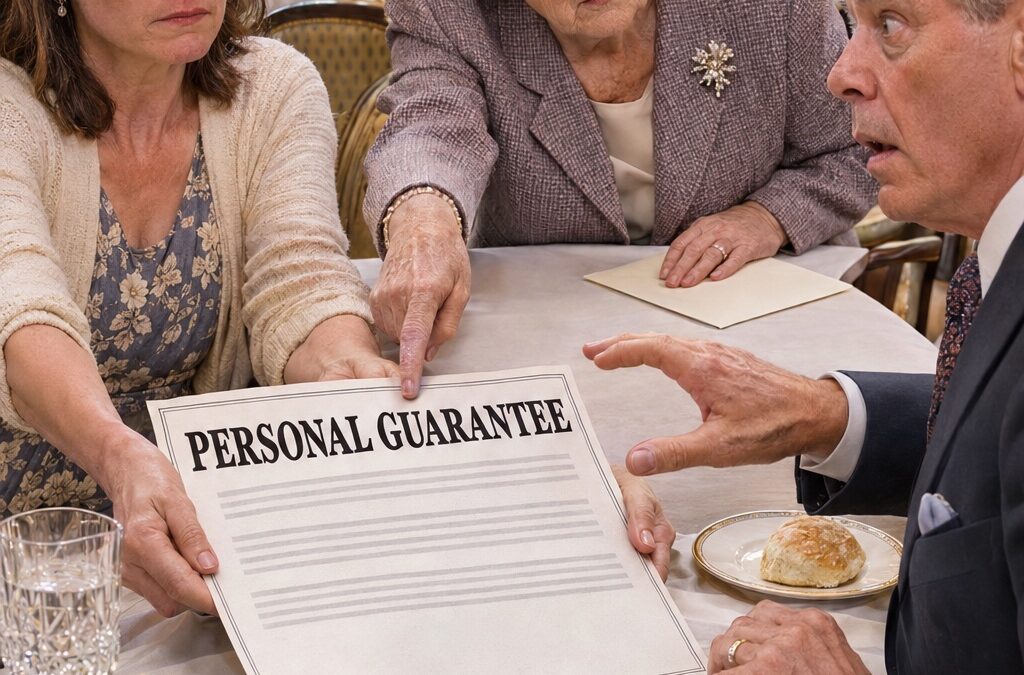
Part 3: The Reply Beside His Plate
“The existing loan is in default,” Evelyn read.
Dean put his napkin down beside his plate.
She kept her finger against the lender’s response.
“And they will not release the commercial lot without the debt reduction they require.”
My mother looked at Dean.
“What does that mean?”
“It means we need the new financing,” he said.
Evelyn shook her head.
“It means the new proposal doesn’t do what you told me you expected.”
She turned the correspondence so I could read it.
The business had already fallen behind on its existing loan. The lender had given written notice that the default remained uncured.
The commercial lot was already pledged to that loan.
My house was not.
I read that section again before looking up.
“Nothing here says they have my house now.”
“They don’t,” Evelyn said.
Dean leaned forward.
“Nobody said they did.”
“You let me wonder.”
“I was explaining the solution.”
His mother took her glasses off.
“I found the account problem on April 18. Then I asked the lender about your proposed collateral change.”
She explained that she had reviewed the account as part of her regular finance work. The borrowing proposal had arrived on April 17.
Dean had told her the new arrangement might free the commercial lot.
She had wanted the lender’s answer before moving anything forward.
“They sent this directly to me,” she said.
Dean stared at the folded edge.
“You could have told me before dinner.”
“I expected you to discuss a proposal. I didn’t expect you to threaten her job.”
The room had become awkward in ordinary ways.
A relative kept smoothing the tablecloth beside his plate.
Someone else moved a serving spoon that needed no moving.
My mother looked toward the closed dining room door.
I read the lender’s response from the beginning.
There were conditions, qualifications, and references to documents not completed.
My house address appeared in the proposed collateral information.
I put my fingertip underneath it.
“Did you give them my address?”
“It’s not a secret address, Rachel.”
“That isn’t what I asked.”
“I gave them information needed to consider the loan.”
Evelyn answered before I could.
“Information isn’t consent.”
“I know that,” he said.
“Then don’t treat the missing consent as a formality.”
He sat back and adjusted his cuff.
He wasn’t confused about my ownership.
He knew the house came from my father.
He had helped carry a cabinet inside after I moved there.
He had stood in my kitchen and complained about the traffic on the drive over.
Now he was discussing the same place as available security.
My mother reached for the correspondence.
Evelyn let her read it.
Carol held it close, then farther away.
“I don’t understand all of this.”
“Neither did I when he put it down,” I said.
Dean gave a short nod, as if that supported him.
“That’s why you should let me explain.”
I moved the unsigned guarantee away from my dinner plate.
“Then explain without threatening my paycheck.”
He looked toward the relatives at the far end.
“The shop has obligations. Equipment, suppliers, payroll.”
“I know what the shop does.”
“Then you know this affects people besides you.”
He had changed his argument.
He was no longer calling the packet an opportunity.
Now it was a way to keep other people safe.
I could picture the service bays on a busy morning.
A mechanic waiting for authorization.
A customer asking whether the repair could wait.
The phone blinking while someone stood in front of me.
Those were real people.
That made it harder to keep my eyes on the document.
Evelyn slid the lender’s response out of my mother’s hand.
“Rachel didn’t create the loan problem.”
“I didn’t say she did.”
“You’re asking her to risk her home because of it.”
Dean looked straight at me.
“I’m asking you to help keep the business operating.”
“By putting my house behind the debt.”
“By giving us better financing.”
I pushed my chair back enough to breathe comfortably.
The edge of the table had been pressing against me.
My mother noticed the movement.
“Don’t leave before we’ve talked.”
“I’m still sitting here.”
“Then please listen.”
I looked at her hands.
She had stopped folding the napkin.
Both palms rested against it now.
“Mom, I am listening. That’s why I’m asking questions.”
Dean picked up the conditional proposal.
He turned pages until he found the property information.
“This is what the lender needs.”
Evelyn watched without interrupting.
I noticed he didn’t point to the existing default.
He didn’t point to the refusal to release the lot.
He pointed to the place where my home appeared.
“What happens to the commercial lot?” I asked.
“That depends on the final arrangement.”
“Wasn’t freeing it part of your plan?”
He looked at his mother.
She did not answer for him.
“I wanted more flexibility,” he said.
I knew the lot he meant.
It was separate from the repair shop.
Dean had talked for years about what he might do with it.
Sometimes he wanted to build.
Sometimes he wanted to sell.
Until that dinner, I had not known it secured business debt.
“Flexibility for what?” I asked.
“For the business.”
“Would selling it pay the loan down?”
“It could. That isn’t necessarily the best use of it.”
“For you,” Evelyn said.
“For the company,” he answered.
She put the lender’s response beside the proposal.
“Then compare the actual terms.”
He kept his hand on the page.
I looked from the commercial lot description to my address.
I did not need to understand every lending phrase to see the question that mattered.
“Would my house replace that lot,” I asked, “or would you be putting both behind the borrowing?”
Part 4: What He Called A Swap
“Both would remain involved,” Evelyn said.
Dean looked at her sharply.
“Under the proposal as written,” she added.
I waited for him to correct her.
He rubbed his thumb along the paper’s edge.
“The final arrangement could change.”
“Has the lender agreed to that?” I asked.
“Not yet.”
Evelyn moved the response into the space between us.
“Their current answer is here.”
My house would be additional collateral.
It would not simply take the lot’s place.
Dean would not get to put my address on the loan and walk away with his other property released.
The lender had refused that arrangement.
He had wanted the new borrowing while preserving choices for himself.
My house was supposed to make that possible.
I took the guarantee back just long enough to read it.
The heading was plain.
The language underneath was not.
“Does signing this put a mortgage on my house?”
“Not by itself,” Evelyn said.
She separated it from the other proposed documents.
“The guarantee would make you personally responsible under its terms. The mortgage would give the lender security in the house.”
She showed me the separate mortgage document.
Its signature and acknowledgment spaces were empty.
“The lender requires both before this can close.”
Dean leaned toward me.
“Which means nothing happens today.”
“Unless I sign what you’re pushing at me.”
“There would still be a closing.”
“Then why fire me over it today?”
He looked toward my mother.
She moved her water glass aside.
“Dean, maybe she could take it home.”
He nodded quickly.
“That would be reasonable.”
It was the first suggestion he had accepted since opening the packet.
But it still left my job attached to the decision.
“And if I bring it back unsigned?” I asked.
He spread his hands.
“We would need to discuss your future.”
“We were already discussing it.”
Evelyn gathered the proposed mortgage behind the guarantee.
No one had signed either document.
There was no completed acknowledgment.
There was no recorded mortgage on the table.
There was a proposal, with my property inside it.
I put the pages back in their original order.
Dean watched me do it.
“I can limit how long we use the house.”
“Can the lender?”
“We can negotiate that.”
“Have they offered it?”
“Not in writing yet.”
I set the packet down.
“Then it isn’t something you can promise.”
His mouth tightened.
He had stopped looking around for agreement.
Now he was talking directly to me.
“You know I wouldn’t deliberately cost you your home.”
“I’m not asking what you intend.”
“Intentions matter.”
“So do loan terms.”
My mother let out a breath.
“Rachel, he’s your stepfather.”
“I know who he is.”
“He helped raise you.”
“And I worked for him.”
Dean pointed toward me.
“At a wage I paid.”
Evelyn put her glasses on again.
“She earned that wage.”
“I didn’t say she didn’t.”
“You said she needed to give something back.”
He shifted in his chair.
“People help a family business beyond their job descriptions.”
I thought of the customer waiting in the cold lobby.
His wife had kept her coat on.
The repair delay meant missing treatment transportation.
I had called the supplier from behind the desk.
The customer had apologized for needing an answer.
Dean had not been there for that part.
Evelyn had.
She looked across the table at him now.
“I watched her get that vehicle back on the schedule.”
“I’m aware she handles customers.”
“You weren’t there when she called the supplier again.”
He glanced toward the door.
“She was working.”
“Yes,” Evelyn said. “She was working.”
She did not make the scene bigger than it was.
She did not claim I had saved the entire business.
She described the calls, the schedule, the customer leaving.
Then she set her glasses case beside her plate.
“That work counts without a mortgage attached.”
I looked down at my hands.
There was a small crescent mark where my glasses had pressed against my palm.
I smoothed it with my thumb.
The server knocked and opened the door partway.
My mother asked whether the food could wait briefly.
The server nodded and stepped out.
I felt embarrassed that strangers had to manage our dinner around this.
Then I looked at the papers again.
Dean had chosen the place.
He had chosen the witnesses.
He had brought the packet before the meal.
I had not caused the delay by asking what it meant.
“Here is what I can do,” he said.
He lowered his voice into the tone he used with uncertain customers.
“We can have your questions answered. We can put expectations in writing.”
“By whose attorney?”
“You can have someone review it.”
“Without my employment depending on the answer?”
He did not respond immediately.
My mother touched his sleeve.
“Dean.”
He pulled the packet closer.
“We all need to be practical.”
“I am being practical.”
“Then don’t make a final decision when you’re upset.”
I took my reading glasses off.
I folded them carefully.
“I’m not pledging my house.”
He stared at the folded frames.
Evelyn left the lender’s correspondence open.
“I’m not signing the guarantee either,” I said.
My mother looked away.
Dean put his hand over the top of the packet.
He could take the pages back.
He could put them in a drawer.
He could ask the lender for another arrangement.
What he could not do was complete my signature space.
I stood my glasses case beside my plate.
Then I asked the question I needed answered.
“Am I still fired if I leave these unsigned?”
Dean straightened in his chair and said, “If you walk away from this proposal—”
Part 5: The Chair I Left Empty
“—you don’t come back to the shop.”
I waited until he finished.
“Effective now?” I asked.
He glanced at the watching faces.
“Yes.”
My mother said his name.
This time she sounded startled.
I laid the guarantee on top of the packet.
Then I slid everything back to him.
“I’ll need my earned wages on the regular payday.”
“We can handle the details later.”
“I’ll send my contact information in writing.”
“You know where the office is.”
“I do.”
I did not take the shop’s customer list.
I did not pick up his loan packet.
I took my glasses and my own handbag.
Evelyn folded the lender correspondence.
She kept that with her.
My mother stood when I moved my chair.
“Rachel, your food is coming.”
“I can’t eat here right now.”
“We can still have dinner.”
I looked at the place setting.
The bread plate sat crooked from the packet.
My water glass was nearly full.
“Not with my job on the table.”
Dean remained seated.
He watched while I put my handbag strap over my shoulder.
“You’re making this harder than it needs to be.”
I did not answer that.
I thanked Evelyn for explaining the documents.
She reached across and touched my wrist.
“Read anything they send before you respond.”
“I will.”
My mother followed me toward the door.
Her shoes made almost no sound on the carpet.
“Could you at least wait outside?”
“For what?”
“For us to settle down.”
I looked through the doorway into the restaurant.
People were eating lunch.
A server carried dishes past without looking into our room.
I wanted very badly to be one of those people.
Someone with a meal in front of her.
Someone who had not just lost her job.
“I’m going home, Mom.”
“Dean has a lot on him.”
“I know.”
“He shouldn’t have said it like that.”
“He shouldn’t have asked that way either.”
She pressed her lips together.
I waited for her to say something about my house.
Instead, she looked back toward the private room.
I left before she had to choose where to stand.
Outside, I sat in my car with the engine off.
My glasses were still in my hand.
I put them in their case.
Then I opened the case and checked that the arms had folded properly.
I did that because it was something simple I could finish.
My phone lit up before I drove away.
It was my mother.
I let it stop ringing.
At home, I put my bag on the kitchen table.
The room looked exactly as I had left it.
There was a dish towel over the sink divider.
Mail rested beside a grocery list.
I walked through the house checking nothing in particular.
The back door was locked.
The window above the sink was shut.
My father’s old cabinet still stood against the dining room wall.
Dean had helped move that cabinet.
I remembered him telling me to lift my end higher.
I put my hand on its corner and stayed there.
Then I went back to the kitchen.
Being told the house was not already pledged had helped.
But I wanted that confirmed outside the family.
I wanted to know exactly what had been submitted.
I wanted the lender to hear directly from me.
I opened my laptop and started a chronology.
I wrote the date.
I described the packet.
I wrote down Dean’s firing statement as closely as I could remember it.
I included my question about whether it was immediate.
Then I saved the messages about the dinner invitation.
They did not mention a home pledge.
They said we would discuss my future at work.
I took screenshots without adding comments.
I saved them with the chronology.
I did not post them anywhere.
Evelyn called while I was still at the table.
“Are you home?”
“Yes.”
“I wanted to make sure.”
“Did he say anything after I left?”
“He said we would talk privately.”
“About the business?”
“About me interfering.”
I closed the laptop halfway.
“You didn’t interfere.”
“I handled company loan correspondence. He disliked where the answer led.”
She offered to send me the lender contact information.
She could also provide the conditional proposal for review through the appropriate channel.
I asked her not to send customer or employee records.
“I only need the documents that concern me.”
“That’s sensible,” she said.
After we hung up, I contacted an Ohio real-estate attorney.
I left a concise message requesting a consultation.
I said I had not signed anything.
I said a family employer had proposed using my home.
Then I put the laptop back on the table.
My mother called again.
This time I answered.
“Are you calmer?” she asked.
“I’m home.”
“Dean thinks you embarrassed him.”
I looked at the notes I had just written.
“He fired me in front of everybody.”
“He was trying to get your attention.”
“He got it.”
She went quiet.
I could hear a television somewhere behind her.
Then she tried a different approach.
“What about the people who work there?”
“I care about them.”
“Couldn’t you help temporarily?”
“Not with my house.”
“You’re treating this as if we’re strangers.”
“I’m treating it as a loan.”
She said we should sleep on it.
I told her I would not be signing in the morning either.
After the call, I heated something from my refrigerator.
I ate at the kitchen table beside my closed laptop.
There was no restaurant music.
No one was waiting for my answer.
I washed the dish and dried it immediately.
Then I returned to the table.
Evelyn’s message had arrived with the lender’s contact details.
I opened a blank email and put the lender’s address in the recipient field.
Part 6: My Name On The Record
I did not send it that night.
I drafted it, saved it, and waited for advice.
On April 21, the attorney returned my call.
I carried my glasses and the documents Evelyn had provided.
The attorney asked what I had signed.
“Nothing.”
“Anything electronically?”
“No.”
“Any authorization sent directly to the lender?”
“No.”
Those questions were easier than the ones at dinner.
They had specific answers.
The attorney reviewed the proposal and the guarantee.
Then we discussed the separate mortgage document.
A guarantee was not the same as a mortgage.
A mortgage would need to be properly executed and recorded to create the proposed real-estate security.
The guarantee could create personal obligations under its terms.
That was reason enough not to sign casually.
I asked whether Dean could have pledged my house by listing it.
“No,” the attorney said. “Not simply by listing it.”
We checked the recorded ownership information.
The estate transfer deed was recorded June 14, 2019.
My name was on it.
No business mortgage appeared against my property.
The attorney explained the limits of that search.
Records confirmed what was recorded.
Direct lender confirmation would address what it claimed to hold.
I appreciated that she did not tell me to stop worrying without checking.
We revised the email together.
I identified the property.
I stated that I had not agreed to guarantee Dean’s borrowing.
I had not signed a mortgage.
I did not consent to either proposed obligation.
I requested confirmation of whether the lender held any executed document from me or asserted any claim against my home.
I read it out loud before sending.
There was nothing about Easter dinner.
Nothing about my mother.
Nothing accusing anyone of a crime.
It said exactly what the lender needed to know.
Then I sent it.
The attorney told me to retain the response.
She also told me not to sign substitute forms without review.
I asked whether I needed a court order.
“Not to refuse this proposal.”
I put my glasses back in their case.
For the first time since dinner, I zipped my bag without checking it twice.
The lender responded directly.
It held no executed guarantee from me.
It held no mortgage granted by me.
It asserted no existing claim against my home.
The proposed line had not closed.
My participation remained an unmet condition.
I read the response at my kitchen table.
Then I printed it and saved the electronic copy.
I did not frame it.
I put it with the deed records.
There was still a practical problem.
I had a house without a business lien.
I also had no job.
The attorney had not confused those things.
Neither could I.
I opened my household budget.
I checked the bills coming due.
I canceled nothing necessary and bought nothing extra.
Then I wrote to Dean.
I kept the message about employment.
I referred to his termination decision at dinner.
I requested my final earned wages on the regular payday.
I asked how he wanted my remaining personal belongings returned.
I offered a written handoff of current appointment information.
I did not offer to run the desk from home.
I read the message before sending.
The sentence about the firing stayed.
I knew he might later describe it differently.
He replied that I had chosen to leave.
I copied his exact statement from my notes.
I included my question about whether it was effective immediately.
Then I wrote that I was available to correct any factual misunderstanding in writing.
He did not repeat that I had quit.
He asked about the shop keys.
Those belonged to the business.
I arranged a straightforward return with confirmation.
My personal notebook contained no customer records.
I kept it.
Shop materials stayed with the shop.
There was no dramatic lockout.
No trip to the service desk to announce what happened.
The separation was mostly email and careful lists.
That made it easier to avoid saying something I would regret.
My mother sent a message asking whether the lawyer had frightened me.
I replied that the review had answered my questions.
She asked whether there was still time to help Dean.
I did not answer immediately.
Instead, I opened the lender’s response again.
The proposed credit line still depended on something I had refused.
That did not mean I owed another explanation every time someone asked.
I sent my mother a short reply.
“My decision hasn’t changed.”
Evelyn called later.
She had returned to her finance work.
She was separating immediate loan requirements from the expansion plan.
Dean would need to work with the lender on the existing debt.
“He says the new line could still have worked,” she told me.
“Without my house?”
“Not under that proposal.”
“I’m not asking you to argue with him.”
“I’m not arguing. I’m reconciling the account.”
I could hear papers moving.
It sounded like the office I had worked beside for years.
For a moment, I wanted to ask about the appointment board.
I wanted to know whether the morning drop-offs had arrived.
I pressed my lips together and waited.
Evelyn asked about my job search.
I told her I had begun updating my work history.
She offered to confirm what she had personally observed.
“I can speak to your work.”
“Thank you.”
“Without talking about the dinner.”
“I’d prefer that.”
After the call, I opened a blank résumé.
I wrote service-desk manager.
Then I listed what I actually did.
Scheduling.
Customer communication.
Estimates and repair authorization coordination.
I did not write “helping family.”
I had always described the job that way.
Now I needed another employer to understand it.
Before I finished, Dean’s message appeared.
He needed help sorting the next day’s appointments.
He asked whether I could come in briefly.
I read it with my fingers resting above the keyboard.
Part 7: The Desk Without Me
I answered after finishing my résumé.
“I can provide the factual handoff I offered. I’m not returning to work without an employment agreement.”
I read it again before sending.
It sounded formal compared with our usual messages.
Our usual messages had caused enough confusion.
Dean called instead of replying.
I let the call go to voicemail.
His message was controlled.
He said customers were expecting me.
He said nobody else knew some of the arrangements.
He said coming in would prevent unnecessary inconvenience.
I wrote down the open appointments I remembered.
I checked them against the handoff information I could properly access.
Then I sent a concise description through the agreed channel.
I did not contact customers on my own.
I did not tell anyone to leave the shop.
I did not keep business records as leverage.
When Dean asked a specific follow-up, I answered it.
When he asked me to manage the day remotely, I declined.
The difference took effort.
I was used to hearing a problem and solving it.
A customer’s confusion could follow me home.
I could think about an unfinished estimate while folding towels.
Dean knew that about me.
He was not wrong that I understood the desk.
He was wrong that firing me left that understanding available for free.
My mother called after he spoke with her.
“He says you’re refusing to help customers.”
“I sent the handoff.”
“He needs you there.”
“He told me not to come back.”
“That was during an argument.”
“It was an answer to a direct question.”
She did not have a response to that.
Instead, she asked whether I had found work.
“Not yet.”
“You could make this easier.”
I sat down before answering.
“Mom, please stop making his business the only problem.”
“I’m worried about you too.”
“Then ask about me without asking me to return.”
She said she would call later.
I let her.
The week settled into tasks.
Applications in the morning.
Housework when I needed to move.
Follow-up calls after lunch.
I wore ordinary work clothes for interviews.
I brought a copy of my work history.
I practiced explaining the separation without describing every relative at dinner.
“My employment ended after a disagreement about a personal financial obligation.”
That was accurate.
If someone needed more detail, I could give it privately.
Most wanted to know whether I understood a repair schedule.
They asked how I handled delayed parts.
They asked how I explained an estimate customers disliked.
Those questions brought me back into familiar work.
At an independent shop, the manager described a customer who wanted a guaranteed completion time before the vehicle had been inspected.
“What would you tell them?”
“I’d explain what we can promise and what still needs checking.”
“What if they push?”
“I wouldn’t invent an answer to get them off the phone.”
He nodded and wrote something down.
I did not know whether that meant I would get the job.
But I left without feeling I had to apologize for my experience.
On April 25, my earned wages arrived.
I checked the deposit against my work record.
It was the money owed for work completed.
No severance.
No payment for my silence.
No agreement to guarantee anything.
I saved the pay record.
Then I paid the bills I had set aside for it.
The ordinary motion of doing that helped.
I had been imagining every expense as an emergency.
Now I could address the ones actually in front of me.
Evelyn agreed to provide a reference based on her direct knowledge.
She confirmed the work she had seen.
She did not call me perfect.
She described my reliability, my customer handling, and my willingness to check details.
I was grateful for the plainness of it.
A job offer followed.
The wage was $24 per hour.
The position was service-desk work, not ownership.
The duties were written clearly.
The borrowing decisions belonged to the owners.
I read the offer with my glasses on.
Then I asked about hours and reporting responsibilities.
Nobody acted offended.
I started on May 5.
The first morning, I arrived early enough to find the forms without rushing.
The desk had a drawer that stuck.
The appointment system was unfamiliar.
I wrote reminders on a clean page.
For a while, I expected someone to mention Dean.
Nobody did.
They needed me to learn their schedule.
They needed customers called back.
They needed estimates explained.
That was enough.
At lunch, I took my food outside and sat where I could see my car.
I checked my phone.
There was a message from my mother.
She asked how the morning had gone.
There was nothing about Dean in it.
I answered that the drawer stuck and the people seemed decent.
She sent back that she was glad.
I read it again before putting the phone away.
Meanwhile, Dean’s proposed credit line did not close.
The lender had not quietly dropped the conditions.
My refusal remained my refusal.
Evelyn told me only what concerned me directly.
She did not send confidential account details.
She confirmed there had been no change involving my property.
She also began arranging an orderly handoff of her finance duties.
“I should have done that sooner,” she said.
“Are you leaving because of dinner?”
“I’m finishing work properly. That isn’t the same as staying indefinitely.”
She sounded tired.
I asked whether she needed groceries.
She laughed softly.
“I can still buy groceries.”
“I know. I was offering.”
“Then yes, you can bring some when you visit.”
I went to see her without discussing the shop all afternoon.
We put food away.
We talked about her kitchen faucet.
She asked whether the new desk drawer still stuck.
“It does.”
“Tell somebody.”
“I did.”
“Good.”
By then, Dean had started discussing the commercial lot again.
Selling it was no longer an optional future idea.
It was part of addressing the existing debt.
He sent me a message asking me to attend a family meeting about it.
Part 8: The Lot He Kept Pledging
I declined the family meeting.
I had no ownership in the lot.
I had no part in the existing business loan.
I did not need another table full of relatives deciding what I should contribute.
I told Dean he could explain any matter involving me directly.
He asked whether he could come to my house.
I considered saying no.
Then I offered a brief conversation during daylight.
No documents for my signature.
No additional relatives.
He agreed.
When he arrived, he stood on the front step with empty hands.
I noticed that before noticing anything else.
I let him into the kitchen.
We sat at the same table where I had drafted the lender email.
He looked around while I put water in front of him.
The house was familiar to him.
I wondered whether it looked different now that it was unavailable.
He began with the shop.
Scheduling had been difficult.
Some customers had asked where I went.
A replacement did not know every old arrangement.
I waited until he finished.
“Are you asking me to return?”
“No.”
“Then I don’t need the desk problems.”
He moved the glass without drinking.
“I’m explaining what happened.”
“I know losing an experienced employee causes work.”
“You make it sound like that was my plan.”
“You told me the condition.”
He looked down.
For a moment, I thought he might apologize.
Instead, he said the lot sale was moving forward.
The lender would have to approve the release.
Required proceeds would go toward the existing debt.
He would not receive unrestricted sale money while leaving the lender without its agreed security.
I listened.
This was the explanation he should have given before discussing my home.
He had wanted to avoid selling under those conditions.
He had wanted expansion money.
He had wanted the lot available for other decisions.
The new financing had seemed like a way to arrange all of that.
My house had been the piece he did not own.
“Would you still have asked if we weren’t family?” I asked.
He leaned back.
“Probably not.”
“Why?”
“Because family has reasons to help.”
I looked toward the cabinet against the wall.
The corner still had the small mark from moving it.
“Family also knows where I would have to live if it went wrong.”
“I never intended that.”
“I understand you didn’t want it to happen.”
He looked relieved for a moment.
Then I finished.
“That doesn’t make it an acceptable risk for me.”
He rubbed his forehead.
“The shop could have grown.”
“Maybe.”
“We could have had more room.”
“Maybe.”
“Now that’s off the table.”
I kept my hands around my glass.
“My house is off the table.”
He did not repeat his promise to protect it.
The lender correspondence had made that difficult.
Instead, he asked whether I would reconsider after an attorney wrote protections.
“No.”
“A limit on the guarantee?”
“No.”
“A shorter period?”
“No.”
He looked toward the hallway.
“You’re not even considering it.”
“I considered the proposal. I declined it.”
He drank some water.
The conversation had reached the answer before he wanted it to.
He asked whether I was happy at the new shop.
“I’m learning the system.”
“That wasn’t what I asked.”
“I’m glad I took the job.”
He nodded without looking at me.
Then he brought up my mother.
“She’s upset.”
“So am I.”
“She wants us at dinner together.”
“I’m not ready for that.”
“How long?”
“I don’t know.”
I did not give him a date to wait out.
I did not promise that a pleasant visit would reopen the financing.
He stood before finishing his water.
At the door, he said he should not have handled the conversation publicly.
I looked at him.
“Or tied it to my job.”
He adjusted his sleeve.
“That complicated things.”
“Yes.”
He left without a signature.
I washed the glasses and put them away.
Then I checked my email once and went outside to weed beside the steps.
There was no immediate feeling of victory.
There was relief that the visit had ended as agreed.
There was also the dull hurt of hearing him call my refusal complicated.
I worked until the weeds filled the small container beside me.
By June 27, the commercial lot sale had closed.
The lender approved the sale and release arrangement.
The required proceeds reduced the existing business debt.
Dean did not get the expansion he had planned.
The proposed credit line never closed.
The repair shop kept operating without the new expansion.
There was no courthouse scene.
No lender employee came to my door.
Nobody transferred my home back to me because it had never left my ownership.
Evelyn confirmed only the point I needed confirmed.
“There’s nothing for you to sign.”
“I wasn’t going to.”
“I know.”
My mother called after learning the sale was complete.
She sounded tired.
“Dean says it’s done.”
“I heard.”
“He wanted things to go differently.”
“So did I.”
She was quiet long enough that I thought the call had dropped.
Then she said, “I shouldn’t have said the jobs mattered more than your house.”
I sat down at the kitchen table.
“No, you shouldn’t have.”
“I was thinking about everybody depending on the shop.”
“You weren’t thinking about me depending on my home.”
“I wasn’t,” she said.
It was the first time she had answered that plainly.
She did not add that I had embarrassed him.
She did not ask me to make the apology easier.
I listened to her breathing through the phone.
“Everybody heard what I said,” she added.
“Yes.”
“They also heard you tell us you lived there.”
I looked toward the doorway.
My handbag hung from its usual hook.
My work clothes were ready for the morning.
Nothing about the house was grand.
It was simply where all of that stayed.
My mother asked whether she could visit without Dean.
Part 9: Glasses Beside My Appointment Book
“Yes,” I said. “Without loan paperwork or messages for him.”
“I understand.”
“I mean that, Mom.”
“I heard you.”
We arranged the visit directly.
I did not invite the other relatives.
I did not ask Evelyn to mediate.
When Carol arrived, she carried food in a covered dish.
She asked where I wanted it.
“In the refrigerator for now.”
She put it there and washed her hands.
For a while, we stayed with ordinary subjects.
My work schedule.
Her garden.
A loose handle on one of my cupboards.
She touched the handle and asked whether I wanted help tightening it.
“I can do it.”
“I know.”
I noticed the difference.
She had offered without insisting that my answer was wrong.
We sat at the kitchen table.
She looked at the cabinet my father had owned.
Then she looked back at me.
“I keep thinking about how you walked out.”
I waited.
“You didn’t yell.”
“I wanted to get home.”
“I thought you were punishing us.”
“I had just been fired.”
She pressed her fingers against the table.
“I know that now.”
“You knew it then too.”
She looked down.
“Yes.”
I did not rush to fill the pause.
My mother had always disliked an uncomfortable conversation.
She would reach for food or ask about traffic.
This time, she stayed with it.
“I wanted him to stop being angry,” she said.
“So you asked me to agree.”
“Yes.”
“I couldn’t do that.”
“I know.”
I could hear the refrigerator running behind her.
There was nothing else demanding an answer.
She asked whether the lender had confirmed everything.
I told her it had.
No executed guarantee from me.
No mortgage granted by me.
No claim against my house.
The deed remained as it had been.
I had not paid Dean’s debt.
I had not made a temporary rescue payment.
I had not agreed to revisit the proposal after the lot sale.
My mother nodded.
“Good,” she said.
I looked at her carefully.
“Good?”
“Yes. Good.”
She did not say it with enthusiasm.
She said it as something she had finally accepted.
That was enough for that visit.
We ate the food she brought.
She did not call Dean from my kitchen.
She did not put him on speaker.
Before leaving, she asked whether we could have lunch again.
“Yes. We can arrange it.”
She hugged me at the door.
I let her.
I still remembered her napkin folded into a triangle.
I still remembered her saying everyone’s jobs should matter more.
One visit did not remove that.
But I no longer had to argue about what she had said.
She had acknowledged it.
After she left, I put the leftovers away.
Then I tightened the cupboard handle.
It took less time than I had spent noticing it.
Evelyn visited later without bringing a finance folder.
Her handoff of business records had been orderly.
She had retained what she was required to retain.
She had stopped making herself available for every new problem.
Dean was handling the consequences with the lender and the people who still worked for him.
He did not enjoy it.
But the business did not belong to me.
Neither did its borrowing obligations.
Evelyn asked about my mother’s visit.
I told her the truth.
“It was awkward. It was better.”
“That sounds about right.”
I made tea.
She watched me find the cups.
Then she asked whether I regretted leaving the dinner.
“No.”
“Any part of it?”
“I wish I’d known what he intended before I went.”
“So do I.”
She did not congratulate herself for speaking.
She asked whether I still liked the new job.
“I like going home when my shift is finished.”
She smiled and lifted her cup.
Dean and I communicated when necessary.
He did not send new financing proposals.
I did not resume the service desk.
If a customer contacted my personal phone looking for the old shop, I gave the shop’s contact information.
I did not take over the repair discussion.
I did not use their confusion to recruit business away.
At my new workplace, I handled the customers assigned to me.
That distinction made my evenings quieter.
I could buy groceries without remembering an estimate I had promised to finish unpaid.
I could sit through dinner without expecting Dean to call about tomorrow’s schedule.
Sometimes I still reached for my phone when it rang.
Then I checked who was calling before answering.
The old shop continued in a smaller arrangement than Dean had wanted.
The expansion did not happen.
The sold commercial lot was no longer available for his future plans.
Those were concrete losses.
So was losing someone who knew the service desk well.
He had told relatives that I needed to contribute.
Then he had to pay and train someone else to do the work I had already been doing.
I did not need reports about every mistake.
When someone tried to tell me the latest shop trouble, I changed the subject.
I knew enough.
On July 7, I arrived at my new desk carrying my lunch and glasses case.
The drawer no longer stuck.
Someone had repaired the runner after I mentioned it.
I put my lunch away and checked the appointment book.
A customer came in worried about a repair delay.
His vehicle was needed for work.
I listened without promising what the technicians had not confirmed.
Then I checked the schedule.
I called the supplier.
I wrote down the expected delivery information.
When I had an answer, I called the customer back.
“We can tell you what we know now,” I said. “If that changes, I’ll contact you.”
He thanked me for checking.
There was no family history attached to the exchange.
No borrowing proposal.
No suggestion that doing the job meant offering my home.
At the end of the day, I finished the notes for the next morning.
The manager asked whether anything needed attention before I left.
I pointed out an estimate awaiting approval.
He wrote it down.
“Go ahead. We’ve got it.”
I closed the appointment book to the page marker.
Then I remembered an early delivery and opened it again.
I made a clear note where I would see it.
My glasses had slipped down my nose while I wrote.
I took them off and checked the lenses.
The old smear was gone.
I wiped them anyway with the cloth from the case.
Then I set my reading glasses beside my own appointment book.








