My Daughter-In-Law Pulled My Chair Away At Christmas Dinner — Then I Remembered Who Owned The House
Chapter 1: The Chair Behind Me
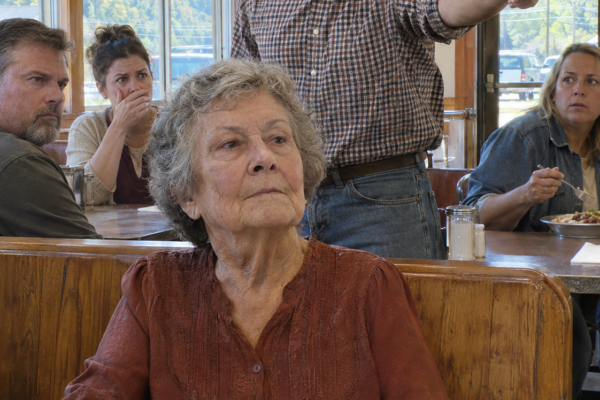
My daughter-in-law pulled my chair away during Christmas dinner in my beachfront home, then told me I ought to learn when to leave. My son called it a misunderstanding. That million-dollar house was still mine to leave to anyone I chose, and my attorney had seen exactly what happened.
The chair scraped behind my knees.
I caught the edge of the table.
Nothing fell.
My palm landed beside my plate, and I stayed bent over until I knew my feet were firmly underneath me.
Then I straightened.
Maren still had my oak dining chair behind her.
“Watch yourself,” she said.
I looked down at the space where I had expected the seat to be.
Then I looked at Patrick.
My son had been passing food a moment earlier. Now his hand was resting beside the serving dish, and he was watching me.
He had seen it.
He could see his wife, my chair, and me.
“Maren,” I said, “put that back.”
“She thought you were getting up,” Patrick told me.
“No.”
I needed him to hear that before he said anything else.
I wasn’t injured.
There was no broken plate to collect, no reason to call anyone, and no bruise I could point to afterward.
But I had been sitting down.
Maren had pulled the chair.
Hugh pushed back from the table.
“Are you all right, Celia?”
“Yes.”
I checked my hand, turning it over beside my plate. Nothing was bleeding.
Maren gave a little laugh.
“Well, that’s settled, then.”
She still hadn’t moved the chair.
The Christmas tree lights reflected in the dark ocean-facing windows. Behind the glass, I could see the room more clearly than the beach.
My place was at the head of the table.
My napkin had slipped partly off my plate when I grabbed the edge. I picked it up and laid it flat.
Patrick watched me do that.
“Mom, sit down.”
“Move the chair back.”
Maren released it without bringing it forward.
I reached around her and pulled it into place myself.
The legs dragged across the floor.
Hugh remained standing.
That seemed to bother her more than my refusal to sit.
“Really, Hugh,” she said. “She’s fine.”
“She said she’s fine,” he answered.
“Exactly.”
“That isn’t what Patrick and I were discussing.”
Patrick put down the serving spoon.
“Nobody was discussing anything.”
I kept my hand on the chair back. I had bought that chair to sit in, not to stand behind while my son explained what I had just experienced.
“You saw me sitting down,” I told him.
“Mom, please.”
“Did you?”
He looked toward his plate.
Maren answered instead.
“You make everything so uncomfortable.”
I put my palm flat on the table again, this time because I wanted somewhere to rest it.
“What exactly did I make uncomfortable?”
“All of this.”
She moved her arm toward the room.
“The bedroom. Having us here. Acting like we’re asking for something terrible.”
“You asked me to give up my room.”
“For visits.”
“And I said no.”
Patrick rubbed his forehead.
“Can we not do this now?”
“I was trying to eat dinner.”
My plate was still waiting.
That was what I kept noticing. Nothing on the table had changed, although nobody seemed able to return to it.
The food was there.
My chair hadn’t been.
Maren turned toward me fully.
“You ought to learn when to leave.”
She had said it as though I were lingering in somebody else’s kitchen after everyone wanted to go home.
“Leave where?” I asked.
“Oh, Celia.”
“Say it.”
Patrick spoke before she could.
“She means leave things alone.”
I looked at him.
He was 46, not a boy who needed help finding the right answer. He had watched his wife move the chair while his mother lowered herself.
Now he was offering her an explanation she hadn’t offered herself.
Hugh stood straighter.
“No, Patrick.”
His voice wasn’t loud.
My son looked up.
“She pulled the chair while your mother was sitting down. I watched her do it.”
Maren’s mouth tightened.
“You’re making it sound deliberate.”
“I’m describing what I saw.”
I was grateful he stopped there.
He didn’t tell her what sort of person she was. He didn’t raise his voice or try to make Christmas dinner into a hearing.
He simply refused Patrick’s version.
Maren looked from Hugh to me.
“So now we’re all supposed to take sides?”
“I asked my son what he saw.”
“And he told you.”
“No. He told me what you supposedly thought.”
Patrick shifted in his chair.
“Maren didn’t mean for you to fall.”
“I didn’t fall.”
“There you go.”
“That doesn’t make what happened acceptable.”
I turned my chair until it faced the table properly.
I still didn’t sit.
At 72, I knew what it felt like to misjudge a seat or catch a toe on a rug. This had not been either of those things.
I was healthy.
I managed my own house.
Until that afternoon, I had assumed those facts were obvious to everyone at my table.
Hugh asked whether I wanted him to leave us to talk.
“No. Please stay.”
Maren folded her arms.
“Of course you want him here.”
“Yes.”
I didn’t add an apology.
Hugh had come as my friend. He had eaten at that table before, and his invitation hadn’t included refereeing my family.
Still, he was there.
He had seen what Patrick saw.
That mattered now.
I eased the chair away from my legs so I wouldn’t bump it while we stood there. Maren glanced at the movement as though I were doing something theatrical.
“Can we please stop making this bigger?” she asked.
“You told me to leave.”
“I told you to learn when.”
“Leave my home?”
She looked toward Patrick before answering.
“Patrick and I shouldn’t wait to live here.”
There was the part she had kept circling all afternoon.
Not a guest-room arrangement.
Not a misunderstanding about whether I was standing.
She was talking about living in my house.
I looked toward the dark windows, then back at her.
“I live here.”
“We know that.”
“Then speak to me like you know it.”
Patrick pushed his plate away.
“Maren, let me handle this.”
She stepped closer to his chair, no longer looking at me.
“Tell her what you promised us, Patrick.”
Chapter 2: The Folder From My Study
“I told Maren we would have the house someday,” Patrick said.
He said it toward his plate before looking at me.
“Because that’s what you told me.”
“I said I expected you to have it.”
“And we believed you.”
“I meant it when I said it.”
Maren opened her hands.
“Then why are we being treated like strangers?”
“You’re being treated like guests.”
That word annoyed her.
I could tell by the way she looked around my dining room, as though something she had already unpacked was being taken away.
For 12 years, Patrick and Maren had enjoyed free beach vacations here.
They hadn’t bought their way into anything.
I had bought and paid for the house through my working years, while I was keeping payroll records, checking deductions, and making certain other people received the money they had earned. I was careful with my own pay, too. This place wasn’t a surprise inheritance or something Patrick had helped me purchase. It was my home, paid for by me, and eventually mortgage-free. When Patrick married Maren, I told him I expected him to have it someday. I wanted him to enjoy it while I was alive, and I liked having them visit. We agreed on visits, they came, and I never charged them for staying. Somewhere along the way, the asking became less definite. Maren would mention what they intended to do with a room, or Patrick would talk about a visit as though my agreement were a formality. I corrected them, but I hadn’t changed my plan.
Not then.
During the months before Christmas, I had begun hearing more of it.
That furniture wouldn’t suit them.
They would use a room differently.
They would want people staying over.
I said, “Please ask before inviting anyone.”
Or, “No, I’m keeping that.”
Maren generally looked at Patrick.
He generally told me she was excited.
I had accepted that explanation longer than I should have.
Christmas afternoon had made it harder.
I was putting something away in my dresser when Maren stopped in my bedroom doorway.
“The smaller room is fine for you,” she said.
“For me?”
“You don’t need all this space by yourself.”
I shut the drawer.
“I use this room every night.”
“We’re thinking ahead.”
“Then think about the guest room.”
She stayed in the doorway.
“We could be more comfortable when we come.”
“You have a room.”
“The main bedroom makes more sense.”
“Not while I’m using it.”
She looked at the bed, then the dresser, as though my belongings were temporary obstacles.
I was divorced and unmarried.
There wasn’t anyone else whose permission she could seek, and there wasn’t an empty half of my life waiting for her to organize.
I liked my bedroom.
I intended to keep sleeping in it.
Later, Patrick found me near the dining table.
“Did you really need to make an issue of it on Christmas?”
“Whose bedroom were we discussing?”
“You know what I mean.”
I did.
He wanted me to make his wife comfortable by agreeing, or at least by declining softly enough that she could keep expecting a different answer.
I had said nothing more.
By dinner, I thought we had moved on.
Hugh was asking whether the wind bothered me at night. Patrick was passing food. Maren was talking about the ocean.
Then I stood to adjust my chair.
Now we were discussing what Patrick had promised his wife.
“We aren’t asking you to disappear,” Maren said.
“You asked me to leave.”
“You keep choosing the worst meaning.”
“What does living here before I leave mean?”
She didn’t answer that.
Instead, she said they were trying to plan their future.
Her future seemed to require the use of my house 10 years early.
I turned toward Hugh.
He was 64, a longtime friend, and a North Carolina estate-planning attorney. His Christmas invitation had been ordinary.
I hadn’t invited him to observe my son.
He knew the house because he had helped me decide what would happen to it after my death.
He also knew that it belonged to me now.
“Hugh, would you get my estate folder?”
He looked at me before moving.
“From the study?”
“Yes. Where I keep it.”
Maren looked at Patrick.
“What does that have to do with dinner?”
I didn’t answer her.
Hugh went toward the study.
Patrick leaned forward.
“Mom, don’t turn a misunderstanding into something else.”
“You keep calling it that.”
“Because that’s what it was.”
“No.”
I stayed beside my chair.
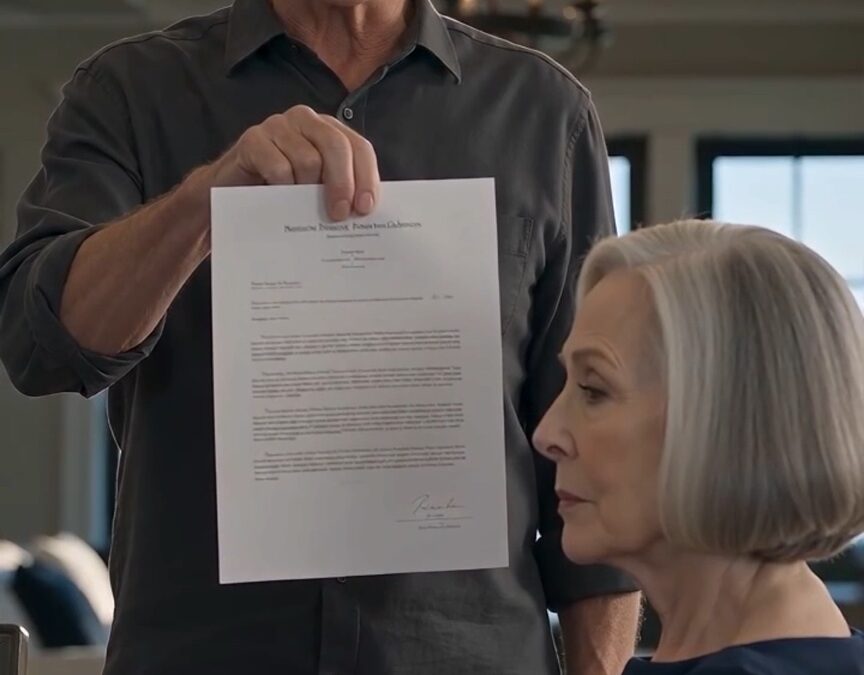
Hugh returned carrying the folder closed, with ESTATE PLAN visible on the front.
He didn’t open it.
There was no signing at the table, no new beneficiary announced between plates, and no suggestion that taking out a folder changed anything.
Maren watched him approach.
“We already know what she promised Patrick,” she said.
“Hugh, please tell her now.”
He stopped beside me.
“Maren, she owns this house and chooses who inherits.”
Her confident expression disappeared.
“But you already promised us.”
I looked at the folder, then at Hugh.
“Tell her who decides.”
He held it at chest height toward Maren.
“She paid for this house. She still decides who gets it.”
Patrick pushed his chair back.
“Are we really doing this here?”
“No legal work is happening at dinner,” Hugh said.
I finally sat.
The oak seat was underneath me, where I had put it.
“Then put that away,” Maren said.
“It’s my folder,” I told her.
She looked at Patrick again.
I smoothed my napkin onto my lap and asked Hugh whether I could make a private appointment during the following week.
“Yes.”
“I want to review what I have.”
“We can do that.”
Patrick started to speak.
I held up my hand.
“Privately.”
Hugh lowered the folder so the label faced his jacket, and I asked whether changing my wishes was still entirely my decision.
He said it was, then asked, “Who do you want to receive the house instead?”
Chapter 3: The Name I Chose
“June,” I said, once I was seated in Hugh’s office during the following week.
He set his pen beside the open folder.
“My niece. I want the house to go to June.”
He didn’t write immediately.
“Tell me what you want her to receive.”
“The house outright, after I die.”
“And while you’re living?”
“I keep living in it.”
“Yes.”
I placed my handbag beside my chair.
At dinner, I had told Hugh I wanted to answer his question privately, not across a table with Patrick waiting to argue.
Now we were alone.
There was no food cooling, nobody explaining Maren’s intentions, and no reason to soften my words so Christmas could continue.
Hugh asked me to begin with the house itself.
“It’s my home in Emerald Isle.”
“And you own it?”
“Alone.”
“Any mortgage?”
“No.”
He knew those answers, but I understood why he wanted them from me.
As a retired payroll manager, I had spent enough time checking information to respect someone who didn’t simply assume the old entries were still correct.
He asked whether anyone else had bought part of it.
“No.”
Whether anyone lived there with me.
“No.”
Whether I had agreed to give someone an ownership share.
“No.”
Then he picked up his pen.
“Tell me about June.”
“She lives nearby. Independently.”
“Does she depend on you for housing?”
“No.”
“Have you discussed leaving her the house?”
“No. She doesn’t know.”
He wrote that down.
June was 36.
She had her own life, her own home to return to, and no habit of treating mine as a future possession.
That mattered to me.
I didn’t need to invent anything grander.
She hadn’t rescued me from an emergency. She hadn’t spent years secretly doing things Patrick refused to do.
This wasn’t repayment for a hidden service.
I simply liked how she treated me.
“If she wants to visit, she asks,” I told Hugh.
“And if you say it isn’t convenient?”
“She accepts it.”
“What would you expect from her in return for this inheritance?”
“Nothing.”
He looked up.
“No requirement that she move in?”
“No.”
“Or look after you?”
“No.”
I shifted my handbag farther beneath the chair so I wouldn’t trip over its strap when I stood.
“I’m healthy, Hugh. I’m not arranging somebody’s reward for taking care of me.”
“I understand.”
“I want that clear.”
“It will be.”
He asked whether June had suggested any change.
“She doesn’t know I’m here.”
That answer seemed important enough for him to record.
I watched him write.
At home, I could reach for a folder and ask a question. Here, I had to say exactly what I wanted done.
I found that easier.
There were no guesses to protect.
Hugh turned a clean page toward himself.
“Leaving the house outright means she would own it after your death, subject to the ordinary administration of your estate.”
“That’s what I want.”
“You aren’t asking her to hold it for Patrick.”
“No.”
“You aren’t asking her to let him use it.”
“No.”
I hadn’t thought I would need to say those things.
Then I remembered Maren standing in my bedroom doorway, studying the space around my bed.
“Yes,” I said. “Please make that clear, too.”
Hugh rested his pen.
“Celia, I need your decision, not something said because you want to frighten Patrick.”
“I’m not asking you to frighten him.”
“Good.”
“I don’t want him expecting a house I no longer want to leave him.”
Hugh nodded.
That was the plainest way I could put it.
I had meant my old intention.
I meant this one now.
He asked whether I wanted time before we went further.
“I’ve had time.”
We still didn’t rush.
He explained that our conversation was an instruction, not a completed replacement will.
The folder from Christmas was on his desk.
The existing arrangement remained in place until the new work was properly completed.
“So nothing changed because you held that folder up?”
“Correct.”
“I knew that. I want to be sure we’re talking about the same thing.”
“We are.”
I appreciated that he answered without acting offended.
Our friendship didn’t make the work less careful.
He asked me to describe what had happened at dinner in my own words, though he had seen it himself.
I kept it short.
“She pulled my chair while I was sitting.”
“And afterward?”
“Patrick said she thought I was getting up.”
“Were you hurt?”
“No.”
I didn’t want an injury added to make my decision seem more reasonable.
What happened was enough.
So was everything said afterward.
Hugh asked what had finally changed my thinking about Patrick receiving the house.
I looked down at my hands.
“He watched.”
I stopped there, then corrected myself.
“He watched, and then he asked me to accept something else.”
Hugh waited.
“I don’t want my home becoming something they discuss over my head while I’m still standing in it.”
He wrote again.
Outside his office, I could hear ordinary movement, but nobody entered.
I liked that nobody was asking me to forgive anybody before lunch or get through a holiday without making trouble.
I could finish a sentence.
I could change my mind.
I could also leave my mind exactly where it was.
“June gets the house,” I said.
“All right.”
“And I keep deciding who comes into it while I’m alive.”
“Yes. Your will doesn’t transfer ownership now.”
I sat back.
That distinction had become the most important part of the conversation.
Maren had been planning future use as though the waiting were an inconvenience I could fix by making myself smaller.
June hadn’t asked for anything.
She would receive the house because I chose her, not because she had started living in it ahead of me.
Hugh drew the old folder closer.
“We should review what’s already written before I prepare the replacement.”
“Yes.”
He placed his hand on the cover but didn’t open it yet.
“Do you also want Patrick expressly excluded?”
Chapter 4: What the Folder Said
“Yes,” I told Hugh.
“Patrick and Maren. I want neither of them to receive an interest in this house.”
He opened the folder.
The paper inside looked familiar.
I had seen it when my expectations for Patrick were still comfortable enough that I didn’t examine how often he spoke for me.
Hugh turned the relevant page toward me.
“Read this part.”
I moved it closer.
Patrick was named.
Maren wasn’t.
There was no shared gift to them, no wording that made her an owner, and no right for either of them to use the house while I lived.
I read it again.
“I remembered leaving it to him.”
“You did.”
“Not to both of them.”
“Correct.”
I put my fingertip beside Patrick’s name.
At Christmas, Maren had kept saying us.
Our future.
What you promised us.
Whatever Patrick had told her, this page didn’t say it.
Hugh waited while I finished reading.
“Did Patrick ever receive ownership under this?” I asked.
“No. It states what would happen after your death if this will remained in effect.”
“So he has nothing to transfer to her now.”
“Correct.”
“And nothing that gives them the main bedroom.”
“No.”
I almost laughed, but I didn’t.
The bedroom argument had been so ordinary on its face. A doorway, a dresser drawer, Maren suggesting I take the smaller room.
Here was the paper she seemed to believe stood behind her.
It did nothing of the kind.
Hugh asked what I had actually said to Patrick about the house.
“I told him I expected him to have it someday.”
“Anything more formal?”
“No.”
“Did he pay for the house in exchange?”
“No.”
“Did you sign an agreement requiring you to leave it to him?”
“No.”
We went through it carefully.
There had been no purchase contribution.
No lease.
No agreement trading money or services for an inheritance.
Patrick and Maren lived elsewhere.
Their stays were visits I permitted.
I had never agreed to give up the ability to change my will.
Hugh explained that an expectation wasn’t the same thing as a binding arrangement.
“I want you to be precise about that,” I said.
“I am.”
“I don’t want to learn later that being generous tied my hands.”
“It didn’t.”
I unfolded my hands on the desk.
For a moment I could hear Patrick at dinner, saying he had believed me.
I believed that he had.
That wasn’t the same as owning my house.
I asked Hugh whether I should tell Patrick exactly what the old will said.
“You may choose what to disclose. You don’t have to debate your estate plan with him.”
“I don’t want a debate.”
“Then don’t offer one.”
He returned the page to its place.
I had spent years correcting details gently because I wanted visits to remain pleasant.
Please ask.
That room isn’t available.
I’m still using it.
Patrick had heard those words.
He had also watched me reach for the table.
I didn’t need to provide him with more evidence of what I wanted in my own house.
Hugh asked me to explain the change without using anything Maren had said.
I took a moment.
“I want June to have the house after my death.”
He waited.
“I don’t want Patrick receiving it. I don’t want Maren receiving any interest through my estate plan.”
“And this is your decision?”
“Yes.”
“Has anyone asked you to make it?”
“No.”
He wrote my instructions.
Seeing them reduced to ordinary words helped.
There was no punishment schedule, no dramatic condition Patrick could satisfy by apologizing in the right way.
It was a replacement decision.
I wanted it done correctly.
“Will the new will replace this one?” I asked.
“Yes.”
“I don’t want conflicting instructions left behind.”
“We’ll handle that clearly.”
He explained that he would prepare the draft, let me review it, and arrange the execution at his office with the required independent witnesses.
Not at my dining table.
Not with June standing beside me.
Not with Patrick asked to approve.
I listened until he finished.
“Please proceed.”
Hugh closed the folder.
We checked what he needed from me, and I repeated June’s name so there would be no confusion about the intended recipient.
He didn’t call her.
He didn’t suggest telling her before the work was finished.
I was glad.
I wanted to make my own decision without having to manage anybody’s gratitude, objections, or expectations.
When I rose, I checked that my handbag strap was clear.
Hugh walked me toward the office door.
“If you have questions when you read the draft, bring them.”
“I will.”
“And if you change your instructions, tell me.”
“I will.”
He wasn’t treating my decision as permanent merely because I had said it forcefully.
That was another difference from what had been happening at home.
My wishes remained mine.
I returned to the beach house and put my keys where I always kept them.
The dining chair was still at the head of the table.
I brushed a bit of lint off its seat before taking my handbag into the study.
The place looked like my home again, without anyone standing in it discussing how soon they could take over.
I opened a drawer for my notes from the appointment.
Then my telephone rang.
Patrick’s name was on the screen.
I let it ring while I shut the drawer.
When I answered, I could hear him draw breath before speaking.
“Maren says you’re giving our house away.”
Chapter 5: The Words Read Back
“It isn’t your house,” I said.
“I’m not discussing beneficiaries by telephone.”
Patrick went quiet.
Then he tried a different approach.
“Mom, I’m asking what’s happening.”
“I’m reviewing my estate plan with Hugh.”
“Because of Christmas?”
“Because I want to review it.”
“You could tell me.”
“I’m not discussing beneficiaries by telephone.”
I moved away from the study doorway.
He was waiting for a name or a percentage or some other detail he could carry back into an argument.
I didn’t give him one.
“You always said—”
“I know what I said.”
“Then you understand why I’m asking.”
“I understand that you’re asking.”
He exhaled.
There was a time when that sound would have made me fill the silence, explain my feelings, and offer something reassuring.
Instead, I checked that the drawer was shut.
“I have things to do, Patrick.”
“Can we talk later?”
“By telephone, yes.”
I ended the call without telling him whom I had chosen.
Then I sat at the table and made myself read the notes I had brought home.
I wanted my next conversation with Hugh to be about the work, not about what Patrick had managed to make me feel during a call.
When Hugh’s draft was ready, I reviewed it privately.
I spread the pages on my study desk.
The house was described in the part we had discussed.
June was named to receive it outright.
Patrick and Maren were deliberately left without any interest in it under the replacement plan.
I read slowly.
Working in payroll had taught me how easily an assumption could survive if everyone glanced at a page and decided it looked familiar.
I didn’t glance.
I checked the names.
I followed the sentences to their ends.
Then I wrote down what I wanted Hugh to explain before I signed.
At his office, I put the draft between us.
“Read this part back to me.”
He did.
I listened without following along at first, then looked down and read it myself.
“Tell me what you understand it to do,” he said.
“After I die, June gets the house outright.”
“Yes.”
“Patrick doesn’t get it.”
“Correct.”
“Maren doesn’t get an interest in it through my estate plan.”
“Correct.”
“And I’m not giving it away today.”
“No.”
That was the question I wanted settled before anything else.
I intended to keep choosing my own bedroom, my own meals, and who could come through my door.
I wasn’t trading one person’s expectations for another’s.
Hugh explained again that signing a will didn’t transfer my house during my lifetime.
I remained its owner.
I could live there.
I could invite people.
I could refuse visits.
June’s future inheritance did not give her current authority over me or the property.
“Good,” I said.
He asked whether I had read the full draft.
“Yes.”
Whether it reflected my wishes.
“Yes.”
Whether anyone had pressured me to choose June.
“No.”
I told him about Patrick’s call.
Hugh didn’t seem surprised by the phrase our house.
“What did you tell him?”
“That it wasn’t his, and that I wasn’t discussing beneficiaries by telephone.”
“That was clear.”
“I want the paperwork to be just as clear.”
“It is.”
We went through my remaining questions.
He answered without hurrying me.
When I was satisfied, he arranged for the independent witnesses required for proper execution in North Carolina.
They weren’t beneficiaries.
June wasn’t there.
Neither were Patrick or Maren.
I sat with the completed will in front of me and checked that it was the version we had reviewed.
Hugh supervised the process.
I declared the document to be my will and signed with the witnesses present as required. They completed their witnessing while I remained there.
No dinner plates.
No argument.
No one tugging at my chair.
Just the pages, the pen, and the people there to make sure my wishes were properly recorded.
I handed the pen back when we finished.
“Is that complete?”
“Yes.”
Hugh checked the signatures and the rest of the execution before putting the signed original away for safe storage.
He explained how it would be kept and how I could obtain it if needed.
I kept the information with my own records.
“What happens to the old version?” I asked.
“The replacement revokes the prior will. We’ll keep the record clear.”
I nodded.
I didn’t want the Christmas folder treated like some competing promise later.
The existing plan had been changeable.
I had changed it.
Hugh reminded me that the signed will was not a deed.
“The house still belongs to you.”
“I understand.”
“Neither Patrick nor Maren has an interest in it under this estate plan.”
“And June waits until after my death.”
“Exactly.”
I put my copy of the information into my handbag.
There was no need to carry the signed original around the way we had carried the old folder at Christmas.
Its work didn’t depend on anyone seeing it across a table.
Before I left, Hugh asked whether I wanted him to communicate with Patrick.
“Not unless it becomes necessary.”
“All right.”
“I can tell him who may visit my home.”
“Yes, you can.”
When I got back, I went into my bedroom and opened the same dresser drawer Maren had stood beside.
I put away what I had carried.
Then I changed into clothes I wore around the house.
Nobody needed the room more than I did.
Nobody had booked it.
My telephone rang while I was smoothing the cover on the bed.
I answered Patrick.
He sounded more careful this time.
“Can we come over and settle this?”
Chapter 6: The Door I Opened
“You may come to the door for a brief conversation,” I told Patrick.
“That isn’t permission to stay.”
He paused before answering.
“All right.”
“And I’m not discussing who receives my house.”
“We need to talk about what happened.”
“Then we can talk about that.”
I agreed to the visit.
After the call, I checked the front entry and moved my everyday things out of the way.
I wasn’t preparing a guest room.
I wasn’t setting the table.
They lived elsewhere, and this was a conversation I had allowed.
When they arrived, I opened the door and stayed by it.
Patrick looked past me.
Maren looked at me.
“Are we really doing this here?” she asked.
“Yes.”
Patrick put a hand against the outside of the doorframe, then lowered it.
“Mom, we don’t want a fight.”
“Neither do I.”
“We thought coming over would help.”
“You asked. I said you could.”
Maren adjusted the strap on her bag.
“We know the house is legally yours.”
I said nothing.
She had heard Hugh at Christmas.
There was no point pretending she could challenge that fact now.
“We’re talking about our future,” she continued.
“Your future isn’t permission to move into my bedroom.”
“That’s not what we meant.”
“It’s what you asked.”
Patrick turned slightly toward her.
“Let me talk.”
She stopped, but she didn’t step away.
He looked tired.
I had seen that expression before when he wanted me to make a problem disappear without requiring anything uncomfortable from him.
“You said I would have the house someday.”
“I said I expected you to.”
“We’ve made plans around that.”
“You should have asked before making plans about my home.”
Maren leaned forward.
“How were we supposed to know you would change everything?”
“You knew I lived here.”
“That isn’t an answer.”
“It is mine.”
She looked toward the entry behind me.
I didn’t move aside.
There was nothing they needed to inspect, collect, or use.
They hadn’t left a household there.
They hadn’t become tenants by visiting on vacation.
Patrick asked whether Hugh had talked me into changing my plan.
“No.”
“He’s your friend.”
“And my attorney. I gave him instructions.”
Maren’s mouth tightened.
“He had plenty to say at dinner.”
“He saw what happened.”
“So did we,” Patrick said quickly.
I waited.
He looked away before adding anything else.
I wasn’t going to help him complete that sentence.
Maren changed the subject.
“You could at least acknowledge what this does to us.”
“What does it do?”
“It takes away what we were counting on.”
“An expected inheritance isn’t your current property.”
“We understand that now.”
“You were told before Christmas dinner ended.”
She stopped arguing about ownership.
Instead, she spoke about the free visits, the familiar rooms, and how much they had pictured continuing to come.
I listened.
There was still no apology for moving the chair.
There was concern about losing the house.
Patrick stepped closer to the threshold without crossing it.
“Couldn’t you restore what you told me?”
“No.”
“Not even after we’ve talked?”
“No.”
He rubbed his hands together.
“Mom, I’m your son.”
“I know.”
“I don’t want this between us.”
“Then don’t make our conversations about receiving my house.”
Maren let out a breath.
“That’s easy for you to say.”
“It is my decision.”
I felt the cool edge of the door against my fingers and shifted my hand to the knob.
I had let the conversation go long enough to hear what they had come to request.
Not what happened at dinner.
Not whether I had been frightened.
They wanted their expectation restored.
I wasn’t going to restore it.
Patrick looked into my face.
“What can we do, then?”
“Speak to me honestly.”
“I am.”
“About the chair.”
He glanced at Maren.
She immediately said, “We aren’t doing that again.”
“Then this conversation is finished.”
Patrick lifted his hand.
“Wait.”
I waited.
But he didn’t say he had seen her pull it.
He asked whether we could have an ordinary visit soon, without talking about legal matters.
I shook my head.
“Your permission to vacation here has ended.”
Maren looked sharply at me.
“What?”
“You won’t be staying here.”
Patrick dropped his hand.
“Because we asked about the house?”
“Because I don’t want you vacationing in my home.”
“You’ve always let us.”
“I’m not letting you now.”
The words were shorter than all the explanations I had rehearsed privately.
They were also enough.
I didn’t have to persuade them to agree that a vacation invitation could end.
Maren’s face had gone still.
She looked past me again, this time toward the hallway leading to the guest room.
I knew that room was made up.
I kept it comfortable because I liked my house that way.
Its clean sheets weren’t a reservation.
“You can’t act like we’re strangers after all this time,” she said.
“I’m telling you not to plan stays here.”
Patrick asked whether I meant permanently.
“I mean you have no permission to vacation here.”
He swallowed.
“Can we at least think about it?”
“You can think about whatever you like. Don’t make travel plans that depend on staying in my house.”
Maren tightened her grip on her bag.
For the first time since she arrived, she wasn’t looking into the house.
She was looking directly at me, as though she had finally reached the part of the conversation that required my answer.
“What about the summer stay we already planned?”
Chapter 7: The Visit Never Booked
“You didn’t arrange a summer stay with me,” I said.
Maren opened her mouth, but I continued.
“I never agreed to it.”
“We always come.”
“When we agree on a visit.”
Patrick looked at her.
She kept her eyes on me.
“We were counting on the usual arrangement.”
“There isn’t a standing arrangement.”
“There has been for 12 years.”
“There have been visits I permitted.”
I stayed beside the open door.
I didn’t want to argue about whether familiarity could turn a bedroom into something they were entitled to reserve for themselves.
It couldn’t.
Maren said they had already discussed their summer plans.
“With each other?” I asked.
“With each other,” Patrick admitted.
“Then you’ll need different plans.”
He nodded, though Maren didn’t.
She asked whether I understood the inconvenience.
“Yes.”
“Then why not let this stay happen and discuss the rest afterward?”
“Because I haven’t agreed to this stay.”
It was the same practical question she had raised in my bedroom.
Give us this now.
We can decide what your refusal means later.
I wasn’t agreeing.
Patrick put his hand lightly against Maren’s arm.
“We should go.”
She moved away from the threshold.
I didn’t follow them out or offer to send them food.
When I closed the door, I checked the latch and left it as I always did.
There was no eviction.
They didn’t live there.
There were no belongings to put outside and no room to reclaim.
I went into the kitchen and washed the cup I had used before they arrived.
Then I sat in the study and wrote down what I had said.
I wanted the next part plain enough that nobody could claim to have misunderstood it.
I wrote that they did not have permission to stay at my house during the summer.
I wrote that no future vacation visit should be planned without an invitation from me.
Then I read it through.
No accusation.
No discussion of June.
No explanation of what Patrick had once expected to inherit.
Just the permission I was refusing.
I sent the message to Patrick and Maren.
Afterward, I sent a copy to Hugh.
He called when he had read it.
“Is that exactly what you intend?”
“Yes.”
“No summer stay?”
“Correct.”
“No standing permission for future vacation use?”
“Correct.”
He said he would preserve my instructions and the correspondence with the rest of his records.
I asked whether past visits changed their position.
“They visited by permission. They don’t have a lease or ownership.”
“They might say they assumed they could come.”
“Your written message clearly tells them not to assume that now.”
I was glad I had sent it.
A doorstep conversation could become whatever Patrick wanted to remember.
The message said what it said.
Hugh reminded me not to mix the vacation issue with explanations about my will.
“They’re separate.”
“I know.”
“You can refuse a visit without discussing an inheritance.”
“That’s what I’ve done.”
“Keep it that way.”
I returned to the kitchen after we ended the call.
The guest-room hallway was quiet.
I had been so used to keeping possible visits in mind that I caught myself wondering whether I should leave certain things untouched for summer.
Then I opened the cupboard and put them where I wanted them.
Not because anybody else was coming.
Because I used that cupboard.
Patrick replied to my message later.
He said he understood there was no summer reservation with me.
He also said Maren was upset.
I read both sentences.
Then I answered only the part that required an answer.
“Thank you for confirming.”
I didn’t ask him to describe her feelings.
He had spent enough of Christmas explaining those.
Instead, I made dinner and ate at my table.
The chair stayed under me.
There was no reason to think about whether someone standing behind it might decide to move it.
After I cleared my plate, Patrick called.
“I read your message.”
“I saw your reply.”
“I’m not trying to argue about summer.”
“All right.”
He said he understood I didn’t want them staying.
Then he asked whether that meant I never wanted to see him.
“No.”
“Because it feels like you’re shutting me out.”
“I told you I would speak with you by telephone.”
“That isn’t the same.”
“No, it isn’t.”
He was quiet.
I could hear him moving around, but I didn’t ask where he was.
I wasn’t going to turn a call about visiting into a discussion of his household.
“Maybe we could separate things,” he said.
“What things?”
“My relationship with you and what happened with Maren.”
“You were there.”
“I know.”
“You spoke.”
“I know that, too.”
He sounded careful now, choosing an approach that didn’t depend on denying my ownership or claiming a reservation.
I sat back down rather than pace.
“If you want to talk to me, talk.”
“I miss how things were.”
I looked at the empty place across from me.
I missed liking the sound of their car arriving.
But I didn’t say that, because I knew where the conversation would go.
He would hear an opening to restore everything without saying what he had done.
“I’m here,” I told him.
“On the telephone.”
“Yes.”
He asked whether there was any way to have a personal visit that didn’t involve Maren or a vacation.
I didn’t answer immediately.
The question was different from the ones he had asked at the door.
I was willing to hear it.
He cleared his throat.
“Would you let me come without her?”
Chapter 8: What Patrick Finally Said
“Before I consider a visit, tell me what you saw at Christmas,” I said.
Patrick didn’t answer.
I stayed in my chair with the telephone against my ear.
“What do you want me to say?”
“What happened.”
“We’ve gone over this.”
“You’ve told me what she thought. I’m asking what you saw.”
He breathed out.
I waited.
I could have supplied the words again, but I had done that at dinner while he looked at his plate.
This time he needed to speak.
“I saw her move the chair.”
“When?”
“Mom.”
“When did she move it?”
He stopped making small noises into the telephone.
Then he answered.
“As you were sitting down.”
I looked at my hand resting on the table.
That was all I had asked him to acknowledge at Christmas.
He had made it take much longer.
“Thank you for saying it plainly.”
“I didn’t think you’d actually fall.”
“That isn’t what I asked.”
“I know.”
“And you saw me catch the table?”
“Yes.”
There was no relief dramatic enough to make me stand.
I stayed where I was.
I had already known what happened.
What changed was that Patrick had finally stopped asking me to pretend he hadn’t seen it.
He said he should have handled dinner differently.
“What does that mean?” I asked.
“I shouldn’t have said she thought you were getting up.”
“No. You shouldn’t have.”
“I was trying to calm everything down.”
“For whom?”
He didn’t answer at once.
I let him take the time.
“I didn’t want a fight.”
“Neither did I.”
“I know.”
“I was trying to sit in my chair.”
He said he knew that, too.
I pressed a small crease out of the cloth beside my hand.
At Christmas, I had looked at him because he was my son, not because I needed permission to object.
He had treated my question as the beginning of trouble.
Now he sounded as though he understood why I had kept asking.
I didn’t make him repeat it again.
“What happens now?” he asked.
“We can speak by telephone.”
“And visiting?”
“I said I would consider it after you told me the truth.”
“So you’ll consider it?”
“Yes. That isn’t an invitation.”
He went quiet.
I could almost hear him deciding whether to object to the distinction.
He didn’t.
“Okay.”
“No automatic vacation access,” I added.
“I understand.”
“And no using a personal conversation to bargain about the house.”
He took longer with that.
“Mom, it’s hard not to think about.”
“You may think about it.”
“I grew up knowing I was your son.”
“You still are.”
“But everything else has changed.”
“Your expectation about my house has changed.”
He tried to talk about the old visits.
The meals.
The beach.
The way they had always come back.
I remembered those things, too.
There had been good visits.
I hadn’t invented 12 years of hospitality simply to hold it against him.
But I could remember being glad to see him without agreeing to resume vacations.
“I’m not denying that we enjoyed time here,” I said.
“Then why can’t we start there?”
“We’re speaking now.”
“That’s what I mean.”
“All right.”
I asked him how he was doing without asking about Maren.
He answered cautiously at first.
For a little while, the call became an ordinary conversation.
No claim to a bedroom.
No request for the folder.
No mention of somebody else’s timetable.
I let it be ordinary.
When we finished, I didn’t promise another call at a particular time.
I said he could telephone.
I would answer when it suited me.
He accepted that.
Afterward, I walked into the study and looked at the information Hugh had given me about the completed will.
Nothing in Patrick’s admission required me to change it.
I wanted to keep that clear in my own mind before another conversation.
The next time Patrick called, I answered from the kitchen.
He asked whether I was busy.
“I can talk.”
He said he had been thinking about what I’d asked him.
“About seeing the chair move.”
“Yes?”
“I know I should have said it at dinner.”
“I wish you had.”
“I do, too.”
I put down the cloth I was holding.
That sounded like something we might be able to discuss without either of us pretending.
I told him I wasn’t ready to arrange a visit.
He said he understood, though he sounded disappointed.
“Telephone calls are all right,” I said.
“Okay.”
For a moment, I thought we had reached the end of it.
Then he asked whether Hugh knew he had admitted what happened.
“Hugh saw it himself.”
“I mean that I’ve said it.”
“I haven’t called him about our conversation.”
“Would you?”
“Why?”
Patrick hesitated.
I looked toward the dining room.
My oak chair was at the head of the table, just visible through the doorway.
There was no reason for Hugh to be brought into a call between my son and me unless Patrick was trying to reach something else.
“I’m not taking instructions about my will from you,” I said.
“I’m not giving instructions.”
“Then what are you asking?”
His answer came more quickly than I expected.
“If I admit that, will you change the house back?”
Chapter 9: What I Told June
“No,” I said.
“Admitting what you saw doesn’t buy an inheritance.”
Patrick started to answer.
I stopped him.
“I’m willing to speak with you. I’m not bargaining about my house.”
He said that wasn’t how he meant it.
“It is what you asked.”
He couldn’t explain it without asking the same thing in different words.
I let him try briefly, then told him the conversation was finished for now.
“I can call again?”
“Yes. Not to negotiate my estate plan.”
He agreed.
Afterward, I set the telephone on the counter and left it there while I finished what I was doing.
I didn’t call Hugh to ask whether I had been too firm.
I didn’t open the study drawer to check my decision.
The replacement will was properly signed and safely stored.
Patrick’s admission did not change my instructions.
Later, I telephoned June.
“Do you have time for a private conversation?”
“Of course. Is everything all right?”
“Yes. I’m all right.”
I made sure she heard that first.
She hadn’t been at Christmas dinner.
I didn’t want her imagining an injury or an emergency before I could explain.
“I met with Hugh about my estate plan.”
“All right.”
“I’ve signed a replacement will.”
She waited.
“The house will go to you outright after I die.”
For a moment she said nothing.
Then she asked whether I was sure I wanted to tell her that.
“Yes.”
“Celia, you don’t have to leave me anything.”
“I know.”
“I mean that.”
“So do I.”
I sat at the study desk.
This conversation was different from the ones with Patrick.
June wasn’t asking what came next for her.
She was making sure I understood I wasn’t obligated.
I told her I had chosen deliberately.
Hugh had reviewed the arrangements with me.
The will had been signed with independent witnesses at his office.
Nobody had acquired the house while I lived.
“I still own it,” I said.
“Of course.”
“And I still decide how I live in it.”
“Of course you do.”
She said it without hesitation, as though the idea of another arrangement had never occurred to her.
I looked at the doorway to my bedroom.
“I’m not asking you to move in or organize anything.”
“I wasn’t going to.”
“I know. I wanted to say it.”
She let me.
I explained that Patrick and Maren no longer had permission to vacation there.
June didn’t ask whether that meant she could take their place.
She asked whether I wanted to tell her what had happened.
I described Christmas without adding to it.
Maren pulling the chair.
Catching the table.
Patrick’s explanation.
Hugh standing up.
June drew a breath when I told her about the chair.
“You weren’t hurt?”
“No.”
“Good.”
She didn’t say that meant it hadn’t mattered.
I appreciated that.
When I told her I had remained standing, she asked whether I had been able to finish the evening without more trouble.
I said the discussion had made certain things clear.
She didn’t demand every word.
I told her what she needed to understand about my choice.
“This isn’t a request for you to fix things with Patrick.”
“I wouldn’t know how.”
“Neither would I.”
“And it isn’t something I should discuss with him?”
“Not on my behalf.”
“I won’t.”
She asked whether I wanted her to know where the signed papers were.
I told her Hugh had supervised safe storage and that the information would be available when needed.
She didn’t ask to see the will.
She didn’t ask for a key.
“You should keep living exactly as you want,” she said.
“That’s the plan.”
“Then that’s what matters now.”
We spoke about ordinary things afterward.
I was glad she didn’t treat the rest of my life as an awkward stretch before the house could become hers.
When we ended the call, I stayed at the desk long enough to put my notes away.
Then I opened my bedroom door fully.
I had started noticing small things I no longer needed to consider.
Whether moving a guest-room object would bother Maren.
Whether Patrick expected a certain cupboard kept for their visits.
Whether an afternoon alone needed an explanation.
I used my house.
I didn’t prepare it for somebody else’s assumed arrival.
When Patrick called again, I answered if I wanted to talk.
If he mentioned the house as something to bargain over, I told him the subject was closed.
He learned that the call would not continue on those terms.
Maren didn’t regain vacation permission by sending messages through him.
The summer stay remained declined.
I kept the written exchange with my records, and Hugh kept the correspondence I had sent him.
There was nothing else to enforce.
They lived elsewhere.
I lived here.
I could walk from the bedroom to the kitchen without finding someone in the doorway explaining why I needed less room.
I could leave a book on the table without wondering whether it was in the way of a guest’s plan.
One evening, June telephoned while I was deciding what to eat.
I told her I had been looking through the cupboard.
She asked whether it was a bad time.
“No.”
We talked while I checked what I had.
She didn’t say she was coming over.
She didn’t announce that I shouldn’t eat alone.
Instead, she asked, “Can I come for dinner, if you’d like company?”
Chapter 10: My Place at Dinner
“Yes,” I told June.
“I’d like that.”
“Tell me when it suits you.”
We arranged dinner.
After the call, I went into the guest room to put something away, then came back out without checking whether it was ready for anyone to stay.
June was coming for dinner.
That was all we had agreed.
In the kitchen, I cleared the counter and took out what I wanted to use.
I didn’t prepare a special explanation of the house.
I didn’t put papers on the table.
The signed original was safely stored, and Hugh had the records he needed.
Dinner could be dinner.
Before June arrived, I called Hugh about a practical question concerning my copies.
He answered it, then asked how I was doing.
“I’m having June over.”
“That sounds pleasant.”
“For dinner.”
“I hope you enjoy it.”
I told him Patrick had finally admitted seeing Maren pull the chair.
Hugh didn’t act as though that undid what had happened.
“He saw it at Christmas,” he said.
“Yes.”
“And your instructions?”
“Unchanged.”
“All right.”
That was the extent of the estate conversation.
Patrick and Maren remained excluded from any interest in the house under my valid replacement plan.
June would receive it outright after my death if that remained my will.
For now, I remained the sole owner and occupant of my mortgage-free home.
Nothing had been handed over early.
Nobody else could assign my rooms.
Hugh asked whether the vacation issue had stayed clear.
“Yes. Their free stays haven’t resumed.”
“Good.”
I thanked him for the help and ended the call.
Then I returned to the kitchen.
There was food to prepare, and I wanted time to enjoy my niece rather than spend the visit explaining a folder.
June arrived at the door and waited for me to open it.
“Still a good time?”
“Yes. Come in.”
She stepped inside when I moved aside.
I hadn’t realized how much I would notice that simple pause.
Not because she was being unusually formal.
She was behaving the way she always had.
She asked where I wanted her bag.
I showed her.
She asked whether there was anything she could do in the kitchen.
“Help me finish dinner.”
“Gladly.”
We stood at the counter together.
I told her where something belonged, and she put it there without suggesting a better arrangement for when the house was hers.
She didn’t mention the inheritance.
Neither did I.
We talked about what we were making, whether I wanted a dish warmed, and where I kept the serving utensils.
Ordinary things.
I found myself enjoying the noise of somebody else in the kitchen again.
A cupboard opening.
Water running.
June asking whether this was the bowl I wanted.
“Yes, that one.”
She set it beside me.
“Where should I sit?”
“Beside me.”
“At the table?”
“Yes.”
“I can carry things through when you’re ready.”
“Thank you.”
While she finished in the kitchen, I went into the dining room.
The Christmas lights weren’t glowing in the windows now.
The ocean-facing glass reflected the table and my own figure moving around it.
I could see the oak chair at the head.
I touched the back before pulling it out slightly.
It was steady.
It had always been a good chair.
What happened at Christmas hadn’t changed its joints or its finish.
I had wiped the table, straightened the place settings, and eaten there since.
I hadn’t moved myself to another seat to make the memory easier.
That was where I liked to sit.
My telephone was on the sideboard.
Patrick had called earlier, and we had spoken without discussing the will.
It had been a short conversation.
He had asked how I was.
I had answered.
He hadn’t been invited for a visit, and I hadn’t promised one.
But the call had ended without a demand for the house.
For now, that was enough contact for me.
Maren had not returned to tell me which room I should use.
She had no permission to vacation here.
Their proposed summer stay remained refused in writing.
The house they had counted on receiving was no longer left to either of them under my plan, and there was nothing they could do by planning a visit or repeating an old expectation to make it theirs.
I didn’t need to announce any of that over dinner.
June called from the kitchen.
“Do you want this on the table?”
“Yes, please.”
She brought a serving dish through and looked at the space beside my plate.
“Here?”
“That’s fine.”
She set it down.
Then she went back for the rest.
I checked my place setting.
Plate.
Fork.
Napkin.
I moved the water glass where I could reach it comfortably.
There was no need to leave room for an estate folder.
No reason to keep watching the doorway for somebody who might explain that I had misunderstood what happened in front of me.
June came back carrying another dish.
“I haven’t started eating without you,” I told her.
“I know. I’m nearly done.”
“Then sit when you’re ready.”
She smiled and returned to the kitchen.
I pulled my chair into position.
Not too far from the table.
Just where I wanted it.
I could hear June picking up the last things, and I asked her to bring the spoon we had left by the stove.
“Got it.”
I set my own place at the head of the table and sat in my oak dining chair while June brought dinner to the table.
You Might Also Enjoy

My Daughter-In-Law Told Me To Stay Elsewhere While Strangers Took My Condo — Then I Pushed Back