Eleven days after my mother’s funeral, my husband’s parents announced beside the airport baggage belt that his sister would get her house money from my inheritance.

Chapter 1: The House Money
Eleven days after my mother’s funeral, my husband’s parents announced beside the airport baggage belt that his sister would get her house money from my inheritance.
Martin met me with a printed page.
Not a hug.
He stepped away from the belt as I approached, giving somebody behind him room to collect a suitcase.
“Vanessa needs to get moving before house prices go up again,” he said.
Then he handed me the page.
“GIFT LETTER.”
That was the heading.
I read it while the strap of my carry-on pressed against my shoulder.
Vanessa stood beside him in a cream dress. She looked ready to go somewhere nicer than baggage claim.
“I brought it so we can finish this.”
A woman waiting beside the belt looked over.
I checked Martin’s face because I thought I had missed something. Maybe he had given me the wrong thing. Maybe there was another conversation happening that had nothing to do with me.
He pointed toward the blank signing line.
No mistake.
Behind him, Mason stood next to his sister.
My husband had known when my flight landed. He knew what I had spent the trip doing. We had spoken before I boarded, and I had told him I wanted to get my suitcase and go home.
Instead, his whole family was waiting.
Janet asked whether I had eaten.
Before I could answer, she turned to Vanessa.
“Tell Natalie what you need.”
“She needs a proper down payment,” Janet added.
Vanessa began describing a house.
Not a particular house, as far as I could tell. She talked about space, a neighborhood close to her parents, and being tired of paying somebody else’s mortgage.
I was still wearing the clothes I had put on in my mother’s emptied apartment.
There was a faint mark on my sleeve from carrying a box against the doorframe. I had noticed it on the plane and decided I would wash it when I got home.
Now I kept looking at that mark.
My mother’s apartment was empty.
I had spent the trip deciding which ordinary things I could leave behind and which ones I would regret losing. Her kitchen drawer had taken longer than I expected. So had the hooks by the door.
Coming home meant I could stop making decisions.
That was what I had thought.
“Natalie,” Vanessa said, “are you listening?”
“Yes.”
“Then you understand why we need to get this done.”
I looked at Mason.
He was watching the page.
At 40, my husband could usually find something to say when somebody needed an answer. He handled appointments, returned calls, and argued charges on bills without putting it off.
He had nothing for me.
I was 38, a dental receptionist who spent her workdays explaining schedules and costs to people who often wished the answer were different.
I knew the difference between a question and an announcement.
This was an announcement.
“I said we could talk,” I told Janet.
“And we have,” she said.
“You have.”
“We’ve already talked it through.”
A suitcase knocked against another one on the belt. The woman beside us stepped forward, then stopped when it wasn’t hers.
I wanted to stand where she stood.
Waiting for a bag.
Nothing else.
After my mother died, the bank had paid her savings directly to me because she had named me as the beneficiary. I had provided the death certificate and my identification. The money wasn’t waiting for a family vote or for somebody to decide what I deserved.
I had kept it separate from our marital funds.
Mason knew that.
His parents knew where it came from.
Nobody there had reason to think it belonged to Vanessa.
“What are you asking for?” I said.
Vanessa looked almost relieved.
“$64,000.”
She said it like she was telling me which suitcase belonged to her.
Martin nodded.
“That gets her where she needs to be.”
I looked at the page again. There was room to describe a gift and identify the people involved, but the only prominent heading was the one I had already read.
There was no signature.
Mine certainly wasn’t there.
“Why are we doing this at baggage claim?”
Janet glanced toward the doors.
“Because we’re all here.”
A man standing beside Martin moved farther down the belt.
Nobody in the family lowered their voice.
Vanessa continued explaining what she wanted in a house. She spoke directly to Mason now, describing what she could contribute herself and what she expected the gift to cover.
I waited for him to stop her.
He asked her to repeat what she could put in.
Then he started doing the subtraction.
I watched his mouth.
That sounds strange, but I did. I watched him form the words because I could not quite accept that he was helping her work out how much of my mother’s money she should get.
Vanessa corrected his math.
He tried again.
“Natalie would still have—” he began.
“You don’t need to calculate what I’d have left.”
He stopped.
Only briefly.
“We’re just trying to get the numbers straight.”
That was when I wanted my mother so badly that I looked toward the doors before remembering there was nobody to call.
I could picture her listening while I explained this.
I could not call her.
I could not hand her the phone and hear her ask why everybody had decided my arrival was a good time to discuss a house.
Janet touched Vanessa’s arm.
“Let him finish.”
That hurt worse than the amount.
My husband was being encouraged to finish dividing money I had never offered to give.
I shifted my carry-on higher on my shoulder and faced him.
“Ask me what I want.”
Mason looked up.
“Natalie, we’re just getting the numbers right.”
A traveler glanced from him to me, then looked away.
I waited for Mason to answer the question I had actually asked, and instead he turned back to Vanessa and asked how much of the down payment she expected me to cover.
Chapter 2: Nobody’s Getting a Check
“The whole down payment,” Vanessa told Mason.
I stepped closer so he had to look at me.
“I haven’t agreed to any down payment.”
Martin gave a short, impatient breath.
“Don’t make this harder than it needs to be.”
I still had my suitcase to find. My carry-on was heavy, my neck hurt, and I could feel the beginning of a headache behind my eyes.
Those were facts.
So was this: I had already helped Vanessa.
For two years, I had paid $400 a month toward her rent. It had started as help she said she needed, then settled into something everybody expected. Janet called when there was a problem. Mason volunteered me for conversations before checking whether I had time or money to give. Vanessa stopped asking whether I could manage it and began asking when it would arrive. By the time I ended that help the spring before the funeral, I had paid $9,600. I had discussed it with Grandpa Leroy while it was happening, mostly because I needed somebody who would hear me say I wanted to stop without explaining why Vanessa needed more. After my mother died, I said we could discuss helping with house costs when I got home. I named no amount. I promised no gift. But they kept bringing it up while I was clearing the apartment, until I stopped answering those calls.
Standing there, I understood why they had all come.
Not one of them wanted to hear my answer alone.
“I helped with her rent,” I said.
Vanessa frowned.
“That was rent. This is different.”
Janet told her not to get distracted.
As if the money I had already paid was an interruption.
Martin turned toward Mason.
“Find her a real estate agent.”
He wasn’t talking about some distant possibility.
He wanted Mason calling when we reached the car. His tone made it sound as though I had approved everything and the only unfinished job was finding someone to show Vanessa houses.
I looked down at the page.
The signing line was empty.
Nobody had asked about the apartment. Nobody had asked whether I had slept since the funeral.
They wanted that blank filled.
Vanessa pointed toward the letter.
“My house money comes first.”
The woman nearby turned away from the belt.
I looked up.
“You mean my mother’s money?”
Vanessa stepped closer.
“Mom said you’re giving me the whole down payment.”
Janet did not correct her.
Neither did Mason.
For a moment, I was embarrassed, although I had done nothing except come home. People were hearing this. A woman with a suitcase was watching my family discuss me as if I were not standing there.
Then somebody behind her said, quietly, “Her mother just died.”
I heard every word.
“Nobody’s getting a check today.”
I stepped forward as I said it.
Then I raised the letter to chest height, facing Vanessa.
Only I could give them that money.
“Only I can give you that money.”
Vanessa’s confident expression faded.
“But Mason promised us.”
I kept the unsigned page where she could see it.
Mason finally moved away from his sister.
“Let’s discuss this at home.”
“No.”
“Natalie.”
“No. You brought this here.”
Martin looked at Mason, waiting for him to answer me.
My husband glanced around at the travelers.
“We don’t need an audience.”
“You had one when you were doing the math.”
Janet’s mouth tightened.
Nobody spoke for a moment.
A suitcase came around with a loose strap trailing behind it. I watched it pass because looking at an ordinary object was easier than looking at my husband.
I was angry.
Not confused.
Not too tired to understand.
Angry.
Vanessa reached toward the page, then stopped before touching it.
“We can fill it out later.”
“I didn’t say later.”
“You said not today.”
“That is what I said.”
I wasn’t ready to discuss anything else with them. I had refused the immediate demand. I wanted my bag, my ride, and room to understand what Mason thought he had promised.
Then the sliding doors opened.
Grandpa Leroy came through them, looking toward baggage claim.
Mason turned before anybody else did.
I noticed that.
Grandpa was 78, retired from the construction business, and perfectly capable of coming to meet me without being recruited into a conversation about somebody’s down payment.
He stopped beside my shoulder.
His eyes went from the letter to my face.
“She already helped Vanessa with rent for two years.”
Janet pressed her lips together.
“Four hundred a month,” Grandpa added.
Vanessa looked toward her mother.
Grandpa hadn’t raised his voice. He didn’t need to. He was close enough for all of us to hear, and the woman beside the belt had plainly heard him too.
“That isn’t what we’re discussing,” Martin said.
“It’s what you’re asking her to do again.”
I still had the unsigned letter raised.
Grandpa looked at Mason.
“Tell Natalie what you said outside.”
My husband’s face changed.
It wasn’t surprise at seeing Grandpa.
It was the look he got when he realized someone had heard more than he intended.
“Leroy, this isn’t the place.”
“You picked the place.”
Janet looked away.
I lowered the letter enough to see Mason clearly.
“What did you say?”
“It was a conversation.”
“About me?”
He didn’t answer.
Grandpa stayed beside me, not in front of me. He didn’t take the page or speak over my question.
Everyone was looking at Mason now.
I had thought Grandpa was coming over to help me leave.
Instead, he was waiting for my husband to explain something that had happened before I ever reached the terminal.
Before we left, Mason would have to explain that $64,000 promise.
Chapter 3: What Was Said Outside
“Tell her the part about her mother,” Grandpa said.
Mason looked toward his parents.
I watched Janet’s face.
She knew.
Whatever Grandpa was about to say, she had already heard it.
“While your plane was taxiing,” Grandpa told me, “I was out at the curb with Mason and his parents.”
He explained it plainly.
He had arrived before I reached the terminal. Mason had spoken with him outside, where Janet and Martin were waiting. Vanessa had been inside near baggage claim.
Then Grandpa had needed to move his car.
“I couldn’t leave it at the curb,” he said. “I went to short-term parking.”
That was why he had come through the doors after me.
Not because he was late.
Because he had heard something before parking.
Mason opened his mouth.
Grandpa kept looking at him.
“You told your parents you would say giving Vanessa the money was her mother’s wish.”
I forgot the baggage belt.
For a moment, all I could hear was that sentence.
My mother’s wish.
Mason rubbed the back of his neck.
“I was trying to find a way to explain it.”
“To explain what?” I asked.
“Why helping Vanessa would be a good thing.”
“That isn’t what he said you promised.”
He looked at the letter.
I held it against my carry-on now, still unsigned.
Grandpa spoke again.
“You said you’d tell Natalie her mother wanted her to help Vanessa get a house.”
Janet said, “We weren’t trying to upset her.”
I turned toward her.
“Did my mother tell you that?”
“No, but—”
“Did she tell you, Martin?”
He looked annoyed at being asked.
“Not in those words.”
“What words?”
He had none.
I faced Mason.
“Did my mother ever tell you she wanted me to give Vanessa $64,000?”
He stood close enough that I could see the red along his ears.
“No.”
I waited.
“Did she tell you she wanted me to pay Vanessa’s down payment?”
“No.”
“Did she tell you to ask me?”
“No.”
The woman beside the belt stopped pretending not to listen.
Mason saw her.
He lowered his voice.
“We can talk about this privately.”
“You were going to use my mother to get me to agree.”
“I wasn’t using her.”
“Then tell me what you were doing.”
He looked past me toward the doors Grandpa had entered.
Nobody helped him.
That mattered because his parents had been helping him moments earlier. They had approved the math, pushed the letter toward me, and treated my answer as something he could manage.
Now they were letting him stand there alone.
“I thought you’d feel better about it,” he said.
“About giving away my money?”
“About helping family.”
I felt sick.
My mother had been gone for eleven days. I was still forgetting she was dead when something happened that I wanted to tell her.
He had planned to use that.
Not something she said.
Something he would say she said.
Grandpa asked, “Was I mistaken about what I heard?”
Mason looked at him.
“No.”
“Did she ever say it?”
“No.”
The answers were quiet, but they were answers.
I hadn’t accused him based on a guess. Grandpa had heard him, named what he heard in front of the people present, and asked him to confirm it.
He had.
Vanessa crossed her arms.
“I didn’t tell him to say that.”
I looked at her.
She had switched quickly.
The gift was no longer simply settled family business. Now the problem was Mason’s wording, and she wanted to make sure it didn’t reach her.
“You told me Mason promised you,” I said.
“He did.”
“And you accepted his promise about my money.”
“He’s your husband.”
“That doesn’t make it his.”
Martin looked down the belt.
“People promise things in a family.”
“Not this.”
Grandpa asked whether my suitcase had come through.
I looked automatically.
It hadn’t reached us yet, or I had missed it while standing there. Either seemed possible.
My mind was on a conversation outside the terminal that I had not been part of, while my plane was still moving toward the gate.
They had been planning what to tell me.
I had been thinking about getting home.
Mason stepped toward me.
“I know how that sounds.”
“No. You know what it was.”
He stopped.
Janet said they had all been worried about how long the house discussion might take.
There it was again.
Not whether I wanted to help.
How long it would take to get me to agree.
“Your mother would have wanted you taken care of,” Grandpa said to me.
He did not turn that into a claim about what she would want for Vanessa.
He left it there.
I was grateful for that small restraint.
We moved farther from the belt when my suitcase came around. Mason reached toward it, but Grandpa was closer and lifted it clear.
I thanked him.
Mason looked at the suitcase instead of at me.
“Natalie, I wasn’t going to hurt you.”
“You were going to tell me something false about my mother.”
“I was trying to keep peace.”
I heard the words clearly.
He wanted the argument to become a discussion of his intentions. If his intentions sounded kind enough, maybe I would stop asking what he had planned to do.
I had spent too many days making difficult decisions to mistake that for an answer.
I faced him with my suitcase beside me and the letter still in my possession.
“Explain how inventing my mother’s wish was supposed to keep peace with me.”
Chapter 4: The Talk I Had Offered
“I thought you would understand why it mattered,” Mason said.
I asked him to answer me, not describe the gift again.
We had moved out of the busiest space beside the belt. Travelers passed behind us with their bags, and nobody in our group seemed willing to be the first to leave.
I could have walked away.
I knew that.
But before I left, I wanted something said correctly in front of the same people who had announced the demand.
“What did I actually offer?”
Mason looked at his mother.
“Don’t ask her,” I said. “I said it to you too.”
“You said we could discuss helping.”
“When?”
“When you got back.”
“With what amount?”
“We hadn’t settled that.”
“We hadn’t discussed an amount at all.”
He nodded.
“Say it.”
“You hadn’t given an amount.”
Janet shifted closer.
“Natalie, nobody thought you’d object to helping her get started.”
“I’m asking Mason what I promised.”
Mason stared at the floor.
“You didn’t promise a specific gift.”
“I didn’t promise any gift.”
“No.”
There was no argument left about the words.
He knew exactly what I had said.
He had not misunderstood a number. He had taken an offer to talk and promised a result.
Martin frowned.
“You knew she needed help.”
“I knew she wanted to discuss a house.”
“That’s the same conversation.”
“It isn’t the same agreement.”
Vanessa looked between us.
I could see her deciding which part to press.
She didn’t repeat that Mason’s promise gave her a right to my money. He had just admitted it didn’t come from me.
Instead, she spoke about fairness.
“I thought you meant you were willing.”
“I was willing to have a conversation.”
“Why offer if you were just going to say no?”
“I hadn’t decided.”
That seemed to bother her more than my refusal.
The idea that I had been undecided meant her confident announcement, the letter, the whole airport arrangement had been based on something I had never said.
I remembered answering house questions while standing in my mother’s apartment.
I had been trying to decide what to do with a cupboard full of dishes. Mason had called, and Vanessa’s situation had somehow become part of that call.
I had said we could talk when I got home.
I had meant exactly that.
Now home had not even happened yet.
I was still at the airport.
“Your mother had enough on her mind,” Grandpa said to Mason. “Natalie didn’t need this waiting for her.”
Mason nodded, but I wasn’t ready to accept a nod in place of an answer.
“Did you tell them I had agreed?”
“I said I thought you would.”
Vanessa spoke immediately.
“You said we could count on it.”
He looked at her.
She held his gaze.
That was useful.
Not pleasant.
Useful.
She wanted the money, and she wasn’t going to let him reduce his promise to a harmless suggestion if that weakened her claim.
“Did you?” I asked.
“Yes.”
I felt furious then.
Not because I was learning that people wanted something from me.
Because my husband had heard me ask for time and sold that time to his family as an answer.
I had been away doing the work nobody could do for me.
He had used my absence to make me responsible for his promise.
I looked at the blank signing line.
Then I faced Vanessa.
“I’m withdrawing my offer to discuss helping with the house.”
Her expression tightened.
“You just said you hadn’t decided.”
“I’ve decided now.”
Mason said my name.
I didn’t turn.
“There will be no gift from me for this.”
Vanessa looked at Janet.
Janet responded immediately.
“She’s already started planning around it.”
I waited.
“She can’t just stop because everybody got upset.”
“What has she committed to?”
Martin said we could work that out later.
“No. What has she committed to?”
I was asking because the answer mattered.
If there was an actual purchase underway, I wanted to know what they had done in my name. Not because I was going to fund it, but because I needed to understand how far the promise had gone.
Vanessa straightened.
“I’ve been looking.”
“At a house you’ve chosen?”
“At houses.”
Janet cut in.
“She needs to know what she can afford.”
“That doesn’t mean she’s committed to anything.”
“It means she’s made plans.”
Grandpa stood beside my suitcase without speaking.
He had said what he knew.
The decision was mine, and he was leaving it with me.
I asked Vanessa whether anyone outside the family had been told I was giving her $64,000.
She looked toward the page.
“That letter is standard.”
“That wasn’t my question.”
“It’s what people use for a down payment.”
I had spent years answering questions at the dental office from people who answered a different question because the real answer embarrassed them.
I waited.
Mason said, “Vanessa, just tell her.”
She looked angry at him now.
He had promised her money.
Then he had admitted the promise wasn’t mine.
Now he was asking her to explain the urgency she had brought to baggage claim.
Janet spoke before she could.
“She has already started planning around that money, Natalie, so ask her what happens to the house if you refuse.”

Chapter 5: The Page She Printed
“What house?” I asked Vanessa.
She looked at the letter instead of answering.
I kept my voice level.
“Have you chosen one?”
“No. Not chosen.”
“Have you made an offer?”
“No.”
Martin interrupted.
“You can’t make an offer without knowing your budget.”
“Then there isn’t a house to lose.”
Vanessa’s face hardened.
“I didn’t say there was.”
“Your mother just told me to ask what happens to the house if I refuse.”
Janet said she meant Vanessa’s plans.
I let that answer stand.
Plans were different from a purchase. I needed the difference said plainly, not buried under another explanation of how difficult renting could be.
“Have you spoken to a lender?”
Vanessa hesitated.
“No.”
“Any lender?”
“No.”
“Is there a closing coming up?”
“No, Natalie.”
The impatience in her voice was deliberate.
She wanted my questions to sound unreasonable.
They weren’t.
I was holding something called a gift letter after being told I needed to act before leaving an airport. Asking who needed it, and why, was ordinary.
I turned the page toward myself.
It looked even less urgent now.
“Who gave you this?”
“Nobody gave it to me.”
“Where did it come from?”
“I printed it.”
“For a lender?”
“It’s a general form.”
I looked up.
“A generic form you found and printed.”
“Yes.”
Grandpa asked whether we should move closer to the exit.
I said we could in a moment.
The arrivals area was thinning around us. People who had watched the beginning had collected bags and left. Others were arriving, not knowing why this family stood together looking so unhappy.
That made the whole thing feel stranger.
For them, it was an ordinary arrival.
For me, every answer was changing what I thought had happened while I was away.
Vanessa had not brought a lender’s request.
She had brought something that looked like a step already in progress.
I asked whether anybody had filled it out before bringing it.
“No,” she said. “You would have needed to do your part.”
“My part being agreeing.”
“And signing.”
“I hadn’t agreed.”
She looked at Mason.
“I thought he had talked to you.”
“You knew it wasn’t signed.”
“Obviously.”
“And you knew the money came from my mother.”
“Yes.”
“And you decided this was how to ask.”
Her mouth tightened.
“I was trying to be prepared.”
I believed she wanted to be prepared.
Just not for the same conversation I thought we were having.
She had prepared for my compliance. The form made the gift look like a task waiting for me rather than a decision I could decline.
Martin tried a different approach.
“There’s no harm in having something ready.”
“There is when you hand it to me and tell me it’s settled.”
“We were trying to avoid confusion.”
“You created it.”
He looked toward Mason, but Mason said nothing.
I studied the page again.
There was no house that needed saving.
No lender waiting.
No purchase contract.
No imminent closing.
The urgency had come entirely from them.
I felt embarrassed for having wondered whether I had somehow missed a real deadline.
Then I felt relieved.
I had not missed anything.
They had not been trying to catch me up.
They had been trying to get me moving.
Vanessa leaned closer.
“People get help from family all the time.”
“Yes.”
“So why are you acting like asking is wrong?”
“Because you didn’t ask.”
“I’m asking now.”
“No, you’re trying to keep the answer from counting.”
She looked away.
That was the clearest exchange we had had.
I had said no, and every response had been an attempt to turn it into a delay, a misunderstanding, or something Mason could settle at home.
None of them had simply accepted it.
We moved toward the doors with Grandpa pulling my suitcase.
Mason walked beside us.
Vanessa and her parents followed closely enough that the conversation did not end.
I stopped before we reached the exit.
“Does anybody outside this family expect money from me?”
Mason answered first.
“No.”
I looked at Vanessa.
“No,” she said.
“Have you told an agent I’m paying?”
“No.”
“Then there is nobody for me to contact.”
Martin said there was no need to make it sound so formal.
“I’m finding out whether you made promises to anyone else.”
That stopped him.
Grandpa waited near the doors. I could see cars beyond the glass and people looking for rides.
I wanted to be in one of those cars.
Away from the letter.
Away from hearing my mother’s savings described as Vanessa’s house money.
Mason quietly asked whether I wanted water.
It was the first question anybody had asked about what I needed since I arrived.
I said no.
I wanted him to understand that offering me water did not answer the questions still standing between us.
Vanessa glanced toward the doors.
“We could have handled this already.”
I looked at her.
“We have handled it. I’m not giving you the money.”
Janet stepped closer before Vanessa could answer.
“We needed everyone together so you wouldn’t put this off again.”
Chapter 6: The Ride I Chose
“Put off what?” I asked Janet.
She looked irritated that I had stopped walking.
“Making a decision.”
“I told you I would discuss it when I got home.”
“And we knew once you got home you’d want to rest.”
“Yes.”
“Then there would be work, and things to do.”
“Yes.”
Janet gave Martin a look, as if my agreement proved her point.
“We wanted everyone here so it wouldn’t keep getting delayed.”
I watched her.
“So I wouldn’t have time to think.”
“That isn’t what I said.”
“So I wouldn’t change my mind.”
She paused.
“We thought you were already willing.”
“And you wanted to make sure I stayed willing.”
Nobody answered.
That was an answer too, but I wanted words.
Janet finally said, “We didn’t want you going away and deciding against it before we had it settled.”
I stared at her.
At 64, she was old enough to understand what it meant to arrive home after a death. Martin, at 66, knew too. Neither needed me to explain why standing at baggage claim was different from sitting down later by choice.
They had counted on the difference.
I was tired.
They were all present.
The letter was ready.
They wanted the decision made before I had a quiet room or a chance to ask myself what I wanted.
“That was deliberate,” I said.
“We wanted to talk as a family.”
“You wanted my answer before I could think.”
Vanessa objected.
“I’ve been thinking about this for a long time.”
“I’m sure you have.”
Her plans did not make the money hers.
I could acknowledge she wanted a house without agreeing to buy part of it.
Mason said we should leave.
For the first time, I agreed.
“Yes. I’m leaving with Grandpa.”
He stopped beside me.
“What?”
“I’m going with him.”
“We can go home.”
“I’m not ready to go home with you.”
Grandpa looked at me.
“You can stay with me.”
He said it simply.
No speech about what Mason deserved. No instructions about my marriage. He offered a place, and I could accept or refuse it.
“I’d like that.”
Mason’s expression changed.
“Natalie, please don’t make a decision about us standing here.”
“I’m deciding where I’m sleeping.”
He looked at his parents.
I noticed that too.
Even now, with me choosing a ride, he checked their faces before speaking again.
Martin said we were letting a difficult moment become something larger.
“It was larger before I landed,” I said.
Janet told Mason to take my bag.
Grandpa did not move it toward him.
Neither did I.
“My bag is going with me.”
Vanessa folded her arms.
“So now everybody has to be punished.”
“No. You aren’t getting a gift.”
“That isn’t all this is.”
“It is for you.”
I didn’t want to discuss my marriage with her. She had already been given more access to it than she should have had.
Mason stepped away from his parents.
“Can I talk to you without them?”
“Not here.”
“Then when?”
“I’ll call when I’m ready.”
He looked at the letter.
“Can we at least leave that?”
“No.”
The page stayed with me.
I had not decided where I would keep it. I only knew I wasn’t handing it back for someone else to describe later.
Grandpa pushed the door open.
Outside, the noise changed. Engines, wheels, people calling to their rides.
I took a full breath.
I hadn’t realized how tightly I had been holding myself inside.
Mason followed us far enough to speak without his parents directly beside him.
“I can drive you to Leroy’s.”
“No.”
“I want to make sure you’re okay.”
“I’m going with someone I trust to drive me home without asking for money.”
He looked down.
I had not planned that sentence.
It was true.
Grandpa said he would bring the car around from parking and asked whether I wanted to wait or walk with him.
“I’ll walk.”
I needed the movement.
Mason started to come too.
I stopped.
“Stay here.”
He did.
I was sad enough that I nearly changed my mind just to avoid seeing his face.
Then I remembered him asking Vanessa what she could contribute while I stood beside them holding my mother’s things.
I kept walking.
Grandpa didn’t fill the walk with advice.
He asked whether I wanted to eat before going to his house.
“Not yet.”
“All right.”
The ordinary answer almost made me cry.
No persuasion.
No reason I should want something else.
Just all right.
At his car, he put my suitcase in the back.
I got into the passenger seat with the unsigned letter in my carry-on. My phone was already lighting up.
Mason.
I let it stop.
Grandpa asked whether I wanted him to wait.
“No. Let’s go.”
As we left the airport, I looked at the phone again.
There was a message from Mason asking whether he should tell his family the conversation was over or come to Grandpa’s so we could try again.
I called him before we reached Grandpa’s street.
He answered immediately.
“Tell them there is no gift,” I said.
“I know you said not today.”
“I withdrew the offer. You heard me.”
“I heard you.”
“Then use those words.”
He was quiet.
I could hear voices behind him, too indistinct to make out.
I waited until he moved somewhere quieter.
“Tell them yourself,” I said. “Don’t tell them I need rest and might change my mind.”
Then Mason asked whether I would let him call me that evening after he had spoken to them.
Chapter 7: The First Call
Mason’s name lit up my phone while Grandpa was putting food on the table.
I let it ring until I had decided I actually wanted to answer.
“I can talk,” I said. “I’m not discussing a gift.”
“I understand.”
Grandpa pointed toward the other room.
I shook my head.
He could stay. I didn’t need an audience for the call, but I wasn’t going to send him out of his own kitchen because Mason might be uncomfortable.
“Did you tell them?” I asked.
“I said you weren’t giving Vanessa the money.”
“Did you say I withdrew the offer?”
“Yes.”
“What did you say about my mother?”
He paused.
“I told them we needed to leave that alone tonight.”
“That isn’t a correction.”
“I know.”
He sounded tired.
I was not going to organize my answer around his tiredness.
I had been exhausted when they handed me the letter.
“What do you want from this call?”
“To see how you are.”
“I’m hurt.”
He didn’t answer quickly.
I was grateful for that, at least. I didn’t want reassurance he had not earned.
“I know I caused that.”
“You caused more than a bad afternoon.”
“I know.”
I looked at the food Grandpa had put out.
I hadn’t realized how hungry I was until I was sitting somewhere I could eat without being asked to make a decision first.
“I’m going to have dinner,” I said.
“Can I call later?”
“I’ll let you know.”
After we hung up, Grandpa asked whether I needed anything from home.
“Not tonight.”
My suitcase was enough for the moment.
I had packed to clear an apartment, not to stay away from my husband, but there were clothes and the things I needed for work.
I could manage.
That mattered to me.
I didn’t want staying there to become another problem someone else had to solve.
Grandpa told me which room was ready.
Then he asked whether the food was warm enough.
I said yes.
He let that be the conversation.
Later, in the room where I would sleep, I opened my banking app.
I checked the inherited money.
It was where I had left it, separate from the funds Mason and I used for household expenses. No money had gone to Vanessa. Nothing had been sent while I was traveling.
I checked because I needed to know.
Not because Mason had authority to give it away.
He didn’t.
The savings had come directly to me as my mother’s named beneficiary. I had kept them separate. His promise at the airport had not changed that.
I logged out.
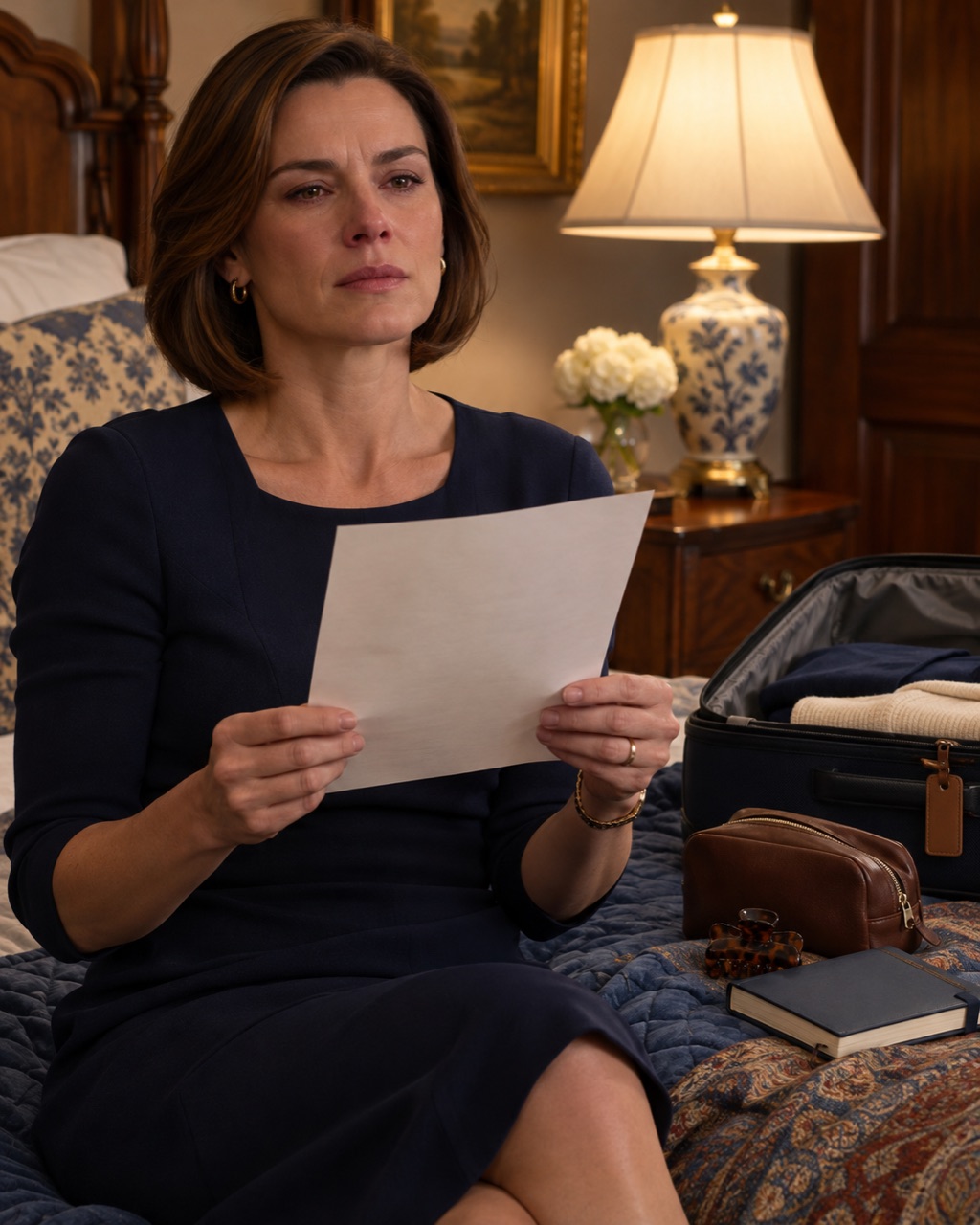
Then I took the gift letter from my carry-on.
I read it without Vanessa standing in front of me.
The page had looked important when Martin first handed it over. At Grandpa’s house, under an ordinary bedroom lamp, it looked like what it was.
A generic form.
Unsigned.
It could not prove that I had agreed.
It could not make money move.
It had only seemed powerful because so many people had expected me to complete it.
I put it with the belongings I had brought back from my mother’s apartment.
Not mixed into her things.
Beside them.
I knew which was which.
Downstairs, Grandpa was sitting quietly when I came back.
“Everything okay with your money?”
“Yes.”
“Good.”
I sat across from him.
“I don’t know what I’m doing about Mason.”
“You don’t have to tell me tonight.”
“Do you think I should go home?”
“I think you should go when you want to go.”
That was all.
He had opinions. I knew him well enough to know that. He had spent years running a construction business and did not suddenly become a man without opinions at 78.
But he was not going to turn helping me into control over me.
I understood the difference more clearly that night.
My phone lit up again.
Not a call this time.
Mason asked whether there was anything I needed.
I replied that I needed him to stop promising gifts from my inheritance.
Then I added that he was not to tell his family I was reconsidering, waiting for a better time, or likely to help later.
He called.
I answered.
“I haven’t said you’re reconsidering.”
“Good. Don’t.”
“I won’t.”
“And don’t make another promise involving my money.”
“I won’t.”
“You said that quickly.”
“Because I should have known it already.”
I sat back.
That was closer to an answer than anything he had said at the airport.
I didn’t reward it with an invitation home.
I told him I needed space to think and sleep.
He asked whether we could talk in person.
“About what?”
“About what I did.”
“Not about making Vanessa understand?”
“No.”
“Not about a smaller amount?”
“No.”
I wanted to believe him.
That was the uncomfortable part.
I still wanted my husband to be the person I had expected to meet me at the airport. Wanting that did not make him that person again.
Grandpa got up to leave the room, and this time I let him.
Mason spoke quietly.
“Can I come over tomorrow by myself?”
I looked toward the stairs and thought about the unsigned letter upstairs.
“If you come, we are not negotiating.”
“We won’t.”
I did not say yes immediately.
I needed to hear him ask for something without assuming my silence meant agreement.
Mason waited, then said, “Will you let me come alone and tell you what I should have said before you ever landed?”
Chapter 8: No Family Spokesman
Mason arrived alone and waited outside until I opened the door.
“I’m not here to ask you for money,” he said.
I let him in.
Grandpa greeted him, then went to another room. He was nearby, but he did not sit between us or take responsibility for what happened next.
Mason stayed standing.
I sat.
After a moment, he sat too.
“You said you wanted to talk about what you did.”
“Yes.”
“Go ahead.”
He looked toward the hallway.
“I helped divide money that wasn’t mine to give.”
I said nothing.
“I heard Vanessa say what she wanted, and I started working out how to get her there.”
“Using my money.”
“Yes.”
“While I was standing there.”
“Yes.”
He looked miserable.
I did not enjoy it.
That surprised me a little. I had been angry enough the night before that I expected his discomfort to feel satisfying.
Instead, it made the room feel heavy.
I wanted him to understand, not perform regret until I comforted him.
“I should have asked what you wanted,” he said.
“You should have done that before promising them anything.”
“I know.”
“What did you think would happen when I said no?”
He took longer with that question.
“I thought I could get everyone to calm down.”
“Who was everyone?”
“My parents. Vanessa.”
“Not me.”
He looked at me.
“No. I wasn’t thinking about you the way I should have.”
That answer hurt.
It was also direct.
I had no use for another explanation about good intentions.
“Did you think I’d feel guilty?”
“Yes.”
“Did you count on that?”
He looked away, then back.
“Yes.”
I was ashamed of how badly I had wanted him to say no.
There it was, plainly.
He had thought my grief would help persuade me. Maybe he had not put it in those exact words before the airport, but he could not honestly pretend the idea had never occurred to him.
“And my mother?”
“I invented it.”
“Not misunderstood.”
“No.”
“Not something you thought she might have meant.”
“No. I invented it.”
I breathed out.
He stayed quiet.
For once, he let the answer be as bad as it was without trying to improve it.
I told him I had checked the inherited money.
“It’s separate. It stays that way.”
“I understand.”
“I’m not asking permission.”
“I know.”
“And I’m not giving Vanessa a smaller amount so you can say something good came out of this.”
“I won’t ask.”
We moved into the kitchen because I wanted coffee and did not want the entire visit to happen with us facing each other like strangers waiting for news.
It did not make the conversation easier.
It made it more ordinary.
I needed to know whether he could keep answering when there wasn’t a dramatic setting forcing him to.
He asked whether I would come home.
“Not yet.”
“What needs to happen first?”
“You need to correct what you told them.”
“I said there wasn’t a gift.”
“That’s the result. You need to correct the reason.”
He listened.
“You told them I could be counted on. You planned to say my mother wanted it. They need to hear that neither came from me.”
“I can call them.”
“With me present.”
He paused.
“Okay.”
“Not so I can argue. So I hear what you say.”
“I understand.”
I didn’t want a report afterward.
I didn’t want Mason telling me he had handled it while Janet told Vanessa I was still deciding.
The family had heard the promise.
The family needed to hear the correction.
“Your parents and Vanessa,” I said. “The same people.”
“Yes.”
“And you don’t say I’m upset, or tired, or not ready.”
He nodded.
“You say I never promised the down payment.”
“I will.”
I watched him.
“Say it now.”
“Natalie never promised Vanessa the down payment.”
“And my mother?”
“She never told me she wanted that gift. I made that up.”
The words were clear.
I needed them clear when his family could hear too.
Grandpa came into the kitchen after a while and asked whether either of us wanted something to eat.
Mason declined.
I said I did.
That small difference mattered.
I wasn’t going to spend another conversation hungry because somebody else was uncomfortable.
Mason stayed while I ate.
He didn’t try to take over the kitchen or become useful in ways I hadn’t requested.
Before leaving, he asked whether we could arrange the call.
“Yes.”
“Do you want Leroy there?”
“Grandpa can be in his own house. This isn’t his correction to make.”
Mason nodded.
I walked him to the door.
He didn’t reach for me.
I was relieved and sad about that at the same time.
He said, “I’m sorry I made coming home something you had to recover from.”
I looked at him for a long moment.
“That’s part of it.”
“I know.”
I didn’t think he knew all of it yet.
But he had stopped arguing that I was making too much of it.
After he left, Grandpa asked whether I wanted company.
“Yes.”
We sat together without discussing Mason for a while.
Then my phone lit up with a message from my husband saying his parents and Vanessa would be available for the call.
I read it aloud.
Grandpa said, “Then you’ll hear whether he means it.”
When Mason called to confirm, he asked, “Will you stay on while I tell them plainly that you never promised her that money?”
Chapter 9: Saying It to Them
“I’m here,” I said when Mason connected the family call.
Janet immediately asked when I was coming home.
“That isn’t what this call is about,” Mason said.
I sat at Grandpa’s kitchen table.
He was in the adjoining room. I could hear him moving around, ordinary sounds that kept me from feeling as if I had been put back beside the baggage belt.
Vanessa spoke.
“If this is just to tell me no again, I heard it.”
Mason answered before I could.
“It’s to correct what I told you.”
Martin said they understood there had been confusion.
“No,” Mason said. “I caused something, and I need to say what.”
I looked at the phone.
That was new.
He had not accepted the easier description.
“Natalie offered to discuss possible help after she returned,” he said. “She never promised Vanessa a down payment.”
Vanessa said, “You told us we could count on it.”
“I did.”
“So don’t make it sound like we invented everything.”
“I’m not. I promised something I couldn’t give.”
Nobody spoke.
I had asked for the correction.
Hearing it still hurt.
There had been a whole conversation about what they could count on while I was out of state dealing with my mother’s home.
Mason continued.
“The $64,000 did not come from Natalie. She didn’t agree to it.”
Janet asked whether we could talk about a more reasonable way forward.
“There isn’t a gift to negotiate,” he said.
“That’s Natalie talking.”
“Yes,” Mason said. “It’s her money. Her answer is the answer.”
I closed my eyes briefly.
Not because everything was fixed.
Because that should have been said at the airport.
He had finally said it.
Martin cleared his throat.
“What about her mother?”
Mason answered without waiting.
“She never told me she wanted Natalie to give Vanessa the money.”
“You thought—” Janet began.
“No. I didn’t hear it from her. I invented it.”
I stayed still.
He had not softened it.
He had not said he was confused or remembering something generally.
“I told you at the curb I would say that to Natalie,” he continued. “Leroy heard me accurately.”
Martin said, “We didn’t think you meant a lie.”
“I did mean to tell her something that wasn’t true.”
Janet said my mother had been generous.
I spoke then.
“Please don’t turn that into another claim about what she wanted.”
“We’re not.”
“Then leave her out of this.”
The call went quiet.
I felt angry again, but it was a cleaner anger than the one at the airport. I knew what had been said. Mason had confirmed it. There was no need to chase an admission through another room.
Vanessa changed the argument.
“You could have told me sooner you didn’t want to help.”
“I told you we could talk. You treated that as yes.”
“Mason treated it as yes.”
“He has just corrected that.”
“It still affects me.”
“Yes. You need to plan without a gift from me.”
I heard her breathe out sharply.
She was no longer asking whether I had promised.
That claim had been disproved in front of everyone who needed to hear it.
Now she wanted the effect on her plans to become my responsibility.
Martin stepped in.
“You can’t blame her for expecting help after all the help you’ve given.”
I leaned closer to the phone.
“What do you mean?”
“You paid toward her rent for years. That created an expectation.”
“For two years,” I said.
“You know what I mean.”
“I stopped the spring before the funeral.”
“But you helped her get used to a certain amount of support.”
I stared at the table.
Mason said, “Dad.”
Martin continued.
“We’re being practical. She can’t go from having family behind her to nothing.”
“She wasn’t getting rent money from me when my mother died,” I said.
Janet said that was not the point.
It was exactly the point.
They wanted my past help to work as a permanent promise.
If I had once paid, I could be expected to pay again.
Grandpa appeared at the kitchen doorway, checked my face, and stayed quiet.
I was glad he didn’t interrupt.
This answer needed to come from me.
“I helped because I chose to.”
Martin said nobody denied that.
“You’re denying it now if you say helping once means I owe more.”
“We’re asking you to consider the family.”
“I have.”
Vanessa asked whether I understood how hard it was to save while renting.
“I understand rent costs money.”
“Then you know why this matters.”
“Yes. It matters to you.”
I did not add an apology.
I had already spent too long treating her disappointment as proof that I had done something wrong.
Mason said the house gift was not happening.
Janet changed the subject again.
“Then perhaps Natalie can resume helping with the rent until Vanessa is in a better position.”
I looked toward Grandpa.
He did not nod or signal an answer.
He waited.
Martin spoke before I could respond.
“If you won’t do the down payment, at least restart the rent help so Vanessa can save.”
Chapter 10: What Will Not Be Paid
“No,” I said.
Martin asked whether I had heard the suggestion.
“I heard it. I’m not restarting the rent help.”
Vanessa spoke quickly.
“You’re acting like I asked you to pay everything.”
“I’m answering what was just asked.”
“It would only help me save.”
“I’m not doing it.”
The words felt blunt.
I let them stay blunt.
At work, I often explained a policy until somebody understood the reason. This wasn’t work, and my family wasn’t entitled to keep presenting alternatives until one exhausted me into agreement.
Janet said the family could avoid a great deal of upset if everybody gave a little.
“I already gave $9,600,” I said.
Vanessa answered, “You keep bringing that up.”
“Your father just said it created an expectation.”
“That wasn’t me.”
“Then tell him you don’t expect it.”
There was a pause.
I did not fill it.
Vanessa finally said, “I expected help with the house because Mason said it was happening.”
Mason answered.
“I shouldn’t have said that.”
“No, you shouldn’t.”
“I’ve corrected it.”
“That doesn’t make it less embarrassing.”
There it was.
Not a house she would lose.
Not a lender waiting.
Embarrassment over having counted money that wasn’t hers.
I could understand embarrassment.
I wasn’t going to pay $64,000 to remove it.
“I’m not discussing your budget with you,” I said. “But it can’t include money from me.”
Vanessa said she would have to change what she was looking for.
“Yes.”
That was the consequence.
No dramatic announcement.
No sudden disaster.
She would have to search using what she could afford.
Janet tried to return to my original offer.
“You did say you’d discuss helping.”
“I withdrew that offer at the airport.”
“After everyone was upset.”
“Yes. After Mason explained what he had planned to say about my mother.”
Mason spoke.
“Mom, don’t present it as something still open.”
Janet said she was only clarifying.
“It’s clear,” he answered.
I heard Martin moving something near his phone.
For the first time, he sounded less certain.
“So what are we supposed to tell people?”
I sat back.
“Tell them there is no gift.”
“We don’t need to discuss private family matters.”
“Then don’t discuss my inheritance.”
Vanessa said nobody had asked them for an announcement.
I agreed.
“Good. There’s nothing to announce.”
The call had gone on long enough.
I said I was finished discussing money.
Janet asked whether that meant we weren’t welcome to call.
“No. It means I’m not discussing gifts or rent.”
Mason repeated that there was no down payment and no renewed rent help.
Then he ended the call.
I stayed at the kitchen table after the screen went dark.
Grandpa asked whether I wanted coffee.
“Yes.”
I felt relieved.
Not triumphant.
Relieved that the words had finally been said where they belonged and that I had not paid to make the conversation stop.
Mason called me separately after a while.
I answered.
“I’m sorry about Dad bringing up the rent.”
“I heard what he said.”
“I should have stopped it sooner.”
“You did answer your mother.”
“I should have done that at the airport.”
“Yes.”
He didn’t ask me to praise him for the call.
That helped.
I had needed him to make the correction, but doing it was not a favor to me. He had created the false promise.
He was responsible for correcting it.
Later, I went upstairs and checked that the gift letter was still with my belongings.
I wasn’t checking because it could somehow sign itself.
I wanted to look at it after hearing everyone agree there was no actual purchase depending on it.
It remained a page Vanessa had printed.
Nothing more had happened to it.
I could choose to keep it without giving it the importance she had intended.
When I came downstairs, Grandpa was near the front window.
“Did they hear you?” he asked.
“Yes.”
“Good.”
He didn’t ask whether I would go home now.
I was grateful.
There was a difference between correcting a claim and repairing a marriage.
Mason had done the first in front of his family.
The rest would be slower.
That evening, I called him because I wanted to ask something that did not involve Vanessa.
“What happens next time your parents want something from me?”
“I ask you.”
“Before telling them anything.”
“Yes.”
“What if I say no?”
“I tell them no.”
“What if they’re unhappy?”
He took a breath.
“They’re unhappy.”
It sounded simple.
It had not been simple for him at the airport.
I needed more than a good answer delivered while he was afraid I might not come home.
I told him that.
He didn’t argue.
“What would show you I mean it?”
I looked around Grandpa’s living room, where my bag stood near the stairs because I still hadn’t decided how long I was staying.
I wanted my own home.
I also wanted to return without pretending the argument had ended the problem.
“I need us to talk about why you were willing to do that,” I said.
“I know.”
“Not just the money.”
“I know.”
Then Mason asked, “What do I have to change before you feel ready to come home?”

Chapter 11: Coming Home by Choice
“We need counseling,” I told Mason.
“And no promises about my money.”
He said yes to both.
I did not end the conversation there.
“I mean before you tell somebody they can count on help. Not after.”
“I understand.”
“If something involves my money, I participate in the decision.”
“Yes.”
“My inheritance stays separate.”
“Yes.”
“And you don’t tell your family I’m difficult because I want those things.”
He was quiet for a moment.
“I won’t.”
I wanted to believe him, but I had learned not to treat agreement as action.
“Then arrange the counseling.”
“I will.”
I stayed with Grandpa while we made those arrangements.
I went to work, came back to his house, and learned how strange it felt to discuss ordinary things with Mason while we were not sharing the same rooms.
He asked about my day.
I answered.
Sometimes that was all I wanted.
Other times I wanted to explain the airport again from a different angle, not because he had forgotten what happened, but because I was still finding the parts that hurt.
He listened.
Not perfectly.
There were moments when he began explaining how his family usually handled things.
I stopped him.
“I married you. I didn’t agree to have them decide for me.”
He said he understood.
Then we kept talking.
Before returning home, I sat with Grandpa at his kitchen table.
“I think I’m ready.”
He looked at me.
“Then go home.”
“You’re not going to tell me to wait?”
“No.”
I laughed a little.
It was the first time that conversation had made me laugh.
He had given me a place to stay, not a test I had to pass before leaving.
“I’m grateful,” I said.
“I know.”
He asked whether I needed a ride.
I said Mason was coming to get me.
Grandpa nodded.
That was another choice I wanted to make myself.
Mason arrived without his family.
He asked whether I was ready, not whether I had packed enough or decided to forgive him.
“I’m ready to go home.”
He picked up my suitcase after I said he could.
The unsigned letter stayed with my own belongings.
I didn’t announce that.
I didn’t need his permission to take it.
At home, nothing looked different.
That was harder than I expected.
The kitchen was the same. Our things were where I remembered them. There was a coat near the door that I had meant to put away before leaving for my mother’s apartment.
I looked at it for too long.
Mason asked whether something was wrong.
“I thought coming home would feel different.”
“Better?”
“Easier.”
He stood a little way from me.
“I’m glad you’re here.”
“I’m not done being angry.”
“I know.”
“I’m not coming home because the call fixed everything.”
“I know.”
I wanted him to stop saying he knew, then realized he was leaving room for me instead of defending himself.
That was different too.
We put my things away.
Not together in a sentimental way.
He carried what I asked him to carry, and I decided where my own belongings went.
The inherited money remained separate.
There was no new gift, no smaller compromise, no payment quietly sent to calm Vanessa down.
Mason knew that.
He did not ask for access or suggest moving it into the funds we used for household bills.
Our counseling began, and the conversations were uncomfortable.
We talked about his habit of making things easier for his parents by making them harder for me.
We talked about why he thought I would eventually agree.
We talked about my tendency to say we could discuss something when what I really needed was time without repeated requests.
That did not make us equally responsible for the invented wish.
I said so.
Mason agreed.
He did not ask me to share responsibility for a lie he had planned.
Some evenings were ordinary.
We ate, talked about work, and watched something without discussing his sister.
Then a phrase would catch me wrong, or he would say “we” when he meant his parents, and I would feel the airport all over again.
I told him.
He stayed in the conversation.
I was still hurt.
Returning home had not removed that.
But I no longer felt I had to choose between staying married and saying exactly what he had done.
One evening, he asked whether he could call Janet.
“Yes.”
“I’m asking because I don’t want you to think—”
“You can call your mother.”
“I know. I just don’t want to make this worse.”
“Then don’t make promises for me.”
He nodded.
That was where the change had to happen.
Not in avoiding his family.
In speaking to them without volunteering me.
He made ordinary calls.
I didn’t listen to every word.
I didn’t check his phone.
I had asked for him to behave differently, not for a new job monitoring him.
Weeks later, his phone rang while we were home together.
He saw Janet’s name and answered.
At first, the conversation was ordinary.
Then I heard Vanessa’s name.
Mason looked toward me but did not hold out the phone.
Janet’s voice became clearer as she said she wanted to talk about Vanessa’s house plans again.
Chapter 12: The Call About Vanessa
“There isn’t a gift, Mom,” Mason said.
He stayed where he was instead of carrying the phone to me.
I was nearby, close enough to hear his answers without hearing every word Janet said.
He listened.
Then he answered again.
“No. Natalie doesn’t need to revisit it.”
I stopped what I was doing.
Not because I intended to take over.
Because I wanted to hear what he did when his mother had another chance to press him.
“We corrected this,” he said. “She never promised Vanessa the down payment.”
Janet spoke for longer.
Mason waited.
“I’m not asking her.”
He looked at me briefly.
I said nothing.
This was not a line he needed me to feed him.
It was a conversation he had agreed to handle without sending the pressure along.
“No, it isn’t a matter of finding a better time.”
He paused.
“Vanessa needs to use her own budget.”
There was another stretch of listening.
Then he said, “We can talk about something else, or we can end the call.”
His voice was calm.
Not cheerful.
Not apologetic.
Calm.
Janet apparently chose not to change the subject, because Mason said he would talk to her another time and hung up.
He put the phone away.
I waited.
He didn’t begin by saying his mother was upset.
He didn’t ask whether I could give her some reassurance.
He didn’t tell me Vanessa was struggling and leave the implication hanging between us.
“She wanted to reopen it,” he said.
“I heard.”
“I told her no.”
“Yes.”
He sat down.
For a while, neither of us spoke.
Then I said, “Thank you for not handing me the phone.”
“I shouldn’t have handed you the problem in the first place.”
That was true.
I did not need to improve it.
Weeks had passed since the airport.
Vanessa was still renting.
No house purchase had collapsed because of me. No lender had been left waiting for a gift I had promised.
There had never been a house, a lender, or a closing behind the letter.
She was looking within her own means now.
That meant changing what she wanted, where she looked, or how long she would need to save.
Those were decisions she could make.
At 34, Vanessa was capable of choosing her own housing without my inheritance being part of the calculation.
I did not resume the rent payments.
Nobody could honestly say I had suggested I might.
On a later, shorter family call, Vanessa spoke about what she was looking for.
She did not ask me for a gift.
I did not ask for details about her finances.
We could speak without turning the conversation into an argument about what I owed.
That did not make us close.
I wasn’t trying to make us close.
I wanted the conversations to be direct enough that nobody could later claim I had agreed to something by being polite.
When Janet hinted that house hunting was taking longer than Vanessa hoped, Mason did not look at me for help.
He said he hoped Vanessa found something that worked for her.
Then the conversation moved on.
That was a small change.
It was also the kind that mattered in daily life.
There was no audience.
No grandfather entering through sliding doors.
No unsigned form held up in front of travelers.
Just my husband refusing to turn his sister’s plans into my obligation.
Counseling continued.
Some sessions left us tired.
Others gave us something useful to talk about on the drive home.
Mason had to learn not to treat a request from his parents as an instruction waiting for my cooperation.
I had to stop softening answers I already knew because I disliked somebody being disappointed.
Those were habits.
They did not disappear because we could describe them.
But when his mother raised the house again, he had acted differently.
I noticed.
I also noticed what I did afterward.
I did not call Janet to explain.
I did not send Vanessa a message to make sure she wasn’t angry.
I made dinner.
Mason helped.
We spoke about something unrelated to his family.
Later, I was putting away belongings I still hadn’t found a place for since the trip.
The gift letter was among them.
Mason saw the heading.
He stopped beside the table.
“You kept it.”
“Yes.”
He looked at the blank signing line.
“I didn’t know.”
“I didn’t need to announce it.”
“No. You didn’t.”
He asked whether seeing it upset me.
“Sometimes.”
“Do you want it gone?”
I looked at the page.
For him, throwing it away might mean putting the airport behind us.
For me, that wasn’t what the choice was about.
The page had been brought to make my agreement look inevitable.
I had not signed it.
I could decide where it belonged now.
Mason stood back instead of reaching for it.
Then he asked, “Do you want to keep that letter, or would you like me to throw it away?”
Chapter 13: The Blank Signing Line
“I’m keeping it,” I said.
Mason nodded and left it where it was.
He didn’t ask why.
I appreciated that.
I had explained enough things because somebody else wanted a different answer. This was a small decision about something in my possession, and it could remain small.
I found a place for it with my own belongings.
Not in a place Mason would have to see every morning.
Not hidden because I was ashamed.
Somewhere I could find it.
The rest of the evening continued.
We ate.
He asked about work, and I told him about the kind of ordinary scheduling problem that would once have seemed too boring to mention.
I liked boring that night.
I liked knowing what the next conversation was about.
Counseling continued after that.
There was no final session where we announced that everything was repaired. Mason still had to hear things he would rather not hear, and I still had moments when I doubted whether the change would last.
I said that plainly.
“I don’t trust the change completely yet.”
“I understand,” he said.
Then he kept doing what he had agreed to do.
That mattered more than asking when I would stop being hurt.
He no longer promised my money to his family.
He did not describe my inheritance as something available for their plans.
When a question involved me, he asked me before answering for both of us.
Sometimes my answer was yes.
Sometimes it was no.
He learned not to report the no as the beginning of a negotiation.
I learned to say it without adding an offer I did not want to make.
The inherited savings remained separate and under my control.
None of the requested money went to Vanessa.
I did not resume paying toward her rent.
I was still a dental receptionist with shifts to work, appointments to confirm, and a home to take care of. Having inherited my mother’s savings had not made me the person responsible for solving every housing problem in Mason’s family.
It also had not made grieving easier.
There were days I came home and wanted to tell my mother something that had happened.
I still reached for the idea of calling her before remembering.
Mason stopped trying to fill those moments with reassurance.
Sometimes he asked whether I wanted company.
Sometimes I did.
Sometimes I wanted to sit alone.
He accepted the answer.
Grandpa and I stayed close.
I visited him without a suitcase.
That felt good.
We could have a meal without my marriage being the reason I was there. He asked about work, I asked about his day, and neither of us needed to return to the airport unless I wanted to talk about it.
Once, I thanked him again for telling me what he had heard.
He said he wasn’t going to let me make a decision based on something false.
Then he asked whether I wanted more food.
I did.
He had never asked to see my money.
He had never told me what amount I should give.
His help had been a ride, a room, the truth about what he heard, and enough space for me to choose what happened afterward.
That was what I remembered most about staying with him.
Not advice.
Room.
Family contact became shorter and more direct.
Janet could ask how I was without getting an extended explanation of my decisions.
Martin could disagree without turning his disagreement into something I needed to fix.
If the subject moved toward money, Mason answered what was his to answer and left my decisions with me.
I did the same.
Vanessa remained in her rental.
She continued looking at houses she could pursue with her own resources.
I heard less about the search.
That was fine.
I did not need reports that proved she was managing without me, and she did not need to describe every disappointment to an unwilling source of money.
We were polite.
We were not pretending the airport had been a minor misunderstanding.
She knew there would be no down payment from my inheritance.
Her parents knew too.
Mason had corrected his claim directly, with me present, and he had repeated the truth when Janet tried to reopen it.
There was no unfinished promise left for them to collect.
The marriage took longer.
It was supposed to.
I had come home because I chose to try, not because Mason had earned instant forgiveness by saying the right words on a call.
We had good evenings.
We had difficult ones.
He could be kind and still need to answer for what he had done.
I could love him and still keep my money separate.
Neither fact canceled the other.
One evening after work, I opened the place where I kept my own belongings and found something from my mother that I had been looking for.
The gift letter was beside it.
I took the page out.
The heading still looked exactly as it had at the airport.
“GIFT LETTER.”
I remembered Martin handing it to me before asking about my trip.
I remembered Vanessa pointing toward it.
I remembered Mason doing the math.
Then I remembered holding it facing Vanessa while I said nobody was getting a check that day.
That had been my answer before Grandpa arrived.
He had helped me learn what Mason planned to say.
He had not made the decision for me.
I looked at the page without the airport noise around it.
It had no house attached to it.
No lender.
No deadline.
No completed gift.
Just spaces they had expected me to fill.
Mason came past the doorway and asked whether I wanted to take a walk.
“In a minute,” I said.
“All right.”
He kept going.
I put my mother’s belonging where I could reach it easily.
Then I returned the page to its place among my own things.
I had given no money away, and the gift letter still had the blank signing line I never filled.
You Might Also Enjoy




