My Boss Fired Me at His Father’s Memorial, Until My Old Friend Stood Up
Part 3: What Walt Asked Her
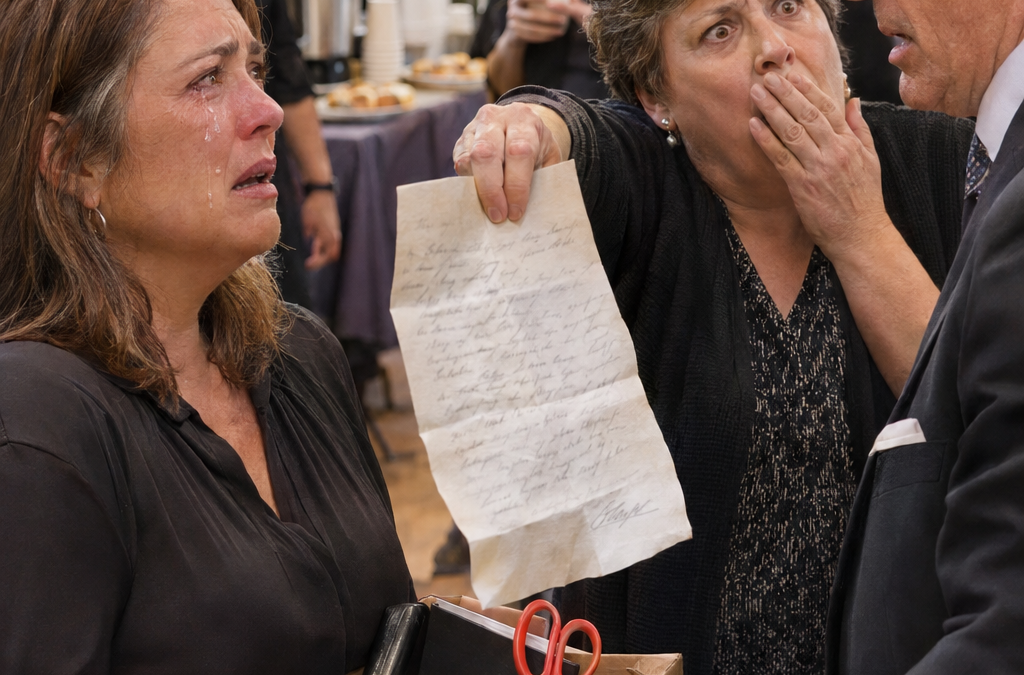
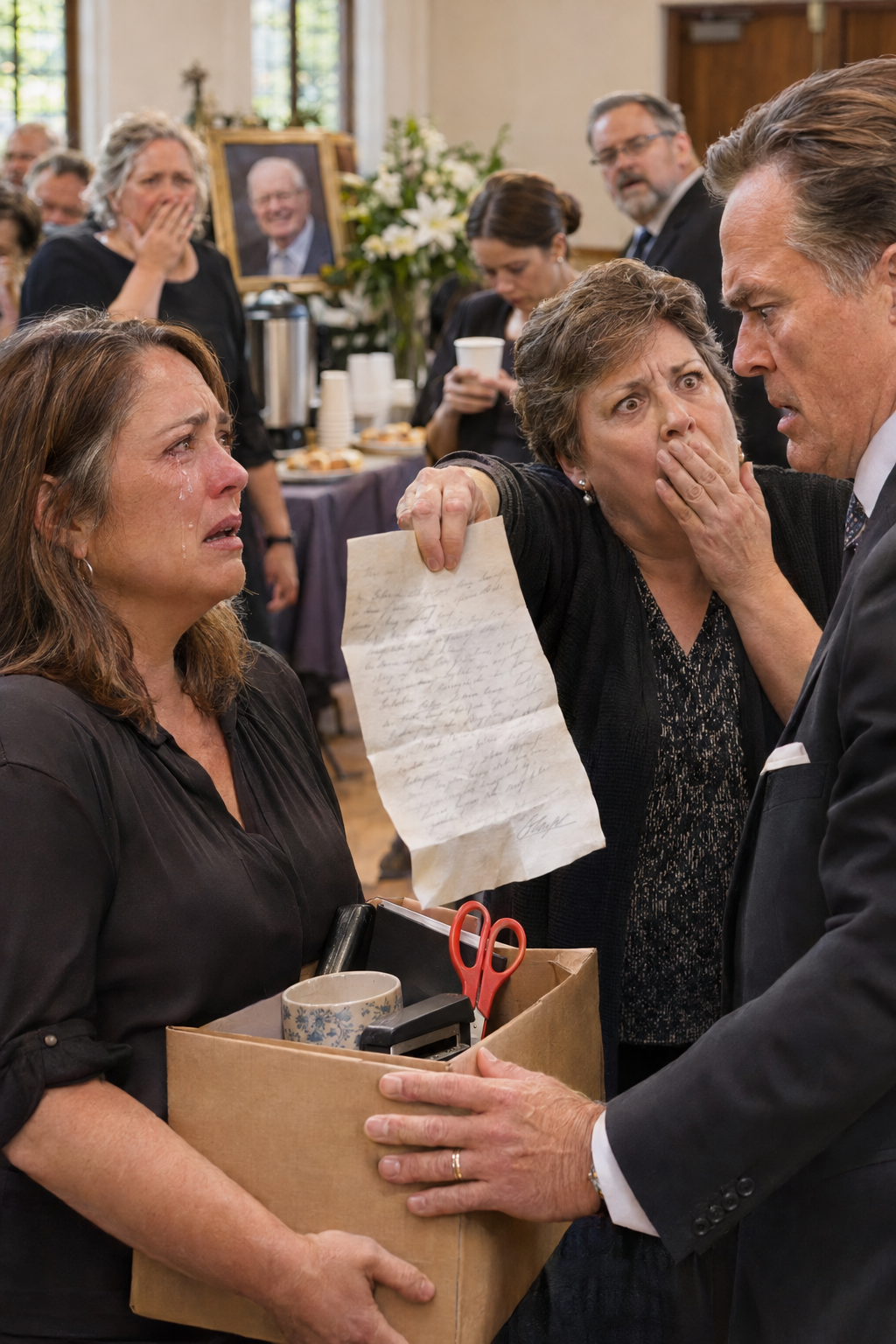
“Rosa sold her mother’s cabin,” Mabel read.
Dean looked down at the floor.
Mabel continued, holding the page with both hands.
“She lent this shop $36,000 so we could make payroll. That was her money, not a gift from Dean or anybody else.”
The room stayed quiet while she found the next sentence.
“Her mother left her that place. I knew what I was asking her to give up.”
I put my palm against the chair beside me.
I had not known he would write about the cabin.
The loan itself was not news to Dean.
He had sat across from me when we signed.
But he had never asked about the little building.
He had never asked why selling it took so long.
My mother had kept chipped bowls above its sink.
There was a screen door that needed lifting before latching.
After she died, I had kept going there.
I cleaned it even when I could not stay.
Then the shop’s major customer failed to pay.
Work had already gone out the loading door.
Paper suppliers still expected their money.
Employees still expected their wages.
Walt had asked whether I would consider a loan.
He had not asked me to sell anything.
The cabin had been mine, without a mortgage.
Selling it had been my decision.
I had used part of the proceeds for payroll.
I had signed papers because I expected repayment.
That was what I wanted everyone listening to understand.
Mabel lowered the page and looked at me.
“Would you like me to stop?”
“No. Please finish.”
She turned toward the people near the food tables.
“Rosa stayed when she could have found another job. She worked beside me when my hands wouldn’t do what I wanted.”
I rubbed a loose cardboard edge beneath my thumb.
“He put that in there?” I asked.
Mabel nodded.
“He wanted the people here to know.”
She read his description of the funeral programs.
I remembered the order without needing his explanation.
The printed sheets had covered our folding table.
Walt had insisted on helping finish them.
His fingers would not straighten around the stapler.
He pressed down, missed, and tried again.
“Let me take that part,” I had told him.
“I can staple a program, Rosa.”
“I know. Check the names for me.”
I had moved his hand away before pressing down.
Then I slid the next program toward him.
We worked that way until the order was finished.
He checked the pages while I folded and stapled.
The family waiting for them had already lost someone.
They did not need to hear about our payroll.
Walt had written that down, too.
I looked toward the coffee urn instead of Mabel.
A coworker standing there set her cup down.
Then she came over and stood beside my chair.
She moved my box away from the table’s edge.
She did not ask whether I needed help.
She simply made sure my things would not fall.
Dean cleared his throat.
“Nobody said Rosa never helped.”
I turned back toward him.
“You said Kendra saved the business.”
“Kendra has done a great deal.”
“That wasn’t what you said.”
Kendra folded her arms, then let them drop.
“I didn’t know about any cabin,” she said.
“I know.”
She seemed surprised I answered her directly.
I had no reason to pretend she knew everything.
Dean had been present when the loan was signed.
Kendra had not.
Dean had carried my belongings into the reception.
Kendra had stood beside him.
I could keep those facts separate.
Mabel rested the envelope beneath the unfolded page.
“Walt wanted this read here,” she said.
“He wasn’t well,” Dean replied.
“He was clear about what he wanted.”
“He was tired. He was upset about retiring.”
“He wrote it and read it back to me.”
Dean picked at the edge of a napkin.
“I’m not discussing my father’s condition in public.”
“Then don’t use it to dismiss what he wrote.”
A coworker behind me made a small agreeing sound.
Dean turned, and the sound stopped.
I recognized that quick change.
I had watched people stop speaking during staff meetings.
Usually, I would turn back to the production schedule.
Here, my desk supplies sat beside Walt’s photograph.
I stayed where I was.
Mabel continued reading.
Walt thanked the employees who had stayed through the trouble.
He named the work that kept orders moving.
Then he returned to the money.
He wanted it understood that my help was a loan.
It had not bought me ownership in the shop.
It had not been a donation to his family.
I had expected to be paid back.
His letter said that plainly.
It did not leave me the business.
It did not change the loan’s terms.
He had written a personal acknowledgment in April 2025.
He had trusted Mabel to read it after his death.
That was all the paper claimed to be.
It was enough to make Dean stop interrupting.
Mabel finished and lowered the page.
I could see Walt’s signature beneath the last paragraph.
I remembered watching that hand struggle with a stapler.
“May I have a copy?” I asked.
“He wanted you to have the original afterward.”
She offered it across the open box.
I held it above the stapler and chipped mug.
For a moment, I could not find a safe place.
Mabel slid the page back into its envelope.
“Keep it flat,” she said.
I tucked it beneath my folded desk calendar.
Dean watched us arrange it.
“I wish you’d spoken to me first.”
“Before I was fired?”
“Before turning this into a financial dispute.”
“You brought my desk here.”
He glanced toward the fellowship hall doors.
People had stopped pretending they were choosing food.
Some stood with empty plates against their coats.
Others had set their cups down.
Nobody was asking me to leave anymore.
Kendra moved a stack of napkins across the table.
Then she put them back.
Dean lowered his voice.
“The company owes whatever the paperwork says it owes.”
Mabel let him finish.
He seemed to take her pause as agreement.
“It was a business loan,” he added.
“Yes,” I said.
“So let’s not make this something personal.”
I looked down at the red handles inside my box.
He had dropped them there in front of everyone.
He had announced my dismissal beside his father’s photograph.
Now he wanted a distinction between business and personal.
I did not argue about that.
“The repayment date hasn’t changed,” I told him.
“I’m aware of the date.”
“Then we agree about that much.”
He straightened the napkin he had been pulling apart.
“The company will handle its obligations.”
Mabel looked directly at him.
“The paperwork includes more than the company.”
Dean’s fingers stopped moving.
“This isn’t the place for a bookkeeping lecture.”
“I’m not giving one.”
She rested her hand beside Walt’s envelope.
Dean looked from her hand to my face.
“That doesn’t make this my personal debt,” he said.
Mabel waited until he was looking at her again.
“Dean, do you remember your other signature?”
Part 4: The Signature He Remembered
Dean glanced at the people standing behind her.
Mabel did not reach for another document.
She was not carrying the contract around the reception.
She had witnessed it when we signed.
“You personally guaranteed repayment,” she said.
Kendra turned toward him.
“What does that mean?”
“It means this discussion is over,” he answered.
“No,” I said. “It means he guaranteed the loan.”
The company was the borrower.
Walt had signed the note for the company.
Dean had signed the personal guarantee.
The loan was interest-free, due June 30, 2025.
I kept my complete copy at home.
Mabel had recorded the transaction and witnessed the signing.
Nothing about that depended on Walt’s memorial letter.
The letter said what I had done.
The contract said what I was owed.
Dean knew the difference.
He had read the documents before signing them.
“You’re making it sound like I’m refusing payment.”
“Then pay it when it’s due,” I said.
“I didn’t say I wouldn’t.”
“Good.”
He looked at me as though more should follow.
I had nothing else to ask for that afternoon.
I was not demanding immediate payment at the reception.
I was not asking for the shop.
I wanted my belongings and the agreement honored.
Kendra touched his sleeve.
“Can we go outside?”
He shifted his arm.
“Not while this is being misrepresented.”
Mabel folded her empty hands in front of her.
“What part is wrong?”
Dean did not answer her.
Instead, he pointed toward the box.
“You have everything. There’s no reason to stay.”
I checked the contents before picking it up.
My scissors lay beside the stapler.
My mug was wedged against the desk calendar.
A photograph from my drawer had been packed facedown.
I turned it over and tucked it beside the mug.
“There’s nothing missing,” Dean said.
“I’m checking.”
“You can come to the shop for anything else.”
“Anything else can be arranged in writing.”
I did not want to enter alone after this.
I did not want an argument over office supplies.
A coworker moved the empty chair out of my way.
Another pulled the door open before I reached it.
Neither person made a speech.
I thanked them because they were helping now.
Kendra stepped away from Dean’s shoulder.
“I didn’t ask you to fire her here.”
He looked sharply at her.
“We discussed making changes.”
“We didn’t discuss bringing her things.”
I lifted the box.
I had spent enough time watching them make decisions.
Whatever they said next did not require me.
Mabel took the box from beneath my hands.
“Let me carry it to the car.”
“I can manage.”
“I know. I’m offering.”
I let her.
At the door, I stopped beside Walt’s photograph.
The frame was tilted on its little stand.
I straightened it with my fingertip.
Then I followed Mabel into the parking lot.
She set the box on my back seat.
I fastened the seat belt around it.
My mug tipped against the stapler.
I folded my cardigan between them.
The envelope stayed flat beneath the calendar.
“Do you want company at home?” Mabel asked.
“Not yet.”
“All right. Let me know you get there.”
I sat behind the wheel after she walked away.
The church doors opened and closed beyond my windshield.
People came out carrying folded programs and coats.
Nobody came to ask me back inside.
I waited until I could pull out without passing them.
At home, I put the box on the kitchen table.
Then I took out Walt’s letter.
I read it without looking up at anyone’s face.
There were passages I had barely heard in the hall.
He had written that I continued answering customer calls.
He remembered me checking proofs while he checked bills.
He remembered that I stayed after the payroll crisis.
I put my palm over his signature for a moment.
Then I placed the letter back in its envelope.
The loan documents were in a different file.
I spread them beside the letter and checked each page.
Dean’s signature was where it had always been.
The maturity date had not moved.
I made copies without writing on the originals.
I also wrote down what happened at the memorial.
I included what Dean said about Kendra saving the business.
I included his claim that I had volunteered to leave.
I wrote my correction beneath it.
I had not resigned.
I had not offered to resign.
He had fired me in front of the coworkers.
Writing it down took longer than I expected.
I kept stopping to check the order of things.
When I finished, I put the account with my papers.
My ordinary final wages arrived through payroll.
I checked the pay statement and saved it.
It did not settle the loan.
It did not make the dismissal voluntary.
It was pay for work I had already performed.
I began applying for printing jobs.
The applications asked for duties, dates, and references.
I had worked in production since 2007.
Putting it all into little boxes felt awkward.
There was more to the job than fitting titles.
I listed paper ordering, proof checks, finishing, and schedules.
Then I removed sentences that sounded like an argument.
I wanted someone to see what I could do.
The school district invited me for an interview.
I took samples I was entitled to keep.
I did not take customer records or shop files.
They asked how I handled an incorrect proof.
They asked about competing deadlines and equipment delays.
I knew those answers without rehearsing them.
When they asked why I had left, I answered briefly.
“My employment ended after a change in ownership.”
I did not turn the interview into the memorial.
They checked my references afterward.
While I waited, I checked my account too often.
June 30, 2025 passed without repayment.
I looked at the date on the note again.
Then I stopped checking for an explanation from Dean.
I took my documents to a lawyer.
She reviewed the note, guarantee, and supporting records.
She asked whether any part had been repaid.
“No.”
She asked whether I had agreed to an extension.
“No.”
She explained that Walt’s letter supplied context.
The written loan documents established the debt.
Collection would require ordinary legal steps.
I said I understood.
She began preparing a demand.
Before it went out, Dean called my phone.
I let the call go to voicemail.
Then I played his message at my kitchen table.
“Come meet me without lawyers. We can fix this.”
Part 5: The Meeting He Wanted
I played the message for my lawyer.
She listened without interrupting.
“Has he proposed a payment?”
“No. Just the meeting.”
“Do you want to meet him?”
I looked at my copy of the guarantee.
“No.”
She waited while I gathered my papers.
“I don’t want another argument over what was said.”
“Then we’ll keep this in writing.”
That was what we did.
I did not go to the shop.
I did not agree to meet over coffee.
I sent Dean a brief reply directing him to counsel.
He answered that lawyers would complicate a simple conversation.
I saved the message.
He had called repayment simple before.
That had not produced a payment.
On July 15, 2025, the demand was delivered.
It identified the borrower, the guarantee, and the overdue balance.
It did not describe Kendra’s expression at the reception.
It did not ask for a public apology.
It demanded the money due under the documents.
By then, I had started the school-district printing job.
The offer followed the interview and reference checks.
I accepted before telling anyone from the old shop.
Mabel heard from me that evening.
She asked whether the room had a proper workbench.
“It does.”
“Somewhere for your scissors?”
“I haven’t brought those yet.”
“Take them when you’re ready.”
They were still in the cardboard box at home.
I had unpacked almost everything else.
The mug was washed and in my kitchen cupboard.
The photograph had returned to its shelf.
The calendar had gone into recycling.
I kept leaving the scissors until later.
At the district, I used the supplies already there.
I learned where finished orders waited for pickup.
I learned which cabinet held paper and which held forms.
I kept opening the wrong drawer for staples.
Nobody turned that mistake into a complaint about my age.
Someone showed me the drawer again.
Then we went back to work.
At the old shop, I had known every shelf.
Here, I had to stop and ask.
I wrote things down rather than pretend.
There were approval procedures I had never used.
A corrected program needed to go back for confirmation.
A delivery request needed more than a verbal promise.
At first, those steps made me impatient.
Then I realized I was no longer guessing who approved what.
I could check the request and follow the procedure.
If something changed, there was a record.
I liked that more than I expected.
Dean responded to the demand through his lawyer.
He did not deny signing the guarantee.
He asked for additional time.
My lawyer showed me the proposal.
It offered no immediate payment or firm schedule.
I read it while she waited.
“He already had until June,” I said.
“Yes.”
“Then I don’t accept this.”
She sent my answer without adding anything insulting.
Afterward, Dean left another voicemail.
He said I was making repayment harder than necessary.
I listened while my supper cooled.
Then I saved it with his earlier messages.
I did not send it around the old shop.
I did not ask Mabel to call him.
There was nothing in it that changed the amount due.
Mabel brought food over while the lawyers exchanged letters.
She noticed my file beside the kitchen chair.
“Are you eating at this table anymore?”
“Sometimes.”
She moved the file to the counter.
We sat down with plates instead of documents.
I asked about her independent bookkeeping work.
She described sorting receipts someone had kept in a bag.
I complained about learning unfamiliar equipment settings.
For a while, neither of us mentioned Dean.
Before she left, she checked that I had the originals.
I showed her where I kept them.
She nodded and returned the folder.
She did not promise everything would work out quickly.
I trusted her more for that.
On August 4, 2025, the civil suit was filed.
The company and Dean were named on the appropriate claims.
My lawyer explained the filing and the next steps.
There would be responses and deadlines.
There might be settlement discussions before a trial.
I signed what required my signature.
Then I went to work the following morning.
Nobody arrested Dean.
Nobody carried machinery out of the shop.
The lawsuit did not make me the owner.
It asked the court to enforce the written obligations.
A former coworker called after hearing about it.
“Are you trying to take over?”
“No. I’m asking to be repaid.”
“Dean says you want the shop closed.”
“I don’t.”
I waited, but she did not say anything else.
“Is that what you called to ask?”
“I wanted to hear it from you.”
“Now you have.”
We talked briefly about work after that.
I did not ask her to repeat the conversation.
I had spent enough evenings wondering what people believed.
My lawyer could answer the claims in court filings.
I could answer my phone or leave it alone.
Settlement discussions eventually produced a definite proposal.
Dean would personally pay the full $36,000.
There would be three installments of $12,000.
The agreement would specify when each payment was due.
The case would remain pending until full payment.
I read that provision carefully.
Then I asked what would happen if a payment failed.
My lawyer explained how the settlement addressed default.
She did not tell me to rely on his word.
She pointed me to the written terms.
I also checked for confidentiality language.
There was none in the final agreement.
There was no requirement to call my firing mutual.
There was no requirement to return Walt’s letter.
Nobody had included an apology requirement either.
My lawyer asked whether I understood the amount being settled.
I was recovering the principal.
I was not claiming interest, fees, or additional damages.
I would pay my own legal expenses.
That meant the case would still cost me money.
I read the agreement again with that in mind.
Then I told her to proceed.
On September 8, 2025, the settlement was signed.
Dean personally made the first $12,000 payment.
My lawyer confirmed that the funds had cleared.
I checked the confirmation before filing it.
Then I took Walt’s letter from its envelope.
His acknowledgment did not depend on the settlement.
He had written it before the firing and lawsuit.
I read the passage about the cabin again.
Afterward, I put it away and made supper.
Dean sent a message that evening.
“First payment made. I hope this ends the hostility.”
I did not answer.
I forwarded it to my lawyer and washed my plate.
His first payment had cleared.
The next $12,000 was still due October 8, 2025.
Part 6: The Scissors Came Home
I did not spend the next payment before it arrived.
I had already planned around money Dean had not returned.
This time, I waited for confirmation.
On October 8, 2025, the next $12,000 arrived.
My lawyer checked it and let me know.
I printed her confirmation after work.
Then I filed it behind the earlier payment.
There was still an installment outstanding.
I left the settlement file within reach.
At the district, there were programs waiting for inspection.
I ran my thumb along the folded edges.
The pages lined up properly.
I checked the approved proof against the finished copies.
Then I marked the order ready.
It was familiar work in an unfamiliar room.
By then, the room was becoming less unfamiliar.
I no longer opened the wrong cabinet for staples.
I knew where to leave work awaiting approval.
I could hear when equipment needed attention.
People started asking me questions without apologizing for interrupting.
I had missed that part of the job.
At Dean’s shop, I had begun waiting to be contradicted.
I would give an answer, then look toward his office.
Sometimes Kendra would change it after I walked away.
Sometimes nobody told me until the order was late.
At the district, I still had to correct mistakes.
I still had days when requests arrived incomplete.
But I could ask for the missing information directly.
I did not need to guess what Dean had promised.
A former coworker contacted me about belongings left behind.
I arranged to collect them outside after my shift.
She brought them in a plain bag.
Inside were my old notebook and a tin for clips.
She had checked that nothing belonged to a customer.
“Thank you for bringing these.”
She kept hold of the bag a moment longer.
“I should have said something at the memorial.”
I looked at her.
“Yes.”
She nodded and handed it over.
“I was scared he’d turn on me next.”
“I figured.”
“I’m not asking you to say it was fine.”
“Thank you.”
We stood beside my car without speaking for a moment.
Then she asked how the new job was going.
I told her I was learning the district’s procedures.
She said the tin had been behind a shelf.
Neither of us asked the other to fix the conversation.
Before leaving, she mentioned Walt’s letter.
“I’m glad Mabel read it.”
“So am I.”
“People heard what happened.”
“They were there.”
She looked down at the bag in my hands.
“I know.”
I accepted her apology without telling her I had forgotten.
I had not forgotten.
I was also glad she had brought my things.
When I got home, I opened the notebook.
There were production reminders in my handwriting.
I had noted paper choices and finishing instructions.
Some pages had old schedules folded between them.
I checked for anything personal before setting it aside.
Those jobs were no longer mine to manage.
I washed the little tin and left it to dry.
It would work just as well in another drawer.
Kendra never contacted me.
I heard she was still working with Dean.
I did not ask what title he had given her.
I did not ask whether she used my old desk.
Knowing would not have changed my next workday.
Dean still owned the business.
I had never had an ownership interest to reclaim.
I also had no job there to return to.
He had dismissed me, and I had accepted other employment.
I would not sign something calling that a resignation.
No part of the settlement required it.
My final wages had already been paid ordinarily.
The loan payments were separate.
I kept those records in separate folders.
Mabel came over while I was sorting the spare room.
Dean’s cardboard box was beneath the table.
She saw it when we moved a bag of paper.
“Do you want this left here?”
“No. Bring it over.”
The scissors were still at the bottom.
I lifted them by the red handles.
A little dust had gathered near the screw.
Mabel went to the kitchen for a cloth.
I opened the blades and cleaned them carefully.
They had always belonged to me.
Walt had sharpened them when they began catching paper.
I remembered him testing them on a trimmed scrap.
He had handed them back handle-first.
I closed the blades and set them on the table.
Mabel checked the box for anything left inside.
Then she flattened it along the bent edges.
The cardboard cracked loudly.
I laughed before I expected to.
“What?” she asked.
“I’ve been stepping around that thing for months.”
“Do you want to keep it?”
“No.”
She put it beside the paper for recycling.
We ordered supper and ate from my kitchen plates.
I told her about an order I had nearly misfiled.
She told me I used to do that before.
I denied it until she described the cabinet.
Then I remembered and had to let her finish.
It was good to argue about a cabinet.
On November 8, 2025, the final $12,000 cleared.
Dean had personally repaid the full $36,000.
My lawyer confirmed receipt and completed the dismissal paperwork.
The loan claim was dismissed after full payment.
There was no remaining installment to track.
I put the final confirmation behind the others.
Then I closed the file and put it away.
I did not call Dean.
He did not send an apology.
The settlement had required payment, and he had paid.
He kept the shop.
I kept my new job and Walt’s letter.
I also kept the written account of my dismissal.
Nothing in the agreement changed what had happened.
That evening, I called Mabel.
“It’s all paid.”
She asked whether the final payment had cleared.
“Yes. It’s confirmed.”
“Good.”
We stayed on the phone after that.
I told her I was packing lunch for work.
She reminded me to put it near my keys.
I had forgotten it before, and she knew.
Walt’s letter stayed in its envelope on my shelf.
I did not frame it in the district print room.
I did not want to explain the memorial to everyone.
The people there knew me through the work I did.
That was enough for the room we shared.
Before bed, I put my scissors beside my lunch bag.
At work, I carried them to my new bench.
There was a stack of programs waiting to be finished.
I checked the proof and cleared space beside it.
Someone asked whether I had scissors handy.
I picked mine up and passed them over handle-first.
When they came back, I checked the blades.
Then I set them beside the waiting programs.
The red handles rested against the clean white paper.
You Might Also Enjoy




