My Brother Tried To Auction My Kiln At The Fair, So I Stopped The Cart And Checked His Paperwork
Complete story · 10 chapters · about 41 minutes · ending included
Chapter 1 · Chapter 2 · Chapter 3 · Chapter 4 · Chapter 5 · Chapter 6 · Chapter 7 · Chapter 8 · Chapter 9 · Chapter 10
Chapter 1: The Card Beside The Ramp
“Clay finally earns its keep.”
Tyrone said it while pushing my kiln up the pavilion ramp.
His voice had that cheerful announcer sound he saved for getting a crowd’s attention.
Like he was giving away a door prize.
My stomach tightened.
For years, Tyrone had treated my pottery like a hobby that took up space.
A shelf here.
A bag of clay there.
A kiln that cost too much, according to him.
Little comments.
Small cuts.
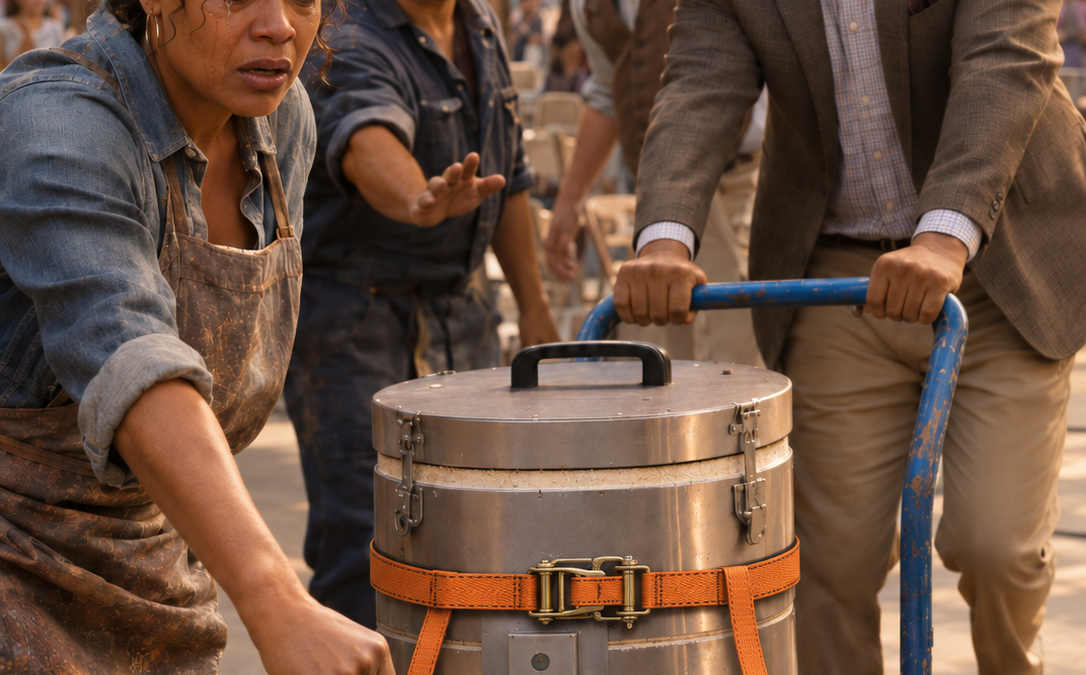
Now he had both hands on the blue cart carrying the most expensive tool I owned.
Mario stood above him near the craft bays.
“Thank you, Tyrone, for donating the kiln,” Mario said.
Donating.
That word stopped me colder than the ramp ever could.
People nearby turned toward us.
A couple holding preview handouts glanced from Tyrone to the kiln.
My kiln.
Serial K7319.
The one I had paid $1,800 for myself.
I was already reaching for the blue cart handle.
“Hands off my kiln.”
Tyrone looked at me like I had interrupted his show.
His fingers stayed wrapped around the metal bar.
That stung nearly as much as Mario’s thanks.
No surprise.
No embarrassment.
Tyrone looked irritated that I had spoken.
I grabbed the handle beside his hand.
Mario lowered his preview sheet.
“Latasha?”
“I hauled my kiln here for my pottery demonstration,” I said.
Tyrone gave a small smile.
“She’s upset.”
My face burned.
That was another old trick.
Do something wrong, then describe my reaction instead of his behavior.
I kept my eyes on Mario.
“It belongs to me.”
Mario looked at the kiln.
Then at Tyrone.
Tyrone lifted his chin.
“I handled the trailer.”
“You signed for the trailer,” I said.
“That’s what I said.”
“No.”
My hands trembled on the cart handle.
I hated that Tyrone could probably see it.
I hated more that strangers could.
“I paid for the kiln,” I said.
“Eighteen hundred dollars.”
Mario’s expression changed.
Not much.
Enough.
Tyrone finally loosened one hand.
“I arranged transportation.”
“You offered transportation.”
The distinction sat between us.
I remembered Friday morning before the preview opened.
I had been in my pickup while the kiln sat strapped to the fair’s loaner trailer.
Tyrone had stood beside dispatch with a clipboard.
The paper on top had been pink.
I watched him write across one line, then sign at the bottom.
I could not read a word from the truck.
At the time, I had thought he was doing exactly what he promised.
Saving me a trailer rental.
I had thanked him.
That memory made my throat hurt.
Trust could make a person feel foolish after the fact.
Mario stepped closer.
“What paperwork came with the load?”
“The trailer manifest,” I said.
Tyrone’s mouth tightened.
That was the first sign I had seen that bothered him.
I noticed.
So did Roberto.
Roberto had been standing near the ramp rail with his work gloves tucked into his back pocket.
He moved beside us.
“One thing at a time,” Roberto said.
Then he looked at Tyrone’s hands.
“Let go.”
Tyrone stared at him.
Roberto did not raise his voice.
“The cart is on an incline.”
Tyrone released it.
Roberto took the weight immediately.
The kiln shifted half an inch against its straps.
My heart jumped.
“Brake clear,” Roberto said.
He turned the cart carefully.
The front wheels rolled downhill.
I walked backward beside him while Roberto controlled the load.
At the bottom, he stopped.
Then he put the blue handle back into my hands.
Mine.
Where it belonged.
Mario came down the ramp after us.
“The kiln won’t be called while the claim is contested,” he said.
Tyrone stayed halfway up the slope.
His hands hung empty at his sides.
The donor preview continued around us.
People moved toward tables of quilts, tools, baskets, and baked goods.
I kept one hand on my cart.
Roberto stood beside the downhill wheel.
Mario folded his preview sheet once.
“Tyrone submitted something,” he said.
I looked at my brother.
Tyrone walked down the last few feet of ramp.
“Mario, this doesn’t need to become a production.”
Another little cut.
He had created the problem.
Now my refusal was the production.
My anger dropped into a steadier place in my gut.
That was better than shaking.
Mario looked at him.
“It becomes a review when ownership is disputed.”
Tyrone’s jaw moved.
He said nothing.
Mario motioned toward a folding intake table near the pavilion wall.
“Come with me, Latasha.”
I locked the cart brake.
Roberto checked it with his boot.
“Locked,” he said.
I followed Mario.
The intake table had stacks of proposed lot cards held down with binder clips.
A volunteer moved aside when Mario approached.
He reached beneath a clipboard.
I saw the edge of a cream-colored card.
Tyrone stopped several steps behind me.
“You already thanked me,” he said.
Mario turned his head.
“That doesn’t establish ownership.”
Tyrone’s face went flat.
Hearing Mario say it helped.
I had been standing in front of people who had already been told my brother was generous.
That I was interrupting generosity.
That my own property had somehow become proof of his kindness.
Staying silent was not restraint.
It gave him room to keep going.
Mario set the card facedown.
“There’s a consent requirement before anything reaches bidding,” he said.
I pointed toward the kiln behind us.
“I never consented.”
“I understand.”
“Then I want the trailer paperwork.”
Mario looked toward Roberto.
Roberto nodded once.
“Dispatch has the checkout box.”
“Can we get it?”
“When the trailer crew returns.”
I thought of that pink sheet.
Tyrone’s pen moving across it.
His signature.
Whatever he had written before I drove through the fair gate.
Tyrone spoke behind me.
“This is getting ridiculous.”
My shoulders tightened.
He had pushed my kiln toward an auction.
He had accepted thanks for donating it.
And I was ridiculous for asking what he signed.
I turned toward him.
“Then the paperwork should clear it up.”
Tyrone looked past me instead of answering.
Mario picked up the cream card.
The top edge had a handwritten lot number.
Below it were several printed fields.
One line near the bottom said owner consent.
It was empty.
Nothing signed.
Nothing initialed.
Mario held it where I could see.
“How did this get entered?” I said.
“That’s what we’re checking.”
He turned the card toward me.
I saw the donor field.
A name was written there in dark ink.
Tyrone Owens.
You may also like
My Granddaughter’s Stepmother Removed Her From Her Birthday Cruise, So I Checked The Booking And Found More
My Son-In-Law Sold My Granddaughter’s Heifer While She Was At School, So I Followed Him To The Sale Barn
My Boss Made Me Hold Coats at His Award Dinner, So I Asked Who Fixed the Bus
My brother’s name.
On the proposed lot card for my kiln.
Picking up where the Facebook post left off
Chapter 2: What The Text Said
The cream lot card stayed in Mario’s hand.
Tyrone’s name sat where mine should have been.
Nobody spoke for several seconds.
I stared at those two words.
Tyrone Owens.
My brother had not been mistaken for the donor.
Somebody had written him down as one.
My stomach felt hard.
Mario lowered the card.
“I’m keeping this entry on hold.”
“Good,” I said.
Tyrone gave me an irritated look.
“You’re turning this into a bigger mess than it is.”
That hurt.
He had attached his name to something that belonged to me.
Now I was difficult for noticing.
That was how Tyrone worked.
He pushed until I pushed back.
Then he pointed at the pushing.
I took hold of my cart and returned to Bay Four.
Roberto walked beside the kiln until we reached the craft bays.
He checked the wheel locks again.
“Secure,” he said.
“Thank you.”
Tyrone stayed behind with Mario.
I wished that meant he was fixing the donor entry.
It did not.
Ten minutes later, Tyrone appeared at Bay Four carrying a stack of preview handouts.
Three visitors stood near my demonstration table.
My small wooden nameplate faced the aisle.
LATASHA OWENS.
POTTERY DEMONSTRATION.
Tyrone reached down and flipped it facedown.
“This is my sister,” he told the visitors.
“She’s assisting me for the weekend.”
My face went hot.
Assisting him.
At my own table.
Beside my own kiln.
The words were almost neat enough to sound harmless.
That made them worse.
I turned the nameplate upright.
“No,” I said.
One woman looked between us.
“You’re the potter?”
“I am.”
She pointed toward a photograph of bowls on my display board.
“Do you have a studio here in Ames?”
“Yes,” I said.
“I make and fire my own work there.”
Tyrone smiled like I had answered a question on his behalf.
“She does the hands-on part.”
My fingers curled against the table edge.
Hands-on part.
As if the planning belonged to him.
As if the money belonged to him.
As if my work needed a man standing nearby to become official.
I looked at the visitor.
“The kiln stays at my studio when I’m not transporting it for demonstrations.”
“That’s yours too?” she asked.
“Yes.”
Tyrone tapped the side of the cart.
“It’s equipment I paid for.”
My chest tightened.
He said it easily.
In front of strangers.
No stumble.
No hesitation.
I had heard Tyrone exaggerate plenty of things.
This felt different.
He was building a story one sentence at a time.
I pulled out my phone.
Tyrone laughed softly.
“What are you doing?”
“Checking something.”
I opened our messages.
There were months of family chatter.
Pickup arrangements.
Holiday plans.
A photo of a cracked flowerpot he wanted me to repair.
I searched one word.
Trailer.
Several results appeared.
I opened the message thread from when we arranged the fair trip.
Tyrone had written:
You paid $1,800 for the kiln. Let me save you a trailer rental.
My thumb stopped on the screen.
There it was.
His own words.
His own number.
His own acknowledgment that the kiln was mine before it ever reached the fair.
I felt hurt first.
Then anger.
He had known exactly who paid.
This was not confusion.
This was a choice.
I saved the message.
Then I held the phone where Tyrone could see it.
“You wrote this.”
His eyes dropped to the screen.
The smile left his face.
The visitor nearest me leaned slightly closer.
I read the sentence aloud.
“You paid $1,800 for the kiln.”
Tyrone shrugged.
“I meant the purchase came out of money you had.”
I stared at him.
“That is what paying means.”
One visitor looked down at her handout.
Tyrone’s jaw tightened.
I kept my voice even.
“Correct the donor name.”
“There isn’t anything to correct yet.”
“Your name is on the proposed lot card.”
“It’s preliminary.”
“Then preliminarily take your name off my kiln.”
The woman beside the display board covered a small smile.
Tyrone noticed.
His cheeks darkened.
He stepped closer to me.
“You have no idea how this process works.”
That one cut deep.
I was forty-three years old.
I ran my own pottery work.
I bought my own equipment.
And Tyrone still used that tone when he wanted me smaller.
I slipped my phone into my pocket.
“I understand permission.”
He looked away.
Truth did not need his agreement.
It only needed a record.
The text proved who paid for the kiln.
It did not yet establish what Tyrone had brought it there to do.
That mattered.
If he claimed the trailer had been for an auction load, I needed the handling records.
If he had called it a display, I needed that too.
Roberto was somewhere near dispatch.
I decided I would find him after the aisle cleared.
Before I could move, another man approached Bay Four.
He was holding a folded preview handout.
“Is this the kiln listed for tomorrow?” he asked.
I opened my mouth.
Tyrone stepped between us.
He took a spare handout from the table.
Then he pulled a pen from his shirt pocket.
I watched him draw a dark circle around the kiln entry.
My hands went cold.
He had seen the text.
He had heard me refuse.
Mario had already placed the entry on hold.
Tyrone was still doing it.
Still pointing people toward my kiln.
Still acting like my no was only noise.
I reached for the handout.
“Tyrone.”
He pulled it back before I touched it.
The bidder looked confused.
“Is it available or not?”
“The listing is contested,” I said.
Tyrone handed him the circled sheet.
Then my brother smiled.
You may also like
My Husband Gave His Ex My Greenhouse Credit At Our Garden Opening, So I Checked His Story
My Son-in-Law Accused Me Of Stealing At His Anniversary Dinner, So I Called The Auctioneer About The Silver
My Daughter Sat Me By The Trash At Thanksgiving, So I Stayed Quiet — Until Her Story Started Cracking
“Come back at noon Saturday,” Tyrone said.
“For the kiln.”
Chapter 3: The Slip At The Gate
“For the kiln.”
Tyrone’s words stayed between us as the bidder folded the handout.
The man looked at me.
Then at my brother.
“I’ll check tomorrow,” he said.
He walked away before I could answer.
Tyrone gave me a satisfied little nod.
My stomach tightened.
He had heard me say no.
Mario had placed the kiln on hold.
Tyrone still sent a bidder back.
That was not confusion anymore.
It was pressure.
He wanted enough people expecting a sale that my refusal would look selfish.
I turned away from him.
Roberto was crossing the aisle with a coil of tie-down straps.
“Roberto.”
He stopped.
“I need the first handling record for my kiln.”
He set the straps on a nearby chair.
“One concrete thing,” he said.
“Do you mean the gate routing slip?”
“Yes.”
Tyrone made a sound behind me.
“You don’t need to drag Roberto into this.”
That hurt more than I expected.
Tyrone had no problem using fair volunteers when they helped his story.
The moment I wanted a record, I was dragging people in.
My hands felt cold.
“I’m asking about my property.”
Roberto looked at Tyrone.
Then back at me.
“I have the routing copy.”
He reached into a thin plastic folder tucked under his load clipboard.
The page was white with several boxes printed across it.
Roberto held it himself.
He did not pass it to me.
“This is the first routing record after the trailer entered,” he said.
His finger moved down one line.
I saw my name nowhere.
But I saw Tyrone’s initials.
Beside them were four words.
Craft display, Bay Four.
I stared at the line.
Display.
Not auction.
Not donation.
Not sale.
My anger sharpened.
Tyrone had just told a bidder to return for my kiln.
At the gate, he had routed it to my craft bay.
Roberto tapped the initials.
“These are Tyrone’s?”
“Yes,” I said.
Tyrone stepped closer.
“That’s just where it was going first.”
Roberto looked at him.
“I asked Latasha.”
Tyrone stopped talking.
That small correction helped.
Precise.
Clean.
No argument.
I looked at Roberto.
“Can I get a copy?”
“This one stays with load records.”
“Then I need whatever came in with the trailer.”
“The manifest?”
“Yes.”
Roberto nodded.
“That’s in the checkout box.”
My chest tightened again.
The pink sheet.
The one I had watched Tyrone sign from my pickup.
“Can we get it now?”
“Dispatch has the box out with the trailer crew.”
He picked up his straps.
“I’ll show you the return board.”
We crossed behind the pavilion toward the dispatch station.
The noise changed as we left the craft aisle.
Fewer voices.
More carts.
Metal rattling against metal.
A white board hung beside the dispatch window.
Several return times were written in black marker.
Roberto pointed to the line for the fair’s loaner trailer.
The crew and checkout box were due back Saturday before the auction opened.
“Dispatch returns by eleven forty-five,” he said.
I looked at the board.
That gave me fifteen minutes before noon.
Fifteen minutes before Tyrone had told that bidder to come back.
Fear moved through me.
Not panic.
Something colder.
What if the pink copy said less than I remembered Tyrone promising?
What if he had written something vague enough to twist?
I had watched him sign it.
I had not read it.
That mistake bothered me now.
Trust had saved me a trailer rental.
It had also left me chasing paper.
Roberto leaned one hand on the dispatch counter.
“I can meet you here when the desk opens.”
“You will?”
“Yes.”
“Thank you.”
He nodded toward the pavilion.
“You also have the option to load out once the aisle clears.”
That stopped me.
I could take the kiln home.
End the risk.
Get it off fair property before Tyrone found another way to point at it.
For a few seconds, that was exactly what I wanted.
My kiln in my studio.
My door locked.
My hands back in clay instead of paperwork.
Then I pictured the preview crowd.
Mario thanking Tyrone.
The bidder holding the circled handout.
Visitors hearing I was only my brother’s assistant.
If I left quietly, the kiln would be safe.
The lie would stay standing.
Silence protected objects better than reputations.
I needed both protected.
“I’ll stay on the review list,” I said.
Roberto studied my face.
“You’re sure?”
“Yes.”
“I can still arrange load-out later.”
“After the claim is corrected.”
He nodded once.
“Then park it tight in your bay.”
We went back to Bay Four.
Tyrone was gone.
That did not make me feel better.
I rolled the blue cart behind my demonstration table.
Roberto guided one wheel past a stack of practice tiles.
I pushed until the kiln sat fully inside my space.
Then I set the left wheel lock.
The right one followed.
Roberto tested each brake with his boot.
“Good.”
I pulled the cart handle inward so nobody could catch it walking past.
My nameplate still faced the aisle.
LATASHA OWENS.
POTTERY DEMONSTRATION.
I touched its edge.
I had nearly packed up after Tyrone called himself the donor.
I had nearly decided that getting my kiln home mattered more than correcting him publicly.
But he had made the claim publicly.
That mattered too.
A lie said in front of people did not become private just because correcting it felt uncomfortable.
I looked toward the intake table.
Mario was there with a clipboard under one arm.
The proposed lot card had come from somewhere.
Tyrone had submitted something to get his name attached to my kiln.
Something strong enough that Mario thanked him before the preview crowd.
I knew what the gate slip said.
I knew what Tyrone’s text said.
The missing piece was what he had told the auction chair.
I left Roberto beside the bay.
Mario looked up as I approached.
“I need to see what Tyrone filed.”
He lowered the clipboard.
I kept my voice steady.
“Open the donor submission with me.”
Mario looked toward the intake folder.
Then he reached for it.
You may also like
My Sister Ordered Me To Work At Thanksgiving, So I Refused Her Apron And Exposed Her Story
My Daughter Called Me a Thief at My Granddaughter’s Quilt Auction; I Asked to See Her Entry
My Husband Tore My Apron At Our Daughter’s Engagement Dinner, So I Checked The Bakery Email
Tyrone’s submission.
The paper that had gotten him thanked.
Chapter 4: The Promise On Paper
The paper that had gotten Tyrone thanked sat beneath Mario’s hand.
He opened the intake folder.
A second page was clipped behind the submission.
Mario turned the first sheet toward me.
“Read the signature line.”
I did.
Only one name appeared there.
Tyrone Owens.
My name was nowhere on the page.
No initials.
No signature.
No permission.
My shoulders loosened for half a second.
Then Mario lifted the attached sheet.
“That isn’t the whole submission.”
My stomach pulled tight again.
Tyrone had signed alone.
That should have ended it.
Instead, he had added a promise using something I owned.
Mario held the attachment flat.
A sentence had been typed beneath the proposed auction entry.
I read it.
Kiln proceeds will finance the fall clay tables.
I stared at those words.
My kiln.
His generosity.
That was the trick.
Tyrone had promised a good thing with somebody else’s property.
It made refusing harder.
Anyone could point at children shaping clay later and decide I had taken something away from them.
My anger sat hot behind my ribs.
Mario tapped the signature area.
“There’s no owner signature.”
“I never signed anything.”
“I know what you’re telling me.”
“It isn’t just what I’m telling you.”
I pointed toward the attachment.
“He promised money he didn’t have.”
Mario’s mouth tightened.
“I thanked him based on this submission.”
That hurt too.
Not because Mario meant it cruelly.
Because I could still hear his voice at the ramp.
Thank you, Tyrone.
The crowd had heard that part.
They had not heard this one yet.
Mario placed the pages back inside the folder.
“The entry stays contested.”
“I want it corrected where people heard it.”
He looked at me.
“That’s fair.”
A volunteer approached carrying a clipboard.
“Latasha?”
I turned.
She held out a sign-up sheet with several names and check marks.
“This was at your demo table.”
I recognized the Friday workshop list.
My own name was printed at the top.
Below it were the visitors who had signed up to watch me work.
Several spaces had been filled that morning.
Most were crossed through now.
The volunteer pointed to the page.
“People started leaving after they heard the kiln was being donated.”
My chest sank.
“How many stayed?”
She hesitated.
“None long enough for the demonstration.”
I looked toward Bay Four.
My practice tiles were still stacked beside the table.
Unused.
Clean.
Waiting for hands that had gone somewhere else.
Tyrone had not only tried to give away my kiln.
He had cost me the demonstration I brought it here to support.
I had planned that teaching slot carefully.
People remembered demonstrations.
They asked about future classes.
They booked later workshops.
A missed slot could cost more than one afternoon.
I had kept that worry to myself.
It felt small beside an $1,800 kiln.
It did not feel small now.
I took the clipboard.
“Thank you.”
The volunteer nodded and moved on.
I carried the sheet back to Bay Four.
The pavilion sounded different now.
Chairs scraped.
People called goodbyes.
Preview traffic had thinned.
I stood beside my table and looked at the tiles.
Eight smooth squares.
Ready for carving marks, thumbprints, small stamped patterns.
Nothing had touched them.
I stacked them one by one.
My hands were steady now.
That almost made me angrier.
I had spent the first part of the afternoon defending ownership instead of teaching.
Tyrone had taken my work and turned it into his announcement.
Then he had made me spend my own time proving it was mine.
Theft of attention counted too.
Roberto came around the booth partition carrying a folded tarp.
“Fresh one,” he said.
He laid it beside the cart.
“The old tarp picked up grit.”
“Thanks.”
He looked at the unused tiles.
“You missed the slot?”
“Yes.”
He did not tell me it was no big deal.
I appreciated that.
People sometimes rushed to make hurt smaller because they did not know where to put it.
Roberto only asked, “What needs securing?”
“The kiln.”
We moved the blue cart behind the booth partition.
I set both wheel locks.
Roberto checked the straps without touching the kiln body.
Then he spread the clean tarp over it.
The shape disappeared beneath gray canvas.
Still mine.
Still here.
I looped the cart handle behind the partition rail and locked it.
Roberto watched me test the lock.
“Tomorrow,” he said, “dispatch before noon.”
“Eleven forty-five?”
“That’s when the crew should return.”
“I’ll be there.”
“I’ll meet you.”
The pink manifest copy was still somewhere inside that checkout box.
I pictured Tyrone signing it again.
His pen.
His handwriting.
His name.
I needed to know what he had written before the kiln ever reached the pavilion.
If it said display and return, this could end quickly.
If it said something else, I would deal with that too.
I was done guessing.
The last volunteers began turning off lights over the outer tables.
Mario carried the intake folder toward the office cabinet.
I handed him the Friday sign-up sheet.
“Keep this with the review.”
He looked at the crossed-out names.
“I will.”
Behind us, a familiar voice carried across the pavilion.
Tyrone.
He was walking toward the exit with his emcee lanyard hanging from two fingers.
He slowed when he reached Bay Four.
His eyes went to the tarp.
Then to me.
“You’re really going through with this?”
I felt tired.
Hurt.
Angry.
But not uncertain.
“Yes.”
Tyrone gave a thin smile.
“You think that pink sheet is going to save you?”
Roberto looked up from the cart.
Mario stopped near the cabinet.
Tyrone kept walking.
Then he turned his head just enough to make sure we heard him.
“I’ll tell the bidders you signed the kiln over.”
You may also like
My Sister-In-Law Sent Me To The Laundry Room At Our Reunion, So I Checked Her Room List
My Son-in-Law Dumped My Late Husband’s Chair After Surgery, So I Asked What He Was Hiding
My Grandson Tried Selling My Farm While I Was Hospitalized, So I Requested Records — And Saw Enough
He smiled.
“I’ll tell them you gave it to me.”
Chapter 5: The Pink Copy
“I’ll tell them you gave it to me.”
Tyrone’s smile stayed with me after the pavilion door shut behind him.
Roberto looked at me across the covered kiln.
“He can tell them anything,” he said.
“The paper still says what it says.”
Except we did not know that yet.
Not for certain.
I had watched Tyrone sign the pink manifest.
I had trusted him enough not to walk over and read it.
That trust hurt now.
All night, I kept seeing his pen move.
One line.
One signature.
Then Saturday brought the sound of a trailer backing toward dispatch.
I was already near the window when the crew returned.
The metal checkout box came off the trailer in Roberto’s hands.
My pulse jumped.
This was what I had been waiting for.
Not Tyrone’s version.
Not mine.
A record made before the fight started.
Roberto set the box on the dispatch counter.
The latch clicked.
He sorted through several routing sheets.
Then his fingers stopped on pink paper.
“I have it.”
My hands went cold.
Roberto pulled out the manifest copy and held it flat against the counter for me.
He did not hand it over.
He kept one palm near the bottom edge.
“Start with the serial.”
I leaned closer.
K7319.
The same number I knew from my kiln plate.
Below it was Tyrone’s handwriting.
Then his signature.
Tyrone Owens.
I followed the entry line by line.
Haul for Latasha Owens. Display and return to her. No sale or donation.
My throat tightened.
For a second, I could only stare.
Display and return to her.
No sale.
No donation.
Every argument Tyrone had made collapsed into his own handwriting.
He had known.
At the gate.
Before Mario thanked him.
Before the bidder got a circled handout.
Before he threatened to say I had signed the kiln over.
He had written the opposite himself.
My anger was clean now.
No guessing left.
No family misunderstanding.
No room for him to call me confused.
Roberto pointed at the signature.
“That’s his?”
“Yes.”
“And this is the kiln number?”
“Yes.”
“I want you to verify it at the cart.”
We went straight to Bay Four.
The pavilion was filling again.
People carried auction sheets and coffee cups through the aisle.
A few looked toward my covered kiln.
I felt their eyes.
That made my nerves rise faster than I expected.
They had heard about fall clay tables.
Some of them might believe I was taking money away from a community program.
Tyrone had made generosity part of his lie.
That was clever.
Cruel too.
Roberto pulled back one corner of the fresh tarp.
I crouched beside the kiln.
The metal plate caught the overhead light.
K7319.
I touched the edge of the plate.
“Same number.”
Roberto checked the manifest again.
“K7319.”
Same kiln.
Same handwriting.
Same promise to return it to me.
I stood.
My knees felt weak.
I hated that my own property required this much proof.
A brother’s word had carried my kiln toward an auction.
My no had needed paperwork.
That hurt.
I took one slow breath.
“What happens now?”
“Prebid check.”
Roberto folded the tarp back into place.
“I keep the manifest.”
“Good.”
I did not want Tyrone claiming I had changed it.
Or carried it off.
Or misunderstood another piece of paper.
Roberto slid the pink copy into his records folder.
“Mario needs to see the original copy before bidding.”
“Then let’s go.”
We crossed toward the front of the pavilion.
The auction area had changed since preview.
Rows of chairs faced Mario’s calling station.
The low ramp ran beside the craft bays.
My blue cart sat close enough to be seen from the front aisle.
I knew what that meant.
If Mario corrected the listing publicly, people would look at me.
Maybe some would be angry.
Maybe they would remember only that the clay tables had lost expected funding.
I had already missed one demonstration because Tyrone’s claim scattered my crowd.
Now correcting him could cost me something else.
Future invitations.
Goodwill.
People deciding I was difficult.
That fear was real.
I had spent years learning how quickly a woman could be called selfish for keeping what was hers.
Especially when somebody else had promised it away for a good cause.
Mario met us beside his call sheets.
Roberto opened the folder.
“Pink manifest is back.”
Mario read the serial first.
Then the entry.
His eyes stopped at the last sentence.
“No sale or donation.”
“That’s what he signed,” I said.
Mario looked at me.
“You understand that correcting this at the mic may get a reaction.”
“Yes.”
“The fall clay tables were mentioned in the preview material.”
“I know.”
“You can answer privately, and I can announce the withdrawal.”
I looked toward the chairs.
People were already settling in.
A woman near the front held one of yesterday’s handouts.
Somewhere among them was the bidder Tyrone had told to return.
If I stayed behind the booth, Mario could fix the paperwork.
But Tyrone had not made the claim quietly.
He had said it in public.
He had called me his assistant in public.
He had promised my kiln proceeds in public.
I was tired of letting him use the room while I used the hallway.
“I’ll answer at the mic.”
Mario studied me for a second.
“All right.”
Fear pressed under my ribs.
I still chose it.
A false story grows when the truth keeps lowering its voice.
Roberto stayed beside me with the pink copy.
Mario walked toward the calling station.
The room settled.
Chairs scraped once, then stopped.
My blue cart waited beside the front aisle.
Mario picked up the microphone.
“We have a disputed entry that must be resolved before bidding.”
Several heads turned.
Then he looked toward Bay Four.
“I need the parties to that entry up front.”
My stomach tightened.
I stepped into the aisle beside the cart.
You may also like
My Daughter Accused Me of Ruining Her Wedding Cake, So I Asked the Baker for Proof
My Sister Claimed My Quilt At The County Show, So I Challenged Her Entry And Exposed A Lie
My Sister Gave Away My Daughter’s Birthday Dollhouse, So I Saved The Tag And Found The Truth
Where everyone could see me.
This time, I was answering for myself.
Chapter 6: The Red Hold Tag
I stepped into the aisle beside the cart.
Twenty-two people were watching.
Mario reached under his call sheet and pulled out a red tag.
He clipped it to the blue cart handle before anybody could bid.
The plastic tag swung once.
Then it stopped.
I stayed beside the kiln.
Tyrone came down the front aisle with his emcee lanyard against his shirt.
His face looked calm.
Too calm.
Like this was another announcement he could talk his way through.
Mario kept the microphone low.
“This entry is on hold until ownership and consent are settled.”
Tyrone looked around at the chairs.
Then he smiled.
“I paid for that kiln.”
My stomach clenched.
He said it in front of everyone.
Again.
After seeing his own text.
After seeing me refuse.
That was what hurt most.
He knew the truth had a record now.
He was still betting his voice could outrun it.
I pulled out my phone.
Mario looked at me.
“Do you have something responsive to that claim?”
“Yes.”
I opened the saved message.
My fingers shook once against the screen.
Then they steadied.
“I searched our trip texts yesterday.”
Tyrone’s smile thinned.
I read only his words.
You paid $1,800 for the kiln. Let me save you a trailer rental.
A woman in the second row lowered her auction sheet.
Someone behind her whispered.
I did not look toward them.
I looked at Tyrone.
He had called the kiln equipment he paid for.
His own message said otherwise.
I felt hurt.
Then relief.
The truth sounded different when twenty-two people heard it together.
Tyrone lifted one shoulder.
“That doesn’t mean what she thinks it means.”
I put the phone away.
I was not going to argue about the meaning of “you paid.”
Some lies survive because everybody agrees to debate plain English.
I was finished doing that.
Mario looked at Tyrone.
“You stated that you paid for the kiln.”
“I helped with the whole arrangement.”
“That was not the statement.”
Tyrone’s jaw tightened.
I kept one hand on the cart handle.
The red tag rested against my knuckles.
Cold plastic.
Visible to everyone.
Mario turned slightly toward Roberto.
“Next record.”
Roberto already had his load folder open.
He took out the white routing slip from Friday.
He kept it in his own hands.
Tyrone looked at the page.
His posture changed.
Barely.
But I saw it.
Roberto pointed to the line with Tyrone’s initials.
“This is the gate routing slip.”
Mario nodded.
“Read the destination.”
Roberto did.
Craft display, Bay Four.
The words were simple.
Four of them.
They landed harder than Tyrone’s speech.
Tyrone looked toward the chairs.
“I logged it for auction at the gate.”
Roberto looked back at the paper.
Then at him.
“No.”
Tyrone’s face went red.
Roberto did not hand the slip to Mario.
He did not hand it to me.
He kept the record flat in front of himself.
“You initialed this line.”
Roberto tapped the paper.
“Craft display, Bay Four.”
My chest hurt.
I had spent a day being told I was confused about my own kiln.
Now Tyrone’s own initials were doing the correcting.
One record said I paid.
Another said display.
And the pink manifest still waited in Roberto’s folder.
Tyrone folded his arms.
“You’re treating a routing note like a contract.”
Mario raised the microphone slightly.
“The question is not what you call the slip.”
He looked at Tyrone.
“The question is what proof you have that Latasha consented to auction this kiln.”
The room went quiet.
I heard a chair creak near the aisle.
Tyrone looked at me.
Not Mario.
Me.
That frightened me.
He had already threatened to tell bidders I signed the kiln over.
Now he had been asked to prove it.
My stomach tightened again.
I knew I had signed no transfer.
I knew the proposed donor card had no owner consent.
I knew his auction submission carried only his signature.
But hearing Mario ask for proof made the lie feel dangerous all over again.
Because Tyrone had never needed a document to sound certain.
He only needed an audience.
Mario repeated the question.
“Do you have Latasha’s signed consent?”
Tyrone pinched the bottom of his lanyard between two fingers.
Nobody helped him.
Nobody filled the silence.
I felt my anger settle.
For once, he had to answer the exact question.
Not explain around it.
Not joke.
Not introduce me as his assistant.
Not tell a bidder to come back later.
Consent.
A signature.
Mine.
That was all.
Mario pointed toward the red tag.
“This stays until that is resolved.”
Tyrone stared at it.
I could see him thinking.
That scared me less now.
Records had already caught two lies.
Still, I knew my brother.
When one story failed, he built another beside it.
He looked at Roberto’s routing slip.
Then at Mario.
His voice came back smooth.
“The gate slip was just for directions.”
Mario did not move.
Tyrone turned toward me.
“She signed it over at loading.”
Mario tapped the red tag.
You may also like
My Daughter-in-Law Took My Name Off Our Thanksgiving Cookbook, So I Asked The Printer For Proof
My Manager Called Me A Cleaner At My Retirement Dinner, So I Asked For The Program
My Father-in-Law Called Me The Handyman At His Anniversary, So I Checked His Camera And Everything Changed
A new claim.
A signature Tyrone said existed.
Chapter 7: No Opening Bid
A signature Tyrone said existed.
Roberto already had the pink copy in his hand.
Mario looked at me.
“Did you sign the kiln over at loading?”
“No.”
My voice came out steady.
“I signed nothing giving Tyrone my kiln.”
Tyrone shook his head.
“You know what happened.”
That hurt.
He said it like my memory was the problem.
Like certainty belonged to whoever spoke louder.
My hands felt cold against the cart handle.
I knew what I had signed.
Nothing.
Mario bent beside the kiln.
Roberto held the manifest where he could see it.
“K7319,” Roberto said.
Mario found the metal plate.
He leaned closer.
“K7319.”
The serial matched.
My stomach loosened a little.
That number had followed the kiln from my studio to the ramp.
It had not changed because Tyrone changed his story.
Mario straightened.
“Donor card.”
He already had the proposed card tucked beneath his call sheet.
He pulled it free.
Twenty-two people watched him examine the bottom.
The owner consent line was still empty.
Mario held it up just enough for Tyrone to see.
“No owner signature here.”
Tyrone’s face tightened.
“That form wasn’t finished.”
My chest hurt.
Friday, he had been finished enough to accept Mario’s thanks.
Finished enough to send a bidder back.
Finished enough to promise fall clay tables.
Only the missing permission was suddenly unfinished.
Mario looked at Roberto.
“Read the manifest entry.”
Roberto held the pink sheet flat.
His voice stayed plain.
Haul for Latasha Owens. Display and return to her. No sale or donation.
Nobody moved for a second.
The words sounded bigger through the quiet.
Display.
Return to her.
No sale.
No donation.
Tyrone had written every part that mattered.
I faced him.
His eyes stayed on the floor.
Mario pointed toward the signature beneath the entry.
“Tyrone, is that yours?”
“Yes.”
One word.
Barely audible.
Mario lifted the microphone.
“Then why did you submit the kiln as a donation?”
Tyrone looked toward the chairs.
“I figured she’d go along with it.”
There it was.
His second excuse.
Not permission.
Not consent.
A guess that my answer would eventually become yes.
Heat rushed into my cheeks before I could steady myself.
He had not misunderstood me.
He had counted on wearing me down.
That hurt in a different place.
Family was supposed to know where your boundaries were.
Tyrone had known mine.
He had stepped over them anyway.
Mario looked at me.
“Did you ever agree?”
“No.”
“Did you authorize proceeds from this kiln for the clay tables?”
“No.”
Mario nodded.
Then he turned toward the room.
“The kiln is withdrawn.”
A chair scraped behind me.
Someone whispered, “Good.”
I kept my eyes on the cart.
I was afraid to look relieved.
Afraid somebody would think I was celebrating the loss of funding.
Mario picked up a pen.
He found the kiln on his call sheet.
Then he drew one dark line through the entry.
The sound was tiny.
Pen across paper.
But I felt it in my chest.
The sale was gone.
My kiln was not.
Mario raised the microphone again.
“I thanked the wrong person.”
His eyes went to the couple holding preview handouts near the second row.
They were the same two who had heard him thank Tyrone on Friday.
Mario faced them and the rest of the twenty-two witnesses.
“The signed K7319 manifest directs display and return only.”
He lifted the proposed donor card.
“Latasha never signed the owner consent this fair requires before bidding.”
Then he looked across the room.
“So we are withdrawing this lot before any bid is called.”
That mattered.
He did not reduce it to confusion between relatives.
He did not soften it into family confusion.
He said what happened.
My hands stopped shaking.
Tyrone took one step toward Mario.
“You’re making this public.”
Mario looked at him.
“It was listed publicly.”
Tyrone’s mouth closed.
I almost smiled.
Almost.
Then I remembered Friday.
The ramp.
His hands on my cart.
That cheerful voice.
Clay finally earns its keep.
I looked at him.
“Remember what you said?”
Tyrone frowned.
I repeated it exactly.
“Clay finally earns its keep.”
His face changed.
The smugness disappeared.
I felt every hour since Friday in that sentence.
The missed demonstration.
The turned-over nameplate.
The bidder.
The donor promise.
The threat about my signature.
My kiln had always earned its keep.
It earned mine.
That was enough.
Roberto stepped toward the aisle.
“I’ll clear your route back to Bay Four.”
He moved two folding chairs aside.
Then he lifted a loose cord away from the cart wheels.
I took off the red hold tag only when Mario nodded.
He kept it.
The kiln stayed strapped to the blue cart.
Mine.
Roberto checked the path.
“Clear.”
I wrapped both hands around the handle.
Tyrone stood near the calling station.
His emcee lanyard still hung against his chest.
I looked at him once.
“You got the ride, Tyrone.”
Then I pushed.
“The kiln goes home.”
The front wheels rolled smoothly.
Nobody stopped me.
Nobody reached for the cart.
Behind me, Mario shuffled his call sheets.
I heard him move to the next entry.
Not my kiln.
Something else.
A real donation.
Roberto walked beside me until we reached the craft aisle.
The auction started behind us.
Mario’s voice carried across the pavilion.
He called an opening price.
Not for K7319.
For a quilt.
I reached Bay Four and turned the cart into my space.
Then I pressed the left brake.
The right brake followed.
Both held.
You may also like
My Brother Called Me a Thief at Dad’s Birthday, So I Opened His Messages and Exposed His Lie
My Sister Claimed My Cabin At The Association Meeting, So I Checked The Records And Found A Surprise
My Sister Shamed Me At Her Birthday, So I Asked To See Mom’s Caregiver Bill
Behind me, Mario asked for the first bid on the quilt.
And my kiln stayed exactly where I put it.
Chapter 8: The Badge And The Bill
And my kiln stayed exactly where I put it.
Mario’s voice carried on with the quilt bidding behind me.
Roberto stood beside the blue cart until the aisle cleared.
I kept one hand near the brake.
The danger had changed.
Nobody was bidding on my kiln now.
But Tyrone was still wearing an emcee badge.
That bothered me.
A few minutes later, Mario came down the aisle.
“Volunteer desk,” he said.
Tyrone was already there when we arrived.
He stood behind the folding table with his lanyard hanging against his shirt.
Mario reached for the spare lanyard lying beside the shift sheet.
He unclipped it.
Then he looked at Tyrone.
“Turn in your emcee badge.”
Tyrone stared at him.
“You’re taking my shifts over this?”
Mario’s voice stayed even.
“Yes.”
My chest tightened.
Tyrone had spent two days using that badge like proof that he belonged above me.
He had spoken into microphones.
Directed bidders.
Turned me into his assistant.
Now the badge was being asked back.
Tyrone looked at me.
“This what you wanted?”
That hurt in an old way.
He had caused the problem.
Now he wanted the consequence to belong to me.
I kept my mouth shut.
Mario did not.
“This is my decision.”
Tyrone pulled the badge over his head.
He put it on the desk.
Plastic against wood.
A small sound.
Still satisfying.
Mario picked up the remaining volunteer schedule.
I watched him draw a line through Tyrone’s name on the open shifts.
One.
Then another.
Tyrone folded his arms.
“You’re embarrassing me.”
Mario looked up.
“You used the role during a disputed donation claim.”
No speech.
No lecture.
Just the fact.
Tyrone’s face hardened.
I felt something in me loosen.
Accountability did not need shouting.
It only needed somebody willing to act.
A man from the clay vendor approached the desk carrying a small receipt pad.
He looked between us.
“I need to confirm the Sunday clay order.”
Tyrone’s shoulders shifted.
The vendor glanced down at the sheet.
“One hundred twenty dollars.”
My stomach tightened.
That was the separate pledge.
Not kiln money.
Not auction proceeds.
Real clay.
A real bill.
The vendor looked at me.
“Does the order still stand?”
I answered before Tyrone could.
“My kiln is coming home either way.”
The words felt good.
Simple.
Clean.
The kiln was not payment.
It was not leverage.
It was not his contribution.
Tyrone looked annoyed.
“I know that.”
I turned toward him.
“You kept acting like you didn’t.”
The vendor waited.
Tyrone pulled out his card.
His mouth was tight.
He tapped it against the reader.
The machine beeped.
The vendor tore off the paid slip.
Tyrone took it.
One hundred twenty dollars.
His actual pledge.
His actual payment.
No borrowed ownership attached.
I watched him fold the slip once.
He did not look at me.
That almost hurt more than anger would have.
Not apology.
Not shame.
Just irritation that the bill had landed where it belonged.
By late afternoon, Roberto came for load-out.
He had the trailer waiting by the side gate.
“Ready?”
“Yes.”
We rolled the blue cart out of Bay Four.
I looked back once at the empty space.
My practice tiles were stacked beside the wall.
My nameplate was still upright.
That mattered.
Outside, the late-summer air felt cooler.
Roberto lowered the trailer ramp.
I guided the cart while he steadied the weight.
No applause.
No bidders.
No announcement.
Just work.
The kind I trusted.
We got the kiln onto the trailer.
Roberto set the first strap.
Then the second.
He checked the cart brakes.
I checked the kiln body.
Nothing had shifted.
Nothing had cracked.
My $1,800 kiln was going home.
That sentence settled something in me.
Roberto tightened the rear strap.
“You teaching tomorrow?”
I looked at him.
“I haven’t decided.”
“That’s fair.”
He reached into his pocket.
A small brass key rested in his palm.
“What’s that?”
“Sunday supply cabinet.”
I stared at it.
“The clay order?”
“Inside when it arrives.”
I did not take the key right away.
Teaching tomorrow meant standing in the same fair where Tyrone had tried to sell my kiln.
It meant using clay he had actually paid for.
It meant people might still connect his name to the table.
That bothered me.
I wanted the students.
I wanted the work.
I did not want another performance about Tyrone’s generosity.
Roberto seemed to read my hesitation.
“The key doesn’t commit you.”
That helped.
“One concrete choice at a time?”
He nodded.
“Exactly.”
I took the key.
It was warmer than I expected from his hand.
“If I teach, whose name goes on the shift?”
Roberto looked at the schedule board clipped near the trailer.
“Whoever teaches.”
My throat tightened.
That answer should have been obvious.
After this weekend, it felt almost radical.
I closed my fingers around the key.
Tyrone had tried to put his name on my kiln.
Then on the donation.
Then on the promise of clay.
I was done letting my work arrive under somebody else’s label.
I slipped the cabinet key into my pocket.
“Put my name on the shift.”
Roberto picked up the schedule.
You may also like
My Sister Shamed Me At Mom’s Memorial, Then My Niece Played The Message She Hid
My Son Banned Me From The Cabin At Christmas, So I Made A Move He Never Expected
My Daughter Made Me Her Free Camp Grandma At The Summer Kickoff, Then A Dad Handed Me Her Week 9 Envelope
Latasha Owens.
Mine.
Chapter 9: Her Name On The Form
Latasha Owens.
Mine.
The brass cabinet key turned easily Sunday morning.
I opened the supply door and found sealed clay boxes stacked inside.
One hundred twenty dollars’ worth.
Tyrone had paid for this.
That fact did not bother me the way I expected.
The payment was his.
The teaching was mine.
I carried the clay to the table and cut open the first package.
Cool gray blocks sat under the plastic.
I pressed my thumb into one corner.
Soft.
Fresh.
Ready.
People began stopping near the tent as I set out boards and practice tiles.
Some recognized me from the auction.
A few looked toward the pavilion.
Nobody asked where the kiln was.
It was already home.
Safe in my studio.
That mattered more than explaining it again.
I was arranging the last tools when Tyrone appeared beside the tent.
He wore no emcee badge.
His shirt still looked pressed enough for one.
He glanced at the clay boxes.
Then at Mario, who was holding the microphone near the table entrance.
Tyrone stepped toward him.
“You want me to handle the introduction?”
Mario kept the microphone.
“No.”
Tyrone blinked.
His face tightened.
“I pledged for the clay.”
“I know.”
“So I should say something.”
That old hurt returned.
He had finally paid for something that was actually his responsibility.
Now he wanted the microphone as a receipt.
Money could buy clay.
It could not buy my name.
Mario turned toward the people gathering around the table.
“This morning’s instructor is Latasha Owens.”
My throat tightened.
Not Tyrone’s assistant.
Not his sister helping out.
Instructor.
My own work.
My own name.
Tyrone stood close enough to hear every word.
Mario continued with the table rules.
No sponsorship announcement.
No speech about who paid.
No chance for Tyrone to turn one hundred twenty dollars into ownership of the room.
He stayed near the tent for another minute.
Then he walked away.
I did not follow him with my eyes.
A woman at the table touched one of the clay blocks.
“I’ve never made anything with this.”
“Then we start small,” I said.
I pinched off a piece and rolled it between my palms.
She copied me.
Her clay came out crooked.
She laughed.
“So much for talent.”
“Talent isn’t required.”
That made her smile.
I flattened a small tile.
“Put your thumb here.”
She pressed too lightly.
I showed her mine.
A clear print appeared in the clay.
“More pressure than that,” I said.
She tried again.
This time, the ridges stayed.
Her face brightened.
“That’s mine?”
“That one is.”
I remembered the unused tiles from Friday.
Clean squares stacked after my crowd disappeared.
That loss still hurt.
But this tile had a thumbprint.
This table had people around it.
I had not needed my kiln beside me to prove I belonged here.
The firing would happen where it was supposed to happen.
At my studio.
By me.
We filled the table slowly.
Thumbprints.
Stamped leaves.
Uneven initials.
Little marks made by people who kept apologizing for being beginners.
I told them what I knew.
Clay did not care if the first attempt looked pretty.
It only recorded what touched it.
By the end of the session, I had a tray of unfired tiles.
I wrapped them carefully.
Then I packed them into a padded box for the trip to my studio.
The first-time maker pointed toward hers.
“You’ll bring that back?”
“Yes.”
“I want to see what the firing does.”
“You will.”
Mario approached while I closed the box.
He carried one sheet of blank paper.
“For you.”
I looked down.
Fall makers’ day registration.
The pavilion name sat at the top.
Several blank fields waited below.
Exhibitor.
Display.
Activity.
I felt something catch behind my ribs.
Friday, I had watched Mario hold a proposed lot card carrying Tyrone’s name.
Now he was giving me a blank form.
No name already written.
No promise attached.
No brother standing between me and the line.
“What do you want to bring?” Mario asked.
I picked up a pen.
“Kiln display.”
I wrote it down.
Then beneath that:
Hand-building table.
Mario watched without interrupting.
I moved to the exhibitor field.
For half a second, my hand stopped.
Not from uncertainty.
From remembering.
Tyrone Owens had been written on the last card connected to my kiln.
This one would not leave room for anybody to guess.
I wrote carefully.
Latasha Owens.
Mario nodded.
“Location preference?”
I looked toward the pavilion.
The same low ramp was visible beyond the tent.
I remembered Tyrone pushing my blue cart up it.
Mario thanking him.
My own hand reaching for the handle.
I could choose another section.
Another entrance.
Another place without that memory.
I did not want one.
The ramp had never done anything wrong.
Neither had I.
“Pavilion,” I said.
Mario pointed to the load-in line.
“Put down what works for you.”
That felt bigger than it should have.
Nobody assigning it.
Nobody signing for me.
Nobody deciding what my kiln meant once it arrived.
I checked the box beside pavilion.
Then I filled in my own load-in time.
My name was already above it.
You may also like
My Supervisor Called Me A Cleaner At Christmas Dinner, So I Kept My Seat And Questioned Her Credit
My Adoptive Mother Pulled My Chair Away At My 50th Birthday, So I Called The Woman She Hid
My Sister Knocked My Birthday Plate Down, So I Kept The Receipts She Signed
My choice beneath it.
The kiln would come back under both.
Chapter 10: The Same Ramp
The kiln would come back under both.
My name.
My choice.
Four weeks after the auction, on Saturday, September 19, the blue cart sat at the bottom of the same pavilion ramp.
I put both hands on the handle.
Roberto stood beside the rail.
“Spot me?”
“That’s what I’m here for.”
I looked up the slope.
The ramp seemed smaller than I remembered.
Friday, Tyrone had pushed my kiln up it while claiming it for himself.
This time, nobody touched the handle but me.
“Ready,” Roberto said.
I pushed.
The front wheels climbed.
Roberto stayed close enough to catch the weight if I needed him.
I did not.
One step.
Then another.
The blue cart rolled onto the pavilion floor.
I stopped at the top.
Roberto checked the wheels.
“Clear.”
My chest felt tight.
Not from fear.
From remembering how different this place had felt four weeks earlier.
A crowd had watched my brother get thanked for my kiln.
The people who had heard Mario thank Tyrone on Friday also heard the correction.
His emcee badge had gone back to the volunteer desk.
His remaining shifts had been crossed out.
His separate clay pledge had been paid by him.
Those consequences belonged to Tyrone.
This morning belonged to me.
Mario came across the pavilion carrying the makers’ day schedule.
He stopped beside the cart.
“Thank you, Latasha, for bringing your kiln.”
I looked at him.
The words were simple.
They still hit me hard.
Thank you, Latasha.
My name attached to my work.
No correction needed afterward.
“Glad to bring it,” I said.
Mario rested his palm briefly against my shoulder.
Then he moved toward the next exhibitor.
My eyes dropped to the floor for a moment.
Recognition could hurt too.
In a good way.
Especially after somebody had spent so much effort erasing you.
I rolled the kiln into my registered space.
The power cord stayed wrapped and secured.
The kiln would remain unplugged in the pavilion.
Firing belonged in my studio.
Beside it, I placed a tray of finished tiles.
The pieces from the Sunday clay table had changed in the firing.
Gray had turned warmer.
Edges had hardened.
Fingerprints and little stamped leaves had survived the heat.
One tile carried a clear thumbprint near the center.
I knew whose it was.
The first-time maker arrived before I finished arranging the hand-building tools.
She stopped at the tray.
“You brought them.”
“I said I would.”
Her smile widened.
She leaned closer.
“Which one is mine?”
I pointed.
“That thumbprint.”
She picked up the tile carefully.
For a second, she said nothing.
Then she pressed her own thumb lightly over the fired mark.
“It stayed.”
“It did.”
Her eyes got shiny.
Mine nearly did too.
Four weeks earlier, my practice tiles had sat untouched because people walked away from my demonstration.
Now the student from Sunday’s clay table had returned for the thumbprint tile I fired at my studio.
That felt bigger than an auction.
I reached into the clay box.
“Want another try?”
She laughed.
“You trust me with more?”
“I trust the clay.”
I handed her a fresh lump.
She held the fired tile in one hand and the soft clay in the other.
Behind us, people moved through the pavilion.
Someone asked about my kiln.
I answered.
Someone else asked when I taught.
I gave them the information myself.
No assistant label.
No brother speaking for me.
No donor story attached.
Tyrone was not on the schedule.
His name was not on my display.
The clay he had paid for had already done what it was supposed to do.
It gave people something to make.
It did not buy him ownership of who taught them.
I had learned that money and permission were different things.
So were help and control.
And family did not get to rename taking simply because saying no made everybody uncomfortable.
That was the part people rarely admitted.
It hurt differently when the person crossing the line was family, because everyone expected forgiveness before accountability.
I had spent too long believing peace meant staying quiet.
It did not.
My work could be shared without being surrendered.
My kindness could have limits without becoming cruelty.
And my name belonged wherever my hands had done the work.
The returning maker sat at my table.
I showed her how to flatten the fresh clay.
She pressed her thumb into the center.
Harder this time.
“Better?”
“Perfect.”
She grinned.
I set the new piece on the drying board.
Then she placed her fired tile back on the tray beside my unplugged kiln.
The blue cart stood at the same pavilion ramp where all of this had started.
You may also like
My Son Stranded Me Before Our Family Reunion, So I Called The Driver And Heard What He Sent
My Son Called My Gift Garbage At His Housewarming, So I Asked His Wife About The Bill
My Husband Shamed Me At Our Anniversary, So I Called The Jeweler He Named
Only now the handle faced me.
A thumbprint caught the light on the tile beside the blue cart.
THE END
More stories
After 32 Years Fixing Their Buses, My Boss Made Me Hold the Rolling Coat Rack at His Son’s Award Dinner.
My Husband Introduced His Ex-Wife as the Woman Who Built Our Greenhouse While I Held the Door for 36 Guests.
At my granddaughter’s quilt auction, my daughter called me a thief before 60 neighbors. Then the auctioneer opened her own entry form.
My Sister Charged Me $120 for Thanksgiving Dinner, Then Handed Me an Apron in Front of Her In-Laws.
My daughter told 30 wedding guests I ruined her cake while she cried. Then the baker lifted the top tier with two fingers.
At the county quilt show, my sister mocked my 30 years of sewing. Then the judge unfolded the loan form she’d signed for my quilt.
You Might Also Enjoy




