My Daughter Fired Me For Asking About Pay At 63 — Until The Payroll Specialist Intervened
Part 3: What the State Decided
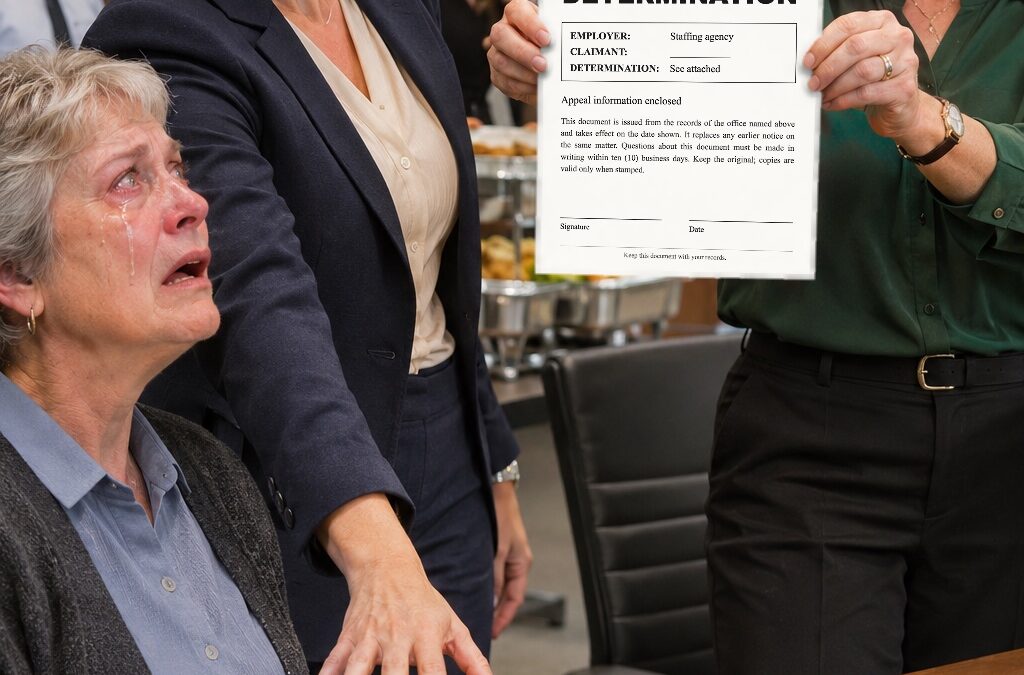
“The state found that Irene was an employee,” Audrey read.
Vanessa kept her eyes on Audrey’s finger.
“The unpaid wages are $27,600. The determination requires payment.”
Audrey turned the page toward me before continuing.
“The review deadline has passed. No timely request was filed.”
Scott set his fork across his plate.
I moved my sandwich away from the document.
For months, Vanessa had called those hours family help.
Now the finding lay beside my ordinary lunch.
“That cannot be final,” Vanessa said. “My attorney never told me.”
Audrey lowered the page without handing it over.
“It was served through the agency’s authorized attorney.”
“I would have seen something requiring payment.”
“Your attorney received it,” Audrey said. “That is documented.”
Vanessa pulled her phone from her jacket pocket.
Nobody offered to collect the plates around her.
I could see the conference room doorway behind Scott. Beyond it stood my desk, with my cardigan hanging over the chair. I had expected to return there after lunch.
Vanessa tapped her screen, then stopped scrolling.
“There’s a folder for legal correspondence,” she said.
She held the phone close enough to hide it.
Audrey waited with her hands resting on the envelope.
I folded the loose paper around my sandwich.
Vanessa opened a message and moved her thumb slowly.
Then she opened the attachment beneath it.
Her face changed before she put the phone down.
“What does the message say?” I asked.
“It says a determination was received in August 2025.”
She picked up the phone again.
“And?”
“It explains the finding.”
“About my employment?”
“Yes, Mom. About your employment.”
Audrey kept her voice at the same ordinary level.
“Does it also give the review deadline?”
Vanessa read farther down the screen.
“It asks me to authorize a challenge.”
She stopped there, looking toward the open doorway.
Scott shifted his chair away from the table.
“The attorney called,” Vanessa said. “I remember the voicemail.”
“Did you return it?” Audrey asked.
“I thought it concerned the same notices.”
“That isn’t what I asked.”
“No. I didn’t call back.”
I pulled my napkin into my lap.
Vanessa looked at me instead of Audrey.
“I thought they were repeating our position.”
The words sat there while she reopened the message.
Her attorney had explained the adverse findings and deadline.
The message requested instructions before seeking administrative review.
Vanessa read that portion aloud without looking up.
Then she found the engagement terms in the correspondence.
Her authorization was required before counsel pursued that review.
She had not given it.
“The messages were going straight into this folder,” she said.
“You arranged that?” I asked.
“To keep them out of the regular work messages.”
“Did you read them there?”
“I thought I already knew what they said.”
Audrey slid the service information beside the findings.
“This wasn’t decided without notice to the agency.”
Vanessa laid her phone facedown near her plate.
She did not say the attorney had hidden it again.
Instead, she reached for a different part of the paperwork.
“The amount still depends on what she submitted.”
Audrey moved the remaining pages out of her reach.
“You can look at Irene’s copy with her permission.”
“You’re retained by my business.”
“For payroll services,” Audrey said. “Not to decide wage claims.”
I nodded toward the papers.
“She can see the records about my wages.”
Audrey separated an email from the payroll materials.
I recognized the subject line before she flattened it.
It was Vanessa’s message from October 2024.
I had saved my copy with my hour log.
Audrey had obtained the same message from agency files.
She explained that before reading anything from it.
“The investigator requested existing payroll records. I supplied them.”
Vanessa looked down at the email.
Her approval of my $30 hourly rate appeared there.
So did her promise about payment after client collections.
Audrey read the relevant lines without adding anything.
A serving spoon slipped against a tray nearby.
Vanessa looked toward the sound, then back at me.
“That was written when cash flow looked different.”
“It approved my wages,” I said.
“It was supposed to be temporary.”
“The delay was temporary. The work was paid.”
Audrey placed my recorded schedules beside the email.
“The findings address the duties, schedules, supervision, and compensation.”
She pointed to the paragraph, not to herself.
“The state made that decision. I supplied requested records.”
Vanessa studied the email without lifting it.
She had written it before there was any complaint.
There was no family argument in that message.
There was a rate, assigned work, and postponed payment.
I remembered checking client schedules at my kitchen table. My husband’s old chair stood across from me, empty. I had kept answering Vanessa because she said payment was coming.
I pressed the crease out of my napkin.
“Does the amount include the money you gave me?”
“No,” I said.
“You’ve brought that up before.”
“It is not in this wage claim.”
Audrey pointed to the covered employment period.
“October 2024 through April 2025. The total is 920 hours.”
“There wasn’t overtime,” I added. “I claimed the agreed rate.”
My $48,000 gift belonged to a different decision.
I had given it in January 2024.
It had not bought me part of the agency.
It also had not bought Vanessa my later labor.
She owned the business outright, including its payroll obligations.
Vanessa pushed her phone farther from the papers.
“We’ve been paying your current wages.”
“Yes,” I said. “These earlier wages remained unpaid.”
“So this doesn’t mean every paycheck was withheld.”
“I have never said that it did.”
She looked around the table, checking who was listening.
The employees were still sitting with their lunch plates.
Scott’s eyes stayed on the printed email.
Audrey began gathering the loose supporting pages together.
I put my palm on the edge of the envelope.
“Leave the findings out for now, please.”
She did.
Vanessa pulled her chair close enough to lower her voice.
“Could we handle payment privately, as a family arrangement?”
“What arrangement?”
“Something between us, without everyone involved.”
“You already have a determination requiring payment.”
“I’m talking about how we settle it.”
Audrey waited while I read the findings again.
I had read them at home until the corners curled.
Seeing them here felt different from seeing them alone.
Vanessa could no longer call them my private opinion.
She tried a quieter voice.
“Irene, the agency still has client obligations.”
“I know what the agency does.”
“A formal dispute can make everything harder.”
“I filed because the wages weren’t paid.”
“I’m asking whether you’ll work with me.”
I put the email back beneath the findings.
There was grease on the sandwich wrapper near my wrist.
I wiped my fingers before touching the paper again.
Vanessa watched as I straightened the stack.
She had not offered payment before the document came out.
Now she wanted an answer without anything written down.
“I’m not agreeing to something at this table.”
“You don’t need to make this expensive.”
“I need it recorded correctly.”
Audrey slid the papers into the envelope.
My permission allowed her to carry them, not negotiate.
She made that distinction clear before Vanessa could ask.
Scott finally looked up at me.
He seemed ready to speak, but Vanessa spoke first.
“Tell me what you want me to do.”
I closed the stainless lunch tin over my sandwich.
Then I put the envelope beside my purse.
“Send a written proposal through counsel.”
Part 4: No More Unrecorded Work
Vanessa followed me out of the conference room.
She stopped beside the desk she had offered Scott.
His scheduling sheet was already lying across the keyboard.
“I need you to show him the remaining procedures.”
I took my cardigan from the chair.
“You fired me.”
“I know. I mean during the transition.”
“Is this a paid request?”
She glanced toward the conference room before answering.
“I thought you’d want him to manage.”
“He can ask his employer for training.”
Scott stood near the desk without picking anything up.
Vanessa opened a drawer and removed a pen.
She put it beside the blank sheet from lunch.
“We still need a statement explaining the earlier arrangement.”
“I will not sign a volunteer acknowledgment.”
“It would only clarify the family part.”
“The state already decided the employment part.”
Her mouth tightened, but she did not dispute the finding.
Instead, she pointed toward the folders beside my monitor.
“Then at least explain where everything goes.”
I placed my cardigan over my arm.
“Business folders stay here. My wage records leave with me.”
“I don’t want agency information walking out.”
“Neither do I,” I said. “We can separate it.”
Audrey came out carrying her own meeting materials.
She paused when Vanessa pointed toward my folder.
I opened it where they could both see.
Inside were my schedules, submitted hours, and wage correspondence.
I had not taken worker files or client lists.
Audrey watched while I removed my personal notebook.
Vanessa checked the remaining folders without speaking.
Scott reached toward the stack, then pulled his hand back.
“Can I call if I get stuck?” he asked.
“Ask Vanessa to arrange training.”
“You always understood those scheduling notes.”
“I was employed to understand them.”
He looked at Vanessa, who was examining the drawer.
I took my lunch tin and purse from the desk.
Nothing about the room had changed except my place in it.
Before leaving, I asked for a property list.
Vanessa said we could deal with that later.
“I want the return documented,” I said.
She wrote down the agency items I still held.
I checked the list against what was in my bag.
My desk key lay under a folded grocery receipt.
I put it on the list instead of handing it over.
“I’ll return everything together, with a receipt.”
At home, I set the lunch tin in the sink.
The sandwich had flattened against its wrapper.
I put it in the refrigerator without eating it.
Then I cleared the kitchen table for my papers.
There were no savings left to cover a long interruption.
The rent notice was clipped beside my household calendar.
I moved it away from the wage determination.
I did not want to confuse what I needed with what the records proved. The investigator needed facts, not a list of bills. I opened my notebook to a clean page.
I wrote September 19, 2025, at the top.
Then I recorded what happened at the appreciation lunch.
I included my request about the unpaid wages.
I included Vanessa’s words when she fired me.
I wrote down the offer of my desk to Scott.
I recorded his acceptance without adding what I thought.
The volunteer acknowledgment belonged in the account, too.
So did the request for unpaid transition training.
I paused over the part about my daughter.
Then I replaced “she embarrassed me” with her actual words.
My throat hurt when I read them back.
I got water and returned to the chair.
The schedules were already saved outside the agency system.
So were my submitted hours and the rate email.
I checked that the files opened and remained readable.
I kept copies of the findings and service information.
Then I copied my dismissal account into the same folder.
I was careful not to collect unrelated business material.
What mattered was preserving the work I had already documented.
I sent the wage investigator the dismissal account and supporting records.
I explained that my work had ended after lunch.
I also said I would provide no further services.
The investigator had decided the wage complaint, not my next steps.
For those, I contacted an employment attorney.
During our conversation, I spread the papers across the table.
I wanted to tell everything in the order I felt it.
The attorney asked me to follow the dates instead.
So I began with the employment agreement and unpaid hours.
Then came the complaint, determination, and public dismissal.
“Have you signed anything describing yourself as a volunteer?”
“No.”
“Have you agreed to further work?”
“No.”
I mentioned the request to train Scott.
The attorney asked me to preserve any written follow-up.
I checked my phone while we were still talking.
Vanessa had sent a message about covering the transition.
I saved it without answering the scheduling question.
My reply said I would not perform unpaid work.
Any proposal about the wage dispute could go through counsel.
I read the message before sending it.
There was no apology in it and no argument.
The attorney explained that different issues required different handling.
The existing determination concerned the unpaid wage period.
The firing account needed preservation and separate review.
I did not leave that conversation promised extra money.
I left knowing what records to keep and where to send them.
The attorney also asked about the startup funds.
“That was a gift,” I said.
“Then we should keep it separate from this demand.”
I wrote that beside my copy of the resolution notes.
I had no ownership documents because I owned nothing there.
The wage finding did not turn me into an owner.
It required the employer to pay for my work.
I gathered the agency property into a plain bag.
Beside it, I placed a return list.
Before leaving, I saved another copy of my evidence.
I did not depend on access to my old desk.
At the agency, Scott was sitting in my chair.
My cardigan was gone, but the chair faced the same way.
He stood when he saw the bag.
“I haven’t changed your folders.”
“They belong to the agency,” I said.
Vanessa came over and looked inside the bag.
I laid the desk key beside the property list.
She checked the items and initialed the receipt.
I waited until she handed my copy back.
Then I put it inside my personal folder.
“The training notes are still here,” she said.
“Yes.”
“He needs to know which schedules are current.”
“I am not working today.”
Scott lowered his eyes toward the desk.
Vanessa looked ready to argue, then checked the receipt again.
She had the property she was entitled to receive.
I had proof that I had returned it.
Outside, I sat in my car before starting it.
I placed the receipt flat on the passenger seat.
The office windows reflected the parked cars behind me.
I did not go back to explain the scheduling notes.
At home, I added the receipt to the saved records.
My phone stayed beside the kitchen table while I sorted.
I let work calls go unanswered unless they concerned payment.
When a message needed an answer, I kept it written.
The attorney reviewed what I had preserved and submitted.
There was enough to identify the unpaid employment clearly.
There was also a contemporaneous account of the dismissal.
Neither depended on Vanessa allowing access to her office.
When the next correspondence arrived, it came through counsel.
I opened it with my property receipt still nearby.
The agency’s attorney requested payment instructions and proposed record corrections.
Part 5: The Payment and the Record
In October 2025, I reviewed the proposed resolution at home.
I put the determination beside it for comparison.
The amount appeared where it was supposed to appear.
$27,600.
I read the payment paragraph, then read it again.
The resolution implemented the final wage determination.
It did not make the unpaid hours into volunteer service.
Still, I did not sign before speaking with my attorney.
“Does this pay the full amount?”
“Yes. We are verifying the payment handling and documentation.”
“And the records?”
“We need the final correction language in writing.”
I uncapped my pen and marked that paragraph.
Vanessa had offered an unwritten family arrangement at lunch.
This agreement identified what the agency would actually do.
I wanted the payment and records checked separately.
Receiving money would not fix an inaccurate personnel entry.
The draft described my work as recruiter training and scheduling assistance.
I compared that language with the duties in my schedules.
There was no need to make my job sound grander.
There was also no reason to call it something else.
My attorney went through the payment instructions with me.
I supplied them through the agreed secure process.
I did not send account information to a group message.
Then we reviewed what would document the wage payment.
The payment had to be handled as wages, with appropriate reporting.
The attorney checked the treatment of deductions and accompanying paperwork.
I asked questions until I understood what I would receive.
I wanted no unexplained difference disguised as a compromise.
The final documents confirmed the full $27,600 payment obligation.
They also specified the separate record corrections.
I signed only after my attorney completed that review.
My hand left a small ink mark beside the signature.
I blotted it with the corner of a napkin.
Then I scanned the signed pages and saved them.
The kitchen table had become crowded with labeled folders.
I moved the household bills back to their usual place.
The wage claim had covered unpaid employment, not my whole life.
I wanted to keep it that way.
When the payment arrived, I did not spend against it.
I checked the transaction through my own account.
Then I contacted the bank to confirm its status.
I waited until the funds had cleared.
Only then did I call my attorney.
“It’s available,” I said. “The payment has cleared.”
We checked the payment documentation against the resolution.
The full $27,600 had been paid and accounted for.
I laid the confirmation beside the signed agreement.
For a while, I kept looking between the pages.
There was no announcement from the agency.
There was no public apology attached to the payment.
I had not expected either in the agreement.
What I needed was the money and accurate records.
The attorney asked me to retain the confirmation.
I saved it with the determination and final resolution.
Then I opened the payroll documents that followed.
The corrected history identified the covered employment and wages.
I compared the work period with my own schedules.
October 2024 through April 2025 appeared correctly.
The hours and agreed rate matched the determination.
I checked each page rather than accepting the cover message.
It was the same habit I used with placements.
A correct promise still needed a correct record.
I found no volunteer label in the payroll history.
My attorney reviewed the reporting documents as well.
We kept the explanation of their treatment with the payment.
I did not throw out my original hour log.
The corrected records went behind it in the folder.
I had kept that log while waiting for client collections.
Now it supported wages that had finally been paid.
I rinsed my coffee cup and returned to the table.
There was still a personnel correction to check.
That document arrived separately from the payroll material.
I opened it while my attorney was on the phone.
It acknowledged my paid employment with the staffing agency.
My recruiter-training and scheduling work was not voluntary family assistance.
The correction did not pretend the public firing had vanished.
It corrected how the employment itself was described.
“Does the determination require this particular personnel entry?” I asked.
“No,” the attorney said. “That correction is separately agreed here.”
I underlined the provision in my copy of the resolution.
I wanted to remember exactly what had been settled.
The wage determination required payment of the unpaid wages.
The documented resolution also secured the personnel correction.
It did not reinstate me or restore my desk.
It did not award additional damages.
And it did not recover my startup gift.
I brought up the $48,000 before ending the call.
“Nothing here changes what that gift was?”
“No. It remains separate.”
I put the January 2024 papers in a different folder.
I had given Vanessa that money to launch her business.
She still owned the agency after paying what it owed.
There was no court officer taking over her office.
There was no sudden seizure I had arranged at lunch.
The agency paid through counsel under the documented resolution.
Its payroll history and personnel entry were corrected.
That was what the paperwork established.
I checked the final personnel page again before filing it.
My employment had a record beyond my daughter’s description.
I no longer needed to call the office about it.
Scott contacted me after the payment had cleared.
He asked whether he could come by my apartment.
I agreed, and moved the wage folders off the table.
When he arrived, he kept his jacket on.
“I should have backed you up at lunch.”
“Yes,” I said.
He looked toward the chair across from me.
I told him he could sit down.
“I thought if I refused the desk, she’d turn on me.”
“You accepted it after promising to speak up.”
“I know.”
He rubbed a loose thread near his cuff.
“I’m sorry, Aunt Irene.”
“Thank you for saying that.”
He asked whether things with Vanessa were settled.
“The wages were paid. The records were corrected.”
“That’s good.”
I nodded, but did not fill the quiet for him.
He finally asked what he had also come to discuss.
“If I apply somewhere else, would you recommend me?”
I set my cup back on its saucer.
“No, Scott.”
“I do the recruiting work.”
“I’m not giving a recommendation.”
He started explaining what he had learned since lunch.
I let him finish without arguing over his abilities.
Then I repeated that I would not provide the reference.
I remained civil when he left.
I did not send him away with training advice.
Afterward, I returned the wage folders to the table.
They could finally be put away instead of checked daily.
I kept the payment confirmation somewhere easy to reach.
The rest went into a drawer with the signed resolution.
My phone held a message about a part-time training interview.
It was for paid work elsewhere, not Vanessa’s agency.
I opened the position description and read the duties.
Recruiter training was listed plainly.
So were scheduling procedures and recording work time.
I wrote down questions about paid preparation and supervision.
Then I laid out a clean blouse for the interview.
Part 6: My Own Timesheet
In November 2025, I started the paid part-time training job.
Before accepting, I had asked how preparation time was recorded.
I had asked who approved my hours.
The answers came in writing with the employment terms.
I kept them in a folder beside my new schedule.
There was nothing personal about asking those questions.
The work needed preparation, and preparation took time.
At my kitchen table, I checked the starting instructions.
Then I packed my sandwich in the stainless lunch tin.
I left room beside it for an apple.
My old agency key no longer sat in my purse.
The receipt for returning it was filed at home.
I checked that I had my apartment keys instead.
Outside, the air made me pull my coat closed.
I drove to work without rehearsing an argument.
The training materials were waiting where I had been told.
I put my lunch away and sat down to review them.
There were scheduling examples, notes, and a blank timesheet.
I recorded the time I began the assigned preparation.
Then I read the procedures before changing anything.
This workplace had its own way of handling assignments.
I knew recruiting, but I still needed their instructions.
When I had a question, I asked who could answer.
I did not promise to fix everything before lunch.
I marked the unclear item and kept working.
My part-time schedule left room for ordinary errands.
I could read a rent notice without opening agency email.
I could finish a meal without checking a placement.
I still looked at my phone out of habit.
Then I put it facedown beside the training folder.
The work in front of me belonged on my timesheet.
When I got home, I took out the payment confirmation.
The recovered wages were still under my control.
I had not promised them back to Vanessa.
I had not offered to cover the agency’s obligations.
I sat at the table with my bank records.
Then I arranged a separate account for my rent reserve.
The reserve came from the wages I had recovered.
It was not a business fund or family loan.
Only I controlled the account.
I checked the account details before moving the money.
Then I saved the confirmation with my household records.
There was rent to plan for beyond the next notice.
I wanted the reserve separate from everyday spending.
I wrote its purpose on my own budget sheet.
The page lay flat beneath my coffee cup.
For months, I had moved bills around the table.
I would place rent above groceries, then move it back.
Now I could assign money without waiting for Vanessa’s collections.
I still checked the figures carefully.
Getting paid had not made me careless about expenses.
The part-time job would provide current income.
The reserve would remain for rent.
I put the household folder beside the employment folder.
They were separate, and both had usable records inside.
When Vanessa called, I was putting groceries away.
I shut the refrigerator before answering.
She asked how the new position was going.
“I’ve started,” I said. “The schedule suits me.”
“That’s good. I’m glad you found something.”
I waited while she moved something near her phone.
Then she asked about the agency.
“We could use help with the recruiters again.”
“I have a job.”
“I mean outside those hours. Just helping me catch up.”
“Are you asking for unpaid work?”
“It wouldn’t be a formal position.”
“No,” I said.
She began describing the scheduling problems.
I did not ask for the sheets or worker names.
“I won’t provide unpaid help.”
“You know how long it takes to explain everything.”
“Yes. Training takes work.”
She stopped describing the problem.
For a moment, I could hear only movement near her phone.
“I thought we could get back to normal,” she said.
“I can talk to you without working for you.”
I waited, giving her room to talk about something else.
She said she needed to get back to the office.
“All right,” I said. “Goodbye, Vanessa.”
After the call, I finished putting away the groceries.
I did not open my old scheduling notes.
Her agency had paid the debt and corrected the records.
Its remaining staffing problems were hers to manage.
At work, I sat beside a recruiter reviewing an assignment.
A worker had said she was available for the shift.
The recruiter was ready to confirm her immediately.
I pulled the scheduling sheet between us.
“Has she confirmed how she’ll get there?”
“She said she wants the hours.”
“Ask about transportation before you promise the start.”
The recruiter asked while I checked the location information.
Then she covered the receiver and looked at me.
“The bus won’t get there in time.”
“Then we need an assignment she can reach.”
We checked the available schedules instead of blaming the worker.
The recruiter explained the alternative and waited for an answer.
When the call ended, she corrected the sheet.
I asked her to show me what she had changed.
She pointed to the assignment and transportation note.
I had her check the reporting instructions as well.
Then I moved my chair back to my own workspace.
The training was ordinary work on an ordinary workday.
Nobody needed to call it devotion to a family.
The recruiter kept the corrected scheduling sheet nearby.
I noted what we had covered in the training record.
There were other procedures to practice before I left.
I followed the schedule rather than staying without asking.
When preparation carried into my work time, I recorded it.
When I needed approval, I requested it.
The person reviewing my hours checked the completed sheet.
I kept my copy with the rest of my employment papers.
Back at the apartment, I washed the lunch tin.
A corner of the sandwich wrapper had stuck inside.
I peeled it away and dried the steel with a towel.
Then I set it open on the counter.
The wage determination was no longer beside my meals.
It stayed filed with the documents that had followed it.
I could retrieve it if I needed it.
I did not have to read it before breakfast.
My new schedule hung where I could see it.
The rent reserve confirmation was in the household folder.
I checked the next workday before packing my lunch.
Then I closed the refrigerator and wiped the counter.
My phone remained quiet while I prepared for bed.
There were no agency folders waiting on the kitchen chair.
In the morning, I left time to eat at home.
I packed the tin without balancing papers around it.
At work, I finished a training review before lunch.
The corrected scheduling sheet lay in its proper folder.
I checked my recorded start against the work I had done.
Then I entered the training and preparation hours.
I set my stainless lunch tin beside my new timesheet.
Its lid stayed open while I finished recording my hours.
You Might Also Enjoy




