My Daughter-In-Law Dragged My Bag Outside After I Sold My Home — Then Her Father Interrupted
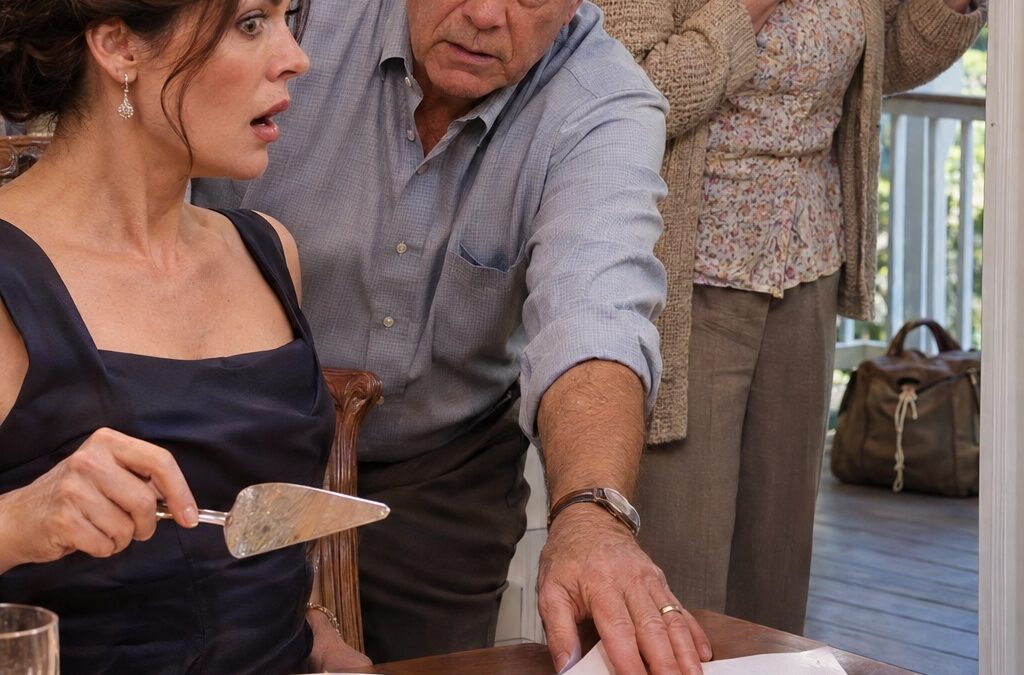
Part 3: What Had To Be Finished
“The specified accessible bedroom and bathroom must be completed,” Gordon read. “They must pass independent inspection, and Helen must accept the work in writing.”
He kept his finger beneath the paragraph.
“No further release can happen before those requirements are met.”
Tessa looked from the paper to my son.
Mark pulled his chair closer to the table.
Gordon continued, reading the provision about the unused balance.
The money still held by the independent escrow agent remained mine. If the agreement was canceled as provided, that balance came back to me after the final accounting.
I moved my cold dinner plate away from the document.
“Then nobody can just ask for it?” I said.
“Not without satisfying the agreement,” Gordon answered.
Tessa reached for her water glass, then left it untouched.
A guest beside the cake put down her fork.
I had understood the conditions when I signed them. Hearing Gordon read them in that room was different. My son had just demanded payment before discussing where I could live.
Now he was looking at the same paragraph.
“Let me see the whole thing,” he said.
Gordon slid it toward him without letting it touch the frosting.
The heading, ESCROW AGREEMENT, lay directly beneath the dining room light.
Mark read from the beginning.
I could see him moving his lips over some words.
Tessa leaned over his shoulder, bracing her hand against his chair.
“This isn’t what we signed,” she said.
“No,” Gordon answered. “You signed the property-owner authorization.”
He waited until she looked at him.
“That authorized the specified construction on your property.”
I set my bag upright against my ankle.
“The bedroom and bathroom,” I said.
“Yes. The accessible bedroom and bathroom in the plans.”
Tessa pointed at the signatures on Gordon’s copy.
“Then why weren’t we part of this?”
“Because this governs Helen’s funding,” he said. “Your authorization acknowledged that it was separately administered.”
Mark stopped turning the paper.
Neither of them had signed this agreement or seen it. They knew the money was held in escrow. They had assumed holding it meant waiting until they wanted it.
Gordon drew the separate authorization from behind his folded copy.
He laid the pages beside each other.
Tessa recognized her signature on the property document immediately.
She pressed her finger beside it.
“We gave permission to build an addition.”
“For the work described there,” Gordon said.
He pointed to the attached scope, not her signature.
I leaned forward enough to read the room descriptions.
There was the bathroom I had asked about before dinner.
There was the bedroom I had expected to occupy.
Neither description said den.
Neither description left the bathroom fixtures to somebody else’s preference.
I rested my glasses farther up my nose.
“Is this still the work you’re planning?” I asked Mark.
He stared at the pages rather than answering.
Tessa pulled her chair out and sat beside him.
“Can we stop acting as though an improvement disappears because somebody uses it differently?”
Gordon left the question alone for the moment.
He turned back to the release paragraph.
“The remaining balance has not been paid to Helen. It has not been paid to me. It is still with the agent.”
A guest across the table looked directly at Tessa.
“So it wasn’t taken?”
“No,” Gordon said. “It remains where it belongs.”
I picked a crumb from the edge of my napkin.
Tessa had said thief loudly enough to reach the porch.
Gordon’s answer reached the same people.
Nobody offered me cake or tried to change the subject.
Mark straightened the agreement against the table edge.
“Mom, did you know it was this restrictive?”
“I signed it.”
“You didn’t explain that part to us.”
“You knew what I was paying to have built.”
He rubbed his forehead with the heel of his hand.
“I thought we could work the details out.”
“I need a bathroom I can enter.”
“That was never the whole question.”
“It was the reason I sold my house.”
My bag leaned against my leg when I shifted.
I bent to tuck its strap away from the chair feet.
The guest beside me moved her chair to give me room.
I thanked her without looking up.
When I sat straight again, Gordon had turned the document toward Tessa.
“Read that section before you make another demand,” he said.
She read it silently.
Her eyes moved back to the beginning of the paragraph.
Then she pushed the page away.
“So she can reject everything after we’ve started?”
“Acceptance applies to the specified completed work,” Gordon said.
“And an independent inspection comes before that,” I added.
Tessa looked at me then.
For the first time since she put my bag outside, she spoke directly to me without raising her voice.
“Helen, we can’t have construction hanging over us indefinitely.”
“I don’t want that either.”
“Then release the money so it can get finished.”
Gordon put his finger back on the room descriptions.
“The specified rooms,” he said.
Tessa looked toward the unfinished addition.
The hallway light showed across its open doorway.
From where I sat, I could see a bare board.
Before dinner, I had thought the unfinished work was a delay.
I had brought my nightgown because Mark invited me to stay.
Now my bag was under the table, and the plans were between us.
“Suppose we cancel,” Mark said.
Gordon turned to the cancellation provision.
He explained it without promising me money from their house.
The parties would give the required written instructions.
The agent would settle the documented account.
Unused money would return to me.
The completed work already paid for would remain theirs.
I asked him to say that last part again.
“The paid work is a contribution, Helen. Not a loan.”
“I understand.”
“And it doesn’t give you ownership of their property.”
“I’m not asking for ownership.”
Tessa sat back.
“But we’re left with an unfinished addition.”
“Yes,” Gordon said.
Mark looked at me over the agreement.
He seemed to be waiting for me to offer something.
I folded my napkin and put it beside my plate.
“I have an unfinished place to live,” I told him.
The guest nearest the doorway shifted her purse into her lap.
Nobody moved toward the front door.
Tessa reached for the cake server again.
She held it flat against the empty plate this time.
“We’re talking about a family improvement,” she said. “Not some separate building she was buying.”
Gordon gathered the property authorization without folding it.
“The funding was for a specified purpose.”
“A den is still useful space.”
I looked at her.
She watched her father instead.
“And storage improves the house,” she continued. “We aren’t asking her to pay for something that disappears.”
Mark reached toward her wrist, then withdrew his hand.
I pulled my bag closer with my foot.
“What kind of storage?” I asked.
Tessa set down the server.
“You’re getting caught up in labels.”
“Tell me what you planned.”
She glanced at the guests before answering Gordon.
“You knew we wanted something more practical.”
“For whom?” he asked.
“For everyone who actually uses the house.”
My son looked down.
I put my palm flat on the agreement.
“Was my bedroom still in that plan?”
Tessa opened her mouth, then closed it.
Gordon reached into his pocket for his phone.
“I’m going to read exactly what she requested.”
Part 4: The Room They Removed
Gordon put on his glasses and opened the saved email.
He checked the sender before turning the screen toward me.
Tessa’s name was above the message.
The date was June 18, 2025.
I looked at Mark while Gordon found the beginning.
My son had stopped pretending to read the agreement.
“Dad, that was a proposal,” Tessa said.
“Then everybody should hear what you proposed.”
He read her request to remove the accessible bedroom and bathroom from the scope.
She wanted a den and wine-storage room instead.
The message asked him to revise the remaining work around those uses.
I held the edge of the table.
“Remove them?” I said.
Gordon lowered the phone enough to look at me.
“That was the request.”
“Not move the bathroom?”
“No.”
“Not change where the bedroom door went?”
“No, Helen.”
Tessa pushed her cake plate farther away.
“There were reasons.”
I looked at her, but she spoke to the guests.
“The house has to function after this project. We can’t design everything around a temporary situation.”
I was still holding the table edge.
“Where was I supposed to sleep?”
“We hadn’t finished discussing that.”
“With whom?”
Tessa looked at Mark.
He picked up his glass and set it down.
“Mom, we knew you weren’t happy in the furnished room.”
“That’s why I was waiting for my bedroom.”
“We were trying to think about the long term.”
“Was I in that discussion?”
He did not answer.
Gordon moved his thumb down the screen.
“I replied that I would not make an unauthorized change.”
He read his response.
Any change affecting my funded rooms required proper written consent.
He would not order altered materials or schedule altered work without it.
He had stopped further scheduling instead.
Tessa leaned toward him.
“You said we could discuss options.”
“We could. That was not approval.”
“You didn’t say the entire project had to end.”
“It didn’t have to end,” he said. “It had to follow the authorized plan.”
I looked through the open doorway toward the unfinished space.
The ordinary bathtub brochure had not been a careless choice.
Someone had been deciding what belonged there without asking me.
“Has any of that changed work been done?” I asked.
“No,” Gordon said.
“Have you spent money on their replacement rooms?”
“No. No altered work was authorized or performed.”
I eased my grip on the table.
My fingers left damp marks on the finish.
Gordon placed his phone beside the agreement.
The saved message remained open.
Tessa could see it without taking it from him.
“You could have called me before bringing this out,” she said.
“I brought the agreement to explain why work had stalled.”
“You brought paperwork to my birthday.”
“You accused Helen of stealing the money.”
Tessa looked toward the front hall.
The guests had heard both documents explained.
She could argue about the design now.
She could not make the missing money accusation stand.
Mark pushed his chair back enough to face me.
“I knew about the email,” he said.
I took my hand off the table.
“Before tonight?”
“Yes.”
“And you supported it?”
He nodded, then spoke.
“Yes. I thought the den would add more useful space.”
I looked at the pocket where he had put the bathtub brochure.
“Is that why you folded that paper before dinner?”
“We weren’t ready to get into all of this.”
“You showed me the studs.”
“I wanted you to see the progress.”
“You let me ask about my bathroom.”
His mouth tightened.
“I should have told you.”
Tessa leaned back with her arms folded.
“We hadn’t settled what would happen next.”
I pulled my bag out from beneath the table.
The strap caught under my chair leg.
Gordon moved the chair so I could free it.
“I won’t pay for those rooms,” I said.
Mark turned toward Tessa.
She lifted her chin toward the addition.
“The money already spent stays in our house. You understand that, don’t you?”
“Yes.”
“You can’t take the foundation back.”
“I haven’t asked to.”
“And starting something else won’t be cheap.”
“I’m not funding a den or wine storage.”
I checked the top of my bag for my medication.
The bottle was still beside my slippers.
I closed the opening with the cord.
Tessa watched me put the strap over my wrist.
“Are you really leaving over a discussion?”
“You put my bag on the porch.”
Gordon lifted his keys from beside his plate.
“I’ll take Helen back to her room.”
Mark stood when I did.
“You don’t have to go right now.”
“My room is still rented.”
“I told you to stay for breakfast.”
I looked toward the front door.
“You also told me to pay before discussing housing.”
He stepped aside.
The guest near the doorway moved her chair back.
I thanked her for making room.
She touched my sleeve but did not try to keep me.
Gordon folded his agreement carefully along its old creases.
He put the property authorization with it.
Tessa stood beside the cake as we entered the hall.
“What will cancellation cost?” she asked.
Gordon stopped at the coat stand.
“The agent needs to settle the account.”
“Are you charging us for stopping?”
“There’s no unpaid earned work from me.”
“What about the rest?”
“The written accounting will address the balance.”
I kept my hand on the coat stand while he answered.
I needed to manage the porch step, not an argument.
Mark offered to take my bag.
“I have it,” Gordon said.
My son let his arm fall.
Tessa remained inside the dining room.
She did not take back the accusation.
Outside, Gordon put my bag beside his seat.
He waited while I lowered myself into the car.
I adjusted my skirt away from the door.
Through the windshield, I could see Mark on the porch.
He had followed us out without Tessa.
He lifted his hand as Gordon started the car.
I fastened my seat belt and faced forward.
At my furnished room, Gordon carried the bag inside.
The lamp was where I had left it.
My cup stood upside down beside the sink.
I had expected to return after breakfast.
Instead, I took off my dinner shoes beside the bed.
Gordon put the documents on the small table.
“Do you want me to stay while you read?”
“Not tonight.”
“I can leave copies.”
“Please do.”
He laid the pages where I could reach them.
I smoothed the folded corner of the agreement.
The room was quiet enough to hear the refrigerator running.
Gordon checked that my bag was within reach.
“I’m sorry this happened at her dinner,” he said.
“I’m sorry she wanted my room removed.”
He nodded without defending her.
After he left, I took my medication from the bag.
I set it beside my water and sat on the bed.
My phone lit up before I opened the bottle.
Mark had sent a message.
“Before you cancel anything, will you speak to me privately?”
Part 5: Before I Signed Anything
I left Mark’s message unanswered while I opened the agreement.
The furnished room’s table barely held the unfolded pages.
I moved my cup onto the counter.
Then I found the independent escrow agent’s contact information.
My name appeared where the agreement identified the fund owner.
Gordon’s name appeared with the construction obligations.
I reread the cancellation language without skipping the longer sentences.
The paper did not promise my whole house-sale money back.
It described how unused funds could be returned.
I put a clean sheet beside it for questions.
I wrote down the completed-work payments first.
Then I wrote the remaining balance beneath them.
I wanted the account before I signed another document.
When I reached the agent, I kept the agreement open.
“I need copies of everything governing my funds.”
The agent verified my identity before discussing the account.
I asked for the executed agreement and payment ledger.
I also asked for the invoices supporting every completed draw.
“Are you disputing the work already paid?” the agent asked.
“Not unless the records show a problem.”
“What would you like to do about the project?”
“Prepare for written termination and a final accounting.”
The agent explained that my call alone canceled nothing.
The respective signatories needed to execute the appropriate documents.
The owners’ construction authorization also needed to be addressed.
“I want that handled correctly,” I said.
The agent asked whether I had accepted completed accessible rooms.
“No. They aren’t completed.”
Had there been an independent inspection satisfying the release provision?
“No.”
Had I given written acceptance?
“No.”
The agent confirmed that no further release had occurred.
I held the phone away while I took a breath.
Then I brought it back to my ear.
“Please send the records before any signature request.”
The documents arrived through the agent’s secure process.
I read them on my screen beside Gordon’s paper copy.
The signatures matched the agreement I remembered signing.
The ledger showed the full $92,000 deposited into escrow.
The authorized payments totaled $45,000.
The remaining $47,000 was still held.
I checked each invoice against its corresponding ledger entry.
Foundation work appeared with its supporting documentation.
Roofing followed, then the rough-framing work.
Those were things I had seen on the property.
They were not charges for a finished bedroom or bathroom.
I marked each payment on my question sheet.
There was no charge for a den.
There was no charge for wine storage.
I called Gordon with an invoice open.
“Did this payment cover work already finished?”
“Yes.”
“Not materials for Tessa’s replacement plan?”
“No. Nothing was ordered for that.”
I asked him about the foundation and roof separately.
He answered without rushing me.
I had signed food deliveries and checked cafeteria invoices for years.
A total could look right while a description was wrong.
I read the descriptions aloud until I understood them.
Gordon explained the work in ordinary words.
When he finished, I put a mark beside the invoice.
“I’m not asking you to return earned money,” I said.
“I understand.”
“I need to know what is left.”
“The agent can confirm the final account.”
I returned to the ledger after we hung up.
The paid work had become part of their house.
Nothing in the documents called those contributions loans.
Nothing gave me a share of the property.
I ran my finger beneath that provision.
Then I wrote a question about unpaid charges.
The agent answered it in writing.
There were no unpaid earned invoices or termination charges remaining.
The final accounting would therefore leave the full $47,000 unused.
Its return still required completed cancellation instructions.
I saved the message with the ledger.
I did not send Mark a photograph of my balance.
Instead, I answered his request to speak.
“You may call. I’m reviewing the cancellation documents.”
He called while I was putting the invoices in order.
I let the pages lie flat beneath my hand.
“Mom, I wanted to talk without everybody listening.”
“I’m here.”
He asked whether I had gotten back safely.
“Yes. Gordon brought my bag inside.”
“I should have done that.”
I waited.
He cleared his throat.
“The addition is going to be difficult to leave unfinished.”
“I know.”
“We have weather protection, but it isn’t useful space yet.”
“Gordon explained the completed work.”
“Could we talk about a different arrangement?”
I moved my pen away from the paper.
“What arrangement?”
“A family loan. Not another gift.”
I looked at the agent’s confirmation on my screen.
Mark began explaining how a loan could save the project.
He said it would keep the work from remaining unfinished.
He said they could discuss paying me back.
He did not say my accessible rooms would be restored.
“What would that loan pay for?” I asked.
“The project. We would agree on the details.”
“Which rooms?”
He paused.
“We still need to work that out.”
“I won’t lend you the money.”
“Even with something in writing?”
“I won’t fund this project further.”
His breath sounded close against the phone.
“I’m trying to find a solution.”
“I need housing and a reserve.”
“You’ll have the reserve when the agent returns it.”
“And I intend to keep it.”
I moved the invoices into the order shown on the ledger.
Mark stayed quiet while the paper scraped the tabletop.
“Dad would have wanted us to work together,” he said.
I put the last invoice down.
“Don’t use your father to ask me for money.”
“I didn’t mean it that way.”
“Then leave him out of this.”
He apologized for bringing my husband into the conversation.
I accepted that much without changing my answer.
I had been widowed long enough to manage my own bills.
I did not need Mark to explain my husband’s wishes.
“What am I supposed to tell Tessa?” he asked.
“That I declined.”
“She’ll ask whether there’s another amount.”
“The answer is no.”
He tried to explain the expense of finishing exposed interiors.
I looked toward my borrowed dresser and rented bed.
“All further financial discussion needs to be in writing.”
“Mom, do we need to be that formal?”
“Yes.”
“I’m still your son.”
“You can call as my son.”
He said he understood, though he sounded tired.
After the call, I made myself something to eat.
I washed the plate before returning to the paperwork.
The agent had sent draft termination documents for review.
I read the names, property description, and account instructions.
My sole bank account was designated for the return.
No payment was assigned to Mark or Tessa.
I checked that the document ended future funding obligations.
Then I asked the agent to confirm the required signers.
Helen and Gordon needed to terminate the funding arrangement.
Mark and Tessa needed to terminate their construction authorization.
The agent would handle the connected final accounting.
I put the drafts beneath my question sheet.
My overnight bag still rested beside the bed.
I loosened its cord to take out my slippers.
Then the agent’s meeting notice appeared on my screen.
June 23, 2025.
The message asked everyone to arrive ready to review and sign.
Part 6: The Cancellation Meeting
On June 23, 2025, I carried my papers into the meeting.
I had put them in a plain folder.
Gordon arrived with his completed-work records and agreement copy.
Mark held the door while I came inside.
Tessa was already seated at the conference table.
She had her own copy of the draft documents.
I chose a chair where I could stand easily.
Gordon sat near enough to pass me an invoice.
The agent placed the final accounting in front of us.
Before anyone picked up a pen, I opened my question sheet.
“I want to confirm the return instructions.”
“We’ll review those before signing,” the agent said.
Tessa tapped the draft with her fingernail.
“I want to confirm what we’re left responsible for.”
The agent nodded and began with the existing documents.
The funding agreement governed my money in escrow.
The property-owner authorization governed the specified work on their house.
They were related documents with different signatories.
The agent asked whether everybody had received the drafts.
We each confirmed that we had.
I kept my pen capped.
The agent read the account totals aloud.
All $92,000 had gone into escrow.
Authorized progress draws totaling $45,000 had paid for completed work.
The account still held $47,000.
Tessa looked at the accounting rather than at me.
“So she gets that whole balance.”
“After the cancellation is properly completed, yes.”
“What about what we’ve already put into the house?”
The agent turned to the description of paid work.
Those completed payments were nonrefundable contributions under the agreement.
They were not a debt Mark and Tessa owed me.
They were not a purchase of an ownership interest.
I nodded when the agent looked toward me.
“I understand that.”
Mark pulled the accounting closer.
“And the remaining money was never ours?”
“It remained Helen’s unreleased funding,” the agent explained.
Tessa set her pen down.
“We authorized the construction.”
“Yes. Your authorization did not transfer ownership of unused funds.”
The agent showed the acknowledgment in their separate document.
Mark read it without arguing.
Tessa ran her finger down the attached work description.
Her den and wine-storage room did not appear there.
The agent then reviewed why no further draw was available.
The accessible bedroom and bathroom had not been completed.
There was no qualifying independent inspection.
I had provided no written acceptance.
Tessa pushed her chair back slightly.
“If we finish it ourselves, does that change anything?”
“Not after this funding agreement is terminated,” the agent said.
I uncapped my pen, then waited.
I wanted that answer included in the written instructions.
The agent pointed to the provision ending future funding duties.
I read it before moving to the next page.
Gordon opened his folder when the account reached contractor charges.
He laid his paid invoices in the same order I had used.
“These are complete,” he said.
The agent compared them to the ledger.
“Any earned balance still due?”
“No.”
“Any termination charge?”
“No.”
“Any ordered items outside these paid amounts?”
“No unpaid obligations remain from my work.”
Tessa leaned forward.
“What about the work you didn’t get to finish?”
“I haven’t earned payment for work I didn’t perform.”
“You held space in your schedule.”
“There’s no termination charge due.”
His answer was directed to the agent.
He did not argue about his daughter’s intentions.
I looked at the total again.
There was no deduction waiting beneath another label.
The full $47,000 remained available for return.
The agent asked whether anyone disputed the final ledger.
I said I did not.
Mark checked a page before answering the same way.
Tessa asked to see the supporting invoices.
Gordon passed them across without comment.
She examined the descriptions and the paid markings.
Then she put them beside the accounting.
“I’m not disputing those,” she said.
The agent brought the cancellation instructions to the center.
Tessa kept her hand on the edge of her copy.
“There may be another way to finish this.”
Mark looked at her.
She looked at me.
“If you provided replacement funding directly, we wouldn’t need this account anymore.”
“I’m not providing replacement funding.”
“It could be a separate agreement.”
“No.”
“You could decide the amount you were comfortable with.”
“I have decided.”
The agent waited while Tessa pulled her hand back.
Mark did not repeat his loan request.
He aligned the corners of his documents instead.
I put my capped pen beside my folder again.
I wanted everybody to finish asking before I signed.
Tessa glanced at Gordon.
“You could reduce what finishing costs.”
“Any future project needs its own scope and funding.”
“Would you work on it?”
“That isn’t part of today’s cancellation.”
She turned back to the agent.
“So we’re responsible for whatever we do from here.”
“For your future renovation, yes.”
The agent did not tell them they had to finish.
The house and unfinished improvement remained theirs.
They could obtain their own advice and arrange their own funding.
None of those decisions required my remaining savings.
I asked whether signing affected my temporary housing.
The agent confirmed that I had no tenancy at their property.
These papers ended construction and funding arrangements.
They did not terminate a residence I occupied there.
“My furnished room remains rented,” I said.
Mark looked down at the table.
Tessa turned to the signature pages.
The agent identified where each of us needed to sign.
Gordon reviewed the contractor termination language before writing his name.
I read my final page from top to bottom.
The bank destination matched my sole account.
The unused-balance amount matched the ledger.
My funding obligation ended under the written cancellation.
I signed and passed the page back.
Mark signed the owners’ termination document.
Tessa read it again before adding her signature.
Nobody was asked to sign the other parties’ original agreement.
The agent checked the completed pages and required acknowledgments.
Then we each received copies.
I put mine in my folder without folding them.
Tessa remained seated.
“So that’s it.”
“The completed instructions will now be processed,” the agent said.
I asked when the money was scheduled to return.
The agent showed me the written confirmation.
July 1, 2025.
Directly to my sole account.
I checked the date against the copy in my folder.
“Will I receive confirmation when it is sent?”
“Yes.”
Mark asked whether any additional release from him was needed.
The agent checked the signed owner instructions.
“No. The required documents are complete.”
Gordon closed his folder.
I put my question sheet behind the final accounting.
Every question had an answer beside it now.
Outside the meeting room, Mark stood next to me.
“Do you want me to carry that?”
“It isn’t heavy.”
He looked toward the folder anyway.
“I wasn’t asking about money.”
“I know.”
Tessa walked past us without saying goodbye.
Gordon waited near the exit until I reached him.
Mark stayed where he was.
I went back to my furnished room with the signed copies.
I set them beside the rental paperwork on my table.
The agent’s return confirmation lay on top.
I had a date, but the money was still held.
I left the folder open to the transfer instructions.
The next thing I needed was confirmation from my bank.
Part 7: The Money Came Back
On July 1, 2025, I checked my sole account.
The full $47,000 had arrived from the escrow agent.
I read the transaction description before opening the confirmation.
The amount matched the signed final accounting exactly.
There was no unexplained deduction.
I set my cup down away from the papers.
Then I checked the balance again.
I had not recovered the full proceeds from my home.
The $45,000 already spent remained spent.
I had paid for authorized work on somebody else’s property.
The agreement had never called that money a loan.
I did not call Gordon demanding a refund.
I did not send Mark a bill for the foundation.
Instead, I saved the bank confirmation with the cancellation documents.
I wrote “received” beside the return instructions.
My pen left a small blot after the word.
I let it dry before closing the folder.
The agent’s confirmation arrived through the established process.
I checked it against my account, then acknowledged receipt.
There was nothing left for me to authorize.
No contractor was waiting for another draw from my funds.
I put the folder away from the table.
For the first time, I could spread out apartment listings there.
I made breakfast before I started looking.
It was ordinary food on the furnished room’s plate.
I ate sitting down instead of reading over the counter.
Then I took out my retirement-income records.
My ongoing expenses had been coming from that income.
They would need to continue coming from it.
The returned money was my reserve, not an excuse to overspend.
I wrote rent at the top of a clean sheet.
Under it went utilities, groceries, medication, and transportation.
I included the expenses that did not arrive every month.
I left room for the things I could forget.
A pleasant room would not help if I couldn’t afford it.
I checked each listing against what I could sustain.
Some showed steps leading to the entrance.
Some called a bathroom accessible without showing the doorway.
I set those aside until I could ask better questions.
I had stopped accepting that word without details.
When I called about an apartment, I described my arthritis.
“I need to see the route from outside.”
The person arranging the showing asked what I meant.
“Thresholds. Steps. Bathroom access. The actual apartment.”
I did not want a photograph of a common area.
I wanted to know whether I could get home carrying groceries.
I wrote the answers beside each listing.
Then I arranged to see places that sounded workable.
At the first showing, I stopped before entering.
I looked at the threshold rather than the decorated room.
The person showing it held the door open.
“Take your time.”
I moved through the entrance as I ordinarily would.
I did not lift my foot higher to prove I could.
Inside, I checked the route to the bathroom.
The doorway opened without crowding the fixtures.
I stood beside the bathing area and looked at the controls.
“May I see how this works?”
The controls turned without a hard grip.
I checked where I would stand to reach a towel.
Then I asked to see the kitchen.
The cupboards looked neat with their doors closed.
I opened the lower ones and checked the shelves.
I imagined setting down a saucepan with an aching wrist.
I wanted useful space, not a demonstration of being agreeable.
The person showing it waited while I made notes.
I thanked them and took the written rental information.
I did not commit just because the visit went politely.
Back in my furnished room, I compared the rent to my budget.
I checked which utilities were included and which were separate.
I read the lease information beside my income records.
The apartment had to work after the showing ended.
My phone rang while I was sorting the papers.
Mark’s name appeared on the screen.
I answered without opening my bank account.
“The agent said the transfer is complete,” he said.
“It is.”
“I wanted to make sure.”
“The full balance arrived.”
He paused.
I heard paper moving at his end.
“We’re looking at what finishing would require.”
“I hope you get clear estimates.”
“We’ll have to arrange the funding ourselves.”
“Yes.”
He did not ask me to change that.
He said the unfinished addition was still there.
They had to decide what they could afford to do.
I listened without offering a contribution.
There was a time I would have filled the pause.
I would have asked whether something smaller might help.
This time, I kept the apartment information in front of me.
“Are you finding anywhere?” Mark asked.
“I’m looking at accessible apartments.”
“Will you let me know when you choose?”
“When I have a lease.”
He said he hoped I found something comfortable.
I thanked him and ended the call.
Then I returned to the written rental terms.
At another visit, I paid attention to the bathroom first.
I stepped into the shower area without climbing over a tub.
The grab bars were where I could actually use them.
I checked the space beside the toilet.
Then I walked from the bathroom to the bedroom.
The route did not force me to turn sideways around furniture.
I opened the closet and tested the door.
My overnight bag would fit without being shoved under a bed.
The thought made me stop with my hand on the handle.
The person showing the apartment asked if something was wrong.
“No. I’m checking everything.”
I looked at the windows and the heating controls.
I tried the kitchen drawers.
I asked which features were part of this exact unit.
The answers went onto my paper beside the rent.
I stood in the dining space longer than anywhere else.
There was room for a table I could choose.
Not a tray balanced beside somebody else’s bed.
Not a place held open until another plan came along.
I took the application information back to my room.
The dining space stayed in my mind while I made supper.
I put my plate on the small furnished table.
Then I worked through the budget again.
The ongoing rent and ordinary living costs fit my retirement income.
The returned funds could remain my reserve.
I checked the application for obligations I had not discussed.
There was no shared renovation, no family promise attached.
I would be paying rent for a place I could occupy.
I gathered the requested income documentation.
I read the screening consent before completing it.
Then I submitted the application.
While I waited, I folded my clothes into the furnished dresser.
I put my slippers back beside the bed.
My bag stayed partly packed where I could reach it.
I had been living that way since May 2, 2025.
I did not pack anything else until the response came.
When the rental paperwork arrived, I opened the attached terms.
The apartment I had inspected was the one being offered.
The proposed move-in date was August 1, 2025.
I laid the lease beside my budget and began reading.
Part 8: A Place I Could Use
I read the apartment lease at the furnished room’s table.
The address matched the place I had inspected.
So did the unit description and included features.
I checked the rent against my budget again.
My retirement income covered it and my ordinary expenses.
I did not need to spend the reserve every month.
I read the sections about repairs and notice.
I checked the rules for guests.
There was nothing unusual hidden beneath the pleasant showing.
When I had questions, I asked before signing.
I wanted to know how to report a maintenance problem.
I wanted to know who handled the bathroom fixtures.
I wanted the move-in condition recorded in writing.
The answers came with the rental documents.
I kept them together rather than relying on a conversation.
Then I signed the lease.
Afterward, I sat without touching the paper for a while.
I could hear someone moving in the hallway outside.
The furnished room still smelled faintly of cleaned upholstery.
I looked at the dresser that did not belong to me.
Soon I would not have to remember where its drawer stuck.
I began sorting what would go to the apartment.
My clothing did not take long.
The documents needed more care than my sweaters.
I put the lease in front of the escrow cancellation folder.
Then I packed my cup and ordinary kitchen things.
I kept my medication accessible.
The overnight bag would hold what I needed during the move.
Its repaired pull still worked if I drew it slowly.
On August 1, 2025, I moved into the apartment.
I carried the bag through the entrance I had tested.
The threshold did not catch my foot.
I set my keys on the kitchen counter.
Then I checked the apartment against the condition record.
The cupboard doors opened as they had during the showing.
The shower controls worked without forcing them.
I noted what needed noting and kept my copy.
The rest of my belongings came inside.
I told anyone carrying things where I wanted them placed.
I did not say that anywhere would be fine.
The chair went where I could rise from it easily.
The dishes went into the cupboards I could reach.
I left the high shelves empty.
A bowl was not useful if getting it down hurt.
I tried the kitchen arrangement before putting everything away.
Cup, plate, saucepan, towel.
I reached for them as though I were making lunch.
When something felt awkward, I moved it.
Nobody had to approve where I kept my tea.
I put the lease folder in a drawer near the table space.
The bank confirmation went behind the cancellation documents.
Then I closed the drawer.
I did not need those papers on display to live there.
That evening, I prepared to bathe without calling anyone.
I laid a clean towel within reach.
I put my nightclothes where they would stay dry.
Then I checked the water with my wrist.
The motion brought back Tessa leaning over that basin.
In February 2025, I had held her hair clear of the water.
I had waited whenever her ankle hurt.
Now I turned the control in my own bathroom.
There was no high tub side to negotiate.
I did not have to ask someone to stand nearby.
I took my time washing my hair.
Afterward, I dried the floor where I had dripped.
Then I hung the towel on the reachable rail.
It was a small task, and I finished it myself.
I sat in my chair with damp hair around my ears.
My medication was still in the overnight bag.
I took out what I needed and left the bag open.
There would be time to put everything in its permanent place.
The next task I chose was the table.
I measured the dining space with the chair pulled back.
I wanted room to stand without squeezing sideways.
I chose a table that fit the apartment and my budget.
I checked the edge with my hand before deciding.
It would hold a plate, paperwork, or company.
I did not buy extra chairs just to make it look full.
When it was in place, I put my own cup on it.
I moved it toward the window, then back again.
From that position, I could reach the kitchen comfortably.
I sat down and ate lunch there.
No television played over the meal.
I had chosen the quiet instead of being left in it.
Afterward, I wiped the table and left it clear.
Mark called while I was putting away the dish towel.
He asked whether I was settled enough to talk.
“I have a place to sit now,” I said.
“I’m glad, Mom.”
He asked about the bathroom.
“It works for me.”
“And the kitchen?”
“I can reach what I use.”
He was quiet before asking the next question.
“Could I come see you?”
I sat at the table before answering.
“Are you asking to visit, or discuss the project?”
“To visit.”
“No financial discussion.”
“I understand.”
I waited, letting him say anything else he needed.
He did.
“I owe you an apology.”
I pressed the phone closer to my ear.
“I told you to release the money before we talked about where you would live.”
“Yes.”
“That was wrong. Your housing shouldn’t have come afterward.”
I looked toward the doorway where my bag stood.
“You watched her take my things outside.”
“I did.”
“You heard what she called me.”
“I heard it.”
“I asked you to get the bag.”
“And I told you to pay.”
He did not explain it away with birthday stress.
He did not tell me Tessa had felt embarrassed.
He said he should have brought my bag inside.
He said he should have listened before demanding anything.
I ran my thumb along the table edge.
“Thank you for saying exactly what happened.”
“I’m sorry, Mom.”
“I heard you.”
He asked whether I could forgive him.
“I’m willing to have you visit.”
“That’s enough for now.”
He asked if he should bring anything.
“Come alone.”
He agreed without trying to include Tessa.
We arranged for him to call before coming over.
I told him I would invite him when I was ready.
He said he would wait for that invitation.
After we hung up, I checked my kitchen cupboards again.
There was a clean cup for a visitor.
I put it beside mine, where I could reach both.
Then I took my slippers out of the overnight bag.
I wore them to the table and sat down.
The apartment had room for my son.
It did not require me to discuss lending him money.
I picked up my phone and sent the invitation.
Mark answered that he would come alone.
Then he added a question.
“May I bring supper, if you choose what we have?”
Part 9: Unpacking The Bag
I told Mark what I wanted for supper.
Nothing elaborate, and nothing that needed finishing in my kitchen.
He replied that he could manage that.
I put the phone beside my cup and checked the table.
The chair across from mine had room to pull out.
I placed napkins where we could both reach them.
Then I left the rest alone.
I did not spend the day cleaning things already clean.
My apartment was ready because I was living in it.
The bathroom towel was on its rail.
The dishes were in the cupboards I had chosen.
My papers were put away, not waiting for someone’s approval.
Before Mark arrived, I opened the drawer with my documents.
The signed lease lay above the funding cancellation.
I checked the folder, then closed the drawer again.
My recovered savings remained in my sole account.
There was no further renovation payment for me to authorize.
The canceled arrangement did not follow me into this apartment.
I could use the reserve for my own needs.
I could leave it untouched when income covered the month.
The unfinished addition remained at Mark and Tessa’s house.
They would have to fund any future renovation themselves.
I had no reason to monitor their decisions about it.
Gordon had provided the completed records when I requested them.
His invoices were settled.
There was no loose charge waiting for me to pay.
I put the drawer key where I could find it.
Then I returned to setting out the plates.
Mark called before leaving, as we had agreed.
I told him I was ready.
When he knocked, I went to the door myself.
He stood outside holding supper.
He was alone.
“Come in,” I said.
He waited while I moved clear of the doorway.
Then he stepped inside without crowding me.
He looked toward the kitchen and back at me.
“Where would you like this?”
“On the counter, please.”
He put the food exactly where I pointed.
I showed him where I kept the serving dishes.
He reached for a high cupboard out of habit.
“Lower one,” I said.
He opened it and found what we needed.
I watched him set the dishes on the counter.
There was room for me to stand beside him.
We did not have to squeeze past each other.
He asked whether I wanted help carrying anything.
“The warm dish,” I said. “I’ll take the plates.”
We sat at the table I had chosen.
Mark kept his phone in his pocket.
He looked around without getting up to inspect everything.
“You’ve made it comfortable.”
“I can use it.”
“That’s what I meant.”
I passed him a napkin.
He asked about the move and whether anything needed fixing.
I told him about putting my everyday dishes down low.
I told him the shower controls were easy to turn.
He listened without offering to improve the arrangement.
Then he looked toward the hallway.
“Would you show me after we eat?”
“Yes.”
We ate before the food cooled.
I did not hurry to fill every pause.
My son asked whether I was still cooking regularly.
“I’ve had plenty of practice.”
He smiled, then looked down at his plate.
“I remember.”
I asked how he was doing.
He answered about ordinary things.
Neither of us opened a discussion about renovation funding.
When he began a sentence with the house, he stopped.
“We don’t need to talk about that,” he said.
“No, we don’t.”
He passed me the serving dish instead.
After supper, I showed him the bathroom.
I stood beside the shower entrance while he looked.
“This is better for you,” he said.
“It works without someone helping me over a tub.”
He nodded.
I showed him the reachable controls and towel rail.
Then we went back toward the kitchen.
He noticed my overnight bag beside the closet.
“Still unpacking?”
“Finishing up.”
He looked at the cord tied through the zipper slider.
I could see him recognize it.
He did not reach for the bag.
At the table, he asked whether Tessa had contacted me.
“No.”
“She hasn’t apologized,” he said.
“I know.”
He pressed his lips together.
“I’m not going to make excuses for that.”
“Good.”
I did not ask him to carry a message back.
I did not ask what she had said about my apartment.
She had called me a thief in front of guests.
She had heard her father establish where the money was.
She had signed the cancellation after the account was explained.
Whether she chose to apologize was not paperwork I could complete.
I picked up our empty plates.
Mark stood and took the warm serving dish.
“Where does this go?”
“Beside the sink.”
He put it there and asked about washing up.
I let him help.
I dried while he washed.
When he handed me a cup, I placed it on the reachable shelf.
He watched me do it, then handed me the other.
No one needed to rearrange my kitchen afterward.
When everything was put away, he dried his hands.
“May I come again?”
“You may ask.”
“I will.”
“Call first, like today.”
He nodded.
“And come to visit,” I said.
“Not to ask for money.”
“Yes.”
“I understand.”
He thanked me for having him.
At the door, he paused before stepping outside.
“I’m sorry I didn’t bring your bag in.”
“You should have.”
“I know.”
I let him hug me before he left.
Then I closed my door and put away the remaining food.
The apartment was quiet again.
His chair stood slightly farther from the table than mine.
I pushed it in and wiped the place where he had eaten.
There was enough left for another meal.
I put it in the refrigerator where I could reach it.
Then I went to finish unpacking.
The overnight bag was lighter than it had been at dinner.
My slippers were already on my feet.
I carried it into the bedroom and set it on a chair.
The cord had loosened where I kept pulling at it.
I tightened the knot and tested the slider gently.
It opened without catching.
I lifted out my nightgown and shook it smooth.
Then I put it on a hanger in my own closet.
My medication came out next.
I checked the labels and put it in the dry drawer I had chosen.
The drawer opened easily and closed without sticking.
I checked the bag’s pockets for anything I had missed.
There was nothing left that I needed at bedtime.
I straightened the lining with my palm.
Then I folded the strap so it would not trail.
The closet had space without moving somebody else’s belongings.
My clothes hung where I could reach them.
I set the empty overnight bag on the shelf below, its repaired zipper pull facing out.
You Might Also Enjoy




