My Daughter Mocked My Seventieth Birthday, So I Checked A File That Changed Her Party
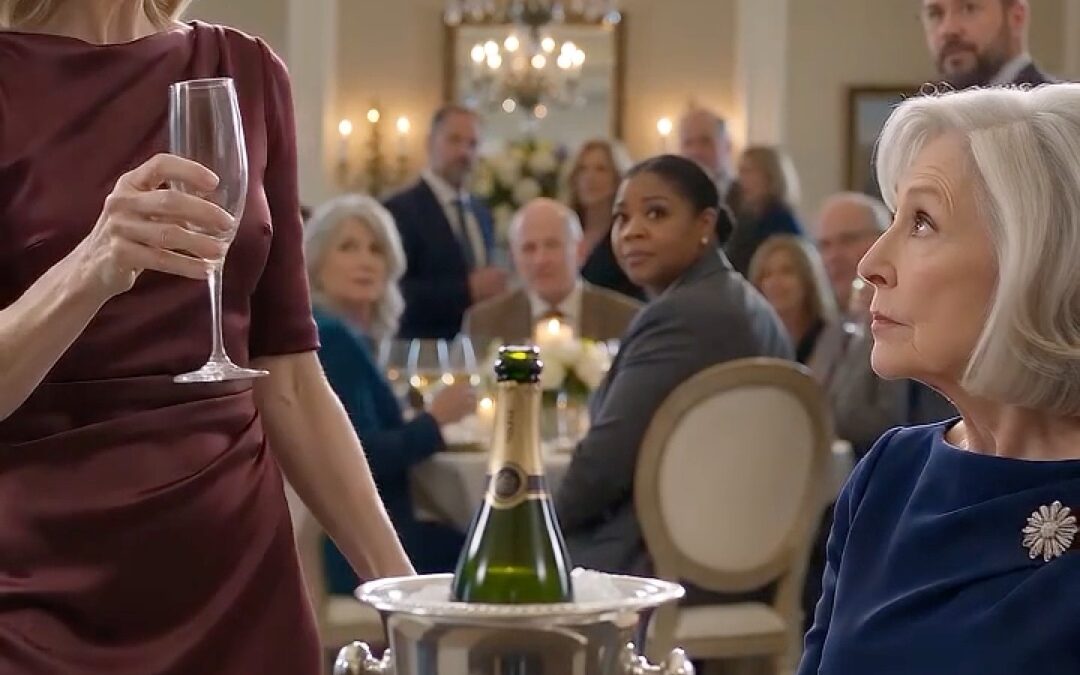
Complete story · 10 chapters · about 42 minutes · ending included
Chapter 1 · Chapter 2 · Chapter 3 · Chapter 4 · Chapter 5 · Chapter 6 · Chapter 7 · Chapter 8 · Chapter 9 · Chapter 10
Chapter 1: The Party Worth Remembering
“Mom, you’re seventy. Every birthday looks the same at this point.”
Hillary laughed through the phone Easton held above my cake.
Pool music thumped behind my daughter’s voice, loud enough to reach the kitchen doorway.
My fingers stayed curled around the cake knife.
That hurt.
I had expected a birthday wish.
Instead, my daughter had made getting older sound like something I should stop mentioning.
The kitchen clock showed six thirty.
Nine of us sat around my table, counting me and my grandson.
I had squeezed the chairs close enough that nobody could push back easily.
The ranunculus centerpiece sat beside the cake, in a low glass bowl.
I had made it myself before leaving Dunbar Floral.
Peach blooms, cream petals, a little greenery tucked beneath the rim.
Low enough for people to see one another.
I had spent longer choosing those flowers than choosing what to wear.
That embarrassed me now.
I had wanted the table to look worth coming home to.
Easton kept the speaker pointed toward me.
My grandson was twelve, old enough to hear what his mother meant.
Hillary was in Cancún with Levi.
I was in my kitchen, wearing earrings I had nearly decided were too dressy.
For years, I had made my wishes smaller around my daughter.
A dinner instead of an evening out.
Whatever food Hillary wanted.
Whatever hour worked.
I had thought being easy to please would make it easier to include me.
It mostly made me easier to put off.
“Mom?” Hillary said.
I looked at the knife instead of the phone.
Nobody at the table spoke.
Someone lowered a fork without letting it touch the plate.
I hated that careful little movement.
People were trying to spare me the sound of their own discomfort.
“Enjoy the water, honey,” I said.
I pressed the blade through the frosting and cut the cake.
Easton turned the phone face down beside his plate.
The first slice leaned against the knife.
I steadied it with the server and put it on Easton’s dish.
“Corner piece,” I said.
“That’s yours, Grandma.”
“There’s another corner.”
He looked at me instead of the cake.
I wanted him to eat it.
I wanted him to stop checking whether I was going to cry.
My birthday had become something my grandson thought he needed to manage.
That hurt in a different place.
A guest wanted only a sliver.
Across the table, someone said the flowers were beautiful.
“Ranunculus,” I said.
I could talk about flowers without my voice giving me away.
I explained how their stems bent if the water got low.
Then I stopped.
Nobody had asked for a lesson.
They were giving me something safe to say, and I was grateful.
Easton’s phone buzzed against the table.
His eyes went from the screen to my face.
“It’s Mom.”
“You can answer.”
He picked it up without switching on the speaker.
“Yeah,” he said.
A pause.
“We’re having cake.”
Another pause, longer this time.
Easton held the phone toward me.
I wiped frosting from my thumb before taking it.
“Hello, Hillary.”
“Why did you hang up?”
“We were cutting the cake.”
“Well, I was still talking.”
My stomach tightened.
Hillary had heard an interrupted conversation.
I had heard my daughter tell a roomful of people that celebrating me was pointless.
“I can hear you now,” I said.
I stepped into the doorway between the kitchen and the hall.
Behind me, plates moved and conversation started carefully.
“Listen, my fortieth next month is going to be a real party, Levi’s treat.”
Hillary sounded cheerful again.
A real party.
I looked back at the flowers I had carried home in a cardboard box.
The napkins matched the petals.
I had been pleased about that.
Now I felt foolish for remembering how pleased.
“That’s nice,” I said.
“We’re doing it properly.”
I pressed my thumb against the seam of my skirt.
Apparently, I had done mine improperly.
Too little noise.
Too few people.
A cake on a kitchen table instead of whatever Hillary had planned.
I was angry then, and ashamed of how quickly I wanted to defend my dinner.
I didn’t.
“Keep Easton till Tuesday, okay?” Hillary said.
“He has his things here.”
“Good. I knew you wouldn’t mind.”
I loved having Easton.
I minded being told what I minded.
Those were separate things, even if Hillary never left room between them.
“Put him back on,” Hillary said.
I handed over the phone.
Easton listened with his chin tucked down, then said goodbye.
He set it beside his plate without looking at the screen.
“Want some more frosting?” I said.
He pushed his dish closer to mine.
“You can have some of mine.”
“I’ve got plenty.”
“I know.”
He left it there anyway.
I had to look toward the sink until my eyes settled.
The meal found its way forward.
Coffee went into cups.
Cake disappeared from plates.
A guest helped collect forks while I wrapped the remaining slices.
I thanked people for coming, and I meant it.
They had come through my door.
They had sat at my table.
I didn’t want Hillary’s voice to become the only thing I remembered about them.
Still, I caught myself looking at the empty space near the centerpiece.
I had kept enough room there to move the bowl if my daughter surprised me.
I hadn’t told anyone that.
There was no reason to tell them now.
After the guests left, Easton carried dishes to the counter.
“You don’t have to do those,” I said.
“I can dry.”
I gave him a towel.
The kitchen felt easier with the chairs empty.
I could stop arranging my face.
Warm water covered my hands, and the frosting softened beneath the faucet.
Easton dried a plate carefully and set it on the counter.
Then he picked up another.
“Grandma?”
“Yes, honey?”
He held the towel against his chest.
“Mom’s party is at the Linden Room.”
“Isn’t that where your flower show is?”
You may also like
On Thanksgiving, my daughter told 31 relatives I was too confused to handle money and had filed for guardianship. In June she’d had me co-sign her $38,000 car loan.
My Son-in-Law Trashed My Retirement Lunch, So I Went For Ice And Found His Secret
At my 68th birthday in the church hall, my son-in-law informed 40 guests I had skipped paying the caterer. My grandson’s phone video showed him canceling my $1,200 order.
The Linden Room.
My shop’s partner hall.
Picking up where the Facebook post left off
Chapter 2: The Flowers I Wasn’t Asked For
The kitchen had gone still around the running faucet.
“Yes,” I said. “That’s where we hold the flower show.”
Easton rubbed the towel along the edge of his plate.
“Mom said it’s fancy.”
“It is.”
I pulled the stopper from the sink.
He had given me an ordinary piece of information.
I tried to treat it that way.
But I knew that hall.
I had delivered flowers there, checked table heights, moved arrangements so guests could see.
My daughter had chosen a place full of my work without mentioning it.
I felt left out before I even knew what I had been left out of.
“Where does this go?” Easton said.
He held up the cake server.
“Drawer beside you, honey.”
I put the leftover cake in the refrigerator.
By Sunday morning, Easton was sitting at my kitchen table with his phone beside his cereal.
The centerpiece was still there.
A peach bloom had opened wider overnight.
“Grandma, can I show you something?”
He pushed the bowl aside.
“Yes.”
Easton turned the screen toward me.
Hillary had posted a picture from my birthday.
A margarita stood beside a swimming pool, with bright water behind the glass.
Underneath, my daughter had written:
Skipped the boring birthday. Cancún > cake.
I set my coffee down carefully.
Hillary hadn’t merely forgotten how that call sounded.
My daughter had put it in writing for people to enjoy.
My face grew hot.
I wanted to close the phone and spare myself the rest.
Instead, I looked at Easton.
“Did you just see this?”
He nodded.
“I wasn’t looking for it.”
“You didn’t do anything wrong.”
He ran his spoon through the cereal without lifting it.
“I didn’t think it was boring.”
I waited until I trusted my voice to answer.
A child shouldn’t have had to defend my birthday to me.
“I liked having you here,” I said.
“I liked the cake.”
“There’s some left.”
That earned a small smile.
He put the phone away, and I asked whether he wanted toast.
I didn’t ask about the comments.
I didn’t need strangers added to what my daughter had already said.
While Easton ate, I changed the water in the flower bowl.
The stems were firm.
The arrangement had another few days in it.
I had nearly thrown it out before breakfast.
That bothered me.
Hillary had laughed at a birthday, and I had started treating my own flowers like evidence of bad judgment.
I set the bowl back where it had been.
On October 13, Easton’s backpack leaned against the counter at Dunbar Floral.
He sat on a stool behind it, working on homework while I trimmed stems.
Hillary came through the door wearing sunglasses on top of her head.
“There’s my boy.”
Easton got up, and Hillary hugged him.
I was glad to see that.
Being hurt by my daughter hadn’t stopped me from wanting Easton loved.
“His things are ready,” I said.
“Great. I need to grab something, too.”
Hillary walked toward the shelves where I kept the bud vases.
“What are you looking for?”
“Just these.”
My daughter lifted a clear glass vase and checked the opening.
Then Hillary began taking more from the shelf.
“For a friend’s thing.”
I laid my clippers on the workbench.
“How many?”
“Forty should do it.”
I brought over empty cartons before the glass started crowding the counter.
Hillary kept taking vases down while I fitted cardboard dividers into place.
Easton zipped his backpack.
A customer near the front window looked over, then returned to the display.
“Is this for your party?” I said.
Hillary slid a vase into an empty space.
“It’s my friends, Mom. You’d be bored.”
My hands stopped against the carton.
I hadn’t asked for an invitation.
I had asked where my shop’s vases were going.
Still, my daughter had found a way to tell me I didn’t belong.
With a customer close enough to hear.
“I was asking about the glassware,” I said.
“I’ll bring it back.”
Hillary sounded impatient, as if I had delayed something already settled.
I counted the vases while my daughter checked a message.
Forty.
No chips along the rims.
I knew their condition because I was the person who washed and checked them.
“Who is doing the flowers?” I said.
“The venue has a team. You do funerals and proms.”
I felt the insult in my stomach before I could answer.
My daughter knew what left this shop.
Hillary had watched wedding orders go out through that door.
Now my work had been reduced to the occasions my daughter considered beneath this party.
“You’ll need the dividers when you return them,” I said.
Hillary glanced up.
“Okay, Mom.”
I pushed the flaps down without taping them.
I wanted to list the arrangements I had made for that ballroom.
I wanted to ask why my flowers were good enough for customers there.
But Easton was standing beside his backpack.
I wasn’t going to make him wait through an argument about my worth.
Hillary lifted a carton.
“Can you get the door, Easton?”
He slipped his arms through the straps and came around the counter.
“Bye, Grandma.”
“Bye, honey.”
He hugged me before following his mother.
I watched the remaining cartons go through the doorway.
Why would a florist’s daughter hide her party flowers from her mother?
The question stayed with me after the car left.
I cleared the dividers from the counter and opened the shop ledger.
Usually, I would have let a family request pass without an entry.
Then I would have washed the returned glass and put it away myself.
This time, I picked up my pen.
40 bud vases — Hillary.
You may also like
My husband left his son the $1.2M lake house and me his old feed store. At the funeral lunch, my stepson laughed, not knowing the lake road crosses my lot.
My late husband’s brother charged his wife’s 17 relatives $2,400 to spend Thanksgiving at the hunting cabin I inherited. I found the rental listing with my porch on it.
On Christmas Eve, my dad thanked my brother for paying his $31,400 knee surgery and gave him Grandpa’s watch in front of 22 relatives. His card was in my purse.
An unpaid shop charge.
In my daughter’s name.
Chapter 3: The Charge I Couldn’t Explain
The shop was quiet beyond the counter.
“Forty,” I said, checking the empty shelf against my ledger.
Then I closed the book.
The vases had a place in my records now.
I expected to cross that entry off when Hillary brought them back.
I didn’t expect the next shop record to make my hands shake.
On November 1, I opened the business card statement at my kitchen table.
I kept a pencil beside me and the shop receipts in a shallow tray.
I checked the statements myself.
Hillary handled online orders part-time, but I still checked what the shop paid.
Flowers came in.
Supplies went out.
A charge needed to belong to something.
I worked down the page until I reached a familiar name.
The Linden Room — $6,895.
I moved the receipt tray closer.
There was nothing in it for that amount.
The charge had posted on the last day of the month.
I looked at the centerpiece bowl on my windowsill, empty now and waiting to go back to the shop.
Then I looked at the statement.
Nearly seven thousand dollars.
I couldn’t account for it.
I felt afraid before I felt angry.
A small shop couldn’t shrug at a number like that.
I checked the merchant name against the receipts beneath my hand.
There was no matching invoice.
No delivery sheet.
Nothing saying what I had bought.
“The Linden Room,” I said.
Easton had named that hall while drying my birthday dishes.
Hillary’s party was there.
That didn’t make this charge hers.
I needed to know what the money had paid for.
I carried the statement into the small room where I kept my business files.
The folder marked for August was behind the newer paperwork.
I pulled it free and brought it back to the table.
A pencil tick sat beside another entry.
The Linden Room — $2,955.
My own mark.
My own handwriting beside it.
Open-house deposit.
I pressed my palm flat against the folder.
I remembered checking that charge.
The shop’s spring open house had been billed early before.
The previous year’s records had made it seem ordinary.
I had seen the name, matched it to an expense I expected, and ticked it.
Now I wished I had asked for the invoice.
That wish didn’t tell me anything about the new charge.
I laid the statements side by side.
The smaller payment hadn’t worried me when I saw it.
The larger one had no explanation at all.
I added the amounts on the back of an envelope.
$9,850.
I stared at the total until the pencil point dented the paper beneath it.
That was shop money.
I had earned it standing behind a counter, trimming stems and answering calls.
I wasn’t willing to guess where it had gone.
On Monday, I skipped the shop’s events inbox because only Hillary ever used it.
At the shop, I put the statements beside the telephone.
I waited until I had unlocked the front door and switched on the display lights.
Then I called The Linden Room.
“Dunbar Floral,” I said. “Winifred Dunbar. I need to ask about charges on our partner account.”
The woman at the front desk asked what I needed.
I gave the amounts.
“I can’t read partner account details over the phone,” the receptionist said.
“I’m the owner.”
“I understand, Mrs. Dunbar. Monique handles those records.”
I pulled the larger statement toward me.
“May I speak to Monique?”
“Monique Garland is in Columbus.”
“When will Monique be back?”
“In three days.”
I counted ahead on the desk calendar.
The delay made my stomach tighten.
The money had already left the account.
I was still being told when I could learn what it had purchased.
“Can someone else give me an invoice?”
“Monique needs to review the file with you. Please bring identification.”
I wrote Monique’s name on the envelope.
“Please leave a note that I called,” I said.
“I will.”
I thanked the receptionist and put down the receiver.
No one had been rude.
That almost made the helpless feeling worse.
I had asked a simple question about my own shop.
I still had no answer.
The computer sat at the other end of the counter.
I moved the statements beside the keyboard and opened the venue’s partner portal.
I hadn’t needed to use it lately.
Hillary had handled the shop’s event bookings until that work stopped being part of her job.
I entered the shop login and the password I had saved.
The screen rejected it.
I checked the letters and tried carefully.
The same message appeared.
Incorrect password.
I sat back.
Maybe I had an old version written down.
I checked my password record against what I had entered.
They matched.
An account notice showed the password had been changed.
August 19.
The day before the smaller charge.
My fingers went cold against the mouse.
I hadn’t changed it.
I knew that much.
I didn’t know who had.
Who had changed the shop’s password three months ago?
I wanted to call Hillary and ask immediately.
Then I looked at the statements.
If I asked without an invoice, I would have only amounts and a rejected password.
I could already hear how quickly the conversation might become about what I didn’t understand.
I wanted something I could put on the counter.
A record with the purchase on it.
I closed the portal and gathered the papers.
The pencil tick beside the deposit bothered me most.
I had trusted my explanation enough to leave it there.
Now I drew a small circle around it.
Unanswered.
That was what it belonged under.
I took a pen and wrote across the statement:
Thursday, 10 a.m., bring ID.
You may also like
At Mom’s 75th birthday dinner, my brother told 22 relatives I let scammers take her $40,000. Then Mom called the number that texted her, and his jacket started ringing.
At my 71st birthday lunch, my son-in-law told 18 relatives I’d signed a power of attorney online to sell my $640,000 lake house. That Tuesday I was in surgery.
At my granddaughter’s wedding, my daughter-in-law told 120 guests the $8,000 dress came from a Philadelphia boutique. I’d sewn every stitch of it myself.
An appointment to open the account file.
With me across the desk.
Chapter 4: The Email Hillary Signed
The counter felt crowded with papers.
“Bring ID,” I said to myself.
I checked that my license was in my purse, then capped the pen.
I had decided to go.
Waiting for the appointment was harder than making it.
Tuesday after school, Easton sat behind the counter doing homework while I changed water in the display buckets.
I had the Linden Room statements beside the computer.
My grandson looked at them, then at the screen.
“Grandma?”
“Yes, honey?”
“Did you check the events email?”
I stopped with the pitcher in my hand.
“No.”
Easton pointed toward the computer.
“Mom used that one when she did the event stuff.”
I set the pitcher down.
Only Hillary ever used that inbox.
I had skipped it because I hadn’t thought anything belonging to me would be there.
“Do you remember where it is?” I said.
Easton nodded.
He came around the counter and pointed to the folder beneath the general shop email.
“That one.”
I clicked it.
Easton stepped back toward his homework.
I opened the archived folder and searched for The Linden Room.
An August 20 message appeared.
Booking Confirmation: Event #4471.
I leaned closer to the screen.
A booking number.
Something specific enough to ask Monique about.
I opened the message.
The email confirmed an event under the shop’s name.
Then I reached the signature.
Hillary, Dunbar Floral events
I took my hand off the mouse.
My daughter had used the business name.
The same daughter who had dismissed what I did behind this counter.
My stomach hurt.
I had been careful not to accuse Hillary when the statement arrived.
Now my daughter’s own words connected the shop to a booking.
I still didn’t know exactly what that connection meant.
But I hadn’t imagined it.
Easton looked up from his homework.
“Is that Mom’s?”
“It has her name on it.”
His face changed.
I hated that.
My grandson had shown me where to look.
He hadn’t asked to become part of what I found.
“Go ahead with your homework, honey,” I said.
“Okay.”
He lowered his eyes to the page.
I printed the email.
The machine pulled the sheet through slowly, leaving me staring at the empty tray.
I wanted the paper out.
Then I wanted it back inside, unread.
I wasn’t ready to have my daughter involved.
The sheet slid into place.
I carried it to the counter and laid it beside the statement.
The booking number went beneath my finger.
The signature sat farther down.
Hillary could have signed only her name.
My daughter had added mine through the business.
I felt angry about that.
I felt worse about wondering how quickly I would have excused it without the charges in front of me.
I turned toward the flower buckets.
They still needed water.
A shop didn’t stop needing care because its owner was upset.
I filled a pitcher, trimmed the stems that needed trimming, and wiped the workbench.
But I kept looking toward the papers.
Easton finished a page of homework and closed his notebook.
“You okay, Grandma?”
“I will be.”
I didn’t tell him more.
There was enough on his face already.
The door opened while I was drying my hands.
Francine Hoyt came in carrying her handbag against her coat.
“My tulips ready, Winnie?”
“Nearly.”
Francine bought them weekly.
Usually, I knew which bunch I wanted to offer before the door opened.
This time, I had forgotten the wrapping paper.
I pulled a sheet from beneath the bench.
“Anything wrong with those?” Francine said.
I looked down at the flowers.
“No. It’s me.”
Francine waited.
I knew Francine as a customer.
I also knew what kind of attorney stood across my counter.
Small businesses.
Contracts.
The paperwork people wished they had asked about sooner.
“Could you look at something?” I said.
“Certainly.”
I handed Francine the statement and the printed email.
“The hall charged the shop,” I said. “I don’t know what for.”
Francine set her handbag down and moved the tulips away from the papers.
I appreciated that small care.
Nothing wet touching the print.
Nothing rushed.
Francine examined the charge, then the email.
“Did you authorize this event?”
“No.”
“Have you spoken to the venue?”
“The front desk. Monique is away. I’m going in when Monique returns.”
“Good.”
“I haven’t called Hillary.”
Francine looked up.
“Don’t call the card company. Don’t call Hillary. Get the record in writing first.”
I gripped the edge of the counter.
“I wanted to ask my daughter what this is.”
“I understand,” Francine said. “First, find out exactly what the venue has.”
“The email has Hillary’s name.”
“Yes. It doesn’t answer what was charged, or under what terms.”
I nodded.
I didn’t like how much was still missing.
I liked even less how badly I wanted someone to tell me there was an innocent explanation.
Francine pointed to the booking number.
“Ask for the account record tied to this.”
“The whole file?”
“Ask for the booking, the payment record, and anything showing who could act for the shop.”
I reached for a clean sheet.
“Will you write that down?”
“Yes.”
Francine made a short list.
I watched the pen move.
Those were things I could ask for without apologizing.
A booking.
A payment record.
An explanation on paper.
“What if Hillary booked it in the shop’s name?” I said. “Can I stop it?”
“Let me see the record before I tell you what your choices are.”
I was frightened by that answer.
It meant there might be limits.
It also meant Francine wouldn’t give me comfort that the paperwork couldn’t support.
“Bring me what Monique gives you,” Francine said.
“I will.”
Francine handed back the statement and email.
I put the list on top.
Then I wrapped the tulips properly, folding the paper around the stems.
“Sorry those took so long,” I said.
“They’re fine, Winnie.”
After Francine left, I put the papers in a folder.
I didn’t hide it beneath the counter.
I left it beside my purse.
The email had changed the question.
I wasn’t merely trying to identify an expense anymore.
I was trying to learn what my daughter’s signature had done in my business’s name.
I felt more afraid than I was ready to say aloud.
A notification appeared on the shop computer later.
The front desk had emailed its call note.
I opened it, expecting instructions for my visit.
Hillary’s address was on the copied line.
My hands tightened against the desk.
My daughter had been told I was asking.
Before I could close the message, my phone sounded.
Hillary’s name appeared above a text.
Heard you were asking about my party. Do NOT show up and embarrass me.
You may also like
At my 70th birthday, my son told 40 guests I’d outlived my usefulness. That morning a realtor had emailed me photos of my own house, listed for $289,000.
On Thanksgiving, my daughter threw wine in my face in front of 14 guests. The $38,000 piano she brags about is still in my name.
At my grandson’s 18th birthday dinner, my son told 22 relatives the $41,000 college fund I built would go to his stepson instead. He forgot whose name is on it.
My daughter wasn’t asking what charge I meant.
Hillary was telling me to stay away.
Chapter 5: The Name on the Account
The shop felt smaller around that glowing screen.
“No,” I said.
I set the phone down without answering Hillary.
My hands were shaking.
My daughter had made me afraid to ask about money missing from my own business.
I took the folder home.
On November 5, I carried it through the front doors of The Linden Room.
Monique Garland met me at the office doorway.
“Mrs. Dunbar? May I see your identification?”
I handed over my license.
Monique checked the account, returned my card, and pulled a chair toward the desk.
“I need the record for event number 4471,” I said.
“Yes. I have it here.”
The printer started behind Monique.
I kept my purse on my lap until the pages reached the desk.
At the top was Hillary’s birthday event.
Beneath it:
Booked by: H. Tolliver, authorized contact.
Monique pointed to the payment section.
Deposit: $2,955. Card ending 4417.
Balance: $6,895. Card ending 4417.
I took the business card from my wallet.
The final digits matched.
My shop had paid for Hillary’s party.
The deposit I had ticked.
The balance I couldn’t explain.
Nothing about that birthday had been a gift from me.
I felt sick.
“What’s this other card?” I said.
Monique turned the page toward me.
Card ending 0932: added, not selected.
“Another card was entered,” Monique said. “It wasn’t selected for payment.”
“So nothing went onto that one?”
“Correct. The account’s default card was charged.”
I remembered Hillary calling the party Levi’s treat.
I didn’t know what Levi had done.
I knew which card had paid.
Monique placed another sheet beside the payment record.
Hillary had sent a request the previous day.
A champagne tower.
Two additional bar hours.
The payment instruction was beneath the request.
Billed to the account at the party.
I clutched the desk’s edge.
The $9,850 wasn’t even the end of what Hillary wanted.
My daughter had already asked for more.
“Why was Hillary still listed on this account?” I said.
Monique opened the account file.
The authorized-contact form was three years old.
Hillary’s signature sat beside mine.
I recognized the way my daughter joined the letters.
I recognized my own writing, too.
I had put Hillary on the account when she handled event bookings for the shop.
I had never taken her name off.
Monique pointed to clause (a).
Bookings made by a listed authorized contact are charged to the account.
My own signature sat on the same form.
I felt angry with myself.
Then I looked at the request for the tower.
An old form hadn’t made this a birthday present.
“May I have copies?” I said.
“Certainly.”
I left with the payment record, the request, the form, and the contract.
Outside, I sat in my car before starting it.
I had come hoping for an accounting mistake.
Instead, I had found a birthday booked under my business.
And my signature was part of the paperwork that put it there.
On November 6, Francine laid the pages across her office desk.
I sat opposite, holding my purse by its handles.
Francine tapped clause (a) with one finger.
“The booking is on your account because Hillary was still listed here,” Francine said.
I looked at the copied form.
“And my signature put her there.”
“Yes.”
That hurt.
I had trusted my daughter with part of the shop.
Years later, that old piece of paper was still doing exactly what it said.
“What happens if I cancel?”
Francine turned to the cancellation section.
“Inside thirty days, the contract says you forfeit one hundred percent.”
“So the shop pays, whether there’s a party or not.”
“That’s what this paragraph says.”
My stomach tightened.
I wanted the money back.
I wanted a choice that didn’t begin with something already lost.
Francine turned back to the account form.
“Clause (b) gives you one thing you can change now.”
I leaned closer.
“A listed contact is removed when the venue receives written notice from the account holder,” Francine said.
“So I can take Hillary off.”
“Yes.”
Francine had already prepared the letter.
It named Dunbar Floral, the account, and Hillary.
Nothing dramatic.
One page.
One clear instruction.
Then Francine showed me clause 9.
Extras needed the account holder’s signature at close-out.
Mine.
“Hillary’s name can come off the account before the party,” Francine said.
“And the extra charges?”
“They still need your signature.”
I put my finger beneath the clause.
It was a short paragraph.
I had been so frightened by what I owed that I had nearly missed what I could refuse.
“What if Hillary says I approved the party?” I said.
“Keep the paperwork with you,” Francine said. “Answer with what it shows.”
“Easton will be there.”
Francine waited.
“I don’t want him watching me argue with his mother.”
“I understand,” Francine said. “You can keep your answer brief.”
I rubbed a thumb along my purse handle.
I had kept plenty of answers brief to protect Hillary.
This one would have to protect me.
I went with Francine to deliver the letter.
Monique read it at the front desk.
Then she checked clause (b) in the account file.
“This takes effect when we receive the account holder’s written notice,” Monique said.
Francine slid the receipt toward her.
Monique signed it.
I watched her write the name and acknowledge delivery.
There would be no question about when The Linden Room received the letter.
Francine kept the signed receipt.
Monique clipped a copy of the notice to the account file.
Hillary’s name was coming off.
The party itself was still going forward.
The money already charged was still gone.
Those facts sat beside each other, whether I liked them or not.
“Per clause 9, we’ll need you for close-out,” Monique said.
“What time?”
“Please come at 9:30 p.m. We can separate the contracted amount from any additional charges.”
I looked toward the ballroom doors.
I knew the route through them carrying flowers.
This visit would be different.
Hillary had told me to stay away.
Would I walk into the party anyway?
Monique waited for my answer.
“I’ll be here,” I said.
I was still frightened.
Easton might see his mother angry.
Hillary might tell the room I had promised something I never offered.
But The Linden Room now had my written notice.
And clause 9 had one blank line that still belonged to me.
I slid the printout into my purse and tucked a pen beside it.
You may also like
At his brother’s food truck opening, my husband thanked our $60,000 home loan in front of 40 people. I never signed it because I was in surgery that day.
Eleven days after I gave birth, my husband’s sister moved into my nursery and told 9 relatives she’d raise the baby. My doorbell camera heard what she said at my door.
At their housewarming, my son-in-law told 35 guests they bought the house with zero help and I came for the free food. I hold their mortgage.
The bill was already paid.
The extras still needed my name.
Chapter 6: The Blank Signature Line
The office stayed quiet as I fastened my purse.
“I’ll bring the record,” I said.
Monique closed the account folder on the desk.
When I returned to The Linden Room, music reached me before I opened the ballroom doors.
I stood at the back with my purse against my hip.
People were laughing around tables crowded with glasses.
A server carried plates toward the service doors.
Nobody noticed me at first.
I had come through that entrance carrying arrangements too wide for my arms.
Now I had nothing to deliver.
That made standing there harder.
I couldn’t set down flowers, straighten a ribbon, and leave.
I looked at the centerpieces.
Peonies.
The short bunches sold in grocery-store buckets, still crowded together instead of opened into arrangements.
I could see where the lower leaves hadn’t been stripped.
The contract had charged $1,260 for centerpieces.
These were not $1,260 worth of centerpieces.
The stems stood in my bud vases.
I knew the narrow necks and thick glass bases.
I had packed them myself.
Hillary had said the venue had a team.
My daughter had made certain that team wasn’t me.
I felt the old hurt, followed by anger.
The flowers weren’t the problem.
Being pushed away from the work while my shop paid for the room was.
I kept my hand over the clasp of my purse.
The printout was inside.
I didn’t need to reach for it yet.
Across the ballroom, Easton spotted me.
My grandson straightened in his chair and raised his arm.
Then Easton waved me toward the head table.
A clear, happy wave.
No checking with his mother.
No pretending he hadn’t seen me.
My eyes stung.
I had spent the drive worrying that Easton would feel caught between us.
Instead, my grandson simply wanted me closer.
I walked between the tables.
A guest moved a chair inward to let me pass.
Someone smiled as if I belonged there.
I tried to accept that without searching for Hillary’s face.
“Grandma,” Easton said when I reached him.
“Hi, honey.”
He moved his glass away from the table’s edge.
There wasn’t a place set for me.
I stayed beside his chair.
Levi sat nearby, his jacket open, looking toward Hillary.
My son-in-law gave me a quick smile.
I returned it.
I hadn’t come to ask Levi questions.
The answer I needed was already printed and folded inside my purse.
Hillary stood with a microphone in one hand and a champagne glass in the other.
My daughter looked pleased with the room.
The lights.
The people watching.
I remembered how carefully I had matched napkins to flowers at my kitchen table.
Hillary had wanted something bigger.
My business had paid for it.
I felt foolish for still wanting my daughter to see me and smile.
Near the bar, champagne glasses had already been stacked into a tower.
The arrangement caught the light like something waiting for applause.
Hillary had ordered it on November 4, along with two extra bar hours.
Those extra hours would run past the 11 p.m. close as a paid extension.
Hillary noticed Monique approaching with a folder.
My daughter lifted the glass slightly.
“Two more bar hours,” Hillary said. “And the champagne tower.”
I watched Monique stop beside the head table.
Hillary turned the microphone closer to her mouth.
“My husband paid for every bit of tonight. Put it on the account!”
My stomach tightened.
I looked at Levi, then back at Hillary.
My daughter sounded certain.
People nearby nodded as if they had heard a generous husband being thanked.
I knew what the payment record said.
I also knew how easily I could let this pass.
One smile from me.
One signature.
Then another charge I would have to explain to myself in the shop.
Monique opened the folder.
“Additional charges need the account holder’s signature,” Monique said.
Hillary kept the glass raised.
“The account holder is here,” Monique said. “Mrs. Dunbar?”
Fifty guests turned.
I felt their attention before I could lift my chin.
A chair scraped somewhere behind me.
Someone lowered a phone.
I wanted to step back.
Being looked at had never frightened me when I was explaining flowers.
This was my daughter.
This was the room Hillary had told me not to enter.
“Here,” I said.
Easton looked up at me.
I rested my hand briefly on the back of his chair.
I wanted my grandson to see that I could stand there without shouting.
My hands were unsteady.
My voice didn’t have to be.
Monique placed the close-out sheet on the tablecloth.
Another slip went beside it.
Separate papers.
Separate signature lines.
The first showed the contracted amount.
$9,850.
The second covered the additional charges Hillary had requested.
Monique held out a pen.
I took it.
“Here?” I said, pointing to the line beneath the contracted total.
“Yes,” Monique said. “That acknowledges the charges already paid.”
I checked the amount against the copy in my purse.
I knew the figure.
I wanted to be certain which paper I was signing.
Then I wrote my name.
Winifred Dunbar.
I finished the final letter and lifted the pen.
The overage slip remained beside it.
I didn’t move that paper toward me.
I didn’t fill its empty line.
I set the pen down between the sheets, beside the unsigned overage slip.
Hillary froze with the champagne glass halfway up.
Her eyes moved from the documents to my face.
I felt afraid of what would come next.
I also felt relief.
The blank line belonged to me.
Nobody was going to turn my silence into another yes.
Monique picked up the signed $9,850 close-out.
The overage slip stayed on the cloth.
The tower remained stacked near the bar.
Hillary looked toward the guests.
The microphone was still live.
My daughter gave a small laugh into it.
You may also like
My ex-husband’s new wife sat in the mother-of-the-bride seat and told 120 guests she paid for the wedding. Every one of the 14 vendor receipts has my name.
At our Labor Day cookout, my son-in-law called my gift pathetic in front of 12 relatives. The truck he drives to every job is leased in my name.
My son’s wife texted 22 relatives that Thanksgiving was “couples and kids only” this year. The lake lodge she rented for it was booked on my credit card.
“It’s a family business.”
“It’s basically my account too.”
Chapter 7: The Card That Never Paid
The head table had gone quiet.
“It’s my account,” I said.
I lifted the clasp of my purse and pulled the printout free.
The paper shook between my fingers.
Once I laid it on the tablecloth, the words stayed still.
Dunbar Floral.
Booked by: H. Tolliver, authorized contact.
I pointed to the payment record.
“Card ending in 4417,” I said. “That’s the shop’s card.”
Levi leaned forward.
Hillary kept the microphone near her mouth.
I wanted my daughter to put it down.
I also wanted the people who had heard the claim to hear the answer.
“The deposit and the balance,” I said. “Paid by Dunbar Floral.”
I moved my finger away.
Nobody needed me to cover the figures.
Hillary looked toward Monique.
“I haven’t touched Mom’s shop accounts in two years.”
My face grew hot.
The denial was so quick.
My daughter hadn’t even asked to see the page.
I felt the familiar urge to explain gently, to make the truth easier for Hillary.
I left the record where it was.
Monique opened the folder and placed the authorized-contact form beside it.
“The 2023 form,” Monique said. “Your signature is here, Ms. Tolliver.”
I recognized my own name beside Hillary’s.
That form had listed my daughter as a contact on the account.
I had already faced what my signature meant.
Now Hillary could face hers.
“That form is old,” Hillary said.
I unfolded the email and added it to the table.
“This isn’t,” I said.
The August 20 confirmation lay beneath the ballroom lights.
I turned it so Hillary could see the signature.
Hillary, Dunbar Floral events
My daughter looked down without reaching for it.
A guest standing nearby bent closer.
The microphone picked up the sound of Hillary setting her glass on the table.
I was hurt by how much effort my daughter was putting into denying something I could see.
Hillary could have asked to speak to me privately.
My daughter could have said there had been a mistake.
Instead, I was standing beside my grandson with proof beneath my hand.
Monique straightened the pages so their edges didn’t overlap.
The form remained visible.
So did the email.
Clause 9 was still in Monique’s folder.
The unsigned overage slip remained beside my pen.
I stepped sideways to give Monique room.
For a few seconds, nobody addressed me.
I heard a server setting plates on a tray near the service doors.
The music was still playing.
It sounded strangely cheerful.
A woman near the head table broke the pause.
“Wasn’t your mom’s birthday while you were in Cancún?”
Hillary turned toward the friend.
“Mom told me to go. She said seventy was no big deal.”
My stomach tightened.
My daughter had taken what happened at my kitchen table and changed my part in it.
Now I was supposed to have waved Hillary off happily.
I felt embarrassed, then angry.
Even my disappointment was being taken away from me.
I looked at Easton.
My grandson sat with his hands below the table.
I didn’t ask him to say anything.
He had already spent my birthday watching my face.
I wouldn’t hand him another job.
Easton looked at his mother.
“You posted ‘skipped the boring birthday.’”
He said it quietly.
The people closest to us heard him.
Hillary lowered the microphone.
I rested my hand on the back of Easton’s chair.
My grandson kept looking at his mother.
I wanted to take him somewhere without an audience.
I wanted to thank him without making him responsible for defending me.
For now, I stayed beside him.
Hillary turned toward Levi.
“Levi said he paid! How was I supposed to know?”
The microphone was lower, but Hillary’s voice carried.
I felt tired suddenly.
My daughter had denied using the account.
Then denied hurting me.
Now someone else was supposed to explain the money.
Levi pulled out his phone.
“Hold on,” he said.
He opened his bank app.
I watched him search, pause, and move his thumb across the screen.
The easy smile he usually wore was gone.
Hillary stood close enough to see over his shoulder.
Levi checked another screen.
Then he looked at the payment record on the cloth.
“I never paid a cent. Nothing ever hit my card.”
My chest hurt.
I hadn’t wanted another person humiliated.
But Levi had called something paid without checking whether the money had left.
I had been the person paying.
And I had been told to stay away.
“I entered my card,” Levi said.
Monique pointed to the note beneath the payment details.
Card ending 0932: added, not selected.
“The card was saved,” Monique said. “It wasn’t selected for payment.”
Levi put his phone down.
He looked at Hillary, then at me.
I didn’t fill the pause for him.
Hillary still held the microphone.
My daughter’s glass stood beside the papers, untouched.
I could see the blank line on the overage slip beyond it.
That was the line I had come to leave empty.
“You said every birthday looks the same,” I said. “This one’s on you.”
I kept my hand on Easton’s chair.
My voice was steady enough.
I hadn’t called my daughter names.
I had named what happened.
Monique moved the unsigned slip toward Levi.
“The additional charges total $1,826,” Monique said.
She pointed to the itemized amounts.
Two extra bar hours at $585 each.
$1,170.
The champagne tower Hillary ordered on November 4.
$656.
“The shop hasn’t signed for these under clause 9,” Monique said.
Levi looked at the total.
Hillary glanced toward the guests.
Nobody offered to settle it.
I felt relief, but no pleasure.
The money already taken from the shop was still gone.
Refusing another charge hadn’t returned it.
But I wasn’t adding my signature to this one.
Levi reached into his jacket and opened his wallet.
You may also like
At our 45th anniversary dinner, my son’s wife handed me a senior-living brochure in front of 14 guests. I’ve paid her $1,900 mortgage for six years.
For 4 Christmases my son-in-law said the table was full. This year I counted 22 guests through the window of the house I rent to him.
At my son’s engagement party, his fiancée told 30 guests I was too cheap to invest in their future. Her fund was under an Indiana cease-and-desist order.
He handed Monique his own card.
The one ending in 0932.
Chapter 8: The Money Comes Due
The head table stayed quiet as Monique took Levi’s card.
“I’ll process $1,826,” Monique said.
Levi nodded.
Hillary set the microphone down beside the flowers.
I watched my daughter turn it away from the room.
The payment went through.
Monique returned with Levi’s card and the receipt.
He signed where Monique pointed.
Near the bar, the champagne glasses were still stacked into their tower.
A bartender opened the first bottle.
Champagne ran into the top glass and spilled down through the rows beneath it.
Guests lifted phones.
A few people clapped.
The sound felt thin.
Hillary stood beside the head table without smiling.
This was the display my daughter had wanted.
It was finally happening.
Levi had just paid for it himself.
The two extra bar hours had been paid for, too.
But people were already collecting coats.
One couple hugged Hillary near the ballroom doors.
Another left without finishing their drinks.
The party could continue.
The guests didn’t.
That hurt me in a way I hadn’t expected.
I had wanted the truth heard.
I hadn’t wanted to watch my daughter’s birthday empty around her.
Still, I couldn’t take the papers off that table and make the truth disappear.
The shop had paid $9,850.
Levi had paid the $1,826 in extras.
Those were the numbers.
Nothing about feeling sorry for Hillary changed them.
Easton came around the head table with his jacket.
“Bye, Grandma.”
“Bye, honey.”
He hugged me without looking toward his mother.
I held him for a moment, then let him go.
I wouldn’t make leaving harder for him.
Levi folded the receipt and put it in his wallet.
Hillary waited near the doors.
Nobody was asking my daughter to pose for another picture.
I gathered my documents from the tablecloth.
The signed close-out went into Monique’s folder.
The payment record, email, and authorized-contact form came home with me.
I had refused the extras.
The shop was still out $9,850.
I laid the papers on my kitchen table and called Francine.
“Levi paid the additional charges,” I said. “I need the shop’s money returned.”
“I’ll prepare the demand,” Francine said.
I looked at the chair where Easton had sat during my birthday dinner.
I felt sad.
I also felt certain.
Being hurt hadn’t made the amount smaller.
Francine’s demand letter included the payment record and the booking documents.
On November 16, Hillary and Levi sat across from me in Francine’s office.
My daughter kept a handbag on her knees.
Levi had the proposed agreement in front of him.
Francine moved a copy toward Hillary.
“The reimbursement is $9,850,” Francine said. “Twenty-five payments of $394.”
I checked the figures.
They matched.
“The first payment is due December 1,” Francine said.
Levi followed the payment schedule with a finger.
Hillary stared at the signature line.
I had wondered whether my daughter would apologize when there wasn’t an audience.
Hillary asked where to sign.
That hurt more quietly than the microphone had.
I had wanted some sign that my daughter understood what had been done to me.
Instead, we discussed how the money would come back.
Francine pointed to the required signatures.
Levi signed.
Then Hillary took the pen.
I watched my daughter write the name I had seen beneath the booking email.
This time, Hillary was signing for the debt.
Francine checked the completed agreement and made copies.
I put mine in the folder.
The payment schedule was longer than I wanted.
But it was written down, with signatures beneath it.
I wouldn’t have to keep asking whether a promise still counted.
“There’s something else we need to finish at the shop,” I said.
Hillary looked up.
“What?”
“Your access.”
My daughter pressed the handbag shut.
Levi stood without saying anything.
At Dunbar Floral, I put the agreement behind the counter and switched on the computer.
Hillary remained beside the workbench.
I had asked my daughter to come inside.
I wanted the job ending said plainly, with no message left for someone else to explain.
“You won’t be handling online orders anymore,” I said.
Hillary looked from the screen to me.
“The nine hundred dollars a month ends with the job.”
I felt sick saying it.
I had imagined this conversation while unlocking the front door.
Imagining it hadn’t made my daughter’s face easier to watch.
Hillary put a hand on the counter.
“So that’s it?”
“The job is over.”
I removed Hillary’s user access and changed every shop password.
Business email.
Online orders.
The events inbox.
The venue portal.
I worked through the saved logins until none remained that Hillary could use.
My daughter watched me replace the credentials and close the account settings.
I had once been grateful that Hillary could handle this work.
Now I had to make certain the business stayed mine.
“You’re choosing money over me.”
I stopped with my hand beside the keyboard.
That hurt.
My daughter knew which words would make me hesitate.
I wanted to tell Hillary I still loved her.
I was afraid she would hear that as permission to keep going.
“I didn’t offer to pay for your party,” I said.
Hillary looked away.
I opened the ledger and made a copy of the entry I had written after the vases left.
Then I handed the sheet to my daughter.
40 bud vases — Hillary.
Hillary looked down at the line.
“I said I’d bring them back.”
“Then bring them back.”
My voice was plain.
I didn’t add a speech about respect.
I wanted my glassware returned and the agreement honored.
There was enough to finish without trying to explain my whole heart across a counter.
Hillary folded the ledger copy.
I watched my daughter leave with it.
Afterward, I stood beside the computer until the screen dimmed.
I felt lonely.
I also knew the shop wouldn’t be paying for another surprise.
I put the repayment agreement away and straightened the order slips.
What would the people who watched do next?
I couldn’t answer that from behind my counter.
Then a message from Monique appeared.
The email confirmed that Hillary’s name was flagged in the venue’s records.
The restriction was permanent.
You may also like
At our Fourth of July cookout, my granddaughter asked why I’d stopped helping with nursing school. I’d sent $300 every month to the account her aunt set up.
At his company’s Fourth of July picnic, my granddaughter’s husband told his boss I was the relative they all pay for. I own 10% of that company.
On Thanksgiving, my daughter-in-law threw my late husband’s tackle box in the trash in front of 14 relatives. Inside was $31,000 in savings bonds for her kids’ college.
No partner rates.
Ever.
Chapter 9: The Name On The Strap
The computer hummed in the empty shop.
“Ever,” I said.
I closed Monique’s email and put the folder away.
The venue had made its decision.
I still had to live with what had happened inside that ballroom.
The party pictures began appearing on my phone.
Peonies on white tablecloths.
Friends leaning together with champagne glasses.
The Linden Room looked warm and expensive.
Hillary was missing.
In one picture, a piece of my daughter’s sleeve remained at the edge.
The face had been cropped away.
Another photograph showed friends beside the head table.
Hillary had stood there with the microphone.
Now the frame ended before my daughter.
I felt hurt looking at them.
That surprised me.
I had wanted the truth heard.
I hadn’t wanted my daughter erased from a birthday.
But those friends had heard Hillary claim that Levi paid.
They had watched the documents spread across the cloth.
I couldn’t make them feel differently about what they saw.
I put my phone in the drawer beneath the register.
A customer needed help choosing flowers.
I could do that.
I couldn’t repair Hillary’s friendships from behind my counter.
At Sunday dinner, Levi’s sister passed a bowl toward Easton.
I took a small serving and kept my eyes on my plate.
The conversation had stayed with ordinary things until then.
School.
Work.
Whether there was enough gravy.
Then Levi’s sister looked across the table.
“How much of Cancún was real money?”
The serving spoon stopped against the bowl.
Levi lowered his fork.
Hillary looked at me.
I felt the accusation before my daughter said anything.
I hadn’t raised the trip.
I hadn’t sent the sister a statement or asked anyone to question Hillary.
Still, my daughter was looking at me as though I had arranged this.
“Don’t look at your mother,” Levi’s sister said. “I’m asking you.”
Hillary pushed a piece of food across the plate.
“We paid for our vacation.”
The sister waited.
Levi picked up the water pitcher.
I didn’t ask what the answer meant.
I had no record of the trip’s payment, and I wasn’t going to guess.
My claim was written in Francine’s agreement.
That was enough for me to keep track of.
Easton asked someone to pass the rolls.
I passed them.
My grandson took one, then offered the basket to me.
I was grateful for something simple to accept.
The forty bud vases returned in a laundry basket.
It was sitting inside the shop entrance when I came back from the workroom.
Hillary had left no note.
I set the basket on the bench and unpacked it.
Glass touched glass with small, hard clicks.
I checked the rims and counted the vases.
Forty.
The right number.
I felt relieved, then sad about feeling relieved.
I hadn’t asked my daughter for anything unreasonable.
I had asked for the shop’s property back.
Easton had helped me for part of the last two weekends, carrying empty buckets and sweeping.
I thought about how carefully my grandson put things away.
Then I washed the vases and returned them to the shelf.
The basket stayed beneath the workbench.
I marked the glassware returned in the ledger.
I left the original entry where it was.
It belonged in the record, along with what had happened afterward.
On December 1, the first $394 arrived.
I checked the amount against the agreement and entered the payment.
It was exactly what Hillary and Levi had signed to pay.
I wanted to feel happy.
Mostly, I felt less afraid.
A payment was something I could count.
It wasn’t an apology, but I no longer had to wonder whether the agreement would begin.
I filed the confirmation with Francine’s papers.
Later, Easton stood at the workbench turning an empty bucket by its handle.
My grandson had come in with Levi and stayed while his father ran an errand.
I was sorting ribbon.
Easton watched me set a tangled length aside.
“Can I work here on Saturdays?”
I looked up.
“Doing what?”
“Whatever you need.”
“That can include sweeping.”
“I know.”
“And washing buckets.”
“I did those.”
“You did.”
Easton stopped turning the handle.
“I mean regularly. Could I keep coming?”
I put the ribbon down.
My throat tightened.
I had worked hard to keep my grandson away from the trouble.
Now Easton was asking to come closer to the place at the center of it.
“You don’t owe me work, honey.”
“I want to.”
I watched his face.
There was no anxious checking in it.
Easton wasn’t asking whether I was still upset.
My grandson wanted a place at the bench.
Can anything good come out of that ballroom?
I had wondered that while filing the first payment.
Now there was a boy holding a bucket, waiting for my answer.
“What part do you like?” I said.
“The flowers.”
I smiled.
“They’re a pretty large part of it.”
“I know. I want to learn those, too.”
I felt tears starting and reached for the loose ribbon.
Easton took it from my hand.
“Where does this go?”
“Drawer under the paper.”
He put it away without pulling at the knot.
“Then yes,” I said. “You can keep coming.”
Easton smiled and set the bucket down.
I reached beneath the bench for a clean apron and uncapped the marker beside the register.
Then I handed Easton the apron, turning the strap toward him.
You may also like
At her wedding, my daughter skipped our father-daughter dance in front of 150 guests. On Monday her lender needed my signature on the $40,000 gift letter.
At my 60th birthday dinner, my son toasted me in front of 20 relatives. That morning, an insurer emailed me about the $500,000 policy I never signed.
At the hospital’s 100th anniversary gala, my daughter-in-law told 300 guests I was just the family babysitter. Ten minutes later, the keynote speaker called my name.
His name, written in black.
EASTON.
Chapter 10: One Candle by the Window
The workroom felt warmer with the apron in Easton’s hands.
“You spelled it right,” he said.
“I had a good guess.”
He smiled and slipped the strap over his head.
By December 12, Easton was spending his fourth Saturday at the shop.
The apron already had a green stain near the pocket.
My grandson had stopped asking where the broom belonged.
That small change pleased me more than I expected.
Francine came for tulips and stayed when I offered coffee.
“Only if you’re having some,” Francine said.
“I’ve got cups.”
“That wasn’t quite the question.”
I put the pot on.
Francine set the wrapped flowers beside a chair and took off her coat.
The shop smelled of wet stems and fresh coffee.
Easton stood at the workbench, studying the ranunculus.
I turned toward a drawer and pretended to sort ribbon.
My grandson selected a peach bloom, changed his mind, then chose it after all.
I knew that little hesitation.
I still did it.
“Does this one bend too much?” Easton said.
“Put it in the bowl and see.”
I kept my eyes on the drawer.
Mostly.
Easton had taken the low glass bowl from the shelf.
The same one I had used on my birthday table.
I remembered carrying it home in a cardboard box, pleased with the colors.
I remembered wishing afterward that I hadn’t cared so much.
Now my grandson was turning that bowl with careful hands.
Francine watched from the other side of the counter.
“You’re very busy with that ribbon,” Francine said.
“It gets tangled.”
“So I see.”
I shut the drawer.
Easton looked over, and I reached for my coffee.
My grandson needed room to try without me correcting a stem before it touched water.
That was harder than I expected.
I wanted the arrangement to work.
I wanted Easton to like making it enough to try another.
The office drawer beneath the register held the repayment agreement.
The first installment was marked received.
The remaining balance had a schedule and signatures.
Hillary no longer handled the orders.
My daughter couldn’t use the shop logins, and the venue had removed the partner privileges.
I still loved Hillary.
I still wished my daughter had chosen differently.
But I wasn’t spending this morning waiting for a message that might make everything feel better.
Easton was here.
Francine was letting the coffee cool while watching a boy learn my work.
“Grandma, where are the little scissors?”
“Beside the paper.”
“I mean the ones for ribbon.”
“Same place. Underneath.”
He found them and cut a short piece.
Then Easton bent over the bowl, hiding part of the work with his shoulder.
I looked toward the window.
A customer passed outside and lifted a hand.
I waved back.
When I turned around, Easton was carrying the arrangement toward the small table by the glass.
The peach and cream blooms sat low enough to see across.
My grandson set the bowl down.
Then Easton reached into a paper bag beside his backpack.
A cupcake came out.
White frosting.
One candle.
He placed it beside the flowers.
“Late. But not the same as every birthday.”
I couldn’t answer.
I set my cup down before the coffee spilled.
My grandson pulled out the chair nearest the arrangement.
“This one’s yours,” Easton said.
Easton laid his palm against my shoulder as I sat down.
I covered it with mine.
Easton stayed there.
A tear dropped onto my wrist.
I left it there.
Francine moved the tulips to make room and sat across from me.
Nobody hurried me into speaking.
“Are the flowers okay?” Easton said.
I looked closely.
A stem leaned farther out than I would have placed it.
The ribbon ends were uneven.
“They’re lovely, honey.”
“Really?”
“Really.”
I touched the bowl, turning it slightly toward my chair.
Easton smiled and sat beside me.
The cupcake waited between us.
One white candle stood above the frosting.
Francine took a lighter from the drawer where I kept supplies for candle arrangements.
“Ready?” Francine said.
I accepted it.
My hand was steady as I leaned toward the cupcake.
You may also like
At my son-in-law’s promotion party, he handed me a valet ticket in front of 40 coworkers and called me ‘just a trucker.’ My 8-truck order was on his desk.
While I was at my husband’s grave on our 40th anniversary, my son-in-law sold his 1971 pickup for $900. The title was in my purse.
For three years I sent Mom $400 a month. At the Fourth of July cookout, my sister told 25 relatives I’d never given Mom a dime, and Mom nodded.
I lit the candle.
The little flame stood beside the ranunculus, their peach petals catching the window light.
THE END
More stories
At my 68th birthday in the church hall, my son-in-law informed 40 guests I had skipped paying the caterer. My grandson’s phone video showed him canceling my $1,200 order.My husband left his son the $1.2M lake house and me his old feed store. At the funeral lunch, my stepson laughed, not knowing the lake road crosses my lot.At my granddaughter’s wedding, my daughter-in-law told 120 guests the $8,000 dress came from a Philadelphia boutique. I’d sewn every stitch of it myself.At my 70th birthday, my son told 40 guests I’d outlived my usefulness. That morning a realtor had emailed me photos of my own house, listed for $289,000.At Mom’s 75th birthday dinner, my brother told 22 relatives I let scammers take her $40,000. Then Mom called the number that texted her. His jacket started ringing.At my 71st birthday lunch, my son-in-law told 18 relatives I’d signed a power of attorney online to sell my $640,000 lake house. That Tuesday I was in surgery.
You Might Also Enjoy




