MY FATHER SHOVED ME FOR REFUSING TO GIVE MY BROTHER MY HOUSE — THEN ONE EMAIL CHANGED EVERYTHING

Chapter 1: My Plate at Christmas
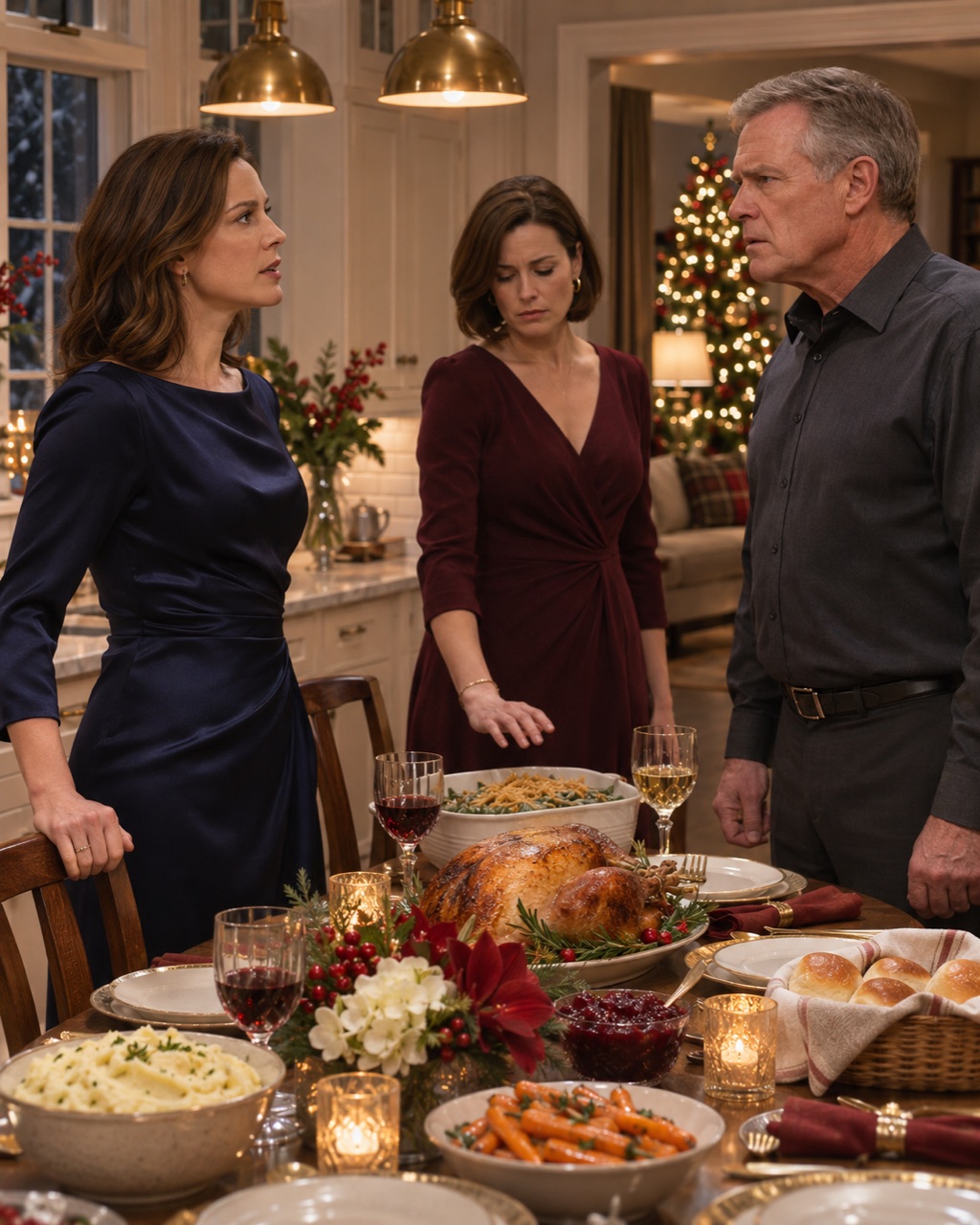
My father shoved me away from my own Christmas table and said, ‘Your brother needs this house more than you do.’
My hip caught the chair behind me.
I stayed upright.
The chair scraped across the kitchen floor. I caught its back, and the place where my hip had hit it began to ache.
Dad stood in front of me.
Beyond him, the Christmas tree was lit in the adjoining living room. The serving dishes were still open on the table. My mother had her fork beside her dinner.
Nobody got up.
“It’s not yours to give.”
Dad stepped closer.
“You agreed, and your brother needs it.”
I blinked at him.
He was saying it in my kitchen, in front of everyone, as if my answer were something he could correct.
“I never promised you that.”
He gave a brief smirk.
Beth reached for my plate.
There was food left on it. I had barely settled into eating before Dad started discussing when Owen could move into my house.
“Leave that there,” I said.
She lifted it anyway.
“Let’s just get through dinner.”
I looked at the place where it had been.
My sister had watched him push me. Now she was removing my dinner instead of asking whether I was hurt.
For a moment, I felt embarrassed.
Not because I had done anything. Because everyone was looking at the table while I stood beside a chair I had nearly fallen over.
“Put my plate back.”
Beth lowered it near the edge.
Not in front of my chair.
My mother kept her eyes down. Jean was 61, with a gray bob and a round face that usually made her look approachable. That night, she wouldn’t look at me.
Owen stayed seated, too.
He was watching Dad.
His blue dress shirt was tucked in neatly. I remembered noticing that when he arrived, thinking he looked happy to be there.
Now I couldn’t tell what he was thinking.
Dad hadn’t apologized.
He hadn’t even glanced at the chair.
“We’re trying to discuss something important,” he said.
“So was I.”
“You’re getting upset before I’ve explained.”
“You pushed me.”
He looked toward the others, as though somebody might help him move past that.
Nobody did.
Nobody challenged him, either.
I kept my hand on the chair back until I was certain my legs would stay where I put them. Then I let go.
The kitchen was clean.
I had wiped the counters before everyone arrived and put away the things I didn’t need. The food on the table was food I had bought and cooked.
I was 35, and somehow I was standing there waiting for permission to return to my own dinner.
I stopped waiting.
“Move away from my chair.”
Dad shifted, but not enough for me to sit without brushing past him.
“You need to think about your brother.”
“I have thought about him.”
“Then act like it.”
My house was worth about $286,000.
It belonged to me alone.
There wasn’t a part that belonged to Dad, or a room Owen had paid for, or a promise I had made and forgotten.
I owned it outright.
I looked toward my brother.
“Owen, I haven’t offered you my house.”
Dad answered before he could.
“We already covered this.”
“No. You told me what you wanted.”
Beth set a serving spoon down.
“Can we not do this right now?”
I looked at her.
She was 38. She had watched the same thing I had just lived through, and what bothered her enough to speak was that I was still objecting.
“He brought it up,” I said.
Dad folded his arms.
“Because it needs to be settled.”
“It is settled.”
“Not with that attitude.”
I rubbed the side of my hip through my clothes, then stopped when I noticed him watching. I didn’t want the conversation turned into whether I was exaggerating a bruise.
I wanted him to hear no.
He already had.
That was the part I couldn’t get past.
This wasn’t a misunderstanding he had carried into dinner. I had told him plainly, before Christmas, that I wasn’t giving Owen my home.
He knew.
Yet he had waited until the food was served, everyone was seated, and I would have to contradict him in front of my mother.
My mother finally moved her fork.
“Dennis,” she said quietly.
He turned toward her.
She looked down again.
“Let’s eat before everything gets cold.”
I stared at my plate near the edge of the table.
The food getting cold had become something worth mentioning. My being shoved had not.
Dad took her words as permission.
“Exactly. We can finish this sensibly.”
“There isn’t a gift to finish.”
“You don’t need all this space.”
“I live here.”
“You could live somewhere smaller.”
He said it like choosing where I would sleep was another part of arranging the meal.
I looked past him toward the living room. The tree stood where I liked it, visible from the kitchen. Nothing about that corner was grand.
It was just mine.
I had chosen it.
“I’m not moving out.”
Owen shifted in his chair.
Dad put a hand on the table, close to my plate.
“Your brother works hard.”
“I didn’t say he didn’t.”
“He needs a chance to get ahead.”
“That doesn’t make this his house.”
Beth pressed her lips together.
I could see that she wanted me to lower my voice, though I wasn’t shouting. She glanced toward Mom, then back at me.
I pulled my plate farther from the edge.
It was a small thing.
I needed it in front of my chair, not sitting where someone could pick it up again and decide I was finished.
Dad watched me move it.
“I’ve already got someone ready to arrange everything.”
The way he said everything made my stomach tighten.
He wanted that word to sound official.
I knew what he meant, though. Before dinner, his own attorney had contacted me directly, and I had answered directly.
There was an email on my phone.
I hadn’t come to dinner planning to use it.
I hadn’t thought I’d need to prove, over Christmas food, that I hadn’t given away the kitchen we were standing in.
“I promised you nothing,” I said.
Dad shook his head.
“I won’t sign anything.”
“You’re making this harder than it has to be.”
I reached toward my phone, still keeping it low beside me.
Dad glanced at my hand, then looked back at my face.
“You already promised Owen this house, and I’m not letting you pretend otherwise.”
Chapter 2: What His Attorney Sent
“I put my answer in writing,” I told him.
Dad waved that away before I had even opened my phone.
“You sent an upset message.”
“I sent a refusal.”
Beth looked at me, then at him. Owen remained seated, with his hand beside his plate.
I found the conversation with Dad.
Two weeks before Christmas, I had written, “I am not giving Owen my house. Please stop asking.”
His reply was still there.
“I know you said no. We’ll talk at Christmas.”
I read it without turning the screen toward him.
I hadn’t imagined the acknowledgment. I hadn’t softened my answer enough for him to mistake it for encouragement.
He had known.
“Talking at Christmas doesn’t mean I changed my mind,” I said.
Dad’s mouth tightened.
“I thought we could have a family discussion.”
“You announced a move.”
I had bought the house eight years ago, while working in payroll. By then I knew what my paycheck could cover and what I would have to leave alone until later.
There had been ordinary things to buy.
Things to repair.
Things I waited on.
Last spring, I paid the remaining mortgage. I was a payroll supervisor by then, and I sat at this same table afterward, looking around without needing to decide what to do next.
I wanted to keep living here.
That was all.
For eight years, I had also paid for and hosted our family’s Christmas dinner. Nobody had to bring money. Nobody had to figure out whether there was room to cook or enough time to clean. I handled it because I liked having everyone here. In our family, though, Owen needing something usually became a discussion about what I could provide. Dad called it practical. Mom wanted everyone getting along. Beth wanted the conversation finished. Somewhere in all that, asking me had become telling me what would keep the rest of them comfortable.
Three weeks before Christmas, Dad had stood in my kitchen and explained Owen’s rent.
“He can’t keep doing this without help.”
“I know you’re helping him.”
“I’m contributing $900 a month.”
He wanted to stop.
He hadn’t said it quite that plainly at first. He talked about Owen needing stability, then about the space I had, then about how I could manage somewhere smaller.
Finally, he said it.
“Give him this place.”
I had set down the dish I was drying.
“No.”
He kept explaining.
I had not.
At Christmas, standing beside my chair, I opened the email instead of letting him tell that conversation differently.
The last business day before Christmas, his attorney had contacted me directly. Dad had asked him to prepare a proposed gift of my house.
Unsigned.
I had never hired that attorney.
I hadn’t promised the house, signed anything, or told Dad he could act for me.
The attorney wanted to confirm my wishes before proceeding.
“I haven’t agreed to any of this,” I had said.
He asked whether I wanted to give Owen the property.
“No. I will not give away my home.”
He listened.
Then he sent an email confirming that work had stopped because I had not consented.
I kept it.
Until dinner, I hadn’t known Dad would announce a supposed gift anyway.
I straightened beside the chair.
“This house is mine. I never agreed.”
I held my phone at chest height toward him.
Beth looked from the screen to Dad.
“Your attorney sent me this.”
He leaned closer.
His impatient little smile stayed there until he began reading.
Then it went away.
“You spoke to my lawyer?”
“He contacted me.”
Mom finally looked directly at him.
The email was open under its subject, with the attorney’s explanation visible. It didn’t say I was thinking about giving the house away.
It said work had stopped.
“He asked me directly,” I said. “I told him no.”
Dad read farther.
He had never seen that email.
I could tell from how long he stared at it, and from the way he looked at me afterward.
“You shouldn’t have spoken to my attorney.”
“He called me.”
“That was something I was handling.”
“Not for me.”
Owen leaned forward.
“Can I see that?”
Dad turned toward him.
“We don’t need to pass private messages around.”
“It concerns my house,” I said.
I turned the phone back toward myself and opened the option to forward the email.
Dad watched my thumb.
“Don’t send that.”
I had already pressed send.
Then my brother’s reply appeared beneath the email Dad had never seen.
I looked down.
Owen had his phone under the table’s edge. His face was red, and he wasn’t looking at Dad now.
His answer was short.
Dad had told him I offered the house.
He wasn’t taking it.
He was sorry he had believed him.
I read it again.
There wasn’t a request hidden afterward. No suggestion that perhaps I could still help another way.
He had refused it.
Dad looked between us.
“What did you send her?”
Owen put his phone on his lap.
“What you told me.”
“That isn’t something to discuss in messages.”
I looked at my brother.
Until that moment, I hadn’t known whether he had walked into my kitchen expecting to pressure me, too.
He hadn’t seen my refusal.
He had believed I made an offer.
That didn’t excuse sitting still when Dad shoved me. It did explain the look he’d given me when Dad first mentioned moving.
He had been waiting for me to confirm something I had never said.
Mom lowered her fork.
“What did he write, Erin?”
Dad answered her.
“He’s confused.”
I looked at the email, then at Owen’s reply beneath it.
“No,” I said. “He explained it.”
Beth shifted her chair closer to the table.
“We can talk about that later.”
I didn’t put my phone away.
My dinner was still sitting near my hand. The food had gone cold, and I could feel the chair against the back of my leg.
Everyone had heard Dad claim I promised the house.
They could hear what Owen had been told, too.
I held the screen where I could read it and said, “I’m going to read his answer aloud.”
Chapter 3: My Brother’s Answer
“Dad told me you offered the house,” I read.
Dad reached toward the space between us, but I lowered my phone against my chest before his hand came near it.
He let his arm drop.
I kept reading.
“I don’t want it if you didn’t offer it. I’m not taking your house. I’m sorry I believed him.”
Owen looked at me.
“That’s what I meant.”
Nobody touched the serving dishes.
Dad drew his chair back slightly, as if he meant to sit and conduct a calmer conversation now that the first version hadn’t held.
I didn’t sit.
“Did you see my message refusing?” I asked Owen.
“No.”
“Did Dad tell you I said no?”
“No.”
Dad interrupted.
“She was upset when she sent that.”
I looked at him.
“You acknowledged it.”
“That doesn’t mean we couldn’t work something out.”
Owen turned toward him.
“You said she offered.”
“I said she could help.”
“No,” Owen said. “You told me she wanted me to have the house.”
Mom put her fork down.
The small sound made Beth look at her, but Mom stayed quiet.
Dad rubbed his mouth.
“I was trying to get something settled for you.”
“Without asking me what you told her?”
“I knew what you needed.”
I looked at Owen’s phone where it rested against his leg.
He hadn’t stood up to announce anything. He had written because he was sitting between Dad’s claim and the email I had sent.
I understood why he wanted his answer somewhere Dad couldn’t interrupt it.
“Owen,” I said, “I never offered.”
“I know that now.”
“I haven’t been planning a move.”
He nodded.
“I didn’t know.”
Dad looked toward Beth.
“She’s making it sound like we were putting her out on the street.”
I answered before Beth could.
“You told me to leave my home.”
“Somewhere smaller isn’t the street.”
“It still isn’t your decision.”
He reached for his water, then set it back down without drinking.
I could feel the spot on my hip more clearly now that I had stopped bracing against the chair. I moved my weight.
Owen noticed.
“Are you hurt?”
I looked at him.
“My hip hit the chair.”
“I’m sorry I stayed sitting.”
Dad made an impatient sound.
Owen didn’t turn toward it.
“I should have said something.”
“Yes,” I said.
I wasn’t ready to make that easier for him.
He looked down at his plate.
Beth folded her napkin against her lap. Her eyes went toward the place she had moved my dinner, then away.
Dad tried another approach.
“I can see how this got confused.”
“It wasn’t confused,” I said.
“We’ve all said things badly.”
“I said no.”
He looked at my mother.
“Jean, you know I wasn’t trying to hurt anyone.”
Mom glanced at my chair.
“I think we should let Erin speak.”
It wasn’t much.
It was more than she had said when he pushed me.
Dad leaned back and stared at her, then turned to me again.
“Fine. Speak.”
I didn’t thank him.
“I own this house. I never agreed to give it away. Your attorney stopped working on the proposal because I refused.”
“I heard you.”
“Then stop saying I promised it.”
He tapped the table with his fingertips.
Owen picked up his phone.
Dad saw him do it.
“What now?”
“I’m keeping the email.”
“You don’t need a file on your father.”
“It says she didn’t agree.”
“I know what it says.”
He hadn’t known before I showed him.
Now he couldn’t make the unsigned proposal sound like something I was obligated to finish without everyone remembering the email.
So he stopped talking about whether I had agreed.
He started talking about what family should do.
“Your sister has a paid-off house. You struggle with rent. I don’t think it’s unreasonable to discuss helping each other.”
Owen looked at him.
“You told me she’d offered.”
“We’re past that.”
“I wasn’t.”
I set my phone beside my plate, close enough to reach.
The screen remained lit.
Dad noticed, but he didn’t tell me to put it away again.
Beth leaned forward.
“Maybe everybody needs a minute.”
“I needed you to leave my plate alone,” I said.
Her face changed.
“I was trying to calm things down.”
I looked at where she had placed it.
“That didn’t help me.”
She straightened her napkin again.
Owen pushed his plate away slightly.
“I don’t want the house, Dad.”
“Don’t be dramatic.”
“I’m being clear.”
“You’re saying that because you’re embarrassed.”
“I am embarrassed,” Owen said. “Not because I can’t have her house.”
Dad looked at him for a long moment.
The room stayed ordinary around us.
The tree lights still blinked through the doorway. A spoon rested crookedly in a serving dish. There were little bits of food beside my fork where I had been eating before Dad stood up.
I picked up the fork and set it neatly on my plate.
I wasn’t going to eat with him standing over me.
“I’m not discussing a gift anymore,” I said.
Dad looked back at me.
“Then we can discuss how this got handled.”
“You pushed me.”
“I was trying to get you to listen.”
“I heard you before Christmas.”
Owen lifted his phone again, checking the email.
Dad watched him.
He couldn’t tell Owen the attorney hadn’t said it. Owen had the message himself now.
He couldn’t tell my mother I had simply misunderstood the plan. She had heard the refusal read aloud and watched him read the email.
He could still try to decide who spoke.
That was what he did next.
He leaned toward my brother, lowered his voice, and said, “Stop discussing family business in messages, Owen.”
Chapter 4: Dinner Is Over
“He can answer me however he wants,” I said.
Dad kept his eyes on Owen until my brother set the phone beside his plate.
Not put away.
Just down.
I reached for the serving spoon closest to me and rested it inside the dish so it wouldn’t slide onto the table.
Then I looked at Dad.
“Dinner is over.”
Beth stared at me.
Mom lifted her head.
“What do you mean?”
“I mean we’re finished here.”
Dad gave a short, disbelieving laugh.
“We’ve hardly eaten.”
“I know.”
“Erin.”
“You need to leave.”
He looked toward the kitchen doorway, then back at me, as though I had mentioned leaving a restaurant instead of my own house.
“Don’t start throwing people out.”
“I’m asking you to leave my home.”
“On Christmas?”
“Yes.”
Owen pushed his chair back.
Dad turned toward him immediately.
“Sit down.”
Owen paused, then stood anyway.
There wasn’t another shove.
I watched Dad’s hands because I wasn’t going to turn my back while he stood that close. He noticed my attention and put them against his sides.
Beth stayed seated.
“Can we please not finish the day like this?”
I looked at my plate.
It was exactly where I had pulled it, in front of my chair.
“We aren’t finishing dinner.”
Mom folded her napkin carefully.
“Let me help put the food away.”
“Not yet.”
I didn’t want anyone moving around me, opening my cupboards, trying to make the kitchen normal while Dad stayed.
He was still watching Owen.
My brother stepped back from the table, leaving his phone in his hand.
“I’ll go,” he said.
Dad answered him.
“You don’t need to leave because your sister’s upset.”
“I ended dinner,” I said.
Dad turned.
“I heard you.”
He said it sharply.
I waited.
Beth finally stood. She reached toward a serving dish, then stopped when I looked at her.
“Should I take this to the counter?”
“No. Leave it.”
Her hand dropped.
Dad watched her step back.
He seemed to understand then that nobody was going to keep eating while he talked me around.
So he changed what he was asking.
“Before everybody leaves, we need to be clear about the arrangement.”
“There is no arrangement.”
“There is a proposal.”
“Unsigned.”
“Prepared for a reason.”
“A reason I refused.”
He pointed toward my phone.
“That email doesn’t stop you from changing your mind.”
“No. My answer does.”
Mom stood beside her chair.
“Dennis, let’s go.”
He didn’t move.
“I had work done on this.”
“You asked for work.”
“For the family.”
“I didn’t ask for it.”
Beth looked at Mom. Owen stayed near his chair, leaving me a clear path out of the kitchen.
I noticed that.
Before, they had sat around while Dad stood between me and my place. Now Owen had moved away from the table instead of waiting for instructions.
Dad tried to make the proposal sound more substantial.
“You can’t act like something prepared by an attorney is just nothing.”
“I didn’t say it was nothing.”
“Then acknowledge it.”
“It was a proposal I didn’t agree to.”
He pressed his lips together.
The food smelled different now, cooler and heavier. I wanted it covered and put away. I wanted to take off the clothes I’d cooked in and see whether my hip had a mark.
Mostly, I wanted him out.
“Get your things,” I said.
Beth glanced toward the living room.
Dad stayed where he was.
“You’re going to regret making your mother leave hungry.”
Mom looked at him.
“Don’t do that.”
He blinked.
She didn’t add anything.
I was glad she had said it. I was angry that she had found those words only when he tried to speak for her.
Both were true.
“I cooked dinner,” I said. “I didn’t agree to be pushed while you gave away my house.”
“I wasn’t giving it away.”
“You told Owen he could plan his move.”
“I was trying to help him.”
Owen answered quietly.
“I don’t want help that takes her home.”
Dad looked over.
“You’d rather keep struggling?”
“I said I don’t want her house.”
Dad couldn’t get Owen to accept the gift now.
He tried to make me responsible for the work instead.
“The proposal doesn’t just disappear because you decide to make a scene.”
“The attorney said work stopped.”
“I know what he said.”
“He said it to me.”
Dad glanced at my phone again.
It was still beside my plate.
I picked it up, not to display anything else, but because I didn’t want to leave it where he could reach it while I moved around the kitchen.
Beth noticed.
“Erin, nobody’s taking your phone.”
“I didn’t say they were.”
She looked down.
Mom stepped toward the adjoining room.
“I’m getting ready to go.”
Owen followed her far enough to clear the kitchen doorway, then waited.
Beth moved after them.
Dad remained beside my chair.
Without everyone seated around him, he looked less like he was conducting a family discussion and more like someone refusing to leave a kitchen.
I pulled my chair back into place.
He watched me.
“You could still make this right.”
“I can end dinner.”
“You know what I mean.”
“I do.”
I wanted him to say it plainly now.
Not what Owen needed. Not how much space I had. Not what had already been prepared.
Why he had told everyone I agreed.
He knew my refusal.
He had acknowledged it in writing.
His attorney had contacted me because my wishes still mattered, and I had told him no, too.
Dad had waited until the meal was underway anyway.
I stood on the other side of my chair, with the table between us, and asked, “Why did you announce a gift I had repeatedly refused?”
Chapter 5: He Still Expected My Signature
“Because you can change your mind,” Dad said.
He answered without looking toward the others.
“I haven’t.”
“You haven’t given it a fair chance.”
“I don’t want to give Owen my house.”
He drew a breath through his nose.
Owen stood in the living room doorway now. Mom was beyond him, and Beth had stopped near the tree.
Dad lowered his voice.
“You didn’t have to humiliate me.”
“You told everyone I agreed.”
“I thought you’d listen with your family here.”
I glanced toward Beth.
She looked away.
I didn’t know yet what she had said to him before dinner. All I knew was that her response to the shove had been to clear my plate.
“I’m not signing,” I said.
“That could wait.”
“No. It isn’t waiting for me.”
He looked irritated again.
“You’re talking like I can’t ask my own daughter for something.”
“You asked. I answered.”
“Then leave it alone for tonight.”
“Leave my house.”
He glanced at the table.
At the food.
At the plate I had moved back.
I wondered whether he expected me to soften because the cleanup was still waiting, because everyone leaving meant I would have all the dishes and none of the company.
I would rather wash dishes alone.
He stepped away from my chair.
I didn’t move until he had cleared the kitchen doorway.
Owen shifted aside but didn’t go ahead of him.
Dad stopped at the edge of the living room.
“And don’t contact my attorney again.”
I kept my phone in my hand.
“He contacted me.”
“I understand that.”
“Then you understand why I answered.”
“I’m telling you not to involve yourself further.”
“My house is involved.”
“He works for me.”
“That doesn’t let you speak for me.”
Dad looked toward Mom.
She was holding herself stiffly, with her gaze on the floor between the kitchen and living room.
“Let’s just go,” she said.
Beth moved closer to her.
I stayed at the kitchen entrance while they gathered what they had brought. Nobody touched the serving dishes.
The tree lights made the corner look almost exactly the way it had before dinner.
I didn’t like looking at it.
Owen came toward me, stopping far enough away that I didn’t have to step back.
“I meant what I sent.”
“I read it.”
“I’m sorry.”
“I know.”
He looked at Dad, then back at me.
He didn’t ask whether we could finish discussing it now. I was grateful for that.
Beth hovered near him.
“Do you want me to help clean before we go?”
“No.”
Her face tightened.
“I was offering.”
“I heard you.”
I didn’t add anything.
Mom came last through the living room.
She looked at my hip, then my face.
“Are you all right?”
“I hit the chair.”
“I saw.”
I waited for her to say something else about that.
She touched her sleeve instead.
“I’ll call you.”
“Not tonight.”
She nodded.
Dad stood near the door.
He hadn’t apologized.
Instead, he looked back toward the kitchen and said, “You know where I stand.”
“Yes.”
“And you know this could have gone differently.”
I held the door open.
He went out.
The others followed without another physical confrontation.
Owen looked back before he left. Mom kept close to Dad. Beth didn’t meet my eyes.
Then the door was closed.
I stayed beside it until I heard them leaving.
Only then did I put my phone on the kitchen counter.
My hip hurt when I bent.
I straightened, pulled my chair out slowly, and sat.
Not to eat.
Just to stop standing.
My plate was in front of me.
There was a smear near its edge where Beth’s thumb had touched it. I turned it slightly, then stopped myself.
I didn’t need to make it look untouched.
The phone lit up on the counter, and I reached for it.
Nothing new from Dad.
I opened the attorney’s email again.
I read it from the beginning this time, slowly enough to notice how plainly he had described my refusal.
Work had stopped.
Not paused until Christmas.
Not waiting for Dad to persuade me.
Stopped because I hadn’t agreed.
I saved the email where I could find it without scrolling through anything else.
Then I saved Owen’s reply.
I wasn’t collecting things to show strangers.
I wanted to stop having the same conversation with myself.
Dad had acknowledged no.
Owen had believed a different account.
The attorney had already stopped the proposal.
Those were the facts.
I set the phone beside my plate and started putting the food away.
The kitchen wasn’t difficult to clean. I had cooked here enough to know where everything went.
Still, I found myself pausing over ordinary things.
The serving spoon Beth had set down.
Mom’s neatly folded napkin.
Dad’s chair, left farther from the table than the others.
I pushed it in.
Then I opened the dishwasher.
I didn’t send a message to smooth things over. I didn’t tell Mom dinner was still available if she wanted to come back without him.
I needed the house empty.
After the food was covered and the counters wiped, I returned to the table with my phone.
Dad’s warning was still bothering me.
Don’t contact my attorney again.
He wanted to decide who could explain the status of a proposal involving my house. If I obeyed, he could keep describing it however he liked.
I opened a blank message to the attorney.
I didn’t send it that night.
I wrote the points I needed to say, checked that none of them sounded like a request to continue anything, and left them ready.
On the next business day, I would tell him directly that my refusal had not changed.
Chapter 6: I Sent It Anyway
“I am the sole owner of the house,” I typed.
Then I stopped and read the sentence again.
It wasn’t an argument.
It was the reason I was entitled to answer.
The next business day, I sat at my kitchen table with my phone and the attorney’s earlier email open. I had moved the breakfast things aside before beginning.
The chair didn’t hurt to sit in.
My hip was still tender.
I adjusted my position and kept writing.
I said I had never agreed to give my home to Owen. I would sign nothing for that purpose.
I wanted no further work directed toward giving it away.
Then I read the whole message.
I took out a sentence about Christmas dinner.
Not because it hadn’t mattered.
Because I didn’t want the immediate question buried under a description of my family.
The attorney needed my wishes, plainly stated.
I could say what Dad had done without making the shove part of a property inquiry.
I reread the attorney’s original email.
He had contacted me before going further.
He had heard no.
He had stopped.
Nothing in his message suggested that Dad’s approval could substitute for mine, or that my silence afterward would make the house someone else’s.
I pressed send.
Then I put the phone facedown.
I went to the sink and rinsed the cup I’d used at breakfast. There was nothing urgent to do with it, but I needed to move.
At work, I was used to checking instructions against what someone actually authorized. A person being certain didn’t make a payroll instruction correct.
At home, I had let Dad explain my own answer back to me for much longer than I would have tolerated at my desk.
I dried the cup.
The phone buzzed.
It was Dad.
“Have you calmed down?”
I stood beside the table and read it.
There wasn’t a question about my hip.
There wasn’t an acknowledgment that he had told Owen something untrue.
I typed, “I am not discussing this with you.”
His reply came while I was still holding the phone.
“I told you to leave my attorney out of it.”
I didn’t tell him I had already sent the message.
I didn’t need his permission.
I put the phone down again and carried the cup to the cupboard.
The kitchen had looked different since dinner, though nothing had moved much. My chair was back where it belonged. The counter was clean.
I kept remembering how quickly Beth lifted my plate.
As if she had been waiting for a way to stop the conversation without requiring Dad to stop.
I wasn’t ready to call her.
I returned to the table and checked the message I’d sent.
The words were still clear.
No agreement.
No signature.
No further work toward giving away my home.
I saved that message with the earlier email.
Then I opened Dad’s refusal conversation again.
“I know you said no. We’ll talk at Christmas.”
It would have been easy to send it back to him with a question.
Why did you lie?
Why did you shove me?
Why did you think I would leave the place I paid for?
I didn’t.
He had answered the first question already.
He thought I could change my mind.
What he meant was that he expected the family setting to make me change it.
I closed the conversation.
Later, the attorney’s office replied that he had received my message and would speak with me about the status of the proposal.
I read that carefully, too.
It didn’t ask me to consider terms.
It didn’t ask for a signature.
I wrote that I wanted confirmation that nothing had changed and no work would resume toward a gift I had refused.
Then I set the phone where I could hear it.
I didn’t tell the family I was waiting for a response.
Owen had the Christmas email.
Dad had seen it.
Mom and Beth had watched him read it.
I wasn’t going to report each step to people who had treated my ownership as an obstacle to be discussed.
I could check it myself.
At lunch, I sat at the table rather than carrying my food elsewhere.
The empty chairs bothered me.
I pushed one in with my foot, then left the others alone.
I didn’t need to rearrange the kitchen to prove I could use it.
My phone lit up again.
Mom asked whether I was working.
I answered that I could talk another time.
She sent back that she hoped I was all right.
I looked at that for a while.
Then I wrote, “I need some space from everyone after dinner.”
She didn’t argue.
I appreciated that much.
I finished eating, washed the plate, and returned to the message I’d sent the attorney.
I had asked for something specific.
Not reassurance that Dad meant well.
Not advice on how to settle the family disagreement.
The status of an unsigned proposal.
Whether any ownership change had occurred.
Whether the work remained stopped.
I knew the house was mine. I also knew Dad had commissioned something after I said no, and I wanted the person who prepared it to state what had and hadn’t happened.
My phone rang while I was standing at the sink.
The attorney’s call appeared on the screen.
I dried my hand before picking it up.
I didn’t want to fumble the phone or agree too quickly to anything because I was relieved to hear a professional voice.
I went back to the table.
I pulled out my chair, sat down, and opened the earlier email so I could follow what he said.
Then I answered the call from the attorney who was ready to confirm the proposal’s status.
Chapter 7: Nothing Had Changed Hands
“It was an unsigned proposal,” the attorney said.
I pressed the phone closer to my ear.
“No ownership change occurred?”
“No.”
I looked across my kitchen.
The answer was simple enough that I wanted to hear it again, but I didn’t ask him to repeat himself.
Instead, I asked the next question.
“And the proposal remains closed?”
“Yes.”
He explained that he had sought my direct confirmation before proceeding and had stopped after I told him I had never agreed.
I had already read that in his email.
Hearing it now, away from the Christmas table, made it easier to separate what had actually happened from what Dad had made sound inevitable.
There wasn’t a transfer waiting to take effect.
There wasn’t a promise I had to undo.
There was an unsigned proposal Dad had requested.
I had refused it.
“I won’t sign anything to give away my home,” I said.
“I understand.”
“I don’t want any further work done toward that.”
He confirmed that my wishes were clear.
I didn’t ask him what Dad had told him privately.
He was Dad’s attorney, not mine.
I wasn’t trying to make him explain Dad.
I wanted him to confirm what involved me.
“Please send that in writing,” I said.
“Of course.”
I asked him to include that no ownership change had occurred and the proposal remained closed.
He said he would.
I thanked him for contacting me directly before proceeding.
Then we ended the call.
I left the phone on the table.
For a while, I just sat there.
Not because I thought I’d nearly lost the house through some hidden procedure. Dad couldn’t give away what wasn’t his.
What bothered me was how hard he had worked to make my refusal sound temporary.
He had prepared something unsigned, then stood over my dinner and treated my signature like a detail he could collect later.
I got up and checked the food in the refrigerator.
It didn’t need checking.
I moved a covered dish to a different shelf and put it back again.
Then I returned to the table.
The attorney’s confirmation arrived while I was sitting there.
I read every line.
The house had not changed hands.
The proposal remained closed.
My refusal was clear.
I saved it beside the earlier email and my own message.
The phone was enough.
I didn’t need to print anything and spread it across the table. I needed to know exactly where the confirmation was if Dad tried to describe the situation differently again.
I opened Owen’s Christmas reply.
He had said he wasn’t taking the house.
I sent him a brief update.
“I confirmed directly. Nothing changed, and the proposal remains closed.”
He answered, “I’m glad.”
Then another message.
“I’m sorry you had to do that.”
I put the phone down before replying.
I didn’t want to tell him it was fine.
It wasn’t.
After a while, I wrote, “I needed to confirm it for myself.”
He didn’t ask for details.
That helped.
I went back to the sink and washed what was there. The house was quiet enough that I heard each dish touch the rack.
On Christmas, I had wanted someone to speak before I had to explain my own ownership.
Now I was doing the ordinary things afterward by myself.
I could manage the dishes.
I could manage contacting the attorney.
What I couldn’t do was make my family admit what they had watched.
The phone buzzed again.
Dad.
“I hear you’re still dragging this out.”
I stared at the screen.
I hadn’t told him about the call.
I didn’t know what his attorney had communicated to him, and I didn’t need to ask.
I wrote, “I confirmed the status of a proposal involving my house.”
He answered, “It was already stopped.”
I almost laughed.
At dinner, he had wanted the proposal to sound like an obligation.
Now that I had checked, it had apparently been so completely stopped that checking was offensive.
I typed, “Then there is nothing more to discuss about giving away my home.”
He didn’t answer immediately.
I set the phone down and finished washing.
When I picked it up again, his next message was longer.
He said he had gone to trouble for Owen. He said I had made it difficult. He said the family had all been embarrassed.
There wasn’t an apology.
There wasn’t even a direct mention of the shove.
I didn’t reply.
I opened the attorney’s confirmation instead and checked that it had saved correctly.
The act was small.
Tap the message.
Check the contents.
Close it.
I wanted that to be the last practical thing I needed to do about the proposal.
Dad wanted another conversation.
He called.
I let it ring.
Then a message appeared.
“If you’re going to refuse the whole thing, you can at least take responsibility for what it cost to arrange.”
I sat down.
There was no amount in his message.
I didn’t ask for one.
I hadn’t requested the work. I hadn’t hired his attorney. I hadn’t consented to a gift.
He had commissioned something after I refused and was now trying to make that my expense.
I read the message again, slowly.
At dinner, he had tried the supposed promise.
Then the unsigned proposal.
Then the family embarrassment.
Now it was the cost of something I had never wanted.
I didn’t need the attorney to answer that part for me.
I opened Dad’s message, put my thumb over the reply field, and read his demand that I reimburse him for arranging the gift I had refused.

Chapter 8: Not My Expense
“I didn’t hire your attorney,” I wrote.
Then I added, “I didn’t request that work, and I won’t reimburse you for it.”
I sent it before I could turn it into an explanation he would pick apart.
Dad answered quickly.
“It was for Owen.”
“That doesn’t make it my expense.”
“You could show a little appreciation.”
I set the phone down.
I had spent eight years buying the food for Christmas without charging anyone. I had never sent a bill afterward because someone disliked a dish or left early.
This wasn’t that.
Dad had asked someone to prepare a gift of my house after I said no.
I wasn’t paying him for trying.
He called again.
I let it go.
The kitchen counter needed wiping where I’d set down lunch, so I did that. Then I rinsed the cloth, hung it up, and checked the phone.
A message.
“You always have to make everything final.”
I looked toward the table.
My chair was pulled out from the call with the attorney.
I pushed it in.
The house wasn’t something I needed to keep available for negotiation so Dad would feel respected.
I wrote, “The proposal is closed. I will not discuss paying for it.”
Then I stopped answering.
I didn’t block him that afternoon. I wanted to see whether he would say anything that actually required a response.
He didn’t.
He sent complaints.
I left them there.
The written confirmation remained saved on my phone, beside the earlier email and my refusal.
I opened it once more.
Not to check whether I still owned my house.
To make certain the wording about the proposal staying closed was as plain as I remembered.
It was.
I closed the message and put the phone beside the fruit bowl.
For the first time since Christmas, I started making supper without keeping it in my hand.
I took out a pan.
I washed what needed washing.
When the phone buzzed, I finished drying my hands before looking.
It was Owen.
“Dad says you’re making him pay for nothing.”
I leaned against the counter.
“I didn’t commission anything.”
“I know.”
He followed that with, “I’m not asking you to.”
I read those words carefully.
Dad had spent years making Owen’s needs a reason for my cooperation. Owen was beginning to answer without making me responsible for the situation.
“I told him no before he arranged it,” I wrote.
“I believe you.”
There was no request after that.
I went back to supper.
The food needed turning, and I let that be the thing I paid attention to.
When I sat down, I put my phone at the other end of the table.
I ate while it stayed quiet.
That should have felt ordinary.
Instead, I noticed that nobody could reach over and clear my plate before I was finished.
I wasn’t proud of how much that mattered.
I was tired of pretending it hadn’t.
After supper, I checked the messages again.
Dad had written that I was being difficult.
I didn’t answer.
I sent Owen a brief acknowledgment instead.
“Thank you for not asking me to pay it.”
He replied, “It isn’t yours.”
I knew he meant the expense.
I was glad he had said it plainly.
Mom called later.
I watched her name until the ringing stopped, then sent, “I can’t talk about Dad’s proposal again tonight.”
She answered, “I wanted to see how you were.”
I looked down at my hip.
The tenderness was fading. The memory of everyone remaining seated wasn’t.
“I’m home,” I wrote. “I need things quiet.”
“All right.”
She didn’t press.
I returned to the saved confirmation and made sure I could find it from the email list without searching through family messages.
Then I left it alone.
I didn’t need to keep rereading proof because Dad disliked the answer.
The next time Beth’s name appeared, I nearly let that call go, too.
I hadn’t heard from her directly since she offered to help clean before leaving.
I stood in the kitchen with the phone in my hand.
Her offer kept coming back to me.
Do you want me to help clean?
She had been ready to wash dishes after helping remove me from the meal.
I answered.
“Hi.”
“Erin.”
She paused.
I waited.
“Are you busy?”
“I’m home.”
“Can we talk?”
“About what?”
“Christmas.”
I pulled out my chair.
Beth took a breath.
“I’ve been thinking about what happened.”
I didn’t tell her I had, too.
She knew.
“I owe you an apology.”
“For what?”
She hesitated.
I could hear her move the phone.
“For the plate. And not checking on you.”
“Yes.”
“I know.”
I sat down.
I was ready to hear whether she understood that part, not whether she could find a more pleasant way to describe dinner.
She started again.
“Dad shouldn’t have pushed you.”
“No.”
“And you shouldn’t have been put in that position.”
I looked at the table.
Something about how she said that made me stay quiet.
Not that position.
Put in that position.
“Beth, what do you mean?”
She didn’t answer immediately.
I heard her breathe, then say my name.
I kept my hand flat against the table so I wouldn’t start tapping it.
“Tell me.”
She swallowed audibly.
“I need to tell you why he thought bringing it up at dinner would work.”
I sat back in my chair as Beth said, “I helped him choose the moment.”
Chapter 9: Why She Took My Plate
“What did you tell him?” I asked.
Beth exhaled into the phone.
“That Christmas would be a better time.”
“For what?”
“To talk about the house.”
“He had my answer.”
“I know that now.”
“Did you know I’d refused?”
She was quiet.
“Beth.”
“Yes. I knew you didn’t want to.”
“That isn’t the same as being undecided.”
“I understand.”
I looked at the spot where she had been sitting at dinner.
Her chair was tucked in now.
I could still picture her turning toward my plate.
“What did you think would happen?”
“I thought you’d hear everybody out.”
“And then?”
Another pause.
I waited.
“I thought you might give in rather than have an argument at Christmas.”
There it was.
She hadn’t expected new information to change my mind. She had expected the occasion to make refusing too uncomfortable.
I stood up.
Then I sat down again because pacing would let me miss what she said next.
“You encouraged him.”
“Yes.”
“After I had refused.”
“Yes.”
“Because you thought I wouldn’t want to spoil dinner.”
She began to cry quietly.
I didn’t tell her to stop.
I didn’t tell her it was all right, either.
“I wasn’t expecting him to shove you.”
“I know you didn’t shove me.”
“I would never have told him to do that.”
“I asked what you told him to do.”
She took a breath.
“Bring it up while we were all there.”
The kitchen felt smaller while she said it.
I had spent the day cooking, setting out food, and making room for everyone.
Beth had known dinner might be used to make me surrender my home.
I had thought we were having Christmas.
“Did you think about where I would live?”
“Dad said you could get somewhere smaller.”
“And you accepted that?”
“I didn’t think it through.”
“You thought through the timing.”
She didn’t answer.
I turned my plate from supper where it sat drying beside the sink.
It was the same plate Beth had lifted at Christmas. Clean now, with nothing on it to show what had happened.
“Why did you take my dinner away?”
“I was trying to stop things getting worse.”
“For whom?”
“For everybody.”
“Not for me.”
“I thought if we could move on—”
“You moved my plate.”
“I know.”
“You watched him push me, and you picked up my food.”
Her crying stopped.
“I didn’t know what to do.”
“You could have asked whether I was hurt.”
“I should have.”
“You could have told him to move.”
“I should have.”
I let those answers sit.
I didn’t need her to repeat them until the words became something I was expected to reward.
She spoke more quietly.
“When you told me to put it back, I realized how it looked.”
“How it looked?”
“How it was,” she corrected.
I put the plate down carefully.
She had corrected herself.
I noticed.
I wasn’t ready to turn that into forgiveness.
“Dad wanted Owen to have my house so he could stop helping with rent,” I said. “You helped him choose a time I would be less likely to say no.”
“Yes.”
“And when I still said no, you tried to keep dinner going without me.”
“I wasn’t thinking of it that way.”
“That is what happened.”
Beth didn’t argue.
For a while, neither of us spoke.
I could hear ordinary sounds on her end, but I couldn’t tell what she was doing. I was glad I couldn’t see her face.
If I saw her crying, I might start taking care of her before I finished saying what I needed.
“I’ve hosted for eight years,” I said.
“I know.”
“I paid for it because I wanted you here.”
“I know, Erin.”
“I didn’t agree to anything else.”
“I understand that.”
I rested my elbow on the table.
The wood felt cool through my sleeve.
Beth apologized again.
This time she named what she had done.
She had encouraged Dad to bring it up at dinner because she thought I would avoid an argument.
She had cleared my place instead of checking on me.
She had made it easier for him to keep talking.
I listened.
That was more than I had expected when I answered the phone.
It didn’t change what I wanted tonight.
“I appreciate you telling me,” I said.
She let out a breath.
“I should have told you sooner.”
“Yes.”
“I didn’t want you to think I knew what he was going to do.”
“You knew what you hoped he would accomplish.”
She went quiet again.
I wasn’t accusing her of planning the shove.
I wouldn’t make her responsible for his hands.
But I wouldn’t let the shove become the only wrong thing either, as if everything before it had been ordinary family advice.
Beth understood enough to stop defending that part.
“I wanted everyone to get along,” she said finally.
“You wanted me to agree.”
“Yes.”
I looked at my chair.
At the plate drying beside the sink.
At the doorway where she had stood before leaving.
“I don’t want another conversation where my answer is treated as a problem to solve.”
“I won’t do that again.”
“I need to see that.”
She hesitated.
I could hear her preparing to ask for something, and I wished she would leave the call where it was.
She didn’t.
Beth cleared her throat and asked, “If I come over and apologize properly, will you invite me back right away?”
Chapter 10: Not This Time
“No,” I said.
Beth stopped breathing into the phone for a moment.
“I don’t mean for dinner.”
“I understand.”
“I could just stop by.”
“Not this time.”
She sounded hurt.
I kept my eyes on the table.
I could feel myself reaching for something that would make the refusal easier for her. A future visit. A promise that it wouldn’t take long.
I didn’t offer one.
“I’m apologizing,” she said.
“I heard you.”
“Then what am I supposed to do?”
“Stop treating Dad’s wishes as things I have to do.”
“I said I would.”
“And I need time to see it.”
“How can you see it if you won’t let me visit?”
“You can respect my answer now.”
She was quiet.
I hadn’t raised my voice.
Still, I rubbed a damp spot on the tabletop with my thumb until it dried.
I wanted the call finished without taking back anything I’d said.
Beth tried again.
“I don’t want this to become permanent.”
“I haven’t made a promise about later.”
“That sounds like you might never let me back.”
“I don’t know yet.”
I had spent so much time making room for everyone else’s comfort that saying I didn’t know felt almost rude.
It was also true.
I didn’t know when I would want her in my kitchen again.
She apologized once more.
I said I had heard her and needed to end the call.
Then I did.
I left the phone on the table and walked into the adjoining living room.
The tree was still there.
I switched its lights off.
Not angrily.
I didn’t want them on that evening.
When I came back to the kitchen, I put away the plate that had been drying beside the sink.
I noticed I was setting it down too carefully.
It was a plate.
I could use it, wash it, put it away, and use it again.
Beth didn’t call back.
That mattered more than another apology would have.
She had heard no and let it stay no.
I made something to eat and sat down without my phone beside the fork.
Afterward, I checked it.
Owen had sent a message.
“I’m looking for somewhere cheaper.”
I read it while standing at the counter.
He didn’t add that I should help him look, pay for moving, or let him stay while he decided.
I asked, “Have you found anything you can cover yourself?”
“I’m looking at places that don’t need Dad’s money.”
I sat down.
That was the first time he had described the problem without treating Dad’s contribution as part of what he could afford.
“Good,” I wrote.
He replied that he had been living somewhere he couldn’t comfortably pay for on his own.
I already knew that.
Hearing him say it without moving the solution into my house was different.
“I should have changed that before this,” he wrote.
I didn’t tell him what to do next.
He worked.
He could decide what he could afford.
I asked whether he wanted to talk about Christmas.
“Only if you do,” he answered.
I waited before replying.
I wasn’t ready to have every conversation return to the shove. I also didn’t want the family to quietly rename it an argument and carry on.
“I don’t want you to call what Dad did a disagreement,” I wrote.
“I won’t.”
“And I didn’t offer the house.”
“I know.”
There wasn’t any hesitation in that answer.
I looked at the forwarded email still saved in our conversation.
He had the proof.
More important, he had heard me say it.
“I shouldn’t have needed that email for you to believe me,” I wrote.
His reply took longer.
“You shouldn’t have.”
Then, “I was trying to understand why he told me something different. I should have listened to you.”
I set the phone down.
That answer didn’t fix dinner.
It did leave my refusal intact.
Later, we spoke by phone.
Owen talked about looking at cheaper housing and making sure his regular expenses fit what he earned.
He didn’t describe a place he couldn’t afford and ask me to agree it was unfair.
He didn’t ask whether I had room.
I listened while folding the kitchen towel I’d washed.
“I don’t want Dad paying toward it anymore,” he said.
“That’s between you and him.”
“I know. I’m not asking you to sort it out.”
“Good.”
He went quiet.
Then he said, “Beth told me she apologized.”
I held the towel still.
“That’s between me and Beth.”
“I know.”
He didn’t ask me to invite her.
He didn’t tell me she was upset.
That was another thing I noticed.
For years, news of somebody’s feelings had arrived as an instruction for me to make them feel better.
This time, Owen let the subject stop.
We talked a little more about ordinary things, then returned to Christmas because he wanted to say something clearly.
“I don’t want your house.”
“You told me.”
“I want you to know I mean it even if Dad brings it up again.”
“I believe you.”
I did.
That didn’t mean I wanted everyone back around the table.
It meant I could consider talking to my brother without waiting for the request that usually followed.
He took a breath.
I put the folded towel on the counter.
“Erin,” he said, “could I visit sometime, just me, without Dad?”
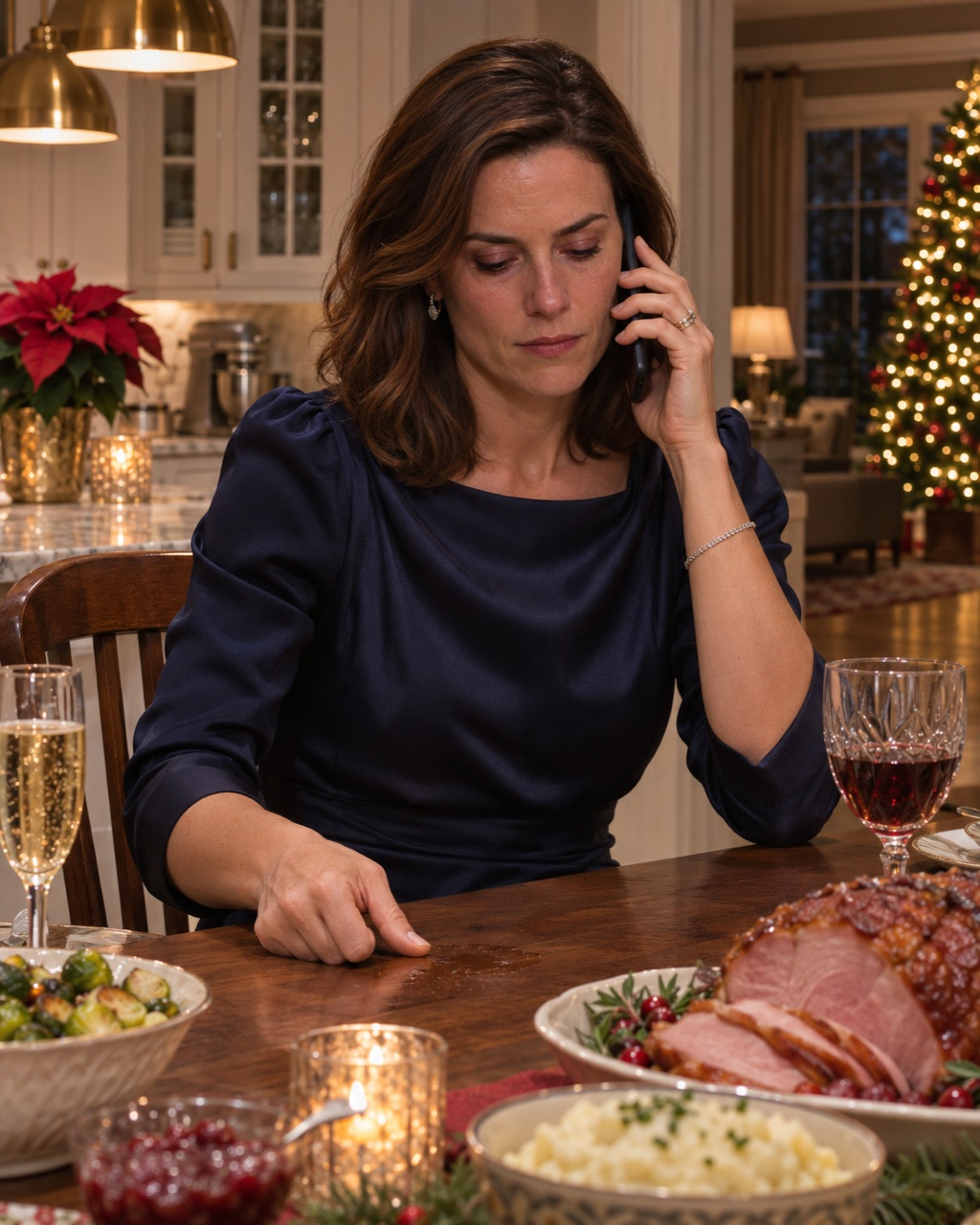
Chapter 11: He Came Without Asking
“Yes,” I told Owen.
Then I gave him a time that worked for me and said I wanted it to be just him.
He agreed.
When he arrived, I opened the door myself. He stood outside until I stepped back.
“Come in.”
He looked toward the kitchen, then at me.
“Thank you.”
I didn’t tell him there was nothing to thank me for.
I had thought about the visit before agreeing.
I wanted to see him.
I also wanted him to understand that being family didn’t mean walking into my house whenever the conversation suited him.
He followed me to the kitchen.
“Sit down,” I said.
He chose the chair where he’d sat at Christmas, then hesitated.
I sat in mine.
The hesitation passed.
“I wanted to apologize without doing it over a message,” he said.
“All right.”
He kept his hands on his knees.
“Dad told me you offered. I believed him because I wanted it to be true.”
I looked at him.
That was more honest than saying he had simply misunderstood.
“I knew it was a lot,” he continued. “I should have asked you myself.”
“Yes.”
“And when you said no at dinner, I sat there while he argued with you.”
“You did.”
“When he pushed you, I should have got up.”
I held the edge of my chair.
“Yes.”
He looked at the table.
“I’m sorry.”
I let him finish.
He didn’t add that Dad had surprised him, though I knew that was probably true. He didn’t ask me to agree that nobody could have known what to do.
“I won’t ask you for the house,” he said.
“I know.”
“Or money instead.”
I loosened my hand from the chair.
He had noticed that possibility, too.
“Good.”
Owen looked around the kitchen, not admiring it or measuring it, just taking in where we were.
“I like coming here,” he said.
“I used to like having everyone here.”
He nodded.
“I know I helped spoil that.”
I didn’t answer quickly.
He had come to apologize, not to make me promise the family table back.
After a while, I asked about the housing search.
He described looking for somewhere he could pay for without Dad’s contribution. He was checking the whole cost, not just whether the rent looked lower.
I listened.
He didn’t mention a new amount.
He didn’t need to.
What mattered was whether he could cover it himself.
“I don’t want to agree to another place and then pretend the gap will work itself out,” he said.
“That makes sense.”
“I’m handling it.”
I nodded.
That was a sentence I had wanted to hear from him for a long time.
Not because I disliked helping.
Because help had become something Dad decided I owed before Owen even asked.
We sat at the kitchen table for a while.
I didn’t bring out food just to make the visit feel normal. I offered a drink because I wanted one myself.
Owen carried his cup to the sink when he finished.
He didn’t start cleaning my kitchen.
He didn’t ask whether we were all right now.
At the door, he said, “Thank you for letting me come.”
“I’ll let you know when I’d like another visit.”
“Okay.”
He meant it.
He left without asking for anything.
I closed the door and returned to the kitchen.
His chair was pushed in.
My cup was still where I’d left it.
The visit had been quiet, and I didn’t feel the need to read our messages afterward to check what had happened.
I washed the cups.
Then my phone lit up.
Dad.
For a moment, I thought about leaving it until later.
I opened it because I was tired of wondering whether the next message would finally name the shove.
He said he understood I was upset.
I read farther.
He was sorry things had become heated.
I sat down.
There it was again.
Things.
Not him pushing me.
Not him announcing a gift I had refused.
Things had somehow heated themselves.
I typed, “You shoved me and told Owen I offered him my house.”
He answered that I had contradicted him in front of everyone.
“I corrected something untrue,” I wrote.
He replied that there was a way to handle family matters without making someone look foolish.
I put the phone down.
The kitchen had felt easier after Owen’s visit.
I didn’t want Dad’s message to use up the rest of the evening.
I got up and checked the cupboard for what I needed for supper.
Then I came back.
I wasn’t going to answer a conditional apology as if it were a clean one.
“I did not agree to the gift,” I wrote. “I did not deserve to be pushed. You are not welcome here.”
His response took longer.
I could picture him choosing another angle, not repeating the claim the email had disproved.
He wasn’t saying I had promised anymore.
He was saying I had handled his false announcement badly.
I read the new message standing beside my chair.
He said we both had something to apologize for.
I didn’t respond.
Another message followed.
He wanted me to acknowledge his embarrassment before he would discuss his conduct.
I sat down again, with my supper plate still in the cupboard, and read his condition carefully.
“I’ll apologize properly when you admit you embarrassed me in front of the family,” Dad wrote.
Chapter 12: His Rent, Not My House
“I will not apologize for correcting you,” I wrote.
Then I added, “You are still not welcome in my house.”
I sent it and turned the phone over.
Dad didn’t need a longer answer.
He knew what the email said.
He knew Owen had refused the gift.
He knew I had confirmed directly that the proposal remained closed.
Now he wanted my admission that showing the truth had been the wrong thing to do.
I wasn’t giving him that.
I made supper.
I set my plate at my place and sat down.
When the phone buzzed, I left it facedown until I was finished eating.
His reply said I was making reconciliation impossible.
I didn’t answer.
I washed the plate, dried it, and put it away.
That became how I handled his messages when there was nothing practical to address.
Read them when I chose.
Answer only if an answer was needed.
Don’t stop supper because he wanted to argue.
Over the following weeks, Owen kept looking for cheaper housing.
He sent updates without making me responsible for decisions.
I didn’t ask him to report everything.
When he wanted to tell me something, I listened.
He found somewhere he could afford himself.
Then he moved.
His message came while I was standing at the kitchen counter.
“I’m in the cheaper place.”
I asked whether the move was finished.
“Yes. I’m paying it myself.”
I leaned against the counter and read that again.
No request followed.
He didn’t need Dad’s $900 monthly contribution anymore.
Dad hadn’t achieved that by persuading me to give away a $286,000 home.
Owen had changed where he lived.
I wrote, “I’m glad you found something that works.”
He answered, “Me too.”
Later, we spoke.
He sounded tired from moving, but there wasn’t the anxious explanation I had heard when he talked about rent before Christmas.
“I should have done this earlier,” he said.
“You’ve done it now.”
“I know.”
He didn’t describe the cheaper place as punishment. He didn’t compare it to mine.
That mattered.
We talked about another visit.
I said I’d let him know when I had an evening free.
He said okay.
No one else’s invitation was attached to it.
After the call, I opened the saved attorney confirmation once, because Dad had sent another message referring to all the trouble he’d gone to.
The confirmation hadn’t changed.
The proposal remained closed.
I didn’t forward it to Dad again.
He had read the first email in front of everyone. I wasn’t going to keep presenting the same proof because he disliked what it meant.
I closed it.
Then I answered only the part that involved me.
“I will not reimburse work I did not request.”
He didn’t send a new amount or any information I needed.
Just another complaint.
I left it unanswered.
Beth checked in during those weeks.
She didn’t arrive at the door.
She didn’t ask Mom to bring her.
When she apologized again, she named the dinner pressure rather than calling it a family misunderstanding.
I noticed that, too.
I still didn’t invite her over.
Not punishing her didn’t require handing her the same access she had before.
I could hear an apology and still not want her beside me while I ate.
Once, she asked how my hip was.
“It’s better,” I told her.
“I’m glad.”
I waited for the question about visiting.
It didn’t come.
That was useful.
It wasn’t enough yet.
Mom called more carefully than before.
She asked whether I had time instead of launching straight into Dad’s latest complaint.
Sometimes I did.
Sometimes I didn’t.
I stopped explaining a no as if it were the beginning of a negotiation.
“I can’t talk tonight.”
“All right,” she would say.
That was how the calls continued.
We spoke about ordinary things, but Christmas was still there. I didn’t pretend her silence hadn’t hurt because she was easier to talk to than Dad.
During one call, I told her plainly.
“You stayed seated when he pushed me.”
She went quiet.
“I know.”
“I needed you to say something.”
“I should have.”
I stood at the sink, looking at my reflection in the dark kitchen window.
I didn’t tell her that made it all right.
She didn’t ask me to.
For a while, that was enough to let the call continue.
Then she mentioned having a meal together.
Not Christmas.
Not replacing the dinner that had ended.
Just a family meal.
I asked what she meant.
She hesitated.
I dried my hands on the towel and waited.
“Maybe you could have Owen over,” she said.
“I’ve invited Owen.”
“And Beth, when you’re ready.”
“I haven’t decided about Beth.”
“I understand.”
I could hear that she hadn’t reached the real question.
She spoke about how difficult it was to know what everyone expected. I let her finish without taking over.
It wasn’t my job to solve her discomfort by changing my answer.
I sat down at the kitchen table.
My plate from supper was still in front of me, empty now.
Mom took a breath.
“Your father knows you’re upset.”
I looked at the doorway where he had stood refusing to leave.
“I’m not discussing whether I should be upset.”
“No. That’s not what I mean.”
“Then say what you mean.”
She was quiet long enough that I heard the refrigerator start.
I moved my fork onto the plate and waited for her to ask it directly.
Finally, Mom said, “Can your father come to your next family meal?”
Chapter 13: My Place at the Table
“No,” I said.
Mom didn’t answer immediately.
I kept the phone at my ear and waited.
“Not even if he agrees not to discuss the house?”
“No.”
“He knows the gift isn’t happening.”
“That isn’t the only reason he can’t come.”
“I know.”
“Then don’t ask me to overlook the shove because he can’t give away my house.”
She let out a breath.
“I was hoping we could all sit down together.”
“I won’t host him.”
There was no argument in my voice.
I was tired.
The empty plate in front of me needed washing, and I wanted the conversation to end before I started explaining things I had already explained.
Mom spoke quietly.
“All right.”
I let that answer stay there.
I didn’t offer to meet Dad somewhere else. I didn’t promise to reconsider after another apology.
He had made his apology conditional on my admitting I embarrassed him.
I had rejected the condition.
He remained unwelcome in my house.
Mom asked about Beth.
“I haven’t invited her.”
“She is sorry.”
“I know.”
“She told me what she did.”
“I know that, too.”
I shifted the phone to my other ear.
“Beth apologizing doesn’t mean she gets invited back immediately.”
Mom didn’t interrupt.
“I need to trust that she won’t help him pressure me again.”
“I understand.”
I hoped she did.
I wasn’t going to ask her to repeat it until I believed her.
I told her she could speak with me without bringing Dad’s requests into the call.
She said she wanted that.
We ended the conversation without making plans for a family dinner.
That was fine.
I stood up and carried my plate to the sink.
The kitchen was quiet.
It wasn’t waiting for everyone to return before I could use it normally.
I washed the plate, rinsed it, and set it in the rack.
Later, Owen sent a message asking how my week had been.
I answered him.
We talked about another visit, and I chose a time.
He came by invitation.
He didn’t bring Dad.
He didn’t arrive with a request for money or suggest that his cheaper place was something I needed to fix.
When he talked about his housing costs now, he talked about what he was paying, not what the family ought to contribute.
Dad’s monthly contribution had ended because Owen no longer needed it.
The anticipated gift of my house had ended at my refusal.
Those were separate things.
I stopped letting anyone speak as though my home had been the necessary solution to his rent.
Owen had apologized in person.
He continued to behave like he meant it.
That made it possible to enjoy seeing him without checking the phone afterward for whatever request might follow.
Beth’s invitation stayed unresolved.
She could call.
I could decide whether to answer.
When I did, she didn’t get to turn an apology into a question about why I was taking so long.
If she started toward that, I told her I wasn’t discussing a visit.
She learned to stop.
I noticed the change.
I didn’t set a deadline for myself.
There wasn’t a date when I would owe her my kitchen again.
Mom and I kept talking.
Sometimes she visited when I invited her, without Dad. I told her ahead of time that I would not use the visit to negotiate his return.
She came on those terms.
We could sit together without pretending Christmas hadn’t happened.
That was enough for now.
Dad didn’t come.
He didn’t get to decide that time passing made him welcome. He didn’t get to attach himself to Mom’s invitation.
I had already said no.
I didn’t need another public confrontation to keep saying it.
The unsigned proposal stayed closed.
The attorney’s confirmation remained saved on my phone.
I didn’t open it every day.
Eventually, I stopped thinking of it while I walked from the living room into the kitchen.
It was there if I needed it.
So were Dad’s acknowledgment of my refusal and Owen’s answer beneath the forwarded email.
Nothing about the house had changed hands.
I still owned it alone.
I paid the ordinary expenses, kept it clean, and decided what needed doing next. There was no mortgage waiting for me after last spring’s payoff.
I liked living here.
I didn’t have to add a reason after that.
One evening, I finished work and stood in the kitchen deciding what sounded good for supper.
Not what would feed everyone.
Not what Dad liked best.
Just supper.
I took down a pan, opened the refrigerator, and started.
The phone was on the counter.
When it lit up, I glanced at it, saw there was nothing urgent, and returned to the stove.
I didn’t carry it from room to room.
I didn’t hold it ready to prove anything.
When the food was done, I turned off the burner and put what I wanted on my plate.
My dinner plate.
The same one Beth had lifted while I stood beside the chair.
I set it at my place.
Then I moved the chair out and sat down.
There was no one between me and the table.
No one explaining why someone else needed my home more.
I could hear the quiet sounds of the kitchen, and I could take my time eating.
After a while, I reached for my phone and answered Owen about the next visit.
Then I put it down again.
I hadn’t finished supper.
The dishes could wait until I had.
I picked up my fork, pulled my chair a little closer, and ate from my dinner plate.
You Might Also Enjoy




