My Husband Mocked Me At Our Anniversary Supper, So I Checked The Car Photo And Found More
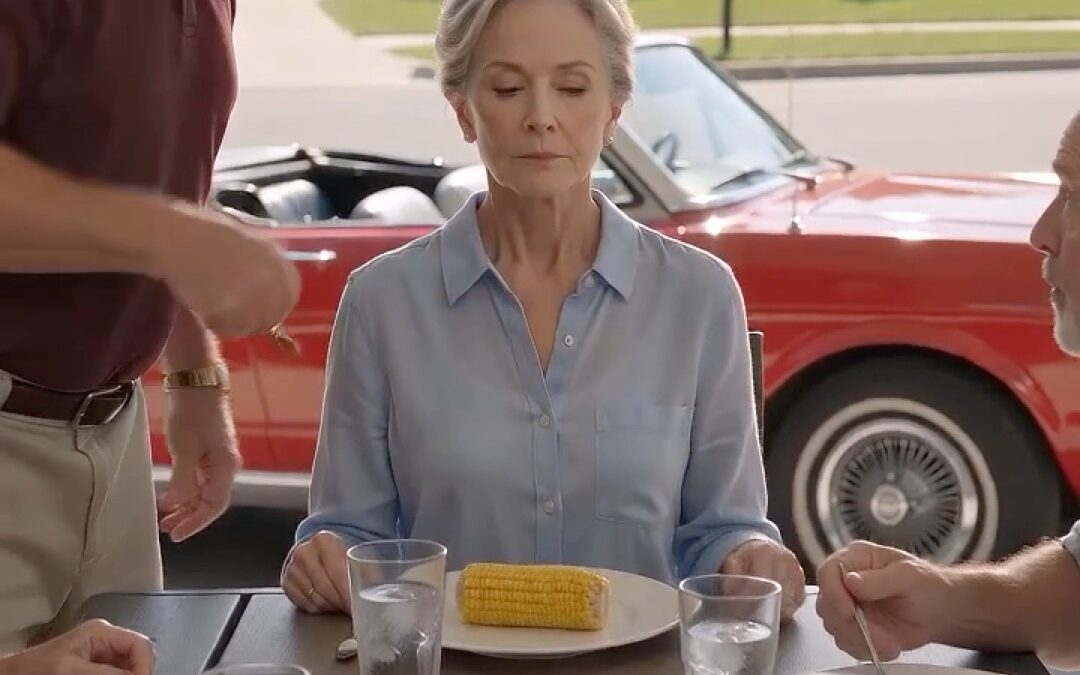
Complete story · 10 chapters · about 43 minutes · ending included
Chapter 1 · Chapter 2 · Chapter 3 · Chapter 4 · Chapter 5 · Chapter 6 · Chapter 7 · Chapter 8 · Chapter 9 · Chapter 10
Chapter 1: The Hat In The Photo
“Nobody’s looking at you in that car anymore, Dianna.”
Ken said it across my father’s picnic table.
Eleven members of our family heard him.
Polly laughed.
Andy looked down at his plate and said nothing.
I kept my hands around my water glass until they stopped shaking.
That sentence had started with one simple question.
“When is Dad’s Pontiac coming home?”
Ken had been cutting his steak.
He kept cutting.
“It’s in the shop, Dianna,” he said.
“Where?”
“Ottumwa.”
“What does it still need?”
“Parts.”
He made the word sound like I was bothering him over a lawn mower.
Dad’s red 1967 Pontiac GTO had been gone since May.
Ken had taken it to Ottumwa for brake work.
Dad’s brass-fob key had gone with him.
The only working key.
I knew that because I was my father’s executor.
I knew what belonged to his estate.
I knew what had left the garage.
And I knew what I had paid to restore that car.
“Thirty-eight thousand four hundred dollars,” I said.
Ken finally looked at me.
That money had come from my 403(b).
Mine.
Years of school-office paychecks, careful deductions, and saying no to things.
Dad had wanted his Pontiac made right again.
I had wanted that too.
Ken leaned back and smiled at the table.
Then he raised his voice.
“Nobody’s looking at you in that car anymore, Dianna.”
Polly gave a quick laugh beside him.
It was the kind she used when Ken made a joke with teeth.
My face went hot.
He knew exactly where to cut.
I was sixty-eight.
I had spent years being the woman behind the school-office counter.
The one who found lost forms, remembered birthdays, and kept copies.
People looked through women like me all the time.
Ken knew that bothered me.
He had known for forty-four years.
That was what hurt.
Not the car.
Not even the money.
He had taken something I had admitted privately and served it with supper.
Andy stared down at his potatoes.
My son was forty-two now.
He had become good at waiting for his father to stop.
“Mom,” Andy said quietly.
I looked at him.
He stopped there.
No defense.
No argument.
Just that tired look that meant, Please don’t make tonight worse.
I had seen that look before.
Peace usually meant I swallowed something.
Ken got to call that family harmony.
I called it practice.
“Pass the corn,” I said.
Polly reached for the bowl.
Her bracelets clicked against the serving spoon.
“Here you go,” she said sweetly.
Polly was sixty-five and still used that voice when she wanted to sound harmless.
She had been widowed for years.
Lately, Ken always seemed especially interested in making sure she had a drink, a chair, a ride home.
I noticed things.
That had been my job for most of my life.
Names.
Times.
Who signed what.
Who suddenly stopped looking at whom.
I spooned corn onto my plate.
Across from me, twelve-year-old Jonas leaned forward for a roll.
Something slipped from the neck of his T-shirt.
A small metal key.
It hung from a shoelace.
I pointed at it.
“What’s that?”
Jonas caught it in his hand.
“From Grandpa.”
He said it plainly.
Exactly.
That was Jonas.
If he promised to say six words, he said six.
“Grandpa gave you a key?”
Jonas nodded and tucked it back inside his shirt.
Ken glanced over.
Only for a second.
But I saw it.
His smile went away.
Then it came back.
I filed that away.
My father had always given strange little gifts.
Pocketknives.
Old bolts.
A coffee can full of washers.
Things that looked worthless until he told you why they mattered.
Dad had also given me a straw hat.
Wide brim.
Red ribbon.
He bought it years ago after saying my old sun hat made me look like I was “waiting for rain in a cornfield.”
I wore it whenever Dad took the Pontiac out.
The hat had been missing since May.
I had checked the hall closet.
The garage hooks.
The trunk with summer things.
Nothing.
I had assumed I misplaced it.
That thought bothered me now.
Jonas touched the small key through his shirt.
“Grandpa told me to keep it safe.”
After supper, I carried plates into the kitchen.
No speech.
No confrontation.
I wanted five quiet minutes with dishes and running water.
Kate followed me.
My seventeen-year-old granddaughter had her phone in one hand.
“Grandma.”
Something in her voice made me turn.
“What?”
Kate glanced toward the screen door.
Ken was outside laughing with Andy.
Polly sat beside him.
Too close, I thought.
Kate lowered her voice.
“I think you should see this.”
She held out her phone.
It was a social-media post from Polly.
The photo had been taken at a car show in downtown Des Moines.
The red Pontiac filled most of the picture.
Dad’s Pontiac.
Top down.
Polished until the hood reflected the sky.
My stomach tightened.
Polly sat in the passenger seat.
Smiling.
Wearing my straw hat.
The red ribbon rested against her cheek.
Under the picture, Polly had written:
Best seat at the Des Moines car show.
I gripped the edge of the counter.
Ken had told me the car was in Ottumwa.
Parts.
Waiting.
Polly had laughed when he mocked me.
Now she was sitting in Dad’s passenger seat wearing my hat.
Kate watched my face.
“Grandma?”
“I’m fine.”
I wasn’t.
Hurt came first.
Then embarrassment.
Then anger, clean and sharp.
Somebody had taken my hat from my home.
Somebody had put Polly in that seat.
And somebody had expected me never to see it.
I took Kate’s phone carefully.
“When was this posted?”
“Yesterday afternoon.”
Yesterday.
The day after our anniversary.
Ken had said he was dealing with something in Ottumwa.
I looked back at the photograph.
Polly’s face.
My hat.
Dad’s red dashboard.
The driver’s side was mostly cropped out.
Mostly.
A man’s forearm reached across the steering wheel.
Only part of him showed.
A sleeve.
A hand.
A watch.
My thumb hovered over the picture.
I needed to know whose arm was on that steering wheel.
I enlarged the photo.
The watch came into focus.
Silver case.
Dark leather band.
A scratch beside the clasp.
You may also like
My Daughter Accused Me of Ruining Her Wedding Cake, So I Asked the Baker for Proof
My Sister Claimed My Quilt At The County Show, So I Challenged Her Entry And Exposed A Lie
My Sister Gave Away My Daughter’s Birthday Dollhouse, So I Saved The Tag And Found The Truth
I knew that watch.
I had given it to Ken.
Picking up where the Facebook post left off
Chapter 2: The Wristband In The Visor
The watch on Kate’s phone belonged to Ken.
I kept staring at the scratched clasp.
“Don’t tell anybody you showed me this,” I said.
Kate nodded.
Outside, Ken laughed at something Polly said.
That laugh hurt more now.
I handed Kate her phone and turned back to the sink.
My husband had lied about where he was.
My sister had my hat.
Dad’s Pontiac had been in Des Moines.
I wanted to walk outside and hold the picture under Ken’s nose.
I didn’t.
A record was only useful if you didn’t warn people to change it.
I had spent years keeping school files straight.
When two stories disagreed, I never argued with the stories.
I found the third one.
The next morning, I called Polly about Dad’s estate.
She answered in that soft voice of hers.
“Everything okay?”
“I need to check a few personal-property items.”
“Oh, sure.”
I opened my estate notebook.
“Do you remember anything Dad kept with the Pontiac?”
Polly paused.
“Like what?”
“Keys. Papers. Tools.”
“No.”
Then she volunteered something I hadn’t asked.
“I haven’t laid eyes on that car since Dad’s funeral.”
My pen stopped.
She said it too quickly.
Too completely.
The photograph showed otherwise.
Polly had been sitting inside the Pontiac with my hat on her head.
I felt heat crawl into my face.
A lie from Ken hurt.
A lie from my sister had a different edge.
She had grown up in the same house I had.
She knew Dad’s voice.
She knew that car.
She knew exactly what she was denying.
“All right,” I said.
“Is that all?”
“For now.”
Polly went quiet.
Then her sweetness returned.
“You know, Dianna, estates make people suspicious.”
That was a small cut.
A warning dressed like concern.
I wrote her sentence down.
After lunch, Andy stopped by for a drill he’d left in our garage.
Ken wasn’t home.
I stood near Dad’s red tool chest while Andy searched a shelf.
“Does your dad ever mention the Pontiac to you?”
Andy kept looking through a box of bits.
“Sure.”
“Where does he say it is?”
“Ottumwa.”
“How often does he go there?”
Andy finally looked at me.
“Mom, let it go.”
My stomach tightened.
“How often?”
He rubbed the back of his neck.
“Dad drives to Ottumwa twice a month to check on it, Mom.”
Twice a month.
Since May, supposedly.
That was a lot of checking on brake parts.
Andy saw my face and frowned.
“He’s handling it.”
“That’s what he says.”
“Mom.”
“I heard you.”
He found his drill.
I watched my son leave carrying the answer his father had given him.
Andy believed Ken.
That hurt too.
Ken had built a story sturdy enough for our son to repeat.
Truth didn’t need that much maintenance.
On Monday, six of Ken’s car-club friends were already at the diner when we arrived.
Ken liked the long table near the front window.
He liked an audience even more.
One man asked when Dad’s Pontiac would finally show up.
Ken laughed.
“Ask my wife.”
I kept my menu open.
Another man said, “Heard that restoration wasn’t cheap.”
Ken pointed at me with his coffee spoon.
“She spent her retirement on a dead man’s car.”
Six men heard him.
Two looked down.
One gave an uncomfortable chuckle.
Ken smiled like he had told a harmless joke.
My chest tightened.
Thirty-eight thousand four hundred dollars.
My money.
My father’s car.
My husband’s joke.
He kept turning my careful choices into proof that I was foolish.
Little comments.
Public ones.
The kind that left me deciding whether dignity meant answering or staying quiet.
I closed the menu.
“Are you done?”
Ken grinned.
“Don’t get touchy.”
That word stung.
First the insult.
Then the complaint that I had felt it.
I ordered coffee.
After breakfast, Ken went inside again to pay.
He had forgotten his reading glasses.
“Get them from the truck, would you?” he said.
I took his keys.
His truck smelled like old coffee and vinyl.
I opened the passenger door and checked the console.
No glasses.
Then I lowered the sun visor.
Something slid against the windshield.
A paper wristband.
Bright yellow.
I caught it before it fell.
Printed across it were the words PARTICIPANT and the name of the Des Moines car show.
Saturday’s show.
My hands went cold.
The photograph could have been explained away.
Maybe somebody sent Ken a picture.
Maybe Polly posed near the car.
Maybe I had misunderstood the angle.
The wristband took those excuses away.
Participants wore those.
Ken had been there.
I slipped the band back into the visor exactly where I found it.
Then I found his glasses under the driver’s seat.
Ken came outside carrying a toothpick.
“Find them?”
I held up the glasses.
“Yes.”
He took them without looking at me.
I studied his wrist.
The same watch.
The same dark leather band.
If the car wasn’t in Ottumwa, where was it?
That afternoon, I opened my estate notebook at the kitchen table.
I wrote three things.
Polly said she hadn’t seen the car.
Andy said Ken drove to Ottumwa twice a month.
Ken had a participant wristband from the Des Moines show.
Then I found the number for the repair shop in Ottumwa.
A man answered.
“Tjaden Auto.”
“Is Fred Tjaden there?”
“Speaking.”
I introduced myself.
“Herman Ruden’s Pontiac was brought to you for brakes.”
Fred’s voice changed slightly.
More careful.
“I remember it.”
“I need to know whether it’s still there.”
A pause.
I pressed my fingers against the notebook.
Fred said, “No, ma’am.”
My stomach dropped.
“When did it leave?”
Another pause.
Then Fred gave me the first clean answer anybody had given me.
“Ken picked that up May 14.”
You may also like
My Daughter-in-Law Took My Name Off Our Thanksgiving Cookbook, So I Asked The Printer For Proof
My Manager Called Me A Cleaner At My Retirement Dinner, So I Asked For The Program
My Father-in-Law Called Me The Handyman At His Anniversary, So I Checked His Camera And Everything Changed
May 14.
The car had been gone for months.
Chapter 3: The Papers In Ottumwa
The car had been gone for months.
I held the receiver close.
“Do you still have the paperwork?”
Fred was quiet for a second.
“Yes.”
“I need to see it.”
“Come down.”
I didn’t tell Ken.
The next morning, I drove to Ottumwa with my estate folder on the passenger seat.
My hands stayed tight on the wheel.
Ken had lied for months.
Andy had repeated the lie.
Polly had built her own beside it.
I needed something that didn’t depend on anybody’s memory.
Fred Tjaden met me behind the shop counter.
He was a broad man with gray hair and grease under one thumbnail.
“You said you’re the executor?”
“Yes.”
I showed him the estate papers.
Fred studied them, then opened a metal file drawer.
He pulled out a work order.
“Ken brought the Pontiac in May eighth.”
He laid the page in front of me.
I recognized Ken’s handwriting immediately.
Big slanted letters.
He had filled out enough birthday cards and grocery lists in forty-four years.
Near the top was the car information.
Below it, one line stopped me.
Owner: Estate of Herman Ruden.
I touched the edge of the paper.
Ken knew.
He hadn’t written his own name as owner.
He hadn’t written Polly’s.
He had written Dad’s estate.
“Can I get a copy?”
“Sure.”
Fred pulled out another slip.
“This is when he picked it up.”
The date was May 14.
At the bottom sat Ken’s signature.
No mistake.
No confusion.
No missing parts.
My stomach tightened.
“Did he say where he was taking it?”
Fred shook his head.
“Just said he needed it.”
“Did he bring a trailer?”
“Yes.”
I felt angry enough to say something ugly.
Instead, I asked for copies.
Records first.
Feelings later.
Fred handed me the papers.
“He told me you knew.”
That hurt.
Ken had used my silence before I even knew I was silent.
I slid both copies into my folder.
“Thank you.”
On the drive back, I kept seeing one line.
Owner: Estate of Herman Ruden.
Ken’s own hand.
His lie had signed itself.
Before returning to Grinnell, I drove toward Indianola.
Polly lived outside town in a small house with a detached shed.
I parked down the road.
My heart thudded harder than I liked.
I hated sneaking.
I hated even more that my sister had made sneaking feel necessary.
Nobody answered when I knocked.
Her car wasn’t there.
I walked around the side yard.
The shed door was closed.
A small window faced the fence.
I stood on my toes and looked through the dusty glass.
Lawn mower.
Plastic gas can.
Garden tools.
Empty concrete floor.
No Pontiac.
No trailer.
Nothing under a cover.
I stepped away.
For one foolish second, I had hoped the car would be there.
Something simple.
Something I could point at.
Instead, I had another empty place.
Ken had taken Dad’s car from Ottumwa.
Polly didn’t have it at home.
The show was over.
How do you take back a car you can’t find?
By the time I reached Grinnell, fear had joined the anger.
The Pontiac was worth eighty-six thousand dollars on the estate inventory.
Ken had the only working brass-fob key.
He could move it anywhere.
I drove straight to the police station.
An officer listened while I explained.
I showed him the estate appointment.
I showed him Fred’s copies.
I showed him the photograph Kate had sent me.
He looked at everything.
Then he folded his hands.
“You gave him the key.”
“For repairs.”
“He’s your husband.”
“That doesn’t make it his car.”
“I understand.”
His voice was polite.
That made the answer worse.
He tapped the papers.
“The title is still in your father’s name?”
“Yes.”
“And your father’s deceased.”
“Yes.”
The officer leaned back.
“That’s civil, ma’am.”
My face burned.
“So you can’t make him tell me where it is?”
“No.”
“Even though I’m the executor?”
“You’ll need a lawyer.”
I gathered my papers.
My fingers shook.
I was angry at Ken.
Angry at myself.
Angry that a car could disappear while everyone around me acted like marriage turned theft into a misunderstanding.
The officer wasn’t cruel.
That almost made it harder.
He was simply telling me the boundary.
Ken knew how to stand on the other side of it.
At home, the garage smelled like dust and old oil.
Ken wasn’t there.
I put Fred’s copies in the estate folder.
Then I passed Dad’s red tool chest.
It had been sitting against the back wall since April.
Dad had owned it longer than I could remember.
The bottom drawer had never opened.
“Stuck since 1985,” Herman always said.
He would slap the red metal and grin.
Nobody had ever managed to pull it free.
Not me.
Not Ken.
Not Andy.
We had stopped trying years ago.
I rested my hand on the drawer pull.
It didn’t move.
For a moment, I thought about forcing it.
Then I stopped.
I had no idea yet what might matter.
I only knew Ken had hidden a car.
And the police weren’t going to find it for me.
I went inside and opened my address book.
One name had been there for years.
Marian Meints.
Estate lawyer.
Grinnell.
Dry voice.
Exact questions.
No promises.
I called her office.
The receptionist offered me an appointment.
I took it.
Then I closed the address book.
I did not tell Andy.
I did not tell Polly.
And I did not tell Ken.
You may also like
My Brother Called Me a Thief at Dad’s Birthday, So I Opened His Messages and Exposed His Lie
My Sister Claimed My Cabin At The Association Meeting, So I Checked The Records And Found A Surprise
My Sister Shamed Me At Her Birthday, So I Asked To See Mom’s Caregiver Bill
I booked Marian Meints.
Nobody knew.
Chapter 4: The Listing On The Screen
Nobody knew.
Marian Meints closed her office door behind me.
“Show me everything.”
I handed her Fred’s work order, the pickup slip, and the estate papers.
She read without filling the room with sympathy.
That was one reason I trusted her.
Marian dealt in what a document could prove.
Not what I wished it proved.
“Ken removed estate property,” she said.
“Yes.”
“You don’t know where the car is.”
“No.”
“That matters.”
My stomach tightened.
“Can I sue?”
“As executor, yes.”
Marian tapped the inventory.
“But replevin requires specifics.”
She counted them on her fingers.
“You swear where the property is.”
I nodded.
“You post a bond for twice its value.”
The Pontiac was inventoried at eighty-six thousand dollars.
Twice that was one hundred seventy-two thousand.
My mouth went dry.
“And Ken gets notice,” Marian said.
“So I can’t just have somebody take it.”
“No.”
“What if he moves it?”
“Then we have a problem.”
She turned another page.
“And right now, based on the estate file, half the residue belongs to Polly.”
I stared at her.
“Half the car?”
“If the car remains residue.”
That hurt more than I expected.
Polly had lied to me.
She had sat in Dad’s car wearing my hat.
Now the paperwork I had filed treated half its value as hers.
I felt foolish.
Worse, I felt cornered by my own careful work.
“I thought I was protecting Dad’s estate.”
“You were.”
Marian’s voice stayed exact.
“We work with the record we have.”
Waiting quietly wasn’t protecting anything.
It was giving Ken more time.
I left her office knowing one thing.
I needed to find the Pontiac.
Polly arrived at my house before supper.
She carried a copy of Dad’s inventory in a clear folder.
That alone told me she had come prepared.
Ken was out.
Polly sat at my kitchen table without being invited.
“I heard you’re asking questions.”
“From whom?”
Her smile tightened.
“Does it matter?”
“Usually.”
She slid the inventory toward me.
Her pink fingernail landed beside the Pontiac entry.
“Eighty-six thousand.”
“I know.”
“Half that car is mine. Don’t be greedy.”
My hands went cold.
Greedy.
I had spent thirty-eight thousand four hundred dollars restoring Dad’s car.
Ken had hidden it.
Polly had lied about seeing it.
And now my sister was calling me greedy in my own kitchen.
Small cuts.
Sweet voice.
Sharp blade.
“The estate isn’t distributed,” I said.
“I know how wills work.”
“Then you know nothing is yours yet.”
Polly leaned back.
“Dianna, I’m only protecting my half.”
There was that word again.
Half.
I wanted to ask about the photograph.
I wanted to ask why my hat had been on her head.
I wanted to watch her choose another lie.
I didn’t.
“Anything else?”
Polly gathered her folder.
“You always did make everything harder than it had to be.”
That one went deep.
Dad used to say I was the dependable daughter.
Polly heard criticism whenever he said it.
I heard responsibility.
Now responsibility had become another thing she resented me for.
After Polly left, I locked the inventory in my desk.
Kate came by carrying her laptop.
“I found something.”
She set it beside me.
A page for the Labor Day Car Corral filled the screen.
Rows of vehicles.
Prices.
Seller names.
Then I saw red paint.
Dad’s Pontiac.
The listing photo showed it with the top down.
Underneath were the words:
Restored by owner, K. Hoekstra, $92,000.
My stomach turned.
Owner.
Ken had written Estate of Herman Ruden on Fred’s work order.
Now he was advertising himself as owner.
Kate whispered, “Grandma.”
“I see it.”
There was more.
A sale note.
Deposit received.
Trailer pickup arranged from Omaha.
Sunday.
I gripped the desk edge.
That gave me a county if the car arrived at the show.
It also gave Ken an exit.
The buyer planned to take the Pontiac out of Iowa.
“Print this.”
Kate did.
The printer hummed while I opened the desk drawer for my checkbook.
A bank envelope sat underneath.
Joint savings.
I logged into the account.
The balance made my chest tighten.
Twelve thousand dollars was gone.
I opened the transaction.
Transfer.
Mesa, Arizona.
Condo deposit.
Ken Hoekstra.
I stared at his name.
Forty-four years of marriage.
A hidden car.
A buyer from Omaha.
And now a place in Mesa.
This wasn’t one bad decision.
Ken was building an exit.
He just hadn’t told me I was being left behind.
Kate stood beside me.
“Grandma, are you okay?”
“No.”
It was the easiest answer I had given all week.
I printed the transaction.
The papers formed a small stack on my desk.
Car listing.
Sale deposit.
Trailer arrangement.
Mesa condo.
Can she stop it before Sunday?
I called Marian and left a message.
Then I put everything away before Ken came home.
He walked in carrying groceries and talking about the weather.
Normal voice.
Normal shirt.
Normal marriage, if I didn’t know where to look.
I helped put food away.
No accusation.
No scene.
After supper, Ken washed one plate and handed it to me.
Then he changed his mind and dried it himself.
He rubbed the towel around the rim.
“You’re awfully quiet.”
“I’m tired.”
Ken watched me.
I could feel him measuring what I knew.
Then he smiled.
Not warmly.
“After Labor Day, Dianna, we need to talk about this house.”
The towel stopped in his hands.
You may also like
My Sister Shamed Me At Mom’s Memorial, Then My Niece Played The Message She Hid
My Son Banned Me From The Cabin At Christmas, So I Made A Move He Never Expected
My Daughter Made Me Her Free Camp Grandma At The Summer Kickoff, Then A Dad Handed Me Her Week 9 Envelope
Not just the car.
My home too.
Chapter 5: The Key To The Drawer
My home too.
Ken kept drying the same plate.
I looked at his hands and said nothing.
The next morning, Marian called before breakfast.
“We need the title.”
“I thought the estate papers were enough.”
“They establish your authority.”
Her voice stayed flat and exact.
“The title establishes the car.”
I knew where Dad kept old vehicle papers.
Or where I thought he kept them.
His desk had been cleared after he died.
His bank box had been checked.
His Bible had been checked.
Marian and I had searched for any separate property list then.
We found nothing.
The Pontiac had gone into the estate residue.
Now Marian wanted the title itself.
I went to the garage.
Dad’s red tool chest sat against the back wall.
Dust covered the top.
The bottom drawer still looked crooked.
“Stuck since 1985,” Dad had always said.
I crouched.
Then I saw the metal near the latch.
Fresh scratches.
Bright silver against old red paint.
Pry marks.
My stomach tightened.
Somebody had tried to open that drawer recently.
I touched one gouge with my thumbnail.
It was sharp.
Ken had been in this garage plenty of times.
So had Andy.
But only one person had been hiding Dad’s car from me.
I pulled the handle.
Nothing.
I tried harder.
The drawer stayed shut.
I sat back on my heels.
Fear came first.
Then anger.
Dad had joked about that drawer for forty years.
Nobody bothered with it because he said it was useless.
Now someone had put a tool to it.
That meant the drawer mattered.
And suddenly I remembered Jonas.
The little key on the shoelace.
From Grandpa.
I called Andy.
“Is Jonas home?”
“Yeah.”
“I need to ask him something.”
Andy sighed.
“Mom, what now?”
“Put Jonas on.”
A few seconds later, my grandson answered.
“Hi, Grandma.”
“Jonas, that little key Grandpa gave you.”
He went quiet.
“What does it open?”
Another pause.
Then Jonas said, “Grandpa said only if you asked.”
My skin prickled.
“Only if I asked what?”
“What it opens.”
I sat very still.
“All right.”
Jonas lowered his voice.
“The bottom drawer in his red tool chest.”
I closed my eyes.
Dad had planned that answer.
Not for Andy.
Not for Polly.
Not for Ken.
For me.
“Can you bring me the key?”
“Yes.”
Jonas arrived twenty minutes later with Andy.
The shoelace still hung around his neck.
Andy looked irritated.
“Can somebody tell me what this is about?”
“No.”
My answer surprised him.
Jonas slipped the small key over his head.
He held it out to me.
I crouched beside the tool chest.
My hands shook enough that I missed the lock once.
The key turned.
A small click.
That sound changed the whole room.
I pulled the drawer.
It opened.
Inside sat a manila envelope.
A vehicle title rested beneath it.
Herman Ruden.
The Pontiac.
Still in Dad’s name.
My throat tightened.
Under the title lay a Polaroid.
Baby Jonas sat in the Pontiac’s passenger seat.
Dad’s hand was visible near the door.
Jonas leaned over my shoulder.
“That’s me.”
“I know.”
Then I opened the envelope.
One sheet of paper was inside.
Dad’s handwriting covered most of it.
At the top was a date.
December 21, 2025.
At the bottom was his signature.
My eyes moved to the line about the Pontiac.
1967 Pontiac GTO convertible to Jonas Hoekstra.
I stopped breathing for a second.
Andy said, “What?”
I handed him nothing.
Not yet.
I kept reading.
Dad had named other personal items too.
Tools.
Furniture.
Small things that suddenly had owners.
But the Pontiac was clear.
Jonas.
Not Polly.
Not me.
Not Ken.
Jonas.
I called Marian.
“Come to my house.”
She heard something in my voice.
“What did you find?”
“The title.”
“Anything else?”
“Yes.”
Marian arrived with her briefcase.
She read the list at my kitchen table.
Then she asked for Dad’s will.
I brought it.
She turned directly to Article III.
Her finger stopped.
“The will says a dated, signed list controls personal property if he left one.”
“He left one.”
“Yes.”
Then she turned to Article IV.
“And property left to someone under twenty-one is held in trust.”
I looked at Jonas.
He was twelve.
“So the car is his.”
“Specifically bequeathed to him.”
My chest hurt.
Dad had made it simple.
We had simply never found the paper.
Marian looked at me.
“You hold it as trustee until Jonas is twenty-one.”
Andy finally spoke.
“Dad said Polly gets half.”
“Polly gets half the residue,” Marian said.
“This isn’t residue anymore.”
That was the cleanest sentence I had heard in weeks.
Polly had no half.
Ken had no ownership.
And Dad had left the car to his great-grandson.
I felt relief.
Then Marian closed the will.
“Don’t relax yet.”
My stomach dropped.
“Why?”
“Ken can still fight possession.”
She explained the risk.
If we got the car under a replevin order, Ken could post a delivery bond and try to get it back while the dispute continued.
“So finding this doesn’t put the key in my hand.”
“No.”
“It proves who Dad left it to.”
“Yes.”
Marian stacked the papers.
“Now we need the car.”
The call came Thursday.
Fred.
“I found your Pontiac.”
I stood up so fast my chair scraped the floor.
“Where?”
“Fairgrounds in Des Moines.”
My pulse jumped.
“You’re sure?”
“Row C.”
He had gone for setup.
The Pontiac was already inside the show grounds.
Then Fred gave me the second thing I needed.
“Show rules say every car stays until Sunday at three.”
A fixed place.
A fixed window.
Polk County.
I called Marian immediately.
She didn’t waste a word.
“Come in.”
At her office, she already had the petition started.
The sworn statement said the car was in Polk County.
It said an Omaha trailer was expected Sunday afternoon.
It identified me as personal representative.
It named the specific bequest to Jonas.
Marian slid the page toward me.
“We ask for emergency relief.”
“Will the judge move before Sunday?”
“I don’t promise judges.”
That sounded like Marian.
She pointed to the signature line.
“Raise your right hand.”
I did.
My palm was damp.
My voice wasn’t.
I swore the facts were true.
Then I signed the petition for Polk County.
You may also like
My Supervisor Called Me A Cleaner At Christmas Dinner, So I Kept My Seat And Questioned Her Credit
My Adoptive Mother Pulled My Chair Away At My 50th Birthday, So I Called The Woman She Hid
My Sister Knocked My Birthday Plate Down, So I Kept The Receipts She Signed
Under oath.
With Ken still believing I had nothing.
Chapter 6: The Trophy By The Stage
Ken still believed I had nothing.
By Thursday afternoon, a deputy found him in row C.
Ken stood beside Dad’s Pontiac when the judge’s hearing order reached his hand.
Fred called me afterward.
“What did he say?”
Fred gave a short laugh.
“She’s bluffing.”
My stomach tightened.
Ken had spent weeks treating my silence like weakness.
Now he was treating a court order the same way.
Part of me wanted his phone ringing in his hand.
Part of me wanted him to hear exactly what I thought.
I didn’t.
Marian had been clear.
“Let the paper speak.”
Friday’s phone hearing came.
Ken didn’t.
I sat in Marian’s office with the title and Dad’s signed list beside me.
The judge asked questions.
Marian answered precisely.
I answered when asked.
The Omaha trailer was expected Sunday.
The Pontiac remained at the fairgrounds.
Ken had been hand-served.
And Ken was absent.
By late afternoon, that day’s civil shift was nearly over.
Then Marian’s office phone rang.
She listened.
“Thank you.”
She hung up.
“The writ issued.”
My hands went still.
For weeks, I had been chasing a car I couldn’t find.
Now a judge had put its location on paper.
But paper still wasn’t the brass key.
Ken had that.
Saturday, the Iowa State Fairgrounds looked like polished chrome and folding chairs.
Four hundred people crowded around the awards stage.
Dad’s red convertible sat near it.
Top down.
Bright under the overhead lights.
My chest hurt when I saw the passenger seat.
Polly sat there.
Wearing my straw hat.
The red ribbon rested beside her cheek again.
She smiled as if nothing about that seat belonged to somebody else.
Ken had placed a display board in front of the Pontiac.
Restored by owner.
No Dad.
No estate.
No Jonas.
Just Ken.
My anger felt almost calm now.
That scared me more than shaking had.
Ken stood near the stage waiting for the awards.
He wore the silver watch I had given him.
The brass-fob key bulged in his pants pocket.
I could see the edge of the fob.
So close.
Still his.
For now.
I walked in with Jonas beside me.
Andy and Kate followed.
Marian carried her case.
Jonas had the small drawer key back around his neck.
His fingers kept touching it through his shirt.
“Stay with me,” I said.
“I will.”
Ken spotted us.
His smile dropped.
Then the announcer called his name.
Ken stepped onto the stage.
He accepted a trophy.
People clapped.
Polly clapped hardest.
I thought about the diner.
She spent her retirement on a dead man’s car.
Now he was holding an award beside the same car.
A dead man’s car when my money restored it.
His car when applause was available.
That hurt.
It also clarified everything.
Ken took the microphone.
He looked straight at me.
“Well, looks like my wife came to inspect my work.”
A few people laughed.
My face warmed.
He liked turning cruelty into entertainment.
He liked making me decide whether defending myself would look worse.
I had spent enough years making that choice.
Ken pointed toward the Pontiac.
“Herman gave me that car. We shook on it in his garage.”
The crowd laughed again.
Not everyone.
But enough.
My stomach tightened hard.
That was a new lie.
And he had chosen a microphone for it.
Andy looked at me.
“Dad said Grandpa gave it to him?”
“That’s what you heard.”
Ken spread his hands.
“Dianna’s having trouble accepting that.”
More laughter.
Hurt rose behind my ribs.
I could have yelled.
I could have waved Dad’s list.
Instead, I looked at Fred.
He stepped forward.
Fred held up the May 14 pickup slip.
“Ken.”
The microphone lowered.
Fred’s voice carried anyway.
“You signed this when you picked the car up.”
Ken stared at him.
Fred lifted the paper higher.
“May fourteenth.”
The crowd settled.
Kate moved beside me.
She held up her phone.
On the screen was Polly’s post from the Des Moines show.
Polly in my hat.
Polly in Dad’s passenger seat.
Kate said, “This was posted while Grandpa’s car was supposedly in Ottumwa.”
Polly stood up from the Pontiac.
Her face changed.
Ken looked toward her, then back at me.
The smile returned.
Smaller now.
“It was an anniversary surprise, Dianna. You’ve ruined it.”
The sentence hurt in a fresh place.
An anniversary surprise.
He had taken twelve thousand dollars from joint savings.
He had advertised Dad’s car for ninety-two thousand.
He had arranged an Omaha trailer.
And now he handed me the blame.
Ruined it.
As if dishonesty became kindness if he wrapped it in our marriage.
As if I had spoiled my own betrayal by finding it.
I looked at Andy.
He wasn’t studying the floor anymore.
He was studying his father.
Marian stepped closer to me.
“Don’t argue with him.”
“I won’t.”
Ken climbed down from the stage.
The trophy stayed in his hand.
He stopped beside the Pontiac.
“Enough of this.”
Marian opened her case.
I saw the folded writ.
Ken saw it too.
His jaw tightened.
For the first time all morning, nobody near us laughed.
I looked at the bulge in Ken’s pocket.
The brass-fob key.
Dad’s only working key.
The thing Ken had taken to Ottumwa.
The thing he had carried through every lie since May.
Would he hand it over?
Marian took one step forward.
Ken reached into his pocket first.
He pulled out the brass fob.
My heart kicked.
The key flashed under the fairground lights.
Ken wrapped his fingers around it.
Tight.
Then tighter.
“Try and take it.”
You may also like
My Son Stranded Me Before Our Family Reunion, So I Called The Driver And Heard What He Sent
My Son Called My Gift Garbage At His Housewarming, So I Asked His Wife About The Bill
My Husband Shamed Me At Our Anniversary, So I Called The Jeweler He Named
His fist closed over Dad’s key.
And he didn’t move.
Chapter 7: The Hand That Opened
Ken’s fist stayed closed around Dad’s key.
Nobody near the stage laughed now.
Deputy Kolbe stepped beside Marian and unfolded the writ.
“Ken Hoekstra?”
Ken lifted his chin.
“You know who I am.”
The deputy looked at the paper.
Then he began reading.
His voice was steady enough to make every word feel permanent.
The court had ordered possession of the 1967 Pontiac GTO delivered to me as personal representative of Herman Ruden’s estate.
Ken shook his head.
“This is ridiculous.”
Deputy Kolbe kept reading.
I watched Ken’s face instead.
The color around his mouth changed.
He finally understood that Marian had not brought a warning.
She had brought an order.
Fred stepped beside the Pontiac.
He held up another sheet.
“I’ve got the May eighth work order.”
Ken looked toward him.
Fred pointed to the handwritten ownership line.
“Your handwriting.”
Ken’s jaw tightened.
Fred read it aloud.
“Owner: Estate of Herman Ruden.”
A murmur moved through the people nearest us.
My stomach twisted.
Ken had just told four hundred people Dad gave him the car.
His own handwriting said otherwise.
One lie.
One page.
One audience.
Ken raised his voice.
“This is family. Family doesn’t need a deputy.”
That hurt in a strange way.
Family had apparently needed months of lies.
Family had needed my retirement money.
Family had needed my sister wearing my hat.
But a deputy was suddenly too much.
Silence was not patience.
Silence was permission.
Polly climbed out of the passenger seat.
“Half of it’s mine!”
Her sweet voice was gone.
Now she sounded frightened.
Angry too.
She pointed at me.
“Dad left the estate to us.”
Marian opened Dad’s will and the signed list.
“Residue is divided between you.”
Polly crossed her arms.
“Exactly.”
Marian looked at her.
“This vehicle is not residue.”
Polly’s face tightened.
Marian held up Dad’s handwritten list.
Then she read one line.
“1967 Pontiac GTO convertible to Jonas Hoekstra.”
Jonas stood beside me.
His fingers curled against his shirt.
For once, he did not touch the little key hanging underneath it.
Polly stared at him.
Then at Marian.
Then at me.
“No.”
That single word carried years of something I had never wanted to name.
Envy.
Of Dad trusting me.
Of Jonas getting something she expected.
Of a passenger seat.
Of a hat.
Of her half.
I felt hurt for her.
Then angry at myself for feeling hurt for her.
Deputy Kolbe folded the writ.
He looked at Ken.
“Do you have a delivery bond?”
Ken frowned.
“A what?”
“A bond allowing you to retain possession pending the case.”
Ken glanced toward Marian.
Then toward the crowd.
His confidence had nowhere to go.
“No.”
Deputy Kolbe nodded once.
“Then possession goes to the plaintiff.”
Ken laughed sharply.
“This is insane.”
Nobody joined him.
That pause hurt him more than any argument could have.
The deputy held out his open hand.
Nothing dramatic.
Nothing loud.
Just one palm waiting.
Ken stared at it.
His fist stayed closed.
My hands started shaking again.
That key had been in our house.
Then Ottumwa.
Then Des Moines.
Then hidden in Ken’s pocket while he lied to me.
I wanted it back so badly my chest hurt.
Deputy Kolbe said, “The key.”
Ken looked at me.
I saw fury there.
And embarrassment.
Mostly embarrassment.
He hated being corrected in public.
He hated being made small.
I knew because that was what he had done to me for years.
Ken opened his fingers.
The brass fob rested in his palm.
He dropped it into Deputy Kolbe’s hand.
Metal clicked against metal.
That tiny sound traveled farther than Ken’s microphone had.
Deputy Kolbe walked past him.
Straight toward Jonas.
Then he crouched.
I stood beside my grandson.
The deputy opened his hand again.
The brass-fob key lay across his palm.
He placed it into Jonas’s hand.
Jonas looked at me.
“Grandma?”
“Hold it.”
His fingers closed carefully.
Not greedy.
Not proud.
Careful.
Dad had chosen well.
Andy moved then.
He crossed the space between us and stepped behind Jonas.
His hand settled on his son’s shoulder.
Ken watched him.
Andy’s voice came out low but clear.
“You told me you drove to Ottumwa twice a month, Dad. Since May.”
Ken’s face changed.
Andy had defended him.
Repeated his story.
Told me to let it go.
Now my son was finally looking at the lie instead of asking me to ignore it.
Ken pointed at him.
“You don’t understand.”
Andy did not move.
“Then explain why the car left May fourteenth.”
Ken had no answer ready.
That frightened him.
I could see it.
Polly reached up.
Her fingers touched the brim of my straw hat.
She removed it slowly.
The red ribbon slipped across her shoulder.
She held the hat against her stomach.
For weeks, seeing it on her had felt like another theft.
Small compared with the Pontiac.
But personal.
Dad had bought that hat for me.
Ken had let Polly wear it in Dad’s passenger seat.
She had smiled for the picture.
Now she looked down at it.
I held out my hand.
No speech.
No accusation.
Polly stared at my palm.
Then she placed the hat there.
I put it on.
The ribbon brushed my cheek.
Ken looked away.
Deputy Kolbe handed me a form.
“The return.”
Marian pointed to the signature line.
I signed.
Dianna Hoekstra.
Personal representative.
My hand shook once.
Then stopped.
I looked at Ken.
He still held the trophy.
That struck me as almost sad.
A man standing beside a car that was never his, clutching an award he had already made meaningless.
I remembered his voice across our anniversary table.
Nobody’s looking at you in that car anymore, Dianna.
He had counted on that.
On me staying quiet.
On Andy looking down.
On Polly smiling.
On everyone seeing only what Ken told them to see.
I handed the signed return back to Deputy Kolbe.
Then I faced my husband.
“You said nobody was looking, Ken.”
I glanced at the people around us.
“Look around.”
Ken did.
Four hundred people had been there for the awards.
Now plenty of them were watching him.
No laughter.
No applause.
Just faces.
Where did Ken think he was going tonight?
Fred brought his flatbed around.
The winch cable hooked beneath Dad’s Pontiac.
The motor started pulling.
Slowly, the red convertible climbed the ramps.
Ken stepped toward me.
“Dianna, we’ll talk when we get home.”
I looked at him.
Forty-four years made the words difficult.
Not confusing.
Difficult.
I had already decided.
“Don’t come home tonight.”
Ken went still.
I held his eyes.
You may also like
My Fundraiser Chair Sent Me To Eat By The Trash, So I Refused To Keep Serving
My Brother Accused Me Of Selling Mom’s China At Thanksgiving, So I Asked For The Buyer
My Husband Humiliated My Son At His Academy Banquet, So I Checked The Mail He Handled
“Not to our house.”
“Not while I’m there.”
Chapter 8: The Promise Behind The Money
“Not while I’m there.”
Ken stared at me beside Fred’s flatbed.
The red Pontiac sat strapped behind him.
He opened his mouth.
Nothing came out.
That frightened me more than one of his jokes would have.
Ken always had a joke.
A reason.
A way to make my hurt sound unreasonable.
Now he had none.
Andy stood behind Jonas.
Kate stayed close to me.
Marian closed her case.
I put one hand on the brim of my straw hat.
It still smelled faintly like Polly’s perfume.
That hurt.
My own things had started coming back to me one at a time.
The hat.
The car.
The truth.
My marriage was the thing I no longer wanted returned.
Ken finally said, “You’re making this bigger than it is.”
My stomach tightened.
He had hidden Dad’s car.
Taken twelve thousand dollars.
Planned to sell property that belonged to Jonas.
And somehow I was still the one making trouble.
That old trick did not work anymore.
“I’ll call you through Marian.”
Ken’s face hardened.
“Dianna.”
I turned away.
By Tuesday, Ken sat across from me at Marian’s conference table.
No microphone.
No trophy.
No crowd.
Just papers.
Marian placed the agreed judgment in front of him.
“Read before signing.”
Ken looked at me instead.
“You really want lawyers deciding our family business?”
I felt the old pull.
Forty-four years made certain sentences sound familiar enough to obey.
Keep it private.
Don’t embarrass him.
Don’t make things worse.
I had spent too long confusing privacy with protection.
“This is estate business,” I said.
Marian slid a pen toward Ken.
He read.
The judgment settled possession of the Pontiac.
It recognized the estate’s claim.
It required repayment of the twelve thousand dollars taken from our joint savings for the Mesa condo deposit.
Ken stopped at that line.
“That money was ours.”
“So was the account,” I said.
He looked at me.
I rested my palms against the tabletop.
No shaking now.
He had taken shared money to build a future he never told me about.
That had hurt differently from the car.
The Pontiac belonged to Dad’s estate.
The twelve thousand had belonged to the life Ken and I were still supposedly living.
He had already spent part of our marriage somewhere else.
Ken signed.
One page.
Then another.
Marian checked each signature.
“Payment.”
Ken pulled out a cashier’s check.
Twelve thousand dollars.
He pushed it across the table.
The paper stopped near my hand.
I did not touch it.
Marian did.
She checked the amount and payee.
“Received.”
Ken leaned back.
“So now we’re done?”
A knock sounded at Marian’s door.
Her receptionist opened it.
A man I recognized from Ken’s car club stood there.
The club president.
He held nothing when he entered.
That made Ken sit straighter.
“What are you doing here?”
The president looked uncomfortable.
But he did not leave.
“Ken, I need the trophy.”
Ken gave a short laugh.
“You’re kidding.”
“No.”
His smile disappeared.
My chest tightened.
That trophy had been in Ken’s hand when Dad’s car was taken back.
He had held it like proof.
Proof he was admired.
Proof he belonged.
Proof the story he told mattered more than the papers I carried.
Now someone else was asking for that proof back.
Ken stared at the club president.
“On what grounds?”
“Misrepresentation of ownership.”
Ken’s face reddened.
The president held out his hand.
“And your membership card.”
For a second, I almost felt sorry for him.
Then I remembered four hundred people laughing because Ken had invited them to.
Hurt does not disappear just because the person who caused it finally feels some.
Ken opened his briefcase.
The membership card came out first.
He slapped it into the man’s palm.
Then he reached beneath the table.
The trophy sat inside a shopping bag.
He must have brought it knowing.
That detail stayed with me.
He had hoped maybe nobody would ask.
The president took the trophy.
“I’m sorry it came to this.”
Ken looked at him.
“You’re sorry?”
The man did not answer.
He left with both things.
Ken watched the door close.
No trophy.
No club.
No applause.
Marian gathered the signed judgment.
“Anything else today concerns your domestic matter, not the estate.”
Ken looked at me.
His voice dropped.
“You’ve made your point.”
“No.”
I stood.
“I made a decision.”
That afternoon, Andy came to the house.
Ken had already packed several boxes.
Shirts.
Shoes.
Car magazines.
The old coffee mug he always used in the garage.
Andy carried them from the bedroom to the driveway.
He did not tell me to let it go.
That mattered.
Ken stood near the front steps.
“You’re putting your son in the middle.”
Andy stopped.
His jaw tightened.
“I’m carrying boxes.”
Ken looked wounded.
That expression would have worked on me once.
Maybe it worked on Andy too.
But my son picked up another box.
I watched him carry it outside.
I felt sad.
Not triumphant.
Forty-four years did not become meaningless because the ending was ugly.
There had been birthdays.
School concerts.
Funerals.
Ordinary Tuesdays.
A whole life could contain good years and still end because of what someone chose later.
I went back inside.
At the kitchen table, I opened the folder Marian had prepared.
Divorce petition.
My name looked strange on it.
Dianna Hoekstra.
Petitioner.
I thought my hands would shake.
They did.
I signed anyway.
Fear was still fear.
It simply was not making my decisions anymore.
I filed for divorce.
That evening, the house felt larger.
Ken’s chair was empty.
His shoes were gone from the mudroom.
I made tea and stood at the sink.
Then my phone rang.
Polly.
I almost ignored it.
Instead, I answered.
“What?”
Her breathing sounded uneven.
“Dianna, I need to tell you something.”
I waited.
Polly said, “Ken’s not here.”
“I didn’t ask.”
“No, listen.”
Her voice had lost its sweetness.
“What did you think you were getting, Polly?”
Silence.
Then one small sound.
Almost a laugh.
Almost crying.
I gripped the phone tighter.
Polly finally answered.
“He told me seventy thousand.”
Seventy thousand.
You may also like
My Mom Mocked My Job At Thanksgiving, So I Asked Questions And Uncovered My Brother’s Secret
My Stepdaughter Locked Me Out Of My Own Cabin Bedroom, So I Read Her Group Text Out Loud
My Son-in-Law Sent Me To A Motel For Christmas, So I Came Back With A Pie And His Own Texts
Not half.
A promise.
Chapter 9: The Number In His Texts
A promise.
The word sat between Polly and me.
“What did he promise you?” I said.
Polly’s breathing caught.
“Seventy thousand.”
My stomach tightened.
Not half the estate.
Not some vague future.
A number.
Ken had put a price on whatever he was building with my sister.
“Come over,” I said.
Polly arrived carrying her phone and wearing no makeup.
Her eyes looked swollen.
I had seen Polly play wounded before.
This was different.
She looked scared.
She sat at my kitchen table and unlocked her phone.
“I saved it.”
“Show me.”
Polly turned the screen toward me.
Ken’s text was short.
When the GTO sells, you get $70,000. Then Mesa.
I stared at the words.
Mesa.
He had not only promised her money.
He had promised her the place he was preparing to leave me for.
The condo deposit.
The hidden car.
My sister.
Forty-four years of marriage had been reduced to a sale price and a destination.
My chest hurt.
I hated that it still could.
Polly kept talking.
“He said the car would bring enough.”
“Ninety-two thousand.”
Her eyes lifted.
“You knew?”
“I knew the listing.”
Polly pressed her lips together.
“He told me seventy was my share.”
“Your share of what?”
She looked down.
That answer told me enough.
Ken had made each of us hear a different story.
To me, the Pontiac was in Ottumwa.
To Andy, he checked on it twice a month.
To the crowd, Dad had given it to him.
To Polly, seventy thousand dollars was waiting after the sale.
Truth had never entered the plan.
Only usefulness.
Polly swallowed.
“He kept the buyer’s deposit too.”
“The Omaha deposit?”
She nodded.
“Five thousand.”
My anger sharpened.
That money had come from a sale Ken had no right to make.
“And where is Ken?”
Polly stared at the table.
“Not at my house.”
I waited.
“He came last night.”
Her voice became smaller.
“He expected to stay.”
I almost laughed, but the sound never came.
Expected.
Ken had spent months expecting things.
My silence.
My money.
Dad’s car.
Polly’s loyalty.
He had mistaken access for ownership.
“What happened?”
“I told him to leave.”
I looked at her.
She pulled at one fingernail.
“He said I owed him after everything he’d risked.”
That sentence hurt even though it was not aimed at me.
There it was.
Polly had thought she was being chosen.
Ken thought he had made an investment.
“He packed a bag,” she said.
“And?”
“I put it outside.”
Rain tapped the kitchen window.
Polly looked toward it.
“His bag is still in my yard.”
Indianola.
Rain soaking through Ken’s clothes while his seventy-thousand-dollar promise sat glowing on Polly’s phone.
I felt no victory.
Just exhaustion.
By afternoon, Marian called.
Her voice had the clipped sound she used when a problem had become paperwork.
“The Omaha buyer filed suit.”
I sat straighter.
“Against the estate?”
“No.”
Relief came fast.
“Against Ken?”
“Yes.”
The buyer wanted the five-thousand-dollar deposit returned.
He also claimed costs connected to the planned pickup.
Ken had sold a car he did not own.
Now somebody outside the family was asking him to pay for it.
“He’ll fight it,” I said.
“Probably.”
“Does that affect Jonas?”
“Not if the estate stays out of Ken’s contract.”
Precise.
Clean.
I needed that.
Then Marian added, “The Mesa transaction failed.”
I closed my eyes.
“The condo?”
“The deposit was repaid under the judgment, and Ken couldn’t complete the purchase.”
Mesa.
Gone.
Polly’s seventy thousand.
Gone.
The Pontiac.
Gone from Ken too.
He had built his exit on things that did not belong to him.
Once those pieces came loose, the whole plan collapsed.
I felt angry.
I also felt sad.
A marriage should not end because a judge found the paperwork before a trailer left the state.
But mine had not ended in court.
It had ended quietly months earlier.
I had simply been the last person told.
A week later, Marian called me into her office for the final estate report.
Polly came too.
She sat two chairs away from me.
No sweet voice.
No inventory folder.
Marian reviewed the residue.
Accounts.
Household property.
Remaining proceeds.
Then she came to Polly’s share.
Polly listened carefully.
Marian said, “You receive your half of the residue.”
Polly nodded.
Then Marian closed that section.
“The Pontiac is excluded.”
Polly’s face tightened.
“No car?”
“No car.”
Marian did not soften it.
“Specific bequest to Jonas Hoekstra.”
Polly stared at her hands.
For months, she had said half.
Half the car.
Half Dad’s estate.
Half anything she thought I was keeping.
Now the answer was exact.
She had a residue share.
She had no share of the Pontiac.
I felt something loosen in me.
Not happiness.
Certainty.
Those were different things.
Marian handed me a separate document.
The new title paperwork had been processed.
I looked at the ownership line.
Dianna Hoekstra, Trustee for Jonas.
My fingers trembled against the page.
Dad had trusted me with the estate.
Now the law trusted me with Jonas’s car.
Until he turned twenty-one, I would hold it for him.
Not drive it as mine.
Not sell it.
Not let another person turn family into possession.
I carried the papers home in my old estate folder.
The garage felt different.
Dad’s red tool chest sat against the wall.
The bottom drawer was closed now.
No longer mysterious.
Fred had returned the Pontiac after the fairgrounds.
The red body rested under its cover.
The brass-fob key was locked away with the title documents.
Jonas had held that key once in his palm.
Deputy Kolbe had placed it there.
But legally, I still held the car for him.
Who turns that key?
That question stayed with me.
Not Ken.
Not Polly.
Not me alone.
I went to the kitchen and found the Polaroid from Dad’s drawer.
Baby Jonas sat in the passenger seat.
Dad’s hand showed near the door.
He must have known something none of us knew yet.
Maybe only that he wanted the boy connected to that car.
Maybe that was enough.
I took the picture to the garage.
Near the door was an old cork strip where Dad once pinned oil-change notes.
I fastened the Polaroid there.
Then I opened my calendar.
I did not want the Pontiac becoming another object everyone fought over.
I wanted one clean memory attached to it.
One that belonged to Jonas.
I chose the date.
August 14, 2027.
You may also like
My Daughter-in-Law Trashed Sunday Lunch, So I Brought Proof That Silenced Her Celebration
My grandson skipped my 70th birthday for Vegas. Monday he stormed into my bingo night, furious his truck payment bounced, but the truck was in my name.
My Son-in-Law Called Me Forgetful On Mother’s Day, So I Took Notes And Exposed His Plan
Our old anniversary.
Now it would mean something else.
Chapter 10: The Seat Beside Him
The red ribbon on my straw hat moved in the summer breeze.
Dad’s picnic table stood where it had the year before.
Ken’s chair was gone.
On Saturday, August 14, 2027, I set plates for family again.
This time, Marian sat near the end.
Fred sat across from her.
Nobody asked where Ken should sit.
There was no place waiting for him.
That mattered more than I expected.
A year earlier, I had sat at this table while my husband mocked me.
Polly had laughed.
Andy had looked down.
I had asked for the corn because I thought keeping supper peaceful was somehow my job.
Now I understood something I wished I had understood sooner.
Being humiliated in public and expected to keep the peace was its own kind of loneliness.
I had lived with that longer than I admitted.
Polly came carrying a bowl.
She stopped beside my chair.
“Where do you want this?”
“Middle.”
She set it there.
Her voice was quieter these days.
So was mine.
We had not repaired everything between us.
Some things did not need pretending.
She had lied.
She had taken my hat.
She had believed Ken’s promises because she wanted what he offered.
But she had also brought me his text.
And when Dad’s estate closed, she accepted her residue share without another claim on the Pontiac.
No car.
No seventy thousand.
No Mesa future with Ken.
Just the truth she should have asked for earlier.
Andy arrived with Kate and Jonas.
Jonas was thirteen now.
He had grown enough that his shirt sleeves looked too short.
The shoelace still hung around his neck.
The little drawer key remained on it.
I smiled when I saw that.
Dad had trusted a twelve-year-old with one small promise.
Jonas had kept it exactly.
Andy came to my chair.
For a second, he looked like the tired son from the year before.
Then he put his hand on my shoulder.
“Mom.”
I covered his hand with mine.
He did not say, Let it go.
He had not said those words to me in a long time.
That simple touch almost undid me.
Not an apology speech.
Not some grand family scene.
My son’s hand staying on my shoulder.
Recognition.
I squeezed his fingers once.
“I’m okay.”
He nodded.
Then Fred looked toward the driveway.
“Here we go.”
Andy disappeared around the garage.
A moment later, the red Pontiac rolled slowly into view.
He was pushing it with Fred helping from the driver’s side.
No engine.
No show lights.
No trophy.
Just Dad’s red convertible moving into the driveway beside the picnic table.
Conversation stopped.
Jonas stared.
The car had stayed protected during the estate work.
The new title was settled.
I remained trustee until Jonas turned twenty-one.
Nobody had sold it.
Nobody had taken it to another show.
Nobody had called himself the owner.
Andy brought it to a stop.
Jonas walked toward the car.
His hand went to the shoelace.
Then he looked at me.
“Grandma?”
I nodded toward the garage.
“Come with me.”
The brass-fob key had been locked with the title papers.
I took it out.
Jonas removed the little drawer key from his shoelace.
He held both keys for a moment.
One had opened Dad’s secret.
The other started what Dad had left him.
Jonas slipped the brass fob onto the shoelace.
Then he put it back around his neck.
My throat tightened.
Dad would have liked that.
We walked to the Pontiac together.
Jonas stopped beside the driver’s door.
He did not open it.
“Can I?”
“Today.”
He looked almost startled.
The car was still staying parked.
Nobody was driving anywhere.
This was not about giving a thirteen-year-old a car to use.
It was about letting him know exactly what had been left in his care.
Jonas climbed behind the wheel.
I stayed beside him.
Andy stood a few feet away.
Kate leaned against the picnic table.
Polly watched from near the bowl she had brought.
Fred folded his arms.
Marian gave one small nod.
The whole truth had become very ordinary-looking.
A boy.
A key.
A red car in a driveway.
That was what Ken had nearly sold.
That was what Polly thought she partly owned.
That was what Dad had quietly protected in a stuck drawer.
I picked up my straw hat.
The red ribbon had faded slightly.
I put it on.
Then I walked around the Pontiac.
The passenger door opened with the familiar heavy click.
The same seat.
Polly had sat there in my hat.
I had stared at that photograph until betrayal became something I could measure.
Now I lowered myself into the passenger seat.
Jonas looked over at me.
I rested one hand on the dashboard.
I had been hurt.
I had stayed quiet too long.
I was still here.
That was enough.
I had learned that records mattered.
So did questions.
And keeping a family together was not the same as keeping a lie comfortable.
I did not need the Pontiac to prove I mattered.
I only needed to stop helping other people pretend I did not.
Jonas touched the brass fob.
“Ready?”
I looked toward the picnic table.
Andy’s hand was still resting on the back of my empty chair.
Polly stood beside Kate.
Marian and Fred waited.
Ken’s place remained gone.
“Ready.”
Jonas put the key into the ignition.
He turned it.
You may also like
My Cousin Called Me A Thief At Thanksgiving, So I Checked The Log And Found What He Hid
My Son-in-Law’s Mother Locked Me Out On MEA Weekend, So I Photographed What She Left Behind
My Son-in-Law Banished Me At Christmas Dinner, So I Checked The Papers He Thought I’d Ignore
Dad’s engine caught.
The red ribbon on my hat lifted softly in the idle.
THE END
More stories
My daughter told 30 wedding guests I ruined her cake while she cried. Then the baker lifted the top tier with two fingers.At my daughter’s anniversary dinner, her husband accused me of stealing her silver in front of 30 guests—then the auctioneer brought his signed receipt.At the county quilt show, my sister mocked my 30 years of sewing. Then the judge unfolded the loan form she’d signed for my quilt.At Mom’s memorial, my brother called me too cheap to buy flowers. Then the florist handed me his signed receipt for my $640 refund.At my granddaughter’s quilt auction, my daughter called me a thief before 60 neighbors. Then the auctioneer opened her own entry form.At Mom’s memorial lunch, my sister told 80 neighbors I refused to visit. Then my niece played the message she’d been told to erase.
You Might Also Enjoy




