My Mother-In-Law Barred Me From Thanksgiving After I Paid Her Mortgage — Until My Daughter Stepped In
Chapter 1: Outside the Dining Room
My mother-in-law pushed me onto the porch and said, “Thanksgiving is for family, not creditors.”
My heel caught against the raised wooden threshold.
I grabbed the doorframe before I fell backward.
Inside, fourteen relatives watched through the dining-room glass.
I was 39, standing outside without my coat.
Beverly stayed inside the doorway of her house.
The table behind her was covered with serving dishes. My daughter stood beside her chair near the turkey. My husband looked at me without moving.
“I paid your mortgage payments,” I said.
Beverly gave a short, dismissive laugh.
“Those were gifts. Stop begging.”
I wiped my cheek with my sleeve.
The porch boards were cold through my shoes.
It was Thanksgiving, November 27, 2025, in Dayton, Ohio.
I had come expecting dinner and an uncomfortable conversation.
I had not expected her hands on my arms.
Beside my abandoned plate lay a forgiveness letter.
Beverly wanted my signature before she refinanced her house.
The amount she wanted erased was $47,600.
She had put the letter underneath my cloth napkin.
“Just something to settle before we eat,” she’d said.
I had left it beside my fork.
Now she stood between me and that table.
Behind her, Susan lowered the serving bowl she held.
Susan was 63, Beverly’s sister, and still watching.
Nobody had asked whether I had hurt myself.
“Adam?”
My husband looked toward the chair where I’d been sitting.
He was 41. We had a daughter together. He knew exactly where those mortgage payments came from.
He picked up my purse instead of answering.
I watched him carry it around the table.
He came through the open doorway beside his mother.
Then he held the purse against my arm.
“You brought my purse?”
“Let’s not make this worse.”
“Ask her to let me back in.”
“She needs a minute, Erin.”
He kept holding the bag out to me.
I took it because he would not stop.
The leather strap caught against my wrist.
He hadn’t brought my coat or asked what happened.
He had decided which person should leave.
I tucked the purse against my coatless side.
Inside it was the original agreement Beverly had signed.
There was also an empty place beside that agreement.
Lucy had already removed the paper kept there.
Beverly didn’t know what that paper was.
She also didn’t know I had hired an attorney.
After her demand on November 24, 2025, I had privately retained an Ohio attorney to pursue repayment when she refinanced. I hadn’t announced it to Adam or used it to threaten Beverly. I wanted someone qualified to read what we had signed.
I schedule appointments at a dental office.
I know how to keep records and follow instructions.
I do not pretend that makes me a lawyer.
Before dinner, I had expected to hand over the notice.
Privately, after the plates were cleared.
Beverly had insisted the discussion happen beside the turkey.
“You haven’t signed,” she’d said, tapping her proposed letter.
“I’m not signing away my savings.”
Adam had stopped moving a serving spoon.
“It was family help, Erin,” Beverly said.
“It was a loan.”
“Please don’t do this in front of everybody.”
“You put the letter beside my plate.”
I could still see the space for my signature.
The wording would have forgiven the whole unpaid balance.
There was no proposed repayment amount or closing instruction.
Just a declaration that she would owe me nothing.
I moved my water glass away from that paper.
Beverly smiled at the relatives nearest her.
“She helped when things were difficult,” she told them.
“Now she wants to charge me for being family.”
I had never charged her interest.
I had never asked her to repay my Saturdays.
“I’m asking you to honor what we agreed.”
She stood and went toward the porch doorway.
“Come here.”
I thought she finally wanted the conversation moved away.
I followed her past the end of the table.
Then she put both palms against my upper arms.
Now those same hands rested against the doorframe.
Adam remained beside us, looking toward the dining room.
He had heard his mother call the payments gifts.
He knew they had come from my separate savings.
That money had been mine before we married.
He had known about the loan from the beginning.
I shifted the purse strap higher on my shoulder.
“You don’t get to call my savings a gift.”
“Then stop talking about money at my table.”
She reached toward the open door.
I kept my foot against the threshold.
I wasn’t going to push past her.
I wasn’t going to let her close it on me, either.
There were still papers and people inside that room.
Lucy was watching everything from beside the turkey.
She was 16, old enough to recognize the agreement.
More importantly, she had seen the Saturdays behind it.
She had seen me carry bedding downstairs.
She had heard her grandmother direct me from a chair.
Before dinner, she’d heard the word “gift” again.
That was why the formal notice wasn’t in my purse.
I had given her permission to retrieve it.
I had not asked her to defend me.
I had asked her to hand me a document.
Beverly looked past Adam toward the serving dishes.
“Everyone’s food is getting cold.”
Nobody picked up a fork.
I looked down at the purse Adam had delivered.
The zipper was closed over the original loan agreement.
That paper had not changed because Beverly was angry.
Neither had the payment records stored at home.
I had made every payment directly to her mortgage servicer.
There had been no cash she could describe differently.
There had been no repayment she could point to.
Still, I could feel where her fingers had pressed.
I rubbed my upper arm through my sleeve.
Adam saw me do it and looked away.
Beverly straightened, apparently expecting me to leave.
I stepped closer to the doorway without crossing it.
“Then read this notice.”
A chair scraped beside the turkey.
Lucy looked at me, then down at her napkin.
My daughter reached underneath it.
Chapter 2: Beside the Turkey
Lucy lifted the letter-size paper with both hands.
“Grandma, Mom brought something else.”
Beverly turned away from me.
“Lucy, this is between adults.”
“You’re talking about her in front of everybody.”
Lucy kept her fingers around the paper’s side edges.
She didn’t wave it or fold it smaller.
The notice had been prepared on November 26, 2025.
Beverly had never seen it, signed it, or approved it.
Her involvement wasn’t needed for me to hire counsel.
But she did not know that yet.
She motioned for Lucy to put the paper down.
My daughter stayed beside the turkey.
“She washed your sheets while you drank your coffee.”
Beverly glanced toward Susan.
Susan was looking at Lucy, not at the food.
“She came back every Saturday,” Lucy said.
I remembered a Saturday visit before the assistance ended.
Beverly had been sitting in her bedroom chair.
The fitted sheet had pulled loose beneath the mattress.
She moved her slippers so I could get past.
“Those need washing,” she said, pointing at the pillows.
I set my purse beside the bedroom door.
Then I pulled the cases off the pillows.
I stripped the bed and gathered the bedding against me.
Downstairs, I loaded the washer and reached for detergent.
“Use the warm setting,” she called through the doorway.
I turned the dial where she wanted it.
While the machine ran, I wiped the mattress cover.
Beverly stayed seated, directing what she wanted done.
She could handle other tasks around her house.
She expected me to handle this particular one.
When the dryer stopped, I carried everything upstairs again.
I stretched the fitted sheet over the mattress corners.
My knuckles pressed against the bedframe as I tucked.
“Turn those pillows over before you finish.”
I did that and smoothed the pillowcases flat.
My purse was still waiting by the bedroom door.
I stood beside her chair while she inspected everything.
Then she waved me toward the hall.
That was what Lucy remembered when Beverly said “gift.”
The mortgage arrangement had begun before those Saturdays.
Beverly’s reduced work hours had created the shortfall. She asked for temporary help covering her mortgage. I agreed to advance money from my separate savings.
We sat down together on April 12, 2021.
The agreement lay between us on her table.
I read it before I signed my name.
Beverly read it and signed her name, too.
We both signed the attached repayment schedule.
She hadn’t objected to putting her promise in writing.
“Of course I’ll pay you back,” she told me.
I kept the original when we finished.
The payments began in May 2021.
Each month, $1,400 went directly to her mortgage servicer.
I kept the confirmations with the agreement.
The payments continued through February 2024.
There were 34 payments, totaling $47,600.
None of that money passed through Adam’s account.
None came from the savings we held together.
I had accumulated it before our marriage.
Beverly knew that when she asked for assistance.
By March 2024, her ordinary income covered the mortgage again. My advances stopped, and she resumed handling her laundry. She had not repaid anything, but ordinary family visits continued.
I didn’t bring the agreement to every meal.
I didn’t arrive holding a list of washed sheets.
The paperwork stayed in its folder at home.
Then Beverly called on November 24, 2025.
She said she wanted to refinance her house.
She also wanted the entire loan forgiven beforehand.
“I need this settled before everything goes through.”
“We can discuss how you’ll repay it.”
“I mean forgiving it, Erin.”
I put down the appointment calendar I’d been checking.
“I’m not agreeing to that.”
“Bring that paperwork you’re so attached to.”
I agreed to discuss repayment privately at Thanksgiving.
After the call, I took out the agreement.
I laid the payment confirmations beside the signed schedule.
Then I contacted an Ohio attorney about representation.
I wanted the refinance provision reviewed before anything closed.
The attorney prepared a separate notice addressed to Beverly.
It identified me and the mortgage-assistance loan matter.
It directed further repayment correspondence through counsel.
It didn’t require Beverly’s signature to become a notice.
It did not change her signed loan agreement.
I folded my copy beside the original in my purse.
Before dinner, Lucy stood near me while Beverly checked the turkey.
She had already heard her grandmother call the money a gift.
“Do you want me to get something?” she asked.
“The notice, if she says that again.”
Lucy looked at me before touching my purse.
I nodded and showed her the separate folded sheet.
“Not the original agreement. Leave that in the bag.”
She carefully took only the notice.
Then she slipped it beneath her napkin near the platter.
I had hoped it could stay there through dinner.
Now she was carrying it around the table.
Nobody tried to take it from her.
Adam moved aside as she approached the open doorway.
Lucy came through and stopped beside me.
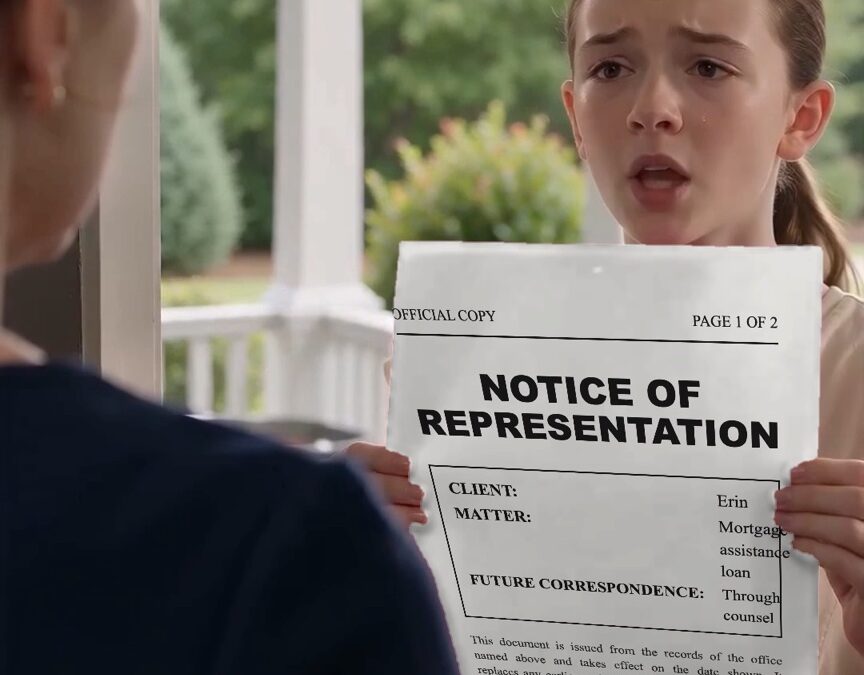
She held the notice upright at chest height.
Her eyes were wet, but she faced her grandmother.
“Mom hired a lawyer for this.”
Beverly jerked back a step.
“You brought that here?”
I rested my fingers against Lucy’s elbow.
Beverly leaned forward enough to read the heading.
The words were plain and large on the sheet.
She read farther down, then looked directly at me.
There had been no advance warning from me.
No family conversation where she could prepare an answer.
She had assumed I would keep this between relatives.
She had put her proposed forgiveness beside my plate.
I had brought notice that repayment correspondence belonged elsewhere.
Her smile disappeared.
She looked at Adam, but he said nothing.
Lucy kept the document steady between her hands.
Beverly lowered herself into her dining-room chair.
Then she reached toward the paper.
“What exactly have you told this lawyer?”
Chapter 3: What We Signed
“The truth,” I said.
Beverly kept her hand extended toward Lucy’s notice.
I took the paper gently from my daughter.
Then I laid it where Beverly could read it.
Adam stepped back inside from the porch doorway.
Lucy stayed beside me.
The heading read, “NOTICE OF REPRESENTATION.”
Under it were the lines identifying the matter.
“Client: Erin.”
“Matter: Mortgage-assistance loan.”
“Future correspondence: Through counsel.”
Beverly read those lines without touching the paper.
“You’ve made this sound like a legal dispute.”
“It is a repayment matter.”
“You hired somebody without speaking to me?”
“I spoke to you. You asked for forgiveness.”
Susan moved her chair back from the table.
She could now see the notice clearly.
Beverly glanced toward her and lowered her voice.
“I didn’t agree to anything with this attorney.”
“You didn’t have to.”
I kept my answer short.
“This tells you who represents me.”
It wasn’t a court order or a judgment.
It didn’t create a new obligation for Beverly.
It did not make the loan overdue that afternoon.
It also did not erase what she had signed.
I put my purse on the chair nearest the doorway.
My fingers found the folder inside the zipper compartment.
The original agreement was where I’d left it.
I took it out without handing over my purse.
Beverly watched the folder cross the table.
“That was just something you wanted for your records.”
“It records what we agreed.”
I opened it to the signature page.
Then I turned to the attached repayment schedule.
Her name appeared on both, beside mine.
Neither signature had been added after the fact.
Both documents were dated April 12, 2021.
Lucy moved closer without blocking anyone’s view.
I kept the original under my hand.
Beverly had asked me to bring this paperwork.
Now she wouldn’t look at the page.
“Read the repayment provision,” I said.
She looked toward Adam instead.
He was standing behind the chair I’d abandoned.
“Mom, let her show you.”
It was the first useful thing he’d said.
I followed the provision with my fingertip.
The agreement covered advances up to $47,600, without interest.
The unpaid balance became payable upon completion of a refinance, or on April 12, 2031, whichever occurred first.
Susan leaned forward slightly.
“Upon completion?” she asked.
“Yes. Not because she applied.”
I looked at Beverly.
“When the refinance completes, the balance becomes payable.”
Her proposed letter remained beside my dinner plate.
It wasn’t needed to clarify an uncertain gift.
It would release a debt her signature already recognized.
Beverly pulled her napkin into her lap.
“I’m not closing anything today.”
“I haven’t said you are.”
“Then you can’t demand money today.”
“I came to discuss payment when you refinance.”
She looked down at the notice again.
She couldn’t keep calling my advances gifts now.
The agreement was open in front of everyone.
Instead, she tapped the repayment schedule.
“There’s a limit written here. That doesn’t prove everything was paid.”
“No. The payment history does.”
I hadn’t brought every confirmation to Thanksgiving dinner.
I had brought the signed original she’d requested.
“The servicer records show 34 payments of $1,400.”
Beverly stopped tapping the schedule.
“From May 2021 through February 2024,” I added.
“That totals $47,600.”
She didn’t claim she had received less assistance.
She shifted her attention to the unpaid balance.
“You’ve never sent me a bill.”
“You haven’t repaid anything.”
“You didn’t ask every month.”
“The agreement didn’t require monthly repayment notices.”
I wasn’t going to improvise legal language.
I kept pointing to the words already on paper.
The attorney had reviewed them before preparing the notice.
Beverly had signed them before accepting the advances.
Adam looked down at the forgiveness letter.
He didn’t pick it up.
Lucy folded her hands against the front of her shirt.
I could see a faint crease across her palm.
She had held the notice tightly all that time.
I wanted to take her home.
But I wasn’t leaving the documents unexplained.
Beverly looked toward the relatives farther down the table.
“This is embarrassing.”
“You asked me to sign during dinner.”
“I thought we could settle it as a family.”
“You asked me to cancel the whole balance.”
Her mouth tightened.
“You’re making me sound dishonest.”
I moved the proposed forgiveness letter beside the agreement.
“These papers say different things.”
Nobody needed me to describe that difference again.
Her letter said she would owe nothing.
The agreement said repayment followed a completed refinance.
I had shown both without raising my voice.
Beverly pushed her plate away from the papers.
“What can this attorney actually do?”
“Advise me and seek repayment under our agreement.”
“Stop my refinance?”
“No.”
She looked surprised by that answer.
“The notice doesn’t give me control over your lender.”
I closed the folder partway, keeping the signature page visible.
“I don’t own your house. You do.”
Beverly was its sole owner.
I had no ownership interest hidden in our arrangement.
I also had no recorded mortgage securing the loan.
But she had signed a repayment promise.
Those facts could exist at the same time.
She glanced at the open porch door behind me.
Until then, I’d still been standing near the threshold.
Lucy had stayed beside my shoulder without being asked.
Adam reached toward the door as if to close it.
I moved my foot clear.
There was no reason to keep it open now.
Beverly leaned forward, speaking more softly.
“You should have told me about the attorney first.”
“I gave you notice today.”
“Not in front of all these people.”
“You put the forgiveness letter at my place.”
Susan touched the edge of her own napkin.
Beverly noticed and immediately looked away.
She straightened the serving spoon beside the turkey.
Then she pushed back her chair.
“Everyone needs to leave us alone.”
Her eyes moved from Susan to Lucy.
“This conversation is private now.”
Chapter 4: Leaving With My Daughter
“Lucy is staying with me,” I said.
Beverly looked toward Adam for help.
He kept his eyes on the open folder.
Susan remained seated across from the papers.
“You asked her in front of us,” she said.
Beverly turned sharply toward her sister.
“I was trying to avoid all this.”
“You called it family help.”
“It was family help.”
Susan smoothed her napkin against her knee.
“I’ve heard you say you’d pay her back.”
Beverly stopped moving the serving spoon.
Susan looked directly at me before continuing.
“You said that before there was any refinance.”
It was a simple statement, not a speech.
Beverly couldn’t say Susan had misunderstood a document.
Her sister was describing words she had heard.
“I expected to be able to do more,” Beverly said.
“That isn’t the same as a gift,” Susan replied.
Beverly pressed her lips together.
She didn’t call Susan a liar.
Instead, she looked at my folder again.
“You’re all acting as if I haven’t carried anything.”
“I haven’t discussed your other expenses,” I said.
“I’ve asked you to repay this loan.”
She reached toward the agreement.
I slid it back into the folder.
“You can have a copy through counsel.”
“I signed it. I’m entitled to see it.”
“You’ve seen it. I’m keeping my original.”
I left the representation notice on the table.
That was the document I had brought to deliver.
It contained the contact information for future repayment correspondence.
Beverly could read it again without my standing there.
She pushed it slightly away from her plate.
I put the agreement back inside my purse.
The zipper caught at the corner of the folder.
I stopped, straightened it, and tried again.
Lucy waited beside the chair without speaking.
Across the table, our dinner plates were still empty.
I didn’t want to sit down in that room.
I didn’t want Lucy trying to swallow dinner there.
“We’re going home,” I said.
Adam looked up.
“Can we talk before you leave?”
“Not here.”
“Erin, everyone is upset.”
I looked at the doorway where he’d handed me my purse.
“You brought my belongings outside.”
“I was trying to calm things down.”
“We’ll discuss that at home.”
He glanced toward Beverly before answering.
She had started folding the proposed forgiveness letter.
“If you leave now, this gets worse,” she said.
“What gets worse?”
“People will think something happened.”
I rubbed my arm once, then lowered my hand.
“Something did happen.”
Susan looked toward the porch threshold.
Nobody tried to explain away what they’d watched.
Beverly put the folded letter beside her plate.
“I didn’t mean for you to fall.”
“I caught myself.”
“That wasn’t what I meant.”
“I’m leaving with Lucy.”
I didn’t ask her to approve the decision.
Lucy went to get what she needed to leave.
I waited near the dining-room doorway with my purse.
Adam stayed beside his mother’s chair.
He didn’t ask me to wait for him.
Susan stood and brought my coat from where it hung.
She held it open while I put my arms through.
The sleeve dragged against the place Beverly had gripped.
I adjusted it without saying anything.
“Do you have everything?” Susan asked.
“Yes.”
My original agreement was zipped inside the purse.
The notice was flat beside Beverly’s place.
The unsigned forgiveness letter remained entirely hers.
Lucy returned and stopped beside me.
Beverly looked at her granddaughter.
“You don’t need to be involved in adult finances.”
Lucy answered without moving closer.
“You said it in front of me.”
I touched Lucy’s shoulder.
“We’re going.”
We walked out through the regular entrance together.
I didn’t return to the porch to retrieve anything.
Adam had already made certain my purse was outside.
Now I carried it into the car myself.
Lucy fastened her seat belt and stared ahead.
I set the purse where I could reach it.
For a moment, neither of us moved.
“Did I make it worse?” she asked.
“No.”
“Grandma looked mad at me.”
“You gave me the paper I asked for.”
She picked at the edge of her sleeve.
“I didn’t like how she talked about you.”
“I know.”
I waited until she looked toward me.
“You don’t have to manage this from here.”
“Are you going to answer her?”
“Through the attorney about repayment.”
Lucy nodded and let go of her sleeve.
At home, I set the purse on a kitchen chair.
I took the original agreement out before removing my coat.
Then I put it safely away.
Lucy stood near the table, watching me check the folder.
“Do you want me to stay?”
“You can sit with me.”
We found something to eat in our own kitchen.
I put plates down without setting any papers beside them.
My phone lit up while we were eating.
Beverly had sent another message.
She wanted me to reconsider the forgiveness letter.
She wrote that the gathering had gone badly.
She wanted to settle things without involving anyone else.
I read it once, then put the phone down.
Lucy looked at it but didn’t ask to read.
I finished what was on my fork before answering.
“I won’t sign a forgiveness letter.”
Beverly replied before I cleared the plates.
“Then explain how you expect this refinance to happen.”
Chapter 5: Copies Before Calls
On November 28, 2025, I cleared the kitchen table.
I put the signed agreement in the middle.
The repayment schedule went beside it.
My purse stayed on the chair within reach.
I hadn’t answered Beverly’s question about managing her refinance.
That wasn’t a job I had agreed to do.
I needed to preserve my records and contact counsel.
Lucy came into the kitchen while I checked the pages.
“Is that the original?”
“Yes.”
“Are you sending it away?”
“Copies. The original stays with me.”
I flattened the agreement without bending its signed corners.
Then I copied each page and checked every edge.
The signatures had to be clear.
So did the provision Beverly had read at dinner.
I compared the copies against the original before proceeding.
The attached repayment schedule had both our signatures.
I checked that the attachment hadn’t been separated.
Then I returned the original to its folder.
Lucy moved a cup away from the paperwork.
Neither of us wanted a spill on those pages.
I opened the saved payment history next.
Each advance had gone directly to Beverly’s mortgage servicer.
I didn’t have to reconstruct cash changing hands.
I had confirmations showing where the payments went.
May 2021 was the beginning of the series.
February 2024 was the end.
I matched the records against the signed schedule.
There were 34 payments of $1,400.
The total was $47,600, with no repayments to subtract.
I made a separate copy of the payment history.
Then I saved the messages about forgiveness.
The request before Thanksgiving mattered.
So did the demand she’d sent after we left.
I didn’t edit them into isolated sentences.
I preserved the surrounding conversation and the dates.
At work, I schedule patients who need clear information.
A mistaken appointment entry can disrupt an entire morning.
That habit helped me slow down with these records.
I checked instead of assuming I remembered correctly.
The attorney received copies, not my only originals.
I included the proposed forgiveness demand in my account.
I described the dinner and delivery of the notice.
I explained that Beverly had now seen the agreement again.
Then I asked about enforcement after a completed refinance.
The call was quieter than Thanksgiving had been.
There was no turkey platter between us.
No relatives listening through a doorway.
Just the agreement open beside my notes.
“The loan is unsecured,” the attorney explained.
“I understand.”
“You don’t have a recorded mortgage against her house.”
“I haven’t told her that I do.”
The attorney made the limits plain.
The representation notice couldn’t stop Beverly from refinancing.
It didn’t order her lender to pay me.
It didn’t give me approval authority over her closing.
The agreement also wasn’t overdue simply because she’d applied.
Payment became due when the stated trigger actually occurred.
Completion of the refinance was that trigger.
The alternative date remained April 12, 2031.
I wrote both points beside the copied provision.
“What happens if she closes and doesn’t pay?”
“We can pursue collection under the agreement.”
That could involve a demand and a civil action.
It would require proof, procedure, and time.
There was no automatic seizure of her house.
There was no guarantee that collecting would be effortless.
I looked at the servicer records spread beside me.
“I want to be ready.”
“That is why we’re keeping the records complete.”
I asked about direct payment through a closing agent.
The attorney explained that Beverly could authorize that voluntarily.
The signed loan agreement didn’t automatically instruct the agent.
A payment arrangement would need appropriate closing coordination.
I underlined the word “authorize” in my notes.
That was different from threatening to block her refinance.
It was also different from forgiving the loan.
I could ask for payment without pretending I controlled her house.
After the call, I put the copies in order.
Agreement first, attached schedule next, payment history behind them.
I kept the messages separately with their dates intact.
The original went back into secure storage.
My purse no longer needed to carry everything everywhere.
Lucy came back as I closed the folder.
“Does the paper mean Grandma has to pay today?”
“No. It tells her who represents me.”
“What makes her have to pay?”
“The agreement she signed. When the payment date happens.”
Lucy nodded, looking at the copy on the table.
I was glad she asked the distinction.
At Thanksgiving, adults had used words carelessly around her.
I didn’t want to replace Beverly’s version with exaggeration.
That afternoon, Beverly contacted me again about the refinance.
She wanted reassurance that I wouldn’t interfere with it.
I read the message before answering.
“I don’t control your lender.”
She asked whether I would tell the family that.
“I’ve made no claim that I do.”
She wanted to talk about how expensive everything had become.
I directed repayment correspondence to my attorney.
Then I put the phone beside the closed folder.
I wasn’t going to make her application decisions for her.
I wasn’t going to advise her about keeping borrowed money.
By the time I cleared the kitchen table, the copies were complete.
There was nothing dramatic left spread across the surface.
Just a faint rectangular mark where the folder had rested.
I wiped it with a damp cloth.
Then my phone lit up with another message.
“If you saw the refinance figures, you’d understand.”
Chapter 6: The Estimate She Sent
On December 2, 2025, Beverly forwarded her refinance estimate.
Her message asked me to look at the whole picture.
She said repayment would spoil what she had planned.
I opened the attachment at my kitchen table.
The document wasn’t a completed closing statement.
It was an estimate for a refinance still being arranged.
I read it without assuming every figure was final.
Then I found the requested cash-out proceeds.
There was enough requested cash to repay $47,600.
I moved the document closer and read that section again.
The loan payoff and estimated closing costs were listed separately.
This wasn’t money already committed to her old mortgage.
It was cash she had requested from the new loan.
She had asked me to forgive my entire balance.
She had also asked the refinance to produce enough cash to pay it.
I put the estimate beside the copied agreement.
The difference between the papers was easy to see.
One established when my loan became payable.
The other showed a proposed source of payment.
Neither required me to own part of her house.
I hadn’t known about her requested cash-out amount before.
Beverly had sent it herself while seeking forgiveness again.
There had been no search of her private accounts.
No access to her lender through some hidden authority.
She wanted me to read it and relent.
Instead, I forwarded it to my attorney.
I included Beverly’s message with the attachment.
Then I waited for advice before responding.
Lucy came into the kitchen while I was still seated.
She saw the paperwork and stopped beside her chair.
“Another letter?”
“Her refinance estimate.”
“Is she saying she can’t pay?”
“She’s saying payment would change her plans.”
I closed the attachment before Lucy sat down.
She didn’t need to examine her grandmother’s finances.
I could answer her question without recruiting her again.
“I’m handling it,” I said.
She pulled her chair out and sat.
I moved the folder away from her place.
When Beverly called, I let her explain herself.
She talked about the refinance being important to her.
She said she had waited to make use of her house.
I didn’t interrupt while she described her disappointment.
Then she returned to the forgiveness letter.
“If you’d sign it, this would be finished.”
“The estimate includes cash enough to repay me.”
“That isn’t all available for you.”
“I haven’t claimed all of it.”
“I had plans for that money.”
“So did I when I advanced mine.”
I kept my hand flat against the agreement.
Beverly changed her approach.
“I didn’t know you’d insist on this immediately.”
“The repayment trigger is in what we signed.”
“The refinance isn’t finished.”
“I know.”
She couldn’t dispute that answer.
I wasn’t claiming she was already late.
I was asking her to plan for a debt becoming due.
She paused, then spoke more slowly.
“If you take that money, refinancing gives me less.”
“Yes. Repaying a loan reduces what you keep.”
I didn’t add anything after that.
There was no need to argue about her preferences.
The estimate had answered the question she raised.
She wasn’t choosing between repayment and a refinance with no cash.
She wanted to keep cash while eliminating my claim.
I asked her to direct the documents through counsel.
She said lawyers complicated family matters.
“I hired mine after you asked for forgiveness.”
“You could have told me you were serious.”
“I refused the request before Thanksgiving.”
She ended the call without agreeing to payment.
I set my phone down and opened the attachment again.
I wanted to be certain I hadn’t misread anything.
The attorney reviewed it with the same caution.
An estimate wasn’t proof that a closing would occur.
Requested proceeds weren’t money already in Beverly’s possession.
Costs or terms could still change before completion.
But the request showed her chosen refinance structure.
It also made her forgiveness demand easier to understand.
She wanted the cash-out portion for herself.
Paying me would reduce what she retained.
The attorney asked me to preserve the original forwarded message.
I saved the attachment with it, not separately alone.
Then we discussed the next written communication.
It would identify the provision Beverly had signed.
It would request closing details and repayment coordination.
It would explain the consequences of closing without paying.
It would not claim a lien we didn’t have.
It would not suggest my permission was required to refinance.
I read those points back from my notes.
The attorney confirmed that they matched the agreement’s limits.
Afterward, I put the estimate inside the working folder.
The original loan agreement stayed where I’d stored it.
I wasn’t going to carry it to another family meal.
That evening, Adam saw the folder on the table.
He asked whether Beverly had sent anything helpful.
I showed him the estimate without handing over the original agreement.
He looked at the requested cash.
“She told me paying you would ruin the refinance.”
“She requested enough cash to pay.”
He sat down and read the section again.
I let him finish without explaining it twice.
“She wanted you to forgive it anyway?”
“Yes.”
He closed the attachment and looked toward my purse.
It was hanging from the kitchen chair.
For once, he didn’t suggest I calm his mother.
“What happens if she keeps the money?”
Chapter 7: The Instructions in Writing
“Then the agreement still applies,” I told Adam.
“The attorney can pursue collection after payment becomes due.”
He looked down at the refinance estimate again.
“So she could close without paying you?”
“She could make that choice.”
There was no automatic stop attached to my loan.
Beverly owned her house and controlled her application.
I wasn’t going to pretend otherwise to scare her.
But closing without paying wouldn’t turn the advances into gifts.
The attorney prepared the further written notice.
I reviewed my factual information before it went out.
My name was correct.
The advances and unpaid balance were correct.
The attached agreement was the one Beverly had signed.
The notice identified the refinance repayment provision.
It requested closing details so payment could be coordinated.
It explained enforcement if Beverly completed the refinance without paying.
There was no invented interest or added punishment.
My claim remained the unpaid $47,600.
I kept a copy with the estimate and payment history.
Then I put the folder away before dinner.
Beverly’s response came through family pressure before agreement.
She contacted Adam about how hard I was making things.
He told me what she had said.
“She thinks we should work this out without attorneys.”
“We tried discussing it.”
“She says Thanksgiving got out of hand.”
“She pushed me outside.”
Adam rubbed his forehead.
He didn’t argue with the fact.
“She wants me to ask you again.”
“You have my answer.”
He sat with that for a moment.
Then he told her he wasn’t asking me again.
I didn’t thank him for delivering another refusal.
I wanted him to stop treating it as negotiable.
Beverly also contacted Susan.
I learned that when Susan called me herself.
Her voice sounded careful, not excited.
“Your mother-in-law wants me to help smooth this over.”
“You don’t have to manage it.”
“I told her I wouldn’t call those payments gifts.”
I pulled a kitchen chair out and sat down.
Susan described Beverly’s new argument.
She wanted her sister to say family arrangements weren’t precise.
Susan had refused.
“She said she expected to repay you,” Susan told me.
“I remember what I heard.”
“Thank you for saying that at dinner.”
“I wasn’t going to agree with something untrue.”
Susan didn’t promise to make Beverly change her mind.
I didn’t ask her to become my messenger.
Her refusal mattered without turning her into another lawyer.
Beverly couldn’t recruit every witness to rewrite the arrangement.
The notice and the signed provision were already in circulation.
Her own estimate showed the requested cash.
Now she had to decide what happened at closing.
The next communications went through counsel.
Beverly asked whether repayment could wait despite the refinance.
I wasn’t willing to release the existing trigger.
She asked whether a reduced payment would settle everything.
I did not agree to reduce the unpaid principal.
My attorney relayed my position without adding an insult.
The amount advanced was documented.
The entire balance remained unpaid.
Beverly could repay through closing under written authorization.
Or she could complete the refinance and face collection afterward.
Those were actual options, not a threat of property seizure.
I read the proposed payment coordination carefully.
The closing agent needed Beverly’s instruction to disburse funds.
My agreement alone wasn’t an order to that agent.
I wanted the paperwork to say what actually happened.
Beverly would choose payment from her refinance proceeds.
The agent would act under her authorization.
That arrangement would satisfy the loan when funds arrived.
It would not give me ownership of anything else.
When Beverly finally agreed, she did it in writing.
She authorized the closing agent to pay me $47,600.
I read the authorization before allowing myself to relax.
The payment amount was clear.
The source was her refinance proceeds.
The instruction didn’t depend on my signing forgiveness first.
I sent it to the attorney for confirmation.
Then I put my phone face down on the table.
Lucy was sitting across from me with a plate.
“Is that good?” she asked.
“She’s authorized payment at closing.”
“Is it finished?”
“Not until the refinance closes and the money clears.”
Lucy nodded and returned to her food.
I liked that she didn’t have to stand beside a turkey.
She could hear an update and keep eating.
Beverly called after the authorization was arranged.
I answered because the repayment terms were now in writing.
“I hope you’re satisfied,” she said.
“I want the agreement completed.”
“You know this changes what I can do.”
“I understand that you’re paying a debt.”
She waited for me to offer something back.
I didn’t offer a new loan or a gift.
I didn’t volunteer to help manage her closing.
After a moment, she changed the subject.
“There are things around the house I can’t keep up with.”
“You’ll need to arrange help.”
“I thought you could at least come over.”
I looked toward my purse on the kitchen chair.
“I won’t be managing your household.”
She drew a breath as if to object.
Then Adam came into the kitchen and stopped beside me.
“Erin,” he said, after I ended the call.
“We need to talk about what I did.”
Chapter 8: What Adam Carried Outside
Adam had come home after Thanksgiving.
Coming home hadn’t resolved what he’d done there.
We had exchanged ordinary information since that evening.
Meals, work, Lucy, and what needed doing at home.
We hadn’t mistaken those conversations for an apology.
Now he pulled out the chair across from mine.
My purse hung against the chair beside him.
He looked at it before looking at me.
“I brought it because I wanted the scene over.”
I left my phone on the table.
“Whose scene?”
He swallowed and adjusted his hands.
“The argument. Mom getting upset. Everybody watching.”
“I was outside.”
“I know.”
“You could have asked if I was hurt.”
“I should have.”
“You could have told her to move.”
He nodded, then stopped himself.
“I decided it was easier if you left.”
That was the acknowledgment I hadn’t heard before.
Not that emotions ran high.
Not that everybody had made mistakes.
He had made a choice about who should leave.
I looked at the place his hands had pressed my purse.
He had held it out until I accepted it.
“She was angry,” he said.
“I saw that.”
“I kept thinking she’d settle down if we didn’t challenge her.”
“We?”
He looked down.
“If I didn’t challenge her.”
I didn’t answer immediately.
The refrigerator started humming behind us.
Adam kept his chair where it was.
He didn’t get up to end the conversation.
“You knew those payments were loans,” I said.
“Yes.”
“You heard her call them gifts.”
“Yes.”
“And you left me to correct that.”
“I did.”
I picked a small thread off my sleeve.
It took longer than it should have.
I didn’t want an apology that depended on repayment.
Beverly authorizing the money didn’t undo his decision.
“I need counseling with you,” I said.
“I’ll go.”
“Not to get me to forgive your mother.”
“I understand.”
“To deal with what happened between us.”
He nodded.
“And I’m not advancing her more money.”
“I won’t ask you to.”
“I won’t manage her household, either.”
He looked toward the counter before answering.
“I heard you tell her.”
“Those decisions aren’t waiting for counseling.”
“They’re final,” he said.
“Yes.”
We began couples counseling.
The first time we sat down together, I carried my purse in.
I put it beside my own chair.
Adam noticed it but didn’t touch it.
When we discussed Thanksgiving, he didn’t describe carrying it as help.
He said he had wanted the discomfort to stop.
He said he had assumed I could tolerate leaving.
I listened with my coat folded across my knees.
Then I described asking him to let me back inside.
I repeated his answer.
“She needs a minute, Erin.”
He looked at me while I said it.
I needed him to hear which person he’d protected.
We weren’t finished after that conversation.
Counseling didn’t produce an instant return to normal.
At home, we had practical arrangements to change.
My separate savings would stay separate.
There would be no new financial commitment to Beverly.
If she asked Adam for assistance, he would answer her himself.
He wouldn’t promise my time or my money.
He wouldn’t tell her I’d reconsider unless I actually had.
We also talked about calls during dinner.
I was tired of watching her name interrupt our table.
Adam agreed not to turn every call into my problem.
That didn’t mean he had to stop being her son.
It meant I wasn’t the person assigned to solve everything.
The first time Beverly asked him about household help, he answered directly.
“Erin isn’t arranging that.”
He didn’t add that I was upset right now.
He didn’t suggest she try asking later.
I heard him from the kitchen and kept washing a plate.
When he finished, I handed him the towel.
He dried what I’d washed without asking for praise.
That small task didn’t make everything right.
It did mean I wasn’t left cleaning while he explained his mother.
Lucy noticed the changed conversations.
She asked whether she was supposed to answer Grandma’s calls.
“You can have your own relationship with her,” I said.
“You don’t have to discuss my repayment.”
“What if she brings it up?”
“You can say the adults are handling it.”
Adam was seated nearby when I said that.
He looked at Lucy.
“You don’t need to carry messages for either of us.”
She nodded and slid her plate toward the sink.
I was relieved she heard it from him, too.
She had already stood up at a table full of adults.
She didn’t need a continuing role in collection.
As closing approached, I checked messages from counsel privately.
I didn’t make the dinner table a permanent paperwork station.
The working folder stayed put away when we ate.
Adam asked for updates instead of calling Beverly for her version.
Sometimes I answered briefly because that was all I had.
He learned not to fill the gap with reassurance.
The refinance wasn’t complete until it completed.
The payment wasn’t mine until it arrived and cleared.
On the evening before closing, I checked the written authorization again.
Adam stood near the counter while I read it.
“Do you need me to do anything?” he asked.
“No. The payment instructions are arranged.”
He nodded without reaching for my folder.
Then a message from counsel appeared on my phone.
The closing was scheduled for January 9, 2026.
Chapter 9: The Closing Instructions Work
On January 9, 2026, I woke before my alarm.
My purse was where I’d left it in the kitchen.
For a moment, I looked toward the chair.
Then I went to make breakfast.
There was nothing for me to sign at Beverly’s house.
No confrontation waiting at a closing table.
No role for Lucy to perform with another document.
The necessary instruction was already in writing.
Beverly had authorized payment from her refinance proceeds.
Her closing agent had the amount and payment information.
My attorney had helped coordinate what was needed.
I wasn’t directing the lender to approve her loan.
I wasn’t removing a lien because none existed.
I was waiting for a borrower to pay an unsecured debt.
Adam came into the kitchen while I checked my messages.
“Anything yet?”
“Not yet.”
He took out plates instead of calling his mother.
Lucy joined us before I put the folder away.
“Is today the day?”
“That’s the scheduled closing.”
She looked toward my phone.
“You don’t have to watch it,” I said.
She sat down and pulled her plate closer.
I ate with them rather than holding the screen.
At work, I still had appointments to schedule.
People needed available times and accurate information.
I answered the phone and checked the calendar.
Between tasks, I looked for an update from counsel.
I didn’t call Beverly to ask whether she’d arrived.
I wasn’t going to manage her closing by telephone.
She had chosen to proceed.
She had also chosen payment over a post-closing collection dispute.
The choice left her with less cash to retain.
It did not take away her ownership of the house.
The new mortgage would be hers to manage.
So would the regular payments under that refinance.
My involvement would end with satisfaction of the loan.
When the confirmation came, I read it carefully.
Beverly had completed the refinance.
The closing agent was disbursing $47,600 to me.
The payment was made under Beverly’s written authorization.
I sat still with the message open.
Then I checked the amount again.
It matched the advances documented in the payment history.
There was no added interest.
No damages or extra recovery had been inserted.
I wasn’t receiving compensation for Saturdays or Thanksgiving.
I was receiving the money I had loaned.
I contacted counsel to confirm the payment status.
The attorney distinguished disbursement from final cleared funds.
That mattered, even after everything had gone through.
I saved the closing confirmation with the authorization.
Then I checked my separate account.
The incoming funds were there to be confirmed through clearance.
I did not move them immediately.
I did not tell Lucy everything was finished.
I sent Adam a plain update.
“The refinance closed. The agent sent $47,600.”
He replied that he was glad payment had happened.
There was no message asking me to call his mother.
That evening, I put the confirmation in the working folder.
I set it beside the payment history for comparison.
The amounts matched without anything left to argue over.
I closed the folder and returned it to storage.
My purse remained on the kitchen chair.
For months, I’d associated that bag with carrying proof.
At Thanksgiving, Adam had carried it as my dismissal.
Now I didn’t need the original agreement inside it.
The originals were safe without being constantly within reach.
Beverly called after dinner.
Her voice was controlled, but not warm.
“The payment went out,” she said.
“I received the confirmation.”
“I hope this can stop being discussed.”
“The loan will be satisfied when the funds clear.”
She paused.
“You got exactly what you asked for.”
“I received repayment of what I advanced.”
She didn’t dispute the amount this time.
She didn’t call it a gift.
She moved instead to what she expected next.
“I don’t want the family talking about my finances.”
“I’m not organizing conversations about your finances.”
“Susan has opinions.”
“You’ll need to speak with Susan.”
I wasn’t accepting responsibility for her sister’s response.
I wasn’t going to ask a witness to retract the truth.
Beverly changed subjects again.
She said she was looking into help around the house.
I listened without volunteering a schedule.
“I’m sure arrangements can be made,” I said.
“It’s harder when family won’t help.”
“I won’t be managing it.”
She didn’t ask the question a different way.
The call ended without an appointment for me.
Adam was wiping the table when I put my phone down.
“Did she ask you to come over?”
“She brought up help. I declined.”
He folded the dishcloth and left it by the sink.
“I’ll keep my answer consistent.”
I looked at him for a moment.
“Thank you.”
It wasn’t a statement that everything was repaired.
It was acknowledgment of a specific thing he could do.
Later, I checked the account once more.
I knew looking wouldn’t speed up clearance.
Still, I wanted to see the deposit listed.
I wrote the amount beside the closing confirmation.
Then I put the pen away.
Lucy passed through the kitchen and saw me closing the folder.
“Can we stop keeping that out now?”
“Yes.”
She moved a placemat into the cleared space.
I left it there.
Before bed, I set a reminder to verify cleared funds.
The next check would be on January 12, 2026.
Chapter 10: My Own Kitchen Chair
On January 12, 2026, I opened my separate account.
The $47,600 had cleared.
I read the status and checked the available balance.
Then I set my phone beside my breakfast plate.
Adam looked over from the sink.
“Cleared?”
“Yes.”
He dried his hands before coming to the table.
I turned the screen so he could see.
Neither of us pretended it was new income.
It was savings I had advanced and finally recovered.
I contacted my attorney to confirm the cleared funds.
The loan could now be recorded as paid.
I kept the repayment confirmation with the signed agreement.
The payment history stayed in the same file.
Nothing needed to be destroyed or dramatically torn apart.
The agreement had done what we’d intended when signing.
It had documented a loan and its repayment terms.
The final records documented that the loan was satisfied.
I put the folder away without putting it in my purse.
Then I checked my own savings plan.
Before Beverly’s shortfall, that money had been set aside.
I wanted it back where I’d intended it to stay.
I reviewed my routine contributions without making any new promise.
There was no amount marked for Beverly’s next difficulty.
No line waiting for a family forgiveness request.
I resumed saving for my own household’s needs.
That meant ordinary decisions, made without consulting Beverly.
At work, I handled the appointment calendar as usual.
The phone rang, and I answered with my scheduling voice.
I no longer had to check for closing messages between tasks.
When I put my purse beneath my desk, it was lighter.
Not because the folder weighed very much.
Because I had actually taken it out.
Inside were the ordinary things I needed that day.
My wallet, keys, and the items I carried for myself.
I didn’t reach in to check for an agreement.
I didn’t have a notice ready for another dinner.
At home, counseling remained part of our schedule.
Adam didn’t treat repayment as the end of that work.
He had started by acknowledging the purse.
He continued by answering difficult questions without blaming the gathering.
When I said I’d felt abandoned on the porch, he listened.
He didn’t tell me his mother had been embarrassed.
He didn’t ask whether Lucy had overreacted.
He had seen our daughter do what he’d avoided.
That was difficult for him to say aloud.
I let him say it without rushing to reassure him.
Our reconciliation was gradual.
Some evenings were ordinary, which I appreciated.
Other evenings, something small brought Thanksgiving back.
A folded napkin.
A doorway someone blocked without thinking.
My purse being moved without anyone asking.
When that happened, I said what I needed.
“Please leave my bag where I put it.”
Adam stopped moving it.
He didn’t make a joke or tell me it was harmless.
That was the kind of change I could observe.
Beverly arranged her own household help.
She mentioned the arrangements during a call with Adam.
He passed along only what affected our plans.
He didn’t ask me to coordinate supplies or laundry.
He didn’t tell her I could fill in.
She continued managing her own mortgage and household.
The refinance had happened, and the debt was paid.
She had retained whatever proceeds remained after her obligations.
I hadn’t forced a sale or taken her house.
I had also not forgiven money she wanted to keep.
Susan checked in without reopening every detail of Thanksgiving.
She asked how Lucy was doing.
I told her Lucy was glad the paperwork was put away.
Susan said she understood.
We talked about ordinary family matters after that.
I didn’t ask her to monitor Beverly for me.
Her part had been telling the truth when it mattered.
Lucy’s part was over, too.
When she asked whether Grandma could demand the money back, I answered plainly.
“She repaid a loan she owed.”
“So that’s done?”
“The repayment is done.”
I didn’t make promises about everyone’s feelings.
I could tell her what the records established.
Then I asked her to help set our table.
She took out plates while I finished dinner.
There were no documents beside the napkins.
No signature line waiting underneath a fork.
Adam handled his own call with Beverly before we sat down.
I heard him say we were eating.
Then he put his phone away.
Lucy sat across from me at our kitchen table.
She reached for a serving dish without watching the doorway.
I passed it closer so she wouldn’t have to stretch.
We ate the food while it was still warm.
She talked, and I listened without checking an attachment.
Adam asked a question and waited for her answer.
It was an ordinary dinner, with nothing to witness.
Afterward, Lucy stayed while I cleared the plates.
She pulled her chair closer to the table.
“Do you want to sit for a while?” she asked.
I left the remaining dish in the sink.
“Yes.”
I sat down beside her instead of finding another task.
My coat was put away.
The loan records were stored where they belonged.
Beverly’s laundry was not waiting for me.
My next Saturday was mine to arrange.
Lucy slid the last clean napkin toward the center.
I rested my arm on the table beside hers.
On my own kitchen chair, within reach, rested my purse.
You Might Also Enjoy




