My Mother-in-Law Lied That I Forgave Her $16,000 Loan — Then I Mentioned Her Signed Promise
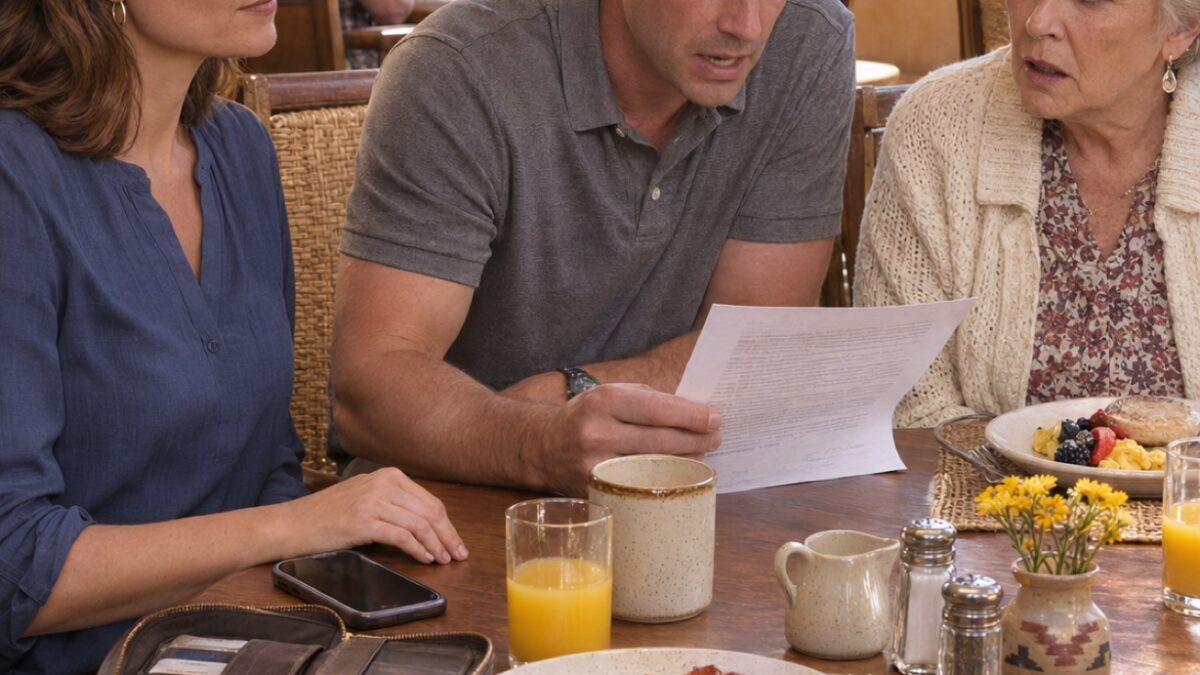
Part 4: The Sentence Under My Finger
“If I miss the next $500 payment, I will list my fully paid travel trailer for sale within seven days,” I read.
Paula pulled her hand back.
I kept reading the rest of her offer: she would put the money left from the sale toward what she owed me, up to the unpaid balance.
Colin looked at his mother.
“The trailer?” he asked.
“Yes,” I said.
Paula crossed her arms over her cream cardigan. “I know what it says. I was there.”
“So was I.”
The room was quiet enough that I could hear the air moving through the vent above the desk. My finger was still beneath the sentence. I lifted it because the page had started sticking to my skin.
She had offered to sell something she owned rather than keep asking me to wait.
I hadn’t demanded her home.
I hadn’t asked for her trailer.
“I thought the offer would show you I intended to pay,” Paula said. “I didn’t expect you to be sitting here reading it to Colin.”
“You announced that you weren’t paying.”
“That isn’t how I meant it.”
I turned the page toward her again. The heading, “REPAYMENT AGREEMENT,” faced her chair. Below it were the balance, the payment timing, and the sentence she had asked me not to read.
“You can explain what you meant,” I said. “You can’t change what I agreed to.”
Colin leaned forward, resting his elbows on his knees.
“Does this mean you can make her sell it?”
“No.”
Paula looked up.
“I can’t take her trailer,” I said. “I don’t own it. This doesn’t let me take the keys or change whose name it’s in.”
I wanted that clear now, while everyone was looking at the same words. I wasn’t going to have another conversation later about something I supposedly threatened.
“This is what she offered to do if she misses the payment. If she won’t repay me, I can use lawful ways to collect.”
Paula rubbed her thumb along the seam of her sleeve.
“So now we’re talking about court on vacation.”
“We’re talking about your promise.”
She stood and went to the window. Colin shifted his feet to let her pass, then stayed seated. I left the paper on the desk.
There was no need to follow her with it.
From where she stood, she could see the resort walkway below. She watched it for a while before turning around.
“You know what that trailer means to me.”
“I know it’s yours.”
“It’s where I go when I want to get away.”
“I didn’t offer it. You did.”
Her face changed at that. Not much. She stopped arranging her cardigan and let her hands hang at her sides.
The week before vacation, I had believed she wanted the payment dates clear. When she offered the trailer, I had asked whether she really wanted that written down. She had said yes.
Now she wanted the offer treated as something I had forced on her.
Colin reached for the page, then stopped and looked at me.
“May I?”
I nodded.
He read it slowly, holding it by the edges. I watched his eyes move down to the signatures. At breakfast, he had looked surprised by how recently she had promised to repay me. Here, there was nowhere else to look while he finished.
“This says the payment comes first,” he said.
“Yes.”
“And the listing only happens if you miss it, Mom.”
“I can read, Colin.”
“I know.”
He put the page back where it had been.
Paula returned to her chair but didn’t sit. She rested her hand on its back instead.
“I’m not saying I won’t pay,” she said. “I’m saying there shouldn’t have to be all this.”
She motioned toward the desk.
My phone sat beside the lamp, with the photograph I had sent her still on its screen. The paper lay beneath Colin’s hand. My travel wallet was open beside my bag.
“All this is here because you said I forgave it.”
“You could have corrected me privately.”
“I did correct you. You kept saying it.”
She pressed her lips together.
I picked up my phone and opened the picture to make sure the bottom of the page was visible. Her signature was clear. So was mine.
Paula watched me check.
“You already sent it.”
“I’m making sure you can read it.”
“I can.”
“Good.”
I locked the phone and set it down.
My savings hadn’t come from an unexpected windfall. I had put money aside while answering phones, checking people in, and explaining appointment openings at the dental office. Some of it had sat untouched before Colin and I married. When Paula’s roof leaked, I had been able to help because I had kept it there.
I wasn’t asking her to admire that.
I needed her to return it.
Colin got up and moved his bag farther under the desk, although it wasn’t in anyone’s way anymore. He straightened its strap, then stopped when he caught me watching.
“Can we agree on what happens next?” he asked.
“We already did,” I said.
“I mean from here.”
“The payment is due ten days after we get home. If she makes it, the monthly payments continue.”
Paula sat.
“And if I can’t?”
“Then you follow what you offered.”
She looked at the paper again.
“I shouldn’t have had to put that in writing.”
“You wanted the delay recorded,” I said. “I wanted the balance recorded. We both signed.”
Colin opened his mouth, but Paula spoke first.
“I thought you understood there was some flexibility.”
“I agreed to wait until after vacation.”
I didn’t raise my voice. I had repeated that enough already, and my throat felt dry. I took the water glass from beside the lamp and drank before setting it back on its coaster.
Paula watched the glass instead of me.
Then she turned her chair slightly toward Colin.
“You talked to me before breakfast,” she said. “You know what I was trying to say.”
His shoulders tightened.
I looked at him.
On the terrace, he had let her call it a misunderstanding. In our room, he had apologized for congratulating her. Neither explanation told me what he had actually said before she announced that my money was hers to keep.
“What did you tell her?” I asked.
Colin rubbed his palms against his pants.
Paula answered before he could.
“He knew I was worried about having to keep paying. He knew I wanted us to enjoy the trip.”
“That doesn’t answer me.”
She turned back to him.
“Colin, tell her what you said before breakfast.”
Part 5: The Phone Beside The Lamp
“I told you Maren hadn’t forgiven it,” Colin said.
Paula stopped moving her chair.
He looked at me, then reached into his pocket. His phone came out with the screen facing his leg.
“It was a text,” he said. “Before we went down.”
I waited.
“I told her I couldn’t promise away your money.”
Paula looked toward the window again.
For a moment, I kept my eyes on Colin’s hand. He was holding the phone so tightly that the edge pressed into his fingers.
“You knew that when you congratulated her?”
“Yes.”
“Not just that I hadn’t told you. You had already told her no.”
“Yes.”
He unlocked the phone and opened their exchange. Then he held it out.
“Do you want to read it?”
“I do.”
He gave it to me.
The message was short. He had told his mother I had not forgiven the loan. He had said it was my money and he couldn’t give it away.
There wasn’t room in that message for the misunderstanding she had described on the terrace.
I read it again anyway.
Paula had known before she sat beside him at breakfast. She had known when she shared the menu with him. And he had known when he smiled and congratulated her.
I set his phone beside mine.
“May I save this?”
“Yes.”
“I want your permission clear.”
“You have it.”
I saved the exchange with the messages showing who had sent them. Then I checked that I had the whole relevant conversation, not a piece that could make it mean something else.
Paula leaned forward.
“I thought he might have spoken to you afterward.”
“Did he tell you that?” I asked.
“No, but—”
“Did you ask me?”
She shook her head.
Colin sat down on the bed.
“I didn’t speak to you afterward,” he said to me. “I went downstairs.”
“So when she announced it, you already knew it wasn’t true.”
“I knew you hadn’t agreed.”
I put his phone back in his hand.
“Then why did you congratulate her?”
He looked down at the screen before turning it off.
“I didn’t want to contradict her in front of people.”
I pulled my chair closer to the desk. The legs caught on the rug, and I had to lift it slightly to straighten it.
“You left that to me.”
“Yes.”
“You let me find out at the table.”
“Yes.”
Paula reached toward his arm.
“He was trying to keep breakfast pleasant.”
Colin moved his arm to his knee.
“No, Mom. I was trying not to upset you.”
She sat back.
It was the first thing he had said that didn’t make the problem sound shared equally among us.
I hadn’t misunderstood.
Paula hadn’t simply guessed.
Colin had given her a clear answer, then failed to stand by it when she said something different in front of me.
I pressed the corner of the signed page flat with my thumb.
At work, when someone wanted an appointment time that wasn’t available, I couldn’t smile and confirm it, then leave another person to explain the schedule. Colin knew how ordinary that kind of responsibility was. He had chosen not to take it with his mother.
“I need you to understand what that looked like from my chair,” I said.
“I do.”
“Not yet. Let me finish.”
He nodded.
“You congratulated her. Then you looked at me. If I said nothing, she kept my money. If I objected, I spoiled breakfast.”
His eyes stayed on mine.
“That’s what I did,” he said.
Paula picked at a loose bit of thread near her cuff.
“I wasn’t trying to spoil anything.”
“I know what you were trying to keep,” I said.
She looked at the paper.
I didn’t add anything.
Colin stood and moved toward the desk, leaving enough space that he wasn’t hovering over my chair.
“Can I do something now?”
“Stop discussing my money as though you can make an agreement about it.”
“I will.”
“If she asks you for a change, don’t come back with a proposal you’ve already encouraged.”
“I understand.”
Paula drew in a breath.
“So I’m not allowed to talk to my son?”
“You can talk to him,” I said. “He can’t agree for me.”
Colin nodded.
“That’s right.”
She watched him, waiting. He didn’t soften it.
I folded the page along the same creases and slid it into the travel wallet. I left the zipper open while I checked my phone once more.
The recording was still saved.
So was the photograph.
Now I had the exchange from before breakfast, with Colin’s permission. I wasn’t going to play it at dinner or send it around. I wanted it kept because the account of that morning had already changed while I was standing there.
Paula stood.
“I’d like to go back to my room.”
“All right.”
“Are we going to spend the rest of the vacation like this?”
“I’m finished discussing forgiveness.”
“That isn’t what I asked.”
“We can decide what we want to do with the day. The loan stays as written.”
She put her hand on the door handle.
“And no more changes?”
“No.”
Her gaze went to Colin.
He stayed beside the desk.
“I can’t change it either,” he said.
She opened the door and left without asking him to walk with her.
I waited until it closed before I moved. Then I zipped the wallet and put it in my bag, not in the drawer where I had been keeping our travel things.
Colin watched me.
“I’m sorry,” he said.
“I heard you.”
“I know that doesn’t fix it.”
“No.”
He sat while I washed my face in the bathroom. I let the water run over the washcloth, wrung it out, and pressed it beneath my eyes. When I came back, he had moved the paper coaster away from the damp ring beside my glass.
It was such a small thing that I almost started crying.
I didn’t want small helpful things instead of an answer. I wanted him to do what he had just said when his mother asked again.
We went out later without reopening the conversation. Each household was paying its own vacation costs. I wasn’t going to study Paula’s purchases and pretend they proved what she could afford.
The payment would answer that.
Before we left the room, my phone lit up with a message from her.
“I understand the payment is due ten days after we get home, and I’ll let you know then.”
Part 6: The Empty Payment Record
I opened my account on the day Paula’s payment was due.
Nothing had come from her.
I checked the recent activity, then closed it and opened it again. I knew that wouldn’t make a payment appear. I did it anyway, standing in our kitchen with my work bag still over my shoulder.
Colin came in while I was looking.
“Did she send it?”
“Not yet.”
He set his keys down.
“Do you want me to ask?”
“No. I’ll handle it.”
He nodded and moved his keys off the counter where I was laying out my things.
I took my lunch container from my bag, put it by the sink, and went back to the account. Paula’s earlier payments were there in the history. The promised $500 wasn’t.
I didn’t send an angry message.
I opened the photograph of our agreement and read the due-date language again. Ten days after returning home. Not when she decided vacation expenses were settled. Not when Colin checked with her.
That day.
I laid my phone beside the page I had taken from the travel wallet.
The coffee mark was still at the corner.
Colin glanced at it but didn’t reach for it.
“I’m going to give it until the day is over,” I said.
“All right.”
“I’m not moving the due date.”
“I know.”
He went to put his own things away.
I stayed at the kitchen table after dinner, doing the ordinary tasks I usually hurried through. I emptied old receipts from my bag. I checked the next morning’s work schedule. I put my lunch container away.
Whenever my phone lit up, I turned it over.
Nothing from Paula.
Before bed, I checked the account again. Then I took a picture of what it showed and saved it with the loan records.
I wanted the facts kept in order.
The next morning, I sat down with the signed page and wrote her a notice. I kept it plain. The next $500 installment had not arrived. Under the offer she had signed, she was to list her fully paid trailer within seven days and apply the net sale proceeds toward the balance.
I attached the whole page.
Not just the trailer sentence.
I read the message aloud to myself before sending it. I removed a line about breakfast. The money was late whether breakfast had happened or not.
Colin stood near the sink with a cup in his hand.
“Would you like me to read it?”
“No, thank you.”
He put the cup down.
I sent it.
For a while, nothing happened. I got ready for work, checked that the page was back in its folder, and put the folder away. The travel wallet stayed on the table until I moved it to the shelf where we kept our bags.
Paula answered while I was fastening my shoes.
“I don’t intend to sell my trailer.”
I sat back down.
There it was, without the soft wording she had used at the resort.
I read the message again.
She didn’t say a payment was on its way. She didn’t say I had overlooked it. She wasn’t disputing the amount or her signature.
She simply didn’t intend to do what she had offered.
Colin saw my face when I came into the kitchen.
“What did she say?”
I handed him the phone.
He read it, then handed it back without asking me to reconsider.
“I’m sorry,” he said.
“I need to get to work.”
“Okay.”
I put the phone in my bag.
At the dental office, I kept it out of sight while I answered calls and checked the appointment list. Between tasks, I thought about the trailer sentence sitting in the folder at home.
I hadn’t wanted a trailer sale.
I had wanted a payment.
The difference mattered because Paula was already making it sound as though I had chosen the sale over something simpler she was offering.
When I had a break, I checked my phone.
There was another message.
She said selling would be a lot to arrange. She needed to look through what she kept in the trailer, decide what went with it, and think about what she would do without it.
I read every word.
None of it included a payment date.
I typed a response, then erased it. I wasn’t going to argue from the reception desk. I put the phone away and finished my shift.
At home, I changed out of my work clothes before opening the messages again. I wanted to be able to sit through whatever came next without watching the clock.
Colin was at the table.
“She contacted me,” he said.
“What did you tell her?”
“That she needed to speak to you.”
“Did you discuss a different arrangement?”
“No.”
I watched him for a moment.
“Thank you.”
He moved his chair back to let me reach the folder.
I opened it and put the original loan beside the recent page. The original terms were straightforward: no interest, $500 monthly, and no forgiveness unless I agreed in writing.
I had never written that.
I had written a delay.
I had signed the revised timing.
Paula had signed it too.
My phone rang while the pages were in front of me. Her name filled the screen.
I answered.
“I got your message,” I said.
“I know you did. I don’t want us sending notices at each other.”
“The payment didn’t come.”
“I explained why selling isn’t simple.”
“You haven’t offered a payment date.”
She was quiet.
I could hear her moving something on her end, then setting it down.
“I need you to stop treating this as though I’m refusing everything.”
“Then tell me what you’re proposing.”
“I’ll keep paying when I can.”
I looked at the space below her signature.
“When would that start?”
“I can’t tell you that right now.”
“And how much?”
“It depends.”
Colin got up from the table and carried his cup to the sink. He didn’t leave the room, but he didn’t stand over me either.
Paula lowered her voice.
“I’m your family, Maren.”
“I know.”
“You have the agreement. I’m not disappearing.”
“That isn’t a payment schedule.”
She let out a breath.
Then she asked me to replace the signed terms with an indefinite wait.
Part 7: The Folder On The Table
“No,” I told Paula.
She waited, as if the rest of my answer might change it.
“I’m not agreeing to payments whenever you decide you can make them.”
“You make that sound irresponsible.”
“I’m describing the offer.”
Colin stayed by the sink. I could see him looking down at the cup in his hand, although it was already clean.
Paula asked whether I understood that she owned the trailer outright.
“Yes.”
“Then you know it’s mine.”
“Yes. I’m not saying otherwise.”
“I won’t have you taking it.”
“I haven’t said I could.”
I pulled the recent page closer and read her undertaking again, silently this time. She had offered to list it. Nothing gave me the right to drive to her house and remove it.
I was going to keep that distinction clear.
“You offered to sell it if you missed this payment,” I said. “You missed it. I’m asking you to honor that.”
“And if I don’t?”
“I’ll get advice about collecting the debt lawfully.”
“Over your own family?”
“Over the money you still owe me.”
She ended the call without agreeing.
I put the phone down and sat for a while. Then I opened the folder fully instead of leaving the pages half-covered by its flap.
Colin came back to the table.
“Do you want company?”
“Yes. But I need to do this myself.”
“All right.”
He sat across from me.
I started with the original payment to the roofer. The money had left my savings at Paula’s request, with her sitting at our kitchen table after we had made clear it was a loan.
I found the record and put it behind the original signed promise.
Then I pulled up the repayments.
Eight monthly installments of $500.
Together, $4,000.
I matched them against the account history rather than relying on the notes I had made as they arrived. Each payment was there.
The remaining balance was $16,000.
I wrote that beside the current agreement.
Colin watched without trying to take the pen.
“Do you need anything printed?” he asked.
“I’ll tell you.”
He nodded.
I saved the recording somewhere separate from my phone, then checked that it opened. I listened only long enough to make sure the file was sound.
Paula’s voice came through clearly.
She still owed me. She wanted to wait until after vacation.
I stopped it.
That recording didn’t mention selling the trailer. It didn’t mention Colin’s text. It proved the narrower thing I had kept it for: she had asked for time, not forgiveness.
I kept it with the pages that showed the rest.
The exchange Colin had shared was there too, saved with his permission. I didn’t need to attach it to every message to Paula. It mattered to my marriage because it showed what he had known.
He looked at the screen when I closed it.
“I should have told you before breakfast.”
“Yes.”
“I could have shown you the message then.”
“Yes.”
He took a breath.
“I’m not going to ask you to make this easier for her.”
I put the pen down.
“I need that to stay true when I’m not sitting here.”
“It will.”
I didn’t answer with reassurance. I went back to checking the records.
The next time I dealt with the loan, I sought legal advice and supplied the facts as they were. I didn’t describe the trailer as mine. I didn’t claim there was any right to take Paula’s home.
I asked about collecting an unpaid family loan, the missed installment, and the promise she had voluntarily signed.
I used copies.
The originals stayed with me.
While I waited for the advice, I kept going to work and doing the things that still needed doing at home. The folder went into a drawer instead of traveling around the kitchen with me.
When the written guidance came back, I read it at the table.
Colin asked whether I wanted him there.
“Yes.”
He sat beside me without reaching for it.
The advice confirmed that I should not try to seize the trailer or treat her signature as a transfer of ownership. Any collection steps had to follow the proper process.
That was what I had expected.
I read the rest carefully, then put it with my records. Getting advice didn’t require me to hand anyone the decision about whether my savings mattered.
I could decide what to pursue.
I could also give Paula the opportunity to do what she had already offered before pursuing it.
I wrote to her again.
The balance remained $16,000. Her promised payment hadn’t arrived. I wasn’t agreeing to an open-ended delay or forgiving the money.
I also stated plainly that I would not take her trailer myself.
Colin read that line when I showed him the finished message.
“She keeps saying that to me,” he said.
“What?”
“That you want to take it.”
“Now she has my answer in writing.”
He nodded.
I sent the message with the signed page attached again. I told her lawful collection was the alternative if she refused to repay or honor her undertaking.
No new charges.
No threats about her house.
No statement that a judge had already decided anything.
Just the debt, the promise, and what I would do next.
Paula called after reading it.
“You really got advice about this?”
“Yes.”
“Did Colin tell you to?”
“No.”
He was sitting across from me, and he heard the question.
“This is my decision,” I said.
She didn’t challenge the balance.
Instead, she asked whether selling the trailer would end the argument.
“The money from it goes toward what you owe. If it covers everything, that finishes the loan. If it doesn’t, the balance remains.”
“So you won’t tell me to accept any price.”
“It’s your sale to manage.”
She was quiet long enough that I checked whether the call was still connected.
Then she said she would honor her offer and list the trailer within seven days.
Part 8: The Photograph Of The Trailer
Paula sent me a photograph of the listing.
“I put it up,” she wrote.
I opened the image at the kitchen table, enlarging it enough to read the description. It showed the trailer she owned, with the details she had chosen to include.
I didn’t find my name in it.
That was right. I wasn’t selling anything.
I checked when she had sent it against the timing in her undertaking. She had listed within seven days.
I replied, “I received this. Thank you for following through.”
Then I saved it with the agreement.
Colin came in while the image was still open.
“She listed it?”
“Yes.”
He stood beside my chair, leaving my phone in my hand.
“Do you want me to ask how it’s going?”
“No.”
“Okay.”
I put the phone down.
For the first time since breakfast, there was an action from Paula that matched something she had promised. It wasn’t a payment yet, and I didn’t treat it as one.
The balance stayed $16,000.
I wrote no credit beside the listing.
At work, I was used to separating what had been scheduled from what had actually happened. A promised appointment wasn’t a completed visit. I used the same care at home now.
Paula called while I was sorting laundry.
“I’ve had questions about it.”
“All right.”
“People want pictures of everything.”
“You know it better than I do.”
She hesitated.
“I thought you might want to tell me what to say.”
“No. You’re managing the sale.”
“I don’t want you claiming I handled it wrong afterward.”
“I’m not asking you to accept a particular offer.”
I sat down on the edge of the bed with a folded shirt in my lap.
“I’m asking you to apply the net money from the sale toward the loan, like you offered.”
She asked whether I wanted updates.
“I need to know when there’s a sale and what the net amount is.”
“So you don’t want every question forwarded.”
“No.”
It was a practical conversation. I was glad to have one.
After the call, I finished folding the shirt. I put it away rather than leaving it beside me while I examined every word she had used.
The listing was hers.
The debt was still hers too.
Colin was in the kitchen when I came out with the empty basket.
“She called about the trailer,” I told him.
“Did she ask for another change?”
“Not this time.”
He nodded and moved the basket out of the doorway.
I didn’t say it was all improving. I had become careful about giving a whole situation a name because a single conversation went better.
We made dinner.
My phone stayed on the counter instead of beside my plate.
Later, Paula sent another photograph. She had cleared out her personal things. The small items that usually sat inside were gone.
I remembered seeing them when the trailer had been in use, but I didn’t tell her that. A message about how sad the empty space looked would have sounded like an invitation to argue over the loan again.
I wrote, “I received the update.”
She answered, “I’m doing what I said.”
“Yes,” I replied.
Then I put the phone away.
The sale took attention that she would rather have spent elsewhere. I could understand that without taking over the arrangements.
I didn’t offer to clean it.
I didn’t offer to answer messages.
I didn’t offer another loan to let her keep it.
When Colin asked whether she had called again, I told him what she had said. He listened without suggesting that her effort should reduce the amount she owed.
That was different.
Before the vacation, I would have filled the quiet with some small promise to make things easier. I caught myself opening my mouth to do it, then went back to rinsing a plate.
Paula owned her home. She had a fully paid trailer to sell. She had made an offer about that trailer after asking me to extend her payment timing.
I didn’t need to pretend that following through cost her nothing.
I also didn’t need to pay that cost for her.
When she called about an offer, I moved the folder onto the kitchen table before answering.
“I have something I think I can accept,” she said.
“What would be left after the sale expenses?”
“$11,500.”
I wrote it down.
She repeated the figure and explained that it was what she would actually receive, not a larger price before costs.
“All of that would come to you,” she said.
“Toward the loan.”
“Yes.”
I looked at the $16,000 written at the top of my page. Then I subtracted the proposed payment.
$4,500 would remain.
Colin passed the doorway, saw the folder, and kept going without interrupting.
“Have you agreed to the sale?” I asked.
“Not completed it.”
“All right.”
“I wanted to speak to you first.”
I held the pen still.
“What do you need to discuss?”
Paula took a breath.
“I’m losing the trailer.”
“You’re selling it.”
“You know what I mean.”
I didn’t answer that.
“I would be sending you everything I get from it,” she continued. “Not keeping anything back.”
“That’s what the offer says.”
“And it’s a lot of money.”
“Yes.”
I could see where the conversation was going now. I turned the recent agreement so the monthly payment sentence was closest to me.
“Would you send confirmation of the net amount when the sale is complete?” I asked.
“I can.”
“Then I’ll credit the amount when it arrives.”
She stopped speaking.
I waited.
“Maren, I don’t want to finish selling it and then spend months still dealing with this.”
“The sale money doesn’t cover the whole balance.”
“I know the arithmetic.”
I put down the pen.
For a moment, all I heard was the sound of her breathing near the phone.
Then she asked whether the $11,500 could be the end of it.
“Will you call the loan paid if I send you everything from the sale?”
Part 9: The Amount Below The Line
“No,” I said. “The remaining balance would be $4,500.”
Paula exhaled into the phone.
“I’m offering you everything I’ll get.”
“And I’ll credit all of it.”
“You won’t consider the trailer itself?”
“I’m not receiving the trailer.”
She didn’t answer.
I moved the phone to my other ear. My neck had started hurting from holding it against my shoulder while I wrote.
“The loan was money,” I said. “The repayment is money. Selling something to make that payment doesn’t change the amount.”
“I thought you might be satisfied with getting most of it back.”
“I need it all back.”
There wasn’t a gentler figure I could write at the bottom of the page.
$16,000 minus $11,500 left $4,500.
I checked it again, then underlined the remainder.
Paula asked whether I expected the balance immediately after the sale.
“No. The existing $500 monthly payments can cover it.”
“For how long?”
“Nine monthly installments.”
She was quiet.
“No added interest,” I said. “No extra charge. The same payment amount.”
“So I sell it and still send you money every month.”
“Until the balance is paid.”
She asked me to put that in writing.
“I will.”
After the call, I wrote out what we had discussed. The net sale money would go toward the $16,000 balance. If she sent $11,500, the remaining $4,500 could be repaid through nine monthly payments of $500.
I didn’t add conditions.
I didn’t reduce the payment to punish her for asking.
I didn’t tell her the offer was available only if she sounded grateful.
Colin came into the kitchen while I was reading it back.
“She asked you to forgive the difference?”
“Yes.”
“What did you say?”
“No.”
He pulled out the chair across from me.
“She asked me whether you might agree.”
I looked up.
“When?”
“Before she called you.”
“What did you tell her?”
“That I couldn’t answer for you.”
“Did you tell her what you hoped I’d do?”
“No.”
He rested his hands on the table.
“I told her she needed to ask you directly, and that I wasn’t carrying the request.”
I studied his face for a moment.
“Did you know what the offer was?”
“She told me the net amount.”
“And you didn’t negotiate anything.”
“No.”
I sent Paula the written confirmation while he sat there.
“That’s what I need you to keep doing,” I told him.
“I will.”
He didn’t ask whether I was ready to stop being upset about breakfast. I appreciated that more than another apology.
He stood and began putting away the clean dishes.
I kept the account open until Paula replied that she understood the balance and the monthly terms. Then I saved her response and closed the folder.
The sale was still her decision to complete.
I didn’t call her to push it through. I didn’t contact anyone about the trailer. I didn’t take possession of anything she owned.
When she told me she was completing the sale, I answered the question she actually asked: how I wanted the payment identified so I would recognize it.
“Trailer proceeds toward loan,” I wrote.
She sent confirmation of the net amount.
$11,500.
I checked it against what she had said and kept the record. The number matched. There wasn’t a new deduction or a surprise request for me to cover something.
Now I had to wait for the money.
I checked my account at home rather than looking from the desk at work. I didn’t want to answer a phone call while trying to decide whether the payment had cleared.
Colin made room beside the table without asking what he should say to Paula.
That evening, I saw the payment.
$11,500.
I opened the details, checked the source, and waited until the account showed it as received rather than merely expected.
Then I wrote the credit in the loan record.
The balance became $4,500.
I sat looking at it with the pen in my hand.
That was the largest amount Paula had returned since I had paid for the roof. It was also not the end.
Colin stood in the doorway.
“Did it arrive?”
“Yes.”
“All of it?”
“All $11,500.”
He came closer when I turned the page toward him.
“And that leaves—”
“$4,500.”
He nodded.
“I’m glad she followed through.”
“So am I.”
I sent Paula a confirmation that I had received and credited the money. I included the remaining balance and the existing monthly amount.
Her reply came while I was putting the folder away.
“I won’t have the trailer anymore.”
I read it without typing.
Then I answered, “I received the proceeds and applied all of them to the loan.”
I wasn’t going to argue about whether selling it hurt.
Of course she had wanted to keep it. She had also wanted to keep $16,000 that belonged to me.
Both things could be true.
Later, Colin’s phone rang while we were clearing the table. He looked at the screen before answering.
I carried the plates to the sink.
He stayed where I could hear his side of the conversation.
“I know,” he said.
Then, after listening, “You need to discuss your payment with Maren. I’m not going to ask her to change it.”
He didn’t look toward me for approval.
When he hung up, he put his phone away.
“She wanted me to ask about the remaining payments,” he said.
“What did you tell her?”
“That the terms were already clear.”
I nodded and handed him the dish towel.
We finished the kitchen without discussing what response might make his mother happiest.
The first smaller-balance payment approached while the folder stayed in its drawer.
I checked the schedule, not Paula’s mood.
Then a message from her arrived asking me to confirm that the next amount was still $500.
Part 10: The Payments In The Drawer
“Yes, the next payment is $500,” I wrote.
Paula sent it when it was due.
I checked my account after work, with my shoes still on and the folder open beside my bag. The payment was there.
I marked it against the $4,500 balance and wrote what remained.
Then I sent a short acknowledgment.
“Received and credited. Thank you.”
No speech.
No reminder about breakfast.
I put the page away before dinner.
Colin noticed.
“It came?”
“Yes.”
He nodded and handed me a plate.
He didn’t ask whether making the payment meant his mother and I were fine now. We ate, talked about our ordinary day, and left the loan in the drawer.
That felt different from leaving it unresolved.
The terms were clear.
The money had arrived.
There was nothing to negotiate that evening.
At work the next day, I checked patients in and answered the same questions I always answered. My phone stayed in my bag. I wasn’t checking for a message from Paula between tasks.
I hadn’t realized how often I had been doing that until I stopped.
The next monthly payment arrived too.
I followed the same steps: check the account, match the amount, record it, acknowledge it. I didn’t make the acknowledgment warmer or colder depending on what else had happened that week.
Paula got the same information each time.
She knew what she had paid.
She knew what remained.
Colin asked whether he could help organize the records one evening when I had spread them out to check the running balance.
“You can sit with me,” I said. “I’ll keep the records.”
“All right.”
He sat.
I showed him how I matched a payment to the account entry. Not because he needed to supervise me, but because I wanted him to see the work that had followed the breakfast he had hoped to keep pleasant.
He looked at the original $20,000 payment.
“I knew where it came from,” he said.
“I know you did.”
“You shouldn’t have had to prove that to me.”
I kept my finger beside the entry.
“No.”
He waited while I checked the next payment.
“I told her again that I don’t speak for you about money,” he said.
“Why did it come up?”
“She asked whether I thought you’d keep sending balance confirmations.”
“What did you say?”
“That they were accurate, and she could keep them.”
I looked at him.
“You didn’t tell her I was making a point.”
“No.”
“Good.”
He stayed until I finished, then cleared the table so I could put the folder away without stacking dinner things on top of it.
His repair efforts weren’t dramatic.
He stopped answering questions that weren’t his to answer.
When Paula called during dinner and wanted him to ask me something about the loan, he told her to contact me directly. He didn’t carry the request over afterward dressed up as his own suggestion.
If she asked whether I might be willing to change something, he said he didn’t know and couldn’t agree.
Sometimes he simply said, “That’s Maren’s decision.”
He used those words when I wasn’t beside him too. I knew because Paula began addressing the questions to me instead.
The payments continued.
When I received one, I recorded it. When Paula asked for the balance, I sent the figure from the same page.
I didn’t round it.
I didn’t include the effort of keeping records as another amount she owed.
There was no charge for how angry I had been.
There was also no discount because the anger had begun taking up less of my day.
Colin and I talked about breakfast again while putting away travel things that had been left in a cupboard.
He picked up my zippered wallet, then handed it to me rather than opening it.
“Does the page still go in here?”
“Not right now. It’s with the payments.”
He nodded.
“I keep thinking about you getting it out beside her plate.”
I held the wallet in my lap.
“I wish I hadn’t needed to.”
“I know.”
“You had a chance before I ever sat down.”
“Yes.”
He sat on the floor beside the cupboard instead of continuing to sort.
“I wanted her not to be angry with me,” he said. “I let you deal with what that caused.”
I ran the zipper open and closed.
“That’s what happened.”
“I’m not going to call it a misunderstanding again.”
“Thank you.”
I put the wallet on the shelf.
We finished the cupboard together.
The remaining monthly payments became ordinary without becoming automatic. I still checked them. Paula still had to send them.
As the balance grew smaller, she stopped adding comments about the trailer to the payment messages. Sometimes there was no message at all, just the money and my acknowledgment.
I preferred that.
There was room for other conversations now, but I didn’t force them.
If we spoke about something unrelated, I let it stay unrelated. I didn’t bring up the loan to remind her that she had been wrong.
I also didn’t pretend the breakfast had never happened.
Colin no longer tried to arrange a conversation where I could reassure his mother that I wasn’t upset. He asked what I wanted before making plans involving my time, and he accepted an answer without first checking whether she liked it.
Those were the changes I could actually use.
I kept going to work.
My savings account began holding money that had once been there before the roof repair.
I didn’t plan a reward purchase for recovering it. I liked opening the account and seeing it available again.
By the time the last $500 was due, I had checked the payment record often enough that I knew where every amount belonged.
The original $4,000.
The $11,500 from the trailer.
The monthly payments after the sale.
Only the final $500 remained.
Paula sent a message while I was putting clean towels away.
“When I send the last payment, will you mark the loan paid right away?”
Part 11: The Page Comes Home
“Yes,” I wrote. “When the final $500 arrives, I’ll mark it paid and confirm that nothing remains due.”
Paula answered, “All right.”
I put my phone on the dresser and finished folding the towel in my hands. I didn’t open the account immediately. Her message wasn’t the payment.
I had learned to keep those separate.
Colin was sorting clothes for another trip when I came into the bedroom. My travel wallet sat on top of an open bag, empty except for the things I normally kept there.
“She asked about the final confirmation,” I said.
“What did you tell her?”
“That she’ll get it when the payment arrives.”
He nodded.
No suggestion that I should mark it early to make her feel better.
No request that I wait until he had spoken to her.
He picked up a shirt, checked it, and folded it into the bag.
I opened the drawer where I kept the loan folder. The pages were together in the order I had put them: the original promise, the recent agreement, the records showing what had gone out and come back.
I took them to the table.
The next time I opened my account, the final $500 was there.
I checked the details.
Then I checked again against the payment record, not because I thought Paula had hidden something in it, but because I wanted the ending as accurate as the rest.
The payment was received.
I put a mark beside it.
For a moment, I left the pen resting on the paper while I looked at the amount remaining.
Nothing.
I didn’t call Colin into the room before checking the totals. I wanted to do that part myself.
Paula had first returned $4,000 through eight monthly installments.
Then she had paid $11,500 from the net proceeds of selling her trailer.
After that, nine monthly installments of $500 had covered the remaining $4,500.
Together, those payments equaled the original $20,000.
No interest had been added.
No penalties.
Nothing left for me to forgive or collect.
I compared the record to the account entries. Each payment matched. I turned back to the signed page headed “REPAYMENT AGREEMENT” and wrote that the loan was paid in full.
Then I signed beneath that notation.
My handwriting looked ordinary. I had half expected the moment to feel bigger than sitting at our kitchen table with a pen.
Mostly, I was relieved that I could put the papers away.
Colin came in carrying the travel bag.
“Is that it?”
“Yes. It’s all back.”
He set the bag on a chair.
“All $20,000?”
“All of it.”
He looked at the page, then at me.
“I’m glad.”
“So am I.”
He didn’t reach for a photograph to send his mother. He didn’t offer to give her the news himself.
I took a clear picture of the finished page and wrote Paula a message.
“I received the final $500. The full $20,000 has been repaid. I’ve marked the loan paid in full. Nothing remains due.”
I attached the picture.
Before sending it, I read it aloud quietly. There was no reference to breakfast, the recording, or the trailer she no longer owned.
None of that changed the confirmation.
She had finished paying.
I sent it.
Then I saved a copy of the message with the loan records and closed the account screen.
Colin sat across from me.
“What do you want to do with all this?”
“Keep it.”
“Of course.”
“I mean keep it put away. I don’t need it on the table anymore.”
He nodded and moved the travel bag back onto the chair beside him, giving me room to stack the pages.
Paula replied while I was putting the payment records together.
“Received. Thank you for confirming.”
That was all.
I didn’t wait for a different message.
She had sold the trailer she had wanted to keep, applied all $11,500 toward the debt, and made the rest of the payments. I had received the money I lent her.
There was no reason to invent another consequence.
I answered, “You’re welcome.”
Then I set the phone aside.
Colin and I finished getting ready for the trip. He checked what he needed without asking me to stop and manage it. I put away the cup I had left beside the folder and wiped the small ring underneath it.
The table looked like our kitchen table again.
We still had things to work on.
I didn’t tell him the final payment erased how he had behaved at breakfast. He didn’t ask it to.
When Paula contacted him about plans, he discussed his own plans. If the question involved my time or my money, he asked her to speak to me.
He had acknowledged what he had done plainly, without putting his mother’s words in his mouth as an excuse. More importantly, he had stopped doing it.
I could notice that without pretending I had never been hurt.
Before we left, I went back to the folder.
I kept the account records and copies together in the drawer. The recording stayed saved, but I didn’t play it. I hadn’t needed to hear Paula asking for time again.
The signed page was on top.
Its corner still held the faint coffee mark from beside her breakfast plate. The folds had softened from being opened and flattened, photographed and read.
I checked that the words marking it paid were clear.
Then I folded it along those same creases.
Colin stood in the doorway with our bags.
“Ready?”
“Almost.”
I picked up the zippered travel wallet from the dresser and opened it. This time, I wasn’t packing the page because I expected to prove what someone owed me.
The loan was finished.
I slid the marked-paid page into my zippered travel wallet and closed the zipper.
You Might Also Enjoy




