MY SISTER PROMISED MY HOUSE TO MY FORMER FIANCÉ AT THEIR WEDDING RECEPTION
Chapter 1: The Address She Announced
“At her wedding reception, my sister promised my house to the man who had left me and said, ‘We need it more than you do.’ Our father told me not to embarrass her by correcting the announcement. I was holding a sealed envelope about the house, but the house was mine, and neither of them had permission to live there.”
Laurel was still smiling when she said the address.
She stood beside Owen in the upscale reception room in Columbus, Ohio, describing where their dining table would go.
My dining room.
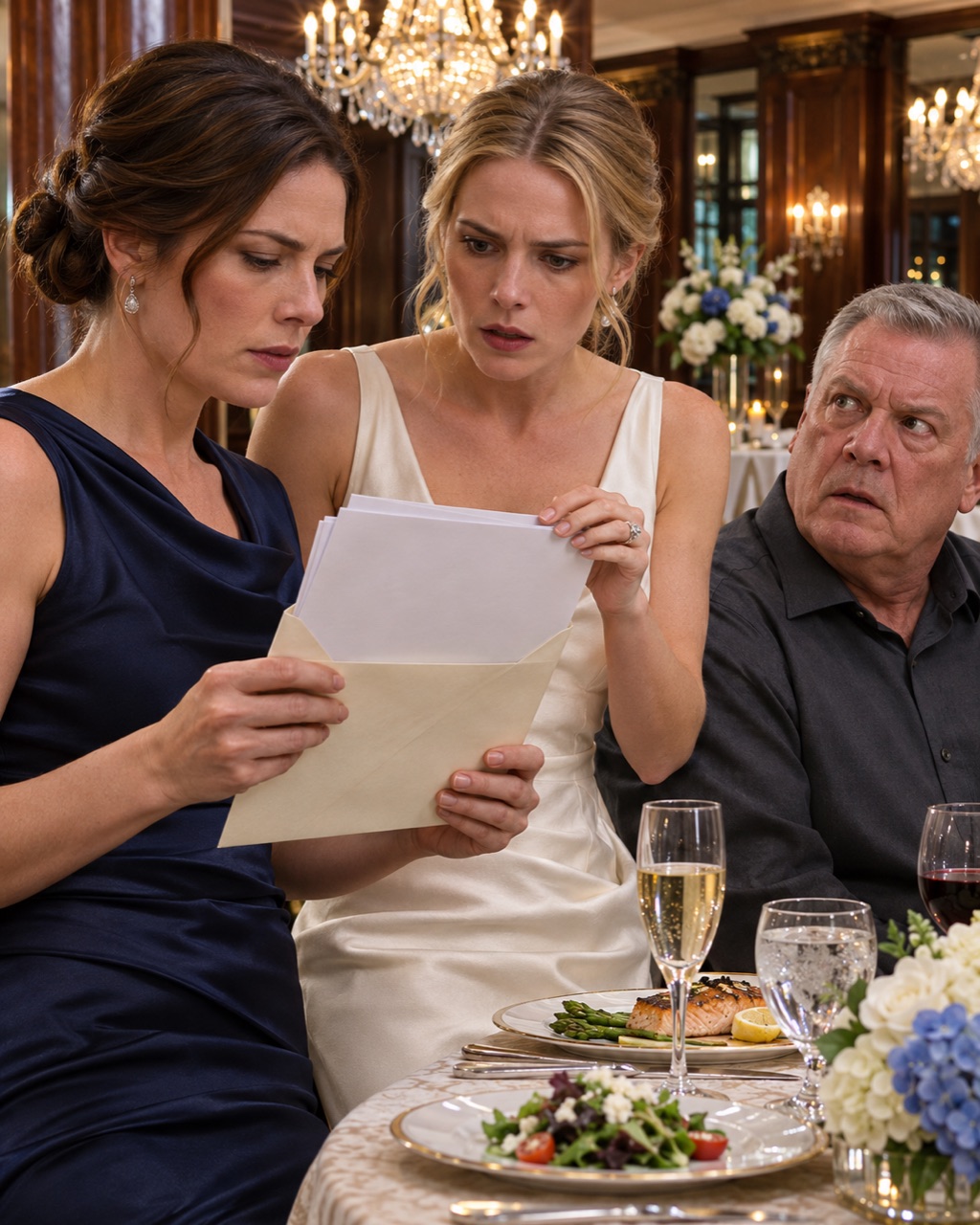
The envelope lay across my lap, under my folded hands.
I had brought it because she wanted an answer. We were supposed to talk privately afterward.
Instead, she was announcing a home.
Owen stood close enough that his sleeve brushed hers. He looked toward the guests while she described the backyard.
He knew that backyard.
He had spent time there when we were engaged.
A woman across the table turned toward me, smiling as though I had just given the newlyweds something wonderful.
I looked at Dad.
Dennis nodded along.
He was 63, and I recognized the expression he wore. He used it when he considered a family discussion finished.
Apparently, this discussion had ended without me.
I slid my thumb beneath the edge of the envelope.
It was still sealed.
Across the front, I had written HOUSE.
Laurel talked about having people over. Owen could finally spread out, she said. They wouldn’t have to keep figuring out where everything belonged.
Nothing of theirs belonged there yet.
They hadn’t moved in, stored belongings, arranged utilities, or paid me anything.
They didn’t have a key.
I had never given them permission.
The house belonged entirely to me. I bought it for $286,000 six years ago and had paid its costs myself ever since.
There was no unpaid home loan.
No co-owner.
Not Dad. Not Laurel.
Certainly not Owen.
I had moved into a smaller home closer to work the spring before. Repairs at the old place had finished, and I was deciding whether to sell.
Vacant didn’t mean available to my family.
I watched Laurel point across the table as though she were showing someone the shape of the living room.
My fingers pressed the envelope against my knees.
Owen had left me two years ago. Afterward, I learned he had secretly been dating Laurel while we were still engaged. Before I knew about their relationship, I regularly helped Laurel cover her everyday expenses. Dad kept describing the timing as unfortunate, and I stopped asking him to use a more accurate word. When the invitation arrived, I agreed to attend because I didn’t want another family argument about whether I was punishing everyone. I was 36, a payroll supervisor, and perfectly capable of sitting through a difficult evening. Laurel was 32. Owen was 37. Nobody needed me to explain that they were adults making their own decisions.
But their decisions did not include my house.
I had worn a navy dress.
I’d greeted them politely.
I’d sat where they put me.
That was what I had agreed to do.
Laurel looked at me as she talked about the backyard.
“We’ll finally have room,” she said.
I put my feet flat on the floor.
“Laurel, we haven’t settled any of this.”
Her smile stayed in place.
“We talked about it.”
“We talked about whether it could work.”
A woman beside Dad lowered her eyes to her plate.
Owen looked at Laurel.
He didn’t correct her.
Dad leaned toward me, keeping his voice low.
“Don’t correct her in front of everyone.”
“She just told everyone she’s living in my house.”
“She already announced their new address. Honor the promise.”
I turned enough to face him.
“I didn’t make that promise.”
“You said you’d help.”
“I said we could talk.”
He glanced toward Laurel, then back at me, as though I was making him choose where to look.
“Let her have her wedding.”
I picked up the envelope.
It had been resting on my lap while my sister described rooms she had no right to promise anybody.
I hadn’t interrupted their ceremony.
I hadn’t refused to sit beside Dad.
I hadn’t asked anyone to discuss how their relationship began.
Now he wanted my silence about something that belonged to me.
Laurel gave a small laugh.
It sounded meant for the people watching, not for me.
“We need it more than you do.”
A guest farther down the table turned.
I stood beside my chair, keeping the envelope low against my dress.
Laurel extended her hand toward my seat.
“It’s still my house,” I said.
Her hand stayed there.
“You live somewhere else. Let us have the house.”
“I paid for that house.”
She gave a short, breathy laugh and waved toward my chair with her whole arm.
I looked at the seat.
For a moment, sitting down seemed easier.
The woman across from me had stopped smiling. Someone near Owen lifted a glass, then set it back down without drinking.
Nobody offered an explanation.
They were waiting for mine.
Dad touched the table beside my empty place.
“Tessa.”
I didn’t sit.
The envelope made a dry sound against my dress as I changed my grip. I had brought it to keep a private discussion organized.
I worked with numbers and records all day.
I knew the difference between considering something and approving it.
Apparently, my family expected that difference to disappear at a wedding.
Laurel stood between me and the head of the table.
She could have stepped aside.
Instead, she watched my face.
“We’ve already told people,” she said.
“That doesn’t make it agreed.”
“You knew we needed somewhere.”
“I knew you wanted an answer.”
Dad pushed his chair back slightly, not standing, just making room for himself to turn toward me.
He looked tired.
That look had worked on me before. It had gotten me to answer calls I didn’t want to answer and attend conversations I knew would leave me upset.
I kept my feet where they were.
Laurel glanced at him.
He understood what she wanted.
“Not here,” he told me.
“Here is where she announced it.”
A guest folded a napkin beside an untouched plate.
I could see the crease because I was looking anywhere except Owen’s face.
Then I looked at him too.
He remained beside my sister, letting her describe their future in a house I had bought before either of them decided I was optional.
Dad leaned forward.
“You need to honor what we already told people.”
Chapter 2: The Envelope At The Table
“Who told people they could have my house?” I asked.
Dad put his palm flat beside his plate.
“You know what I mean.”
“No. I don’t.”
Laurel lowered the hand she had been holding toward my chair.
Her smile had become something she kept putting back on whenever a guest looked directly at her.
I could see the effort.
She wanted this settled without having to stop being the bride.
I wanted an answer.
Owen finally spoke.
“Your dad said we had it free for two years.”
I looked at Dad.
That was new.
The house conversation I remembered had involved conditions. There had been no agreement about free housing, and certainly no agreement about two years.
Dad looked at me instead of answering Owen.
“You could manage it,” he said.
I moved my thumb away from the envelope flap.
I had been holding it so tightly that the paper had bent beneath my nail.
“You don’t get to decide that for me.”
Laurel stepped closer.
“Dad said you’d help us.”
“He offered you two years in a house he doesn’t own.”
Dad stayed seated.
He didn’t deny it.
Across the table, the woman who had smiled at me looked from him to Laurel. The man near the end stopped turning his glass.
Owen’s attention shifted to Dad.
For the first time, he seemed to be checking the source of what he had been told.
I wished he had checked before standing beside Laurel while she announced an address.
“You said it was settled,” he told Dad.
Dad adjusted his napkin.
“I said Tessa would help.”
“That isn’t what he just said,” I told him.
Laurel moved her hand toward Owen’s arm.
“We don’t need to pick apart every word.”
“We do if those words give away my house.”
She drew her hand back.
The room around us still had reception noise. Chairs moved elsewhere. Someone laughed beyond our table, unaware of what was happening beside the place settings.
Our table had stopped pretending.
I had never wanted this conversation in front of guests.
But a private correction later would leave the announcement standing now.
Laurel had understood that.
She had used the moment when people were expected to smile and agree.
I looked down at HOUSE.
The letters were mine.
So was the decision inside the conversation they kept trying to finish without me.
Three weeks before the reception, Dad had called while I was at my kitchen counter.
I remembered the dish towel under my elbow.
He asked whether Laurel and Owen could stay in the vacant house to get started.
I said I would consider discussing it.
I said details had to be settled first.
I had repeated that nobody should make plans.
Now he sat beside my empty chair, treating my caution like a misunderstanding he could smooth over.
“You knew why I called,” he said.
“Yes. You asked.”
“And you didn’t say no.”
“I didn’t say yes.”
Owen looked at the envelope.
“What did you bring?”
“Something Laurel asked me to consider.”
Dad lifted his chin slightly.
“Then consider the circumstances.”
I had considered them.
I had considered the house sitting empty. I’d considered whether a limited arrangement could work without dragging every old family argument into it.
I’d also considered saying no outright.
That was why nothing had been settled.
Laurel turned partly toward the people nearest us.
“We weren’t trying to cause anything.”
“Then you shouldn’t have announced it.”
Her mouth tightened.
A woman beside Dad reached for her water. The ice shifted in the glass.
I noticed ridiculous things.
The corner of Laurel’s napkin.
A crumb beside my plate.
The edge of Owen’s cuff.
Looking at those things kept me from staring at the man I had once expected to marry.
He was watching me now.
Not Dad.
Me.
As if the easiest resolution would still come from my mouth.
I could agree.
I could let them leave the reception believing their housing was settled and spend the next two years paying for a place they used.
That was what they were waiting for.
I slid my chair farther beneath the table with my free hand.
Then I walked past Laurel.
My heels clicked against the wood.
She turned as I passed, and Dad turned in his chair to follow me.
I stopped at the head of the reception table.
There was room there to stand without leaning over anybody.
I faced Laurel.
“Laurel, that house belongs to me, not you.”
Her head drew back slightly.
“Wait.”
“Only I decide who lives there.”
“Dad said you’d help us.”
“I heard you.”
Owen looked toward Dad again.
Dad rubbed the edge of his napkin between his fingers.
Nobody could turn this into a simple misunderstanding now. Owen had named the promise, and Dad had admitted he expected me to provide it.
I lifted the sealed envelope to chest height.
The word HOUSE faced Laurel.
I didn’t open it.
First, I wanted the ownership clear.
“That house belongs entirely to me,” I said. “Neither of you has permission to live there.”
Laurel glanced at the guests.
Dad stopped handling his napkin.
Owen looked at the envelope as though it might contain the arrangement he’d expected, already finished and waiting for him.
It didn’t move in my hand.
I had paid the purchase price.
I had paid the costs through all the years since.
Nobody at that table had to like my answer for those facts to remain true.
Then everyone at that table watched me hold up the envelope.
Laurel looked from the writing to my face.
She seemed to be deciding whether I would actually take this further in front of everyone.
I could still hear movement elsewhere in the room.
At our table, people waited.
She lifted her chin.
“Open it, then. Show him what you brought.”
Chapter 3: The Folded Pages Inside
I slid my finger under the flap.
Laurel watched the paper tear.
The envelope opened unevenly because I hadn’t brought anything to cut it with. A strip stayed attached near the corner.
I folded it back.
Inside were the pages she had given me the week before the reception.
I took them out.
Owen leaned forward enough to read the top.
“These are the proposed terms Laurel gave me,” I said.
Dad started to speak.
I kept going.
“They describe a three-month paid stay.”
Laurel looked at Owen.
His eyes moved down the page.
“Paid?” he asked.
“Yes.”
I turned the pages so the people nearest us could see that I wasn’t holding a signed agreement.
“I haven’t accepted this.”
Dad reached toward the space between us, not quite asking for the pages.
I kept them.
“There isn’t a rental agreement,” I said. “There is a proposal I was asked to answer.”
Laurel folded her hands in front of her dress.
“We could have worked out the details.”
“That’s what a proposal is for.”
I put the envelope on the clear end of the table and held the pages above it.
My name wasn’t signed anywhere.
Neither was there anything giving them possession of the house.
They had paid me nothing.
They had no key.
I stated each fact plainly because I wanted nobody to leave with a version in which I had changed an existing arrangement.
There was no existing arrangement.
Owen looked at Laurel.
“You brought her paid terms?”
“I was trying to get something started.”
“That isn’t what your dad told us.”
“Our dad,” she said quickly.
I looked at Dennis.
He didn’t correct either of them.
The woman across from my empty seat glanced at the pages again.
I could tell the word paid had changed what she thought she had been watching.
Until then, perhaps this had looked like an older sister taking back a wedding gift.
It wasn’t a gift.
I hadn’t offered one.
The week before, Laurel had handed me those pages and asked for an answer by the wedding.
I had placed them in the envelope.
Unsigned.
I had brought them so we could discuss my answer without hunting through messages or disagreeing about what she had actually proposed.
I hadn’t brought them to present a house.
Laurel stepped nearer the head of the table.
“Can we just talk about this later?”
“You announced it now.”
“I didn’t know you were going to do this.”
“I didn’t know you were going to give out my address.”
She looked down the table.
Guests were no longer looking away quickly enough to pretend they hadn’t heard.
I smoothed the bent corner of the pages.
I could feel the indentation my grip had made.
“This was still under consideration when I came here,” I said.
Dad let out a breath.
“Then it’s still something we can settle.”
“No.”
He stopped.
I had said it without raising my voice, and that seemed to make him listen more closely than all the explaining had.
“I am withdrawing any tentative offer.”
Laurel stared at me.
“There will be no move-in.”
Owen straightened.
Dad’s hand left the table.
I repeated it once, for him.
“They are not moving into my house.”
Laurel pressed her lips together.
For a moment, she appeared less worried about the guests than about whether I meant exactly what I had said.
I did.
There would be no later conversation in which the public promise became a reason to ignore my refusal.
No quiet delivery of keys.
No arrival with bags while Dad called it temporary.
Nothing had started, and I was not allowing it to start.
“You can’t decide that because you’re upset,” Laurel said.
“I can decide who lives in my house.”
“We asked you.”
“And now you have my answer.”
Owen looked at the empty envelope.
He had not seen these pages before this conversation. Dad hadn’t either.
Laurel knew what she had given me, but she had never seen an acceptance because I had never supplied one.
The proof on the table was simple.
She had asked.
I hadn’t agreed.
I put the pages down where I could still keep my hand on them.
Dad leaned forward.
“It’s her wedding.”
“I know where we are.”
“Then don’t make a permanent decision in the middle of this.”
“I don’t need to postpone saying no.”
Laurel’s eyes moved to him.
She wanted him to change the conversation.
He seemed to understand that the announcement could no longer do the work he had expected it to do.
People had heard Owen.
People had seen the unsigned proposal.
Now they had heard me refuse.
Dad couldn’t claim I had quietly consented.
He tried something else.
“You’ve got somewhere to live,” he said.
“Yes.”
“The house is empty.”
“Yes.”
“So there isn’t anybody being put out.”
“It’s still mine.”
Owen pulled his chair back but didn’t sit.
Laurel touched the chair nearest her and let go again.
Nobody seemed sure whether the conversation was ending.
I gathered the pages.
I wanted them back inside the envelope before anyone treated their presence on the table as an invitation to negotiate.
Dad watched me line up the edges.
He looked at the part describing the length of the proposed stay.
Then he looked at Laurel.
His expression changed from embarrassment to irritation, as though the paper itself had made this unnecessarily difficult.
He turned back to me.
“I told them two years. You can change that little proposal.”
Chapter 4: What Laurel Had Written
“You told them without asking me,” I said.
Dad looked at the pages in my hand.
“I knew you could help.”
“That wasn’t permission.”
Laurel moved beside Owen, close enough that their shoulders touched.
She had stopped smiling for the guests.
Now she watched Dad while he worked out how to make his assurance sound reasonable.
“You weren’t using the place,” he said.
“I was deciding what to do with it.”
“And they needed a home.”
“They needed to ask the owner.”
“They did ask.”
I lifted the pages slightly.
“And I hadn’t answered.”
Dad glanced toward the people seated nearest us.
He lowered his voice.
“We don’t have to go through every detail here.”
“The details are why we’re here.”
He had called my conditions details too.
Things to sort out later.
The more he said it, the clearer it became that later meant after Laurel and Owen had what they wanted.
I hadn’t known that when he called.
I knew it now.
Owen turned toward him.
“You said we wouldn’t have rent.”
Dad hesitated.
“I expected your sister to understand.”
“She’s not my sister,” Owen said.
Laurel touched his sleeve.
“Tessa knows what he means.”
I did know.
Dad had expected me to accept the expense because the couple had already planned around his answer.
That was different from a misunderstanding.
It was also different from Laurel believing the terms were finished.
She had delivered a proposal herself.
I laid the pages flat again and pointed to the description of the stay.
No rent amount was specified, but payment was part of it.
So was a short stay.
Nothing on those pages described two years of free housing.
Laurel looked down.
“You asked me to answer this,” I said.
“Yes.”
“By the wedding.”
“I wanted to get it settled.”
“You knew it wasn’t settled.”
Her eyes came back to mine.
“Dad said you’d be more comfortable if it was written down.”
“Written down isn’t accepted.”
“I thought we’d talk.”
“We were going to.”
Owen looked between us.
He had heard a confident assurance from Dad and apparently expected the rest to follow.
Now the pages showed a different discussion entirely.
Laurel couldn’t honestly say she believed my final permission had already been given.
Her own request for an answer prevented that.
She changed what she was asking for.
“Fine. Then we can talk about the longer stay.”
“No.”
“Without everyone staring.”
“You announced a settled arrangement in front of everyone.”
“I was excited.”
“You said an address.”
Her eyes narrowed.
She didn’t deny it.
Dad shifted in his chair.
“Tessa, don’t interrogate her.”
“I’m asking about something she gave me.”
“You’re making it sound calculated.”
“I haven’t called it anything.”
I hadn’t needed to.
The contrast sat on the table.
A proposal for a paid stay.
An announcement of a new home.
Dad’s promise of free housing for two years.
They were different things, and nobody could make them match by telling me to lower my voice.
The woman beside Dad moved her chair enough to let someone pass behind her.
For a moment, the ordinary movement gave us all somewhere else to look.
I slipped the pages halfway into the envelope.
Laurel reached toward it, then stopped.
“Let me see.”
I held the proposal out without releasing the envelope.
She read what she already knew.
Her fingers rested on the edge of the paper.
“This was a starting point,” she said.
“Yes.”
“Not the final arrangement.”
“Exactly.”
Dad looked up sharply.
Laurel let go.
For the first time, she had said something that supported my answer instead of his.
She noticed it too.
“I mean we expected to adjust it.”
“After I agreed to something.”
“You were supposed to help us work it out.”
“I considered it.”
Owen drew a hand across the back of his neck.
He looked less interested in what the guests thought now.
He wanted to know where he would be living.
That was a reasonable concern.
It just wasn’t mine to solve.
“You should have told us this was still up in the air,” he said.
I looked directly at him.
“I wasn’t part of the conversations where you were told otherwise.”
Dad moved his plate away a little, though nobody needed the space.
“You can blame me,” he said.
“I am holding you responsible for what you said.”
“Then don’t take it out on them.”
“Not giving them my house isn’t taking anything out on them.”
He didn’t answer immediately.
Laurel looked toward the other guests again.
She had wanted their good wishes attached to a new address. Now they had heard the address wasn’t hers to give.
I wasn’t going to add anything about the affair.
There was enough to discuss without it.
I pointed once more to the pages.
“You gave me this because you needed my answer.”
“I gave it to you because Dad said we should make it easy.”
“It doesn’t say two free years.”
“We could have changed it.”
“Only if I agreed.”
She looked at Dad.
He looked back at me.
Neither had an explanation for why a request had become an announcement except that they had expected me to accept it afterward.
I pushed the pages fully into the envelope.
Laurel started to speak, but I finished the question I had been trying to ask.
“Why ask me for an answer if you already had one?”
Chapter 5: The Call At My Counter
“Because you always make us wait until everything is perfect,” Laurel said.
I pressed the torn flap flat.
“I make decisions before people use my house.”
She looked at Dad.
He picked up the explanation where she left it.
“I asked you to give them a place to start.”
“You asked me to consider it.”
“That’s what I meant.”
“No. That is what I agreed to.”
I could see my kitchen counter when I remembered the call.
The dish towel had been damp beneath my elbow. I was putting away things from dinner while Dad talked about the vacant house.
He had led with the empty rooms.
Then Laurel’s needs.
Then the question of whether I could at least consider helping.
I hadn’t said she could move in.
I hadn’t said Owen could either.
“I would discuss a possible short, paid stay,” I told him now. “If we settled terms I accepted.”
Dad rubbed his forehead.
“You don’t have to say it like you’re at work.”
“I said it that way on the phone.”
At work, I was responsible for making sure what people were owed matched what had been approved.
I couldn’t treat an unfinished conversation as authorization because somebody hoped it would be fine.
I wasn’t doing it here either.
Laurel looked past me.
“You knew we needed somewhere.”
“I knew you wanted somewhere.”
“We weren’t asking you to buy us a house.”
“You were asking me to pay for using mine.”
That made Owen look at her.
Two years without rent would still have costs.
I had paid those costs for six years.
They didn’t stop because I slept somewhere else.
I remembered standing in the old house after repairs, holding a cloth while I checked a clean windowsill. Every room still required attention, even empty.
Insurance.
Taxes.
Maintenance.
The things Laurel hadn’t included in her announcement.
I didn’t list them for the guests.
I said only what mattered.
“I have paid for that property myself.”
Dad looked down.
Laurel’s expression changed.
“You used to help me without making a whole discussion out of it.”
“Yes.”
The answer seemed to surprise her.
Before I learned about the hidden relationship, I had regularly helped with her everyday expenses.
Sometimes she asked directly.
Sometimes she talked around it until I offered.
I knew that pattern, and I hadn’t pretended it never happened.
“I helped you before,” I said.
“So I didn’t think this would be such a problem.”
“This isn’t the same thing.”
She glanced toward Owen.
I didn’t need to explain why his standing beside her made it different.
She knew.
Dad stepped in before she had to answer.
“We’re not discussing old business tonight.”
“I didn’t bring up old business.”
“You’re thinking about it.”
“I am answering about the house.”
The woman across the table lowered her eyes again.
I wondered whether she had known whose fiancé Owen used to be.
It didn’t matter.
I hadn’t come to tell her.
My navy dress had a seam at the side that I kept pressing with my free hand. I stopped when I noticed what I was doing.
Laurel watched.
“You came,” she said.
“Yes.”
“I thought that meant we could move forward.”
“It meant I came to your wedding.”
Dad let out another breath.
“Tessa.”
“I didn’t agree to anything else.”
My attendance had been difficult enough.
I had accepted the invitation instead of starting another argument about whether I was dividing the family.
I’d stood where I was asked to stand.
I’d spoken politely.
I hadn’t made their marriage conditional on anyone apologizing to me.
That didn’t mean I had forgiven everything.
It definitely didn’t mean I owed them a place to live.
Owen looked at the guests nearest him.
“Can we keep this about the practical part?”
“Yes,” I said.
He seemed relieved.
Then I continued.
“The practical answer is that you don’t have permission to move in.”
Laurel turned toward him, as though he had just chosen the wrong direction for the conversation.
Dad frowned.
I wasn’t refusing to discuss practical matters.
I was refusing to let them define practical as whatever kept the newlyweds from paying rent.
“We need time,” Laurel said.
“You can arrange housing.”
“With everything else going on?”
“Yes.”
She picked up her napkin, folded it, and put it down again.
I recognized the movement because I had been doing much the same thing with the envelope.
The difference was that I wasn’t asking her to finance my next decision.
Dad leaned back.
“You know she would help you.”
I looked at Laurel.
She didn’t say she would.
She looked at the envelope instead.
I wasn’t going to ask for a hypothetical promise while holding the record of the actual one they had tried to make for me.
“I am not discussing what might happen someday,” I said.
“I’m discussing what happens now.”
Owen shifted his weight.
He had been quiet while Laurel tried the family argument. Now that it hadn’t worked, he turned his attention fully to me.
“You know what this is going to look like,” he said.
“I know what happened.”
“We needed this to be simple.”
“You needed my agreement.”
He looked at the guests, then back at me.
His expression had the familiar impatience I remembered from conversations he wanted finished before I had understood them.
“We were counting on you not making this about us.”
Chapter 6: The Chair I Left Empty
“It is about my house,” I said.
Owen looked away first.
I folded the envelope flap over the opening without trying to seal it again.
The paper wouldn’t close neatly now.
I held it against my side.
Laurel stepped toward the head of the table.
“We can still sort this out without ruining the whole night.”
“I’ve given you an answer.”
“You’ve made a scene.”
“You announced an arrangement that didn’t exist.”
Dad raised a hand slightly.
“Enough.”
I looked at him.
He seemed to expect that word to end my part of the conversation.
It didn’t end the claim they had made.
So I stated the answer once more, where he and everyone nearby could hear it.
“Laurel and Owen will not be moving into my house.”
Laurel’s eyes went to the guests.
“People don’t need to hear that again.”
“They heard your announcement.”
Owen pulled out the chair beside him and sat.
He wasn’t smiling anymore.
He looked down at the table as though he were sorting through plans that had just become unusable.
That was his job now.
Not mine.
Dad stayed facing me.
“You can talk about boundaries later.”
“I am telling you what will happen.”
“We’re family.”
“You still don’t own the house.”
The woman beside him moved her water glass aside.
Nobody offered Dad a way to contradict that.
He knew who owned the property.
He had known before making the promise.
That was why he had asked me in the first place.
I could see him changing his approach again.
“You don’t have to punish them,” he said.
“I don’t have to house them.”
“They need help.”
“They need to arrange somewhere to live.”
Laurel looked toward Owen.
He lifted his eyes, but he didn’t supply another assurance from Dad.
That one had already been explained in front of the table.
The proposal was back inside my envelope.
My answer was no longer pending.
There was nothing for a guest to mistake for a completed gift.
I turned toward my place.
Dad’s chair was close enough to mine that he had to move his knee when I reached for my things.
He did it slowly.
“Tessa, sit down.”
“I’m leaving.”
“Laurel hasn’t even had a chance to speak privately.”
“We were supposed to speak privately before she announced the house.”
Laurel stood still.
For a moment, I thought she might apologize for the announcement.
Instead, she asked whether I really intended to walk out.
“Yes.”
“On my wedding.”
“After you promised my house.”
She pressed her napkin between her hands.
I picked up my belongings and checked beneath the table for anything I might have dropped.
It was such an ordinary motion.
I was relieved to have something ordinary to do.
My chair remained pushed in.
The plate in front of it was still there.
Dad watched me check the seat.
“You’re making this bigger than it needs to be.”
“No. I’m ending the discussion.”
I hadn’t shouted.
I hadn’t asked anyone else to leave.
I wasn’t going to explain my decision around the room.
The people who heard the announcement had heard the correction, and the people who wanted the house had heard the refusal.
That was enough for the reception.
Laurel moved nearer the table, giving me room to pass.
I didn’t brush against her.
Owen looked at the envelope once more.
He had finally seen what I brought.
Not permission.
A proposal I had never accepted.
I walked toward the doorway.
The reception continued around me, quieter near our table and ordinary farther away.
Someone shifted a chair so I could get by.
I thanked them.
My voice sounded like it did when I thanked someone at work for moving a box out of an aisle.
I was grateful for that too.
I didn’t want an audience following me.
At the doorway, I stopped to make sure the proposal hadn’t slipped out of the torn envelope.
The pages were inside.
I tucked the flap under my thumb.
Dad’s chair scraped behind me.
I heard his steps before he said my name.
“Tessa. Wait.”
I turned outside the main seating area.
He came toward me without his smile.
“We shouldn’t leave it like that.”
“The answer is clear.”
“It’s clear you’re upset.”
“It’s clear they aren’t moving in.”
He glanced back toward the room.
He could still see Laurel.
I could too.
She stood beside Owen’s chair, speaking down toward him.
Dad lowered his voice again.
“Give them a chance to get through tonight.”
“They can get through tonight without my house.”
“They’ve told people.”
“You keep saying that.”
“Because it matters.”
“It doesn’t give them permission.”
He rubbed his jaw.
I adjusted the envelope beneath my arm so I could hold my things more securely.
I wanted to go home.
My smaller home.
The one where nobody was waiting to discuss what I could spare.
Dad noticed me shifting toward the exit.
He stepped closer, trying to make the request sound smaller than the one he had just lost.
“Let them move in while we work this out.”
Chapter 7: The Message I Sent
“No move-in,” I told him.
Dad stared at the envelope under my arm.
“Just temporarily.”
“No.”
He moved aside at last.
I left without handing him anything.
The next morning, I put the envelope on my kitchen table and took out the proposal.
I laid it flat beside my phone.
There was no need to invent a different answer after sleeping on it.
I needed the same answer in writing.
I opened a message to all of them.
Laurel.
Owen.
Dennis.
Seeing their names together made me pause with my thumb above the screen.
Then I typed.
I said there was no agreement allowing Laurel or Owen to live in the house.
I said the proposed stay had never been accepted.
I withdrew any tentative offer to discuss a stay.
There would be no move-in.
They were not to enter or put belongings there.
I read it before sending.
Nothing about the affair.
Nothing about the reception guests.
Nothing that required a reply about whether I had sounded hurt.
Just the house.
I added that Dad had no permission to make housing arrangements on my behalf.
That sentence stayed.
He had asked them to rely on an answer he didn’t have.
They needed to know he couldn’t give a different one now.
I sent it.
Then I put the phone down and made breakfast.
I didn’t stand over it waiting.
My toast cooled while I checked the message again, making sure I hadn’t softened the refusal into another invitation to negotiate.
I hadn’t.
Dad replied first.
He wanted me to reconsider after everyone calmed down.
I saved his reply.
Owen said he understood that they couldn’t move in but wished the issue had been settled before the reception.
I saved that too.
It confirmed he understood the answer.
I didn’t argue about whose announcement had created the public problem.
The messages already said what mattered.
Laurel hadn’t answered.
I carried my breakfast plate to the sink.
The envelope remained on the table, open at the torn corner.
I printed my written refusal and placed it beside the proposal.
I wanted them kept together.
What had been proposed.
What I had answered.
There was no need for a court or police officer to tell anybody to leave.
They weren’t living there.
I wasn’t trying to remove tenants.
I was making sure a plan that had never been approved did not begin.
Later that morning, I went to the vacant house.
I took my own key from my bag.
The door opened onto empty rooms.
No bags.
No boxes.
No shoes beside the wall.
The dining room Laurel had described at the reception still held no dining table.
I stood in the doorway a moment before walking through.
The place smelled clean and unused.
Repairs were finished.
The marks I remembered checking were gone, and the windows let light across floors nobody was currently walking on.
I checked the doors and windows.
They were secured.
I hadn’t given Laurel a key.
I hadn’t given Owen one.
Dad didn’t have authority to hand either of them possession, and there was no hidden arrangement waiting for me to discover.
It was just an empty house.
Mine.
I went through the rooms slowly, not because I expected trouble, but because I wanted to confirm the actual situation instead of continuing to picture the reception.
The kitchen counters were clear.
The closets were empty.
Nothing had been stored there.
I opened the door to the backyard and checked that it latched properly when I closed it.
Laurel had talked about having people over.
I looked at the bare space where I used to keep outdoor things.
Then I went back inside.
My phone lit up in my bag.
Dad again.
He asked whether I really needed to put everything in writing.
I stood in the empty kitchen and answered.
“Yes.”
He said family shouldn’t need that.
I saved the reply.
Then I wrote that the message was clear and nothing had changed.
I didn’t explain the same facts again.
He had been there.
He had heard them.
I locked the house when I left and checked the handle.
My key went back into the part of my bag where I always kept it.
No delivery to arrange.
No handoff.
No visit from the newlyweds to walk through rooms they had announced.
At home, I put the saved replies with my record of the refusal.
I wasn’t preparing a campaign.
I was keeping the conversation from turning into another version of what I had supposedly meant.
My job had taught me that people’s memories often followed what they wanted an answer to have been.
I wanted my actual words available.
Laurel’s reply arrived while I was clearing the table.
I set down the plate before opening it.
She didn’t dispute that they had no permission.
She didn’t say they already had a lease.
She asked whether I understood what this would do to their plans.
I read the message once.
Then again.
I answered that they needed to arrange their own housing.
The reply came before I had put the phone down.
“You’re really making us pay somewhere else?”

Chapter 8: The Apartment She Wanted
“Yes,” I wrote.
Laurel called before I finished drying the plate.
I let it sit in the rack and answered.
“So you won’t let us use an empty house, but you’ll let us pay rent somewhere?”
“You need to arrange your own housing.”
“You keep saying that.”
“Because that is the answer.”
I sat at the kitchen table.
The rejected proposal was still there, beside the printed refusal.
She could hear me move the chair.
“Are you looking at those papers again?”
“They’re on my table.”
“We get it. You didn’t sign.”
She had stopped claiming otherwise.
Now she wanted a different solution.
“Could you at least help with an apartment?”
“No.”
“I haven’t even told you what we found.”
“I am not paying for an apartment.”
She went quiet.
I heard movement at her end, then her voice farther from the phone, saying something I couldn’t make out.
When she returned, she sounded more careful.
“Not all of it. Just help us get started.”
“I am not making a new financial commitment.”
“You used to help me.”
“I know.”
That answer irritated her more than denial would have.
She wanted me to defend the old help or apologize for stopping it.
I wasn’t going to do either during a conversation about an apartment she and her husband needed to rent.
“Then why is this different?” she asked.
“Because I am saying no.”
“That isn’t an explanation.”
“It is an answer.”
I moved the proposal away from the edge of the table.
The pages had started curling where the envelope flap had caught them.
I flattened them beneath the refusal.
Laurel began describing how difficult it was to make plans with housing unsettled.
I listened.
She wasn’t wrong about the difficulty.
She and Owen needed somewhere to live.
But their need didn’t turn my money into theirs.
They had relied on Dad’s promise because it gave them the arrangement they wanted.
I hadn’t made it.
“I can’t plan around nothing,” she said.
“You can plan around my answer.”
“That’s easy for you to say.”
“It is clear.”
She stopped talking for a moment.
I looked toward my sink.
The plate was drying in its place, and my morning was still waiting for me to finish it.
I hadn’t expected the refusal to make the conversations pleasant.
I only needed it to remain a refusal.
“What if we paid you back?” she asked.
“No.”
“We could work something out.”
“I am not lending you apartment money.”
She let out a breath.
“Then what are we supposed to tell Dad?”
“The truth.”
“He thinks this can still be fixed.”
“Tell him I have answered.”
She ended the call without agreeing that anything was finished.
I put my phone beside the papers.
Then I sent a brief message confirming what I had said.
I would not pay toward an apartment.
That wasn’t a punishment added after the reception.
It was a separate request, and the answer was no.
I saved it with the rest.
Dad called later.
I answered at the counter rather than sitting down again.
“Laurel says you won’t even help with another place.”
“That’s correct.”
“I thought the problem was the house.”
“The house is not available. My money isn’t available either.”
“You’re comfortable.”
“I pay my own expenses.”
“They’re just starting out.”
“They can pay theirs.”
He paused.
I could hear him deciding which part of my answer to challenge.
He didn’t go back to claiming I had promised the house.
The written refusal and the reception conversation had made that difficult.
Instead, he talked about what people would think.
“Laurel had to explain why you left.”
“She can explain that she announced my house without permission.”
“You know that’s not how it looked.”
“That’s what happened.”
He said guests had been uncomfortable.
I believed him.
I had been uncomfortable too.
I had also been the person expected to leave the room with a two-year expense she never approved.
“Would it have killed you to wait?” he asked.
“I waited until she announced it.”
“You could have smiled.”
“I wasn’t going to confirm something untrue.”
Dad was quiet long enough that I checked whether the call was still connected.
Then he said I was making the family choose sides.
“I haven’t asked anyone to choose.”
“You embarrassed your sister.”
“She gave out my address.”
“She was excited.”
“She didn’t have permission.”
I kept my tone ordinary.
I wasn’t going to compete with how upset he sounded.
The facts hadn’t become less clear because we were no longer standing in a reception room.
He asked me to call Laurel back and find a compromise.
“There won’t be a housing arrangement,” I said.
“And no apartment help.”
“Correct.”
He sighed, louder this time.
I picked up the envelope and placed the papers inside so I could use the table again.
Dad heard the rustle.
“You’ve got everything filed away already, haven’t you?”
“I’ve kept what was said.”
That seemed to bother him.
I understood why.
He had been counting on conversations remaining flexible enough that his expectation could become my promise.
Now my answer was written.
He couldn’t negotiate with it by speaking to Laurel instead of me.
His voice hardened.
“Then I’ll tell everyone exactly why you walked out.”
Chapter 9: The Messages I Could Show
“Tell them what I said,” I told Dad.
He ended the call without agreeing.
The next time a relative asked about the reception, I was sitting at my kitchen table with my phone beside a folded dish towel.
The message began gently.
Was everything all right?
Then came the part Dad had told them.
I had walked out because I couldn’t accept Laurel and Owen being married.
I read it without answering immediately.
That explanation was easier for him.
It made the house argument a symptom of my feelings instead of a promise he had no right to make.
I put the towel away.
Then I answered.
“I left after Laurel announced they would live in my house. I had never agreed to that.”
I added that Dad had promised them two years free without my permission.
Nothing about him being a bad father.
Nothing about people taking sides.
Just what had happened.
The relative asked whether the couple had already been preparing to move.
“Not with my permission,” I wrote.
“They hadn’t moved in or signed a rental agreement.”
I offered to show my own messages if there was confusion.
I didn’t send them around unasked.
I wasn’t going to make a group argument out of the wedding.
The reply came back.
Dad had made it sound as though I had withdrawn something settled.
I looked at that sentence for a while.
Then I wrote that the proposal was never accepted and my answer was now in writing.
The relative thanked me for explaining.
That was the whole conversation.
I went back to folding the towel.
Later, another relative called.
The questions were similar.
Had I really left without saying goodbye?
Was it because seeing Owen with Laurel had been too much?
I stood beside my table and listened until the questions stopped.
Then I gave the same explanation.
“Laurel announced my house as their new home.”
“You hadn’t offered it?”
“I had agreed to discuss a possible stay. We never reached an agreement.”
“And your dad?”
“He promised them something I hadn’t approved.”
The relative went quiet.
I didn’t fill the silence with the history of the affair.
They hadn’t called for a full account of my engagement, and it wasn’t necessary to establish who controlled the house.
I wasn’t pretending the past didn’t hurt.
I just wasn’t letting it replace the present facts.
“Do you have that in writing?” they asked.
“Yes. I can show you what I sent them.”
I read my refusal aloud.
It was short enough to do that without turning the call into a performance.
No move-in.
No accepted agreement.
No authority for Dad to arrange one.
“That sounds clear,” the relative said.
“It is.”
After the call, I wrote down nothing new about the person who had asked.
They weren’t the problem.
They had been told something incomplete and had asked me directly.
I was glad they asked instead of deciding.
Dad called after that.
“You don’t have to make me look like I don’t know what I’m doing.”
“I answered what I was asked.”
“You could have kept it private.”
“You told them why I left.”
“I told them you were upset.”
“You left out the house.”
He didn’t deny it.
Instead, he said relatives didn’t need details about family money.
“I didn’t give them my finances,” I said.
“I told them I own the house.”
“They know you own it.”
“Then they should know I hadn’t given it away.”
Dad breathed into the phone.
I could hear his frustration, but I couldn’t hear anything new.
The accusation had worked only while people didn’t know what Laurel had announced.
When they asked me, I answered.
I hadn’t posted anything.
I hadn’t contacted guests.
I hadn’t demanded that relatives call him back and correct him.
I told him that.
“You’re still talking about it,” he said.
“When someone asks me directly.”
“You could say it’s between us.”
“You didn’t.”
He stopped.
I waited.
There was no need to make the point more sharply.
He said he wanted the family to get past it.
“So do I.”
“Then help me settle it.”
“It is settled. They aren’t moving in.”
He ended the call saying he would speak to Laurel.
I put my phone down and finished clearing my table.
There were other things I needed to do.
At work, people still needed their payroll questions answered. At home, I still needed clean clothes and food in the refrigerator.
I wasn’t spending every evening defending myself.
When a question came, I gave the facts.
When no question came, I left it alone.
That seemed to make Dad more restless, not less.
He couldn’t find a new argument in a conversation I wasn’t continuing.
Laurel’s call came while I was putting dishes away.
I closed the cupboard before answering.
She didn’t begin with the reception.
She didn’t ask for the house.
She sounded tired and irritated with somebody else.
“Tell Dad to stop promising he’ll fix it.”
Chapter 10: The Place They Rented
“Tell him my answer hasn’t changed,” I said.
Laurel made a small sound of frustration.
“He thinks if he talks to you again, you’ll come around.”
“He’s heard me.”
“He keeps telling Owen to give him time.”
“I haven’t asked for more time.”
She was quiet.
I set the plate I was holding on the counter.
This was the first conversation in which she sounded as though she understood Dad’s promises could keep creating problems even after I refused.
I wasn’t going to take responsibility for stopping him.
But I would answer clearly.
“Don’t make housing plans based on him changing my mind,” I said.
“We can’t keep waiting anyway.”
“Then don’t.”
She said she would talk to him.
I didn’t offer to join the conversation.
He had made the assurance to them.
They could tell him they weren’t relying on it anymore.
I put the plate away after we hung up.
The cupboard door needed a small push to close fully.
I gave it that push and went back to my evening.
Three weeks after the wedding, Laurel called again.
This time, she began with news.
“We rented an apartment.”
I sat down.
“All right.”
“We’re moving into it.”
“I hope it works for you.”
She hesitated, as though she had expected more from that sentence.
Maybe congratulations.
Maybe an offer.
I had neither an argument nor a payment to add.
“It wasn’t what we planned,” she said.
“I know.”
“Owen wanted you to know we found somewhere.”
“Thank you for telling me.”
The apartment was theirs to pay for.
They had arranged it without my house and without money from me.
I could hear Laurel sorting through what she wanted to say next.
Then she asked whether I had gone back to the old house.
“Yes.”
“There wasn’t anything of ours there.”
“I know.”
“We never moved anything in.”
“I know that too.”
It mattered that she said it.
Not because I had doubted the empty rooms, but because she was finally describing the situation as it actually was.
They hadn’t occupied the house.
They weren’t being forced out.
They had wanted something and hadn’t received permission.
Now they had rented somewhere else.
“You don’t need to keep saying we didn’t have a lease,” she said.
“I haven’t contacted anyone to say that.”
“Dad keeps talking about what everyone thinks.”
“I can’t control what he tells people.”
“You could tell him we’re fine.”
“You can tell him that.”
She went quiet again.
I looked at the envelope on the shelf where I had placed it.
It was no longer on the kitchen table.
I needed the table for ordinary things, and I hadn’t wanted to keep seeing HOUSE every time I sat down.
The record still existed.
It just didn’t need to sit in front of me.
Laurel asked whether I was angry that they had called.
“No.”
“You sound different.”
“I’m listening.”
She gave a little laugh, without much humor.
“That’s what you say when you’ve already decided.”
“I have decided about the house.”
“I meant generally.”
I didn’t answer that.
There wasn’t a useful way to reassure her that everything else would go back to the way it had been.
We had an apartment conversation to finish.
She said they would manage.
I said I hoped so.
Then she asked the question I had been expecting since she mentioned finding another place.
“Could the house be an option later?”
“No.”
“Not now. I mean if things change.”
“It isn’t an option.”
“What if we paid?”
“No.”
She hadn’t asked for free housing that time.
She had changed the request to fit what she thought might get past my refusal.
I understood that.
I still didn’t want them living there.
I didn’t owe a new negotiation every time a detail changed.
“You might want someone in it eventually,” she said.
“I will decide what to do with it.”
“So we’re not allowed even to ask?”
“You asked. I’ve answered.”
She drew a breath.
I could hear something moving beside her, but I didn’t know whether she was packing or just walking around.
I didn’t ask.
“What are you going to do with an empty house?” she said.
I looked toward the shelf again.
The envelope rested flat, with the torn corner tucked underneath.
I had been considering a sale since before Dad’s call.
The reception hadn’t created that option.
It had only shown me how long people might keep treating the vacancy as unfinished family business.
I wasn’t keeping it vacant for them.
I had moved closer to work because that suited my life.
I didn’t need to preserve the old place as a possibility everybody else could argue over.
Laurel waited.
I picked a thread off the sleeve of my shirt and set it beside my plate.
Then I answered her question.
“I’m putting the house up for sale.”

Chapter 11: The Sign Outside
“You’re selling it?” Laurel asked.
“Yes.”
She repeated the word as though I had announced something that required family agreement.
I didn’t supply one.
“You were still deciding.”
“Now I’ve decided.”
“Because of us?”
“Because I don’t want to keep it.”
She waited for a longer explanation.
I let that be the explanation.
The house had been vacant while repairs finished and I considered my options.
The repairs were done.
I lived somewhere else.
Selling was an ordinary decision available to the person who owned it.
Laurel said Dad would be upset.
“He doesn’t own it either.”
She didn’t argue with that.
Not after the reception.
She ended the call saying she would tell Owen.
I didn’t ask what he thought.
After they moved into the apartment, I listed the house.
I chose how I wanted the sale handled and gathered what I needed.
At the old kitchen counter, I spread out the property information and checked it against what I had kept over the years.
I didn’t bring the HOUSE envelope.
That was a record of a rejected family proposal.
It had nothing to do with offering the property for sale.
I walked through the empty rooms while the listing was being prepared.
The dining room looked larger without furniture.
I stood where Laurel had once helped me move a chair before everything changed.
The memory came because I was checking the floor beneath that spot.
I didn’t stay there.
I moved to the next room and looked for anything I had forgotten to remove.
The closets were clear.
The counters were clear.
I had already taken what belonged at my smaller home.
There was no reason to keep opening drawers hoping to find a task that would delay the decision.
I wanted the house sold.
So I proceeded.
When the sign went outside, I stood by the front window long enough to see it from inside.
Then I locked up.
The key felt familiar in my hand.
I had carried it through the years when the house was home, through repairs, and through the months of vacancy.
It was still mine to use.
Soon, if the sale went through, it wouldn’t be.
That was fine.
I went back to my smaller place and made dinner.
Dad called while I was putting food onto a plate.
“Laurel says you’ve listed the house.”
“Yes.”
“You could have told me yourself.”
“I didn’t need your permission.”
“I didn’t say you did.”
He paused.
I waited with the serving spoon in my hand.
Then he asked whether I had thought carefully about selling.
“Yes.”
“Property is something you hold on to.”
“I don’t want to hold on to this one.”
“You might regret it.”
“I’ve considered that.”
I put the spoon down.
He had no ownership claim to make, and he knew I wouldn’t reopen the housing discussion.
So he talked about the money.
“You’ll have something substantial when it sells.”
“I will receive what belongs to me.”
“You know what I mean.”
“I don’t know what you’re asking.”
He grew quieter.
Not embarrassed exactly.
More careful.
“Laurel and Owen are paying rent now.”
“Yes.”
“They’ll have a harder time putting anything aside.”
“They chose an apartment they are responsible for.”
“They needed a home.”
“And they arranged one.”
He said he was glad they weren’t waiting anymore.
I agreed.
For a moment, I thought that might end the conversation.
Then he asked whether I planned to keep all the sale proceeds.
I looked at the plate in front of me.
Dinner was cooling again.
“Yes.”
“All of it?”
“The house belongs entirely to me.”
“I know that, Tessa.”
He did know.
He had always known.
That was why the next request wasn’t about authority.
It was about what he thought I should voluntarily give.
He said the sale could help everybody move past the argument.
I asked what he meant.
He mentioned Laurel getting started.
Again.
The same phrase from the phone call before the wedding, now attached to money instead of rooms.
I sat down before answering.
“Laurel has an apartment.”
“She has rent to pay.”
“So do many people.”
“You don’t have to put it that way.”
“I don’t have to fund it.”
He said I was assuming the worst of a conversation he hadn’t finished.
I let him finish.
He talked about family help, how much easier it would be if everybody felt supported, how selling a house could be a chance to do something generous.
I didn’t interrupt.
When he stopped, I asked whether he wanted me to reserve sale money for Laurel.
“Yes,” he said.
The direct answer was almost a relief.
No unfinished promise.
No conditions to be treated as details later.
A request.
I could answer that.
Before I did, he tried to make it sound less like the housing plan he had lost.
“Not the whole thing,” he said.
“I didn’t suggest you give her everything.”
I looked toward the shelf where the envelope sat.
The house had not sold yet, and he was already allocating the proceeds.
He spoke again before I could answer.
“At least give them something when it sells.”
Chapter 12: Where The Money Went
“No,” I said.
Dad stopped talking.
I picked up my fork, then put it down again.
“I am not reserving any proceeds for Laurel or Owen.”
“I said something. I didn’t name an amount.”
“The answer isn’t about the amount.”
He let out a tired breath.
“You could help them without hurting yourself.”
“I am not giving them sale money.”
He asked whether I really wanted money to keep coming between us.
I looked at the food on my plate.
“I didn’t ask you for money.”
“You know what I’m saying.”
“I know what you’re asking.”
He was quiet.
I didn’t add anything.
There was no need to explain why I had bought the house, how long I had paid for it, or what I might use the proceeds for.
He knew the first parts.
The last part was mine.
When the call ended, I ate dinner.
It had cooled, but I didn’t get up to fix it.
I was tired of interrupting ordinary things to defend an answer I had already given.
The sale moved forward.
I dealt with the questions that belonged to selling a house.
Access.
The condition of the property.
The information needed to complete the transfer.
Those conversations were different.
When someone asked for something, I knew what the request was and whether I intended to accept it.
Nobody called an unanswered proposal a promise.
Nobody told me an address announcement had settled ownership.
I kept the sale papers separate from the HOUSE envelope.
The distinction mattered to me.
The rejected proposal was not part of the sale.
Neither were the family messages.
I wasn’t selling the house to prove something to Laurel.
I was selling a house I no longer wanted to keep.
Before the final transfer, I walked through again.
The rooms were still empty.
I checked the kitchen and the closets, even though I knew I had already cleared them.
The dining room had nothing in it.
No table waiting for Laurel.
No belongings waiting for Owen.
No temporary arrangement waiting for Dad to call permanent.
I locked the door after the final walk-through and held the key in my palm before putting it away.
I didn’t call anybody from the driveway.
There was nothing to announce to my family.
Two months after listing, I completed the sale.
At the closing table, I read what I was asked to sign.
I asked questions where I needed to.
Then I signed for a decision I had actually made.
The house was transferred.
The proceeds came to me.
There was no family division.
No amount set aside for the newlyweds.
No payment to Dad for promises he had made about property he didn’t own.
I checked that the money had arrived where it was supposed to arrive.
Then I put the sale records away.
That afternoon, I returned to my smaller home.
I had groceries to put away.
One of the bags had tipped on the floor, and I had to kneel beside it to collect what rolled out.
It was an ordinary inconvenience.
I was almost glad of it.
I put food into the refrigerator and folded the bags.
My phone stayed in my purse until I finished.
When I checked it, Dad had asked whether the sale was complete.
“Yes,” I wrote.
He asked whether I was happy with the result.
“Yes.”
I didn’t tell him the proceeds.
He didn’t need the figure.
No sale amount had been offered as a family resource, and I wasn’t starting that conversation after closing.
He replied that he hoped I would still think about helping Laurel.
I wrote that my answer had not changed.
Then I saved the exchange.
I didn’t call.
I didn’t send an explanation with it.
The house was gone from my responsibilities now, but the answer about giving away its proceeds remained the same.
Laurel contacted me afterward.
At first, her message was about whether the sale had really finished.
I confirmed that it had.
She asked whether everything had gone smoothly.
I said it had.
That could have been a pleasant enough exchange.
I would have left it there.
Then she asked whether I had time to talk.
I looked at the kitchen table.
For once, there were no house papers on it.
Just my plate, my glass, and the folded towel I used beneath a warm dish.
“What about?” I wrote.
Her reply took longer.
She said she didn’t want to start another argument.
I didn’t reassure her before knowing the request.
She said Dad thought we should speak directly.
“We are speaking directly,” I answered.
She sent another message saying she knew the house was sold and wasn’t asking me to change that.
I waited.
There was no house left for her to request.
Only the money Dad had wanted me to reserve.
My phone lit up again.
“Can we talk about the money just once?”
Chapter 13: The Envelope At Home
“No,” I wrote.
Laurel called anyway.
I looked at the screen, let it ring, and answered when I was ready.
“I don’t mean a fight,” she said.
“I know.”
“I just wanted a conversation.”
“I am not discussing a share of the sale proceeds.”
She went quiet.
Then she said Dad had told her to ask me directly because maybe I didn’t understand what would help.
“I understand what money would help with,” I said.
“I am not giving it to you.”
“That sounds harsh.”
“It is clear.”
I sat at my kitchen table.
The chair fit beneath it without needing to be moved around someone else’s place setting.
Nobody was watching to see whether I would smile.
Laurel said the apartment was costing them money every month.
“Yes.”
“We’re responsible for everything now.”
“Yes.”
She waited.
I didn’t fill the pause with an offer.
Their rent was theirs.
Their ordinary expenses were theirs.
Nothing about the house sale changed that.
“I thought after it was sold, you might feel differently,” she said.
“I don’t.”
“Not even something to make things easier?”
“No.”
She let out a breath.
I could hear disappointment, and I let it remain disappointment.
I didn’t need to fix the feeling by changing the answer.
She asked whether I was ever going to stop being angry.
I looked at the clean section of table in front of me.
“I am not discussing the affair or the wedding in exchange for money.”
“That’s not what I meant.”
“Then we can leave the money out of it.”
She didn’t have another subject ready.
I told her I needed to finish what I was doing.
It wasn’t an excuse.
I had laundry waiting and food to put together for work.
We ended the call without a new agreement.
No loan.
No gift.
No promise to reconsider after another conversation with Dad.
I stayed seated a moment after the screen went dark.
Then I put the phone down and stood up.
My smaller home was close enough to work that mornings no longer started with the same long drive.
I liked that.
I liked having fewer rooms to clean.
I liked knowing every bill in my name belonged to something I had chosen to keep.
The old house had required attention even when it stood empty.
Now I didn’t need to check its windows or arrange access or wonder whether another family conversation was forming around its vacancy.
The sale records were put away.
The proceeds were mine.
I didn’t give my family a share.
At work, I went back to the usual questions and corrections that came with payroll.
I checked what needed checking.
I answered people.
I took my lunch instead of using the whole break to reread family messages.
When Dad called, I didn’t automatically stop whatever I was doing.
If I was busy, I called back later.
Sometimes we talked about ordinary things.
Sometimes he tried to refer to everything that had happened as a misunderstanding.
I corrected that once.
“You promised something that wasn’t yours to promise.”
He didn’t like hearing it.
But he didn’t have another house to offer them, and he couldn’t commit mine anymore.
There was no arrangement left for him to manage.
Laurel and Owen remained in their apartment.
They paid for it.
They had never moved into my house, and there was no future move-in to revisit after the sale.
I didn’t ask whether they liked every part of their new place.
I hoped it worked for them.
I wasn’t going to inspect their comfort for signs I should contribute.
At home, I made room in a drawer for the records I actually needed to keep.
Old household papers had been sitting in a stack beside it.
I sorted them on the table.
Anything connected to the sale went together.
Anything connected to my current home went elsewhere.
Then I took the large envelope down from the shelf.
The torn corner had curled slightly.
HOUSE was still clear across the front.
I opened it and removed the proposed move-in terms.
A three-month paid stay.
A request for an answer.
No acceptance from me.
I smoothed the pages with my palm.
I didn’t read every line again.
I knew what they said.
Beside them, I placed the written refusal I had sent the morning after the reception.
It was still plain.
There was no agreement.
There would be no move-in.
Dad could not arrange one for me.
I checked that the saved replies were with the record where I could find them if needed.
I didn’t expect to need them.
But I wasn’t throwing away my own words just because everyone wanted the conversation to feel less definite afterward.
The proposal went into the envelope first.
Then the refusal.
I tucked the torn flap inside so the papers wouldn’t catch when I opened it again.
For a moment, I held it on my lap.
At the reception, I had sat with it in the same position while Laurel described where her dining table would go.
Now my own table was in front of me.
There was a clean plate waiting on it.
A glass.
Dinner I had made for myself.
I put the envelope into the drawer with the records I kept at my smaller home.
My phone buzzed in the other room.
I finished closing the drawer before I went to look.
It could wait.
After dinner, I washed my plate and set it in the rack.
I wiped the counter, checked what I needed for work, and turned off the kitchen light.
Nothing else about the house needed an answer.
In the closed drawer, beneath my own household records, lay the large envelope marked “HOUSE.”
You Might Also Enjoy




