My Son Ordered Me Out at 66, Until I Read His Own Words About My Care
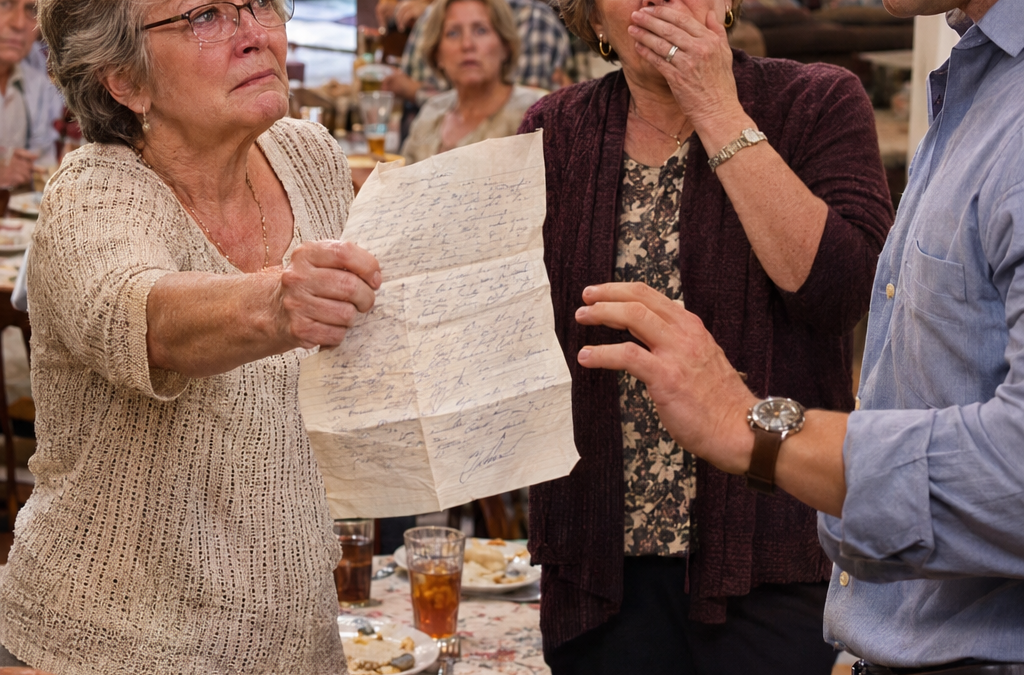
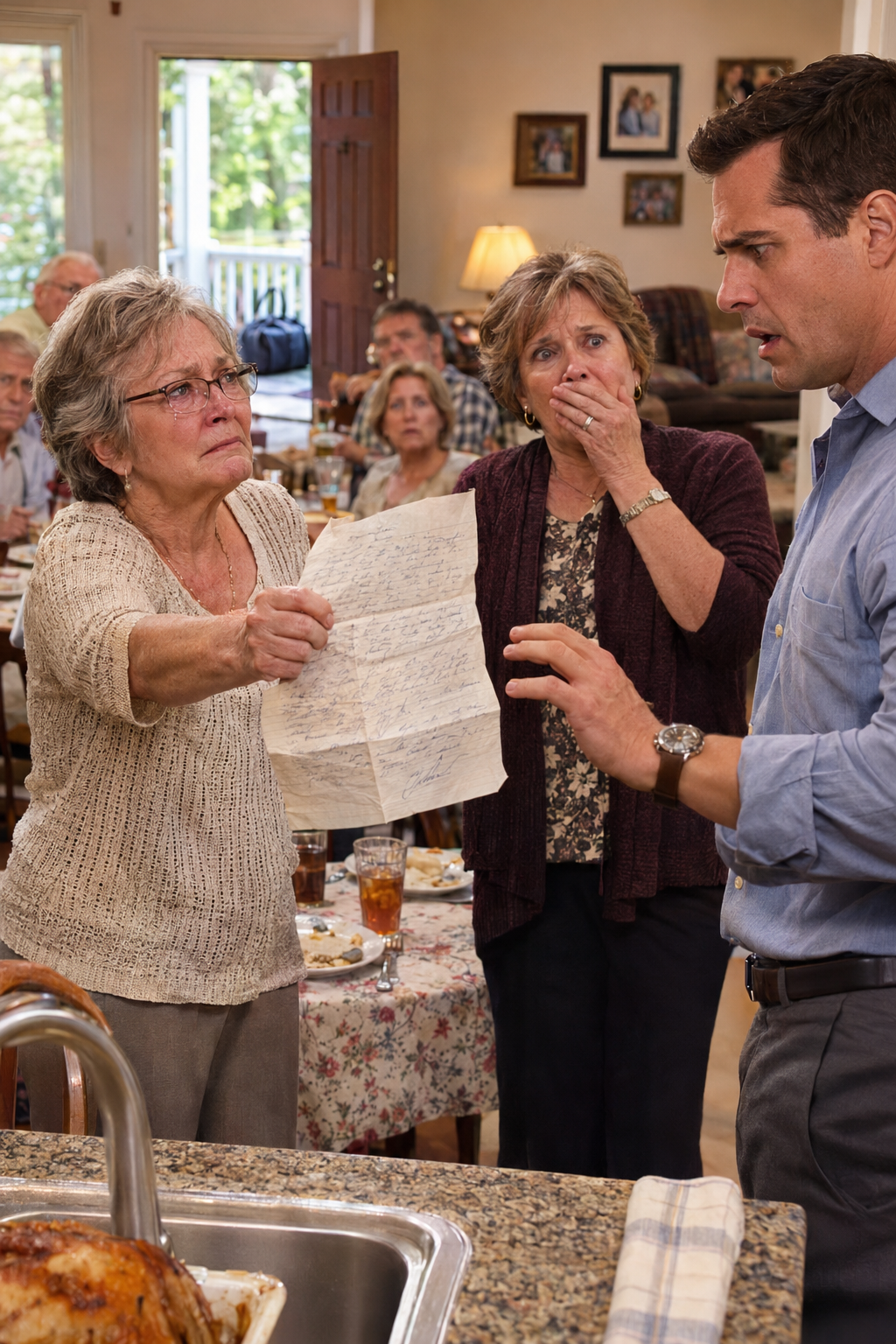
Part 3: The Call I Made
“Because I handled it,” Nathan said.
He pushed his chair back from the table.
“Handled what?”
“The program. All that stuff.”
He reached for the envelope again. I put it inside my bag, beside the wall.
Nobody had finished supper. I covered the roast and carried it to the refrigerator.
Marian followed me into the kitchen.
“Do you want everyone to go?”
“Yes. Leave the dishes.”
Nathan waited near the front door while the relatives gathered their things. He kept looking at my bag.
When the room was almost empty, he mentioned the truck.
“We still need to talk about that.”
“There won’t be a truck gift.”
He rubbed the back of his neck.
“You’re punishing me over an argument.”
“I haven’t approved a gift. I’m not approving one now.”
He left without taking any food.
The next morning, I called Paula.
She asked whether Nathan knew I was calling.
“No. These papers have your number.”
She paused before answering.
“Your son declined your speaking invitation. He said you didn’t want to participate.”
I moved my coffee away from the envelope.
“What invitation?”
“To speak at our caregiver gathering. We’re holding it again at the library.”
She explained that the public gathering had been suspended. When the program resumed, volunteers contacted people whose nominations they had kept.
Nathan was still listed as my contact.
He had answered for me.
“I never received an invitation,” I said.
“I’m sorry. We understood you had discussed it.”
Paula sounded careful now. I could hear paper moving on her desk.
“Is there something else?” I asked.
“He also said your memory had become unreliable.”
I looked at the grocery list beside my telephone.
Potatoes had been crossed out. So had carrots, coffee, and the roast.
“He told you that?”
“He asked us to send any further communication through him.”
I took off my glasses and cleaned them.
There had been no appointment, no diagnosis, no discussion with me. There was only Nathan telling a stranger not to trust my answers.
“My memory isn’t the problem here,” I said.
“I understand.”
“I want you to contact me directly.”
Paula asked permission to update the record. I gave her my own telephone number and mailing address.
She repeated them back before continuing.
“We can still include you, if you’d like.”
“What would I have to do?”
“Talk about your experience. Only what you’re comfortable sharing.”
I looked toward the front door.
My bag was still underneath the coat hook.
“I’d like to come.”
She told me about the library meeting room and the arrangements. The gathering would be on September 20, 2025.
There was no cash award. There was no obligation to make my story sound cheerful.
I asked whether Nathan had said anything else about my health.
Paula said he had not provided any medical information. She had treated his message as a family member declining an invitation.
She offered to send me the correspondence.
“Please do,” I said.
When it arrived, I read it at my kitchen table.
Nathan’s message was polite. He thanked the volunteers for thinking of our family.
Then he said speaking would confuse and distress me.
I put the printout beside his handwritten nomination.
I called Marian and read it to her.
She didn’t interrupt.
Afterward, she asked whether I wanted her to call him.
“No. I need to speak for myself.”
I wasn’t ready to see him alone, though.
There was still his equipment in my garage.
There were cabinets leaning against the walls and work stands beside my garden tools. I had allowed the storage because his own space was crowded.
Our written arrangement had never given him my garage permanently.
Still, I wasn’t going to put his belongings outside. I had seen enough of that at my front door.
I took the storage permission and the correspondence to a local attorney.
I explained that Nathan did not live with me. He had no ownership interest in the house.
I explained the proposed gift, too.
Nothing had been paid. Nothing had been signed.
The attorney asked whether Nathan had bought a truck relying on a firm commitment from me.
“No. I told him I would decide later.”
We went through what I actually wanted.
I wanted the equipment removed in an orderly way. I wanted my garage returned without an argument in the driveway.
The attorney prepared a proposed agreement ending the storage arrangement voluntarily.
Nathan would have time to move his things. We would both sign, and nobody would dispose of anything.
The deadline in the proposal was September 30, 2025.
I sent it to him with a short note.
I said the truck gift would not be happening.
I said he could arrange a time to discuss the storage agreement with me.
I did not mention the caregiver event.
He called before supper.
“You’ve got a lawyer involved?”
“I asked someone to explain my options.”
“You could have talked to me.”
“I did. You put my bag outside.”
He went quiet, then said he had been embarrassed.
I waited for him to say what had embarrassed him.
Instead, he asked whether I had told Paula about supper.
“I corrected what you told her about me.”
“That was private.”
“You sent it to someone outside our family.”
He breathed into the phone.
“I was trying to avoid a whole thing.”
“What thing?”
“You getting up there and talking about how hard it was.”
I looked at the nomination on my table.
“You wrote that it was hard.”
“That was different.”
He asked if we could discuss everything in person. I agreed, with Marian there.
When he arrived, she was already sitting in my kitchen.
He had brought the proposed storage agreement. He placed it beside the envelope without sitting down.
“I’ll straighten this out with you,” he said.
Then he glanced toward Marian.
“But I need you to keep the correction private.”
Part 4: The Bag Came Home
“No,” I said.
Nathan pulled out the chair across from me.
“I’m here to apologize.”
“Then apologize. But you said those things in front of everyone.”
Marian kept her hands around her coffee cup.
She didn’t answer for me.
Nathan looked down at the agreement.
“I’m not making a speech to the family.”
“You can write to the people who were here.”
He lifted his head.
“What am I supposed to say?”
“That I cared for you. That I sold the camper. That you had no right to order me out.”
“I know whose house it is.”
“Then include that.”
He pushed his chair back, but he didn’t leave.
For a while, we talked about the storage instead.
He asked whether I expected him to stop working. I said I expected him to arrange somewhere else for his equipment.
He asked whether paying me would change things.
“No. I want the garage back.”
He read the agreement again.
The deadline remained September 30, 2025.
He could remove his property by arrangement. We would check the garage together when he finished.
There was no charge for the storage he had already used. There was no truck gift attached to his signature.
He asked about that anyway.
“If I do all this, we’re still not discussing the truck?”
“That money is staying with me.”
He pressed his lips together and picked up his pen.
Marian watched us sign.
I gave him his copy before he left.
His correction arrived afterward in a message to the relatives who had attended supper. He sent it to me as well.
He wrote that his account of his recovery had been false.
He said I had provided daily care.
He acknowledged the camper sale and his nomination.
He also wrote that putting my bag outside had been wrong. He had no authority to make me leave my home.
I read the message at my kitchen table.
Then I saved it with the nomination.
It did not make me want to cook another supper.
It did mean I would not have to explain myself separately to everyone who had watched.
Some relatives called.
One said she had assumed Nathan knew something she didn’t. Another said he had made the whole room uncomfortable.
I told them I had been uncomfortable, too.
Marian came over while I worked on my library remarks.
I had spread paper beside the sewing basket.
Every version sounded too formal when I read it aloud.
“Talk like you talked to me,” she said.
“I don’t want to spend the whole time discussing him.”
“Then don’t.”
I crossed out the opening and started with the work shirt.
I wrote about holding the cuff.
I wrote about learning to wait while someone struggled with a task they used to do easily.
I also wrote about the camper.
Not because I wanted anyone to repay me.
Selling it had changed my plans. I had pretended otherwise for a long time because Nathan was recovering.
At the library on September 20, 2025, Paula met me outside the meeting room.
She introduced herself and asked how I wanted my name printed.
She asked me, not Marian.
I spelled it for her and checked the card.
Chairs faced a small lectern. There was coffee along the back wall and a table displaying program materials.
I carried my remarks in the same envelope.
Nathan arrived before the program started.
I hadn’t asked him to come, but I had told him where I would be speaking.
He stopped beside my chair.
“Is it okay if I sit here?”
I moved my purse from the empty seat.
During the introductions, Paula explained that the nominations described ordinary care done in private homes.
She did not mention Nathan’s messages.
She did not need to.
When she called my name, I took the envelope with me.
I put my written remarks on the lectern.
Then I looked up and saw Marian near the aisle.
I began with the shirt.
I described the warm washcloth and the stiff fingers. I repeated what Nathan had said when I reached toward the button.
People smiled at that.
I talked about carrying clean sheets into his apartment. I talked about going home and checking my telephone before bed.
I said there had been days when I was tired and impatient.
I did not call myself a perfect caregiver.
I did not call him an easy patient.
I said he had worked hard to return to his job.
Then I unfolded his nomination.
“With his permission, I’m reading something my son wrote.”
I looked at Nathan.
He nodded.
I read the passage about my patience with his hands.
I read the acknowledgment of what I had given up.
This time, nobody reached across the table for the paper.
When I finished, people clapped.
Paula thanked me by name and handed me my recognition certificate.
I checked the spelling before sitting down.
Nathan leaned toward me.
“You did take care of me,” he said.
“Yes.”
“I shouldn’t have said otherwise.”
I put the certificate inside the envelope.
“No, you shouldn’t.”
I stayed for coffee with Marian. Nathan helped put away chairs, then left after asking whether he could call me.
I told him he could call.
That was what I could offer him then.
By September 30, 2025, his equipment was gone from my garage.
He swept the floor before we checked it together.
My garden tools were still against the wall. There was room to reach them without moving a work stand.
We signed the completion acknowledgment and kept our copies.
He handed back the garage key.
We did not discuss the truck again.
Inside, I put the paperwork in my drawer. The proposed gift remained in my savings.
My house was still mine. So was the decision about who came inside.
Nathan and I spoke afterward, but I did not ask him over for another family supper.
I needed time before setting his place again.
That evening, I unpacked the overnight bag he had carried onto my porch.
There was an old scarf tucked in a pocket. I folded it and laid it in my dresser.
Then I carried the empty bag upstairs.
I opened the guest-room closet and set my overnight bag on its shelf, handle facing out.
You Might Also Enjoy




