My Niece Felicia Declared My Little Boat OUT at Our Marina Meeting, but When My Attorney Walked In, She FROZE Before the Same Owners Who Had Watched Her Humiliate Me
Part 1 of 5
“Your little boat is out!” my niece Felicia Raines said.
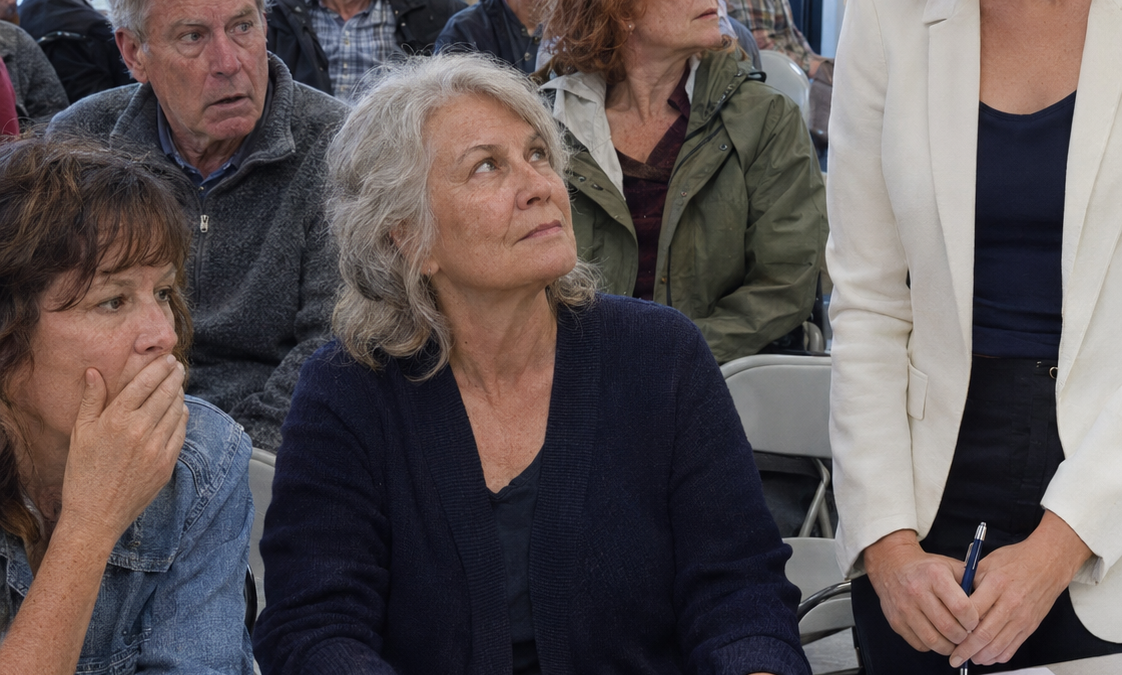
At our Maine marina’s spring meeting, a dozen boat owners watched from folding chairs, three of them close enough to hear every word.
My mother’s weathered wooden nameboard lay beside the berth chart.
Felicia stood at the table’s narrow end, wearing a white blazer.
Outside, her new cruiser blocked the view of the fuel dock.
She tapped the square marked B-12 with her capped pen.
“That berth needs a boat people actually want to look at.”
Nobody answered.
I kept both feet flat beneath my chair.
“Check the deed.”
The woman in denim stopped turning her coffee cup.
The gray-haired man lowered his printed agenda against his knee.
Our third witness looked toward the office’s closed inner door.
Felicia smiled without showing her teeth.
“Your mother rented here. Families don’t inherit favorable treatment forever.”
I stayed seated.
“Did your lawyer search the deed—or just trust you?”
Her pen stopped above the chart, then resumed its tapping.
I was sixty-three, old enough to recognize a bluff’s rhythm.
Thirty-one years dispatching ferries out of Rockland had taught me patience.
People who shouted about departure times seldom controlled the tide.
Felicia had mailed the meeting notice eleven days earlier.
The envelope called this a routine spring berth-assignment session.
An attached sheet called my mother’s place an inactive family accommodation.
I had saved both.
My mother, Beatrice Fitch, died the previous November, aged eighty-eight.
Her skiff had cost $600 when we bought it used.
When her knees failed, I steadied the boarding step.
When fog closed the harbor, I brought her supper.
When she stopped going out, I kept the battery charged.
She never asked for a larger boat or better neighbors.
She wanted somewhere to sit where the gulls argued.
That was enough.
Felicia glanced toward the three owners, making them her audience.
“My cruiser cost $180,000. It requires an appropriate permanent berth.”
The woman in the raincoat shifted her chair backward.
“Isn’t B-12 already assigned?” the gray-haired owner asked.
“Unused family privileges expire,” Felicia said, as if reading policy.
She slid a fresh assignment sheet across the table.
My niece’s name filled the space beside B-12.
A yellow tag identified my skiff as pending removal.
I looked through the window toward the floating docks.
Her cruiser’s white bow already occupied my mother’s familiar corner.
Its shore cord crossed the boards beneath our little water spigot.
The boat had arrived before the vote.
That was new.
“Was there a vote?” the woman in denim asked.
“This is an administrative correction,” Felicia said, straightening her folder.
She looked at me again, lowering her voice just slightly.
“You can keep the sentimental lumber. We need the actual space.”
I turned the nameboard until its worn lettering faced me.
My mother had named the skiff Second Cup.
One corner still carried a blue smear from her kitchen paint.
Felicia checked the wall clock above the weather radio.
“The yard can take your boat this afternoon, if you cooperate.”
“My boat is winterized on my trailer,” I said.
“Then you have no immediate need for water frontage.”
“Neither does an empty summer house in February,” I said.
The man’s agenda bent between his hands.
Felicia’s smile disappeared.
“You always make simple family matters unnecessarily difficult.”
I folded the yellow removal tag once along its center.
Then I placed it beside the nameboard, where everyone could see.
The woman in the raincoat asked whether minutes were being taken.
“Afterward,” Felicia said.
“While we’re speaking,” the woman said, opening her own notebook.
A truck door closed outside the marina office.
I recognized the measured tread coming up the wooden access ramp.
Felicia looked toward the window, then back at her assignment sheet.
She had expected my cardigan, my mother’s board, my quiet manners.
Those things had apparently suggested an easy morning.
I smoothed the folded tag with one finger.
The footsteps stopped outside.
My attorney’s gray sleeve appeared beyond the office door’s narrow window.
“We’ll proceed on your terms,” my attorney said to me as he entered.
Felicia froze with her pen suspended above the berth chart.
The man beside the window sat upright.
My attorney, Lionel Keene, closed the door against the harbor wind.
He wore the charcoal suit I had seen two days earlier.
A flat leather case rested beneath his arm.
“Thank you for waiting, Maribel,” he said.
Felicia put down her pen.
“This is an association meeting. We didn’t request legal representation.”
“I represent Ms. Fitch,” Lionel said. “She requested mine.”
“Then you can explain that sentimental attachments aren’t property rights.”
“I can explain the relevant rights when the record is complete.”
He took the empty chair beside me without moving the nameboard.
For the first time, Felicia looked at the board itself.
Then her gaze went to the leather case.
“Are you threatening the association?”
“No,” Lionel said. “I’m asking that this meeting be recorded accurately.”
The woman in the raincoat turned a fresh page.
Felicia reached toward the yellow tag.
I rested my palm beside it.
“Leave that, please.”
My niece withdrew her hand.
The office refrigerator clicked on behind the counter.
Lionel asked who had authorized the cruiser’s arrival at B-12.
Felicia adjusted the edge of her blazer.
“I did. As association president.”
“Before today’s meeting?”
“The seasonal schedule required a decision.”
He wrote that down.
Through the inner office window, the marina manager’s chair remained empty.
He was checking the pump-out station, according to the morning board.
Lionel had asked me beforehand whether the manager would attend.
I had told him the same thing I knew about tides.
Eventually, everybody had to come back through the office.
Felicia pushed the assignment sheet closer to me.
“The crane crew comes at two,” she said.
Part 2 of 5
I looked at the clock. It was eleven seventeen.
“You won’t need a crane for my boat,” I said.
“I mean the equipment for relocating your little dock box.”
The box contained two fenders, a coil of line, and Mom’s folding stool.
Felicia had already listed it under abandoned personal effects.
Lionel asked to see that list.
“This isn’t a hearing,” my niece said.
“Then there’s no reason to withhold the list.”
The woman in denim lifted her coffee out of Felicia’s way.
My niece opened a folder and produced another yellow sheet.
The dock box appeared beneath an entry for an old boarding rail.
Mom’s rail.
I had installed it after her second hip operation.
When the hospital wanted $45 for a discharge transfer, I drove.
When her refrigerator failed, I bought the smaller one she could reach.
When she worried about being expensive, I changed the subject.
Felicia visited twice that last summer, both times during association events.
I remembered because Mom put on earrings before going down.
She wanted to look presentable beside her granddaughter.
“Your little boat is out!” Felicia had said.
The words had sounded different with Mom’s board beneath them.
I didn’t repeat them aloud.
Lionel examined the inventory, then laid it alongside the assignment sheet.
“Who determined these items were abandoned?”
“I inspected the berth,” Felicia said.
“What date?”
“The week after the winter invoices.”
He asked for the date again.
“March twenty-sixth.”
I watched his pen move.
The invoices were important, although not for the reason Felicia thought.
Every spring, I paid the marina’s maintenance assessment from my account.
Mom used to leave grocery money in my glove compartment afterward.
I always returned it inside a paperback she wanted.
Twenty-four years of small arrangements never interested the rest of our family.
They saw a woman with a lunch cooler and an old skiff.
They assumed the arrangements were small, too.
They weren’t.
Felicia pulled her folder back before Lionel had finished reading.
“My grandmother had an understanding with the previous management.”
“Did you ask the previous manager?” I said.
“He retired.”
“That isn’t an answer.”
“I’m not reopening every handshake arrangement this place ever made.”
The red-haired woman in the raincoat stopped writing.
“What does the current manager say?” she asked.
“He handles operations,” Felicia said. “The board handles assignments.”
A notice lay missing.
The folder’s index listed correspondence that wasn’t behind its numbered tab.
I recognized the index because association members received copies each April.
Lionel noticed the empty divider without touching it.
“May we have the correspondence section as well?”
“There’s nothing relevant there,” Felicia said.
“Please leave that determination to the people reading it.”
She closed the folder.
I took my phone from my cardigan pocket.
One practical thing.
I texted the marina manager: Please bring the complete B-12 file.
He replied that he was washing his hands and coming in.
I set the phone facedown beside the board.
Felicia watched the movement.
“Calling your friends won’t change the berth dimensions.”
“No,” I said. “Records are less flexible.”
Outside, someone dragged a hose across the gravel.
The woman in denim asked whether the cruiser’s insurance listed B-12.
Felicia said the coverage was already in effect.
“Already?” the gray-haired owner said.
“I plan ahead.”
Lionel looked at me, waiting.
We had agreed that I would explain the board before he opened his case.
It had been his suggestion, after I showed him its underside.
A date in wood could not replace a recorded instrument.
But it could explain why I had never treated this as a favor.
I lifted the nameboard off the table.
Felicia folded her arms.
“If this is another story about Grandma, we understand you miss her.”
I set the board down gently, still faceup.
“This concerns the day I brought it home.”
My niece looked toward the witnesses.
“The association cannot budget around family memories.”
The gray-haired man put his agenda on the table.
“Then let her finish, and we can get to the records.”
A faucet shut off beyond the inner office door.
The manager’s footsteps crossed the stockroom.
I ran my thumb along the nameboard’s chipped bottom edge.
Mom had asked me to save that board if the hull ever failed.
She had been practical about boats and less practical about people.
Felicia uncrossed her arms long enough to straighten the assignment sheet.
Lionel opened his leather case but left its contents inside.
“Maribel,” he said, “show them what you showed me.”
My niece watched my hands.
I turned the nameboard over.
On the nameboard’s underside, I exposed the date I had carved: April 18, 2001.
“That’s the day I bought B-12,” I said. “In my name.”
Felicia’s chair scraped the floor behind her.
Lionel placed a certified copy of the recorded deed beside the wood.
“The separately deeded slip belongs to Maribel Fitch,” he said.
My niece looked at the document but did not touch it.
From the stockroom doorway, the manager said, “I brought the complete file.”
Part 3 of 5
Chester Penn came into the room carrying a gray records binder and a stapled packet. He had managed the marina for nine years, through two fuel-system replacements and one winter that tore the outer float loose.
He stopped when he saw the deed on the table.
“I thought we were sorting assignments,” he said.
“We are,” Lionel said. “This one was made over an objection.”
Chester put the binder between the witnesses rather than in front of Felicia.
That choice left every page visible to everyone.
My niece remained standing.
“Grandma’s name was on the old berth board,” she said.
“Her boat’s name was,” I said. “That’s different.”
In 2001, I was thirty-nine and working split shifts at the ferry terminal. The marina’s original owner was selling six slips separately to pay for a failing bulkhead. B-12 cost $18,500, plus closing fees.
I used savings intended for a kitchen renovation.
Mom never knew that part.
She knew I had secured a place for her boat, and she knew the bills came to me. I had asked her not to discuss the purchase because my brother was struggling then. I didn’t want him measuring what I spent on her against what I could lend him.
“What did you tell the family?” Felicia asked.
“That Mom had a place for her skiff.”
“You let the whole family think she rented.”
“I didn’t know you were keeping accounts.”
Lionel moved the certified copy closer to the three owners.
“The legal description identifies the slip parcel and its appurtenant access rights. The recording reference is here.”
The gray-haired man leaned forward without picking it up.
“Does that mean the association never assigned it?”
“The association coordinates its use and maintains common facilities,” Lionel said. “It cannot transfer title through a seasonal assignment sheet.”
Chester opened his binder to a tab marked separately owned slips.
“There are six,” he said. “B-12 is one of them.”
Felicia glanced at the woman in denim.
“Nobody explained that to me when I became president.”
Chester’s hand stopped on the binder ring.
“I did.”
“You mentioned unusual legacy arrangements.”
“I gave you the ownership schedule.”
“That was a list.”
“It included the recording references.”
Lionel asked Chester to leave the binder open.
I could see my name in a column I had looked at every spring without thinking it might someday need witnesses.
Maribel Fitch. B-12. Assessments current.
No decoration. No family title. Just the name I signed on checks.
Felicia drew the assignment sheet toward herself.
“If the records were unclear, we can correct an administrative misunderstanding.”
“They weren’t unclear,” Chester said.
The woman in the raincoat lifted her pen.
“When was the president notified?”
My niece looked at Chester before he answered.
That small movement was enough to make me put both hands flat on my knees.
Chester turned three pages and removed a copy of a letter.
“February sixth. After the first discussion about inactive berths.”
He placed the letter beside the deed.
Lionel asked whether it had been delivered.
“By association email and certified mail. Both went to the addresses on her officer form.”
“That doesn’t prove I understood every attachment,” Felicia said.
“No,” Lionel said. “Let’s look at the acknowledgment.”
Chester unfolded a printed email thread.
Felicia reached for it, but he slid it toward Lionel instead.
The attorney read silently, then turned the page so the witnesses could see where to follow.
“May I read your response aloud, Ms. Raines?”
“You’re making this theatrical.”
“Is the response yours?”
My niece pressed her lips together.
“Yes.”
Lionel read one sentence.
“‘I understand B-12 is individually owned by my aunt, but prolonged nonuse should permit reassignment.’”
The red-haired woman stopped writing halfway across the page.
Nobody had to explain the sentence.
Felicia looked at me.
“I was trying to avoid an awkward conversation.”
“By moving your boat in?”
“By finding a practical use for space nobody was using.”
I thought of Mom’s stool inside the dock box. Its aluminum legs were wrapped with tape where they had once pinched her fingers.
“Someone was paying for it,” I said.
Chester turned to the account ledger.
“Every assessment. Every special repair charge. Nothing outstanding.”
The gray-haired man in fleece asked whether the board had voted to override that ownership.
“There is no authority for such a vote,” Lionel said.
“I asked whether they voted.”
Chester shook his head.
Felicia’s white blazer caught the light from the window. One cuff had a tiny coffee stain I hadn’t noticed before.
For years, I had mistaken her polished surface for preparation.
Now she was studying an email she had written herself.
“This doesn’t require lawyers,” she said. “We can leave the skiff wherever it is until summer.”
Lionel took one last document from his leather case and closed the clasp.
“The next item isn’t a request,” he said.
Then he placed a court-stamped order beside Felicia’s acknowledgment.
Part 4 of 5
Felicia stared at the stamp.
“You went to court over a parking space?”
“A slip,” I said.
Lionel opened the order to its operative page.
“After your written threat to reassign B-12 and remove Ms. Fitch’s property, we sought temporary injunctive relief. The court entered this order yesterday.”
He passed a service copy to Chester.
“It prohibits interference with her access to B-12, removal of her property, or placement of another vessel there without her consent.”
Chester read the paragraph, then started again at the top.
Felicia stayed very still.
“No one told me there was a hearing.”
“You received notice of the application through association counsel,” Lionel said. “Counsel submitted a written response. The order addresses the association and its officers.”
He took another sheet from the order packet and showed her the transmission record.
I had not known what the association’s lawyer would submit. Lionel had told me only that there could be no guaranteed result, and that I should bring every letter I had received.
So I had brought all eleven pages.
The threatening one was shortest.
It gave me until April tenth to accept relocation of the berth’s contents. Today was April twelfth.
My niece had put that deadline in bold.
The woman in denim rested her cup on the floor.
“Does her cruiser being there now violate this?”
Lionel chose his words carefully.
“The order requires the interference to stop. That is why the manager needs the order immediately.”
Chester went to the wall radio, then stopped before lifting the microphone.
“Has the owner consented to that vessel occupying B-12?”
He looked directly at me.
“No,” I said.
“Did she ever?”
“No.”
Felicia pulled out the chair behind her and finally sat.
“We could arrange compensation.”
I looked at the nameboard.
Mom had taken a thermos down every morning she could manage, even when she wasn’t leaving the dock. She poured one cup for herself and offered the second to whoever stopped nearby.
The boat’s name had never been a joke.
“I’m not renting it to you,” I said.
“We’re family.”
“We were family when you printed the removal tag.”
The red-haired owner lowered her notebook.
Felicia’s gaze moved toward the window, where the cruiser’s upper deck showed above the railing.
“I’ve already arranged a July gathering aboard. There are invitations.”
Chester checked the assignment sheet.
“That isn’t the marina’s obligation.”
“You approved my arrival.”
“I approved overnight staging at the service dock. You moved from there before the office opened.”
The gray-haired man turned in his chair.
“So the manager didn’t put you in B-12?”
Felicia said nothing.
Chester took a pencil from the counter and drew a single line through her assignment.
He wrote canceled, the time, and his initials.
Then he made a photocopy before handing the original to Lionel.
“The association assignment to B-12 is canceled,” he said. “It was not available for assignment.”
My niece straightened in her chair.
“As president, I think we should discuss that privately.”
“The assignment was announced here,” Chester said. “The correction will be made here.”
I looked at the three owners who had heard the first announcement.
The woman in denim met my eyes and gave one small nod.
Chester picked up the radio.
He asked the dock attendant to prepare transient T-4 for the white cruiser at B-12. Then he set down the microphone and addressed Felicia.
“You’ll move to paid transient dockage by one o’clock. If you need a qualified operator, we’ll arrange one at your expense.”
“What rate?”
“The posted rate for your vessel’s length, beginning today.”
“That’s supposed to be for visitors.”
“Correct.”
The man in fleece examined the corrected chart.
“Is her electrical connection included?”
“Metered separately,” Chester said.
Felicia opened her mouth, then looked at Lionel’s copy of the order.
My attorney did not say another word.
There was no need to improve upon an exact berth number, a canceled sheet, and a time on the clock.
Chester turned the radio volume down.
“Until it moves, no one touches Ms. Fitch’s box, rail, lines, or access gate. I’ll supervise the transfer myself.”
He asked Felicia whether her cruiser could be operated immediately.
The keys were in her pocket.
She placed them on the table and requested the dock attendant’s help.
Chester called the attendant back. The man was already at T-4 measuring the available length, because the first radio request had sent him there.
The cruiser would fit.
Felicia watched Chester complete the temporary dockage form.
He showed her the daily charge and asked for authorization.
She signed beneath it.
At eleven fifty-eight, the attendant radioed that the cruiser was ready to leave B-12.
Part 5 of 5
Chester asked everyone to remain while he supervised the move from the office window. B-12 lay directly below the far end of the porch, where we could see without going outside.
The three owners turned their chairs.
Felicia stayed at the table.
I carried nothing to the window. The nameboard remained where I had set it, with the carved date facing up beside the recorded deed.
A dockhand disconnected the cruiser’s shore power. Another lifted the stern line from the cleat Mom used to reach with her boat hook.
The engine started low enough to rattle the loose window latch.
My niece looked down at her signed transient form.
Nobody offered to fill the quiet for her.
The cruiser eased backward, straightened, and moved beyond the fuel dock toward T-4. When its bow cleared the outer piling, B-12 opened to the light.
It looked smaller without the cruiser.
It looked exactly right.
Chester watched until the attendant confirmed both transient lines were secure.
Then he returned to the table.
“B-12 is clear. The dock box and boarding rail are untouched. I’ll check the gate before lunch.”
Lionel asked him to make a written incident entry, attaching the canceled assignment and the order.
“I’ll send copies to both counsel and the association secretary,” Chester said.
Felicia lifted her head.
“Do all the members need to hear about this?”
“The members need an accurate ownership schedule,” Chester said. “They also need to know that separately owned slips are not part of the seasonal assignment pool.”
He did not offer her a smaller version.
The woman in the raincoat tore a clean page from the back of her notebook and began copying the correction for the meeting record.
“I’ll sign as a witness,” the gray-haired owner said.
“So will I,” said the woman in denim.
Felicia looked at the three signatures taking shape.
Those were the people she had invited to observe a routine reassignment. She had told them, at the start, that she wanted transparency in marina business.
They were giving it to her.
Lionel gathered the documents in two stacks.
“The order remains in effect according to its terms,” he said. “We’ll address the remaining court schedule through counsel. No one needs to improvise a new arrangement today.”
He handed me my certified copy.
For the first time that morning, I put on my reading glasses.
My signature from twenty-four years earlier had a taller M. I remembered signing at a closing desk with a chipped green lamp. I remembered going straight from there to my afternoon shift, eating crackers while I checked the ferry board.
It had not felt like the sort of purchase a family would talk about for years.
It had felt like fixing one thing for my mother.
Felicia watched me fold the copy into its protective sleeve.
“Why didn’t you tell me before this got so far?”
Chester’s February letter lay between us.
I touched its corner.
“You were told.”
Her eyes followed my finger to her own acknowledgment.
For a moment, I thought she might apologize to the room. Instead, she asked whether I wanted her to step down as president.
“That’s association business,” I said. “I wanted my berth left alone.”
The gray-haired owner said the board should review what had happened at its next scheduled meeting. Chester recorded that request, without pretending any vote had already occurred.
The part involving my property was finished.
Felicia’s assignment was canceled. Her cruiser was tied at paid transient dockage. My access was protected, and the same room that had watched her claim B-12 had watched her lose it.
I didn’t need to borrow a further punishment from the future.
The woman in denim asked whether I would launch Second Cup soon.
“After I replace the fuel hose,” I said. “Probably next Saturday.”
“My brother has a trailer jack if yours sticks.”
“Mine sticks,” I said. “I’ll take his number.”
She wrote it on the back of her agenda.
Ordinary help. Offered without ownership attached.
Chester brought a small wooden display stand from the office shelf. It had been used for rate cards before the marina changed to a wall board.
“Would this support that?” he asked.
I checked its groove against the nameboard’s lower edge.
“Yes. Thank you.”
I set the nameboard upright, its faded letters facing Felicia and the three owners.
“My mother’s boat still has a home.”
Felicia looked at the blue paint on the corner.
I left the board standing while Chester corrected the large wall chart. He removed the paper label bearing my niece’s name from B-12 and replaced it with the designation the records required.
He handed me the discarded label rather than dropping it on the floor.
I put it beside the yellow removal tag for Lionel’s file.
Outside, the attendant secured an orange transient marker to the cruiser’s rail. From the office, we could see the marker move against the white hull.
Chester dated the corrected chart and read the final entry aloud.
“B-12: Maribel Fitch. Owner access restored at twelve oh-six.”
THE END
More stories
Cecily Said I Stole $600 From Our Church Pantry Before 38 People, but When the AUDIT Arrived, My Red LEDGER Held a Secret She Never Saw ComingMy Ex-Husband Bruce Took Away My Reserved Auction Seat, but the Blue Folder I Handed His Auctioneer Left Him $10,000 of the Waterfront Condo Money He Had Promised His FiancéeMy Daughter-in-Law Melanie Called Herself My Clothing Label’s Founder, Then Handed Me an Apron Before Sixty Buyers. My Paperwork Left Her Without the Brand She Expected to Own.My Ex-Husband’s Fiancée Told Me to Make Myself Useful Before Forty-Six Guests, Then Lost Her Exclusive Label When I Opened the License She Had Called PermanentMy Daughter-in-Law Sabrina Handed Me a Bus Tub at My Retirement Dinner, but the Employee Votes I Carried Cost Her the $900,000 She Expected From Selling the CompanyMy Daughter-in-Law Told Me to Serve Champagne at the Gala Where I Was a Guest, Then My Signature Cost Her the Head-Table Chair and Her Museum Job
You Might Also Enjoy

My Daughter-In-Law Told Me To Stay Elsewhere While Strangers Took My Condo — Then I Pushed Back







