My Husband’s Campaign Manager Kissed Him at My Table, Then He Took the Mic: “Nobody Drove Out to St. Simons to Watch a Reading Teacher Cry”—He Forgot Who Writes Down His Boat Every Night
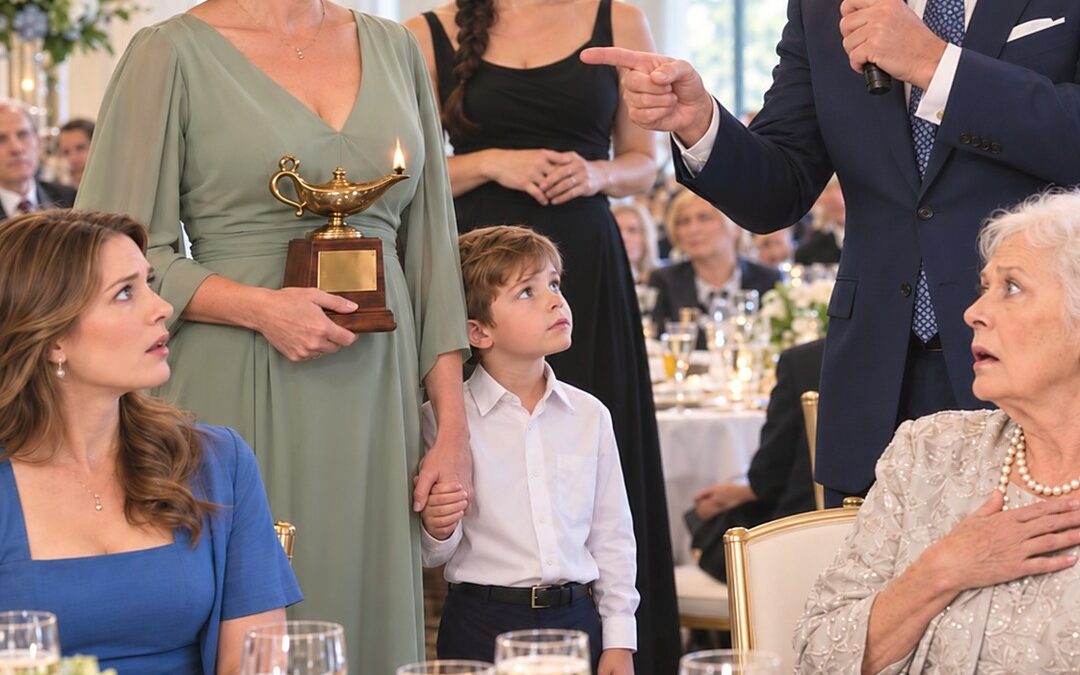
Part 1 — TABLE 3
PART 1 — TABLE 3
At 8:14, with the Glynn Civic League's brass Lamplighter Award still in my hands, I came down off the stage to Table 3 and watched my husband's campaign manager kiss him in front of our daughter.
Then Wade took the microphone for his sponsor's toast, smiled at 240 people, told them we'd separated in the spring, and finished with, "Go on and sit down, darlin'. Nobody drove out to St. Simons to watch a reading teacher cry."
Thirty-one years of marriage and my late daddy's house on Dunbar Creek were riding on what I did next, and Wade had never wondered what the old man who logs his boat at night bothers to write down.
The applause was still going, and the brass lamp's little handle pressed into my palm.
Table 3 sat below the stage with my empty chair beside Libby and six-year-old Hank. Wade and Brynn sat farther around the table.
The room lights had come fully up as I reached Table 3. Brynn stood, her long braid swung, and she kissed Wade for about two seconds in front of Libby. Libby pulled Hank in against her pale yellow dress while Wade didn't step away.
I stopped beside my chair.
Brynn stepped back.
Wade watched me. His expression had the settled look he used with buyers after an inspection found termites.
You could almost hear him deciding whose problem the termites were.
Sherry came down the stage steps and handed Wade the wireless microphone for the closing sponsor's toast.
He already held the card Brynn had written. He held his third Maker's Mark in the other hand.
At a closing on Sea Island Road, an inspection report had missed rot under the back steps. Wade joked that the inspector needed glasses, and the buyers laughed at him instead of asking why Wade had urged them to close.
Wade raised the microphone and said, "Well."
A few people settled back into their chairs. I stood beside mine.
Wade glanced at Brynn. Then he looked at me.
"Nora and I separated back in the spring. She's known."
Libby turned toward him.
"Wade."
That was June-Ann Grady, quiet and one word.
"We were trying to keep family business private, but apparently that's not possible tonight."
He smiled toward the front tables. Two men laughed.
One was from a roofing company. I had reported his brother's divorce in 2007.
"Marriage is complicated," Wade said. "Campaigns are worse."
The microphone made him sound bigger.
Another laugh came from the front.
Wade lifted his glass.
"This district deserves a man who's honest about his life."
Hollis Grady stopped smiling.
Wade turned toward me. The toast card stayed bent in his hand.
He had never read one word of it.
I looked past him. The clock said 8:22, seven minutes fast, and I corrected automatically because thirty-one years in a courtroom will put times in your head whether you want them there or not.
8:15. I marked that time.
Wade tilted his head.
"Go on and sit down, darlin'. Nobody drove out to St. Simons to watch a reading teacher cry."
The men near the front gave him what he wanted. Enough of them did.
Wade lowered the microphone.
I didn't answer.
My father used to say that when somebody hands you a shovel, you are not required to help him dig, and I set the brass lamp on Table 3.
Its base landed beside my untouched water glass.
Hank looked up at me.
I picked the lamp back up. Then I reached for his hand.
"Come with Grandma."
Libby loosened her arm.
"I've got him."
I didn't look at Wade or Brynn.
Hank climbed down from his chair. His hand disappeared inside mine.
Table 3 was near the stage. Table 9 was near the kitchen doors.
A woman from Christ Church pulled her chair in so Hank could get through, and Jimmy's red camera light followed us.
We reached Table 9 by the kitchen doors with the red light still behind us.
Patsy Kimbrell was already lifting her purse. She moved it from the open chair.
"Here, Miss Nora."
I sat, and Hank climbed into the chair beside me.
I placed the lamp in front of him.
Amos Tolliver, sixty-eight then and a retired shrimp captain, pulled his chair closer.
After forty years going out before daylight, he could tell what weather was coming by how the creek smelled, though six years earlier he couldn't read the word weather.
He kept his reading glasses in his shirt pocket. Tonight he took them out.
He held them by one temple, then set them beside his coffee.
At 7:45, Amos had stood at the podium in his white church shirt.
Wade's chair and Brynn's chair at Table 3 had both been empty.
"Campaign call," Adele had told us.
Amos had carried an index card in pencil block letters.
He had practiced all week.
"Miss Nora taught me to read my granddaughter's name. Then she taught me the rest of the book."
He reached the word granddaughter and stopped.
I mouthed granddaughter from Table 3.
He found his place and finished.
People stood for him.
At 8:05 Wade and Brynn came through the side doors near the kitchen, passing Table 9 first with Wade's eyes on his phone, his hair damp.
Back at Table 9, Amos reached into his shirt pocket.
He pulled out the index card and handed it to me.
The pencil letters were careful and big.
The word granddaughter had an eraser mark through its middle.
One letter had been fixed.
I put my thumb over the smudge. The graphite spread under it.
I pressed harder than I meant to.
Hank reached toward the lamp.
"Can I hold it?"
I gave it to him.
"Both hands, baby."
He lifted the brass lamp.
Amos watched Table 3. His glasses stayed beside his coffee.
Wade had handed the microphone back to Sherry. Brynn was talking close to his shoulder.
Libby hadn't moved.
Amos spoke without turning.
"He smelled like F Dock when he walked past us, Miss Nora."
I looked at him. Amos watched Wade.
I didn't ask what he meant.
Patsy set a fresh coffee by my hand. I left it there.
The photographer came to Table 9. He stopped about eight feet away, and his camera rose.
I put Amos's card beside the brass award.
Hank held the lamp between us.
The photographer took one picture, then another.
Hank set the lamp on the table.
"Grandma, why did that lady kiss Grandpa?"
The kitchen doors opened behind us. A server came through with coffee cups.
Patsy looked at me, then at Hank.
"Because she made a bad choice."
"Did Grandpa make one?"
I looked toward Table 3. Wade had his back to us. Libby was still there.
"Yes."
Hank stared at the lamp.
"Is Mama mad?"
"Probably."
"At Grandpa?"
"Probably at a lot of things."
He ran his thumb along the brass handle.
"Are you mad?"
"Yes, baby."
Patsy said, "You don't have to answer every question tonight."
Hank looked at her.
"I got more."
"I figured you did."
Hank pointed toward Table 3.
"Is Grandpa coming home with Grandma?"
I put my hand over Hank's.
"I don't know where Grandpa's going tonight."
"Can I stay with you?"
"If your mama says yes."
He looked toward Libby.
"She looks sad."
"She does."
Amos picked up his glasses and cleaned one lens with his shirt.
"Hank, you know what your grandma did when I missed that word tonight?"
"What?"
"She helped me find it and let me finish."
Hank looked toward Table 3.
"Did Grandpa help?"
Amos put the glasses on.
"No, sir."
"Why not?"
"He wasn't in his chair."
Hank looked at me.
"Was he outside with that lady?"
Patsy covered her mouth with her napkin.
Hank touched the green felt under the lamp.
"Can Grandpa take this?"
"No."
"Can that lady?"
"No."
"Can Mama?"
"If she wants to carry it."
He considered that.
"Can I?"
"For tonight."
He pulled the lamp closer to his plate.
At Table 3, Libby looked toward us. She didn't wave.
I lifted my hand from the table.
Then she looked down at Hank's empty chair beside her.
"Miss Nora."
I turned to him.
"You heard what he said into that microphone."
"I heard every word."
"Good."
Patsy set down her cup.
"Why is that good?"
Amos looked at me.
"Because she won't have to wonder tomorrow if she heard it wrong."
The kitchen door swung open again. Silverware rattled on a cart.
I looked at Amos's card beside the lamp.
"I won't."
At Table 3, Brynn picked up her phone.
Wade said something to her. She put it into her bag.
A retired dentist squeezed my shoulder.
I stayed at Table 9.
At 8:46, Adele walked over. She stopped beside Amos.
"That was a very nice reading."
"Thank you, ma'am."
Adele turned toward me.
"You should come back to the family table."
"I'm sitting with my class."
"That isn't what I meant."
She gave me a look I had seen since 1995.
"Wade was embarrassed."
Hank rotated the brass lamp. The green felt underneath had begun peeling near one corner.
I smoothed it flat.
"Was he?"
Adele lowered her voice.
"Brynn made a mistake."
I picked up Amos's index card.
"Two seconds."
"You don't know what she's dealing with. Campaigns are difficult."
"So I've heard."
Adele returned to Table 3.
Patsy waited until she was gone, then moved the coffee closer again.
"You want this?"
"No, ma'am."
She drank it herself.
Patsy works breakfast shift at a diner in Brunswick, and waste bothers her.
By 9:12, the photographer was packing his bag while Jimmy still had his camera out, and Sherry stopped long enough to ask Hank if he was guarding Grandma's award, his fingerprints already all over the brass.
"We'll talk Monday," she said, then left us to clear out.
At 9:25 Libby finally came back. She crouched beside Hank.
"We need to go, buddy."
He resisted.
"I have the lamp."
"It's Grandma's."
"Grandma gave it to me."
Libby looked at me.
"For tonight."
Hank carried the award box. I carried the lamp.
We walked outside at 9:38 into sticky September air, cars crawling through the club lot while palmetto shadows moved under the lights.
At 9:40, Wade walked Brynn toward her car.
Brynn drove a white Acura. She clicked it open.
Wade carried nothing and opened her driver's door.
Brynn got in. Wade leaned down with one hand on the roof.
I couldn't hear them.
He closed the door.
The Acura backed out.
Wade watched it leave. He didn't look back at us.
Libby held Hank against her hip.
He was getting heavy. His head rested against her neck.
"Mama."
I opened the Enclave's rear hatch.
"Why didn't you say anything?"
I set the award box inside.
"About which part?"
"Any part."
Adele came up behind us. Her heels clicked on the pavement.
"You made enough of a statement walking across that room."
Libby shifted Hank.
"Grandma, please."
Adele crossed her arms.
"On the twenty-fourth, you're going to stand next to Wade."
"No."
"Like his wife. You don't want this getting uglier."
A car rolled behind us. Its headlights crossed Adele's face.
I closed the hatch.
Adele looked at me.
"People forgive a bad night."
I opened my driver's door.
Libby stepped closer.
"Dad told everybody you separated."
"He did."
"Did you?"
"No."
Hank stirred against her, and Libby adjusted him.
"When did Brynn start?"
"I don't know."
Libby smoothed Hank's shirt over his back.
Wade crossed behind us.
His cork-float keyring knocked against his leg.
He didn't stop.
"I'll be by for my clubs. Don't change the locks on my house."
He walked on, and Adele followed him.
Libby watched her father reach his SUV. Then she turned back.
"Come home with us."
"I'll call you tomorrow."
I kissed Hank's hair, then got into the Buick.
The dashboard clock read 9:47. It was two minutes slow.
I drove home across St. Simons.
The cottage sat at 604 Lawrence Road, where Daddy built it in 1958 and added the dock in 1971, and though the boards had been replaced twice, the pilings were his.
The creek was black behind them.
I parked at 10:18.
Wade's side of the driveway was empty.
His old rain jacket still hung by the door. I left it there.
The kitchen smelled faintly of the lemon cleaner I used that morning.
I set the brass lamp on the table, then took out Amos's card.
The pencil had smeared where my thumb touched it.
I laid it beside the lamp.
I didn't pour a drink.
I brought my old steno machine from the hall closet into the kitchen.
The case still had a Glynn County property sticker on one side. VOID had been stamped across it.
I set the machine in front of Wade's chair, then plugged it in.
At 10:51, I started.
I wrote the date.
Saturday, September 12, 2026.
Sea Marsh Club. Frederica Room.
At approximately 8:14 p.m.
I stopped, then corrected the time.
The toast had started one minute later: 8:15.
I wrote Wade's words exactly.
"Nora and I separated back in the spring. She's known."
I kept going, including the bad jokes and the pauses.
I included June-Ann saying his name.
Then I reached the last line.
My fingers stopped over the keys.
The kitchen clock changed to 11:02, and I typed it.
"Go on and sit down, darlin'. Nobody drove out to St. Simons to watch a reading teacher cry."
I printed the transcript, one copy.
Then I opened my laptop.
The Civic League had already posted Jimmy's dinner video. Twenty-three minutes.
There I was in the blue dress with the brass lamp and that awful cream jacket Wade said photographed well.
I checked my transcript against the video line by line, and it matched.
I had reported murder trials and drug cases.
Divorces where grown people fought over Christmas ornaments because fighting over the marriage had become too expensive.
I saved the League video and the page address, then printed another transcript and put both copies into a manila folder.
Saturday nights had been odd since winter, with Wade leaving after dinner for a campaign supper or fish fry, then sometimes coming home smelling of gasoline in shirts that should have smelled like the club.
On March 29, he skipped my mother's memorial bench dedication for a campaign fish fry.
The next night, I sent him to the boat.
He came home April 1 carrying grocery-store roses with the price sticker still underneath.
I put them in Mother's old pitcher.
At 11:19, I found Patrice Odom's home number.
Patrice had been a young public defender when I reported her first felony trial in 1996.
She had forgotten her yellow pad that morning. I lent her one.
She never forgot another.
I called, and the phone rang three times.
On the fourth ring, Patrice answered. A television played behind her.
"Nora?"
"I need you to file Monday."
The television went quiet.
"You home?"
"Yes."
"Where's Wade?"
"I don't know."
"Are you safe?"
"Yes. I'm home."
"What happened?"
I looked at the printed transcript.
"Brynn kissed him at Table 3."
Patrice didn't interrupt.
"Wade took the microphone afterward."
"Of course he did."
"And Patrice, he said 'spring' into a microphone in front of 240 people."
Paper moved on her end.
"Bring me everything you have."
"I don't have anything yet."
Patrice stopped writing.
"You have the video."
"I have the video."
"You have bank records?"
"I can get them."
"Any texts between them?"
"Probably."
"Do not delete anything."
"I won't."
"Don't call him tonight."
"I wasn't planning to."
"Don't call Brynn."
"I won't."
Patrice gave me her office time: nine Monday morning.
I wrote it on a yellow sticky note, then put the note on the folder.
The framed photograph from our June vow renewal still sat on the dresser: Methodist church steps, white hydrangeas, Wade beside me.
His gold campaign pin showed even there.
I left the picture where it was.
I went back to the kitchen and wrote one more page on the steno machine: Brynn's kiss, two seconds, at Table 3, with Libby, Hank, Adele, the Gradys, all present, and I quit there before it turned into a witness list.
I pulled the paper free and placed it in the folder.
Amos's index card stayed beside the lamp.
I picked it up.
The line was still readable through the graphite smear.
"Miss Nora taught me to read my granddaughter's name. Then she taught me the rest of the book."
At 11:52 my phone lit up.
Amos texts in capitals, the way he does:
"MISS NORA. MR WADE CAME TO THE DOCK TONITE. HE WANTS ME TO SIGN ANOTHER ONE."
Part 2 — ANOTHER ONE
PART 2 — ANOTHER ONE
At 6:15 Sunday morning, I parked outside Mackay River Marina.
The sky was barely gray. My Buick was the only car near F Dock besides Amos's 1999 Ford Ranger.
I had slept forty minutes. Maybe.
The dock shack had one yellow light on. Amos opened the door before I knocked.
"Morning, Miss Nora."
He wore the same work pants from Saturday night. His white church shirt was gone.
A faded blue work shirt had replaced it. His reading glasses sat in his pocket.
The shack smelled of coffee and the space heater. September didn't require a space heater.
Amos liked it anyway.
A coffee can full of pencils sat by the window. Beside it was a red spiral notebook.
The notebook caught my attention. Amos noticed.
He pulled out a chair.
"Sit if you want."
I sat. He had stayed past six to wait for me.
F Dock was visible through the window. Second Wind sat three slips down.
Thirty-two feet of white fiberglass. Wade had polished that boat more often than our kitchen floor.
"Your text said another one."
Amos wiped his palm on his work pants.
"Yes, ma'am."
He looked toward Second Wind.
"Last night, about ten-thirty, he come up from the boat."
"What was on the paper?"
"Said I'd seen him sleeping out there regular since March thirtieth."
My fingers tightened around my car keys.
"Did you sign it?"
"No, ma'am."
He touched his shirt pocket, then dropped his hand.
"Told him my glasses was home."
The glasses were still in his pocket. He saw what I meant.
"They wasn't. I lied."
Amos took them out. He cleaned one lens on his shirt, then put them on.
"He already got me."
Amos crossed to the little desk and opened the bottom drawer. Inside was a business envelope.
He brought it to me. The envelope had two creases across it.
"Labor Day. September seventh."
"Yes, ma'am. Six-ten. My shift ended six. Mr. Wade come in before I left with two copies and said it was for insurance. Said he was in a hurry, running late for something. He put a hundred-dollar bill down, then tapped where I sign."
"What exactly did he say?"
"It's just the insurance, Cap."
Amos handed me the envelope.
"I read the first line. He kept tapping, so I signed it. Then I said, 'Do I get a copy?'"
I had written the same sentence on the library whiteboard every Tuesday for years.
Never sign what you can't keep a copy of.
Amos gave a small breath through his nose.
"Mr. Wade laughed and left me one. Said it was for the insurance man."
I opened it. Mackay River Marina letterhead.
Typed statement. Amos's signature at the bottom.
Underneath it was another typed line: Witness: R. Rainey.
I didn't read ahead.
The statement was one page. The important line sat near the middle.
I read it out loud.
"I observed approximately 30–40 guests board the vessel Second Wind for donor outreach events."
Amos didn't move.
I put one finger under the line.
"Did you ever see thirty or forty people board Second Wind?"
"No, ma'am. Never did."
I put the paper flat.
"Why didn't you call me Tuesday?"
He pulled off his glasses.
"Tuesday I read it all."
He took his time.
"Was ashamed, Miss Nora."
I didn't rescue him from the word.
"And it was your husband."
"My teacher's husband."
He turned to the dock window. Second Wind rocked against its lines.
Amos got up. He brought the red spiral notebook over.
"This here belongs to Buck."
He opened it. Most of the writing was pencil.
Boat names and times, with initials.
Lines leaned uphill in places. Some nights had coffee rings.
"Buck's rule is boat and time. Guest fell off F Dock in nineteen." He turned two pages. "Buck wanted to know what boats was out."
"So you record boat name, time out, time in."
"That's what he asked."
I pointed to the last column.
One or two aboard, sometimes three.
"Who told you to add this?"
"You did."
He kept one hand on the red cover.
"You said write down what you see."
I remembered the assignment. January 2022.
Short sentences about weather and street signs.
What was in front of them.
"You started a head count?"
"Practice. Every line."
"Since 2022?"
"Yes, ma'am."
"Does Buck know?"
"Never asked."
"Anybody else ever read this column? Wade?"
"No, ma'am. Nobody."
I turned toward the window again.
"Does Wade know you can read all this?"
Amos almost smiled before saying no.
"What does he think?"
"He calls me Cap. Says Cap reads the tide, not the paper."
I turned back to him.
"Did you ever tell him about Tuesday class?"
"No. Didn't want him knowing."
He turned pages until his index finger stopped at February 21.
I leaned closer. The pencil was light.
I read the whole line.
"SAT 2/21 — SECOND WIND — W. BEAUMONT — OUT 9:10P — IN 6:20A — 2 ABOARD"
I read it again.
"Who were the two?"
"Mr. Wade."
"And?"
"Same young lady every time."
I put one finger on the page margin.
"Which young lady?"
"Long braid."
Amos kept his finger on the page.
"Steps on like she owns it."
Brynn Talley. I didn't say her name.
Amos started turning pages, but I stopped him.
"You saw them step aboard from here?"
"When I wrote it, I saw it."
He pointed behind me. The shack window faced F Dock directly.
I took out my phone.
"May I photograph this?"
Amos studied the book.
"Book ain't mine."
"I'm not taking it."
He thought about that, then nodded.
I photographed every Saturday line that showed 2 ABOARD, along with the March 30 and March 31 nights showing one aboard.
I photographed the full statement with Amos's signature and the typed witness line visible together.
I put my phone down.
"Why'd Wade suddenly need that first statement?"
"He was on his phone. Said the newspaper lady was asking about his parties. Said it was for insurance. Said it twice."
I set the paper on the desk.
Thirty to forty guests. Donor outreach events.
"Why didn't you tell him after you read it?"
Amos touched the paper.
"Wasn't my business what a man does on his boat."
He tapped his signature.
"Then he put my name on a paper."
I left the statement on the desk.
"Keep your copy."
I told him to leave the book there because it belonged to the marina.
"Don't give it to me."
I zipped my purse.
I stood. He stood too.
At the door, I asked again about the second paper from last night.
"Wade wanted you to say he'd slept aboard regularly since March thirtieth."
"That's what it said."
"What did he do when you wouldn't sign?"
"Didn't threaten me or offer me anything. Never said your name. Didn't say the young lady's either. Just called me Cap again."
I opened the door.
Morning had reached the marina. The water looked brown under the dock.
Buck Rainey's truck pulled into the lot as I walked toward my Buick.
At 6:40 on a Sunday morning, he lifted a hand off the wheel and turned from my car to F Dock.
Behind me, Amos spoke.
"Miss Nora."
I turned. He held the red book against his chest.
"I should've read it first."
I pointed toward the statement.
"But you kept your copy."
He lowered his eyes to the paper, and I left.
At 2:00 that afternoon, Libby's SUV pulled into my driveway. Adele was with her.
Hank went straight through the kitchen carrying a plastic bucket.
"Creek."
"Stay where I can see you."
He ran outside.
Adele sat at my kitchen table. Libby stayed standing.
She had her phone in her hand.
"Mama, Dad posted something."
She turned the screen toward me.
Wade's Facebook page. A photograph from the campaign.
Wade in shirtsleeves. American flag behind him.
The post began:
"Nora and I separated quietly in the spring…"
The share count was 1,400.
At two in the afternoon.
Libby locked the phone.
"Hank's teacher saw it."
I pulled out a chair. Libby didn't sit.
"Mama, just let him say spring. Please."
I watched Hank through the window.
He threw an oyster shell toward the creek. It landed short, so he tried another.
Adele opened her purse.
"And that shrimper reading his little card."
"Amos."
"That's Wade's dock man, Nora. From his marina."
She seemed pleased to have placed him.
"I'll be telling Wade that."
I rested my arms on the table.
Adele said, "Because Wade should know who's sitting with you."
"He's my student."
"He's Wade's employee."
"He works for Buck Rainey."
"At Wade's marina."
"Nobody gets their own marina because they rent one slip."
Adele pressed her lips together. Libby finally sat.
"Mama."
I turned to her.
"Please don't make this bigger."
I thought of the red notebook and Amos saying he was ashamed.
I ran one finger along the table edge.
Adele stood at 2:37.
Before leaving, she pointed toward Libby's phone.
"People already believe Wade. Then think about what you're doing."
She left through the front door.
Libby stayed another six minutes.
She asked me to come sleep at her house. I said no.
She asked whether I had eaten. I lied.
Then she took Hank home.
Monday morning at 9:00, I sat across from Patrice Odom.
Her office was on Newcastle Street. She had already prepared the filing.
Patrice wore reading glasses now. That offended both of us.
She flipped through my printouts.
"The post helps him with one thing."
"Creating a story."
She set Wade's Facebook post aside.
"Not proving it."
I gave her the photographs from my phone.
She enlarged the dock-book images and clicked her pen cap against her thumb.
Her hand stopped over the top page.
"Who wrote these?"
"Amos Tolliver."
"Will he testify?"
"I haven't asked."
She moved to the statement. Then she turned the page sideways.
"Georgia law is simple on the part Wade cares about. If a spouse's adultery caused the separation, that spouse can't get alimony."
"That's why he wants spring."
She opened our bank statements.
One February line showed $61,000 out of joint savings, coded candidate loan.
"He never told me."
Patrice turned the statement around.
"Can you prove you didn't agree?"
"No."
"Then we build it."
At 11:40, her receptionist brought in a courier envelope from Mack Gentry, Wade's golf partner and now his lawyer.
Patrice opened it and read the first two pages.
She flattened the second page under her palm.
"He wants alimony."
"How much?"
"Thirty-eight hundred a month."
I laughed.
"He wants the cottage sold."
I stopped.
"Sold?"
"Proceeds divided."
"My father built that house. He put Wade's name on nothing."
"You put Wade's name on it in 2019, for the refinance."
I got up, then sat again.
Patrice turned another page.
"He says you separated March thirtieth."
"He came home April first."
"We'll deal with that."
"He lived there all summer."
"We'll deal with that too."
She reached the last page.
Patrice turned it around.
"He attached a text from your phone. March thirtieth, 10:47 p.m."
On the page, in a gray bubble:
"Go sleep on your boat, Wade. I mean it."
Part 3 — THE TUESDAY CLASS
PART 3 — THE TUESDAY CLASS
At 6:30 Tuesday night, Amos's chair was empty.
I noticed before I uncapped the marker.
The library community room held twelve people.
Patsy Kimbrell sat near the front. A man named Curtis had brought his lease.
Two women shared a yellow legal pad. Amos's chair stayed open by the wall.
I faced the whiteboard. Then I wrote the sentence I wrote every Tuesday.
"Never sign what you can't keep a copy of."
The black marker squeaked on copy. Patsy stopped taking out her notebook.
I capped the marker and told them to turn to page four.
Curtis pulled his workbook closer.
A chair scraped near the back. Paper opened.
Patsy lifted one hand.
"Miss Nora, you know about Amos?"
"What about him?"
"Buck moved him to days yesterday, scraping hulls. Mr. Beaumont came by Monday. Dale Rainey's on nights with the gate scanner. Amos said Mr. Beaumont asked."
I closed the workbook.
It was 6:34.
Patsy picked up her phone, then put it face down. I saw the dinner video frozen there.
My blue dress filled half the screen. She hadn't needed me to ask.
"What about the dock book?"
Patsy rubbed one corner of her workbook.
"Amos took it home."
She glanced toward the door.
"Dale don't write in it."
I looked at Amos's chair. His reading glasses weren't there.
"You gonna call him?"
"No."
I reopened the workbook. Patsy still watched me.
"You sure?"
"Read the first paragraph."
We spent thirty-eight minutes on a lease. The lesson was simple.
Find the late fee and the renewal date.
Find what you lose if you leave early.
Curtis circled a sentence twice. I made him erase one circle.
"You only need one."
He grinned.
"Thought it might charge me twice."
Curtis tapped the lease.
"This says thirty days. Thirty days before what?"
"Before the end of the term."
He bent closer to the page.
"So if mine ends December thirty-first, when do I tell him?"
"You tell me."
Curtis counted backward under his breath.
"December first?"
"Read the next sentence."
He did.
His grin disappeared.
"Certified mail?"
Patsy looked over.
"That's how they get you. You tell somebody and think you told the landlord."
Curtis pointed at the page.
"So talking to him don't count?"
"What does the paper say?"
He read it again.
"Written notice delivered by certified mail."
Curtis took out his phone.
"I'm putting that in my calendar."
Patsy tapped her workbook.
"Put it a week early."
Curtis looked at her.
"Why?"
"Because the post office don't care about your lease."
A woman near the back laughed.
Curtis wrote NOVEMBER 24 beside the clause.
"That early enough?"
"Now keep a copy of whatever you send."
He looked toward the whiteboard.
After class, Patsy stayed behind. She stacked two workbooks.
"Amos ain't quit. He thinks you might think that."
"I didn't say he did."
Patsy set the books down. She left at 7:42.
I erased the board. The word copy came off last.
Wednesday morning I returned to the library to use a computer.
At 10:16, I logged onto the state campaign site.
The search box hated me. I hated it back.
Eventually, Wade's June report opened. I read each page. Near the middle sat one expense.
I enlarged it.
"Donor outreach cruises (4) — fuel, dockage, catering — $5,860"
Four cruises. I laid my phone beside the monitor and opened the photos of Amos's pencil entries.
The Saturdays matched.
Each one showed two aboard.
I printed the campaign page. The printer charged fifteen cents.
I paid.
At 11:03, I drove home.
The July mailer was not filed anywhere sensible. I found it in the kitchen junk drawer.
It sat under two takeout menus. The front showed us on the Methodist steps.
June 14. Our vow renewal.
Wade had one hand at my waist. I was wearing Mother's pearl earrings.
Across the bottom ran the slogan.
"Thirty-One Years. Still Saying I Do."
I set it beside the campaign report.
Then my laptop chimed with a Glynn Civic League forum notice: Thursday, September 24, at 7 p.m. in the historic second-floor courtroom of the Old Glynn County Courthouse.
The floor microphone would open from 8:10 to 8:30, with questions limited to the public record.
I printed that too. I tucked the forum notice into my bag.
The mailer stayed. So did the report.
The grocery-store roses still had the price sticker when he set them on this counter.
I dried one plate, then put it away.
Thursday at 5:02, Wade unlocked my front door.
His key still worked. I was in the kitchen.
He walked in carrying a garment bag.
"No hello? I texted. You knew I was coming for suits."
He crossed the hall. I heard closet doors, then hangers.
At 5:08, he came back.
Three suits hung over one shoulder. His navy campaign jacket sat on top.
The gold enamel pin caught the kitchen light: BEAUMONT FOR HOUSE.
Wade put the suits on a chair. He saw the mailer, then the campaign report.
"Doing homework?"
I stayed seated. He picked up the mailer.
"You always liked this picture."
I looked at the picture.
"I did. Still good."
He put it down. Then he reached for the campaign report.
I covered it with my hand.
"Public record."
"I know what it is."
He let go, then opened my refrigerator.
He took out a bottle of water.
"Mother told me about Amos. She says he's in your class."
I set the forum notice down.
Wade looked at me.
"Six years?"
"You never came."
He twisted the bottle cap.
"Don't start."
He leaned against the counter.
"Cap never said a word."
"His name is Amos."
"I know his name."
"Do you?"
Wade drank, then pointed with the bottle.
"Buck says you were at the marina Sunday."
I kept my face still.
Wade lifted the bottle.
"Buck talks. It's my dock."
"You rent a slip."
"You know what I mean."
"I usually do."
He put the bottle down.
"Did Amos show you anything?"
I didn't answer.
"You came for suits."
Wade gave a short laugh.
"Fine."
He pulled out the chair across from me and sat.
"Mack sent the letter."
"I received it."
"Your text is the whole ballgame."
He touched the table with one finger.
"March thirtieth."
"You came home April first."
"We were separated."
"You slept in our bed."
"People do that."
"We renewed vows in June."
Wade tipped the bottle toward the mailer.
"Campaign."
I looked at the mailer. He did too.
Wade tapped the mailer.
"Your idea for the campaign."
I picked up the mailer.
"Every house in the district got this."
"That's politics."
"Is Brynn politics too?"
His bottle stopped halfway to his mouth.
"Don't do that. Don't make this ugly."
I set the mailer down.
"Brynn kissed you at my table."
He looked toward the back windows, then back at me.
"I had to say something. You were standing there with that face."
I put the mailer back on the table.
He opened both palms.
"Mack thinks we can fix this."
"I'm listening."
"Sign March thirtieth."
"No."
He breathed through his nose.
Then his salesman voice arrived, the one used for roofs and bad septic tanks.
"I drop alimony to two thousand. We split the house quiet."
"It's my father's house."
"It's in both names."
"Because of your refinance."
"You signed."
"Yes."
He leaned closer.
"Then you know what signing means."
I wrote $2,000 on the back of the forum notice with half the cottage underneath, then boxed both under March 30.
I stood. Wade stayed seated.
"Anything else?"
His voice changed.
"A word of advice. If Amos opens his mouth, he's got a problem."
I stopped.
Wade moved the bottle out of his way.
"Guy signed a statement."
"I know."
Wade caught the slip. His eyes fixed on me.
"So you saw it."
I put one hand on the campaign report.
He smiled and stood.
"Great. Then you understand."
"Explain it."
"Cap swore there were donors."
"Amos signed a paper."
"Same thing when lawyers get involved."
I said no.
Wade lifted his suits.
"Buck already has him scraping hulls."
I got between Wade and the doorway, just enough.
"Did you ask Buck to move him?"
Wade adjusted the garment bag.
"I told Buck I didn't need campaign gossip coming from my dock."
"Your dock again."
"Jesus, Nora."
Wade looked at me.
"He moved an employee."
I stayed in the doorway.
"At your request."
Wade looked at the clock. 5:26.
"Think about the offer. Before the forum."
He moved toward the hall. The hangers clicked against the garment bag.
"Cap's little notebook. Does Cap write anything in there besides boat and time?"
I tucked the campaign report under the mailer.
"Insurance. Your word."
Wade scratched his temple.
"Anybody ever read it?"
I looked at him.
"Why?"
His fingers closed around the hangers.
"Ask your student."
"I teach reading."
"Cute."
"Not trying to be."
He stepped past me.
At the porch, he stopped again.
"March thirtieth. Before the forum."
He opened the door.
"You know where to find Mack."
"I know where to find Patrice."
He walked out. The porch door stayed open.
Mosquitoes came in almost immediately. I shut and locked it.
At 5:41, I sat again.
The campaign report was still on the table. So was the mailer.
I took out my phone and looked at the photograph of Amos's signature.
Then I thought about next Thursday: the courtroom with two hundred people and a floor microphone.
I turned the forum notice over to the $2,000 line I'd boxed.
Amos didn't need any of that. He had already lost his night shift.
I wasn't dragging him farther.
At 5:48, I called his flip phone.
It rang four times, then a little girl answered.
"Hello?"
"Hi, sweetheart. Is Amos there?"
"Granddaddy's not here," Kiara said. "He took his book to Mr. Buck."
Part 4 — THE HUNDRED-DOLLAR BILL
PART 4 — THE HUNDRED-DOLLAR BILL
At 6:02 Friday evening, Amos's Ford Ranger stopped beside my mailbox.
He sat there with the engine running.
I watched from the porch.
After maybe ten seconds, he killed it.
He came up the steps carrying a white bank envelope, with no red notebook.
That was the first thing I checked.
"Evening, Miss Nora."
He held out the envelope, and I took it.
"Is this for Wade?"
"Yes, ma'am."
"The hundred?"
"Same one."
I opened the screen door.
"Come sit."
I turned the envelope over. There was no writing.
The bill made a hard rectangle inside.
"Why me?"
"Don't want to see him."
"You work at the same marina."
"Not nights right now."
"That's not what I asked."
Amos turned toward the yard.
"I don't trust myself to be polite."
I almost smiled because he wasn't joking.
"Did Wade tell you what the hundred was for?"
"No. He put it down and said, 'For helping me out, Cap.' I never spent it. Never put it in the bank. Same bill."
Amos watched the envelope in my hand.
I lifted the envelope.
"Patrice may want it kept exactly as it is."
"Then keep it."
"You may have to tell Patrice where it came from."
"I will."
That answer came faster.
He stayed on the top step.
I sat in Daddy's old porch chair.
The creek moved behind him.
I kept the envelope in my hand.
"You take the book to Buck?"
"Yesterday. Took the book with my copy tucked inside and told Mr. Buck I signed something I shouldn't've. He never opened either one. Just said the book was marina property and told me go home."
I turned the envelope between my fingers.
"Did you quit?"
"I tried."
Then I took out my phone.
"Look at this."
I opened the photograph of Wade's statement.
Amos leaned closer, and his glasses came out of his shirt pocket.
He put them on.
I enlarged the bottom of the page.
His signature filled the screen: A. Tolliver.
The T had the same loop that leaned too far right, the one we'd spent three months of Tuesdays fixing until he could make it without stopping halfway through.
I read, "A. Tol—"
My voice quit, and the edge of the envelope bent under my thumb.
I lowered the phone and fixed my eyes on the nail head sticking up from the porch board.
"You didn't lie to me."
"I signed a lie."
"You didn't read it."
"Still signed."
I locked the screen.
"You're not going Thursday."
Amos asked, "The forum?"
"Yes. Don't come. Don't risk your job."
I held up the envelope.
"I can give Wade this back through Patrice."
Amos said, "You don't need me there."
"You're staying out of it."
Amos stood and put his glasses back into his pocket.
He went down the steps to the Ranger and climbed in, and the truck started on the second try.
He backed into the road.
I watched the taillights disappear past the live oaks.
The envelope stayed in my hand.
Saturday morning, at 8:18, the Golden Isles Courier went online.
I read it at my kitchen table.
Lynette Greer had written three paragraphs before Wade appeared.
Then came the campaign response.
"cruise bookings and paperwork were handled by staff."
I reread the sentence.
Brynn was Wade's only staff.
I took a pen and circled staff.
Then I closed the laptop.
Monday at 1:57, Patrice and I walked into Mack Gentry's office.
Wade was already there.
Behind a table big enough for a small zoning hearing, Mack sat with my March text in front of him.
"Go sleep on your boat, Wade. I mean it."
He placed it in the center.
Wade didn't greet me.
Patrice sat beside me.
Mack looked across the table with his hands clasped.
"We're here to see whether reasonable people can keep this from becoming expensive."
Patrice opened her folder.
"Then start with the cottage."
Wade leaned back.
"Of course."
Mack looked from Wade to me.
"Mr. Beaumont's position hasn't changed."
He tapped the text with one finger.
"March thirtieth is fairly plain."
Then he turned to me.
"Mrs. Beaumont, are you prepared to sign March thirtieth as the separation date if the alimony figure moves?"
"No."
Wade shifted in his chair.
Mack turned to Patrice.
"Then we're probably done."
"Not quite."
Patrice took out the photos from the dock book.
Mack didn't touch them.
Wade studied the top image, and his voice sharpened.
"Those are pictures off her phone."
"They are."
"Buck's not handing a marina log to anybody's lawyer. Private property."
Patrice kept her voice flat.
"We'll request preservation."
"You can request Christmas."
Mack laid his pen down.
"Let me handle this."
Wade turned to the cottage as if it were a number on a closing sheet.
"There's equity there."
"It's my home."
"It's marital property."
Patrice uncapped her pen.
"We can argue that."
Wade faced me.
"You wanted the refinance too."
"I wanted your office to stay open."
"It did."
"For a while."
Mack cut in.
"Nobody benefits from trying the whole marriage today."
I turned the March text toward myself.
The gray bubble looked smaller on paper than it had on my phone.
Wade tapped it.
"You meant it."
"I meant two nights."
"You didn't put two nights."
"No. I assumed my husband knew he was married."
Mack stopped Wade before he answered.
"Move on. Even if those are genuine, your client has a text telling my client to leave the marital home."
"Two nights," I said.
"Her words."
Patrice leaned in. "Then he came back."
Mack tapped the page.
"Your problem is evidence."
Patrice gathered the photos.
I knew from her face that he had landed something, and Wade knew too.
He crossed one ankle over the other.
At 2:39, Mack's pen still lay beside the March text, uncapped.
At 2:42, Patrice and I stepped into the hallway.
The carpet had little blue diamonds.
I remember because I stood on one while she spoke.
"He's right about one thing."
"The proof."
I held my folder against my side.
"Phone photos aren't enough?"
"They help. Not enough."
She lowered her voice.
"Mack can say pencil pages photographed by the wife were doctored."
"I didn't doctor them."
Patrice said, "I know."
"Amos knows."
"That's what matters."
I looked toward Mack's closed door.
Patrice said, "We need the original book and Amos willing to swear to it."
"The book is with Buck."
"Third party. It means I need a preservation letter first. Subpoena if Buck won't cooperate."
"How long?"
"Weeks, possibly."
The forum was Thursday, three days away.
I studied the old courthouse photograph hanging in Mack's hallway.
Then I said the part I had avoided saying.
"I saw the Saturdays."
Patrice waited.
"For months."
"What did you see?"
"He'd leave after dinner."
I rubbed the paper edge with my thumbnail.
"Gasoline on good shirts."
Patrice asked, "Did you ever ask him about it?"
"No."
"Why?"
I turned toward her.
"Because I wanted the vow renewal."
Patrice put her pen on top of the folder.
"And I wanted the quiet."
Patrice closed her folder.
"Are you signing?"
"No."
Patrice walked with me to the elevator.
"If Buck gets rid of that book after notice, that's another problem for him."
"Buck won't."
Patrice asked, "Do you trust him?"
"I trust that he owns a marina and hates paperwork."
The elevator arrived, and inside I pressed the lobby button.
Patrice held the door with one finger.
"Nora, don't go hunting for the original yourself."
"I'm not."
"Don't pressure Amos."
"I won't."
"And don't call Wade about the book."
The doors closed.
Tuesday morning, Patrice sent the preservation letter to Mackay River Marina.
I taught class that night, but Amos wasn't there.
Patsy didn't ask where he was.
I didn't ask whether she'd heard from him.
Wednesday at 9:03 p.m., headlights crossed my front windows.
A truck door shut.
It wasn't Wade's SUV.
I went to the porch.
Buck Rainey stood by the steps holding the red spiral notebook.
"Evening, Nora."
"Buck."
He climbed the steps.
He looked older than he had that Sunday at the marina, with a deep crease between his eyebrows.
Buck held the notebook out.
I didn't take it yet.
"Why are you here?"
"Monday night Wade called me. Said, 'Let Amos go for good. And lose that book.'"
"What did you tell him?"
"I don't lose marina records."
Buck studied the red cover.
"He called it Cap's scratch pad."
He shifted the notebook in his hand.
"Then Tuesday your lawyer's courier letter showed up. Said preserve records. I signed for it myself."
Buck opened the book.
"That made me open this."
A sheet stuck between the pages.
He pulled it free.
I knew the marina letterhead before he opened it flat.
Buck flattened the statement against the notebook.
His finger stopped under the typed witness line: Witness: R. Rainey.
"I never saw that paper."
I lifted my head toward him.
"He used your name."
Buck's mouth pulled tight.
"He put my name on a lie."
He tucked the statement behind the notebook cover.
Then he held the notebook out to me.
This time I took it.
"What about Amos?"
"Back on nights Friday."
Buck turned toward the steps.
"Amos came by this afternoon. Said if I brought this to you, tell you read the last page."
He went down the steps.
I opened the book there on the porch and turned to the back.
On the last page, in Amos's block letters:
"I signed Mr. Wade's paper before I read it. I read it after. It is not true. — Amos Tolliver, 9/8/26"
Part 5 — THE FLOOR MICROPHONE
PART 5 — THE FLOOR MICROPHONE
At 7:00 Thursday night, nearly 200 people filled the old courtroom.
I had spent thirty-one years upstairs.
Tonight I entered through the public doors.
The Old Glynn County Courthouse smelled of wood polish and old paper, with the air-conditioning still fighting September.
The candidates sat at counsel tables.
Wade took the table nearest the jury box, his gold BEAUMONT FOR HOUSE pin catching the lights, while Brynn sat in the front row and Mack Gentry two seats away.
Buck had a seat saved in the third row, and Hollis and June-Ann Grady were across the aisle.
That morning Patrice had photographed the red book at the marina, and I'd handed it back to Buck. He had it with him tonight, under his jacket.
Adele sat behind Brynn. Libby had taken an end seat, while Patsy sat farther back among people I'd known long enough to know where most of them would sit before they chose a chair.
Lynette Greer already had a notebook open. Jimmy Sapp worked the livestream camera, while the roofing man who had laughed at Wade's toast sat in the second row.
Sherry Lusk stood at the bench.
I didn't see Amos. I wasn't sure what that meant.
At 7:04, Sherry opened the forum.
She explained the rules.
Candidates first. Written questions next.
The floor microphone would open at 8:10. Public record only.
Wade adjusted his microphone.
His opponent spoke first.
I barely heard him.
At 7:17, Wade stood.
He thanked the League and local businesses.
Then he put one hand beside his notes.
"This district deserves a man who's honest about his life."
I wrote the time on my program. 7:18.
Wade spoke for six minutes about property taxes and small businesses, then moved to coastal insurance.
He never mentioned me. That was new.
At 7:40, Sherry lifted a card.
"This question comes from Lynette Greer of the Golden Isles Courier."
Lynette stopped writing. Sherry read it.
"Mr. Beaumont, your June disclosure lists four donor outreach cruises."
Wade sat straighter.
"Who were the donors aboard?"
He smiled. That salesman smile still worked.
"About forty supporters each trip."
Lynette's pen moved. Wade leaned toward his microphone.
"Our dock attendant signed a statement to that."
Buck shifted in the third row. He didn't look at Wade.
Brynn did. She sat perfectly still.
Sherry moved to another question.
At 7:58, Wade made a joke about Atlanta. Three people laughed.
At 8:06, Jimmy changed camera batteries.
Patrice checked her watch. I already had.
At 8:10, Sherry stood.
"We'll open the floor microphone."
A League volunteer unhooked the rope.
The microphone stood at the rail.
Right in front of the jury box.
I'd watched witnesses lie at that rail until somebody put the paper in front of them.
Sherry surveyed the courtroom.
"Many people here were at Sea Marsh on September twelfth."
She named the dinner.
A few heads turned toward me.
"The floor is open."
I stood. Patrice touched nothing. She knew better.
I walked down the center aisle past the men who had laughed at Wade's toast.
I reached the microphone.
Sherry nodded. "Name for the record."
"Nora Beaumont."
I paused, then said, "Glynn County Superior Court, retired, thirty-one years."
Jimmy's camera turned. Wade shifted his notes toward Mack.
Sherry said, "Question, Mrs. Beaumont."
"On September twelfth, at 8:15 p.m., you said this into a microphone."
I repeated his words.
"Nora and I separated back in the spring. She's known."
A chair creaked behind me.
Then I gave him the last line.
"Go on and sit down, darlin'. Nobody drove out to St. Simons to watch a reading teacher cry."
Sherry turned toward Wade.
I lifted the July mailer.
"June fourteenth."
The photograph showed our church steps.
I read the slogan.
"Thirty-One Years. Still Saying I Do."
I lifted the June 30 report.
"Your report says, 'Donor outreach cruises (4) — fuel, dockage, catering — $5,860.' Who were the donors on those four cruises?"
Wade reached for his microphone.
"She sent me to that boat herself in March. Ask her."
I put down the report.
"Ask the dock attendant you just cited."
Buck's third-row seat was empty. He'd slipped out toward the rear doors a few minutes earlier.
The rear doors opened.
I turned and saw Amos Tolliver standing at the back.
He wore his church shirt.
His glasses were already on.
At the door, Buck handed Amos the red book. Amos tucked it under his arm and walked in.
Patsy moved over. Amos didn't sit.
Buck went back to the third row.
Wade found Amos, then smiled.
"Amos has been in my wife's class six years, folks. He still reads like a first-grader."
June-Ann's eyes went to Wade.
Adele pressed her program under her fingers.
Amos started walking. Slow. Straight down the aisle.
Sherry checked the clock.
"Mr. Tolliver. You have two minutes. Since you signed the statement Mr. Beaumont just cited, I'll allow the book."
"Yes, ma'am."
Amos put the red book down and opened it carefully, no rushing, until his finger found one line in February.
He read.
"SAT 2/21 — SECOND WIND — W. BEAUMONT — OUT 9:10P — IN 6:20A — 2 ABOARD"
His voice caught on aboard. He started the word again, then finished it.
Wade lifted his microphone.
"Two people proves what?"
Sherry held up a hand.
"Let him finish."
Amos held his place.
"I saw Mr. Wade board."
He turned his head toward Brynn.
"And the same young lady."
Brynn closed her notebook.
Wade called out, "Read March thirtieth."
Amos turned pages, found it, and read.
"MON 3/30 — SECOND WIND — W. BEAUMONT — IN 11:20P — 1 ABOARD"
I leaned toward the microphone.
"That's right. I sent him. He went alone that night."
Libby covered her mouth.
Adele shifted in her seat to face Wade.
He didn't look back.
Amos turned to the last page.
His pencil note was there, and he read slowly.
"I signed Mr. Wade's paper before I read it. I read it after. It is not true. — Amos Tolliver, 9/8/26"
He reached inside the book.
The statement came out, and Amos opened it.
Buck moved in the third row.
Amos held up the bottom.
"Witness: R. Rainey."
Buck shook his head.
"Never saw it."
His voice carried. Wade reached toward Mack, but Mack didn't move.
Sherry looked toward Buck.
"Mr. Rainey, please wait your turn."
Buck sat back.
Patrice took the statement from Amos.
Brynn stood and stepped into the aisle.
Sherry frowned. "Ms. Talley?"
Brynn turned to Wade.
"The afternoon of the Lamplighter dinner, I saw you approve a new TV ad."
Wade held a pen against the counsel table.
"It said, 'Thirty-One Years. Still Saying I Do.' You'd been telling me since spring the marriage was over."
Lynette lifted her pen.
Brynn turned to Sherry.
"The Courier asked about staff handling those cruises."
She held up her campaign badge.
"I'm the staff."
Wade stood.
"Brynn."
"There were no donors. It was just us."
Wade's hand landed on the counsel table, and his water bottle tipped.
Mack caught the bottle.
Brynn unclipped her badge.
I put one hand on the rail where I'd watched witnesses brace themselves for years.
"You told 240 people nobody drove out to St. Simons to watch a reading teacher cry, Wade. Amos drove out to thank one. And he reads just fine."
Wade's fingers went to his lapel.
He unpinned the gold BEAUMONT FOR HOUSE pin.
Then he put it in his jacket pocket, as if the camera couldn't see his hand.
Sherry called for order.
Programs came down and phones came up while chairs shifted across the courtroom.
Jimmy kept filming as Lynette left her seat.
She knelt beside the aisle.
Her notebook lay open.
At 8:19, Hollis Grady stood.
June-Ann whispered something as Hollis walked toward the rail.
Sherry recognized him.
"Hollis Grady."
He took the microphone.
"Golden Isles Business Council."
Wade stared at him.
"Our board endorsed Mr. Beaumont."
He paused.
"I'm withdrawing that endorsement, effective tonight."
Wade's chair scraped back.
Hollis looked at him.
"I'll call the board before I leave."
Then Hollis walked away, his shoes sounding on the wood.
The roofing man in the second row tucked his program under his chair.
Brynn walked to Wade's counsel table.
She laid her badge on its lanyard beside his papers, then set down the campaign phone.
The phone screen lit.
Wade looked down at it.
Brynn stepped away.
Sherry waited, then spoke to the room.
Patrice stepped to the bench and handed Sherry the dock statement.
Sherry said, "The League has received the June disclosure report and the dock statement."
Patrice turned and handed Lynette a copy along with photographs of relevant dock-book pages.
Lynette read the first page standing up.
Sherry returned to her microphone.
"The League will forward these materials to the state campaign finance commission."
Wade turned to Mack.
Mack whispered into his ear.
Wade moved the microphone away.
Amos closed the red notebook.
He returned to the back.
Patsy saved him the chair.
He sat beside her, then took off his glasses.
I stayed at the rail.
Jimmy's camera still pointed at Wade.
Adele stood and walked toward her son.
Wade gathered his notes.
"Mama, not now."
Adele stopped beside the counsel table.
"You told me spring."
Wade shoved papers into his folder.
"It was complicated."
"You told me she knew."
"I said not now."
Libby rose from her seat.
She didn't approach him.
Adele turned to Brynn.
Brynn had stopped near the doors.
Adele turned back to Wade.
"Was February spring?"
Wade's hand flattened over the closed folder.
Mack stood.
"Mrs. Beaumont."
Adele turned toward him.
"Don't."
Mack stopped, and she returned to her seat.
At 8:27, Sherry closed floor questions.
The final candidate spoke.
Wade sat through it, his lapel showing two tiny pinholes.
At 8:34, Sherry adjourned.
The courtroom broke apart.
People surrounded Lynette while others gathered near Buck.
Jimmy kept the livestream running.
Patrice met me at the rail.
"Do not say another thing."
She glanced toward Wade.
"Mack is already calculating."
"Let him."
Patrice took the mailer from me.
"You did fine."
"Amos did."
We walked toward the hallway.
The old water fountain still hung there, dented and weak-running, where I'd filled paper cups in 1993.
Mack came through the courtroom doors.
He saw Patrice, then me, and walked over.
Wade stayed inside. I could see his shoulder through the doorway.
Mack stopped beside the fountain.
He spoke to Patrice.
"He'll withdraw."
Patrice waited.
Mack rubbed his forehead.
"He wants to do it at the club, in that same room, and he wants Mr. Tolliver there."
Part 6 — TURN THE PAGE
PART 6 — TURN THE PAGE
At 7:30 Thursday morning, Sherry seated Amos and me at Table 3, the same table where Wade had humiliated me nineteen days earlier, and I set the brass Lamplighter lamp beside my coffee.
The Frederica Room had the same carpet and little stage, and the brass wall clock above the doors was still seven minutes fast.
The Glynn Civic League had coffee out.
Nobody had bothered with centerpieces.
Sherry Lusk sat on Amos's other side.
Hollis Grady was two chairs down with June-Ann beside him.
The roofing man who had laughed at Wade's toast sat three tables back.
Libby stood near the wall.
Lynette Greer had her recorder ready, and Jimmy Sapp stood beside his camera.
Wade waited by the podium, and Mack Gentry stood off to one side looking as if breakfast disagreed with him.
Wade's navy jacket had two tiny holes where the campaign pin used to sit.
At 7:34, Sherry tapped the microphone.
"Thank you for coming."
Cups stopped moving as she introduced Wade.
Wade walked up carrying one sheet of paper and unfolded it at the microphone.
His hands stayed low.
"I am suspending my campaign for the Georgia House."
A woman near the back wrote something.
Wade read, "I will repay $5,860 to the campaign."
He moved his finger down the page.
"And I will repay $61,000 to our joint account."
Hollis wrote them down.
Wade paused.
Mack said, "Keep going."
Wade ran one finger along the edge of the paper.
"The statement Mr. Tolliver signed was false."
Amos sat straight beside me.
"Mr. Tolliver did nothing wrong."
"On September twelfth, in this room, I said, 'Nobody drove out to St. Simons to watch a reading teacher cry.' That was wrong."
He lifted his eyes from the paper and looked at Amos.
"Mr. Tolliver reads fine."
"I gave him the statement."
Mack shifted his weight.
"I pressured him to sign it."
A spoon clicked against a saucer.
"The state commission has received the records, and I will cooperate with its investigation."
June-Ann set her coffee cup into its saucer at Table 3.
"Brynn Talley already gave her statement to the investigator," Lynette said to me.
Wade lowered his paper.
Then Amos nodded, and Wade noticed.
He stepped away from the microphone.
Sherry thanked him and didn't add anything.
Wade came off the stage.
He had to pass Table 3.
His shoes crossed the carpet until he reached our table.
Wade's eyes went to the brass Lamplighter lamp.
Amos was beside me.
"Mr. Tolliver."
Amos looked up and answered, "Sir."
"I shouldn't have put your name on that."
Amos answered slowly.
"No, sir."
Amos turned his cup one quarter turn.
Wade moved on, and Jimmy's camera followed him.
At the doors, Lynette called his name.
Wade kept walking until the doors shut behind him.
Sherry reached for her coffee.
Hollis opened the business council folder.
At 8:06, the breakfast was over.
Jimmy packed his camera.
Lynette asked Amos, "Do you want me to use your name?"
Amos said, "Yes, ma'am."
Lynette wrote that down.
Amos turned to me.
"Tuesday class still six-thirty?"
"Six-thirty."
"I'll be there."
Saturday at 9:03 in the morning, Wade sat at my kitchen table.
Mack sat beside him and Patrice beside me. Libby stood at the sink.
Hank was outside on Daddy's dock.
His crab line hung over the creek.
Every few minutes he checked it, and usually there was nothing.
He checked anyway.
Patrice set the white bank envelope with Amos's hundred-dollar bill on her stack. "This goes to the commission investigator."
Mack opened the settlement.
Mack said, "The alimony claim is withdrawn."
Wade stared at the table.
Patrice said, "For clarity, you came home April first."
His thumb pressed against the edge of the table.
"You renewed vows June fourteenth. You lived here through September."
Mack opened his mouth.
Patrice went on.
"And the dock book places Ms. Talley aboard in February."
"I heard you."
Mack turned a page.
Patrice placed another document in front of Wade, the quitclaim deed for 604 Lawrence Road, my parents' cottage.
Daddy built it in 1958.
His name went on Daddy's title in 2019 for the refinance that pulled $180,000 out for his new office.
I'd let his name go on Daddy's house.
Patrice pointed to one line and told Wade where to sign.
Wade picked up the pen.
He read the page.
Patrice kept her finger beside the signature line.
He signed, then Mack signed as witness.
Patrice took the deed and placed it in her folder.
"The cottage returns entirely to Nora."
Wade capped the pen.
I didn't touch the deed.
Patrice handed him the next page.
"The bank confirmed the full $61,000 wire on Thursday. Nora drops that claim."
Wade signed.
Mack moved the papers aside.
"Then we need the property key."
Wade turned toward the back door.
The dock sat beyond it, behind the old gate Daddy built. I'd replaced the padlock twice.
Wade reached into his pocket.
His cork-float keyring came out with the office and marina keys hanging from it.
He worked one small brass key loose, the dock-gate key.
He set it on the table.
The cork float rolled against the sugar bowl, and Wade caught it.
He set the key in front of me.
I picked it up.
The metal was warm.
Libby came away from the sink and told Wade she would walk him out.
"You don't have to."
"I know."
She opened the front door.
Wade gathered his folder.
Before leaving, Wade looked toward the creek.
Hank had dropped his line again.
Wade stayed inside the doorway.
He didn't go down to the dock.
Libby walked beside him.
I watched through the window.
She stopped near his SUV.
Wade said something, and Libby answered.
He opened the driver's door, then closed it again without getting in.
They spoke another minute.
Libby came back inside after the SUV left.
She stood by the kitchen table and picked up the empty water glass Wade had left.
"I shouldn't have said what I said Sunday."
"Which part?"
"The spring thing."
"You wanted Hank out of it."
"I wanted everybody out of it."
"That didn't work."
She rinsed the glass.
"I thought if you just let Dad say it, people would quit talking."
"People like talking."
Libby set the glass upside down on a towel.
"I should've asked you what happened."
I moved the dock key toward the center of the table.
"You asked me Saturday night."
"Not right."
Hank's line moved in the creek.
"You're asking now."
Libby stood beside me.
"Mama, did you know about Brynn before the dinner?"
"No."
She dried her fingertips on the dish towel.
That was all she asked.
Then she reached for a cake carrier on the counter.
"Grandma sent this."
Pound cake, with no note.
Adele's pound cake always had too much almond extract.
Libby set it on the counter.
"She made it herself."
Libby gave one tired laugh.
At noon, Buck called.
I answered from the porch.
"Boat's got a sign."
"What kind?"
"FOR SALE."
"Second Wind?"
"Yes."
I looked at the dock-gate key.
It sat beside my coffee.
Buck cleared his throat.
"Amos worked last night."
"What did he do?"
"Read the gate sheet himself before he signed it."
Then he hung up.
Tuesday came three days later.
At 6:30 p.m., I wrote the rule.
"Never sign what you can't keep a copy of."
Twelve people sat in the library room.
Amos was back in his chair, with Patsy nearby.
Kiara Tolliver sat next to her grandfather.
She was eight, and her feet didn't reach the floor.
A library copy of Charlotte's Web lay open between them.
The brass Lamplighter Award sat on the table.
I had brought it from home.
Amos's index card was taped to the base.
The pencil smudge stayed.
So did the corrected letter.
Class started with twenty minutes on a utility bill.
Then fifteen on a pharmacy label.
Curtis sat at the far end with his workbook open.
He held up the practice label.
"Miss Nora, this says take one every eight hours. If I take one at six, when's the next?"
"Two."
"In the afternoon?"
"Yes."
Curtis wrote 2:00 p.m. in the margin.
Amos leaned over enough to see it.
"What if you miss it?"
Curtis looked at the label again.
"Don't double it unless the label says."
Patsy tapped her page.
"Read that part."
Curtis read the warning out loud, slow at first, then clean.
Amos nodded.
"That's better than last month."
Curtis grinned.
"Last month I would've guessed."
Kiara giggled.
I wrote NEXT DOSE on the board.
"Show me, don't tell me."
Curtis held up his page.
"Six. Two. Ten."
"Good."
Amos looked at his own sheet and filled in the same times.
At 7:07, Patsy closed her workbook.
"What about Kiara's book?"
Amos turned to her.
Kiara opened Charlotte's Web and planted one finger halfway down a page.
"Granddaddy said he'd read."
Amos adjusted his chair and put on his glasses.
I stayed by the whiteboard.
Kiara turned the book toward him.
"Start here."
Amos found the line and began, stopping at the commas while Kiara kept her finger underneath each word.
He read another paragraph.
Near the bottom of the page, he reached extraordinary and stopped.
I knew the word.
My mouth almost formed it.
I pressed the marker cap onto the marker until it clicked.
Amos studied the letters while Kiara waited.
He sounded out the first half, then the rest.
He put them together.
"Extraordinary."
Kiara moved her finger to the next line, and Amos read on.
Patsy rested her hands over her closed workbook.
The clock reached 7:19.
Outside, Gloucester Street traffic passed the windows.
Inside, Amos reached the bottom of the page.
Kiara pointed to the corner.
"Next one."
Amos turned the page himself.



